






























Netanyahu’s inner security circle faces transition at pivotal wartime moment
The departures of key security advisors have left the longest-serving prime minister in the country’s history arguably more alone than ever
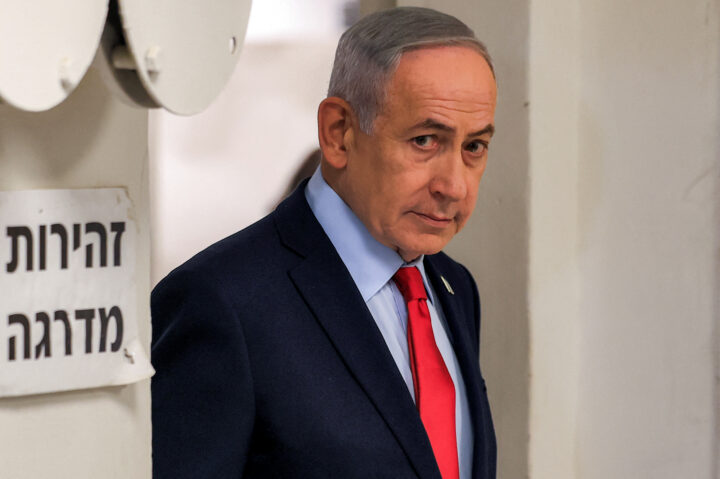
POOL/AFP via Getty Images
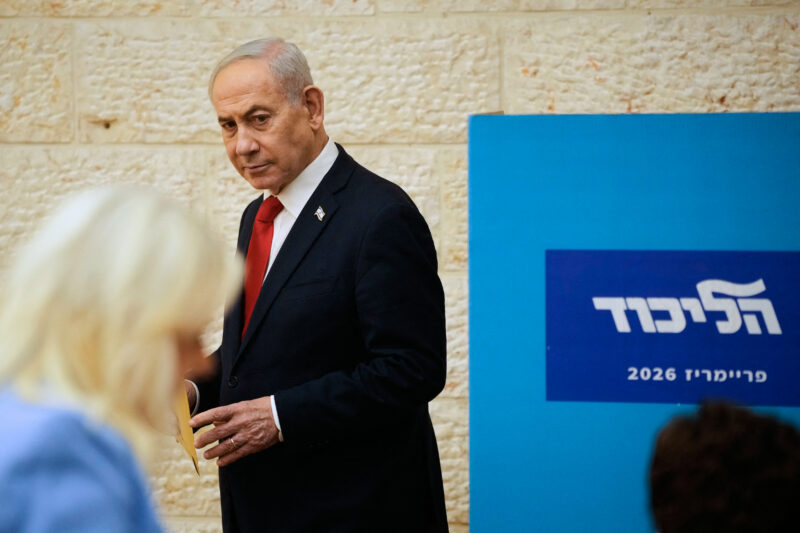
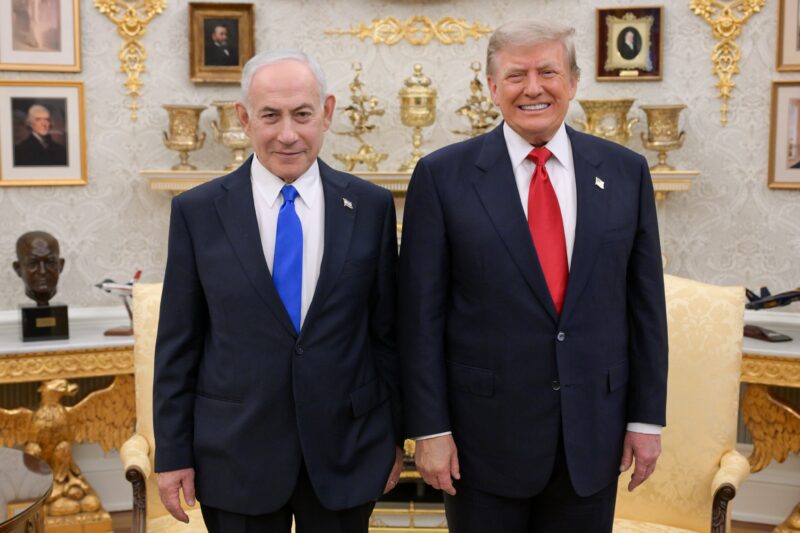
Israeli Prime Minister Benjamin Netanyahu arrives for a press conference in Jerusalem on March 19, 2026.


 Add JewishInsider on Google
For years, Israeli Prime Minister Benjamin Netanyahu has relied on a small, passionately loyal inner circle of advisors — Ron Dermer foremost among them — to provide a sounding board on some of the country’s thorniest security matters.
Now, with Dermer (mostly) gone, new elections looming and Israel fighting a multifront war and isolated on the world stage, that inner circle is nearly empty. And the departures of key security advisors have left the longest-serving prime minister in the country’s history arguably more alone than ever.
The position of head of Israel’s National Security Council has been unfilled on a permanent basis since October 2025, when Netanyahu dismissed Tzachi Hanegbi from the role. It is currently held in an acting capacity by Gil Reich, a former senior official at the Israeli Atomic Energy Commission, who will move to a different role within the defense establishment on Monday.
Just a day later, the director of the Mossad, David Barnea, will also step down after completing a full five-year term. He is set to be replaced by Netanyahu’s military secretary, Gen. Roman Gofman.
However, in the Israel of 2026, nothing is straightforward. High Court justices must soon rule on whether Gofman’s sensitive appointment for the Mossad will be approved. This comes after the head of the Senior Appointments Advisory Committee — the Israeli version of a Senate hearing for high-ranking civil service roles — opined that Gofman’s appointment was flawed on ethical grounds.
Netanyahu believes Gofman has been wronged, and that right now, amid a “seven-front war,” as he noted in a recent press release, this appointment is critical.
But Gofman’s departure will mark a farewell to one of Netanyahu’s closest advisors and currently the most influential security figure in his orbit — and at a time when Netanyahu’s post-Oct. 7 relationship with the military echelon remains exceptionally complex.
”The role of the national security advisor and head of the NSC is critical and central for shaping, planning and overseeing the execution of Israel’s national security policy,” Eyal Hulata, who served as head of Israel’s NSC from 2021-2023, told Jewish Insider.
“The fact that the prime minister is not appointing a replacement for this role is, unfortunately, yet another example of a disregard for organized staff work and another blow to the professionalism required when working with the defense establishment,” Hulata continued. Sources close to the prime minister told JI that Netanyahu intends to fill these soon-to-be-empty positions shortly.
So, who are the candidates for head of the Israeli NSC? According to sources familiar with the matter, there are two front-runners: Reuven Azar, Israel’s ambassador to India, and Col. (res.) Gabi Siboni, a hawkish commentator on military strategy.
Azar, who previously served as Netanyahu’s foreign policy advisor, was involved in the brokering of the Abraham Accords and is considered a highly professional diplomat. As President Donald Trump has made a priority of advancing the Abraham Accords 2.0, now with additional countries such as Qatar and Saudi Arabia, Azar’s experience could be an asset to the NSC.
Siboni is a military strategy expert who frequently provides commentary in the Israeli media, and is known for his hawkish views. He has a significant vulnerability, however: He is close friends with former IDF Chief of Staff Gadi Eisenkot, who is running against Netanyahu in the upcoming elections.
An Israeli source who worked for the current government claimed that while Netanyahu has other candidates in mind to be the next NSA, they don’t stand a real chance. “There are a little over three months left until the elections in Israel. Stepping into such a role when you know your tenure is about to end simply makes no sense,” the source told JI. “Moreover, Netanyahu is deeply suspicious when it comes to choosing the people he lets into his inner circle.”
Until recently, Netanyahu could rely on his loyal confidant Ron Dermer to serve as a de facto national security advisor, even though he held the title of minister of strategic affairs. Dermer left the role this year after an exhausting stretch of public service, but Netanyahu continues to invite him to security briefings, including highly classified ones.
While the Prime Minister’s Office promises that the vacant positions will be filled soon, Netanyahu likely won’t be looking for another trusted figure like Dermer. Instead, he will be seeking someone like the Israeli version of Secretary of State Marco Rubio, an official who can juggle multiple roles at the same time without causing the boss any political headaches.
More Stories

Democracy Deficit
New report warns civics education crisis is fueling antisemitism, eroding support for Israel

EXCLUSIVE
Brandeis Center urges Qatar to provide ‘complete public accounting’ of campus funding

Hard cover, soft launch
Assouline puts Tel Aviv on the coffee table at last

SURVEY SAYS
New poll shows Vance with very low support among Jewish voters
PRESSURE CAMPAIGN
Rep. Jared Moskowitz: Pro-Israel Democrats are being ‘ostracized’ in the Democratic Party

SAFETY SURGE
Hochul announces security funding, enhanced police presence ahead of High Holy Days
Please log in if you already have a subscription, or subscribe to access the latest updates.
 Continue with Google
 Continue with Apple