















Time is running out to fill key Middle East ambassadorial posts
If Trump seeks to fill these posts, it will likely be in the administration’s interest to do so before the end of the current Congress
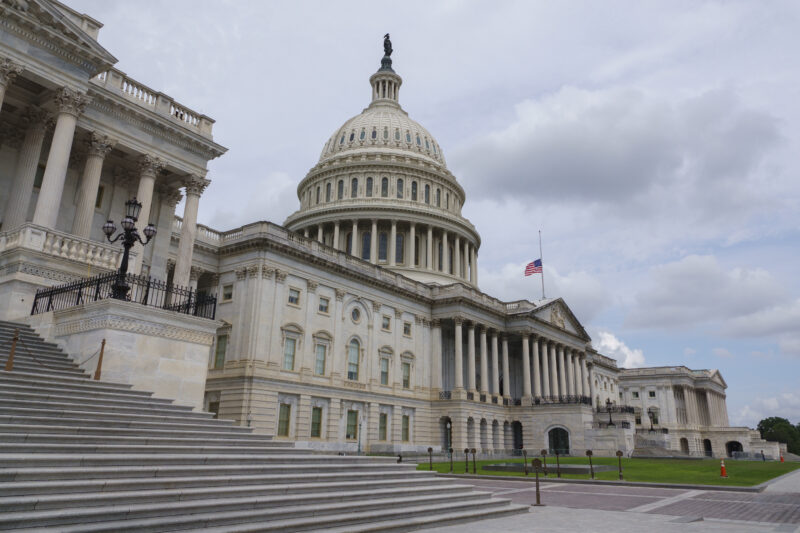
(AFP via Getty Images)
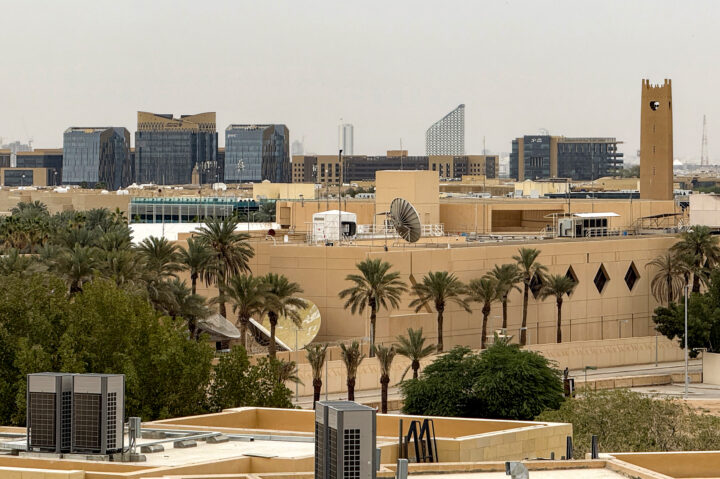
The US Embassy headquarters in Riyadh is pictured on March 3, 2026, after it was hit by drone strikes.


 Add JewishInsider on Google
We reported earlier this month on the series of vacancies in key ambassador-level posts throughout the Middle East — in countries including Saudi Arabia, the United Arab Emirates, Qatar, Iraq and Kuwait. A senior State Department post overseeing Middle East issues also remains vacant, after the previous nominee was blocked by lawmakers.
At this point, time is running short for President Donald Trump to fill any of those vacant posts before the confirmation process potentially becomes more difficult in the Senate after the midterm elections.
Processing the nominations will take time: The chamber is set to be out of session for significant portions of the next few months. And there will be various other critical bills — including government funding, the annual defense bill and a potential third reconciliation package, to process on the Senate floor. Even ahead of floor proceedings, the vetting process in the Senate Foreign Relations Committee can, itself, take months before nominees appear for a confirmation hearing.
If Trump seeks to fill these posts, it will likely be in the administration’s interest to do so before the end of the current Congress, as GOP control of the Senate for the final two years of Trump’s term is not assured, and even if Republicans retain the majority, it could be with an even smaller margin.
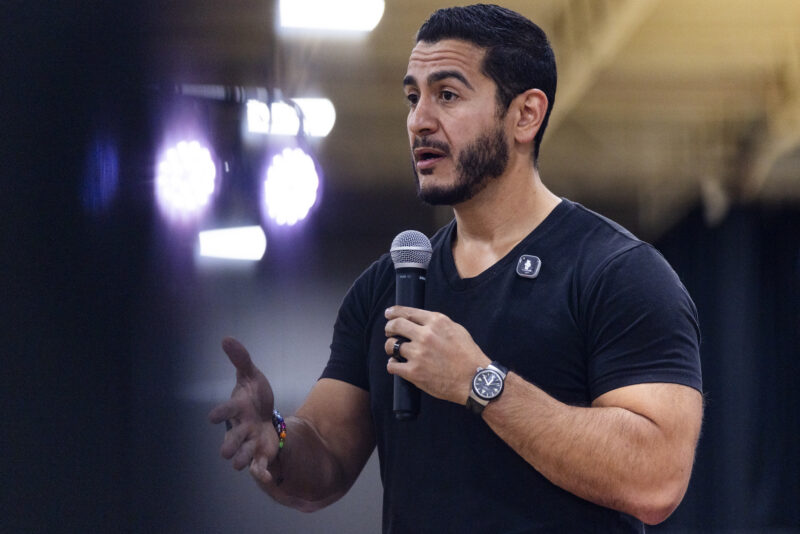
It’s not just Democrats who have proven to be an obstacle to some of the administration’s picks. Amer Ghalib, Trump’s original nominee to be ambassador to Kuwait, was blocked by Republicans over his history of antisemitism, among other issues. And Joel Rayburn, tapped for a top Middle East job in the State Department, was blocked by Sen. Rand Paul (R-KY), who also slowed down proceedings for U.N. Ambassador Mike Waltz.
That said, it’s not clear whether the administration will prioritize filling these vacancies. Earlier this month, experts told Jewish Insider that the White House has seemed content to vest responsibility for broad Middle East portfolios within a tight circle of personal allies of the president, including White House Special Envoy Steve Witkoff, Jared Kushner and Ambassador to Turkey Tom Barrack — whose role has particularly concerned some Republicans. Many experts have argued that leaving the positions open is unwise and risks harming U.S. influence and diplomacy in the region.
State Department spokesperson Tommy Pigott told JI that “the department has confidence in our ability to communicate with our counterparts around the world and advance the national interest.”
A State Department official claimed that the Trump administration is on track to have more nominees confirmed in the first two years of Trump’s second term than the Biden administration, and praised the Senate Foreign Relations Committee for working to promptly confirm its nominees. The official also noted that the State Department had reestablished a committee to review potential career foreign service officers who could be elevated to ambassadorial posts.
Elliott Abrams, who served as U.S. envoy to Iran during the first Trump administration, however, warned that it might be “too late” to clear the nominations. He added that “it does not seem that the administration is very concerned” with the issue.
“Normally any administration would try to fill as many ambassadorial posts as possible before the August recess. But it is a little late, because in order to do that you have to have people cleared, formally nominated, go through hearings, be voted out of committee and then come to the floor for a vote,” Abrams said. “I doubt the administration will rush to get ambassadors in place now, because it just does not seem to be a very high priority for the president.”
Alexander Gray, who served as chief of staff on the National Security Council in Trump’s first administration, suggested that the White House should prioritize advancing qualified nominees for ambassadorships and criticized Democrats for what he described as a “long history of stymying President Trump’s nominations, regardless of whether they are in the majority or the minority.”
“The administration should continue to prioritize sending qualified ambassadors aligned with the president’s agenda to strategically significant countries, and pressuring Senators to confirm them expeditiously,” Gray said. “Historically, presidents received considerable deference in the confirmation of ambassadors. President Trump and Senate Republicans should demand similar treatment today.”
Other Trump allies argued that filling the ambassadorships is less critical, doubling down on the belief that the administration’s current approach of running Middle East policy through Trump’s inner circle is effective.
“In this region, trusted relationships, direct lines of communication and confidence from the president matter more than whether an ambassador is in place,” Jason Greenblatt, who served as White House Middle East envoy in the first Trump administration, said. “The leadership and senior diplomats in Saudi Arabia, the UAE and Qatar have strong and trusted relationships with President Trump and with the group doing much of the day-to-day work, including Steve Witkoff, Secretary [of State Marco] Rubio, Vice President Vance, and Jared Kushner. That group has President Trump’s deep trust and direct access to him. That remains true regardless of how Senate politics develops.”
More Stories
ECONOMIC ANGST
Netanyahu predicts end of U.S. military aid, calls for plan to circumvent potential sanctions
PANEL PUSHBACK
Jewish groups raise alarm over anti-Israel sessions at American Studies Association conference
SCOOP
Ro Khanna to urge negotiators to pull U.S.-Israel cooperation provisions from defense bill
Super Ball
Robert Kraft’s Blue Square gala pulls in $32 million as NYC’s Waldorf glows blue
CALLING IT OUT
Rep. Don Bacon blasts Dan Osborn over ‘anti-Jewish’ ad

EXCLUSIVE
JDCA launches streaming and digital ads supporting Cait Conley, attacking Lawler
Please log in if you already have a subscription, or subscribe to access the latest updates.
 Continue with Google
 Continue with Apple