


Joe Raedle/Getty Images
Pro-Israel groups grapple with the future of Israel funding
Jewish and pro-Israel groups seem at pains to clarify how they are now assessing an issue that has long been key to their advocacy — particularly as the conversation around funding and the possibility for a new MOU has rapidly evolved in recent months


 Add JewishInsider on Google
Late last month, AIPAC circulated what seemed at first glance like a relatively anodyne memo stressing its support for the current 10-year memorandum of understanding between the United States and Israel, which guarantees $3.8 billion in annual military aid and missile-defense funding to Israel through 2028.
“Congress must fulfill America’s commitment by providing full security assistance and missile defense funding to Israel for the remainder of the MOU,” the group wrote in its missive published on April 28.
The memo was notable, however, for what it left out: calling to negotiate a follow-up MOU — the future of which has been a topic of ongoing speculation among analysts and lawmakers beginning to think about the contours of a potential new agreement in a changing political landscape.
That AIPAC had only urged the implementation of the final two years of the current deal was in many ways a tacit acknowledgement of shifting attitudes against U.S. military aid even among supporters of Israel.
The omission, intentional or not, was otherwise reflective of uncertainty around an agreement that has drawn scrutiny not only among Israel critics on the far left and right but also moderate defenders of Israel in both parties who are openly questioning the necessity of U.S. military assistance to a longstanding Middle East ally.
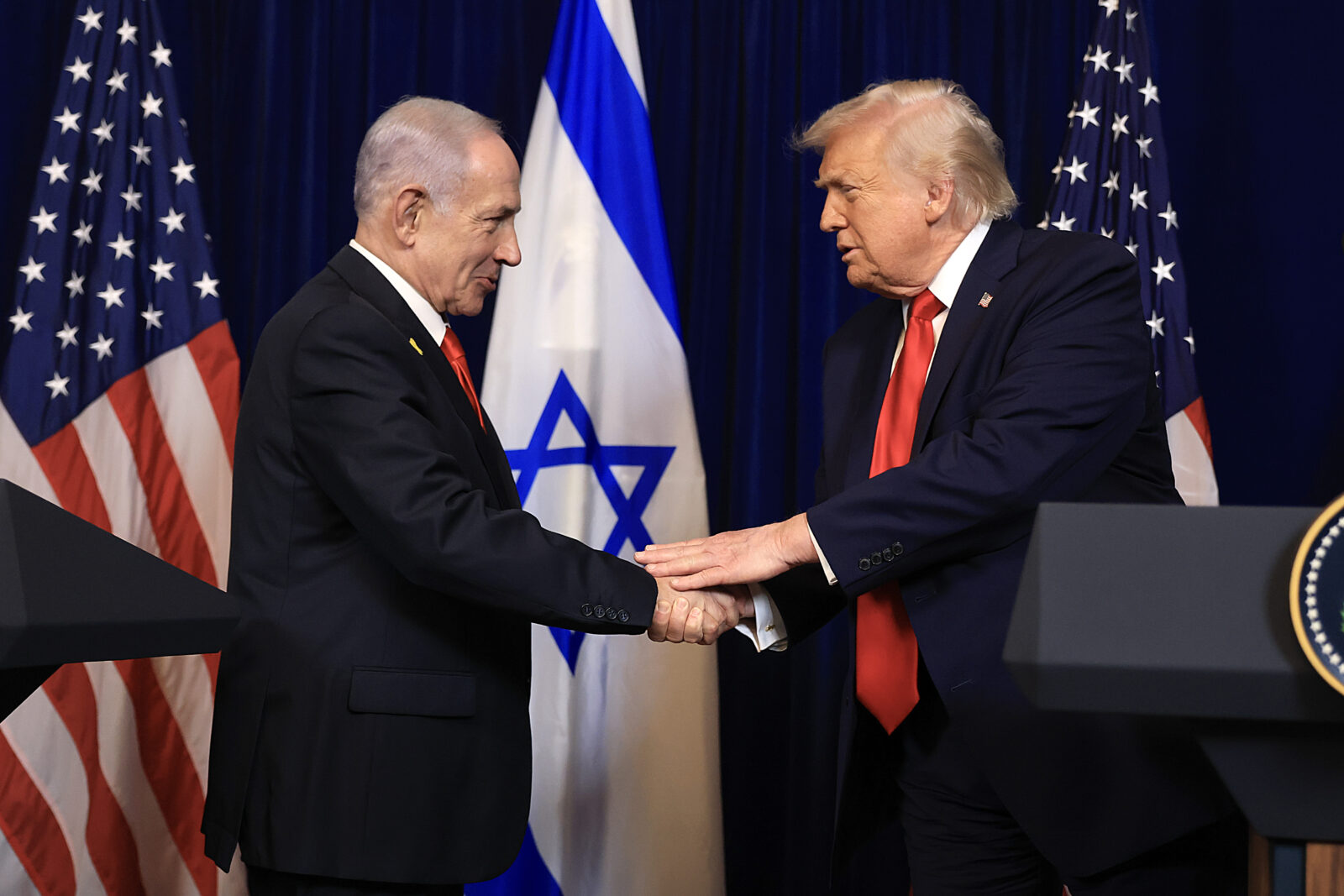
Meanwhile, Israeli Prime Minister Benjamin Netanyahu has called for winding down U.S. financial aid over the next decade, saying that the Jewish state has “come of age” and matured economically to continue on its own. In an interview with CBS’ “60 Minutes” earlier this month, he confirmed that he wanted to immediately begin the process of weaning Israel off of U.S. aid, noting the future of the U.S.-Israel alliance should be focused on joint projects equally funded by Israel and the United States.
“Each U.S.-Israel MOU to date — negotiated by Presidents Clinton, Bush and Obama — has laid the framework for the decade ahead, strengthening an alliance that advances American interests, supports a strong and capable ally in an unstable region, and drives a remarkable ecosystem of joint development and cooperation between two reliable allies,” Deryn Sousa, a spokesperson for AIPAC, told Jewish Insider in a recent statement.
Some pro-Israel Republican lawmakers — including Sens. Lindsey Graham (R-SC), John Thune (R-SD), the Senate majority leader, and Roger Wicker (R-MS) — have welcomed the idea, even as the GOP has long touted its staunch support for such funding. Rahm Emanuel, the former Chicago mayor and Democratic presidential prospect who holds close personal ties to Israel, has advocated for immediately ending military aid to Israel, arguing it is not worth expending the “political capital” to promote spending that is facing mounting opposition in Congress and among voters.
But Jewish and pro-Israel groups seem at pains to clarify how they are now assessing an issue that has long been key to their advocacy — particularly as the conversation around such funding and the possibility for a new MOU, which remains an open question, has rapidly evolved in recent months.
“Each U.S.-Israel MOU to date — negotiated by Presidents Clinton, Bush and Obama — has laid the framework for the decade ahead, strengthening an alliance that advances American interests, supports a strong and capable ally in an unstable region, and drives a remarkable ecosystem of joint development and cooperation between two reliable allies,” Deryn Sousa, a spokesperson for AIPAC, told Jewish Insider in a recent statement.
She added, “We appreciate the Trump administration working closely with the Israeli government toward a new agreement that will strengthen and define the mutually beneficial partnership in the years ahead.”
“We’re figuring it out ourselves,” said Michael Makovsky, the president and CEO of the Jewish Institute for National Security of America, adding that he believed Israel “made a mistake” in choosing to forgo U.S. financial aid. He suggested that the U.S. sign “one more” MOU with Israel to cover the next 10 years and help Israel replenish its munitions stocks amid the war against Iran, which he believes is key to advancing American interests in the region. “It zeroes down at the very end,” he explained to JI.
In lieu of an agreement, Makovsky floated “non-monetary” alternatives, for instance, a U.S.-Israel mutual defense treaty — though he questioned whether such a pact could gain enough support in the Senate, where most Democrats recently voted in favor of resolutions to block arms sales to Israel.
Former U.S. and Israeli officials have also recently called for building closer technological ties between the two countries, in anticipation of an era in which financial aid is not a defining feature of the alliance.
“The model in which Israel is assisted by the United States and receives aid has a very small chance of continuing under any future administration,” former IDF intelligence chief Amos Yadlin said this month while promoting a new strategic technology alliance with Tom Nides, a former U.S. ambassador to Israel. “And perhaps even under the Trump administration, so we need to find a new basis for the relationship that is a transition from aid to partnership.”
Even as analysts had indicated last year that the U.S. should begin considering what the next MOU entails, it is unclear if the process is now seriously underway, as Netanyahu’s remarks have complicated the effort. One Hill staffer to a pro-Israel House member told JI he had no knowledge of discussions at the moment.
President Donald Trump was initially surprised when Netanyahu first proposed winding down U.S. funding late last year and did not immediately lend support to the move, JI has previously reported.
A White House spokesperson declined to comment on the prospects for a future MOU, the framework for which first went into effect in 1998 during the Clinton administration. The current agreement was finalized in 2016 near the end of the Obama administration — which touted the deal as “the largest single pledge of military assistance in U.S. history” at the time.
Tal Naim, a spokesperson for the Israeli Embassy in Washington, referred JI to Netanyahu’s comments to “60 Minutes” this month.
Looking ahead, Brian Romick, the president of Democratic Majority for Israel, said “there can and should be a discussion about how the U.S.-Israeli security relationship should change with the times, how our partnership must evolve as Israel’s own capabilities grow and its security needs change, and how we can align on a long-term vision for the region.”
“While a new MOU should reflect that Israel’s economy has grown, it should also recognize that Israel’s defense requirements have too, and Israel may struggle to fill the gap in its defense budget that the loss of FMF would create,” Justin Leopold-Cohen, a senior research analyst at the Foundation for Defense of Democracies’ Center on Military and Political Power who specializes in U.S.-Israel security cooperation, said.
But, he added, “that debate must bring a serious analysis grounded in prioritizing America’s interests and Israel’s security. It cannot shift with political changes or in the middle of a war, especially when American troops are actively deployed in the region. Ultimately this will be a negotiated agreement between two democratically elected governments.”
A spokesperson for the American Jewish Committee likewise used broad strokes to discuss a future MOU, saying it is “far more than a financial commitment.”
The agreement “is a cornerstone of a broader strategic relationship that advances both U.S. and Israeli national security interests, strengthens deterrence against shared adversaries, and reinforces America’s commitment to the security of its closest ally in the Middle East,” the spokesperson told JI. “At a time of growing regional volatility and evolving security threats, maintaining strong and sustained U.S.-Israel security cooperation remains critically important.”
Justin Leopold-Cohen, a senior research analyst at the Foundation for Defense of Democracies’ Center on Military and Political Power who specializes in U.S.-Israel security cooperation, said that “there will likely be a new, heavily modified MOU following the current agreement’s expiration.”
Netanyahu, he told JI, “already revealed his desire to phase out American military aid, granted primarily as Foreign Military Financing,” which typically must be used to purchase U.S. defense products and services.
“While a new MOU should reflect that Israel’s economy has grown, it should also recognize that Israel’s defense requirements have too, and Israel may struggle to fill the gap in its defense budget that the loss of FMF would create,” Leopold-Cohen said.
Dan Shapiro, a U.S. ambassador to Israel in the Obama administration who served as a top defense official in the Biden administration, speculated that “the next MOU — if there is an MOU — will look very different from the current one.”
“It will likely phase out FMF, which both Prime Minister Netanyahu and Americans from the left and right are calling for,” Shapiro added. “It will likely emphasize joint research and development, sharing technological advances, and expanded co-production to answer President Trump’s question of what’s in it for the United States. To garner bipartisan support, it should include a consultative mechanism to ensure U.S. weapons are only used in ways consistent with American laws and values and that minimize civilian casualties.”
Daniel Silverberg, a former top foreign policy advisor to Rep. Steny Hoyer (D-MD), characterized the MOU as “mutually beneficial,” saying that “it does not need to be exclusively assistance-based.”
“There are many ways to expand cooperation that involve more than giving aid,” he said. “The MOU is a key framework to do so, and it’s crucial to spell that out for a skeptical U.S. audience.”
But, he emphasized to JI, “We can’t want the MOU more than the Israelis want it.”
Featured Stories
museum moment
Elisha Wiesel: U.S. Holocaust Museum has ‘unique responsibility’ to counter genocide claims against Israel
l.a. rift
Nithya Raman snubs Jewish voters in hotly contested Los Angeles mayoral race
SECURITY SHORTFALL
Nonprofit Security Grant Program fulfills less than one-quarter of 2026 applications
Please log in if you already have a subscription, or subscribe to access the latest updates.
 Continue with Google
 Continue with Apple