









































21-year-old author Theo Baker says he feels more Jewish as a result of antisemitism at Stanford
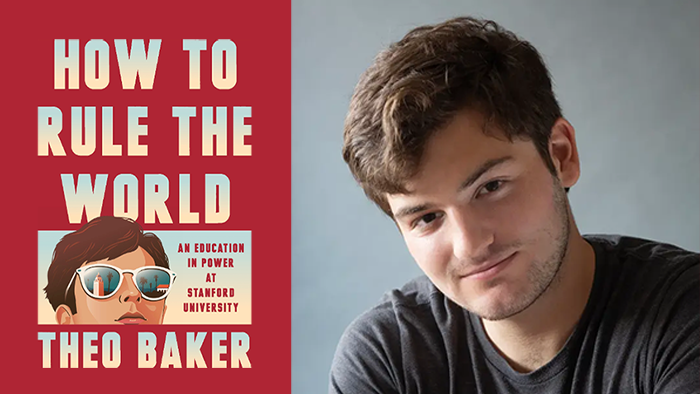
Discussing his new book 'How to Rule the World: An Education in Power at Stanford University,' Baker revealed to JI details about his turbulent and impactful college years


 Add JewishInsider on Google
Theo Baker describes himself as “an accidental journalist.” But at just 21, his writing has already sent shockwaves through the academic world.
As a freshman at Stanford University in 2022, he exposed then-President Marc Tessier-Lavigne’s decades-long pattern of manipulated data and research in scientific papers he co-authored or supervised, ultimately leading to his resignation. Baker, the son of New York Times reporter Peter Baker and New Yorker columnist Susan Glasser, became the youngest recipient of the George Polk Award for his reporting on Tessier-Lavigne.
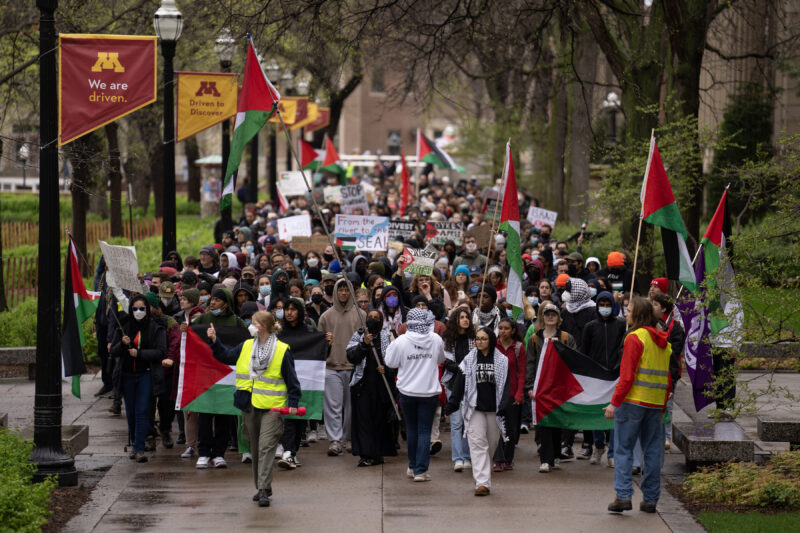
During his sophomore year, Baker published a much-discussed essay in The Atlantic called “The War at Stanford,” exploring campus culture following the Oct. 7, 2023, terrorist attacks in Israel. He called college “a factory of unreason” and argued that anti-Israel demonstrations and rhetoric had created a pervasive climate of fear, accusing Stanford of failing to adequately condemn the attacks or protect Jewish students, all while training the next generation of tech and industry leaders.
Baker reflects on his turbulent college years in his new memoir and exposé, How to Rule the World: An Education in Power at Stanford University, published earlier this month. The book lays bare an elite university corrupted by Silicon Valley’s pursuit of power, all while Stanford saw a historic rise of antisemitism.
Whether it was navigating the release of ChatGPT or grappling with the impact of the Oct. 7 attacks, Baker said every year of his experience at the elite Palo Alto, Calif., university presented a unique challenge. Weeks away from graduation, Baker spoke with Jewish Insider about his past four years on campus, the role that technology plays in rising antisemitism — and what the future might hold for universities.
Jewish Insider: You’ve described yourself as coming from a home with “just a tiny bit of cultural Judaism.” How has covering antisemitism changed your Jewish identity? What about your relationship with Israel?
Theo Baker: In fall 2022, I went home for Thanksgiving and said, “There’s so much antisemitism at Stanford.” I was shocked by that. It’s not something I really countered growing up. As soon as I arrived at Stanford — even in the first week — someone asked me, “why are all Jews so rich?”
By the end of that year — and this is before Oct. 7 —- someone in my dorm, a kid who was Jewish, talked about being Jewish for the first time and someone put a bunch of swastikas and an image of Hitler on his door later that day.
So Jewishness is an identity and not one I would have placed much investment in prior to coming to college. It was something that I knew about myself but was not particularly salient. Certainly, I, like many college students in the last few years, have been made to feel more Jewish just by the circumstances around us. It was certainly interesting to be here on campus as a reporter when the biggest story happening was something that also intersected with my own background.
I have not taken trips to Israel [in college] but I lived in Israel briefly when my dad was the Jerusalem correspondent for The New York Times. I’ve tried to center my reporting on the things I have expertise on. Stanford is 7,000 miles away from Israel. It’s so fascinating that it became such an important issue for people, and then disappeared seemingly so quickly from the public conversation.
JI: You wrote that extremism had made it “normal for students to be harassed and intimidated for their faith, heritage, or appearance.” You described a campus environment where to get into a party you had to say things like “f**k Israel” at the door. Do you think campus culture has improved since then? Do you expect other issues to eventually overshadow the fixation with Israel on campuses? How come the Iran war didn’t spark as many protests?
TB: Certainly the focus has shifted dramatically. Stanford has not been a real hub of activism. It’s been a place where people have been more focused on their dorm-based startups. For one year, things were very different. Pretty quickly that [anti-Israel protests] dissipated come fall 2024. The tensions are still there, yet they’ve become far less visible. This all-consuming fixation with Israel is still certainly a thing for some quadrants of campus but is no longer the dominant narrative.
Many of the protests were fashionable because you could join them as a pregame to a party — literally. The vast majority of students didn’t come into 2023 with the Middle East being their focus and at this point I don’t think it is either for most of them.
Higher ed and academia perceives itself as under attacks from the federal government at the moment. A lot of attention has been focused on that, obviously a closer-to-home thing than Israel. But I also think people became less interested.
JI: Do you think elite universities can fix this problem and what would it take? Has the threat of losing federal funding has actually changed anything?
TB: Universities have become so sprawling that they’ve lost a sense of cohesive identity.
Yes [the threats made an impact but] it’s a mixture of things.
JI: Your Atlantic piece on Stanford antisemitism made you a target — you’ve described receiving death threats and messages saying you should be “cooked alive.” Are you expecting similar backlash from this book or do you think the current moment is less tense?
TB: There are a range of reactions, as you might expect. I’m grateful that both with that piece and this book there are people who care about these conversations and reasonable people can have differing interpretations.
Sophomore year I had events canceled because of “security threats.” I did an event at Stanford for the book [last week] and no one shouted at me. So that’s a little different. I haven’t gotten as many death threats. Higher ed right now, though, is a very charged landscape so people have different reactions to things they perceive as a critique.
JI: What reaction have you gotten from the Jewish community to the book? Who is the target audience? What should Jewish students reading this book take away from it?
TB: I hope different people can find different things of value in this book. The Jewish community on campus is very engaged. A lot of organizers belong to the Jewish community and some of them have opened up to me about their own experiences in relation to the book.
What I’m describing at Stanford is an inner world that is necessarily exclusive, necessarily kept obfuscated from the rest. That matters because these are the future masters of the universe who are going to assume their rightful place among the tech masters of the world. So understanding how they are being trained — all too frequently trained to cut corners to get ahead — that has a real salience for all our lives given the sheer dominance of technology.
JI: Your reporting on President Tessier-Lavigne, which led to his resignation, demonstrated the power of students holding institutions accountable. Do you believe student journalists have generally succeeded in covering campus antisemitism fairly and making a meaningful impact since Oct. 7, or have they fallen short?
TB: The student journalism community is a wonderful one. The past few years have been really tough for student journalists, the same we’ve seen for professionals doing this work in the “real world.” Sometimes that’s magnified on campus because you’re reporting on your peers. The number of threats and doxxing that has been targeted at journalists just doing their jobs is horrifying.
Institutions have arrested journalists just for covering college protests. A lot of student journalists have done important work in the last few years to document this important cultural story from the ground, from the campuses where these fights are breaking out.
JI: Your book describes Stanford as a place training kids to “rule the world.” What does it mean for American Jewish life — and American values in general — that so many future tech and political leaders are being educated in environments where antisemitism is largely unchecked?
TB: In addition to antisemitism, one of the major trends we’ve seen on college campuses in the last few years is a lack of engagement with high-quality information. This is a huge problem. The way students have come to grapple with the world is often filtered with unreliable sources that are intentionally distorting the facts and events of the world. One of the results of that is the rising surge of antisemitism, clearly prevalent among my generation. The overt antisemitism, expressed explicitly in polls, is significantly higher among people my age than even 10 years older. A big part of that technology and social media.
The people building those echo chambers are the same ones who are being trained on this campus to learn that getting ahead at any cost means putting yourself first.
JI: Do you think this is a Gen Z problem specifically, or is it more about the ideological framework that’s taken hold on elite campuses that your generation inherited?
TB: Our [Gen Z’s] manifestation of antisemitism is unique. So much of antisemitism is the denial of antisemitism, like Holocaust reductionalism and the anti-victim narrative refusing to allow Jews to be victims of a hate crime because they are somehow seen as a category you’re punching up at. That’s a big thing on college campuses. Part of that is how people grew up on the internet.
JI: A 2024 report from a Stanford committee focused on addressing antisemitism stated that although antisemitism manifested itself in classrooms, campus protests and among friend groups, “no venue has provided a wider and more uninhibited berth for the expression of hostility toward Jews and Israelis than social media.” How have you seen social media and AI exacerbate antisemitism — especially at Stanford which is a leader in technology?
TB: ChatGPT arrived two months after [my freshman year class arrived]. Already there’s a huge gap between what the freshmen coming in now who had ChatGPT throughout high school are like versus the kids who were seniors when we were freshmen.
Stanford is a vanguard of a lot of trends we see sweeping higher education — the same way Silicon Valley trends tend to filter out into broader society, the same thing is true for Stanford. It was true of the patent licensing program and corporate partnership programs. One of the biggest trends we’ve seen here in the last few years — and certainly we’ve seen filter out into the rest of higher ed — is this corporatization of the university, where students are no longer just people or teenagers, but they’re commodities that have to be both protected and buttered up. Something you can make your riches off of.
JI: The book examines how power operates at elite universities, particularly regarding who receives institutional protection and who is left vulnerable. Based on your reporting, did you find a direct link between the donor and venture capital influence you document and how these schools manage concerns raised by Jewish students?
TB: The most important thing to understand is that the attitudes of these institutions are shaped by their relationship to money and power. Stanford likes to think of itself as an underdog institution, a place where renegade outsiders build for the sake of it and that is what has created all the innovation and fortune that has followed. Stanford is very far from an underdog right now. It’s annual budget is higher than [more than 100] countries. The result of that is governance by corporate structure — this is a place with more administrators than undergraduate students.
You see that reflected in all facets of student life [including how] the administration is going to respond to antisemitism. Everything is filtered through the lens of donors and protecting the ability to fundraise at the level of billions of dollars Stanford has historically been at. Everything is filtered not as seeing students as going through a formative experience, but as commodities that have to be protected and preserved just as products of any business are seen.
JI: Jewish Insider spoke with you in 2024. Now that you’re about to graduate and have the perspective of all four years — what has changed for you? Do you think what happened at Stanford after Oct. 7 was unique in any ways or just part of a broader and systemic trend across elite institutions?
TB: Certainly very few of the things that happened at Stanford after Oct. 7 are unique to Stanford. Individual circumstances and behaviors may be, but the broader trends are all completely reflective of what we saw at basically every major institution.
Now with a couple of years of perspective, it’s still a hard thing to explain to some degree.
Everything was intense and quickly faded to the background. Universities got themselves into trouble by setting a standard for themselves that they weren’t equipped to hold onto when it came to the Middle East. They adopted the path of least resistance. In that sense, nothing has changed even if the words being uttered are different ones. The primary motivation isn’t an ideological one for why these universities were making statements on political causes routinely that aligned with the liberal perspective in the past, or why they are making statements now that appear to be in favor of academic freedom. For the most part, all of that is still guided by political expediency regardless of what the actual politics are.
JI: What would you advise a Jewish student considering attending Stanford or another elite university today?
TB: Universities for the most part are about finding your people. It’s still very much possible to do that. It’s important to keep your eyes open and observe the things happening around you because so much of what we’re seeing on college campuses right now is a representation of these broader national trends in terms of our politics, culture and technology that are important to understand and reckon with. I don’t think we properly understand the implications of having such a rancorous political climate, what it looks like to have these new technologies like ChatGPT taking on such an important role in our lives.
Every person going to college right now is well positioned to observe things that are important for our society going forward, and the lessons we draw from that have a huge impact and influence on everything.
I hope Stanford is a hyperconcentrated version of the modern university. It takes everything and turns the dial up to 11. It’s an interesting sociological experiment to look at what is happening here and see how that is reflected in what is happening in the rest of higher ed.
More Stories

PROBLEMATIC POST
Paxton senior advisor endorsed antisemitic slur on social media

Daily Overtime
Jewish leaders press Miliband on U.K. antisemitism

Daily Overtime
Obama faults Israel’s founding in Belfast
SMITHSONIAN STUDY
Commission studying potential Smithsonian Jewish museum holds first meeting

BIBI BOOST
Netanyahu bloc gains on Gadi Eisenkot’s opposition in latest Israeli polls

SEEKING ANSWERS
After State Department memorial, families of Oct. 7’s American victims call for U.S.-led probe
Please log in if you already have a subscription, or subscribe to access the latest updates.
 Continue with Google
 Continue with Apple