





















The mayor and NYPD commissioner said there are ‘no known, specific or credible threats’ against the gathering where Trump and Netanyahu will speak
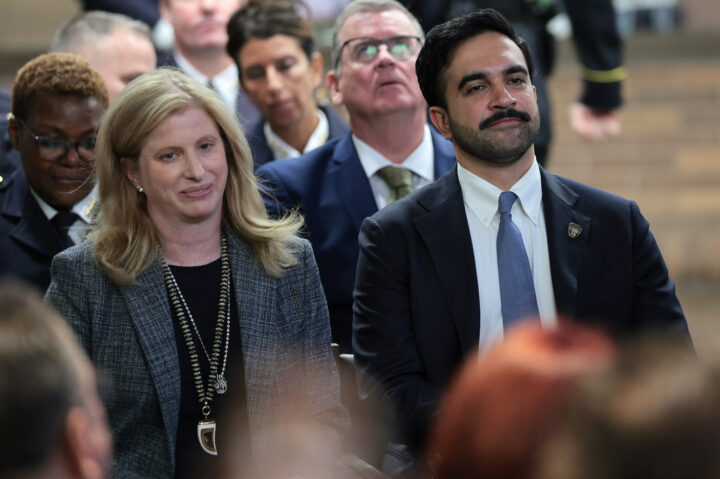
Michael M. Santiago/Getty Images
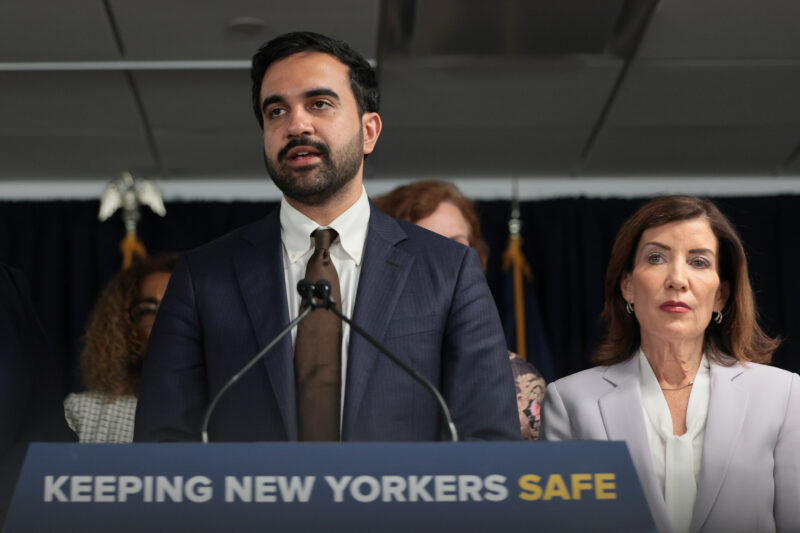
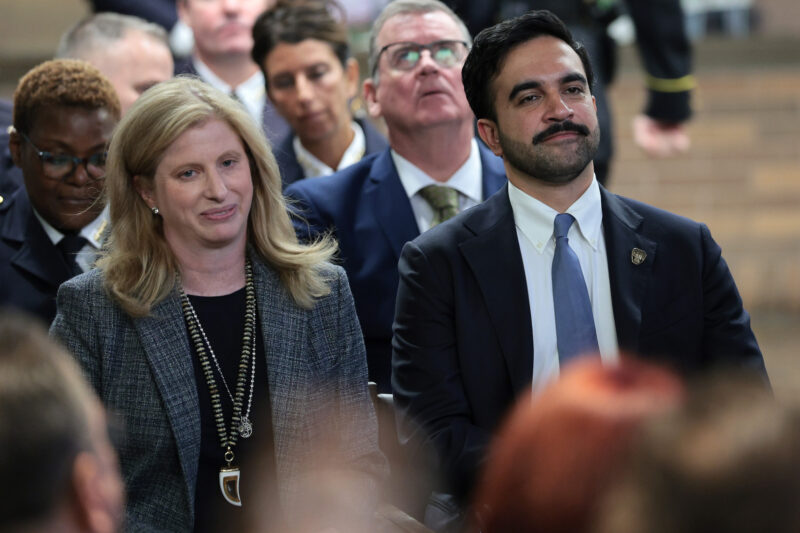
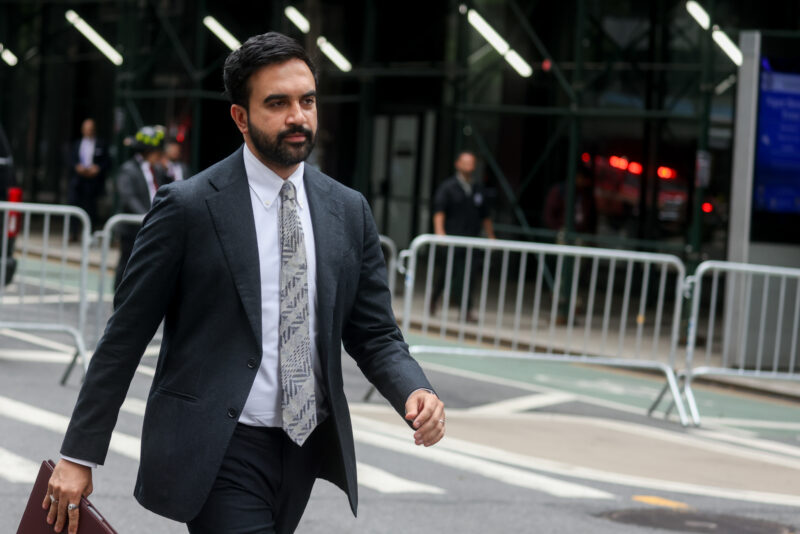
NYPD Commissioner Jessica Tisch and New York City Mayor Zohran Mamdani attend an unveiling ceremony for a new 9/11 Memorial Wall at One Police Plaza on Sept. 9, 2026 in New York City.


 Add JewishInsider on Google
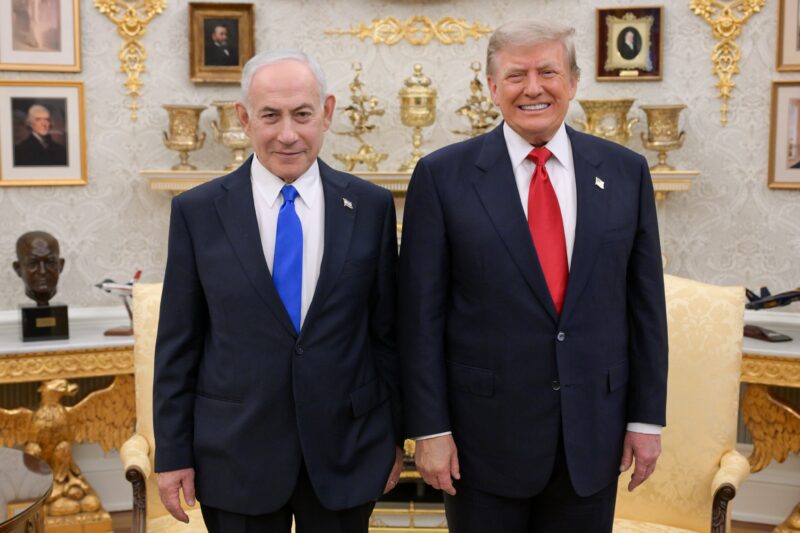
NYPD Commissioner Jessica Tisch told reporters on Thursday that her department expects a wave of protests around the U.N. General Assembly next week, set to feature President Donald Trump, Israeli Prime Minister Benjamin Netanyahu and Iranian President Masoud Pezeshkian — even as she and New York City Mayor Zohran Mamdani maintained little would change regarding the police response compared to years past.
The two joined officials from the Secret Service and State Department at One Police Plaza to brief the press on security measures and what the mayor described as a “whole-of-department response” to head off any risks to the international gathering. This will include “full deployment” of patrolmen and elite police units, as well as restrictions on traffic, flight patterns and pedestrian access in the area around the U.N. headquarters.
But both took pains to emphasize that, despite ongoing conflict between the U.S. and Iran — and despite Mamdani’s since-abandoned threat to arrest Netanyahu if he visited the city — these precautions were largely the same as those the city always takes around the annual geopolitical conference.
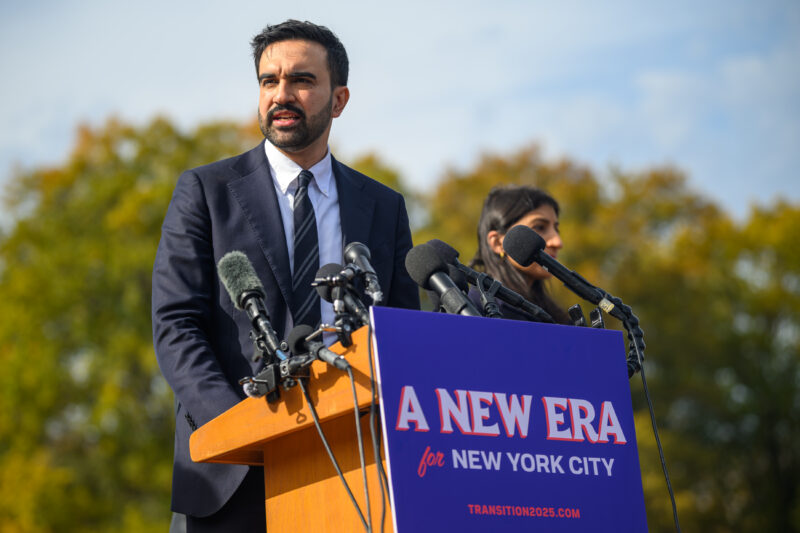
“This is standard procedure,” Mamdani asserted. “There are no known, specific or credible threats against the United Nations General Assembly or our city.”
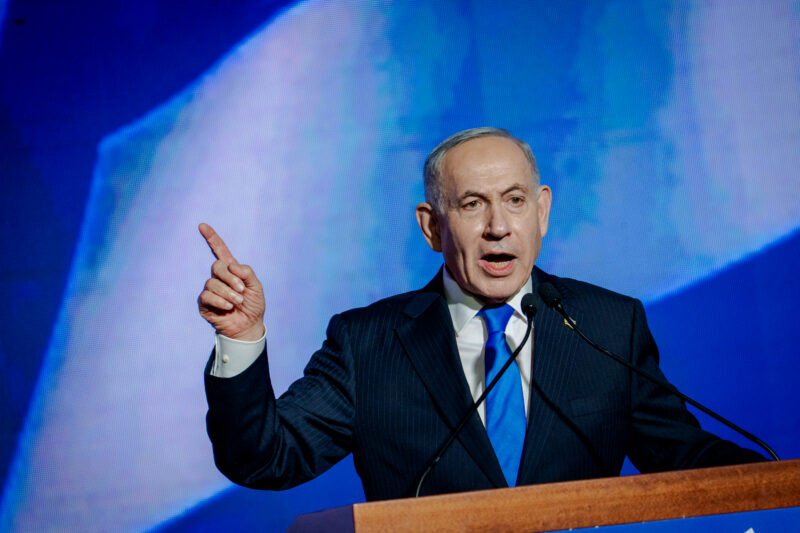
Nonetheless, Tisch acknowledged that protests would greet world leaders as the high-level gathering begins on Tuesday. The summit of top global statesmen will see Netanyahu arrive in New York on Sept. 23, the same day Pezeshkian is scheduled to address the session. Yet Tisch said her agency did not intend to take steps “out of the ordinary” for the event.
“I can tell you we’re expecting multiple protests every day,” she said. “As always, we have no tolerance for violence or destruction of property or breaking the law.”
Mamdani in recent days has dampened his own fiery rhetoric around Israel and Netanyahu, backing off prior suggestions that his fellow critics of the Jewish state and its military actions in Gaza take their grievances into the street. But he told reporters no figure from the NYPD had asked him to do so.
“The conversations that I’ve had with the PD have been purely about standard preparations for the event, as well as standard preparations for keeping New Yorkers safe,” he said.
The New York City mayor continued to de-escalate his rhetoric a week before Netanyahu is set to arrive
Alexi J. Rosenfeld/Getty Images
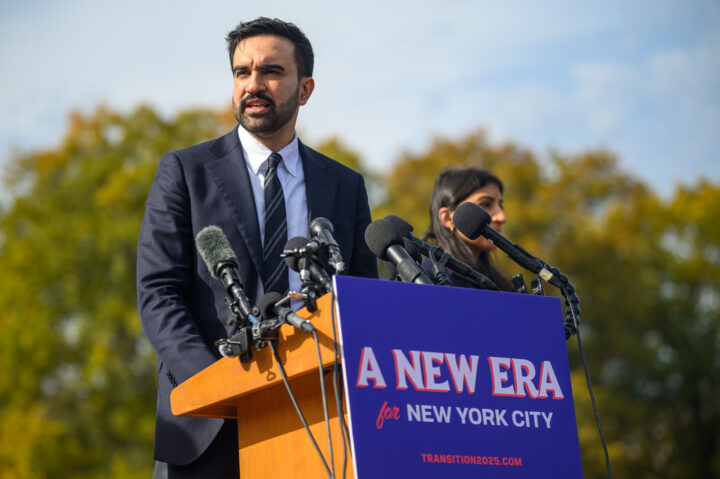
Mayor Zohran Mamdani speaks during a press conference at the Unisphere on Nov. 5, 2025.
New York City Mayor Zohran Mamdani told reporters on Wednesday that he does not intend to participate in any demonstrations against Israeli Prime Minister Benjamin Netanyahu’s appearance at the U.N. General Assembly next week — and maintained he did not endorse public agitation against the Jewish state’s premier, an apparent ratcheting-down of his remarks from earlier this summer.
Following an unrelated press conference, Mamdani confirmed information leaked to Politico that he would not take part in anticipated protests against Netanyahu’s scheduled arrival in New York on Sept. 23 or speech at the international summit the next day. He also stressed that he did not call for his anti-Israel allies on the left to take to the streets either.
“I do not have any plans to attend any protest at the U.N. General Assembly,” Mamdani said. “To New Yorkers I have never encouraged them to protest.”
“I do not have any plans to attend any protest at the U.N. General Assembly” against Prime Minister Benjamin Netanyahu, Mayor Mamdani said. “To New Yorkers I have never encouraged them to protest.”
— Jewish Insider (@jewishinsider) September 16, 2026
Read more: https://t.co/k2ChSKU2Ko pic.twitter.com/oPjj5tTYzt
Yet the tone and couching of these comments differs markedly from statements in July, when a reporter pressed him on how local opponents of Netanyahu might express their feelings about his visit.
“One of the bedrocks of our city is protest,” the mayor said at the time. “I’ve always said that when we respect our Constitution, we also respect our First Amendment. And here in New York City, it’ll always be a place where you can exercise that.”
The democratic socialist, who distinguished himself in the mayoral field last year with his attacks on Israel, immediately followed those previous comments by reiterating he believed an International Criminal Court warrant for Netanyahu’s arrest should be honored.
That statement followed a multi-day controversy in which Mamdani publicly played with an old campaign pledge that he would order the NYPD to take the Israeli prime minister into custody should he attend the U.N. General Assembly — even though subsequent reporting revealed Mamdani knew he lacked authority to do so — and then released a viral video assailing Netanyahu as a “war criminal.”
The video provoked outrage among Jewish leaders, coming amid a wave of antisemitic hate crimes in the five boroughs, and a group of liberal-leaning rabbis urged the mayor to back off his broadsides against the Jewish state during a subsequent meeting at City Hall.
On Wednesday, to repeated press questions about the prospect of protests next week, the mayor would say only he had been “very clear about my views, my thoughts, my assessments” and his earlier remarks about possible demonstrations were only affirmations of his support for the First Amendment.
He instead pivoted to police security and traffic protocols around the event, which he and NYPD Commissioner Jessica Tisch will elaborate upon later this week.
“My focus is ensuring that our city remains prepared to host representatives from across the world and to keep New Yorkers safe,” the mayor said. “Right now, there are no expected threats that we know of and we are, continue to be, confident in being able to deliver safety and security.”
The mayor also responded to news that two Modern Orthodox day schools — Manhattan’s Ramaz School and SAR Day School in the Bronx — would participate in a prayer demonstration outside Gracie Mansion on Friday, an action some have interpreted as a protest of the mayor’s views on Zionism. Mamdani voiced no objections to the event, but said he would likely not be at the official residence at that time.
“I welcome them,” the mayor said. “Whatever it is intended to be, they have the room and space to do so outside of Gracie Mansion. I think that at the time that they are there, I will probably be somewhere else across the city.”
The Israeli prime minister’s trip could spark protests and ‘a perfect storm’ of political and logistical complications for Zohran Mamdani and Jessica Tisch
Michael M. Santiago/Getty Images
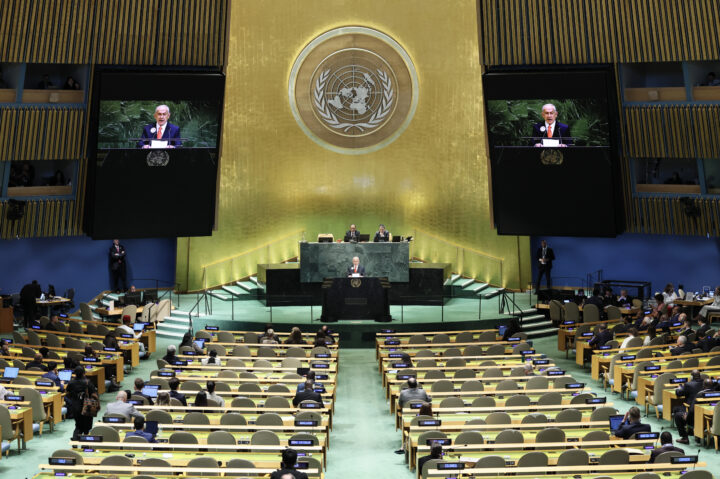
Israeli Prime Minister Benjamin Netanyahu addresses world leaders during the United Nations General Assembly (UNGA) at the United Nations headquarters on September 26, 2025 in New York City.
Israeli Prime Minister Benjamin Netanyahu’s trip to New York City for the U.N. General Assembly later this month is expected to set up political and logistical challenges for Mayor Zohran Mamdani, one of Netanyahu’s foremost U.S. critics, experts tell Jewish Insider — a challenge that protests, which Mamdani has tacitly encouraged, may only exacerbate.
The Israeli leader is scheduled to arrive in New York on Sept. 23 and address the global gathering the following day, during which time the NYPD’s dignitary protection detail will help ensure Netanyahu’s personal protection, its intelligence and counterterrorism teams will work to secure the gathering as a whole and an array of its officers will manage the Manhattan streets. The department reports to the mayor’s office.
The various law enforcement veterans who spoke to JI all underscored the scale of the department’s annual efforts to head off potential threats to the diplomatic summit, even without this year’s furor around Netanyahu’s attendance, the ongoing conflict with Iran and the proximity to both the Jewish High Holy Days and the 25th anniversary of 9/11.
“It’s a perfect storm of high-intensity events,” said Mitchell Silber, the former NYPD director of intelligence analysis who now serves as CEO of the Community Security Initiative, which helps address safety concerns for Jewish groups in the New York metro area. “At the same time, [the] NYPD is trying to bend over backwards to make sure that freedom of speech is allowed and robust.”
Silber noted that the struggle between the U.S., Israel and Iran has already spawned an alleged bomb plot against a New York synagogue from one of Tehran’s proxies. If recent remarks from Mamdani draw out larger than normal demonstrations, Silber warned such a scenario could create additional issues for both the department and the city’s Jewish institutions.
“They do have a possibility of reverberating, and have a chance of turning those forces and their ire against the Jewish community,” warned Silber, though he added that there was no specific threat. “It’s just going to make the NYPD’s job harder.”
Retired NYPD detective and John Jay College of Criminal Justice adjunct professor Michael Alcazar, meanwhile, recalled a March incident in which dueling pro- and anti-Mamdani demonstrations at Gracie Mansion saw an alleged ISIS acolyte hurl improvised explosives — an example, he said, of the kind of security risks a protest can present. He predicted a beefed-up presence of uniformed officers in the streets following remarks from Mamdani earlier this year, on top of standard security protocols.
“I’m sure the NYPD is expecting a lot more protests because of what the mayor said in support of protesting against Netanyahu,” said Alcazar. “You know his supporters are reading between the lines.”
Mamdani, for his part, has recently stepped up outreach to the Jewish community and vowed to “work tirelessly” for their security, though he has not backed away from his criticism of Israel. Asked in an August interview how he planned to host Netanyahu, he told commentator Joy Reid the city was readying “in the manner that we prepare every year.”
When JI asked the NYPD what special precautions it would take around Netanyahu’s visit, including around houses of worship, the agency provided only a general statement.
“As we do every year, the NYPD works with the Secret Service, the State Department, and other federal agencies to provide protection to foreign dignitaries traveling to New York City based on the level of threat assessed,” the public affairs office wrote in an email to JI.
New York has already seen, however, the result of tensions between a mayor’s political sympathies and executive duties.
In 2014, his first year in office, then-Mayor Bill de Blasio — whom Mamdani has cited as a role model — seemed a rising progressive star, having ascended to office on a platform of law enforcement reform, a cause many Democrats had hesitated to champion. Then Eric Garner, a Black man from Staten Island, died after an NYPD officer placed him in a banned chokehold, and thousands took to the streets. De Blasio was expected to stand with the protesters, but he also ran the police department that was policing them.
The demonstrations swelled into a national spectacle and saw violent altercations between protesters and police, followed by the killings of two officers and cops turning their backs on the mayor during the patrolmen’s funerals. As the situation spiraled, the mayor sought to align himself more with his politically moderate police commissioner, Bill Bratton. But this cost de Blasio much of his credibility on the left, both in New York and nationwide.
De Blasio went on to win reelection, but he lost much of his ability to project political power. His subsequent efforts to influence the direction of the Democratic Party across the state and nation ended in embarrassment.
Mamdani too captured the left’s affections, and ultimately Gracie Mansion, by embracing a scorching political issue his co-partisans had avoided: Israel and its military campaign in Gaza. As a candidate he pledged to arrest Netanyahu, and continued to float the notion long after city lawyers told him it lay outside his power. When he finally acknowledged he lacked the authority to do so, he made the comments in a viral video with the caption, “Benjamin Netanyahu is a war criminal,” in which he accused the Israeli leader of being a mass murderer responsible for the “maiming” of Palestinian children.
Pressed as to what opponents of the Israeli leader should do about his impending visit to New York, the mayor signaled his support for street demonstrations.
“One of the bedrocks of our city is protest,” the mayor said. “This is a city where, if anyone feels a level of frustration or opposition, protest is something that we will always respect. I leave it to New Yorkers themselves to make that decision.”
What made 2014 “a year of chaos,” according to John Jay lecturer Jillian Snider, was a large number of unpermitted protests with no central organization that drew large crowds and at times escalated into vandalism and violence. She warned that if similar “pop-up” demonstrations broke out during the U.N. General Assembly, it could complicate the work of the department.
“I would hope that a political figure would not encourage these large demonstrations, especially these undocumented events where we don’t have advance notice,” said Snider, who managed protests as an NYPD officer. “Members of the public often are influenced by city leaders. If they really, really, support that leader, they are going to do what that person supports.”
Veteran political consultant Chris Coffey, who counted the city’s largest police union among his clients during the de Blasio administration, noted that Mamdani is a far more agile politician than his progressive predecessor. Further, he argued Mamdani learned from de Blasio’s experience that he cannot alienate the department or allow the appearance of public disorder.
Yet Netanyahu’s visit could prove an exception.
“The one place where it’s a little bit unclear is that the Israel stuff is so personal to him that it might trump that philosophy,” Coffey said. “Or they’ve just decided they can do both, ‘we can condemn Netanyahu, we can encourage protest, and the police department can handle it.’”
But short of “something horrific” occurring during the General Assembly, Coffey argued that intense political polarization around Israel and Mamdani’s fervent personal following would likely allow the mayor to escape any political fallout. He also pointed out that NYPD Commissioner Jessica Tisch is a strong Israel supporter, and that the mayor has granted her broad latitude in her role as the city’s top cop.
Alcazar and Snider agreed, both lauding Tisch’s independence — with Snider even comparing Mamdani favorably with former Mayor Eric Adams, an ex-police captain who she complained excessively inserted himself into NYPD policy. Both predicted Mamdani’s views on Israel would have little influence on her handling of the U.N. event.
Silber, for his part, urged Jewish New Yorkers not to allow tension around Netanyahu’s visit or General Assembly security to interfere with their participation in religious and civic life.
“Keep calm and carry on,” he advised.
The prime minister accused Tehran of amplifying fake videos and false information to inflame opposition to a Kushner-linked coastal project
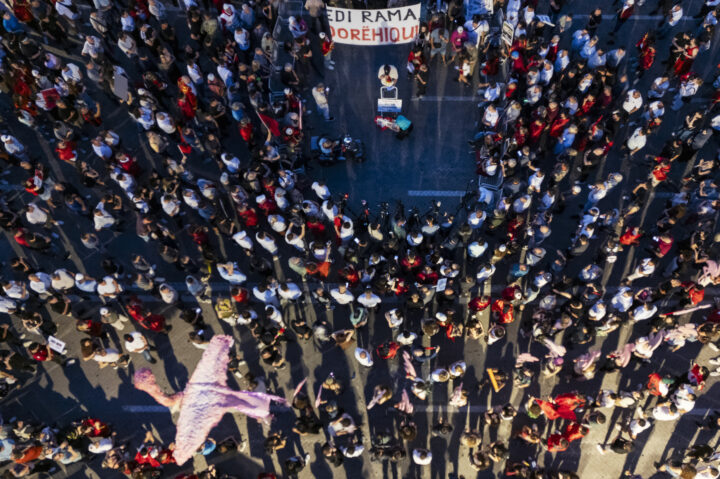
Photo by Vlasov Sulaj/NurPhoto via Getty Images
An aerial view shows protesters gathered outside the Prime Minister's Office in Tirana, Albania, on June 17, 2026, during the eighteenth consecutive day of demonstrations against a proposed luxury tourism development project linked to Jared Kushner.
Albanian Prime Minister Edi Rama on Thursday blamed Iran for what he described as “ruthless” cyberattacks, warning that Tehran has sowed unrest and amplified false information about environmental protests over a new luxury development project in the country from President Donald Trump’s daughter Ivanka Trump and son-in-law Jared Kushner.
Kushner’s investment firm has moved forward with a luxury project in Albania that includes a coastal development in the Narta Lagoon area — a wildlife reserve — and a smaller resort on the nearby uninhabited island of Sazan. The project has yet to be approved and has not obtained building permits, but has drawn fierce backlash and sparked daily protests from thousands of demonstrators outside Rama’s office due to environmental concerns.
Speaking at the FII Priority summit in Rome, Rama confirmed that the land has been “bought by investors” and is undergoing an “environmental impact assessment.” However, he claimed that the uproar is not what it seems and is being fueled by misinformation and cyberattacks from Iran, which he described as Albania’s “enemy” in the Middle East.
“The amount of posts that have been entering there from our enemy, we have only one enemy, which is the [Islamic] Republic of Iran, and they are engaged in three years in a ruthless cyber-attack against Albania,” Rama said. “They [Iran] entered also in this game…freedom of reach is what every regime, through every propaganda, has done to go in every brain and to put the lie in the brain.”
In 2022, Albania was the subject of an Iranian cyberattack after the country hosted members of the Mojahedin-e-Khalq (MEK), an Iranian opposition group. The disruptive attack compromised Albanian government systems and forced the country to temporarily sever digital services. The attacks also led Albania to break diplomatic relations with Iran.
The issue remains a sore point between the countries, with Rama saying earlier this month that the Albanian people were “the target of a cyberterror campaign that aimed to cripple an entire country.” Tehran has denied the allegations.
Rama has also claimed that antisemitic narratives, as well as resentment over the project’s ties to Kushner and Trump, are behind the opposition.
“The digital outrage, of course, has been provoked, mostly because Kushner and Trump’s shadow are behind it, enough to bring a lot of people from a lot of ways of like from a lot of continents jumping,” Rama said. “The amount of falsehoods, the amount of fake videos that were taken from protests in different countries that were pushed as protests in Albania.”
Speaking on a podcast hosted by David Senra earlier this month, Ivanka Trump said, “there’s nothing uglier than a beautiful nonfunctional space,” describing the project as “architecturally incredibly meaningful and beautiful and intentional with a highly functional space.”
Rama argued that the project would be transformational for Albania’s tourism industry and GDP. A BBC report indicated that the project could bring in up to €4 billion of investment, a major mark for a country that consistently ranks among the poorest in Europe. Rama said that the “big business and investment” can offer the country a “bigger vision than the usual small investments.”
The Albanian leader has also dismissed environmental concerns, arguing that the project would show that “nature and people can coexist.”
“There is nothing that has to worry any environmentalists,” Rama said. “And, yes, Albania will go forward. The majority of the Albanian people want the project.”
As Albania seeks European Union membership, EU officials have reportedly urged Albanian authorities to ensure that the project aligns with the bloc’s environmental regulations, warning that failing to do so could jeopardize the country’s accession bid.
At an Iran International panel, Washington Institute for Near East Policy’s Rob Satloff outlined ways the U.S. could better engage with the Iranian public
(Photo by Kamran / Middle East Images / AFP via Getty Images)
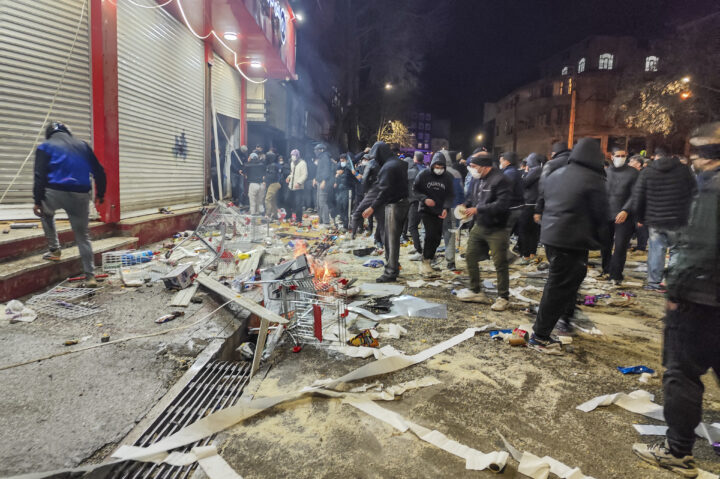
Iranians gather while blocking a street during a protest in Kermanshah, Iran on January 8, 2026.
Experts said on Wednesday that the Trump administration has failed to adequately tap into pro-Western sentiment among the Iranian public following the regime’s violent crackdown on nationwide protests earlier this year, arguing that the White House is missing a key opportunity to cultivate internal pressure within Iran.
Robert Satloff, executive director of The Washington Institute for Near East Policy, argued that the Trump administration should expand U.S. broadcasting into Iran, improve internet access for Iranians and ease pathways for dissidents seeking refuge in the U.S. to “lay the groundwork for the day when it becomes a much more real possibility to have this sort of regime change.” Satloff outlined his proposals during a Wednesday town hall hosted by Iran International, a U.K.-based Persian-language news network. “None of [the Iranian people] are being invested in in any significant way by the Trump administration,” he said.
In February, PBS reported that over 7,000 Iranians were killed during the regime’s violent crackdowns on nationwide protests that began in December. President Donald Trump at the time urged Iranians to keep protesting, declaring that “help is on the way.” Recent surveys inside Iran have shown that roughly 89% of Iranians support a “democratic political system.”
However, with Trump rarely bringing up the human rights abuses of the Iranian government as he seeks a diplomatic deal with the Islamic Republic, the protesters who Trump initially promised to help have been deterred by the Iran’s intensive crackdowns and the lack of a response to counter them.
That vacuum, Satloff argued, is what Washington should be working to fill. He elaborated on the three proposals, each aimed at strengthening the U.S. relationship with the Iranian public.
First, Satloff said the U.S. would benefit from providing “better and more American broadcasting” to Iranians and ensuring that they “have internet access and that they cannot be denied this by their capricious government.”
To accomplish this, the Trump administration should “work with private companies,” Satloff told Jewish Insider.
“Much of this requires a shift of policy, not an allocation of money,” Satloff pointed out. “That is, to embrace U.S. international broadcasting as an important asset, not to try to run it out of business, as has been the case in this administration.” Following Trump’s 2025 attempts to dismantle Voice of America, including its Persian broadcasts, a federal judge ordered more than 1,000 laid-off staff reinstated this past March.
Satloff also argued that the U.S. should “change our visa and asylum regulations” to provide Iranians fleeing the regime with “a welcoming home” and a “base” to continue organizing against the regime.
Alex Vatanka, senior fellow at the Middle East Institute in Washington, reaffirmed that the “Iranian public sentiment is anti-regime by and large,” during the panel, elaborating on the importance of the U.S. screening visa applicants carefully and avoiding becoming the “bad guys.”
He called it “fair game” to deny a visa to someone with a background in the Islamic Revolutionary Guard Corps, but stressed the need for accuracy, warning that overbroad denials risk alienating the population the White House needs on its side.
Panelists acknowledged that these measures won’t dislodge the Islamic Republic on their own. Satloff said that under the current state of affairs, “none of this is going to bring down the government.”
“I think the important thing for us is to change behavior,” Satloff continued, arguing that “as the Iranian people see the weaknesses of their own regime then maybe you will find more organized elements that come forward in leadership that challenges” its leadership.
“I don’t even see that foundation yet for us to work with,” he added.
Rachel Brandenburg, Washington managing director and senior policy analyst at the Israel Policy Forum, told JI that “among the reasons the U.S. would provide the Iranians with ways to circumvent an internet blackout” is to support their ability to “communicate with each other and with the world.” Brandenburg explained this is “among [the] tools that could help the Iranian people organize protests and other opposition to the regime, whether openly or privately.”
Satloff tied his proposals back to potentially dismantling the IRGC — a goal the administration has stated but, in his telling, done little to pursue. Without sustained engagement with ordinary Iranians, he argued, there may be no constituency for Washington to work with when the moment for a regime change comes.
“All of this would expand U.S. engagement with ordinary Iranians,” Satloff told JI, “which is a necessary prerequisite for any serious effort at empowering Iranians to do what President Trump said he hoped they would do — take back their country.”
The penalty is less severe than the original legislation endorsed by Gov. Kathy Hochul, which would have charged such obstruction as a felony, but expands the buffer zone to 50 feet
Alexi J. Rosenfeld/Getty Images
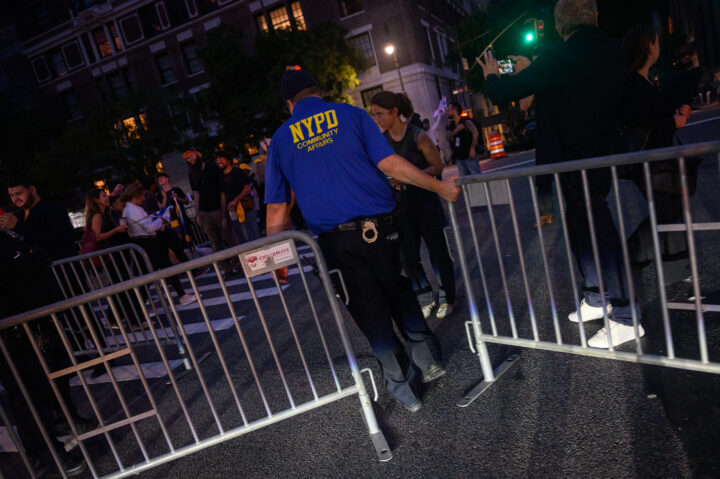
NYPD officers set up barricades separating pro-Israel and anti-Israel protesters on Sept. 25, 2025 in New York City.
The final version of the New York state “buffer zone” legislation passed by the state Legislature on Tuesday makes it a Class B misdemeanor — one of the lowest levels of criminal offense — to “knowingly” infringe on the right of access or egress to a religious institution, or to cause those entering or exiting to fear for their safety from a distance of less than 50 feet.
The language is less punitive than the legislation that Gov. Kathy Hochul initially endorsed, which would have made it a low-level felony for demonstrators to obstruct doorways and driveways at houses of worship. But the 50-foot enforcement zone in the final draft is twice as large as the one described in the earlier versions of the bill, and would apply to sidewalks as well as private parking lots and other entry points.
The measure explicitly covers community centers, as well as any other sort of facility that “a reasonable person would know that religious adherents collectively recognize as a place to regularly gather for or hold religious services, observance, prayer, assembly, education, instruction, or devotional practice” — indicating that the bill also shields religious schools.
UJA-Federation of New York, which became a leading proponent for the measure following pro-Hamas protests that targeted synagogues in Manhattan and Queens, applauded the measure ahead of its passage as part of the legislative package around the New York state budget.
The Jewish advocacy group particularly praised Hochul — as well as state Sen. Sam Sutton and Assemblymember Micah Lasher — for championing the proposal.
“We commend Governor Hochul and the state legislature for taking decisive action to protect New Yorkers by passing ‘buffer zone’ legislation, ensuring that safety and security remain a top priority across our communities,” the group said in a statement to Jewish Insider. “Governor Hochul, Senator Sutton, and Assemblyman Lasher have demonstrated strong leadership in their unwavering effort to help ensure safe access to critical community institutions and safeguard the right to worship free of harassment and intimidation.”
The state legislation is distinct from a recently passed city law compelling the NYPD to develop formal protocols for deploying security perimeters around houses of worship during protests. Both measures, as well as a separate New York City bill to establish security perimeter policy around schools — vetoed by Mayor Zohran Mamdani, but since modified and reintroduced in the New York City Council — have received criticism from civil liberties groups, who allege they could interfere with First Amendment protections.
Hochul, for her part, heralded the measure as a victory for freedom of worship. The measure goes under her pen Tuesday evening, her office told JI.
“Every New Yorker should be able to enter their house of worship and practice their religion without fear,” the governor said in a statement. “As we’re witnessing an alarming rise in hate-fueled attacks and blatant antisemitism, I’m grateful our buffer zones legislation has passed and New Yorkers will be safer because of it.”
Moreno said at an event commemorating Jewish American Heritage Month that he would push for the SACRED Act to be passed by unanimous consent in the coming days

Kevin Dietsch/Getty Images
U.S. Sen. Bernie Moreno (R-OH) participates in a Senate Commerce, Science, and Transportation Committee hearing in the Russell Senate Office Building on January 28, 2025 in Washington, DC.
Sen. Bernie Moreno (R-OH) said Wednesday that he plans to call on the Senate to pass the SACRED Act, legislation imposing restrictions on protests around synagogues and other religious institutions, by unanimous consent.
The effort could be derailed by opposition from any one lawmaker, but highlights the momentum and desire by some on Capitol Hill to pass “buffer zone” legislation or other measures to combat antisemitism, which Congress has struggled to do on several occasions since Hamas’ Oct. 7, 2023, attacks on Israel and the ensuing spike of antisemitism.
“’I’m going to get the SACRED Act done,” Moreno said at a breakfast event held on the Hill by Jewish organizations commemorating Jewish American Heritage Month. “My plan is in the next day or two to put the SACRED Act on the floor of the United States Senate with unanimous consent, get that passed.”
The SACRED Act, which was introduced in late April in the House by Reps. Tom Suozzi (D-NY) and Max Miller (R-OH), would create criminal and civil penalties for individuals who attempt to intimidate or obstruct someone to prevent them from entering or exiting a place of worship, within 100 feet of a religious institution.
A Senate version of the bill has not yet been introduced. Republicans and outside advocates are also working on alternative buffer zone legislation that would likely take a different approach than Suozzi’s bill.
The breakfast event was organized by the Combat Antisemitism Movement, the Jewish Federations of North America, the Conference of Presidents of Major American Jewish Organizations and the Weitzman Museum of Jewish American History.
Other attendees included Sen. David McCormick (R-PA) and Reps. David Kustoff (R-TN), Haley Stevens (D-MI), Tim Kennedy (D-NY), Josh Gottheimer (D-NJ), Virginia Foxx (R-NC), Debbie Wasserman Schultz (D-FL), Wesley Bell (D-MO), Kim Schrier (D-WA), Brad Schneider (D-IL), Randy Weber (R-TX), Don Bacon (R-NE), Jim Jordan (R-OH), Dan Goldman (D-NY), Rick Allen (R-GA) and Randy Fine (R-FL).
Sam Salz, one of the first Orthodox Jewish NCAA Division I football players, was the keynote speaker.
Bacon, who is retiring at the end of his term, said that he’s concerned about the rising antisemitism on both sides, including on the right within the Church.
He said that some are rejecting and twisting scripture “just like Nazi Germany did in the 1930s and just like we’ve seen throughout history, where we’ve seen antisemitism using the Bible to condone it.”
Making reference to Rep. Thomas Massie (R-KY), he called it “just wrong” for Massie to blame Israel for his loss in his concession speech on Tuesday, also condemning Democratic Texas candidate Maureen Galindo, who has espoused a range of virulently antisemitic sentiments.
The new bill narrows the language around educational institutions to build a veto-proof majority in the council
John Lamparski/Bloomberg via Getty Images
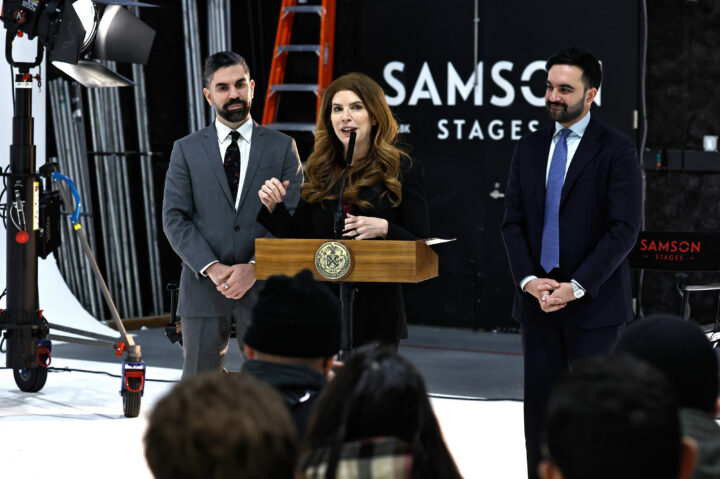
Julie Menin, speaker of the New York City Council, and Mayor Zohran Mamdani on Jan. 12, 2026.
New York City Council Speaker Julie Menin will back fresh legislation to compel the NYPD to establish formal protocols for deploying buffer zones around schools during protests — a push Menin said will sail through the council with more than enough votes to beat any effort from Mayor Zohran Mamdani to block it.
The move comes a month after Mamdani exercised his veto power — for the first and only time to date — in order to stop a similar bill from becoming law, even as he allowed another measure to establish police policy for buffer zones around houses of worship to go into effect.
In his explanation of his decision to veto, Mamdani cited concerns from unions that the blocked measure could interfere with their demonstrations around college facilities, even though the proposal contained an explicit labor carveout.
In a press conference on Wednesday, Menin characterized this as a misunderstanding — one the new legislation will rectify by applying exclusively to early childhood education facilities and “most K-12 schools,” and “explicitly excluding libraries, teaching hospitals, colleges and universities.”
“That will more clearly focus the legislation on the most vulnerable students,” Menin told reporters. “These students were always at the core of the legislation.”
Bronx Councilman Eric Dinowitz, chairman of the Jewish Caucus, introduced the first school security perimeter bill as part of a Menin-backed package of legislation to combat antisemitism. But sources told Jewish Insider that Manhattan Councilwoman Elsie Encarnacion will carry the new version.
Encarnacion’s office did not immediately reply to a JI request to confirm this.
Menin maintained that she had whipped enough votes to pass the original Dinowitz bill over Mamdani’s veto, but chose not to “jam through an override” while her colleagues had lingering qualms regarding higher education institutions. She also denied the new iteration represented a “watering-down” of the original proposal.
“What our weeks of conversation revealed was that there was a considerable number of members who wholly support the intent of the legislation, but who have concerns about which educational facilities are included,” she said. “We heard them, and now we’re choosing to address them rather than dismiss them.”
The mayor’s team said it would wait to review the text of the bill before weighing in.
“The Mamdani administration has not seen the specific legislative language, and we look forward to reviewing it,” Deputy Press Secretary Sam Raskin said. “The mayor believes New York City must remain a place where students can access their schools safely as well as exercise their constitutional right to protest.”
The organizations collectively called the mayor’s decision to block bill that would standardize NYPD policy around schools during protests ‘a profound failure’
Michael M. Santiago/Getty Images
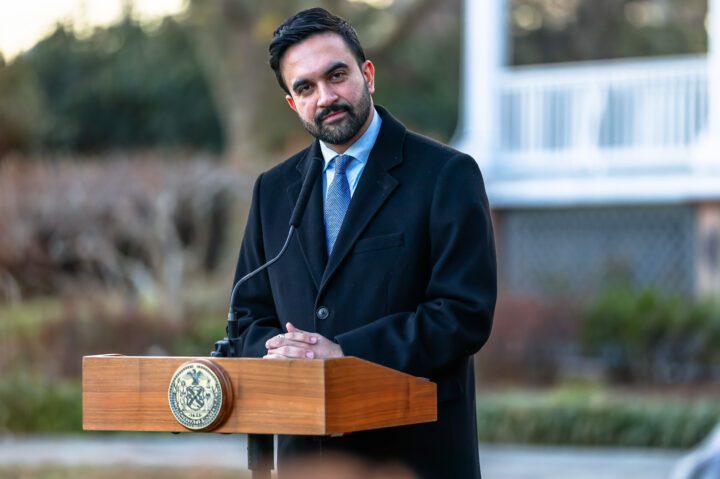
Mayor Zohran Mamdani speaks at a press conference during moving day at Gracie Mansion on January 12, 2026 in New York City.
New York City Mayor Zohran Mamdani exercised his veto power for the first time since entering office on Friday to block a bill that would standardize NYPD policy around protests at educational institutions.
Mamdani had just one day left to block the two “buffer zone bills” that the City Council passed last month: the other measure, backed by Council Speaker Julie Menin and passed with a veto-proof majority, compels the police commissioner to develop formal protocol for security perimeters that ensure access and egress from religious buildings during demonstrations. That proposal went untouched and passed into law automatically — but the schools bill, which contains similar language but did not pass with a veto-proof majority, was struck down.
Speaking to reporters after an unrelated event Friday morning, the mayor cited what he described as “constitutional concerns” and union objections to possible infringement on their right to picket — even though the measure contained a carveout for labor action.
“It carries [these concerns] because unlike in the first piece of legislation, which is balancing the right to protest and the right to prayer — both of which are not just sacrosanct in our city but also constitutionally — the second does not have a counterbalance to the right to protest,” he said, suggesting that this exposed the proposal to legal challenge. “It also defines educational institutions in such a broad manner that it includes museums, libraries, teaching hospitals, things of that nature.”
The city’s leading Jewish groups issued a rare united response, highlighting the protests that have targeted yeshivas and gathering places for Jewish student groups in recent years.
“We are deeply disappointed by Mayor Mamdani’s decision,” said the UJA-Federation of New York, the Anti-Defamation League of New York/New Jersey, Jewish Community Relations Council of New York, American Jewish Committee New York, the Conference of Presidents of Major American Jewish Organizations, the New York Board of Rabbis, Orthodox Union, The Rabbinical Assembly, Union for Reform Judaism, StandWithUs and Teach NYS. “This veto is a profound failure of City Hall to demonstrate to all New Yorkers that our safety is a priority.”
Bronx Councilman Eric Dinowitz, the lead sponsor of the bill, highlighted that it would merely obligate the NYPD to create a uniform policy for security perimeters, already frequently enforced during protests. He pushed back on claims that it would infringe on First Amendment rights.
“Students deserve safety as they enter and exit their school buildings, and New Yorkers deserve transparency from the NYPD,” Dinowitz said in a statement. “The mayor promised to keep New Yorkers safe and increase police transparency. By vetoing this bill, he is breaking yet another campaign promise.”
Sources indicated to Jewish Insider that they would try to whip votes to secure the necessary support from the City Council to override the mayor’s decision. The city bills are distinct from state-level proposals Gov. Kathy Hochul has endorsed that would establish a felony penalty for protesters who come within 25 feet of the doorways and driveways of religious institutions and abortion clinics.
Menin, Mark Levine and Brad Hoylman-Sigal — the most senior Jewish elected officials in NYC — beseeched the Jewish community not to flee the city despite tensions with the mayor

Vladimir Kolesnikov/Michael Priest Photography
New York City Council Speaker Julie Menin, Comptroller Mark Levine and Manhattan Borough President Brad Hoylman-Sigal speak at 92NY on April 22, 2026.
New York City Council Speaker Julie Menin warned Wednesday morning that if Mayor Zohran Mamdani vetoes the council’s legislation intended to regulate protests at religious and educational sites, the city will face “more divisiveness,” calling the decision a critical test for the mayor.
The bills, which include measures to create standard NYPD policy for deploying buffer zones during protests at educational and religious facilities, face a potential veto as Mamdani has repeatedly declined to take a stand on the issue. He has acknowledged concerns against the legislation from left-wing activists and civil rights groups who have targeted synagogues and yeshivas with anti-Israel demonstrations, and has until the end of this week to veto the bills or they become law automatically.
“We need less divisiveness. I really hope — and I’ve said this to the mayor — that there is not a veto of the package of bills. That’s necessary. It will create much more division,” Menin said during a panel discussion at 92NY on “the future of being Jewish in New York,” featuring the city’s most senior Jewish elected officials: Menin, who is the first Jewish council speaker, Comptroller Mark Levine and Manhattan Borough President Brad Hoylman-Sigal.
The panel, moderated by 92NY CEO Seth Pinsky, comes as the city has experienced historic levels of antisemitism in the wake of the Oct. 7, 2023, terrorist attacks — and as Jews navigate a tense relationship with a mayor who has held hostile views towards several key communal issues. New York City has the largest population of Jews outside of Israel.
Asked by Pinsky what advice each would give to Mamdani to try to reassure the roughly 70% of the Jewish New York City electorate that did not vote for him, Hoylman-Sigal called on Mamdani to “follow the tradition of every mayor preceding him [since 1951] and visit Israel.”
He added that Mamdani already has some “really good Jewish advisors,” including Phylisa Wisdom, a progressive Jewish leader Mamdani tapped in February to run the Mayor’s Office to Combat Antisemitism. A range of Jewish Democratic politicians and advocates had lauded Wisdom’s selection, though she has alienated some Orthodox and Hasidic Jewish leaders over her work criticizing the secular education taught at yeshivas in the past.
Hoylman-Sigal’s assertion that the mayor’s heart “is in the right place” when it comes to the Jewish community was met with a chorus of “boos” from the audience.
Addressing the city’s long-standing Israel bonds investments, which Mamdani has called to end in a key source of tension for him and Levine, Levine said the investments “are not political [and] shouldn’t be political.”
“Israel bonds have never missed a payment in 70 years,” said Levine. “And by the way, we’ve had no protests about our investments in Saudi Arabia, our investments in Pakistan or China.”
All three Jewish leaders echoed the sentiment that despite a turbulent past few years, the New York City Jewish community remains resilient, and urged New Yorkers not give into the rising calls to decamp to Florida.
“Absolutely stay in New York,” said Menin. “This is not a time to lose hope. Hopefully the three of us here can embody the future of the commitment to fighting antisemitism, the commitment to supporting the Jewish community. This is a time to lean into it as opposed to shy away from it. New York is a city that has been a beacon of inclusion and tolerance; we need to make sure that it stays that way.”
“I believe the Jewish community in New York City is stronger than it’s ever been,” said Levine, who praised Mamdani’s decision to retain former Mayor Eric Adams’ NYPD commissioner, Jessica Tisch, who is Jewish and openly identifies as Zionist.
“In many synagogues, attendance is way up. Jewish New Yorkers are active in ways they haven’t been. We’ve seen new coalitions come together … This engagement gives me real hope for the future,” continued Levine.
“My wish looking forward to the next 25 years is that we see a community that fought — that didn’t move to Miami with its bad bagels — and that we kept this story going of what is really one of the most glorious Jewish communities.”
The New York governor defended her plan to establish a felony penalty for protesters who come within 25 feet of a religious institution
Will Waldron/Albany Times Union via Getty Images
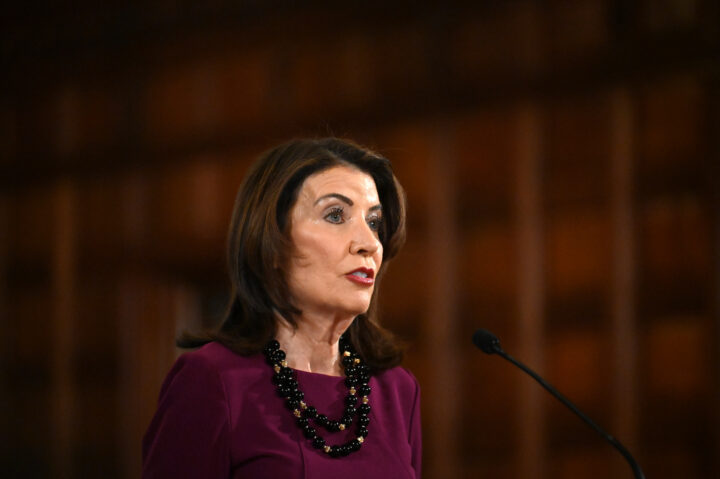
Gov. Kathy Hold takes questions following a roundtable with local government leaders on housing development on Monday, March 23, 2026, at the Capitol in Albany, N.Y.
New York Gov. Kathy Hochul issued a challenge Wednesday to those seeking to challenge her plan to penalize protesters who get too close to religious institutions — “Bring it on.”
Announcing new state programs to provide support and security for organizations deemed “vulnerable to hate crimes,” the governor, a Democrat, took questions regarding her proposal to bar demonstrations of more than two people from occurring within 25 feet of a house of worship. Violators would potentially face felony charges.
“I believe I have the right to protect people’s constitutional right to free exercise of religion,” Hochul told reporters when asked if she had concerns whether the legislation might provoke challenges on First Amendment grounds. “So if that means we test it in court, bring it on.”
Hochul’s bill, currently under consideration in the state Legislature, differs significantly from “buffer zone” legislation recently passed in the New York City Council: The municipal measure does not include new criminal penalties, but simply compels the NYPD to establish a written policy for securing access and egress for worshippers during protests. It originally suggested that police might keep rallies up to 100 feet from doorways and driveways at religious facilities, but Council Speaker Julie Menin’s team removed such language following consultations with attorneys and local law enforcement.
Observers consider the draft statute in Albany much stronger, and passing it has become a priority for leading Jewish organizations, after pro-Hamas demonstrators massed outside synagogues in Queens and Manhattan in recent months. Civil liberties groups have complained the law would restrict free speech. One reporter asked why the bill did not establish an even larger protest-free zone.
“I think 25 feet is reasonable,” Hochul said at the event.
The Supreme Court has in the past approved of limited restrictions on rallies so long as the rules are narrowly tailored and do not discriminate based on the content of demonstrators’ speech. But it also has struck down buffer-zone laws applying to abortion clinics for failing to meet those standards.
Council Speaker Julie Menin says the mayor ‘hasn’t indicated’ he will veto her signature legislation
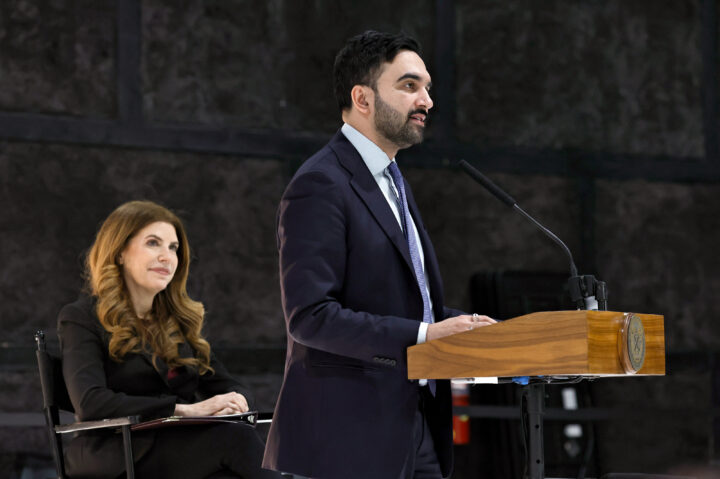
John Lamparski/Bloomberg via Getty Images
Julie Menin, speaker of the New York City Council, left, and Zohran Mamdani, mayor of New York, during an announcement in Brooklyn, New York, on Jan. 12, 2026.
The New York City Council passed a suite of legislation Thursday intended to battle antisemitism — and to formalize NYPD policy toward protests at religious and educational facilities — leaving it up to Mayor Zohran Mamdani to try to block the bills or let them become law.
Council Speaker Julie Menin told reporters before the vote that she’s received no signal that Mamdani would veto her signature bill, which would compel the city’s police commissioner to lay out official department procedure for its longstanding practice of establishing buffer zones around religious institutions during protest activity.
Mamdani has repeatedly refused to take a stand on the issue, though he has acknowledged concerns against the bill from civil rights organizations and left-wing activists in his base who have targeted synagogues and yeshivas with anti-Israel demonstrations.
“I have many conversations with the mayor, we meet one-on-one all the time. He hasn’t indicated to me that he will do that,” Menin said when asked about the potential for a veto.
The NYPD told the Council it had “no objections” to a revised version of the proposal at a council hearing in February, which would typically signal the mayor, who oversees the police department, intends to sign the legislation, or take no action, at which point it would automatically become law after 30 days. The bill had 35 co-sponsors and passed with 44 of 51 council members voting in favor, well in excess of the two-thirds majority needed to override a mayoral veto.
Far closer was the vote on a bill advanced by Bronx Councilman Eric Dinowitz, chair of the body’s Jewish Caucus, which would similarly obligate Police Commissioner Jessica Tisch to create formal protocol for police security perimeters — but near educational institutions rather than religious ones. Michael Gerber, the NYPD’s deputy commissioner for legal affairs, expressed hesitation as to this measure at last month’s hearing, arguing that a single uniform policy may not be appropriate to police actions around private property.
Dinowitz maintained after the vote that the bill’s language makes clear the NYPD should only establish perimeters around entrances and exits onto public parks and sidewalks, not school facilities themselves.
“We wanted to be clear that the intent of the bill is not to police what’s going on at college campuses,” Dinowitz told reporters.
Still, the bill passed with just 30 votes, four shy of what it would require to overcome a veto.
The assistant attorney general for civil rights said the DOJ will pursue those funding, training and supporting groups such as American Muslims for Palestine
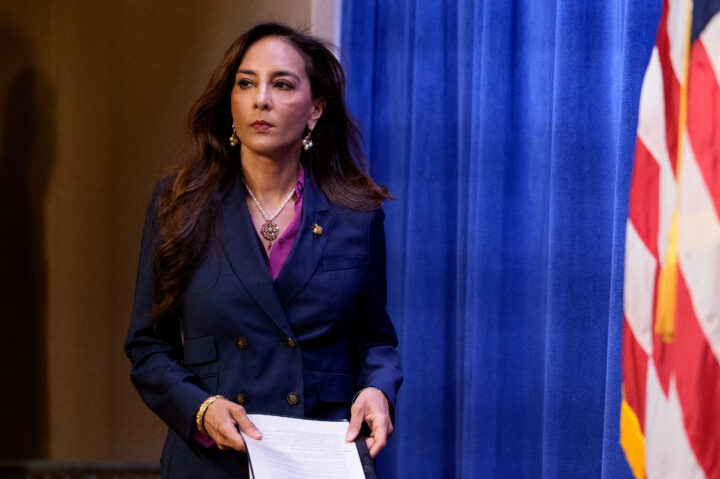
Andrew Harnik/Getty Images
Assistant Attorney General for Civil Rights Harmeet Dhillon arrives for a news conference at the Justice Department on September 29, 2025 in Washington, DC.
Harmeet Dhillon, the assistant attorney general for civil rights, said the Justice Department intends to pursue and ultimately shut down groups that have engaged in disruptive protests at synagogues and other antisemitic activities, as well as those supporting those groups.
“We are investigating, prosecuting, and we will bring these groups and these individuals to justice,” Dhillon said. “We intend to bring strong cases that dismantle these groups at their very root so that these unlawful attacks can be stopped once and for all.”
She said her division’s work includes pursuing those funding, training and supporting groups such as American Muslims for Palestine and the Party for Socialism and Liberation, which she said are engaging in “acts of domestic terrorism.”
Dhillon said that many of the groups behind antisemitic attacks are also involved in other activities, including “unlawful obstruction” of Immigration and Customs Enforcement officers.
The assistant attorney general said that Jewish communities around the country that she’s engaged with “feel like they’re under a coordinated attack and that authorities aren’t doing enough to help them,” adding that she is “ashamed as an American, to hear that groups have acted with impunity.”
She alluded to numerous pending investigations of disruptions at synagogues, of civil rights violations on campuses and of discrimination in zoning and land use approvals, vowing that the DOJ “will not let this stand.” She emphasized that the DOJ has been acting “swiftly and decisively” in response to acts of antisemitism and attempted attacks.
Dhillon said that the DOJ’s invocation of the Freedom of Access to Clinic Entrances (FACE) Act in prosecuting individuals for their involvement in a demonstration outside New Jersey’s Congregation Ohr Torah has become a model that has “paved the way” for its use in other cases to defend other synagogues and houses of worship for other groups. She said that there are more FACE Act investigations underway, related to both Jewish and Christian organizations.
The FACE Act bars the use of force, threats or obstruction to block access to reproductive health services or to obstruct the right to worship. It has previously been applied in cases of demonstrators blocking abortion clinics, but the DOJ under the Trump administration has applied it in cases of protesters blocking of houses of worship.
“For too long, groups and individuals acted as if they were above the law when attacking people of faith,” Dhillon said. “They engaged in a coordinated campaign designed to intimidate Jewish communities from even holding events at synagogues. Their methods are unlawful.”
Speaking at a conference on antisemitism organized by The George Washington University Program on Extremism, Dhillon also praised GW President Ellen Granberg “for standing up to these attacks and being a leader in this area,” pushing back on antisemitism on campus.
Plus, White House press corps welcomes Hamas-friendly outlet
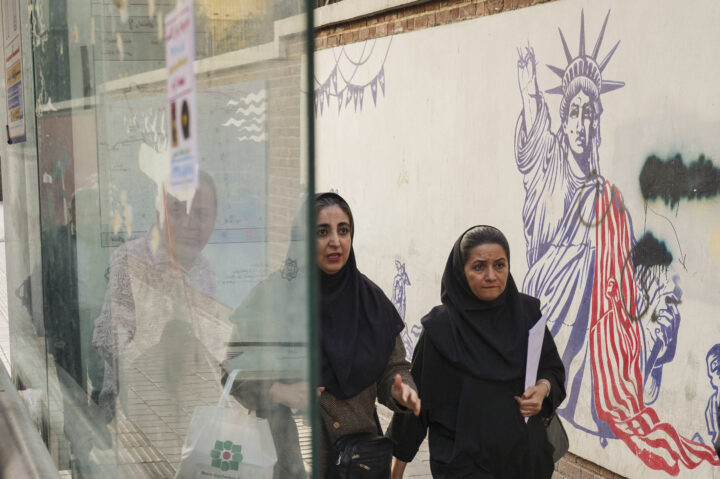
YAR/Middle East Images/AFP via Getty Images
Pedestrians walk past a mural bearing anti-American symbols on the outer wall of the former U.S. Embassy, now called the "U.S. Den of Espionage Museum," in Tehran, Iran, on October 26, 2025.
Good Monday afternoon!
This P.M. edition is reserved for our premium subscribers — offering a forward-focused read on what we’re tracking now and what’s coming next.
It’s me again — Danielle Cohen-Kanik, U.S. editor at Jewish Insider and curator, along with assists from my colleagues, of the Daily Overtime. Please don’t hesitate to share your thoughts and feedback by replying to this email.
📡On Our Radar
Notable developments and interesting tidbits we’re tracking
After weeks of rising tensions, the U.S. and Iran are back on the diplomatic track: White House Special Envoy Steve Witkoff is expected to meet with Iranian Foreign Minister Abbas Araghchi in Istanbul, Turkey, on Friday, Axios reports, possibly alongside Jared Kushner and the foreign ministers of several countries including Turkey, Qatar, Egypt, Oman, the UAE, Saudi Arabia and Pakistan.
What exactly will be up for discussion in the first meeting between the U.S. and Iran since the 12-day war last June is unclear — Iranian officials have said only nuclear activity is on the table, while the U.S. has traditionally maintained support for a comprehensive deal covering nuclear, missile and terror activity…
Before the dialogue in Turkey, Witkoff is slated to stop in Israel tomorrow to consult with Prime Minister Benjamin Netanyahu and Lt. Gen. Eyal Zamir, the IDF chief of staff, and hold meetings in the UAE and Qatar…
The parties are still covering all their bases: The U.S. and Israeli navies conducted a joint “routine maritime exercise” in the Red Sea today, after CENTCOM warned Iran’s Islamic Revolutionary Guard Corps on Friday to “avoid escalatory behavior at sea”…
Back in Washington, the White House tapped Drop Site News, a publication founded in 2024 to offer reporting explicitly hostile to Israel over the war in Gaza and the U.S. response to it, for the press corps’ new media seat on Sunday, Jewish Insider’s Gabby Deutch reports.
Drop Site has credulously interviewed several Hamas leaders, vigorously denied claims that Hamas terrorists raped anyone during the Oct. 7 attacks in Israel and supported the Iranian regime during the anti-government protests last month. Its inclusion among the outlets in Sunday’s press rotation (when no press briefing was held, so its reporter did not get the opportunity to ask a question) was a marked contrast to the mostly right-wing outlets that are usually selected…
And on the campaign trail, Sen. Tina Smith (D-MN) came out today in support of Minnesota Lt. Gov. Peggy Flanagan in the closely fought Democratic primary to replace her, joining fellow progressives Sens. Bernie Sanders (I-VT) and Elizabeth Warren (D-MA) in supporting Flanagan over the more moderate Rep. Angie Craig (D-MN). The endorsement comes days after fundraising reports for the final quarter of 2025 showed Craig raised double what Flanagan brought in ($2 million and $1 million, respectively)…
In New York City, Comptroller Mark Levine endorsed Rep. Dan Goldman (D-NY) in his primary against former Comptroller Brad Lander. Lander, challenging Goldman from the left on issues including his support for Israel, is endorsed by Mayor Zohran Mamdani, further highlighting divisions between Levine and the mayor as the two have sparred over issues including city investment in Israel bonds…
Jacobin profiles Diana Moreno, the democratic socialist running to fill Mamdani’s Queens seat in the state Assembly on a platform highlighting her progressive credentials as an organizer and immigrant.
“Moreno, wearing a keffiyeh, is featured in Mamdani’s launch video, pushing a stroller carrying her newborn son, saying ‘I want to raise my kid in New York.’ ‘I got pregnant one month after the genocide in Gaza started. My relationship to motherhood cannot be divorced from witnessing the world dehumanize children in Palestine,’” she said…
In New York’s 7th Congressional District, Councilmember Julie Won filed paperwork today to join the competitive race to replace retiring Rep. Nydia Velázquez (D-NY). All three candidates for the highly progressive district — which include Assemblymember Claire Valdez, who has the backing of Mamdani and the DSA, and Brooklyn Borough President Antonio Reynoso, who has been endorsed by Velázquez — have made comments critical of Israel.
On the one-year anniversary of the Oct. 7 attacks, Won expressed hope for a ceasefire and return of the hostages, mourning the 1,200 people “brutally killed” by Hamas in Israel and the “over 40,000 brutally killed in Palestine,” a figure Israel disputed at the time.
When a campaign last summer opposing a neighborhood development plan in her district invoked antisemitic rhetoric, Won denounced the move while maintaining her support for the “free Palestine” movement, saying in a statement, “It’s extremely alarming to me that someone would go so low to co-opt a movement of free Palestine for their own purpose — to incite anger and potentially violence … It’s shameful to compare Long Island City to Gaza — where people are literally losing their lives, land and starving to death — to this rezoning and blaming it on a local Jewish landlord who isn’t even part of the rezoning”…
Former Rep. Colin Allred (D-TX), who switched his candidacy from running for the open Texas Senate seat to its 33rd Congressional District, endorsed Rep. Jasmine Crockett (D-TX) for the Senate over his former primary rival, state Sen. James Talarico. Allred alleged that Talarico had called him a “mediocre Black man” and took aim at Talarico’s platform as a devout Christian: “You are not saving religion for the Democratic Party or the left,” Allred said…
⏩ Tomorrow’s Agenda, Today
An early look at tomorrow’s storylines and schedule to keep you a step ahead
Keep an eye out in Jewish Insider for the view from Washington on the continued possibility of U.S. strikes on Iran, even as diplomatic efforts unfold.
We’ll be watching for indications out of White House Special Envoy Steve Witkoff’s meetings in Israel on where the parties stand on engaging with Tehran.
It will be a busy day on the Hill, amid ongoing efforts to end the partial government shutdown: The House Foreign Affairs Committee will hold a hearing on U.S. policy towards Lebanon and “obstacles to dismantling Hezbollah’s grip on power” with testimony from several Washington Institute experts; the Senate Judiciary Committee will hold a hearing on the Nazis’ use of Swiss banks; the Helsinki Commission will hold a hearing on Russia’s influence in post-Assad Syria; and the Senate Foreign Relations Committee will hold a hearing on terrorism in North Africa.
The Jewish Community Relations Council of Greater Washington will host its Maryland advocacy day with Gov. Wes Moore as keynote speaker.
The World Governments Summit will kick off in Dubai, United Arab Emirates, with speakers including former Secretary of State Mike Pompeo, Lebanese Prime Minister Nawaf Salam, Spanish President Pedro Sánchez, Israeli philanthropist and Mobileye CEO Amnon Shashua and several other world leaders.
Stories You May Have Missed
DIPLOMATIC SPAT
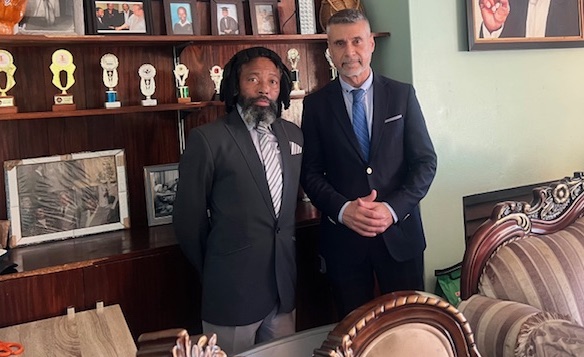
Pretoria angered after Israel offers parched region water management aid; Jerusalem declares South African diplomat serving Palestinians persona non grata
RHOADES’ RUN
Crystal Rhoades, the clerk of the District Court in Douglas County, is running on an unapologetically pro-Israel platform
The lawmakers said the groups have been ‘conspicuously silent’ after showing ‘no hesitation’ in condemning Israel
Kamran / Middle East Images / AFP via Getty Images
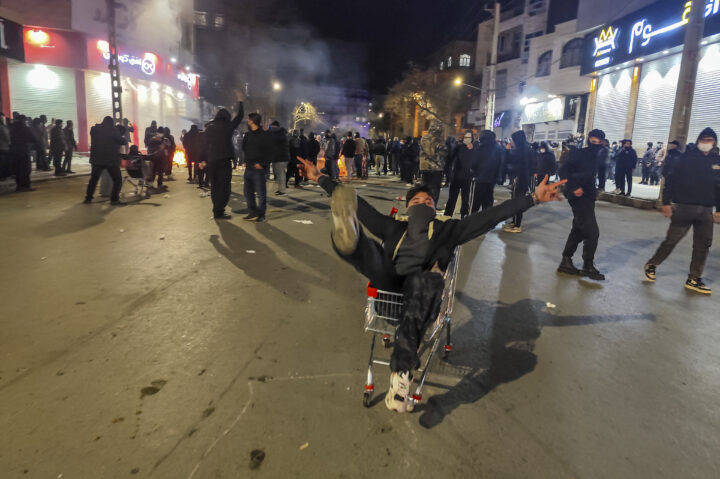
Iranians gather while blocking a street during a protest in Kermanshah, Iran on January 8, 2026.
Reps. Josh Gottheimer (D-NJ), Claudia Tenney (R-NY) and Jared Golden (D-ME) blasted a roster of progressive groups for their silence regarding the Iranian regime’s violent crackdown on recent protests, following the organizations’ outspoken criticisms of Israel over the past two years.
In a letter sent on Monday addressed to the League of Conservation Voters, Democratic Socialists of America, Sierra Club, Council on American-Islamic Relations, Jewish Voice for Peace, Queers for Liberation, Sunrise Movement and Justice Democrats, the lawmakers said that “as the Iranian regime guns down peaceful protesters, tortures dissidents, and shuts off the internet to hide its crimes, your voices are unfortunately and conspicuously silent.”
They said the groups had “shown no hesitation in loudly and unequivocally condemning our democratic ally Israel, after terrorists brutally raped, burned alive, decapitated, and murdered more than 1,200 people, including dozens of Americans.”
They called for the groups to speak out against the Iranian regime, in alignment with their own professed principles.
“The Iranian government is violently repressing its own people for demanding basic freedom and dignity. Silence in the face of such clear oppression is a failure to uphold the principles you claim to defend,” the letter continued. “If you claim to stand against oppression, your outrage cannot be selective.”
Plus, car ramming suspect charged with multiple hate crimes
John Lamparski/Bloomberg via Getty Images
Julie Menin, speaker of the New York City Council, and Mayor Zohran Mamdani on Jan. 12, 2026.
Good Thursday afternoon!
This P.M. edition is reserved for our premium subscribers — offering a forward-focused read on what we’re tracking now and what’s coming next.
It’s me again — Danielle Cohen-Kanik, U.S. editor at Jewish Insider and curator, along with assists from my colleagues, of the Daily Overtime. Please don’t hesitate to share your thoughts and feedback by replying to this email.
📡On Our Radar
Notable developments and interesting tidbits we’re tracking
After a car repeatedly drove into Chabad Lubavitch world headquarters in Brooklyn last night, New York City Council Speaker Julie Menin announced today she is creating a council task force to combat antisemitism, even as Mayor Zohran Mamdani has said he plans to retain the mayor’s Office to Combat Antisemitism (and told local news today he’s “in the final stages” of hiring someone to lead it). The council task force’s co-chair is Councilwoman Inna Vernikov, an outspoken critic of Mamdani…
The suspect arrested in the car ramming has been charged with attempted assault, reckless endangerment, criminal mischief and aggravated harassment, all enhanced as hate crimes, the NYPD announced this afternoon…
And in the wake of several protests that have disrupted New York Jewish communities in recent months, Menin also introduced a bill that would ban protests within 100 feet of a house of worship — more stringent than Gov. Kathy Hochul’s proposal of a 25-foot ban.
“The First Amendment right to peacefully protest is sacrosanct. What’s not sacrosanct is inciting violence, intimidation and harassment,” Menin told The New York Times, though some experts cast doubt on the constitutionality of the measure…
Rep. Tim Walberg (R-MI), the chair of the House Committee on Education & Workforce, sent a letter to Evanston, Ill., Mayor Daniel Biss — who is running for Congress to replace retiring Rep. Jan Schakowsky (D-IL) — requesting a briefing on Biss’ role in the 2024 anti-Israel encampment at Northwestern University.
Walberg alleged that Biss had failed “to protect Jewish students” at Northwestern “by refusing to give the university the police support it desperately needed to clear its violent and antisemitic encampment,” which resulted in a failure to arrest protesters who had harassed Jewish students. Biss has also drawn condemnation for allegedly walking back his pro-Israel positions once he was denied the support of AIPAC in his congressional campaign…
Rep. Haley Stevens (D-MI) raised $2.1 million for her Senate campaign in the final quarter of 2025, she announced today, bringing her total raised to $6.8 million. But a new Emerson College poll of the race to replace Sen. Gary Peters (D-MI) shows that haul may not be making an impact among primary voters just yet — Stevens polled at 17% to state Sen. Mallory McMorrow’s 22%, with 38% still undecided.
In a general election matchup against presumptive GOP nominee former Rep. Mike Rogers (R-MI), both McMorrow and Stevens poll ahead of Rogers, 46-43% and 47-42% respectively, with 15% undecided. In all cases, physician Abdul El-Sayed, a progressive Democrat who has made his hostility to Israel a central component of his campaign, polls behind his opponents…
The Democratic primary in New York’s 17th Congressional District got a little less crowded today: Former FBI agent John Sullivan, who served as the top bureau intelligence official in Israel from 2017-2020, dropped out of the race to challenge Rep. Mike Lawler (R-NY).
“While my congressional campaign is coming to an end, my dedication to our community is not,” Sullivan wrote, telling supporters to “stay tuned.” He did not endorse any of the remaining Democratic candidates, which include front-runner Beth Davidson, a Rockland County legislator, and national security veteran Cait Conley…
The U.S. Navy dispatched an additional warship, the USS Delbert D. Black, to the Middle East in the past two days amid heightened tensions with Iran, Reuters reports, bringing the total number of destroyers in the region to six, in addition to an aircraft carrier…
The European Union voted unanimously to designate Iran’s Islamic Revolutionary Guard Corps as a terrorist organization today, Jewish Insider’s Matthew Shea reports, in a move anticipated after several countries including Italy and France rescinded their long-held objections to the move.
“Repression cannot go unanswered,” Kaja Kallas, the EU’s high representative for foreign affairs and security policy, wrote on X following the decision. “Any regime that kills thousands of its own people is working toward its own demise”…
Sens. Lindsey Graham (R-SC) and Richard Blumenthal (D-CT) introduced the “Save the Kurds Act” in response to the Syrian government’s campaign against the Kurdish-led and U.S.-backed Syrian Democratic Forces. The legislation would impose sanctions on “Syrian government officials and financial institutions, and any foreign individual who engages in any transaction, including military or financial support, with the Syrian government,” according to a press release.
The bill would also redesignate as a terror organization Hayat Tahrir al-Sham (HTS), the al-Qaida offshoot that Syrian President Ahmad al-Sharaa led before ousting dictator Bashar al-Assad. The Trump administration removed HTS’ terror designation and U.S. sanctions on Syria after al-Sharaa assumed the presidency…
A draft resolution from the Board of Peace dictating the powers of the bodies overseeing postwar Gaza seems to relegate the Gaza Executive Board — whose inclusion of Turkey and Qatar had concerned Israel — to an advisory role for another committee largely made up of White House advisors, The Times of Israel reports. The resolution, which also increases the Trump administration’s role in managing that body, still must be signed by the president…
A man was tried in federal court today for attempting to assassinate former President Joe Biden over anti-Israel animus, traveling to Georgia with a firearm in June 2024 to sneak into a presidential debate hosted by CNN so he could reach Biden, according to the Justice Department.
The man’s manifesto was addressed to “all the Palestinian journalists … and in remembrance of the ones who lost their lives along the way” and said, “It’s time we overthrow these bastards and threaten to pull a f**king D-Day on Tel Aviv,” concluding with “Free Palestine”…
A bipartisan delegation of lawmakers organized by the AIPAC-affiliated American Israel Education Foundation met with Israeli Prime Minister Benjamin Netanyahu in Jerusalem today, including Reps. Ryan Zinke (R-MT), Jen Kiggans (R-VA), Jake Ellzey (R-TX), Mike Bost (R-IL) and Don Davis (D-NC)…
⏩ Tomorrow’s Agenda, Today
An early look at tomorrow’s storylines and schedule to keep you a step ahead
Keep an eye out in Jewish Insider for a look at the legacy of constitutional lawyer and Jewish activist Nat Lewin, who turns 90 this weekend.
Several Jewish and pro-Israel organizations were invited to a meeting with Saudi Defense Minister Khalid bin Salman, who is in Washington meeting with Trump administration officials, tomorrow afternoon, JI’s Danielle Cohen-Kanik has learned, amid a sharp rise in antisemitic and anti-Israel rhetoric from the kingdom. It’s not clear which organizations will be attending, though the Foundation for Defense of Democracies confirmed it will sit down with KBS separately in the morning.
We’ll be back in your inbox with the Daily Overtime on Monday. Shabbat Shalom!
Stories You May Have Missed
PASTOR’S POLEMIC
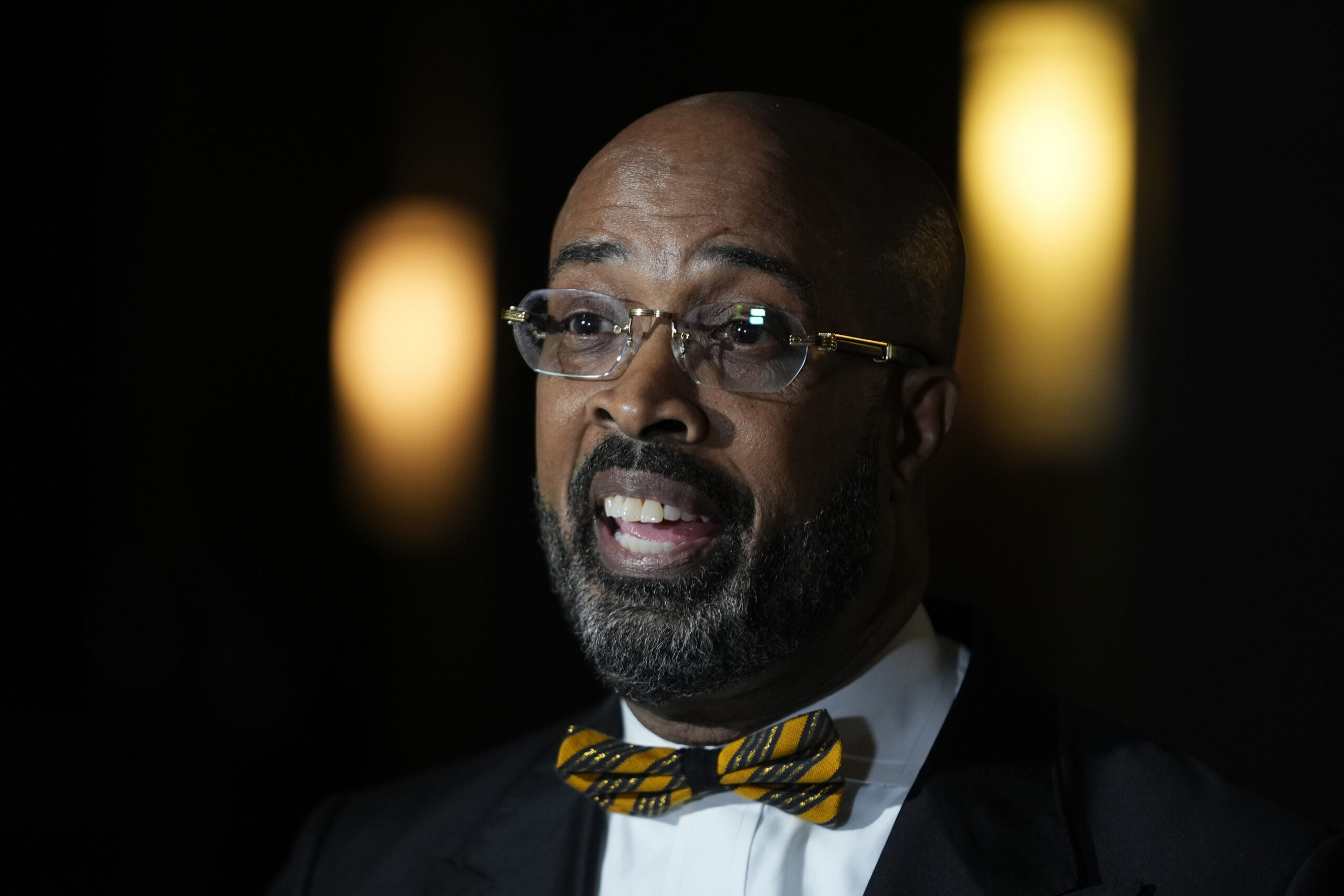
Singer told JI that his alignment with Rev. Frederick D. Haynes III delivered an anti-Israel polemic from the pulpit on Oct. 8, 2023, the day after Hamas’ attack on Israel
COMEBACK BID
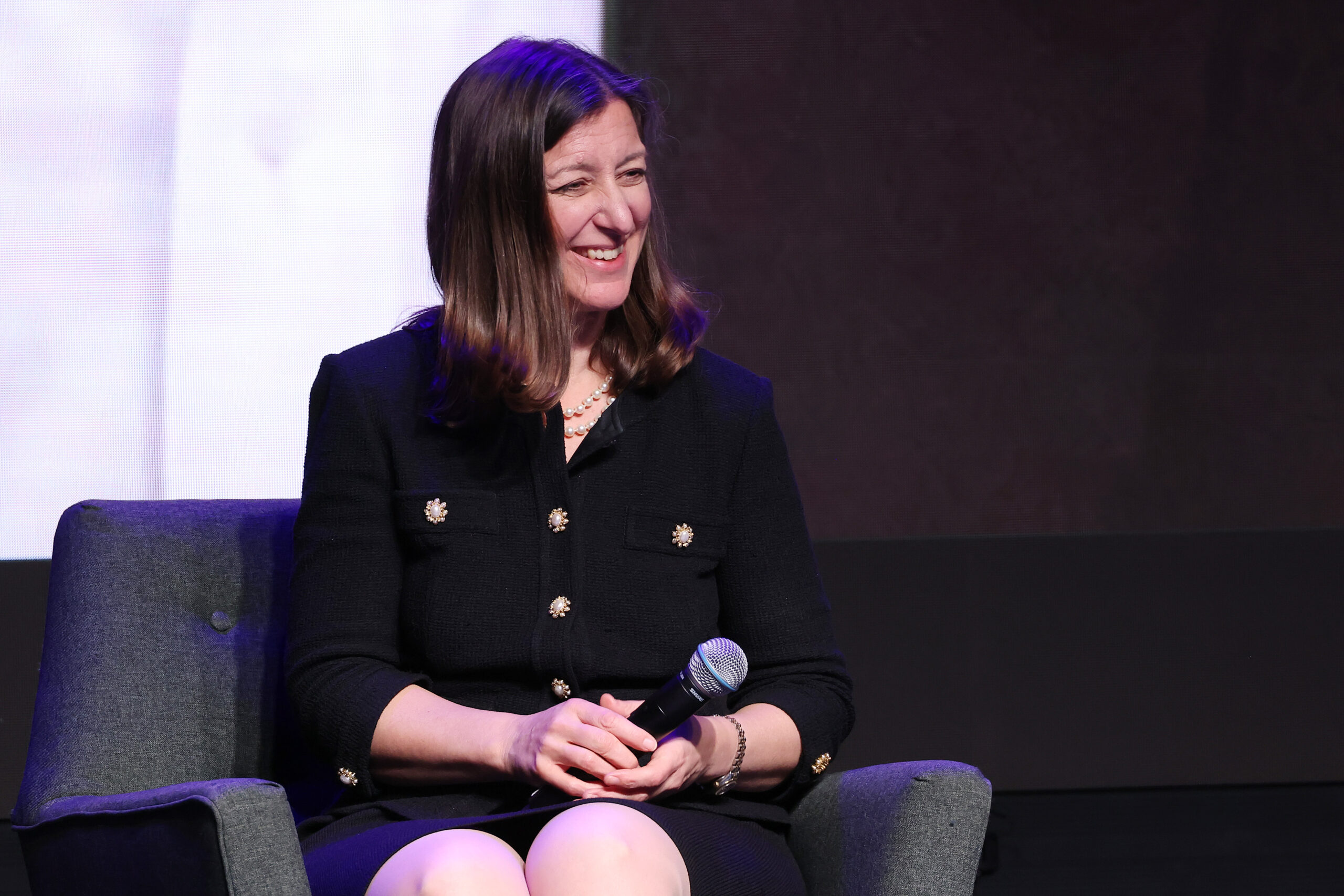
The former congresswoman told JI, ‘Anything that needs to be done to stop Iran from acquiring a nuclear weapon needs to be done’
Plus, Biden officials don't hold back on criticism of Bibi

Mass Communication Specialist 3rd Class Amber Smalley/U.S. Navy via Getty Images
Flight deck of the Nimitz-class aircraft carrier USS Abraham Lincoln (CVN 72) May 10, 2019 in the Red Sea.
Good Wednesday afternoon!
This P.M. edition is reserved for our premium subscribers — offering a forward-focused read on what we’re tracking now and what’s coming next.
It’s me again — Danielle Cohen-Kanik, U.S. editor at Jewish Insider and curator, along with assists from my colleagues, of the Daily Overtime. Please don’t hesitate to share your thoughts and feedback by replying to this email.
📡On Our Radar
Notable developments and interesting tidbits we’re tracking
President Donald Trump indicated he’s losing patience with Iran: He posted a stark warning on Truth Social this morning that a “massive Armada is heading to Iran” and “it is ready, willing, and able to rapidly fulfill its mission, with speed and violence, if necessary.”
Trump encouraged Tehran to come back to the negotiating table where he demanded it have “no nuclear weapons” — a position that differs from Israel’s, which has said Iran must not be allowed to enrich uranium at all — but made no mention of the protesters Trump had pledged to protect…
Despite Trump’s threat, Secretary of State Marco Rubio told lawmakers at a Senate Foreign Relations Committee hearing today that the “armada” of military assets being moved to the Middle East is primarily defensive, Jewish Insider’s Marc Rod reports.
Rubio noted that 30,000-40,000 U.S. troops in the region are “within the reach of an array of thousands of Iranian” drones and missiles. “We have to have enough force and power in the region, just on a baseline, to defend against that possibility,” he explained.
In addition, “the president always reserves the preemptive defensive option — in essence, if we have indications that, in fact, they’re going to attack our troops in the region,” Rubio continued, as well as security agreements to defend allies such as Israel “that require us to have a force posture in the region.”
Rubio admitted the U.S. has little clarity on who would govern Iran if the regime collapses: “I don’t think anyone can give you a simple answer as to what happens next in Iran if the supreme leader and the regime were to fall, other than the hope that there would be some ability to have somebody within their systems you could work towards a similar transition” as the U.S. has supported in Venezuela…
Rubio was also questioned by senators about the Board of Peace: He clarified that “the primary and sole focus of that board right now is to administer Phase 2 and Phase 3 of the plan in Gaza,” despite broad language in the body’s charter, and acknowledged that some European allies have declined to join over their concern that the board is competing with the U.N. “This is not a replacement for the U.N. But the U.N. has served very little purpose in the case of Gaza,” Rubio said…
As their own response to Iran’s violent suppression of protests, several European countries changed their position to support the EU designating the Islamic Revolutionary Guard Corps as a terror organization, a move they have historically opposed over fears of irreparably severing ties with Tehran.
Ahead of a Thursday meeting of EU foreign ministers in Brussels — where the bloc was already expected to approve additional sanctions on Iran — Italy, Germany and earlier today France announced they would support the designation, teeing up its approval, which must be unanimous, at tomorrow’s meeting…
The State Department found that the Palestinian Authority paid more than $200 million to terrorists and their families in 2025, the Washington Free Beacon reports, despite the PA claiming it had ended its “pay-to-slay” program last February.
The PA merely “transferred responsibility” for the payments to a new body “under the guise of social welfare,” a report provided to Congress laid out, with evidence from post offices, social media and Telegram “indicating clearly that the compensation in support of terrorism has continued”…
Biden administration officials jumped to the defense of the former president’s Israel policy after Israeli Prime Minister Benjamin Netanyahu alleged in a press conference yesterday that some IDF soldiers had been killed in Gaza due to a U.S. arms embargo that caused Israel to run out of ammunition during the Biden presidency.
Brett McGurk, Biden’s senior Middle East advisor, told Axios that Netanyahu’s comments were “categorically false” and that Biden’s “commitment to Israel’s security to include U.S. military assistance was unwavering”; diplomat Amos Hochstein slammed Netanyahu as “ungrateful to a president that literally saved Israel at its most vulnerable moment”; and former State Department antisemitism envoy Deborah Lipstadt said that to ignore Biden’s support for Israel “is to ignore history”…
Syrian President Ahmad al-Sharaa visited Moscow today where he and Russian President Vladimir Putin discussed Russia’s continued military presence in the country, Syrian state media reported. Despite its historic backing of longtime Syrian leader Bashar al-Assad, Moscow did not oppose al-Sharaa’s ouster of the dictator, though Russia has sheltered Assad and his family since they fled Damascus.
Russia has begun pulling out from its position in northeast Syria in an area still controlled by the Kurdish-led Syrian Democratic Forces, as Damascus mounts a campaign to oust them, though Moscow reportedly hopes to keep its naval and air bases on the Syrian coast…
⏩ Tomorrow’s Agenda, Today
An early look at tomorrow’s storylines and schedule to keep you a step ahead
Keep an eye out in Jewish Insider for an interview with former Rep. Elaine Luria (D-VA), as she seeks to reclaim her former seat and shore up support for Israel among her Democratic colleagues.
Pennsylvania Gov. Josh Shapiro will speak at Washington’s Sixth & I synagogue in conversation with Sen. Raphael Warnock (D-GA) about the governor’s new memoir, Where We Keep the Light.
The Hudson Institute will host a conversation with Jacob Helberg, the under secretary of state for economic affairs, as he returns from a trip around the Middle East where he brought Qatar and the United Arab Emirates into the Pax Silica initiative and signed a joint AI strategic framework in Israel.
Stories You May Have Missed
FLORIDA FIGHT
Singer told JI that his alignment with the GOP has been shaped by his Jewish faith
FOLLOW THE MONEY
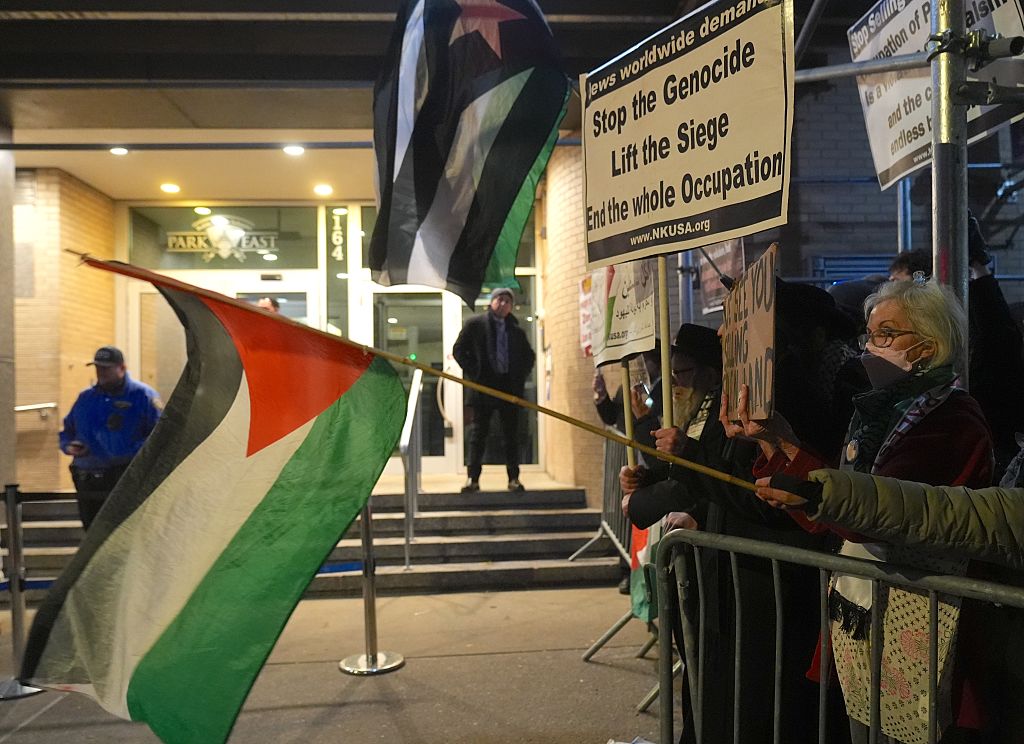
The group behind the pro-Hamas chants in Queens has a nationwide network and links to pro-terror organizations and individuals
Plus, Emory faculty revolt in defense of Iran official's daughter

MONEY SHARMA/AFP via Getty Images
Saudi Arabia's Crown Prince and Prime Minister Mohammed bin Salman (C) inspects a guard of honor during a ceremonial reception at the President House a day after the G20 summit in New Delhi on September 11, 2023.
Good Tuesday afternoon!
This P.M. edition is reserved for our premium subscribers — offering a forward-focused read on what we’re tracking now and what’s coming next.
It’s me again — Danielle Cohen-Kanik, U.S. editor at Jewish Insider and curator, along with assists from my colleagues, of the Daily Overtime. Please don’t hesitate to share your thoughts and feedback by replying to this email.
📡On Our Radar
Notable developments and interesting tidbits we’re tracking
Saudi Arabia’s shift away from its traditional alliances and towards Islamism is evoking more backlash: Asked about Riyadh’s growing rapprochement with Qatar and Turkey, Israeli Prime Minister Benjamin Netanyahu said at a press conference this afternoon that he’s following the developments and that Israel “expect[s] from anybody who wants normalization or peace with us that they not participate in efforts steered by forces or ideologies that want the opposite of peace”…
Netanyahu’s comments came shortly after Saudi Crown Prince Mohammed bin Salman held a phone call with Iranian President Masoud Pezeshkian, where MBS conveyed that “the Kingdom considers any threat or tension against Iran unacceptable”…
That’s not stopping the U.S. from hinting at the continued possibility of strikes on Iran: U.S. Central Command announced it will be conducting a “multi-day readiness exercise” in order to “demonstrate the ability to deploy, disperse, and sustain combat airpower” across its area of responsibility, which includes Iran…
And Sen. Lindsey Graham (R-SC) slammed Riyadh for other nefarious actions in the region, Jewish Insider’s Emily Jacobs reports, including its “attack” on the UAE and silence regarding the Syrian government’s campaign against the Kurds, demanding the kingdom use its influence to “keep the region from falling further into chaos.”
“Please understand that I am smart enough to know that Saudi Arabia has influence on the Syrian government, and I expect them to use it,” Graham said, adding that he is “trying to work with the administration and regional partners to prevent a bloodbath in Syria against our Kurdish allies”…
(President Donald Trump, meanwhile, had a markedly different take on Syria: He told reporters today that he had a “great conversation” with the “highly respected president of Syria” and that “all of the things having to do with Syria and that area are working out very, very well, so we’re very happy about it”…)
The U.S. Embassy in Riyadh also held its first-ever International Holocaust Remembrance Day event, writing that “Today’s modest but meaningful commemoration reflects a universal duty: protecting our shared humanity across cultures, faiths, and nations”…
With Graham eyeing Damascus and Riyadh, Sen. Ted Cruz (R-TX) took aim elsewhere, calling for the U.S. to arm protesters in Iran “NOW.” “For the Iranian people to overthrow the Ayatollah — a tyrant who routinely chants ‘death to America’ — would make America much, much safer,” he said…
Authorities in Azerbaijan arrested three people allegedly preparing an attack on the Israeli Embassy in Baku today; the men were affiliated with ISIS-K, the Afghani branch of the terror group…
The Board of Peace is attempting to formalize its processes and responsibilities, according to a draft resolution from the board obtained by The New York Times, which bestows expansive powers to its chairman — Trump — including naming the commander of the International Stabilization Force, which still has yet to be established.
The document also names White House Chief of Staff Susie Wiles and attorney Martin Edelman as members of the board, the first time they have been identified as such…
After a doctor who is the daughter of a senior Iranian government official departed from Emory University’s medical school, the professor who serves as head of Emory’s faculty leadership council criticized the school for letting her go, JI’s Haley Cohen has learned.
Noelle McAfee, a professor in Emory’s philosophy department, sent a scathing email to the university expressing concern that the school’s dismissal of Fatemeh Ardeshir-Larijani, the daughter of the secretary of Iran’s Supreme Council for National Security, was a politically motivated firing.
“It’s extremely disappointing to see that our leadership here at Emory are consistently caving to political pressure and never taking the side of faculty,” McAfee wrote, quoting an anonymous faculty member, expressing concern that Ardeshir-Larijani, whose father is responsible for the Islamic Republic’s national security, didn’t receive due process…
In the Garden State, Mussab Ali, the former Jersey City Board of Education president and champion of anti-Israel college encampments, officially launched his primary challenge to Rep. Rob Menendez (D-NJ) today, hitting Menendez on day one for supporting Israel and being endorsed by AIPAC.
“Democrats need to step up and become the party where we abandon corporate PACs, we won’t take money from groups like AIPAC, and we need to be accountable to everyday people,” Ali told the New Jersey Globe. He also enters the race with the endorsement of former Rep. Jamaal Bowman (D-NY), who was unseated in part due to his sharp criticisms of Israel…
Marking International Holocaust Remembrance Day, Chicago’s City Council voted unanimously to adopt the International Holocaust Remembrance Alliance’s working definition of antisemitism into its municipal code…
⏩ Tomorrow’s Agenda, Today
An early look at tomorrow’s storylines and schedule to keep you a step ahead
Keep an eye out in Jewish Insider for an interview with Republican Boca Raton Mayor Scott Singer, who’s hoping for a conservative shift among Jewish voters in South Florida to help him unseat Rep. Jared Moskowitz (D-FL).
“October 7: In Their Own Words,” a play drawn directly from testimonies of survivors of the Oct. 7, 2023, Hamas terror attacks, will premiere at the Kennedy Center. Read JI’s interview with the show’s playwrights here.
Secretary of State Marco Rubio will be on the Hill, testifying at a Senate Foreign Relations Committee hearing on U.S. policy towards Venezuela in the aftermath of the ouster of former President Nicolás Maduro.
Stories You May Have Missed
PROBLEMATIC POST
Kelly Neumann is serving as the fundraising co-chair for gubernatorial candidate Jocelyn Benson and Senate candidate Mallory McMorrow and has fundraised for several other Michigan Democrats
SABRA SLAM
The Portland Trail Blazers forward has emerged as one of Israel’s all-time top athletes
Plus, Kanye West claims he's 'not a Nazi' in full-page WSJ apology

Mostafa Alkharouf/Anadolu via Getty Images
Vehicle, carrying the body of the last Israeli hostage remaining in Gaza Ran Gvili, arrives the Abu Kabir Forensic Institute prior to the funeral ceremony in Tel Aviv, Israel on January 26, 2026.
Good Monday afternoon!
This P.M. edition is reserved for our premium subscribers — offering a forward-focused read on what we’re tracking now and what’s coming next.
It’s me again — Danielle Cohen-Kanik, U.S. editor at Jewish Insider and curator, along with assists from my colleagues, of the Daily Overtime. Please don’t hesitate to share your thoughts and feedback by replying to this email.
📡On Our Radar
Notable developments and interesting tidbits we’re tracking
The IDF announced this morning it had identified the remains of the final deceased hostage, Ran Gvili, in Gaza and is returning them to Israel for burial, Jewish Insider’s Matthew Shea reports, marking the end of the hostage crisis that had gripped Israel and world Jewry for nearly 850 days in the aftermath of the Oct. 7, 2023, Hamas attacks.
Beyond the hostages taken on Oct. 7, Gvili’s return means that no Israelis — living or deceased — are being held by terror groups in Gaza for the first time since 2014.
While the IDF uncovered Gvili’s body in a Muslim cemetery where Hamas had buried it, President Donald Trump told Axios that the terror group “worked very hard to get the body back. They were working with Israel on it. You can imagine how hard it was.”
“Now we have to disarm Hamas like they promised,” Trump continued, as the parties move into Phase 2 of his peace deal. For its part, Israel announced it will reopen the Rafah crossing between Egypt and Gaza in a “limited” capacity later this week.
Remarking on Gvili’s return, White House Press Secretary Karoline Leavitt added at a press conference this afternoon that “more than 20 new, additional countries have also signed up to join the newly established Board of Peace,” without naming the additions…
The New York Times lays out the latest developments in U.S.-Iran tensions, as American military assets reach the region and Iranian officials, as well as Iranian proxy terror groups, intensify their threats against the U.S. and Israel.
Joe Kent, the director of the U.S. National Counterterrorism Center, has warned Iraqi officials that if Iranian-backed militias in Iraq were to strike U.S. troops, the U.S. would retaliate, according to the Times…
Trump told Axios that the situation in regards to Iran is “in flux” but that the U.S. has “a big armada next to Iran. Bigger than Venezuela.” Still, the president left the possibility of diplomacy with Tehran open: “They want to make a deal. I know so. They called on numerous occasions. They want to talk”…
Despite the ongoing tensions, the Trump administration deported about a dozen Iranians back to Tehran yesterday, CNN reports. It’s the third such deportation flight to Iran during Trump’s second term, and the first since the regime began its violent crackdown on protesters…
Elsewhere in the region, Israeli and Lebanese officials were hosted by the U.S. Embassy in Jordan over the weekend to discuss “steps needed for a more peaceful and prosperous region,” according to the U.S. Embassy in Beirut…
Several leading Jewish and pro-Israel advocacy groups are expressing concerns about the impact of the recent rise in antisemitic and Islamist messaging out of Saudi Arabia, JI’s Matthew Kassel reports, as the Gulf kingdom’s rhetoric is increasingly raising questions about its standing as a reliable U.S. ally in the region.
Among other groups, the Anti-Defamation League said in a sharply worded social media statement last week that it was “alarmed by the increasing frequency and volume of prominent Saudi voices — analysts, journalists and preachers — using openly antisemitic dog whistles and aggressively pushing anti-Abraham Accords rhetoric, often while peddling conspiracy theories about ‘Zionist plots’”…
Turning to the U.S., progressive operative Waleed Shahid announced today that he will assume the newly created role of deputy communications director of economic justice in New York City Mayor Zohran Mamdani’s office, JI’s Will Bredderman, joining us to cover New York City Hall, reports.
Shahid, the former spokesperson for Justice Democrats, was also a leader in the 2024 Uncommitted movement, which sought to deny support to former President Joe Biden and Vice President Kamala Harris over the Biden administration’s support for Israel following the Oct. 7 attacks, and served as an advisor to former Rep. Jamaal Bowman (D-NY)…
After the fatal shooting of a man by ICE officers in Minneapolis this weekend, Gov. Tim Walz compared immigration enforcement activities in Minnesota to Anne Frank’s persecution by the Nazis, drawing condemnation from the U.S. Holocaust Memorial Museum. “Many of us grew up reading that story of Anne Frank. Someone’s going to write that children’s story about Minnesota,” Walz said at a press conference yesterday.
Without referencing Walz or ICE, the USHMM responded in a statement today: “Anne Frank was targeted and murdered solely because she was Jewish. Leaders making false equivalencies to her experience for political purposes is never acceptable. Despite tensions in Minneapolis, exploiting the Holocaust is deeply offensive, especially as antisemitism surges”…
Israeli comedian Guy Hochman, whose New York City show was canceled last week amid protests by pro-Hamas groups, spoke to The Hollywood Reporter about becoming an “international flashpoint” after his subsequent show in Beverly Hills, Calif., was also canceled and his visa to perform in Canada was revoked.
“I’m not a politician. I’m a comedian. A very Zionist comedian. But it’s terrible to see it happening. But I am not giving up and I’m not giving in. I will not give them the pleasure. But I am getting a lot of threats on my life. I know there’s a big difference between us, but I don’t want to be the Israeli Charlie Kirk,” Hochman said…
Rapper Kanye West took out a full-page ad in today’s print edition of The Wall Street Journal apologizing for his erratic, and often antisemitic, behavior in recent years, claiming his actions stemmed from a brain injury sustained years ago that amplified his bipolar disorder.
“In that fractured state, I gravitated toward the most destructive symbol I could find, the swastika, and even sold T-shirts bearing it,” West wrote in the ad. “I regret and am deeply mortified by my actions in that state and am committed to accountability, treatment, and meaningful change. It does not excuse what I did though. I am not a Nazi or an antisemite. I love Jewish people”…
The Washington Post reportedly informed its staff on a Zoom call today that up to half of employees will be laid off, with the biggest cuts to its foreign and sports desks…
⏩ Tomorrow’s Agenda, Today
An early look at tomorrow’s storylines and schedule to keep you a step ahead
Keep an eye out in Jewish Insider for a profile of Deni Avdija, the Israeli NBA star making his triumphant return to Washington tomorrow as his current team, the Portland Trail Blazers, takes on his former team, the Wizards, during their Jewish Heritage Night game.
Pennsylvania Gov. Josh Shapiro’s new memoir, Where We Keep the Light, is out tomorrow. We’ll be taking a look at how Shapiro discusses Israel and Judaism in its pages, as the swing-state governor potentially seeks the Democratic presidential nomination in 2028.
Marking International Holocaust Remembrance Day, representatives of the U.S. and Israel will speak at the United Nations, and the Trump-Kennedy Center in Washington will host “Enduring Music: Compositions from the Holocaust,” a concert of music composed in ghettos and death camps.
Israeli Diaspora Affairs Minister Amichai Chikli’s International Conference on Combating Antisemitism will continue with remarks from Albanian Prime Minister Edi Rama (who addressed the Knesset today), former Australian Prime Minister Scott Morrison, former New York City Mayor Eric Adams, U.S. Ambassador to Israel Mike Huckabee and more.
In Berlin, Israeli Economy Minister Nir Barkat will deliver remarks at the WELT Economic Summit, the annual European business and political confab organized by media conglomerate Axel Springer.
Stories You May Have Missed
HER WAY
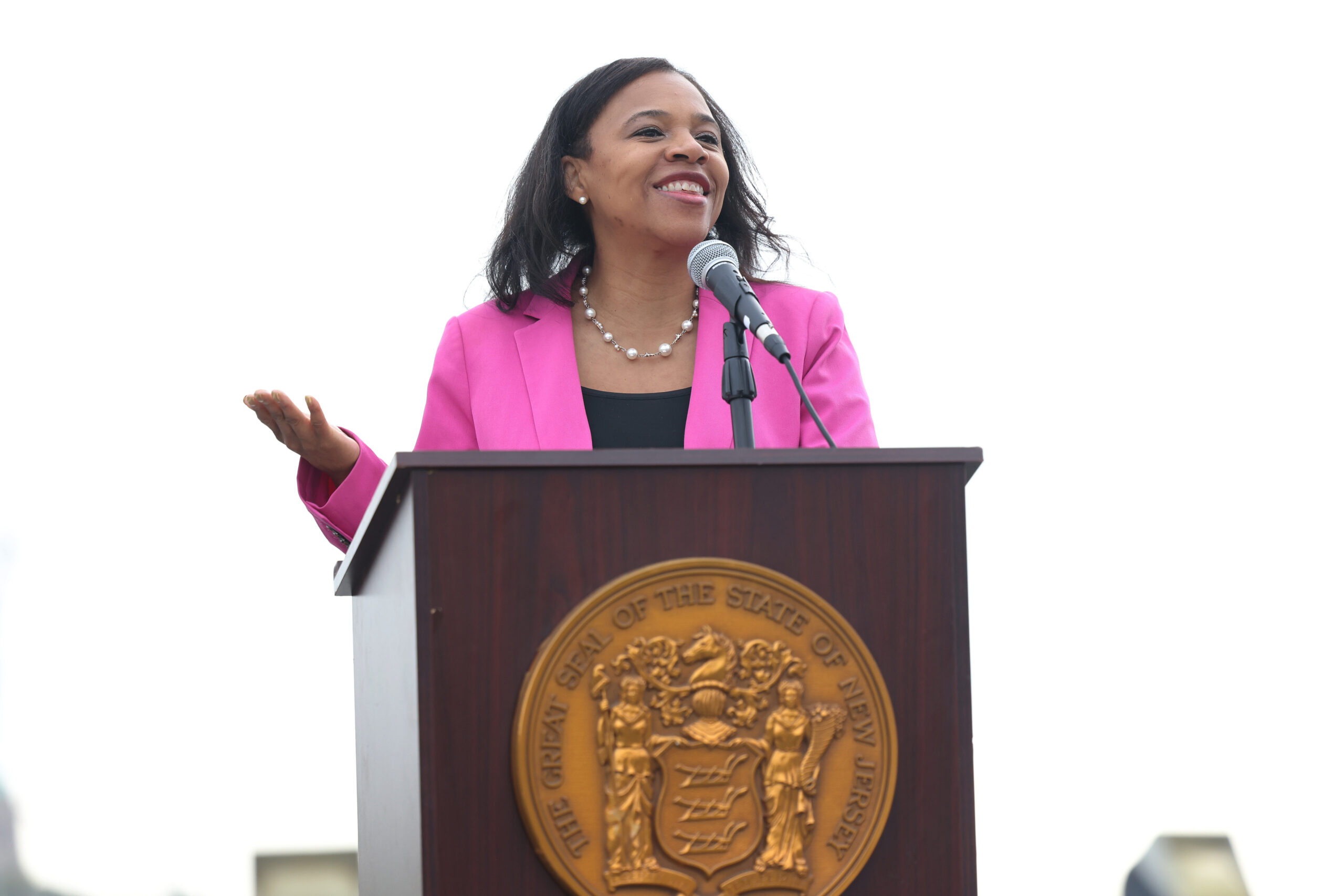
Way is touting her support for stalled legislation that would codify the IHRA definition of antisemitism into law
FACING SCRUTINY

Gruenbaum started working with Steve Witkoff and Jared Kushner on Middle East diplomacy after the ceasefire between Israel and Hamas took effect in October
Plus, Cornyn targets 'radical Islam' in heated TX-SEN primary

Mandel NGAN / AFP via Getty Images
Jared Kushner speaks at the "Board of Peace" meeting during the World Economic Forum (WEF) annual meeting in Davos on January 22, 2026.
Good Thursday afternoon!
This P.M. edition is reserved for our premium subscribers — offering a forward-focused read on what we’re tracking now and what’s coming next.
It’s me again — Danielle Cohen-Kanik, U.S. editor at Jewish Insider and curator, along with assists from my colleagues, of the Daily Overtime. Please don’t hesitate to share your thoughts and feedback by replying to this email.
📡On Our Radar
Notable developments and interesting tidbits we’re tracking
Before officials departed from Davos, Switzerland, today, the Trump administration undertook a big task: laying out its complete vision for the demilitarization and reconstruction of Gaza, Jewish Insider’s Lahav Harkov reports.
Jared Kushner, speaking after President Donald Trump’s remarks at his founding ceremony for the Board of Peace, presented the administration’s “demilitarization principles” meant to be implemented in the next 100 days, including the destruction of “heavy weapons, tunnels, military infrastructure, weapons production facilities and munitions.”
The ultimate vision sees a completely overhauled Gaza including a port and a tourism zone along the Mediterranean coast, as well as large residential areas and industrial complexes, while retaining the IDF security perimeter.
But “this deal only happened because … we all worked together to make this happen,” Kushner said, urging countries, including Israel, to put aside their differences to bring the plan to fruition. “I see people criticizing Israel, or Israel criticizing Turkey and Qatar. Just calm down and work together for 30 days”…
Meanwhile, several of the highest-profile attendees of the Board of Peace ceremony hustled to a private lunch, JI’s Gabby Deutch reports, including Saudi Ambassador to the U.S. Princess Reema Bandar Al Saud and Israeli President Isaac Herzog, who both spoke hopefully about the future of the Abraham Accords.
Also in the room: Bahraini Crown Prince Salman bin Hamad Al Khalifa, Commerce Secretary Howard Lutnick, Treasury Secretary Scott Bessent, Bank of America CEO Brian Moynihan, JPMorgan Chase CEO Jamie Dimon, Dell Technologies CEO Michael Dell and more…
The Wall Street Journal lays out the concerns of the Board of Peace holdouts — including China, Russia, France and Britain, who are wary of joining a body where they don’t hold a permanent veto and that seeks to replace the one where they do, at the U.N. Security Council. There’s also the issue of its broad mandate: EU foreign policy chief Kaja Kallas said today that European leaders could work with the board “if we narrow it down to Gaza like it was meant to be”…
The U.S. is weighing a complete withdrawal of its troops from Syria, the Journal also reports, shortly after Syrian President Ahmad al-Sharaa’s forces carried out a campaign against the Kurdish-led and U.S.-backed Syrian Democratic Forces, ultimately ordering it to disband.
The U.S. has around 1,000 troops in the country, many of whom are co-located with the SDF, where they carry out missions against ISIS (SDF forces were in charge of guarding ISIS prisoners until last weekend). Recent events have led the U.S. to question the viability of its mission in Syria, American officials told the Journal…
Elsewhere in the region, the commander of Iran’s Islamic Revolutionary Guard Corps issued a stark warning to the U.S. and Israel, even as Trump said this morning that he’s open to diplomatic dialogue with Tehran.
The IRGC and Iran “have their finger on the trigger, more prepared than ever, ready to carry out the orders and measures of” Supreme Leader Ayatollah Ali Khamenei, “a leader dearer than their own lives,” Mohammad Pakpour said, as Iran issued its first official death toll of the protests, putting the number killed at 3,117…
Stateside, California state Sen. Scott Wiener, who is running for retiring Rep. Nancy Pelosi’s (D-CA) seat, announced today that he is stepping down from his role as one of the co-chairs of the California Legislative Jewish Caucus, JI’s Gabby Deutch reports, capping off nearly two weeks of controversy and frustration among Jewish leaders in the state after the San Francisco Democrat declared Israel’s actions in Gaza to be a genocide.
Wiener said in a statement, which was obtained by JI, that the decision was prompted in part by the fallout of his genocide comments. “My campaign is accelerating, and my recent statements on Israel and Gaza have led to significant controversy in the Jewish community. The time to transition has arrived,” Wiener said. He will remain in the role until Feb. 15.
In an interview with Politico this week, Wiener said he’s heard from unhappy Jewish voters and leaders in the days after his comments, but asked them to remember his record. “If you’re mad at me, if you feel betrayed, I respect and honor that. But just also remember how many times I’ve gone to the mat for this community, and the bullets I’ve taken for this community,” Wiener said…
In a new ad released today, Sen. John Cornyn (R-TX), facing a serious primary challenge from his right, calls “radical Islam” a “bloodthirsty ideology” that has influenced recent terror attacks targeting Jews, JI’s Matthew Kassel reports.
“It fueled the unspeakable crimes on Oct. 7,” Cornyn says in the 30-second ad, called “Evil Face,” before citing the mass shooting last month during a Hanukkah gathering in Australia that was allegedly motivated by ISIS. “It showed its evil face again at Bondi Beach.”
The ad comes as Cornyn’s opponent, Texas Attorney General Ken Paxton, has also made combating “radical Islamist terrorist groups” a priority, as he engages in a lawsuit with the Council on American-Islamic Relations…
Pennsylvania Gov. Josh Shapiro further clarified the questions he was asked by Vice President Kamala Harris’ presidential campaign as he was vetted to be her running mate, in an interview airing this weekend on “CBS Sunday Morning.” “They actually asked if I was an agent [of the Israeli government] and if I had ever spoken to an undercover agent of the Israeli government,” he said, to which he pointed out that he wouldn’t necessarily be aware if he had spoken to someone undercover.
“I think it went beyond just checking a box on a questionnaire,” Shapiro said of his perception of the questioning. “I can tell you that it landed on me in an offensive way. I have dedicated my entire adult life to serving this country. … For someone to question my loyalty, particularly as someone who is as open about his faith as he is, was offensive to me”…
The Department of Homeland Security said Columbia University graduate student and protest leader Mahmoud Khalil could be deported to Algeria, JI’s Haley Cohen reports, shortly after a federal appeals court ruled Khalil could be rearrested.
Tricia McLaughlin, DHS assistant secretary for public affairs, said on NewsNation yesterday, “it looks like he’ll go to Algeria. That’s what the thought is right now. It’s a reminder for those who are in this country on a visa or on a green card. You are a guest in this country — act like it. It is a privilege, not a right, to be in this country to live or to study.”
New York City Mayor Zohran Mamdani said in a statement that Khalil “is a New Yorker. He should remain in New York City.” He called the “attack” on Khalil “part of a larger attack on the freedom of speech that is especially pronounced when it comes to the use of that speech to stand up for Palestinian human rights. I will make that clear to everyone. He deserves to be in the city just like any other New Yorker”…
Australia’s main opposition coalition, composed of the Liberal and National parties, split yesterday — during the country’s day of mourning for the Hanukkah Bondi Beach massacre — over a disagreement about the government’s proposed hate speech laws, which were introduced as a response to the attack. The Liberal party voted with the government to adopt the reforms, which increase penalties for hate speech and ban groups who promote it, while the Nationals were opposed, citing concerns around free speech…
⏩ Tomorrow’s Agenda, Today
An early look at tomorrow’s storylines and schedule to keep you a step ahead
Keep an eye out in Jewish Insider for a rundown of the state of the race in Illinois’ 8th Congressional District, where former Rep. Melissa Bean (D-IL) is fending off far-left Israel detractors.
Over the weekend, the Trump administration’s focus will shift back from Gaza to Russia and Ukraine, as the countries hold trilateral talks in Abu Dhabi, UAE, tomorrow and Saturday. White House Special Envoy Steve Witkoff and advisor Jared Kushner headed from the Board of Peace ceremony to Moscow earlier today.
Diplomats and Jewish leaders will head to Jerusalem for the 2nd annual International Conference on Combating Antisemitism, hosted by Israeli Diaspora Affairs Minister Amichai Chikli, which kicks off Monday evening. Last year’s inaugural conference was mired in controversy over the inclusion of far-right European politicians, causing several leading Jewish figures to cancel their appearances (many of whom similarly do not appear on this year’s agenda).
We’ll be back in your inbox with the Daily Overtime on Monday. Shabbat Shalom!
Stories You May Have Missed
COGNETTI’S CAMPAIGN
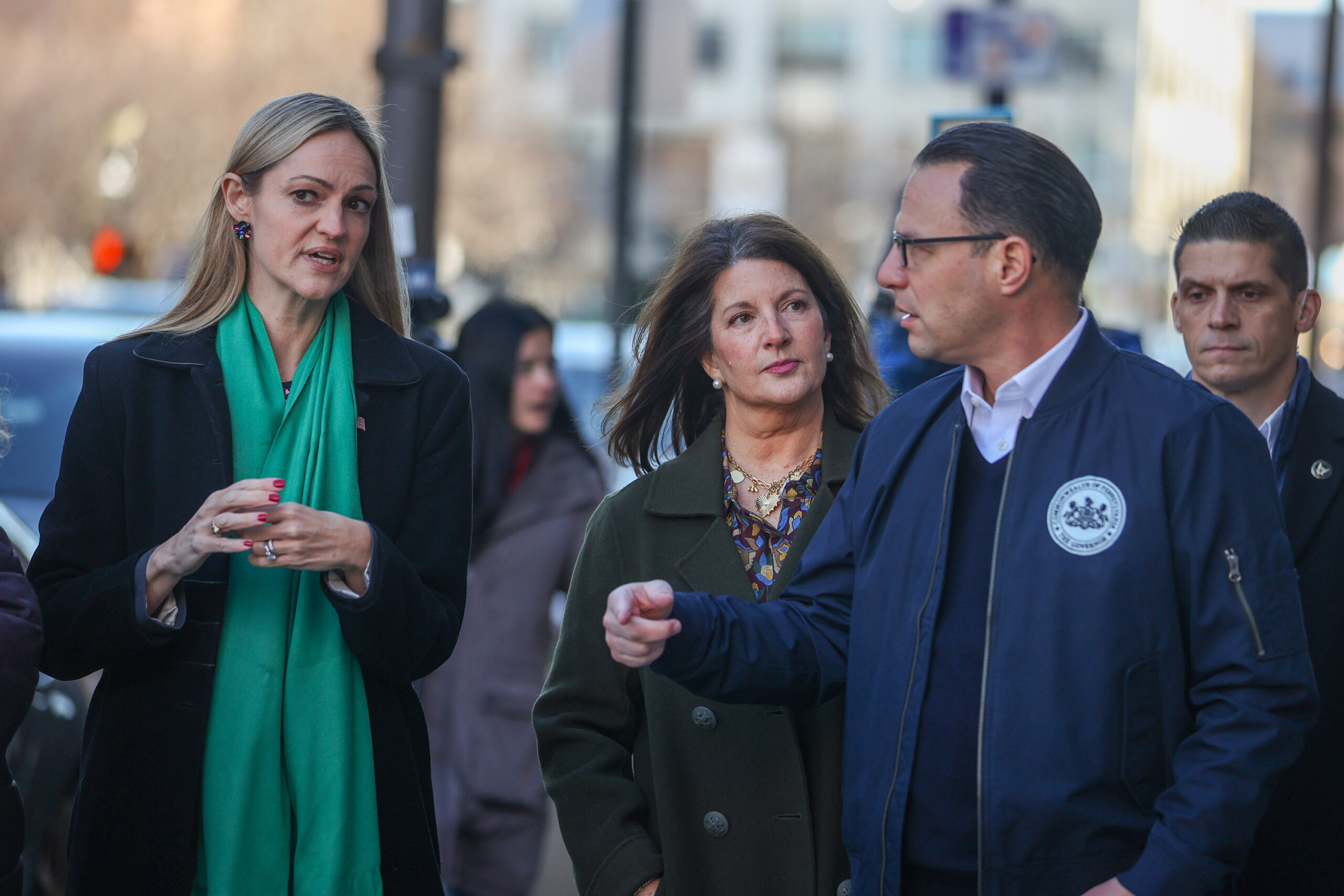
The Scranton mayor is championing her support for Israel as she challenges GOP Rep. Rob Bresnahan
FACING SCRUTINY
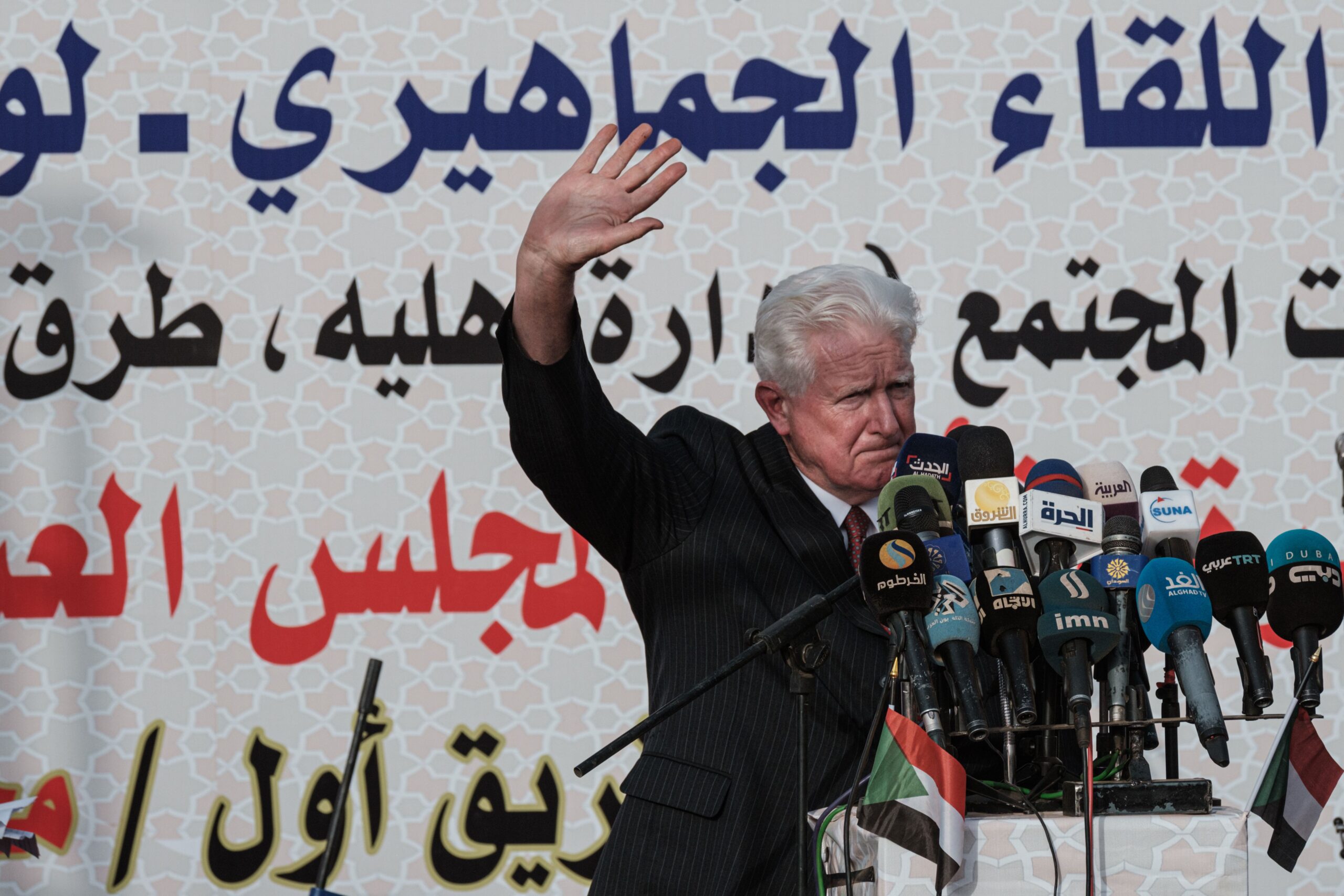
Moran, a former longtime congressman now lobbying for Qatar, has an extensive record of using antisemitic tropes and hostility to Israel
Plus, Pritzker defends Harris amid Shapiro antisemitism allegations

Harun Ozalp/Anadolu via Getty Images
President Donald Trump delivers a speech during the World Economic Forum Annual Meeting in Davos, Switzerland, on January 21, 2026.
Good Wednesday afternoon!
This P.M. edition is reserved for our premium subscribers — offering a forward-focused read on what we’re tracking now and what’s coming next.
It’s me again — Danielle Cohen-Kanik, U.S. editor at Jewish Insider and curator, along with assists from my colleagues, of the Daily Overtime. Please don’t hesitate to share your thoughts and feedback by replying to this email.
📡On Our Radar
Notable developments and interesting tidbits we’re tracking
President Donald Trump took center stage at the World Economic Forum in Davos, Switzerland, this morning, and while headlines were dominated by his proclamations of the U.S.’ intent to acquire Greenland (and subsequent announcement that he and the NATO secretary general are coming to an agreement on the issue), Trump also issued a stark warning to Hamas in his remarks, Jewish Insider’s Matthew Shea reports.
“Hamas has agreed to give up their weapons,” Trump told a packed room of attendees. “If they don’t do it, they’ll be blown away very quickly.”
The president has made similar statements since the adoption of the ceasefire in October, though he laid out a more concrete timeline for his expectation of disarmament: “They’ve got to do it, and we’re going to know over the next two or three days, certainly over the next two or three weeks, whether or not they’re going to do it,” said Trump…
Ahead of the signing ceremony for the Board of Peace that Trump is hosting in Davos tomorrow, the foreign ministers of Saudi Arabia, Turkey, Egypt, Jordan, Indonesia, Pakistan, Qatar and the UAE issued a joint statement accepting his invitation to join.
White House Special Envoy Steve Witkoff told Bloomberg News “20 or 25 leaders have already said yes” to attend the signing ceremony, despite other world leaders already having departed from Switzerland. “Everyone wants to be a part of this,” he said…
On the sidelines of the confab, Trump spoke with CNBC about U.S. relations with Iran amid heightened tensions and American military assets moving into the Gulf. “We hope there’s not going to be further [military] action, but they’re shooting people indiscriminately in the streets,” Trump said of the Iranian regime.
Asked by host Joe Kernen, “Should we stay tuned in Iran?” Trump was noncommittal: “I guess — I mean, look, it’s a rough place,” he said. But he added that if Iran continues to try to acquire nuclear capabilities, strikes like those the U.S. and Israel carried out in June are “going to happen again.”
Witkoff similarly told Bloomberg, “Iran needs to change its ways, they need to do that. And if they do, if they indicate they’re willing to do that, I think we can diplomatically settle this.” Asked if he has the sense that Iran wants to take the diplomatic path, Witkoff said, “We don’t have that sense yet”…
The Treasury Department issued sanctions today against six “Gaza-based organizations that claim to provide medical care to Palestinian civilians but in fact support the military wing of Hamas, the Izz al-Din al-Qassam Brigades,” the department said. “The fraudulent nature of these organizations, which use deception to raise funds from international donors, demonstrates Hamas’s perfidy and deprives innocent civilians of the medical care they need.”
The department also designated the Popular Conference for Palestinians Abroad as a terror group, a move that lawmakers have pushed, for “not only work[ing] with, and in support of, Hamas — it operates at Hamas’s behest.” The group, which claims to be a Palestinian advocacy organization, was designated as such by Israel in 2021 and was alleged to have organized recent anti-Israel flotillas…
Meanwhile in the Big Apple, divisions between New York City Mayor Zohran Mamdani and Comptroller Mark Levine over their positions on Israel surfaced, as Mamdani pushed back on Levine’s recent statements that he remains committed to resuming the city’s investment in Israel Bonds.
“I’ve made clear my position, which is that I don’t think that we should purchase Israel Bonds. We don’t purchase bonds for any other sovereign nation’s debt. The comptroller has also made his position clear, and I continue to stand by mine,” Mamdani said at a press conference today…
While he is distancing himself from Levine, Mamdani is presenting a united front with NYPD Commissioner Jessica Tisch, The New York Times writes, as the two navigate their differences on policing, Israel and other issues…
Mamdani also said today that he was “sickened” by antisemitic vandalism found in Borough Park, which saw many swastikas painted around the predominantly Orthodox Jewish neighborhood. “I stand shoulder to shoulder with the Jewish New Yorkers who were targeted. My administration is working closely with the NYPD’s Hate Crimes Task Force as well as our Parks Department, and those responsible will be investigated and held accountable,” he said in a statement…
Not 24 hours earlier, a Manhattan comedy club canceled Israeli comedian Guy Hochman’s show last night after pro-Hamas groups protested outside of the venue, JI’s Haley Cohen reports. “The owner of the place was afraid and canceled the show,” Hochman told JI, referring to Broadway Comedy Club, located near Times Square. “So, I did an alternative show for my audience outside freezing to death”…
Some of the candidates competing for retiring Rep. Jerry Nadler’s (D-NY) seat in New York’s 12th Congressional District provided insight into their positions on Israel in a candidate questionnaire to receive the endorsement of the Working Families Party, Politico reports.
Kennedy heir Jack Schlossberg and state Assemblymembers Alex Bores and Micah Lasher all said they would not support a resolution sponsored by Rep. Rashida Tlaib (D-MI) calling Israel’s actions in Gaza a genocide; Bores and Lasher said they would not support the “Block the Bombs Act” placing sweeping restrictions on U.S. aid to Israel, while Schlossberg said he’s unsure; and Schlossberg said he would support a bill brought several years ago that sought to prohibit U.S. aid to Israel from being used for a variety of military operations, while Bores said he would not and Lasher was unsure…
After Pennsylvania Gov. Josh Shapiro alleged that Vice President Kamala Harris’ team asked if he had ever been an Israeli agent as he was being considered to be her running mate, Illinois Gov. JB Pritzker, another potential 2028 Democratic presidential contender, told reporters yesterday that he didn’t think the questions during the vetting process were inappropriate. “The questions are tough. I think you’ve got to be tough during the process,” he said.
“I mean, what’s appropriate and inappropriate in the context of getting, as one pundit calls it, ‘an MRI for your soul,’ when you’re out there in the national political arena?” Pritzker, who was also vetted by the Harris team, asked. His comments are at odds with moderate Democrats on Capitol Hill, who told JI that Shapiro’s account was “totally insane,” “problematic” and “incredibly disturbing”…
⏩ Tomorrow’s Agenda, Today
An early look at tomorrow’s storylines and schedule to keep you a step ahead
Keep an eye out in Jewish Insider for an interview with Paige Cognetti, the Democratic mayor of Scranton, Pa., seeking to flip a northeast Pennsylvania swing seat by emphasizing her pro-Israel bona fides.
President Donald Trump will hold the signing ceremony for his Board of Peace with several world leaders in Davos, Switzerland, tomorrow morning local time (around 4:30 a.m. ET).
Australia will hold a national day of mourning to honor the victims of the terror attack that took place at a Hanukkah celebration in Sydney last month, Prime Minister Anthony Albanese announced.
The Sundance Film Festival kicks off in Park City and Salt Lake City, Utah: For the cinephiles keeping track, on the docket this year is a Hebrew coming-of-age film set in the ‘80s titled “Tell Me Everything,” a documentary about three doctors providing humanitarian care in Gaza, a panel by the Jewish Institute for Television & Cinema on combating antisemitism through film and more.
Stories You May Have Missed
‘A NEW NORMAL’

‘There’s going to be a new normal,’ the progressive Israel advocacy group told JI, as it endorses candidates who call Israel’s actions in Gaza a genocide
MILAN 2026

‘It’s like the actual talented version of ‘Cool Runnings,’’ Israel bobsled team pilot AJ Edelman tells JI
Plus, Lawler calls on NY-17 opponents to denounce antisemitic ad
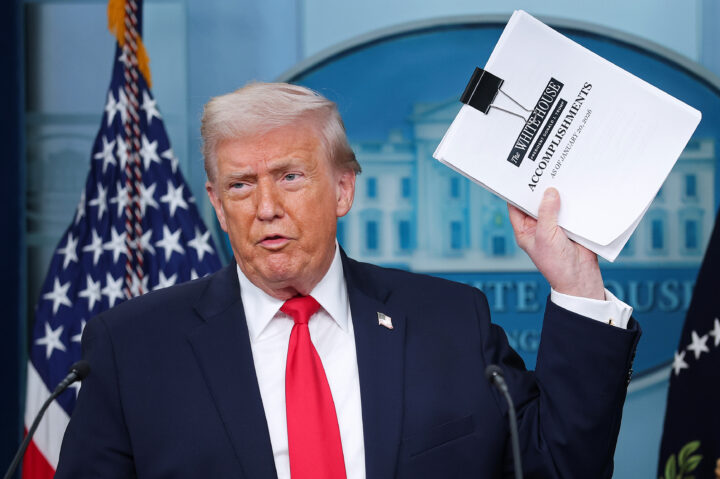
Kevin Dietsch/Getty Images
President Donald Trump gives a press briefing at the White House on January 20, 2026 in Washington, DC.
Good Tuesday afternoon!
This P.M. edition is reserved for our premium subscribers — offering a forward-focused read on what we’re tracking now and what’s coming next.
It’s me again — Danielle Cohen-Kanik, U.S. editor at Jewish Insider and curator, along with assists from my colleagues, of the Daily Overtime. Please don’t hesitate to share your thoughts and feedback by replying to this email.
📡On Our Radar
Notable developments and interesting tidbits we’re tracking
President Donald Trump continues to promote his Board of Peace ahead of its launch at the World Economic Forum later this week: In its charter sent to leaders around the world, the president laid out a vision for the body, which has grown into a U.N.-like institution that would mediate global conflicts and would require countries to pay $1 billion to secure a permanent seat, The Wall Street Journal reports.
Asked at a press conference this afternoon if he intends for the body to replace the U.N., Trump said it “might.” “Wish the United Nations could do more, wish we didn’t need a Board of Peace,” he said.
More than 10 countries have reportedly signed on to join the board, whose charter does not mention Gaza, including the UAE and Hungary. But its expanded mandate has made other countries wary: When told France does not intend to accept the invitation to join, Trump threatened to put a 200% tariff on French wines and Champagnes…
At the WEF in Davos, Switzerland, Treasury Secretary Scott Bessent credited the U.S.’ “maximum pressure” sanctions on Iran for the protest movement that wracked the country in recent weeks. “It’s worked because in December, their economy collapsed. … They are not able to get imports, and this is why the people took to the streets. … This is economic statecraft, no shots fired, and things are moving in a very positive way here,” Bessent said…
Asked about the remaining potential for U.S. military action in Iran over its violent crackdown on the protests, Trump said at this afternoon’s press conference, “I can’t tell you what’s going to happen in the future” and once again praised the regime for not proceeding with its plans to hang 837 protesters. “We’re just going to have to see what happens,” Trump said…
Israeli authorities began demolishing the compound that previously housed the U.N. Relief and Works Agency in Jerusalem, a year after Israel passed a law banning UNRWA from operating in the country over the involvement of its employees in terror activities, including the Oct. 7 attacks.
The Israeli Foreign Ministry denied U.N. claims that the compound has diplomatic immunity, saying in a statement, “Even prior to the passage of legislation in January 2025, UNRWA had already ceased its operations at this site and no longer had any UN personnel or UN activity there. The compound does not enjoy any immunity and the seizure of this compound by Israeli authorities was carried out in accordance with both Israeli and international law”…
Several European countries have not sent their representatives back to the U.S.-led Civil-Military Coordination Center in southern Israel after the holidays, Reuters reports, as the countries, including Germany, France and Britain, consider the value of engaging with the body that diplomats called “directionless” and a “disaster”…
In campaign news, Rep. Mike Lawler (R-NY) condemned as antisemitic an ad running in New York’s suburban 17th Congressional District that targets him for his support for Israel and for receiving backing from pro-Israel donors, Jewish Insider’s Marc Rod reports.
“This ad is a disgrace,” Lawler said in a statement. “This kind of politics has no place in the Hudson Valley. I am calling on every candidate running in NY-17 to publicly and unequivocally denounce this ad immediately. Silence is an endorsement.”
The ad, paid for by the anti-Israel Institute for Middle East Understanding, states in part, “Israelis enjoy universal healthcare, while Americans go bankrupt from medical bills. Lawler’s reward? Giant campaign donations from AIPAC and the pro-Netanyahu lobby.” The 17th District, one of Democrats’ top targets in November, has a sizable Jewish population and many pro-Israel swing voters, which have been key to Lawler’s past victories…
The Senate Leadership Fund, a super PAC with ties to Senate GOP leadership and one of the largest independent spenders in Senate races, announced an initial investment of $42 million to back Sen. Susan Collins (R-ME) in Maine. It’s the super PAC’s largest spend ever in the state, which will be rolled out in August, as Collins enters a general election likely facing either Gov. Janet Mills or oyster farmer Graham Platner…
Rep. Julia Letlow (R-LA) launched her bid to challenge Sen. Bill Cassidy (R-LA) this morning, days after Trump endorsed her on social media. Cassidy, who already has several primary challengers, drew the ire of the president when he voted to convict during his 2021 impeachment proceedings, though Cassidy had told other senators privately that he believed Trump would stay out of the race…
The University of Pennsylvania, which is being sued by the Trump administration over its alleged failure to comply with subpoenas related to an investigation into antisemitism at the Ivy League school, is fighting back against the administration’s request for records about Jewish employees, calling it “disconcerting” and an “extraordinary and unconstitutional demand.”
The Equal Employment Opportunity Commission had reportedly sought information about university employees who submitted complaints about antisemitic discrimination and those who were members of Jewish campus groups; Penn said in its filing that the EEOC is “entirely disregarding the frightening and well-documented history of governmental entities that undertook efforts to identify and assemble information regarding persons of Jewish ancestry”…
⏩ Tomorrow’s Agenda, Today
An early look at tomorrow’s storylines and schedule to keep you a step ahead
Keep an eye out in Jewish Insider for a deep dive into J Street’s embrace of Democrats seeking to create distance between the U.S. and Israel.
The World Economic Forum continues in Davos, where President Donald Trump will give an address at 8:30 a.m. ET. Also appearing onstage tomorrow are Palestinian Authority Prime Minister Mohammad Mustafa; Egyptian President Abdel Fattah El-Sisi; governors Gretchen Whitmer of Michigan, Andy Beshear of Kentucky and Kevin Sitt of Oklahoma; Saudi Foreign Affairs Minister Prince Faisal bin Farhan Al Saud; Rafael Grossi, director-general of the International Atomic Energy Agency; Nvidia CEO Jensen Huang; JPMorgan Chase CEO Jamie Dimon; and David Sacks, the White House AI and crypto czar.
Mark your calendars: AIPAC will host its Congressional Summit from Feb. 22-24, with a potential appearance by Israeli Prime Minister Benjamin Netanyahu, a Jewish communal source confirmed to JI.
Stories You May Have Missed
RESILIENCE OVER RUINS
Beth Israel Congregation in Jackson has received support from churches and Jews all over the country, and has seen a revival of interest in membership
DOCTOR’S ORDERS
Acton, the expected Democratic nominee, was the state’s public health director during COVID, a legacy she hopes won’t get in the way of her affordability message
Plus, all the president's advice on Iran

Andrew Lichtenstein/Corbis via Getty Images
Demonstrators hold a rally and march to the national ICE headquarters to protest the arrest of Mahmoud Khalil, April 5, 2025 in Washington, D.C.
Good Thursday afternoon!
This P.M. edition is reserved for our premium subscribers — offering a forward-focused read on what we’re tracking now and what’s coming next.
It’s me again — Danielle Cohen-Kanik, U.S. editor at Jewish Insider and curator, along with assists from my colleagues, of the Daily Overtime. Please don’t hesitate to share your thoughts and feedback by replying to this email.
📡On Our Radar
Notable developments and interesting tidbits we’re tracking
U.S. officials advised President Donald Trump that a large-scale military campaign against Iran is unlikely to topple the regime and could spark a wider regional conflict, The Wall Street Journal reports, a message that coincided with the president dialing back his warnings to Tehran over its violent suppression of protests.
Israeli Prime Minister Benjamin Netanyahu also reportedly weighed in yesterday, asking Trump to postpone any strikes, and Qatar, Saudi Arabia, Oman and Egypt have communicated similar messages.
U.S. officials told the Journal these developments have led Trump to hold off on strikes for now, though he directed military assets to be readied in case of action. The USS Abraham Lincoln Carrier strike group is reportedly being moved from the Indo-Pacific to the Middle East.
In a similar vein, IDF Chief of Staff Lt. Gen. Eyal Zamir visited an Arrow missile defense battery site in Israel today and directed a drill simulating a missile attack, saying in a statement, “It is important that every citizen of Israel knows that the IDF is constantly prepared to defend the country”…
In the absence of military action, the U.S. is punishing Iran economically, issuing sanctions today against what it called “the architects” of the crackdown. The Treasury Department will “use every tool to target those behind the regime’s tyrannical oppression of human rights,” Treasury Secretary Scott Bessent said in a statement.
Among the sanctioned Iranian officials are Ali Larijani, the secretary of the Supreme Council for National Security, who was “one of the first Iranian leaders to call for violence in response to the legitimate demands of the Iranian people,” according to the Treasury Department, and several commanders of the Islamic Revolutionary Guard Corps and Iran’s Law Enforcement Forces…
Turning to Gaza, American officials expressed their optimism about Phase 2 of the peace plan shortly after its launch yesterday, telling reporters, “For the first time in Gaza in almost a long time, there’s no Palestinian Authority and there’s no Hamas governing it.”
“We’ve talked to a number of Hamas people, and we’re hearing throughout the Arab world that people don’t want to be at war anymore. They want peace,” one of the officials said, claiming Hamas leaders “are indicating that there’s a real possibility” they will lay down their arms…
A new Emerson College poll released today shows the Republican primary for Texas Senate in a dead heat, with Sen. John Cornyn (R-TX) and his opponent, Attorney General Ken Paxton, polling at 26% and 27%, respectively. With Trump refraining from offering his endorsement to either candidate, it’s likely the race will head to a runoff.
On the Democratic side, state Sen. James Talarico is leading the primary over Rep. Jasmine Crockett (D-TX), 47-38%. Talarico has recently caused concern in the Texas Jewish community over his increasingly critical rhetoric on Israel, leading some to tell Jewish Insider that, without concerted outreach from his team, they’re likely to back Crockett…
A competitive Democratic primary is also underway in New Jersey’s 12th Congressional District, where surgeon Adam Hamawy entered the race today to succeed retiring Rep. Bonnie Watson Coleman (D-NJ) with a profile that may help him break through the field.
Hamawy, of Egyptian descent, served as a trauma combat surgeon during the Iraq War, where he operated on Sen. Tammy Duckworth (D-IL), who credits him with saving her life. In May 2024, he joined a delegation of American doctors to assist in health-care efforts in Gaza, where he was temporarily stuck during an Israeli border closure (he returned for a second mission in January 2025).
Though Hamawy has not run for office before, he has spoken extensively about his experience treating “mass casualties” in the enclave and condemning Israel and the U.S.’ role in the “indiscriminate killing and destruction there.” Watson Coleman, also an outspoken critic of Israel, brought him as her guest to Trump’s 2025 State of the Union address…
Asked about his views on Israel, Antonio Delgado, New York’s lieutenant governor who is challenging Gov. Kathy Hochul from her left, said in an interview released Tuesday that the U.S. should not “fund, provide weapons or diplomatic cover to any military operation that causes catastrophic civilian deaths or mass starvation … Otherwise, we are complicit.”
Delgado pledged not to take money from AIPAC, though the pro-Israel group does not contribute to gubernatorial races, and Delgado took a 2019 trip to Israel as a member of Congress with the AIPAC-affiliated American Israel Education Foundation.
Delgado further described Netanyahu as “deeply problematic” and a “war criminal,” but when asked if Israel is committing a genocide in Gaza, he largely demurred. “I can see how people would want to argue it both ways and I’m sensitive to this, candidly, based on my own relationships,” he said. Delgado’s wife is Jewish and they are raising their children Jewish. “It’s hard to argue against scholars. … [But] wherever you fall on that question, we can’t fund it. … We can’t be complicit in it, anymore”…
A federal appeals court ruled today that former Columbia University graduate student Mahmoud Khalil, a leader of the school’s anti-Israel protest movement, could be rearrested, JI’s Haley Cohen reports. Khalil was released in June from the Immigration and Customs Enforcement detention center in Louisiana, where he had been held for three months.
In a 2-1 ruling, a three-judge panel decided that the federal district court in New Jersey that issued Khalil’s release did not have jurisdiction over the matter and that it should have been handled in immigration court, which is part of the executive branch overseen by the Justice Department, meaning Khalil is now liable to be rearrested.
New York City Mayor Zohran Mamdani denounced the ruling, saying in a statement, “as the crackdown on pro-Palestinian free speech continues, Mahmoud is being threatened with rearrest. Mahmoud is free — and must remain free”…
⏩ Tomorrow’s Agenda, Today
An early look at tomorrow’s storylines and schedule to keep you a step ahead
Keep an eye out in Jewish Insider for a profile of Amy Acton, the Jewish public health expert hoping to become the first Democrat to win an Ohio governor’s race in 20 years.
The U.S. and Israel will sign a strategic framework on AI cooperation at the City of David tomorrow, led by Jacob Helberg, the U.S. under secretary of state for economic affairs, and Brig.-Gen. (res.) Erez Eskel, head of Israel’s National AI Directorate. Israeli Foreign Minister Gideon Sa’ar and U.S. Ambassador to Israel Mike Huckabee are also expected to be in attendance.
Also heading to Israel is Sen. Lindsey Graham (R-SC), who announced a last-minute trip this afternoon to meet with Netanyahu “at this crucial time in the history of the Middle East.”
Iran International will hold its second briefing of the week in Washington with former CIA Director Gen. David Petraeus. Read JI’s coverage of Wednesday’s event here.
Honduran President-elect Nasry Asfura will travel to Israel over the weekend, where he is expected to meet with Netanyahu, Sa’ar and President Isaac Herzog, as well as visit Yad Vashem and the Western Wall. Asfura, who will take office later this month, met with Secretary of State Marco Rubio in Washington earlier this week and was hosted by AIPAC leadership.
In observance of Martin Luther King Jr. Day, we’ll be back in your inbox with the Daily Overtime on Tuesday. Shabbat Shalom!
Stories You May Have Missed
SEEING PURPLE
Crosswell, a former Republican who also served as a federal prosecutor, is touting his pro-Israel bona fides as he fights for the Democratic nomination against Rep. Ryan Mackenzie
BOOKSHELF

The book, ‘Mojo’s Return: A Story of Resilience and Hope,’ was published in November
Plus, poll shows Stevens as most electable Dem in MI-SEN race
Francis Chung/Politico/Bloomberg via Getty Images
President Donald Trump speaks during a signing ceremony in the Oval Office of the White House in Washington, DC, US, on Wednesday, Jan. 14, 2026.
Good Wednesday afternoon!
This P.M. edition is reserved for our premium subscribers — offering a forward-focused read on what we’re tracking now and what’s coming next.
It’s me again — Danielle Cohen-Kanik, U.S. editor at Jewish Insider and curator, along with assists from my colleagues, of the Daily Overtime. Please don’t hesitate to share your thoughts and feedback by replying to this email.
📡On Our Radar
Notable developments and interesting tidbits we’re tracking
President Donald Trump indicated that his threats to Iran are making an impact; he told reporters this afternoon, “We’ve been told that the killing in Iran is stopping, it’s stopped, and there’s no plans for executions,” referencing reports that an arrested protester was due to be executed today.
Trump later appeared to downplay protester deaths, calling it “one of those things … people were shooting at them with guns and they were shooting back.” It’s a notable change in tune from the president, who just yesterday told Iranian protesters to “save the names of the killers and abusers” and that “help is on its way.”
Asked if this means that military action against Iran is off the table, Trump responded, “We’re going to watch it and see what the process is, but we were given a very good statement” that the killing has stopped “by people that are aware of what’s going on”…
Others are still bracing for potential military action: Some personnel were told to evacuate the U.S.’ Al Udeid Air Base in Qatar by tonight, Reuters reports. (Recall that Iran launched several missiles at Al Udeid after the U.S. strikes on its nuclear sites last June.)
A number of airlines have canceled or suspended flights to Iran; the Lufthansa group, in addition to avoiding Iranian and Iraqi airspace, said it will only operate day flights to Israel and Jordan through Jan. 19, avoiding overnight trips.
IDF spokesperson Brig. Gen. Effie Defrin warned on social media to avoid rumors and misinformation about the evolving situation, saying the IDF is “prepared for defense and on alert for surprise scenarios”…
White House special envoy Steve Witkoff announced the launch of Phase 2 of Trump’s 20-point Gaza peace plan today, “moving from ceasefire to demilitarization, technocratic governance, and reconstruction.” This phase “establishes a transitional technocratic Palestinian administration in Gaza … and begins the full demilitarization and reconstruction of Gaza, primarily the disarmament of all unauthorized personnel,” Witkoff said.
“The US expects Hamas to comply fully with its obligations, including the immediate return of the final deceased hostage. Failure to do so will bring serious consequences,” Witkoff added, though the U.S. has not taken action on Hamas’ failure to return the body of Ran Gvili, the final hostage, in the three months since the terror group was meant to at the outset of the ceasefire agreement.
It is still unclear how the U.S. and its partners will disarm Hamas or remove it from power, with the International Stabilization Force still not in place and foreign nations refusing to engage with Hamas militants…
Meanwhile, the midterms are picking up speed: New polling out of the Michigan Senate race shows Rep. Haley Stevens (D-MI) looking like the most electable Democrat against former Rep. Mike Rogers (R-MI), the expected GOP nominee.
In a Detroit News poll testing general election matchups, Stevens and Rogers were tied at 44% each, while physician Abdul El-Sayed, who has made criticism of Israel central to his campaign, fared the worst, losing to Rogers 48-42%. State Sen. Mallory McMorrow, another critic of Israel, would also trail, 46-42%, the poll found…
In the Garden State, Rep. Rob Menendez (D-NJ) secured the endorsement of Sen. Andy Kim (D-NJ) today, a meaningful show of support from the progressive-minded senator as Menendez may face a primary challenge from his left from Mussab Ali.
Ali, who is expected to join the race shortly, is a vocal opponent of Israel and has been a champion for the anti-Israel protests and encampments that roiled college campuses in recent years; Kim has also been criticized by Jewish leaders for his support of measures blocking some arms sales to Israel…
Trump will not be endorsing three Republican senators facing competitive reelection campaigns: Sens. Susan Collins (R-ME), John Cornyn (R-TX) and Bill Cassidy (R-LA), Politico reports. Cornyn and Cassidy are facing serious Republican primary opposition, while Collins is facing the likelihood of a hotly contested general election…
The State Department is indefinitely suspending immigration visa processing for individuals from 75 countries starting Jan. 21, building on the Trump administration’s total and partial immigration bans that already exist on nearly 40 countries. The pause will impact those looking to permanently immigrate who may “become a public charge on the United States and exploit the generosity of the American people,” the State Department said…
⏩ Tomorrow’s Agenda, Today
An early look at tomorrow’s storylines and schedule to keep you a step ahead
Keep an eye out in Jewish Insider for an interview with Ryan Crosswell, the Marine veteran and former Republican looking to win the Democratic nomination in a key Pennsylvania swing district.
The technocratic Palestinian committee launched with Phase 2 of the Gaza Peace Plan — which will be headed by Ali Shaath, a former deputy minister for the Palestinian Authority — is expected to hold its first meeting tomorrow in Cairo, also attended by Nickolay Mladenov, the former U.N. envoy to the Middle East now leading the Gaza Board of Peace.
The Israeli American Council kicks off its annual summit tomorrow in Hollywood, Fla., with a plenary including Adm. (res.) Daniel Hagari, the previous IDF spokesperson; Boaz Levy, the CEO of Israel Aerospace Industries; and Betsy Korn, the chair of the Conference of Presidents of Major American Jewish Organizations.
Stories You May Have Missed
MAYOR’S M.O.
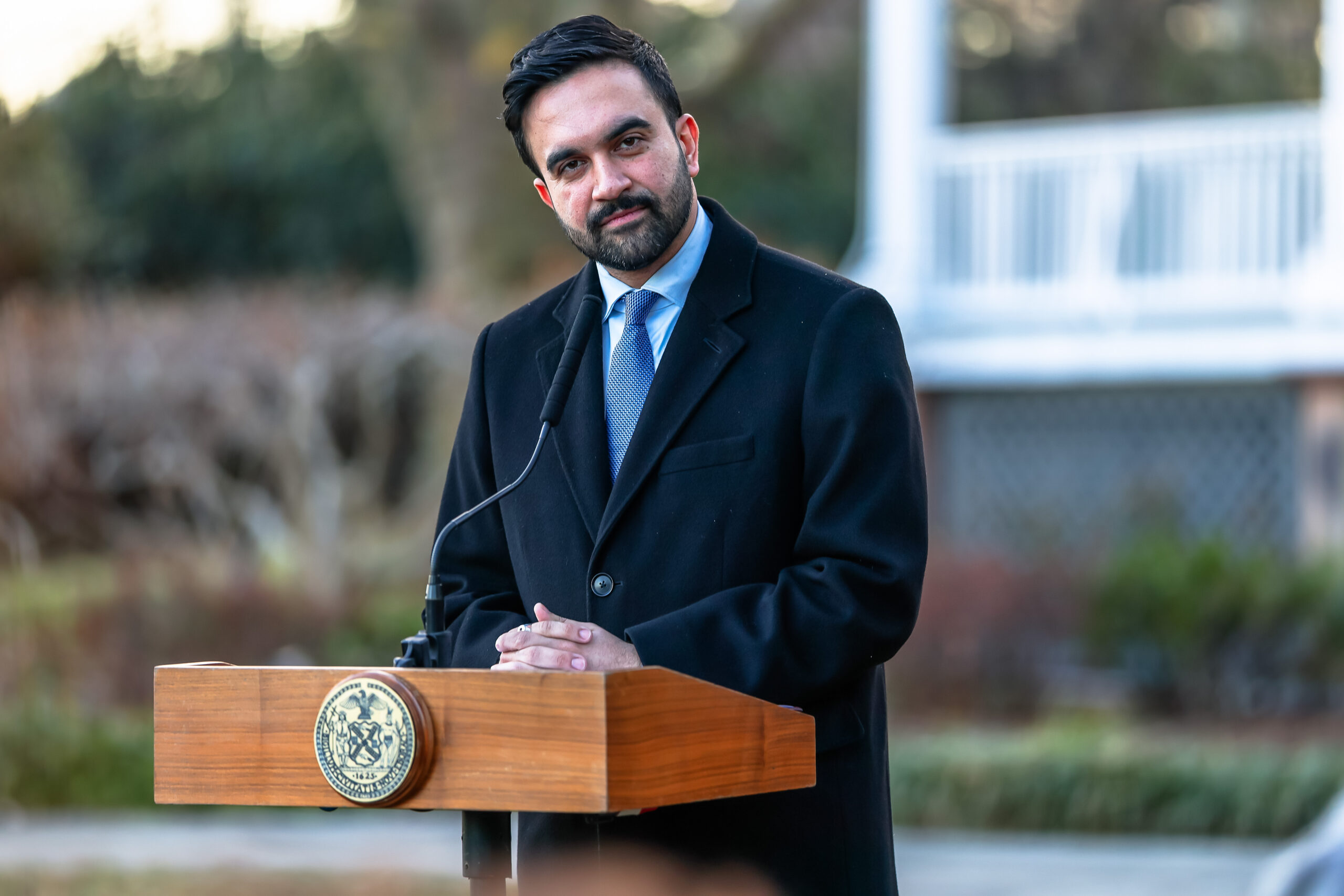
The mayor’s comments responding to pro-Hamas protesters in Queens and an arson attack on a synagogue in Jackson, Miss., illustrate what Mamdani’s critics interpret as a core tension animating his assessment of antisemitism
FIGHTER FAULT LINES

Analysts tell JI that the move ‘is not the behavior Washington can reasonably expect from a partner who would like to be trusted with the F-35’
Plus, J Street plays both sides
Mandel NGAN / AFP via Getty Images
President Donald Trump speaks to the press upon returning to Joint Base Andrews in Maryland on January 13, 2026.
Good Tuesday afternoon!
This P.M. edition is reserved for our premium subscribers — offering a forward-focused read on what we’re tracking now and what’s coming next.
It’s me again — Danielle Cohen-Kanik, U.S. editor at Jewish Insider and curator, along with assists from my colleagues, of the Daily Overtime. Please don’t hesitate to share your thoughts and feedback by replying to this email.
📡On Our Radar
Notable developments and interesting tidbits we’re tracking
President Donald Trump’s rhetoric against Iran reached a fever pitch today, as reports indicate over 12,000 — and potentially as many as 20,000 — protesters have been killed by the regime amid nationwide demonstrations.
Trump posted on social media this morning that he has “cancelled all meetings with Iranian Officials until the senseless killing of protesters STOPS,” and said to the demonstrators, “Iranian Patriots, KEEP PROTESTING – TAKE OVER YOUR INSTITUTIONS!!! Save the names of the killers and abusers. They will pay a big price.”
Trump ended his message promising, “HELP IS ON ITS WAY,” without specifying what actions the U.S. may take, though he told reporters in Detroit that “it’s not a bad idea” for U.S. allies “to get out” of Iran.
Administration officials held several discussions today on options for intervening in Iran; Vice President JD Vance, whose team has pushed back on characterizations that he is opposed to military strikes, led the major briefing with the National Security Council’s Principals Committee this afternoon. Trump was in Michigan for a speech on the economy and likely did not attend…
As the U.S. weighs its next steps, Saudi Arabia, Oman and Qatar are advocating against strikes, warning the administration that destabilization of the Iranian regime could impact oil markets and hurt the American economy, The Wall Street Journal reports. Saudi officials told Iran that they will not allow the U.S. to use their airspace to conduct strikes…
While Trump blocks meetings with Iranian officials, his special envoy Steve Witkoff secretly met with the exiled former Iranian crown prince, Reza Pahlavi, over the weekend, Axios reports, in the first high-level meeting with the regime’s opposition since the protests began. It’s not clear how much support the son of the deposed shah has in Iran, though videos from recent protests show demonstrators chanting slogans associated with him and the monarchy…
Looking to the campaign trail, in a first, J Street endorsed Rep. Dan Goldman (D-NY) in his reelection race while also listing his opponent, former New York City Comptroller Brad Lander, as an “approved” candidate. It’s currently the only race where the group is supporting a challenger to an incumbent, in a district where the candidates’ differing stances on Israel are a key issue…
Roy Cooper, the former Democratic governor of North Carolina now running for the seat of retiring Sen. Thom Tillis (R-NC), raised more than $9.5 million in the final quarter of 2025, The Hill reports, a major haul for a seat that Democrats view as one of their best chances to flip. His opponent, former Republican National Committee Chair Michael Whatley, reportedly raised $5.1 million during the same time frame…
The Trump administration designated three Muslim Brotherhood branches as terrorist organizations today, including chapters in Lebanon, Egypt and Jordan, Jewish Insider’s Matthew Shea reports.
The Jordanian and Egyptian branches were named as Specially Designated Global Terrorists, with the State Department citing their provision of “material support to Hamas,” while the organization’s branch in Lebanon received the more stringent label of Foreign Terrorist Organization…
The U.S. is “closely monitoring developments in Aleppo,” Syria, and “urg[ing] all parties to exercise maximum restraint,” Adm. Brad Cooper, commander of CENTCOM, said in a statement today, after days of fighting between Syrian government forces and the Kurdish-led and U.S.-backed Syrian Democratic Forces killed dozens and displaced over 150,000 people in the city.
SDF fighters were expelled from two neighborhoods they had held since 2011 over the weekend, leading to protests by thousands of Kurds and marking a setback for efforts to integrate the SDF into the armed forces and to unify the country’s diverse populations…
⏩ Tomorrow’s Agenda, Today
An early look at tomorrow’s storylines and schedule to keep you a step ahead
Keep an eye out in Jewish Insider for a profile of the new president of the University of Michigan, who Jewish leaders are optimistic will improve the climate on a campus that experienced some of the most disruptive anti-Israel and antisemitic activity in the aftermath of Oct. 7.
Trump will address the issue of Iran in an interview airing on “CBS Evening News” tonight.
Tomorrow, Iran International will host a town hall with Robert Satloff, executive director of The Washington Institute for Near East Policy, and Joel Rayburn, the former deputy assistant secretary for Levant Affairs and U.S. special envoy for Syria.
In Netanya, Israel, the Tribe of Nova Foundation will host a ribbon-cutting for Nova House, a center primarily funded by UJA-Federation of New York for survivors of the music festival massacre.
Stories You May Have Missed
SCOOP
Two sources told JI the president pushed back on Netanyahu’s claims about the prudence of Israel’s proposal to end U.S. military assistance over the next decade
FUND IT OR LOSE IT
Grenell, at October event for Oct. 7-themed exhibit, told attendees: ‘It certainly would be a shame if we lost this room to a corporation or an individual and it was no longer the lounge‘
As the demonstrations in Iran grew and the regime’s response grew more violent, international talk about Israeli airstrikes subsided to near-silence
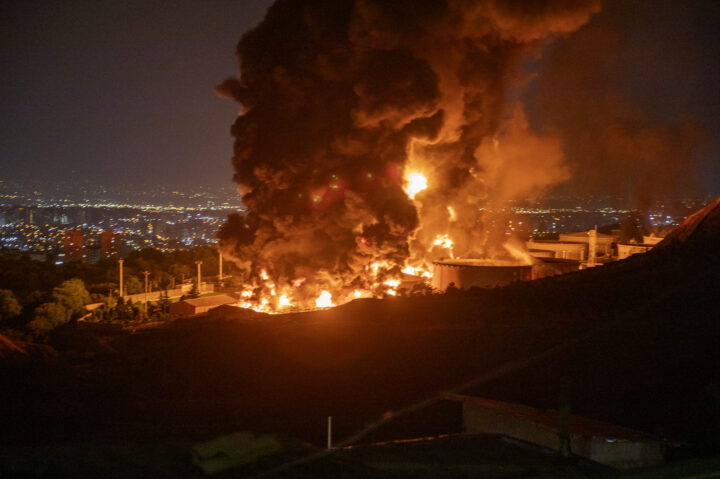
Stringer/Getty Images
Fire and smoke rise into the sky after an Israeli attack on the Shahran oil depot on June 15, 2025 in Tehran, Iran.
The mass protests across Iran erupted just over two weeks ago — the same day that Israeli Prime Minister Benjamin Netanyahu flew to Palm Beach, Fla., to meet with President Donald Trump.
The big question as Netanyahu and Trump met was whether the president would give Israel a green light to strike Iran as it reconstituted its ballistic missile program at a pace that raised major concerns in Jerusalem. Trump’s response was a resounding yes, adding that if Iran would start rebuilding its nuclear program, the answer would be yes and “fast.”
At the same time, Israeli defense figures and officials made it known through the media that Jerusalem’s more immediate worry was that Tehran would misinterpret events and strike Israel first. Netanyahu reportedly told Russian President Vladimir Putin that Israel is not interested in escalating, but Ayatollah Ali Khamenei, Iran’s supreme leader, appeared to reject the overture in a post on X, saying “the malicious enemy is a deceiving liar.”
But as the demonstrations in Iran grew and the regime’s response grew more and more violent – Iran International reported 12,000 protesters have been killed as of Tuesday morning, while an Iranian official put the death toll at 2,000 – international talk about Israeli airstrikes subsided to near-silence.
Asked how Israel’s calculation about striking Iranian missile or nuclear sites may have changed in the last two weeks, former Israeli Ambassador to the U.S. Michael Oren told Jewish Insider’s Lahav Harkov on the “Misgav Mideast Horizons Podcast”: “With the United States threatening to intervene, what would we have to gain from this? Other than providing a pretext for the Iranians to strike back at us. I think we’re operating responsibly, prudently.”
Still, Israelis remain jittery about a second round of war with Iran, to the extent that the IDF’s spokesperson, Brig.-Gen. Effie Defrin, released a statement on Monday evening warning that “in recent days, many rumors have circulated in light of the situation in Iran. …The IDF is prepared defensively and remains on alert for surprise scenarios if required. The protests in Iran are a domestic matter. …We will provide updates if there are any changes. I emphasize: Do not lend a hand to rumors.”
Hostile actors — like the Hamas-affiliated Palestine Chronicle – misrepresented the Israeli Health Ministry’s distribution on Monday of new emergency preparation instructions incorporating the lessons of June’s 12-day war, as though hospitals were imminently entering emergency mode — even though the ministry’s letter explicitly said there is no need to do so. Other false reports stated that local governments in Israel had opened bomb shelters, leading several municipalities to issue denials.
Netanyahu said in Sunday’s Cabinet meeting that Israel is “closely monitoring what is happening in Iran. The demonstrations for freedom spread throughout the country. The people of Israel, the whole world, are amazed by the great courage of the citizens of Iran. Israel supports their struggle for freedom and strongly condemns the massacres of innocent civilians. We all hope the Persian people will soon be freed from the yoke of tyranny, and when that day arrives, Israel and Iran will go back to being faithful partners in building a future of prosperity and peace for both nations.”
Yet, hours later, he ordered a media blackout on the topic, silencing Intelligence Minister Gila Gamliel and Diaspora Minister Amichai Chikli, who have signaled their support for Reza Pahlavi, son of the deposed Shah.
Oren said that “Israel has only to gain from” the protests.
As to accusations from the Iranian regime — as well as American extremist podcasters on the right and left — Oren said: “I think Israel, and I say this very guardedly, has the ability to assist the protesters with communications, with information. … Are we providing them with arms? No, Are we saying we’re going to intervene militarily to help bring down the regime? We’re not saying that, and I think that’s why it was prudent to put the kibosh on those ministers who are flexing their muscles publicly vis-a-vis Iran.”
Plus, Trump favors strikes on Iran over diplomacy

Russell Yip/San Francisco Chronicle via Getty Images
California State Senator Scott Wiener addresses the SF Chronicle Editorial Board on Thursday, Jan. 18, 2018 in San Francisco, Calif.
Good Monday afternoon!
This P.M. edition is reserved for our premium subscribers — offering a forward-focused read on what we’re tracking now and what’s coming next.
It’s me again — Danielle Cohen-Kanik, U.S. editor at Jewish Insider and curator, along with assists from my colleagues, of the Daily Overtime. Please don’t hesitate to share your thoughts and feedback by replying to this email.
📡On Our Radar
Notable developments and interesting tidbits we’re tracking
The suspect in the arson attack that destroyed Mississippi’s largest synagogue early Saturday morning confessed to targeting the building because of its “Jewish ties,” Jewish Insider’s Haley Cohen reports.
In an affidavit filed in U.S. District Court in Mississippi more than 48 hours after the attack, the FBI said the suspect, Stephen Spencer Pittman, 19, admitted to starting the blaze at Beth Israel Congregation in Jackson, Miss., due to “the building’s Jewish ties” and referred to the institution as the “synagogue of Satan” in an interview with the Jackson Fire Department. Pittman was charged with “maliciously damaging or destroying a building by means of fire or an explosive”…
President Donald Trump said Iranian officials made contact with the U.S. over the weekend and proposed restarting nuclear negotiations, telling reporters, “A meeting is being set up, but we may have to act because of what’s happening before the meeting,” referring to the U.S. potentially taking military action in Iran over its violent crackdown on protesters around the country.
Iranian Foreign Minister Abbas Araghchi also spoke with White House special envoy Steve Witkoff in recent days about the protests, Axios reports; White House Press Secretary Karoline Leavitt told reporters today that an Iranian government official who spoke to Witkoff “express[ed] a far different tone than what you’re seeing publicly.”
Trump is currently leaning toward authorizing military strikes rather than engaging in diplomacy, The Wall Street Journal reports, and he is scheduled to hold a briefing tomorrow with advisors, including Secretary of State Marco Rubio, Secretary of Defense Pete Hegseth and Joint Chiefs of Staff Chairman Gen. Dan Caine, to make a determination…
California Jewish communal organizations released a joint statement today condemning state Sen. Scott Wiener’s remarks on Israel, after the Jewish House candidate said in a video statement yesterday that he is changing his position and will now call Israel’s actions in Gaza a genocide.
“We recognize that Senator Wiener has been a strong supporter of the Jewish community throughout the Israel-Hamas war and his many years of public service, and that he has directly experienced antisemitic attacks simply for being Jewish. Unfortunately, Senator Wiener’s newly stated position is both incorrect and lacks moral clarity. … We call on the Senator and our elected, civic, and education leaders to recognize and reflect on the consequences of their words in this fraught and polarizing environment,” the statement read…
In a major recruiting win for Senate Democrats, former Rep. Mary Peltola (D-AK) announced her run against Sen. Dan Sullivan (R-AK) today, JI’s Marc Rod reports, giving Democrats an outside chance of picking up the red-state Senate seat.
Peltola maintained a strongly pro-Israel voting record during her one term in the House, breaking on numerous occasions with a majority of her party to vote for measures supporting the Jewish state post-Oct. 7, including supporting a stand-alone Israel aid package opposed by many Democrats. Sullivan, for his part, has been a hawkish pro-Israel voice in the Senate, and has pushed for a more aggressive stance toward Iran…
Democratic Maryland state Del. Adrian Boafo is launching a bid to succeed his former mentor, Rep. Steny Hoyer (D-MD), as the former House majority leader retires. Boafo, who served as campaign manager for Hoyer, is expected to be the party favorite in the primary, Politico reports. Former Capitol Police officer Harry Dunn, who rose to prominence after the Jan. 6, 2021, Capitol riot, is also considering joining the race…
In another race to watch, Rep. Nellie Pou (D-NJ) in New Jersey’s 9th Congressional District gained another opponent in Tiffany Burress, a Republican political newcomer and wife of former NFL wide receiver Plaxico Burress. On the first day of her campaign, Burress has already secured the backing of several GOP county chairs, as the party looks to flip the seat away from Pou after Trump unexpectedly carried the district in 2024…
Former Obama administration officials and Crooked Media hosts Jon Favreau, Jon Lovett and Ben Rhodes are hosting a fundraiser in Hollywood, Calif., on Thursday for Abdul El-Sayed, a far-left, anti-Israel candidate running for Senate in Michigan, JI’s Marc Rod reports.
El-Sayed, a physician and former director of the Wayne County Department of Health, has made his criticisms of Israel a centerpiece of his campaign, blasting other candidates in the race as being insufficiently hostile to the Jewish state. Favreau, Lovett and Rhodes, on their “Pod Save America” and “Pod Save the World” podcasts, have also emerged as a vocal force against Israel and AIPAC in the Democratic Party, and have boosted prominent anti-Israel candidates in other hot-button primaries…
The future of the Israeli Lounge at the Trump-Kennedy Center is reportedly in peril, eJewishPhilanthropy‘s Judah Ari Gross reports, “unless a major donor from the Jewish community steps up and makes a large donation,” far-right commentator Laura Loomer said over the weekend. The center’s president, Richard Grenell, is seeking to renovate the space; Loomer has suggested Qatar may look to provide the funds for the room’s overhaul…
The New York Times reports on the brewing fight between states over the order of 2028 Democratic presidential primary elections…
Dina Powell McCormick, a banking executive, former deputy national security advisor to Trump and wife of Sen. Dave McCormick (R-PA), was named president and vice chair of Meta, reporting to CEO Mark Zuckerberg, Axios reports. Zuckerberg said in a statement that Powell McCormick will focus on “partnering with governments and sovereigns to build, deploy, invest in, and finance Meta’s AI and infrastructure”…
⏩ Tomorrow’s Agenda, Today
An early look at tomorrow’s storylines and schedule to keep you a step ahead
Keep an eye out in Jewish Insider for more details on the motives and background of the suspected arsonist who set fire to the Beth Israel Congregation in Jackson, Miss., over the weekend.
President Donald Trump will receive a major briefing on avenues for responding to Iran’s violent suppression of protests, including cyber, economic and military options.
New York Gov. Kathy Hochul will deliver her State of the State address in Albany, where she plans to announce her proposal to create a 25-foot buffer zone around houses of worship and health-care facilities. (The legislation, while welcomed by major Jewish groups, would not have prevented the pro-Hamas protest that disrupted a Queens community last week, which took place approximately 300 feet away from the targeted synagogue.) New York City Mayor Zohran Mamdani is expected to be in attendance.
Stories You May Have Missed
VENEZUELAN VIEWS
Some Venezuelan Jews see similarities in the response of far-left activists to Trump’s capture of Maduro and their criticism of Israel’s actions in Gaza
ON ALERT

The Lebanese Armed Forces said it took operational control south of the Litani River, but has fallen well short of fully disarming the terrorist group
Trump was reportedly briefed in recent days on options for sites to strike in Iran as the regime cracks down on protesters
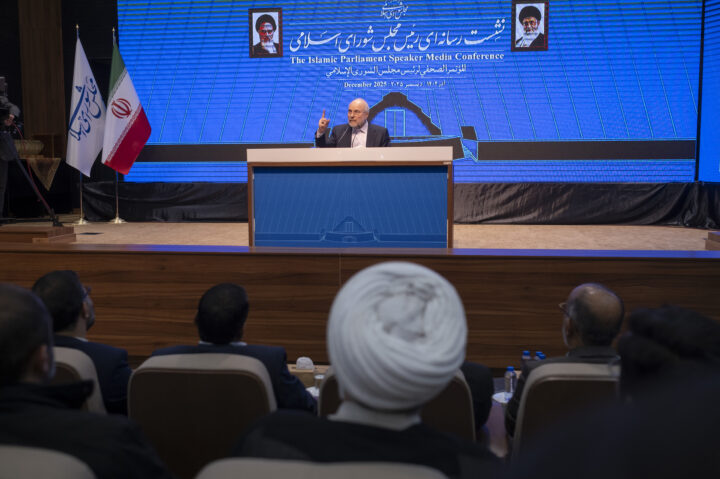
Morteza Nikoubazl/NurPhoto via Getty Images
Iranian Parliament Speaker, Mohammad Bagher Ghalibaf, speaks with the media in a media conference at a conference hall in the Iranian Parliament building in Tehran, Iran, on December 2, 2025.
Tensions between the U.S. and Iran escalated on Sunday as President Donald Trump weighed options for striking Iran amid the regime’s crackdown on protesters, and Tehran threatened to strike U.S. bases in response.
Trump was briefed in recent days on options for sites to strike in Iran, The New York Times reported, after he issued several threats warning that the U.S. could get involved if the Iranian regime attempted to violently suppress the nationwide demonstrations that have racked the country for several weeks.
The options include nonmilitary sites in Tehran, the Times wrote, as well as a large-scale aerial strike on military targets, The Wall Street Journal reported. Trump has not yet made a decision whether to proceed and no U.S. military action has been taken in preparation thus far, U.S. officials told the Times and the Journal.
In response to the reports, Mohammad-Bagher Ghalibaf, the speaker of Iran’s parliament, said on Sunday that the country would attack American military bases in the region if the U.S. follows through, and even raised the possibility of a preemptive strike. Ghalibaf also threatened to attack regional shipping lanes and Israel.
Over the last week, Trump has made repeated threats against the Iranian regime that the U.S. was “locked and loaded” and would “rescue” demonstrators if security forces began killing them. Human rights groups say the death toll has reached over 200 as the protests, sparked by a severe economic crisis in the country, have spread, with protesters explicitly calling for regime change.
The president wrote on Truth Social on Saturday that “Iran is looking at FREEDOM, perhaps like never before” and that the “USA stands ready to help!!!”
Trump has floated the possibility of regime change in Iran before. During the country’s June war with Israel, when the U.S. struck nuclear sites inside Iran, Trump wrote on social media that the U.S. knows “exactly where the so-called ‘Supreme Leader’ [Ayatollah Ali Khamenei] is hiding. He is an easy target, but is safe there — We are not going to take him out (kill!), at least not for now.” Later, he wrote, “It’s not politically correct to use the term, ‘Regime Change,’ but if the current Iranian Regime is unable to MAKE IRAN GREAT AGAIN, why wouldn’t there be a Regime change??? MIGA!!!”
GOP lawmakers have voiced their support for renewed U.S. strikes on Iran, with Sen. Lindsey Graham (R-SC) sharing a message to Khamenei on Fox News last week: “You need to understand, if you keep killing your people who are demanding a better life, Donald J. Trump is gonna kill you.”
Plus, how Jewish Venezuelans are viewing Maduro's ouster

(Iranian state TV via AP)
This frame grab from a video released Friday, Jan. 9, 2026, by Iranian state television shows cars driving past burning vehicles during a night of mass protests in Tehran, Iran.
👋 Good Friday morning!
In today’s Daily Kickoff, we look at the growing pressure facing the Iranian regime as the protests sweeping the Islamic Republic expand into all of the country’s 31 provinces, and talk to legislators about President Donald Trump’s threats to Tehran over its crackdown on the demonstrations. We report on New Jersey Gov. Phil Murphy’s successful effort to kill a resolution that would have adopted the International Holocaust Remembrance Alliance’s working definition of antisemitism, and talk to Venezuelan Jews living in South Florida about the Trump administration’s arrest of Nicolás Maduro. Also in today’s Daily Kickoff: Rep. Steny Hoyer, Steven Spielberg and Massad Boulos.
Today’s Daily Kickoff was curated by Jewish Insider Executive Editor Melissa Weiss and Israel Editor Tamara Zieve, with an assist from Marc Rod. Have a tip? Email us here.
For less-distracted reading over the weekend, browse this week’s edition of The Weekly Print, a curated print-friendly PDF featuring a selection of recent Jewish Insider and eJewishPhilanthropy stories, including: U.S. lawmakers weigh in on fears of Saudi Arabia accommodating Islamists; New York Jewish leaders hope Menin will serve as check against Mamdani; and Why Israel recognized Somaliland — and what the rest of the world might do next. Print the latest edition here.
What We’re Watching
- President Donald Trump is meeting with Secretary of State Marco Rubio this morning, followed by a lunch between the president and Vice President JD Vance. Trump will meet in the afternoon with oil and gas executives to discuss the situation in Venezuela.
- Jacob Helberg, the undersecretary of state for economic affairs, is traveling to the Middle East through next weekend. He’s slated to meet with senior officials in Israel, Qatar, Saudi Arabia and the United Arab Emirates. In the UAE, he’ll lead the U.S. delegation to the U.S.-UAE Economic Policy Dialogue.
- We’re continuing to monitor the situation in Iran, where protests escalated last night as the regime cut off internet and international phone calls, limiting the amount of information that could leave the Islamic Republic. Iranian Supreme Leader Ayatollah Ali Khamenei said in a video address that Trump’s hands were “stained with the blood of Iranians” for having voiced support for the protesters.
- Ongoing current events coincide with the long-delayed release of the third season of the Israeli series “Tehran,” which drops today on Apple TV in the U.S.
- Tomorrow, Rabbi David Wolpe will sit in conversation with the Anti-Defamation League CEO Jonathan Greenblatt at Los Angeles’ Sinai Temple, where Wolpe is the Max Webb Rabbi Emeritus.
- Awards season kicks off on Sunday night with the Golden Globes. Up for Best Motion Picture and Best Screenplay is “Marty Supreme,” based on the life of table tennis player Martin Reisman (with star Timothée Chalamet nominated for Best Actor). “It Was Just An Accident,” a thriller by acclaimed Iranian filmmaker Jafar Panahi (who also received nominations for Best Director and Best Screenplay), and “The Voice Of Hind Rajab,” about a young Palestinian girl who died during the Israel-Hamas war, are both nominated for Best Film in a non-English language. Adam Brody was nominated for Best Actor for his starring role in the TV show “Nobody Wants This,” and Jason Isaacs was nominated for his “White Lotus” performance in the Best Supporting Actor category. Comics Sarah Silverman and Brett Goldstein are both nominated for their stand-up specials.
What You Should Know
A QUICK WORD WITH JI’S MATTHEW SHEA
The United States, Israel and their regional allies are watching closely as sustained unrest in Iran puts renewed pressure on the regime at a moment of economic strain, international isolation and lingering fallout from the 12-day war with Israel last June.
Recent demonstrations have spread across all 31 of Iran’s provinces, fueled by public anger over a collapsing economy, inflation exceeding 40% and aggressive crackdowns by security forces. Economic pressure — intensified by costly proxy wars and United Nations sanctions — have sent Iran’s currency into a sharp decline.
Jonathan Ruhe, a fellow at the Jewish Institute for National Security of America, said the regime’s “unwillingness to be responsive to its people’s basic demands and rights,” is also a factor. Adding that Tehran has a “clear preference to spend the country’s resources on military projects like its proxies, missiles and nuclear program instead of its citizens’ well-being.”
More than 400 demonstrations took place this week alone, with at least 743 recorded over the past month, according to a tracker from the Foundation for Defense of Democracies. The death toll has reached at least 38, with more than 2,200 arrests reported. The demonstrations are the largest since April 2025 and among the most sustained since late 2022 as videos continue to circulate online of Iranians flooding the streets, burning regime flags and lighting fire to statues of Supreme Leader Ayatollah Ali Khamenei.
Ruhe said that uprisings by the Iranian people against the regime are not uncommon. “In 2009 it was political corruption, when the regime clearly stole the presidential election to get [former President Mahmoud] Ahmadinejad reelected,” he said. “In 2017-18 it was economic and foreign policy issues, for instance Iranians being killed in the Syrian civil war and the regime’s lavish spending on its proxies instead of at home. In 2022 it was social and cultural issues, namely hijab enforcement.”
But experts say what is unfolding now could be more significant than protests of the past, expressing to Jewish Insider that recent developments could pose an unprecedented challenge to a regime already under strain.
PROTEST PRESSURE
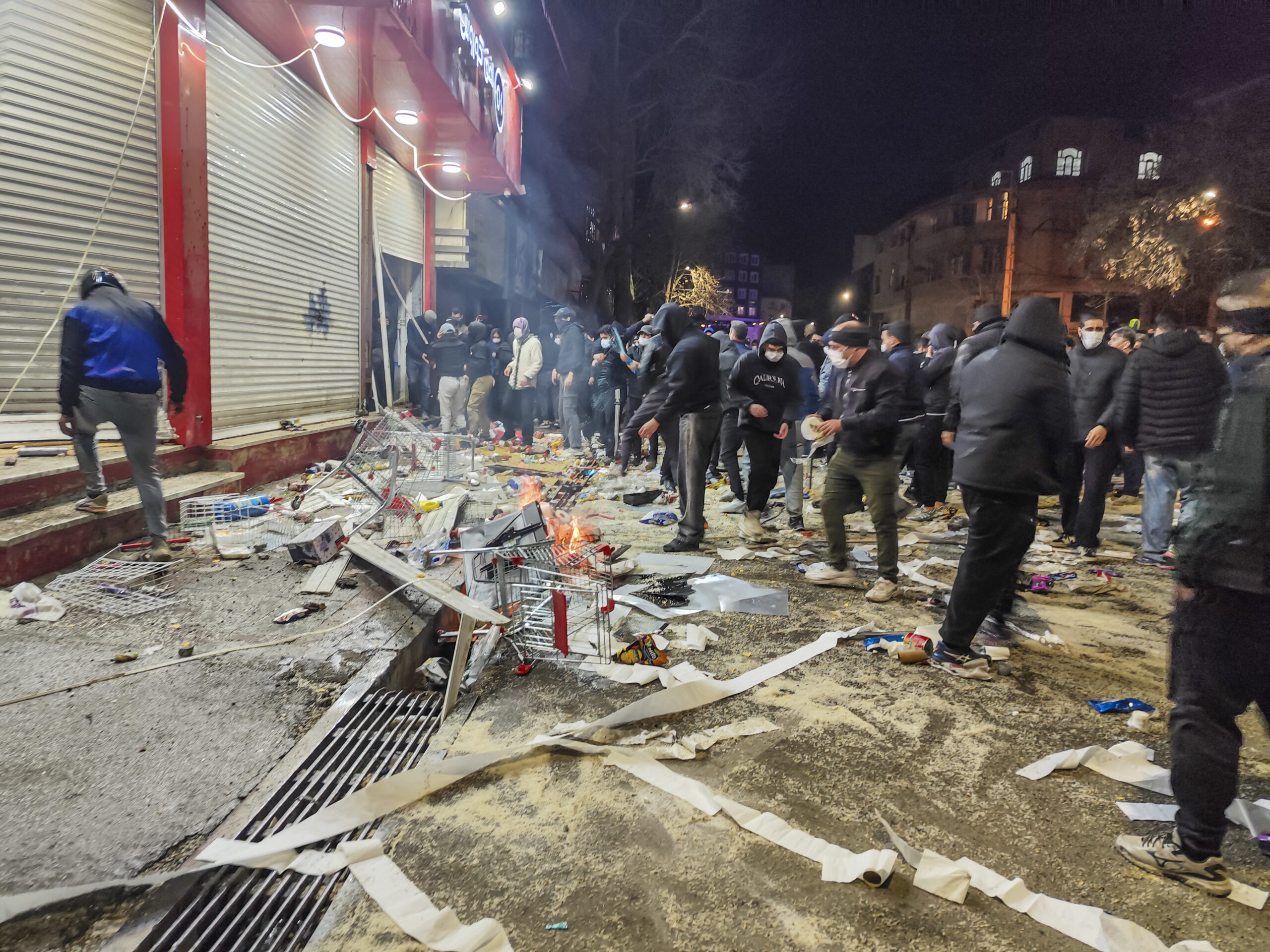
Multiple Senate Republicans voiced support for President Donald Trump’s threat that the U.S. would intervene directly should the Iranian regime crack down on the escalating protests across Iran — crackdowns that appear to have already begun, Jewish Insider’s Marc Rod and Emily Jacobs report.
What they’re saying: “President Trump has been very clear: If the ayatollah harms the protesters, the consequences would be catastrophically painful,” Sen. Ted Cruz (R-TX) told JI. “The regime should understand that the president is deadly serious and will enjoy strong support in Congress.” Sen. Pete Ricketts (R-NE) told JI that “what the president said … [is] one of the things that we can do to help protect the Iranians who are protesting.” Other senators spoke more broadly about offering U.S. support for the protesters without addressing direct intervention, with one noting that lawmakers haven’t discussed in detail at this point potential measures to respond.
Read the full story here with additional comments from Sens. Lindsey Graham (R-SC), John Fetterman (D-PA), Richard Blumenthal (D-CT), James Lankford (R-OK), Adam Schiff (D-CA) and Andy Kim (D-NJ).
Strike support: Fetterman said on Thursday that he would support the U.S. striking Iran’s nuclear facilities again to prevent Tehran from rebuilding its nuclear program — if the regime is found to be making strides toward restoring sites damaged by U.S. and Israeli strikes last year, Jewish Insider’s Emily Jacobs reports.
VENEZUELAN VIEWS
When Valerie Stramwasser woke up on Saturday, Jan. 3, she glanced at her phone and saw hundreds of WhatsApp messages. “I’m like, ‘Oh my god, something happened.’ I first thought that it was something in the family, and then I opened up and I hear, ‘We’re free.’ We’re free. It happened,” Stramwasser told Jewish Insider’s Gabby Deutch on Thursday. “Literally tears of joy.” Stramwasser, 37, lives in Hollywood, Fla., with her husband and two children, but she grew up in Caracas, Venezuela. She was forced to flee the country as a teenager after a failed kidnapping attempt against her.
Miami move: Stramwasser is one of hundreds of thousands of those Venezuelans who now call Florida home, including several thousand Venezuelan Jews who have developed outposts of their once-strong Caracas community centers in Miami. “Growing up there, it was a community of about 28,000 Jews that were living there. It was a vibrant community, a very successful and respected community,” said Paul Kruss, a city commissioner in Aventura, Fla., who also owns a popular local bagel shop. His mother, who was from Warsaw, Poland, moved to Caracas after surviving the Holocaust. “Now there’s maybe 4,500 that live there, which should tell you all you need to know about the kind of brain drain that they had. It wasn’t only the Jewish community that fled.”
BILL BLOCK

A high-profile New Jersey bill adopting the International Holocaust Remembrance Alliance’s working definition of antisemitism is not expected to pass in the current New Jersey Assembly session, four sources familiar with the situation told Jewish Insider’s Marc Rod. Two sources said that Gov. Phil Murphy, a Democrat, opposed the legislation and was a key obstacle to its passage.
Behind the scenes: The two sources blamed Murphy, the outgoing governor, for its failure, alleging that he did not want to be forced to make a decision whether to sign it. One source familiar with the situation emphasized that the legislation had the support to pass, but that Democratic leaders were reluctant to move the bill forward to a full vote — concerned that support for the bill would place some Democratic members in danger of progressive primary challenges in the future. Another source said that there had been significant finger-pointing between Murphy, Senate President Nicholas Scutari and Assembly Speaker Craig Coughlin, with each blaming the others for the legislation’s failure to pass.
Meanwhile in Missouri: The Missouri state House is set to consider legislation adopting the IHRA definition in educational settings on Monday.
STORIED LEGACY
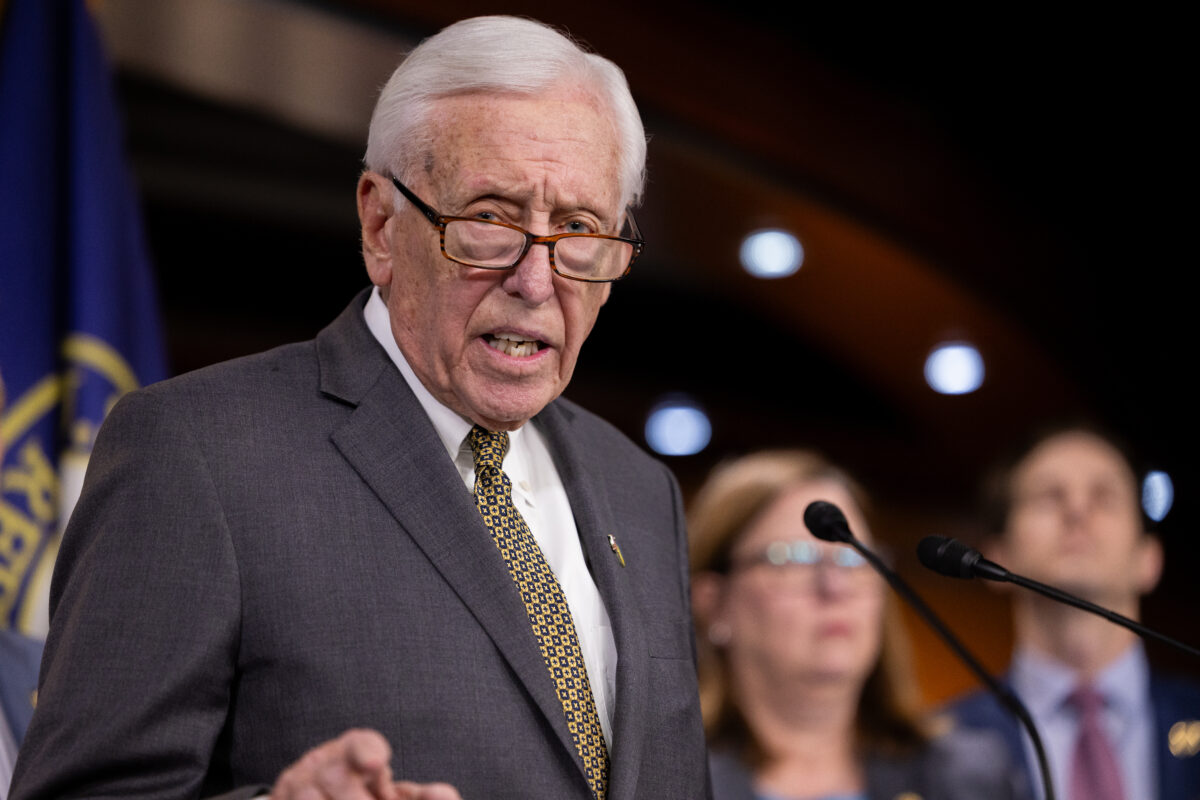
Democratic colleagues and leaders are lauding Rep. Steny Hoyer (D-MD), the longtime former No. 2 Democratic House leader, as a champion for Israel, and say that his retirement, announced Thursday, will deprive Democrats of one of the leading congressional advocates of a strong U.S.-Israel relationship, Jewish Insider’s Marc Rod reports.
Time in Congress: Hoyer, 86, has served in Congress since 1981, and was the second-most senior House Democrat from 2007-2023. A prominent voice respected by colleagues on both sides of the aisle, Hoyer has for years led AIPAC-linked American Israel Education Foundation’s trip to Israel for first-term Democrats. His retirement comes at a time of a sea change on Israel policy among Democratic lawmakers and the Democratic base.
NO COMMENT
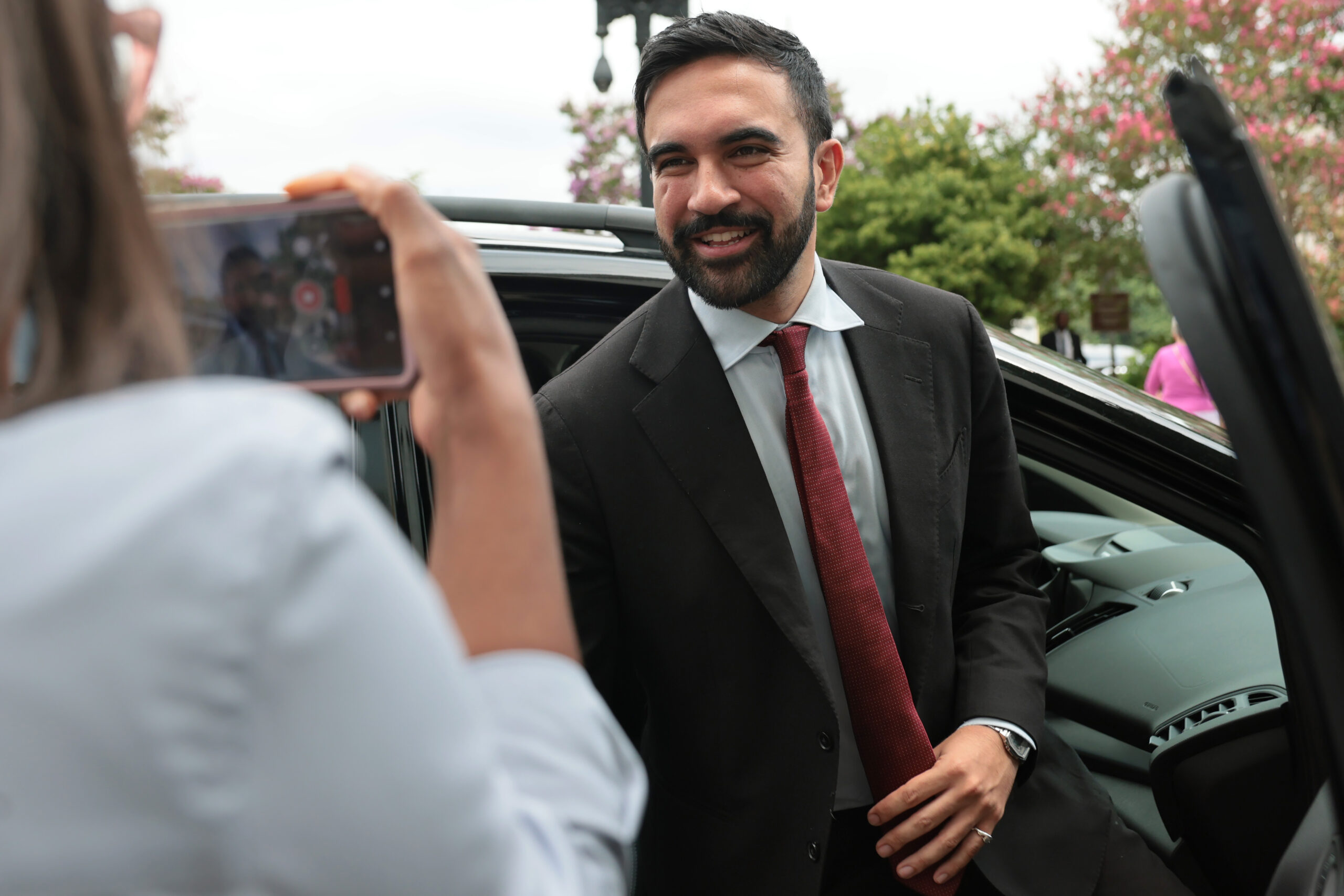
New York City Mayor Zohran Mamdani was silent regarding an anti-Israel protest in Queens on Thursday that caused nearby schools and a synagogue to close early in anticipation of the demonstration where protesters chanted “We support Hamas.” The radical group behind the protest, called Palestinian Assembly for Liberation [PAL]-Awda, wrote on social media Thursday afternoon that it would gather in the evening outside of an event held by CapitIL, a Jerusalem-based real estate agency, at the Modern Orthodox synagogue Young Israel of Kew Gardens Hills. The post called it an “illegal event” promoting “blatant land theft and dispossession,” Jewish Insider’s Haley Cohen reports.
What happened: Dozens of masked, keffiyeh-clad demonstrators gathered across the street from the synagogue and chanted, “We support Hamas here,” “There is only one solution, intifada revolution,” “Globalize the intifada” and “Death to the IDF” for more than two hours while banging on drums in the residential area in Queens’ heavily Jewish neighborhood of Kew Gardens Hills. One protester held a ripped Israeli flag that was painted red to resemble blood. The protest was also promoted by Columbia University Apartheid Divest.
Bonus: Mamdani met earlier this week with Steven Spielberg in the film director’s Manhattan home, in what The New York Times reported was a “friendly get-to-know-you conversation” between the new mayor and Spielberg, who became a New York resident the day of the inauguration.
HARGEISA HOPES
Since Israel became the first state to formally recognize Somaliland as an independent nation last month, Bashir Goth, Somaliland’s top diplomat in Washington, was granted the opening he has been seeking since he began his posting in 2018: a chance to try to convince the United States to follow suit and recognize the independence of Somaliland, a breakaway region of Somalia that has governed itself for 35 years. “Our friends will be more active now, more vigorous, more encouraged by the Israeli recognition,” Goth told Jewish Insider’s Gabby Deutch in an interview on Wednesday.
Seizing the moment: Goth is hoping to capitalize on the rare occurrence of Somaliland being in the news, in part by attempting to rally American Jews to his cause. “We always built very strong relations and engagements with Jewish organizations in Washington, D.C., and they are more active now, more than any time before,” said Goth. “I think they will also be very, very helpful in pushing this forward.”
Bonus: Speaking to The National, Massad Boulos, the Trump administration’s senior advisor on Arab and Africa affairs said, “Somaliland is not a new issue. … [Israel is] free to have peace relationships and these partnerships. The United States so far has not changed its position on Somalia. For now, our policy is ‘one Somalia.’ Things may evolve in the future, I cant speculate. We’re continuously looking into these things and assessing these things. But as of now our policy has not changed.”
Worthy Reads
Softer Touch on Protesters: In The Wall Street Journal, Reuel Marc Gerecht and Ray Takeyh posit that Iranian Supreme Leader Ayatollah Ali Khamenei and President Masoud Pezeshkian are taking a less hard-line approach to the protests sweeping the country. “The government hopes a softer touch will cause the marchers to be satisfied with making their point. If not, the emollients favored by [Parliament Speaker Mohammad] Qalibaf and Pezeshkian will likely give way to the severity favored by the supreme leader and encouraged by Mr. Trump’s provocative challenge. For at least a century, the Iranian public has sought meaningful political participation while central governments resisted. With the exception of the 1979 revolution, the regimes prevailed. But Iranians have never remained satisfied with national bargains in which they forfeit political rights for economic dividends or social emancipation.” [WSJ]
Clash in the Gulf: In Foreign Policy, Marc Lynch looks at the dynamics between Saudi Arabia and the United Arab Emirates, as the countries clash in a number of theaters, including Yemen and Somalia. “[After the Oct. 7, 2023, Hamas terror attacks,] the UAE maintained its relations with Israel, positioning itself as the key Arab interlocutor for a post-Hamas Gaza and hoping to claim vindication for its strategy of tight alignment with Israel and Washington. Saudi Arabia, with a much more challenging domestic environment and its own ambitions for regional leadership, reverted to its traditional position of conditioning normalization with Israel on a credible path toward a Palestinian state. Unstated, but well understood, was that Riyadh never had any intention of joining an Abu Dhabi-led initiative. The crystallization of a divide between Saudi Arabia and the Emirati-Israeli alliance would force everyone in the region to take sides — something smaller states usually prefer to avoid. Most of the other Gulf states, such as Egypt, seem to be falling in line with Saudi Arabia. The competition could inflame civil wars, just as it did a decade earlier.” [FP]
Word on the Street
Five Senate Republicans — Sens. Lisa Murkowski (R-AK), Josh Hawley (R-MO), Susan Collins (R-ME), Todd Young (R-IN) and Rand Paul (R-KY) — voted with Democrats in favor of a war powers resolution limiting further military action in Venezuela without congressional approval…
Bloomberg reports on the White House’s exclusion of Director of National Intelligence Tulsi Gabbard from the planning of the arrest of Venezuelan leader Nicolás Maduro earlier this month due to Gabbard’s past opposition to U.S. military action in Venezuela…
Massad Boulos, the Trump administration’s senior advisor on Arab and Middle Eastern affairs, said that the U.S. will make an announcement about the Muslim Brotherhood in the coming days…
Politico looks at the wave of far-left Democrats critical of Israel who are who are mounting congressional bids, deepening divisions within the party and raising concerns that far-left candidates focused on Israel will drain campaign resources and damage eventual candidates’ efforts to win in the general election…
The Cooper Union settled a lawsuit brought forth by 10 Jewish students at the school who had been trapped in the New York university’s library for 20 minutes while anti-Israel students protested outside in an October 2023 incident …
Four former University of Rochester students pleaded guilty to intentionally damaging university property for their roles in posting “Wanted” posters accusing faculty and staff members of committing war crimes in Gaza; the students were expelled weeks after they were arrested…
New Jersey State Police are investigating an incident that took place on the New Jersey Turnpike on Wednesday in which a rock was thrown through a school bus window, fracturing the skull of an 8-year-old girl…
Approximately 30% of the workforce across the six locations of New York City eatery Breads Bakery is unionizing and making demands of the shop’s Israeli owners — including “a redistribution of profits, safer working conditions, more respect and an end to this company’s support of the genocide happening in Palestine”…
Australian Prime Minister Anthony Albanese announced a royal commission investigating antisemitism, following the terror attack targeting a Hanukkah celebration at Sydney’s Bondi Beach last month…
The board of the Adelaide Writers’ Week festival in Australia disinvited anti-Israel activist and writer Randa Abdel-Fattah, saying her participation in the event would “not be culturally sensitive” during what the board described as an “unprecedented time so soon after Bondi”; Abdel-Fattah’s disinvitation prompted the withdrawal of several participants who had been slated to speak at the festival…
Politico breaks down the significance of the U.S.-brokered meeting between senior Israeli and Syrian officials in Paris this week, during which the parties agreed to create communications channels to more effectively coordinate on security, diplomatic and commercial issues…
The United Arab Emirates ceased funding scholarships for citizens who plan to study in the U.K.; the cut comes amid frustration from Emirati officials over London’s refusal to designate the Muslim Brotherhood as a terrorist organization…
A new report from TRM Labs found that Iran’s Islamic Revolutionary Guard Corps used two U.K.-based cryptocurrency exchanges to move approximately $1 billion over the last three years…
The Wall Street Journal does a deep dive into a shadow fleet with ties to Russia, Iran, China and Venezuela that moves oil around the world in violation of international sanctions…
Pic of the Day
Ahmed al-Ahmed, the Syrian-born man who tackled and disarmed one of the two gunmen in the Bondi Beach terrorist attack in Sydney that killed 15 people, visited Capitol Hill on Thursday, his arm still in a sling after being shot twice.
“What I want to say for the whole world around everywhere, in America, Australia, England, everywhere in the world, we must stand by each other and stay united, and peace for everyone. That’s my message,” al-Ahmed told Jewish Insider in between meetings with officials including Senate Minority Leader Chuck Schumer (D-NY), House Speaker Mike Johnson (R-LA) and House Minority Leader Hakeem Jeffries (D-NY). Al-Ahmed was accompanied by Rabbi Yehoram Ulman (second from left), a Chabad leader in Sydney whose son-in-law was killed in the attack, and Rabbi Levi Shemtov (far left), the executive vice president of American Friends of Lubavitch. Al-Ahmed and Ulman also met jointly with Sens. Dave McCormick (R-PA) and John Fetterman (D-PA).
Birthdays
Actor with a recurring role in “Sex and the City” and author of two books on his recovery from acute myeloid leukemia, Evan Handler turns 65 on Saturday…
FRIDAY: Law professor at Georgetown University, Peter Edelman turns 88… Former member of the Swiss Federal Council and president of the Swiss Confederation in 1999, she is the first woman to ever hold this position, Ruth Dreifuss turns 86… Rabbi emeritus of Kehilath Israel Synagogue in Overland Park, Kan., Herbert Jay Mandl turns 81… Vice chairman of Gilbert Global Equity Partners, Steven Kotler… Pulitzer Prize-winning Supreme Court reporter for The New York Times for 40 years, she is now a lecturer and senior research scholar at Yale Law School Linda Greenhouse turns 79… Retired MLB umpire, he worked in 3,392 major league games in his 26-year career, his family name was Sklarz, Al Clark turns 78… Presidential historian, spokesman for the 9/11 Commission, and university lecturer, Alvin S. Felzenberg turns 77… Composer, singer, radio show host, and author, he has released seven albums under the name “Country Yossi,” Yossi Toiv turns 77… Actress, singer and songwriter, she is the half-sister of Barbra Streisand, Roslyn Kind turns 75… Australian author of more than 40 books of children’s and young adult fiction, including a five-book series about a 10-year-old Jewish boy in Nazi-occupied Poland, Morris Gleitzman turns 73… Former governor of the Bank of Israel from 2013 to 2018, Karnit Flug turns 71… International president of the Rabbinical Assembly, he is the rabbi of Beth El Synagogue in East Windsor, N.J., Rabbi Jay M. Kornsgold turns 61… Dean of the Bar-Ilan University law school, Michal Alberstein turns 57… Investment banker, Joel Darren Plasco turns 55… Justice of the High Court of Australia, James Joshua Edelman turns 52… Russian-born American novelist, journalist and literary translator, Keith A. Gessen turns 51… Filmmaker, she is the second lady of New York State, Lacey Schwartz Delgado turns 49… NFL insider and reporter for the NFL Network, Ian Rapoport turns 46… Chairman and CEO of Paramount Skydance and founder of Skydance Media, David Ellison turns 43… Israeli actress and model, best known for her role as Nurit in “Fauda,” Rona-Lee Shimon turns 43… Director of development and community relations at Manhattan Day School, Allison Liebman Rubin… Pulitzer Prize-winning staff writer at The New Yorker, Ben Taub turns 35… Enterprise account executive at Built, Madeline Peterson… Television and film actress, Nicola Anne Peltz Beckham turns 31…
SATURDAY: Physician and medical researcher, Bernard Salomon Lewinsky turns 83… Editor and publisher of Denver’s Intermountain Jewish News, historian and teacher of the Mussar movement, Rabbi Hillel Goldberg turns 80… President of the Combined Jewish Philanthropies of Greater Boston for 30 years, now a professor at Brandeis, Barry Shrage turns 79… Former President of the Supreme Court of the United Kingdom, Baron David Edmond Neuberger turns 78… Musician, singer-songwriter and co-founder of the Rock & Roll Hall of Fame band Steely Dan, Donald Fagen turns 78… World-renowned Israeli cellist, he has over 50 recordings on the Deutsche Grammophon label with many top orchestras, Mischa Maisky turns 78… U.S. senator (R-MO) from 2011-2023, Roy Blunt turns 76… Long-time editor at Bantam Books, Simon & Schuster and Crown Publishers, Sydny Weinberg Miner… Retired executive director at Beta Alpha Psi, the international honor society for accounting students, Hadassah (Dassie) Baum… Founder and CEO at Los Angeles-based Quantifiable Media and Tel Aviv-based Accords Consulting, Rose Kemps… Fellow for Religious Freedom at the Forum, Richard Thomas Foltin… Professor of American Jewish history at Brandeis University, he taught his last class in December 2024, Jonathan D. Sarna turns 71… President and CEO of the Nellis Management Company and past president of The Jewish Federation of Greater Washington, Mark A. Levitt turns 70… Majority owner of the NBA’s Golden State Warriors, Joe Lacob turns 70… Member of the Knesset for the United Torah Judaism party, Uri Maklev turns 69… U.S. senator (D-MD), Chris Van Hollen turns 67… Member of the U.K.’s House of Lords and advisor to the government on antisemitism, Baron John Mann turns 66… Theatrical producer, playwright and director, Ari Roth turns 65… Vice chair of the Jewish Federation of Greater Naples, Beth Ellen Wolff… Author and journalist best known for his novels Gangster Nation, Gangsterland and Living Dead Girl, Tod Goldberg turns 55… Member of the Knesset for Likud, Galit Distel-Atbaryan turns 55… Film director and screenwriter, Joe Nussbaum turns 53… Caryn Beth Lazaroff Gold… Private equity executive and unofficial troubleshooter for the Trump administration, Jared Kushner turns 45… Communications manager for Ford Motor Company, Adam David Weissmann… Former spokesperson on terrorism and financial intelligence at the U.S. Treasury, Morgan Aubrey Finkelstein… Israeli rapper, singer and songwriter, Michael Swissa turns 30… Andrew Tobin… Debbie Seiden…
SUNDAY: Psychologist and the author of 27 books, he lectures at NYU, Michael Eigen turns 90… Retired judge on the U.S. Court of Appeals for the 7th Circuit in Chicago, author of 40 books on jurisprudence and economics, Richard Posner turns 87… Violinist and music teacher, Shmuel Ashkenasi turns 85… Film, television and theater director, best known for his TV series “Full House” and “Family Matters” and his films “My Big Fat Greek Wedding” and “Fat Albert,” Joel Zwick turns 84… Las Vegas resident, Stephen Norman Needleman… Economist and professor of banking at Columbia University, he was a member of the Board of Governors of the Federal Reserve System, Frederic Stanley “Rick” Mishkin turns 75… Noted gardener and florist, Lynn Blitzer… Professor of medicine at Harvard Medical School and chief of experimental medicine at Beth Israel Deaconess Medical Center, he is the author of five books, Dr. Jerome E. Groopman turns 74… Former member of the Canadian House of Commons, Susan Kadis turns 73… Former director general of Israel’s Ministry of Foreign Affairs, Avi Gil turns 71… CEO of Sense Education, an AI company, Seth Haberman turns 66… Attorney, author, speaker and activist, Brian Cuban turns 65… Partner at Magnolia Marketing LLC, Alan Franco… Rabbi at Beth Avraham Yoseph of Toronto (BAYT), Rabbi Daniel Korobkin turns 62… Former National Hockey League player for 12 seasons with the Vancouver Canucks, Calgary Flames and San Jose Sharks, Ronald “Ronnie” Stern turns 59… Actress, socialite and reality television personality, Kyle Richards Umansky turns 57… Defensive tackle in the Canadian Football League for 12 seasons, he is a co-owner at Vera’s Burger Shack based in Vancouver, B.C., Noah Cantor turns 55… Film, stage and television actress, Amanda Peet turns 54… Hockey coach, he is a former goaltender with the NHL’s Phoenix Coyotes, he also played in six other leagues, Josh Tordjman turns 41… Member of the Knesset for the Democrats party, Naama Lazimi turns 40… Executive chef and restaurateur, Yehuda Sichel… VP and head of strategic partnerships at Penzer Family Office, Michal (Mickey) Penzer… French-American actress, Flora Cross turns 33… Director of football strategy and assistant quarterbacks coach for the Baltimore Ravens, Daniel Stern turns 32… Founder when she was just 12 years old of Nannies by Noa, Noa Mintz turns 25…
Experts say what is unfolding now could be more significant than protests of the past, expressing to JI that recent developments could pose an unprecedented challenge to a regime already under strain
Kamran / Middle East Images / AFP via Getty Images
Iranians gather while blocking a street during a protest in Kermanshah, Iran on January 8, 2026.
The United States, Israel and their regional allies are watching closely as sustained unrest in Iran puts renewed pressure on the regime at a moment of economic strain, international isolation and lingering fallout from the 12-day war with Israel last June.
Recent demonstrations have spread across all 31 of Iran’s provinces, fueled by public anger over a collapsing economy, inflation exceeding 40% and aggressive crackdowns by security forces. Economic pressure — intensified by costly proxy wars and United Nations sanctions — have sent Iran’s currency into a sharp decline.
Jonathan Ruhe, a fellow at the Jewish Institute for National Security of America, said the regime’s “unwillingness to be responsive to its people’s basic demands and rights,” is also a factor. Adding that Tehran has a “clear preference to spend the country’s resources on military projects like its proxies, missiles and nuclear program instead of its citizens’ well-being.”
More than 400 demonstrations took place this week alone, with at least 743 recorded over the past month, according to a tracker from the Foundation for Defense of Democracies. The death toll has reached at least 38, with more than 2,200 arrests reported. The demonstrations are the largest since April 2025 and among the most sustained since late 2022 as videos continue to circulate online of Iranians flooding the streets, burning regime flags and lighting fire to statues of Supreme Leader Ayatollah Ali Khamenei.
Ruhe said that uprisings by the Iranian people against the regime are not uncommon. “In 2009 it was political corruption, when the regime clearly stole the presidential election to get [former President Mahmoud] Ahmadinejad reelected,” he said. “In 2017-18 it was economic and foreign policy issues, for instance Iranians being killed in the Syrian civil war and the regime’s lavish spending on its proxies instead of at home. In 2022 it was social and cultural issues, namely hijab enforcement.”
But experts say what is unfolding now could be more significant than protests of the past, expressing to Jewish Insider that recent developments could pose an unprecedented challenge to a regime already under strain.
Behnam Ben Taleblu, the senior director of FDD’s Iran program, called the protests a “nationwide anti-regime uprising,” telling JI that they are reaching a “crescendo” with a “greater demographic and geographic group of Iranians protesting.”
“Protests have rapidly spread due to the shared consensus that the Islamic Republic of Iran is behind the demise of Iran,” said Taleblu, who called the demonstrators “historic and different” given how the Iranian people have “not given up” in the face of crackdowns. “This matters for a regime that is battered and bruised.”
Ruhe also said the protests are “different from past waves,” explaining that the regime is less capable of solving the issues of the Iranian people in the current moment.
“The economic grievances that triggered the current protests are much more clearly beyond the regime’s ability to fix than they might have been years ago, before the effects of the regime’s corruption and mismanagement had reached the point where the country is running out of electricity and water and its money is absolutely worthless,” said Ruhe.
The ayatollah’s fears are also likely heightened by the recent U.S. operation in Venezuela that ousted President Nicolás Maduro. The U.S. pursuing similar actions in Iran is unlikely, however, Iranian officials have expressed concerns that their regime in Tehran could be next. President Donald Trump has warned that the U.S. is watching the protests “very closely.”
In response, the Iranian regime has vowed to crack down against protesters, with Khamenei stating last week that they must be “put in their place.” The regime also appeared to cut off internet access on Thursday. But none of these methods have seemed to quell the unrest, with recent reports suggesting Khamenei could flee Tehran for Moscow if security forces become overwhelmed by protests.
Nadav Eyal wrote that the continued protests could indicate that “fear has shifted sides” from the people of Iran to the regime itself.
“The oppressors are no longer as certain as they once were in using force. They cannot compete with sheer numbers, with masses filling the streets,” Eyal wrote on X. “The Islamic Republic still possesses formidable repressive capacity. Yet the signals — hesitation, mixed messaging, demonstration of fear by cutting internet — suggest a leadership aware that it may no longer be able to rely on obedience.”
‘To the ayatollah: You need to understand, if you keep killing your people who are demanding a better life, Donald J. Trump is gonna kill you,’ Sen. Lindsey Graham said
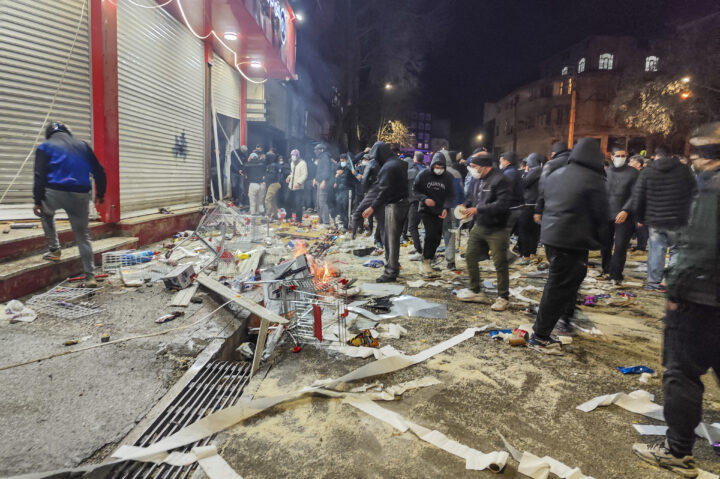
Kamran / Middle East Images / AFP via Getty Images
Iranians gather while blocking a street during a protest in Kermanshah, Iran on January 8, 2026.
Multiple Senate Republicans voiced support for President Donald Trump’s threat that the U.S. would intervene directly should the Iranian regime escalate its crackdown on the protests sweeping Iran — which appears to have already begun.
Trump warned in a post on his Truth Social platform last Friday that if Iran shoots “and violently kills peaceful protesters, which is their custom, the United States of America will come to their rescue. We are locked and loaded and ready to go.”
The president renewed that threat on Thursday on “The Hugh Hewitt Show,” saying, “If they start killing people, which they tend to do during their riots, they have lots of riots. If they do it, we’re going to hit them very hard.” But on Fox News’s “Hannity,” he said that “for the most part” the regime has not engaged in mass killings of protesters.
Asked on Thursday about the possibility of the U.S. helping the Iranian protesters, Vice President JD Vance expressed his support for the protesters but said he’d defer to Trump on what actions they would take. He also said the U.S. remains open to a “real negotiation” with Iran on its nuclear program.
“I’ll let the president speak to what we’re going to do in the future, but we certainly stand with anybody across the world, including the Iranian people, who are advocating for their rights,” he added.
Trump’s threat has been largely well-received by GOP lawmakers, but lawmakers from both parties have expressed support for the protesters generally.
“To the people of Iran: We stand with you tonight,” Sen. Lindsey Graham (R-SC) told Fox News on Tuesday evening. “We stand for you taking back your country from the ayatollah, a religious Nazi who kills you and terrorizes the world,” he said, referring to Supreme Leader Ali Khamenei “We pray for you. We support you. Donald J. Trump is not Barack Obama. He has your back. … Help is on the way.”
“And to the ayatollah: You need to understand, if you keep killing your people who are demanding a better life, Donald J. Trump is gonna kill you. Change is coming to Iran. It’ll be the biggest change in the history of the Mideast to get rid of this Nazi regime.”
“President Trump has been very clear: If the ayatollah harms the protesters, the consequences would be catastrophically painful,” Sen. Ted Cruz (R-TX) told Jewish Insider. “The regime should understand that the president is deadly serious and will enjoy strong support in Congress.”
Sen. Pete Ricketts (R-NE) told JI that “what the president said … [is] one of the things that we can do to help protect the Iranians who are protesting.”
Sen. John Fetterman (D-PA) told JI that the U.S. should act “in any possible way to support the Iranian protesters” and said he’d back any efforts in Congress to do so.
“That’s the real truth to power. They started to kill people there. Remember, they are now so desperate. They’re trying to offer people $7 a month. They’re that desperate,” Fetterman said. “How courageous those protesters are — and that’s a testament to the opportunities Israel and our strikes created — they inspire me. These are Iranian protesters. That is real courage and real — being willing to either get killed, beaten, tortured or disappeared, that’s what happens in true autocracies.”
Other senators spoke more broadly about offering U.S. support for the protesters without addressing direct intervention.
Sen. Richard Blumenthal (D-CT) noted that lawmakers haven’t engaged extensively about ways for Congress to support the protesters since returning from the holiday recess on Monday, but said it was important for them to express their support. “I’m open to any ideas. I think there’s been very little talk [among lawmakers] in specific terms,” Blumenthal told JI.
“We should speak out and support them in spirit,” Blumenthal said. “I don’t know how much we can do, practically speaking. I know the president has talked about some kind of measures if anyone is killed. I don’t know exactly what he has in mind, but we ought to be supporting the freedom fighters and brave protesters in any way we can.”
Sen. James Lankford (R-OK) said that the “biggest thing that we can do is actually have public officials speak out that our problem with Iran is not the people of Iran, it’s the Iranian regime. Our problem is the same problem the people of Iran have.”
“The regime oppresses them, prevents them from actually being [as] successful as they could be. The people of Iran [are] extremely well educated, extremely sharp people [and] could be a lot more prosperous than they are, but they’re trapped behind a regime that’s obsessed with terrorism, and so they’re holding back their entire country so they can fund Hezbollah,” Lankford said. “So people can’t get food, people can’t have a stable currency, because they want to fund terrorism. Until they have an ability to be able to pick new leaders that will actually represent their values, they’re stuck.”
Sen. Adam Schiff (D-CA) said it is “wonderful” to see the protests happening and that the U.S. “should support them diplomatically, technologically and in other ways, so that they can communicate.”
“But I think we should be very hesitant about expressing our willingness to use military force in yet another country for yet another reason,” Schiff added.
Other Democrats have also discouraged the use of U.S. military force in response to the protests.
Sen. Andy Kim (D-NJ) said the U.S. should “continue to show attention” toward Iran, “making sure we’re not just losing track of everything because of Venezuela, and just continuing to show that we want to make sure that the regime doesn’t crack down brutally as they have in the past.”
“I think that that’s an important sign right now, as this is continuing on,” Kim continued.
Plus, New Jersey IHRA bill scuttled
Kamran / Middle East Images / AFP via Getty Images
Iranians gather while blocking a street during a protest in Kermanshah, Iran on January 8, 2026.
Good Thursday afternoon!
This P.M. edition is reserved for our premium subscribers — offering a forward-focused read on what we’re tracking now and what’s coming next.
It’s me again — Danielle Cohen-Kanik, U.S. editor at Jewish Insider and curator, along with assists from my colleagues, of the Daily Overtime. Please don’t hesitate to share your thoughts and feedback by replying to this email.
📡On Our Radar
Notable developments and interesting tidbits we’re tracking
Protests are escalating across Iran, with videos showing masses of demonstrators taking to the streets and security forces at times overwhelmed. Human rights groups estimate dozens of protesters have already been killed and reports indicate the country is experiencing an internet blackout. Storeowners are reportedly shuttering their businesses in an economic boycott, further deepening the economic crisis that spurred the unrest.
President Donald Trump reiterated his warning today that the Iranian regime will “have to pay hell” if “they start killing people, which they tend to do,” speculating that the deaths so far have been caused by stampedes and not law enforcement. Vice President JD Vance said at a press briefing that the Iranian regime “has a lot of problems” and that “the smartest thing for them to have done … is for them to actually have a real negotiation with the United States”…
Australian Prime Minister Anthony Albanese announced today that he is establishing a royal commission into antisemitism in the country, after the deadly terror attack on a Hanukkah celebration in Sydney last month. The commission, considered a powerful tool in Australian governance, will investigate the scope and causes of antisemitism and make recommendations for law enforcement, in a report due on the year anniversary of the Dec. 14 attack…
Spanish Prime Minister Pedro Sanchez said Spain would send “peacekeeping troops” to the Gaza Strip “when the opportunity presents itself.” Speaking to a gathering of ambassadors in Madrid today, he said, “Of course, we have not forgotten Palestine and the Gaza Strip … Spain must actively participate in rebuilding hope in Palestine.” Many countries remain wary of contributing troops to stabilize Gaza over concerns of being required to engage with Hamas…
Israeli Prime Minister Benjamin Netanyahu met today with Nickolay Mladenov, former U.N. envoy to the Middle East and soon-to-be representative of the U.S.-led Board of Peace in Gaza…
New York City Mayor Zohran Mamdani has been silent thus far today about a protest taking place tonight organized by the radical anti-Israel group responsible for a similar protest outside the Park East Synagogue in November, Jewish Insider’s Haley Cohen reports.
The group posted the address of the real estate event they intend to protest, which is taking place at a synagogue in Queens’ heavily Jewish neighborhood of Kew Gardens Hills. The synagogue canceled prayer services and two nearby schools, Yeshiva of Central Queens and PS 165, announced early closures. Democratic state Assemblymember Sam Berger, who represents the area, told JI that local principals, staff and parents are “very concerned.” The surrounding area has been “completely upended,” he said…
The New Jersey Legislature will not give further consideration to a bill seeking to codify the International Holocaust Remembrance Alliance’s working definition of antisemitism into state law during this legislative session, the bill’s lead sponsor announced, after several years of the Jewish community’s urging for the measure to be adopted…
Rob Sand, the state auditor and Democratic candidate for governor of Iowa, announced he raised over $9.5 million in 2025, more than double the record for off-year fundraising for a gubernatorial election in the state. Sand told Jewish Insider in 2019, when he first took office as auditor, that he conducted what was “definitely the first audit” to ensure agencies were in compliance with a state anti-BDS law. “When you say [you are] willing to be supportive of your ally [Israel], you need to put your money where your mouth is,” he said at the time…
Far-left New York state Assemblywoman Claire Valdez joined the race to succeed retiring Rep. Nydia Velázquez (D-NY) today in the progressive 7th Congressional District covering parts of Brooklyn and Queens. The Democratic Socialists of America and Mamdani are expected to endorse Valdez, a move that could prove consequential in the district that The New York Times said will “pit left against lefter.”
Valdez, who has already brought on several of Mamdani’s advisors, was a vocal critic of Israel’s war in Gaza and pro-Israel political groups; her opponent, Antonio Reynoso, takes similar stances but is viewed as a more “traditional progressive” and is expected to secure Velázquez’s support, the Times reports…
Rep. Steny Hoyer (D-MD) officially announced his retirement today after serving 23 terms, one of the longest-serving House members in U.S. history. Speaking on the House floor, the former majority leader and pro-Israel champion warned he was “deeply concerned that this House is not living up to the founders’ goals” and that the country “is heading not toward greatness, but toward smallness, pettiness, divisiveness, loneliness and disdainfulness”…
In his first State of the State address since 2020 — and final before his term ends next year — California Gov. Gavin Newsom heralded his state as a “beacon” and a “policy blueprint for others to follow.” He denounced Trump and laid out a policy agenda including clean energy, increased wages and lowered housing costs, in a speech seen as laying the groundwork for his potential 2028 presidential run…
The Qatar Investment Authority and Emirati-based MGX, linked to a UAE sovereign wealth fund, participated in the latest fundraising round for Elon Musk’s xAI, which raised over $15 billion total. Gulf investors including QIA and the Saudi and Omani sovereign funds have taken part in previous fundraising rounds for the company that owns the Grok AI chatbot on X…
⏩ Tomorrow’s Agenda, Today
An early look at tomorrow’s storylines and schedule to keep you a step ahead
Keep an eye out in Jewish Insider for a look at how legislation in New Jersey to adopt the International Holocaust Remembrance Alliance’s working definition of antisemitism was scuttled — and who was behind the bill’s demise.
The third season of the hit TV show “Tehran” will premiere in the U.S. on Apple TV tomorrow, after a delay of several years. The popular international thriller, which follows a Mossad agent operating undercover in Iran, was indefinitely postponed at the outset of the Israel-Hamas war in Gaza. The season ran in Israel in December 2024, and Apple has announced the fourth season is already in production.
On Saturday, Anti-Defamation League CEO Jonathan Greenblatt will sit in conversation with Rabbi David Wolpe about the “golden age of American Jewry” at Sinai Temple in Los Angeles.
We’ll be back in your inbox with the Daily Overtime on Monday. Shabbat Shalom!
Stories You May Have Missed
SAUDI SPOTLIGHT

The lawmakers downplayed reports of a serious Gulf rift, with Rep. Brad Sherman calling the increasing disputes between neighbors ‘tactical, not ideological’
MENIN’S MOMENT
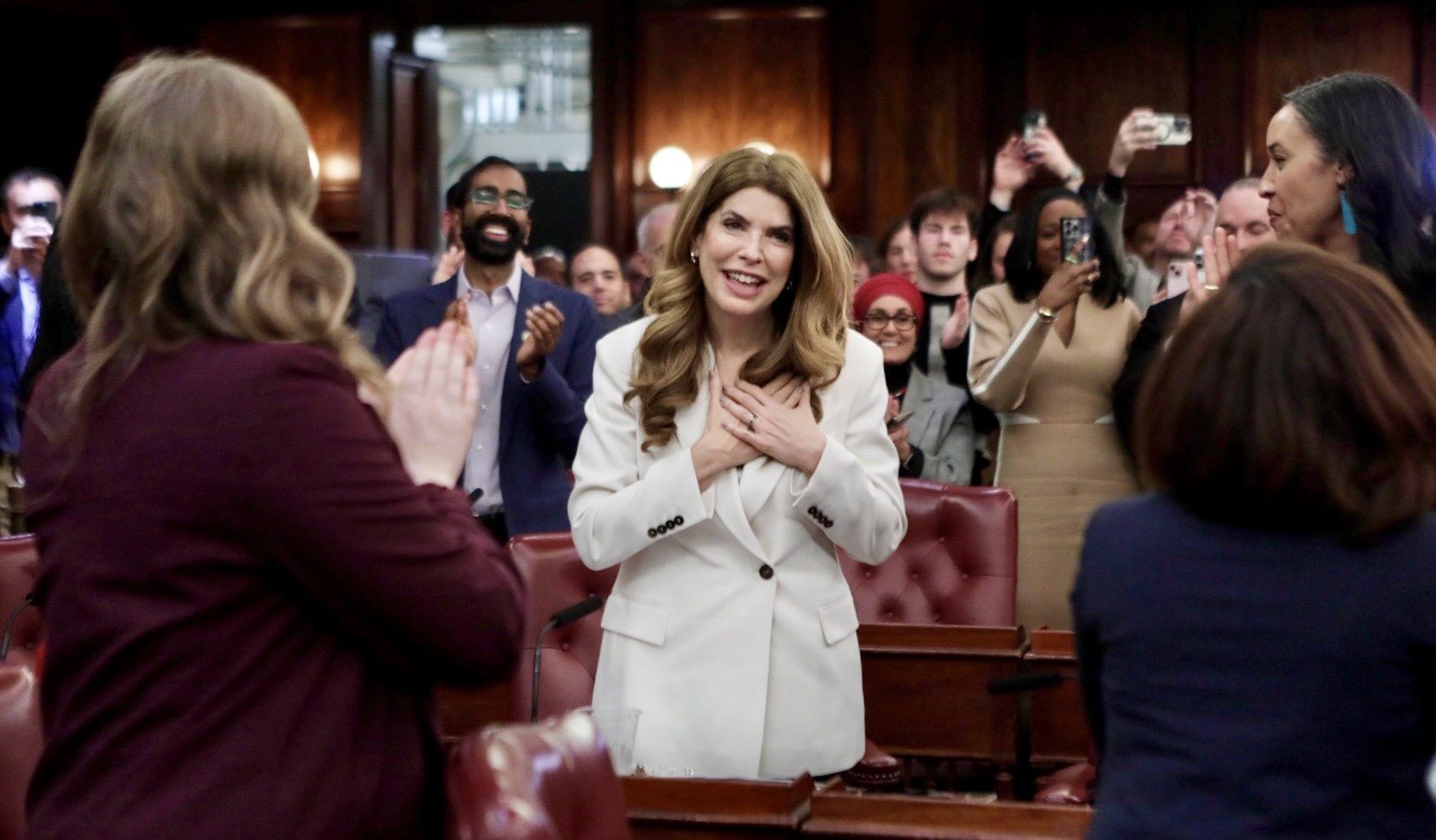
Julie Menin was elected the first Jewish speaker of the New York City Council on Wednesday
Republican senators agreed President Donald Trump would make good on his threat to strike Iran again if it attempts to rebuild its nuclear capabilities

Satellite image (c) 2025 Maxar Technologies.
ISFAHAN NUCLEAR TECHNOLOGY CENTER, IRAN -- JUNE 22, 2025: 04 Maxar satellite image reveals multiple buildings damaged or destroyed at the Isfahan nuclear technology center after the airstrikes. Charring and roof collapses are visible across the compound.
Lawmakers said on Monday that an additional round of U.S. strikes on Iran remains on the table if the regime makes strides in rebuilding its nuclear program or other malign activities, echoing recent warnings from President Donald Trump.
Trump also threatened last week that the U.S. would intervene to protect Iranian protesters if the regime cracked down on nationwide demonstrations, as U.S. officials are watching closely while Tehran reportedly accelerates efforts to restore its ballistic missile capabilities — developments that could spark renewed conflict with Israel and potentially the United States.
Republican senators expressed confidence that the president would strike Iranian nuclear facilities a second time if the U.S. determined that Tehran was working to restore its nuclear program.
“I think there’s a chance” Trump will strike Iran’s nuclear sites again, Sen. Rick Scott (R-FL) told Jewish Insider. “If they go forward again and start building up nuclear facilities, yeah, I think Trump’s going to bomb the hell out of them.”
Sen. Pete Ricketts (R-NE) told JI, “President Trump is demonstrating that we have the most outstanding military in the world. And if he believes we have to hit Iran again, I believe he will do that.”
Sen. John Kennedy (R-LA) agreed but dismissed the suggestion that Trump’s willingness to order the operation that deposed Venezuelan President Nicolas Maduro last week signified that the president was looking to resume strikes against Iran.
“I don’t think one’s related to the other,” Kennedy told JI. “I also think that if Iran starts back in terms of developing a nuclear weapon, or substantially tries to increase the number of missiles that they have, I think the president should hit them and I believe he will.”
Asked about Trump’s threat to intervene to prevent crackdowns on Iranian protesters, and rumors of a potential second round of Israeli strikes on the Islamic Republic, Sen. Richard Blumenthal (D-CT) emphasized the threat of Iran’s missile and nuclear programs.
“We should be considering what action may be appropriate if Iran progresses with its missile building and nuclear programs, which are obviously a pressing and dire threat to us and Israel,” Blumenthal said.
Sen. Tim Kaine (D-VA), a leading voice in the Senate for constraining presidential war powers, who is pushing to block further action in Venezuela, told JI that the U.S. should not be sending in its military in response to the protests, particularly without congressional debate and approval.
“This president should not willy-nilly use the press, use the military as his palace guard to go here, there and everywhere,” Kaine said. “Not Nigeria, not Iran, not Venezuela, not international waters, not Cuba, not Mexico, not Panama, not Greenland. It should be a debate with Congress.”
He added that a constituent, whose son is an Army Ranger, urged Kaine during the holidays to work to prevent unilateral military deployments by the administration. “And I am representing one of the most pro-military states in the country, and that’s what my state thinks,” Kaine explained.
The newest demonstrations come as Iran is facing economic instability, crushing international sanctions and record drought
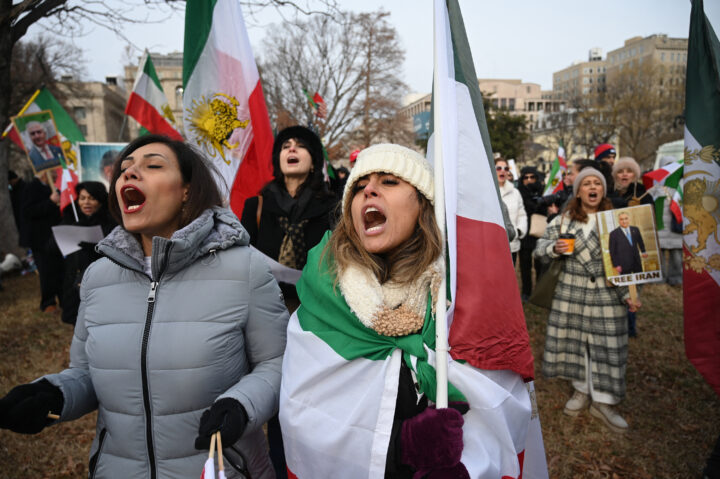
Olivier Douliery/Abaca/Sipa USA via AP Images
Activists take part in a rally supporting protestors in Iran at Lafayette Square, across from the White House in Washington, DC on January 3, 2026.
As protests continue to spread throughout Iran and the geopolitical repercussions of the Trump administration’s capture of Venezuelan President Nicolas Maduro ripple across world capitals, the sentiment around the Middle East and in Washington is that renewed conflict with the Islamic Republic may well be on the horizon.
While smaller than previous nationwide protests in 2019 and 2022, the newest demonstrations come as Iran is facing economic instability, crushing international sanctions and record droughts. The protests that have spread across the country in recent days are the first major demonstrations since the 12-day war between Iran and Israel, with an assist from the U.S., last June that damaged the Islamic Republic’s nuclear program and further destabilized Iran.
The protests in Iran were already gaining steam at the time a Delta Force team apprehended Maduro and his wife on Saturday and brought them to the U.S. to stand trial on drug trafficking charges. But the Trump administration’s decision to send elite forces into Caracas and forcibly remove Maduro signals to Tehran — as well as Moscow and Beijing — that Washington is taking a tougher approach to regimes it sees as destabilizing and threatening to U.S. interests.
The world is watching this geopolitical high-wire act with uncertainty. In Israel, officials are closely monitoring the instability in Iran, concerned that the regime in Tehran could move to strike Israel in an effort to consolidate domestic support and quell the protests; Israel could also see a window of opportunity to strike Iran at a weak moment, either of which could reignite warfare between Jerusalem and Tehran. It was less than a week ago that Israeli Prime Minister Benjamin Netanyahu met with President Donald Trump at his Mar-a-Lago resort in Florida and discussed the threat posed by Iran’s ballistic missile program.
In his weekly Cabinet meeting yesterday, Netanyahu addressed Iran in the context of his Palm Beach meeting last week, saying that Israel “reiterated our joint position of zero enrichment on one hand, and the need to remove the 400 kilograms of enriched material from Iran and oversee the sites with tight and genuine supervision.”
Noting that his sit-down with Trump was taking place as anti-government protests broke out in Iran, Netanyahu added, “The Government of Israel, the State of Israel, and my policy, we identify with the struggle of the Iranian people, with their aspirations for freedom, liberty, and justice. It is very possible that we are standing at the moment when the Iranian people are taking their fate into their own hands.”
With an eye toward Washington, the question is whether Trump will back future military action in Iran, after his success ousting Maduro in Caracas. Despite the widespread protests in Iran, there is no consolidated opposition, where the regime’s opponents are, as The Atlantic’s Arash Azizi writes, “hopelessly disorganized and disunited.”
Speaking to reporters on Air Force One last night, Trump reiterated his recent comments that the U.S. would intervene if Iranian officials were to kill protesters, having said on his Truth Social site on Friday that “If Iran shoots and violently kills peaceful protesters, which is their custom, the United States of America will come to their rescue.”
The Associated Press, citing human rights activists, reported that 15 people had been killed as of Saturday, the same day that Iranian Supreme Leader Ayatollah Ali Khamenei made his first public comments since the outbreak of protests, saying that “rioters must be put in their place.”
Iran’s political leadership appears at an impasse in its efforts to contain the demonstrations — or improve the conditions that led to them — with the hands of President Masoud Pezeshkian and other senior officials largely tied by the supreme leader. That could push the regime to act out of desperation — or to collapse entirely.
An increasingly unlikely scenario is that the protests fizzle out and Khamenei reasserts control — a move that would likely need to occur alongside an economic upturn to pull the rial up from record lows.
The first days of 2026 have seen tens of thousands of protesters taking to the streets across Iran and an administration in Washington flexing its military power, setting the stage for a potential power realignment in the Middle East and around the world.
New York state legislators are considering legislation that would establish a 25-foot buffer zone outside houses of worship
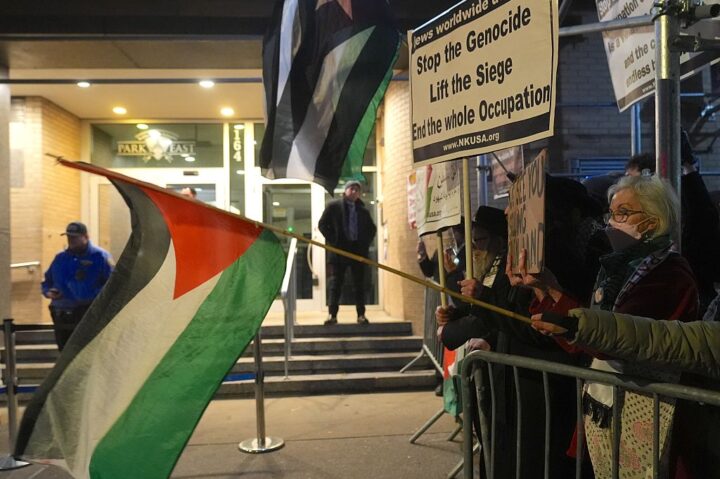
Selçuk Acar/Anadolu via Getty Images
Anti-Israel demonstrators gather at 'No Settlers on Stolen Land' protest against a Nefesh b'Nefesh event at the Park East Synagogue in Manhattan in November 2025.
As anti-Israel demonstrators increasingly target synagogues in protests that have turned violent and used antisemitic rhetoric, some Jewish leaders and state lawmakers are now calling for more expansive legislative safeguards to help bolster protections for houses of worship.
The new efforts have come in the wake of threatening behavior outside synagogues in New York City and Los Angeles that drew forceful condemnation from elected officials and raised concerns among Jewish leaders who fear that such incidents will normalize antisemitic harassment disguised as anti-Zionism.
In New York, state lawmakers this week introduced a new bill to ban protests directly outside houses of worship. The legislation seeks to amend the existing state penal law by establishing a 25-foot buffer zone around religious sanctuaries to insulate congregants from facing intimidation and potential clashes with demonstrators that have occurred more regularly in recent years.
The bill, which would also apply to abortion clinics, was advanced in response to a controversial protest last month outside Park East Synagogue, a Modern Orthodox congregation in Manhattan, where about 200 activists disrupted an event educating attendees about immigration to Israel while chanting slogans including “death to the IDF” and “globalize the intifada,” interpreted as calls to violence against Jews.
“We’re in a very troubled time, and that’s going to mean we need to adapt, including with legislation,” Micah Lasher, an assemblyman in Manhattan who introduced the legislation with a fellow Jewish state senator, Sam Sutton, told Jewish Insider on Thursday.
He said that he had weighed free speech concerns while drafting the bill to protect “the right of people to speak out, even when that speech is hateful, with the right of people to express their religion freely.”
“We’re going to see more and more of this until we can more broadly curb antisemitism,” he cautioned, calling the protest in Los Angeles this week, which ended in the arrests of two demonstrators, “a harbinger of things to come” in the absence of further legislative action.
Nily Rozic, a Democratic assemblywoman from Queens who is co-sponsoring the bill, echoed that view. “Houses of worship should serve as peaceful sanctuaries, not punching bags for protesters,” she explained. “Following incidents in NYC and LA, it’s becoming apparent that creating no-protest zones outside houses of worship is absolutely necessary.”
In contrast with the incident in New York City, the protest that erupted in Los Angeles on Wednesday was more intrusive, with video showing anti-Israel demonstrators shouting inside the historic Wilshire Boulevard Temple — where one activist shattered a vase during a public safety event held with Korean community members.
Jewish community activists in California said they viewed the incident, coupled with the recent protest in New York City, as an impetus to take a closer look at state law relating to such demonstrations.
Julia Mates, the director of policy and government affairs at Jewish Community Relations Council Bay Area, said that the state already has an existing law that protects access to houses of worship as well as abortion clinics — similar to the federal Freedom of Access to Clinic Entrances Act, which has been used by the Justice Department under President Donald Trump to target protesters charged with disrupting Jewish spaces.
Mates said that her organization last year had “started to reexamine the act” with an eye toward potentially expanding what she called the “bubble zone” protecting congregants, but tabled that effort in favor of focusing exclusively on legislation aimed at countering antisemitism in public schools.
But now, in light of recent events, “it might be a good time to reexamine a fixed distance rule and gaps in enforcement,” she told JI on Thursday.
“The environment is such that we need to take another look at this,” Tyler Gregory, CEO of the Bay Area JCRC, vowed. “This is getting a lot of chatter in the community. I think that Jewish legislators and organizations haven’t figured out where we want to land yet,” he continued. “But it’s certainly the topic du jour.”
Noah Farkas, who leads the Jewish Federation of Los Angeles, said that his organization, for its part, has “been pushing for” legislation to more forcefully regulate such demonstrations “for a long while.”
“While we recognize the right of anyone to assemble lawfully to express themselves,” he explained to JI Thursday, “it should not endanger the lives or limit the liberty of anyone else. And while this is a matter on a legal and political level of balancing one set of rights next to another, there is yet a deeper strain of values that needs to be addressed.”
Rep. Laura Friedman (D-CA), a Jewish Democrat from Los Angeles, said the Wilshire demonstration was “deeply personal,” noting that she had attended services at the synagogue during the High Holidays.
“At a time of surging antisemitism, no one should have to choose between their safety and their right to worship,” she said in a statement shared with JI. “I’ll always protect free speech, but when protests cross into criminal intimidation, threats or blocking access, authorities must step in to uphold the law and protect Americans’ right to gather and worship without intimidation.”
Julie Fishman Rayman, senior vice president of policy and political affairs at the American Jewish Committee, called the Los Angeles protest “horrific and beyond unacceptable,” while citing legal “tools that already exist and should be used to maximum impact” in order to hold anti-Israel demonstrators accountable.
As Jewish community activists are now considering efforts to strengthen such laws, Lasher said his new legislation “strikes the right balance” on free speech and safety issues, and “could potentially be a model for other states.”
“For as long as we’re dealing with these sorts of hateful events,” he said, “we should make sure we are giving appropriate tools that are constitutional to enable people to enter synagogues without fear of intimidation.”
New York Gov. Kathy Hochul, a Democrat, voiced interest in supporting the bill on Thursday, saying that she was “willing to look seriously at a buffer to protect that fundamental right we have, which is to express ourselves and practice the faith we choose to without fear and intimidation.”
“I don’t say whether or not I’ll support bills,” she told reporters, “but if it shows up in another place, I’m taking that very seriously. I think it’s time. I will be supportive of that.”
Zohran Mamdani, the mayor-elect of New York City and a democratic socialist long vocally critical of Israel, has also expressed interest in learning more about such legislation, after he had faced backlash for accusing the Park East Synagogue of promoting activities “in violation of international law,” even as he sought to distance himself from the protesters.
Mamdani’s team did not respond to a request for comment from JI about the newly proposed bill.
The demonstration portraying Israeli and U.S. leaders drinking the blood of Gazans was organized by Hazami Barada and Atefeh Rokhvand, who have been involved in setting up anti-Israel encampments across the D.C. area

A demonstration at Union Station in Washington, D.C., portrayed Israeli and U.S. leaders eating and drinking the blood and organs of Gazans
An antisemitic art display at Washington Union Station on Thursday depicting U.S. and Israeli leaders drinking the blood of Gazans is drawing widespread condemnation for echoing the historic blood libel against Jews.
“This is the kind of stuff that Nazi soldiers were shown during World War II, with the idea to make it that Jewish people were not humans,” Ron Halber, CEO of the Jewish Community Relations Council of Greater Washington, told Jewish Insider. “This is exactly what that is in the modern day. It is done to make Jews look like animals.”
The demonstration, displayed both inside and outside of D.C’s main train station, was organized by Hazami Barada and Atefeh Rokhvand, two anti-Israel activists who have been involved in several protests around Washington since the Oct. 7, 2023, terrorist attacks in Israel, including leading a protest encampment outside of the Israeli Embassy and outside of then-Secretary of State Tony Blinken’s home for months in 2024.
Barada protested a community vigil for the first anniversary of the Oct. 7 attack, which took place at The Anthem, a music venue in the nation’s capital. Rokhvand is an elementary school teacher who spoke at the Muslim Student Association conference in 2024.
Another local activist, Hasan Isham, took credit on Instagram for 3D printing the masks used in the protest, which featured people dressed in suits wearing masks to resemble Israeli Prime Minister Benjamin Netanyahu, President Donald Trump, Secretary of State Marco Rubio, former President Joe Biden and Blinken. The five officials were sitting at a long “Friendsgiving dinner” table decorated with the Israeli flag while eating doll limbs drenched in fake blood. A menu placard read: “Starter: Gaza children’s limbs.” “Main: Stolen Organs.” “Dessert: Illegally harvested skin.” “Drink: Gaza’s spilled blood.”
Leading Jewish groups condemned the demonstration, with the Anti-Defamation League calling it “nothing less than abhorrent.”
The American Jewish Committee said that “blood libel was on full display” and called on “leaders and authorities [to] condemn this display and ensure that public spaces are not used to spread dangerous hate.”
“This was nothing less than the revival of one of the oldest and most dangerous antisemitic tropes in history. Blood libel has fueled violence, persecution, and massacres of Jews for centuries. Seeing it resurface in our nation’s capital is both horrifying and unacceptable,” AJC said in a statement.
Union Station is within U.S. Park Police jurisdiction, which manages its own permits. Park Police did not respond to an inquiry from JI asking whether a permit was provided for the demonstration. First Amendment permits had previously been granted for a pro-Palestinian encampment outside of Union Station, but were revoked after demonstrators burned American flags in 2024.
The display on Thursday was removed by Amtrak police within five minutes of being fully set up, according to the Metropolitan Police Department. After being removed from Union Station, the organizers moved the display to outside the station.
“Whether inside or outside, this was absolutely disgusting… and done to incite hatred against Jewish people,” said Halber. “The result is that this could lead to violence against Jews. It was designed to use the worst antisemitic stereotypes against Jews to demonize Jews. It’s nothing more than a modern-day blood libel.”
“This happened at Union Station where members of Congress and people advocating on Capitol Hill pass through,” continued Halber. “This is seen by a lot of people.”
She also doubled down on her condemnation of the slogan ‘globalize the intifada,’ over which she previously criticized mayoral nominee Zohran Mamdani
Drew Angerer/Getty Images
Sen. Kirsten Gillibrand (D-NY) speaks at a news conference following a closed-door lunch meeting with Senate Democrats at the U.S. Capitol on October 31, 2023, in Washington, D.C.
Sen. Kirsten Gillibrand (D-NY) said in comments to Jewish leaders in New York City on Monday that anti-Israel protesters and, in some cases, fellow Democratic lawmakers are fueling antisemitism through the rhetoric and slogans they use, though she said that in many cases it is unintentional.
“Some of the rhetoric that comes out of various protests globally, various protests on college campuses is so damaging. When they say words like ‘river to the sea,’ whey they say words like ‘globalize the intifada,’ it means end Israel. It means destroy Jews,” Gillibrand said in a video from a roundtable with Jewish leaders in Borough Park shared by The Forward. “No matter what words they intend to be saying, that is the meaning of these simple phrases.”
Intifada, she continued, is “not a social movement. It’s terrorism, it’s destruction, it’s death.”
The New York senator has been particularly outspoken about the “intifada” rhetoric in the context of the New York City mayoral race. She previously offered strong condemnation of Democratic mayoral nominee Zohran Mamdani for his refusal to condemn the “globalize the intifada” slogan and said that Jewish constituents were alarmed by his past comments.
Gillibrand also claimed Mamdani had made “references to global jihad,” but later apologized. She has not endorsed Mamdani’s mayoral bid.
The New York senator said she would work with Democratic colleagues “who sometimes, in my opinion, don’t use the right words or aren’t sensitive to the impact of those words” and explain to them how their comments are being received and contributing to antisemitism, and to rally them to support efforts to fight antisemitism.
“Nine times out of 10, they aren’t trying to be antisemitic or even trying to be anti-Israel. They just think they’re fighting for human rights,” Gillibrand continued, “but the words they often choose to use are very hurtful and harmful and are undermining.”
“It is very hurtful and it makes people feel like sometimes the members of our party do not have their back, and I think that’s very disruptive and damaging for our community, for our state, for our brothers and sisters,” Gillibrand said.
Gillibrand added that leaders and individuals have to “understand the impact of their words in all contexts,” including to the Muslim community and other faith and immigrant communities.
She also insisted that “nine out of 10 Democrats are pro-Israel and want peace in the Middle East,” though a majority of the Senate Democratic caucus recently voted in favor of blocking some arms sales to Israel.
Gillibrand argued that many of her colleagues’ concerns are driven by the political leadership in Israel, including Prime Minister Benjamin Netanyahu and far-right members of the Israeli government.
“They don’t know how to articulate political disagreement, and sometimes it comes out as anti-Israel,” she said. “I try very hard to explain that your intentions are one thing, but how you’re received is another, and that’s where we get the disconnect.”
A nationwide strike led by hostage families draws hundreds of thousands into the streets, revealing the depth of Israel’s internal divide as the military prepares for its next move in Gaza

Yair Palti
Protestors hold up phone flashlights in Tel Aviv's Hostages Square and the surrounding streets during mass demonstration for the hostages, August 18th, 2025
The unrest could be felt everywhere — in traffic jams, on the airwaves, in WhatsApp groups, even in the waiting room of a dental clinic.
Across Israel yesterday, hundreds of thousands joined a nationwide unofficial strike, led by hostage families and bereaved families, demanding an end to the war in Gaza and the immediate release of the hostages still held there. According to the Hostages Families Forum, over 1 million people participated in protests throughout the day. As the government plans to escalate its military campaign against Hamas, emotions ran high across towns, cities and online spaces, deepening a national rift.
Police clashed with demonstrators blocking roads. In Ra’anana, a truck driver was arrested after allegedly attacking a protester. In a Tel Aviv neighborhood mothers’ WhatsApp group, several members condemned local cafés for staying open, while another defended them for “not strengthening Hamas.” At a dental clinic, a man berated staff for opening their doors, shouting, “What about the hostages!?”
At the heart of the tensions is a painful divide: protesters — including the majority of the hostage families — argue that rescuing the captives must come before all else. Meanwhile, the government and its supporters, and even several hostage families, claim such demonstrations weaken Israel’s negotiating hand and embolden Hamas. Israeli President Issac Herzog, speaking at Hostages Square, said “There’s no Israeli who doesn’t want them back home. We can argue about philosophies, but truly, the people of Israel want our brothers and sisters back home.”
Israeli Prime Minister Benjamin Netanyahu doubled down on his government’s stance in a public statement, warning: “Those who are calling for an end to the war today without defeating Hamas, are not only hardening Hamas’s stance and pushing off the release of our hostages, they are also ensuring that the horrors of October 7 will recur again and again … to advance the release of our hostages and to ensure that Gaza will never again constitute a threat to Israel, we must complete the work and defeat Hamas.”
Yet recent polls show that a majority of Israelis support prioritizing the hostages’ release and bringing an end to the war.
Israeli journalist and commentator Ben Caspit wrote on social media: “To join the protest strike, you don’t have to be a leftist. Nor a centrist. Nor a rightist… You need a heart. There on the left side, between the ribs and the lungs. A beating heart that feels the need to express solidarity with our kidnapped brothers, with their families, with the terrible suffering.”
“And no, don’t believe the spin that it ‘helps Hamas.’ It doesn’t. Hamas doesn’t need strike X or demonstration Y to get to know Israeli society. Hamas knows us very well, just as we know them. They are death eaters. We seek life. That’s the whole difference.”
Meanwhile, Amit Segal — a reporter and political commentator often seen opposite Caspit on Channel 12 — offered a more sober take in his newsletter on Sunday: “While the strike will help many Israelis express their frustration and desperation to bring the hostages home, it won’t bring Israel closer to achieving the very thing they’re protesting for.”
Even if that may be, the protests reach further than home: former hostages have recounted the strength they gained from witnessing the demonstrations on the news while in captivity in Gaza. In Tel Aviv, as night fell, thousands of protesters raised their phone flashlights in Hostages Square and the surrounding streets, creating a moment of visual unity. The sea of lights stretched across the plaza and beyond — a simple gesture that carried a message of solidarity for the hostages still held in Gaza.
At the same time, the wheels of war are already turning. While Israelis grappled with grief, anger and hope in the streets, the military was preparing for its next incursion. Lt. Gen. Eyal Zamir, the IDF’s chief of staff, declared yesterday from the Gaza Strip: “Today we are approving the plan for the next phase of the war.”
“We will maintain the momentum of Operation ‘Gideon’s Chariots’ while focusing on Gaza City. We will continue to strike until the decisive defeat of Hamas, with the hostages always at the forefront of our minds,” Zamir said, adding, “Soon we will move on to the next phase” of the operation.
Owner Manny Yekutiel: ‘There is no justification for attacking me other than the fact that I am Jewish’

Screenshot/JCRC Bay Area on X
Manny's, a Jewish-owned community center, is vandalized during anti-ICE riots in San Francisco on June 9, 2025.
Protests against Immigration and Customs Enforcement deportations that have engulfed San Francisco’s streets this week took an antisemitic turn on Monday night when a local Jewish-owned civic engagement hub and community space had its windows smashed and walls defaced with slurs including “Die Zio,” “The Only Good Settler is a Dead One,” “Death 2 Israel is a Promise” and “Intifada.”
“There is no justification for attacking me other than the fact that I am Jewish,” Manny Yekutiel, owner of the Mission District event space Manny’s, which is in disrepair following the vandalism and break-in, told Jewish Insider. “My business is not a pro-Israel business. I am not Israeli. This is not a space that represents Israel in any way.”
The space was also the target of antisemitic graffiti in October around the one year anniversary of the Oct. 7, 2023 terrorist attacks. The most recent attack is currently being investigated as a hate crime.
In the Bay Area, over 150 people were arrested on Sunday and Monday following protests against President Donald Trump’s travel ban, latest immigration policies and ICE raids. Similar protests spread across the country — including in Los Angeles where 4,000 National Guard members and 700 U.S. Marines were deployed on Monday.
Yekutiel believes the protests against ICE are “necessary” because ongoing deportations are “stoking hatred” and “we need to stand with immigrants.” While Yekutiel says he will continue identifying with left-wing causes, he also said the attack on his business makes the protests concerning for Jews.
The attack on Manny’s “undermines the very values such movements claim to uphold” such as “justice and welcome the stranger,” the Jewish Community Relations Council Bay Area said in a statement.
Monday’s vandalism in San Francisco comes as the Jewish community faces an “elevated threat” following a surge of violent antisemitic attacks across the country in recent weeks, the FBI and Department of Homeland Security warned last week. Last month, two Israeli Embassy employees were killed in a shooting in Washington. Days later in Boulder, Colo., 15 people advocating for the release of hostages in Gaza were injured in a firebombing by an Egyptian national who overstayed his visa in the U.S.
Trump announced his travel ban — which bars nationals of 12 countries from entering the U.S. — last week following the Boulder attack.
“The recent terror attack in Boulder, Colorado has underscored the extreme dangers posed to our country by the entry of foreign nationals who are not properly vetted, as well as those who come here as temporary visitors and overstay their visas,” Trump said. “We don’t want them.”
Please log in if you already have a subscription, or subscribe to access the latest updates.
 Continue with Google
 Continue with Apple