































Talk of Israeli strike subsides as Iran protests grow
As the demonstrations in Iran grew and the regime’s response grew more violent, international talk about Israeli airstrikes subsided to near-silence
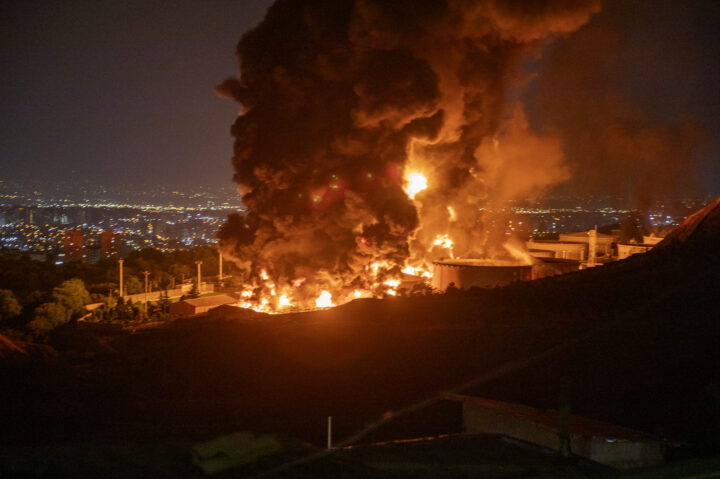
Stringer/Getty Images
Fire and smoke rise into the sky after an Israeli attack on the Shahran oil depot on June 15, 2025 in Tehran, Iran.


 Add JewishInsider on Google
The mass protests across Iran erupted just over two weeks ago — the same day that Israeli Prime Minister Benjamin Netanyahu flew to Palm Beach, Fla., to meet with President Donald Trump.
The big question as Netanyahu and Trump met was whether the president would give Israel a green light to strike Iran as it reconstituted its ballistic missile program at a pace that raised major concerns in Jerusalem. Trump’s response was a resounding yes, adding that if Iran would start rebuilding its nuclear program, the answer would be yes and “fast.”
At the same time, Israeli defense figures and officials made it known through the media that Jerusalem’s more immediate worry was that Tehran would misinterpret events and strike Israel first. Netanyahu reportedly told Russian President Vladimir Putin that Israel is not interested in escalating, but Ayatollah Ali Khamenei, Iran’s supreme leader, appeared to reject the overture in a post on X, saying “the malicious enemy is a deceiving liar.”
But as the demonstrations in Iran grew and the regime’s response grew more and more violent – Iran International reported 12,000 protesters have been killed as of Tuesday morning, while an Iranian official put the death toll at 2,000 – international talk about Israeli airstrikes subsided to near-silence.
Asked how Israel’s calculation about striking Iranian missile or nuclear sites may have changed in the last two weeks, former Israeli Ambassador to the U.S. Michael Oren told Jewish Insider’s Lahav Harkov on the “Misgav Mideast Horizons Podcast”: “With the United States threatening to intervene, what would we have to gain from this? Other than providing a pretext for the Iranians to strike back at us. I think we’re operating responsibly, prudently.”
Still, Israelis remain jittery about a second round of war with Iran, to the extent that the IDF’s spokesperson, Brig.-Gen. Effie Defrin, released a statement on Monday evening warning that “in recent days, many rumors have circulated in light of the situation in Iran. …The IDF is prepared defensively and remains on alert for surprise scenarios if required. The protests in Iran are a domestic matter. …We will provide updates if there are any changes. I emphasize: Do not lend a hand to rumors.”
Hostile actors — like the Hamas-affiliated Palestine Chronicle – misrepresented the Israeli Health Ministry’s distribution on Monday of new emergency preparation instructions incorporating the lessons of June’s 12-day war, as though hospitals were imminently entering emergency mode — even though the ministry’s letter explicitly said there is no need to do so. Other false reports stated that local governments in Israel had opened bomb shelters, leading several municipalities to issue denials.
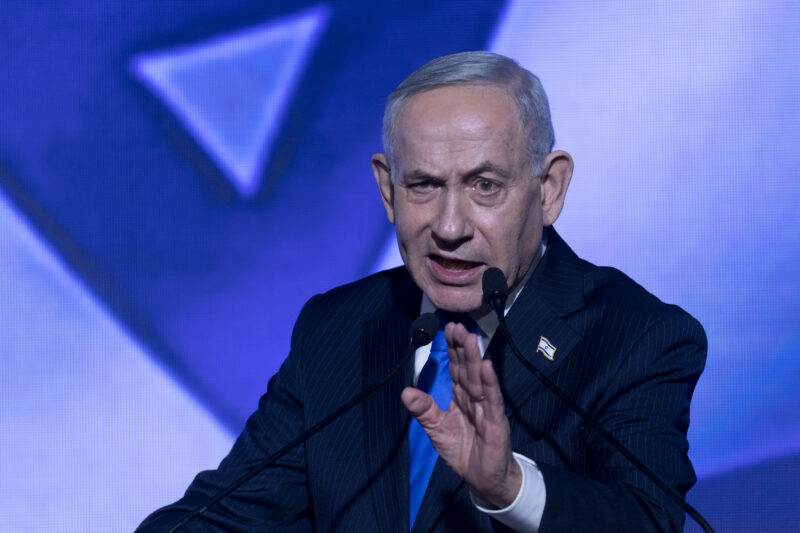
Netanyahu said in Sunday’s Cabinet meeting that Israel is “closely monitoring what is happening in Iran. The demonstrations for freedom spread throughout the country. The people of Israel, the whole world, are amazed by the great courage of the citizens of Iran. Israel supports their struggle for freedom and strongly condemns the massacres of innocent civilians. We all hope the Persian people will soon be freed from the yoke of tyranny, and when that day arrives, Israel and Iran will go back to being faithful partners in building a future of prosperity and peace for both nations.”
Yet, hours later, he ordered a media blackout on the topic, silencing Intelligence Minister Gila Gamliel and Diaspora Minister Amichai Chikli, who have signaled their support for Reza Pahlavi, son of the deposed Shah.
Oren said that “Israel has only to gain from” the protests.
As to accusations from the Iranian regime — as well as American extremist podcasters on the right and left — Oren said: “I think Israel, and I say this very guardedly, has the ability to assist the protesters with communications, with information. … Are we providing them with arms? No, Are we saying we’re going to intervene militarily to help bring down the regime? We’re not saying that, and I think that’s why it was prudent to put the kibosh on those ministers who are flexing their muscles publicly vis-a-vis Iran.”
More Stories

COURSE CORRECTION
ADL, Gratz College launch antisemitism training for college administrators, faculty
Daily Overtime
Mamdani resists DSA over Tisch tensions
PRESIDENTIAL POV
Obama scrutinizes Israel’s founding, says Palestinians want their ‘land back’

Daily Kickoff
Barack to 1948
VEEP'S VIEW
Harris says Biden should have done more to stop Israel’s ‘horrific conduct’ in Gaza

PLATFORM CHECK
Where Israel’s parties stand on the Diaspora — in their own words
Please log in if you already have a subscription, or subscribe to access the latest updates.
 Continue with Google
 Continue with Apple