






































While Gaza war marches on, protesters hold the line for the hostages
A nationwide strike led by hostage families draws hundreds of thousands into the streets, revealing the depth of Israel’s internal divide as the military prepares for its next move in Gaza
Yair Palti
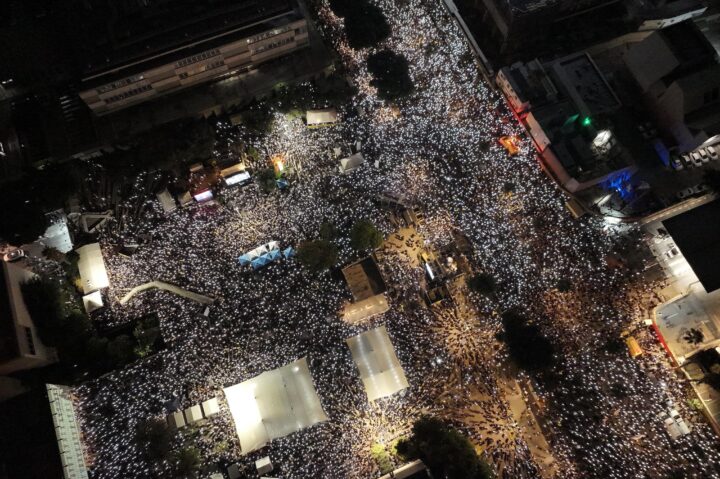
Protestors hold up phone flashlights in Tel Aviv's Hostages Square and the surrounding streets during mass demonstration for the hostages, August 18th, 2025


 Add JewishInsider on Google
The unrest could be felt everywhere — in traffic jams, on the airwaves, in WhatsApp groups, even in the waiting room of a dental clinic.
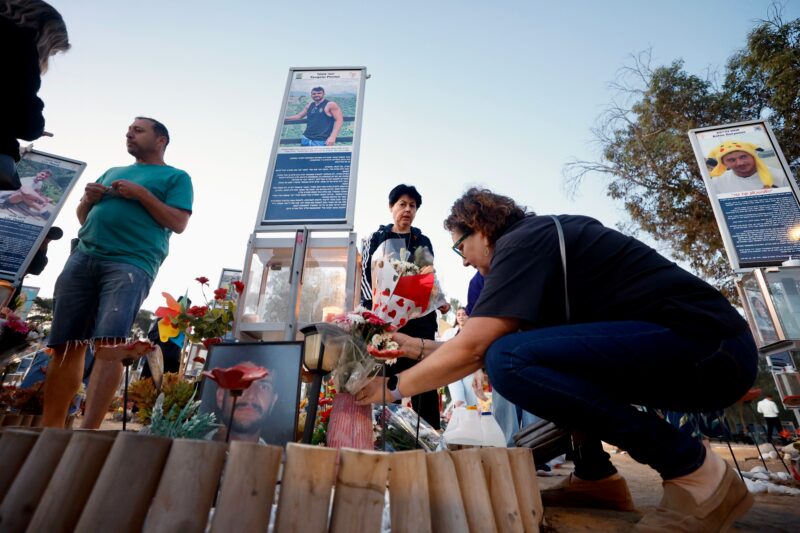
Across Israel yesterday, hundreds of thousands joined a nationwide unofficial strike, led by hostage families and bereaved families, demanding an end to the war in Gaza and the immediate release of the hostages still held there. According to the Hostages Families Forum, over 1 million people participated in protests throughout the day. As the government plans to escalate its military campaign against Hamas, emotions ran high across towns, cities and online spaces, deepening a national rift.
Police clashed with demonstrators blocking roads. In Ra’anana, a truck driver was arrested after allegedly attacking a protester. In a Tel Aviv neighborhood mothers’ WhatsApp group, several members condemned local cafés for staying open, while another defended them for “not strengthening Hamas.” At a dental clinic, a man berated staff for opening their doors, shouting, “What about the hostages!?”
At the heart of the tensions is a painful divide: protesters — including the majority of the hostage families — argue that rescuing the captives must come before all else. Meanwhile, the government and its supporters, and even several hostage families, claim such demonstrations weaken Israel’s negotiating hand and embolden Hamas. Israeli President Issac Herzog, speaking at Hostages Square, said “There’s no Israeli who doesn’t want them back home. We can argue about philosophies, but truly, the people of Israel want our brothers and sisters back home.”
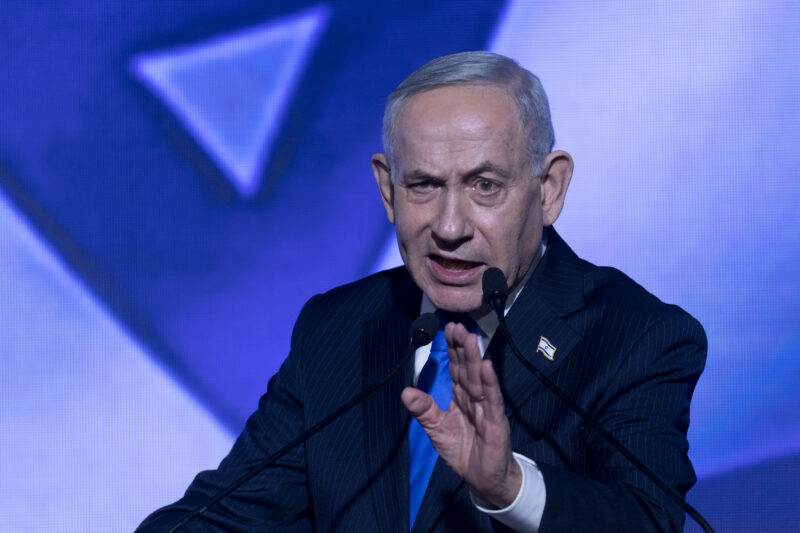
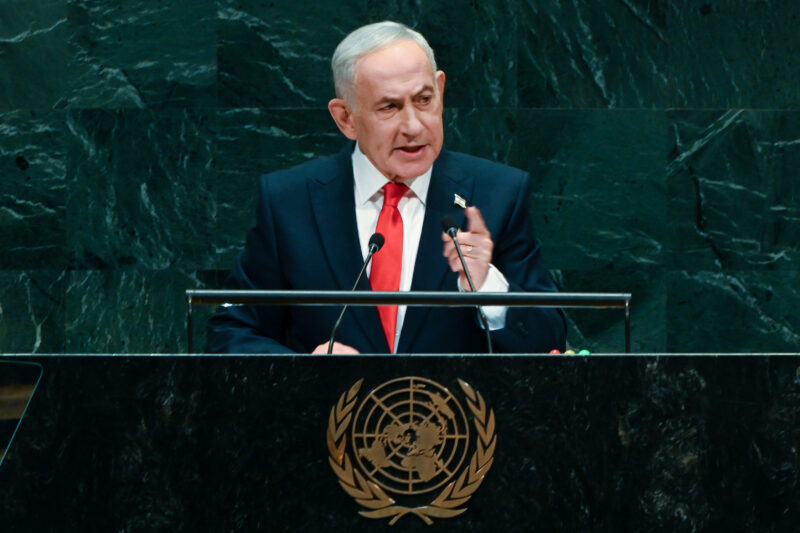
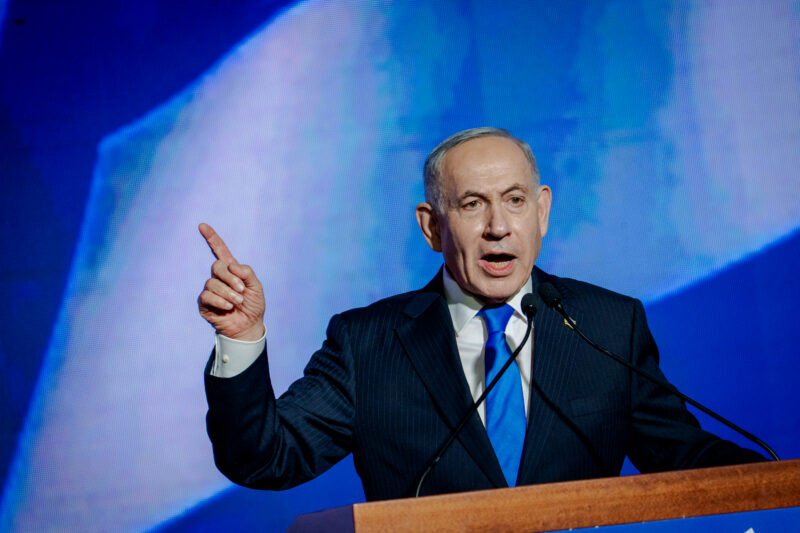
Israeli Prime Minister Benjamin Netanyahu doubled down on his government’s stance in a public statement, warning: “Those who are calling for an end to the war today without defeating Hamas, are not only hardening Hamas’s stance and pushing off the release of our hostages, they are also ensuring that the horrors of October 7 will recur again and again … to advance the release of our hostages and to ensure that Gaza will never again constitute a threat to Israel, we must complete the work and defeat Hamas.”
Yet recent polls show that a majority of Israelis support prioritizing the hostages’ release and bringing an end to the war.
Israeli journalist and commentator Ben Caspit wrote on social media: “To join the protest strike, you don’t have to be a leftist. Nor a centrist. Nor a rightist… You need a heart. There on the left side, between the ribs and the lungs. A beating heart that feels the need to express solidarity with our kidnapped brothers, with their families, with the terrible suffering.”
“And no, don’t believe the spin that it ‘helps Hamas.’ It doesn’t. Hamas doesn’t need strike X or demonstration Y to get to know Israeli society. Hamas knows us very well, just as we know them. They are death eaters. We seek life. That’s the whole difference.”
Meanwhile, Amit Segal — a reporter and political commentator often seen opposite Caspit on Channel 12 — offered a more sober take in his newsletter on Sunday: “While the strike will help many Israelis express their frustration and desperation to bring the hostages home, it won’t bring Israel closer to achieving the very thing they’re protesting for.”
Even if that may be, the protests reach further than home: former hostages have recounted the strength they gained from witnessing the demonstrations on the news while in captivity in Gaza. In Tel Aviv, as night fell, thousands of protesters raised their phone flashlights in Hostages Square and the surrounding streets, creating a moment of visual unity. The sea of lights stretched across the plaza and beyond — a simple gesture that carried a message of solidarity for the hostages still held in Gaza.
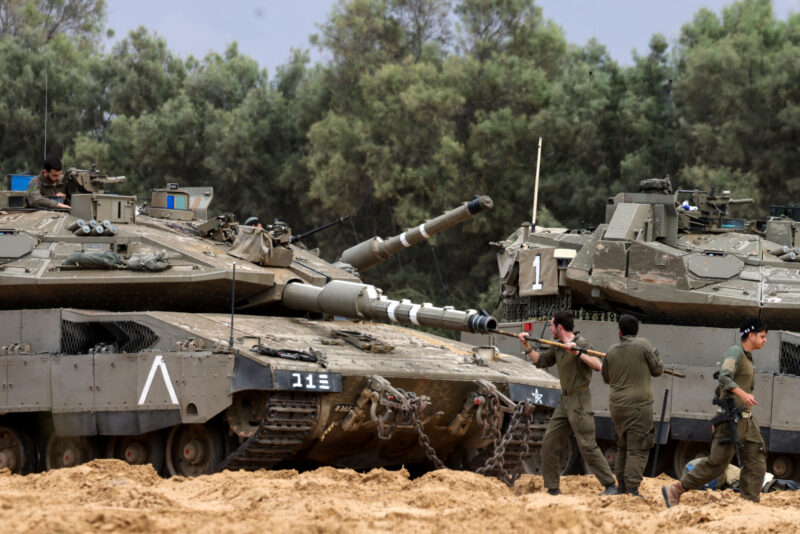
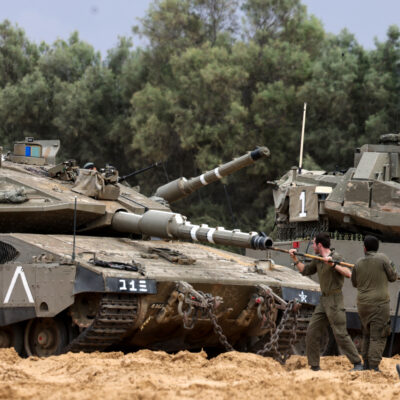
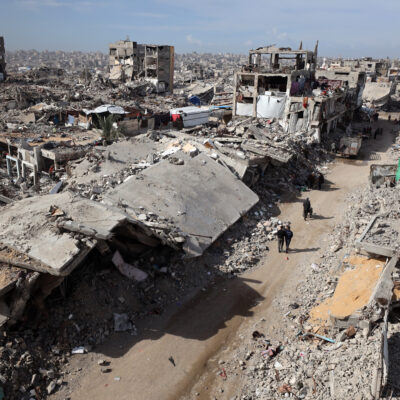
At the same time, the wheels of war are already turning. While Israelis grappled with grief, anger and hope in the streets, the military was preparing for its next incursion. Lt. Gen. Eyal Zamir, the IDF’s chief of staff, declared yesterday from the Gaza Strip: “Today we are approving the plan for the next phase of the war.”
“We will maintain the momentum of Operation ‘Gideon’s Chariots’ while focusing on Gaza City. We will continue to strike until the decisive defeat of Hamas, with the hostages always at the forefront of our minds,” Zamir said, adding, “Soon we will move on to the next phase” of the operation.
More Stories
CATCHING HEAT
Pro-Israel Democrats blast Mamdani for Oct. 7 anniversary statement
LESSONS LEARNED?
Three years after Oct. 7, Israel’s security is ‘much better,’ but risks loom

BACK FROM THE GULF
Sen. Murphy accuses admin of ‘active cover-up’ of Iran war, vows to leverage funding to end war
speaking out
In open letter, dozens of retired U.S. military leaders reject genocide allegations against Israel

REGIONAL SHIFT
Amb. Kaploun: More Latin American countries plan to adopt IHRA definition of antisemitism

DOHA DEALINGS
Moskowitz challenger visited Qatar in 2024, photographed with Qatari official
Please log in if you already have a subscription, or subscribe to access the latest updates.
 Continue with Google
 Continue with Apple