






































‘No objections’ from NYPD to amended buffer-zone proposal for houses of worship
The department’s deputy commissioner acknowledged the City Council bill will formalize, not change, police policy
Alexi J. Rosenfeld/Getty Images
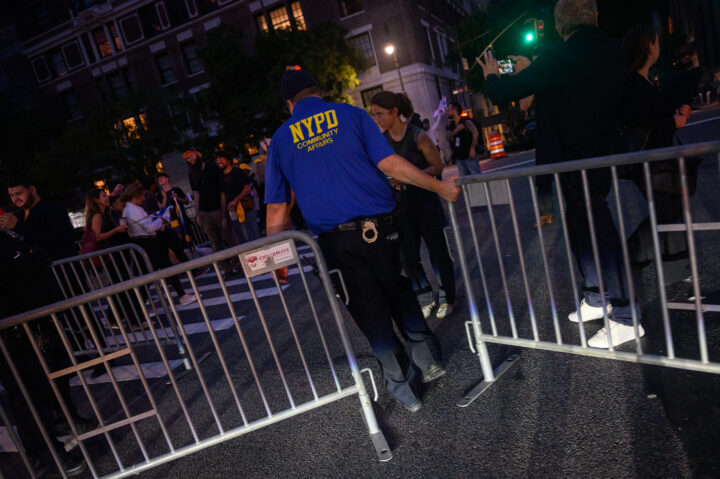
NYPD officers set up barricades separating pro-Israel and anti-Israel protesters on Sept. 25, 2025 in New York City.


 Add JewishInsider on Google
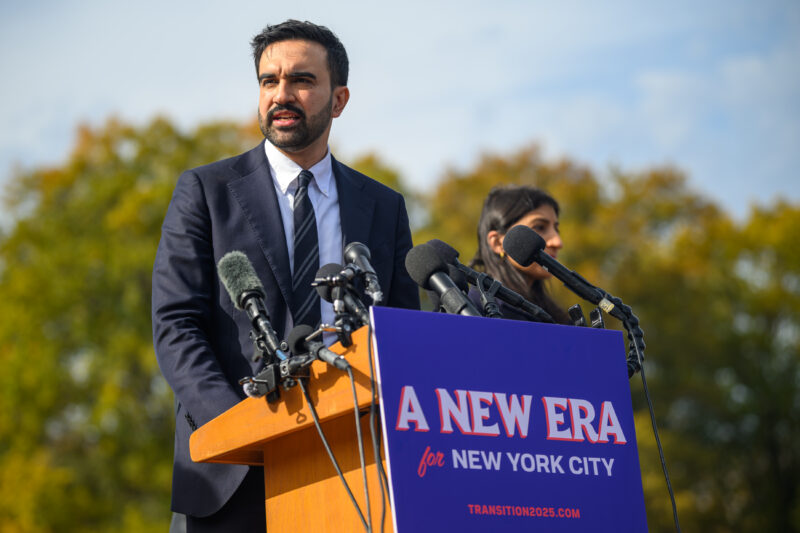
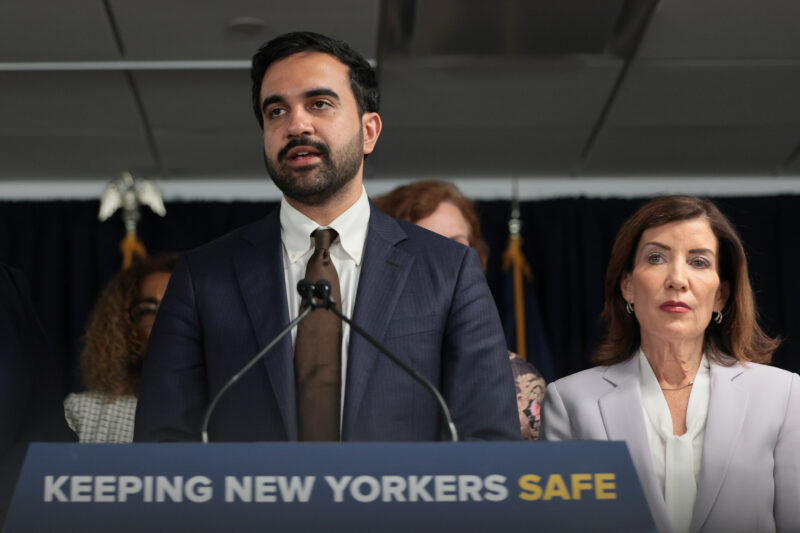
The NYPD — part of New York City Mayor Zohran Mamdani’s administration — declared before the City Council on Wednesday that it has “no objections” to Council Speaker Julie Menin’s proposal compelling the department to develop a policy for establishing “buffer zones” outside houses of worship during protests.
The legislation formed the core of a suite of antisemitism-battling legislation that Menin, the body’s first Jewish speaker, rolled out in January. The bill, which obligates the NYPD to codify protocol for ensuring worshippers can enter and exit religious facilities without obstruction or harassment, initially contained language that would set the range of police barricades or tape at “up to 100 feet.”
However, an updated iteration of the legislation released Monday night eliminated any specific reference to distance, in response to objections that such language could actually constrict the NYPD’s range of protective activity. As a result, the department announced before a hearing of the Council’s Committee to Combat Hate that it has no issues with the bill, following the mayor’s previous allusions to unspecified concerns he and his NYPD Commissioner Jessica Tisch had with the proposal.
“We greatly appreciate that dialogue and collaboration,” said NYPD Deputy Commissioner for Legal Affairs Michael Gerber, who explicitly stated he was providing the opinion of Tisch. “The result is a bill that is consistent with the NYPD’s ability to protect people entering and leaving places of worship, as well as our commitment to facilitating First Amendment activity.”
The Menin bill is distinct from Gov. Kathy Hochul’s push for 25-foot buffer zones around houses of worship, which would subject violators to criminal penalties. Despite the controversy over the Council proposal, which inspired dueling rallies in opposition and support prior to the hearing, Gerber noted that the law would not impose new policies upon the NYPD but simply require Tisch to formalize and publish their procedures.
“To be clear, the policy will not alter our practices but rather will articulate and describe what we are already doing,” Gerber said. “I think the bill fosters transparency.”
A corollary piece of City Council legislation, introduced by Councilmember Eric Dinowitz — chair of the body’s Jewish Caucus — would apply the same standards to educational facilities. Gerber said his department could not offer the same carte blanche support for this proposal, because it would set uniform standards for police conduct on both public and private property.
Menin pressed Gerber regarding the NYPD’s failure to set up a clear path of access and egress to Park East Synagogue in Manhattan amid an anti-Israel protest in November spearheaded by openly pro-Hamas activists. Gerber reiterated a statement of regret that Tisch, a scion of one of the city’s most prominent Jewish families, also made at the time.
“We got that one wrong,” said Gerber. “We didn’t have the appropriate frozen zone at the entrance, and that led to a situation that should not have happened.”
But the deputy commissioner stressed that the NYPD must guarantee the right of protesters to demonstrate in sight and earshot of their targets, even if their message is hateful and even if the targets are entering or exiting a house of worship.
“The NYPD must protect the First Amendment rights of protesters,” said Gerber. “If individuals choose to protest against those entering a place of worship, the NYPD will ensure that they have sight and sound to the entrance of that location, consistent with the First Amendment. At the same time, the protesters will not be permitted to obstruct, impede or interfere.”
Several left-wing members of the Council pressed Gerber for statistics and responses to hypothetical scenarios, and to make a straightforward declaration of support or opposition to the measure.
Other council members shared their view that the bill does not go far enough. “My concern is that we’re putting forward a symbolic bill that doesn’t really address the real concerns and fears that are being expressed today,” said Councilmember Sandy Nurse.
Menin’s proposal now has 27 co-sponsors, two more than the needed majority of the Council’s 51 members — though seven short of the number required to override a mayoral veto. Mamdani has so far declined to say whether he would sign the bill if it reaches his desk.
More Stories

PRESIDENTIAL ENDORSEMENT
Trump gives Netanyahu ‘complete and total endorsement’

Daily Kickoff
If not then, when? Hillel says Emory rabbi hid conflicts

EXCLUSIVE
JDCA launches streaming and digital ads supporting Cait Conley, attacking Lawler

analysis
Playing to the cameras in the West Bank
DFL DISCORD
Amy Klobuchar, Angie Craig condemn Hasan Piker ahead of Minneapolis event with Ilhan Omar
AID ARGUMENTS
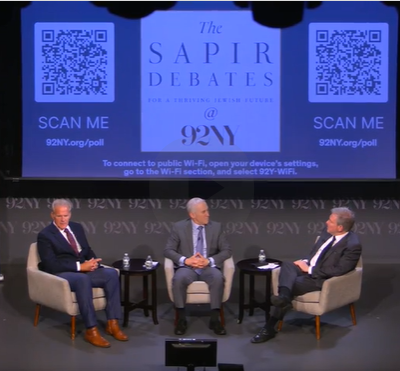
Michael Oren, Jonathan Schanzer split over when Israel should move past U.S. aid
Please log in if you already have a subscription, or subscribe to access the latest updates.
 Continue with Google
 Continue with Apple