
























As protests roil Iran, Trump’s Maduro move raises stakes for Jerusalem and Washington
The newest demonstrations come as Iran is facing economic instability, crushing international sanctions and record drought
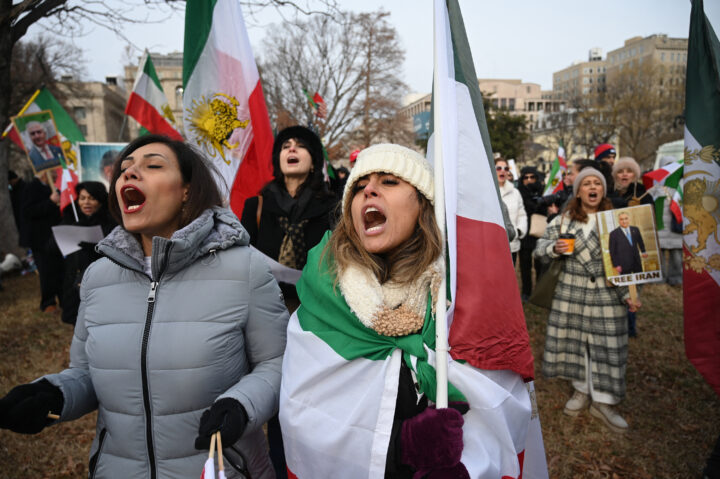
Olivier Douliery/Abaca/Sipa USA via AP Images
Activists take part in a rally supporting protestors in Iran at Lafayette Square, across from the White House in Washington, DC on January 3, 2026.


 Add JewishInsider on Google
As protests continue to spread throughout Iran and the geopolitical repercussions of the Trump administration’s capture of Venezuelan President Nicolas Maduro ripple across world capitals, the sentiment around the Middle East and in Washington is that renewed conflict with the Islamic Republic may well be on the horizon.
While smaller than previous nationwide protests in 2019 and 2022, the newest demonstrations come as Iran is facing economic instability, crushing international sanctions and record droughts. The protests that have spread across the country in recent days are the first major demonstrations since the 12-day war between Iran and Israel, with an assist from the U.S., last June that damaged the Islamic Republic’s nuclear program and further destabilized Iran.
The protests in Iran were already gaining steam at the time a Delta Force team apprehended Maduro and his wife on Saturday and brought them to the U.S. to stand trial on drug trafficking charges. But the Trump administration’s decision to send elite forces into Caracas and forcibly remove Maduro signals to Tehran — as well as Moscow and Beijing — that Washington is taking a tougher approach to regimes it sees as destabilizing and threatening to U.S. interests.
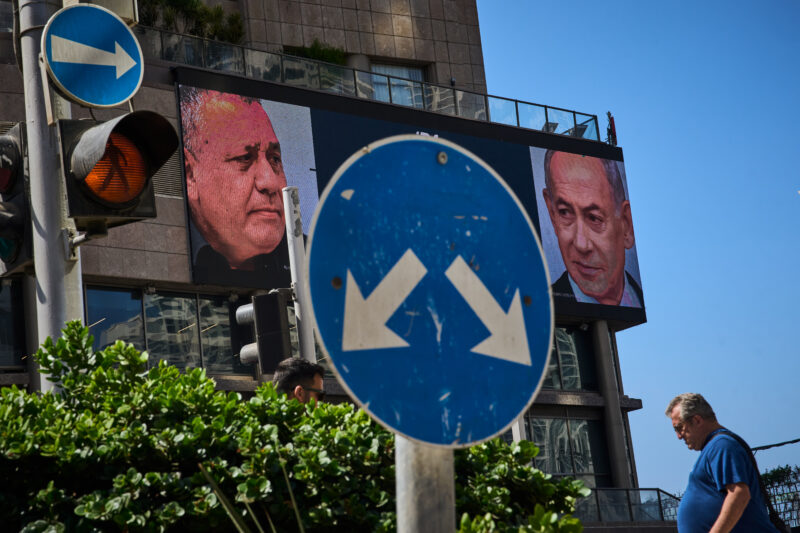
The world is watching this geopolitical high-wire act with uncertainty. In Israel, officials are closely monitoring the instability in Iran, concerned that the regime in Tehran could move to strike Israel in an effort to consolidate domestic support and quell the protests; Israel could also see a window of opportunity to strike Iran at a weak moment, either of which could reignite warfare between Jerusalem and Tehran. It was less than a week ago that Israeli Prime Minister Benjamin Netanyahu met with President Donald Trump at his Mar-a-Lago resort in Florida and discussed the threat posed by Iran’s ballistic missile program.
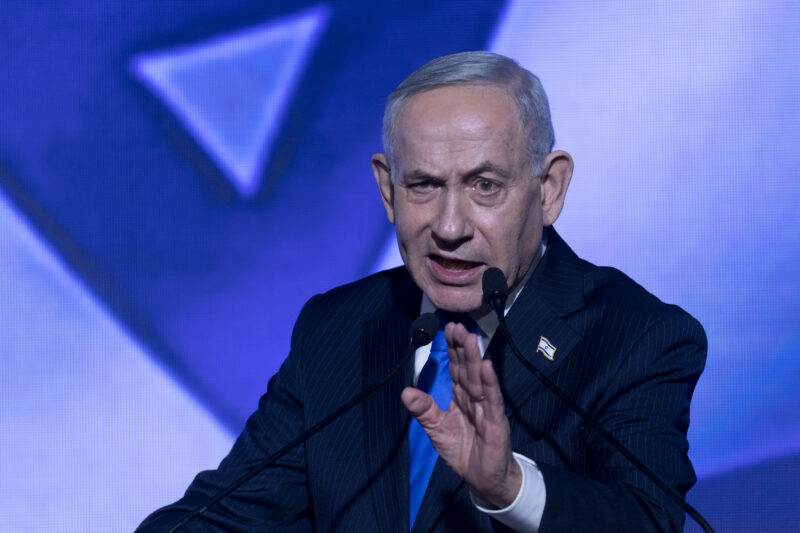
In his weekly Cabinet meeting yesterday, Netanyahu addressed Iran in the context of his Palm Beach meeting last week, saying that Israel “reiterated our joint position of zero enrichment on one hand, and the need to remove the 400 kilograms of enriched material from Iran and oversee the sites with tight and genuine supervision.”
Noting that his sit-down with Trump was taking place as anti-government protests broke out in Iran, Netanyahu added, “The Government of Israel, the State of Israel, and my policy, we identify with the struggle of the Iranian people, with their aspirations for freedom, liberty, and justice. It is very possible that we are standing at the moment when the Iranian people are taking their fate into their own hands.”
With an eye toward Washington, the question is whether Trump will back future military action in Iran, after his success ousting Maduro in Caracas. Despite the widespread protests in Iran, there is no consolidated opposition, where the regime’s opponents are, as The Atlantic’s Arash Azizi writes, “hopelessly disorganized and disunited.”
Speaking to reporters on Air Force One last night, Trump reiterated his recent comments that the U.S. would intervene if Iranian officials were to kill protesters, having said on his Truth Social site on Friday that “If Iran shoots and violently kills peaceful protesters, which is their custom, the United States of America will come to their rescue.”
The Associated Press, citing human rights activists, reported that 15 people had been killed as of Saturday, the same day that Iranian Supreme Leader Ayatollah Ali Khamenei made his first public comments since the outbreak of protests, saying that “rioters must be put in their place.”
Iran’s political leadership appears at an impasse in its efforts to contain the demonstrations — or improve the conditions that led to them — with the hands of President Masoud Pezeshkian and other senior officials largely tied by the supreme leader. That could push the regime to act out of desperation — or to collapse entirely.
An increasingly unlikely scenario is that the protests fizzle out and Khamenei reasserts control — a move that would likely need to occur alongside an economic upturn to pull the rial up from record lows.
The first days of 2026 have seen tens of thousands of protesters taking to the streets across Iran and an administration in Washington flexing its military power, setting the stage for a potential power realignment in the Middle East and around the world.
More Stories
EDIT WARS
Wikipedia failed to address coordinated anti-Israel campaign, new ADL study finds
analysis
MBS bet Saudi Arabia’s future on economic transformation. The Houthis are testing that wager
analysis
Could these two small parties be Israel’s kingmakers?
PREDECESSOR PROBLEMS
The Lander policy at the heart of Levine’s Israel bonds reversal
RELATIONSHIP STATUS
How Israel’s parties say they would rebuild support in America
Please log in if you already have a subscription, or subscribe to access the latest updates.
 Continue with Google
 Continue with Apple