
























Plus, Bessent's plan to make Iran an 'economic outcast'
Nathan Posner/Anadolu via Getty Images
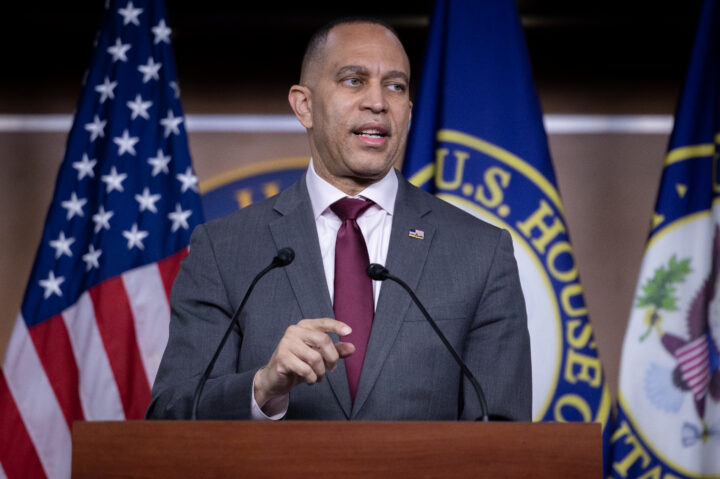
House Minority Leader Hakeem Jeffries (D-NY) speaks during his weekly press conference at the U.S. Capitol in Washington, DC on March 19, 2026.


 Add JewishInsider on Google
Good Monday afternoon.
This P.M. briefing is reserved for our premium subscribers like you — offering a forward-focused read on what we’re tracking now and what’s coming next.
Today’s Daily Overtime was curated by JI U.S. Editor Danielle Cohen-Kanik.
📡On Our Radar
Notable developments and interesting tidbits we’re tracking
Treasury Secretary Scott Bessent announced this afternoon that the Trump administration is launching “Operation Economic Outcast” against Iran, an effort aimed at severing Tehran’s global economic ties in order to “collapse every last option” for the regime, Jewish Insider’s Matthew Shea reports.
The Treasury Department designated over 60 entities, individuals and vessels “that enable the Iranian regime to procure illicit nuclear and missile technology, conduct cyber operations and generate oil revenue,” Bessent said, while President Donald Trump “is making phone calls to world leaders with specific requests to cease their interactions with the regime”…
The Treasury Department also redesignated Hezbollah, already a Foreign Terrorist Organization, for acting as a proxy of the Iranian regime under the direction of the Islamic Revolutionary Guard Corps, and sanctioned 10 individuals who were part of a network transferring funds to Hezbollah through couriers on commercial flights between Lebanon, Turkey, the UAE and Iran…
Israeli Prime Minister Benjamin Netanyahu claimed today that Iran tried to assassinate one of his sons: “Iran tried to kill, to murder one of my sons,” he said in an interview with Israel’s Channel 14, without specifying which of his two sons was the target…
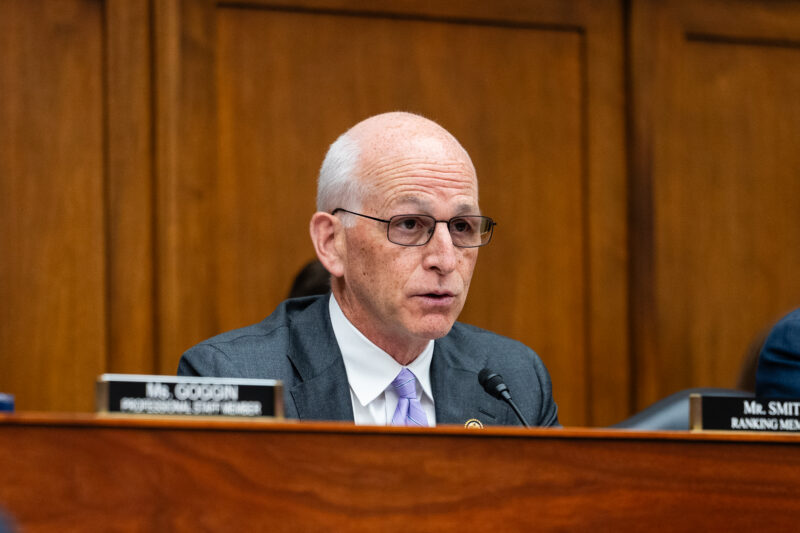
House Minority Leader Hakeem Jeffries (D-NY) today denounced comments by antisemitic streamer Hasan Piker claiming that Jews are inviting antisemitic attacks against themselves by supporting Israel, JI’s Marc Rod reports.
Jeffries wrote on X that the “malicious claim that American Jews are inviting violence against themselves is dangerous and antisemitic,” without naming Piker directly. “We will fight the cancer of antisemitism with the fierce urgency of now,” he said…
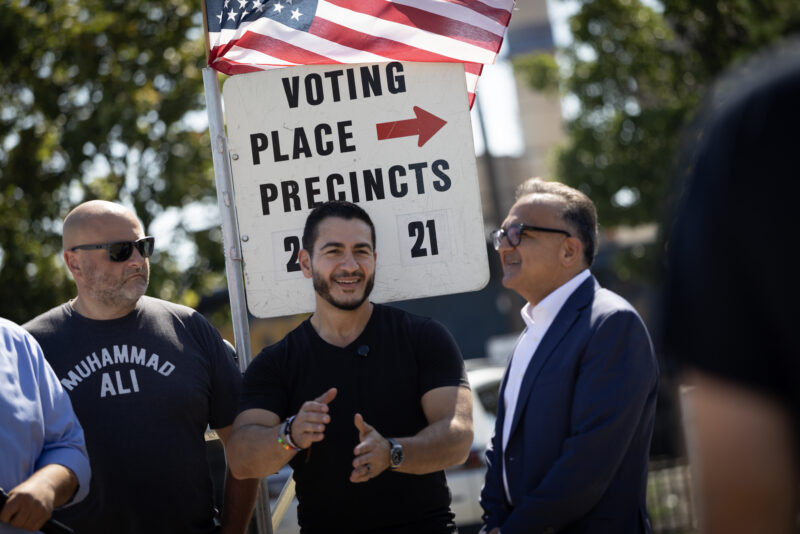
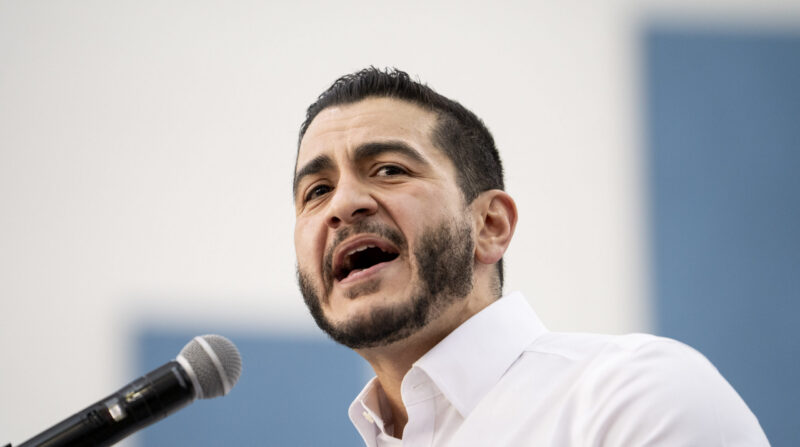
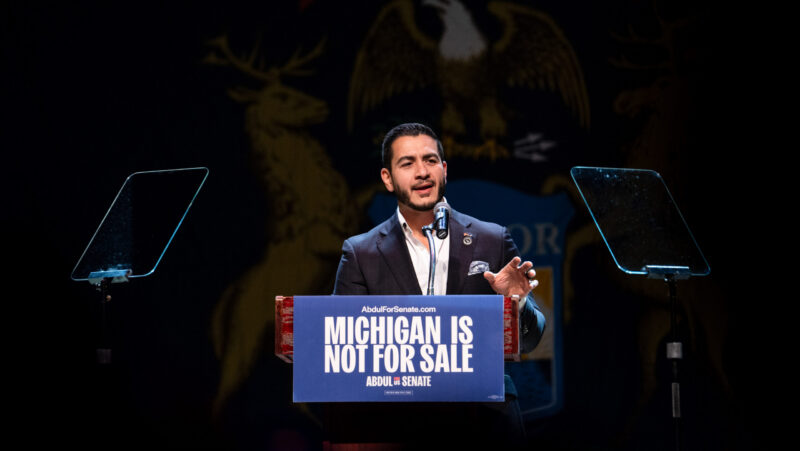
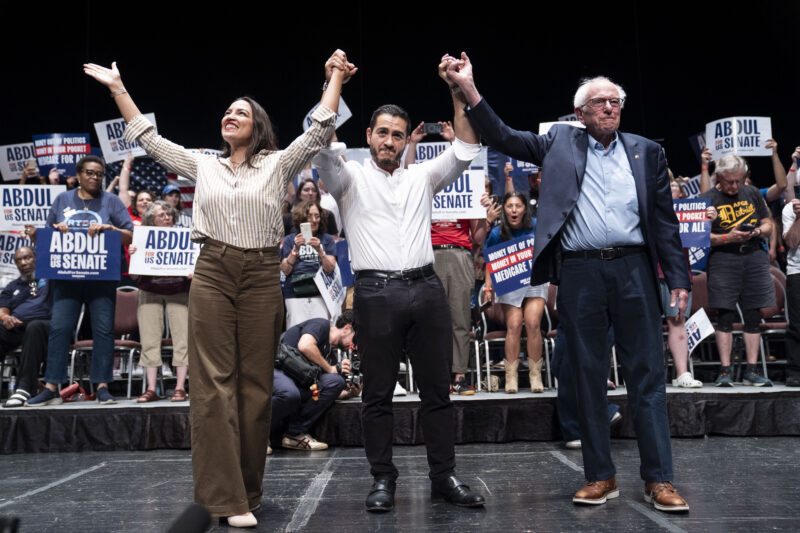
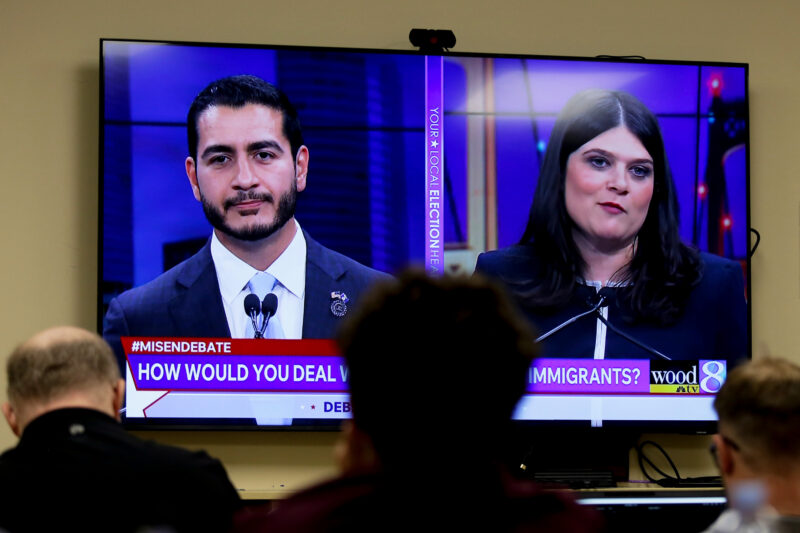
Michigan Democratic Senate nominee Abdul El-Sayed, meanwhile, distanced himself from Piker but did not name him nor address the substance of his comments.
El-Sayed insisted that “nobody speaks for this campaign besides me and my campaign spokespeople,” despite having campaigned prominently with Piker, and went on to downplay Piker as “a Twitch streamer” who will not define the race or his campaign. He did not say whether his or his campaign’s relationship with Piker will change going forward…
Rep. Hillary Scholten (D-MI) condemned Piker outright, calling him “a hack who thrives on hate, shock and awe because he lacks substance.” Rep. Ro Khanna (D-CA), who has previously appeared on Piker’s show, also rejected the streamer’s comments, telling JI’s Marc Rod that “Jews are not the cause of [antisemitism]. Neither are people who support Israel. Antisemites are to blame. That’s it”…
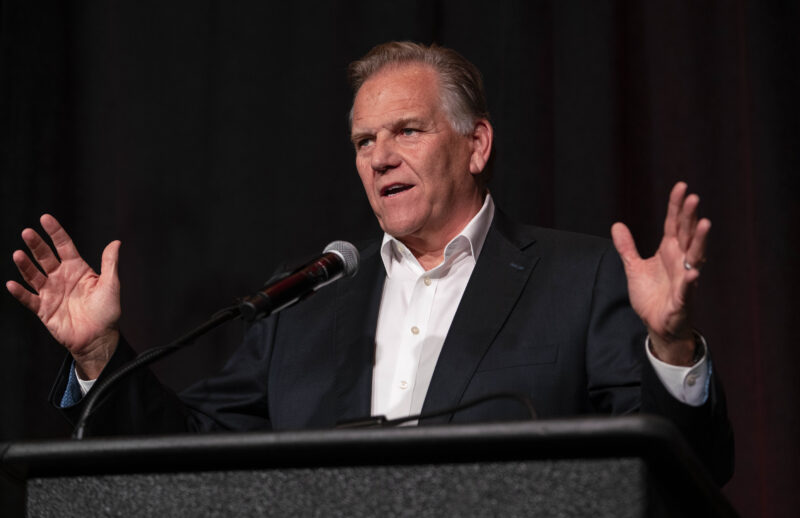
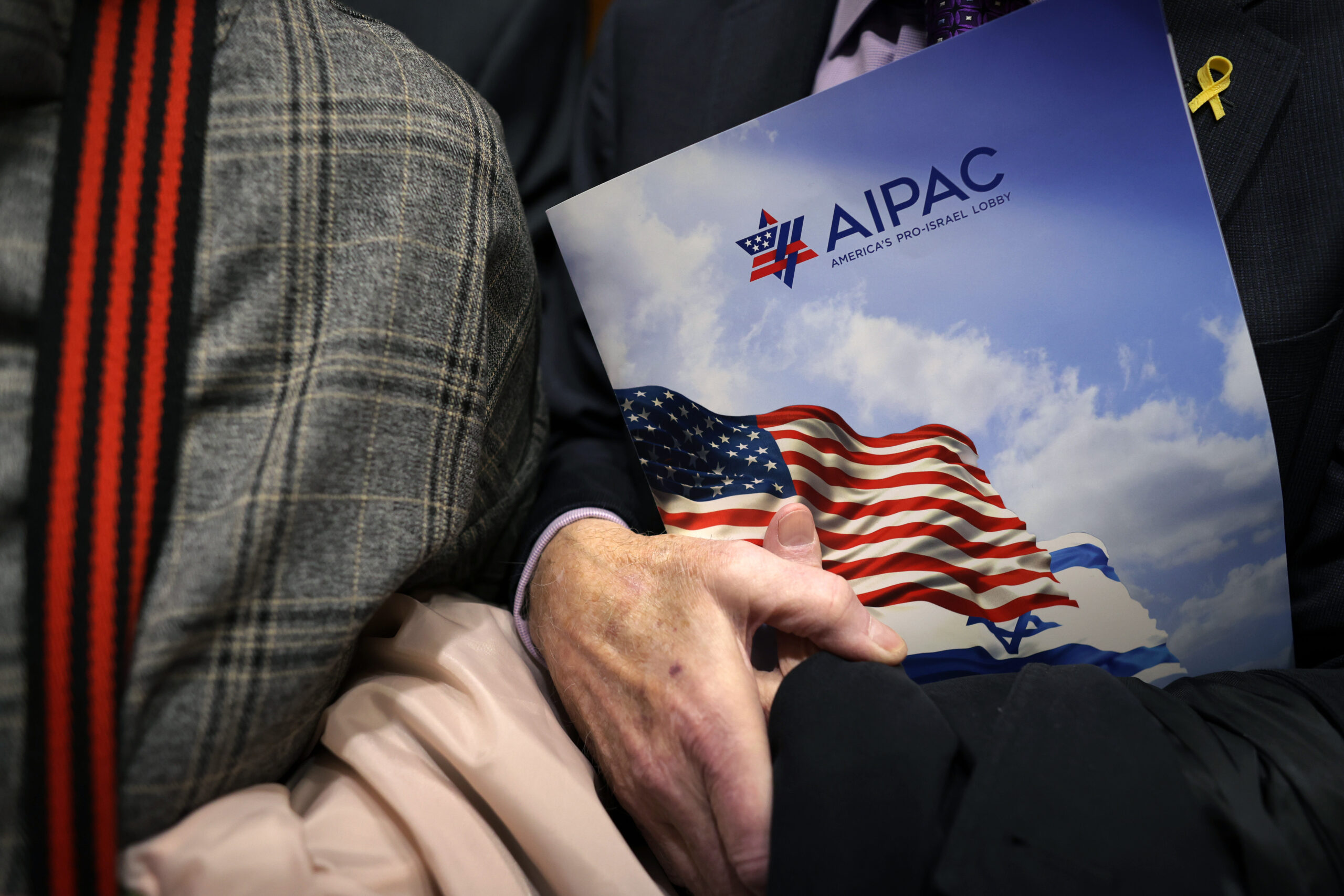
Former Rep. Mike Rogers (R-MI) attended three AIPAC-hosted fundraisers in Los Angeles yesterday with another planned for today, according to The New York Times, as reporting emerges about a growing rift between Rogers and the pro-Israel group as he runs for U.S. Senate.
Rogers reportedly told Michael Tuchin, AIPAC’s board chair, that the group should consider whether it is the best messenger against El-Sayed, though he did not explicitly say he did not want its support and its United Democracy Project super PAC is still considering running ads backing Rogers…
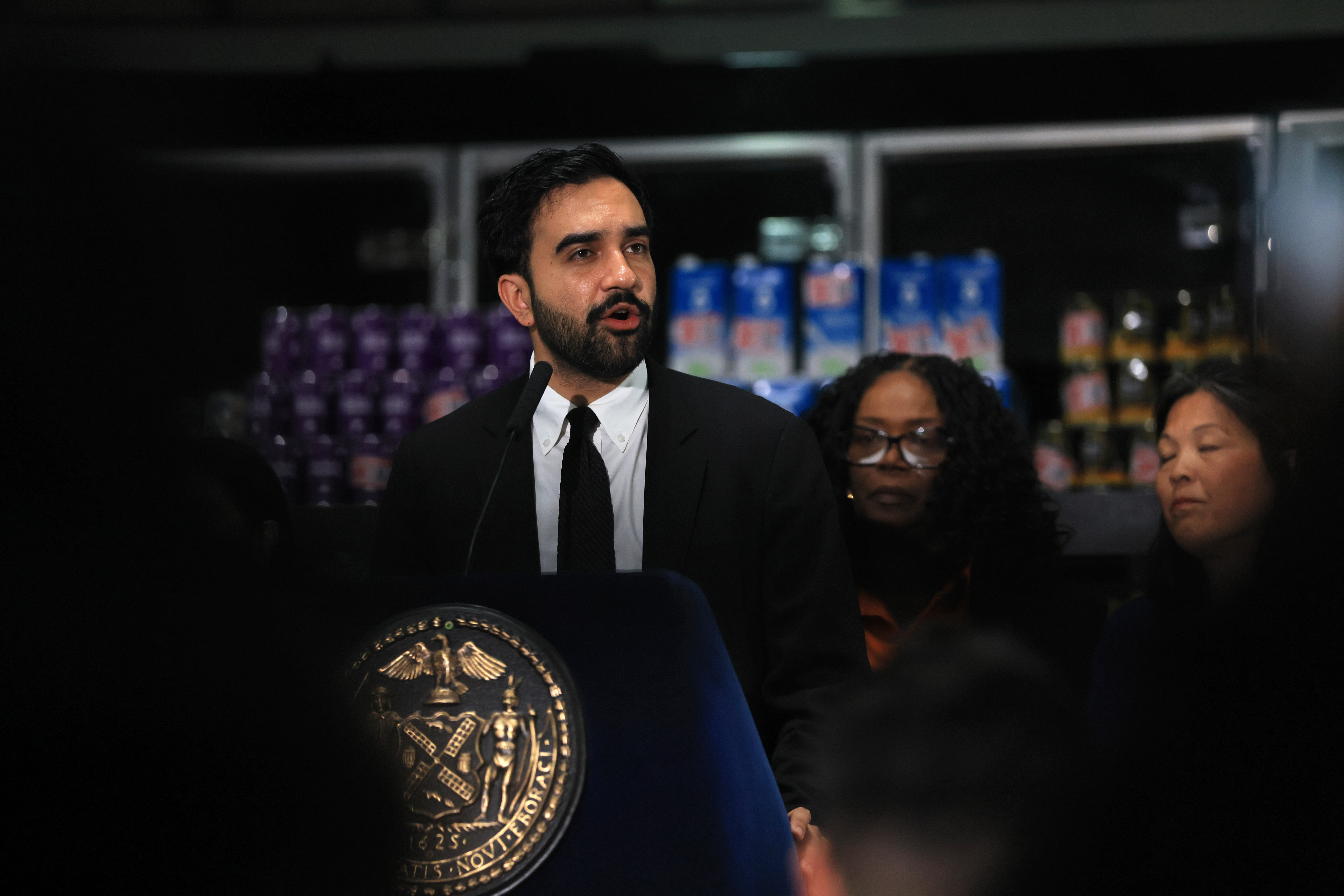
New York City Mayor Zohran Mamdani condemned comments by Brooklyn Democratic leader Carmella Charrington attacking Jewish investors with whom she is engaged in a property dispute as “Zionists” and suggesting some link between her situation and Israeli settlement activity in the West Bank.
“Suggesting that an alleged deed theft in Brooklyn is part of a global conspiracy involving Jewish people is blatant, reprehensible antisemitism. Trafficking in these dangerous antisemitic tropes is vile and inexcusable,” the mayor’s office told JI’s Will Bredderman, after initially avoiding his questions on the issue at a press conference earlier today. However, the administration did not answer a follow-up question about whether the mayor believes Charrington should step aside from her district leader role…
Several leading Jewish and pro-Israel organizations condemned actor Mark Ruffalo for using what they deemed antisemitic rhetoric in his recent social media commentary targeting the Ellison family amid the pending merger of Paramount and Warner Bros. Discovery, JI’s Haley Cohen reports.
Rabbi Noah Farkas, president and CEO of Jewish Federation Los Angeles, said Ruffalo’s “unhinged rant, which combined Jewish wealth, media control, secret technology and sinister global power, is not legitimate criticism. It draws on recognizable antisemitic tropes with a long and dangerous history”…
As New York magazine continues to come under fire for a recent cover issue depicting the rise of Southwest Asian and North African culture in New York City while taking a hostile view of Israel, the magazine said its editors decided “genocide” is an “accurate description” of Israel’s actions in Gaza and therefore “its use would be allowed in our pages,” claiming that “accusations of antisemitic intent” in usage of the word “were in fact obfuscating an overwhelming scholarly consensus”…
The Trump administration formally revoked Syria’s designation as a State Sponsor of Terrorism today at the end of the 45-day congressional notification period, Secretary of State Marco Rubio announced, in order to “eliminate the final major barriers for private sector investment in Syria and promote Syria’s economic recovery and reintegration into the global economy.”
Rubio also revoked the designation of Hay’at Tahrir al-Sham (HTS) — a group that Syrian President Ahmad al-Sharaa led until he assumed the presidency in January 2025 — as a Specially Designated Global Terrorist, after having removed HTS from the Foreign Terrorist Organization list last year…
⏩ Tomorrow’s Agenda, Today
An early look at tomorrow’s storylines and schedule to keep you a step ahead
Keep an eye on Jewish Insider for a preview of tomorrow’s Senate special election runoff in South Carolina, where Sen. Darline Graham (R-SC) still has the backing of much of the GOP establishment, including President Donald Trump, in her race against Rep. Ralph Norman (R-SC).
Omani Foreign Minister Sayyid Badr Albusaidi is expected to visit Iran tomorrow, as the two countries continue negotiations over administering the Strait of Hormuz amid the announcement of the new U.S. economic campaign against Tehran.
Stories You May Have Missed
BOOKSHELF
In new book, Ahmed Fouad Alkhatib argues Hamas has held Palestinian population hostage for 20 years
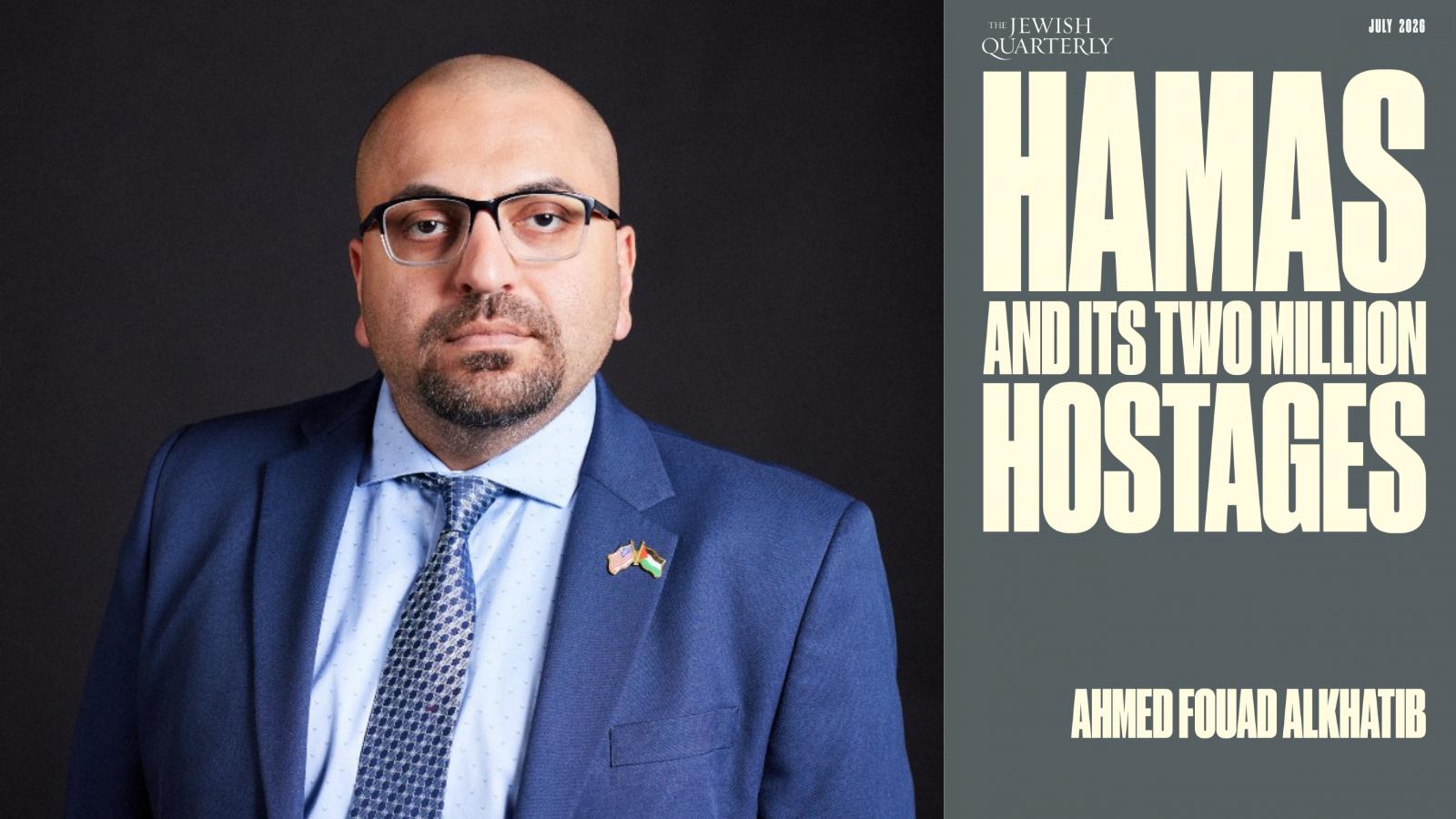
Ahmed Fouad Alkhatib, a Gaza native who lost 33 family members in Israeli airstrikes, argues in his new book that Hamas bears primary blame for Palestinian suffering and political stagnation
MONEY MOVES
UAE deals major blow in cutting Iran financial ties — but experts warn Tehran has work-arounds

The suspension ends a key commercial lifeline, though analysts said Iran’s sanctions-evasion networks and enforcement uncertainty limit how decisive a blow it will be
Plus, Baltimore's Orthodox Jews get a day at the races
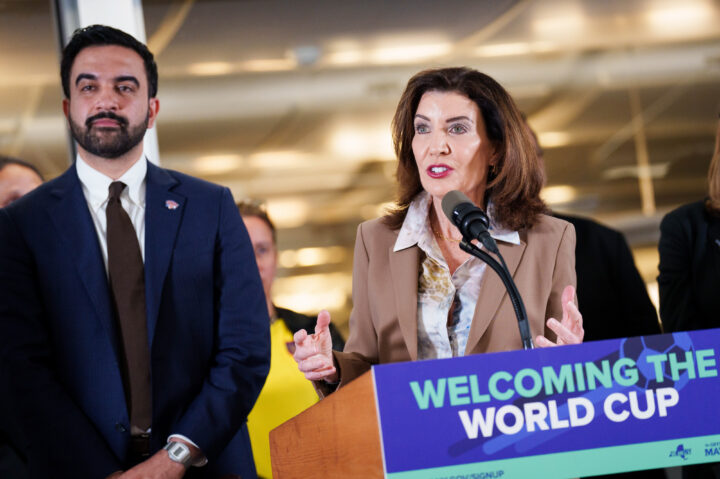
Adam Gray/Bloomberg via Getty Images
Zohran Mamdani, mayor of New York, left, and Kathy Hochul, governor of New York, during a news conference on 2026 FIFA World Cup transportation at the MTA Rail Control Center in New York, US, on Thursday, June 4, 2026.
Good Thursday afternoon.
This P.M. briefing is reserved for our premium subscribers like you — offering a forward-focused read on what we’re tracking now and what’s coming next.
Today’s Daily Overtime was curated by JI U.S. Editor Danielle Cohen-Kanik.
📡On Our Radar
Notable developments and interesting tidbits we’re tracking
Stefany Shaheen, the daughter of Sen. Jeanne Shaheen (D-NH) and a candidate for New Hampshire’s 1st Congressional District, launched a TV ad this week hitting her primary opponent, military veteran Maura Sullivan, for receiving $300,000 in donations “bundled from AIPAC donors,” Jewish Insider’s Marc Rod reports.
The donations referenced in the ad appear to be from individual donors who have previously contributed to AIPAC, but the pro-Israel group itself has made no endorsement and has not been directly involved in the race…
Michigan Democratic congressional nominee Jeremy Moss declined to endorse his party’s Senate nominee, Abdul El-Sayed, in an interview with Slate: “Abdul’s going to have to demonstrate some serious outreach to Oakland County’s Jewish community,” Moss said. The two candidates have “had an ongoing dialogue,” Moss added, as he said Democrats must ensure that “the liberal Jewish community is not politically homeless”…
Rabbi Asher Lopatin, director of community relations at the Ann Arbor Jewish federation who has been outspoken about the threat he believes El-Sayed poses to the Jewish community, appeared at a “Democrats for Rogers” press conference in Detroit today where he said, “I usually vote Democrat, but I’m gonna be voting for Mike Rogers … I’m sad to say this, that Abdul El-Sayed has made one thing very clear: We cannot let him anywhere near the U.S. Senate”…
A new poll commissioned by AARP found El-Sayed leading Rogers by one percentage point, 48-47%, but voters ages 50 and up were 16 points more likely than younger voters to say they were motivated to participate in the general election — a population that swings heavily towards Rogers. Voters ages 50-64 favored Rogers over El-Sayed 51-46%, and voters above 65 favored the Republican by 13 points (54-41%)…
Asked in a New York Times interview about New York City Mayor Zohran Mamdani’s call for the federal government to arrest Israeli Prime Minister Benjamin Netanyahu when he arrives in the city for the U.N. General Assembly next month, Gov. Kathy Hochul advised the mayor, “Let’s focus on the blocking and tackling of city government. That is where I believe the main focus should be”…
The Trump administration, meanwhile, is weighing in on another official’s appearance at the UNGA: The White House intends to prevent Palestinian Authority President Mahmoud Abbas from attending for the second year in a row, a U.S. official told The Times of Israel…
Treasury Secretary Scott Bessent explained on CNBC today that in order to implement the new U.S. economic campaign against Iran, the Trump administration will approach “all of our allies” and tell them, “You are either with us or against us.”
“If you insist on doing business with [Iran] — either transferring money, buying their oil, doing seaborne ship transfers — then the U.S. Treasury and the U.S. government will put its full might and force toward enforcing against you,” he added…
The NYT looks at which countries do the most business with Iran and could therefore be hardest hit by the new measures, including China, India and several Middle East nations…
Georgia state Rep. Esther Panitch, the only Jewish member of the state’s Legislature, denounced the Georgia branch of the Council on American-Islamic Relations for featuring extremist anti-Israel voices including Zahra Billoo, Ana Kasparian and Cenk Uygur as keynote speakers at its gala next month.
CAIR-GA has “dropped the mask at this point,” Panitch told the Jerusalem News Syndicate. “This is actual straight-out, Nazi-level Protocols of the Elders of Zion kind of antisemitism. They’re doing it, and they can’t say they didn’t know”…
For more than 150 years, Baltimore’s Orthodox Jews have walked to synagogue on Preakness Saturday and listened to the roar of the crowd from Pimlico Race Course less than a mile away, never able to join it. That changes in 2027, when the second jewel in horse racing’s Triple Crown — following the Kentucky Derby and preceding the Belmont Stakes — moves from Saturday to Sunday, finally opening the gates at Pimlico to the local Shabbat-observant community for the first time since the race started in 1873, JI’s Haley Cohen reports…
⏩ Tomorrow’s Agenda, Today
An early look at tomorrow’s storylines and schedule to keep you a step ahead
Keep an eye on Jewish Insider for a look at the growing divide between the United States and Israel over how to approach post-Assad Syria.
Despite her recent debate stage snafu, which has led GOP operatives to question her chances in next week’s special runoff election, Sen. Darline Graham (R-SC) is still enjoying the support of the party: Sen. John Barrasso (R-WY), the Senate majority whip, is in South Carolina today to support her race, and President Donald Trump will join her in Myrtle Beach for a rally tomorrow.
We’ll be back with the Daily Overtime on Monday. Shabbat shalom!
Stories You May Have Missed
GOING LOCAL
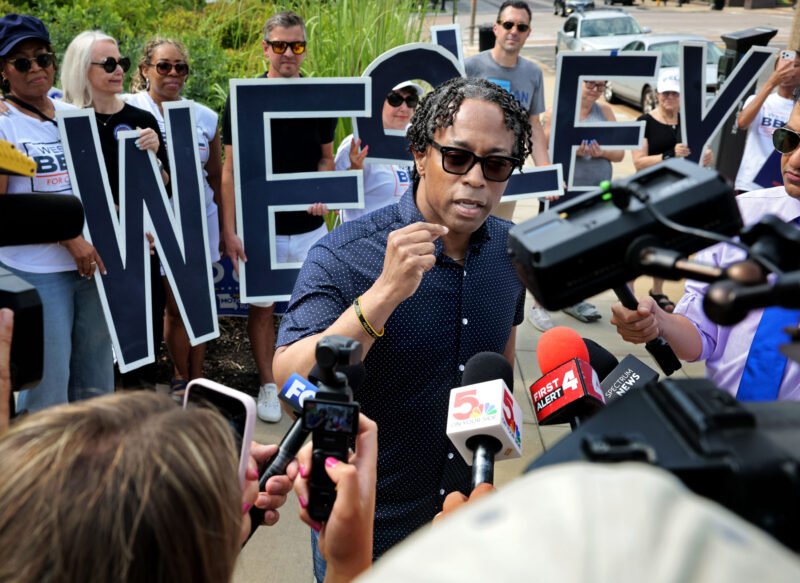
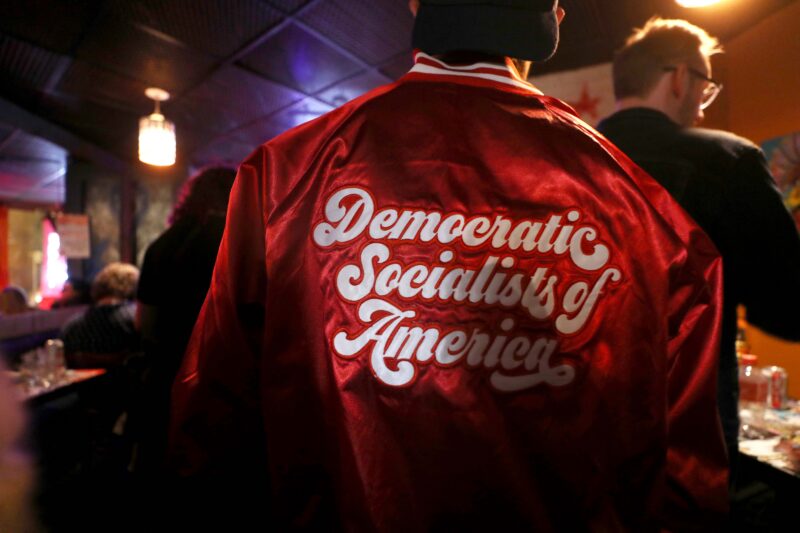
Socialist surge happening in under-the-radar local and state legislative races
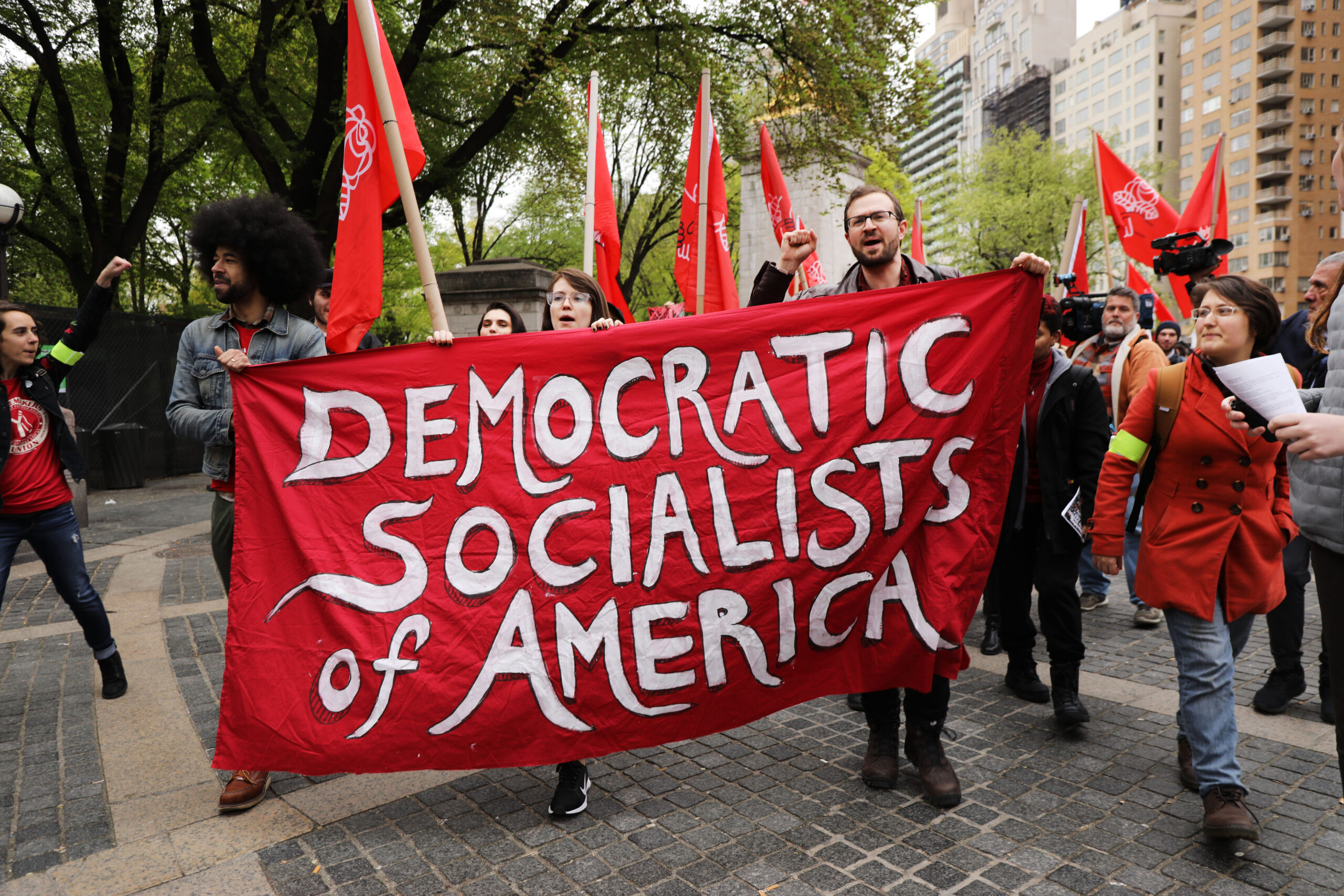
A Brookings Institution study found that of the 104 Democratic Socialists of America-backed candidates running for state legislature, nearly 75% have won their primaries
COLD TURKEY
Turkey-linked group in Eric Adams bribery scandal advertising event with Ryan Zinke
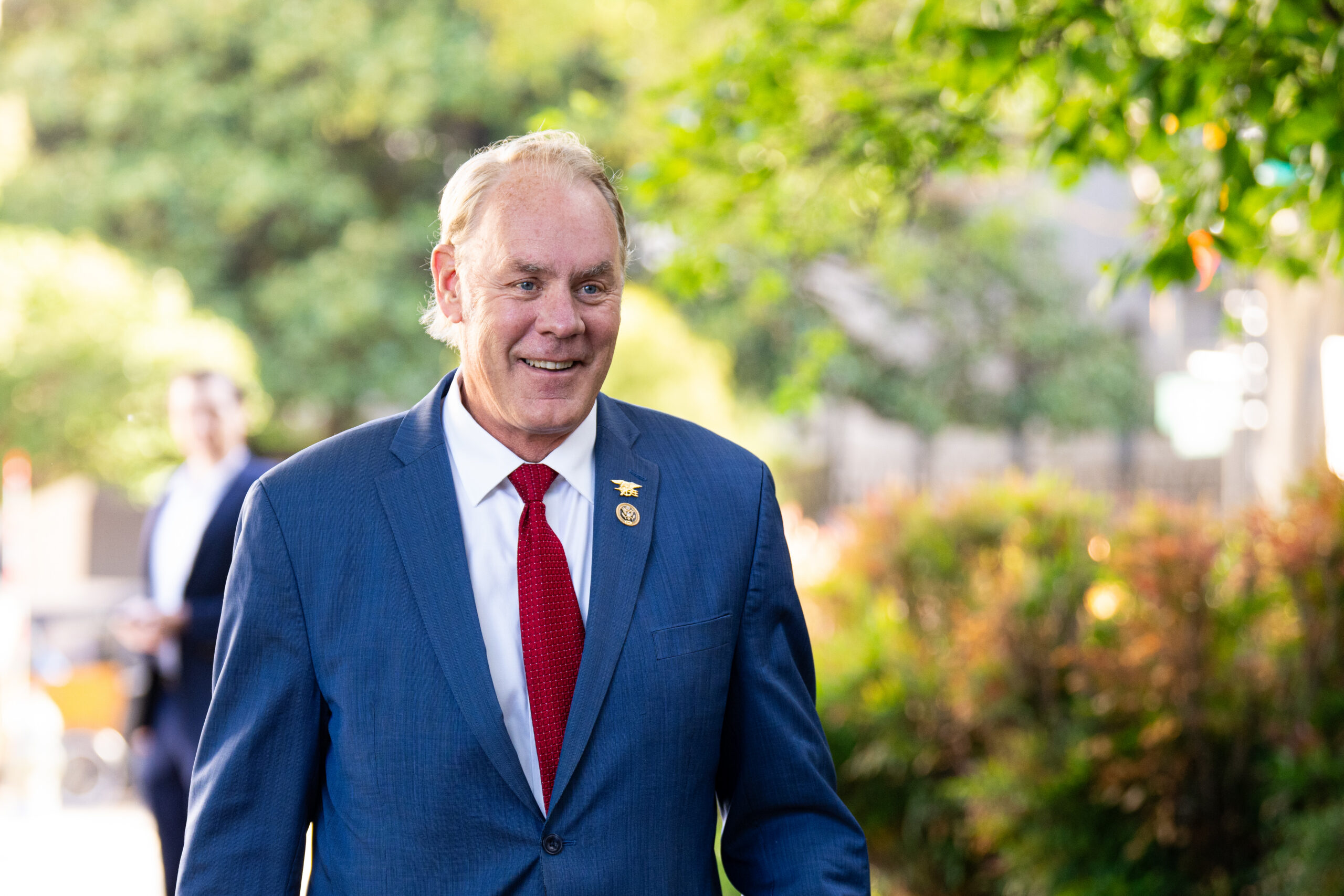
Alleged straw-donor masterminds are selling tickets to an event with the Montana Republican — who says he’s not attending
Plus, ICE detains Jewish bridal shop owner
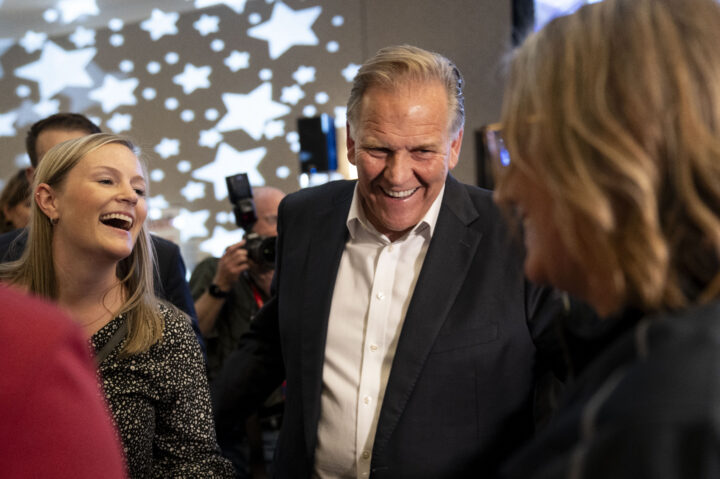
Sarah Rice/Getty Images
Senate candidate Mike Rogers greets supporters at his election watch party with the MIGOP on November 5, 2024 in Novi, Michigan.
Good Wednesday afternoon.
This P.M. briefing is reserved for our premium subscribers like you — offering a forward-focused read on what we’re tracking now and what’s coming next.
Today’s Daily Overtime was curated by JI U.S. Editor Danielle Cohen-Kanik.
📡On Our Radar
Notable developments and interesting tidbits we’re tracking
Jewish leaders in Michigan are circulating an open letter, obtained by Jewish Insider’s Matthew Kassel, urging Jewish Democrats and independents in the battleground state to sign their names in support of former Rep. Mike Rogers (R-MI) as he faces Democratic nominee Abdul El-Sayed in the race for U.S. Senate.
If El-Sayed were to claim victory in the general election, the authors say, “we fear the far-left and anti-Jewish elements in the Democratic party would become dominant … We cannot allow him to become the Democratic standard-bearer or Michigan’s senator”…
California state Sen. Aisha Wahab still holds a narrow lead as of this afternoon over former Dublin, Calif., Mayor Melissa Hernandez in the special election runoff for an East Bay House seat that drew a late surge of outside spending from AIPAC.
With 62% of the vote counted in yesterday’s election, Wahab had 51%, leading Hernandez by two percentage points or 1,356 votes, according to the unofficial initial returns. “We made a race that wasn’t close when we started into a nail-biter,” Patrick Dorton, a spokesperson for AIPAC’s United Democracy Project super PAC, told JI’s Matthew Kassel…
ICE detained a Jewish bridal shop owner and his mother living in Englewood, N.J., a local elected official confirmed today to JI’s Haley Cohen: Ari Ladino and his mother, Chava, who are originally from Bogotá, Colombia, run Luana Rose Modestly in Teaneck — a dress shop specializing in modest special occasion gowns popular among local Orthodox Jewish women. The reason for their arrest remains unclear…
In an interview with The Jerusalem Post today, U.S. Ambassador to Turkey Tom Barrack doubled down on his criticism of Israeli strikes on a Syrian air base earlier in the week, which Israel said had been prompted by Turkish involvement at the base. “Turkish forces were not aware that the Israeli aircraft were en route to that specific Syrian base … [and] could potentially have been inclined to scramble their own jets in the belief that they themselves were under attack,” Barrack said.
He announced that the U.S. is looking to relaunch a deconfliction cell between Israel and Syria, with potential Turkish participation, and downplayed reported Israeli concerns over a specific Turkish radar system said to be deployed at the base. “We remain convinced that this technical requirement need not pose a security concern, and that further conversations can help clarify the matter to everyone’s satisfaction,” Barrack said…
Lt. Gen. Eyal Zamir, the IDF’s chief of staff, visited Israeli troops in southern Syria today, where he said Israel is “monitoring the changes on the Syrian front” and “know[s] how to use our power precisely where it is needed and when it is needed”…
The IDF announced it is opening an investigation into the killing of 5-year-old Hind Rajab in Gaza in January 2024 after finding that troops had indeed fired at her family’s vehicle as it was traveling opposite the direction of an evacuation route. The military had previously denied responsibility for the incident, which drew global attention and inspired an Oscar-nominated film titled “The Voice of Hind Rajab.”
The IDF will also investigate the killing of 15 rescue workers traveling in emergency vehicles in March 2025, and closed investigations into a strike on a World Central Kitchen convoy and into the deaths of several Doctors Without Borders members, finding that troops’ actions in those incidents did not rise to the level of criminal offenses…
The New York Times examines CENTCOM’s efforts to keep oil traffic flowing through the Strait of Hormuz, including utilizing air- and water-based assets to intercept Iranian drones and missiles targeting commercial traffic.
Beyond protecting tankers loaded with oil, the U.S. military has also reportedly established its own corridor to help empty ships enter the strait, load up and exit largely undetected…
The New York State Department of Financial Services issued a notice warning Holocaust survivors and their families about potential fraud by an organization calling itself the “Jewish Holocaust Claims Center” that is contacting such individuals about their eligibility for compensation…
⏩ Tomorrow’s Agenda, Today
An early look at tomorrow’s storylines and schedule to keep you a step ahead
Keep an eye on Jewish Insider for a look at how Sen. Darline Graham‘s (R-SC) debate stage flub on national security may impact her chances in next week’s South Carolina special runoff election for Senate.
Sen. Ed Markey (D-MA) and his primary opponent, Rep. Seth Moulton (D-MA), will face off in their final debate before the election. Moulton, 47, is mounting a generational challenge to the 80-year-old Markey and has taken an increasingly critical stance against Israel and AIPAC on the campaign trail, while Markey has long staked out staunchly anti-Israel positions.
Stories You May Have Missed
SUNSHINE STATE SOCIALISM
Florida Democrats nominate DSA candidate for Senate race
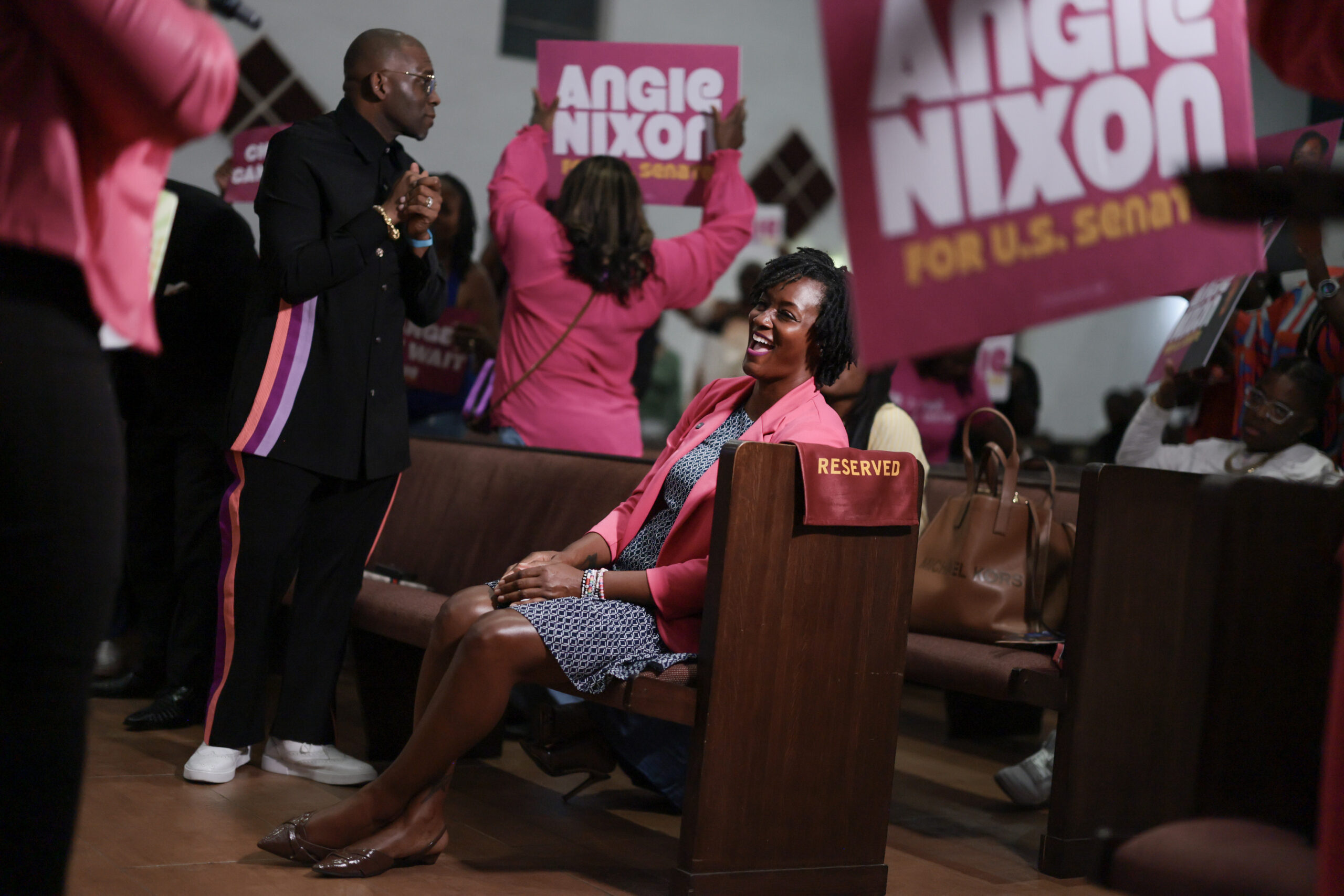
Angie Nixon, who called Israel’s war against Hamas a genocide and campaigned with Rep. Rashida Tlaib, will be the party’s candidate against GOP Sen. Ashley Moody
CAMPUS BEAT
ADL-AEN report details higher ed unions being hijacked by anti-Israel activists
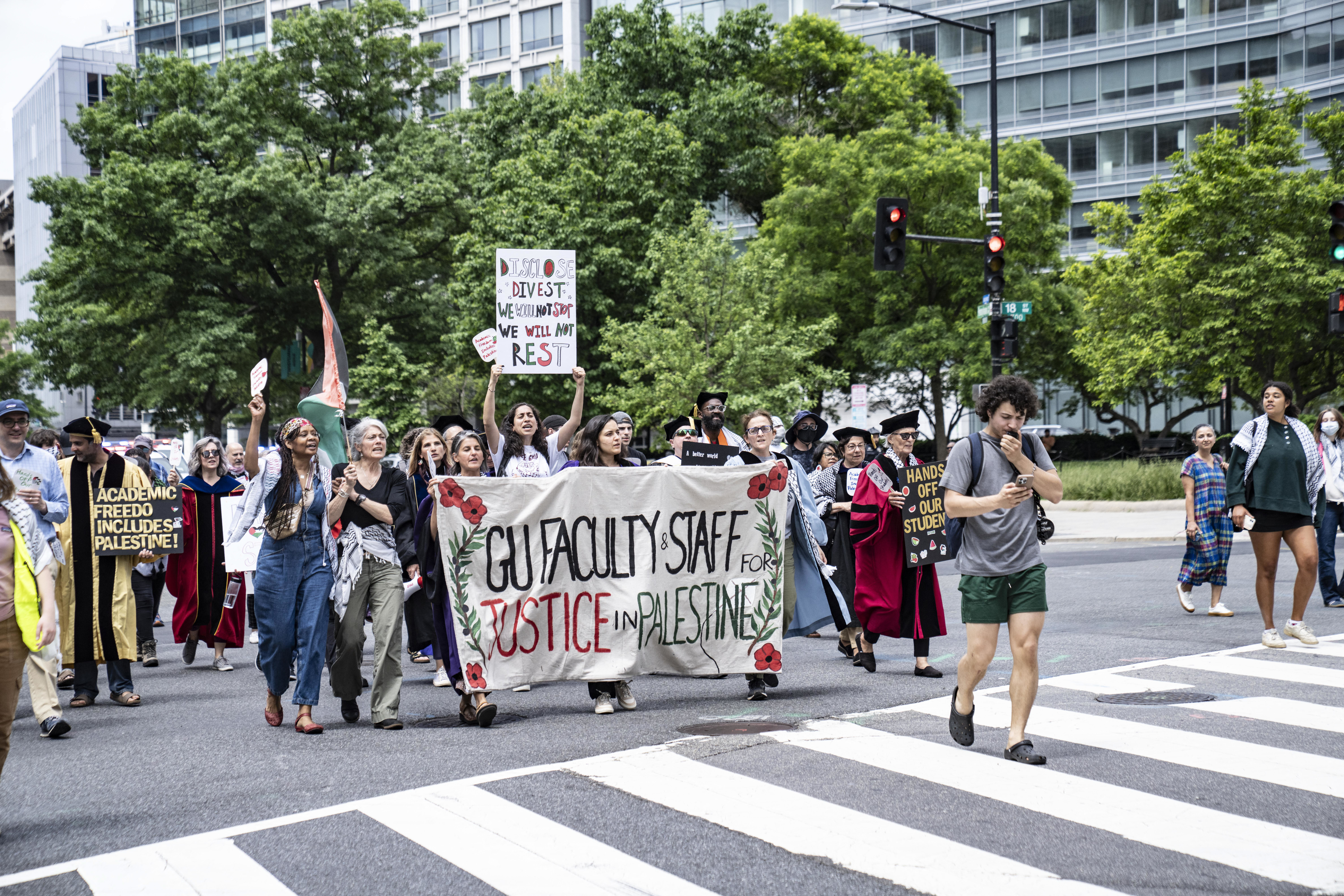
The study shows how unions are turning away from advocating for higher wages and using their institutions to foment attacks against Israel
Anti-Jewish hate crimes also constituted the second-largest category of reported hate crimes of any kind in 2025
Emily Elconin/Getty Images
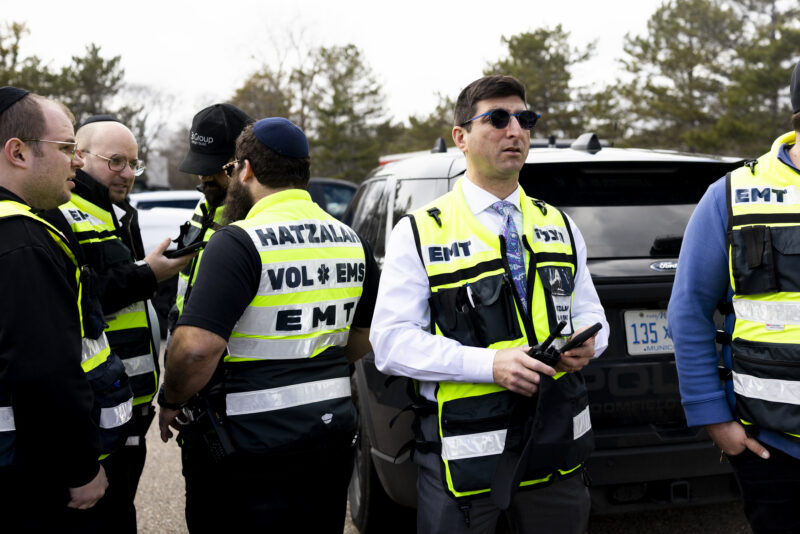
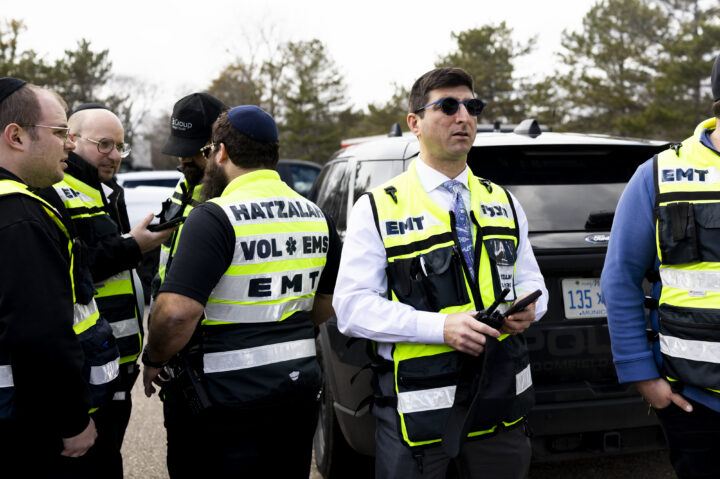
Members of Hatzalah of Michigan, a Jewish volunteer emergency medical service survey the area near Temple Israel following reports of an active shooter on March 12, 2026 in West Bloomfield, Michigan.
Anti-Jewish hate crimes constituted nearly two-thirds of all religious hate crimes in the country last year, according to FBI data released last week: Out of the 2,408 religiously motivated hate crimes reported across the country, 1,528 were targeted against Jews.
Anti-Jewish hate crimes also constituted the second-largest category of reported hate crimes of any kind in 2025, behind only anti-Black or African American hate crimes.
Jews remained the most-targeted religious group in the country. The total number of anti-Jewish hate crimes declined by 20% from 2024, when 1,938 anti-Jewish hate crimes were reported, and 1,832 incidents in 2023, making 2025 the third worst year on record for anti-Jewish hate crimes.
According to the FBI, anti-Jewish hate crimes in 2025 included three incidents of murder or non-negligent manslaughter; one incident of rape; 50 incidents of aggravated assault; 112
incidents of simple assault; 505 incidents of intimidation; 920 incidents of destruction, damage or vandalism; 68 incidents of theft, burglary and robbery of various kinds; and six incidents of arson.
A total of 1,685 anti-Jewish offenses were recorded in 2025, impacting 1,746 victims, committed by 866 perpetrators.
The FBI reported that overall hate crime incidents decreased 7% year-over-year.
“Year after year, we’ve seen alarming rates of antisemitic harassment and violence in this country,” Sens. Jacky Rosen (D-NV) and James Lankford (R-OK), who co-chair the Senate Antisemitism Task Force, said in a joint statement.
The two senators noted that antisemitic hate crimes remain higher than they were prior to the Oct. 7, 2023, Hamas attacks on Israel.
“This report shows the dark reality for Jewish Americans: antisemitic attacks make up more than 62 percent of religiously-motivated hate crimes in the United States, more than double all other kinds of religiously-motivated hate crimes combined,” Rosen and Lankford continued. “We’re faced with nothing less than a crisis, and we need collective action.”
They said that the data highlights the need to pass the Jewish American Security Act to respond and protect the Jewish community.
Anti-Defamation League CEO Jonathan Greenblatt emphasized in a statement that, “Behind every one of these numbers is a person who was targeted simply for being Jewish, whether through vandalism, intimidation, or violence.”
“We cannot allow a modest yet positive decline in the topline domestic numbers to obscure the reality that antisemitism remains one of the most persistent and dangerous forms of hate in this country and beyond,” Greenblatt continued, emphasizing that 2025 was the deadliest year for antisemitic attacks outside of Israel in more than 30 years.
In a release, the ADL noted that the data was consistent with its own findings that 2025 was the third-highest year on record for reported antisemitic incidents. The ADL’s data includes both criminal and non-criminal incidents.
Jewish Council for Public Affairs CEO Amy Spitalnick said, “Once again, the FBI’s data confirms what Jewish communities across this country already feel: the rising tide of hate means that we remain the most-targeted religious community in America,” noting that Jews constitute just 2% of the population but two-thirds of religious-based hate crimes.
Spitalnick also emphasized rising hate against other groups, arguing that “Jewish safety and the safety of our neighbors are inextricably linked — which is why we will never accept a strategy that protects one community by demonizing or ignoring another.”
She said that the slight decline in overall hate crimes is “welcome” but does not constitute safety and argued that a whole-of-government and whole-of-society approach to fighting hate remains necessary. She also emphasized that around 5% of the U.S. population was not covered by the data and that some local law enforcement agencies reported no hate crimes in areas where hate crimes are known to have occurred.
In 2025, 85.9% of all law enforcement agencies in the country submitted hate crimes data to the FBI — an optional program — covering 95.3% of the U.S. population. In some past years, reporting had been significantly hampered by non-participation by local law enforcement agencies, leading to what advocates said was an under-counting of hate crimes.
“The deeper problem is that we keep treating this crisis as a security problem to be managed rather than building resiliency to hate and extremism in the first place,” Spitalnick said, calling increased security funding necessary but “not a remedy” to hate.
“This new data tells us two things,” Spitalnick said. “Hate crimes remain far too high, and our national response is failing. We need the federal government to return its focus to protecting communities and building an inclusive, pluralistic democracy that is more resistant to hate in the first place.”
The closure of Oro Nami after less than a year has reignited a long-running debate about why the nation's capital is stuck with just one full-service kosher option

Gabby Deutch
Rabbi Levi Shemtov, executive vice president of American Friends of Lubavitch (Chabad), prepares to hang a mezuzah on the doorpost at the grand opening of Oro Nami, a new kosher sushi restaurant in the West End neighborhood of Washington on June 25, 2025.
At last year’s grand opening for Oro Nami, a kosher sushi spot in Washington, the restaurant’s splashy aesthetic — red velvet booths, multicolor clocks projected on the ceiling, dark walls, a light-up floor — did not exactly align with the clientele: Capitol Hill staffers, new Trump administration appointees, K Street lobbyists and a handful of Orthodox rabbis.
But even if Oro Nami’s atmosphere felt slightly out of place in Washington’s quiet West End neighborhood, where the city’s small Orthodox community is centered, that incongruity was no match for the excitement among observant Jews living in the nation’s capital. For years, people had been clamoring for more kosher dining options in the city, and in particular one that would be open past 8 p.m. Oro Nami seemed like the answer.
That is, until it shut down in May, after less than a year in business.
Now Char Bar, the meat restaurant in the West End that has been serving observant Democratic and Republican officials — and their friends and colleagues — for years, is once again the only sit-down kosher restaurant with a liquor menu. Nearly all of the area’s kosher restaurants are located in Maryland suburbs like Silver Spring and Rockville, where the bulk of the region’s Orthodox community lives. In a city that thrives on power lunches, kosher-keeping Jews have only one option.
The closure of yet another kosher restaurant in the District has reignited one of Jewish Washingtonians’ favorite conversation topics: Why aren’t there more kosher restaurants in a city as important as the nation’s capital?
People with knowledge of the restaurant business say that the answer is straightforward, if unsatisfying: economics. The Washington metro area has more than 300,000 Jews, according to a community-wide study completed in 2017. Just 5% of them are Orthodox, and most of the Orthodox Jews live in Maryland.
“Kashrut in general in D.C. I think is tricky, because from a real estate perspective, everything is priced like a normal restaurant,” said Rabbi Charlie Schwartz, the director of Lehrhaus, a kosher restaurant in Boston that plans to expand to Washington. “It’s assuming that you’ll do a high volume of business on Fridays and Saturdays, and for larger restaurant spaces that you’ll have pretty high alcohol sales, and kosher restaurants just don’t operate that way.”
“There isn’t a concentrated district [in D.C.] where all the Orthodox Jews work. There isn’t a district where everybody is going to particular museums. Even the museums and the things that tourists do are spread out,” said Dani Klein, who runs the popular blog “YeahThatsKosher.”
In 2024, Lehrhaus announced to great fanfare that it planned to open in Washington, its second city, in 2025. But the restaurant, which bills itself as a “Jewish tavern and house of learning,” has not even broken ground on a location in D.C. yet. (“We’re 100% in on D.C,” Schwartz promised. “We’re not dismayed in any way.”)
Dani Klein, who runs the popular blog “YeahThatsKosher,” said that the layout of the city doesn’t help.
“There isn’t a concentrated district [in D.C.] where all the Orthodox Jews work. There isn’t a district where everybody is going to particular museums. Even the museums and the things that tourists do are spread out,” said Klein. He compared it to Midtown Manhattan, where he works in corporate marketing. Due to its proximity to major tourist attractions such as Times Square, Broadway and Central Park, along with scores of office towers, the neighborhood has a wealth of kosher options, though he noted several restaurants have closed recently.
He described Chicago as a more apt parallel to D.C., although Washington actually has more kosher options downtown.
“As you go further north [in Chicago], outside of downtown, and you start going to where the Jewish community lives, then you get massive pockets of kosher,” said Klein. Washington’s kosher restaurants are mostly in the suburbs, too.
Char Bar’s owner, Michael Chelst, does not primarily earn a living from running a kosher restaurant. He also works in the mortgage business, and he recently took over operating Moti’s Market, the kosher grocery store in Rockville.
“I call us a ‘likely for profit’ business. We’re not a nonprofit,” Chelst told Jewish Insider recently. “I get frustrated when people go, ‘Oh, why don’t you do more of this and that.’ I’m like, ‘Listen, we’re just trying to keep it open and keep it going for our community and for the people there.’” Still, the vast majority of Char Bar’s customers are tourists, according to Chelst.
Despite the addition of Oro Nami last year, 2025 was Char Bar’s highest-revenue year since it opened in 2014. (Chelst previously ran a different kosher spot, Eli’s, in the same location.) Chelst said he thinks Washington would benefit from a dairy restaurant, even if it competes with Char Bar.
“I’m sure that would hurt our business, but I wouldn’t be upset if one opened, because that would be good for the community,” said Chelst.
People know there’s an appetite for more options, even if the money isn’t quite there to support them.
“I get a call, I’d say, every other month or so from someone who’s very interested in starting up any of a range of Kosher cuisine enterprises here,” said Rabbi Levi Shemtov, executive vice president of American Friends of Lubavitch (Chabad). “I know of a few currently still considering doing so. They’re watching downtown business lunch traffic, and when that picks up, I think you’ll see another one or two actually get established.”
Other options have opened and closed over the years. Jack Abramoff, the Republican lobbyist who went to prison on corruption charges, ran a kosher deli for a period in the early 2000s. An upscale kosher French restaurant called L’Etoile closed in 2002 after three years. The local Israeli chain Shouk closed last year, in part due to boycotts by anti-Israel activists. In earlier eras, when the local Jewish community was actually centered in the District and not the suburbs, kosher options were not so hard to come by; following the Civil War, six kosher restaurants were operating in D.C.
“I urge the relatively new kosher-keeping residents of Washington, D.C., to understand the privilege that they have to live in this time,” said Aaron Keyak, a Democratic consultant who moved to Washington nearly 20 years ago. “And with the advent of all these food delivery apps, you can reach into the suburbs and get everything from kosher Chinese to pizza.”
But despite the kvetching from locals, Washington’s kosher restaurant scene has not actually been stagnant in recent years. Oh Mama Grill, a casual Israeli-style falafel and shawarma restaurant, opened in Adams Morgan in 2022 and is still operating. During the academic year, anyone — whether affiliated with George Washington University or not — can visit Zingers, a kosher restaurant in the GW Hillel that opened in 2023 and is operated by the university’s dining operation, as part of the school’s pledge to provide kosher options for Jewish students. Zingers serves sandwiches and bowls alongside what it deems “the best chicken sandwich in Foggy Bottom.” At $12, the sandwich can compete with non-kosher options.
“People eat there because the food is good,” said GW Hillel’s executive director, Daniel Novick. “A lot of non-Jewish students are eating there.”
There are even now kosher deli sandwiches available for purchase in the cafeteria at Longworth, one of the congressional office buildings.
Other kosher options in the city include Pow Pow, a vegan Asian restaurant with two locations in the city, and Baked By Yael, a bakery across from the zoo in Woodley Park that sells pastries, challah, bagels and cake pops. They are certified by a kashrut agency operated by local Modern Orthodox rabbis — so while some strictly religious Jews may not eat there, the creation of DC Kosher to give the seal of approval to local plant-based restaurants was a boon to most of the city’s observant Jews.
“I urge the relatively new kosher-keeping residents of Washington, D.C., to understand the privilege that they have to live in this time,” said Aaron Keyak, a Democratic consultant who moved to Washington nearly 20 years ago. “And with the advent of all these food delivery apps, you can reach into the suburbs and get everything from kosher Chinese to pizza.”
“People are always kvetching about why there aren’t more establishments,” said Rabbi Levi Shemtov, executive vice president of American Friends of Lubavitch (Chabad). “But once they open, the proprietors feel that the community doesn’t show enough support.”
D.C. is a foodie city, at least for the non-kosher keepers. Two Washington restaurants appeared on The New York Times’ vaunted “50 Best Restaurants” list last year. Don’t expect to find kosher restaurants on the list — but that doesn’t mean the city’s kosher food scene is a lost cause.
Shemtov, one of the best-known Orthodox rabbis in Washington, had a blunt message to Jewish Washingtonians about the local food scene.
“People are always kvetching about why there aren’t more establishments,” said Shemtov. “But once they open, the proprietors feel that the community doesn’t show enough support.”
It was like the now-famous Barack Obama line from the 2016 Democratic National Convention, when he urged Democrats to vote in that year’s elections. Don’t boo. Vote.
Shemtov’s message is similar. Don’t kvetch. Eat.
Hate crimes against Jewish New Yorkers rose more than 50% in July and by almost 9% over the first seven months of Zohran Mamdani’s administration
Kyle Mazza/Anadolu via Getty Images
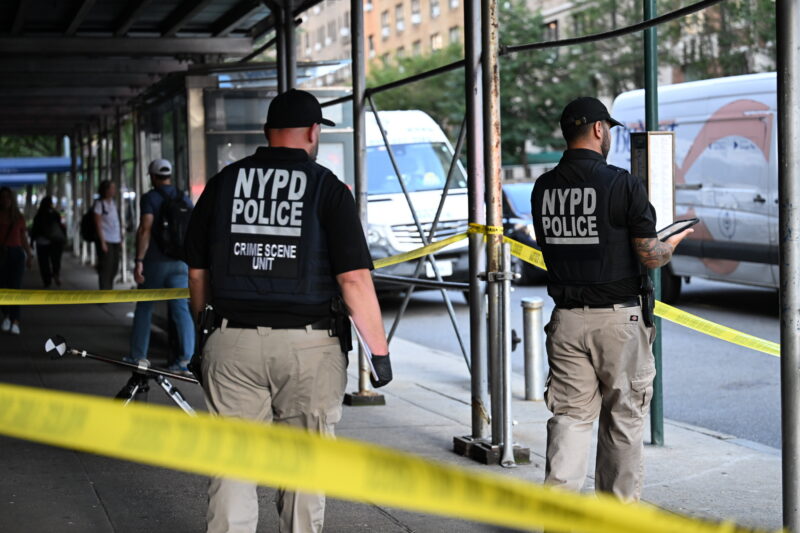
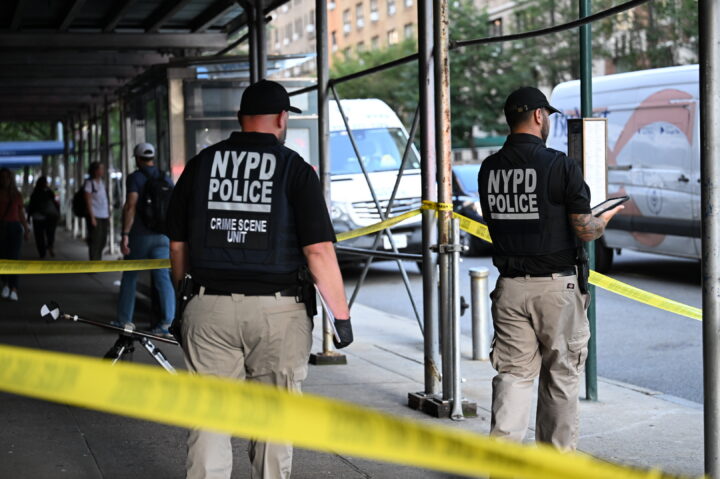
Members of the NYPD Crime Scene Unit investigate the scene of a stabbing attack at the intersection of West 86th Street and Amsterdam Avenue in Manhattan, New York, United States, on July 23, 2026.
Hate crimes — particularly against Jews — have spiked in New York City during the first seven months of Mayor Zohran Mamdani’s administration, new data from the NYPD shows.
The police department’s July statistics show general declines thus far in 2026 shootings and murders, and even in hate crimes against certain ethnic groups. But bias offenses were up overall last month, and during the entire period since Mamdani took office on the first of the year, with hate crimes targeting Jewish New Yorkers continuing to make up the majority of such incidents.
“More than half of the confirmed hate crimes for the first seven months of the year, or 56.9%, were anti-Jewish hate crimes, despite Jewish New Yorkers making up only 10% of the city’s population,” the NYPD’s report states.
There were 23 confirmed hate crimes against Jewish people in July of this year, compared to 15 in July 2025. To date, the Jewish community has suffered 205 confirmed criminal antisemitic incidents during Mamdani’s first seven months at City Hall, compared to 189 such transgressions up to this point in the final year of Mayor Eric Adams’ tenure.
Mamdani, whose broadsides against Israel and its leadership have both powered his political ascent and provoked warnings over potential repercussions for the city’s Jewish community, faced questions over the uptick in bias crimes after an unrelated press conference Monday morning.
“There’s no room for hate in our city. It will never be tolerated, it will never be accepted, and we know that this is something that we have to fight with every single tool at our disposal,” the democratic socialist mayor said. “The work to uproot antisemitism out of the city is one that will continue until we see hate crimes come to an end in the city.”
The mayor again underscored his increased investment in a hate crime prevention program, which allocates millions of dollars to a range of nonprofits.
July witnessed a double stabbing of an Asian American and a Jewish man on the holiday of Tisha B’Av, during which the assailant allegedly shouted “Allahu Akbar” and “Justice for Islam” as he passed a synagogue displaying the Israeli flag, before attacking the second victim, who was wearing a kippah. The accused, Raul Morales, now faces a raft of hate crimes charges.
Politico reported that NYPD Commissioner Jessica Tisch visited The Jewish Center — the Modern Orthodox synagogue where the victim Moshe Grunhaus had been praying before the stabbing — on Friday to denounce “antisemitic rhetoric” and assure the community of her continued protection.
Mamdani decided to keep Tisch, an Adams appointee, in her role when he entered office. Tensions between the two have surfaced on several occasions, most recently when the mayor continued to publicly toy with the idea of arresting Israeli Prime Minister Benjamin Netanyahu despite lacking the legal authority to do so.
Anti-Muslim offenses have also risen under Mamdani, but in much smaller numbers: five this past month compared to two the July prior, and 26 so far this year as opposed to 16 during the same period in 2025.
A night of Pride-themed celebration doubled as a tribute to Milgrim, the embassy staffer killed last year, whose work included engaging LGBTQ Jews
Christina Sher
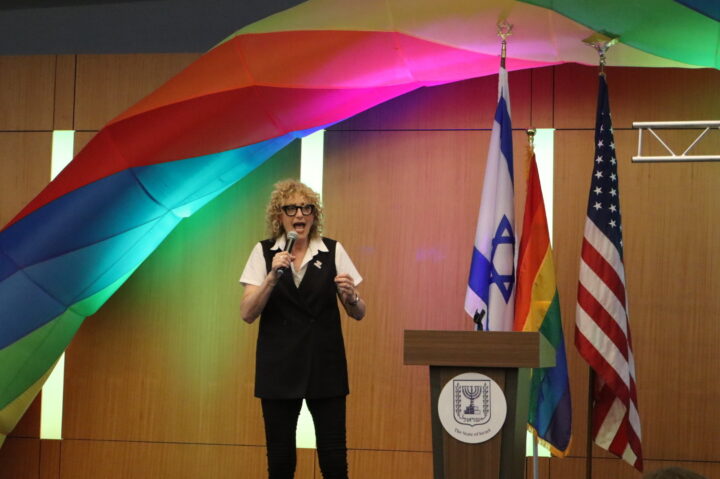
Comedian Judy Gold speaks at a Pride event hosted by the Israeli Embassy at Adas Israel Congregation in Washington on June 30, 2026.
Dozens of LGBTQ Jews and allies gathered Tuesday evening at Adas Israel Congregation in Washington for a Pride event hosted by the Israeli Embassy, with speakers honoring the legacy of slain embassy staffer Sarah Milgrim and reflecting on the challenges she faced in progressive spaces, despite being an ally of the community.
The event, held as Pride celebrations concluded at the end of June, paid tribute to Milgrim, who helped lead the embassy’s outreach to LGBTQ communities before she and her partner, Yaron Lischinsky, were killed in a shooting outside the Capital Jewish Museum in May 2025.
Comedian Judy Gold, a longtime advocate for LGBTQ rights and outspoken critic of antisemitism, headlined the evening with a stand-up set blending humor with reflections on Milgrim’s advocacy.
“It takes a very special person to be the LGBT liaison for the Israeli [Embassy], and boy was she special,” Gold said.
Gold also recalled participating in two LGBTQ delegation trips to Israel organized by Milgrim: As the group ran to bomb shelters amid Iranian missile attacks, she got a laugh when one delegate showed up with a different guy each time the alarm sounded, “so that was exciting,” she joked.
Catherine Szkop and Abbie Talmoud, colleagues of Milgrim who were several feet away when the deadly shooting occurred, described her as a bridge-builder who worked to engage communities that had become increasingly hostile to Israel after Hamas’ Oct. 7 attacks.
“She served as the director of civil society and affairs. Her work focused on engaging communities that became deeply critical of Israel, or even opened up anti-Israel [sentiment] after Oct. 7,” Talmoud said of Milgrim.
Szkop said Milgrim struggled with being pushed out of progressive spaces because of her work at the Israeli Embassy, despite sharing many of the community’s values.
“She identified with the progressive community on a lot of issues,” Szkop shared, “but when she started working at the Israeli Embassy, the [community’s] anti-Israel sentiment was too strong and ostracized her from her friends” and “the moment it turned to Israel, they exiled her.”
“You should never have to deny who you are or an aspect of your identity in order to belong somewhere,” Szkop concluded.
The reception featured Pride-themed decor, including a lectern bearing three flags: American, Israeli, and Pride. Closing out the event, LGBTQ community members and allies danced to Omer Adam while waving rainbow LED sticks.
The same day Francesca Hong appeared on the livestream of antisemitic conspiracy theorist ‘Mike From PA,’ she also joined Hasan Piker’s Twitch show
Daniel Boczarski/Getty Images for WisDems
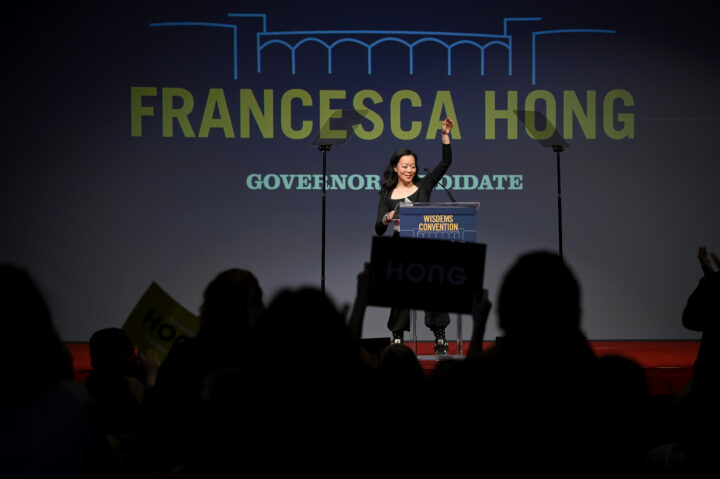
Gubernatorial candidate Francesca Hong speaks on stage during Wisconsin Democrats 2026 Convention on June 14, 2026 in Madison, Wisconsin.
Francesca Hong, a Democratic Socialists of America-affiliated candidate for governor of Wisconsin, appeared on Tuesday on the Twitch stream of Mike Beyer, known by his online handle “Mike From PA,” a fringe far-left influencer who has espoused open antisemitism.
Beyer was suspended from Twitch last year for comments in which he said that “Jewish is not an ethnicity” and Jewish identity is “a constructed ethnicity, this demonic ethnicity, wholly invented.” He subsequently apologized, claiming he had intended to refer to Zionists, rather than Jews.
The Anti-Defamation League praised Twitch for the suspension. “Streamers with such reach and influence should use their platforms responsibly and not engage in inflammatory, dehumanizing and antisemitic rhetoric,” the group said in 2025.
Despite the walkback, Beyer has continued to spread other antisemitic conspiracy theories, including boosting a claim that “Zionists were obsessed with destroying the Soviet Union” so that they could enslave children from the Soviet bloc and use them for child trafficking and prostitution.
Amid scrutiny of his interview with Hong, Beyer on Tuesday blamed an organized conspiracy trying to slander “grassroots politicians like they are getting direct orders from [Israeli Prime Minister Benjamin] Netanyahu.”
Later on Tuesday, Hong also appeared on antisemitic streamer Hasan Piker’s Twitch show.
Asked about the two appearances, Allison Geyer, a spokesperson for Hong’s campaign said, “Rep. Hong has been clear throughout this campaign that antisemitism, Islamophobia, racism, transphobia, and all forms of dehumanization have no place in Wisconsin politics or in the movement we are building.” Geyer also said that Hong condemns the Oct. 7 Hamas terror attacks as well as the “ongoing genocide” in Gaza, despite the monthslong ceasefire in the Israel-Hamas war.
Geyer said Hong was not aware of Beyer’s comments prior to the appearance, but noted that he “issued a very lengthy apology” and said he was “talking about Zionist political ideology and held himself accountable for his statement.”
“Appearing on a podcast or livestream is not an endorsement of every statement a host has ever made. Fran is willing to go anywhere and talk to anyone about her vision for a better, more compassionate world. Sometimes that means talking to people who have said pretty nasty things,” Geyer continued. “Speaking with them isn’t an endorsement of those perspectives; it’s a way to reach people who have been isolated from conversations about community, compassion, and the systems of power and control that contribute to the struggles we share.”
Geyer said that non-traditional platforms “are going to shape this election” and that they will be dominated by “the right, … conspiracy theorists … or people who do not share our values” if Democrats don’t appear.
“Trying to turn every interview into a referendum on everything a host has ever said is a distraction from the material issues that will shape people’s lives,” Geyer said. “Fran sees every conversation as an opportunity to bring more people into the tent, especially voters who have been turned off by establishment politicians and status-quo politics, and to build a positive future for Wisconsin together.”
One of Hong’s opponents, Joel Brennan, the former secretary of the Wisconsin Department of Administration, condemned Beyer and Piker.
“Joel wouldn’t join that livestream and disagrees with much of what he’s said. This race isn’t about clicks or views, it’s about Wisconsin,” a Brennan spokesperson said. “Joel is laser-focused on talking directly with Wisconsinites about what’s keeping them up at night: the cost of living, including health care, child care, and housing, and fixing our school funding problem.”
State Sen. Kelda Roys accused Hong of associating with controversial figures to benefit her campaign financially, emphasizing that Roys raises most of her own money from grassroots supporters.
“How candidates raise money reflects the type of leader they are and the type of governor they would be. Kelda’s campaign is built on support from progressive grassroots donors in Wisconsin, over 90% of her contributions come from everyday Wisconsinites whose trust she has earned through conversations and events around the state,” Jalen Knuteson, a spokesperson for Roy, said. “Hong made a lucrative choice to align herself with an influencer who has cashed in on divisive, antisemitic, and offensive comments,”
David Crowley, the Milwaukee county executive, also criticized Hong.
“Anyone seeking public office should exercise good judgment about the platforms they choose to elevate, and should have zero tolerance for antisemitism, political violence, or any form of hate. David Crowley believes leadership is about bringing people together, not courting controversy or seeking attention through divisive platforms,” a Crowley campaign spokesperson said. “The Crowley campaign has been clear that antisemitism is unacceptable and has no place in Wisconsin. Leaders have a responsibility to exercise sound judgment and make clear where they stand. David is focused on earning the trust of every Wisconsinite by leading with decency, respect, and a commitment to bringing people together rather than dividing them.”
“Joel wouldn’t join that livestream and disagrees with much of what he’s said. This race isn’t about clicks or views, it’s about Wisconsin,” a Brennan spokesperson said. “Joel is laser-focused on talking directly with Wisconsinites about what’s keeping them up at night: the cost of living, including health care, child care, and housing, and fixing our school funding problem.”
Other candidates in the gubernatorial race — including 2022 Democratic Senate nominee Mandela Barnes and Lt. Gov. Sara Rodriguez — did not immediately respond to requests for comment.
The study by Combat Antisemitism Movement, conducted in May, found that the more visibly Jewish a person is, the risk of facing antisemitic hate rises significantly

Hannes P Albert/picture alliance via Getty Images
A participant with a kippah stands in front of a menorah.
As the U.S. celebrates its 250th anniversary this weekend, a new study by Combat Antisemitism Movement reveals a stark reality for American Jews: 57% reported experiencing antisemitism — frequently manifesting online — in the past year.
Conducted by Ira Sheskin, director of the Jewish Demography Project at the University of Miami and administered by the National Opinion Research Center at the University of Chicago, the survey — which polled 1,060 Jewish American adults over three weeks in May — found that antisemitism is causing them to actively alter everyday behavior.
A clear majority of respondents (58%) said they felt less safe as Jews in the U.S. than a year ago.
Over one-third (38%) of Jewish American respondents now conceal items that identify them as Jewish, with 32% avoiding posting identifying information online and 23% reporting that they skip Jewish events out of fear.
Even as the number of antisemitic incidents in the U.S. declined by a third last year, according to the Anti-Defamation League’s 2025 audit, the overall global increase in attacks on Jews that came after the Oct. 7, 2023, Hamas terrorist attacks and ensuring war in Gaza continues to have lasting ramifications —- and may even be getting worse for some, according to the CAM survey.
Much of the antisemitism reported was experienced on the Internet, with 59% of respondents saying they had seen antisemitic content directed at someone else online. Only 10% reported being the personal target of online antisemitism.
But the more visibly Jewish a person identifies, the more antisemitism they report facing: 46% of Orthodox Jews and 44% of those active in Jewish communal life reported experiencing antisemitism, compared with 17% of those not involved.
Other forms of antisemitism respondents said they faced over the past year included anti-Jewish vandalism (36%), slurs from colleagues or neighbors (36%) and being socially excluded (14%).
Only 8% of respondents reported being physically threatened or attacked, though 40% also noted that a non-Jewish person had expressed solidarity with them.
“These findings are a stark reminder that antisemitism is a lived daily reality for Jewish Americans,” said Alyza Lewin, CAM’s president of U.S. affairs . “The more openly Jewish you are, the more likely you are to experience antisemitism. Unsurprisingly, as a result, Jews are changing their behavior and thinking twice about how openly Jewish to be.”
“One of the unique aspects of antisemitism is that it manifests as a horseshoe,” said Aaron Keyak, a former U.S. deputy special envoy to monitor and combat antisemitism and CAM’s special representative on international affairs. “As it gets more and more extreme on the left and on the right, the antisemites come to converge on their views of Jews — even though they disagree about every other policy and political issue.”
The survey also revealed strong Jewish communal backing for the International Holocaust Remembrance Alliance’s working definition of antisemitism. Upon reading it, 71% of those polled found it accurate, and over two-thirds supported its adoption by institutions.
The document repeatedly invoked antisemitic themes and conspiracy theories in the attack that left a Jewish community member and a police officer dead

Photo by Andrej Ivanov/Getty Images
Paramedics near the scene of an active shooter situation on June 22, 2026 in Montreal, Canada.
A manifesto allegedly left by the gunman behind Monday’s rampage in Côte-des-Neiges, a heavily Jewish neighborhood in Montreal, repeatedly targeted Jews and Zionists, specifically identifying “influential Zionists” among his intended victims, according to a copy of the document published by Rebel News.
A Jewish civilian, a police officer and the suspect were killed in the attack, while one other police officer was seriously injured but is in stable condition. On Tuesday, Quebec authorities identified the alleged suspect as Seth Hatfield, a 25-year-old man from Alberta. Police have not yet released a motive for the attack.
The 104-page document, published in full by Rebel News, lists “valid potential class A targets,” including large investment banks, powerful politicians and “influential Zionists.”
The manifesto included antisemitic conspiracy theories, stating, “The influence of Zionist Jews upon the western bourgeoisie is in fact so strong that in my other works I sometimes refer to the western ruling class itself as the Judaeo-bourgeois class.” It also repeatedly laments male loneliness and capitalist ideology.
The Quebec coroner’s office confirmed that the civilian killed was Michael Mizrachi, 64. He has been described as an active member of the Jewish community and father of three who sold suits for a living. His local rabbi, Mendel Raskin, told Canadian media that Mizrachi was originally from Lebanon and had moved to Israel before settling in Montreal.
Montreal police declined to comment to Jewish Insider Tuesday on the ongoing investigation.
The shooting comes as Jewish leaders across Canada have warned that law enforcement and the government have failed to properly address a historic rise in “systemic” antisemitism.
Take a look at the banner new releases we’re recommending from this spring, as well as books we’re looking forward to in the coming months
Memorial Day Weekend marks the unofficial summer kickoff, and for observant Jews, the long weekend is made even longer with the two-day holiday of Shavuot, starting Thursday evening, which commemorates the day the Jews received the Torah at Mount Sinai.
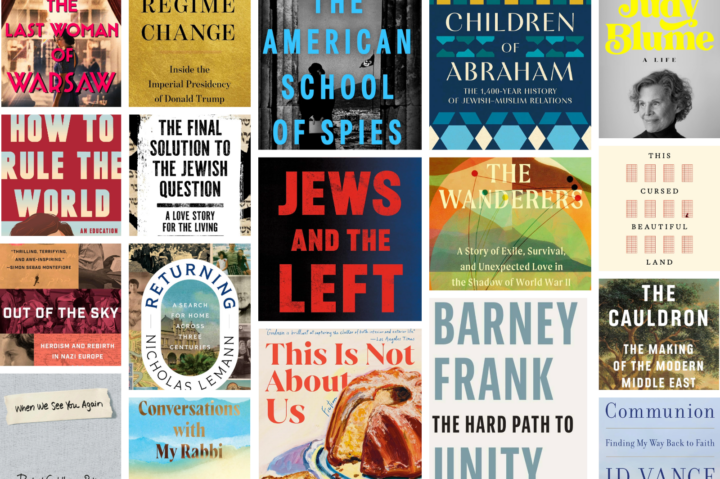
Jews mark the day by studying at all-night learning sessions at synagogues and JCCs around the country. We know that many will also use the occasion to jump-start summer reading goals, so the Jewish Insider team has compiled our summer reading list — beginning with some banner new releases from this spring, and looking towards books coming out this summer.
RECENT RELEASES:
Allegra Goodman, This Is Not About Us (February)
The author of several novels with heavily Jewish themes, Goodman returns to Jewish characters in this novel about a decades-long feud between two Jewish sisters that started with a misunderstanding about apple cake.
Mark Oppenheimer, Judy Blume: A Life (March)
The journalist published the definitive biography of beloved YA author Judy Blume, based on more than 100 interviews with Blume and her inner circle — though she disapproved of the finished product.
Nicholas Lemann, Returning: A Search for Home Across Three Centuries (March)
The longtime New Yorker staff writer traces his family’s history from Germany to New Orleans, recounting the ways they reckoned with religion, race and belonging.
Matti Friedman, Out of the Sky: Heroism and Rebirth in Nazi Europe (March)
One of Israel’s most celebrated English-language writers tells the story of the young Jews who had made it to Mandate Palestine but chose to parachute into Nazi Europe to try to rescue their Jewish brethren — ultimately failing in their mission — and examines what motivated them.
Daniela Gerson, The Wanderers: A Story of Exile, Survival, and Unexpected Love in the Shadow of World War II (March)
The journalist recounts the story of how she and her wife discovered that decades before the two of them met, their grandparents had escaped the Nazis through Soviet Russia on the same route.
Judy Batalion, The Last Woman of Warsaw: A Novel (April)
Better known for her nonfiction work, including a 2021 bestseller about Jewish female resistance fighters in the ghettos of Poland, Judy Batalion released her debut novel about the intersecting lives of Jewish women in Warsaw in the late 1930s.
Rachel Goldberg-Polin, When We See You Again (April)
The world got to know Goldberg-Polin when she became a tireless advocate on the global stage for her son, Hersh, who was kidnapped by Hamas on Oct. 7, and killed almost a year later. Her book chronicling her grief, which was published last month, soared to the top of the best-seller list.
Theo Baker, How to Rule the World: An Education in Power at Stanford University (May)
The Stanford student, who chronicled the campus chaos of 2023-2024 with a crucial article in The Atlantic, investigates the ways that Stanford undergrads, located just miles from the tech billionaires of Silicon Valley, are seeking out power, influence and money in place of an education.
UPCOMING RELEASES:
Rabbi Eli Schlanger and Nikki Goldstein, Conversations With My Rabbi: Timeless Teachings for a Fractured World (May 26)
Three years before the rabbi was murdered in the Hanukkah terror attack at Bondi Beach in Australia last year, he got to know Goldstein after praying by her bedside as she recovered from a near-death experience that brought her to the ICU three years earlier. Goldstein, a secular Jew, and Schlanger, a Chabad rabbi, recorded their conversations about faith in the hope of writing a book together. She finished the project after Schlanger’s death.
Batya Ungar-Sargon, The Jews and the Left (June 2)
The conservative journalist examines American Jews’ historic ties to liberal politics and argues that their alliance has been fundamentally broken in the aftermath of the Oct. 7 attacks and the war in Gaza.
Marc David Baer, Children of Abraham: The 1,400-Year History of Jewish–Muslim Relations (June 9)
The professor of history at the London School of Economics and Political Science looks at the centuries of cooperation and coexistence between Jews and Muslims in the Middle East that predated the current regional conflicts.
Stephan Talty, The American School of Spies: The Archaeologists Who Fought the Nazis and Saved the Treasures of Ancient Greece (June 9)
The journalist and novelist recounts the true story of a group of American archaeologists who trained as spies during World War II in order to go undercover and protect Greek artifacts that were at risk during the war.
JD Vance, Communion: Finding My Way Back to Faith (June 16)
The vice president’s forthcoming book — his second memoir, to be published nine years and a political lifetime after the release of Hillbilly Elegy, about his childhood growing up poor in Appalachia — will discuss his connection to Christianity and his decision to convert to Catholicism.
Maggie Haberman and Jonathan Swan, Regime Change: Inside the Imperial Presidency of Donald Trump (June 23)
Two of America’s top White House reporters tell the story of the first year of President Donald Trump’s second term, and how he learned to use political power more effectively than in his first term.
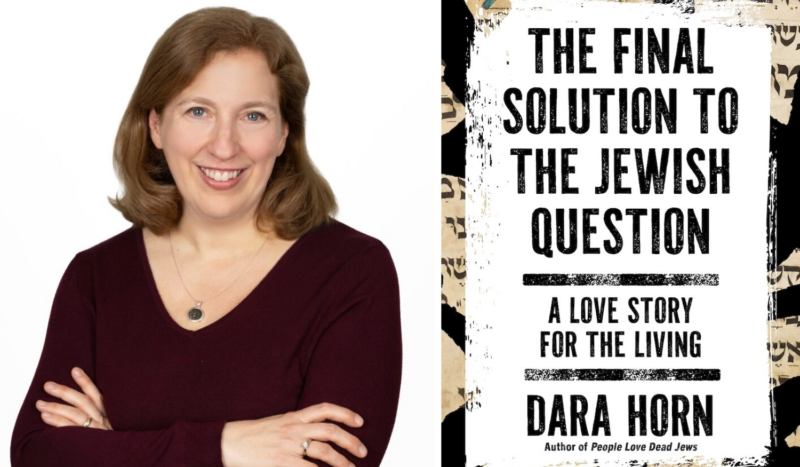
Dara Horn, The Final Solution to the Jewish Question: A Love Story for the Living (Sept. 1)
Her 2021 book of essays reckoning with the curiosities of modern antisemitism, People Love Dead Jews, went about as viral as a book possibly could. She published a children’s book in 2025, but this will be her first book for adults in years. Aside from announcing its scheduled release, her publisher has not shared any information about the project.
Simon Sebag Montefiore, The Cauldron: The Making of the Modern Middle East (Sept. 8)
The British historian presents a history of the last 125 years of the modern Middle Eastern, surveying the key events and narratives — both accurate and misguided — that led to the current state of the region.
Barney Frank, The Hard Path to Unity: Why We Must Reform the Left to Rescue Democracy (Sept. 15)
The trailblazing politician served in Congress for 32 years, representing suburban Boston. The Jewish Democratic lawmaker, who was also the first openly gay member of Congress, died this week at 86. His upcoming book argues that the political left must reform itself so it does not cater to its most extreme adherents.
Evan Gershkovich, This Cursed Beautiful Land: A Russian-American Story (Sept. 29)
The Wall Street Journal journalist who spent over a year wrongly imprisoned in Russia details his harrowing experience in the Russian carceral system against the backdrop of the country’s history and culture.
JCRC CEO Ron Halber: ‘They're a fringe, radical, antisemitic organization’
Spencer Platt/Getty Images
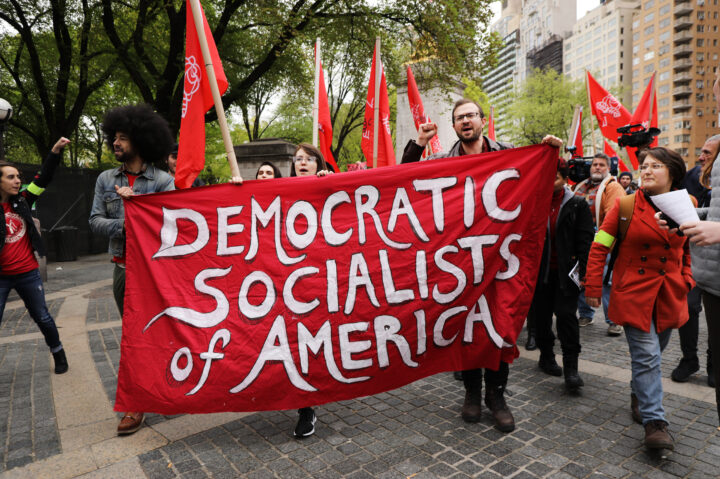
Members of the Democratic Socialists of America May 01, 2019 in New York City.
Amid the rise of a DSA-aligned mayoral candidate in the city, a senior Jewish community leader in Washington, D.C., excoriated the Democratic Socialists of America as an “evil” organization committed to driving Jews out of society.
Speaking on a webinar with other Washington-area Jewish leaders on Tuesday, Ron Halber, the CEO of the Jewish Community Relations Council of Greater Washington, stridently criticized the far-left group.
“I think they’re a fringe, radical, antisemitic organization, and I happen to even think they’re evil,” Halber said. “They are trying to do in America what [the Boycott, Divestment and Sanctions movement] seems to do internationally, which is to make being Jewish unacceptable in polite society.”
He said that the group wants to make Jews feel “isolated” and force them to “renounce Zionism” and their connection to Israel in order to participate in the political process. Antisemitism is “core to their belief,” he continued.
Halber described the activist group as emboldened and energized during the second Trump administration — as numerous DSA-aligned candidates make gains in local and national elections — and said that the Jewish community “should view DSA with alarm, because they are having a radical impact.”
And, he added, the Jewish community should be “very, very wary of political candidates who go out and seek their endorsement and who wish to affiliate.”
The Metro DC DSA did not immediately respond to a request for comment.
Halber said it’s the responsibility of Jewish organizations to come together with allies to expose the DSA as “the fringe of American society that most people in America would be repulsed by.”
Tali Cohen, the Anti-Defamation League’s Washington regional director, said on the webinar that she has been “astonished by the rhetoric coming out of the D.C. DSA chapter.”
Cohen said the group is attempting to “isolat[e] the Jewish community through exclusionary policies” — requiring endorsees to cut ties with “the overwhelming majority of organized Jewish community institutions” — and has “embrace[d] antisemitism as an organizational orthodoxy” through its embrace of anti-Zionism.
“If you read DSA’s platform, they have disproportionately and overwhelmingly chosen to focus on the world’s only Jewish state,” she continued. “The selective focus can suggest that something else is at work beyond just policy concerns.”
Cohen also raised concerns about the group’s opposition to the International Holocaust Remembrance Alliance’s working definition of antisemitism and its efforts to defund the D.C. police, a project she said endangers the Jewish community.
The event comes following a high-profile clash between Jewish communal groups and the Washington DSA chapter over its endorsement questionnaire for the city’s mayoral race that required candidates to pledge to refrain from engaging with “Zionist lobby groups.”
Mayoral candidate Janeese Lewis George, a DSA member endorsed by the group, said in response to the questionnaire that she would not attend events “promoting Zionism and apartheid.”
Alan Ronkin, the regional director of the American Jewish Committee in Washington, and ADL experts also spoke on the webinar.
Angelina Han Hicks had planned, with two co-conspirators, to attack Congregation Beth Israel, a synagogue and day school, which closed its campus on Wednesday
Screenshot/Google Maps
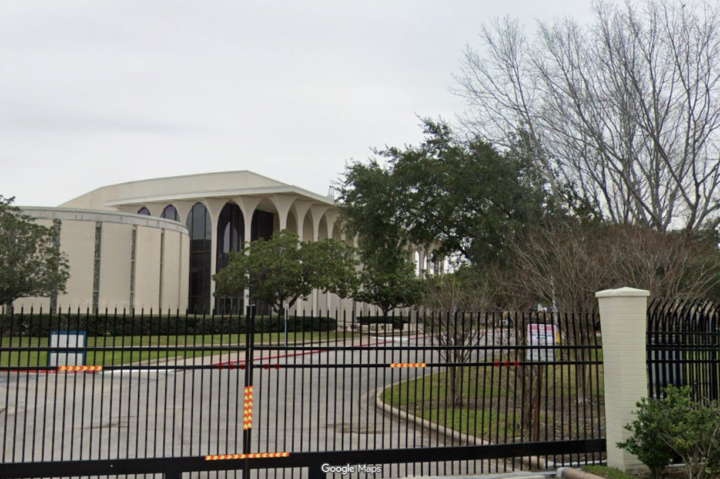
Congregation Beth Israel in Houston
A young woman was charged Thursday in a conspiracy to “kill as many Jews as possible” by driving through a Houston synagogue.
Angelina Han Hicks, 18, a resident of North Carolina, was arrested Wednesday and charged, according to the Davidson County Sheriff’s Office, with felony conspiracy to commit assault with a deadly weapon and felony conspiracy to commit murder for her plotted attack on Congregation Beth Israel, the oldest synagogue in Texas.
The Federal Bureau of Investigation Charlotte Field Office received information on Tuesday that Hicks “was believed to be targeting members of the Jewish Community for a potential act of violence,” according to the sheriff’s office.
Law enforcement found evidence in Hicks’ home that she and co-conspirators were planning a mass-casualty event, according to the Houston Chronicle. Hicks allegedly conspired with two men referred to as “Teegan” and “Angel,” whose last names have not been disclosed, to commit murder of members of the synagogue. Warrants laying out the felony accounts state the attack was allegedly planned for about two years from now — April 21, 2028.
“The conspiracy is to kill as many Jews as possible by driving through a congregation at a synagogue,” a court order stated.
Congregation Beth Israel, which also runs a Jewish day school, responded to the threat by closing its campus for the day on Wednesday. The Jewish Federation of Greater Houston said events planned to celebrate Israel’s Independence Day were still held.
The plotted terrorist attack comes weeks after an assailant rammed a vehicle full of explosives into a Michigan synagogue, in what local law enforcement called a “targeted act of violence against the Jewish community.”
Michigan is a closely watched bellwether of the direction of the Democratic Party, and the latest developments underscore that a more radical faction of the party appears to be growing

Al Drago/Bloomberg via Getty Images
Democratic National Convention (DNC) at the United Center in Chicago, Illinois, US, on Thursday, Aug. 22, 2024.
Events in recent days may well be marking a tipping point in the decline of the Democratic Party — at least when it comes to its treatment of Jews, on top of its growing hostility toward Israel.
The weekend ended with the news that Michigan Democratic delegates, at their statewide convention Sunday, nominated a Hezbollah supporter, Amir Makled, to the University of Michigan Board of Regents, choosing to oust a Jewish member, Jordan Acker, whose home and car were repeatedly vandalized with antisemitic graffiti and his family threatened.
Acker’s offenses? He backed efforts to hold anti-Israel campus protesters at the University of Michigan accountable for assaulting police and engaging in intimidation of Jewish students, among other instances of student misconduct. He declined to support efforts to divest university funds from Israel, along with other members of the Board of Regents, as a radical faction of students had demanded.
Acker’s non-Jewish Democratic ticketmate, Paul Brown, who also supported discipline against anti-Israel students, wasn’t targeted and was renominated for election. But the Democratic delegates ousted Acker in exchange for Makled, who has posted on social media with comments praising Hezbollah’s leaders and retweeted antisemitic messages from the conspiracy-theorizing influencer Candace Owens.
The results mark a new low for Michigan Democrats. Also over the weekend, Michigan Senate candidate Abdul El-Sayed told CNN that he believes the Israeli government is just as evil as Hamas.
In the same interview, El-Sayed also said that Sen. Chris Van Hollen (D-MD) should replace Senate Minority Leader Chuck Schumer (D-NY) as the Democratic leader in the upper chamber, citing Schumer’s continued support for U.S. aid to Israel. Van Hollen is among the most vocal critics of Israel in the Senate.
Michigan is a closely watched bellwether of the direction of the Democratic Party, and the latest developments underscore that a more radical faction of the party appears to be growing. This, in the state where dozens of Jewish preschoolers were nearly killed in a terrorist attack last month by a Hezbollah sympathizer who targeted the state’s largest synagogue.
But it’s not just in Michigan where the weekend’s developments suggest an ominous turn in the Democratic Party’s evolution.
Today’s Daily Kickoff includes comments made by Sen. John Fetterman (D-PA), one of the few pro-Israel Democratic stalwarts left, who blasted his party for tolerating antisemitism, calling out Democrats’ acceptance of Senate candidates with checkered histories, including Graham Platner in Maine and El-Sayed.
In particular, Fetterman expressed shock that party leaders had nothing to say about revelations that Platner praised Hamas’ tactics in a 2014 Reddit forum that shared video of the terrorist group killing several Israeli soldiers.
We cover the implications of the election results from New Jersey’s 11th Congressional District, a moderate-minded, affluent suburb, where voters elected a far-left Israel critic who withheld criticism of Hamas after the Oct. 7, 2023, attacks — except for the Jewish Democrats in the district, who swung decidedly to the right.
And we report on the pained comments from Yehuda Kurtzer, the president of the Shalom Hartman Institute (a liberal, pluralistic think tank dealing with issues affecting the Jewish community), who called on American Jews to “embrace political homelessness” as part of a pointed perspective on how badly things have gotten within the progressive movement, the longtime home for many American Jews.
“We’re stuck as an American Jewish community between an illiberal argument on the right, which is currently in power, and an illiberalism of the left,” he said.
Also notable from the weekend: Likely Democratic presidential candidate Rahm Emanuel, who is portraying himself as a bold, moderate truth teller against the left wing of his party, championed the fact on HBO’s “Real Time with Bill Maher” that he wants to cut off all U.S. military aid to Israel — in a clear political pander to the growing anti-Israel wing of his party. Truth-telling only goes so far when public opinion against Israel within the Democratic party has grown to such a high level.
It’s surely comforting to believe that Israel’s aggressive war against Hamas and Hezbollah in Gaza and Lebanon and tough tactics against Iran or Israeli Prime Minister Benjamin Netanyahu’s haughty approach to his engagement with Washington are the main factors driving the Democratic Party towards its estrangement of Israel. Maybe then, after a possible change of Israeli leadership in the country’s October elections, Democratic public opinion would shift.
But if that was truly the case, you wouldn’t see the party tolerating candidates with neo-Nazi tattoos who “dig” Hamas’ terror tactics and ones who compare the mistakes of a democratic state with a terrorist group that seeks in its charter to eliminate all Jews.
You wouldn’t see a Jewish regent of the University of Michigan and a Jewish Michigan attorney general being personally threatened for enforcing the law — with little protest from party leadership.
And you wouldn’t see Hasan Piker, an antisemitic social media figure with a laundry list of terror-justifying rhetoric, become the progressive movement’s trendy surrogate, in this fraught moment for American Jews.
Kurtzer is right that illiberalism is rising on all sides. But when the party that has long positioned itself as the bulwark against bigotry now tolerates terrorist apologists and antisemitic hate — while abandoning pro-Israel Jews who long called it home — it should be a wake-up call that something is broken.
‘Saying Jewish donors are somehow the same as "pro-Israel lobby," I got a problem with that, and not just as an elected official, as a Jew,’ Slotkin said in response to a question at a town hall
Tom Williams/CQ-Roll Call, Inc via Getty Images
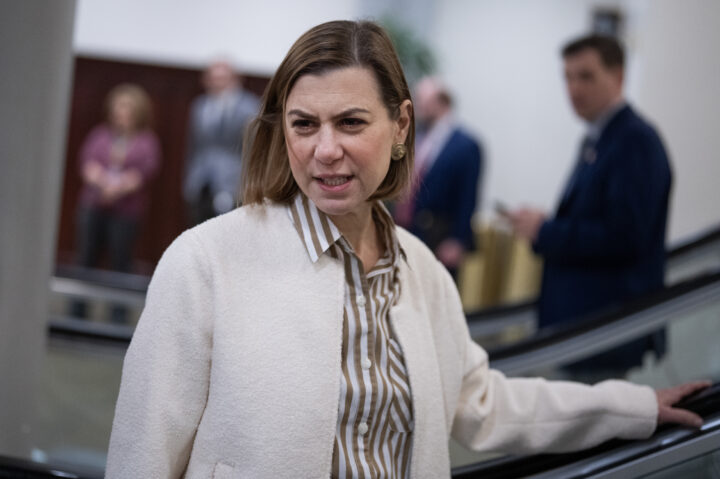
Sen. Elissa Slotkin (D-MI) is seen in the U.S. Capitol on Thursday, March 26, 2026.
Sen. Elissa Slotkin (D-MI) has lately been saying that she does not take money from AIPAC or any corporate political action committees. So when a college student asked her at a town hall in Cincinnati on Thursday about $4.5 million she has received from “pro-Israel lobbies,” Slotkin pushed back — arguing the student was unfairly lumping together all Jewish donors.
“I’m not sure what you’re referring to on ‘not AIPAC but the Israel lobby.’ If you’re equating ‘Israel lobby’ to Jews, I got a problem with that,” Slotkin said.
The figure that the Xavier University student quoted comes from a far-left organization called Track AIPAC, which targets elected officials who it alleges have received funding from the “Israel lobby.” But increasingly, the group is tallying up donations from “lobby donors,” a broad category that critics believe includes any Jewish donors who have also supported AIPAC, J Street or other Jewish or Israel-related advocacy groups.
Slotkin said that just as Iranian Americans, for instance, may not agree with everything the Iranian government does, “I think it’s really important, especially now, to make a distinction between the Israeli government and the choices that they’re making and the average Jew, okay, and Jewish people who donate to campaigns,” Slotkin said, earning applause from the audience.
At the end of the event, she stood by her response to the question when asked about it by another attendee.
“What I take issue with is someone saying that I took $4.5 million from the pro-Israel lobby. That’s not AIPAC. I don’t know what that is,” she said. “But if that’s counting Jewish donors and saying Jewish donors are somehow the same as ‘pro-Israel lobby,’ I got a problem with that, and not just as an elected official, as a Jew.”
Asked her position about taking money from AIPAC, Slotkin said she doesn’t accept AIPAC funding in the same way she eschews other “corporate PAC money.” But she said their work in Washington, of advocating for an issue by building relationships with members of Congress, is the same thing that scores of other groups do.
“I think Americans have the right to support those groups and do whatever they want. Doesn’t mean I have to agree with them. I don’t personally take money from AIPAC. I haven’t in many, many years,” Slotkin said to cheers. “But they and every other organization have an ecosystem in Washington, that they are doing things that every — there’s plenty of groups like them that do the very same thing, a Pakistani American group, or whatever group.”
After the town hall, Slotkin told Politico that she would not do an interview with Hasan Piker, the antisemitic Twitch streamer who appeared at two campaign rallies earlier this week with progressive Michigan Senate candidate Abdul El-Sayed.
“I gotta call balls and strikes, whether it’s antisemitism, Islamophobia, coming from the state that I come from, so that’s what I’ve tried to do as he’s come into Michigan,” Slotkin said.
The comments Piker has made with which she takes issue, Slotkin continued, are “some derogatory things he’s said about Orthodox Jews, saying that we deserve 9/11, there’s some things in there. Not to mention he calls me stupid like every other week.”
The series, ‘Revival with Lawrence Jones,’ argues a spiritual awakening is taking place across the country
Courtesy
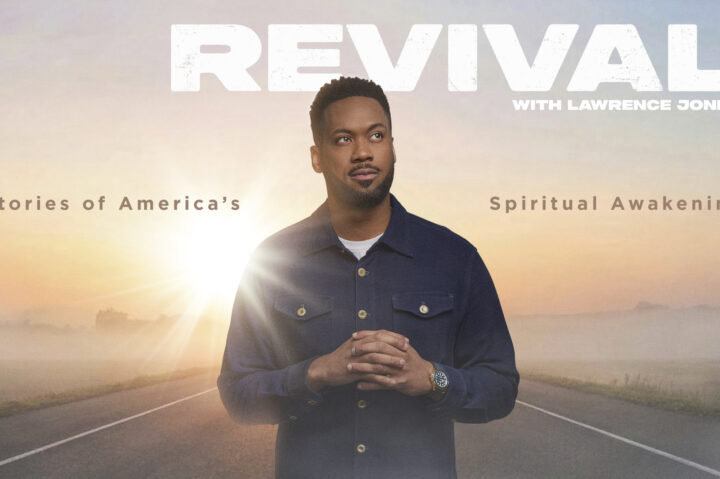
Fox Nation series 'Revival with Lawrence Jones'
From mass baptisms to packed pews, a new Fox Nation documentary chronicles a profound spiritual awakening it suggests is sweeping America. The five-part series, “Revival with Lawrence Jones,” includes a spotlight on the renewed embrace of religious identity among Jews following the Oct. 7, 2023, terrorist attacks in Israel.
Episode 3 of the new series, “Jewish Identity,” highlights the record-breaking “Big Shabbat” held in New York City last November. It also features a conversation between “Fox and Friends” co-host Lawrence Jones, the series’ host, and Israeli activist Noa Tishby about her own Jewish identity; and an interview with Rabbi Joshua Davidson, who leads Temple Emanu-El, the oldest Reform congregation in New York City, which organized the “Big Shabbat.”
“In this moment, we wanted to make two statements: One, that we are not afraid to come together proudly as Jews, and two, that the best way to defeat those who would seek to do us harm is to embrace with full heart and energy the joy and beauty of Jewish life,” Davidson said at the start of the episode, which first aired on April 2.
“There’s no question that since Oct. 7 there has been a resurgence of interest in Jewish life and commitment to the organized Jewish community,” continued Davidson. “It’s said that younger Jews are disaffiliating, moving away from Jewish life. I actually find the reverse to be true. The people that come through our doors are deeply committed to Israel, are deeply committed to Jewish engagement. Our tradition has the power to sustain our people.”
Jones told Jewish Insider he included the surge of Jewish engagement as a part of the series because “America was founded on Judeo-Christian values, and it is essential to highlight not only the growing number of young people flocking to churches, but also those returning to synagogues and the significance of Big Shabbat in that revival.”
Previously, the Guiness World Record for the largest Shabbat dinner in history occurred in Berlin with 2,322 guests during the European Maccabi Games in 2015.
Temple Emanu-El broke the record when it hosted 2,761 attendees at the Javits Center in Manhattan. The evening included 402 challahs, 811 pounds of potatoes and 59 guests named David and 27 named Rachel, Washington Jewish Week reported.
“All of this in spite of antisemitism,” notes Jones over footage of the Shabbat dinner. In the months following Oct. 7, Anti-Defamation League data showed antisemitic incidents surged by 361%, with over half of American Jews changing their routines due to fear.
“I look around and I don’t see a dying religion, I see a revival,” says Jones as the episode closes. “Sometimes it can be scary to embrace your identity. For Jews, that takes on a different importance. What I’m seeing is this ancient peoplehood will continue to survive and thrive. It takes an embrace of tradition while still looking towards the future. A celebration of joy when times are dark. And a reminder that there is more that unites us than divides us.”
“I think in the most beautiful ways, it’s inescapable,” Tishby told Jones of Judaism. “I’ve seen people who don’t live it and then at some point in their lives they’ll have a feeling in their gut that they need to understand what this thing is. I encourage anyone who is curious about the culture, religion and tradition — or was born Jewish and is not connected — to really go deep.”
Other episodes in the series take an inside look at the next generation of evangelical Christians, the connection between faith and sports, the largest one-day baptism in American history and Christian music breaking into the mainstream.
The report from Combat Antisemitism Movement found the platform has actively recommended this content to millions of users

Illustration by Jonathan Raa/NurPhoto via Getty Images
The Instagram logo is being displayed on a smartphone among other social media networks in this photo illustration in Brussels, Belgium, on January 22, 2024.
An AI-generated Instagram account portraying an Orthodox-looking rabbi is pushing antisemitic conspiracy theories to its more than 1.4 million followers, and it’s not the only one, a study published this week about antisemitic content on the social media platform has found.
An account called “Rabbi Goldman” “uses fake, AI-created authority figures to spread hate” in “a troubling and growing tactic,” according to the report, published on Wednesday by the Combat Antisemitism Movement.
The 12-page report, titled “Engineered Exposure: How Antisemitic Content Is Pushed and Amplified to Millions Across Instagram,” documents 100 posts that researchers described as antisemitic, pushed directly to Instagram accounts over a 96-hour period from March 19-22.
These posts, actively suggested by the platform’s recommendation systems, generated more than 5.3 million likes and 3.8 million shares, with an estimated reach of 150 to 280 million users, according to the report.
CAM defined antisemitic posts as ones that invoke conspiracy theories — such as Jews controlling the media or manipulating global conflicts — and posts that claim Jews, often referred to as “Zionists,” are linked to demonic forces or satanic imagery, all of which have been used to justify antisemitic violence.
The report raises particular concern around the creation of “closed content environments,” in which users are repeatedly fed similar antisemitic themes, with little or no countervailing content.
“This type of algorithmic clustering reaffirms dangerous beliefs, contributing to a process of radicalization that can have lethal real-world consequences,” the report states. Researchers identified 12 AI-generated “rabbis” with a combined following of 2.1 million Instagram users, all of which promote classic antisemitic stereotypes.
The “Rabbi Goldman” account features many of these, including one video in which the “rabbi,” wearing a tuxedo and seemingly seated in a luxury airplane, claims that Jews utilize empty private jets to evade taxes. The community note attached to the clip reads, “This is an AI generated rabbi who is trying to scam you by selling a fake 9$ get rich handbook. This account is ran by scammers based in south India.”

Meta, which is the parent company of Instagram — as well as Facebook and WhatsApp — did not respond to a request for comment from Jewish Insider about the report’s findings.
“Simply put, this is evidence of a broad systemic failure on the part of Instagram and Meta,” Sacha Roytman, the CEO of CAM, said in a statement. “When a platform actively recommends content that dehumanizes Jews to mass audiences, we are no longer talking about a simple oversight or a mistake in the algorithmic design. We are talking about infrastructure that normalizes hatred at scale that must be addressed immediately.”
“CAM is calling on Meta to go beyond basic enforcement and take real responsibility. What’s been uncovered here must be taken seriously. This isn’t a fringe problem. Rather, it points to a broader, systemic issue with global reach, shaping how millions of people encounter and engage with antisemitic ideas in 2026,” the report states.
Last year, Meta received pushback from Jewish leaders when it introduced a new community-driven fact-checking system, ending its third-party fact-checking program and replacing it with a system modeled after the community notes feature on Elon Musk’s X. Some Jewish leaders expressed concern that the move would “open the floodgates to content” that could target Jewish communities and individuals, and called the decision a “step back” in the fight against rising antisemitism.
Dangerous implications of social media have extended beyond the Jewish community, with a jury in Los Angeles ruling on Wednesday that Meta, as well as Google, are liable for creating addictive products that caused a teenager’s depression and anxiety. The verdict marks the first time juries have decided that tech companies are at least partially liable for distress online and offline.
The prominent NYC Reform leader condemned Mamdani’s recent decision to host Mahmoud Khalil at his residence
Screenshot
Rabbi Ammiel Hirsch speaks at the Stephen Wise Free Synagogue in New York City on Feb. 28, 2025
The vehicle ramming and shooting attack on a Michigan synagogue last Thursday was the latest example of a “direct connection between hatred of Israel and hatred of Jews,” Rabbi Ammiel Hirsch, a prominent Reform rabbi who leads Manhattan’s Stephen Wise Free Synagogue, said during a sermon on Friday evening.
From the pulpit, Hirsch urged both the Jewish community and U.S. elected officials — including New York City Mayor Zohran Mamdani — to take seriously the “moral and political blindness” that is “casting a darkening shadow over all that we hold dear.”
“We must grapple seriously with this phenomenon of antisemitism; not only for the sake of the Jews, but for the sake of America,” said Hirsch, one day after the suspect, Ayman Mohamad Ghazali, drove a truck full of explosives through the front entrance of Temple Israel, one of the country’s largest Reform congregations, as 140 children were inside the building.
Armed security stationed at the synagogue engaged with Ghazali who killed himself when his truck caught fire during the gunfight with security officials. One other person — the synagogue’s director of security, Danny Phillips — was injured.
“It is still the case that decent people see an attack on an American nursery school and are aghast at the brazen immorality, the unfathomable indecency, and the bottomless depravity. They send thoughts and prayers — and these sentiments are sincere. But there is an encroaching moral and political blindness in the West casting a darkening shadow over all that we hold dear,” said Hirsch.
He highlighted a connection between “hateful words and hateful deeds — between bad ideas and bad outcomes.”
“There is a direct connection between the obsessive and frenzied incitement against Israel, and incitement against American Jews. Everyone knows this. Why is it even controversial to say?” said Hirsch. “If [far-right commentator] Tucker Carlson pulls out of nowhere wild blood libels against Chabad that they pushed America into war — will it surprise anyone if the next Bondi Beach [massacre] is being hatched as we speak? And those on the other end of the political spectrum who shout ‘globalize the intifada’ — they mean Oct. 7 brought to the West, the Midwest and West Bloomfield.”
Hirsch said society “must do the much harder work of eradicating ideologies of hate in our communities. It means facing the problem of extremism and antisemitism head-on. It means acknowledging with honesty that antisemitism today is not only the domain of white supremacists and neo-Nazis.”
Hirsch, a self-described liberal who voiced opposition to Mamdani throughout the mayoral election, called the mayor’s statement on the Michigan attack “half-fine.”
Hirsch said he “welcomed” that Mamdani “expressed his horror, emphasized that his thoughts are with the congregation, called the attack ‘antisemitic violence” and pledged increased NYPD presence at Jewish institutions in New York.
“But unless you say the second half, the first half is just cover — a distraction — an evasion, a diversion from the source of the problem.”
“What about committing to using the bully pulpit of the mayor to influence greater tolerance for Jews in this city?” continued Hirsch. “What about castigating anti-Israel hate that so influences anti-Jewish hate? Help us understand why the attempted murder of children at Temple Israel is so morally clear while the actual murder and hostage-taking of children in their living rooms in Israel is so morally opaque?”
Hirsch condemned Mamdani’s recent decision to host Mahmoud Khalil, a former leader of Columbia University’s anti-Israel protest movement, at his official residence.
“The issue is not Mahmoud Khalil’s right to speak, or his immigration status. It is that Mayor Mamdani hosted him for an iftar meal and proudly posted his picture as if he is some kind of heroic freedom fighter. This is the man who said about Oct. 7, ‘we could not avoid such a moment.’ This is the man who called for the ‘collapse of the Zionist project and the ideology that it’s built on.’ Along with upholding his asserted right to free speech, do you have anything to say about the actual content of Mahmoud Khalil’s speech?”
This past Shabbat marked a gathering of “determination and defiance,” said Hirsch.
“On some level, to be a Jew is, itself, an act of defiance. We will not cower. We will not cringe. We will not crawl. We have seen it all before, we have survived it all. We are not going anywhere. You can harm us, you can inflict pain upon us, you can kill some of us, but you cannot destroy us.”
Norman Goda, a Holocaust historian at the University of Florida, said that modern remembrances of the Holocaust that fail to mention Jews are 'a soft form of denial'
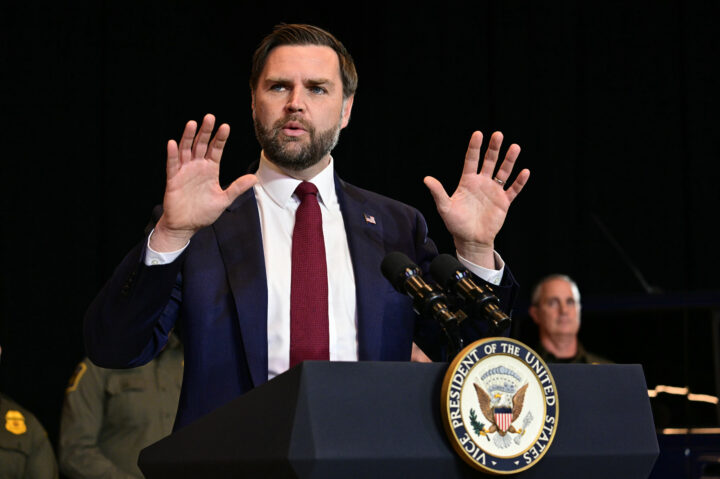
Jim Watson - Pool/Getty Images
U.S. Vice President JD Vance gives remarks following a roundtable discussion with local leaders and community members amid a surge of federal immigration authorities in the area, at Royalston Square on January 22, 2026 in Minneapolis, Minnesota.
A week after President Donald Trump took office for the first time in 2017, the White House ignited a political and media firestorm by releasing a statement commemorating International Holocaust Remembrance Day that failed to mention Jews.
The omission was covered in major media outlets like CNN and Politico; the Anti-Defamation League called it “puzzling and troubling.”
Nearly a decade later, Trump released another Holocaust Remembrance Day post this week, with a far more specific message: “Today, we pay respect to the blessed memories of the millions of Jewish people, who were murdered at the hands of the Nazi Regime and its collaborators during the Holocaust,” the statement read, “as well as the Slavs and the Roma, people with disabilities, religious leaders, persons targeted based on their sexual orientation, and political prisoners who were also targeted for systematic slaughter.”
Meanwhile, Vice President JD Vance’s post commemorating the day, which marks the anniversary of the 1945 liberation of Auschwitz by Allied Forces, did not mention Jews or antisemitism, leading political rivals on the left to pounce. (Democratic Majority for Israel called it “indefensible.”)
But despite the visibility of Vance’s tweet — which his defenders pointed out included pictures of him and his wife at Dachau, standing in front of a sign that said “Never again” in Yiddish — he was far from the only politician that failed to mention the fact that the Holocaust targeted Jews. Among them were: Sen. Roger Wicker (R-MS) and Rep. James Walkinshaw (D-VA), both of whom pledged to remember the victims of the Holocaust without referring to Nazis’ targeting of Jews.
Multiple presenters at the U.K.’s BBC also failed to mention Jews in their coverage of Holocaust Remembrance Day — drawing backlash and a subsequent apology from the national broadcaster.
Does it matter that these politicians or media don’t reference Jews if they are still highlighting the significance of the Holocaust? It’s possible to argue that, definitionally, the Holocaust was about Jews, so one could assume that any reference to the Holocaust is itself a reference to the killing of Jews and the antisemitism that led to it.
“If I talk about the potato famine, do I have to say Irish? How many other potato famines were there?” asked Deborah Lipstadt, a Holocaust historian who served as President Joe Biden’s antisemitism envoy. “But this is part of a greater whole in an age of rising antisemitism.”
For years, Americans’ knowledge of basic facts about the Holocaust has been declining, particularly as fewer Holocaust survivors are alive each year to share their stories. A 2023 survey conducted by the Claims Conference found that 21% of Americans believed that 2 million Jews or fewer were killed. Eight percent of Americans, and 15% of 18- to 29-year-olds, said the number of Jews who were killed during the Holocaust has been greatly exaggerated.
“Holocaust history has the power to teach vital, timeless lessons about why our choices matter — but only when it is approached with the precision, historical integrity and respect it rightfully deserves,” the U.S. Holocaust Memorial Museum said in a statement this week that called for an end to “the abuse and exploitation of Holocaust memory.”
In the 81 years since the Holocaust, political leaders and movements have exploited the memory of the genocide to serve their own ends, particularly by shifting the focus of who its victims were.
In the former Soviet Union, where more than 2 million Jews were killed during the Holocaust, memorials to those killed called them “peaceful Soviet citizens” — stripping them of their Jewish identity, as if their killers had targeted Russians rather than Jews. Some right-wing politicians in modern Poland have attempted to quash historical scholarship documenting that Poles were involved in Nazis’ killing of Jews, and that the Nazis targeted Jews, in particular, rather than just the Poles (though Poles were targeted, too).
Norman Goda, a Holocaust historian at the University of Florida, said that modern remembrances of the Holocaust that fail to mention Jews are “a soft form of denial.”
“The Nazis certainly knew who they were deporting. The Nazis certainly knew who they were gassing,” Goda told Jewish Insider on Wednesday. “The ignorance is such that you have to remind people that the Nazis called this Die Endlösung der Judenfrage, the final solution of the Jewish question. They weren’t just killing random people.”
The politicians posting about the Holocaust almost surely know that, as do most of their constituents. But rising antisemitism coupled with declining knowledge about a genocide that targeted and killed 6 million Jews means that reminding people of the facts — the specifics — remains crucial.
“Do we do this with any other mass catastrophe? Do we discuss the Armenian Genocide without mentioning the Armenians? Do we discuss slavery in the United States without mentioning who the slaves were?” Goda questioned. “We don’t do it, and anybody who would do that is engaged in an almost willful misunderstanding, either a profound historical ignorance, on the one hand, where you almost have to try to be that ignorant, or something that is simply more nefarious.”
The ADL ranked the leading large language models based on their ability to identify and counter ‘anti-Jewish’ and ‘anti-Zionist’ theories

Philip Dulian/picture alliance via Getty Images
Several AI applications can be seen on a smartphone screen, including ChatGPT, Claude, Gemini, Perplexity, Microsoft Copilot, Meta AI, Grok and DeepSeek.
Anthropic’s artificial intelligence system is strongest at detecting bias against Jews and Israel compared to its competitors, according to an evaluation of the leading large language models published by the Anti-Defamation League on Wednesday.
In its first-ever AI index, the ADL evaluated how six models responded to antisemitic and extremist content, based on more than 25,000 LLM chats, 37 topical sub-categories and assessments conducted by both human and AI evaluators.
The index broke antisemitism into subcategories: “anti-Jewish,” which includes classic antisemitic tropes, as well as “anti-Zionist,” which analyzes antisemitism that targets Zionists or Zionism. Another category, “extremist,” looked at how LLMs engage with biases, narratives and conspiracy theories, which sometimes overlap with antisemitism. Models were generally better at identifying and discrediting tropes such as “Jews control the media” than anti-Zionist content or extremist theories.
The index assessed OpenAI’s ChatGPT, Anthropic’s Claude, the Chinese model DeepSeek, Google’s Gemini, xAI’s Grok and Meta’s Llama.
Claude received the highest overall score (80 out of 100) in detecting and responding to anti-Jewish and anti-Zionist theories. Across a range of testing methods, Claude responded that statements it was asked to analyze “contain antisemitic conspiracy theories and historically inaccurate claims.”
ChatGPT ranked second with a score of 57. Grok came in last among the models tested, with a score of 21.
Still, every AI model tested demonstrated at least some gaps in addressing bias against Jews and Zionists and all struggled with extremist content.
“When these systems fail to challenge or reproduce harmful narratives, they don’t just reflect bias — they can amplify and may even help accelerate their spread,” ADL CEO Jonathan Greenblatt said in a statement. He called on AI companies “to improve their detection capabilities.”
“While one model performed better than others, no AI system we tested was fully equipped to handle the full scope of antisemitic and extremist narratives users may encounter. This Index provides concrete, measurable benchmarks that companies, buyers, and policymakers can use to drive meaningful improvement,” said Oren Segal, ADL’s senior vice president of counter-extremism and intelligence.
The research follows several recent studies from the ADL scrutinizing extremist content generated by AI models. In December, it published a study that found that several leading AI LLMs generated dangerous responses when asked for addresses of synagogues and nearby gun stores.
ADL conducted research for the index between August and October 2025. The antisemitism watchdog said it selected models from leading LLM companies that were most widely available at the time of testing. Testing was designed to reflect how average users — not bad actors — interact with AI systems in realistic scenarios. Models were tested across five interaction types: survey questions, open-ended prompts, multi-step conversations, document summaries and image interpretation.
Speaking to camera, Cornyn touts his efforts to revoke the tax-exempt status of the Council on American-Islamic Relations

Kayla Bartkowski/Getty Images
Sen. John Cornyn (R-TX) speaks with press in the Hart Senate Office Building on April 07, 2025 in Washington, DC.
Sen. John Cornyn (R-TX), facing a serious primary challenge from his right, released a new campaign ad on Thursday calling “radical Islam” a “bloodthirsty ideology” that has influenced recent terror attacks targeting Jews.
“It fueled the unspeakable crimes on Oct. 7,” Cornyn says in the 30-second ad, called “Evil Face,” before citing the mass shooting last month during a Hanukkah gathering in Australia that was allegedly motivated by the terrorist group ISIS. “It showed its evil face again at Bondi Beach.”
Speaking directly to the camera, Cornyn touted his recent efforts to revoke the tax-exempt status of the Council on American-Islamic Relations, a nonprofit advocacy group whose executive director has drawn scrutiny for celebrating the Hamas attacks of Oct. 7, 2023.
“Let me be clear: No organization that supports terrorists should receive taxpayer benefits,” Cornyn concludes in the ad. “And Sharia law has no place in American courts or communities.”
The seven-figure ad buy is now running statewide on broadcast, cable and digital platforms, according to the campaign.
The ad comes after Texas Gov. Greg Abbott, a Republican, issued a declaration last November designating CAIR as a foreign terrorist group as well as a “successor” to the Muslim Brotherhood effectively posing as a front for Hamas, prohibiting the organization from purchasing land in the state.
The declaration allows the state’s attorney general, Ken Paxton, the right-wing Republican mounting a competitive challenge to Cornyn in the March primary, to sue to shut down the group and impose fines on its leaders.
CAIR, which called the proclamation defamatory and unconstitutional, has filed suit to challenge the designation, which Paxton has vowed to vigorously defend.
Following Abbott’s announcement, Cornyn, for his part, introduced legislation in the Senate in December that seeks to strip CAIR of its nonprofit status over its alleged support for terrorism. In a statement about the bill, Cornyn, who is seeking reelection to a fifth term, described the organization as “a radical group of terrorist sympathizers with a long history of undermining American values,” while endorsing the governor’s designation.
Both Cornyn and Paxton have otherwise boasted of their records supporting Israel and fighting the rise of antisemitism.
Some Venezuelan Jews see similarities in the response of far-left activists to Trump’s capture of Maduro and their criticism of Israel’s actions in Gaza

Michele Eve Sandberg/Sipa USA)(Sipa via AP Images
Mural artist from Venezuela, Pedro Martin, pictured. A mural depicting Venezuelan President Nicolas Maduro portrayed as captured is seen in the Wynwood Arts District in Miami, Florida.
When Valerie Stramwasser woke up on Saturday, Jan. 3, she glanced at her phone and saw hundreds of WhatsApp messages.
“I’m like, ‘Oh my god, something happened.’ I first thought that it was something in the family, and then I opened up and I hear, ‘We’re free.’ We’re free. It happened,” Stramwasser told Jewish Insider on Thursday. “Literally tears of joy.”
Stramwasser, 37, lives in Hollywood, Fla., with her husband and two children, but she grew up in Caracas, Venezuela. She was forced to flee the country as a teenager after a failed kidnapping attempt against her. She hasn’t been back in years, not even for the funerals of her grandparents.
The tears of joy began when she saw the news that the U.S. military had captured Venezuelan President Nicolás Maduro and his wife, and flown them to New York to stand trial on narco-terrorism charges. Stramwasser and her husband, who is also Venezuelan, couldn’t wait to tell their 8- and 11-year-old children the news.
“As a mom, you tell the stories to your kids, and they know how much I miss my country. But I’ve never been able to go back,” Stramwasser recounted. Then they drove to her brother’s house to celebrate and watch President Donald Trump discuss the operation. “This is one of the most important things that, as a Venezuelan, you can hear in the past 30 years.”
“Growing up there, it was a community of about 28,000 Jews that were living there. It was a vibrant community, a very successful and respected community,” said Paul Kruss, a city commissioner in Aventura, Fla., who also owns a popular local bagel shop. “Now there’s maybe 4,500 that live there, which should tell you all you need to know about the kind of brain drain that they had. It wasn’t only the Jewish community that fled.”
An economic crisis that began under the country’s socialist president, Hugo Chávez, who was elected in 1999, grew exponentially worse when Maduro came to power in 2013 after Chávez’s death. The resulting poverty, starvation and crime have led to a massive refugee crisis of roughly 8 million people who have left the South American country. Amid the global diaspora of Venezuelans, many are cheering the removal of Maduro, whom they view as responsible for deteriorating standards of living, repression and political dysfunction plaguing the country.
Stramwasser is one of hundreds of thousands of those Venezuelans who now call Florida home, including several thousand Venezuelan Jews who have developed outposts of their once-strong Caracas community centers in Miami.
“Growing up there, it was a community of about 28,000 Jews that were living there. It was a vibrant community, a very successful and respected community,” said Paul Kruss, a city commissioner in Aventura, Fla., who also owns a popular local bagel shop. His mother, who was from Warsaw, Poland, moved to Caracas after surviving the Holocaust. “Now there’s maybe 4,500 that live there, which should tell you all you need to know about the kind of brain drain that they had. It wasn’t only the Jewish community that fled.”
The surprise operation has largely garnered support from Republicans, while Democrats are more skeptical, including many who are outspoken critics of Maduro, igniting a debate in Congress about presidential war powers. Senate Minority Leader Chuck Schumer (D-NY) said Trump should not have acted without congressional approval.
“Maduro is a horrible, horrible person, but you don’t treat lawlessness with other lawlessness, and that’s what’s happened here,” Schumer said over the weekend.
In Florida, even among Democrats, the reaction was more celebratory.
“The capture of the brutal, illegitimate ruler of Venezuela, Nicolás Maduro, who oppressed Venezuela’s people is welcome news for my friends and neighbors who fled his violent, lawless, and disastrous rule,” Rep. Debbie Wasserman Schultz (D-FL) said in a statement. “However, cutting off the head of a snake is fruitless if it just regrows. Venezuelans deserve the promise of democracy and the rule of law, not a state of endless violence and spiraling disorder.”
The question of what comes next for Venezuela remains unanswered. The country’s interim president is Delcy Rodríguez, the vice president and oil minister, who was close to Maduro.
“The good thing about what just happened is that sometimes bad people in the world need a message to be sent. If they know that they can do bad things, and no one will come for them, well, they will just keep doing bad things,” said Brian Fincheltub. “ We want to go back, so we are very happy with this.”
Secretary of State Marco Rubio laid out a three-step process for Washington’s plans in Venezuela: stabilizing the country, followed by allowing American companies access to the Venezuelan market and, finally, a transition of power. But the U.S. has not laid out plans for a new political regime in Venezuela.
The Venezuelans cheering on the ouster of Maduro are content to wait a bit longer.
“She’s been part of the problem, no question,” Kruss said of Rodríguez. “I’m hopeful that the United States will be guiding them and letting the Venezuelan people decide who they want to be their leader, and I think this is just a transition period.”
Brian Fincheltub grew up in the Caracas Jewish community, which he called “one of the best in the world.” He was a social activist working in the slums of Caracas, but due to his ties to the opposition party, he fled the country in 2018 to avoid being jailed. Venezuela’s National Assembly named opposition leader Juan Guaidó acting president of Venezuela in 2019, setting up a showdown with Maduro, who never ceded power. Fincheltub moved to Washington to serve as Venezuela’s consul general under Guaidó’s opposition rule. Now Fincheltub works at the World Bank.
Fincheltub supports Trump’s actions, which he said is not about politics — that he would have supported the move had President Joe Biden done the same thing.
“The good thing about what just happened is that sometimes bad people in the world need a message to be sent. If they know that they can do bad things, and no one will come for them, well, they will just keep doing bad things,” said Fincheltub, 38. “ We want to go back, so we are very happy with this.”
Some Venezuelan Jews see similarities in the response of far-left activists to Trump’s capture of Maduro and their criticism of Israel’s actions in Gaza.
“People who are not Venezuelan, who did not grow up under Chávez or Maduro, who did not lose their country, their safety, their future, feel entitled to explain Venezuela to us,” said Valerie Stramwasser, who has said Florida will remain her home even if Venezuela elects a new government. “The same goes for people who are not Jewish, who have never lived the history, the wars, the constant existential threat, feel entitled to explain the Israel-Palestine conflict to us.”
“The same ones that were attacking Israel and the Jewish people are the same ones, or many of them, that are attacking President Trump, or that are attacking what happened in Venezuela,” Fincheltub said. “This is not about President Trump or President Biden. This is about the liberation of Venezuela.”
Stramwasser posted a video making a similar point on Instagram, where her posts usually get a couple thousand views. This one has been viewed more than 500,000 times.
“People who are not Venezuelan, who did not grow up under Chávez or Maduro, who did not lose their country, their safety, their future, feel entitled to explain Venezuela to us,” said Stramwasser, who has said Florida will remain her home even if Venezuela elects a new government. “The same goes for people who are not Jewish, who have never lived the history, the wars, the constant existential threat, feel entitled to explain the Israel-Palestine conflict to us.”
History, she added, will be on her side.
“History is very clear about this,” Stramwasser said in the video. “Those who confuse aggressors with victims don’t end up on the right side of history.”
Imam Sheikh Saleh bin Abdullah bin Humaid called Israel an ‘unjust and brutal Zionist enemy,’ casting doubts on Saudi-Israel normalization

AFP via Getty Images
Kaaba, Islam's holiest shrine, at the Grand Mosque complex in Mecca on June 6, 2025.
During a Friday sermon at the Grand Mosque in Mecca, Saudi Arabia, Sheikh Saleh bin Abdullah bin Humaid — one of the nine imams of the mosque — prayed for Allah to punish Jews and urged Muslims to view Palestinian children as role models in the face of what he described as an “oppressive and brutal Zionist enemy.”
“Oh Allah, deal with the Jews who have seized and occupied, for they cannot escape your power,” bin Humaid said. “Oh Allah, send upon them your punishment and misery, that can never be repelled by the wrongdoers. Oh Allah, we seek your protection from their harms, and we seek refuge with you from their evils.”
The imam praised Palestinian children as “among the most joyful examples and noble images are the young children of Palestine.”
“Heroic children whose fathers were killed while they watched and whose homes were demolished while they witnessed. Jerusalem and Palestine will remain high and lofty in the hearts of Arabs and Muslims,” he said.
The imam also praised what he described as Palestinian steadfastness, saying that the “blood of the martyrs, the stances of men and the steadfastness of heroes will, by God’s will, yield proud souls and hearts that refuse humiliation.”
Mecca is the holiest city in Islam and is known as the birthplace of the Prophet Muhammad. Sermons delivered at the Grand Mosque are closely watched across the Muslim world; a YouTube channel carrying the Saudi government’s logo translates the sermon into several languages, including English, French, Chinese, Russian, Turkish, Indonesian and Malay. The sermons are widely seen as reflective of official Saudi religious and political messaging, making it notable that the senior Saudi cleric used the address at Islam’s holiest site to condemn Israel as President Donald Trump continues to promote normalization between the two countries.
Edy Cohen, a research fellow at the Israel Center for Grand Strategy who was born in Lebanon, said that the antisemitic sermons did not begin last week, and that of the nine sheikhs who take turns giving Friday sermons, three have frequently made statements against Jews.
“The Saudis and other Arab states used to say, ‘We’re not against the Jews; we’re against Israel,'” Cohen said. “Here he’s clearly saying he’s against the Jews.”
Cohen added that Saudi Crown Prince Mohammed bin Salman, known as MBS, does not have plausible deniability when it comes to antisemitic sermons.
“MBS knows about every ant that crawls in Saudi Arabia, so he certainly knows what’s in every Friday’s sermon. He cannot claim he doesn’t know. He appointed [bin Humaid],” Cohen stated.
Cohen also warned that pro-Israel figures are turning a blind eye because they want normalization between Israel and Saudi Arabia, but “even if there is normalization, they will continue to say antisemitic things. … It’s systemic.”
“The Saudis don’t care that [Israelis and Jews] know about it, but they do care if American politicians know [about state-sanctioned antisemitism]. They don’t want it in the American media,” Cohen said.
Hussain Abdul-Hussain, a research fellow at the Foundation for Defense of Democracies, said the remarks point to broader political implications.
“Preachers in most Gulf countries are government employees, and their sermons often reflect official talking points,” Abdul-Hussain said. “Sheikh bin Humaid’s speech suggests that Hamas leader Yahya Sinwar succeeded in one of the goals of his Oct. 7 attack on Israel by halting normalization between Saudi Arabia and Israel.”
Following a trip to Riyadh last week, Dan Shapiro, who served as U.S. ambassador to Israel under the Obama administration, said that while the Saudis “are open” to normalization, “it is not imminent.”
“I think it’s unlikely that it could happen in 2026,” Shapiro said on social media. “[MBS] wants to see progress toward a stable future in Gaza, but I do think the crown prince sees that there’s value for his wider regional project to have Saudi Arabia be part of a group of integrated moderate states.”
Talks of normalization between Saudi Arabia and Israel have largely remained stalled. Following MBS’ Oval Office meeting with Trump on Nov. 20, 2025, the Gulf leader spoke of wanting to join the Abraham Accords but insisted any progress still hinged on securing a “clear path [toward a] two-state solution.”
For the Jews of Sydney, the horror that unfolded on Bondi Beach was a shock, but not a surprise
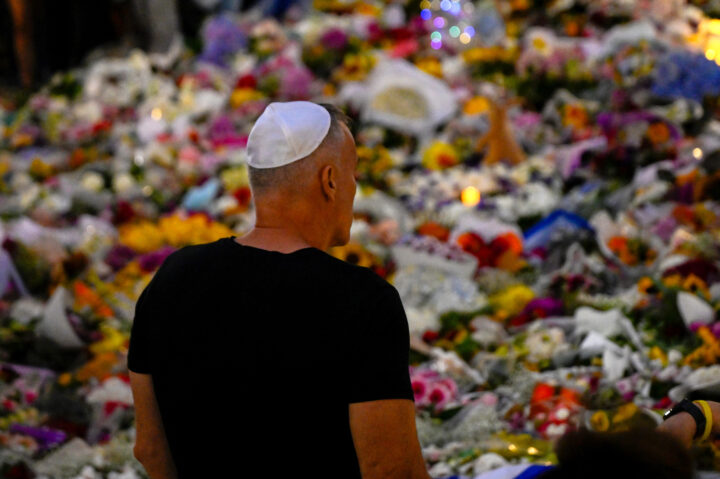
(Photo by Izhar Khan/Getty Images)
Mourners gather at the Bondi Pavilion as people pay tribute to the victims of a mass shooting at Bondi Beach yesterday, on December 15, 2025.
For the Jews of Sydney, Australia, the horror that unfolded on the popular Bondi Beach during a Hanukkah celebration was a shock, but not a surprise.
Nor was it a surprise for much of the global Jewish community, which, while always on alert and monitoring threats, scales up its efforts around holidays — a task even more critical in the wake of antisemitic terror attacks earlier this year on Passover and Yom Kippur.
But the deadly attack in Sydney seemed — somehow — to have caught Australian officials by surprise, despite a warning from Israeli Prime Minister Benjamin Netanyahu four months ago over the potential for attacks against the Australian Jewish community, as well as a spate of attacks targeting Jewish institutions, some of which were orchestrated by Iran.
An Israeli tourist who was at Bondi during the attack who spoke to JI on Sunday said that he sensed “that [Australian authorities] don’t know how to deal with mass casualty events. … I didn’t see anything on the news for almost an hour, and when I asked locals why they weren’t calling news hotlines or reporting on news apps, they said Australia doesn’t have that. In Israel, it would be in the news three minutes later.”
Indeed, within an hour of the onset of the attack, Israeli news networks were covering the carnage. International news outlets and networks, as well as Australian media, were slow to note that the attack had taken place at a Hanukkah celebration. Three hours after the attack, the Sydney Morning Herald’s top story was headlined “Ten Dead in Bondi Beach Shooting.” The subhead, too — “Multiple dead, two police officers among injured after shots fired at Bondi Beach” — gave no indication that the attack had taken place at a Hanukkah celebration, and that rabbis and Jewish community members had been shot.
It was a year ago this week that JI reported on concerns from Australian Jewish leaders over Canberra’s response to the antisemitism that dramatically increased following the Oct. 7, 2023, Hamas terror attacks and ensuing war between Israel and Hamas.
A travel advisory issued by the Simon Wiesenthal Center more than a year ago specifically cited the Australian government’s response, saying that “in failing to act against the demonization of Jews, Israel and Zionism on the streets of Australian cities, the Australian government has allowed violence against Jews and Israelis to be normalized.”
“Moreover,” the advisory continued in an ominous and prescient warning, “authorities have failed to take necessary measures to protect Jewish communities from increasingly belligerent and violent targeting by Islamists and other extremists.”
Speaking to Australian media, Jillian Segal, Australia’s special envoy to combat antisemitism, said on Monday that antisemitism had been “seeping into society for many years and we have not come out strongly enough against it.”
It was five months ago that Segal released an extensive plan for Canberra to address rising antisemitism. The plan, which faced pushback from critics at the time, had only partially been put into effect, Segal told the Australian Jewish News after yesterday’s attack.
Jewish leaders from around the world had been in Australia in the days prior to the Bondi Beach attack as part of the J7 Task Force, a group representing the world’s largest Jewish Diaspora communities, that had traveled specifically to Australia out of concern over rising antisemitism down under.
“We came to Australia because we saw the red lights flashing — because the Australian Jewish community has been under siege since Oct. 7, 2023, facing a nearly fivefold increase in antisemitic incidents since Hamas’ deadly attack on Israel,” Marina Rosenberg, the senior vice president of international affairs at Anti-Defamation League, wrote in an op-ed published in eJewishPhilanthropy this morning. “In meetings with high-level government officials and members of Parliament, our message was explicit and urgent: What begins with words can end with violence.”.
“Tragically,” Rosenberg continued, “those warnings were not acted upon fast enough.”
The demonstration portraying Israeli and U.S. leaders drinking the blood of Gazans was organized by Hazami Barada and Atefeh Rokhvand, who have been involved in setting up anti-Israel encampments across the D.C. area

A demonstration at Union Station in Washington, D.C., portrayed Israeli and U.S. leaders eating and drinking the blood and organs of Gazans
An antisemitic art display at Washington Union Station on Thursday depicting U.S. and Israeli leaders drinking the blood of Gazans is drawing widespread condemnation for echoing the historic blood libel against Jews.
“This is the kind of stuff that Nazi soldiers were shown during World War II, with the idea to make it that Jewish people were not humans,” Ron Halber, CEO of the Jewish Community Relations Council of Greater Washington, told Jewish Insider. “This is exactly what that is in the modern day. It is done to make Jews look like animals.”
The demonstration, displayed both inside and outside of D.C’s main train station, was organized by Hazami Barada and Atefeh Rokhvand, two anti-Israel activists who have been involved in several protests around Washington since the Oct. 7, 2023, terrorist attacks in Israel, including leading a protest encampment outside of the Israeli Embassy and outside of then-Secretary of State Tony Blinken’s home for months in 2024.
Barada protested a community vigil for the first anniversary of the Oct. 7 attack, which took place at The Anthem, a music venue in the nation’s capital. Rokhvand is an elementary school teacher who spoke at the Muslim Student Association conference in 2024.
Another local activist, Hasan Isham, took credit on Instagram for 3D printing the masks used in the protest, which featured people dressed in suits wearing masks to resemble Israeli Prime Minister Benjamin Netanyahu, President Donald Trump, Secretary of State Marco Rubio, former President Joe Biden and Blinken. The five officials were sitting at a long “Friendsgiving dinner” table decorated with the Israeli flag while eating doll limbs drenched in fake blood. A menu placard read: “Starter: Gaza children’s limbs.” “Main: Stolen Organs.” “Dessert: Illegally harvested skin.” “Drink: Gaza’s spilled blood.”
Leading Jewish groups condemned the demonstration, with the Anti-Defamation League calling it “nothing less than abhorrent.”
The American Jewish Committee said that “blood libel was on full display” and called on “leaders and authorities [to] condemn this display and ensure that public spaces are not used to spread dangerous hate.”
“This was nothing less than the revival of one of the oldest and most dangerous antisemitic tropes in history. Blood libel has fueled violence, persecution, and massacres of Jews for centuries. Seeing it resurface in our nation’s capital is both horrifying and unacceptable,” AJC said in a statement.
Union Station is within U.S. Park Police jurisdiction, which manages its own permits. Park Police did not respond to an inquiry from JI asking whether a permit was provided for the demonstration. First Amendment permits had previously been granted for a pro-Palestinian encampment outside of Union Station, but were revoked after demonstrators burned American flags in 2024.
The display on Thursday was removed by Amtrak police within five minutes of being fully set up, according to the Metropolitan Police Department. After being removed from Union Station, the organizers moved the display to outside the station.
“Whether inside or outside, this was absolutely disgusting… and done to incite hatred against Jewish people,” said Halber. “The result is that this could lead to violence against Jews. It was designed to use the worst antisemitic stereotypes against Jews to demonize Jews. It’s nothing more than a modern-day blood libel.”
“This happened at Union Station where members of Congress and people advocating on Capitol Hill pass through,” continued Halber. “This is seen by a lot of people.”
Vish Burra, a known MAGA provocateur, posted a video of cockroaches counting money in a room with Stars of David
Eva Marie Uzcategui/Bloomberg via Getty Images
Former Rep. Matt Gaetz (R-FL) speaks at the Turning Point Action conference in West Palm Beach, Florida on July 15, 2023.
A producer for former Rep. Matt Gaetz’s (R-FL) weeknight show on the right-wing One America News Network has reportedly been fired after he shared a vehemently antisemitic social media post depicting Jews as cockroaches.
Vish Burra, who was a booker and script writer for Gaetz, had drawn widespread backlash for posting an AI-generated animated video last week showing him entering a “scheming room” with Stars of David on the door to find a group of cockroaches counting money, who scurry away upon his arrival. The post has since been deleted.
“I will expose the vermin in the venomous coalition and their transgression against MAGA, America First, and Kevin Roberts at The Heritage Foundation,” Burra said in another post to X, which has also been deleted. “It all starts with Susan Lebovitz-Edelman,” he wrote, referring to a Jewish trustee at the Manhattan Institute who is married to the hedge fund manager Joseph Edelman.
Lebovitz-Edelman, he wrote, “is behind the entire campaign to oust Kevin Roberts from The Heritage Foundation by using her leverage as a recent big dollar donor to take control of the organization.”
Burra’s firing was reported by The Wrap and The Independent on Monday.
OAN did not immediately respond to a request for comment on Monday afternoon.
Gaetz, a former far-right congressman from Florida, had defended Burra in a social media post Saturday and sought to brush aside the controversy, saying that his producer had “posted something dumb this week. He knew it was dumb and quickly deleted it.”
“I too have posted dumb things on social media without thinking — some I’ve deleted, some I haven’t. And I’ve had to pay some consequences along the way. Vish will too,” Gaetz wrote. “I’m not the internet hall monitor of any of my coworkers (thankfully.) I can say on the Matt Gaetz Show we do not believe in applying bigotry to any group of people, no matter where they live or how they worship.”
But Burra’s post faced blowback inside OAN. A Jewish anchor, Stella Escobedo, wrote on social media that she was “very hurt, disappointed and concerned that someone I work with — chose to post this.”
“Posts like these create violence toward Jews,” she said. “Dehumanizing a group is the first step on a road we’ve seen before. And that road leads to the mass murder of Jews.”
Burra has also faced scrutiny for other antisemitic posts recently highlighted by Escobedo, including comments in which he called a Jewish woman a “stinky yenta,” defended a Nazi Halloween costume and wrote that “America First means not being held hostage by a nearly century-old postwar consensus fairytale about what happened in World War 2.”
Burra, who has long been known as a provocateur within the MAGA movement, previously worked as a top aide to disgraced former Rep. George Santos (R-NY).
The resolution moving forward in the Cornell University Graduate Student Union — where unlike many other unions, dues are mandatory — accuses efforts to ‘dismantle unions in higher education’ on ‘Zionist interests’

Matt Burkhartt/Getty Images
A man walks through the Cornell University campus on November 3, 2023 in Ithaca, New York.
A BDS resolution that accuses Jewish students of “weaponizing antisemitism” and blames labor disputes on “Zionist interests” is advancing in the Cornell University Graduate Student Union — where unlike many other unions, dues are mandatory.
The draft resolution, which was published earlier this month and obtained by Jewish Insider, states that “the dismantling of unions in higher education based on Zionist interests is not only to the detriment of graduate worker unions — it threatens the working class and labor unions nationwide.”
The resolution also says that a September Senate Health, Employment, Labor, and Pensions Committee subcommittee hearing focused on antisemitism within unions “succinctly crystallizes how autocrats are weaponizing antisemitism charges against unions in higher education to undermine labor unions nationwide.”
“The House Republicans and representatives of the National Right to Work Legal Defense Foundation repeatedly drew connections [at the hearing] between the collective interests of labor unions and imperial investments in the dispossession and genocide of the Palestinian people,” the draft states. “Under the guise of antisemitism, they denounced graduate worker unions’ interest in protecting their rights to engage in political protest in support of Palestinian liberation.”
Jewish students who have applied for an exemption to the dues requirement over the union’s anti-Israel behavior say they face monthslong waits, intimidation over unpaid fees and even professional consequences.
According to two Jewish students, the union has removed “most Jewish students” from the listserv, making them unaware of when the resolution will be submitted and what the voting process will be.
David Rubinstein, a sixth year history Ph.D. candidate at Cornell, told JI that the “resolution is merely the latest chapter in CGSU’s yearslong campaign to make Jewish students feel unwelcome.”
“By endlessly attacking Israel and ‘Zionists’ — while ignoring every other conflict in the world — the union has created a hostile work environment that has impacted many students’ academic careers,” continued Rubinstein. “Depicting ‘Zionist interests’ as undercutting the working class has nothing to do with wages or benefits — rather, it reveals a conspiracy-tinged worldview.”
Another Jewish graduate student, who spoke to JI on the condition of anonymity over fears of being doxxed or harassed by the union, said the draft “is full of libelous comparisons and makes no mention of the harm BDS would do to Jewish students on campus.”
“It’s completely denying antisemitism as a very real and present problem on campus,” the student said.
In tandem with the resolution, the union has made threats to fire Ph.D. students who refuse to pay them, according to Rubinstein.
“Cornell could have denied the union’s demand for mandatory dues — as many other universities have done,” he said. “Instead, objectors must undergo a burdensome exemption process requiring the disclosure of highly personal information. It is wrong that antisemites have been granted authority to determine whether I am Jewish enough not to fund their union.”
Cornell did not respond to a request for comment from JI about the resolution and the union’s requirement that all graduate students pay dues.
Cornell’s graduate school came under scrutiny last month when Eric Cheyfitz, a professor with a history of anti-Israel activism, attempted to exclude an Israeli graduate student from participating in his course on Gaza. Cheyfitz was placed on leave, and retired weeks later. The school’s student newspaper, The Cornell Daily Sun, published a graphic during the week of the second anniversary of Hamas’ Oct. 7, 2023, terrorist attacks depicting a bloodied Star of David and Nazi “SS” symbol on the back of a Palestinian person.
The resolution affirms the Jewish ‘right to pray and worship on the Temple Mount,’ though the current Israeli policy is to restrict Jewish prayer at the holy site
Ken Cedeno-Pool/Getty Images
Rep. Claudia Tenney speaks as at the House Committee on Foreign Affairs on March 10, 2021 in Washington, DC.
Rep. Claudia Tenney (R-NY) will introduce a resolution this week affirming Israel’s sovereignty over the Temple Mount, a sacred site for Jews, Christians and Muslims, and demanding equal freedom of worship for all, Jewish Insider has learned.
The resolution, if adopted, would put the House of Representatives on record as affirming “the inalienable right of the Jewish people to full access [of] the Temple Mount and the right to pray and worship on the Temple Mount, consistent with the principles of religious freedom.” It also “reaffirms its recognition of Jerusalem as Israel’s undivided capital, as reaffirmed repeatedly in United States policy and law, which includes Israeli sovereignty over the Temple Mount.”
The resolution describes the Temple Mount as “the holiest site in Judaism” and “a holy site for Christians and Muslims,” and makes note of the impediments faced by Jews and Christians in accessing the site that have restricted their prayer rights.
“Israel upholds religious freedom for all by ensuring access to holy sites for people of all faiths, however, Jewish and Christian rights on the Temple Mount are severely restricted as compared to the rights of Muslims,” the resolution reads.
The resolution points out that “Muslims can currently enter the Temple Mount from 11 different gates, but non-Muslims can only enter the Temple Mount from 1 gate,” and that “the hours of the lone non-Muslim gate is severely restricted compared to the Muslim gates.”
“Non-Muslims are not permitted access to the Temple Mount on Friday or Saturday, preventing Jews from observing Shabbat upon the Temple Mount,” it states.
Many rabbinic authorities, including the Israeli chief rabbinate, posit that Jews should not ascend to or pray on the Temple Mount, Judaism’s holiest site and the former site of the First and Second Temples, because of ritual purity questions.
The Al-Aqsa Mosque and Dome of the Rock were built on the Temple Mount after the destruction of the Second Temple. Jews largely worship at the nearby Western Wall, which is the remaining portion of the barrier that once enclosed the Temple Mount.
Israel gained control of the Temple Mount in the Six Day War, and allowed Muslim worship to continue on the holy site unimpeded. After Israel made peace with Jordan in 1994, the status quo was formalized, by which the Jordanian Islamic Trust determined religious use of the site.
While Jewish visits to the Temple Mount came to a near-total halt during the Second Intifada in 2000-2005, in the past decade, it has grown increasingly popular among religious Zionist Israelis and other Israeli Jews to ascend the mount, with numbers reaching the tens of thousands each year. This has also included praying on the site, usually silently, despite police instructing otherwise.
Israeli Prime Minister Benjamin Netanyahu has always said that Israel will maintain the status quo on the Temple Mount, restricting Jewish prayer. However, in recent years, National Security Minister Itamar Ben-Gvir has pushed for police to ignore any infractions, and he himself has prayed at the Temple Mount.
Over the past century, Arab and Palestinian leaders have used claims that Jews or Israel are trying to take over the Temple Mount to incite violence, from the 1929 Hebron Massacre to the Oct. 7, 2023 attacks, which Hamas named the Al-Aqsa Flood.
The resolution states that the House of Representatives “supports the Government of Israel in its efforts to safeguard the rights of Muslim worshippers, and integrity of Islamic structures there, in accordance with Israel’s current policies.”
Rep. Clay Higgins (R-LA) cosponsored the resolution, while the right-wing Zionist Organization of America and the Endowment for Middle East Truth endorsed it.
The list of signatories includes leaders of some of the largest synagogues in New York City, representing all the leading Jewish denominations
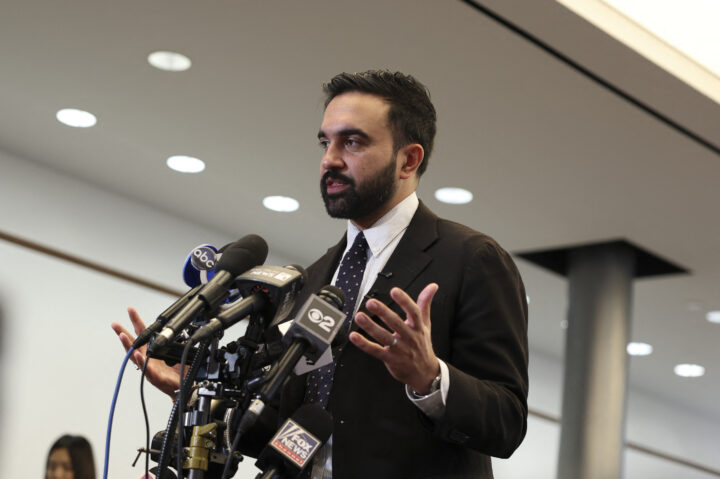
ANGELA WEISS/AFP via Getty Images
New York City Mayor Zohran Mamdani answers questions on October 17, 2025 in New York City.
Over 800 rabbis from around the country signed on to an open letter on Wednesday voicing concern that, if elected New York City mayor, Zohran Mamdani would threaten “the safety and dignity of Jews in every city,” citing the Democratic nominee and front-runner’s antagonistic views towards Israel.
“As rabbis from across the United States committed to the security and prosperity of the Jewish people, we are writing in our personal capacities to declare that we cannot remain silent in the face of rising anti-Zionism and its political normalization throughout our nation,” wrote the rabbis, representing the Reform, Conservative and Orthodox movements.
In the letter, “A Rabbinic Call to Action: Defending the Jewish Future,” spearheaded by The Jewish Majority, signatories called out Mamdani’s refusal to condemn the slogan “globalize the intifada,” noted his denial of Israel’s legitimacy as a Jewish state and condemned his repeated accusations that Israel committed genocide in its war against Hamas in Gaza.
“We will not accept a culture that treats Jewish self-determination as a negotiable ideal or Jewish inclusion as something to be ‘granted,’” the letter continued. “The safety and dignity of Jews in every city depend on rejecting that false choice.”
The signatories include the leaders of some of the largest synagogues in New York City, including Rabbi Joshua Davidson, senior rabbi at Temple Emanu-El; Rabbi David Gelfand, senior rabbi at Temple Israel of the City of New York; Rabbi Chaim Steinmetz, senior rabbi at Kehilath Jeshurun; Rabbi David Ingber, founder of Romemu and senior director of Jewish Life and the Bronfman Center at 92NY; and Rabbi Ammiel Hirsch, president of the New York Board of Rabbis and senior rabbi of Stephen Wise Free Synagogue.
The letter, published three days before early voting for the Nov. 4 election begins, comes as some Jewish leaders have expressed frustration over a lack of organized opposition to Mamdani, who leads against his opponents, former New York Gov. Andrew Cuomo, running as an independent, and Republican nominee Curtis Sliwa.
It points to two recent public pleas from prominent New York City rabbis decrying Mamdani.
“I do not speak for all Jews, but I do represent the views of the large majority of the New York Jewish community, which is increasingly concerned with your statements about Israel and the Jewish people,” Hirsch said in an online video last week, in which he was addressing Mamdani directly. “Your opposition to Israel is not centered on policies, you reject the very existence of Israel as a Jewish state… I urge you to reconsider your long-held rejection of Israel’s right to exist. Be a uniter and a peacemaker.”
Rabbi Elliot Cosgrove of the Park Avenue Synagogue said in an address to his congregation last Saturday, “Mamdani’s distinction between accepting Jews and denying a Jewish state is not merely a rhetorical sleight of hand or political naïveté — though it is, to be clear, both of those — his doing so is to traffic in the most dangerous of tropes.”
The letter goes on to urge “interfaith and communal partners to stand with the Jewish community in rejecting this dangerous rhetoric and to affirm the rights of Jews to live securely and with dignity.”
It continues, “Now is the time for everyone to unite across political and moral divides, and to reject the language that seeks to delegitimize our Jewish identity and our community.”
The Jewish advocacy group slammed Mamdani’s insistence on calling Israel’s war against Hamas a genocide and ‘lack of moral clarity’
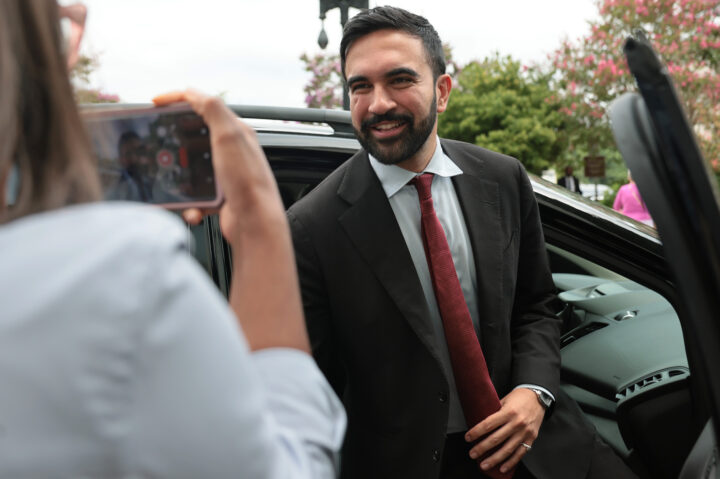
Michael M. Santiago/Getty Images
NYC Mayor Zohran Mamdani briefly speaks with reporters as he leaves the Dirksen Senate Office Building on July 16, 2025 in Washington, DC.
The American Jewish Committee raised alarms on Friday about Zohran Mamdani’s “continued use of problematic rhetoric as it relates to Israel and Jews” and called on the Democratic nominee for mayor of New York City to “change course” as he prepares for the Nov. 4 election.
In a lengthy statement, the nonpartisan organization cited, among other things, Mamdani’s repeated claim that Israel has committed genocide in Gaza, which the AJC called “unequivocally false and dangerous.” The charge “has not been proven in any international court” and “gives fodder to those who continue to use Israel’s self-defensive actions as an excuse to threaten and attack Jews,” the group said.
The AJC also criticized Mamdani’s refusal to recognize Israel’s right to exist as a Jewish state, saying that he is upholding an “unacceptable double standard” in his assessment of the region. “Israel is surrounded by Muslim countries,” the group wrote, “yet Mamdani does not continuously suggest that any of those nations should not exist as they are.”
And the organization took issue with what it characterized as Mamdani’s “lack of consistent moral clarity on Hamas,” pointing to a Fox News interview on Wednesday in which he sidestepped a question about whether Hamas should disarm and relinquish its leadership role in Gaza.
Mamdani, a democratic socialist assemblyman who has long been involved in anti-Israel activism, later clarified during the first general election debate on Thursday that Hamas “should lay down” its arms, but he did not share his views on its future role in the conflict.
The AJC, which has also recently highlighted concerns about Mamdani’s refusal to condemn calls to “globalize the intifada,” said in its statement that it feels “compelled to speak out when public figures use rhetoric or endorse policies that harm Jews.”
It urged Mamdani “to engage in dialogue and consultation with organizations and segments of the mainstream New York Jewish community,” with which he has had a tense relationship throughout the campaign and as an elected official in Albany.
“By continuing to prioritize anti-Zionist synagogues and groups, Mamdani ignores the perspectives and concerns of the vast majority of Jewish New Yorkers,” the group said.
Mamdani, who has stepped up his Jewish outreach efforts in recent weeks with limited success, has rejected claims that his views fuel antisemitism and vowed to increase funding to counter hate crimes by 800% if he is elected.
“One of the most meaningful experiences I’ve had over the course of this campaign has been the conversations I’ve had with Jewish New Yorkers,” Mamdani said at the debate on Thursday.
A spokesperson for Mamdani did not respond to a request for comment.
A new survey by JFNA found that communal engagement by LGBTQ Jews, Jews of color, Jews with disabilities and financially vulnerable Jews is still higher than pre-Oct. 7 but down year over year
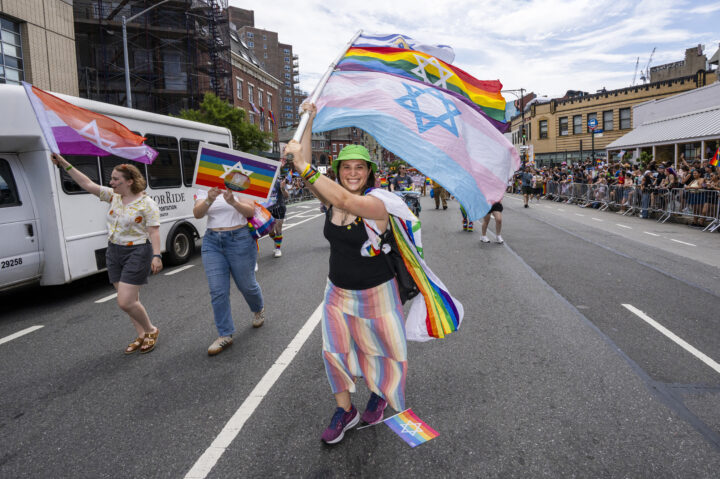
Craig T Fruchtman/Getty Images
People take part in the 2025 NYC Pride March on June 29, 2025 in New York City.
In the aftermath of the deadly Oct. 7 attacks two years ago, American Jews were pulled off the sidelines and got much more involved in Jewish life — a trend, dubbed “the surge,” that has continued into a second year, according to a survey released this spring.
But a further breakdown of that survey data, shared this week by the Jewish Federations of North America (JFNA), shows that the impact of “the surge” is waning more quickly among Jews from minority populations, including LGBTQ Jews, Jews of color, Jews with disabilities and financially vulnerable Jews, than it is among the broader Jewish community.
The survey found that 31% of Jewish respondents said this year that they are engaging more with the Jewish community now than before Oct. 7, down from 43% last year — still significant post-Oct. 7 growth, but slightly down from the immediate aftermath. But among historically marginalized populations, that decrease was even more pronounced.
“We’re sad and disheartened to see that these marginalized groups are engaging so much less than they were at this time last year,” JFNA’s chief impact and growth officer, Mimi Kravetz, told Jewish Insider on Wednesday. “It’s still higher than baseline. There’s still people showing up more. But there has been a more significant drop among these most marginalized groups.”
Roughly one-fifth of people with an LGBTQ+ member of their household say they are now engaging more with the Jewish community in 2025, down from 49% from the year before. Among Jews who are not white and Ashkenazi, 30% of people are “surging” this year, a decrease from 57% the year before. Thirty-two percent of financially vulnerable Jews are “surging” now, compared to 49% a year earlier.
Across these different populations, there is no single answer as to why there was a sharper decline in engagement than among the broader Jewish community. The Jewish leaders analyzing this data have not yet identified what they think accounts for the disparity, but they have some ideas — and suspect that some of the differential can be explained by simmering tensions over Israel.
Overall, the JFNA survey found that roughly one-third of American Jews believe conversations about the war in Gaza are “negatively impacting community engagement and belonging,” according to a presentation for Jewish community stakeholders hosted by JFNA on Tuesday. Thirty-five percent feel that if they shared their views on Israel, they wouldn’t be welcome in the Jewish community.
But just because people are sometimes afraid to voice their opinion, that doesn’t mean they are all in alignment. Similar percentages of American Jews feel the community is too hard-line in its support for Israel (39%) and feel that it is not outspoken enough in its support for Israel (34%).
Among LGBTQ Jews, or those who live with someone LGBTQ, “we do see a slightly lower sense of pride and emotional attachment to Israel, and we do see that they are more likely to believe that the community is too hard-line in its support of Israel,” Kravetz offered as one possible explanation for why the community is now “surging” less.
That’s different from financially vulnerable Jews, who are “more likely to feel pride in an emotional attachment to Israel than the general Jewish public,” Kravetz said on the webinar. One challenge for them may be a sense of feeling uninformed compared to others in the community.
“They’re actually far less likely to say that this issue of the community and Israel is affecting their sense of engagement and belonging,” she added. “They are much more likely, though, to say that they don’t know enough to participate in the conversation.”
But the Israel hypothesis falls short when looking at why Jews of color are “surging” less than a year ago. “Their views actually mirror the general population,” said Kravetz. But part of that may account for diversity within the broad “Jews of color” umbrella — which encompasses Mizrahi Jews, Black Jews, Latinos and more.
The data is particularly concerning for Jewish leaders who had invested in understanding diverse segments of the community and helping them feel more included. But the same barriers that existed before Oct. 7 are still present.
“What’s really affecting their sense of surge and engagement and belonging are the same things that affected them prior to Oct. 7, and those are that they need to see a reflection of themselves in leaders and other participants,” said Kravetz. “They need space to show up as their whole self, whatever that looks like for them. They need to see visible evidence of diversity and inclusion policies and practice, and that those policies will be followed, and they need to know before they enter.”
It’s the highest number of anti-Jewish hate crimes ever recorded by the bureau since it began collecting data in 1991

Tom Brenner For The Washington Post via Getty Images
Metropolitan Police Department and Federal Bureau of Investigation officers stand guard at a perimeter near the Capital Jewish Museum on May 22, 2025 in Washington.
The FBI reported on Tuesday that the American Jewish community remains the most targeted religious group, accounting for nearly 70% of all religiously motivated hate crimes in 2024, even as overall hate crimes in the country have decreased.
Hate crimes targeting Jews had plateaued following a sharp increase immediately after the Oct. 7 Hamas terror attack.
In 2024, 1,938 anti-Jewish hate crimes were reported to the FBI’s data collection program out of 3,096 reported religiously motivated hate crimes. The year 2024 saw the highest number of anti-Jewish hate crimes ever recorded by the bureau since it began collecting data in 1991 — and an increase compared to 1,832 incidents the year prior, which accounted for 67% of all religiously motivated hate crimes that year.
Some of that increase could be attributed to improvement in data collection, according to the FBI. That increase comes as hate crime incidents across the country slightly decreased from 11,862 in 2023 to 11,679 in 2024.
Fifty percent of hate crime incidents across the country in 2024 were motivated by bias based on race, ethnicity or national origin, with reported anti-Black hate crimes comprising the single largest portion of those incidents (51% of 7,043 reported offenses).
The FBI also reported that the number of anti-Muslim hate crimes (228) and anti-LGBTQ+ hate crimes (2,390) were slightly down compared to 2023.
Jewish organizations responsible for tracking threats to the Jewish community expressed concern over the findings, which come months after two deadly antisemitic attacks in Washington and Boulder, Colo.
Michael Masters, national director and CEO of the Secure Community Network, said that the current threat environment for American Jews is “unlike anything in modern memory.”
“We have documented individuals echoing the rhetoric of designated foreign terrorist organizations and plotting heinous attacks on our houses of worship, schools, and centers of Jewish life,” Masters said in a statement. “This reality demands accurate, timely reporting so law enforcement and Jewish security partners can respond swiftly.”
Jonathan Greenblatt, CEO of the Anti-Defamation League, said in a statement, “Since the Hamas-led Oct. 7 massacre in Israel, Jewish Americans have not had a moment of respite and have experienced antisemitism at K-12 school, on college campuses, in the public square, at work and Jewish institutions. Our government and leaders must take these numbers seriously and enact adequate measures to protect all Americans from the scourge of hate crimes.”
Ted Deutch, CEO of the American Jewish Committee, called for “leaders of every kind — teachers, law enforcement officers, government officials, business owners [and] university presidents [to] confront antisemitism head-on” in response to the FBI data.
“Jews are being targeted not just out of hate, but because some wrongly believe that violence or intimidation is justified by global events,” Deutch said. “With the added climate of rising polarization and fading trust in democracy, American Jews are facing a perfect storm of hate. Whether walking to synagogue, dropping their kids off at school, sitting in restaurants, or on college campuses, Jews are facing a climate where fear of antisemitism is part of daily life.”
“This is unacceptable — the targeting of Jews is not a Jewish problem, it is a society-wide issue that demands a society-wide response.”
Greenblatt told JI: ‘We've got a long way to go to make sure that the ADL and our community is respected for who we are’

Jemal Countess/Getty Images for Anti-Defamation League
Jonathan Greenblatt speaks onstage during the 2024 ADL “In Concert Against Hate” at the Kennedy Center Concert Hall on November 18, 2024 in Washington, DC.
Days after the National Education Association walked back a decision by its members to cut ties with the Anti-Defamation League, ADL CEO Jonathan Greenblatt praised the move but cautioned that the union still has a “long way to go” toward making clear that it respects the Jewish community, he said in an interview on Monday.
“I am glad that they recognize what’s wrong about calling out the most consequential organization fighting antisemitism at a time of rising antisemitism,” Greenblatt told Jewish Insider. “Yet at the same time, there are elements of even the statement that lead me to believe that we’re still in this fight. We’ve got a long way to go to make sure that the ADL and our community is respected for who we are.”
While the board of directors of the NEA — the largest teachers union in the country — condemned antisemitism in the statement released last week, the board also stated that the organization’s rejection of the anti-ADL measure was “in no way an endorsement of the ADL’s full body of work.”
Further, the NEA called on the ADL “to support the free speech and association rights of all students and educators.”
“We strongly condemn abhorrent and unacceptable attacks on our members who dedicate their lives to helping their students thrive,” the NEA’s board of directors continued. “Our commitment to freedom of speech fully extends to freedom of protest and dissent whether in the public square or on college campuses.”
That rhetoric surprised Greenblatt, who said he was “pleased” to see the NEA shoot down the anti-ADL measure but concerned and confused about the inclusion of language that he viewed as a swipe at the ADL.
“The idea that the ADL — which, of course, all of our work is predicated on protecting the First Amendment — that we are ‘not supporting the free speech of all students and educators?’ Give me a break. Find the evidence to even support this assertion,” Greenblatt said. “We don’t have a problem with freedom of assembly. We have a problem with those people who use that speech to slander Jews or other minorities. We have a problem with those who use the right to associate to attack Jews and other marginalized communities.”
The NEA and the ADL have never had a formal partnership, Greenblatt confirmed. The ADL would be “amenable” to working more formally with the NEA, but he said their relationship was “not quite that far along.”
A Jewish activist told JI, ‘I’m concerned by Fateh’s endorsement, but I’m more concerned about the movement that produced the endorsement for him’
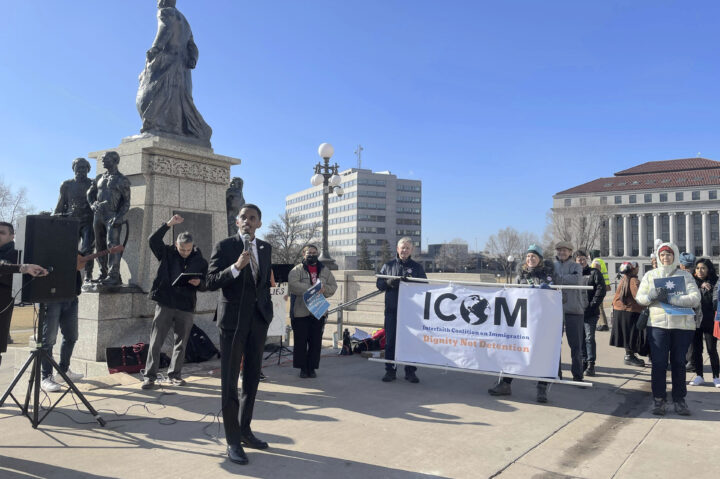
Trisha Ahmed/AP Photo
Minnesota Sen. Omar Fateh, of Minneapolis, speaks in front of the state capitol building in St. Paul, Minn., on Monday, Feb. 12, 2024.
Jewish community activists in Minneapolis are voicing concerns about the rise of state Sen. Omar Fateh, a far-left lawmaker who, in a surprise upset, narrowly clinched the state Democratic Party endorsement on Saturday against incumbent Mayor Jacob Frey.
Fateh, a 35-year-old democratic socialist, has rarely commented on Israel or rising antisemitism during his time in the state Senate, even as he called for a ceasefire in the war between Israel and Hamas just 10 days after the Oct. 7, 2023, terror attacks.
But his close alliances with anti-Israel voices such as the Twin Cities arm of the Democratic Socialists of America — which backs efforts to boycott and divest from Israel — have raised questions over his approach to key issues and his potential outreach to the organized Jewish community as he vies for the mayorship.
In its mayoral endorsement questionnaire, the DSA asked candidates to pledge “to refrain from any and all affiliation with the Israeli government or Zionist lobby groups” — citing AIPAC, J Street and even the nonpartisan Jewish Community Relations Council.
Fateh’s campaign did not respond to a request for comment about whether he signed the pledge, but its existence is “alarming,” said Ethan Roberts, the deputy director of the Jewish Community Relations Council of Minnesota and the Dakotas.
“It’s instructive that Fateh sought and received the DSA endorsement,” Roberts told Jewish Insider in an interview on Monday. “There’s obviously a clear contrast between Mayor Frey, who’s a Democrat — and Sen. Fateh, who’s a DSA-er.”
Still, Roberts echoed other community activists in warning against drawing parallels between Fateh’s victory and Zohran Mamdani’s recent upset in New York City’s mayoral primary, noting that the party’s endorsement is not necessarily reflective of broader voter sentiment in Minneapolis — even as it comes with organizational muscle that could help to boost his insurgent campaign.
Fateh, a Muslim of Somali descent, celebrated his endorsement from the state party over the weekend as “a message that Minneapolis residents are done with broken promises, vetoes and politics as usual,” he wrote on social media.
For his part, Frey, a Jewish Democrat seeking what would be his third and final term as mayor, is appealing the vote, alleging that several ballots had gone uncounted during the state party convention. His campaign filed a formal challenge with the state party on Monday.
“Everyone who endured this multi-hour convention process deserved to have their voices heard,” Sam Schulenberg, the mayor’s campaign manager, said in a statement on Monday, while pointing to what he dismissed as a “highly flawed process that clearly missed or did not count a large percentage of the votes cast.”
Frey, the second Jewish mayor to represent Minneapolis, has been outspoken against rising antisemitism in recent years, and has butted heads with the City Council over anti-Israel resolutions he has dismissed as one-sided.
If the endorsement of Fateh holds, it will “create a lot of headwinds” for Jewish party activists, Manny Houle, a pro-Israel party strategist in Minneapolis, told JI, anticipating a challenging relationship with Fateh and his allies on the left.
“We always have an open hand, but if somebody bites it we don’t keep our hand extended — and we expect that to be the same here,” Houle said. “He’s surrounded by a lot of people who have made their positions clear.”
Houle also pointed to emerging concerns about a DSA-backed resolution that abruptly passed near the end of the convention on Saturday — opposing any city investment or contracts with what it called “entities complicit in the occupation and genocide in Gaza.”
Houle said he was working with some groups that are preparing challenges to the resolution, saying that it could cause “long-term issues” for the Jewish community — particularly in “how it is pigeonholed around the conflict” in the Middle East. “There’s no nuance in this conversation anymore,” he told JI.
One Jewish party activist, who spoke on condition of anonymity to address a sensitive topic, said that the resolution was “emblematic” of his reservations around Fateh’s bid.
“I’m concerned about what this means for Jewish safety in Minneapolis,” he told JI. “I’m concerned about what his relationship will be with local Jewish organizations, if he’s elected.”
Yiscah Bracha, a Jewish activist involved in local Democratic politics, also expressed concerns about the trajectory of the race as Frey now finds himself playing defense.
“I’m concerned by Fateh’s endorsement,” she said, “but I’m more concerned about the movement that produced the endorsement for him.”
The group’s annual conference, being held in August, features a panel that describes the Oct. 7 Hamas terrorism as attacks on ‘military targets’
Graeme Sloan/Sipa via AP Images
A general view of the American Psychological Association headquarters in Washington, D.C. on April 23, 2020.
In late February, Dr. Julie Ancis drafted an open letter with a group called Psychologists Against Antisemitism, condemning antisemitism within the American Psychological Association. More than 3,500 people signed on to demand the organization act against what they described as “the serious and systemic problem of antisemitism/anti-Jewish hate” within the APA. With 172,000 members, it is the largest body dedicated to the study of psychology in the world.
For months, the organization appeared to do nothing. Ancis did not even get an acknowledgement that the letter had been received. But then in May, after she and another Jewish colleague raised their concerns in a meeting with Rep. Ritchie Torres (D-NY), Ancis received an invitation from senior APA officials to discuss antisemitism.
The meeting was ostensibly meant as an olive branch from the organization where she had once been a prominent member: In 2010, a division of the APA named Ancis, a distinguished professor at New Jersey Institute of Technology and one of the pioneers of the psychology field’s approach to diversity, equity and inclusion, its Woman of the Year.
Yet when Ancis looked at the list of stakeholders invited to the Zoom meeting, she was astonished to see the names of several APA groups that she considered the biggest perpetrators of antisemitism within the APA. Later, she learned that the list of invited “stakeholders” included Dr. Lara Sheehi, the president of an APA division focused on the study of psychoanalysis, who was called out in the open letter for describing Zionists as “genocidal f**ks.” (Sheehi, who left a teaching position at The George Washington University in 2024 after being accused of antisemitic conduct by some of her students, recently appeared on a podcast to defend the tactics of the man accused of shooting and killing two Israeli Embassy staffers outside the Capital Jewish Museum in Washington in May. She did not respond to a request for comment.)
“The stakeholders should include people who have expertise, not the ones who are promoting antisemitism, where we’re tokenized. It’s an absolute lose-lose situation, and hostile,” Ancis said last week. She decided not to attend. “I’m not going to sit in that farce of a meeting.”
That the APA would host a meeting about addressing antisemitism where the “stakeholders” included both Jews who have scrupulously documented harassment and bias within the organization’s ranks for months, as well as some of the people they identified as the perpetrators of that harassment, is, according to Jewish psychologists, evidence of how this historic organization has lost its way and ceded its moral voice.
“Could you imagine APA having a listening session for LGBTQ+ individuals, which includes people who are known to be homophobic?” asked Dr. David Rosmarin, director of the Spirituality and Mental Health Program at McLean Hospital in Massachusetts and a Harvard Medical School professor. “They want everyone to be included, and all that kind of stuff. What that means is that there’s no room for Jews, because they’re including people who are engaged in antisemitic, anti-Zionist rhetoric, publicly, in the discussions.”
“They’re between a rock and a hard place. They’re trying to appease different constituents, and I feel like they’re appeasing the ones who are loudest and bigger, and that’s not the Jewish professionals,” Dr. Julie Ancis told JI.
Several leading Jewish psychologists told Jewish Insider in interviews last week that the APA has repeatedly failed to respond to the concerns of its Jewish members, despite a stated commitment to promoting an “accessible, equitable and inclusive psychology that promotes human rights, fairness and dignity for all,” according to the organization’s diversity mission. They say the APA has avoided taking a stand against double standards and litmus tests applied to Jewish psychologists who are vilified for their support for Israel.
Instead, the organization has been almost paralyzed in the aftermath of the Oct. 7, 2023, Hamas terror attacks and ensuing war, seemingly afraid to take sides between the Jewish psychologists seeking support and an increasingly vocal contingent of anti-Israel voices in the field, some of whom have described Zionism as a pathology to root out.
“They’re between a rock and a hard place. They’re trying to appease different constituents, and I feel like they’re appeasing the ones who are loudest and bigger, and that’s not the Jewish professionals,” Ancis told JI.
The APA is the key body shaping the education of psychologists in the United States. It accredits masters- and doctorate-level academic programs at hundreds of universities across the country. So while the battle over antisemitism in this organization may seem like an internecine ivory tower fight, the way it is handled is poised to have major implications for the future of psychology — a field that touches the millions of Americans who see a therapist, and whose research shapes the way we understand each other and ourselves.
*****
Concerns about antisemitism in psychology have followed the APA since soon after Oct. 7, when the Association of Jewish Psychologists chided the organization for issuing only a tepid statement about the Hamas attacks. “We … are deeply disappointed and terribly saddened that our professional association could not more forcefully and unequivocally condemn the horrific acts of barbarism against the Jewish people of the State of Israel,” they wrote at the time.
The issue has become a flashpoint again this year in the run-up to the APA’s flagship annual conference, which will be held next month in Denver.
Among the events at next month’s gathering, which is expected to draw several thousand people, is a “critical conversation” called “truth-telling as resistance” focused on understanding the 2024 encampments amid “a global and national effort to distort realities about Palestine and the encampments.”
At a symposium about “resisting anti-Palestinian racism,” psychologists can earn continuing education credit for attending a talk that will discuss “advocacy and actions to resist anti-Palestinian racism” that are “erroneously framed as antisemitism.” Another symposium, focused on mental health during wartime in Gaza and Lebanon, features a talk by a presenter who describes the Oct. 7 terror attacks that killed more than 1,200 people as attacks on “military targets” in Israel.
“What concerns me most are the psychologists who are maybe not Jewish or maybe not aware of these concerns in the Jewish community, who attend these talks with what I consider to be antisemitic rhetoric, and accept and internalize the ideas and rhetoric as true,” said Dr. Caroline Kaufman, a post-doctoral fellow at McLean Hospital. She will be speaking at a symposium about antisemitism, which also offers continuing education credit. “When they treat Jewish clients, or they have Jewish colleagues, or they conduct research, those ideas continue into those endeavors. That is extremely concerning to me.”
Rosmarin, a colleague of Kaufman’s at McLean, put a baseball hat over his yarmulke at last year’s APA convention in Seattle because it didn’t feel like a “safe space,” he said. He worries the organization does not understand the scope of the problem. “This is like a cancer that’s spread throughout the organization,” said Rosmarin, who is also the president of the APA Society for the Psychology of Religion and Spirituality.
*****
The term “gaslighting” — a form of emotional abuse in which one person falsely and repeatedly tells another person that their experience of reality is untrue — has become so popular in recent years that it was named Merriam-Webster’s word of the year in 2022. A growing body of psychological research is devoted to studying the concept, which the APA defines as “manipulat[ing] another person into doubting their perceptions, experiences or understanding of events.”
Given psychology’s deepening understanding of gaslighting, it was particularly ironic that following the APA’s antisemitism meeting, which occurred last Thursday, an email discussion broke out in which several psychologists attempted to invalidate and refute the concerns their Jewish colleagues raised about antisemitism. (The email thread was viewed by JI.)
One psychologist referred to the substance of the Zoom call as “propaganda” and said he would denounce only “actual antisemitism.” Dr. Karen Suyemoto, who chaired the APA’s task force that developed guidelines for addressing race and ethnicity in psychology, agreed.
She called it “imperative” that “actual antisemitism” be addressed, because “the continuing confounding creates barriers to allies and accomplices who do not have [a] nuanced understanding.” (Suyemoto, a University of Massachusetts professor, declined to comment to JI. She was the guest editor of a recent special issue of the APA’s flagship journal that focused on “practicing decolonial and liberation psychologies,” which the Anti-Defamation League, Academic Engagement Network and Psychologists Against Antisemitism criticized in a Tuesday letter as “ethically compromised and biased.”)
To Jewish psychologists, the skepticism from professionals who claim to listen to marginalized communities did not add up.
“We take identity very seriously. We realize that it intersects with both risk and protective factors,” said Kaufman. “That’s a given in our field, and APA seems willing to recognize that for several identities or groups. But it’s seemingly unwilling to address such concerns for the Jewish community. I can’t understand why.”
In 2007, the APA adopted a resolution on antisemitic and anti-Jewish prejudice that detailed modern manifestations of antisemitism alongside a commitment to being a leader in fighting it. (The resolution had the foresight to note that 21st-century antisemitism “may be more difficult for its perpetrators to identify and challenge, as their beliefs about themselves may be that they are not biased against Jews.”)
But since Oct. 7, a vocal group of APA members has been encouraging the organization to revisit this resolution because of its assertion that antisemitism can arise in the context of criticism of Israel. An activist group called Psychologists for Justice in Palestine drafted a petition last year calling on the APA to “refute” that part of the resolution — and instead admit that it is actually “discriminatory” to refer to anti-Zionism as a form of antisemitism.
“With the removal of the claim that criticism of Israel can become antisemitic, it would open psychologists to even more experiences of antisemitism and even more antisemitic aggression, by which Jewish and Israeli psychologists can be excluded, denigrated and denied for reasons that are presumably having to do with Israel, but, from my perspective, are really just antisemitism,” warned Dr. Caroline Kaufman, a post-doctoral fellow at McLean Hospital.
The petition was endorsed by several APA affiliates, including the Asian American Psychological Association; the American Arab, Middle Eastern and North African Psychological Association (AMENA-Psy); and the Society for the Psychology of Women. AMENA-Psy — one of six official APA ethnic associations — declared just four days after the Oct. 7 attacks that the group stands “in full solidarity with our Palestinian siblings in their decolonial struggle for justice.”
The APA ceded to the groups’ demands and agreed to reopen the debate about the 2007 resolution. The APA’s board of directors even created a task force to update the resolution. But the effort was shelved in March, as internal criticism of the organization’s handling of antisemitism began to mount.
“With the removal of the claim that criticism of Israel can become antisemitic, it would open psychologists to even more experiences of antisemitism and even more antisemitic aggression, by which Jewish and Israeli psychologists can be excluded, denigrated and denied for reasons that are presumably having to do with Israel, but, from my perspective, are really just antisemitism,” warned Kaufman.
*****
The solutions that Jewish psychologists seek require a long-term commitment from the APA that they aren’t confident they will receive, although the organization’s leaders stated on last week’s call that they do want to do more to combat antisemitism.
The concerned Jewish members want stronger monitoring on APA-affiliated email servers, which have been used by some APA members to promote boycotts against Israel and, occasionally, to defend Hamas. (An APA spokesperson told JI that “enhanced oversight is now in place to ensure respectful discourse and timely response to violations.”) They are also seeking more stringent oversight of the panels at the summer conference.
“They still struggle to really make a determination as to whether or not anti-Zionism is antisemitism, and so I surmise that people could say some things that would be very hurtful to large swaths of the professional community, and it would be considered acceptable within the new and refined listserv guidelines,” Fordham psychology professor Dr. Dean McKay told JI after last week’s antisemitism Zoom. “That’s one of those places where I don’t think they really know what to do.”
The APA frequently invokes bureaucratic red tape in response to these concerns by asserting that the 54 divisions that fall under the APA umbrella — on topics including developmental psychology, clinical psychology and pediatric psychology — operate autonomously, allowing the APA to claim immunity from the most egregious issues.
“APA’s 54 divisions operate autonomously with their own governance structures,” Kim Mills, the APA’s senior director for strategic external communications and public affairs, told JI in a statement. “Each of them program convention sessions that their leaders believe best represent the concerns of their division and will foster academic discourse on a variety of psychology topics.”
Mills asserted that the APA “unequivocally condemns antisemitism in all its forms and acknowledges the climate of fear such prejudice creates,” and said the organization is “committed to fostering an environment where members of all identities can contribute fully, safely and without discrimination.”
Jewish psychologists are waiting to see if that commitment passes the stress test, but they are not confident. Because while they see general proclamations about the ills of antisemitism as helpful, the true measure of whether the APA is serious about taking on the problem is whether the organization is willing to call out the most extreme members in its ranks, some of whom hold high-profile leadership positions. Doing so would require the APA to wade into the fraught conversation about whether the tactics of anti-Zionist activists can cross a line into antisemitism. It is clear the APA wants to avoid doing that.
“They still struggle to really make a determination as to whether or not anti-Zionism is antisemitism, and so I surmise that people could say some things that would be very hurtful to large swaths of the professional community, and it would be considered acceptable within the new and refined listserv guidelines,” Fordham psychology professor Dr. Dean McKay told JI after last week’s antisemitism Zoom. “That’s one of those places where I don’t think they really know what to do.”
The APA’s diversity webpage features a large section dedicated to explaining antisemitism. However, it does not mention Israel, Hamas or the post-Oct. 7 spike in antisemitism. Nor did Mills refer to Israel or Zionism in a lengthy statement she sent JI last week outlining the organization’s pledge to fight antisemitism. In fact, she ignored a question about Jewish psychologists who feel they have been targeted for being Zionists.
*****
The Jewish psychologists raising concerns about antisemitism in their field know that doing so entails a risk. They worry about the silencing effect on younger Jewish psychologists who are still finding their footing in the field, which is already in a precarious situation amid federal funding cuts to scientific and medical research.
“I’m protected. I’m already mid-career,” said Rosmarin, the Harvard Medical school professor. “I’m animated about this because I care about the next generation.”
Ancis, who spearheaded the open letter to the APA, quit the organization three years ago. She is far enough along in her career to not worry about facing backlash for supporting Israel and speaking out against antisemitism. But she worries about younger people in the field.
“A person coming up trying to get tenure in an APA-accredited program and identifying as a Zionist, I think it’d be extremely difficult,” Ancis said.
Kaufman only completed her Ph.D. four years ago, and she is at the beginning of what she hopes is a career in academia. She has the right credentials: a postdoctoral position at Harvard, an internship at Yale, a speaking slot at a symposium at next month’s APA conference. But she worries that won’t be enough to shield her.
“I have very deep and sincere concerns that my involvement in these issues related to antisemitism will negatively impact the opportunities available to me and my career,” Kaufman told JI. “I hold that truth or that fear in one hand. The other truth in my other hand is that I have a responsibility as a Jewish psychologist to raise my voice and become involved in this issue. There’s truly no other path for me, even if, and I think there will be, serious consequences.”
The bill takes a new tack at a previously attempted move by first designating Muslim Brotherhood branches individually

Salah Malkawi/Getty Images
Jordanian police close the entrance of a Muslim Brotherhood headquarter after the announcement of banning the society in the country on April 23, 2025 in Amman, Jordan.
A bipartisan House bill set to be introduced on Tuesday aims to designate the Muslim Brotherhood as a terrorist organization, a step forward for an effort that saw renewed interest following the terrorist attack in Boulder, Colo., targeting Jews advocating for the release of hostages in Gaza by a man who appeared to have expressed support for the group years earlier.
Similar efforts have been pursued at multiple points in the past, but the latest legislation has been updated significantly and focuses on the various branches of the Muslim Brotherhood responsible for terrorism.
The bill, led by Reps. Mario Díaz-Balart (R-FL) and Jared Moskowitz (D-FL), notes that Hamas is a Muslim Brotherhood affiliate that has long been designated as a Foreign Terrorist Organization by the U.S. and that receives material support from the Muslim Brotherhood. It also highlights the destabilization efforts by other Muslim Brotherhood branches in various Arab partner countries of the U.S.
The bill is co-sponsored by Reps. Randy Fine (R-FL), Chuck Fleischmann (R-TN), John Rutherford (R-FL), Andy Barr (R-KY) and Mike Bost (R-IL).
“Today, I once again introduced legislation to designate the Muslim Brotherhood as a foreign terrorist organization,” Díaz-Balart said in a statement. “The global Muslim Brotherhood has numerous regional branches, including terrorist organizations such as Hamas, and spreads violence and instability throughout the Middle East. For this reason, it is crucial to U.S. national security interests that we prohibit U.S. dollars from enabling the Muslim Brotherhood’s dangerous activities, and that we ensure Muslim Brotherhood members are blocked from entering the United States.”
“This important legislation gives the Trump Administration the additional authority it needs to protect Americans, and our closest allies, from this insidious threat,” he continued.
Moskowitz said in a statement, “The Muslim Brotherhood has a documented history of promoting terrorism against the United States, our allies, and our society.”
“Countries such as Bahrain, Egypt, Austria, Jordan, Saudi Arabia, UAE, and France have already taken important steps to investigate and crack down on the Muslim Brotherhood and its affiliates. The U.S. government has to have the authority to crack down on the serious threats posed by this group as well,” Moskowitz continued. “That’s why I’m joining Rep. Diaz-Balart and Sen. Cruz to introduce the Muslim Brotherhood Terrorist Designation Act. This bill builds on my call for an investigation into designating the Muslim Brotherhood a Foreign Terrorist Organization, and it ensures we are taking crucial steps to protect our national security.”
Sen. Ted Cruz (R-TX) introduced companion legislation in the Senate on Monday.
The legislation instructs the secretary of state to identify all branches of the Muslim Brotherhood operating globally and provide a determination of whether each of those branches meets the requirements for designation as a foreign terrorist organization.
The legislation would use those determinations to designate the global Muslim Brotherhood organization as a terrorist group, in light of its support for those branches.
The bill also pursues three methods of designating the group as a foreign terrorist organization: by revising the Anti-Terrorism Act, which was initially targeted at the Palestine Liberation Organization, to include the Muslim Brotherhood, by seeking State Department designation as a Foreign Terrorist Organization and seeking Treasury Department designation as a Specially Designated Global Terrorist group.
The three designations grant the federal government various sanctions authorities and bar Americans from supporting the groups. The bill would also make Muslim Brotherhood members ineligible for entry into the United States and could impose financial sanctions on them.
Previous efforts to designate the group focused on the entire Muslim Brotherhood, rather than starting by targeting specific branches, and only pursued FTO designation.
A fact sheet by the legislation’s sponsors states that the previous “top-down … strategy failed because not all MB branches are currently violent and would therefore meet the criteria for designation.” It described this new approach as “bottom-up,” and similar to the approach the Trump administration took to designate the Islamic Revolutionary Guard Corps as a terrorist group — citing its support for the Quds Force, which was designated as a terrorist group.
Fine has separately introduced legislation to designate the Council on American Islamic Relations as a terrorist group.
Right-wing provocateurs erected plaques that falsely accuse Jews of being responsible for the killing of Poles

WOJTEK RADWANSKI/AFP via Getty Images
This photograph shows an aerial view of a Polish monument of the wartime Jedwabne massacre of Jews by their Polish neighbours with newly installed plaques in Jedwabne, northeastern Poland on July 10, 2025.
The American Jewish Committee called for a “swift political response” following the raising of plaques at the Jedwabne memorial site in Poland which falsely accuse Jews of being responsible for Soviets killing Poles during the pogrom that occurred there 84 years ago this week.
At least 340 Jews were burned alive by their Polish neighbors in the massacre at Jedwabne on July 10, 1941. Marking the anniversary of the attack on Thursday, right-wing activist Wojciech Sumliński and his supporters illegally placed plaques in English and Polish several yards from the memorial, offering a revisionist account of what happened at the site.
One of the plaques reads, “After the Soviets took over eastern Poland, Jews assumed administrative roles and, knowing the local realities, denounced Polish patriots who were then deported and murdered by the Soviets. Only the German attack on the Soviet Union halted these repressions. Then the Germans began killing Jews just as they had previously killed Poles by the millions.”
A separate group of right-wing extremists also disrupted a memorial ceremony at the site on Thursday with loudspeakers, screens showing a film denying the history of the massacre and threats to the Jewish community gathered at the memorial.
“What happened today in Jedwabne is not only a disgrace to the memory of the victims, it is a test for Poland’s democracy,” Agnieszka Markiewicz, the AJC’s central Europe director, said in a statement. “The normalization of antisemitism, especially from elected officials like Grzegorz Braun, demands more than silence,” said Markiewicz, referring to Poland’s far-right lawmaker who on Thursday stated in a radio interview, “ritual murder is a fact, and Auschwitz with gas chambers is a fake.”
“It demands moral clarity, legal accountability, and swift political response. Remembrance without responsibility is not remembrance at all,” Markiewicz said.
The USC Shoah Foundation called the plaques “the most egregious perversion of [distorting] history, as it suggests that Jews collaborated with both Soviet and Nazi authorities against non-Jewish Poles. Such ahistorical, amoral claims are not only historically indefensible, but they are also a moral slander against the lives of those murdered during the Shoah and an affront to their memory.”
Yad Vashem, Israel’s Holocaust museum, called for “the relevant Polish authorities to remove this offensive installation and to ensure that the historical meaning of the site is preserved and respected.”
“Yad Vashem is profoundly shocked and deeply concerned by the desecration of historical truth and memory at the Jedwabne memorial site in Poland, where new plaques were recently installed in an apparent attempt to distort the story of the massacre of Jews.”
‘I’m running for my community, my congregation and my country,’ former journalist Mike Sacks, running in New York’s 17th Congressional District, said in an interview with JI

Courtesy Mike Sacks
Mike Sacks
Mike Sacks was taught as a child to fight antisemitism — literally — with left jabs and left hooks and right crosses.
His father, he said, taught him to box as an elementary schooler “because [my father] had to fight back against Jew hatred as a kid and as a young man,” having been subjected to antisemitic taunts.
Now, the former political journalist turned Democratic candidate in New York’s 17th Congressional District told Jewish Insider, rising antisemitism is a factor in his bid to unseat Rep. Mike Lawler (R-NY). But he also accused Republicans of cynically weaponizing the issue with no intent to actually address the problem.
Sacks told JI in an interview earlier this month that local and nationwide antisemitism was a major reason he decided to run, saying “I’m running for my community, my congregation and my country.”
“As a Jewish father raising my kids in the Jewish faith, this is my community. It’s not a political issue for me. It’s personal,” Sacks said. “When I go to Congress, this is not an issue I’ll take on to score political points, but for the rights of my community and my faith.”
“I was raised with an understanding that what is good for the Jews is what’s also good for the community and for the country, and to seek out and vindicate those universal values from which this country is founded,” Sacks continued, “that has helped make it a haven for Jews since we first started arriving in this country.”
“Under the guise of addressing antisemitism, [President Donald] Trump is attacking American values and violating our Constitution in the Jewish people’s name,” Sacks said. “These are values — free speech, due process — that we’ve learned from history, when turned on other people will be turned on us too. It’s un-American, and that’s not how we overcome antisemitism.”
He said that his patriotism and his sense of civic pride is deeply entwined with his Jewish identity, and said he wants to ensure that everyone, regardless of background, can share that sense of pride.
Sacks called antisemitism on college campuses a real problem that must be addressed, but argued that the Trump administration’s policies stripping research funding from universities and rescinding visas from anti-Israel demonstrators are not serious efforts to combat antisemitism.
“Under the guise of addressing antisemitism, [President Donald] Trump is attacking American values and violating our Constitution in the Jewish people’s name,” Sacks said. “These are values — free speech, due process — that we’ve learned from history, when turned on other people will be turned on us too. It’s un-American, and that’s not how we overcome antisemitism.”
If elected, he said he’d speak out against antisemitism, work to facilitate dialogue and support Nonprofit Security Grant Funding. And he said he’d support any legislation to combat antisemitism that he believed was sincere and would be effective, and was not aimed at scoring “political points off our people’s plight and peril.”
He didn’t speak specifically on whether he would support Lawler’s Antisemitism Awareness Act, but accused Republicans of trying to protect those making antisemitic accusations that Jews killed Jesus in amendments to the legislation.
Sacks also accused Republicans of weaponizing antisemitism in the 17th District race, referring to an incident in which a National Republican Congressional Committee spokesperson called out Sacks and the other 17th District candidates over the vandalism of an Albany GOP headquarters building with the word “Nazis.” The spokesperson demanded the candidates condemn the vandalism, which occurred more than 100 miles away, in another part of the state.
“What will guide my response to any threat to Israel is … where to find that solution that can lead us back to a path of peace and a path of coexistence where it all might seem bleak and dark and gone in those moments of greatest peril,” Sacks said.
Sacks called the move “cynical” and in “bad faith,” adding, “we need to confront these efforts to use our own identities against us head-on.”
He hinted toward his family’s Jewish background in his campaign launch video, which includes a shot of Sacks working on a Hebrew workbook with one of his sons at their dinner table, a scene that a campaign spokesperson described as a weekly occurrence.
Sacks described himself as a “proud Zionist guided by my belief in our need for a Jewish democratic state,” adding that he associates himself with “the 69% of Israelis who want to bring all the hostages home and have a ceasefire.”
He said he “stand[s] against those on the far left who deny the necessity of a Jewish state” as well as those on the far right who would “sacrifice Israel’s democracy to extend control over all the Palestinian territories.” Sacks said he would oppose any efforts to block weapons shipments to Israel.
Sacks associated himself with those protesting against Israeli Prime Minister Benjamin Netanyahu in Israel and Yair Golan, the leader of a left-leaning opposition party in Israel. (This interview took place before recent comments by Golan sparked widespread backlash.) He described Israeli figures like Yitzhak Rabin and author Amos Oz as his “heroes,” condemning the “racist extremism” of National Security Minister Itamar Ben-Gvir and blasting Lawler for meeting with Ben-Gvir during his trip to the U.S. last month.
He said that a two-state solution is the best path to ensure Israel’s security and existence as a Jewish state, which he emphasized must include removing Hamas from leadership in Gaza and fighting for a pathway to Palestinian statehood. “I do not believe [the two-state solution] is dead. I do not believe that it can’t be resurrected if it is dead. I believe that is the only way forward,” he said.
“What will guide my response to any threat to Israel is … where to find that solution that can lead us back to a path of peace and a path of coexistence where it all might seem bleak and dark and gone in those moments of greatest peril,” Sacks said.
Sacks argued that new leadership is needed in the U.S. to help move back toward a two-state solution, arguing “the U.S. needs to be led by a government that does not sympathize with those in Israel who would follow in the footsteps of Yitzhak Rabin’s assassin,” referring to Ben-Gvir.
Sacks traveled to Israel in December 2008, as Israel was launching Operation Cast Lead in Gaza. He said that his takeaway from those operations, after which attacks from Gaza on Israel resumed, is that “the answer is not whether to respond, but how. And the solution is political, not military.”
“What will guide my response to any threat to Israel is … where to find that solution that can lead us back to a path of peace and a path of coexistence where it all might seem bleak and dark and gone in those moments of greatest peril,” Sacks said.
Addressing the ongoing nuclear talks between the U.S. and Iran, Sacks emphasized that Tehran has “never been weaker” and described the Islamic Republic as a decaying and “sclerotic” regime. He said the U.S.’ path forward should be calibrated to protect Israel from “any rash decision by a wounded Iranian regime looking to stay relevant in the region.”
He expressed skepticism that Trump would be able to achieve an effective deal that would ensure peace and security, pointing to the president’s decision to pull out of the original 2015 nuclear deal during his first term, adding that Trump now appears to be renegotiating something along the same lines.
Sacks said that the original nuclear deal was “a great deal for the time,” but said that the state of affairs now and when he would be in Congress would be very different, and his support for any potential deal would “depend on the details of the deal in context with that geopolitical moment and the security demands of our allies in the region.”
Addressing his candidacy more broadly, Sacks said that his prior career as a reporter gave him a “front row seat to the deterioration of our democracy and billionaires profiting at our expense” and the deep issues in U.S. politics. He said rising costs and the “tepid” response from Democrats to Republican policies were other contributing factors to his run.
He framed himself as fighting to restore American democracy against a “would-be king seizing power for himself from the people to enrich his billionaire best friends at our expense.”
Israeli National Security Council releases travel warning for Israelis and Jews on Passover; Canada, Australia highlighted for anti-Jewish hate crimes

GIL COHEN-MAGEN/AFP via Getty Images
Passengers check their flights at Ben Gurion airport near Tel Aviv on August 6, 2024, amid regional tensions during the ongoing war between Israel and Hamas in the Gaza Strip.
Iran and global terrorist organizations, including ISIS, plan to target Jews and Israelis traveling during Passover, Israel’s National Security Council warned on Tuesday.
“Iran is the central generator of global terror, directly or through its proxies, against Israeli and Jewish sites around the world,” the National Security Council said in a statement released before Israeli schools go on Passover break on Sunday.
The Islamic Republic uses terror attacks as a policy and seeks to avenge the deaths of senior Hezbollah and Hamas officials, according to the travel warning.
In the last year, Iran has backed attempted terrorist attacks against the Israeli embassies in Sweden and Belgium, which were thwarted, as well as attempts to attack or abduct Israeli citizens around the world under the guise of making business contacts. Those attempts mostly began through e-mails and messages on social media.
Hamas has also attempted to attack Jews and Israelis outside of Israel, in light of the terror group’s weakened state in Gaza and the continuation of the war, the NSC stated. Hamas terror infrastructure was found in Denmark, Germany, Bulgaria and Sweden that aimed to attack Israelis.
In addition, in recent months, terrorist groups such as ISIS and Al-Qaida have increased their activities, especially in Europe. ISIS specifically has called on its supporters to strike Israeli and Jewish sites around the world.
The NSC said that “with the collapse of the ceasefire [last month] and the return to fighting in Gaza, an increase is expected in efforts to attack Jewish and Israeli sites abroad, including through local or individual initiatives.”
In addition, there continues to be a high-level threat in Egypt’s Sinai desert, where the beaches were once a popular travel destination for Israeli tourists.
The NSC also warned of possible hate crimes against Jews around the world, which have drastically increased since the Oct. 7, 2023, attacks on Israel.
Canada and Australia were singled out as potentially dangerous due to spikes in antisemitic attacks, including the burning of a Jewish preschool and a synagogue in Sydney, and the throwing of Molotov cocktails and shootings at Jewish schools and synagogues in Montreal and Toronto.
“The bottom line is that there remains a high motivation and activity of different terrorist factors to advance terrorist attacks against Israelis and Jews around the world,” the NSC statement reads. “An atmosphere of hate in many countries against Israel and Jews in light of the war continues to increase the motivation for individuals and independent cells to attack.”
The NSC recommended that Israelis be cautious when they travel and check their recommendations before buying tickets to go abroad.
The former British chief rabbi says that Jews may have enemies, but they also have very good friends

Kirsty Wigglesworth/AP
Rabbi Lord Jonathan Sacks speaks at a press conference in 2016.
Jews around the world facing rising antisemitism should know that they have a safe haven in the State of Israel, Rabbi Lord Jonathan Sacks said in a recent interview.
The former chief rabbi of the United Kingdom spoke to Jewish Insider about the rollout of his latest initiative, a network of Whatsapp channels that will disseminate daily inspirational ideas to individuals who sign up. The messages began on Sunday, the first day of the Hebrew month of Elul, which culminates in Rosh Hashana.
Sacks is particularly proud of this initiative, which as of Monday has reached more than 15,000 sign-ups.
“This is one of my passions,” he said. “Because I am a great believer that revolutions in information technology are the drivers of civilization… I see every single revolution in information technology as having huge spiritual implications. So as soon as the internet began to be important, it became central to our work.”
“Rabbis,” Sacks added, “are supposed to be teachers. It’s the oxygen we breathe. So when you have a new way of doing so — then I get very excited.”
Sacks said he wasn’t necessarily surprised by the outpouring of thousands of Jews signing up, since “people are looking for guidance in a very confused and confusing world,” he said. “And the wonderful thing about this new instant technology, is it allows us to communicate very fast and very directly to people without a lot of intermediaries.”
And what will those 15,000 people be receiving on their phones every day?
“It will be a big mix of spoken word, the written word, the visuals,” he said. “How can I connect with the [high holiday] prayers? Could you please explain some of the prayers to me? But also more general issues. How do I direct my life? How do I mend broken relationships? How do I get over some of the anger in my heart? We’re going to keep it very varied.”
Sacks is aware that many Jews around the globe are living in tense times and worried about the rising tide of antisemitism. But, he said, quoting Rabbi Nachman of Breslav, “the important thing is not to be afraid.”
“The terrifying thing about antisemitism in the 19th and early 20th century was that Jews had nowhere else to go,” he said. “Today we have a State of Israel. That means that every Jew in the world has a home — in the sense in which the poet Robert Frost defined it — as a place where, when you have to go there, they have to let you in. And that means that we walk without fear.”
There is one thing that Sacks pursued as chief rabbi, that he urges American Jews to embrace as well.
“We may have enemies out there, but we also have friends and they are very, very good friends,” he said. “So I would urge the American Jewish community do what I’m sure it’s done very well already… which is to go out and make friends, make friends among non-Jews, among other religious groups, among key figures in the political world, across parties.”
The relationships that he and the British Jewish community built with political figures has been crucial, Sacks said.
“When you get Tony Blair and Gordon Brown — both of whom were prime ministers from that party [of Labour leader Jeremy Corbyn] — coming out and saying this is absolutely unacceptable, it makes a huge difference when they are [the ones] saying it,” Sacks said. “They’ve been absolutely rock solid because they were the first people we ever enlisted… I believe the campaign against antisemitism in any country should be led by non-Jews.”
Asked about the internal divisions among the Jewish community, Sacks let out a laugh.
“I just get bored by internal divisions,” he said. “Haven’t we got enough enemies out there? It’s deja vu, been there done that. Let’s do something interesting for change. Let’s be friends.”
Sacks said that he put together two principles as British chief rabbi that helped solve many of the community’s conflicts.
“On all matters that affect us as Jews, regardless of our divisions, we will work together, regardless of our divisions,” he cited. “And on all matters that touch on our divisions, we will agree to differ but with respect.”
Please log in if you already have a subscription, or subscribe to access the latest updates.
 Continue with Google
 Continue with Apple