




































Claudia Tenney to introduce resolution affirming Israeli sovereignty over Temple Mount
The resolution affirms the Jewish ‘right to pray and worship on the Temple Mount,’ though the current Israeli policy is to restrict Jewish prayer at the holy site
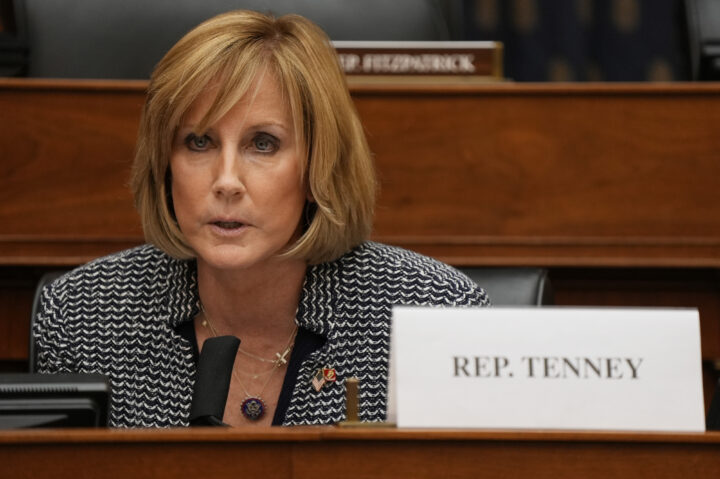
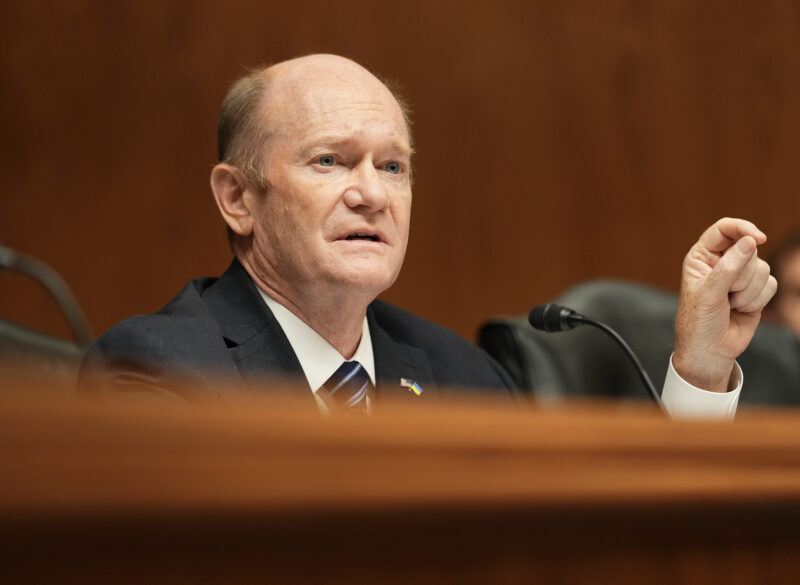
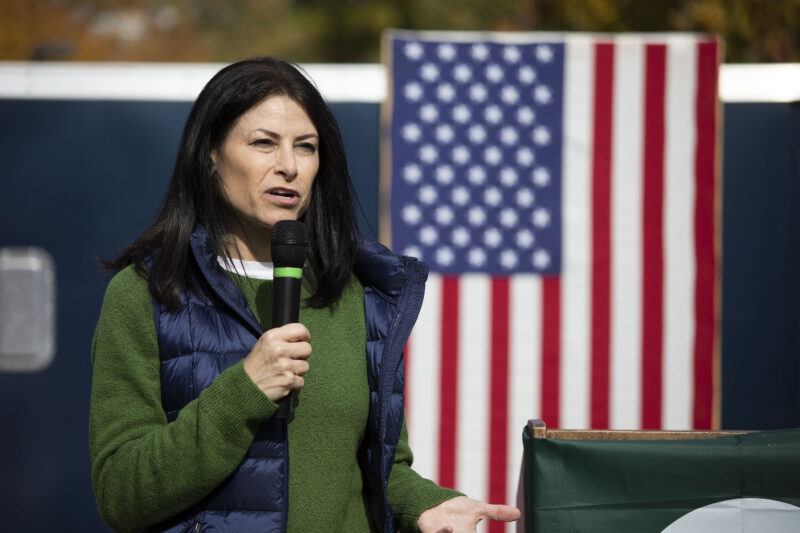
Ken Cedeno-Pool/Getty Images
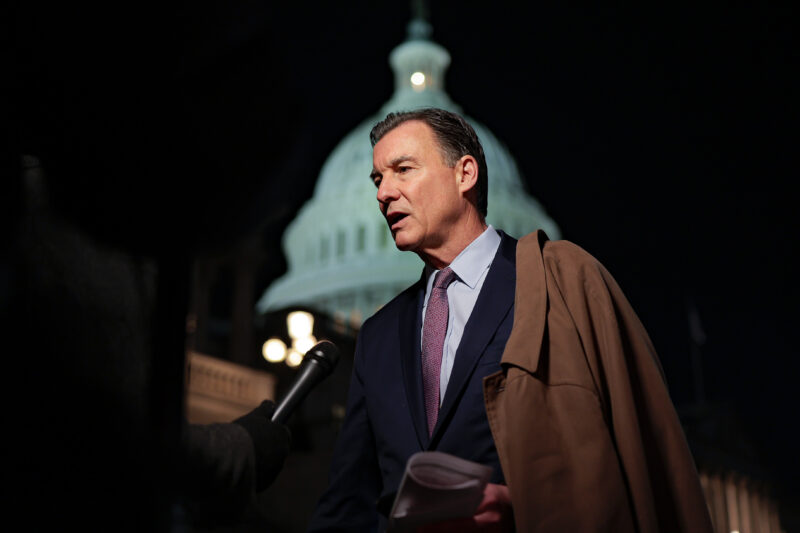
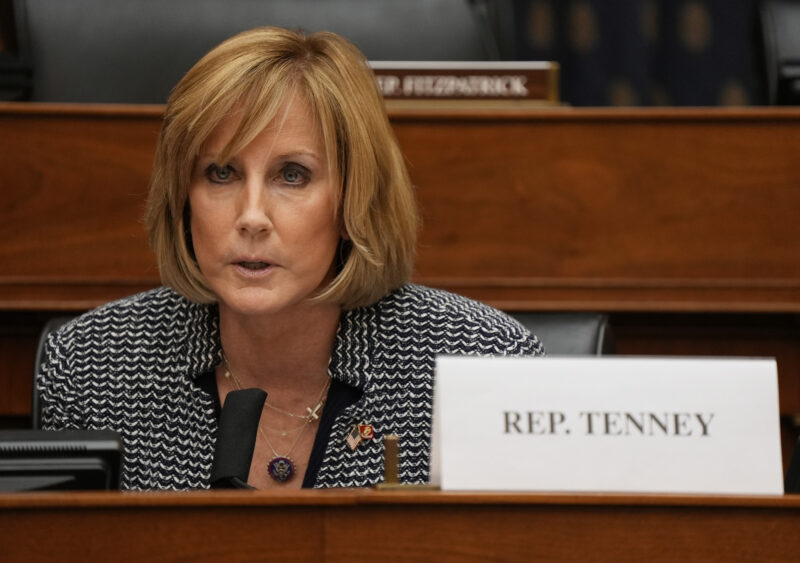
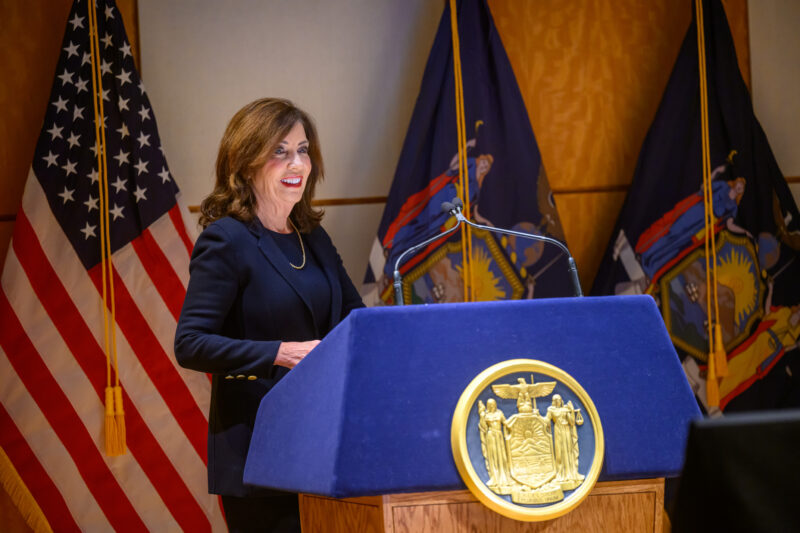
Rep. Claudia Tenney speaks as at the House Committee on Foreign Affairs on March 10, 2021 in Washington, DC.


 Add JewishInsider on Google
Rep. Claudia Tenney (R-NY) will introduce a resolution this week affirming Israel’s sovereignty over the Temple Mount, a sacred site for Jews, Christians and Muslims, and demanding equal freedom of worship for all, Jewish Insider has learned.
The resolution, if adopted, would put the House of Representatives on record as affirming “the inalienable right of the Jewish people to full access [of] the Temple Mount and the right to pray and worship on the Temple Mount, consistent with the principles of religious freedom.” It also “reaffirms its recognition of Jerusalem as Israel’s undivided capital, as reaffirmed repeatedly in United States policy and law, which includes Israeli sovereignty over the Temple Mount.”
The resolution describes the Temple Mount as “the holiest site in Judaism” and “a holy site for Christians and Muslims,” and makes note of the impediments faced by Jews and Christians in accessing the site that have restricted their prayer rights.
“Israel upholds religious freedom for all by ensuring access to holy sites for people of all faiths, however, Jewish and Christian rights on the Temple Mount are severely restricted as compared to the rights of Muslims,” the resolution reads.
The resolution points out that “Muslims can currently enter the Temple Mount from 11 different gates, but non-Muslims can only enter the Temple Mount from 1 gate,” and that “the hours of the lone non-Muslim gate is severely restricted compared to the Muslim gates.”
“Non-Muslims are not permitted access to the Temple Mount on Friday or Saturday, preventing Jews from observing Shabbat upon the Temple Mount,” it states.
Many rabbinic authorities, including the Israeli chief rabbinate, posit that Jews should not ascend to or pray on the Temple Mount, Judaism’s holiest site and the former site of the First and Second Temples, because of ritual purity questions.
The Al-Aqsa Mosque and Dome of the Rock were built on the Temple Mount after the destruction of the Second Temple. Jews largely worship at the nearby Western Wall, which is the remaining portion of the barrier that once enclosed the Temple Mount.
Israel gained control of the Temple Mount in the Six Day War, and allowed Muslim worship to continue on the holy site unimpeded. After Israel made peace with Jordan in 1994, the status quo was formalized, by which the Jordanian Islamic Trust determined religious use of the site.
While Jewish visits to the Temple Mount came to a near-total halt during the Second Intifada in 2000-2005, in the past decade, it has grown increasingly popular among religious Zionist Israelis and other Israeli Jews to ascend the mount, with numbers reaching the tens of thousands each year. This has also included praying on the site, usually silently, despite police instructing otherwise.
Israeli Prime Minister Benjamin Netanyahu has always said that Israel will maintain the status quo on the Temple Mount, restricting Jewish prayer. However, in recent years, National Security Minister Itamar Ben-Gvir has pushed for police to ignore any infractions, and he himself has prayed at the Temple Mount.
Over the past century, Arab and Palestinian leaders have used claims that Jews or Israel are trying to take over the Temple Mount to incite violence, from the 1929 Hebron Massacre to the Oct. 7, 2023 attacks, which Hamas named the Al-Aqsa Flood.
The resolution states that the House of Representatives “supports the Government of Israel in its efforts to safeguard the rights of Muslim worshippers, and integrity of Islamic structures there, in accordance with Israel’s current policies.”
Rep. Clay Higgins (R-LA) cosponsored the resolution, while the right-wing Zionist Organization of America and the Endowment for Middle East Truth endorsed it.
More Stories

POLICY PIPELINE
Deborah Lipstadt launches Emory institute to train the next generation of policymakers fighting antisemitism
Daily Kickoff
Vance’s Shabbos Shuva

supper club
AI, tech execs to attend White House state dinner for Xi Jinping
TAKING AIM
Netanyahu targets Mamdani, Macron and foreign critics in UNGA address
CANDIDATE CALCULATIONS
Vulnerable Republican candidates urge end to Iran war

Daily Kickoff
Politico’s Yom Kippur schmear job
Please log in if you already have a subscription, or subscribe to access the latest updates.
 Continue with Google
 Continue with Apple