




































New think tank report urges centralized public diplomacy to combat Israel’s post-Oct. 7 isolation
Former Israeli Ambassador Akiva Tor: ‘We’ve seen clumsiness by Israel in the past, but I don’t think we’ve seen this level of dysfunction’
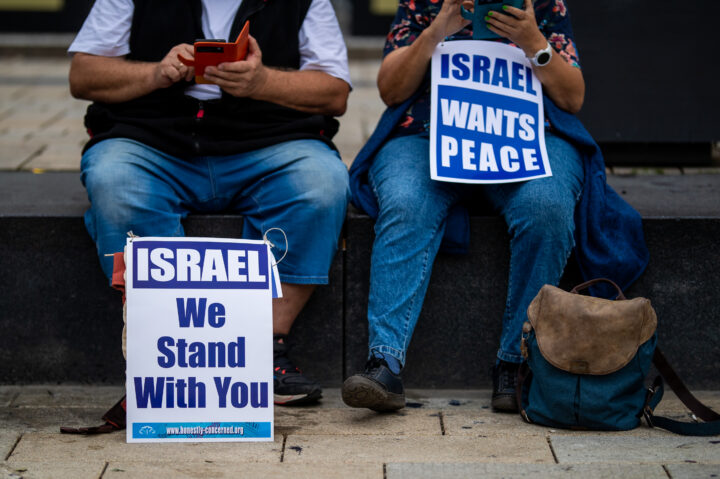
Christoph Schmidt/picture alliance via Getty Images
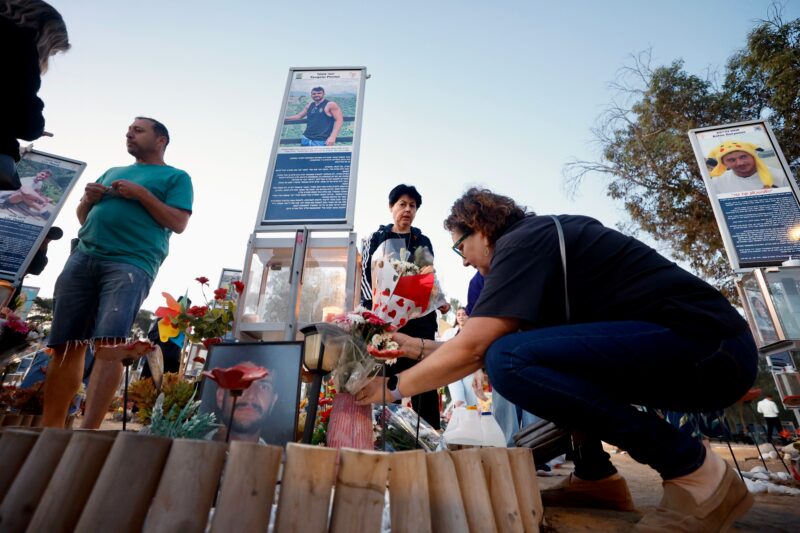
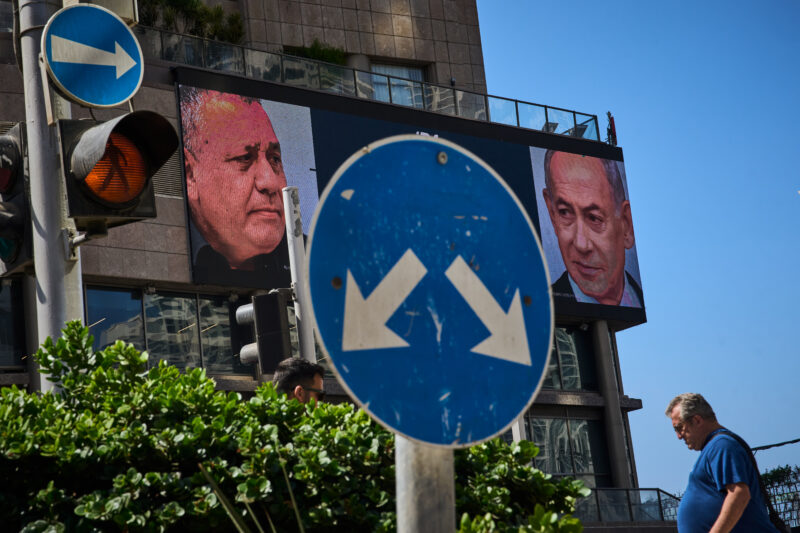
Posters of participants at a solidarity rally for Israel.


 Add JewishInsider on Google
The perennial complaint from supporters of Israel that the Jewish state has “bad PR” has sparked dozens of organizations and books over the decades and prompted the Israeli government to invest hundreds of millions in public diplomacy, including a $730 million allocation in its 2026 budget.
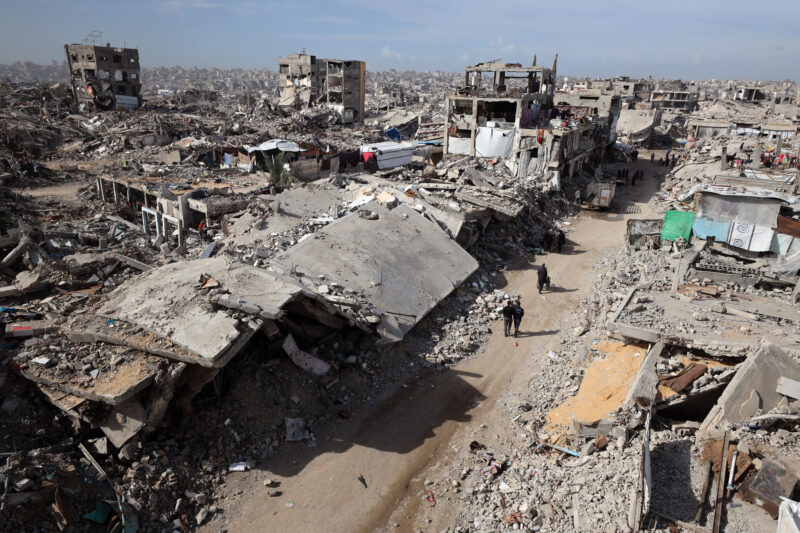
Yet the problem has only worsened after the Oct. 7, 2023, Hamas attacks on Israel, during the subsequent Gaza war and through the war with Iran this year. A new paper from the Institute for National Security Studies at Tel Aviv University seeks to analyze the challenges and find solutions for Israel’s government to better handle them.
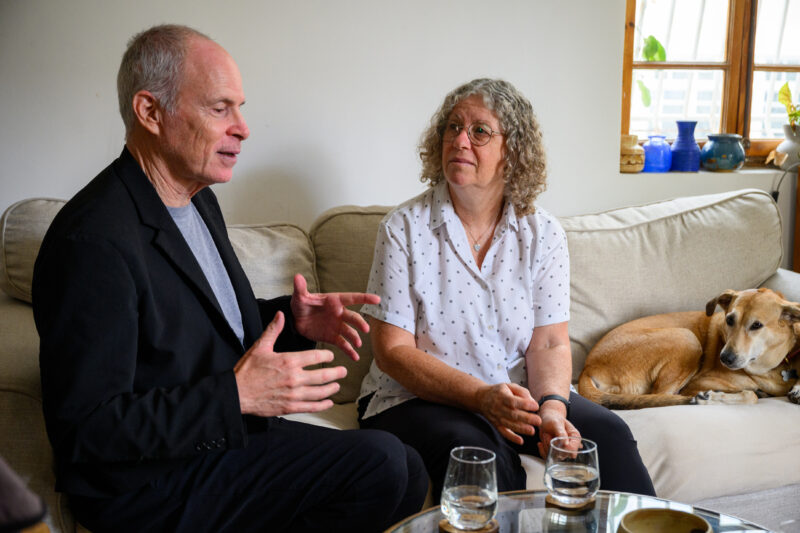
In an interview with Jewish Insider, the paper’s authors — Akiva Tor, a former Israeli ambassador to South Korea and head of the Israeli Foreign Ministry’s department for world Jewry and world religions, and Ofir Dayan, author of Intifada Globalized, about young Westerners’ turn away from Israel — characterized Israel’s image problem as a danger to its security.
“Everyone knows that there is a huge hasbara problem for Israel,” Tor said, using a Hebrew word that translates to “explaining” and is used to describe Israel’s efforts to portray the country in a positive light. “We tried to see what was unique in this moment … through a politically neutral perspective.”
Dayan noted that “it’s become a real issue of national security when Israel faces sanctions and countries are not willing to sell weapons. It affects Israel’s ability to execute plans and achieve its goals, and has a direct influence on Israel’s capability to fight.”
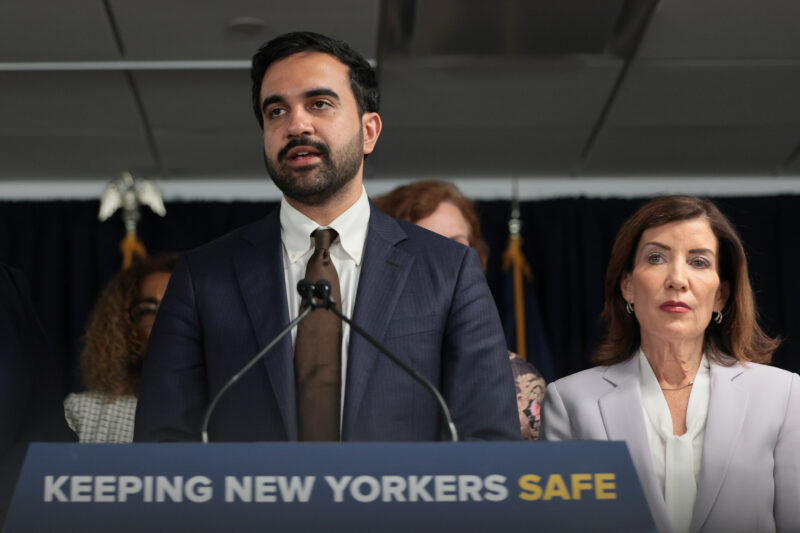
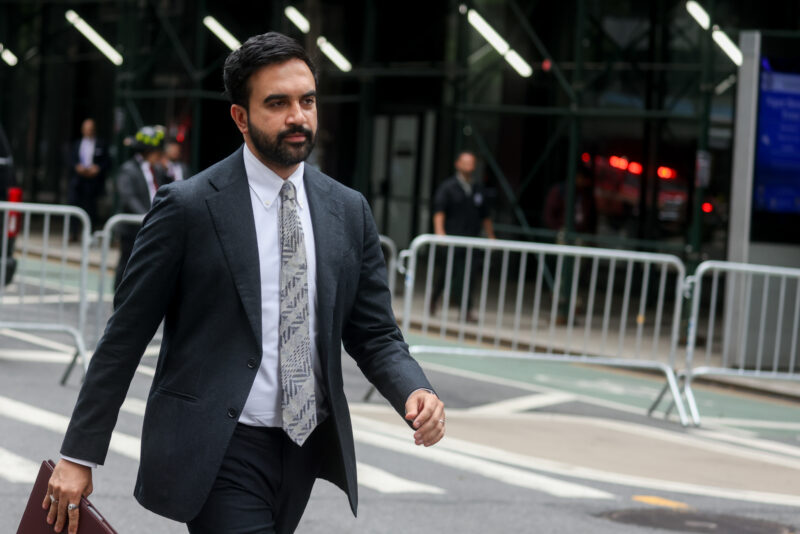
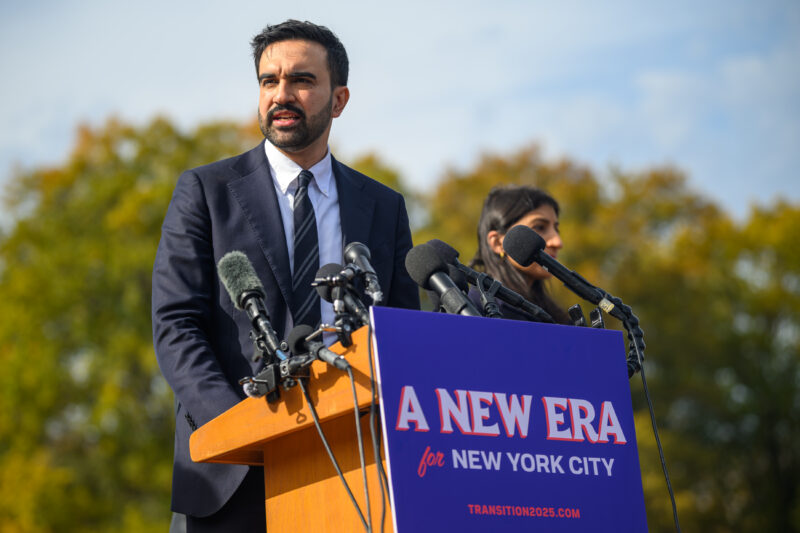
She added, “Since Oct. 7, we see a shift happening not only among youth and young adults, but it’s reaching positions of power, like [New York City Mayor Zohran] Mamdani and elsewhere.”
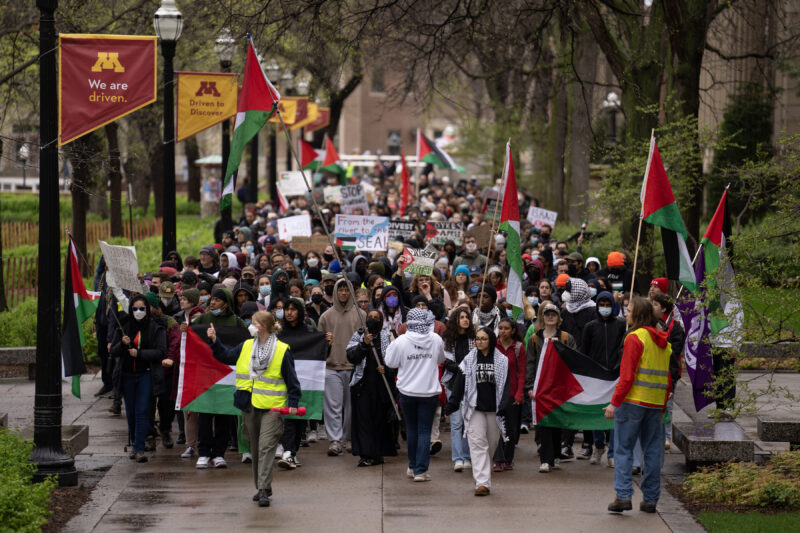
Dayan said that there is nothing new about the rhetoric or harassment of Israeli and pro-Israel students abroad — she encountered it personally as an undergraduate and graduate student at Columbia University in 2017-2022 — but “what is unique about this moment is that people who supported terrorist organizations and the destruction of the State of Israel, sanctions and boycotts are no longer hiding behind the facade of human rights. Individuals, organizations and countries are taking steps they have not taken before to significantly harm Israel’s national security.”
One example she gave was European Union member states taking steps toward canceling the EU-Israel Association Agreement, which would downgrade relations between Israel and its largest trading partner. In addition, she said academic boycotts of Israel, both overt and covert, are much broader than in the past.
Israel is also in the unprecedented situation in which its prime minister is under criminal indictment at the Hague and faces genocide charges at the International Court of Justice.
“I was consul-general in San Francisco during Operation Cast Lead [in 2008-2009],” Tor said, “and people talked about genocide when 3,000 [Palestinians] were killed … but now it’s at the ICJ and [former Deputy Secretary of State] Wendy Sherman is using the term. Things that existed in the past have now reached a level we haven’t seen before.”
The intended audience for Dayan and Tor’s 40-page paper, currently available only in Hebrew, is the Israeli government.
“We’ve seen clumsiness by Israel in the past, but I don’t think we’ve seen this level of dysfunction,” Tor said. “The clearest expression of this is … probably that at Israel’s worst moment of crisis, the job [of head of national public diplomacy directorate] was not filled for 2.5 years.”
At the outset of the Gaza war, Moshik Aviv held the position, but resigned in early 2024. This week, Israel’s Cabinet authorized the appointment of former Deputy Foreign Minister and Ambassador to the U.K. Tzipi Hotovely to fill the role.
“The system is not being run,” Tor said. “We spoke to journalists and newspaper editors about the way the media was simply not handled for the most part. The greatest example is Charlie Kirk’s letter to Netanyahu in May last year, where he said the only people defending Israel on [American] TV are you and me. Where are the Israeli spokespeople?”
Tor said that “internal political constraints” are behind much of the dysfunction, which has led to “self-censorship.”
For example, Israel allowed hundreds of aid trucks into Gaza each day for most of the war, but had Cabinet ministers and other political figures claim Israel was not in order to appeal to their far-right political bases.
“That’s a very dangerous situation for Israel. It’s very difficult to address Israel’s image problems seriously if the government is not interested in doing so,” Tor said. “I’m not aware of a situation [in the past] in which Israel’s government did not want to explain itself.”
Tor lamented that “Israel is judged by the statements of its most extreme ministers or members of Knesset who spoke. That is part of the politicization; the government is mute about its intentions, probably because of internal tensions within the government, and then the most extreme say we will destroy Gaza — it caused and is continuing to cause tremendous damage to Israel.”
Even if the government had done a better job, the fact that the war in Gaza lasted for two years posed immense challenges.
“Israel cannot fight for more than two years with the kinds of images it creates and avoid deep international isolation,” Tor posited.
The second half of Tor and Dayan’s paper provides suggestions for improvement.
One is to empower one governmental body to be in charge of public diplomacy across the entire government, including drafting messages, recruiting figures to spread those messages and measuring impact.
“We are realistic,” Dayan said. “No one is going to close government offices that are doing the exact same work, but we need one body that will say ‘this is the message Israel is trying to convey’ and make sure all of the relevant ministries are in line with it.”
Dayan served in the IDF Spokesperson’s Unit during her mandatory military service and again as a reservist in recent years, and said that “the IDF has no one telling them what to say. That is not the right process. [The government needs to] dictate one message so that all agencies and ministries will speak in one voice.”
There are four different government offices speaking for Israel on social media, and they do not work together, both Tor and Dayan pointed out.
“They’re all producing content that is very unlikely to become viral or speak to anyone under age 40,” Dayan said.
Tor said that, for Hotovely to be effective in her new role, she will have to have a voice at the Cabinet table.
“If there is going to be a plan to flatten Bint Jbeil [in Lebanon], she will have to say what that means for Israel’s image,” he said.
One step they suggested that Israel take immediately is a public diplomacy campaign to defend Israel against charges of genocide, ahead of the decision from the ICJ.
“Israel’s defense effort must include a strong public relations campaign using all available resources to prove Israel’s innocence before the ICJ and the court of world opinion,” they wrote. “The genocide charge is weak and specious, but Israel may lose its case if the hostile political agenda attempting to influence the court is not adequately countered.”
The report also suggests that Israel facilitate cooperation between Diaspora Jewry and Christian Zionists, something that Tor said was always a challenge when he led the Israeli Foreign Ministry department for world Jewry and world religions.
“Evangelicals are Israel’s friends, and liberal Jews are Israel’s friends, but they are very polarized from each other in American politics,” he pointed out. “This crisis moment may enable an opportunity for a new kind of cooperation, because both Jewish communities who love Israel and the pro-Israel Christians are under attack from the left and right.”
“We should come together to think about how to defend the basic legitimacy of Zionism,” he added.
Among their suggestions for those populations are to ensure 70,000 young Jews visit Israel on Birthright programs annually, and 100,000 young Christians do the same on a similar program each year. In addition, they call to encourage liberal rabbinical students and heads of liberal North American Jewish congregations to conduct study visits to Israel.
The INSS researchers also say that higher education is one of the most important spheres in which Israel can operate.
“Many Western university presidents would like to come back and work with Israeli institutions,” Dayan said. “They understand the academic excellence Israeli universities bring with them. But as of now, there is no concrete plan to rebuild those relations.”
The Association of University Heads – Israel wrote a plan that it submitted to the government, which has not adopted it, she noted.
The paper suggested the government start a $100 million fund to “jump-start Israeli research.” The report also suggests flying presidents of 100 top-rated universities and academic institutions with many Jewish students to Israel over the next 18 months, so they can return and tell their boards why they should work with Israel.
Another element of their plan is a reimagining of Israeli outreach in Arabic and Persian.
Asked if they would suggest that laws be passed requiring the government to not leave positions empty in this field, or to allocate a certain amount of funds, Dayan said that “Israeli governments find creative ways to bypass laws when they need it. We need more public awareness and for the Israeli public to demand these roles be filled and that this issue of national security be addressed.”
“We don’t vote according to who promises to better Israel’s international standing, so I think decision-makers get this cue that we don’t care,” Dayan added. “But post-Oct. 7, [Israelis] care more and more. When Israeli discharged soldiers can’t travel the world because they risk getting arrested, this is an issue more and more people in Israel are going to care about. … We need to force politicians to address it as well.”
More Stories

Daily Kickoff
Wikipedia’s edit scandal, unedited
DAYLIGHT DEBATE
Brett McGurk pushes back on former Biden WH colleagues who called for greater pressure on Israel

Daily Overtime
Dublin hotel dumps antisemitism conference
PRESIDENTIAL POV
Obama scrutinizes Israel’s founding, says Palestinians want their ‘land back’

PROBLEMATIC POST
Paxton senior advisor endorsed antisemitic slur on social media

COURSE CORRECTION
ADL, Gratz College launch antisemitism training for college administrators, faculty
Please log in if you already have a subscription, or subscribe to access the latest updates.
 Continue with Google
 Continue with Apple