

















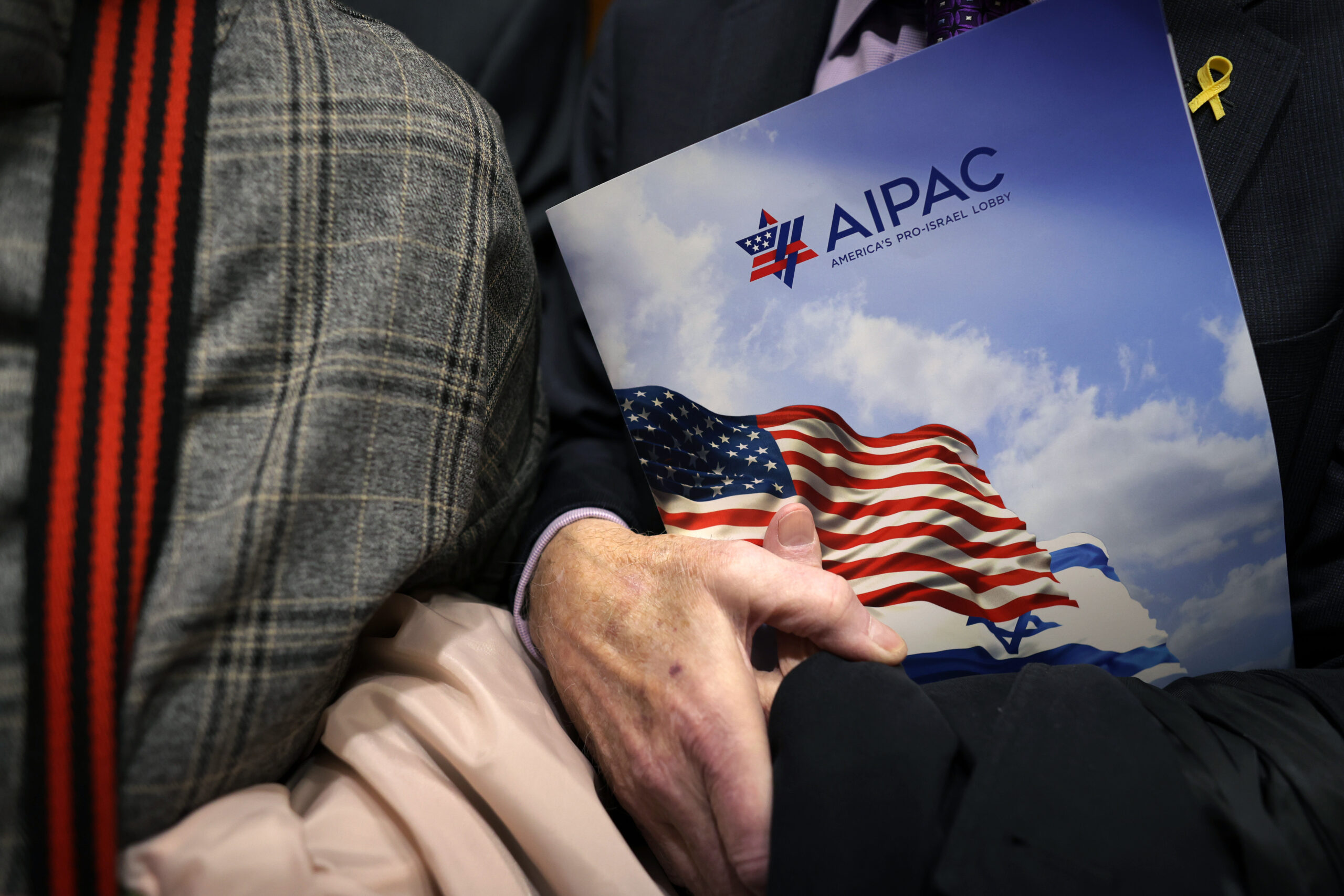




































A similar provision in the House version of the bill has drawn controversy, with critics falsely claiming it would merge the U.S. and Israeli militaries or undermine U.S. sovereignty
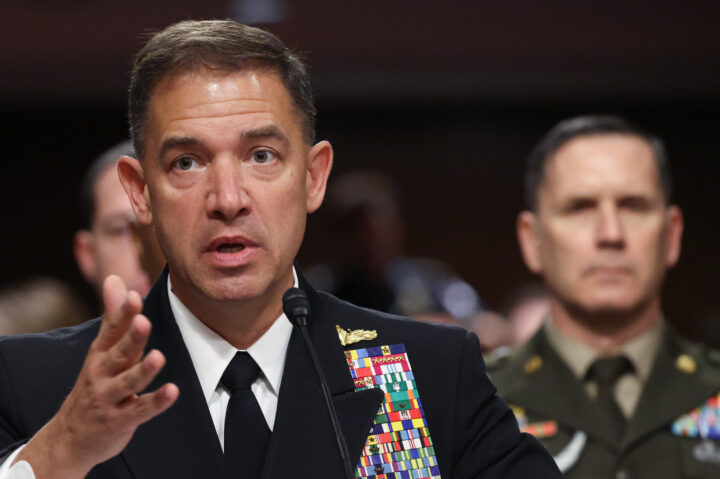
Win McNamee/Getty Images
CENTCOM Commander Adm. Brad Cooper testifies during a Senate Armed Services Committee hearing in the Dirksen Senate Office Building on Capitol Hill on May 14, 2026 in Washington, DC.


 Add JewishInsider on Google
The Senate Armed Services Committee’s draft of the 2027 National Defense Authorization Act includes a provision based on the FUTURES Act, establishing a U.S.-Israel Defense Cooperation Initiative, according to an executive summary released on Thursday by the committee and congressional officials.
A similar provision in the House version of the bill attracted significant controversy in anti-Israel circles — with critics falsely claiming that the measure would irrevocably merge the U.S. and Israeli militaries or undermine U.S. sovereignty — with multiple House members vowing to try to strip the provision from the bill. Top lawmakers on both sides of the aisle have defended the provision.
A congressional official said that the Senate provision has some adjustments from the House bill and the original FUTURES Act, with a focus on medium- and long-term threats; the original bill encompasses numerous areas of cooperation that already exist between the U.S. and Israel.
The official also emphasized that the idea that the legislation would integrate the U.S. and Israeli militaries is a “misconception” and a “fallacy.”
The precise text of the Senate bill, which was amended in a closed session, will not be available for a few days.
Critics have also begun attacking a provision of the Senate’s draft of the 2027 Intelligence Authorization Act, titled, “United States-Israel Intelligence Sharing Enhancement,” which aims to increase intelligence collaboration and sharing with Israel to counter shared threats from Iran and other adversaries.
The legislation directs the administration, “subject to applicable law and the protection of intelligence sources and methods” to expand intelligence sharing with Israel, and limits the ability of this or a future administration to suspend or reduce intelligence sharing unless the administration documents and notifies Congress of a “specific and identifiable national security concern” raised by such collaboration.
It also calls for expanded intelligence sharing with other Abraham Accords countries, except in cases in which the administration finds that a recipient of such intelligence cooperation maintains any intelligence, defense or technology cooperation with a U.S. adversary.
According to the executive summary released on Thursday, the Senate NDAA also authorizes increased funding for existing U.S.-Israel cooperative programs in countering drones and subterranean warfare and maintains support for cooperative missile-defense programs.
The NDAA also includes an “initiative to bolster defense cooperation among the United States and signatories of the Abraham Accords,” according to the executive summary. A source familiar with the legislation said the provision parallels the OASIS in the Middle East Act, which directs the Pentagon to develop a coordinated air and missile defense acquisition strategy with Israel, Abraham Accords members and other Middle East allies, further building on current air-defense integration efforts.
The bill would additionally condition funding to the Lebanese Armed Forces on its actions to counter Hezbollah — similar to a provision in the House bill — and to the Syrian government on its actions to disarm foreign fighters and jihadists in the country.
The Senate draft of the NDAA would also provide congressional authorization for the Civil Military Coordination Center — established by U.S. Central Command, alongside Israel, other U.S. partners and international organizations, to oversee ceasefire and stabilization efforts in Gaza — “as a subsidiary of the Board of Peace to oversee the implementation of the Gaza ceasefire in pursuit of Hamas’ complete and permanent disarmament,” according to the executive summary.
Roger Wicker, the Senate Armed Services Committee chair, told Jewish Insider that Iran has ‘been stringing us along’ and ‘had no intention of negotiating in good faith’

Tom Williams/CQ-Roll Call, Inc via Getty Images
Senate Armed Services Committee Chairman Roger Wicker (R-MS) arrives for a confirmation hearing in Dirksen building on Tuesday, May 13, 2025.
Sen. Roger Wicker (R-MS), the chairman of the Senate Armed Services Committee, said on Monday that he would support President Donald Trump abandoning diplomatic talks with Iran and resuming military operations.
“It’s becoming clearer and clearer that they’ve been stringing us along and that they had no intention of negotiating in good faith,” Wicker told Jewish Insider of Iran. “I wouldn’t blame the president at all if we resume full-scale war. I don’t think the American people would blame him at all.”
The senator’s remarks follow a sharp weekend escalation, which saw Iran launch a barrage of ballistic missiles at Israel in response to IDF operations in Beirut. Asked at the Capitol on Monday about Trump’s subsequent pressure on Israeli Prime Minister Benjamin Netanyahu to hold back retaliatory strikes, Wicker encouraged a tougher stance on Iran.
Wicker has been skeptical for weeks of U.S. negotiations with Iran, urging a return to combat operations.
While Netanyahu reportedly called off broader strikes on Iran on Monday, he suggested he had pushed back on Trump’s request for Israel not to respond to an Iranian missile attack on Sunday. Netanyahu said he had relayed to the White House that Israel retains its right to self-defense “with appreciation and respect in my good conversations with my friend President Trump.”
Wicker dismissed concerns that Trump and Netanyahu’s relationship had deteriorated over the war in Iran, and emphasized his support for Israel’s actions against Hezbollah in Lebanon.
“I think the president would tell you that our relationship with Israel is as strong as it’s ever been, and that he’s doing well with Netanyahu,” Wicker said. “On the issue of Israel and Hezbollah, Hezbollah exists for no reason other than to destroy Israel and kill Americans. That’s the only reason they exist. They’re not a religion, they’re not a region, they’re not an ethnic group.”
“I absolutely believe that Israel has every right to respond forcefully when attacked by Hezbollah,” he added.
Sen. Ted Budd (R-NC) said that Israel and the U.S. are responsible for making their own decisions, but said that shouldn’t damage the core alliance.
“Israel is a sovereign country. They can make their own decisions. We’re a sovereign country, we can make ours,” Budd said. “We can make recommendations to either, and they’re a great ally. We need to make sure we maintain the status of them being a great ally.”
Sen. Richard Blumenthal (D-CT) argued that what he characterized as the administration’s failures are producing friction with Israel.
Blumenthal said that “Israel has a right to defend itself” from both Iran and Hezbollah and “has a right to strike back at Hezbollah, in Lebanon, where it is strongest, maybe outside Beirut.”
“The fundamental problem here is that Trump is caught in a quagmire of his own making with unrealistic and, in fact, confused goals that have not been achieved,” Blumenthal continued, “He’s struggling for negotiations, while Israel wants to achieve some goals, including securing the enriched uranium, and so there’s bound to be some tension.”
“But at the end of the day, they’ll have to continue working in concert, because that’s the only path toward peace,” Blumenthal said.
Sen. Tommy Tuberville, who also sits on the Armed Services Committee, which was briefed Tuesday morning, strongly denied that ground troops would be necessary

Jemal Countess/Getty Images for Fair Share America
Sen. Richard Blumenthal speaks at a rally at the Capitol on April 10, 2025 in Washington, DC.
Sen. Richard Blumenthal (D-CT), following a classified briefing for the Senate Armed Services Committee on the war in Iran on Tuesday morning, said he’s concerned that the U.S. is headed toward putting troops in Iran — echoing and elevating concerns he voiced following a classified briefing last week.
But other colleagues have, at this point, not affirmed Blumenthal’s view.
“If you look at the administration’s objectives, most especially regime change, there’s no way to accomplish it from 30,000 feet,” Blumenthal told Jewish Insider. “Every military expert seems to agree that it requires troops in Iran, and likely, as well, destruction of the nuclear material that Iran has right now will require some presence of personnel.”
He said that comments by President Donald Trump and administration officials about the future of the campaign and about loosening rules of engagement have further fed into his concerns.
“There is an air of recklessness that leads me to be very fearful — not to mention what I’ve heard in the classified briefings,” Blumenthal said.
Other colleagues on the Armed Services Committee aren’t backing up Blumenthal’s concerns at this point.
“I don’t know,” Sen. Gary Peters (D-MI) said, when asked if he agrees with Blumenthal that ground troops are likely to be deployed.
Sen. Tommy Tuberville (R-AL) forcefully denied to JI the idea that the U.S. would put troops on the ground in Iran.
“That’s interesting,” Sen. Mike Rounds (R-SD) said, when asked about Blumenthal’s comments.
Sen. John Kennedy (R-LA), who is not on the Armed Services Committee, said that Blumenthal “is my friend” but he “needs to back off the crank. That’s not going to happen.”
A ground operation would likely be a red-line for at least some lawmakers — on both sides of the aisle — currently supporting the war effort.
Sen. John Fetterman (D-PA), the most vocal Democratic supporter of the war effort, told JI he would not support a ground operation, a position he said he believes most Americans agree with.
“I’m not supporting a boots on the ground thing — the vast, vast, vast [majority of] Americans are there — but I support what’s happened” so far, Fetterman said. “I’ll be the first guy to say, ‘Look, I’m not aware of any single person that would support boots on the ground.’ I just watched [Defense Secretary Pete] Hegseth’s interview where he says they’re never going to make it about nation-building or anything.”
The Pennsylvania senator also said he plans to support any request from the administration for supplemental funding relating to the ongoing operation, adding that he took umbrage with the notion of lawmakers on either side of the aisle voting down aid for U.S. forces in an ongoing combat mission.
“If it comes up, I will vote for it,” Fetterman told JI of a supplemental package. “And I would dare anyone to vote against providing our military what’s required at this point.”
A growing number of Democrats are coming out against such supplemental funding.
“They’re saying they have more than ample resources and munitions right now. I have no idea why they would need a supplemental, so I’m certainly not writing a blank check, and they’ve given us no specificity as to why a supplemental is required,” Blumenthal told JI.
“What’s more, Trump is saying he’s not going to sign any legislation anyway until there’s the SAVE AMERICA Act, which is a preposterous position, but why should we consider a supplemental when he’s going to veto it anyway?” he continued.
Also on Tuesday, Senate Minority Leader Chuck Schumer (D-NY) and Sens. Jack Reed (D-RI) and Jeanne Shaheen (D-NH) wrote to Trump calling on him to send Secretary of State Marco Rubio and Hegseth to immediately testify publicly on the war effort.
They need to “come and answer for their failures and explain to the American people what the hell is going on,” Schumer said at a press conference. “That’s what people are asking in drug stores and bowling alleys and office buildings: What is going on? No one can understand it from what the Trump administration and Trump himself are saying.”
‘Each individual senator has a tremendous amount of power to disrupt the normal functionings of the Senate,’ Sen. Cory Booker said
Marc Rod
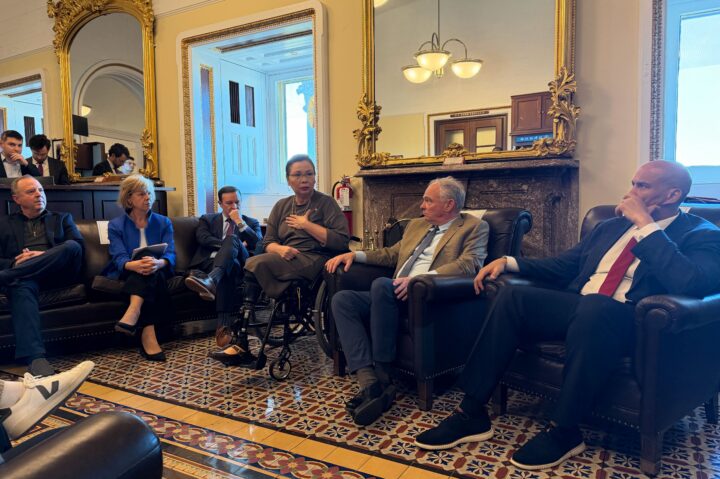
Sens. Cory Booker (D-NJ), Tim Kaine (D-VA), Tammy Duckworth (D-IL), Chris Murphy (D-CT), Tammy Baldwin (D-WI) and Adam Schiff (D-CA) hold a press briefing on Iran war powers resolutions on March 9, 2026.
A group of six Senate Democrats is threatening to immediately begin obstructing proceedings on the Senate floor in order to force public hearings in the Senate Armed Services Committee and Foreign Relations Committee and debate on the chamber floor on the war in Iran.
Jewish Insider first reported that several of those lawmakers — including Sens. Cory Booker (D-NJ), Tim Kaine (D-VA), Tammy Duckworth (D-IL), Chris Murphy (D-CT), Tammy Baldwin (D-WI) and Adam Schiff (D-CA) — introduced a series of five new war powers resolutions late last week.
The senators indicated in a meeting with reporters on Monday that they plan to force votes on those, and possibly additional, war powers resolutions when they become eligible for votes next week, but that those resolutions are just part of a broader strategy to disrupt normal Senate business in an attempt to force greater public discussion about the war in Iran.
“We’ve had no oversight whatsoever over what the executive is doing, as they’re spending a billion dollars a day. And we have failed to have any real substantive debate or discussion,” Booker said. “We are not going to let business as usual go on in the Senate … we are demanding that the Republican leadership of the Senate hold the adequate hearings and oversight, as well as to allow a debate that brings transparency to this onto the Senate floor.”
Booker declined to discuss their specific plans, but said that the senators would “use the levers that we have,” citing efforts over the years by Republican colleagues to block or slow down Senate procedure to compel votes on various issues.
“Each individual senator has a tremendous amount of power to disrupt the normal functionings of the Senate, as well as certain privileges that we can exercise,” Booker said. “And what we have agreed on right now is that we are not going to let the Senate continue its business as usual.”
Though the war powers resolutions won’t be eligible for Senate floor votes until next week, Booker indicated that the senators plan to begin other obstructionist tactics immediately, unless hearings are announced.
Murphy highlighted that the lawmakers have the ability, should they choose to do so, to “force a vote and debate every single day in the Senate” on the war powers resolutions. But Baldwin indicated that the lawmakers might not force the war powers votes if Republicans do schedule the hearings they request.
Booker said that the group is not necessarily speaking for the entire Senate Democratic caucus.
Murphy asserted that public hearings with administration officials, tasked with defending and explaining the war effort to the public, would only make the operation less popular with the American public. The Democrats also highlighted other costs, including increasing gas prices, associated with the war.
Kaine argued that the question for the Senate and the American people is not whether “Iran [is] a bad actor” or whether “in the abstract, [they have] done terrible things,” it is whether the war is worth risking American lives. Seven U.S. servicemembers have died in the course of the campaign so far.
Murphy and other Senate Democrats had also been pushing for a Senate vote on an authorization for use of military force regarding Iran. But on Monday, the six Democrats involved in this effort said they had ruled out the idea of a Democratic-led AUMF, arguing that the burden is on Republicans and the administration to put forward such a proposal and define its scope.
“They have to tell us and bring evidence to us that this war is worth an AUMF,” Duckworth said. “I personally don’t even want to have the discussion about an AUMF, because they haven’t even gone to the first step yet” of proving the need for the war.
Kaine said that the lawmakers, including Murphy, had “explored the procedural option” of an AUMF, but said that the “burden” to write such a bill should not be on the Democrats “who think this war is a bad idea.”
“It would be too unusual for the opponents to file the AUMF,” he continued. “The proponents are the ones that carry the burden of proof with the American public. They need to file it.”
The six Democrats did not appear to be entirely in agreement about how they would handle a potential request by the administration for supplemental funding to support the war effort or replenish U.S. armaments expended in it.
Kaine said he would withhold judgement on the issue until such a request was presented, explaining, “I want to end the war, I want to protect our troops.”
Schiff argued that the military has “plenty of money” from last year’s reconciliation bill, and also said that a congressional appropriation for a military effort could, legally, be considered an authorization for use of military force.
Should they secure the hearings they seek, the senators said they want to press administration officials on the goals and timeline for the war, the rules of engagement and restrictions imposed on U.S. forces, the circumstances that led to a deadly strike — which some have attributed to the U.S., though the administration disputes this — on a girls’ school, potential plans to support separatist movements inside Iran and the administration’s plans to support and protect Iranian demonstrators should another mass uprising occur.
“My goal is to end this war, to stop wasting millions of dollars and to protect further servicemembers from dying, and I think the way that you do that is by exposing to the public the fact that this is a war of choice, the fact that this president has ignored the law and the Constitution and the people through us, hold him to account,” Baldwin said.
The Senate hearing highlighted the tension between Colby’s preference for foreign policy restraint and the Trump administration’s military strikes in Iran
Graeme Sloan/Bloomberg via Getty Images
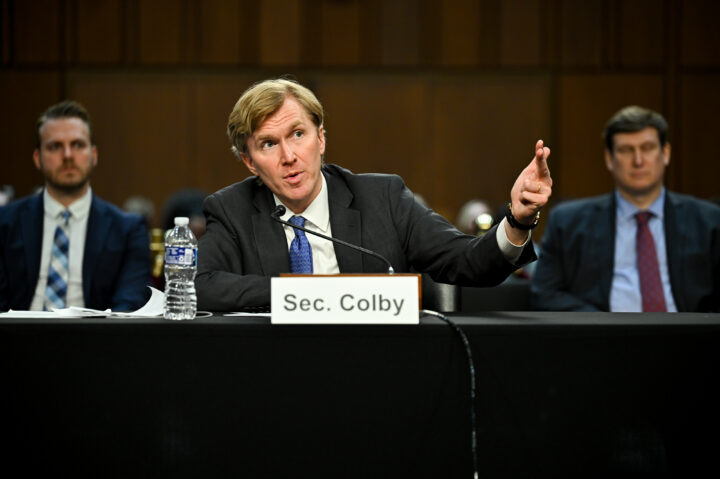
Elbridge Colby, under secretary of defense for policy, during a Senate Armed Services Committee hearing in Washington, DC, US, on Tuesday, March 3, 2026.
At a Senate Armed Services Committee hearing on Tuesday, a parade of Democratic senators pressed Under Secretary of Defense for Policy Elbridge Colby about the U.S.’ strategy and goals in the war with Iran, criticizing the campaign and its execution without congressional authorization.
Democrats also spotlighted what they said are contradictions between the war effort, the U.S. National Defense Strategy issued just weeks ago and Colby’s own past vociferous opposition to war with Iran. Lawmakers on both sides of the aisle raised concerns about the controversial defense strategy, which sets a high bar for foreign policy intervention, more broadly.
Colby told lawmakers that the U.S. aim in the war is to eliminate Iran’s missile capabilities and naval fleet, echoing the justification provided by Secretary of State Marco Rubio to lawmakers and reporters yesterday — though President Donald Trump’s publicly stated goals for the operation have shifted..
Colby also reiterated that the U.S. is not seeking regime change in Iran, and that operations focused on eliminating top Iranian officials. including the late Ayatollah Ali Khamenei, have been undertaken by Israel — consistent with the division of labor in the operation outlined by other officials as well.
“[Trump] has urged the Iranian people to take this unprecedented opportunity to supplant or overthrow this oppressive Islamic Republic,” Colby said. “But the military campaign, as detailed, that he has directed is focused on the power projection capabilities — and at the end of this campaign, yes, primarily relying on airspace and maritime forces that will have substantially set back a threat.”
Colby insisted that Trump will not “have the yips” and prematurely end the campaign, but will also “learn the lessons of the last 25 years and not make the same mistakes.” He also said that the campaign is in its “earliest stages” but “the results … have been favorable.”
Sen. Angus King (I-ME) warned that the administration is potentially putting the Iranian people in significant danger by urging them to rise up without the arms or necessary support to protect them from renewed regime massacres.
The National Defense Strategy issued by the administration in early December offered little on the Middle East, mentioning Iran just three times and highlighting largely economic interests in the region. Colby’s testimony was nominally focused on the strategy.
Sen. Roger Wicker (R-MS), the chair of the Armed Services Committee, highlighted that the strategy “says little about vital interests in the Middle East. This seems out of step with repeated military actions to deal with the ongoing threat of Iran.”
Democrats went further.
“The NDS is a flawed proposal, and it is now, in many respects, already obsolete,” Sen. Jack Reed (D-RI), the ranking member of the committee, said. “In taking these offensive military actions, President Trump has unilaterally started a conflict that is rapidly spreading throughout the Middle East.”
Colby argued there’s no contradiction between the strategy and the administration’s current actions.
“If you look at the strategy, it details specifically, not only the threat posed by Iran, ensuring that the president has the options to act against Iran,” Colby said, emphasizing that it highlights options for air and naval forces to act against Iran.
He added, “Our Israeli allies are really leaning in, and we see that from our Gulf partners right now, we see that from other partners in Europe,” though he stopped short of saying U.S. allies are taking “primary responsibility” for countering Iran as outlined in the strategy.
Sen. Mark Kelly (D-AZ) argued that the fact that the National Defense Strategy issued just weeks ago made no mention of the threat of Iran’s ballistic missile program belies the administration’s claims now that the growth of that program was a key factor necessitating U.S. strikes.
Colby, seen as a prominent voice of foreign policy restraint in the administration, had also previously vigorously argued against strikes on Iran, including saying that an Iranian nuclear weapon might be preferable to a war launched to eliminate Iran’s nuclear program.
On Tuesday, he offered support for the administration’s actions, both in last year’s strikes on Iranian nuclear facilities and the war that began last weekend.
“Operation Midnight Hammer did have a clear objective — that was something that distinguished it, often from the kinds of perspectives that I was writing about 15 years ago in a private capacity,” Colby said.
Democrats on the committee also continued to raise concerns about comments by Rubio and House Speaker Mike Johnson (R-LA) yesterday that the timing of the U.S. strike was driven by Israel’s determination to strike Iran, to which Iran would have responded by striking U.S. forces.
“I find it very disturbing that we’re committing this nation to war based upon a decision by — even though a staunch ally, and I’m a supporter of Israel, but I don’t think anybody should drive our decision to go to war but interests of the United States,” King said.
Rubio, Trump and other administration officials have subsequently argued that Israel did not force the U.S. to act, that the U.S. was responsible for its own decisions and that the operation was inevitable in the near future.
“The very rapid buildup and reconstitution of Iran’s ballistic missile, cruise missile and one-way attack drones” motivated the attack, Colby said. “There was a perception that this threat has been manifest. As the president said, they’ve been killing Americans for 47 years, and this is something where we can see [where] this is going and they’re going to be able to have … this kind of missile shield.”
He also said that “one of the goals” of the operation was to protect Israel, and that the operation also serves the U.S.’ own interests.
Colby also argued that U.S. operations in Venezuela and Iran have helped to disrupt the global axis of U.S. adversaries, as well as lessen the risk of a worst-case-scenario in which the U.S. faced simultaneous offensives by multiple adversaries including an attack on Taiwan by China and an offensive by Iran in the Middle East, which would stretch American resources thin.
Beyond questions about the war in Iran, Colby also faced off concerns from both sides of the aisle about the National Defense Strategy more broadly, which faced bipartisan criticism for downplaying or ignoring U.S. interests, allies and threats in Europe, the Middle East and the Indopacific, in order to focus on the Western Hemisphere.
“The strategy document fails to acknowledge the global nature of the threat posed by the axis of aggressors working together,” Wicker said, adding that the document ignores the threat from Russia, offers no clear plan for the Western Hemisphere and signals “equivocation” on Taiwan.
“The lack of any significant statement on these developments raises the question: are we ignoring the existential dangers that China, Russia and North Korea pose to our way of life?” Wicker said. “There’s much to like in this strategy, particularly its priorities and emphasis, but I still believe we have much work to do.”
Reed argued that the strategy is “littered with partisan commentary,” suggests U.S. deference to China, offers a clear “abdication of clear national security interests” by overlooking the threat from Russia and takes a harder line toward European partners than toward Beijing.
Colby, in his opening statement, argued that the strategy prioritizes an approach of “flexible realism” that focuses on the “interests of regular Americans,” and recognizes the U.S.’ inability to “do everything, everywhere, all the time.” He said that it charts a middle course between isolationism and interventionism.
“On one hand, isolationism that pretends that we can retreat from the world and a favorable stability will emerge. And on the other hand, an unfair use of military force for overly expansive ends that would drain the American people’s will and resources is unnecessary and over-ambitious conflict,” Colby said. “This strategy rather prudently adopts a middle course that will actually put us on a far firmer, more successful and thus more lasting course than either of these extreme alternatives.”
He said that the U.S. has no need to dominate the Indopacific, but only “prevent that vast and dynamic region from being dominated so that we can trade and interact with it on fair and reasonable terms for everyday Americans,” leading to a strategy of deterring China “through strength, not confrontation.”
Colby denied press reports that he had obstructed the transfers of weapons to Ukraine, claims which earned him bipartisan criticism on Capitol Hill. He claimed to have been directly involved in ensuring that such transfers occurred.
‘My impression was the committee felt the support there was not ready yet,’ Rounds told JI

Nathan Posner/Anadolu via Getty Images
Elbridge Colby, nominee to be Under Secretary of Defense for Policy, is seen ahead of his confirmation hearing at the Senate Committee on Armed Services in Washington, DC on March 4, 2025.
Sen. Mike Rounds (R-SD) told Jewish Insider on Wednesday that there was a “broad consensus” among members of the Senate Armed Services committee that two nominees tapped to serve under Under Secretary of Defense for Policy Elbridge Colby did not yet have sufficient support to move ahead at a committee meeting on Wednesday.
Confirmation hearings for the two nominees — Alex Velez-Green and Austin Dahmer, who were initially expected to receive votes in committee on Wednesday — turned into an airing of the grievances by a series of Republican and Democratic senators with Colby and his office.
The senators accused the Defense Department’s policy team of failing to properly communicate or consult with Congress on key decisions and issues, and of executing their own policy at odds with and without authorization from the White House on various issues. Colby is viewed as one of the leading isolationist voices in the Trump administration.
Rounds told JI that there was a “broad consensus” on the committee that more time was needed to consider the two nominations.
“I don’t think it was one or two people holding it up, or anything like that. … My impression was the committee felt the support there was not ready yet, but … we didn’t want to hold up anybody else,” Rounds said.
Republicans have only a one-vote majority on the committee, so they cannot afford to lose any GOP votes if all Democrats plan to vote against a given nominee.
Senate Armed Services Committee Republican leadership did not respond to a request for comment. Sen. Jack Reed (D-RI), the Democratic ranking member, deferred to Republicans when asked Wednesday about the postponed votes.
The amendment, led by Sen. Joni Ernst, highlights the ‘serious and growing’ missile threats from Iran and its proxies

Kevin Carter/Getty Images
U.S. Capitol Building on January 18, 2025 in Washington, DC.
The Senate Armed Services Committee’s draft of the 2026 National Defense Authorization Act, passed out of committee this week, includes provisions aimed at furthering coordinated air and missile defense efforts in the Middle East.
Moves to strengthen military cooperation among the U.S., Israel and Arab countries have been part of several recent NDAAs, starting with the DEFEND Act, which first pushed for coordinated air and missile defense efforts in 2022, as an outgrowth of the Abraham Accords.
The new amendment, led by Sen. Joni Ernst (R-IA), a co-chair of the Abraham Accords Caucus, instructs the Defense Department to submit to Congress a new report on implementing integrated air and missile defense infrastructure in the Middle East, including an assessment of threats; a summary of U.S. priorities and capabilities; and lessons learned from the Iranian ballistic missile attacks on Israel and the Houthi attacks in the Red Sea.
The amendment highlights the “serious and growing” missile threats from Iran and its proxies, which puts U.S. forces and allies in danger, and states that the U.S. has an “obligation” to protect its own forces and its partners.
“My DEFEND Act created unprecedented cooperation between Israel and its Abraham Accords allies and has played an intricate role in defending against missile attacks from Iran and its network of terrorist proxies,” Ernst said in a statement regarding the amendment. “October 7th was a reminder that our enemies are constantly evolving and scheming new ways to carry out their malign ‘Death to America’ mission. We must stay one step ahead and ensure that America and our partners are fully equipped and prepared to defend themselves in the post-October 7th world.”
The bill would also require the Defense Department to lay out for Congress its plans for assisting the Jordanian and Lebanese militaries, would extend U.S.-Israel anti-tunnelling cooperative programs and would authorize increased funding for U.S.-Israel counter-drone and missile cooperative efforts, according to a summary released by the Armed Services Committee.
Please log in if you already have a subscription, or subscribe to access the latest updates.
 Continue with Google
 Continue with Apple