



















































End of an era: Graham’s death leaves void in U.S.-Israel relationship
With Graham’s death, one chapter in U.S.-Israel relations has closed. Now, Rahm Emanuel and Ro Khanna are jockeying to write the next

(Amir Levy/Getty Images)
US Senator Lindsey Graham (R-SC) attends a press conference on US-Israel relations on February 17, 2025 at the Kempinski Hotel in Tel Aviv, Israel.


 Add JewishInsider on Google
In the span of five days, one of Washington’s most vocal champions of the U.S. relationship with Israel died, while two prospective 2028 Democratic presidential contenders traveled to the Jewish state to define their approaches to the country. Though a coincidence of timing, those events, when taken together, underscored something much more significant: the passing of one generation of American politics vis-a-vis Israel and the opening contest over what will succeed it.
The events of the last week have distilled concerns that have repeatedly emerged at Jewish and Israeli gatherings, over Shabbat meals and in breakfast meetings: As the far left gains traction within the Democratic Party, and as the isolationist right increasingly finds support among Republicans, what does that mean for American Jews and U.S. support for Israel?
Sen. Lindsey Graham (R-SC), who died suddenly on Saturday, represented a generation of politicians — across the political spectrum — for whom support for Israel was tied to deep, long-standing relationships with the Jewish state’s leaders, the belief in the country’s strategic positioning as a key ally and the ability of Israel’s friends in Washington to challenge Jerusalem without imperiling the relationship.
His death sent shockwaves across the Jewish community at a time when U.S. support for Israel — including among Republicans — is on the decline.
Sen. Ted Cruz (R-TX), speaking to JI earlier this week, described Graham as “a passionate and formidable defender of Israel” and noted that Israeli Prime Minister Benjamin Netanyahu “trusted Lindsey and listened to him.”
Cruz pointed out that “Lindsey would sometimes tell his friends messages they didn’t want to hear. Lindsey was not one to just blow smoke. He would tell people exactly what he thought, but that made him an incredibly effective advocate for Israel.”
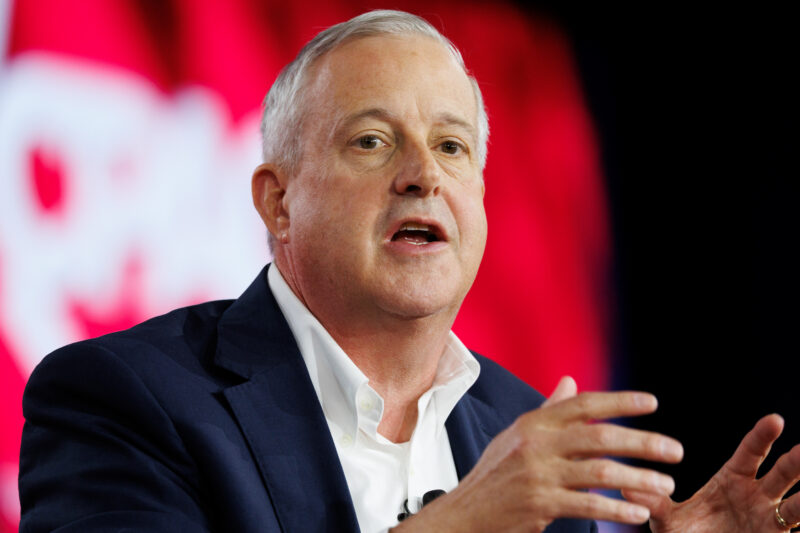
Days before Graham died, former U.S. Ambassador to Japan Rahm Emanuel was in Israel, where he delivered a speech — his own version of tough talk to Israelis — at Tel Aviv University on the future of the U.S.-Israel relationship. Speaking to reporters ahead of his speech, Emanuel, who served as White House chief of staff from 2009-2010, said that declining U.S. support for Israel “is not a Democratic Party problem. This is an American problem, and a generational problem.”
Emanuel pointed to an Associated Press/NORC Research poll released last week that showed declining support for Israel across both parties in the wake of the war in Gaza — though the erosion was considerably more pronounced among Democrats. The survey, which was conducted last month, also found that 3 in 10 Americans — including 2 in 10 Republicans under the age of 45 — believe Israel committed genocide in Gaza.
Meanwhile, a new survey from the Pew Research Center released on Friday found Israel underwater with young Americans across the political spectrum. Just 12% of Democrats between the ages of 18-29 have a favorable view of Israel, the survey found. Among young Republicans, that number is higher — but not by much. Twenty-eight percent of Republicans ages 18-29 had a favorable view of Israel. Contrast that with the 75% of Republicans (and 47% of Democrats) above the age of 65 who have favorable views of Israel.
Views of Israelis themselves are only somewhat less negative, with 33% of those surveyed between the ages of 18-29 having a favorable view of the people of Israel — not the government. Among young Republicans, that figure is 42% — something that should trigger flashing warning lights among those who have long relied on the support of an aging generation of politicians and voters who share Graham’s pro-Israel disposition.
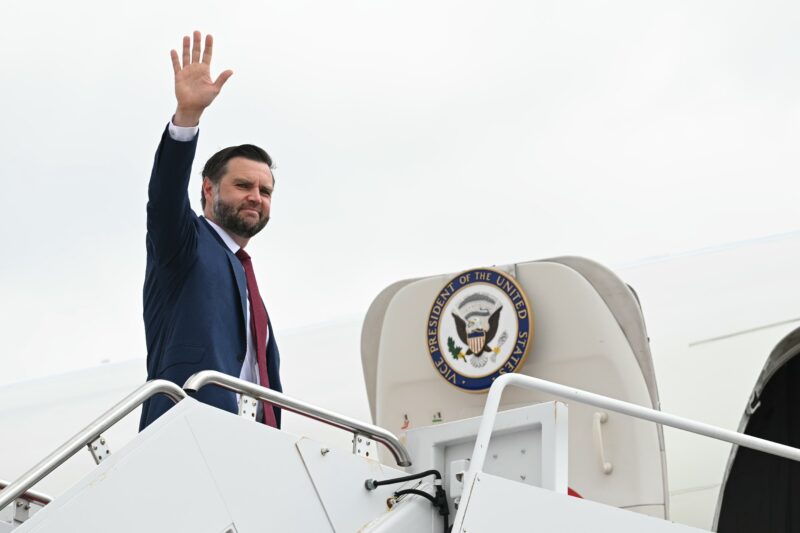
While the shift among Republicans is happening at a slower rate, movement in the GOP regarding Israel is apparent as the party’s “restrainers,” led by Vice President JD Vance, gain traction among young conservatives. As if to underscore the changing party dynamics, Politico yesterday reported on concerns among Republican Jewish donors over Vance’s approach to the Jewish state, citing his tough rhetoric toward Israeli leaders and support for diplomacy with Iran.
Separate from Emanuel’s trip, Rep. Ro Khanna (D-CA) also traveled to Israel last week, gaining attention for an incident in the West Bank in which local security forces stopped Khanna, who was accompanied by two aides and an activist with Breaking the Silence, after the congressman entered what had been until recently a closed military zone. He has since called for Israel to investigate the incident, even as Israeli officials denied elements of the congressman’s account. Khanna has not provided any evidence to back up his claim of being detained by settlers.
Speaking to The New York Times after he returned to the U.S., Khanna said, “Free advice to the Israelis: It’s not a good idea to detain long-shot presidential candidates. Not how you’re going to build good will with the next American president, whoever that is.”
In his public comments and meetings, Emanuel conveyed a desire to halt the growing daylight between future generations of Israelis and Americans. Khanna, who a decade ago was a staunch supporter of close ties with Jerusalem, has adopted a different political calculation, leaning into the growing anti-Israel sentiment in his party as a launching pad for a national campaign.
It’s no coincidence that two 2028 hopefuls chose to soft-launch their campaigns in Israel, conveying caution rather than camaraderie. It’s a sharp pivot from 18 years ago, when Barack Obama and John McCain — then their parties’ respective presidential nominees — each visited Israel in the run-up to the election, meeting with Israeli leaders and expressing support with the Israeli people.
If candidates used to travel to Israel to reassure both their constituencies and the Israeli populace of the strength of the U.S.-Israel relationship, the candidates traveling to Israel in 2026 are doing so to define themselves, and in the process treating the Jewish state as a test of political identity.
The sort of stalwart support of generations past is rapidly eroding, leaving pro-Israel Americans on both sides of the aisle battling strong headwinds as those who represent the future of their parties shift their approaches to the Jewish state. With Graham’s death, one chapter in U.S.-Israel relations has closed. Now, Emanuel and Khanna are jockeying to write the next.
More Stories
road to riyadh
Trump taps Rep. Wesley Hunt as U.S. ambassador to Saudi Arabia

TEPID RESPONSE
Rubio holds back criticism of U.K. sanctions against Israeli settlements

EXCLUSIVE
Brandeis Center urges Qatar to provide ‘complete public accounting’ of campus funding

Doha Dealings
CNN’s ties with Qatar deepen with October summit in Doha
FLAGGING FICTION
Blinken denies report he delayed Hamas offer to free hostages
BACKUP PLAN
Buffer zone bill aims to protect worshipers when prosecutors fail to act, lead GOP sponsor says
Please log in if you already have a subscription, or subscribe to access the latest updates.
 Continue with Google
 Continue with Apple