


































































House passes permanent daylight saving time bill, concerning Orthodox Jewish groups
Orthodox Jewish groups that have long warned that such a move would have negative impacts for Jewish morning prayer and raise dangers for school children

CHRIS DELMAS/AFP via Getty Images
This illustration photo shows a clock in the background of a smartphone showing the time after daylight saving time was implemented in Los Angeles, California, on March 15, 2022.


 Add JewishInsider on Google
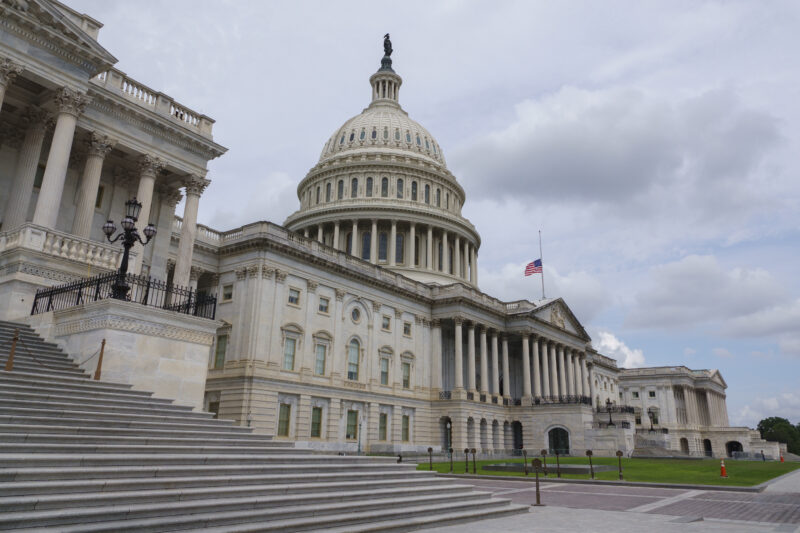
In a bipartisan vote pushed in part by President Donald Trump, the House passed the Sunshine Protection Act, making daylight saving time permanent, a situation that raises concerns for Orthodox Jewish groups that have long warned that such a move would have negative impacts for Jewish morning prayer and potentially raise dangers for school children who have to travel to school before daybreak.
The bill passed the House by a 308-117 vote, with 95 Democrats and 22 Republicans voting no. The issue has been a priority for Trump, and lawmakers have also included the same legislation in a must-pass transportation bill, with near unanimous support in committee.
Rabbi AD Motzen, the national director of government affairs at Agudath Israel of America, said that, in spite of the popular desire to eliminate time changes, “We are concerned, however, that by choosing permanent daylight saving time for the entire country it will put children at risk and affect our religious practices.”
Motzen emphasized that permanent daylight saving time would set up post-9 a.m. sunrises in parts of the country for several weeks a year, posing potential dangers to students who would have to travel to school in the dark. He also warned that extending daylight saving time “will create an extreme hardship on observant Jews,” making it “extraordinarily difficult — if not impossible — to arrive on time for a job and [effecting] the start time of our schools.”
Nathan Diament, the executive director of the Orthodox Union Advocacy Center, said that making daylight saving time permanent would “raise safety issues for children who would be going to school in the pitch dark for many weeks of the year,” about which health experts have expressed concern.
He said that it would also “interfere with the ability of members of our community to engage in congregational prayers and get to their places of work on time.”
Motzen also emphasized that a previous change to permanent daylight saving time was quickly reversed after Americans experienced its actual impacts.
Attention for the bill’s opponents now turns to the Senate, where the bill has some vocal opponents.
Diament noted that some Senate lawmakers, including Sen. Tom Cotton (R-AR), expressed “firm opposition to this measure,” offering his thanks for their efforts.
Motzen also placed his hopes on the Senate blocking passage of the legislation.
“We are hopeful that the Senate will consider all of the effects of DST and compare them to the effects of permanent standard time or maintaining the status quo before rushing into this major change,” Motzen said.
More Stories

education consternation
Department of Education accuses colleges and universities of hiding foreign funding ties
POLICY PIVOT
On Oct. 7 anniversary, senior Democrats call for changes in U.S.-Israel policy

PHOTO OP
Letitia James opponent met with Black Hebrew Israelite group

Go Blue, but blue and white?
Michigan Hillel’s break with Israel advocacy groups raises questions about where it stands
EXCLUSIVE
Lawmakers call for Congress to mandate creation of Pentagon hate symbols policy

BACK FROM THE GULF
Sen. Murphy accuses admin of ‘active cover-up’ of Iran war, vows to leverage funding to end war
Please log in if you already have a subscription, or subscribe to access the latest updates.
 Continue with Google
 Continue with Apple