































Israelis fail to understand anti-Israel sentiment in the U.S., Israeli public opinion researcher says
Dahlia Scheindlin also said polling shows both the Israeli government and the opposition face political challenges in the upcoming elections
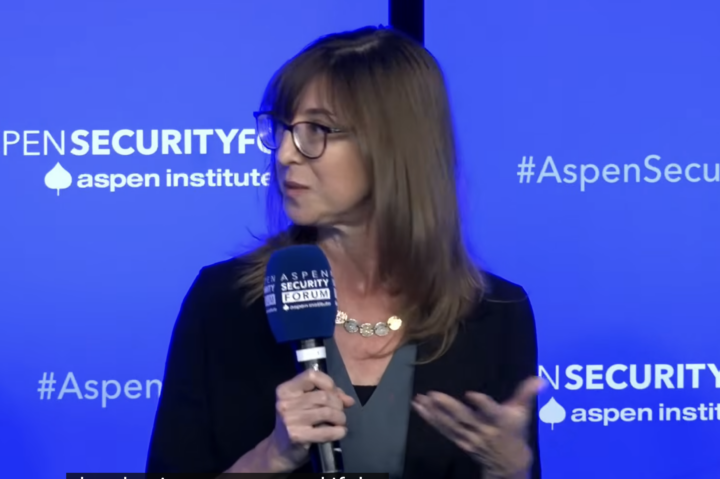
Screenshot
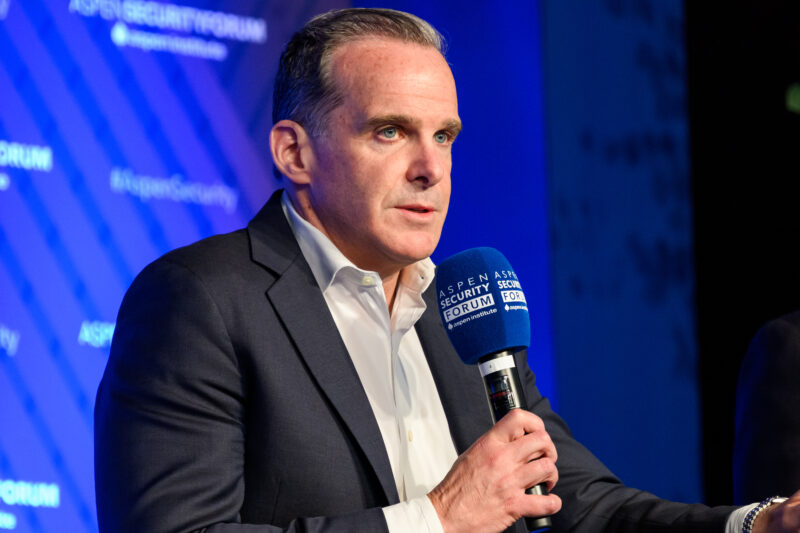
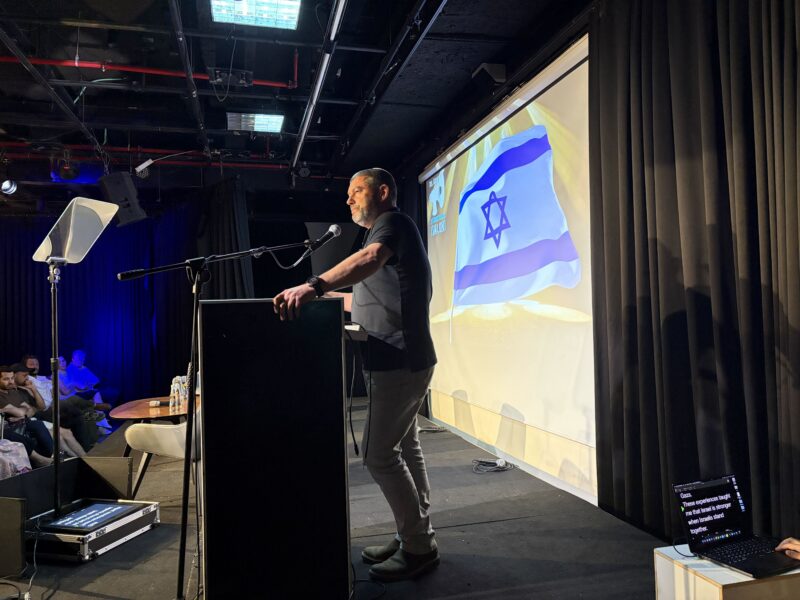
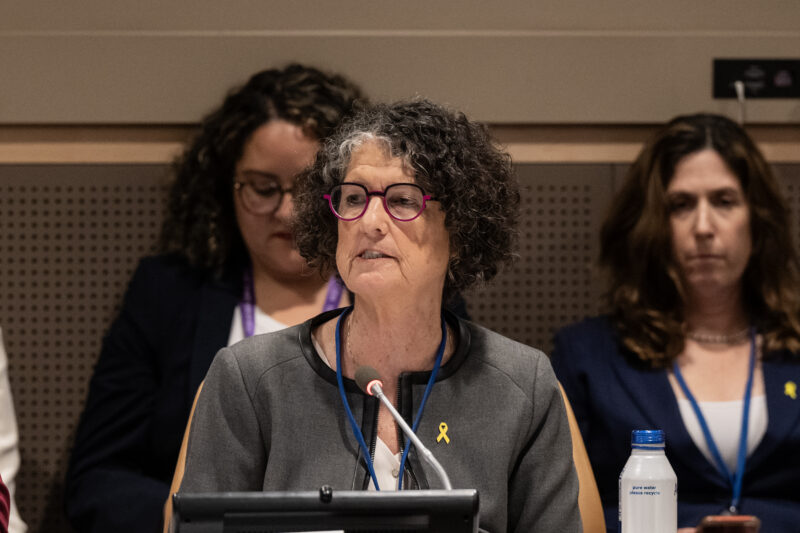
Dahlia Scheindlin speaks at Aspen Security Forum, July 17, 2026


 Add JewishInsider on Google
ASPEN, Colo. — Israelis generally don’t grasp the extent of the growing anti-Israel sentiment in the United States, Dahlia Scheindlin, an Israeli public opinion researcher and columnist, told Jewish Insider.
Speaking on the sidelines of the Aspen Security Forum this month hours before more than 100 House Democrats voted to cut U.S. military aid to Israel, Scheindlin said that most Israelis feel that warnings of slipping U.S. support have been repeated for years but haven’t come to fruition.
“Israelis for a long time have been told ‘you have to worry about the America-Israel relationship’ and nothing ever really happened — they sort of took it for granted that the relationship would always be there, and in many ways they still do,” Scheindlin said. “From the Israeli perspective, there’s a little bit of a sense of crying wolf. We see that in the 53% who still think that the relationship will be fine.”
She said most Israelis today view Republicans as pro-Israel and Democrats as anti-Israel and have little understanding of the range of views within both parties. And she said they don’t believe Israel’s own actions have any bearing on U.S. criticism of Israel.
Supporters of opposition parties, she continued, believe that Israeli Prime Minister Benjamin Netanyahu “personally has undermined the relationship” — but that the issues in the relationship largely end with Netanyahu.
She said that the strong support in Israel for President Donald Trump took a nosedive with the ceasefires in Iran and Lebanon, with many Jewish Israelis feeling that Trump had forced a premature end to the wars and didn’t let the U.S. and Israel carry them to their conclusion or fulfill their main objectives.
But she said that most Israelis still see issues in the relationship as a “disagreement that will pass” rather than a true crisis or turning point. She said a majority of Israelis still feel the U.S.-Israel relationship will survive — and many are too concerned with their own daily lives and the ongoing impacts of the wars in Gaza and Lebanon to give the relationship much thought.
“When you ask about the U.S.-Israel relationship, it’s somewhere between repressing it and complacent and fearful — but also they have been told year after year for quite a long time, ‘Watch out for this relationship,’ and then America continues to come through in so many ways,” she said.
Ahead of the Israeli elections in October, Scheindlin said that Israeli public opinion polling has been relatively consistent for several years, with the current governing coalition lacking a majority of 61 Knesset seats. At the same time, the coalition has recovered from its post-Oct. 7, 2023, nadir of support, and has sat consistently in most surveys between 49 and 55 seats.
“There’s some instability right now, but the basic breakdown that I just said between opposition and coalition has been really extraordinarily stable for almost two years now,” Scheindlin said. “The basic breakdown, where the current coalition has a minority and the opposition has a majority, but can’t form a coalition of only Zionist parties — those basic contours were in place before Oct. 7.”
Even through the popular 2025 war with Iran and the less-popular 2026 war with Iran and killing of Hezbollah’s leadership, the coalition’s polling has changed little, she continued.
“I don’t know what could happen between now and the elections that would give this coalition the additional six to 10% it would need to make up in order to actually win an outright majority of seats,” she said.
At the same time, given the reluctance of opposition parties to create a coalition with Arab parties, they have “constrained their own options,” she said. “It’s a strange situation where the opposition has such a firm majority in all surveys between 65 and 70 seats, mostly, and yet so much of Israeli society has conditioned itself to look only at the Zionist parties in forming a coalition that they don’t have a majority either in most surveys.”
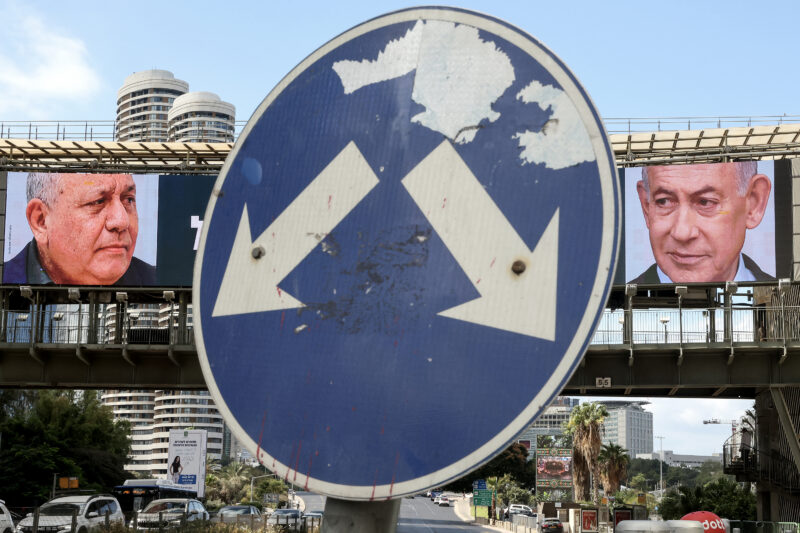
She noted, however, that Gadi Eisenkot, currently the leading opposition candidate, has seemed to leave the door open to partnering with Arab parties.
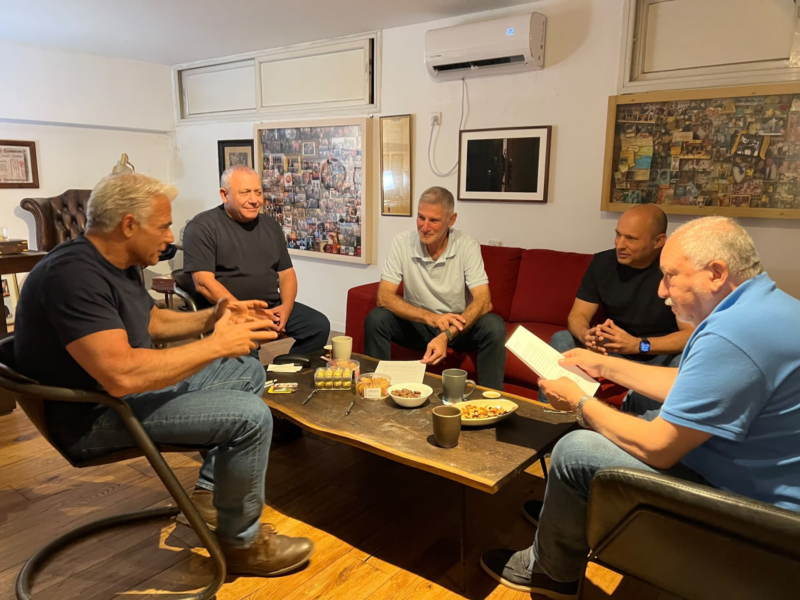
The much-hyped merger of the parties led by former Prime Ministers Naftali Bennett and Yair Lapid hasn’t expanded the size of their bloc nor brought them significant new support.
“It was a small boost in the beginning and then it went back down and now it’s heading closer to where Lapid was polling in surveys even before, which means that most of their supporters are probably Lapid supporters,” Scheindlin said. “Bennett didn’t actually bring very much.”
Scheindlin said that the traditional Bennett constituency — center-right or right-leaning voters who oppose Netanyahu — are now supporting Eisenkot instead.
Scheindlin also told JI that she sees parallels between Israel’s current security strategy of fighting enemies on its own turf as similar to Iran’s own strategy of “forward defense” — comments she repeated on an Aspen panel about the U.S.-Israel relationship, to pushback from fellow panelists.
“The issue of reaching agreements or diplomacy has been so diminished, completely gutted for a long time that even now, when we have the beginnings of a negotiating process with Lebanon … Israelis are very skeptical that that can yield anything,” she said.
She called the oft-repeated idea that Israel is surrounded on all sides by enemies “demonstrably untrue,” noting that the country has had peace with both Egypt and Jordan for decades, that Iraq, Lebanon and Syria no longer harbor the same animosity or capability to threaten Israel and that Israel has forged new peace deals with Gulf states.
“Are there militias? Are there terror groups? Absolutely. Those are very real,” Scheindlin continued. “But the idea that Israel is surrounded by enemy states that want to destroy it factually, and yet when that’s what you’re being socialized into all the time, then you come to the conclusion that only war is the way to deal with it — which, after Oct. 7, it’s not hard to convince people that the threat is very material and not theoretical.”
Asked about Israeli views on the path forward in the Israeli-Palestinian conflict, Scheindlin emphasized that there is no clear consensus view among the Israeli public with “minority support” for a two-state solution, a democratic one-state solution, a Jewish-dominated one-state solution or a continuation of the status quo.
She said the dilemma has been exacerbated by the failure of Israeli political leaders to articulate a clear plan or solution of their own. Even though the current government has been open about its interest in annexing the West Bank, she said that leaders have not been clear about what that would mean for the Palestinians living there.
More Stories
NEW HIRE
El-Sayed hires veteran political consultant Lenore Goldman as Jewish liaison
CAMPAIGN CALCULUS
El-Sayed focuses on attacking Israel in closing stretch of the campaign
CAMPUS CLASH
Georgetown Law student association denounces Ted Cruz staffer over Muslim Brotherhood lecture

SPEAKING OUT
Jewish groups call for apology after educators asked to condemn Israel to attend Italy trip

PRAIRIE STATE PRIORITIES
Illinois Democrats spend big for anti-Israel candidate running for state Senate
THREAT THWARTED
Man arrested in Boca Raton for making death threat against Rep. Jared Moskowitz
Please log in if you already have a subscription, or subscribe to access the latest updates.
 Continue with Google
 Continue with Apple