


























































Blue Square Alliance finds increasing apathy towards antisemitism
Robert Kraft’s antisemitism awareness group found 30% of the public now holds antisemitic attitudes — the highest level since it began tracking in 2023
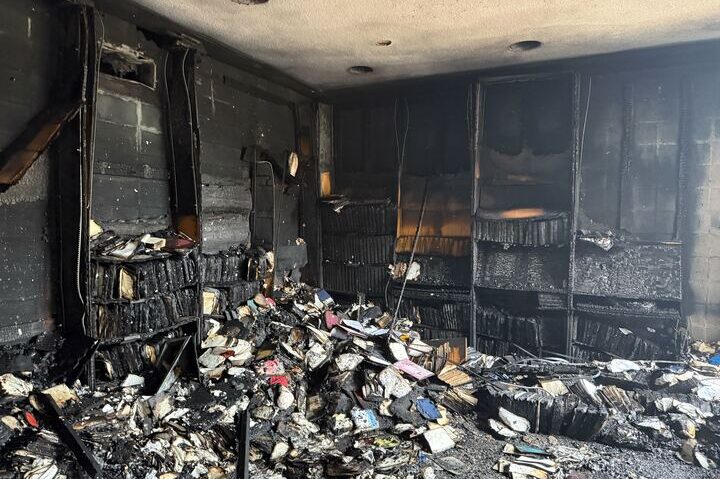
Beth Israel Congregation
Beth Israel Congregation in Jackson, Miss., targeted in an arson attack on Jan. 10, 2026.


 Add JewishInsider on Google
Most Americans say they are concerned about antisemitism in the country, yet more than half are unaware of recent major attacks targeting Jews, such as last December’s Bondi Beach terror attack in Sydney, Australia, a new survey from Robert Kraft’s Blue Square Alliance Against Hate found.
Underscoring this lack of awareness, the number of Americans who identify as allies of the Jewish community continued to shrink, according to the anti-hate group’s semiannual survey on U.S. antisemitism.
The report, drawn from a survey of more than 7,000 online respondents from March 4 to April 3, is titled “Worse Than Before: Antisemitic Attitudes Reach New Levels Across the U.S.,” and indicates that responses to antisemitism among the American public are less forceful than they were in the immediate aftermath of Hamas’ Oct. 7, 2023, terrorist attacks in Israel.
After the Hamas attacks and the onset of the ensuing Gaza war, antisemitic attitudes surged in the U.S., peaking in mid-2024, the Blue Square Alliance found. These numbers have again worsened since August 2025, with negative stereotypes about Jewish people growing most sharply among younger Americans, according to the survey. Additionally, the survey found an uptick in the share of Americans who say they don’t consider Holocaust denial to be antisemitic.
Further, the survey reveals a decline in the public’s desire to combat antisemitism. A plurality of Americans (47%) are now considered “unengaged” in combating anti-Jewish hate, and the share of those characterized as “active allies” has fallen to 23%, down from 30% in August 2025.
According to the group’s typology categorizing Americans according to whether they believe in anti-Jewish tropes, 30% of the population now holds antisemitic attitudes — the highest level recorded by the nonprofit since it began tracking in 2023 and a noticeable increase from 24% in August 2025.
While most Americans say antisemitism is a serious problem, they are often blind to its proximity. The survey found a sharp disconnect — 61% said they would be highly concerned if a Jewish individual or business in their community were harassed, yet only 23% view it as a clear and present threat.
A 53% majority of Americans were unfamiliar with the December 2025 attack at Bondi Beach in Sydney, Australia, in which 15 people were killed during a Hanukkah celebration, and 66% were unaware of the arson of the largest synagogue in Jackson, Miss., in January.
Fifty-five percent of Americans now believe Jewish people can handle antisemitism on their own — up 15 percentage points from June 2023. Gen Z and millennials are more than twice as likely as baby boomers (29% versus 13%) to view Jewish people as a threat to the unity of society.
Meanwhile, nearly one-third (32%) of Americans do not consider Holocaust denial to be antisemitic, up 13 percentage points since June 2023.
The Blue Square Alliance renamed itself from the Foundation to Combat Antisemitism last year, an effort designed to awaken the broader public to anti-Jewish hate. The group’s new name is a reference to its blue square pins that have been distributed to interfaith communities nationwide and posted online as a symbol in the fight against antisemitism.
Adam Katz, the group’s president, told Jewish Insider that the Blue Square Alliance’s ongoing campaigns, including its rebrand, are succeeding in making Americans more aware of antisemitism than they would be otherwise.
“We’ve seen a significant lift in awareness of our brand [and] recognition of our brand [as people] wear or share the blue square and tend to be familiar with the work we’re doing,” said Katz.
Responding to the survey results, Katz said he doesn’t think the solution is “a massive change in our programming, I think it’s continuing to push our programming as fast and as hard as we can.”
He said the group’s Super Bowl ad earlier this year that raised awareness of antisemitic bullying resulted in “nearly half of viewers [taking] action based on seeing the ad, they talked about hate and antisemitism with friends and family, they got more educated on it.”
“That tells us that the messaging works. We need to make sure that we are distributing it as targeted and precisely as we can,” said Katz.
Still, he asserted that getting Americans consistently engaged in antisemitism remains “a real challenge.”
“It’s a function of an extremely fragmented media landscape where everyone is consuming information from different sources and getting personalized feeds, so you have to work that much harder for things like antisemitism to feel proximate,” Katz said. “That’s why we see an almost dichotomous trend — a significant increase in people recognizing antisemitism as a major problem, and simultaneously a significant increase in people saying Jews can handle it on their own. They see it as something that is growing but not something close to them on their street, in their neighborhood. Therefore, they can allow themselves to be on the sidelines.”
Addressing the data that shows antisemitism is significantly higher among Gen Z and millennials compared to older generations, Katz said his organization “needs to focus there.”
“We need even more intense focus on young Americans and making sure we are really meeting them where they are as media consumption evolves.”
More Stories

analysis
From Oct. 7 to FlyDubai, ordinary Israelis keep filling the gaps left by the government
PHOTO OP
Letitia James opponent met with Black Hebrew Israelite group
Daily Overtime
Slotkin sees no ‘Jewish vote’ in Michigan
Cross-Party Call
JCPA urges candidates in both parties to reject antisemitism ahead of midterms

analysis
Chris Murphy’s selective outrage in the Middle East
CATCHING HEAT
Pro-Israel Democrats blast Mamdani for Oct. 7 anniversary statement
Please log in if you already have a subscription, or subscribe to access the latest updates.
 Continue with Google
 Continue with Apple