




















































The biggest red flag for the party — especially among its Jewish and pro-Israel supporters — is its decision to give Michigan Democrats such a pivotal role, given the rise of antisemitism and anti-Israel hostility within the state party ranks
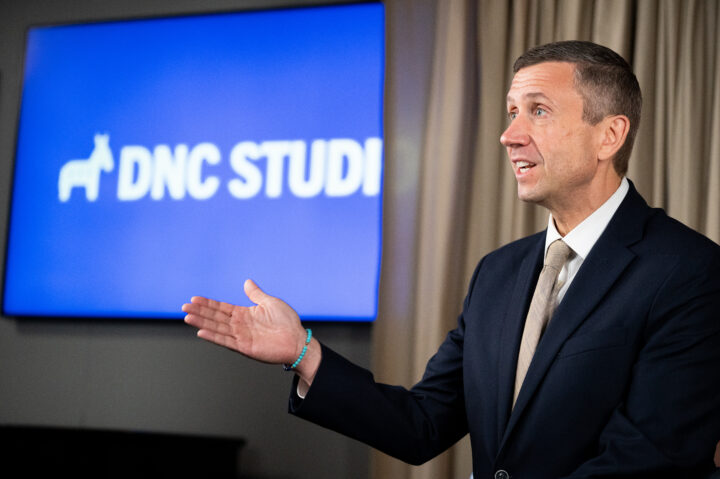
UNITED STATES - NOVEMBER 2: Ken Martin, chair of the Democratic National Committee, speaks during an interview at DNC headquarters in Washington on Sunday, November 2, 2025. (Bill Clark/CQ-Roll Call, Inc via Getty Images)


 Add JewishInsider on Google
For Democrats worried about the party’s left turn, the outcome of the presidential nominating calendar, which was approved by a Democratic National Committee panel on Friday, is something of a mixed bag. (For pro-Israel Democrats, the presence of Michigan taking center stage on the early schedule is already causing heartburn, per reporting from JI’s Matthew Kassel.)
In a boost for centrists, the nomination process is slated to lead with South Carolina, a Southern state that has long been a moderating force in the party’s presidential calendar, largely because of its sizable Black population.
But as Jonathan Martin noted in Politico, South Carolina’s first-in-the-nation status carries some unintended consequences. The state, which has typically voted after Iowa’s caucuses and New Hampshire’s primary, often played the role of choosing the nominee after the field was winnowed down by the earlier states. South Carolina has picked the primary winners in the last two decades: Barack Obama (in 2008), Hillary Clinton (in 2016) and most notably Joe Biden (in 2020) when pundits counted the former vice president out after losses in Iowa, New Hampshire and Nevada.
With South Carolina being moved to the front of the line, the state will end up narrowing down the lineup of candidates rather than having the final say on a shortlist of candidates. The changed primary calendar also puts pressure on moderate candidates to make a strong showing right away: If a leading centrist such as Pennsylvania Gov. Josh Shapiro runs for president, South Carolina suddenly becomes much more of a pivotal state, with outreach to Black voters a necessity.
Nevada will miss out on being the central player under the new calendar, but will still play a key role, holding the first primary in the West just over a week after South Carolina. The state has typically been friendly turf for progressives, given the influence of the state’s culinary union, which organizes workers in the gaming industry. Sen. Bernie Sanders (I-VT) easily won the state in 2020 and only lost narrowly to Clinton in 2016, demonstrating his insurgent campaign’s staying power.
The power of the state’s progressive organizers and its large Hispanic population have raised concerns that a far-left candidate such as Rep. Alexandria Ocasio-Cortez (D-NY) could emerge as a favorite — a factor that dampened support for its bid to be the first-in-the-nation contest.
But Nevada also is a swing state, and the state’s switch from a caucus to a primary should broaden the Democratic electorate beyond the most committed activists. That two of the most pragmatic and pro-Israel Democrats represent the state in the Senate — Democrats Jacky Rosen and Catherine Cortez Masto — should also be a silver lining for Jewish Democrats worried about the Democratic Socialists of America factor in the state.
Under the DNC plan, New Hampshire loses its first-in-the-nation-primary status — diminishing its traditional role of thinning out the large field of candidates — but it will still hold the politically pivotal third spot. (New Hampshire Democrats condemned the calendar proposal after it was announced; New Hampshire law requires the state to hold the first presidential primary.)
If New Hampshire ends up accepting its diminished role, it is a likely blow for the more-moderate wing of the party. Even though Sanders won the 2016 and 2020 primaries (in part because he represents the state next door), New Hampshire’s primary hinges less on ideology and more on who can capture the enthusiasm of the exacting voters who treat the process as a state sport every four years.
It’s no coincidence that center-left candidates such as Pete Buttigieg and Sen. Amy Klobuchar (D-MN) outperformed expectations in 2020, and that a dark horse moderate candidate, Sen. Mark Kelly (D-AZ), is polling surprisingly well in a recent statewide survey. If there was a state that a straight-talking centrist such as Rahm Emanuel would need to do well in, it would be New Hampshire.
But with the new calendar, it will be harder for appealing candidates to translate retail buzz in New Hampshire into political momentum, as has happened so often in the past. At a time when algorithmic media and rage-bait virality typically benefit the left, New Hampshire could have served as a corrective against the ideological fads dominating the party. But going third, after two bigger states, makes it tougher for a moderate maverick to emerge.
The biggest red flag for the party — especially among its Jewish and pro-Israel supporters — is its decision to give Michigan Democrats such a pivotal role, given the rise of antisemitism and anti-Israel hostility within the state party ranks. If you’re a Jewish pro-Israel candidate like Shapiro, it will be a headache confronting the radicalism within the party that has been documented thoroughly over the last year.
Michigan is scheduled to be voting fifth in the country on Feb. 22, 2028 — with 115 delegates at stake, the most of the states in the early voting window.
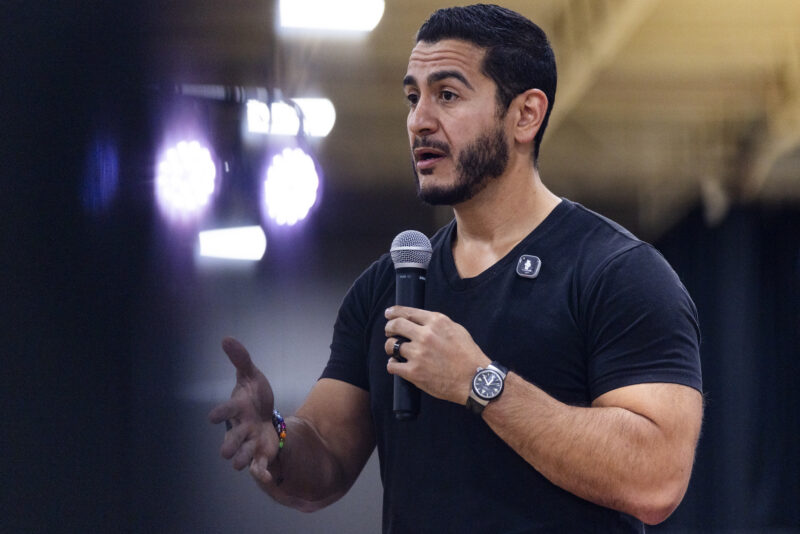
The optimist’s case? The Democratic establishment in Michigan still has some fight left in them, as demonstrated by Gov. Gretchen Whitmer’s late endorsement of Rep. Haley Stevens (D-MI) against the far-left Abdul El-Sayed in the state’s critical Senate primary that’s become a proxy battle between the party mainstream and the far left. If Stevens prevails, it would underscore party activists aren’t all that representative of party voters.
And, as one senior Democratic official told JI, any successful party candidate will have to confront the issue of antisemitism head on, regardless of whether Michigan plays a key nominating role. In this strategist’s view, having to deal with it early on in a Michigan contest could end up being beneficial in the long run, despite the obvious pitfalls.
Virginia and New Mexico are the two wild cards, with both being added to the early voting schedule. Both states tend to prefer moderates over progressives, but it remains to be seen how their higher-profile roles will shape the nominating process.
All told, there are reasons for centrists to be hopeful about the nominating schedule, especially with the presence of two moderate-minded Southern states in the top five. But the importance of Michigan in the primary calendar threatens to deepen rifts between Jewish voters and the Democratic Party — at the worst possible time.
The state has been the epicenter of the anti-Israel movement, and will play a key role in nominating the next Democratic presidential candidate
Kristen Norman/AP
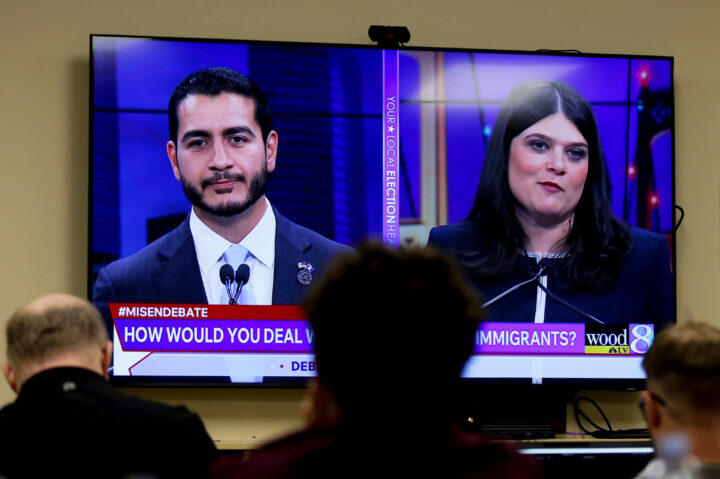
Michigan U.S. Senate candidates, Abdul El-Sayed, left, and Rep. Haley Stevens, D-Mich., are displayed on a television during a debate inside the spin room at WoodTV studios on Tuesday, July 7, 2026, in Grand Rapids, Mich.
The selection of Michigan as an early Democratic primary state in the 2028 presidential nominating contest, approved on Friday by a panel of the Democratic National Committee, is prompting some concerns among Jewish and pro-Israel activists who fear the party’s sharp divisions over Israel and its recent controversies over antisemitism could create a volatile political landscape during the key contest.
In recent years, Michigan has been at the center of some of the fiercest fights over Israel animating the Democratic Party. In the 2024 presidential race, for instance, the battleground state first laid the ground for the “uncommitted” movement that urged primary voters not to vote for former President Joe Biden as a protest against his support for Israel during the war in Gaza.
At Michigan’s state party convention in April, meanwhile, pro-Israel candidates were heckled by far-left activists, while an attorney with a history of praising Hezbollah was nominated for a position on the University of Michigan Board of Regents, episodes that left Jewish voters questioning if they belonged in a party they had long called home.
The state’s Democratic Senate primary, set for Aug. 4, has emerged as the latest high-profile proxy battle between the party’s mainstream and far-left factions. The most heated clashes have revolved around Israel and AIPAC, the pro-Israel advocacy group that is now spending millions to help Rep. Haley Stevens (D-MI), a close ally, in a bitter race against Abdul El-Sayed — whose rhetoric targeting Israel and ongoing refusal to recognize its right to exist has alarmed Jewish voters.
Michigan’s presidential primary will now tentatively go fifth among the six states chosen for early primaries, on Feb. 22 — a week after New Mexico and a week before Virginia. South Carolina will kick off the nominating contest on Jan. 22, followed by Nevada and New Hampshire. The newly proposed calendar will need to be ratified by DNC members at a meeting in Austin next month.
If the schedule is officially locked in, Michigan, which has the most delegates of the states chosen, “figures to be one of the first anti-Israel or antisemitic states that has a vote,” Dennis Bernard, a Jewish leader in Michigan who helps advise members of both parties, said in an interview with Jewish Insider on Sunday.
“I do think we will be very much a bellwether state” that “could be the first true test of the Democratic Party and how big their tent is,” added Bernard, the national chair of government relations for the Jewish Federations of North America. “You will potentially see a continuation of that war going on right now.”
Several Jewish leaders in Michigan said the Senate primary outcome would likely help crystallize their expectations about the degree to which Democratic conflict over Israel, and the state’s role in elevating that battle to the forefront, may end up influencing the presidential election.
“Those results will give us a better indication of 2028,” said Michael Horowitz, one such Jewish leader in Michigan, noting the positions espoused by El-Sayed are not a “national trend yet,” despite a recent series of primary wins by anti-Israel Democrats who ran in progressive House districts. “We’ll see how deep this well is. I’m not naive, but I don’t know.”
Still, the Democratic Party and pro-Israel community “have to get together and take control of the narrative again, because they’re winning the narrative,” he told JI, referring to the far left. “We have got our work cut out for us. We’ve lost the narrative.”
“If you talk to major Democratic donors, they’re concerned about Michigan because the moderate wing of the party is disappearing,” Ed Sarpolus, a Democratic pollster in the state, told JI. “Democrats could be worse off in 2028 if they don’t get back to the issues.”
By contrast, Asher Lopatin, a rabbi who serves as director of community relations at the Jewish Federation of Greater Ann Arbor, cited Gov. Gretchen Whitmer’s endorsement of Stevens last week as a sign that “may indicate the direction Michigan Democrats are going in for 2028,” which he called “not falling into the anti-Israel obsession trap.”
“I realize it’s a rosy scenario, but I am hopeful,” he told JI.
Political strategists who spoke with JI shared mixed predictions about Michigan’s early place on the 2028 primary calendar. Ed Sarpolus, a Democratic pollster in the state, said it could “exacerbate tensions within the Democratic Party” over Israel, disrupting a fragile effort to show unity ahead of what is expected to be a bruising general election to reclaim the White House.
“If you talk to major Democratic donors, they’re concerned about Michigan because the moderate wing of the party is disappearing,” Sarpolus told JI. “Democrats could be worse off in 2028 if they don’t get back to the issues.”
But Adrian Hemond, a Democratic strategist in Michigan, said it “is way too early to predict with confidence” how Israel “will play as an issue” in the 2028 Michigan presidential primary, arguing that “a lot will depend on how hard candidates lean into the issue.”
“If the situation in the Middle East deteriorates further,” he explained to JI, “this issue could look very different.”
Some experts have also speculated that Michigan’s position could lead to uncomfortable confrontations for pro-Israel centrists like Pennsylvania Gov. Josh Shapiro, a Jewish Democrat who is frequently cited as a prospective presidential candidate and who has faced antisemitism over his views on the Middle East.
Some Jewish leaders, however, said a pro-Israel win in Michigan could help defang the far left at what may be a key inflection point in the race. If an openly pro-Israel candidate emerged in the state, “I think it would be a surprise as to the traction they got,” since it “would stand out as authentic,” said one prominent pro-Israel activist in Michigan, granted anonymity to speak candidly about a sensitive issue.
He was not hopeful that such a candidate would step up. “I don’t see why Michigan is the venue in which someone does a complete paradigm shift” on Israel, he told JI, citing the existing political headwinds. “I think we are kind of a laboratory for the Democratic Party across the nation.”
One pro-Israel strategist in Michigan, speaking on condition of anonymity, said that several potential 2028 contenders have already visited the state and have had private meetings with Jewish donors and groups — including Rahm Emanuel, the Democratic operative and former Chicago mayor, and Maryland Gov. Wes Moore.
“A couple others have had meetings with prominent Jews while in Michigan, but I can’t say for sure if the reason for meetings was to lean into the Jewish vote,” the strategist told JI.
While Michigan also went fifth in 2024 after it had lobbied for an early slot, the state promises to play a more consequential role in the next election because it will be a competitive primary, as opposed to the last cycle in which Biden faced no serious opposition before dropping out of the race.
Anti-Israel activists have insisted that former Vice President Kamala Harris lost Michigan, home to the largest concentration of Arab American voters in Dearborn, due to her alignment with Biden’s support for Israel during the war in Gaza.
But many Jewish Democrats in Michigan, who make up a sizable and politically engaged constituency, say the left’s vilification of Israel as well as AIPAC is not only misguided but also a distraction from more urgent concerns that are much more relevant to swing voters who will ultimately decide the election. Some suggested that Michigan’s status in 2028 as an early nominating state could stoke those tensions and overshadow other issues, in a repeat of the last cycle.
“The antisemitic rhetoric that we have observed on the right and the left, the attacks on Israel’s right to exist as a Jewish state, are, sadly, going to be issues that both parties have to address in 2028,” Robert Zimmerman, a longtime DNC member, told JI while assessing the 2028 primary landscape. “Democrats have to do a much better job of standing up to that hateful rhetoric.”
“It means that the real issues facing Michigan will continue to be less important” than the hostility to Israel now energizing the activist left, Hannan Lis, a Democratic fundraiser and Jewish community leader in the state, told JI. “I cannot tell you I’m optimistic. I’m a realist,” he said.
Even as he acknowledged “two years is a long time,” he voiced anxiety that “support for Israel has become a litmus test for a lot of Democratic candidates,” as it has grown increasingly politicized in party primaries.
“The antisemitic rhetoric that we have observed on the right and the left, the attacks on Israel’s right to exist as a Jewish state, are, sadly, going to be issues that both parties have to address in 2028,” Robert Zimmerman, a longtime DNC member, told JI while assessing the 2028 primary landscape. “Democrats have to do a much better job of standing up to that hateful rhetoric.”
Despite reservations about Michigan’s potentially divisive role in the presidential race, some Jewish leaders in the state and beyond said they were still staying positive.
In a statement to JI, Jessica Alexander, chair of the Michigan Democratic Jewish caucus and a vice chair of the Michigan Democratic Party, said party activists had “worked hard to make the case for Michigan to be an early primary state, because the state reflects the country’s diverse demographics culturally and geographically.”
“Yes, there is a vocal virtual subset of folks who want to make not the Middle East, but Israel and the U.S.’s engagement in and with it the center” or “soul” of the campaign, she said, “but the reality on the ground is that it’s not the most formidable issue no matter how the press skews it.”
Noah Arbit, a Jewish Michigan state representative who has been outspoken against rising antisemitism in his own party, said that the Democratic Socialists of America and other groups “seem to feel that Israel is a galvanizing wedge issue they can employ to take over the Democratic Party” and for now “seem intent on putting it at the forefront of the primary debate in 2028, regardless of Michigan’s place in the calendar.”
“I’m resigned to the issue being at the forefront of the primary conversation,” he told JI last week, “despite the fact that I would argue Americans have far more pressing concerns about the state of and future of our country than an interminable conflict 5,000 miles away.”
The question facing the Middle East working group’s members is whether they will actually be able to agree on anything — or if the group is simply a way to push the issue off until 2028
Paul Holston/AP
People stand outside the Democratic National Committee headquarters in Washington, June 14, 2016.
At last week’s Democratic National Committee meeting in New Orleans, two resolutions concerning Israel — including one that referred to Israel’s actions as a genocide — were tabled, and punted to a working group tasked with building consensus among Democrats on Middle East-related issues.
At a time when Democrats appear deeply divided about how to address the U.S.-Israel relationship and Middle East policy more broadly, that’s a tall order. Never mind that the members of the working group include both strongly pro-Israel and staunchly anti-Israel voices, all tasked with working to further a message that will resonate with as many party members as possible.
“As much as this issue is potentially divisive, I think it’s actually really the purview of a smaller group of activists who want something really radical. I think most Democrats are within what the Democratic platform of 2024 is, and that’s two peoples living in two states, side-by-side in peace,” Adam Goldwyn, a working group member who serves as chair of the North Dakota Democratic Party, told Jewish Insider.
The Democratic Party’s 2024 platform, authored in the midst of Israel’s war in Gaza and the simultaneous hostage crisis, reflected former President Joe Biden’s support for Israel. But rank-and-file Democrats have shifted away from Israel since then. A recent Pew Research Center poll showed that 80% of Democrats and Democratic-leaning independents have an unfavorable view of Israel, an increase from 69% one year ago, and a growing cadre of Democratic candidates and activists have targeted the pro-Israel group AIPAC as a toxic brand that is not welcome in Democratic politics.
Even though the DNC is not tasked with rewriting the party platform until 2028, the party’s biannual meetings present opportunities for activists to submit resolutions on any number of topics. Following Democrats’ 2024 defeat, anti-Israel activists — including two who sit on the working group — have put forward resolutions that would attempt to dramatically move the party’s public positioning to the left.
One, which called for an arms embargo on Israel, was voted down at the party’s summer meeting in August 2025. Another, which criticized AIPAC’s involvement in Democratic primaries, failed to advance at the meeting in New Orleans last week. Allison Minnerly, a DNC member from Florida who authored both of those resolutions, sits on the working group. Another resolution considered last week, which referred to Israel’s actions as a genocide and was written by working group member Joseph Salas, was sent back to the working group for consideration.
The question facing the group’s members is whether they will actually be able to agree on anything — or if the group is simply a way to push the issue off until 2028, when the party platform is again up for debate. It would not be the first bureaucratic Band-Aid applied to paper over an increasingly fraught political debate.
“Both young voters who consider themselves vigorously pro-Palestinian, and Jewish voters, who are one of the most loyal groups in the Democratic Party, are not going anywhere,” said Andrew Lachman, a member of the working group who was previously the president of California Jewish Democrats. “Anyone who wants to take an approach of trying to shout one or the other out of the room, I think it’s bad politics. It’s bad for the party, and it’s an unrealistic expectation.”
“We are working within the framework of the Democratic platform as it is now, so anything which attempts to radically rewrite where the party has been is not something that I personally feel is appropriate,” said Andrew Lachman, a member of the working group who was previously the president of California Jewish Democrats.
Lachman said he recognized “that the conversation has shifted a little bit in the last couple of years.” But, he added, the party must still be able to find common ground among party members who hold different views on the issue.
“Both young voters who consider themselves vigorously pro-Palestinian, and Jewish voters, who are one of the most loyal groups in the Democratic Party, are not going anywhere,” said Lachman. “Anyone who wants to take an approach of trying to shout one or the other out of the room, I think it’s bad politics. It’s bad for the party, and it’s an unrealistic expectation.”
DNC Chair Ken Martin created the working group last August, amid controversy surrounding the failed arms embargo resolution. He had put forth his own resolution, which was more balanced, but withdrew it and opted instead to task a group of party activists with litigating the issue.
“I feel like we’ve been a little rudderless,” Steph Newton, an Oregon Democrat who was appointed co-chair of the group, told JI on Friday after the group met in New Orleans. “I’m taking it seriously. I want my kids to be Democrats. I want this party to be safe for my kids in the future.”
“There is a divide in our party on this issue. This is a moment that calls for shared dialogue and calls for shared advocacy,” Martin said in August. He called on the task force “of stakeholders on all sides of this to continue to have the conversation, to work through this, and bring solutions back to our party.”
Steph Newton, an Oregon Democrat who was appointed co-chair of the group, drafted a charter for the working group that the body is now editing ahead of its next planned meeting later this month. The group was “convened to support the Democratic Party in advancing a just, secure, and lasting peace in the Middle East, while strengthening internal cohesion across perspectives within the Democratic coalition,” the draft charter states, according to a copy shared with JI.
“I feel like we’ve been a little rudderless,” Newton told JI on Friday after the group met in New Orleans. “I’m taking it seriously. I want my kids to be Democrats. I want this party to be safe for my kids in the future.”
She expressed frustration at working group members who had submitted their own resolutions ahead of last week’s meeting. Newton’s goal is for the group to be able to come up with some kind of compromise language that they can all get behind.
“We got agreement from folks. We said, ‘Hey, it wasn’t cool that you guys went off and did something like this and just submitted something. You should have come to the group,’” said Newton, who also leads the Oregon Democratic Party’s Jewish caucus. “The next thing that’s going to be coming out of this is going to be coming from the working group.”
Her co-chair on the working group is Shad Murib, the chair of the Colorado Democratic Party. Other members include longtime pro-Palestinian activist James Zogby and Deborah Cunningham-Skurnik, a regional director in the California Democratic Party.
What the working group members can agree on is the shared goal of electing Democrats. A DNC spokesperson told JI that this is the lens through which the working group views its mandate: winning elections.
“I think certainly there are some people for whom the message is more important than the election,” said Goldwyn, the North Dakota Democrat. “But I think that’s not where most Americans and most DNC members and most voters are.”
The vote was the latest defeat by anti-Israel activists within the Democratic National Committee
Alex Wong/Getty Images
Committee members wait for the beginning of a meeting of the Democratic National Committee’s Rules and Bylaw Committee in Washington, DC
Democratic Party activists on Thursday voted to reject a measure that criticized the involvement of AIPAC in Democratic primaries and the American political system.
The resolution was debated during a meeting of the Democratic National Committee’s Rules Committee at the DNC’s New Orleans meeting. Committee members were considering new policy resolutions, including one introduced by a Florida activist that took aim at AIPAC and the group’s “undue influence over democratic debate and policymaking.” It was voted down in a voice vote.
“The DNC made clear today that all Democrats, including millions who are AIPAC members, have the right to participate fully in the democratic process,” AIPAC spokesperson Deryn Sousa told Jewish Insider.
Jewish Democratic advocates who were in the meeting room praised the decision.
“We’re pleased that the resolution that wrongly singled out AIPAC was defeated, and that the other anti-Israel resolutions failed to move forward. These measures would be a gift to Republicans, would further fracture our party and do nothing to bring Israelis and Palestinians closer to peace,” Democratic Majority for Israel CEO Brian Romick, who attended the meeting, told JI after the vote.
Halie Soifer, the CEO of the Jewish Democratic Council of America, said the group agrees with the goal of getting dark money out of politics but that AIPAC should not be targeted explicitly.
“We agree with the rejection of dark money in politics — a topic covered in another more expansive resolution adopted by the committee — but also believe that singling out any individual organization is both unproductive and unnecessarily divisive,” Soifer, who also attended the meeting, told JI.
Earlier in the meeting, the committee voted to support a measure “condemning the influence of dark money in the 2026 Democratic primary elections” that called out the artificial intelligence and cryptocurrency industries.
The vote by the DNC’s resolutions committee comes as the Democratic Party faces growing internal strife about its long-standing support for the U.S.-Israel relationship, as some party activists seek to push the group to the left. A new Pew Research Center poll released this week revealed that 80% of Democrats and Democratic-leaning independents have an unfavorable view of Israel — an increase from 69% who said the same last year.
Two other resolutions that touched on Israel-related issues were referred to a working group on the Middle East that DNC Chair Ken Martin created last summer to help smooth over some of the party’s fissures on the Israeli-Palestinian conflict.
One of these referred to Israel’s actions in Gaza as a genocide and called for conditioning U.S. military aid to Israel, and the other called for de-escalation in Iran and Gaza. A third resolution on the Middle East, condemning the U.S. missile strike that hit a girls’ school in Iran and killed at least 165 people, passed.
Plus, no Modi-Ani for Mamdani

Alex Wong/Getty Images
A visitor holds an AIPAC folder in an elevator in Rayburn House Office Building on March 12, 2024 on Capitol Hill in Washington, DC.
👋 Good Tuesday morning!
In today’s Daily Kickoff, we break down two new polls on American Jewish support for the war in Iran, and report on the Democratic National Committee’s upcoming vote on a resolution condemning AIPAC and Israel. We talk to Sen. Elissa Slotkin about the role of the government in responding to antisemitic attacks, and talk to experts about the Trump administration’s options vis-a-vis a ground operation in Iran. Also in today’s Daily Kickoff: Amb. Charles Kushner, Betsy Berns Korn and Matthew Bronfman.
Today’s Daily Kickoff was curated by JI Executive Editor Melissa Weiss and Israel Editor Tamara Zieve, with assists from Danielle Cohen-Kanik and Marc Rod. Have a tip? Email us here.
What We’re Watching
- Defense Secretary Pete Hegseth and Chairman of the Joint Chiefs of Staff Gen. Dan Caine are holding a press conference on the war in Iran at 8 a.m. ET.
- New York City Mayor Zohran Mamdani is meeting this morning in New York with U.N. Secretary-General António Guterres.
- Elsewhere in New York, Sen. Cory Booker (D-NJ) — on the one-year anniversary of his 25-hour record-breaking speech on the Senate floor — is speaking at Manhattan’s Temple Emanu-El tonight about his new book, Stand.
What You Should Know
A QUICK WORD WITH JI’S JOSH KRAUSHAAR
Two new polls of Jewish voters released this week show broad opposition to the U.S. military action against Iran, with support for the operation highest among those who are the most connected to Israel and those who are most affiliated with Jewish institutions.
A Mellman Group poll on behalf of the Jewish Electoral Institute (JEI) found that 32% of Jewish voters back the current military action against Iran, while 55% disapprove and 13% remain undecided. Support tracked closely along partisan lines, with 83% of Republicans, 49% of independents and 13% of Democrats approving the war.
Among those who said they were very connected to Israel, the poll found nearly two-thirds of Jewish respondents supportive, with just 27% opposed. But among those only “somewhat” connected to Israel, 58% said they disapprove of the war with just 25% approving. Nearly all of those Jewish respondents unconnected to Israel said they disapprove of the military action against Iran.
SINGLED OUT

The Democratic National Committee’s resolutions committee is set to consider resolutions condemning AIPAC and Israel at its upcoming meeting next week in New Orleans — a sign of the continued and growing discord in the party over Middle East policy. It’s unclear how great of a chance the resolutions stand of passing in their current form, but they are emerging as the AIPAC brand has been tarnished inside the Democratic Party, Jewish Insider’s Marc Rod reports.
What it says: “The use of massive outside spending to support or oppose candidates based on their positions regarding international conflicts or foreign governments raises concerns about undue influence over democratic debate and policymaking, potentially constraining elected officials’ ability to represent the views of their constituents including the American Israel Public Affairs Committee (AIPAC) spending approximately $14 million in a single Illinois Democratic primary,” the resolution, obtained by JI, reads.
COMMUNITY TIGHTROPE

In the Democratic primary for U.S. Senate in Michigan, state Sen. Mallory McMorrow appears to be trying to carve out a lane between her opponents Rep. Haley Stevens (D-MI), a moderate pro-Israel stalwart, and public health official Abdul El-Sayed, a far-left candidate. In an interview with Jewish Insider’s Gabby Deutch in a coffee shop near Detroit last week, McMorrow described herself as someone tuned in to the fears of Jewish Michiganders who is also trying to be a bridge-builder to the state’s large Arab community.
Reaching out: Last week, following the attack on Temple Israel earlier this month, McMorrow said, “I made it a point to reach out and talk to not only members in Temple Israel and leaders in the Jewish community, but also leaders out of the Muslim community, particularly over in Dearborn. What I heard independently from both groups is we need to figure out a way out of this, that there is so much hurt and there is so much pain, and this is not sustainable. There is a desire to bring the heat down, but we have to recognize as leaders, we need to create open doors for people to work through their trauma.”
SECURITY MINDED
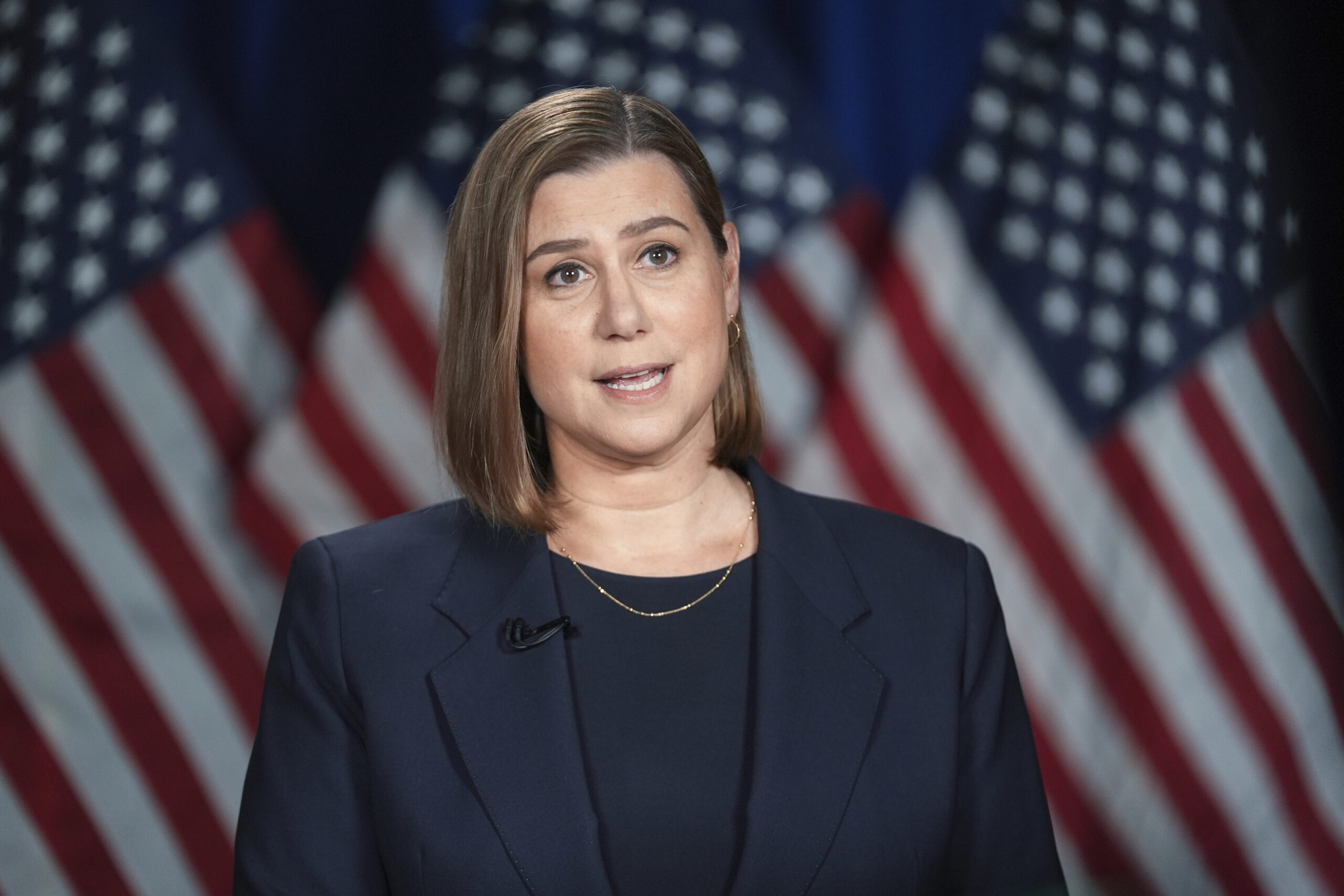
Sen. Elissa Slotkin (D-MI) proposed ways for Congress and the federal government to better respond to the threat of violent, antisemitic extremism, during an interview with Jewish Insider’s Gabby Deutch in her Capitol Hill office last week. But even as she discussed ways to take action, she spoke with alarm about the growing prevalence of antisemitism on both sides of the aisle, which she described as out of control. And she was clearly shaken by an attack that was potentially inches away from being much worse.
Soft targets: “I think it could have been one of the worst mass killing events in U.S. history were it not for the private security that happens to be very top-notch there, and everyone doing their jobs almost perfectly,” Slotkin said of the attack on Temple Israel, a Reform synagogue in West Bloomfield Township, Mich. “I think it just has contributed to a feeling for many inside the state that the very things that make Jewish life valuable are becoming the soft targets.”
Terror ties: The FBI determined that the attack on Temple Israel was “a Hezbollah-inspired act of terrorism purposely targeting the Jewish community and the largest Jewish temple in Michigan,” officials said on Monday, JI’s Haley Cohen reports.
decision time

The Trump administration’s conflicting posturing on the war in Iran — insisting on the one hand that a diplomatic deal is within reach while also threatening to escalate strikes and potentially deploy ground troops — has left experts and former administration officials uncertain about President Donald Trump’s next move, Jewish Insider’s Matthew Shea and Emily Jacobs report. In recent days, the U.S. has amassed over 3,500 more troops in the Middle East, including deploying the USS Tripoli aircraft carrier, which hosts around 2,500 Marines.
Options open: Elliott Abrams, who served as Iran envoy under the first Trump administration and is now a senior fellow at the Council on Foreign Relations, told JI that the president’s decision to move more troops to the region and not exclude ground operations from future military plans is an effort to “keep his options open.” Abrams said, “The massing of ground forces near Iran is both preparation for their possible use and a means of pressuring Iran to make concessions in the negotiations. There is no way of knowing what Trump will do if the negotiations fail.”
WHACK-A-MOLE

An AI-generated Instagram account, which featured a fake Orthodox rabbi spreading antisemitic conspiracies to its more than 1.4 million followers, was taken offline over the weekend following major backlash from Jewish groups and one Democratic lawmaker — yet several similar, hate-peddling accounts have emerged with little to no public action from Meta, Jewish Insider’s Haley Cohen reports.
Rabble-rousing ‘rabbis’: An account called “Rabbi Goldman” “uses fake, AI-created authority figures to spread hate” in “a troubling and growing tactic,” according to a report published last week by Combat Antisemitism Movement. Several new Rabbi Goldman accounts started posting similar videos within the past two weeks — two already have followings of 18,500 and 10,000. Both remain active on Instagram and their bios state, “only Backup account for @rabbigoldman” and “old account got banned.” The CAM report identified 12 AI-generated “rabbis” with a combined following of 2.1 million Instagram users, all of which promote classic antisemitic stereotypes.
news to me
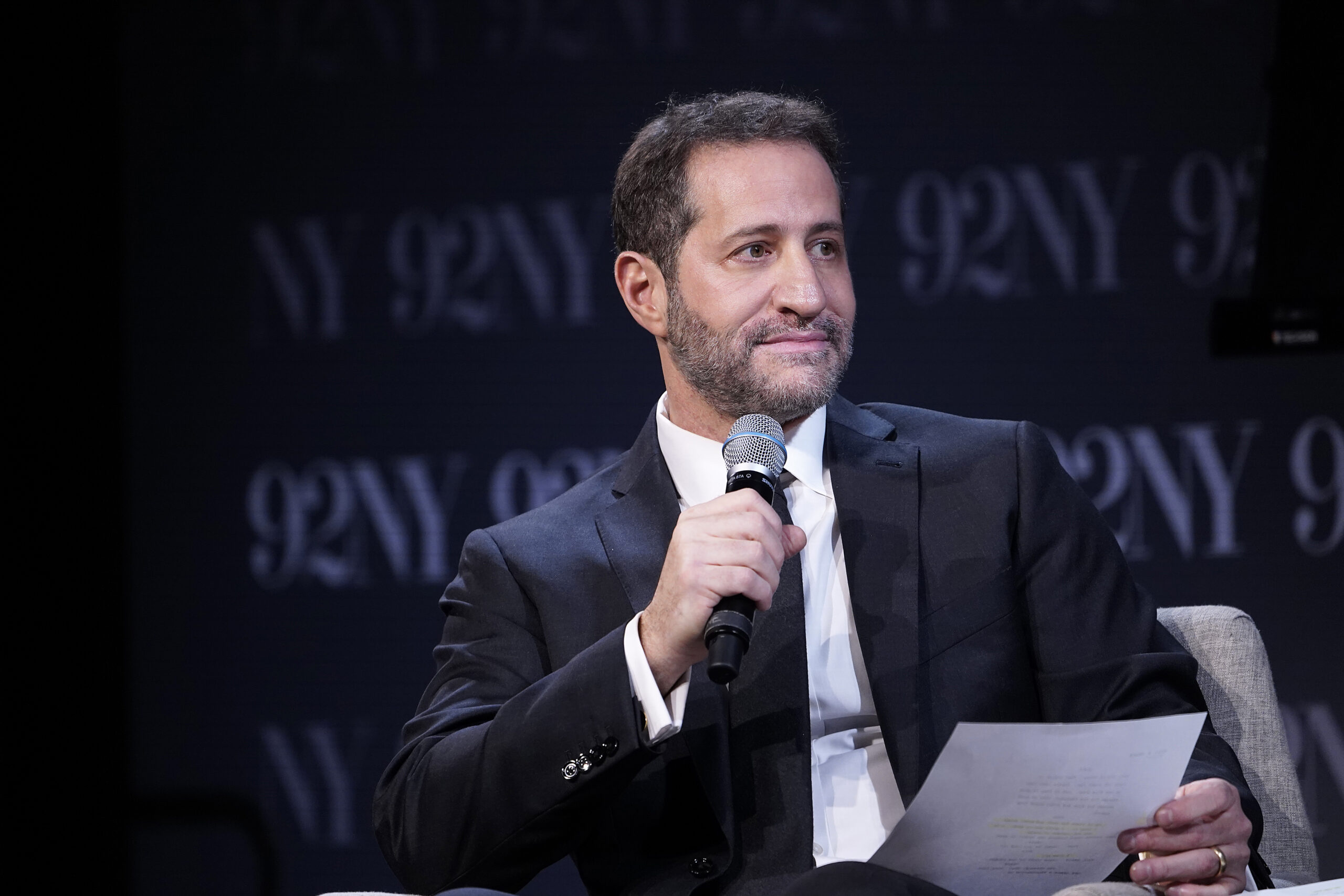
Israeli-American comedian Modi Rosenfeld, known simply as “Modi,” pulled out of a Passover-themed benefit last night after his manager revealed that the entertainer had been “blindsided” with the news that New York City Mayor Zohran Mamdani would participate in the Lower Manhattan event, Jewish Insider’s Will Bredderman reports.
Pulling out: Quoting JI’s initial report on the mayor’s scheduled involvement in the 33rd Annual “Downtown Seder” at impresario Michael Dorf’s venue City Winery, Rosenfeld’s official Instagram account announced the Tel Aviv-born, Long Island-reared performer had withdrawn from the event. “We were not told Mamdani was participating in this event until today,” the post read. “Modi will no longer be attending.”
Worthy Reads
Rahm’s Remedy: In The Wall Street Journal, former U.S. Ambassador to Japan Rahm Emanuel, who is mulling a 2028 presidential bid, argues that Democrats should maximize their potential takeovers of the House and Senate in this year’s midterm elections to put forward a positive agenda in an effort to win back the White House in 2028. “Many presume we will use the power from winning the House and possibly the Senate primarily for retribution and vindictiveness. The implication is that we will tie up the White House, and the Trump administration more generally, in an endless series of investigations. Democrats should play against type, defying the expectation that we’ll embrace gotcha politics. No doubt it’s a target-rich environment. But an excessive focus on Trumpian slime will undermine efforts to promote our positive agenda.” [WSJ]
Seeking Scientists: The New Yorker’s David Kirkpatrick spotlights former CIA operative Kevin Chalker, who claims to have played a key role in U.S. efforts to obtain information about Iran’s nuclear program. “Chalker was asked to come up with a plan to recruit other scientists, and began by reading old cable traffic about how the agency had handled Soviet defectors in the John le Carré days. … Cumulatively, Chalker’s defectors contributed to what several former senior officials told me had been a dramatic leap forward in the U.S. government’s understanding of Iran’s nuclear ambitions in those years. The consequences were manifold.” [NewYorker]
Power of Prayer: Bloomberg’s Ethan Bronner looks at the increasing number of young Israelis who have become more religious since the Oct. 7, 2023, Hamas terror attacks and ensuing wars in the region. “The scene of combat soldiers expressing pious fervor, captured on cellphones and shared widely on social media, would have been unimaginable a decade or two ago, when the infantry still leaned heavily toward secular rather than observant conscripts. ‘The real result of October 7 is Jews becoming more Jewish, people reclaiming their identity,’ says Sivan Rahav-Meir, a popular television news personality.” [Bloomberg]
The Politics of Giving: In The New York Times, Craigslist founder Craig Newmark pushes back on recent criticism from Silicon Valley of the Giving Pledge over complaints that some who sign the pledge have committed their money to left-wing groups. “The truth is that pledge signers can give their money to whichever charitable causes they want. I don’t understand the critics’ logic, but politics and that sort of criticism have never really made much sense to me. I really am a nerd. … I don’t get into fights over what’s woke and what’s not. Because I don’t know the answer, nor do I care. I use the money I made to help people who are trying to make life better for all of us humans.” [NYTimes]
Word on the Street
Washington’s Gulf allies, led by Saudi Arabia and the United Arab Emirates, have reportedly been pushing the White House to continue its fight against the regime in Iran; the countries, which also include Bahrain and Kuwait, are lobbying for a change in Iranian leadership before the end of Western military operations in the country, while Oman and Qatar are pushing a quick diplomatic resolution…
The push from the Gulf comes as President Donald Trump has reportedly told staffers that he was willing to end military operations without Iran fully reopening the Strait of Hormuz…
The U.S. used 2,000-pound bunker-buster bombs to strike a weapons depot overnight in the Iranian city of Isfahan…
An Iranian drone struck a Kuwaiti oil tanker off the coast of Dubai early Tuesday morning, starting a fire on board the fully laden vessel…
NYU closed its Abu Dhabi campus until further notice after Iran threatened over the weekend to attack outposts of American universities in the Gulf…
The Financial Times looks at efforts by Iranian and Iran-linked hackers, many of whom are tied to the Islamic Revolutionary Guard Corps and Iran’s Ministry of Intelligence, to break into U.S. and Israeli tech systems…
Twenty-five Senate Democrats, led by Sen. Raphael Warnock (D-GA) urged the Senate Armed Services Committee to investigate the alleged U.S. bombing of an Iranian girls’ school adjacent to an IRGC base…
Jewish Israelis’ support for the war against Iran dropped by 15 points from the first week of the war, according to a poll released by the Israel Democracy Institute on Monday, Jewish Insider’s Lahav Harkov reports…
Politico reports on deepening concerns over social media posts from Rama Duwaji, the wife of New York City Mayor Zohran Mamdani, praising Hamas and using racist language — including from progressive allies of the mayor, who has defended his wife as a “private person” despite her residence in Gracie Mansion and use of taxpayer funds for police detail and government staff…
A federal grand jury indicted six people on hate crime charges in connection with the 2024 assault of a Jewish student at the University of Pittsburgh…
U.S. Ambassador to France Charles Kushner met in Paris with Israeli pastry chef Tal Spiegel, who with his French business partner is offering kosher pastries at their ABRA Patisserie in the city’s 4th arrondissement…
Canada’s New Democrats party elected former journalist Avi Lewis, who is Jewish and anti-Zionist, as its new leader…
Sysco is acquiring 94-year-old Jewish businessman and philanthropist Nathan Kirsh‘s Jetro Restaurant Depot in a $29.1 billion deal…
The Knesset passed a controversial law on Monday allowing — and in some cases requiring — courts to impose the death penalty on terrorists found guilty of murder; opponents swiftly challenged the legislation in court, with appeals arguing that its designations are vague and discriminatory, Jewish Insider‘s Lahav Harkov reports…
Israel’s Shin Bet said it foiled a West Bank terror plot being directed by a Hamas operative in Turkey who was freed in one of last year’s deals that saw the release of Israeli hostages in exchange for Palestinian prisoners…
Former Egyptian Foreign Minister Nabil Fahmy was nominated to be the next secretary-general of the Arab League; Fahmy’s nomination is expected to be endorsed at the next Arab summit meeting and assume the role in July…
Betsy Berns Korn was nominated to serve a second yearlong term as chair of the Conference of Presidents of Major American Jewish Organizations, effective June 1; Matthew Bronfman was nominated to be the Conference’s chair-elect…
Edward Kaplan, the former longtime head of the Maryland Public Broadcasting Commission, died at 87…
Pic of the Day

New York Gov. Kathy Hochul participated in a mock Seder organized by Teach NYC earlier this week at Yeshivah of Flatbush in Brooklyn. Joining Hochul were Teach Coalition CEO Sydney Altfield, Rabbi Yahel Tsaidi and Yeshivah of Flatbush Executive Vice President Rabbi Jeffery Rothman.
Birthdays
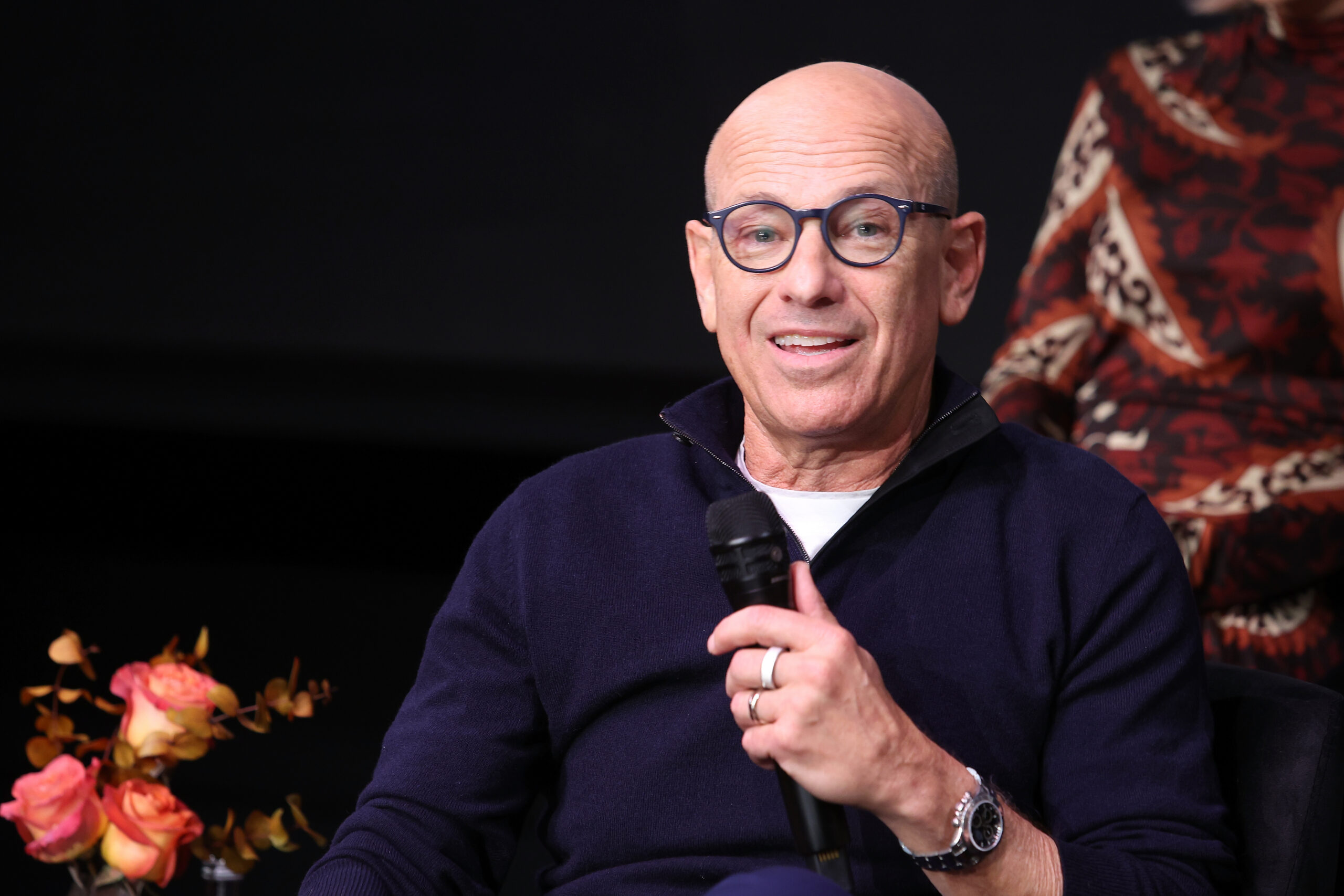
Emmy Award-winning writer and producer (“24,” “Homeland” and “Tyrant”), Howard Gordon turns 65…
Music producer, band leader of the Tijuana Brass, Herb Alpert turns 91… New York Times best-selling novelist, poet and social activist, Marge Piercy turns 90… Democratic congressman from Massachusetts for 32 years, named co-sponsor of the 2010 Dodd-Frank Act, Barnett “Barney” Frank turns 86… U.S. senator for 48 years until 2023, Patrick Leahy (D-VT) turns 86… Former syndicated talk radio host on 400+ stations and conservative political commentator under the name Michael Savage, Michael Alan Weiner turns 84… U.S. Sen. Angus King (I-ME) turns 82… Comedian, actor and professional poker player, he played the named teacher in the 1970s sitcom “Welcome Back, Kotter,” Gabe Kaplan turns 81… Retired professor of special education at Long Island University, Joel E. Mittler… Emmy Award-winning movie and television actress, best known for her role in the sitcom “Cheers” for 11 seasons, Rhea Jo Perlman turns 78… Russian ice dancing coach and former competitive ice dancer, now living in Stamford, Conn., Natalia Dubova turns 78… Chairman of Apple, Inc. since 2011 and CEO of Calico (an Alphabet R&D biotech venture), Arthur D. Levinson turns 76… New Jersey attorney, Steven L. Sacks-Wilner… Scottsdale, Ariz., resident, David L. Freedman… Chairman of Danaher Corporation, he owns a 20% stake in the NBA’s Indiana Pacers, Steven M. Rales turns 75… Israeli singer and songwriter, Ehud Banai turns 73… Former deputy chairman at the Jewish Agency for Israel, David Breakstone, Ph.D. turns 73… Author and advertising executive, Joseph Alden Reiman turns 73… President at the Detroit-based Nemer Property Group, Larry Nemer… Rabbi of Kehillas Ohr Somayach and lecturer at Ohr Somayach Yeshiva in Jerusalem, Rabbi Yitzchak Breitowitz turns 72… Equestrian and 10-time American Grand Prix Association Rider of the Year, she is a 2009 inductee into the International Jewish Sports Hall of Fame, Margie Goldstein-Engle turns 68… Founding director of the Illinois Holocaust Museum and national campaign director of the West Coast and Mountain States for the Jewish National Fund, Rick Hirschhaut turns 66… Consultant for synagogues and teacher at Bruriah High School in Elizabeth, N.J., Judah E. Isaacs… Two-term mayor of Chattanooga, Tenn., until 2021, he is now administrator of the Rural Utilities Service at the U.S. Department of Agriculture, Andy Berke turns 58… Former child actor, now an attorney and celebrity brand consultant, Josh Saviano turns 50… Rabbi of the Ashkenazi Jewish community of Turkey, Menachem Mendel Chitrik turns 49… Chief legal correspondent at MS NOW, Ari Naftali Melber turns 46… Former footballer for Beitar Jerusalem, who has also played for Chelsea, Manchester City and West Ham United in the English Premier League, Tal Ben Haim turns 44… Internet entrepreneur who is the co-founder and former CMO of Tinder, Justin Mateen turns 40… British-French journalist and author, he was a political advisor to the U.K. Deputy Prime Minister David Lammy, Ben Judah turns 38… Jerusalem-born, 2010 contestant on “America’s Next Top Model,” she went on to join the IDF, Esther Petrack turns 34… Agency partnerships lead at Samsung, Howie Keenan… Ice hockey defenseman for the Washington Capitals, Jakob Chychrun turns 28… Talmudic scholar, Avigdor Neuberger… John Jacobson…
Democratic insiders expressed skepticism that the resolutions would pass as written, but called anti-AIPAC targeting within the party concerning

Al Drago/Bloomberg via Getty Images
Democratic National Convention (DNC) at the United Center in Chicago, Illinois, US, on Thursday, Aug. 22, 2024.
The Democratic National Committee’s resolutions committee is set to consider resolutions condemning AIPAC and Israel at its upcoming meeting next week in New Orleans — a sign of the continued and growing discord in the party over Middle East policy.
It’s unclear at this point how great of a chance the resolutions stand of passing in their current form, but they are emerging as the AIPAC brand has been tarnished inside the Democratic Party.
The resolution targeting AIPAC, described in a resolution packet obtained by Jewish Insider as a “Resolution On Electoral Integrity, Transparency, And Limiting The Influence Of Corporate Money In Democratic Elections,” specifically calls out the pro-Israel group for its spending.
“The use of massive outside spending to support or oppose candidates based on their positions regarding international conflicts or foreign governments raises concerns about undue influence over democratic debate and policymaking, potentially constraining elected officials’ ability to represent the views of their constituents including the American Israel Public Affairs Committee (AIPAC) spending approximately $14 million in a single Illinois Democratic primary,” the resolution reads.
It goes on to accuse “corporate money PACs” of also weighing in against “candidates who have advocated for Palestinian human rights, ceasefire efforts, or changes to U.S. foreign policy.” It states that opposition to such spending should be part of the party’s 2028 platform. Though the rest of the resolution is generally aimed at condemning dark money and independent spending in primaries, AIPAC is the only group singled out by name.
AIPAC and the DNC declined to comment on the resolution.
The resolution was submitted by a DNC delegate from Florida who pushed a resolution last year calling for an arms embargo and a suspension of U.S. aid to Israel, which was ultimately rejected by the same panel. At DNC Chair Ken Martin’s direction, the DNC set up a working group to discuss Israel-related issues.
In addition to the AIPAC resolution, another resolution highlights accusations of genocide against Israel and suggests that Israeli military units are in violation of U.S. arms sales laws, requiring a suspension or conditioning of arms transfers. A third condemns U.S. and Israeli military operations against Iran and its partners, and calls for conditions on U.S. aid to Israel.
Democratic insiders took differing views on whether the resolutions — particularly the one relating to AIPAC — are likely to pass in their current form.
Halie Soifer, the CEO of the Jewish Democratic Council of America, emphasized that any of the 44 members of the resolutions committee can introduce resolutions. She said that the fact of a resolution being introduced doesn’t mean that it will be considered by or adopted by the full DNC. Resolutions are debated and can be amended by the resolutions committee before they are voted on.
“What you’re seeing here doesn’t reflect a position that’s been adopted by the DNC. It reflects one person[’s] — who filed these resolutions — views,” Soifer said. “I don’t expect that these resolutions will be adopted as they’re drafted.”
Soifer argued that, though there’s “broad concern” about dark money across the U.S. political system, targeting AIPAC in particular doesn’t serve the goal of combating the issue as a whole.
“There are many ways to express such concern, I don’t think solely identifying one organization — especially not in this incredibly difficult moment when such a singling out can be viewed as potentially antisemitic — I don’t think that that is effective,” Soifer said.
A DNC official told JI that the resolutions committee is required by DNC bylaws to consider all resolutions as long as they are compliant with DNC rules, that the committee considers dozens of resolutions at each meeting — totaling more than a hundred in the last year — and that the resolutions are not legally binding. If the resolutions committee votes to advance a resolution, it is then voted on by the entire DNC.
Manny Houle, a Democratic pro-Israel strategist in Minnesota, said that he also doesn’t see the AIPAC resolution going forward because it lacks “teeth” — the DNC “can’t tell candidates where they can and cannot raise money … that’s not our purview.” He also emphasized the diversity of DNC delegates, many of whom do not have an intensive focus on AIPAC or the Middle East.
He also lamented that some Democratic activists seem “hyper-focused on something that doesn’t impact [the day-to-day lives of Americans] and [something] they have very little knowledge on, but they have big emotions for,” referring to the situation in the Middle East. But he also predicted the party will ultimately come together around a nuanced position of supporting allies and opposing Iranian aggression while also opposing “needless war.”
But another senior Jewish Democrat, speaking to JI on condition of anonymity, predicted that an anti-AIPAC resolution of some form could move forward, pointing to discontent and frustration among Democratic insiders over AIPAC’s spending to block former Rep. Tom Malinowski’s (D-NJ) special election primary bid earlier this year, as well as its involvement in Democratic primaries in Illinois.
“I think anyone who is surprised by this sort of potential action by the DNC hasn’t been paying close attention to how AIPAC has been seen within the Democratic Party, especially after their relatively recent decision to get actively involved in Democratic primaries,” the Jewish Democrat said. “The Democratic Party is going to respond when outside groups try to manipulate primaries.”
The Jewish leader said that AIPAC has alienated even some Democrats who were previously aligned with or had donated to AIPAC through its recent political maneuvering, potentially putting more fuel on the fire.
At the same time, the leader urged the party to “go out of their way to ensure that they were not singling out AIPAC for any other reason than it was actively involved in Democratic primaries, which of course other outside forces were too. It’s totally legitimate to criticize a pack in a way that you would criticize any other PAC or outside organization trying to influence Democratic primaries.”
Joel Rubin, a Democratic strategist, former senior J Street official and former Jewish liaison for Sen. Bernie Sanders’ (I-VT) presidential campaign, emphasized that he’s worked at odds with AIPAC at many points in his career, but said he is nonetheless concerned about the singling out and targeting of the group.
“Anytime you single out a specific organization where … at least half of the members are Democrats, and you say they’re banned, you’re opening up a litmus test Pandora’s box that is not going to be easily shut. It’s just bad politics,” Rubin said. “There are ways to criticize — as there should be — an organization’s views and even their electoral efforts without putting forward a resolution of policy of the party that is creating a dynamic that will only further alienate Jewish Democratic voters, period.”
Jewish Americans, he emphasized, have been a core constituency to the Democratic Party for decades, as voters, organizers and fundraisers, and the specific targeting of AIPAC “is a great way to kick out perhaps the most loyal voting bloc from the party.” He said that the effort “plays right into the Republicans’ hands.”
And, Rubin noted, the DNC has no ability to control which candidates run in Democratic primaries, from whom they accept contributions or how AIPAC and its supporters spend their money.
He also predicted that some Democratic activists would treat the resolution, and rejection of AIPAC, as an organizing tool and litmus test for Democratic candidates going forward, regardless of whether this particular resolution is approved.
“It’s going to take leadership amongst people to say, ‘This is not how we treat people in our party. This is not what we do. And if we have a problem with AIPAC and the way they use dark money and the way they have Republican donors go through in a sort of stalking horse, we should call that out and point that out every single time,’” Rubin said. “But that does not mean every single dollar that AIPAC uses … is solely Republican.”
Rep. Jared Moskowitz, representing a swing district: ‘The idea that the vice president lost every swing state because she wasn’t more extreme on this issue is laughable’
Michael M. Santiago/Getty Images
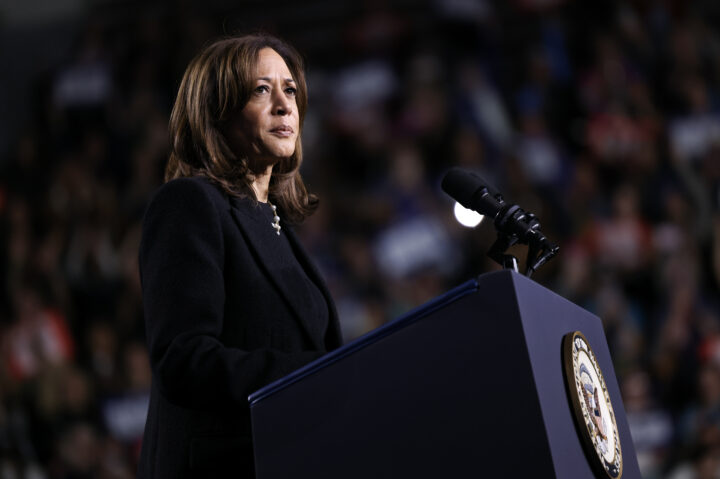
Vice President Kamala Harris speaks at a campaign rally on November 04, 2024 in Allentown, Pennsylvania.
Moderate congressional Democrats are pushing back against claims from anti-Israel activists, sparked by recriminations over an unreleased Democratic National Committee post-2024 election analysis, that the party’s position on Israel during the war in Gaza was a decisive factor in Vice President Kamala Harris’ election loss.
Speaking to Jewish Insider, the lawmakers rejected the notion that the Biden administration and Harris campaign’s approach to Israel was the decisive factor in the defeat, instead pointing to broader political dynamics.
They also called on the DNC to release the post-election autopsy, expressing confidence that the findings wouldn’t indicate that taking a stronger anti-Israel line would have helped Harris win more votes.
“I don’t think that was the issue in the election. I disagree with that conclusion,” Rep. Brad Schneider (D-IL) told JI. “Israel is our country’s strongest ally in the Middle East, one of the strongest allies in the world, and I can tell you that my colleagues here overwhelmingly support a strong U.S.-Israel relationship.”
Rep. Jared Moskowitz (D-FL) echoed those sentiments, telling JI that “the idea that the vice president lost every swing state because she wasn’t more extreme on this issue is laughable.” He called on Democratic officials to “release the report.”
“I mean, this is ridiculous,” said Moskowitz. “You got Democrats talking about how we should release the report on Epstein … now they should release [the DNC autopsy report].”
Rep. Greg Landsman (D-OH), who represents a swing district in Ohio, also called for transparency, but cautioned against narrowing the post-election analysis to a single issue.
“That’s what the party should do,” Landsman said of releasing the report. “The country, they want us to focus entirely on the voters … which means that it’s going to be about their economic conditions, it’s going to be about their safety, it’s going to be about how we invest in their communities, it’s going to be about how we make their lives better. That’s the winning formula.”
Sen. Richard Blumenthal (D-CT) told JI he had not heard of the autopsy, however, he stated that he questions “the veracity of that report,” adding that he “strongly disagrees” with the assertion that Harris lost due to her stance on Israel.
“There were a number of reasons why she lost,” said Blumenthal. “I have not spoken with anybody associated with the DNC about this report. I have no idea what the report says, but it may be wise to release the report.”
Senior congressional correspondent Marc Rod contributed reporting.
Speaking to the Florida Democratic Party Jewish Caucus, the congresswoman said Israel is ‘only interested in living in peace with their neighbors’

Joe Raedle/Getty Images
Rep. Debbie Wasserman Schultz (D-FL)
Speaking to members of the Florida Democratic Party Jewish Caucus over Zoom on Wednesday, Rep. Debbie Wasserman Schultz (D-FL) accused the Trump administration of not working in good faith to combat antisemitism, discussed recent Democratic National Committee votes on Israel and offered a strong defense of Israel against a growing chorus of critics.
Wasserman Schultz argued that a series of moves by the Trump administration — attempting to place new conditions on Nonprofit Security Grant Program funding, gutting the Department of Education’s Office for Civil Rights and eliminating Justice Department programs focused on hate crimes — show that the administration’s focus on antisemitism isn’t genuine.
“None of that makes us safer, and all of it demonstrates that they don’t really care about taking care of our community. They aren’t concerned about antisemitism, they are concerned about maintaining power,” she said. “Let’s not let our community members believe the rhetoric and the BS.”
Highlighting the administration’s moves on NSGP funding, Wasserman Schultz noted the long freeze in reimbursements from the program, and said that the administration had also tried to demand that all NSGP recipients cooperate with immigration enforcement authorities and eliminate any diversity, equity and inclusion programs to make them eligible for funding.
She said that advocates had worked to ensure that the immigration demands were dropped, but said that “the DEI part is still being litigated.”
She said that universities largely “deserve the criticism and deserve to be investigated by an Office of Civil Rights that would be robustly funded. But if Trump cared about that, he wouldn’t have cut their budget in half and fired half their employees.”
The former Democratic National Committee chair also spoke about the recent DNC debate over a pair of Israel-related resolutions. One, which called for an arms embargo on Israel, was defeated, while one calling for a ceasefire, the release of hostages and humanitarian aid passed the Resolutions Committee but was then withdrawn.
“They moved past the issue, but there were many of us that had to work very hard to communicate our deep concern and opposition” to the resolution calling for an arms embargo, Wasserman Schultz said. “Thankfully, because our party does support the U.S.-Israel relationship, and because our party does believe that Israel should remain a Jewish and democratic state, that resolution was defeated.”
Addressing criticisms of Israel more broadly, Wasserman Schultz affirmed that she is a Zionist and emphasized that Hamas, by carrying out the Oct. 7, 2023, attacks on Israel, was responsible for starting the war and could end it by releasing the hostages.
“Israel … are not aggressors. They don’t engage in land acquisition. They are only interested in living in peace with their neighbors,” she said. “The wars that have occurred across the millennia have almost exclusively, and certainly in modern times exclusively, been initiated by outside terrorist groups or other countries invading Israel.”
Wasserman Schultz emphasized the need for a ceasefire, the release of hostages, the flow of humanitarian aid into Gaza and the end of Hamas as a security threat to Israel and a menace to the Palestinian people.
She blamed Hamas for the issues with humanitarian aid distribution, given the group’s theft of aid and the threat it poses to those who distribute it. “If they continue to be obstructionist and prevent humanitarian aid from getting to their own people, then they will continue to struggle.”
Wasserman Schultz said that “propaganda … is being used to make Israel look like they are the evil aggressors and oppressors,” calling it “outrageous.” She called out media photos featuring emaciated children, many of whom were revealed to have congenital diseases, as proof of mass starvation in Gaza as one example of such a phenomenon.
“We know as Jewish people that, at the end of the day, we’re very easy to blame. It is really like a reflexive, default position for far too many people. It’s embedded, it’s in societal norms,” Wasserman Schultz said. “This is happening regularly and we have to make sure that we are really fighting back.”
She said that criticism of Israel isn’t inherently antisemitic, but that the slogans “from the river to the sea” and “globalize the intifada” are clear calls for the destruction of Israel and the death of the Jewish people, and that “that is a very serious form of antisemitism. That shouldn’t be open for debate.”
Plus, Qatari editor calls for more hostage-taking

ABIR SULTAN/POOL/AFP via Getty Images
Israel's Prime Minister Benjamin Netanyahu gives a press conference at the Prime minister's office in Jerusalem on August 10, 2025.
Good Wednesday morning.
In today’s Daily Kickoff, we report on yesterday’s votes on Israel-related resolutions at the Democratic National Committee’s summer meeting and subsequent decision to create a task force on the issue, and cover Rep. Adam Smith’s support for leveraging arms sales to Israel. We report on a call from a prominent Qatari journalist tied to the country’s royal family to kidnap IDF soldiers, and report on a push from Jewish groups, led by the Jewish Federations of North America, for the Trump administration to move forward with its nominations for antisemitism envoy and religious freedom ambassador. Also in today’s Daily Kickoff: Avraham Tahari, Jonathan Karp and Shmuel and Anat Harlap.
What We’re Watching
- President Donald Trump will lead a meeting at the White House today focused on winding down the war in Gaza and increasing humanitarian aid to the country. Steve Witkoff, the Trump administration’s Middle East envoy, told Fox News that the administration believes “that we’re going to settle this one way or another, certainly before the end of this year.”
- Israeli Foreign Minister Gideon Sa’ar, who is in the U.S. this week, will meet with Secretary of State Marco Rubio this afternoon in Washington.
- This evening, the Florida Democratic Party Jewish Caucus is hosting a briefing with Rep. Debbie Wasserman Schultz (D-FL).
What You Should Know
A QUICK WORD WITH JI’S JOSH KRAUSHAAR
In the run-up to the U.S. presidential election last year, one common refrain heard in Israeli leadership was to wait out the election in the hope of a friendlier Trump administration taking over.
Increasingly, many pro-Israel voices in the United States are quietly saying the same thing about upcoming Israeli elections, which polls suggest could usher in a more moderate coalition, and diminish the influence of far-right leaders in the current Israeli government.
The possibility of new elections taking place soon, more than any particular shift in military strategy or policy decisions, is looking like the most likely factor that could advance progress in the region.
While Israeli elections are not guaranteed to take place until October 2026, the legislative crisis over Haredi conscription in the IDF is looking like it could collapse Israeli Prime Minister Benjamin Netanyahu’s coalition, and move up the election timetable to as early as next January.
What has prevented elections until now is the fact that all members of the governing coalition are projected to lose seats if elections are held. That most Israelis want new elections is the very reason why they haven’t happened – yet.
Indeed, if elections were held today, Netanyahu would be in serious trouble. A recent poll commissioned by Israel’s Channel 12 found the anti-Netanyahu bloc making up a narrow majority of 61 of the Knesset’s 120 seats, with the current Likud-led coalition sitting at 49 seats, and Arab parties making up the remaining 10 seats.
minneapolis moment

Shortly after members of the Democratic National Committee passed a resolution on Tuesday voicing support for humanitarian aid to Gaza and calling for the release of hostages held by Hamas, Ken Martin, the party chair, announced that he would withdraw the measure, which he had introduced, and instead form a task force to continue discussing the matter, Jewish Insider’s Matthew Kassel reports.
Dem divide: The surprise reversal came even as the DNC, now holding its annual summer meeting in Minneapolis, had voted to reject a dueling and more controversial resolution that had backed an arms embargo as well as a suspension of U.S. military aid to Israel, raising alarms among Jewish and pro-Israel Democrats who rallied behind Martin’s effort, co-sponsored by DNC leadership. “There is a divide in our party on this issue. This is a moment that calls for shared dialogue and calls for shared advocacy,” Martin said after the competing measure had been voted down. He said that he would “appoint a committee or a task force comprised of stakeholders on all sides of this to continue to have the conversation, to work through this, and bring solutions back to our party.”
‘Inside baseball’: Pro-Israel Democrats expressed cautious optimism about the unexpected decision. Despite Martin’s 11th-hour reversal, Halie Soifer, the CEO of the Jewish Democratic Council of America, told JI’s Matthew Kassel she was satisfied with the outcome, noting the DNC also passed a resolution condemning antisemitism that, coupled with its rejection of the arms embargo proposal, “reflects where the party stands” on major issues concerning Israel and the Jewish community. Brian Romick, Democratic Majority For Israel’s president and CEO, said that he viewed the outcome as “a win” for the pro-Israel community, in light of the potential for a more hostile debate. “The bad resolution was rejected and Ken’s compromise resolution also passed the committee,” Romick said. “That all happened publicly” and “reaffirmed where the party stands on Israel,” he said. “Anything else beyond that is just inside baseball.”
the center shifts
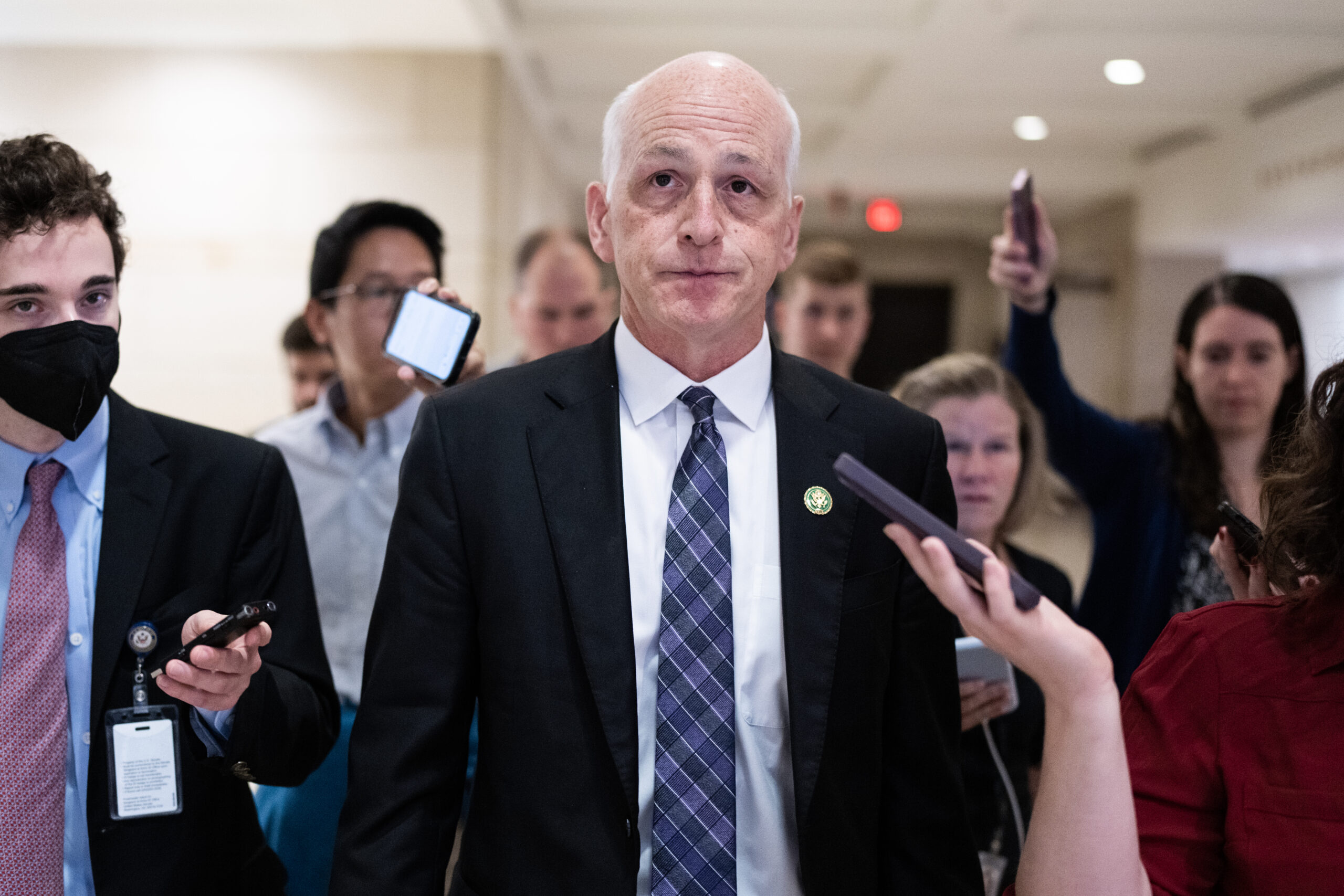
Rep. Adam Smith (D-WA), ranking member of the House Armed Services Committee, said in a statement on Tuesday that he “believe[s] it is time for the United States government to stop the sale of some offensive weapons systems to Israel as leverage to pressure Israel” into implementing a ceasefire, increasing humanitarian aid in Gaza and stopping the expansion of West Bank settlements, Jewish Insider’s Danielle Cohen-Kanik reports. The Washington state Democrat, who has served his Seattle-area district since 1997, said he changed his position on blocking weapons sales to Israel because the “situation in the Middle East has changed dramatically in recent months.”
Nuanced stance: Smith, a member of the moderate New Democrat Coalition who has played a leading role in Democratic foreign policy, was careful to emphasize that he supports Israel and “recognize[s] both the threats they face and the reality that the actions of Hamas and their supporters have driven this conflict.” He also affirmed that “Yes, the hostages must be returned. It is outrageous that Hamas took the hostages and has continued to hold them.” However, Smith said, “six months of war since the end of the last ceasefire has done nothing to bring the hostages home” and it is “impossible to see how further military action in Gaza could degrade Hamas … further than what has already occurred.”
media mania

The editor-in-chief of Qatar’s pro-government newspaper Al Sharq called on Hamas “heroes” to kidnap more IDF soldiers in a since-deleted tweet, Jewish Insider’s Haley Cohen reports. “If success is not achieved this time in capturing Zionist soldiers at the hands of the heroes of #AlQassamBrigades, then the second, third, and fourth attempts will succeed, God willing, by adding new rats to the tally held by the heroes of the Brigades,” Qatari journalist Jabar Al-Harmi wrote in Arabic last week.
Propaganda push: Al Sharq, which is published in Doha by a privately held media company founded and owned by Sheikh Khalid bin Thani Al Thani, a member of the Qatari ruling family, is one of the four leading private daily Arabic newspapers in Qatar, all of which have a pro-government bent. Ghaith Al-Omari, a senior fellow in The Washington Institute for Near East Policy’s Irwin Levy Family Program in the U.S.-Israel Strategic Relationship, told JI that the tweet is “not surprising” and comes amid widespread praise for Hamas in Qatari media. “The Qatari media landscape is rife with statements, selective reporting and editorials that support Hamas,” said Al-Omari, former executive director of the American Task Force on Palestine. “Under the guise of supporting the Palestinian people, many Qatari media outlets have been a key vehicle for amplifying Hamas propaganda.”
beirut or bust

Sen. Lindsey Graham (R-SC) championed a U.S. defense agreement with Lebanon during a bipartisan congressional delegation to Beirut on Tuesday, saying it would be the “biggest change in the history of Lebanon,” Jewish Insider’s Danielle Cohen-Kanik reports. Speaking at a press conference alongside Sen. Jeanne Shaheen (D-NH) and Rep. Joe Wilson (R-SC), Graham asked, “How many nations have a defense agreement with the United States? Very few. … The number of nations that America is willing to go to war for is very few. Why do I mention Lebanon being in that group? You have one thing going for you that is very valuable to me: religious diversity.”
Making the case: “Christianity is under siege in the Mideast. Christians are being slaughtered and run out of all over, all over the region, except here. And so what I am going to tell my colleagues is, ‘Why don’t we invest in defending religious diversity in the Mideast? Why don’t we have a relationship with Lebanon where we would actually defend what you’re doing?’” Graham continued. “I think it’s in America’s interest to defend religious diversity, whether you’re Druze or Alawite or a Christian or whatever. The idea that America may one day have a defense agreement with Lebanon changes Lebanon unlike any single thing I could think of,” Graham said.
granite state race
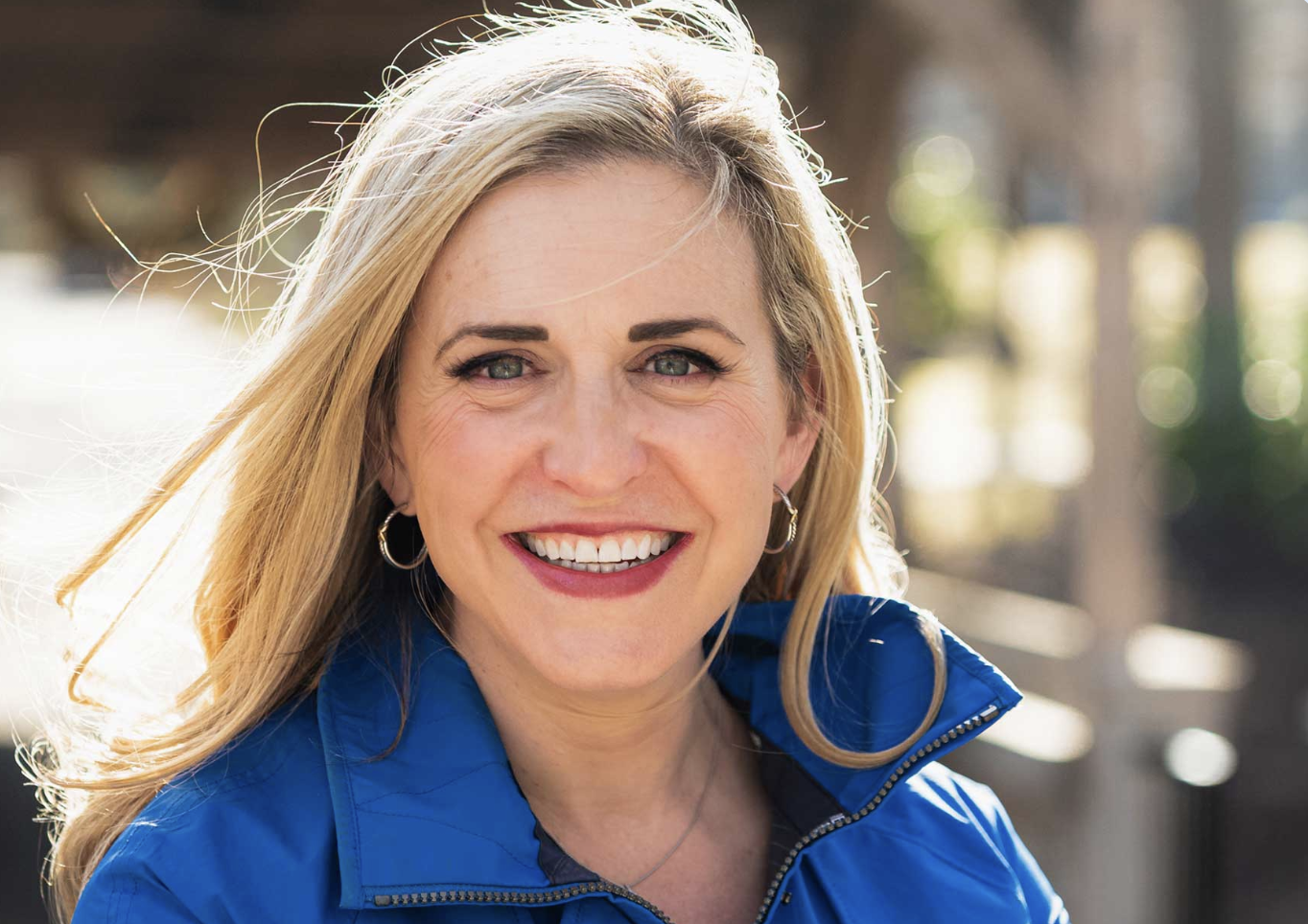
Maura Sullivan, a Marine veteran who served in Iraq and later worked as a senior Defense Department official, is aiming to leverage that experience to win the New Hampshire congressional seat currently held by Rep. Chris Pappas (D-NH), who is running for the Senate. She’s also leaning on “that firsthand perspective, experience and knowledge” as she stakes out her positions on the conflict in the Middle East, she told Jewish Insider’s Marc Rod in a recent interview.
Military mindset: As a Pentagon official, Sullivan, who noted that she’d be seeking a spot on the House Armed Services Committee if elected, said she spent time in the Middle East on “allied reassurance tours,” visiting allies and meeting with top officials to learn about Israel’s challenges and capabilities and “talking about the incredibly important relationship between the United States and Israel and strongly reaffirming the United States commitment” to Israel. “I’ve been very clear since the devastating, absolutely deplorable Oct. 7 attacks that Hamas perpetrated that Israel has the right to defend itself,” Sullivan continued. “I also want to be clear that the conditions in Gaza are inhumane, they’re deplorable and they must be improved immediately. … Hamas can be destroyed and significant aid can be let in at the same time. It’s a false choice to think that those two objectives cannot occur simultaneously.”
scoop

Several major Jewish organizations are calling on the Senate to “swiftly” confirm President Donald Trump’s nominees for special envoy to monitor and combat antisemitism and international religious freedom ambassador, Jewish Insider’s Gabby Deutch reports. In April, Trump tapped Rabbi Yehuda Kaploun, an Orthodox businessman and Chabad rabbi who served as a campaign surrogate, to serve as the next U.S. special envoy to monitor and combat antisemitism, and has named former Rep. Mark Walker (R-NC) as the U.S. ambassador-at-large for international religious freedom. Both positions require Senate confirmation, and neither has had a confirmation hearing yet.
‘Utmost importance’: The groups, led by the Jewish Federations of North America, wrote in a letter to Senate Majority Leader John Thune (R-SD) and Senate Minority Leader Chuck Schumer (D-NY) that filling the roles is “of utmost importance in fighting growing antisemitism and ensuring freedom of religion or belief worldwide,” according to a draft obtained by JI. “We dare not delay in filling these critical positions that protect human rights around the world,” the letter states. “To that end we strongly urge you to prioritize filling these positions, sending a powerful signal to governments around the world that the United States upholds our constitutionally guaranteed rights to life and liberty, to freedom of religion and belief, and calls on them to do the same.”
Worthy Reads
The Heck With Hasbara: The Wall Street Journal’s Elliot Kaufman interviews Israeli Foreign Minister Gideon Sa’ar about the diplomatic and public relations hits the country has taken as it nears two full years of war against Hamas in Gaza. “Hamas took over and Israel is still paying the price, in diplomacy and in lives. The logic leads me to the conclusion that whether the Gaza war ends now or in some months seems less important for Israel — and even for its foreign relations — than whether Hamas is left with the ability to draw it into another war a few years on. In general, Mr. Sa’ar says, ‘We need to survive first. After that, there comes popularity and how much we are able to convince others around the world.’ Later, he catches himself, and adds, ‘I’m not saying diplomacy shouldn’t be taken into consideration. I’m the last to say that — I’m foreign minister.’” [WSJ]
Southern Comfort: The Atlantic’s Rose Horowitch spotlights the growing popularity of southern universities among prospective Jewish students, as many of the Ivies and small liberal arts colleges in the Northeast face widespread anti-Israel and at times antisemitic activism. “The line between criticism of Israel and anti-Semitism is nearly always contested; the anti-Israel protest movement on some campuses counts many Jewish students among its ranks. Meanwhile, southern colleges are becoming more popular with northeastern students of all backgrounds. No doubt some Jewish students have opted out of the Ivy League simply because they think the South is the place to be. Even so, an atmosphere of fear has clearly taken hold among many Jewish families. Jewish leaders at Columbia, Harvard, and Yale told me that just about every parent of a prospective student asks if their child will be safe on campus. (Here I will resist the temptation to make any quips about Jewish moms.)” [TheAtlantic]
Crimson Coexistence: In The New York Times, Jacob Miller and Tommy Barone, who served as chairs of the Harvard Crimson’s editorial board during the last academic year, reflect on how they worked to maintain civil discourse in the publication’s pages. “The two of us faced a measure of internal criticism, but we consistently underscored the importance of principled, rational disagreement. Meeting by meeting, the board rallied behind this approach. Disagreeing civilly about big stories — the Israeli-Palestinian conflict, but also D.E.I., free speech and admissions policies — became routine, and we published thoughtful editorials that helped earn back disillusioned readers’ respect. Refined by dissent, our editorials, regardless of their ideological tilt, offered stronger reasoning and more engagement with counterarguments. They passed the test our previous editorials on controversial issues had too often failed.” [NYTimes]
Split With Hamas: In Haaretz, Haisam Hassanein considers the outcomes of the Arab League’s call for Hamas to be disarmed and removed from Gaza. “On paper, this new declaration is historic. But it seems most Israelis don’t even know it exists. If Arab leaders are serious, they can’t stop at communiqués read in Cairo or Riyadh. They have to step into Israel’s conversation. That means Hebrew language interviews, Israeli TV, op-eds in this paper and others. Spell it out directly: Arab states are ready to put money into rebuilding Gaza. They are ready to back one Palestinian leadership. They themselves are also ready to move toward normalization. But all of it hinges on Israel doing its part – stopping the drift into endless conflict and opening a real path toward a two-state solution. That’s the message. And Israelis deserve to hear it unfiltered. Right now, they don’t.” [Haaretz]
Word on the Street
Dan Scavino, the longest-serving aide to President Donald Trump, was tapped to head the White House Presidential Personnel Office, replacing Sergio Gor, who was nominated to be U.S. ambassador to India…
U.S. Ambassador to Turkey Tom Barrack received pushback from Lebanese journalists and commentators after warning journalists at a press conference in Beirut to “act civilized” and not be “animalistic”…
Microsoft is weighing disciplinary measures against employees who, protesting the company’s tech sales to Israel, participated in a sit-in in the office of President Brad Smith at the company’s Washington state headquarters that temporarily locked down the building…
Business executives and Jewish leaders in Chicago are preparing to open a college preparatory Jewish high school in the city’s Lakeshore East neighborhood after purchasing the unfinished building, where construction on another school stalled six years ago…
Police in St. Louis County, Mo., charged an area man with defacing a sign outside the city’s Jewish Student Union, which provides programming and community events to Jewish high schoolers in the city…
The Wall Street Journal spotlights the high-profile, high-stakes divorce proceedings of David Geffen, who did not sign a prenuptial agreement with his now-estranged husband, amid allegations of drug use and unequal power dynamics…
Elie Tahari co-founder Avraham Tahari listed his Alpine, N.J., home for $24.75 million, 15 years after buying the property for $4.25 million…
The Woodstock, N.Y., property that was featured on the cover of Bob Dylan’s “Bringing It All Back Home” sold for $4.6 million…
Simon & Schuster CEO Jonathan Karp is stepping down after five years in the role; Karp will remain at the publisher, overseeing its newly created Simon Six imprint…
In The Wall Street Journal, Tevi Troy reflects on the slow pace encouraged by vacation life…
Norges Bank Investment Management, Norway’s sovereign wealth fund, is ending its investments in Caterpillar as well as five Israeli banks, after its ethics council reviewed the companies’ ties to Israeli construction and Palestinian home demolitions in the West Bank…
Israel said that a strike on the Nasser Hospital in Khan Younis earlier this week that killed 20 people had targeted a camera the army alleged had been positioned by Hamas to observe IDF troop movements…
Israeli Prime Minister Benjamin Netanyahu praised the decision by Australia to expel Iran’s ambassador in Canberra, calling it a positive “first step,” days after he had criticized Australian Prime Minister Anthony Albanese for being “weak” and failing to adequately address antisemitism in the country…
French President Emmanuel Macron doubled down in his support for Palestinian statehood, writing in a letter to Netanyahu, which was published in several European newspapers, that a lasting Israeli-Palestinian peace “is essential to the State of Israel’s security”…
German Chancellor Friedrich Merz said Berlin would not join other foreign powers in recognizing a Palestinian state at the United Nations General Assembly next month; Merz, speaking at a press conference with Canadian Prime Minister Mark Carney, said that Germany doesn’t “see the requirements met” for statehood…
The Financial Times looks at how the 12-day war between Israel and Iran has sparked calls inside Iran for political change…
Philanthropists Shmuel and Anat Harlap made a $180 million donation to the Rabin Medical Center in central Israel, the largest-ever single gift to an Israeli hospital, eJewishPhilanthropy’s Judah Ari Gross reports…
Commentator Batya Ungar-Sargon is joining NewsNation, where she will host an eponymous weekend program…
Jewish communal activist and fundraiser Jacqueline Levine, who was active in the Civil Rights Movement as well as the movement to free Soviet Jewry, died at 99…Physicist Rainer Weiss, who won the Nobel Prize in 2017 for his role in developing a mechanism to predict intergalactic events, died at 92…
Pic of the Day
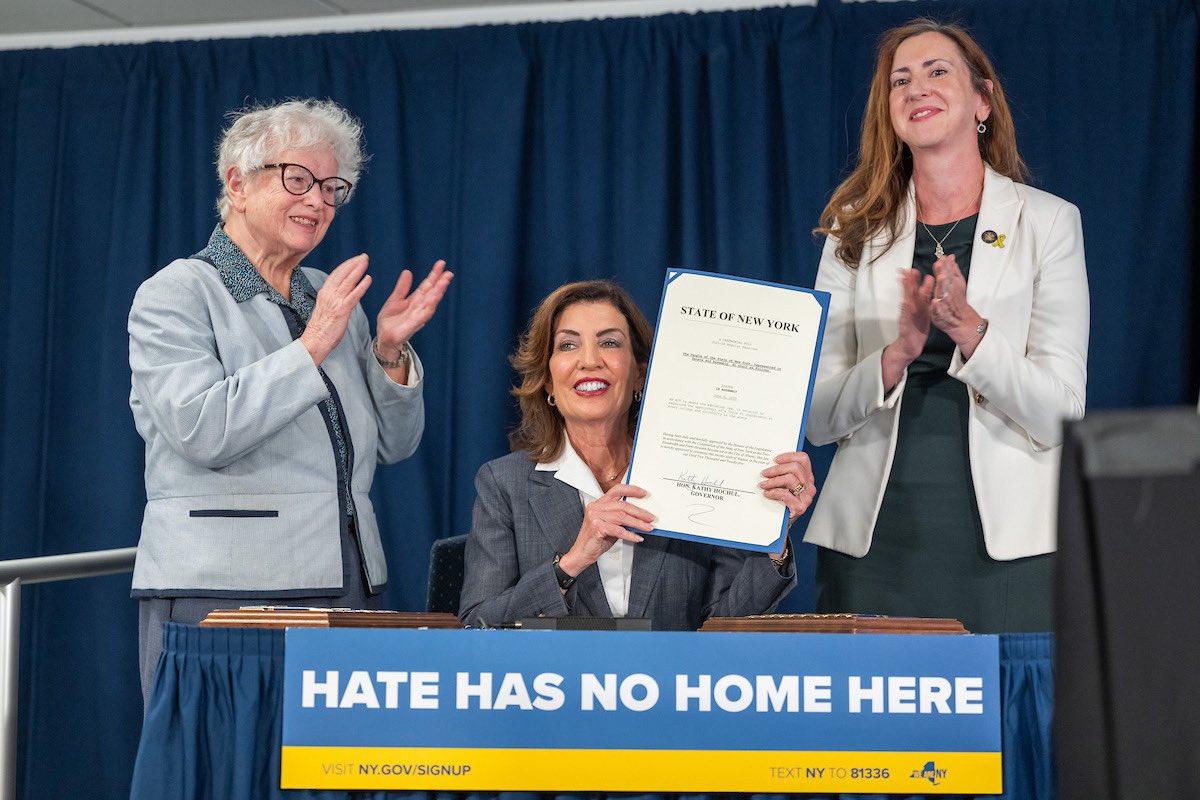
New York Gov. Kathy Hochul (center) signed into law legislation that requires all colleges in the state to designate anti-discrimination coordinators to enforce Title VI of the Civil Rights. Hochul was joined by state Sen. Toby Ann Stavisky (left) and Assemblywoman Nily Rozic (right), who sponsored the legislation in their respective chambers.More on the new law here.
Birthdays

Member of AJR, an indie pop multi-instrumentalist trio, together with his two brothers, Adam Metzger turns 35…
Chatsworth, Calif., resident, Ruth Ann Kerker Hapner… Board chair for North America at the Pardes Institute of Jewish Studies, Mark S. Freedman turns 74… Author, essayist and journalist, Michael Wolff turns 72… President of the Israeli Jewish Congress focused on battling antisemitism, he is a former senator in the Russian Federation, Moshe Shlomo (Vladimir) Sloutsker turns 69… President of Cornell University until June 2024, Martha Elizabeth Pollack turns 67… Governor of New York State since 2021, Kathy Hochul turns 67… Israel’s ambassador to the Czech Republic, Anna Azari turns 66… Vice chairman at IBM and lead independent director on the board of Apollo Global Management, Gary Cohn turns 65… Executive director of J Street Israel, he served as Israel’s consul general to New England from 2006 until 2010, Nadav Tamir… Contributing editor at the National Interest, he is also chairman and CEO of Widehall, Steve Clemons turns 63… Private equity investor and a trustee of the Jewish Federations of North America’s Board, Neil A. Wallack… Israeli-born CEO of Insitro, she was a professor at Stanford for 18 years and a 2004 winner of a MacArthur genius fellowship, Daphne Koller turns 57… Director of National Intelligence throughout the four years of the Biden administration, Avril Haines turns 56… Co-founder of the 2017 Women’s March which she departed citing concerns over antisemitism, Vanessa Wruble turns 51… Managing partner and founder of G2 Investment Partners, Joshua Goldberg… Former director general of the Israeli Ministry of Finance, now CEO of the Strauss Group, Shai Babad turns 49… Mayor of Evanston, Ill., Daniel Kalman Biss turns 48… Senior advisor at the Foundation for Defense of Democracies, Richard Goldberg turns 42… Director of the JCRC at the Jewish Federation & Foundation of Northeast Florida in Jacksonville, Nelson France… Co-founder of theSkimm, Danielle Merriah Weisberg turns 39… Michael Weiss… Director of the Botanical Garden and senior lecturer, both positions at Tel Aviv University, Yuval Sapir… Talia Rubin…
Democratic insiders told JI that DNC chair Ken Martin withdrew his Israel resolution largely to avoid a disruptive floor debate over Israel on Wednesday

Audrey Richardson/Bloomberg via Getty Images
Ken Martin, chairman of the Democratic National Committee , speaks during a news conference in Aurora, Ill., on Tuesday, Aug. 5, 2025.
Pro-Israel Democrats expressed cautious optimism about the unexpected decision by Democratic National Committee Chairman Ken Martin to withdraw his resolution pressing for humanitarian aid to Gaza and for the release of hostages held by Hamas, which was unanimously approved by party members on Tuesday at the DNC’s annual summer meeting held in Minneapolis.
Martin, in a sudden reversal, announced he would pull the resolution after DNC members rejected a dueling measure, opposed by pro-Israel groups, that had endorsed an arms embargo and a suspension of U.S. military aid to Israel. Instead, he said he would create a task force “comprised of stakeholders on all sides” of the Israel debate to pursue what he called a “shared dialogue” on an increasingly divisive issue.
“This was a surprise ending to this meeting,” Halie Soifer, the CEO of the Jewish Democratic Council of America, which helped draft the pro-Israel measure and privately advocated for its passage, told Jewish Insider on Tuesday.
Despite Martin’s 11th-hour reversal, Soifer said she was satisfied with the outcome, noting the DNC also passed a resolution condemning antisemitism that, coupled with its rejection of the arms embargo proposal, “reflects where the party stands” on major issues concerning Israel and the Jewish community.
“It’s my sense,” she added of Martin, “that he introduced and ensured passage of this resolution to defeat the other resolution,” which she said “was completely out of step with the views of the party.”
Soifer said she hopes to join the proposed task force “to discuss the path forward” on approaching Israel, acknowledging internal tensions that have roiled the party in recent years. Martin “clearly recognized that there are a range of strongly held views on this matter, and he wants to make sure that those voices are heard,” she told JI.
Martin has not yet shared additional details on the task force, and the DNC did not return a request for comment from JI. Latonya Reeves, a DNC member in Minneapolis, told JI on Tuesday that she had not been further informed of the task force — which she called “the best way to move forward” on the issue.
Sara Forman, who leads the New York Solidarity Network, a local pro-Israel group that aligns with Democrats, said she was broadly “encouraged” that the DNC had chosen “not to recommend” what she dismissed as a “one-sided resolution against Israel,” arguing that the party “represents far more than its progressive base.”
“I’m always one for conversation, and think that talking about things is an important step, so I’m going to offer grace to Martin in this regard,” she said of his announcement. Still, she added of the failed resolution, “I think it’s a bigger concern overall that the Democratic Party seems to be uniquely singling out Israel for rebuke or scrutiny in a way that no other U.S. ally is rebuked or scrutinized.”
A spokesperson for Democratic Majority for Israel, which released a statement praising the DNC’s votes before Martin revealed he would pull the resolution, said it was “pleased that the anti-Israel measure was decisively defeated by the committee,” but declined to comment more broadly on what transpired at the end of the meeting.
Brian Romick, DMFI’s president and CEO, said in an interview with JI that he viewed the outcome on Tuesday as “a win” for the pro-Israel community, in light of the potential for a more hostile debate. “The bad resolution was rejected and Ken’s compromise resolution also passed the committee,” Romick said. “That all happened publicly” and “reaffirmed where the party stands on Israel,” he said. “Anything else beyond that is just inside baseball.”
Some Democratic insiders familiar with internal party dynamics indicated that Martin had chosen to change course because he anticipated a disruptive floor debate over his resolution, which was poised to face broader scrutiny during the DNC’s general session on Wednesday.
“He’s worried about what would happen at the meeting,” one party source informed of the matter said on Tuesday. “On one hand, viewed from there, it makes sense and seems like a rational move,” the source reasoned, while also noting that it has “some real downsides.”
On the other hand, “when you punt something to a task force you actually continue the debate, because now it’s going to be a big fight” over who is included in the committee, the source said. “Then it becomes hard to move past.”
Manny Houle, a Democratic pro-Israel strategist in Minneapolis, said Martin’s maneuver was tactically smart — as DNC leadership seeks to avoid “internal proxy fights and focus messaging on pushing back against” the Trump administration in advance of the upcoming elections. “It is often a tactic to give your most ardent detractors busy work so you can focus on the work that matters,” he explained.
The party’s pro-Israel wing knows it has “the power to push back,” Houle told JI. “It’s not worth giving more air to the extremist factions.” The debate over Israel “is not going away anytime soon,” he added. “But we’ve shown where we stand and hopefully there are more pressing things that we need to give oxygen to.”
Whatever Martin’s intentions, Susan Turnbull, a former DNC vice chair, said she was excited by the prospect of a task force, suggesting that it would be well-timed to take place between the conventions.
“What I think is the case is that this, of all issues, needs to have consensus and that what he wanted in his first meeting is not to have winners and losers,” she told JI. “He wanted to come to a good result for collaboration.”
“I’m giving him a lot of credit because we have a hard enough time within the Jewish community dealing with this issue,” she said, adding that it will be “important that every perspective be considered” as the DNC hones its approach to the Middle East.
It remains to be seen if Martin, who on Tuesday acknowledged a “divide” in the party over Israel, will find partnership on the opposing end of the issue. Allison Minnerly, the 26-year-old DNC member who had introduced the failed measure on Gaza, which faced criticism for not mentioning Hamas, voiced disappointment with his decision and said he was “prolonging” the conversation rather than taking a position to align the party with a base she views as amenable to her views on Israel.
Still, as the DNC moves to reach a tenuous detente on Israel, some pro-Israel Democrats said that any future resolution on the issue should reflect values that have long been espoused by the party, even as they have faced ongoing pushback from the activist left.
“The vast majority of American Jews, and Americans more broadly, understand the complexity of the conflict — wanting to see Israel’s security protected and the remaining hostages released, the humanitarian crisis in Gaza truly addressed, and all parties work toward a future in which both Israelis and Palestinians are safe and free,” Amy Spitalnick, CEO of the nonpartisan Jewish Council for Public Affairs, told JI. “Any resolution on Gaza should reflect those widely-held values.”
Amanda Berman, CEO of the Zioness Action Fund, a progressive pro-Israel advocacy group, said on Tuesday that “there is legitimate critique and concern about this devastating war dragging on — and Democrats should stand staunchly with the Israeli public as it models dissent, protest and a pro-democracy movement the American left should emulate.”
“To the extent that any fringe element of the Democratic Party is willing to abandon Israel and the American Jewish community,” Berman said, “they will be abandoning true progressive values, liberation for persecuted minority communities, our historic alliances and America’s national security.”
Martin will be creating a party task force comprised of ‘stakeholders on all sides’ of the Israel debate

Democratic National Committee Chair Ken Martin (Photo by Sarah Reingewirtz/MediaNews Group/Los Angeles Daily News via Getty Images)
Shortly after members of the Democratic National Committee passed a resolution on Tuesday voicing support for humanitarian aid to Gaza and calling for the release of hostages held by Hamas, Ken Martin, the party chair, announced that he would withdraw the measure, which he had introduced, and instead form a task force to continue discussing the matter.
The surprise reversal came even as the DNC, now holding its annual summer meeting in Minneapolis, had voted to reject a dueling and more controversial resolution that had backed an arms embargo as well as a suspension of U.S. military aid to Israel, raising alarms among Jewish and pro-Israel Democrats who rallied behind Martin’s effort, co-sponsored by DNC leadership.
“There is a divide in our party on this issue. This is a moment that calls for shared dialogue and calls for shared advocacy,” Martin said after the competing measure had been voted down. “And that’s why I’ve decided today, at this moment, listening to the testimony and listening to people in our party, to withdraw my amendment resolution to allow us to move forward in a conversation on this as a party.”
He said that he would “appoint a committee or a task force comprised of stakeholders on all sides of this to continue to have the conversation, to work through this, and bring solutions back to our party.”
Martin announced his decision after huddling with co-sponsors of the failed resolution, which also called for recognition of a Palestinian state and was expected to be voted down. The measure additionally drew criticism for not mentioning Hamas — in contrast with Martin’s proposal, which also supported a two-state solution. The measures, each backing an immediate ceasefire in Gaza, were nonbinding and meant to telegraph the party’s stances on an issue that has increasingly fueled internal tensions.
His about-face underscores the pressures that Martin, who became DNC chair in February, is facing from an outspoken contingent of anti-Israel activists who are now aggressively seeking to push the party away from its traditional commitment to defending the U.S.-Israel relationship — which has come under growing strain amid party backlash to the ongoing war in Gaza.
Martin has offered no additional details on what motivated his abrupt decision or his new plan to create a task force. The DNC did not respond to a request for comment on Tuesday.
His sentiments echoed the “big-tent” rhetoric that he had endorsed when he ran for DNC chair — with some pro-Israel party members voicing reservations that his approach could be overly accommodating to extreme views and fail to enforce red lines on Middle East policy.
Martin’s Gaza resolution was unanimously approved by the DNC’s Resolutions Committee, while the dueling measure, introduced by a 26-year-old member from Florida, was rejected in a voice vote.
The committee did not take a recorded vote and no members asked for a breakdown, a person familiar with the process said. An attempt to add language into the alternate resolution calling for the release of all hostages and to oppose offensive weapons to Israel also fell flat, reflecting a failed effort to unify the resolutions that preceded the votes this week.
The meeting on Tuesday was expected to be heated but largely avoided the sort of drama that animated its convention last year, drawing more attention for Martin’s decision to yank his own proposal near the end of the proceedings.
Even as Martin called for a continued dialogue on the matter, Allison Minnerly, the DNC member who had introduced the failed resolution, expressed disappointment with his choice and said she believed he was “prolonging” the conversation rather than taking a position to align the party with a base that she views as amenable to her views on Israel.
Jewish Democrats are pushing for defeat of a resolution calling for an arms embargo and advocating for a competing, pro-Israel resolution backed by the DNC chair

Audrey Richardson/Bloomberg via Getty Images
Ken Martin, chairman of the Democratic National Committee (DNC), speaks to members of the media during a news conference in Aurora, Illinois, US, on Tuesday, Aug. 5, 2025.
When Democratic National Committee members gather in Minneapolis later this month for the party’s summer meeting, they’ll consider two Israel-related resolutions — a more balanced one, which has the backing of party chair Ken Martin, and an anti-Israel measure that calls for an arms embargo and a suspension of U.S. military aid to Israel.
Sources within the DNC say they don’t expect the anti-Israel resolution, which was authored by a committee member from Florida, to pass. But the fact that it will be considered by the body has unnerved Jewish Democrats, who are working behind the scenes to promote the more balanced resolution. That one calls for an “immediate ceasefire and the unconditional release of all hostages, living and deceased, held by Hamas.” It also reiterates Democratic Party support for a two-state solution. (The text of the two resolutions was first reported by Semafor.)
The Martin-backed resolution is co-sponsored by the DNC’s entire leadership, including DNC associate chair Stuart Appelbaum, the president of the Jewish Labor Committee, according to a copy of the resolution obtained by Jewish Insider. Both measures will first be voted on by the DNC’s Resolutions Committee.
“It sends a strong signal that the chair himself has chosen to sponsor and lead the resolution that clearly condemns the Oct. 7 terrorist attack on Israel, affirms Democrats’ commitment to bringing home the hostages and addresses the need for humanitarian aid in Gaza,” Jewish Democratic Council of America CEO Halie Soifer told JI on Wednesday. “We are hopeful the DNC Resolutions Committee will reject the arms embargo resolution and reaffirm its support of a two-state solution and a release of the hostages.”
A DNC spokesperson declined to comment on the specific measures. “Any DNC member can submit resolutions for fellow members to consider,” the spokesperson told JI, noting that “submitted resolutions might not necessarily represent the views of the entire DNC.”
The anti-Israel resolution was submitted first; the competing resolution came later, as an attempt to reiterate the positions adopted in the Democratic Party platform at the convention in Chicago last year. The platform stated that former President Joe Biden and former Vice President Kamala Harris were committed to “Israel’s security, its qualitative military edge [and] its right to defend itself.” The measure being advanced by Martin and his allies leading the DNC strongly condemns the Oct. 7 Hamas attacks, and it takes aim at both Hamas militants and “far-right ministers in the government of Israel.”
JDCA and Democratic Majority for Israel have both been part of conversations with DNC officials to offer suggestions on the Martin-backed resolution.
DMFI CEO Brian Romick said in a statement that the group is “deeply troubled by the introduction of a flawed, irresponsible” anti-Israel resolution “that will further sow division within our party and do nothing to help bring an end to the Israel-Hamas.”
Other left-leaning Jewish groups, like Zioness, offered feedback as well and called on Democrats to reject the anti-Israel resolution, which did not mention Hamas or the Oct. 7, 2023, terror attacks.
“DNC members should vote against this attempt to reopen and rewrite the party platform that was adopted with overwhelming enthusiasm at the convention less than one year ago,” Zioness CEO Amanda Berman told JI. “Americans want to see Democrats fighting for housing, healthcare, education, economic opportunity and democracy, not fighting about support of our democratic allies abroad.”
The intra-party fight comes soon after Martin faced criticism from some Jewish leaders for an interview in which Martin fumbled a question about New York City mayoral candidate Zohran Mamdani’s refusal to condemn the phrase “globalize the intifada.”
Martin sought on Friday to clarify his comment made earlier in the week on ‘PBS Newshour’

Rod Lamkey, Jr./AP
Democratic National Committee chairman Ken Martin speaks after winning the vote at the Democratic National Committee winter meeting at the Gaylord National Resort and Convention Center in National Harbor, Md., Feb. 1, 2025.
Democratic National Committee Chairman Ken Martin defended himself on Friday amid criticism that his response to a question about New York City Democratic mayoral nominee Zohran Mamdani’s refusal to condemn the “globalize the intifada” slogan did not sufficiently express his own view that the phrase should be condemned.
“The right-wing lie machine is at it again. That’s not what I said in this interview. I’ve never supported or condoned the phrase ‘globalize the intifada’, a phrase which is reckless and dangerous, as it can been [sic] seen as a green light to terror, and it should be unequivocally condemned,” Martin wrote in a response on X to the Washington Free Beacon.
“Let me be clear, at a time of rising antisemitism, there’s no place for rhetoric that can be seen as a call to violence,” he added.
Several Jewish Democrats and organizations that represent them defended Martin’s handling of the Wednesday “PBS NewsHour” interview fallout.
Halie Soifer, CEO of the Jewish Democratic Council of America, told Jewish Insider on Friday that, “We welcome the clarification from Chair Martin that the phrase ‘globalize the intifada’ is reckless and dangerous because it can be seen as a green light to terror. Chair Martin has never supported or condoned this phrase, and has now made it clear that there’s no place for rhetoric that can be seen as a call to violence in the Democratic Party.”
“He also said that this phrase should be unequivocally condemned, and we would like to see all Democrats do exactly that,” Soifer told JI.
The Democratic Majority for Israel said in a statement that the group “appreciates the recognition by DNC chair Ken Martin that the phrase ‘Globalize the Intifada’ is a dangerous call to incite violent action against Jews & Israelis.”
“During the last two intifadas, thousands of innocent Israelis — Arabs and Jews — were victims of Palestinian terrorism. Words have meanings, and the meaning of that phrase is clear to those who have experienced the intifadas. This incitement of violence should never be acceptable and must be condemned unequivocally,” the statement continued.
Martin’s Friday comment was met with criticism from several Jewish Democrats.
Georgia Democratic state Rep. Esther Panitch took issue with the DNC chairman’s response, writing on X, “I am not right-wing, and I know what I heard. You have welcomed the person who refused to condemn the phrase you call dangerous. Why?”
Sara Forman, the executive director of the New York Solidarity Network, an organization representing Jews in New York, criticized Martin in a lengthy X post on Friday for his handling of the interview question and his subsequent tweet clarifying his position.
“There is no excuse the chair of @TheDemocrats could come up with to put the toothpaste back into the tube. Ken Martin is the chair of the DNC and his idiotic ‘big tent’ comment is now a party position with a high cost – the loss of normal Democrats around the country,” Forman wrote.
“Incumbents will be held accountable for his words against Republican challengers who will make it very difficult and expensive to hold swing districts. And D challengers will be playing right into the hands of their Republican incumbent opponents when they distance themselves from his comments,” she continued. “For a party chair to fundamentally misunderstand his role, which is to fundraise so Democrats can win elections, is insane.”
A DNC advisor told JI that Martin made clear to Jewish leaders that he 'is aligned with the community and that frankly people want full-throated leadership'

Aaron J. Thornton/Getty Images for One Fair Wage
Ken Martin, DNC chair candidate, speaks at the "Win With Workers" Rally and Press Conference at the DNC Midwestern Candidate Forum on January 16, 2025 in Detroit, Michigan.
Ken Martin, the chair of the Democratic National Committee, spent Friday calling Jewish leaders, seeking to reassure them that he does not condone the phrase “globalize the intifada,” two sources with knowledge of the meetings told Jewish Insider. Among the leaders he called were senior officials at the Anti-Defamation League and the American Israel Public Affairs Committee.
The meetings came shortly after a clip of Martin discussing New York City Democratic mayoral nominee Zohran Mamdani went viral online. PBS NewsHour anchor Amna Nawaz asked Martin to respond to concerns from Jewish colleagues that Mamdani’s refusal to condemn the phrase “globalize the intifada” was “very disturbing, potentially dangerous” — and asked Martin outright whether he agreed.
“There’s no candidate in this party that I agree 100 percent of the time with, to be honest with you. There’s things that I don’t agree with Mamdani that he said,” Martin told Nawaz. In the interview, he did not specifically address the “globalize the intifada” language.
The clip quickly garnered backlash, and on Friday morning Martin began doing damage control.
“I’ve never supported or condoned the phrase ‘globalize the intifada’, a phrase which is reckless and dangerous, as it can been [sic] seen as a green light to terror, and it should be unequivocally condemned,” Martin wrote in a Friday morning post on X. “Let me be clear, at a time of rising antisemitism, there’s no place for rhetoric that can be seen as a call to violence.”
In the Friday phone calls, Martin faced criticism from the Jewish leaders, the two sources confirmed. But a DNC senior advisor told JI that Martin made clear he stood with them against the harmful rhetoric.
“By the end of it there was an understanding that Ken does understand and is aligned with the community and that frankly people want full-throated leadership,” the advisor said. “This language isn’t about Democrats. This is just not acceptable, period, and as a party it’s not acceptable.”
But Martin still held his fire against Mamdani because Mamdani himself did not utter the phrase “globalize the intifada,” the DNC advisor explained. Rather, Mamdani defended its use by others.
In the PBS interview, Martin said he is committed to leading a “big tent” party.
“You win by bringing people into your coalition. We have conservative Democrats. We have centrist Democrats. We have labor progressives like me, and we have this new brand of Democrat, which is the leftist,” Martin said.
Martin said the Democratic Party should be a ‘big tent’ that includes ‘new’ leftists
Rod Lamkey, Jr./AP
Democratic National Committee chairman Ken Martin speaks after winning the vote at the Democratic National Committee winter meeting at the Gaylord National Resort and Convention Center in National Harbor, Md., Feb. 1, 2025.
Democratic National Committee Chairman Ken Martin declined on Wednesday to criticize New York City Democratic mayoral nominee Zohran Mamdani’s refusal to condemn the “globalize the intifada” slogan. The DNC chair, who was elected earlier this year, praised the party for being a “big tent” comprising different ideologies, including “leftists” such as Mamdani.
Asked during a “PBS NewsHour” interview about concerns from Jewish Democrats regarding Mamdani’s refusal to condemn the phrase, Martin replied, “There’s no candidate in this party that I agree 100 percent of the time with, to be honest with you. There’s things that I don’t agree with Mamdani that he said.”
Martin said that he had learned through his 14 years as chairman of the Minnesota Democratic Party and his tenure at the DNC “that you win through addition. You win by bringing people into your coalition. We have conservative Democrats. We have centrist Democrats. We have labor progressives like me, and we have this new brand of Democrat, which is the leftist.”
“We win by bringing people into that coalition. And at the end of the day, for me, that’s the type of party we’re going to lead. We are a big tent party. Yes, it leads to dissent and debate, and there’s differences of opinions on a whole host of issues. But we should celebrate that as a party and recognize, at the end of the day, we’re better because of it,” Martin said.
Martin also argued that national Democrats could learn from Mamdani’s primary campaign performance in terms of focusing their message away from President Donald Trump and toward a forward-looking vision.
“He campaigned for something. And this is a critical piece. We can’t just be in a perpetual state of resisting Donald Trump. Of course, we have to resist Donald Trump. There’s no doubt about it for all the reasons we just talked about. But we also have to give people a sense of what we’re for, what the Democratic Party is fighting for, and what we would do if they put us back in power,” Martin said.
“One of the lessons from Mamdani’s campaign is that he focused on affordability. He focused on a message that was resonant with voters and he campaigned for something, not against other people or against other things. He campaigned on a vision of how he was going to make New York City a better place to live,” he continued.
Martin praised the methods by which Mamdani’s campaign got its message out.
“The other lessons, of course, is the tactics he used to get his message out, both a very aggressive in-person campaigning, meeting voters where they’re at, and then also in those digital spaces, using very creative messaging to cut through the noise and to get to voters in an inexpensive but authentic way,” he said.

White House
Matt Nosanchuk
The Democratic National Committee has tapped Matt Nosanchuk, a former Obama White House liaison, as the party’s point person for the Jewish community.
Filling in a void: The DNC hasn’t had a permanent Jewish outreach representative since the departure of Aaron Weinberg, who served as director of Jewish engagement during the 2016 election cycle.
Stepping up: “This is hands down the most important election of our lifetime. With so much on the line, I am honored to have the opportunity to join the DNC team working under Chair Tom Perez’s leadership to defeat Donald Trump and ensure Democratic victories at every level,” Nosenchuk told Jewish Insider. “American Jews vote Democratic by wide margins because on issue after issue, our values align with those of the Democratic Party. That is truer than ever this election year.”
Known in the community: Nosanchuk, who served as Jewish liaison for the majority of President Barack Obama’s second term, brings extensive experience in dealing with a diverse Jewish community — particularly during the debate over the Iran nuclear deal in 2015 — to the party as the Democratic primary shifts into high gear. Among the White House liaison’s responsibilities is organizing the annual White House Hanukkah party. As a result of Nosanchuk’s efforts to double the number of invited guests, the White House now hosts two separate parties.
At tonight’s debate, candidates will once again take aim at frontrunner Biden

Wilfredo Lee
Democratic presidential candidates listen to a question during the Democratic primary debate hosted by NBC News at the Adrienne Arsht Center for the Performing Arts, Wednesday, June 26, 2019, in Miami.
HOUSTON — At long last, the Democratic presidential primary debate is scheduled to be just a one-night affair. But with 10 candidates taking the stage in Houston for three full hours, it may seem much longer to viewers.
The criteria imposed by the Democratic National Committee have thinned the herd for the third debate. A number of candidates with serious resumes — including a purple-state senator, a red-state governor and the mayor of the largest city in the nation — will not be on stage. But, finally, all of the top-tier candidates will be together in one room, instead of spread out over two nights during the first two debates.
Tonight the leading candidate, former Vice President Joe Biden, will take the stage flanked by his two strongest rivals, Senators Elizabeth Warren (D-MA) and Bernie Sanders (I-VT). The three top-tier candidates will be joined by South Bend, Indiana Mayor Pete Buttigieg and Senator Kamala Harris (D-CA) at center stage, bringing together the five candidates who have consistently polled above the five percent mark since the spring.
Further out, businessman Andrew Yang, who has mounted an astonishing campaign to achieve national relevance, will appear along with two candidates formerly hyped as potential front-runners, Senator Cory Booker (D-NJ) and former Congressman Beto O’Rourke (D-TX). At the far edges of the stage, former HUD secretary Julian Castro and Senator Amy Klobuchar (D-MN) will vie for the moderators’ attention.
Will the debate’s contours change now that many of the lower-tier candidates have been weeded out? The first two debates featured moderate candidates who polled at roughly the margin of error taking wild jabs at leading contenders. But the moderate at the edge of the stage in this debate isn’t former governor John Hickenlooper or former Congressman John Delaney (D-MD) — it’s Klobuchar, a three-term senator who is still in a far stronger position than either of those two candidates were over the summer.
Some things, however, will stay the same. Biden will remain at center stage and still have a target on his back. Although the former vice president has been bloodied in past debates — most notably when Kamala Harris attacked his past opposition to busing — he has not sustained any lasting damage. The question for those seeking to take him down is whether the third debate will finally be the charm.
The debate will air on ABC from 8 p.m. to 11 p.m. EDT on Thursday.
Please log in if you already have a subscription, or subscribe to access the latest updates.
 Continue with Google
 Continue with Apple