
































































The pro-Israel advocacy group now allows its supporters to donate to 178 Republicans and 72 Democrats running for Congress

Alex Wong/Getty Images
A visitor holds an AIPAC folder in an elevator in Rayburn House Office Building on March 12, 2024 on Capitol Hill in Washington, DC.


 Add JewishInsider on Google
Days after 104 members of Congress voted in favor of a measure that sought to end U.S. aid to Israel, AIPAC will no longer allow donations through its political action committee to 18 lawmakers it endorsed who voted in favor of the legislation.
The group did not announce the change. But the endorsement page on AIPAC’s political giving portal — where supporters can donate to candidates who have been endorsed by AIPAC — removed the option for individuals to route money to those lawmakers.
AIPAC now allows its supporters to donate to 72 Democratic candidates in the House and Senate, compared to 178 Republican candidates — meaning 71% of the candidates the group is now actively supporting are Republicans, and just 29% are Democrats.
Rep. Thomas Massie (R-KY), an anti-Israel Republican who was defeated this year in a GOP primary, introduced the amendment to a State Department funding bill knowing it would fail, which it did: 314 members voted against it.
He was the only Republican to support it, along with 103 Democrats. Ten Democrats voted present on the amendment, which would have eliminated the $3.3 billion in annual foreign military financing provided by the U.S. to Israel, according to the terms of the 2016 memorandum of understanding between the two countries.
The 18 AIPAC endorsees who voted in favor of the measure were Reps. Gabe Amo (D-RI), Jake Auchincloss (D-MA), Julia Brownley (D-CA), Katherine Clark (D-MA), Laura Friedman (D-CA), Maggie Goodlander (D-NH), Josh Harder (D-CA), Steven Horsford (D-NV), Glenn Ivey (D-MD), Julie Johnson (D-TX), Bill Keating (D-MA), Seth Magaziner (D-RI), Richard Neal (D-MA), Joe Neguse (D-CO), Nancy Pelosi (D-CA), Brittany Pettersen (D-CO), Pat Ryan (D-NY) and Adam Smith (D-WA).
On its website, AIPAC delineates retiring lawmakers, who are no longer raising money, with a brief explanation thanking them for their “ongoing support for the U.S.-Israel relationship.” On the profiles of retiring Reps. Brownley, Pelosi and Johnson, AIPAC removed the line expressing thanks.
Three AIPAC-endorsed lawmakers — Reps. Shontel Brown (D-OH), Sarah Elfreth (D-MD) and Chris Pappas (D-NH) — voted “present” on the measure. AIPAC is still supporting them.
The group did not formally rescind its endorsement of any lawmakers after the vote, according to an AIPAC source, even though they are no longer going to receive financial support from the organization.
An AIPAC spokesperson declined to comment.
Even as the amendment was overwhelmingly rejected, the vote underscores the anti-Israel mood within the Democratic Party is growing

Kevin Carter/Getty Images
U.S. Capitol building on July 12, 2026 in Washington, DC.
The House voted 314-104 on Wednesday to reject an amendment to the 2027 State Department appropriations bill that would have cut all $3.3 billion in annual U.S. aid to Israel. However, 103 Democrats, a near-majority of the caucus, voted in favor of the measure, with 98 others voting no and 10 voting present.
The record number of Democrats voting in favor of cutting off U.S. aid to Israel highlights the extent to which Democratic support for the Jewish state has eroded, and comes months after a vote in which 40 Senate Democrats backed blocking some weapons sales to Israel.
Rep. Thomas Massie (R-KY) introduced the amendment last month to eliminate the $3.3 billion in annual foreign military financing provided by the U.S. to Israel as laid out in the 2016 memorandum of understanding between the two countries. The Kentucky lawmaker, who was defeated in his GOP primary this year, was the only Republican member to support the amendment.
Some Democratic officials — on both sides of the issue — described Massie’s amendment as poorly drafted and overly broad, warning that it would also impact non-military aid as well as U.S. Embassy operations in Israel. Democratic leadership ultimately did not whip members for or against the vote.
House Minority Leader Hakeem Jeffries (D-NY) said in a letter on Tuesday that he planned to oppose the amendment and efforts to strip all U.S. aid to Israel, despite also noting that the relationship between the two countries requires “urgent change.”
House Democratic Caucus Chairman Rep. Pete Aguilar (D-CA) also voted no on the amendment. Aguilar told Jewish Insider last month that support for Israel’s right to exist in safety and security should continue to be a policy position of the Democratic Party, but cautioned that support for Israeli government policies would not be unconditional.
Meanwhile, House Minority Whip Rep. Katherine Clark (D-MA), in announcing she would vote yes, noted that the measure was “overly broad” and “not an attempt to have a serious and necessary debate about offensive military aid to Israel.” Despite her criticisms, she said her vote was a signal that the relationship needs to change.
Former House Speaker Nancy Pelosi (D-CA), once a reliable supporter of Israel, supported the Massie amendment, but called it an “unfortunate choice.”
“The United States must be a force for security and stability. The American people are rightly demanding an end to a perpetual cycle of war, and the Netanyahu government cannot maintain its current course,” Pelosi said. “Therefore, while this amendment is ill-conceived, I vote yes for the message that it sends.”
Rep. Alexandria Ocasio-Cortez (D-NY), a critic of Israel who is a potential Democratic candidate for president in 2028, called the vote a “very important moment.”
“A majority of Democrats voted in favor of this Massie amendment. To me what this says is that the majority of the Democratic party is most in touch with the American electorate writ large … and the Republicans are not,” Cortez said. “This has been an issue where both parties have been resistant to change.”
Ocasio-Cortez said lawmakers who voted against the amendment are “stuck in the past.”
Rep. Greg Casar (D-TX), who chairs the Congressional Progressive Caucus, said in a statement on Tuesday that he would support the amendment because the “American people are crying out for an end to U.S. tax dollars subsidizing Israel’s military.” Casar and the CPC whipped Democrats to support the amendment.
“At a time when millions are struggling to make ends meet, we are sending billions of dollars to a military that has killed tens of thousands of civilians in Gaza, the West Bank, and Lebanon,” Casar wrote. “I am aware House Democratic leadership has a different position on this amendment … I respect their leadership.”
Rep. Steny Hoyer (D-MD), the former No. 2 House Democrat and a staunch supporter of Israel, opposed the amendment and argued it would “dangerously undermine America’s national security,” limit the U.S.’ ability to counter terrorist organizations and make it harder to leverage the U.S. relationship with Israel toward peace.
“I understand the frustration many members feel with some of the policies and actions of the current Israeli government — as well as their concerns about its commitment to the peace process and a two-state solution,” Hoyer said. “However, this amendment would embolden the enemies of peace, those who seek the complete elimination of Israel, and those looking for an excuse to murder Jews. It is a vote to weaken our ability to engage in the region, and it is a vote against American security, against American interests, and against Americans’ safety.”
Rep. Brad Schneider (D-IL), who voted no, lambasted the amendment as having no legislative impact or role in helping the prospects for Middle East peace.
“This cynical Republican amendment was put forward to stoke division and divide people here in the United States, not end the conflict between Israelis and Palestinians or provide a path forward,” Schneider said. “I will seek to understand how such a flawed legislative proposal — one that would hurt Israelis and Palestinians, as well as America’s standing in the world — generated support.”
He said that supporters of Israel must work to “rebuild a bipartisan consensus” in support of Israel as well as Palestinian self-determination.
Rep. Eugene Vindman (D-VA), who ultimately voted against the amendment, said that under Israeli Prime Minister Benjamin Netanyahu, “Israel has lost its way,” suggesting that Netanyahu had undermined Israeli security and damaged the U.S.-Israel alliance.
“Yet, as a Jewish refugee who fled oppression in the Soviet Union, I have long believed that Israel is a refuge for many families like mine,” Vindman said. “These convictions made this one of the most difficult votes I’ve cast because Israel needs to change course. However, I could not support an amendment as poorly written as this one that would eliminate key funding provisions that support Palestinian security forces, humanitarian aid, and defensive systems to protect innocent civilians.”
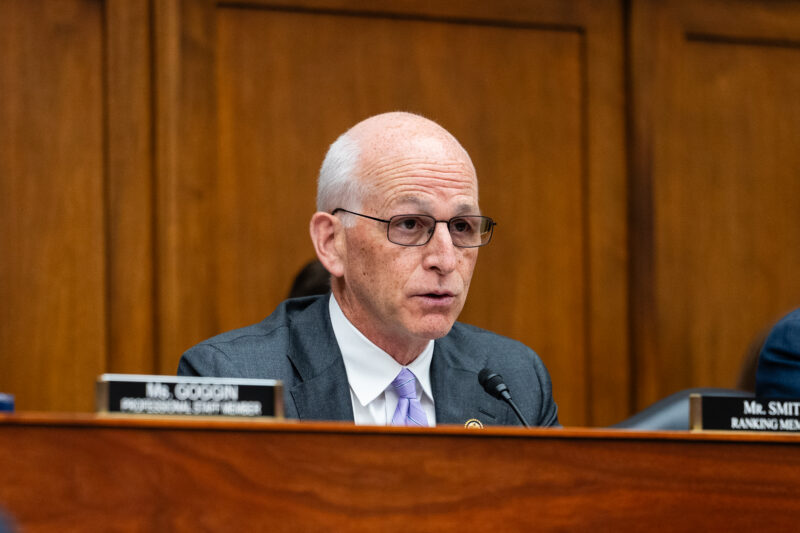
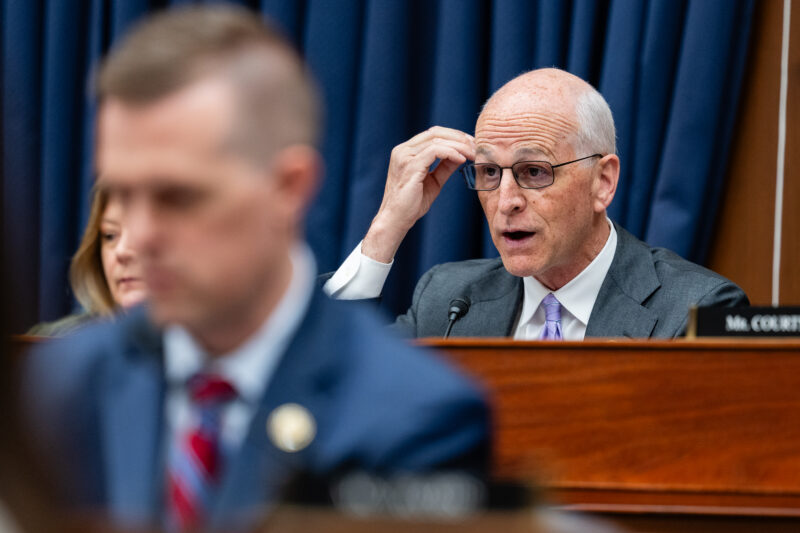
Key Democratic committee leaders, including the ranking members of the Appropriations, Foreign Affairs and Intelligence committees, all voted against the amendment, while Rep. Adam Smith (D-WA), the ranking member on the Armed Services Committee, voted in favor.
Several pro-Israel House Democrats who are facing contentious primary challenges in which Israel has become a key issue — including Reps. Wesley Bell (D-MO), Shri Thanedar (D-MI) and Ed Case (D-HI) — voted against the amendment.
Reps. Haley Stevens (D-MI) and Angie Craig (D-MN) also voted against the amendment, while Rep. Chris Pappas (D-NH) voted present. All three are running for the Senate.
But Rep. Seth Moulton (D-MA), who is running against Sen. Ed Markey (D-MA) in Massachusetts and has tried to tack to the progressive Markey’s left, said in a statement released prior to the vote that he would support the amendment, writing, “We simply cannot continue to condone Netanyahu’s actions that are against our moral conscience and our own national security interests by perpetuating the status quo.”
Other lawmakers who have generally been reliable supporters of Israel — including Reps. Jake Auchincloss (D-MA), Glenn Ivey (D-MD), Pat Ryan (D-NY), Laura Friedman (D-CA) and Brittany Pettersen (D-CO) — voted for the amendment.
“I just voted to block sending $3.3 billion of our taxpayer dollars to Netanyahu’s government. It’s wrong on every level,” Ryan said. “I expect groups like AIPAC will not support me in my future elections and frankly, I don’t want their support. Hardline stances that refuse to stand up to a corrupt and increasingly dangerous Netanyahu regime have no place in our politics.”
Auchincloss said that his vote to cut funding to Israel was designed to send a message to both President Donald Trump and Netanyahu.
“With their disastrous war against Iran, their empowerment of settler violence in the West Bank, and their strategic incoherence against Islamist terrorism, both President Trump and Prime Minister Netanyahu have sacrificed [Congress’] trust,” Auchincloss said.
He said that the amendment is “not the ideal mechanism of action,” and raised concerns about Massie’s use of antisemitic tropes in his reelection campaign.
“I have weighed these problems against the central thrust of the amendment: there must be consequences for Trump and Netanyahu,” Auchincloss continued. “Those consequences should not impair the State of Israel’s right to defend itself against the atrocities of the terrorist regimes that threaten it. Israel and the United States have common interests, shared values, and a long history. Israel and the United States are allies.”
He also said that upcoming Israeli elections, the next memorandum of understanding with Israel and the long-term impacts of the Iran war offer “an opportunity to renew the U.S.-Israel alliance on shared principles and a bipartisan basis going into the 2027 appropriations process.”
Groups including AIPAC, J Street, the Jewish Democratic Council of America, Democratic Majority for Israel and the American Jewish Committee all opposed the amendment, though J Street said the result sent a “strong message” that Democrats agree that the party should pursue a “fundamentally different American approach to the U.S.-Israel relationship and the region.”
Over a dozen Democrats previously endorsed by AIPAC, including Auchincloss, Clark, Friedman, Pelosi, Pettersen, Ryan, Smith and Reps. Gabe Amo (D-RI), Maggie Goodlander (D-NH), Julia Brownley (D-CA), Josh Harder (D-CA), Steven Horsford (D-NV), Julie Johnson (D-TX), Bill Keating (D-MA), Seth Magaziner (D-RI), Richard Neal (D-MA) and Joe Neguse (D-CO), voted for the amendment.
In an interview on CNBC, the Israeli premier said ending U.S. aid to Israel will ‘take away the myth that Israel is depleting America's coffers’

Ilia YEFIMOVICH / POOL / AFP via Getty Images
Israeli Prime Minister Benjamin Netanyahu speaks during a ceremony commemorating Israel's Remembrance Day on Mount Herzl in Jerusalem on April 21, 2026.
Israeli Prime Minister Benjamin Netanyahu said on Wednesday that he wants to start the process of winding down U.S. aid to Israel in the final two years of the Trump administration, as both countries work on a new memorandum of understanding.
Netanyahu made the comments in an interview with CNBC’s Sara Eisen after being asked about his political future and when Israel would be ready for new leadership. The prime minister responded by noting that while the Israeli people could decide at “any time” to remove him from power, he is currently focused on achieving four objectives: “finish[ing] the security envelope that we have to make vis-à-vis Iran and its proxies”; securing more investments globally to expand Israel’s AI and tech sectors; normalizing relations with several countries in the Middle East; and ending Israel’s reliance on U.S. aid.
“The other thing I want to do is move away, in America, from aid to partnership. We’re now working on a memorandum of understanding, which will bring down the aid,” Netanyahu said. “I want it to start now, I want it to start in the last two years of the Trump administration and I want it to keep going down, coming to zero, because I think we’ve come of age.”
The current MOU, which provides Israel with $3.8 billion in U.S. military aid annually, runs through FY 2028. Netanyahu did not clarify whether he would like to see aid begin to wind down through changes to the current agreement, or whether he is focused on ongoing negotiations for the next one.
“Israel has a robust economy, and I want us to go from aid to a partnership where we both invest equal amounts and both share equally in the fruits of our innovators and technologies,” he continued. “I think that’s very, very important. It will also take away the myth that Israel is depleting America’s coffers.”
Netanyahu has said on multiple occasions since January that he hopes to wean Israel off of U.S. aid, initially suggesting in January that Israel would work to end U.S. aid within the next ten years. He pitched the aid drawdown to President Donald Trump in late December, an idea the president was initially bewildered by and not supportive of.
Netanyahu also downplayed reports that Trump told him he is “f***ing crazy” in a phone call on Monday about Israel’s military escalation in Lebanon and rejected the notion that his relationship with the president had shifted, noting that the two speak as frequently as “every two days.”
Still, he did not deny that the conversation occurred as reported.
“Sometimes we have, as in the best of families, you have these tactical disagreements. We always find a way to work them out and we do so as great friends,” Netanyahu said. “We can disagree in the morning, and by the afternoon we have common action.”
Leiter: ‘The tent, as we call it, should be wide and as inclusive as possible, but it cannot be inclusive to those who are contributing to the efforts of those seeking to collapse the tent’

Tasos Katopodis/Getty Images
Israeli Ambassador to the United States Yechiel Leiter
A week after describing J Street as “a cancer within the Jewish community” for calling for the United States to restrict aid to Israel, Yechiel Leiter, Israel’s envoy to Washington, doubled down on his critique of the organization, stating that the liberal advocacy group’s recent actions are “decidedly not pro-Israel.”
The remarks came during Leiter’s broader address on Thursday at the Re-Charging Reform Judaism conference on Manhattan’s Upper West Side, during which he argued to the audience of over 300 Reform rabbis, lay leaders and teachers that American Jews need to respond to rising anti-Zionism and post-Oct. 7 hostility toward Israel with a stronger, more unapologetic form of Zionism and Jewish solidarity.
“J Street does incalculable amount of damage to the interests of Israel,” Israeli Amb. Yechiel Leiter said at the Re-Charging Reform Judaism conference, expanding on his previous critique of the liberal advocacy group.”
— Jewish Insider (@jewishinsider) May 27, 2026
Watch more of what he said below or read our full story: https://ji.news/55×33
While Leiter expanded on his critique of J Street, receiving applause and a standing ovation at the end of his speech, his remarks were more measured than in previous appearances, focusing on what he described as the group’s role in supporting arms embargoes and amplifying accusations against Israel, rather than attacking the organization wholesale. His past comments — including describing J Street as “duplicitous” and “two-faced” — drew ire from many progressive Jews.
“I believe the tent, as we call it, should be wide and as inclusive as possible, but it cannot be inclusive to those who are contributing to the efforts of those seeking to collapse the tent. J Street does incalculable amount of damage to the interests of Israel,” he said.
He continued, arguing that support for arms embargoes against Israel “endanger Israel” and that “supporting such embargoes is not pro-Israel,” He also denounced the organization’s call for Leiter to investigate the allegations of sexual abuse of Palestinians outlined in a controversial opinion piece by New York Times columnist Nicholas Kristof earlier this month.
“It is certainly not pro-Israel to push the canards peddled by Nick Kristof in The New York Times. Jewish dogs don’t commit rape. That was the last straw for me….It’s perfectly fine to have a different vision than the majority of Israelis as to what that peace should look like… but it’s unethical to undermine Israel’s democratically elected government. Friends, please understand, I did not call out J Street because I disagree with their vision of Israel. I call them out because their actions are endangering Israel,” he said.
Leiter also said that senators he meets with on Capitol Hill have accused Israel of “genocide and starvation” and said lawmakers cite J Street as a source for those claims.
“Ask anyone in the know in Washington who is lobbying alongside [Sen.] Bernie Sanders [I-VT], who is responsible for 40 of 47 Democratic senators voting in favor of the arms embargo in Israel,” Leiter said. “They will tell you J Street.”
Blake, challenging Rep. Ritchie Torres in the Democratic primary, had said just months ago that he would support Iron Dome funding

AP Photo/Andrew Harnik
Michael Blake speaks at a "Souls to the Polls" drive-in rally at Sharon Baptist Church, Sunday, Nov. 1, 2020 in Philadelphia.
Michael Blake, a far-left challenger to Rep. Ritchie Torres (D-NY), said at a debate on Tuesday hosted by One NYC Action that he would oppose missile defense aid for the Jewish state — the latest flip-flop on Israel policy issues by a candidate who has reversed numerous of his past stances on the subject over the course of his campaign.
Blake was once a close ally of AIPAC and a champion of the U.S.-Israel relationship, but has repositioned himself as a harsh critic of the Jewish state — and has continued to move left during the course of his campaign.
Blake said this week that he would oppose all aid, including defensive aid, to Israel.
“We need a permanent ceasefire, full stop. We need to absolutely stop the aid that is happening. We need to stop sending money,” Blake said.
Blake expressed the opposite view just months ago in a January event with the Ben Franklin Club, saying that he viewed protecting and supporting Israel’s Iron Dome missile defense system as a separate issue than blocking other military aid, and indicated that he would continue to support Iron Dome.
In that same event, Blake asserted his continued support for anti-Boycott, Divestment and Sanctions legislation he helped pass in the state assembly — before going on to reverse that stance in late March.
Blake reiterated his new opposition to the anti-BDS legislation in the debate this week, saying he lacked the proper information about the bill at the time of his previous support.
On Thursday, Blake picked up an endorsement from TrackAIPAC, the virulently anti-Israel group that has attracted accusations of antisemitism from other Democrats, and which requires endorsees to adopt a host of anti-Israel stances, including a full arms embargo on Israel.
He also argued that the war in Iran, and efforts to stop Trump from launching an all-out assault on the country, were proof of why Torres needed to be defeated, without fully explaining that argument. Torres has also opposed the war, condemned Trump’s comments threatening the destruction of Iranian civilization and said the president needs to be removed from office.
“It was reported today that Trump went into [the war] because Netanyahu and the Israeli government lied to him consistently in a February meeting and prior to that,” Blake continued, again asserting that as an “indication on why Ritchie Torres has to go,” without explaining further.
The Oregon lawmaker said the U.S. ‘must send a clear message to Benjamin Netanyahu’ and that his actions ‘have made Jews less safe’
Heather Diehl/Getty Images
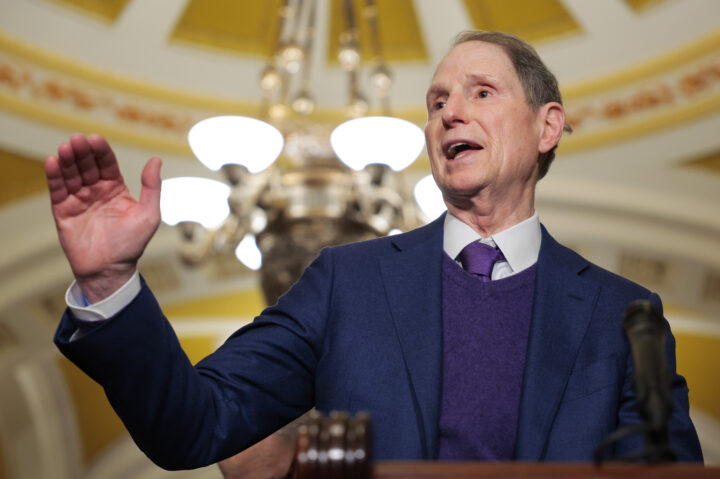
Sen. Ron Wyden (D-OR) speaks to reporters following a Senate Democratic policy luncheon at the U.S. Capitol on December 09, 2025 in Washington, DC.
Sen. Ron Wyden (D-OR) introduced legislation on Wednesday to condemn the Israeli government for allegedly withholding aid in Gaza and to potentially impose sanctions on Israeli government officials.
Under the Accountability for Withholding Aid and Relief Essentials (AWARE) Act, any foreign government officials or those acting on their behalf “found to be restricting, diminishing, undermining, or preventing the delivery and distribution of sufficient humanitarian assistance” would be subject to U.S. financial and visa-blocking sanctions.
The legislation includes a presidential waiver, though that, or the removal of sanctions, can be overridden by a joint resolution of disapproval by Congress. Senior lawmakers would also be allowed to request an assessment of whether a foreign official meets the criteria for sanctions.
The policy would apply globally, but is formulated around the situation in Gaza.
The legislation states that the entire population of Gaza is “facing acute levels of hunger” and that “actual levels of humanitarian assistance remain well below what is needed,” though a U.N. report last week stated that 100% of Gaza’s basic food needs, for the first time since 2023, are now being met.
“The United States must send a clear message to [Israeli Prime Minister] Benjamin Netanyahu and any other leader who would deny food, medicine, and shelter to vulnerable people: If you are complicit in denying humanitarian assistance to Palestinians or others in need, you will face personal consequences,” Wyden said.
Wyden, who is Jewish, has generally not been a prominent critic of Israel in the Senate, and did not vote with a majority of his Democratic colleagues last year to block certain weapons shipments to Israel.
“As Jews, we have a duty to moral leadership. Netanyahu has failed this duty by all counts,” he continued. “As a lifelong champion for Israel’s security, I believe the actions of the Netanyahu government have made Jews less safe and contributed to horrific suffering in Gaza.”
Under the legislation, the administration would also be required to report annually to Congress on any officials violating the policy and justify any case in which sanctions were not imposed — or to explain their reasoning if they fail to add any individuals to the list.
It further states that it will be U.S. policy that “if a government is unable or unwilling to ensure delivery and distribution of sufficient humanitarian assistance to a territory under its control, that government must allow any and all United States and internationally recognized humanitarian organizations to deliver and distribute sufficient humanitarian assistance to the protected persons in that territory.”
Various international NGOs, including Doctors Without Borders (MSF), that are cited in the bill text, as well as the U.N. Relief and Works Agency, have been found by Israel and researchers to have employed members of Hamas and other terrorist groups. Israel recently banned MSF and other international NGOs because they refused to provide information about their staff for vetting.
The legislation condemns both Hamas and Iran, while also condemning Israel for restricting aid flows into Gaza, stating, “actions by the Netanyahu administration that have contributed to the humanitarian crisis and acute suffering of Palestinians are horrifying” and that the Israeli government’s actions are “not consistent with the State of Israel’s core values” and have “eroded the State of Israel’s standing in the world by undermining the rule of law and violating fundamental human rights.”
The legislation is supported by the Friends Committee on National Legislation, New Jewish Narrative, J Street and Refugees International.
“Our Jewish values compel us to stand up against the continued oppressive restrictions on humanitarian aid into Gaza, which exacerbate the destruction inflicted on civilians by two years of war,” J Street President Jeremy Ben-Ami said in a statement. “At a time when humanitarian groups are facing increasing obstacles to providing help on the ground, those who intentionally restrict access to humanitarian assistance must face real consequences.
“Humanitarian aid should never be used as a weapon of war. Nor should the suffering of a people be exploited for diplomatic leverage,” NJN CEO Hadar Susskind said. “Unfortunately, the current Israeli government has a demonstrable record of doing just that. Gazans continue to suffer to this day. By introducing this bill, Senator Wyden is reasserting American values, and backing them up with real consequences.”
Prime Minister Netanyahu said he told President Trump that Israel has ‘come of age’ and ‘developed incredible capacity’

Joshua Sukoff/Medill News Service
President Donald J. Trump holds a joint news conference at the White House with Israeli Prime Minister Benjamin Netanyahu on February 4, 2025.
Israeli Prime Minister Benjamin Netanyahu announced that Israel is seeking to end the military assistance it receives from the U.S. in the next 10 years, a move that he said is “in the works.”
In an interview with The Economist released Friday, Netanyahu said that during his December visit to President Donald Trump’s Mar-a-Lago resort in Palm Beach, Fla., he told Trump that Israel “very deeply appreciate[s] the military aid that America has given us over the years.”
But, he said, “we’ve come of age and we’ve developed incredible capacity. And our economy, which will reach, certainly within a decade, will reach about a trillion dollars — it’s not a huge economy, but it’s not a small economy. So I want to taper off military aid within the next 10 years.”
“And that’s not saying that I don’t want to fight for the allegiance and support of the American people — I do, you would have to be crazy not to,” Netanyahu continued.
“You want to taper it off to zero?” Zanny Minton Beddoes, editor-in-chief of The Economist, asked.
“Yes,” Netanyahu said.
“That would be a very dramatic shift,” Beddoes responded.
“Well, it’s in the works,” the prime minister replied.
Israel and the U.S. currently have a 10-year memorandum of understanding that provides Israel with $3.8 billion of security assistance annually, through 2028. Negotiations to establish the next MOU are underway.
The Ohio Democrat said that withholding aid from Israel would 'undermine' the country 'in a way that is really significant'
Tom Williams/CQ-Roll Call, Inc via Getty Images
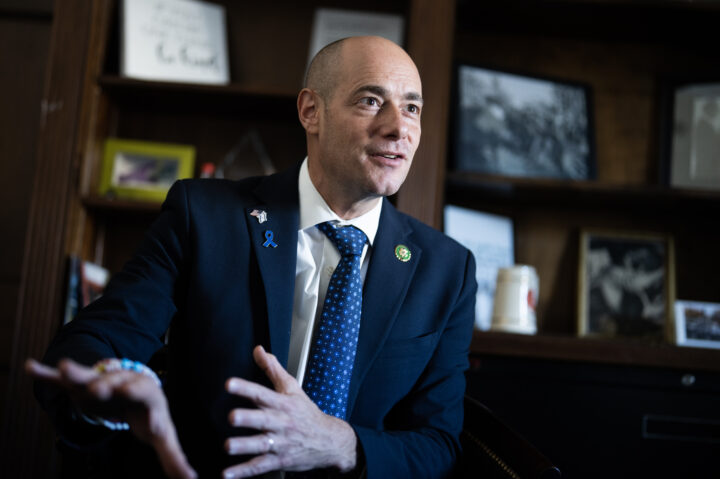
Rep. Greg Landsman (D-OH) is interviewed by CQ-Roll Call, Inc via Getty Images in his Longworth Building office on Friday, November 3, 2023.
Rep. Greg Landsman (D-OH), in a webinar with Democratic Majority for Israel on Tuesday, emphasized that colleagues who push to block aid to Israel or recognize a Palestinian state risk emboldening Hamas, Hezbollah and Iran when they are on their back foot.
Landsman also laid out what he sees as preconditions for rebuilding Democratic support for the Jewish state.
“Saying, ‘We’re going to withhold aid, we’re going to unilaterally call for a Palestinian state’ — which exists where? Is that all of Israel? What are you talking about? — that suggests to Hamas, ‘Maybe we should keep fighting,’” Landsman said. “I don’t think that’s their intent. I think that it’s entirely appropriate to be critical of the government and decisions … without abandoning our ally.”
“Witholding aid does undermine our ally in a way that is really significant,” Landsman continued.
He said he’s trying to push colleagues in that direction. He added later that he believes that the war in Gaza is a “just war,” even if “it needs to come to an end.”
Asked about the longer-term path toward rebuilding Democratic support for Israel, Landsman said that an end to the war and new leadership in Israel would likely be critical steps in that direction.
“Once we get on the other side of this and we have a government that’s really actively pursuing peace, then the path for a lot of these folks who have felt alienated, to come back. I think is pretty clear,” Landsman said.
He added that peace must also come alongside continued efforts to beat back threats. “You do have to take out these terror armies, and you have to marginalize and completely sideline Iran as a threat, which is going to require constant work.”
He said he was encouraged to see the deal put forward by the Trump administration on Monday, arguing that the war “needs to end for a whole host of reasons,” including freeing the hostages and surging aid into Gaza.
“Israel’s standing in the international community has been diminished, which is a key strategy for Hamas. And this is one of the reasons why I think Netanyahu has got to figure out a way to end this war, because Hamas is succeeding at delegitimizing Israel in a way that is really harmful, way more so than anything it could do militarily,” Landsman said. “I think you’ve got to take that off the table, and that means ending the war.”
Landsman also said that “there’s still limited pressure on Hamas to end this war” and called on the Trump administration to employ “maximum leverage, maximum pressure” on the group, including by detaining Hamas leaders in Qatar.
He added that surging aid is “the right thing to do, it’s the Jewish thing to do and it’s also just strategically what has to happen if Israel is going to maintain its standing in the world and continue to get support.”
He said that positive steps are being taken but added that there are “serious issues with UNRWA that the U.N. and the international community have not gotten serious about.”
He also emphasized the need for an Arab-nation compact to bring the war to an end and deradicalize and rebuild Gaza with a new government that seeks peace with Israel.
“Get all 22 of them involved in a very formal and committed, long-term, sustainable way,” Landsman said. “I think that helps achieve the goals that we collectively have for ending this war and getting Gaza to a place where Hamas is gone, the strip is deradicalized and we’re in a position to help them rebuild with a new governing authority that wants peace with the state of Israel.”
Landsman suggested that such an effort could also unlock Arab-Israeli peace.
“An Israel that’s seeking peace is quite popular. I think that’s what [Saudi Crown Prince Mohammed bin Salman] would support. Once this war is over and there is a pathway to peace because these terror armies have been defeated … I think these folks do come back and say, ‘Okay, let’s be part of something,’” Landsman continued.
He said that the Trump administration needs a larger team, working full-time, on pursuing Middle East peace in the longer term. “You’ve got to get ironclad commitments from all of these countries. It’s got to be formal. They’ve got to come together in a formal, sustainable way.”
Without continuous White House pressure and attention, he warned that any peace that is reached is likely to crumble.
The next U.S.-Israel memorandum of understanding will need to be secured in a political environment much more hostile to Israel than 10 years ago

GETTY IMAGES
A general view of the U.S. Capitol Building from the National Mall, in Washington, D.C., on Thursday, May 29, 2025.
In September 2016, when President Barack Obama announced that the U.S. and Israel had signed a 10-year deal pledging a total of $38 billion in military assistance to Israel, the news was generally uncontroversial and greeted with bipartisan plaudits — a striking contrast to the nasty presidential campaign playing out across the country at the time.
That deal, known as the U.S.-Israel Memorandum of Understanding, is now close to expiring, and the next one — if there is a next one — will be negotiated in an entirely different political environment. Israel remains deeply enmeshed in a nearly two-year war in Gaza, with little indication of an end in sight, making forward-looking negotiations more difficult.
A new MOU is not a given. U.S. support for Israel has dramatically declined on the left, and it is fracturing in isolationist corners of the right as well. Even some staunchly pro-Israel Republicans have grown wary of foreign aid in general, a shift that could affect U.S. policy toward Israel.
“When many of the threats that have faced Israel in the past have been largely neutralized, Israel will need to figure out how to make the case that it is in need of over half of the U.S. security assistance budget,” a former Biden administration State Department official told Jewish Insider. “They will need to demonstrate the threats that they face in order to warrant this level of funding when Hamas has been decimated, when Hezbollah is a shadow of what it once was, when Iranian air defenses are nonexistent and Israel has proven its ability to be able to infiltrate Iran.”
The conversation about the next U.S.-Israel MOU came to the fore last month, when Pete Buttigieg, the former transportation secretary and a potential 2028 Democratic presidential candidate, became the first prominent Democrat to say the U.S. should not enact another 10-year military aid deal with Israel.
No other potential Democratic presidential contenders have weighed in on the issue, though it could become a litmus test for a party whose base is steadily turning more hostile to Israel.
The current U.S.-Israel MOU, which expires in 2028, is the countries’ third. President Bill Clinton and Israeli Prime Minister Ehud Barak signed the first 10-year MOU in 1999. It was meant as a way to phase out U.S. economic aid to Israel, which Jerusalem no longer needed as an emerging economic and technological powerhouse. Another MOU was negotiated by President George W. Bush and completed in 2007.
“Ten-year MOUs have communicated an ongoing, consistent and bipartisan commitment to support Israel’s security by crossing administrations and demonstrating that it’s an ongoing relationship,” said former U.S. Ambassador to Israel Dan Shapiro. “It allows planning for big ticket acquisitions.”
The long-standing commitment allows Israel to plan to make large purchases that could take several years to acquire, such as fighter jets.
The MOU is not actually a binding agreement, it’s a framework. Congress must still approve the $3.3 billion in military financing and $500 million in missile defense laid out in the MOU each year during the annual appropriations process, and could do so even in the absence of an MOU.
“It’s simply a political commitment that Congress and the president can honor or not honor, and not having an MOU does not necessarily mean that we won’t have foreign military financing,” said Brad Bowman, an analyst at the Foundation for Defense of Democracies and former national security advisor to Sen. Todd Young (R-IN).
“But if we’ve had MOUs with Israel for so long under presidents of both parties, to not have one, I think, would really be quite a political statement about what’s going on with Israel, and would undermine the efforts of both Americans and Israelis to do necessary planning,” Bowman added.
“Both the left and the right are having deep reservations about the U.S.-Israel relationship, and that could very much have negative consequences for the MOU,” a former Biden administration State Department official said.
Congress has in the past weighed in to signal its support for the MOU. In 2016, Congress voted overwhelmingly to endorse the new MOU, with 405 members of the House voting for the measure. Just four representatives — all Republicans — voted against the bill. Only one of them, Rep. Thomas Massie (R-KY), is still in the House.
Since then, American support for Israel has shifted significantly, particularly since Israel’s response to the Oct. 7 Hamas attacks in 2023. A Quinnipiac poll released in August found that 60% of voters oppose sending more military aid to Israel for its war with Hamas, while only about one-third (32%) support it.
Meanwhile, only 13% of Democrats say their sympathies lie more with the Israelis than the Palestinians, a decline from 34% when asked the same question in November 2023. Far more Republicans side with the Israelis — 66% — but that’s down from 80% in November 2023.
“Both the left and the right are having deep reservations about the U.S.-Israel relationship, and that could very much have negative consequences for the MOU,” the former Biden State Department official said.
Congressional efforts to place conditions on American military aid to Israel have gained steam since Oct. 7.
Twenty-seven Senate Democrats voted last month on a resolution to block the shipment of certain weapons to Israel. The measure was largely symbolic and destined to fail in the Republican-led Senate. Still, even with an MOU, Congress would not be prevented from passing a bill further restricting U.S. aid to Israel.
“We continue to have an interest in ensuring that Israel can defend itself. They continue to be an important partner in the Middle East addressing many threats that threaten them, but also threaten us,” said former U.S. Ambassador to Israel Dan Shapiro. “If our relationship with Israel were to become far less supportive and far less intimately connected, we would quickly see a decline in our influence much more broadly in the region. That doesn’t mean we can’t also have critical conversations and use our leverage as a provider of assistance when we have concerns about Israeli military actions.”
That’s not considering the leeway given to the State Department, which approves arms sales. Last year, President Joe Biden held up a shipment of 2,000-pound bombs for months over concerns about Israel’s incursion into Rafah.
The Trump administration, which would be the one to negotiate and sign off on a new MOU before its expiration, has not yet indicated any reservations with the process.
Israel is by far the largest recipient of U.S. foreign military financing. The U.S. and Jordan have their own security MOU, though Jordan receives roughly a tenth of the annual military aid that Israel gets. Shapiro, the former U.S. ambassador to Israel, said the reason for the high level of support goes beyond Israel, and deep into the Middle East. He urged the U.S. to raise concerns with Israel about its conduct when issues arise, but not to cut into the aid itself.
“We continue to have an interest in ensuring that Israel can defend itself. They continue to be an important partner in the Middle East addressing many threats that threaten them, but also threaten us,” he said. “If our relationship with Israel were to become far less supportive and far less intimately connected, we would quickly see a decline in our influence much more broadly in the region. That doesn’t mean we can’t also have critical conversations and use our leverage as a provider of assistance when we have concerns about Israeli military actions.”
It would be tempting for Israel to try to increase its defense production to account for such a turbulent political environment. Israel has grown its military exports substantially in recent years and some Israeli lawmakers have indicated they’d like to phase out reliance on U.S. aid, but it would be very difficult for Israel to domestically produce everything it needs.
“The problem is that’s never going to happen,” Bowman said. “Israel, as impressive as it is, is never going to be completely self-sufficient in producing its own weapon systems. The United States is not. If we’re not, Israel never will be. Israel is a technology superpower. It’s not an industrial superpower.”
The Ohio Democrat, who visited Israel last week, also called for pressure on Qatar to push Hamas officials in Doha to end the war and release the remaining 50 hostages

President Isaac Herzog on X
Israeli President Isaac Herzog meets a delegation of House Democrats in Jerusalem on August 11, 2025.
Following his recent trip to Israel, Rep. Greg Landsman (D-OH) says he believes that the Jewish state is “as close as I’ve understood it to be to ending” the war in Gaza.
“The language around aid has changed. [Israel talks] about surging aid and they talk about ending this war quickly,” Landsman, who discussed his trip on Wednesday with Jewish Insider, said. “They talk about getting the hostages back no matter what, and whether there’s a deal or not, they’re getting them home. So, they obviously can’t speak to what that looks like or what that means, but I got the sense that this should and hopefully will be the end.”
He made a similar comment in a statement on his trip shared with JI, which stated: “The end of the war appears close, and G-d willing it ends very soon. With it, rebuilding of Gaza can begin. The first glimpses of this ‘day after’ plan can be seen, and the Arab nations that have declared the end of Hamas must play a huge role in what happens next.” His comments came as Israel weighs the most recent ceasefire proposal, and as the IDF prepares to call up tens of thousands of reservists ahead of plans to take over Gaza City in the coming months.
Regarding next steps, Landsman wrote in the statement, “This is a moment of truth for Qatar, to be sure. With senior Hamas leaders in their midst, detaining them – if negotiations continue to falter – may be necessary. This could hasten the end of the war and the release of the hostages. They must do everything in their power – now.”
Landsman told JI that he believes “everyone should be putting pressure on all parties to end the war. I think it is entirely appropriate to put pressure on the Israeli government to end this war. I also think it is necessary for people to put pressure on Qatar and Egypt to end this war, to use all of the leverage they have, particularly with the senior Hamas leaders that are in Qatar.”
“I believe that’s true to some extent, to a lesser extent, for folks in Egypt to say we’re done, you have to accept a return, a deal that ends this war and returns hostages. The pressure also needs to be placed on these 22 Arab countries, and I believe Egypt and Qatar are on that list, but the other 20 who have said, in an unprecedented move, that Hamas needs to disarm and disband. Now they’ve got to turn that into action and establish a coalition with the United States and Israel and Europe to end this war,” he continued.
The Ohio congressman was one of 14 House Democrats who took part in a delegation to the Jewish state last week. The trip was organized by the AIPAC-affiliated American Israel Education Foundation, which organized a similar visit to Israel for House Republicans the week prior that overlapped for several days with the Democrats’ trip.
Landsman told JI that he viewed the trip as an opportunity to accomplish three main objectives: to be available as a resource to answer questions from Israeli leaders and build relationships with newer members of Congress like himself; to get fully briefed on the work being done to ensure the delivery of humanitarian aid into Gaza; and to engage with stakeholders in the broader peace process in the region. “Going sort of allows me to do all three of those things,” he said.
Landsman said that this trip highlighted the similarities between the American and Israeli people and as citizens of liberal democracies where citizens are free to air frustrations about their respective governments.
“The frustration with the government is something that many Israelis feel. They are frustrated with this government, especially as it relates to Gaza,” Landsman said. “And I appreciate that because it’s a liberal democracy. Israelis are just as critical of this government, if not more, than folks around the world or here in the United States.”
Landsman told JI that the Israeli officials and citizens he spoke with urged him and others on the trip to continue supporting a strong U.S.-Israel relationship during moments when they took issue with some of the actions of Israeli Prime Minister Benjamin Netanyahu.
“They remind you that they would never want anyone to abandon them, as we would never want anyone to abandon us. It’s an important reminder that being critical of the government when you disagree is part of democracy, it’s why democracy and freedom are so important,” he said. “There’s a line. In terms of having the strength and courage to both stand up to and criticize your partners, while also having the strength and courage to not abandon them, especially a partnership like this one and in an existential moment such as this.”
The Ohio Democrat offered a similar thought in his official statement, in which he wrote: “Instead of abandonment, many of us have chosen to visit the region, to show up, and to support the Israeli government when we agree and to push back when we don’t. We know that abandonment may be politically expedient, but it is strategically wrong. It will render our country unreliable to those who we need to ensure global security and global prosperity.”
“We must always remain a reliable partner for democracy and peace. The United States of America does not abandon its allies, nor will we do so here,” the statement continued.
Landsman told JI, “We should not abandon Ukraine and our European allies. We should not abandon, and I don’t believe we will, one of our strongest partners in peace and democracy and freedom, and that’s the state of Israel.”
“We want people to stick with us. That’s why I used the word ‘reliable’ in my statement. We need people to stick with us for our economic prosperity, for national security. If we’re not sticking with others, people will stop sticking with us, and that is very bad for the United States,” the Democratic lawmaker said.
“This is why we worry about [President Donald] Trump or any president that starts to undermine our relationships with folks across the world. It becomes very, very costly and very dangerous to the United States. We wouldn’t want anyone to look at this government [in the U.S.] and say, ‘Well, we’re gonna back away from our commitment, our investments in America.’ That would be terrible,” he continued.
Landsman said he believed his worldview was shared by the majority of the American people.
“When I come home and have these conversations, I get a very common-sense position. It’s where I believe most people are when I talk to them. They worry about the humanitarian situation. How can you not? They want this war to end. How can you not? They get frustrated with a government that has people like [Israeli National Security Minister Itamar] Ben-Gvir and [Finance Minister Bezalel] Smotrich. Of course, they should,” Landsman explained.
“But they also know that Hamas can’t stay, and Israel has to figure out a way to win this war or end it so that folks can rebuild without a terrorist organization in their way. They know that Iran is the barrier to everything good in the region. They know if you start to undermine the partnership with Israel, the only people who win are folks associated with the regime and the terror networks they fund,” he added.

Elke Scholiers/Getty Images
IDF soldiers prepare tanks on August 18, 2025 near the Gaza Strip's northern borders, Israel.
Good Wednesday morning.
In today’s Daily Kickoff, we talk to DC JCRC head Ron Halber about the “extremely disappointing” decision by Rep. Jamie Raskin to sign onto legislation restricting aid to Israel, and interview Rep. Laura Gillen about her recent trip to Israel alongside 13 other House Democrats. We cover Seb Gorka’s comparison of Tucker Carlson to Pat Buchanan, and report on recent comments by the president of the American Association of University Professors in support of a boycott of Israeli academics. Also in today’s Daily Kickoff: Shari Redstone, Yariv Mozer and Eliya Cohen.
What We’re Watching
- Texas Republicans are expected to move forward today on a mid-decade redistricting effort that would redraw the state’s congressional lines to benefit the GOP. Today’s vote was delayed by several weeks after Democratic legislators left the state to prevent a quorum for the vote to take place.
- Former Boston Red Sox player Kevin Youkilis is speaking about Jewish identity in sports at an Anti-Defamation League web event today kicking off the ADL’s “Game Changers” series.
- Palestinian writer and researcher Ahmed Fouad Alkhatib, the director of the Atlantic Council’s Realign for Palestine program, is speaking today at Los Angeles’ Sinai Temple.
- U.S. Ambassador to France Charles Kushner is in Israel today. Last night, he and his wife, Seryl, had dinner in Jerusalem with U.S. Ambassador to Israel Mike Huckabee and his wife, Janet, at the ambassador’s residence.
- Israel is inaugurating its embassy in Zambia today.
What You Should Know
A QUICK WORD WITH JI’S MELISSA WEISS
Israel is finalizing plans this week for a ground offensive into Gaza City, with the goal of having fully evacuated the city by the symbolic date of Oct. 7, 2025. Speaking at his weekly Sunday meeting, Israeli Prime Minister Benjamin Netanyahu said that Israel would “complete the victory” over Hamas. Tens of thousands of IDF reservists will begin receiving call-up notices today in preparation for the offensive.
The plans come amid a renewed push for Palestinian statehood, led by France and Saudi Arabia, that has seen a surge in support from global heads of state, including Canadian Prime Minister Mark Carney and Australian Prime Minister Anthony Albanese.
Palestinian statehood efforts also have support in Congress, where Rep. Ro Khanna (D-CA) is leading a group of House Democrats in calling on President Donald Trump to recognize a Palestinian state.
But both objectives — “total victory” over Hamas and Palestinian statehood — are at present incompatible with the realities on the ground.
Netanyahu has not wavered from his stated objective of “total victory” — even as he has yet to articulate, in practical terms, what that looks like — or how the Gaza City offensive will achieve it.
Outside of Israel, efforts to unilaterally recognize Palestinian statehood have ignored core challenges facing both Palestinian society and government, the former of which was plagued by antisemitic and anti-Israel rhetoric long before Oct. 7, 2023, and the latter of which has for decades been mired in corruption and nepotism and lacks the ground support needed for long-term stability.
JAMIE’S JAM
Top D.C. Jewish official urges Jamie Raskin to withdraw from anti-Israel resolution
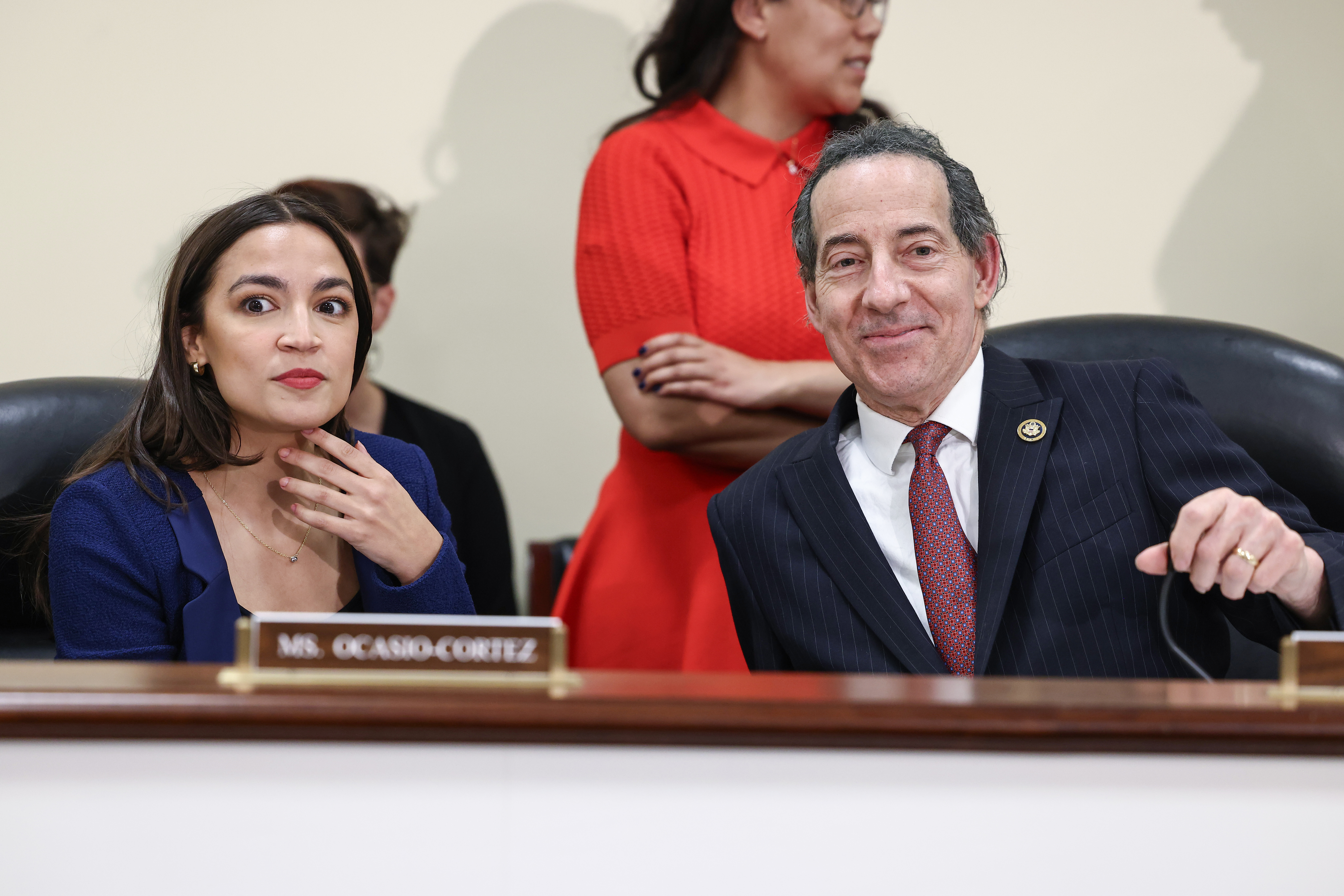
Ron Halber, the CEO of the Jewish Community Relations Council of Greater Washington, strongly criticized Rep. Jamie Raskin (D-MD) over his recent decision to support legislation that seeks to severely restrict U.S. aid to Israel. “Jamie’s signing on that legislation was extremely disappointing,” Halber said in an interview with Jewish Insider’s Matthew Kassel on Tuesday, referring to the Block the Bombs Act, a bill led by far-left lawmakers that would place unprecedented new conditions on U.S. weapons transfers to Israel.
Private plea: “It unfortunately follows his signing on to other similar letters and a vote against additional arms to Israel last year, which really raised a lot of people’s eyebrows,” Halber said of Raskin, whom he considers a friend. Halber said he had spoken with Raskin, one the most prominent progressive Jewish lawmakers in Congress, three times over the last two days, asking him to withdraw his name from the bill and instead issue a statement voicing the concerns about the war in Gaza that motivated him to back the legislation. Raskin, who became a co-sponsor of the bill this month, has not issued any statement about his decision.
TRIP TALK
Rep. Laura Gillen returns from Israel doubly committed to a strong U.S.-Israel relationship
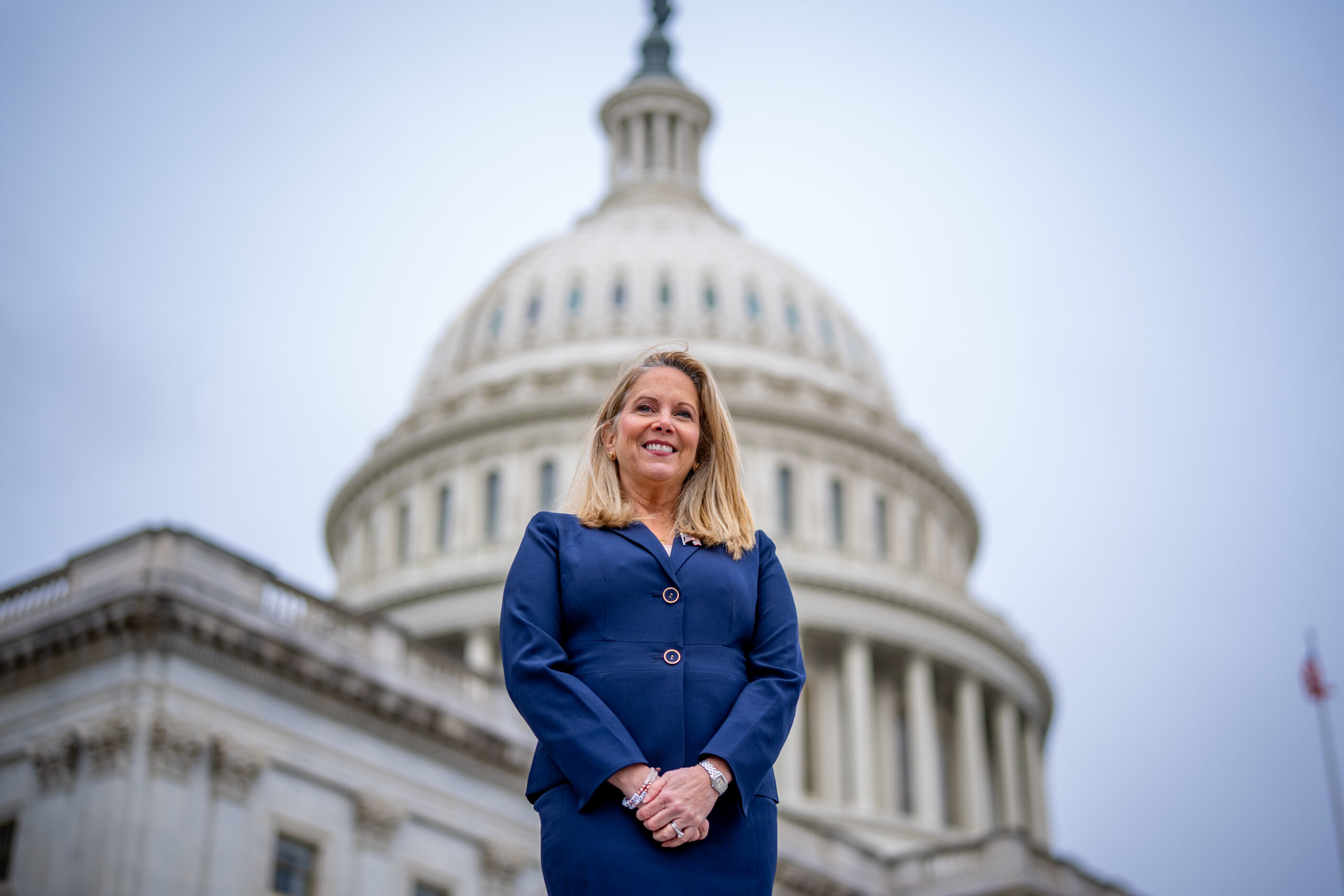
Rep. Laura Gillen (D-NY) came away from her recent visit to Israel feeling resolute in her determination to strengthen the U.S.-Israel relationship and support the Jewish state in its efforts to bring all remaining hostages in Gaza home, she told Jewish Insider’s Emily Jacobs in an interview on Monday. Gillen, a freshman lawmaker who represents a Nassau County, Long Island, swing district with a significant Jewish population, took part in a delegation of 14 House Democrats to Israel last week, sponsored by the AIPAC-affiliated American Israel Education Foundation, which organized a similar visit to Israel for House Republicans that overlapped for several days with the Democratic trip.
Common ground: “Hamas needs to end this war. It needs to give the hostages back. That’s something that can happen today, and the world needs to remember that,” Gillen said. The Long Island lawmaker noted that the trip highlighted the nonpartisan nature of support for Israel in the United States. “Just being on this trip with colleagues from the other side, having the opportunity to sit down and talk about some of the things that we saw, the conversations we were having with various elected officials and various nonprofit groups and business leaders in Israel, and talking to our colleagues on the other side of the aisle about what we’re sharing, the shared experience of visiting Israel, I think is really important going forward,” Gillen said.
FOREIGN POLICY FEUD
Seb Gorka slams Tucker Carlson as ‘Pat Buchanan in a new guise’

Seb Gorka, the White House senior director for counterterrorism and a deputy assistant to the president, aired his grievances with the anti-Israel faction within the Republican Party on Tuesday, alleging that the wing of the GOP aligned with podcast host Tucker Carlson is “basically Pat Buchanan in a new guise.” Gorka made the comments in a conversation on counterterrorism and U.S. strategy at the Hudson Institute after being pressed on the foreign policy disputes within the MAGA movement and Carlson’s criticism of President Donald Trump’s decision to strike Iran’s nuclear facilities in June, Jewish Insider’s Emily Jacobs reports.
‘Nothing new’: Asked by moderator Michael Doran, a Hudson senior fellow and director of the Center for Peace and Security in the Middle East, if he was comfortable addressing the growth of anti-Israel, antisemitic sentiment on right-wing podcasts and social media, Gorka replied, “Yeah, I am, because it bothers me immensely, but I’ve come to a certain realization with regards to that, that this wing of isolationism is nothing new. We had this 100 years ago.”
ACADEMIC IRE
American Association of University Professors president champions anti-Israel boycott
Seb Gorka, the White House senior director for counterterrorism and a deputy assistant to the president, aired his grievances with the anti-Israel faction within the Republican Party on Tuesday, alleging that the wing of the GOP aligned with podcast host Tucker Carlson is “basically Pat Buchanan in a new guise.” Gorka made the comments in a conversation on counterterrorism and U.S. strategy at the Hudson Institute after being pressed on the foreign policy disputes within the MAGA movement and Carlson’s criticism of President Donald Trump’s decision to strike Iran’s nuclear facilities in June, Jewish Insider’s Emily Jacobs reports.
‘Nothing new’: Asked by moderator Michael Doran, a Hudson senior fellow and director of the Center for Peace and Security in the Middle East, if he was comfortable addressing the growth of anti-Israel, antisemitic sentiment on right-wing podcasts and social media, Gorka replied, “Yeah, I am, because it bothers me immensely, but I’ve come to a certain realization with regards to that, that this wing of isolationism is nothing new. We had this 100 years ago.”
AMBASSADOR’S ASSESSMENT
Mike Huckabee sounds cautious note on status of ceasefire negotiations

U.S. Ambassador to Israel Mike Huckabee said on Tuesday he is “optimistic” while also remaining “realistic,” about the latest round of ceasefire and hostage-release negotiations with Hamas. “I want to be optimistic about a deal with Hamas but I’m also aware of who we are dealing with, we’re not dealing with a nation-state. We’re dealing with savages,” Huckabee said during an online briefing co-hosted by the American Jewish Congress and World Zionist Organization, Jewish Insider’s Haley Cohen reports.
Huckabee’s hope: The former governor of Arkansas’ comments come as Hamas has reportedly agreed to a 60-day ceasefire proposed by Qatari and Egyptian mediators, during which some of the remaining 50 hostages would be released. “Whether or not [Hamas is] serious about bringing this to a close, all I can tell you is I hope so. But what’s happened before, even when they say they are thinking seriously about bringing this to a conclusion, making a deal, they always add one or more things that are completely unacceptable, bring those to a table, then it all starts over again,” he continued.
Worthy Reads
Redstone’s Rationale: In an interview with The New York Times’ James Stewart, Shari Redstone explains the rationale behind her decision to sell Paramount to Skydance Media. “Potential buyers reached out over the years. David Ellison pressed his case several times, including over breakfast at the Four Seasons hotel in Beverly Hills in 2023. Ms. Redstone was noncommittal. That all changed on Oct. 7, 2023, when Hamas invaded Israel. The attack had a profound impact on Ms. Redstone, an ardent supporter of Israel whose ex-husband, Yitzhak Korff, known as Ira, is a rabbi and direct descendant of the founder of the Hasidic movement. (Her son Tyler is also a rabbi.) ‘Once that happened, I wanted out,’ she said. ‘I wanted to support Israel, and address issues around antisemitism and racism.’” [NYTimes]
Bibi’s Bind: In his “Clarity” Substack, former U.S. Ambassador to Israel Michael Oren considers Israeli Prime Minister Benjamin Netanyahu’s options for ending the war in Gaza. “In English, one says that a leader or a government has ‘climbed up a ladder’ while in Israel the expression is ‘climbs up a tree.’ Either way — a ladder or a tree — Israel’s government and its leader have ascended very high. Ever since Prime Minister Netanyahu declared his intent to conquer the remaining one-quarter of Gaza and achieve ‘total victory’ over Hamas, commentators both in Israel and abroad have asked, ‘Now that Bibi has climbed up the highest ladder or tree, how can he get down?’ … Ultimately, there is no cost-free way to bring this war to an end. Every path is filled with obstacles and abysses. Whichever policy the government adopts must be clear, strong, and effectively communicated. Whether Israel climbs up or down the ladder or the tree, it must do so courageously and responsibly all the way.” [Clarity]
Word on the Street
Director of National Intelligence Tulsi Gabbard revoked the security clearances of more than three dozen current and former intelligence officials; Maher Bitar, a Biden administration National Security Council official who faced criticism from Rep. Mike Lawler (R-NY) over his past ties to Students for Justice in Palestine and anti-Israel organizing activities, was one of the 37 individuals who lost clearance…
Sen. John Cornyn (R-TX), who is fending off a primary challenge from Ken Paxton, the state’s attorney general, announced endorsements from AIPAC and the Republican Jewish Coalition…
Former Sen. Sherrod Brown’s (D-OH) campaign said it raised $3.6 million in the 24 hours after Brown announced his entry into the state’s 2026 Senate race…
Former New Hampshire Gov. Chris Sununu was announced as the incoming head of the trade group Airlines for America…
Philanthropist Elizabeth Simons made a $250,000 donation last week to a super PAC supporting New York City Democratic mayoral candidate Zohran Mamdani; Simons, the president and chair of the Heising-Simons Foundation, is the daughter of Democratic donor and Renaissance Technologies founder James Simons, who died last year…
The Wall Street Journal reports on the financial challenges facing developer Michael Shvo, as he faces legal challenges and construction delays over properties ranging from Miami to North Carolina…
The Omega Institute banned psychiatrist Bessel van der Kolk from teaching at future retreats at the tony Hudson Valley center, after the author and trauma therapist angered attendees with what the institute called “inappropriate and antisemitic comments” about Israel and the Gaza war…
Paris-born chef Olivia Ostrow is opening Maison Ostrow, a kosher Mediterranean-inflected French bistro, in Miami’s North Bay Village…
“Parade,” the 1998 Alfred Uhry musical about the 1913 lynching of Leo Frank in Georgia, opens at Washington’s Kennedy Center this week…
Major League Soccer approved an exception to a ban on the display of Israeli and Palestinian flags at league soccer matches, following Columbus Crew’s $7.5 million acquisition of Danish-born Palestinian player Wessam Abou Ali; MLS said that the team’s official support group could display the Palestinian flag at upcoming matches…
The Israel-based Sipur Studios inked a first-look deal with Yariv Mozer, director of the “We Will Dance Again” documentary about the Nova Music Festival massacre, formalizing what Sipur head Emilio Schenker described as a “longstanding partnership”…
CNN interviews former Israeli hostage Eliya Cohen, who was freed from Hamas captivity earlier this year, about his time in captivity and friendships with Hersh Goldberg-Polin and Alon Ohel, the latter of whom remains in Gaza…
The IDF said it killed one of the terrorists involved in the abduction of Yarden Bibas; in a social media post, Bibas said that the elimination of Jihad Kamal Salem Najjar gave him “a small part” of closure, but that he is still waiting for his friends, David and Ariel Cunio, who were also taken hostage, to return home…
Israel‘s controversial E1 settlement project received final approval to move forward with construction between Jerusalem and the Ma’ale Adumim settlement in the West Bank…
The Financial Times looks at Syrian President Ahmad al-Sharaa’s efforts to crack down on the country’s drug trade that boomed under former President Bashar al-Assad…
Meeting with Iranian President Masoud Pezeshkian in Yerevan, Armenian Prime Minister Nikol Pashinyan said the countries planned to elevate relations “to a strategic level,” following Tehran’s response to a U.S.-brokered peace deal between Armenia and Azerbaijan; Armenian and Iranian officials also signed a series of agreements regarding trade, infrastructure and economic cooperation…
Danielle Foreman was named chief strategy and impact officer of the Bay Area’s Jewish Community Federation and Endowment Fund…
Film and podcast producer Elon Dershowitz, the son of attorney Alan Dershowitz, died at 64…
Pic of the Day

At a memorial in Jerusalem on Tuesday, the family of Hersh Goldberg-Polin marked the yahrzeit of the Israeli American’s murder in Hamas captivity alongside Carmel Gat, Eden Yerushalmi, Almog Sarusi, Or Danino and Alex Lubanov — known in Israel as “the beautiful six.”
Birthdays

Real estate agent, author and television personality as an original cast member on the show “Million Dollar Listing Los Angeles,” Josh Flagg turns 40..
Laguna Hills, Calif., resident, Phoebe Bryan… News anchor and reporter for ABC, CBS, NBC, CNN and MSNBC, she converted to Judaism in 1984, Connie Chung turns 79… Director of the National Economic Council during the Trump 45 administration, now a commentator for Fox Business, Larry Kudlow turns 78… Former secretary of labor for the state of Kansas, Lana Goodman Gordon turns 75… Immediate past chair of the Golda Och Academy in West Orange, N.J., Steven H. Klinghoffer… Mayor of Winnipeg, Manitoba, from 2004 until 2014 and the owner of minor league baseball’s Winnipeg Goldeyes, Samuel Michael “Sam” Katz turns 74… Managing director of equity derivatives at Rice Financial Products, Jay A. Knopf… U.S. representative (D-IL), Brad Schneider turns 64… Wilmington, Del. resident and trustee of Jewish Federations of North America, Suzanne Barton Grant… President of the Council on Foreign Relations, he was the U.S. trade representative during the Obama administration, Ambassador Michael Froman turns 63… U.S. senator (R-MT), Steve Daines turns 63… Founder and controlling shareholder of the Altice Group (one of the world’s largest telecoms firms including N.Y.-based Cablevision), he acquired Sotheby’s in 2019, Patrick Drahi turns 62… Israeli writer known for his short stories and graphic novels, Etgar Keret turns 58… Film director and screenwriter, Mark Levin turns 57… British ambassador to Israel from 2010 to 2015, the first Jewish U.K. ambassador to be posted to Tel Aviv, he is now the CEO of the Zoological Society of London, Matthew Gould (family name was Goldkorn) turns 54… Ethiopian-born, former member of the Knesset for Kulanu, Asher Fentahun Seyoum turns 54… Director of communications at the Institute for Law & AI, Ari Goldberg… Executive director of Lisa Stone Pritzker’s LSP Family Foundation, Abigail Michelson Porth… Co-CEO and one of the founders of the Jerusalem Season of Culture, a summer music festival that showcases Jerusalem, Karen Brunwasser… Co-founder of Boundless Israel, Rachel Lea Fish, Ph.D…. Israeli teacher and writer, he is the founder of People of the Book focused on communicating about the Jewish faith with the Arab world, Elhanan Miller turns 44… Partner in the Iowa office of Cornerstone Government Affairs and foundation president of the Jewish Federation of Greater Des Moines, David Ryan Adelman… Canadian television and film actress, Meghan Ory Reardon turns 43… . Ice skating professional at The Skating Club of Boston, he won a bronze medal in the team pairs event at the 2014 Winter Olympics, Simon Shnapir turns 38… Stand-up comedian, actor, podcaster and internet personality, Gianmarco Vincent Soresi turns 36… Canadian guitarist, YouTuber, producer and music teacher, Roy Ziv turns 34… Triathlete and beauty pageant titleholder who was crowned Miss Israel 2019, Sella Sharlin turns 29…
The complaint also alleges ‘gross misconduct and misuse of humanitarian funds’ by the agencies, the whistleblower confirmed to Fox News

STR/AFP via Getty Images
A convoy of aid trucks on the Egyptian side of the Rafah crossing with the Gaza Strip on July 27, 2025.
An aid worker in Gaza filed a whistleblower complaint with the inspector general of the U.S. Agency for International Development alleging that the World Food Program and U.N. refused security cooperation with the IDF, the whistleblower confirmed to Fox News.
The complaint alleges “gross misconduct and misuse of humanitarian funds” by the WFP and U.N. Office for the Coordination of Humanitarian Affairs (OCHA) and that the agencies had turned down support “including security protection and coordination” to distribute humanitarian aid from senior IDF officials, saying “they were not prepared to discuss such coordination.”
The whistleblower told Fox News that the IDF has cleared thousands of tons of U.N. aid for distribution that are waiting inside of Gaza, and the “U.N. must be held accountable to pick up and distribute such aid.”
They said that it must be determined “the extent to which U.N. agencies, by refusing to coordinate with the IDF on essential issues, including security, are abusing U.S. taxpayer funds rather than using them to deliver the aid the American people are donating — and whether such actions are being taken independently by U.N. officials in Gaza or at the direction of the U.N. Secretary General or other senior U.N. officials in New York.”
A senior State Department official told Fox News in response to the report that “aid diversion to terrorists frequently occurs in conflict zones under Foreign Terrorist Organization (FTO) control. It is a moral and legal obligation, and our duty to the American taxpayer, to work with our partners to ensure this ends immediately.”
USAID’s Office of Inspector General has “published concerns related to the vetting of NGO personnel in Gaza” and “identified serious shortcomings and vulnerabilities in oversight mechanisms to prevent diversion of aid to Hamas terrorists,” the official continued.
The agency “has received and is actively investigating credible allegations of systematic interference by Hamas in Gaza. These allegations can come from aid workers, whistleblowers, and other parties, rather than sanitized disclosures sent by U.N. agencies which refuse to name Hamas as the party responsible for the interference,” they said.
An Israeli security official confirmed the IDF’s difficulties in collaborating with the U.N. to the outlet, saying, “In recent months, Israeli security officials have several times proposed to U.N. representatives that they hire the services of a security company. However, the U.N. has categorically refused and opposed the Israeli proposal.”
The Israeli official continued, “It should be emphasized that despite this opposition by the U.N. to armed security for the organizations’ convoys in the Gaza Strip, the U.N. does agree to receive security and escort for its convoys in other countries around the world where it provides humanitarian services to civilians, such as South Sudan or Congo.”
One senior Republican congressional staffer told Fox News that several congressional offices have seen the report and that it has been discussed between members of Congress and USAID and State Department officials.
Rep. Brad Schneider told JI that a recent Democratic delegation to Israel conveyed continued bipartisan U.S. support as well as concerns about Israel’s conduct

Bill Clark/CQ Roll Call
Rep. Brad Schneider (D-IL)
A group of congressional Democrats visiting Israel this week, including 11 first-term lawmakers, pressed Israeli leaders on the humanitarian situation in the Gaza Strip, emphasizing the need for them to increase aid flows into the enclave, Rep. Brad Schneider (D-IL) told Jewish Insider on Wednesday.
Schneider said the “focus of the trip, without question, was understanding Israel’s existential war against Hamas — Hamas attacked on Oct. 7 … understanding the implications of that. But also understanding the humanitarian crisis that’s taking place in Gaza.”
He said the group’s meetings, including with Israeli Prime Minister Benjamin Netanyahu, focused on the humanitarian crisis, the obstacles to providing aid and how to to increase aid flows.
“We are committed to resolving the war in Gaza. That means bringing back the hostages … and we need to bring them back with great urgency, while at the same time we’re committed to getting aid into Gaza,” the Illinois Democrat said.
Schneider, the co-chair of the Congressional Jewish Caucus, has been a key Democratic supporter of Israel in the House, but has also been increasingly vocal about the humanitarian crisis in Gaza and of Israel’s plans to further expand its war operations, finalized last week.
“We need more locations, we need more distribution points, we just need more aid,” Schneider told JI. “We’re committed to trying to do everything we can, and we pressured the Israeli government to continue to do more, and we’ll continue to do that. This was very informative — the ability to be on the ground to see what’s happening, to better understand the challenges.”
He emphasized that Israel is providing aid in Gaza, but recent United Nations statistics confirmed that the vast majority of U.N.-facilitated aid is being diverted from its intended destinations inside the enclave.
“There are great challenges, but that doesn’t change the fact that there is a crisis that needs a response,” Schneider said. “Israel is part of that response. The U.S. has a role, as do other nations, our allies.”
The lawmaker said they also met with opposition leader Yair Lapid, whom Schneider said delivered a similar message to the group: that “as [Israel] fights Hamas, and works to defeat its enemy that is sworn to destroy Israel and kill all Jews, not just in Israel but around the world — the people of Gaza are not the enemy.”
In addition to Israeli political leaders, the group met with leadership from the World Food Program, the Gaza Humanitarian Foundation and COGAT, the Israeli military division that coordinates aid moving into Gaza.
The group also discussed the aid issue at length with U.S. Ambassador to Israel Mike Huckabee.
Regarding the future of the war in Gaza, Schneider said that Netanyahu delivered a similar message in their private meeting as in public — that he has a plan to bring the war to an end. He added that Lapid, in their conversation, accused Netanyahu and his administration of acting without a plan.
“My view has not changed about the idea of occupying all of Gaza or even going in and occupying Gaza City,” Schneider said. “I think the best thing for Israel, for the Palestinians, for the region is to bring the war to a conclusion.”
He added that Hamas is the only party that wants to see the war continue, and it “has the power to end the war tomorrow” by surrendering and releasing the hostages. He added that the U.S. and its Arab partners are working “very hard” to put more pressure on Hamas, but said that the post-war plan is also critical.
“It’s not just ending the war, it’s what happens on the day after. And we need to make sure that we have that plan laid out just as much. That’s why, in all my conversations and my colleagues’ conversations, we were asking that question,” Schneider said.
He said that he and the other lawmakers sought to send the message that the U.S.’ commitment to Israel’s security “remains solid and bipartisan.”
Schneider said that the meeting with Netanyahu, which lasted for an hour and a half, touched on a series of other issues, including a 16-year-old Palestinian-American detained for allegedly throwing rocks at Israeli settlers, Israeli settler violence and the need to free the hostages — which Schneider said Netanyahu conveyed he was committed to doing.
The trip also included a visit to Ramallah, where the lawmakers spoke with Mohammad Mustafa, the prime minister of the Palestinian Authority, and other PA leaders. Schneider, who has met with PA leaders on numerous occasions, said that this was the “most constructive conversation” he’s had with them.
He said Mustafa expressed a commitment to a two-state solution, to finding a path to peace and to implementing necessary reforms, including to the PA’s terror payments policy. Schneider also noted the Palestinian cabinet ministers are largely a new group installed last year. But, he added, the PA lacks credibility with the Palestinian people and is widely seen as corrupt.
“They seem to be taking those steps, but they need to be concrete,” Schneider said. “They need to demonstrate a commitment to good governance, a commitment to addressing their finances and being a partner for peace that really hasn’t been there for a very long time. So it was very positive.”
The trip comes at a time of intense strain in the relationship between the Israeli government and congressional Democrats. Schneider said that, in such a moment, it was important for the Democratic freshmen to learn about the situation on the ground.
“You’re getting a broad perspective and understanding that Israel is America’s best ally in a very important region for us, that we can strengthen that relationship,” he said. “It is fair for people to be critical of actions — Democrats are critical of our own government, Democrats can be critical of Israel’s government, and we should have expectations of our allies.”
But he added that the trip also addressed hopes for a more positive future, focused on the Abraham Accords, and that his colleagues heard about that “commitment to peace” and to finding a path toward expanding normalization.
“The vision and promise within the Abraham Accords is for an entirely different region where Muslims, Jews, Christians, Israelis, Arabs, Emiratis, Jordanians, etc., live together in peace, building a better future for all of their children and their countries,” he said. “That can’t happen until we get through the barrier of the enemies of peace. Hamas is an enemy of peace. Hezbollah. Iran. We can’t let them win.”
The Democrats visited the Gaza envelope together with a Republican delegation that overlapped with the Democrats’ visit for part of last week, going to some of the communities hit hardest in the Hamas attacks and visiting an overlook to Gaza.
Schneider said that, in their meetings, in addition to the situation in Gaza, the Democratic lawmakers had discussed the range of other existential threats that Israel faces from its various regional enemies.
“Israel can’t afford to stumble, and the U.S. and Israel have to remain vigilant and stand strong together,” Schneider said.
The group visited the Israeli border with Syria and received a briefing on the situation in the country. Schneider said that the path forward in Syria is “uncertain” and that the exact shape and intentions of the new Syrian regime remain unclear.
He said that “everyone we talked to supported the idea of lifting the sanctions on Syria and giving [President Ahmed Al-Sharaa] a chance to succeed” and described Israel as supportive of the U.S. approach of working with the new Syrian government.
Schneider added that the atrocities committed against the Alawites and Druze in Syria by government-aligned forces — in response to which Israel carried out strikes on several key Syrian government facilities in Damascus — were comparable to those of the Oct. 7, 2023, attacks.
“It can change in an instant,” Schneider said. He said that there’s a “chance for a more constructive and positive future” if the Syrian government is willing to represent and embrace the diverse groups that make up Syrian society.
Regarding the recent Israeli and American strikes on Iran’s nuclear program, Schneider emphasized the “broad support” for those efforts in Israel, including from Lapid.
“One of the reasons that the moment was right to strike Iran is because their defenses were diminished, but their capabilities were on the cusp of becoming exceedingly more threatening and more dangerous,” Schneider said. “We had a good step, and we need to get to a next step, which is not just moving Iran back from the threshold nuclear capabilities, but closing every pathway Iran might pursue towards a nuclear weapon.”
He said that the coming months, particularly ahead of the expiration of the snapback mechanism for the United Nations sanctions on Iran, will be critical.
The Pennsylvania governor called Netanyahu’s comments that there is no starvation in Gaza ‘quite abhorrent’

Brian Kaiser/Bloomberg via Getty Images
Pennsylvania Gov. Josh Shapiro during a panel discussion at the inaugural Pennsylvania Energy and Innovation Summit at Carnegie Mellon University in Pittsburgh, Pennsylvania, US, on Tuesday, July 15, 2025.
Pennsylvania Gov. Josh Shapiro called the humanitarian crisis in Gaza “awful” and said the U.S. has a “moral responsibility” to “flood the zone with aid.”
Speaking to the central Pennsylvania Fox34 news channel on Tuesday, Shapiro said, “The fact that kids are starving in Gaza is not OK. It is not OK. And I think everyone has a moral responsibility to figure out how to feed these kids. It is true that Hamas intercepts aid. It is true that the aid distribution network is not as sophisticated as it needs to be, but given that, I think our nation, the United States of America, has a moral responsibility to flood the zone with aid.”
“It is awful, what is happening in Gaza,” the Democratic governor continued.
He also called Israeli Prime Minister Benjamin Netanyahu’s claim that there is no starvation in Gaza “quite abhorrent.”
“He is wrong. He is wrong,” Shapiro said.
“I believe that also, as a result of that type of language, as a result of standing with Donald Trump with plans to occupy Gaza, or, as President Trump said, drive all the Palestinians out and create — his words, not mine — a Riviera of the Middle East, or however the president said it, I think that is not only reckless language, but what it does is it further isolates Israel in the world, and that’s a dangerous place for Israel to be,” Shapiro added.
Shapiro has faced criticism from the left flank of the Democratic Party for his support of Israel in the past, particularly when he was being considered as a potential vice president to join Kamala Harris’ ticket in the 2024 presidential election.
The alleged perpetrator of the arson attack on Shapiro’s residence in Harrisburg, Pa., on the first night of Passover in April said he was motivated by the governor’s stance toward the Palestinians.
The House speaker said he wants to see the war in Gaza come to an end soon

Kent Nishimura/Getty Images
House Speaker Mike Johnson (R-LA) does an interview with CNN at the U.S. Capitol on April 17, 2024 in Washington, D.C.
House Speaker Mike Johnson (R-LA) expressed strong concern about the humanitarian crisis in Gaza in an appearance on CNN’s “The Lead” on Wednesday.
Johnson’s comments, made days after President Donald Trump said that there is “real starvation” happening in Gaza, indicate growing concern even among pro-Israel Republicans about the humanitarian situation in Gaza, at the same time that such concerns on the Democratic side have reached new heights.
“I do hope it comes to an end soon,” Johnson said about the war in Gaza, “and we bring an end to this suffering and misery, because it is quite sad and quite alarming to see.”
He said that “we’ve got a humanitarian crisis in Gaza — I mean the pictures tell 1,000 words and it’s heartbreaking.” Israeli Prime Minister Benjamin Netanyahu has said that there is “no starvation” happening in the enclave.
The House speaker said that he wants to see an end to the conflict and peace, adding that “President Trump is using a strong hand to try to forge that, and we’re moving in the right direction.”
He also credited Israel with opening up new channels for aid and noted that the U.S. and its partners are going to work to provide additional aid as well.
Johnson did not mention Hamas, which some supporters of Israel argue should shoulder the blame for any aid shortages and the lack of a ceasefire in Gaza.
Johnson didn’t directly address a question from host Jake Tapper about whether he’s concerned that Israel is at risk of becoming a global pariah.
The senators said that aid should be surged to NGOs and multilateral organizations

Kevin Carter/Getty Images
U.S. Capitol Building on January 18, 2025 in Washington, DC.
A group of 40 Senate Democrats, nearly all of the caucus, wrote to administration officials on Tuesday raising concerns about the humanitarian situation in Gaza and calling for a significant expansion of aid, describing the Gaza Humanitarian Foundation as a failure.
The letter to Secretary of State Marco Rubio and Middle East envoy Steve Witkoff, led by Sens. Adam Schiff (D-CA), Brian Schatz (D-HI), Chuck Schumer (D-NY) and Jacky Rosen (D-NV), highlights the extent of the concern even among Democratic leaders and pro-Israel stalwarts.
“The acute humanitarian crisis in Gaza is … unsustainable and worsens by the day,” the lawmakers said. “Hunger and malnutrition are widespread, and, alarmingly, deaths due to starvation, especially among children, are increasing.”
The senators said that the Israeli- and American-backed GHF aid distribution system had “failed to address the deepening humanitarian crisis and contributed to an unacceptable and mounting civilian death toll around the organization’s sites.”
They argued that aid must be significantly expanded, including through “experienced multilateral bodies and NGOs that can get life-saving aid directly to those in need and prevent diversion.” Israel has argued that other aid distribution mechanisms, particularly those affiliated with the United Nations, have failed to effectively distribute aid and prevent Hamas diversion.
The letter further states that efforts to finalize a ceasefire in Gaza “are as critical and urgent as ever and we urge the resumption of good-faith talks as quickly as possible.” The administration walked away from talks with Hamas last week, saying that Hamas was not negotiating in good faith.
“There still remains a viable pathway to end this war, bring home Israeli hostages, and achieve a diplomatic resolution of the Israeli-Palestinian conflict,” the senators asserted.
They emphasized that the living hostages in Gaza “have suffered too long, as have their families” and that “it is imperative that those still living be brought home as soon as possible, before more perish as the war drags on.” They also noted the need to return the bodies of deceased hostages.
The Democrats also voiced “our strong opposition to the permanent forced displacement of the Palestinian people” from Gaza, as has been floated by some Israeli and American leaders, calling such an outcome “antithetical to international humanitarian law,” to the security of Israelis and Palestinians, to lasting peace and to the expansion of the Abraham Accords.
They urged the administration to clearly reject such a plan.
“Beyond a negotiated ceasefire, a permanent end to this war will also require an end to Hamas rule in Gaza and ensuring that Hamas can no longer pose a serious military threat to Israel,” the letter continues. “We reaffirm our strong support for continued U.S.-led diplomacy with Israel, Palestinian leaders, and other partners in the Middle East in pursuit of the long-term goal of a negotiated two-state solution with Israelis and Palestinians living side by side in lasting peace, security, dignity, and mutual recognition.”
The only Senate Democrats who did not sign the letter were Sen. John Fetterman (D-PA) — who has generally abstained from letters by other Democrats critical of Israel — as well as Sens. Andy Kim (D-NJ), Ed Markey (D-MA), Jeff Merkley (D-OR), Tina Smith (D-MN) and Elizabeth Warren (D-MA). Sen. Bernie Sanders (I-VT) also did not sign.
It follows a letter earlier this week from 21 progressive Senate Democrats that more strongly condemned the GHF, describing it as a “private group supported by U.S. security contractors and connected to deadly violence against starving people seeking food in Gaza” that “blur[s] the lines between delivery of aid and security operations.”
That letter called on the administration to “immediately cease all U.S. funding for GHF and resume support for the existing UN-led aid coordination mechanisms with enhanced oversight to ensure that humanitarian aid reaches civilians in need.”
The progressive lawmakers said that the GHF system is insufficient to replace the United Nations aid network and that it is facilitating efforts to displace Palestinians and depopulate Gaza, as well as highlighted incidents in which aid recipients were allegedly attacked at distribution sites.
The lawmakers said the administration had dodged legal and vetting requirements in its provision of aid to the GHF. They also argued that the American military contractors employed to guard the GHF sites are at risk from both Hamas and anti-Hamas militia forces in Gaza.
This is the third such effort Sen. Bernie Sanders has initiated since November 2024

Win McNamee/Getty Images
Sen. Bernie Sanders (I-VT)
Sen. Bernie Sanders (I-VT) introduced a joint resolution of disapproval on Monday to block an arms transfer to Israel, setting up another Senate floor battle on Wednesday over U.S. aid to Israel — the third since November of last year.
The resolution comes as criticism of Israel has reached new heights among Senate Democrats over the humanitarian situation in Gaza, a state of affairs that could generate increased support for Sanders’ latest effort.
A Sanders spokesperson said that the resolution would block the sale of $1 million worth of assault rifles to “to the police force overseen by extremist minister Itamar Ben-Gvir, who has long advocated for the forcible expulsion of Palestinians from the region, has been convicted by an Israeli court of racist incitement and supporting the Kahanist terror organization, and has been distributing weapons to violent settlers in the West Bank.”
“At a time when Israeli soldiers are shooting civilians trying to get food aid on a near-daily basis, the United States should not be providing more weapons to Israeli security forces,” the Sanders spokesperson said.
Sanders is forcing a vote on Wednesday on this new resolution as well as one relating to bombs and bomb guidance kits for Israel that he introduced months ago but had not previously called up for a vote.
The spokesperson did not say whether Sanders will force a vote on the resolution, but if he does, it would likely not happen until September, with the Senate expected to depart for its August recess at the end of the week.
“American taxpayer dollars are being used to starve children, bomb civilians and support the cruelty of Netanyahu and his criminal ministers. … The White House and Congress must immediately act to end this war using the full scope of American influence,” Sanders said in a statement last week. “No more military aid to the Netanyahu government. History will condemn those who fail to act in the face of this horror.”
The Vermont senator accused Israel of “using mass starvation to engineer the ethnic cleansing of Gaza” and described the Israeli- and American-backed Gaza Humanitarian Foundation’s aid distribution sites as “death traps for Palestinian civilians, with near-daily massacres.”
In November, the first time Sanders forced votes on aid to Israel, 19 Senate Democrats voted for at least one of three resolutions that came up for consideration. In April, 15 voted for a pair of similar measures.
At least one lawmaker, Sen. Angus King (I-ME), who voted for the first set of resolutions but against the second, would likely flip back to support a new effort to block aid.
“I am through supporting the actions of the current Israeli government and will advocate—and vote — for an end to any United States support whatsoever until there is a demonstrable change in the direction of Israeli policy,” King said in a statement earlier this week. “My litmus test will be simple: no aid of any kind as long as there are starving children in Gaza due to the action or inaction of the Israeli government.”
Connecting Ben-Gvir, a highly controversial figure, to the arms sales could also make some Senate Democrats who’ve opposed other Sanders-led efforts — like those to block the sale of bomb guidance kits — more open to supporting this one.
Israel announces new aid measures and temporary ceasefires while defending its broader war strategy

Ramez Habboub/Abaca/Sipa USA via AP Images
Palestinians carry humanitarian aid received through the Zikim crossing as they return to their families near the Al-Sudaniya area in northern Gaza, on July 27 2025 amid the beginning of airdrop operations.
In Israel’s effort to conduct a pressure campaign on Hamas to oust the terror group and release the remaining hostages held in Gaza, it has found itself instead on the receiving end of another global pressure campaign.
Facing mounting pressure amid a worsening humanitarian crisis in Gaza, Israel over the weekend announced a series of measures aimed at alleviating the widespread malnutrition and security issues in the enclave, including temporary ceasefires, aid airdrops, facilitating a massive increase in Gaza’s water supply and establishing designated humanitarian corridors — even as the IDF called claims of starvation in Gaza “a false campaign promoted by Hamas” and Israeli Prime Minister Benjamin Netanyahu denied that there was starvation in Gaza.
The crisis hit a fever pitch over the weekend as opposition to Israel’s efforts and limits on aid — first put into place in March as a pressure tactic to push Hamas to release the remaining hostages — surged to the highest levels of government around the world.
Dozens of countries called for an end to the war, a restoration of the flow of humanitarian aid into Gaza and the immediate release of the hostages. The shift in the political dynamic extended to Capitol Hill, where Democratic legislators, including many who have been strong supporters of Israel, expressed their concerns over Israel’s approach to the worsening humanitarian crisis in Gaza.
That backdrop led to a late-night announcement from the IDF’s on Saturday: “In accordance with directives from the political echelon and following a situational assessment held this evening, the IDF has begun a series of actions aimed at improving the humanitarian response in the Gaza Strip, and to refute the false claim of deliberate starvation in the Gaza Strip.”
On Israel’s most-watched news channel, Channel 12, journalists Almog Boker and Amit Segal described the move as a victory for Hamas after a successful propaganda campaign that captivated global opinion.
But not everyone agreed. On the same network, anchor Yonit Levi said, “It’s time to understand that this is not a failure of public diplomacy, but a moral failure.”
Domestically, the resumption of aid has the potential to cause divisions within Netanyahu’s coalition, whose right-wing members have in the past threatened to leave the coalition over moves that have been seen as concessions to Hamas.
Israeli National Security Minister Itamar Ben-Gvir and Finance Minister Bezalel Smotrich — both vocal opponents of allowing aid into Gaza — were excluded from a phone call on Saturday during which the decision was taken to increase aid. According to Ben-Gvir, an official from the Prime Minister’s Office claimed he had been left out to avoid forcing him to violate Shabbat — which Ben-Gvir denied, saying he was “available on Shabbat for any event or important security consultation.”
Smotrich, for his part, reportedly said overnight that he will not quit the government over the decision.
Addressing the move on Sunday during a visit to an Israeli Air Force base, Netanyahu defended the decision, calling it a continuation of existing policy. He said that while continuing efforts to defeat Hamas and release the hostages, “we will need to continue to allow the entry of minimal humanitarian supplies. We have done this until now.”
Amid the cacophony of criticism, Israel has largely stayed in the good graces of the White House. President Donald Trump on Sunday said that “Israel is gonna have to make a decision” about what to do with Hamas. “I know what I’d do, but I don’t think it’s appropriate that I say it.” U.S. Ambassador to Israel Mike Huckabee slammed the United Nations, The New York Times and Hamas for the humanitarian crisis, saying that their “lies & propaganda destroyed cease-fire deal, tried to discredit safe and functioning GHF effort, emboldened Hamas & will result in this complete balagan! Most sad for hostage families-grief prolonged.”
The U.N. World Food Program, which has not shied away from criticizing Israeli government actions, praised the influx of aid, saying the agency has “enough food in – or on its way to – the region to feed the entire population of 2.1 million people for almost three months.”
But while the most immediate concerns are being allayed, Israel will have to face another crisis of its own making — attempting to restore its standing with many of its traditional allies.
Indeed, when Rep. Ritchie Torres (D-NY), a pro-Israel stalwart, is sounding an alarm about his own frosty relationship with the Israeli government, it’s a glaring red flag about the state of Israel’s public diplomacy.
Israel’s former ambassador to France said the airdrops of aid are a result of condemnation from European capitals

Antoine Gyori - Corbis/Corbis via Getty Images
British Prime Minister Keir Starmer is greeted by French President Emmanuel Macron ahead of the 'Coalition Of The Willing' summit in support of Ukraine at Elysee Palace on March 27, 2025 in Paris, France.
For European leaders who are ratcheting up pressure on Israel to end the humanitarian crisis in Gaza, the Jewish state’s moves to pause military activity to allow a freer flow of humanitarian aid and begin airdrops of aid are “steps in the right direction,” the German foreign minister said on Sunday.
But the aid crisis is inextricably linked, observers say, to a much larger and even thornier issue — a deal to end the grinding 21-month war with Hamas and a release of the hostages. Until such a deal is struck, the pressure from Europe, and from some inside Israel, likely won’t ease. And it could worsen, with some experts warning that European sanctions on Israel aren’t out of the question.
Daniel Shek, a former Israeli ambassador to France and a member of the Hostage Families Forum’s diplomatic team, said that the aid airdrops are “a result of international pressure and not sudden altruism.”
However, Shek said, they are “like Tylenol for a cancer patient. Surgery is needed, meaning the end of the war.”
A spokesperson for German Chancellor Friedrich Merz said that he is “prepared to increase the pressure if progress [on a ceasefire and humanitarian aid] is not made.”
French President Emmanuel Macron announced last week that his country would recognize a Palestinian state. French Foreign Minister Jean-Noël Barrot argued that the move “proves [Hamas] wrong. It supports the side of peace against that of war,” because “Hamas has always rejected the two-state solution.”
The terrorist group praised France’s “positive step in the right direction.”
England and Germany declined to join France in recognizing a Palestinian state, but their leaders released a statement with Macron focusing on the “humanitarian catastrophe” in Gaza and calling for “the most basic needs of the civilian population, including access to water and food [to be] met without further delay” and for Israel “to immediately lift restrictions on the flow of aid.”
Israel has argued that it is not restricting the flow of aid into Gaza, but that the U.N. refuses to cooperate with the U.S. and Israel supported Gaza Humanitarian Foundation to distribute it.
U.K. Prime Minister Keir Starmer said that he is “unequivocal” in his support for a Palestinian state, but that recognition must come as “part of a wider plan which ultimately results in a two-state solution and lasting security for Palestinians and Israelis. This is the way to ensure it is a tool of maximum utility.”
The IDF noted that “responsibility for food distribution to the population lies with the U.N. and international aid organizations. Therefore, the U.N. and international organizations are expected to improve the effectiveness of aid distribution and to ensure that the aid does not reach Hamas.”
Israel initiated on Sunday 10-hour “pauses” in the coming days in areas of Gaza in which there are no IDF ground troops, daily until further notice, “aimed at improving the humanitarian response in the Gaza Strip and to refute the false claim of deliberate starvation.”
In addition to 28 airdrops on the first day, the IDF established corridors to allow the safe movement of U.N. convoys of food and medicine. The military also noted that “responsibility for food distribution to the population lies with the U.N. and international aid organizations. Therefore, the U.N. and international organizations are expected to improve the effectiveness of aid distribution and to ensure that the aid does not reach Hamas.”
Starmer, however, said after the airdrops were announced on Saturday that “Israel must allow aid in over land…The situation is desperate.”
German Foreign Minister Johann Wadephul said that “humanitarian pauses and aid deliveries into Gaza are steps in the right direction, results of many direct conversations in the last few days. Yet the situation remains unbearable: Hamas must release all hostages, a comprehensive ceasefire is badly needed.”
Starmer reportedly plans to ask President Donald Trump to return to ceasefire talks with Hamas, during the president’s visit to Scotland on Monday. A source in his office told The Guardian over the weekend that Starmer will “discuss further with [Trump] what more can be done to secure the ceasefire urgently, bring an end to the unspeakable suffering and starvation in Gaza and free the hostages who have been held so cruelly for so long.”
The U.S. and Israel withdrew their teams from the negotiations in Doha, Qatar, last week, after Hamas rejected a ceasefire and hostage deal by making new demands in areas that had previously been resolved. U.S. envoy Steve Witkoff said that Washington was looking for “alternative options,” which Israeli Prime Minister Benjamin Netanyahu later echoed.
Germany similarly remained concerned about the humanitarian situation in Gaza, with Foreign Minister Johann Wadephul saying that “humanitarian pauses and aid deliveries into Gaza are steps in the right direction, results of many direct conversations in the last few days. Yet the situation remains unbearable: Hamas must release all hostages, a comprehensive ceasefire is badly needed.”
Merz and Netanyahu spoke on the phone on Sunday. Following the call, Merz said he asked Netanyahu “to do everything in his power to bring about an immediate ceasefire and called on him to allow urgently needed humanitarian aid to reach the starving civilian population in Gaza without delay.”
Israel is taking a different approach to each major European capital and its statements and actions on Israel, a Foreign Ministry source told Jewish Insider.
The Israeli Foreign Ministry summoned the French charge d’affaires for a demarche by Director-General Eden Bar-Tal on Sunday. A statement from the ministry said that France “chose to harm Israel in its most difficult hour…France directly harmed the negotiations to return the hostages and for a ceasefire and all future diplomatic negotiations.”
Soon after Macron’s announcement on Thursday, Netanyahu said that it “rewards terror and risks creating another Iranian proxy, just as Gaza became. A Palestinian state in these conditions would be a launch pad to annihilate Israel — not to live in peace beside it. Let’s be clear: the Palestinians do not seek a state alongside Israel; they seek a state instead of Israel.”
If the war continues, Daniel Shek, a former Israeli ambassador to France and a member of the Hostage Families Forum’s diplomatic team, warned, “we could find ourselves under real pressure, such as sanctions, even from friendly countries that blocked [such steps] until now. Israel is isolating itself.”
Though Berlin has continued to make critical statements, the Foreign Ministry source indicated that Jerusalem still views Germany as a largely supportive country.
The source noted that while there was significant domestic pressure over Germany’s Israel policy, it has not backed down, such as last week when Berlin declined to join a letter of 28 countries calling to end the war immediately.
In addition, Germany did not support moves to reexamine Israel’s “association agreement” with the EU, which could result in a chill in relations between Israel and its largest trade partner. Changes in the association agreement would require consensus from all 28 EU member states, several of whom would be unlikely to support downgrading ties with Israel.
Wadephul and Israeli Foreign Minister Gideon Sa’ar have met three times since the former entered office three months ago. In one of the meetings he said that Germany would not cut off arms sales to Israel.
Emmanuel Navon, an international relations lecturer at Tel Aviv University and fellow at the Jerusalem Institute for Security Studies, said that the aid drops would likely be enough to stop Germany from taking action against Israel.
“I find it hard to believe that Germany, who we have very close ties with, would do something like [downgrade the association agreement] unless Israel has totally cut off humanitarian aid … For German public agreement, you need aid flowing into Gaza,” he added.
Shek was skeptical that Germany would follow Macron in recognizing a Palestinian state, but said “even Germany is showing signs of impatience and urgency,” and that there are other steps that Berlin could take.
The former ambassador also said he thought that canceling the EU-Israel Association Agreement was unlikely, because Hungary and Eastern European states would not support it. However, he said that the Brussels bureaucracy could slow-walk agreements and cooperation with Jerusalem in areas that often depend on EU grants such as scientific research and culture.
If the war continues, Shek warned, “we could find ourselves under real pressure, such as sanctions, even from friendly countries that blocked [such steps] until now. Israel is isolating itself.”
That being said, Shek and Navon doubted that the latest moves from Europe actually constituted pressure on Jerusalem.
Shek dismissed angry Israeli reactions to Macron’s “recognition of a virtual Palestinian state state that doesn’t exist … Those reactions are only aimed at the Israeli voter and have no value in international relations.”
“We need to say Hamas is looting and the U.N. won’t distribute the aid — we don’t need to wait to be accused of starving [Gazans] to say it,” said Emmanuel Navon, an international relations lecturer at Tel Aviv University and fellow at the Jerusalem Institute for Security Studies. “The problem is that we wait to be attacked and then we react. Once the accusation is out, it’s hard to correct.”
Navon noted that other G7 countries were not on board with Macron’s initiatives, even those with left-wing governments like the U.K. and Canada.
“Macron has brought relations with Israel to the low of the early to mid 1970s … when France was graded as hostile in Israel’s foreign policy,” Navon said. “It will take years to repair after [Macron].”
Navon said that Israel needs to be more proactive in communicating what is happening in Gaza: “We need to say Hamas is looting and the U.N. won’t distribute the aid — we don’t need to wait to be accused of starving [Gazans] to say it. The problem is that we wait to be attacked and then we react. Once the accusation is out, it’s hard to correct.”
In addition, Navon said, “Netanyahu needs to get his act together and tell his ministers to shut up or take away their phones.”
He referred to remarks by Heritage Minister Amichai Eliyahu in a radio interview last week that “the government is racing ahead to wipe out Gaza … All of Gaza will be Jewish.”
“The prime minister has to have better control of rogue members of his government and party who are causing us terrible damage,” Navon added.
Shek, however, said the way to improve Israel’s relations with Europe and the rest of the world is to end the war in Gaza.
The former ambassador argued that the issue is not one of Israel doing a poor job at explaining the situation to the world: “If all of these countries have reached the conclusion that the war needs to end, then Israel needs to have a discussion with them to find out how they can contribute to a better reality after the war … We need to just get into a conversation about an exit strategy … which is something that the Israeli government has refused to do from Oct. 8, 2023, to this day.”
Druze Israeli women attempted to smuggle emergency contraception to women who were allegedly sexually assaulted in the clashes

Stringer/Getty Images
Forces with the Syrian interior ministry ride in trucks on July 15, 2025 near Sweida, Syria.
Amid clashes between Druze residents of Syria, Bedouins, militias supporting Syrian President Ahmad al-Sharaa and Syrian government forces in recent weeks, videos and eyewitness testimony has emerged of brutal executions, torture and rape in Sweida, a Druze town in southern Syria.
A group of Israelis has been working together to provide medical aid to Syrian Druze women who were allegedly sexually assaulted, an Israeli Druze source who is part of the initiative told Jewish Insider on Wednesday. There have been reports of rape of Druze girls and women, including the rape and murder of a five-year-old girl, though the number of victims is still unknown.
Israel began transferring NIS 2 million (over $600,000) in humanitarian aid to the Sweida area in recent days, including food, first aid kits and other medical equipment. Hundreds of Israelis donated blood to be sent to Syria. On Sunday, four Israeli Air Force helicopters reportedly reached the hospital in Sweida, which was attacked in last week’s clashes.
In addition to the official aid packages, Druze Israeli women attempted to smuggle emergency contraception delaying or preventing ovulation, to minimize the likelihood of pregnancy among women reportedly raped in the clashes. However, those packages were intercepted.
The Druze Israeli women are continuing their effort to send other kinds of medical aid to victims of rape in the attacks, the source said.
Laila Khalife, an Israeli Druze activist, said that pro-government militias and Bedouin in the area have “targeted aid for the Druze community, whether it’s food or medicine, it’s been stolen. Even medical crews were killed so they can’t help.”
The IDF declined to comment on the matter.
One widely circulated video showed a reporter from the Qatar-backed Al-Araby channel interviewing a Bedouin man who claimed to have kidnapped the Druze women and children in his car. A woman in the car confirmed that she was Druze and that she and her family had hid in their home for a week before being taken captive. Reports indicated that 97 Druze women were missing on Tuesday, though Druze sources in Israel put the number as high as 1,000.
Khalife, a resident of Maghar in northern Israel, is part of a small group of Israelis — Druze and Jewish — who have been in constant contact with the Druze community in Syria and are working to provide them with aid.
She said that “almost 1,000 women were abducted and many more were murdered, some were raped before they were murdered and many were brutally violated. Their husbands and sons were murdered in front of them … There is no one left to fight for [the abducted women].”
Khalife expressed concern that the missing women would be “forced to convert to Islam, violated and used for sex trafficking.”
The women who remain in Sweida are “struggling with emotional and physical scars,” Khalife said.
Attacking Druze women is particularly painful for the community, Khalife added, because “in the Druze religion, [women] are sacred and protected. They are symbols of honor, of dignity.”
Khalife said that a fatwa, the Islamic religious ruling, calling to attack Sweida permitted the sexual violence: “It’s a vile war tactic that existed hundreds and thousands of years ago. It has no place in today’s world … The human conscience cannot comprehend it.”
Khalife called on women worldwide “to raise protests in every street, every city and every country. Women should not remain silent.”
“It’s like Oct. 7,” she added, referring to the 2023 Hamas attacks on southern Israel. “The world still doesn’t believe and doesn’t condemn all of the war crimes. The women’s organizations did not condemn the rape and violation of women on Oct. 7. And that was only one day — this has been more than a week [in Sweida].”
The Syrian Observatory for Human Rights reported earlier this week that 634 Druze were killed in the clashes in Sweida, about half of whom were combatants, and 194 of whom were executed, including a U.S. citizen, 35-year-old Hosam Saraya. In addition, 342 members of government-affiliated militias were killed, as well as 21 members of Bedouin tribes in the region.
Though U.S. Ambassador to Turkey Tom Barrack, who is also serving as the Trump administration’s Syria envoy, claimed that “these atrocities that are happening … are not by Syrian regime troops,” the Syrian Observatory said it documented the massacre of 12 members of one family by Syrian Defense Ministry forces.
Over 150,000 Israelis are members of the Druze religious and ethnic minority. The population is deeply integrated in Israel — most of the men serve in the IDF, including at very high ranks. Israel has committed to protecting the Druze in Syria, and the IDF launched airstrikes in Syria last week, aiming to stop the attacks in Sweida, some 25 miles from the border. As many as 1,000 Israeli Druze illegally crossed into Syria to try to defend their brethren.
Khalife said that the attacks are “a horrifying act of ethnic cleansing, not just fighting in a war zone. We are witnessing hell on earth in real time, entire villages being invaded and crushed.”
She said that the names and photos of some Druze university students in Damascus have been published on social media with calls to rape, abduct and kill them.
Druze in Israel continue to be in contact with their Syrian counterparts to try to help.
“For the Druze community, it doesn’t matter where you are in the world, we are very connected,” Khalife said. “People don’t understand the bond we share. It’s like having a twin, and you can feel their pain.”
Massie is one of the most outspoken Republican critics of the U.S.-Israel relationship in the House

Andrew Harnik/Getty Images
Rep. Thomas Massie (R-KY) speaks to reporters as he arrives for a House Republican caucus meeting at the U.S. Capitol on February 25, 2025 in Washington, DC.
A new super PAC launched by aides to President Donald Trump aimed at unseating Rep. Thomas Massie (R-KY) placed its first ads in a $1 million blitz in Kentucky targeting the isolationist lawmaker for his refusal to support key parts of the president’s agenda, Jewish Insider has learned.
The Kentucky MAGA PAC was launched earlier this month by Chris LaCivita, who co-managed Trump’s 2024 campaign, and Tony Fabrizio, the president’s pollster, with the goal of defeating Massie in the GOP primary for his House seat next May. LaCivita told Axios at the time that the PAC would spend “whatever it takes” to defeat the Kentucky lawmaker.
Trump and those in his orbit have been discussing the idea of primarying Massie for months, as the congressman criticized the president’s reconciliation package and his approach to foreign policy. Most recently, Massie decried Trump’s decision to strike Iran’s nuclear facilities as part of Israel’s military operation to destroy the regime’s nuclear program as unconstitutional.
The ad, which opens with the question, “What happened to Thomas Massie?” criticizes Massie for voting against Trump-backed legislation on sex reassignment surgery for minors, tax cuts, border security funding and his opposition to the Iran strikes.
“After Trump obliterated Iran’s nuclear weapons program, Massie sided with Democrats and the Ayatollah,” the ad’s narrator intones. “Let’s fire Thomas Massie.”
The ad superimposes Massie’s face and his tweet calling the strikes unconstitutional next to pictures of Ayatollah Ali Khamenei, the Iranian supreme leader, Sen. Bernie Sanders (I-VT) and Rep. Alexandria Ocasio-Cortez (D-NY).
Massie is among the most outspoken Republican critics of the U.S.-Israel relationship in the House, and consistently opposes U.S. aid to Israel and nearly all measures to combat antisemitism.
He’s also been repeatedly condemned by colleagues on both sides of the aisle and Jewish leaders in his home state for antisemitism, often over comments about AIPAC and other pro-Israel advocates.
Thus far, Massie does not appear to have any serious primary challengers.
“Massie sided with Democrats and the Ayatollah.”
— Yashar Ali 🐘 (@yashar) June 26, 2025
President Trump’s anti-Thomas Massie SuperPAC is out with its first ad against the Kentucky Congressman. pic.twitter.com/OwpfP3P6ql
The Republican Jewish Coalition said earlier this year it would join Trump in backing a primary challenger to Massie. “The RJC is proud to join with President Trump to defeat Massie,” the group’s spokesperson, Sam Markstein, said Thursday, when asked about the new PAC.
Past primary attempts against Massie — a Trump antagonist dating back to his first term — have fallen short.
Though it did not make a direct attempt to challenge him in his primary race last year, where he faced no serious competition, the AIPAC-affiliated United Democracy Project super PAC spent several hundred thousand dollars on ads criticizing Massie.
Massie was seen as a potential Senate candidate to run for Sen. Mitch McConnell’s (R-KY) seat, but hasn’t yet announced any plans to run. He’s also been floated as a Kentucky gubernatorial candidate.
The RJC pledged it would spend an “unlimited” budget to oppose a potential Massie Senate run.
Plus, Torres urges APA to address 'persistent and pernicious’ antisemitism

SAEED JARAS/Middle East Images/AFP via Getty Images
Dislocated Palestinians carry the humanitarian aid they have received from a United Nations distribution point in Rafah, southern Gaza Strip on May 27, 2025.
Good Thursday morning.
In today’s Daily Kickoff, we consider the efficacy of the first days of the Gaza Humanitarian Foundation’s operations to distribute aid in the enclave, and report on a call by Rep. Ritchie Torres on the American Psychological Association to address antisemitism in its ranks. We have scoops on a call by 33 senators for $500 million in nonprofit security funding on the heels of the Capital Jewish Museum shooting; a bipartisan House letter urging President Donald Trump to reach a deal to release the hostages in Gaza; and a statement by 41 pro-Israel House Democrats praising the resumption of humanitarian aid to Gaza. Also in today’s Daily Kickoff: Marc Steinberg, Sam Feist and Gal Gadot.
What We’re Watching
- The Capital Jewish Museum will reopen today, a week after a deadly attack in which two Israeli Embassy staffers were killed after attending an American Jewish Committee event held at the museum. The museum will hold a program this morning that includes addresses from museum officials, local clergy and Washington, D.C., Mayor Muriel Bowser.
- In Massachusetts, the Holocaust Museum Boston is holding its official groundbreaking ceremony today.
What You Should Know
A QUICK WORD WITH MELISSA WEISS
In October 2023, then-Deputy National Security Advisor Jon Finer said that “getting assistance into Gaza is a complicated undertaking.” In a constantly evolving war in which much has changed over the last 19 months, Finer’s comments remain as relevant and prescient as they did when he first made them to CNN. Aid distribution has long plagued Israeli, American, Palestinian and Arab agencies and officials, who have since the start of the war struggled to unite on a comprehensive aid plan.
There are a variety of challenges, among them the resistance of many aid organizations in Gaza to work with Israel, Israeli bureaucracy and logistical hurdles, and the sheer challenge of delivering aid to two million people in an enclave in which terrorists embed themselves with civilians and in aid groups.
After the failed attempt to create a humanitarian pier to deliver aid by sea, skepticism ran high that outside actors could facilitate the mass transfer of aid across Gaza. And in the first 48 hours of its operations, the Gaza Humanitarian Foundation faced a slew of online criticism — largely from activists and other aid groups.
But a closer look at the GHF’s operations shows a newly formed organization that is serving as an efficient, if imperfect, mechanism to distribute aid in Gaza after an 11-week-long block.
Despite some isolated incidents, including brief chaos ensuing from a rush on supplies that was quickly calmed, and the looting of some facilities, the transmission of aid has largely proceeded smoothly. There are expected hurdles, including the long distances some have to travel to access the aid being provided by GHF. On the first day of operations, GHF said it distributed 8,000 packages, increasing the next day to 14,000. That number is expected to steadily increase as operations are refined and adjusted as needed.
The aid mechanism’s successes to date are underscored by Hamas’ efforts to thwart its work. The terror group used Facebook to spread rumors that GHF had closed some of its facilities. The rumors were quickly picked up by news outlets, such as Reuters, despite a lack of verification. GHF released a statement saying it “urge[s] journalists and the public to verify sources carefully. In several instances, we are seeing news reports echo Hamas statements or online disinformation campaigns without verification for accuracy.” Such narratives, the group added, “endanger humanitarian efforts and mislead the public.”
Outside aid efforts have for months faced resistance from established groups on the ground, including U.N. organizations. UNRWA in particular, which has been largely sidelined from operations since the implementation of an Israeli law banning the group from operating in the Palestinian territories over its staffers’ ties to Hamas, has been among the most critical of the new effort.
Critics were quick to write the GHF’s obituary earlier this week, following the resignation of its CEO and COO. But the first days of operations show what a coordinated, multi-party effort could look like, and provide an alternative for those looking for a new way to address an issue that has long plagued decision-makers. The greatest threat to GHF’s existence may not be the logistical problems or online backlash, but the deeply entrenched institutions that have repeatedly failed to deliver for the people of Gaza.
exclusive
Torres warns American Psychological Association to address ‘persistent and pernicious’ antisemitism in its ranks

Concerned with a “persistent and pernicious pattern of antisemitism” at the American Psychological Association, the preeminent professional organization for American psychologists, Rep. Ritchie Torres (D-NY) is urging the body’s leadership to investigate antisemitism within its ranks and better respond to the concerns of Jewish members, Jewish Insider’s Gabby Deutch reports. His letter comes as the mental health field grapples with an antisemitism problem that has only grown more acute after the Oct. 7, 2023, Hamas attacks on Israel.
Blowing the whistle: “I have spoken directly with whistleblowers — many of them longtime APA members — who accuse the organization of enabling a hostile environment,” Torres wrote in a letter, obtained by JI, that he sent to the APA’s president and president-elect on Wednesday. “These incidents collectively suggest that the APA has not only been dismissive of the legitimate grievances of Jewish psychologists but also permissive of content that traffics in malicious falsehoods against Zionism, Israel, and the Jewish community.”
SCOOP
After Capital Jewish Museum killings, 33 senators call for $500 million in nonprofit security funding
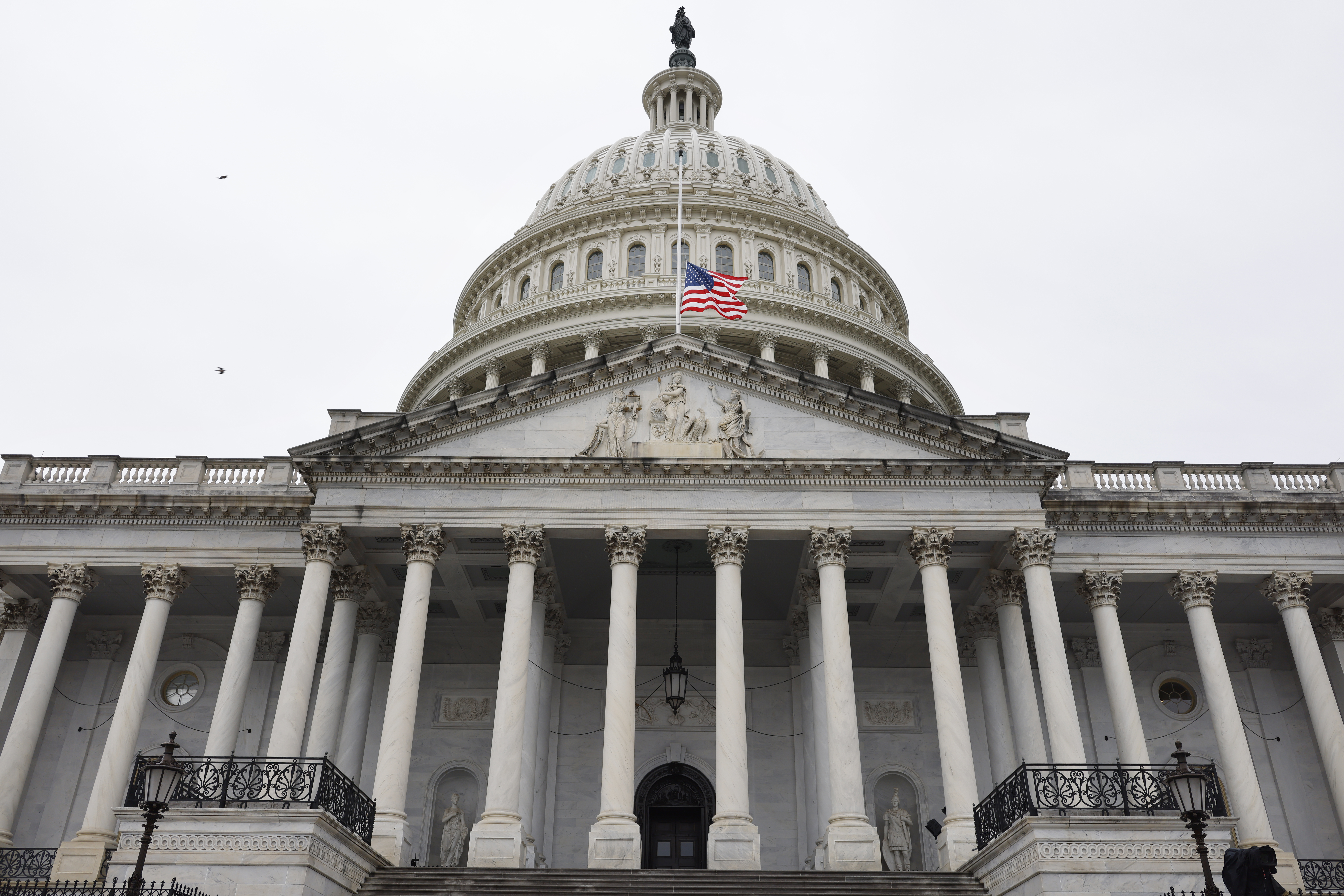
A bipartisan group of 33 senators — mostly Democrats — sent a letter last week urging Senate Appropriations Committee leaders to provide $500 million for the Nonprofit Security Grant Program in 2026, matching the record-high request from a group of House members earlier this month, Jewish Insider’s Marc Rod reports.
About the request: The letter was sent the day following the murder of two Israeli Embassy employees outside the Capital Jewish Museum in Washington, an attack that led a coalition of Jewish groups to call for increasing funding for the program, which provides synagogues and nonprofits with grants to improve their security, to $1 billion. Though only two Republicans signed the letter, the bipartisan request marks a change in Senate advocacy on this issue — in the past, bipartisan Senate groups have not specified amounts in their lobbying for the program. Senate Democrats last year called for $400 million for the program.
rumor realized
Trump confirms he told Netanyahu not to strike Iran last week
President Donald Trump confirmed reports that he warned Israeli Prime Minister Benjamin Netanyahu in a phone call last week not to proceed with plans to attack Iran’s nuclear facilities while the U.S. and Iran continue negotiations, saying that he told the Israeli leader a strike “is not appropriate right now,” Jewish Insider’s Danielle Cohen reports.
What he said: Speaking to reporters in the Oval Office on Wednesday, the president responded to a question about the validity of the report by saying, “I’d like to be honest. Yes, I did.” Pressed about the nature of the conversation, the president clarified, “It’s not a warning, I said I don’t think it’s appropriate. We’re having very good discussions with them [Iran] and I don’t think it’s appropriate right now.”
EXCLUSIVE
Pro-Israel Dems say resumption of Gaza aid will refocus attention on hostages

A group of 41 pro-Israel House Democrats released a statement on Wednesday praising the resumption of humanitarian aid to Gaza as helping to refocus international attention on releasing the hostages and calling for a comprehensive plan for postwar Gaza, Jewish Insider’s Marc Rod reports.
What they said: The statement, first shared with JI, argues that the renewed delivery of aid, which began on Monday, was “essential to alleviate the humanitarian crisis in Gaza, so that the primary focus of the international community can return to releasing the hostages that remain in captivity.” They added, “the United States, Israel, and key Arab partners must agree upon a serious and credible political and security plan to govern Gaza after the war.” The statement was organized by Rep. Dan Goldman (D-NY), in cooperation with Democratic Majority for Israel.
after captivity
Hostages’ long-lasting mental and physical scars of Gaza captivity are treated at ‘Returnees Ward’

When Israelis held hostage by terrorists in Gaza are released, there is a flurry of attention. Members of the media descend on the hospitals to which the newly freed hostages are sent. Soon after, however, the public no longer hears much from most of them. Beilinson Hospital in Petah Tikva, in central Israel, has treated and continues to treat hostages released in the ceasefire that took place earlier this year. Dr. Michael Bahar, director of the Rehabilitation Unit at Beilinson, who has been overseeing their recovery, told Jewish Insider’s Lahav Harkov in the hospital this week that his department “built rehabilitation programs based on each patient’s specific needs. It’s a multidisciplinary process, working with physical therapists, occupational therapists, dieticians, nurses and psychologists. For the rehabilitation of the female soldiers, “we work with the IDF,” he added.
Meaningful connection: The Rehabilitation Unit at Beilinson also treats many wounded soldiers, and Bahar said they and the former hostages have found it meaningful to undergo joint treatment and exercises together, including in the department’s pool. “The soldiers felt that they were fighting to free the hostages, so we connected between them,” Bahar said. “One evening the [female soldier hostages] went to visit the wounded soldiers in the department. It was an indescribable moment. They couldn’t speak, they were so excited … It was very significant, very powerful for the soldiers and the returnees.”
exclusive
Bipartisan House letter urges use of ‘all available diplomatic efforts’ to free hostages

In a letter to President Donald Trump, a bipartisan group of House members renewed a call for a deal to release all of the remaining hostages held in Gaza, including the bodies of four Americans believed to be deceased, urging him to capitalize on potential momentum from the release of Israeli American Edan Alexander earlier this month, Jewish Insider’s Marc Rod reports.
Letter writing: “Building on the momentum of Edan’s release, we strongly urge your Administration to press forward with all available diplomatic efforts to secure the return of all hostages — including the four remaining Americans: Omer Neutra, Itay Chen, Gadi Haggai, and Judi Weinstein Haggai,” the House letter reads. “While Edan’s return marks a critical breakthrough, the suffering he endured underscores the urgency of this mission … This moment — coming in the wake of Edan’s homecoming—offers a window of opportunity.”
Worthy Reads
Ditch Gaz-a-Lago: In Foreign Policy, former U.S. Ambassador to Israel Dan Shapiro suggests that President Donald Trump should abandon his proposed “Gaza Riviera” plan in the interest of ending the war and freeing the remaining hostages. “The plan was utterly unrealistic from the start. The White House quickly clarified that Trump envisioned no U.S. troops taking part and no U.S. funds being used to implement it. No other countries stepped forward either to host the displaced Palestinians or with money to pay for the grand reconstruction. Having never asked Gaza’s residents if they wanted to leave — surely some do, and should be permitted to, but others would choose to stay — Trump’s plan, if it forced the latter category out, would amount to ethnic cleansing. But even a mirage can cause damage. What the Gaza Riviera plan did accomplish was to empower the far-right Israeli leaders, Finance Minister Bezalel Smotrich and National Security Minister Itamar Ben-Gvir, to pursue their extremist agenda of ridding Gaza of Palestinians, followed by Israeli reoccupation and resettlement. … But Netanyahu’s embrace of this plan has become a major obstacle to the release of hostages and a better path for Gaza. It is fueling the worst instincts of Israeli politicians whose agenda would upset Trump’s own regional goals.” [ForeignPolicy]
The NSC Purge: In The Atlantic, Thomas Wright, who served in the Biden administration’s National Security Council, considers the role that a fully staffed NSC plays in presidential decision-making, following the White House’s purge last week of dozens of appointed officials. “Those who oppose Trump may welcome these cuts, precisely because they reduce the ability of this president to destroy and remake U.S. foreign policy. Decimating the NSC removes a layer of White House oversight from the departments engaged in foreign affairs, which could mean strengthening them relative to Trump: If Rubio is truly a temporary national security adviser, there for just six months, the gutting of the NSC will weaken his successor and strengthen his influence as secretary of state. The Pentagon, Treasury Department, Department of Homeland Security, Central Intelligence Agency, and other agencies could likewise set up their own mini–foreign policies, each based on the Cabinet secretary’s interpretation of what they heard from the president, whether in a meeting, a side conversation, or a Truth Social post.” [TheAtlantic]
Word on the Street
The transfer of a Qatari plane to the Trump administration has not been finalized amid delays regarding a memorandum of understanding that lays out the terms of the agreement; President Donald Trump has said that the plane is a “free” gift from Doha, while Qatari officials have stated that the Trump administration initiated the transaction…
A federal court blocked the imposition of the Trump administration‘s tariffs, saying the administration overstepped its authority in imposing the tariffs…
The New York Times’ Edward Wong posits that Trump may be envisioning a world order in which China, Russia and the United States operate in separate spheres of influence…
CNN interviews released hostages Omer Shem Tov and Keith Siegel about their time in Gaza and efforts to raise awareness about the plight of those who remain in captivity, including Omri Miran and Matan Angrest, with whom Siegel was kept for long periods of time…
A federal judge in New Jersey issued an order on Wednesday ruling that the Trump administration’s justification for its monthslong effort to deport Columbia University protest leader Mahmoud Khalil was likely unconstitutional — but that his failure to disclose his affiliations with anti-Israel groups raises concerns, Jewish Insider’s Haley Cohen reports…
Elon Musk reportedly threatened to withhold the Trump administration’s support for the creation of an artificial intelligence campus in the United Arab Emirates that is being built in partnership with Sam Altman’s OpenAI and Nvidia if Musk’s xAI was not included in the project…
Elliott Investment Management partner Marc Steinberg was appointed to the board of Honeywell International; Elliott, which has a more than $5 billion stake in the company — one of its largest investments — last year called on Honeywell to break itself apart…
C-SPAN CEO Sam Feist said the network is facing a “crisis of funding” amid a broader shift away from cable news and the decision by distributors, including YouTube and Hulu, not to include the channel in its offerings…
The Wall Street Journal looks at the origins of the Trump administration’s targeting of elite universities, positing that the president’s focus on the issue began following the 2019 assault of a conservative student at the University of California, Berkeley…
Five anti-Israel activists were arrested for protesting at the London set where Israeli actress Gal Gadot is filming “The Runner”…
The U.K. is mulling sanctions on Israeli Finance Minister Bezalel Smotrich and National Security Minister Itamar Ben-Gvir…
Israeli Prime Minister Benjamin Netanyahu confirmed that Israel killed Hamas leader Mohammed Sinwar in an airstrike earlier this month…
Israeli Defense Minister Israel Katz said that Israel planned to establish 22 settlements in the West Bank, a move he said “strengthens our hold” on the territory…
The Israeli Defense Ministry said it has shot down more than 40 drones using its new laser air-defense system since October 2023; most of the drones shot down by the new system were fired from Lebanon…
Ravid Haim, the baby born following a West Bank terror attack that killed his mother two weeks ago, died on Thursday morning; the baby had been in serious condition since he was delivered by emergency c-section immediately after the shooting…
The Financial Times looks at the domestic and international challenges facing South African President Cyril Ramaphosa as he confronts “a hostile U.S., a stagnant economy and radical populist parties hovering in the wings”…
International Atomic Energy Agency head Rafael Grossi said that “the jury is still out” on whether the U.S. and Iran will reach a new nuclear agreement, as the parties prepare for a fifth round of talks to start on Friday…
Boston-based philanthropist and business leader Richard Barry Slifka died at 85…
Chicago real estate lawyer Morrie Much, a longtime donor to the Simon Wiesenthal Center and the Jewish United Fund of Chicago who also supported the construction of the Holocaust Museum in Skokie, Ill., died at 88…
Educator and fundraising professional Henry Saltzman died on May 11 at 95…
Pic of the Day

Israelis gathered yesterday in front of the U.S. Embassy branch office in Tel Aviv to mark the 600th day of the war, calling on President Donald Trump to put pressure on Israeli Prime Minister Benjamin Netanyahu to end the war and secure the release of the remaining 58 Israeli hostages from Gaza.
Birthdays

Founder and creative director of the fashion label Shoshanna, style director for Elizabeth Arden, Shoshanna Lonstein Gruss turns 50…
Montreal-based businessman and philanthropist, Marvin Birnbom turns 95… Professor emerita of marine biology at Rutgers University, Judith Shulman Weis turns 84… Former member of the Knesset for the Likud party and then Israel’s ambassador to Japan, Eli Cohen turns 76… Winner of three Emmy Awards and a Grammy, actor, composer, singer, songwriter and record producer, Danny Elfman turns 72… U.S. Sen. Jerry Moran (R-KS) turns 71… Retired senior diplomat in the Israeli Ministry of Foreign Affairs, she was previously a brigadier general in the IDF, Ruth Yaron turns 68… Television writer, producer and actor, best known as the creator of the sitcom “Arrested Development” as well as the co-creator of “The Ellen Show,” Mitchell Hurwitz turns 62… Immediate past president of Ahavath Achim Congregation in Wichita, Kan., she is a trustee-at-large on the board of JFNA, Ellen Ginsburg Beren… Professor at the University of Chicago, co-author of the best-selling books in the Freakonomics series, Steven Levitt turns 58… CEO and executive editor of 70 Faces Media, Amiram (Ami) Eden… Policy analyst at Centers for Medicare and Medicaid Services, Yaakov Feinstein… Founding partner of Blandford Capital, Nathaniel Jerome Meyohas turns 51… Chief communications officer and global spokesperson at Aish, she is also a cookbook author with over 100,000 cookbooks sold, Jamie Geller turns 47… Film producer and former corporate lawyer at Skadden Arps, Edward Frank “Teddy” Schwarzman turns 46… Senior political reporter at The Forward, Jacob Kornbluh… Swedish-born pro-Israel activist, commentator and reporter, Annika Hernroth-Rothstein turns 44… Managing director at Hudson Bay Capital Management, Alexander Berger… Assistant secretary for constituency affairs for New York Gov. Kathy Hochul, Jacob “Jake” Adler… Israeli-born assistant pitching coach for the Miami Marlins, he pitched for Team Israel at the 2020 Summer Olympics, Alon Leichman turns 36… English actor, his bar mitzvah was at the Western Wall in Jerusalem, Gregg Sulkin turns 33…
Please log in if you already have a subscription, or subscribe to access the latest updates.
 Continue with Google
 Continue with Apple