












































Likud insists Netanyahu can work with any White House, while opposition parties argue a new government is needed to win back Democrats and the broader public

(JACK GUEZ / AFP via Getty Images)
Commuters drive past an election billboard on a building bearing portraits of Israel's Prime Minister Benjamin Netanyahu and Israel's former chief of the general staff and leader of the Yashar centrist political party Gadi Eisenkot, ahead of country's legislative elections, in Tel Aviv on October 6, 2026.


 Add JewishInsider on Google
American views of Israel, particularly among progressives, have become increasingly negative in recent years, a trend that has impacted Democratic primaries ahead of the midterms this year, boosting candidates that are explicitly anti-Israel or who boast about rejecting AIPAC.
The Trump administration and Republicans on the Hill have maintained a close, positive relationship with Israel, but some of the American right’s vanguard and institutions have expressed views of concern to the Jewish state.
But the U.S.-Israel relationship has barely played a role in the Israeli election. Voters have consistently put security and the economy or cost of living at the top of their concerns in polls, but they’re almost never asked about Israel’s international standing.
One survey by the Israel Democracy Institute taken in late August and early September found that about half of Israelis said U.S.-Israel relations are very or fairly important to them in choosing a party, while 55% of Jewish Israelis said so. Voters for former Defense Minister Avigdor Liberman’s Yisrael Beiteinu (73%) and B’Yachad, the party led by former prime ministers Naftali Bennett and Yair Lapid, (66%) were most likely to view the issue as important.
Jewish Insider asked parties consistently polling above the electoral threshold for their strategy to turn the tide and improve U.S.-Israel relations, especially as the future of U.S. aid to Israel has become a flashpoint.
Likud (led by Prime Minister Benjamin Netanyahu):
Boaz Bismuth, chairman of the Knesset Foreign Affairs and Defense Committee and No. 21 on the Likud list, said that “when the Likud forms the next government together with its partners, it will maintain its principles and values and protect the state. That will not change, whoever is in power in America, whether Republican or Democrat.”
“Netanyahu has proven his capability of working with Democrats and Republicans, working with Presidents Clinton, Obama and Biden, and with President Trump … He knows the job. He protects Israel’s interests, whoever sits in the White House. … It was not always easy working with the Biden administration during the war [in Gaza], yet America has proven to be the best partner ever, not only because of shared interests, but because we share the same enemies, and we are fighting the same enemies.”
Asked about a possible turn against Israel in Congress after the midterms, particularly if Democrats regain the House and Senate, Bismuth added: “We see these apocalyptic prophesies, but in reality, in my committee, I know the events behind the scenes, and we can continue to trust our American allies just as they can trust us. … In meetings Netanyahu has with U.S. congressmen who come to Israel, he gives the same attention to Democrats as Republicans.”
Yashar (led by Gadi Eisenkot):
Lianne Pollak-David, No. 25 on the Yashar list, called the data showing 60% of Americans have negative views about Israel “scary,” and said, “We must take this very seriously.”
The best way to improve the relationship, Pollak-David argued, is to elect a different government. “American Jews and the American public understand the gap between the Israeli people and the government that led them until now, which followed the most extreme voices and did not represent the Israeli spirit or the deep values of the State of Israel as a Jewish and democratic state.”
“The alliance with the U.S. is Israel’s greatest strategic asset. We don’t take it for granted and we need to rebuild its foundations for the next generation. First and foremost, we need to bring back what was once a holy principle, bipartisan support, and go back to a special relationship based on shared values and deep cooperation that does not only depend on the personal connection between the heads of state,” she said.
Pollak-David called to “rehabilitate the connection with the broader American public and start turning Israel from a country that is increasingly seen as a burden by the American public into a strategic partner that is an asset. … Practically, that means a new model for security ties, gradually moving from aid to partnership in research and development and joint investment. We already started with Pax Silica [a U.S.-led initiative to secure supply chains needed for AI development with allied nations], but we need more.”
She also said Israel should send missions of young leaders, academics and others to meet with American Jewish communities, noting that polling also shows Israel’s favorability is in decline among young American Jews. “The current government is ignoring … the influence that everything that happens here has on [Diaspora Jewry], their personal security and antisemitism. We can’t control it, but there is no doubt the things are related.”
B’Yachad (led by Naftali Bennett):
MK Shelly Tal Meron, No. 29 on the list, also emphasized a need to return to a more bipartisan approach to the U.S.
“There is no question that the U.S. is Israel’s biggest, most important ally,” she said. Threatening our relations with the U.S. is a serious threat to our national security. During the last term, there were a lot of things said by different representatives of the government that insulted some of the people in the U.S. – more with the Biden administration than Trump.”
Meron argued that former Prime Minister Yair Lapid, No. 2 on the party list, would know how to repair the relationship as foreign minister. “He went to Lindsey Graham’s funeral – a great loss to the U.S.-Israel relationship – and made a point of speaking to Democrats, because we need to get everyone back on board supporting us.”
She also called for work to be done to improve Israel’s image among young Americans: “We need young influencers and people who are eloquent and know how to speak the language. … We need to get back to the basic values that we want to represent to the world and the U.S. … We need to go back to telling the liberal, democratic Israeli story that a lot of people around the world are not seeing.”
Meron also said that Israel needs to repair ties with American Jews, and have its representatives “respect them and respect the way they practice Judaism,” referring to derogatory remarks by Cabinet ministers about Reform Jewry.
The Democrats (led by Yair Golan):
Knesset candidate Emilie Moatti, former head of the Knesset Subcommittee on International Relations and No. 14 on The Democrats’ list, said that the current government turned Israel “into a central obstacle to the future of the Middle East. Every U.S. administration saw us as a top ally in the Middle East, [but this government] totally burned ties with the Democrats. Even Trump ignores us and set facts on the ground with his 20-point plan for Gaza, about Saudi Arabia [and its civilian nuclear program], and I am concerned he will do that soon in Iran.”
Moatti pointed to U.S. Ambassador to Israel Mike Huckabee’s condemnation of violence by Israelis against Palestinians in the West Bank, saying: “The Democrats condemn the violence by Jewish settlers in the territories. … The minute a change government [led by parties in the current opposition] rises, the violence in the territories will stop. It can end within 24 hours. It’s a matter of making a decision, and I’m certain it will be made.”
Moatti also emphasized a need for greater engagement with the Palestinians: “In the past, American deals with the Saudis were contingent on normalization with Israel … If the government continues to think the Israel-Palestinian conflict isn’t a factor, here comes the Trump administration, which is super-friendly to Israel, to say it’s impossible.”
She also expressed concern about losing liberal Diaspora Jews: “Protecting the well-being of Diaspora Jews is also Israel’s responsibility, and we cannot make them choose between being Jewish and being [American], British, French, Belgian. Liberal Jews are living with a feeling that the government of Israel is pushing them into a corner again and again.”
Yisrael Beiteinu (led by Avigdor Liberman):
Liberman released a lengthy statement last week in which he predicted the next U.S. administration will recognize a Palestinian state on pre-1967 lines and support U.N. Security Council sanctions on Israel if the next government does not change the way it relates to the conflict with the Palestinians.
“It didn’t happen before now because Israel successfully neutralized this dangerous stance with its strong approval rating among Americans and as such had broad political support in both parties,” he wrote. “But politics has an iron law: The moment you lose public support, you lose political support. Today, our situation in American public opinion is at an unprecedented low. … What Netanyahu is doing today is, in effect, knowingly helping bring about the establishment of a Palestinian state.”
“Israel’s endgame and goal must be eliminating Hamas in Gaza and dismantling the Palestinian Authority, including the Oslo Accords, but since there are no vacuums … we must coordinate in advance with the international community who takes control of Judea and Samaria and Gaza,” he added, saying he thinks Jordan is the right answer.
Liberman also called to establish an emergency team to raise awareness and improve Israel’s image in the world, with members from the Israeli government and Diaspora communities.
Otzma Yehudit (led by Itamar Ben-Gvir):
Yishai Fleisher, 12th on the party’s list and the longtime international spokesperson for the Hebron community, told JI: “I think that [National Security Minister] Ben-Gvir is basically a centrist Republican in terms of his policies, and they make sense when you put it into that kind of framework and not how it’s been portrayed by the international community. It’s simple: law and order; bad guys behind bars; Jews have guns; cut down on illegal construction; stop the jihadist onslaught we see around the world that they want to do here. That itself creates a relationship, because we have Texan values, basically.”
“These are very simple policies, but for some reason the international condemnation has gotten [in the] way, so people have lost the simple understanding of these policies and what they’re about, which is law and order.”
Religious Zionist Party (led by Bezalel Smotrich):
Smotrich, the finance minister, spoke about U.S.-Israel relations at the National Conservatism Conference in Jerusalem last week, saying that “the historic alliance between the countries is built on shared values, on faith and biblical tradition, on love of liberty and on the struggle against enemies who threaten the free world. Israel values America’s friendship and the support it has received over the years.”
“Because of that, the time has come to deepen the alliance and move from a relationship of dependence to partnership between two independent nations,” he stated. “Israel can and must take greater responsibility for its security, to develop its military and economic independence and stand up for its national interests by itself.”
Speaking to conservatives, Smotrich said that “Israel has an interest in the success of national conservatives in the U.S., as opposed to streams that seek to dismantle … families and nationalism, erase borders and blur the difference between democracy and terror. The world needs a strong, patriotic America that is connected to its values. We must strengthen our ties with the administration, with the central conservative camp and the American public to show that Israel is a strategic and security asset.”
***
The Joint List declined to comment. Ra’am, Shas and United Torah Judaism did not respond to requests for comment.
Michigan rabbis set red lines for El-Sayed
Tom Williams/CQ-Roll Call, Inc via Getty Images
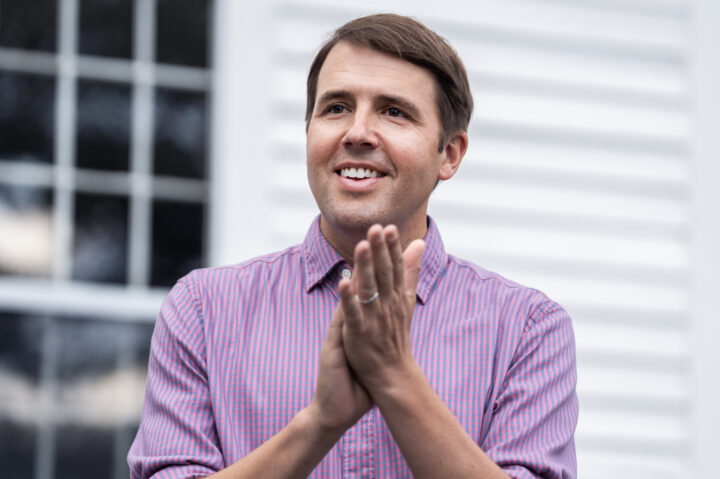
Rep. Chris Pappas (D-NH), Democratic candidate for U.S. Senate, talks with voters on August 16, 2026.
Good Wednesday morning.
In today’s Daily Kickoff, we analyze the results of Tuesday night’s Democratic primaries in New Hampshire, and report on the blowback from the U.K.’s move to sanction Israeli settlements in the West Bank. We highlight a new petition campaign launched by a coalition of Michigan Jewish leaders to pressure Democratic Senate nominee Abdul El-Sayed to affirm a series of “nonnegotiable” commitments to the Jewish community, and report on a new caucus launched by Reps. Josh Gottheimer and Elise Stefanik to combat antisemitism on college campuses. Also in today’s Daily Kickoff: Ruby Chen, New York Gov. Kathy Hochul, Yonah Jeremy Bob and Elliot Kaufman.
Curated by Israel Editor Tamara Zieve and U.S. Editor Danielle Cohen-Kanik, with an assist from Haley Cohen.
Today’s Agenda
The Republican National Committee will kick off its first-ever midterm convention this afternoon in Dallas. President Donald Trump will deliver the keynote address tonight (as well as closing remarks on Thursday), with additional speeches throughout the two-day convening by Vice President JD Vance, Treasury Secretary Scott Bessent and Attorney General Todd Blanche.
Also scheduled to speak are: House Speaker Mike Johnson (R-LA); Sens. Ted Cruz (R-TX), Jon Husted (R-OH) and Dave McCormick (R-PA); Texas Attorney General and Senate candidate Ken Paxton; Georgia Senate candidate Rep. Mike Collins (R-GA); former Rep. Mike Rogers (R-MI), GOP nominee for Senate in Michigan; and former RNC Chair Michael Whatley, GOP nominee for Senate in North Carolina.
Some GOP candidates in tight races, including Sen. Susan Collins (R-ME), former Sen. John Sununu (R-NH) and Sen. Dan Sullivan (R-AK), will not be attending the convention, in what appears to be a pointed effort to keep their distance from Trump.
Rhode Island is holding its primaries today: Gov. Dan McKee, a Democrat, is at risk of losing the nomination to business leader Helena Foulkes. Brett Smiley, the Jewish mayor of Providence, R.I., is also facing serious opposition from 27-year-old state Rep. David Morales, a socialist challenger.
The Israeli Embassy in Washington is hosting its Rosh Hashanah celebration this evening.
The two-day MEAD Summit continues in Washington today, attended by representatives from Israel, the U.S. and Arab countries — including some that do not have diplomatic ties with Israel.
New York City Council Speaker Julie Menin and Comptroller Mark Levine will walk the runway at the Metropolitan Opera House during Style Across the Aisle, where they will be dressed by Jewish designers Elie Tahari and Yosel Tiefenbrun.
Elsewhere in New York City, the La’Aretz Foundation will host its annual benefit dinner.
One Thing To Know
ANALYSIS
By Marc Rod
Tuesday night’s Democratic primaries in New Hampshire delivered mixed results for candidates who made attacks on Israel a centerpiece of their closing arguments.
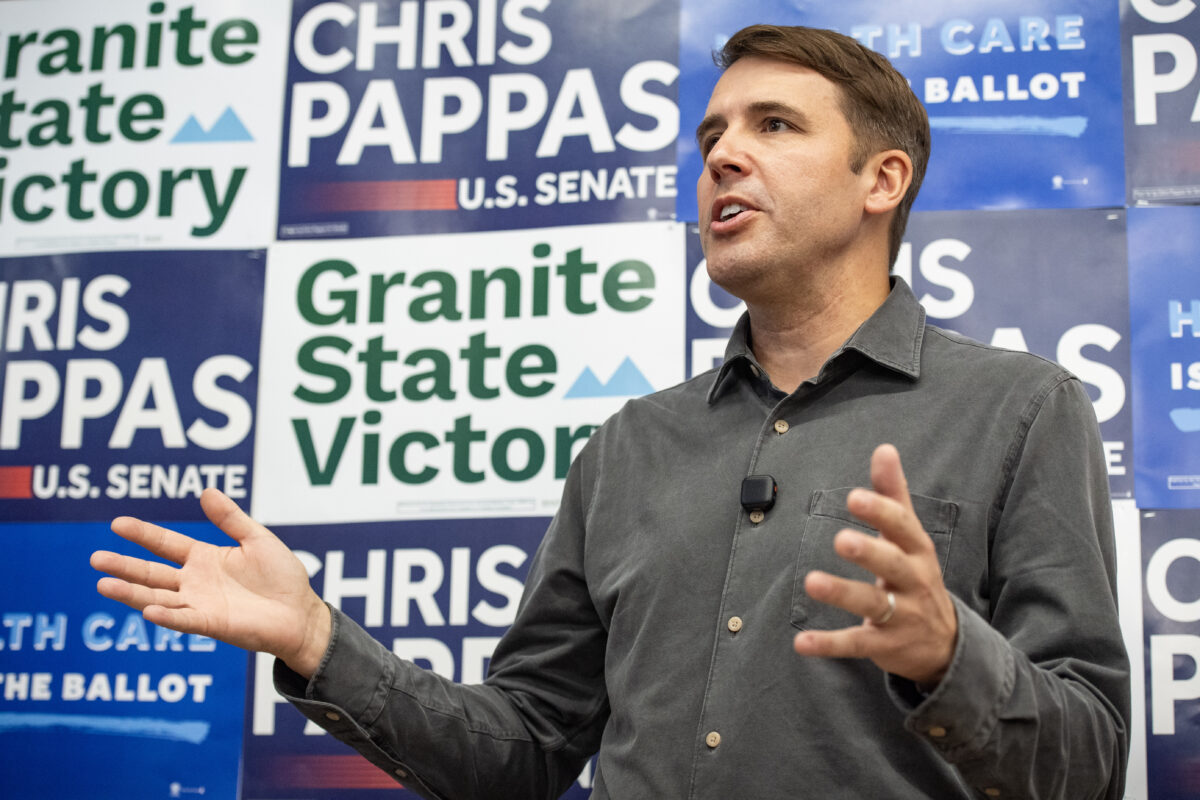
Rep. Chris Pappas (D-NH) trounced progressive activist Karishma Manzur by nearly a 2-to-1 margin (65%-33%) in the Senate primary, after Manzur attacked Pappas for his stance on Israel and called him a “shill for AIPAC” as a central message of her campaign.
Pappas is now facing a competitive general election against former Sen. John Sununu (R-NH), who is running to rejoin the Senate after nearly two decades out of office. Sununu is expected to be a formidable challenger who holds a narrow lead over Pappas in some recent public polling.
The Big Reads
SETTLEMENT SHOWDOWN
U.K. Foreign Secretary Ed Miliband announced a sweeping new sanctions regime on Tuesday targeting Israeli settlements in the West Bank, marking a major escalation in Britain’s diplomatic stance toward Israel, Jewish Insider’s Matthew Shea reports. Addressing the House of Commons, Miliband unveiled an import ban on goods produced in settlements alongside targeted sanctions against individuals and corporate entities involved in constructing, advertising or financing settlement expansion. The secretary also announced a ban on real estate events in the U.K. promoting the purchase of homes in West Bank settlements.
Muted Marco: Secretary of State Marco Rubio offered a tepid response on Tuesday to the U.K.’s new sanctions regime against Israeli settlements in the West Bank. “Obviously, we’re not going to do what the U.K. did,” Rubio told reporters when asked about Miliband’s announcement, but said he didn’t have anything further to add.
Scoop: Rep. Claudia Tenney (R-NY) urged the Trump administration on Wednesday to review whether the U.K. and other countries imposing trade restrictions and additional sanctions on Israeli settlements places those countries in violation of U.S. anti-boycott laws — and to consider whether the effort merits a response from the U.S., JI’s Emily Jacobs reports.
Diplomacy risks: Former White House officials and diplomats say the U.K. government’s decision is primarily a bid to appease far-left political factions in Britain, warning that while the move is unlikely to alter Israeli behavior on the ground, it risks increasing diplomatic friction between London, Jerusalem and Washington.
COMMUNITY VOICE
A group of more than a dozen Michigan rabbis, cantors and Jewish lay leaders from across the state launched a new petition campaign this week to pressure Abdul El-Sayed, the Democratic Senate nominee, to affirm a series of “nonnegotiable” commitments to the Jewish community, arguing that failing to do so would jeopardize Jewish support for Democrats, Jewish Insider’s Marc Rod reports. The Nonnegotiable Michigan campaign, created in cooperation with the liberal Jewish group Zioness Action Fund, calls out El-Sayed for a “sustained pattern” of comments by himself and surrogates that organizers say crosses the line into antisemitism, including downplaying, justifying or potentially inciting violence against Jews.
CAMPUS CAUCUS
Reps. Josh Gottheimer (D-NJ) and Elise Stefanik (R-NY) announced that they are launching the Combating Antisemitism on College Campuses Caucus during a visit to Vanderbilt University on Tuesday, Jewish Insider’s Marc Rod reports. The announcement was made during an event with Vanderbilt Chancellor Daniel Diermeier and the leaders of the University of Kentucky, University of Texas at Austin, Dartmouth College, the University of Alabama and Washington University in St. Louis. The event, with an audience of Vanderbilt students, faculty, staff and local community members, was focused on highlighting some of the campuses that have, in the view of the organizers, successfully navigated the post-Oct. 7 environment, balancing freedom of speech and expression with protecting Jewish students.
The Rundown
EXCLUSIVE
BOOKSHELF
A FATHER’S LOVE
SAFETY SURGE
SCOOP
On Our Radar
● The Live Briefing. Word on the street, clips, podcasts and quick updates — the items we’re tracking all day in our Live Briefing on the app (on Apple and Android) and website.
The U.S. destroyed five Iranian oil tankers on Tuesday after the Islamic Revolutionary Guard Corps targeted a U.S. Navy warship with ballistic missiles twice over the previous two days, CENTCOM announced. Iran retaliated by firing 20 ballistic missiles at U.S. forces in Jordan, 18 of which the Jordanian army said it intercepted…
The tit-for-tat comes as Iran signals readiness for broader escalation, The New York Times reports, with analysts warning the clashes risk reigniting full-blown war ahead of a U.S. midterm season Tehran believes gives it leverage…
Earlier on Tuesday, the Treasury Department announced sanctions against 27 Iranian airlines as well as several front companies, foreign intermediaries and other aviation-related actors for supporting the regime’s illicit activities…
Despite the new sanctions and more than a decade of existing ones, Iranian airline Mahan Air, which Washington accuses of ferrying cash, weapons and personnel for the Islamic Revolutionary Guard Corps, is expanding its operations, The Wall Street Journal reports…
The global price of oil hit $100 a barrel on Wednesday for the first time since July, after Yemen’s Houthis attacked energy facilities in Saudi Arabia on Tuesday, stoking supply concerns…
The Independent examines why the escalating fighting between Yemen’s Houthis and Saudi Arabia poses a problem for the Trump administration, with analysts arguing that Washington can no longer ignore the Red Sea front of the war with Iran…
Former GOP Rep. Mike Rogers, the Republican Senate nominee in Michigan, is up with a new ad attacking his Democratic opponent, Abdul El-Sayed, for associating himself with influencer Hasan Piker, and featuring the antisemitic streamer’s comments that “America deserved 9/11.” “Abdul is too extreme for Michigan. I’m Mike Rogers, and I approve this message — because I’ll fight to keep America safe. Always,” Rogers says at the end of the ad…
El-Sayed’s speech at a controversial Islamic convention in Detroit last weekend came before a video montage that featured an imam declaring “America is going down!” and an address from another cleric who described lawmakers who voted for a bill tackling antisemitism as “treasonous”…
A new poll commissioned by the Detroit News found Rogers with a narrow 46%-44% lead over El-Sayed, with 9% of respondents undecided. The poll was conducted by the Glengariff Group and surveyed 600 likely general election voters between Aug. 31 and Sept. 3…
The University of Texas’ College Democrats chapter invited Piker to speak on campus on Sept. 30…
Rep. Jared Moskowitz (D-FL) launched his first ad of the general election campaign, touting his leadership in passing school safety laws in the aftermath of the shooting at Marjory Stoneman Douglas High School that killed 17 students and staff…
Democratic Majority for Israel announced on Wednesday the election of Michael Horowitz, founding partner of The Selective Group; David Kramer, a principal of Highstreet ProLaw Group; Jeffrey Stewart, founder and president of Walnut Hill Advisors; Jerry Yanowitz, former telecommunications industry executive; and Kinney Zalesne, former Microsoft executive, to its board of directors…
Bloomberg does a deep dive on the Democratic Socialists of America‘s breakout this year — 19 congressional primary wins and nearly 100 state and local victories, per a Brookings Institution study. The string of victories, the outlet suggests, puts the movement on a collision course with the party’s moderates, with Third Way planning to spend $15 million through 2028 to counter the DSA and former Chicago Mayor Rahm Emanuel arguing that the socialists are “not Democrats”…
Israeli Prime Minister Benjamin Netanyahu’s office denied reports that he was warned by the UAE ahead of the Oct. 7, 2023, Hamas attacks: “If there was any relevant information, it was passed through intelligence channels between the two countries,” the PMO said…
President Donald Trump, who was briefed on the U.K.’s move to sanction Israeli settlements ahead of the announcement, did not push back, U.S. officials and Western diplomats told Axios. In addition, a White House official told the news outlet that U.S. Ambassador to Israel Mike Huckabee’s remarks that the move amounted to “discrimination against the Jewish people” “were not coordinated with the White House” or State Department…
According to Israel Hayom, however, British Prime Minister Andy Burnham had initially considered a broader and harsher set of sanctions, but Washington pushed him to dial it down…
The 59th season premiere of CBS News’ “60 Minutes” this Sunday will feature an interview with one of the officers aboard an F-15 fighter jet that was shot down in April over Iran. The officer, known as “Dude 44 Bravo,” will be interviewed by correspondent Norah O’Donnell in his first on-camera sit-down…
The New York Times is soliciting reader feedback on “how Israel’s war in Gaza is affecting New Yorkers,” specifically asking Jewish respondents to let them know how their views and feelings have evolved since the Hamas terrorist attack on Oct. 7, 2023…
As Jewish students return to K-12 classrooms and face another year marked by increased antisemitism, five major Jewish organizations — the Jewish Federations of North America, the Anti-Defamation League, the American Jewish Committee, the Conference of Presidents of Major American Jewish Organizations and StandWithUs — released a Jewish Students’ Bill of Rights…
The document outlines six standards schools should meet, including staff training on antisemitism; clear incident-reporting processes; accurate curricula on Jewish history and Israel; accommodations to treat religious observances as excused absences and avoiding scheduling school events on major Jewish holidays; protection of Jewish identity and Israel affiliation from coercion or bullying; and balanced teaching on contested issues…
LIV Golf filed for Chapter 11 bankruptcy protection in New Jersey on Tuesday, listing between $500 million and $1 billion in liabilities, months after Saudi Arabia’s Public Investment Fund — which had poured more than $5 billion into the league — announced it was ending its backing…s deputy chief of mission in Rabat, Morocco, and Nairobi, Kenya…
Worthy Reads
Find more Worthy Reads in our Live Briefing via our app (on Apple and Android) and website.
From 9/11 to MAGA: Former Wall Street Journal Washington bureau chief Gerald Seib examines the contrast between the bipartisan political moment after 9/11 and the polarization within the country on the 25th anniversary of the terror attacks. “It isn’t hard to draw a line from 9/11 to the rise of the Make America Great Again movement of President Trump, who once falsely claimed that thousands of Muslims in New Jersey celebrated the terrorist attacks. The oxygen feeding the MAGA forces is precisely the anger and dissatisfaction with the political establishment that has emerged in the years since.” [WSJ]
Labour Pains: In The Telegraph, British journalist Nicole Lampert accuses the Labour government of “audacious cynicism” over its sanctions targeting Israeli settlements in the West Bank. “I don’t think this Government actually is filled with Jew-haters, but perhaps this is even worse: I think it is filled with people who are happy to appease Jew-haters and will do anything to make that happen. Beyond cynical … What has happened to this country where one of our most senior politicians is pushing this dangerous propaganda? Are we really going to shoot ourselves in the foot just because Labour wants to win a few more votes? Truly staggering.” [Telegraph]
Contenders’ Circle: In The Free Press, historian Simon Sebag Montefiore, whose history of the modern Middle East, The Cauldron: The Making of the Modern Middle East, is out later this month, surveys the “tournament of power” reshaping the region since Oct. 7, 2023 — from the new Saudi-Turkish-Pakistani “Islamic NATO” to Israel’s deepening ties with Greece and India. “In sum, all of these players will contend for control of the Middle East. But none of them are strong enough to rule or dominate — a formula for fierce competition. As the Gulf monarchies seek safety from Iran and less so from Israel, their alignments are so far too flawed, contradictory, and performative to deliver the security they seek.” [The Free Press]
Picture of the Day

Met Council, America’s largest Jewish nonprofit organization dedicated to fighting poverty, distributed a record 2,016,982 pounds of kosher food to struggling families ahead of the High Holy Days. The food drive was carried out from August through September together with 162 partner organizations, including shuls, yeshivas and community tzedakah organizations. Courtesy of Met Council
Birthdays

Adam Sandler, actor, comedian, screenwriter, film producer and musician, famous for “The Chanukah Song,” turns 60
Barbara Schechter, Beverly Hills resident
Reuven Rivlin, president of Israel from 2014 to 2021, turns 87
Kenneth Lieberthal, senior fellow emeritus in the foreign policy program at The Brookings Institution, turns 83
Donald M. Berwick, former administrator of the Centers for Medicare and Medicaid Services, turns 80
Daniel Pipes, president of the Middle East Forum and publisher of its Middle East Quarterly journal, turns 77
Richard Joel, president emeritus of Yeshiva University, turns 76
Nissim Ze’ev, a founder of the Shas party, he served in the Knesset for 16 years, turns 75
Martin Kramer, founding president of Shalem College in Jerusalem, he is the Walter P. Stern fellow at The Washington Institute for Near East Policy, turns 72
Steven Elworth, Brooklyn educator
Altie Karper, retired editorial director of Schocken Books (the Judaica imprint of the Knopf Doubleday Publishing Group, which is part of Penguin Random House)
Shari Arison, Israeli businesswoman and philanthropist, at times reported to be the wealthiest woman in the Middle East, turns 69
Aaron G. Frenkel, Israeli businessman, based in Monaco, he is the president of Limmud FSU, turns 69
Suzanna Stone
Jeffrey Weintraub, D.C.-based communications strategist and tactician
Eric B. Dezenhall, crisis management consultant, author and co-founder of D.C.-based PR firm Dezenhall Resources, turns 64
Lloyd Appel, founder and managing member of Alternative Asset CFO Services
Chris Coons, U.S. senator (D-DE), turns 63
Skip Kendall, professional golfer formerly on both the PGA Tour and then on the Champions Tour, turns 62
Jonathan Cohn, author and former senior national correspondent at HuffPost for 10 years, now senior national correspondent at The Bulwark, turns 57
Dov Lipman, former member of the Knesset for the Yesh Atid party, turns 55
Sacha Frédéric Litman, former partner and associate director at Boston Consulting Group, now an independent consultant
David Freedlander, features writer and political columnist for New York magazine
Zeev Farbman, Israeli entrepreneur and the CEO and co-founder of Lightricks, turns 47
Michael B. Greenwald, director of global executive relations at Amazon Web Services
Carla Hashley, program specialist at USC’s school of architecture
Brett Perlmutter, former head of Google Cuba, now an investor and strategist
Trey Meehan, managing director at Alums for Campus Fairness
Ben Lang, co-founder of International Hummus Day in 2012, now an angel investor, he served in the IDF’s signals intelligence group, Unit 8200
Luke Hughes, fourth overall pick by the New Jersey Devils in the 2021 NHL draft, he is the son of hockey star Ellen Weinberg-Hughes, turns 23
While an anti-Israel activist was defeated in the Senate primary, another prominent candidate who attacked AIPAC won her hotly contested congressional primary
(Joseph Prezioso/Getty Images)
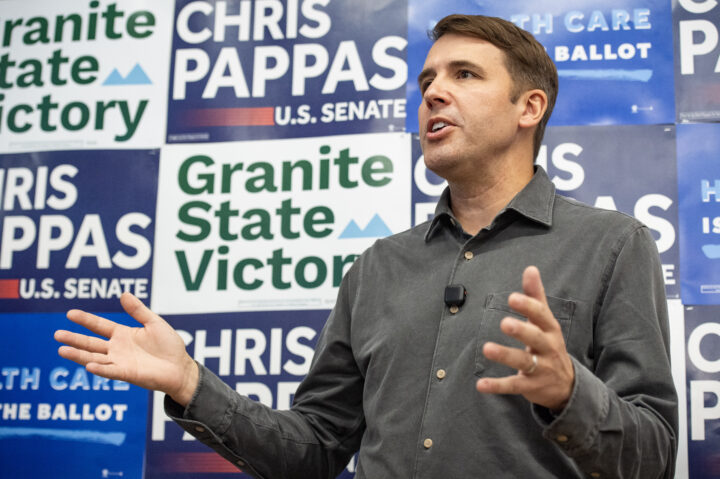
New Hampshire Democratic Senate candidate, U.S. Rep. Chris Pappas (D-NH) speaks to supporters as he attends a canvass launch rally as he campaigns for office on September 6, 2026 in Manchester, New Hampshire.
Tuesday night’s Democratic primaries in New Hampshire delivered mixed results for candidates who made attacks on Israel a centerpiece of their closing arguments.
Rep. Chris Pappas (D-NH) trounced progressive activist Karishma Manzur by nearly a 2-to-1 margin (65%-33%) in the Senate primary, after Manzur attacked Pappas for his stance on Israel and called him a “shill for AIPAC” as a central message of her campaign.
Pappas is now facing a competitive general election against former Sen. John Sununu (R-NH), who is running to rejoin the Senate after nearly two decades out of office. Sununu is expected to be a formidable challenger who holds a narrow lead over Pappas in recent public polling.
The Cook Political Report rates the race as “Lean Democratic.” A longtime New Hampshire pollster told JI last week that Sununu is the underdog but is a strong and experienced candidate, and has a well-known and popular family name in the state, with a record of support from moderates and independents whom Pappas has previously worked to attract.
Pappas will likely be buoyed, however, by the strong national environment for Democrats, while Sununu will need to hold together a coalition of moderates skeptical of President Donald Trump and MAGA diehards in the GOP base.
Meanwhile, Stefany Shaheen, the daughter of Sen. Jeanne Shaheen (D-NH), narrowly beat military veteran and second-time candidate Maura Sullivan. Shaheen closed out the race with claims that AIPAC, which did not endorse and was not involved in either race, had been bundling contributions for Sullivan.
Shaheen’s advantage is partly attributable to her family name — but Sullivan came close to overcoming that advantage despite starting the race trailing Shaheen by double digits.
Shaheen went on air in the closing days of the race with ads accusing Sullivan of being “bankrolled” by AIPAC, and leaned into her opposition to Israel in interviews. Sullivan hit back in her own ad saying she doesn’t take any money from AIPAC.
Under pressure from the left in the wake of the war in Gaza, both Pappas and Sullivan recalibrated their stances on Israel during their primary races. Pappas, a pro-Israel moderate for most of his time in the House, backed away from his previous relationship with AIPAC and called for a “reset” of the U.S.-Israel relationship while voting “present” on an amendment to strip aid from Israel.
Democratic Majority for Israel and the Jewish Democratic Council of America congratulated Pappas on his victory.
Sullivan, who rejected efforts to cut aid to Israel earlier in the race, came around to supporting the suspension of at least some weapons sales to Israel.
The possibility of Minnesota Democrats nominating a true-blue progressive over a battle-tested moderate lawmaker, along with the likelihood suburban voters will reject a pragmatist for a left-wing candidate, may demonstrate how far left the party has swung
(Joshua Lott/Getty Images)
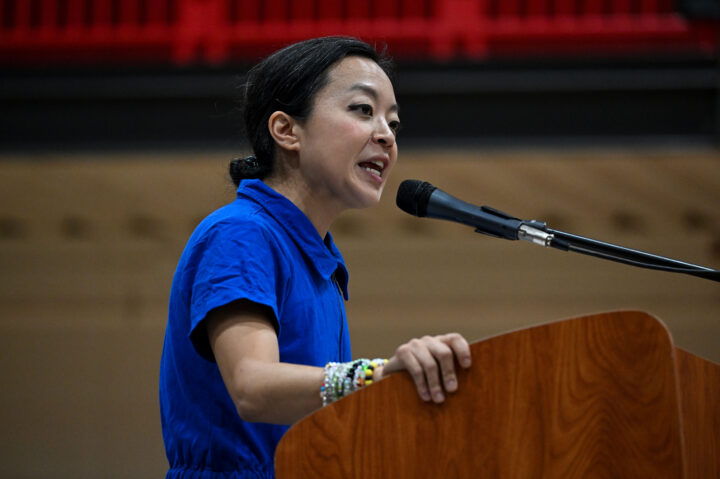
Wisconsin Democratic Gubernatorial candidate Francesca Hong speaks during a campaign rally on August 2, 2026 in Milwaukee, Wisconsin.
Today’s Democratic primaries in Connecticut, Minnesota, Vermont and Wisconsin won’t have the same shock value as previous contests that underscored the strength of the anti-establishment, anti-Israel forces within the party.
But the possibility of Minnesota Democrats nominating a true-blue progressive over a battle-tested moderate lawmaker as their Senate standard-bearer, along with the growing likelihood suburban voters will reject a pragmatist for a left-wing candidate, may well demonstrate just how far left the party has swung in the past year.
Add to that the likelihood that Democratic Socialists of America-aligned candidate Francesca Hong will emerge as the party’s gubernatorial nominee in Wisconsin — providing a spotlight for the socialist group’s governing philosophy in the biggest of battleground states — and the stakes remain awfully high for the Democratic Party tonight.
There’s also a fascinating contest in Connecticut, where Rep. John Larson (D-CT), a former member of House leadership, is facing a real threat from former Hartford Mayor Luke Bronin. The primary isn’t as neatly driven by ideological differences as it is along generational lines (Larson is 78, Bronin 47), but Larson has been a reliable supporter of Israel during his congressional career, while Bronin has tacked to his left on the issue during the campaign.
It’s very possible that the left wing of the party ends up with a clean, four-race sweep in these contests. If that’s the case, there’s no doubt that the winds of change are whipping furiously within the Democratic caucus.
The Minnesota and Wisconsin contests are expected to be competitive in the November general election, especially if Democrats end up nominating progressive slates of candidates. Privately, Democrats in the Badger State are worried that Hong is so unprepared for the national spotlight that the party could end up writing off the key contest against Rep. Tom Tiffany (R-WI), the expected GOP nominee.
And in Minnesota, Republicans are enthused about the candidacy of former NBC Sports sideline reporter Michele Tafoya, who has the party’s backing in a contested primary for the Senate seat. But Democrats, even if Lt. Gov. Peggy Flanagan emerges as the nominee, would start out in the liberal-minded state with the advantage.
In Minnesota’s suburban 2nd District, which leans Democratic but was long held by Republicans before Rep. Angie Craig’s (D-MN) victory in 2018, state Sen. Eric Pratt is running unopposed for the GOP nomination. He’ll also start out as an underdog, but against a progressive challenger, he’ll have a fighting chance to portray himself as closer to the district’s mainstream.
On the Republican side, Tuesday also will feature a hastily scheduled special election primary in South Carolina for the seat of the late Sen. Lindsey Graham (R-SC). The race will be a test of whether voters trust President Donald Trump’s endorsement of the late senator’s sister and want to keep the Senate seat within the Graham family, or turn to a conservative lawmaker with more legislative experience in either Reps. Ralph Norman (R-SC) or Russell Fry (R-SC).
Sen. Darline Graham (R-SC), who was appointed after her brother’s death, holds a narrow lead in most public polls, but Norman and Fry are close behind her. The race is likely headed to a runoff, with the top two finishers squaring off later this month.
Two Democratic operatives involved in Michigan and other targeted races told JI that left-wing candidates endorsed by Sanders and his far-left allies can expect to win about one-third of the primary vote
(Sarah Rice/Getty Images)
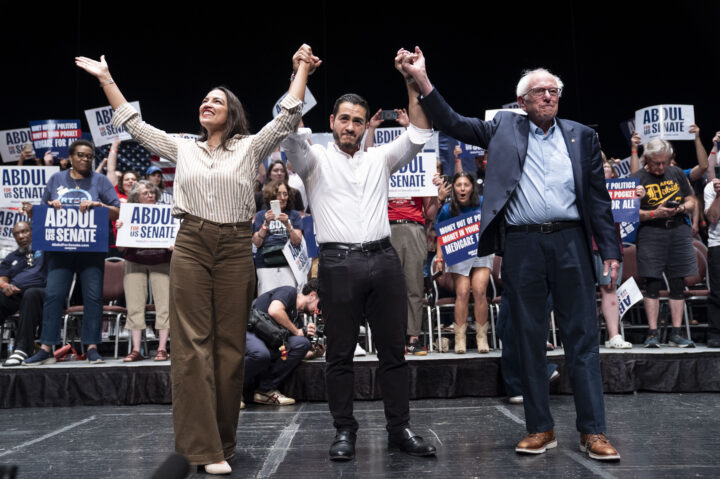
U.S. Rep. Alexandria Ocasio-Cortez (D-NY), Michigan Democratic candidate for Senate Abdul El-Sayed and U.S. Sen. Bernie Sanders (I-VT) greet the crowd after El-Sayed spoke at The People V. The Powerful rally at the Detroit Opera House on July 18, 2026 in Detroit, Michigan.
In chatting with plugged-in Democratic strategists currently working on congressional campaigns, I was shocked — but not all that surprised — at the acceptance that the party has been all but dominated by the socialist faction, led by Sen. Bernie Sanders (I-VT), that has gotten more radical since his presidential campaign in 2016 and has played a key role in many Democratic primaries across the country.
Two Democratic operatives involved in Michigan and other targeted races bluntly told JI that left-wing candidates endorsed by Sanders and his band of far-left allies can now expect to win about one-third of the primary vote from the start if given the Sanders seal of approval. And far from being contained to deep-blue urban districts in New York, the trend is spreading into swing-district primaries and statewide nomination fights.
That’s certainly shaping up to be the case in Michigan’s 7th District, one of the biggest battleground districts in the country long held by now-Sen. Elissa Slotkin (D-MI). Despite two candidates with cross-partisan credentials running — former Navy SEAL Matt Maasdam and former Ambassador to Ukraine Bridget Brink — the Sanders-endorsed socialist activist William Lawrence is the front-runner, according to new polling conducted in the race.
And the socialist wave is building in statewide races in two of the biggest Midwestern battlegrounds, with Democratic Socialists of America-endorsed Francesca Hong running away with the Democratic nomination for Wisconsin’s governorship, despite her recent embrace of politically toxic views like supporting funding cuts to the police.
And as we’ve extensively covered in Michigan, Abdul El-Sayed’s virulently anti-Israel and left-wing platform in the Senate race doesn’t appear to be stunting his primary campaign against Rep. Haley Stevens (D-MI), even with popular Gov. Gretchen Whitmer’s endorsement of Stevens.
There will be exceptions in certain moderate constituencies, especially those with sizable Jewish populations — like Army veteran Cait Conley’s success in the Westchester County district of Rep. Mike Lawler (R-NY) or former Navy helicopter pilot Rebecca Bennett, who’s running against Rep. Tom Kean Jr. (R-NJ) in the northern New Jersey suburbs.
But even in the affluent suburban districts that were once immune to progressives, candidates running with Sanders’ backing are proving they can prevail, especially as anti-Trump sentiment has metastasized in an acceptance of extreme views. Rep. Analilia Mejia (D-NJ), who was embraced as a close Sanders ally, easily won an affluent suburban seat filled with white-collar professionals.
The only constituency who defected en masse to her relatively moderate GOP opponent were the Jewish voters in the district. “People underestimate the radicalization of high-propensity Democratic primary voters,” Michigan Democratic labor activist (and a former DSA leader) Jake Altman wrote on X.
If El-Sayed, Hong and Lawrence (among others) win their primaries next week, the last line of defense for the political mainstream will be in the November general election. Unlike the earlier primaries where DSA-aligned candidates prevailed, these contests are still taking place in competitive battlegrounds.
But even general election polls suggest that partisanship runs so deeply these days that even positions that once made candidates unelectable aren’t the vulnerabilities they used to be. November may end up being the biggest test of the socialists’ staying power — and the last chance for moderating, independent-minded voices to prove they still wield political power.
The anti-Israel activists have certainly captured a faction of the Democratic Party, but their ties to so many unpopular views and causes make the whole movement politically toxic in middle America
(Sarah Rice/Getty Images)
U.S. Rep. Alexandria Ocasio-Cortez (D-NY), Michigan Democratic candidate for Senate Abdul El-Sayed and U.S. Sen. Bernie Sanders (I-VT) greet the crowd after El-Sayed spoke at The People V. The Powerful rally at the Detroit Opera House on July 18, 2026 in Detroit, Michigan.
So far, the success of far-left, anti-Israel candidates has been confined to Democratic primaries in deep-blue districts largely in big cities or college towns. The biggest test ahead for the socialist movement is whether it can prevail in primaries outside its geographic base, and more importantly, if such candidates can win general elections in battleground states or districts.
All of the available evidence and recent history suggests that nominating extreme candidates in enough key races would threaten Democrats’ chances of winning a Senate majority and would dampen the party’s pickup potential in the House.
Indeed, the victories by radical nominees in recent House primaries — combined with the high-profile collapse of the like-minded Graham Platner’s Maine Senate campaign — are already doing damage to the Democratic Party’s brand.
Looking at the big picture: In poll after poll, Democrats are now underperforming expectations on the generic congressional ballot — and have lost notable ground over Republicans in the last month alone.
In his analysis of congressional polling, Nate Silver documented that the Democrats’ advantage on the generic ballot in the polling average declined by one point since June, from seven points to six. At this point in the 2018 cycle, the Democrats’ generic ballot advantage was close to eight points, according to Silver’s analysis.
Democrats still hold a decided edge, but the massive blue wave that could have emerged in this year’s midterms is now looking a bit more modest. That means it’s much more difficult for Democrats to overcome their partisan disadvantage in the red states they need to retake the Senate, while Republicans may have some outside hope that redistricting and enough flawed Democratic candidates could keep the House majority in play.
CNN political analyst Ron Brownstein also notes that Democrats are failing to win over as many voters who disapprove of President Donald Trump as they did during the 2018 midterms — another signal that the party’s negative image and leftward lurch is costing them among the swing-voting suburbanites who formed a critical mass of the anti-Trump movement in the president’s first term.
Recent history also points to candidates significantly underperforming if they are ideologically out of step with their constituents. In the 2018 midterms, Democrats swept the vast majority of competitive battlegrounds, riding the wave of anti-Trump sentiment even in some districts that had long been held by Republicans.
There were two notable outliers in that year’s Democratic wave — very winnable races that Democrats lost because they nominated progressives in swing districts. In that election, Rep. Don Bacon (R-NE) faced a challenger (Kara Eastman) who ran what Politico called a “Brooklyn-style campaign” in the Omaha-based district that former President Joe Biden comfortably carried. Bacon prevailed by three points.
The other missed opportunity that year for Democrats was in a Syracuse-area district that favored their party. Despite the blue wave, the party’s decision to nominate an outspoken progressive (Dana Balter) cost them a victory against a vulnerable House Republican, former Rep. John Katko.
This year, the party has lurched further to the left and is likely to nominate more ideologically extreme candidates in even bigger races.
Michigan is a swing state, but Democrats are at risk of handing their Senate nomination to Abdul El-Sayed, a Bernie Sanders acolyte whose incessant animus against Israel has defined his campaign message. If he’s the nominee, some Democrats believe their shot at a Senate majority could be lost. (The RealClearPolitics polling average shows that El-Sayed, in a general election, is statistically tied with expected GOP nominee Mike Rogers — a notable underperformance given the national environment.)
In the state’s biggest swing district, which is currently held by Rep. Tom Barrett (R-MI), Democrats are so concerned about the far-left candidacy of Will Lawrence that even Rep. Alexandria Ocasio-Cortez (D-NY) snubbed him at the El-Sayed rally this past weekend. Two other mainstream candidates — former U.S. Ambassador to Ukraine Bridget Brink and former Navy SEAL Matt Maasdam — are splitting the moderate vote.
And there are numerous other contests, from the Senate races in Maine and Minnesota to House races in California, Colorado and Maine, where left-wing candidates threaten to jeopardize the party’s prospects.
Ultimately, the most consequential political test of the anti-Israel movement will come in this November’s general election. The anti-Israel activists have certainly captured a faction of the Democratic Party, but their ties to so many unpopular views and causes make the whole movement politically toxic in middle America.
Plus, Bruce Pearl's warning to JD Vance

Photo by Michael Ciaglo/Getty Images
Democratic congressional candidate Melat Kiros speaks to supporters at an election-night watch party after winning the Colorado primary on June 30, 2026 in Denver, Colorado.
Good Wednesday morning.
In today’s Daily Kickoff, we cover the results of yesterday’s Democratic primaries in Colorado, where the momentum for far-left, anti-Israel candidates in the party continued. We talk to House Democrats about whether they think Israel’s right to exist in safety and security should continue to be a policy position of their party and highlight the division within their party over a push by Rep. Thomas Massie (R-KY) to slash $3.3 billion in military aid the U.S. is set to provide Israel. We also report on a failed effort, which most House Democrats voted for, to block U.S. support for Israeli operations against Hezbollah. Also in today’s Daily Kickoff: Ellie Cohanim, Bruce Pearl and Mark Isakowitz.
Today’s Daily Kickoff was curated by JI Israel Editor Tamara Zieve and U.S. Editor Danielle Cohen-Kanik with an assist from Marc Rod. Have a tip? Email us here.
What We’re Watching
- Technical delegations from the U.S. and Iran are meeting separately with Qatari and Pakistani mediators in Doha, but have no plans to meet directly. A senior Iranian official told Reuters that the focus of the discussions is the release of Tehran’s frozen funds and the Strait of Hormuz, while President Donald Trump indicated on Monday that the negotiations would focus on Iran’s nuclear program.
- The Wall Street Journal reveals that after Saudi Arabia blocked U.S. military access needed for Project Freedom — Trump’s operation to crack open the Strait of Hormuz — and prompted the White House to threaten to withhold missile interceptors from the kingdom, the confrontation triggered a widening rift in the U.S.-Saudi relationship, with the U.S. now considering reducing its military footprint in the kingdom. Secretary of State Marco Rubio visited the Gulf last week but skipped a visit to Saudi Arabia; the week before, Saudi Crown Prince Mohammed bin Salman declined an invitation to attend the G7 summit in France, reportedly in protest of the U.S.’ handling of the war with Iran.
- Some of the most prominent figures in U.S.-Israel diplomacy, Israeli national security and the American Jewish community are gathering at Bar-Ilan University in Ramat Gan, Israel, to help train a new generation of leaders confronting Israel’s evolving strategic challenges, as part of a pilot program that ends on Thursday. Among the faculty is former Ambassador Dennis Ross, the veteran Middle East negotiator who advised four U.S. presidents; Howard Kohr, the former longtime executive director of AIPAC; and Malcolm Hoenlein, who for decades served as executive vice chairman of the Conference of Presidents of Major American Jewish Organizations. Read more in eJewishPhilanthropy.
- The Herzliya Conference wraps up today in Israel: Among the many top national security and political officials speaking are former Prime Ministers Naftali Bennett and Yair Lapid; former Israeli Ambassadors to the U.S. Danny Ayalon and Michael Herzog; former U.S. Ambassador to Israel Dan Shapiro; EU Ambassador to Israel Michael Mann; Yashar party leader Gadi Eisenkot; Yisrael Beiteinu party leader Avigdor Liberman; Democrats party leader Yair Golan; Ra’am party leader Mansour Abbas; and Nadav Tamir, executive director of J Street Israel.
- And the Aspen Ideas Festival concludes today in Colorado. Jeff Flake, the former U.S. senator and former U.S. ambassador to Turkey; the Atlantic Council’s Ian Brzezinski; and the Stimson Center’s Emma Ashford will speak on a panel about the “next chapter of the trans-Atlantic relationship.”
What You Should Know
A QUICK WORD WITH JI’S JOSH KRAUSHAAR
Progressives in Colorado scored a number of key victories Tuesday night, including Democratic Socialists of America-aligned candidate Melat Kiros’ defeat of Rep. Diana DeGette (D-CO) in the state’s 1st Congressional District.
The Colorado results suggest that, far from being contained to a few scattered congressional districts in New York City, the momentum for far-left, anti-Israel candidates is only growing within the Democratic Party, especially within urban population centers.
Kiros, a 29-year-old doctoral student, campaigned on her hostility to Israel and faced scrutiny when she declined to call the firebombing attack on a hostage awareness march in Boulder, Colo., antisemitic. DeGette, despite a long-standing progressive record in Congress, struggled to satisfy a critical mass of Democratic voters who preferred a more radical choice, especially when it came to opposing Israel.
Sen. John Hickenlooper (D-CO) survived a scare from a little-known socialist challenger, state Sen. Julie Gonzales, but only won renomination with less than 60% of the Democratic vote. Even in the vote-rich Denver suburbs, the far-left challenger came within striking distance of the state’s well-known senator and former governor.
Former state Rep. Shannon Bird, a moderate championed by Democratic Majority for Israel, lost badly to state Rep. Manny Rutinel for the Democratic nomination in Colorado’s swing 8th District, currently held by Rep. Gabe Evans (R-CO). With most votes counted, Rutinel holds a 28-point lead over Bird, 62-34%.
PLATFORM PUNT

The official 2024 Democratic Party Platform, released by the DNC for former President Joe Biden and former Vice President Kamala Harris, stated that party leaders “believe a strong, secure, and democratic Israel is vital to the interests of the United States” and that the party’s “commitment to Israel’s security, its qualitative military edge, its right to defend itself … is ironclad.” Several House Democrats, including in leadership and top progressives, however, remain divided or noncommittal over whether Israel’s right to exist in safety and security should continue to be a policy position of the Democratic Party, Jewish Insider’s Matthew Shea reports.
What they’re saying: When asked on Tuesday whether support for Israel’s right to exist in safety and security should continue to be an official policy position of the Democratic Party moving forward, House Minority Leader Rep. Hakeem Jeffries (D-NY) instead told JI that Democrats are “continuing to focus on driving down the high cost of living, fixing our broken healthcare system and cleaning up corruption in an environment where the Trump cartel is the most corrupt administration in American history.” Rep. Alexandria Ocasio-Cortez (D-NY) also did not provide a concrete answer, telling JI she is “less concerned with slogans” and more interested in “what it would mean in terms of policy.”
Read the full story here with additional comments from Reps. Greg Casar (D-TX), Pete Aguilar (D-CA), Jamie Raskin (D-MD) and Jim McGovern (D-MA).
Breaking away: Rep. Rosa DeLauro (D-CT), the ranking Democrat on the House Appropriations Committee, said she’ll no longer accept support from AIPAC, a major break with the pro-Israel group by one of the key power players in the House, JI’s Marc Rod reports.
DEM DEBATE
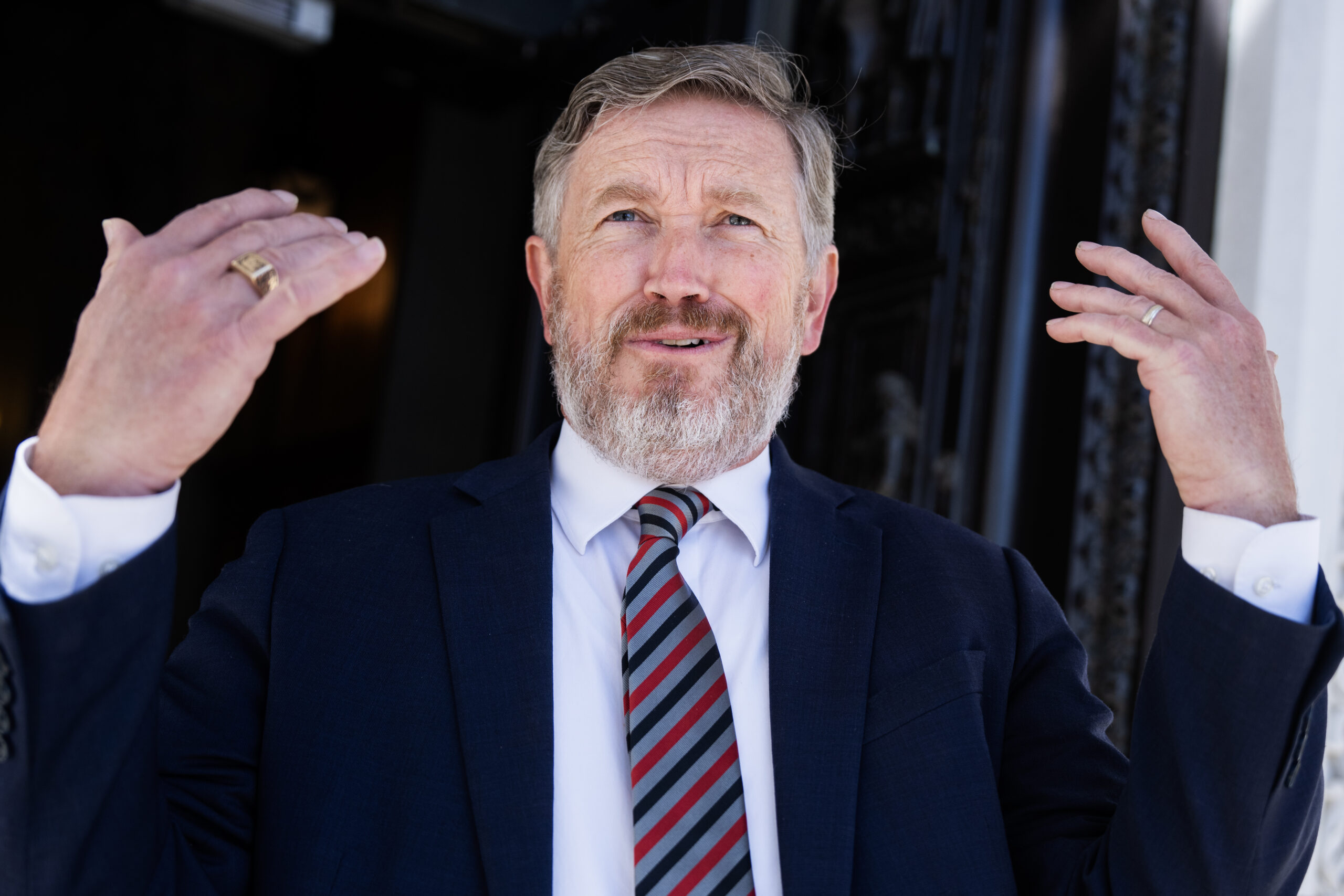
House Democrats remain divided over a push by Rep. Thomas Massie (R-KY) to slash $3.3 billion in military aid the U.S. is set to provide Israel in the 2027 State Department funding bill, and top Democratic leaders are continuing to keep their own positions vague, Jewish Insider’s Marc Rod reports. Consideration of the amendment is now delayed until at least July 13, after hard-right Republicans again brought proceedings on the House floor to a halt.
Where things stand: House Democratic leaders on Tuesday declined to say how they plan to vote or advise other members to vote following a closed-door caucus meeting. Minority Leader Hakeem Jeffries (D-NY) said, “Those conversations are ongoing,” while No. 3 House Democrat Rep. Pete Aguilar (D-CA) suggested that U.S. “aid and support” for Israel may not “go on forever.” Meanwhile, Rep. Jim Himes (D-CT), the top Democrat on the Intelligence Committee, joined colleagues on other national security committees in saying he’ll oppose the amendment, but progressive leaders maintained that many members will support the effort.
War powers play: Nearly all House Democrats voted for a war powers resolution on Tuesday that aimed to block U.S. support for Israeli operations against Hezbollah in Lebanon, though the legislation failed to secure a House majority, with nearly all Republicans and 22 Democrats voting against the measure.
RED SCARE
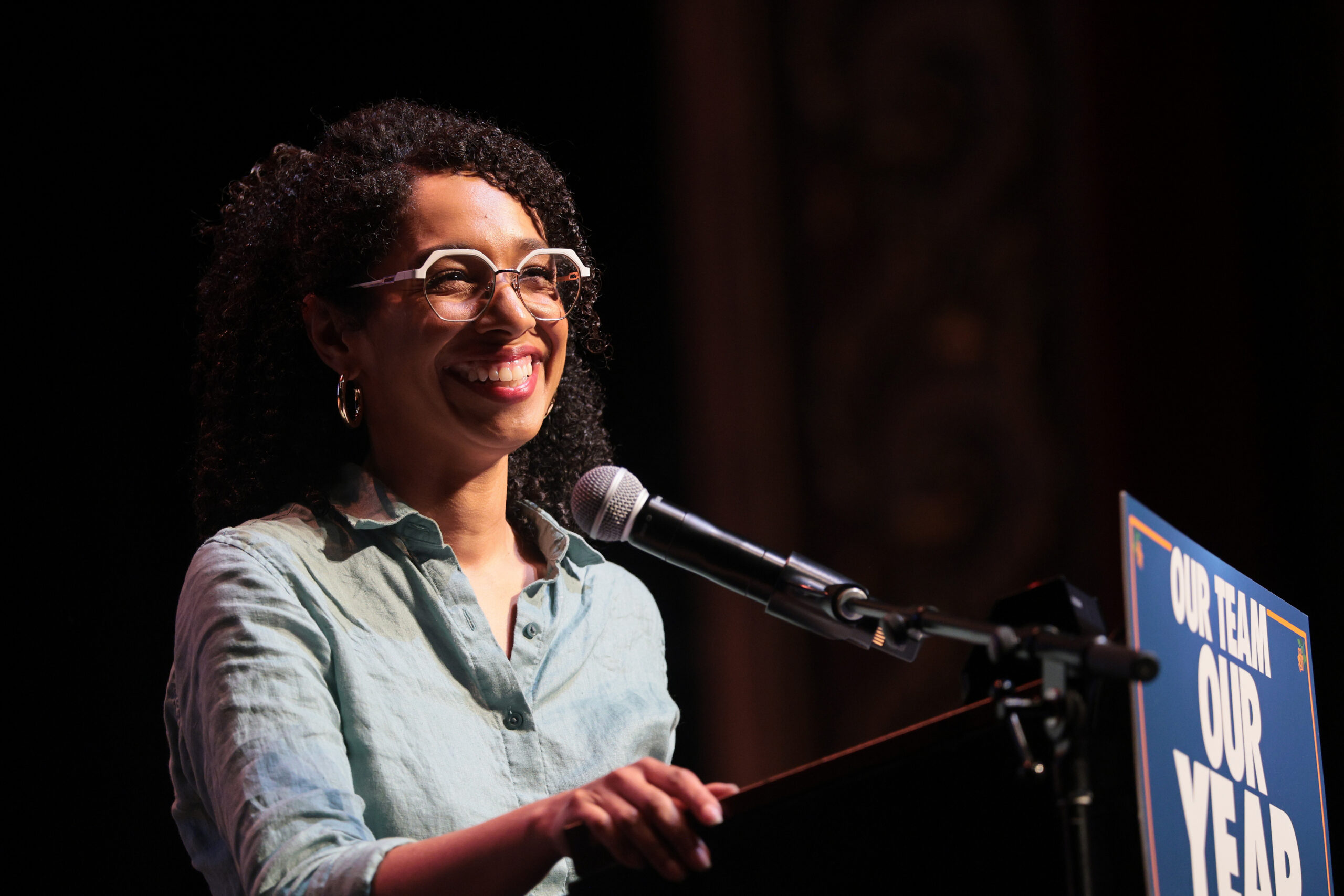
Asked about New York City congressional candidate Darializa Avila Chevalier’s reported past comments supporting communism, House Democratic leaders suggested this week that she had changed and moderated her views,Jewish Insider’s Marc Rod reports.
Jeffries’s defense: House Minority Leader Hakeem Jeffries (D-NY) said, when asked about Avila Chevalier’s previous comments supportive of communism, that Avila Chevalier is “going to have to speak for herself in terms of what she said in the past” but said she has been “pretty clear that she’s walked away from many of the things that have been unearthed, and has pretty clearly indicated that she’s a different person, but that’s for her, ultimately, to communicate, and I’m confident that she will, as best she can.”
Party problem: New York City Council Speaker Julie Menin — the first Jewish person to hold her role — slammed a newly elected Brooklyn Democrat’s promotion of antisemitic conspiracy theories, but declined to call her commentary disqualifying, JI’s Will Bredderman reports.
BORN IN THE USA
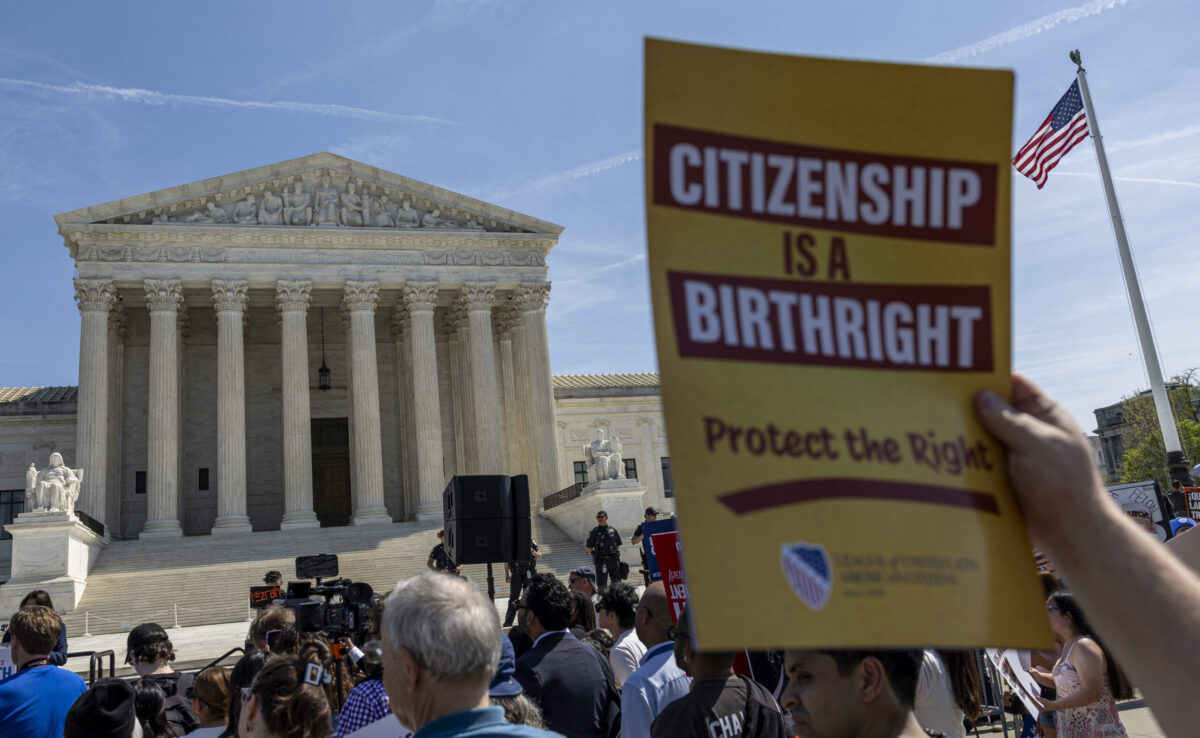
Several Jewish groups celebrated the Supreme Court’s decision on Tuesday to uphold birthright citizenship and strike down a Trump administration executive order that aimed to eliminate citizenship for children of undocumented immigrants and those in the U.S. on temporary visas, Jewish Insider’s Marc Rod reports.
Weighing in: The American Jewish Committee, HIAS and the Religious Action Center of Reform Judaism all joined an amicus brief against the executive order with various other religious groups, and praised the Supreme Court’s decision. The National Council of Jewish Women and Jewish Council for Public Affairs also weighed in in support of the justices’ ruling.
PEARL OF WISDOM

Bruce Pearl, the veteran former Auburn University men’s basketball coach, told Jewish Insider’s Emily Jacobs that Vice President JD Vance needs to “make a decision” about his continued association with far-right commentator Tucker Carlson, warning that his support of Vance’s expected 2028 presidential bid will be contingent on the vice president severing ties with the antisemitic podcaster.
‘Enemies of the state’: Pearl, who is currently splitting his time between pro-Israel political advocacy and serving as an analyst for TNT and CBS Sports, made the comments in an interview with JI on Monday while discussing the rise of right-wing antisemitism and the prominence of Carlson, neo-Nazi Nick Fuentes and other commentators who promote antisemitic ideas within the America First right-wing movement. Pearl argued that Carlson and Fuentes “are absolutely enemies of the state. What they’re doing is treasonous, it’s disgusting and it’s not based on fact. It’s based on lies and propaganda and antisemitism. They’re bought and paid for, but they’ve got huge followings.”
COHANIM COMEBACK
Ellie Cohanim, who served as deputy special envoy to monitor and combat antisemitism in President Donald Trump’s first term, recently joined his administration as a senior policy advisor to U.S. Ambassador to the U.N. Mike Waltz, Waltz announced on Tuesday, Jewish Insider’s Gabby Deutch reports. Cohanim was born in Tehran and left Iran as a child in 1979, following the Islamic Revolution. She came with her family to New York.
Waltz’s words: “Ellie’s story is the American story,” Waltz said in a statement. “Her family fled persecution in Iran, built a life in New York, and she has spent her career looking for ways to serve America, fighting for freedom, standing with the persecuted, and calling out antisemitism wherever it hides. That is exactly the kind of conviction and courage we need at the United Nations.”
Scoop: As Washington prepares to host a weekend of July Fourth hoopla on the National Mall, senior Trump administration officials, diplomats and Jewish communal leaders will gather on Friday evening across from the Lincoln Memorial for a Shabbat dinner celebrating America’s 250th birthday.
Worthy Reads
When the DSA Came for Lander: Park Avenue Synagogue Rabbi Elliot Cosgrove penned a letter dated two years from now, published in the New York Daily News, to New York Democratic congressional nominee Brad Lander, predicting that he will be ousted by a Democratic Socialists of America-backed candidate in the next primary. “They told you it was never about being a Jew — only about being a Zionist — as if the two could be peeled apart, as if your Jewishness had nothing to do with the nation they demanded you disown. There’s an old teaching about the man who thinks he can ride the tiger and dismount whenever he likes. You didn’t tame the coalition you joined. You were, for one term, useful — until the moment it decided to disown you. You could renounce the policy, the lobby, even Zionism, but you could not renounce being a Jew.” [Daily News]
Drone Prone: Foreign Policy’s John Haltiwanger unpacks Israel’s “Hezbollah drone problem.” “After the fighting resumed in March, it wasn’t long before explosive drones were a leading cause of battlefield deaths for Israel in Lebanon. As a result, Netanyahu established a team of experts to address the issue and pledged to give the IDF an unlimited budget to address the Hezbollah drone threat. But there are no simple solutions. … In ancient Rome, gladiators used nets to entangle opponents before moving in for the kill. Today, Israeli troops are using the same primitive tool to defend against drones and intercept them before they reach their targets. The situation is indicative of how militaries have struggled to find countermeasures to drones and have been forced to adapt, particularly as the technology evolves at such a rapid pace.” [FP]
Separate But Equal: Hannah Rosenthal, former special envoy to monitor and combat antisemitism under the Obama administration, argues in the Jewish Telegraphic Agency against the proposal of combining the role of the antisemitism envoy with that of the special envoy on Holocaust issues. “The office of special envoy on antisemitism and the special envoy on the Holocaust are complementary, but not duplicative. The former works to address contemporary antisemitism, hate crimes, extremism and government policy around the world. The latter focuses on historical justice, restitution, remembrance, archives and Holocaust-era accountability. The United States deliberately created separate offices because both missions are full time responsibilities.” [JTA]
Jews Turning on Israel: Actor and Jewish commentator Jonah Platt argues in a post on X against the trope of the young, “self-hating” Jew in an essay on X. “It’s maddening. It’s dangerous. It’s irresponsible. It’s shameful. But it isn’t nefarious. It isn’t Jew-hatred, it isn’t self-hatred, and honestly, it isn’t that hard to understand. These are disconnected, uneducated people, surrounded by like-minded peers, all reinforcing one another in a disconnected, uneducated worldview — one they’re not especially invested in anyway, and focus on only because progressive society says they’re supposed to.” [X]
Word on the Street
President Donald Trump is considering returning to a full-scale military conflict with Iran and has discussed the idea with Defense Secretary Pete Hegseth and Joint Chiefs Chairman Dan Caine in recent days, The Wall Street Journal reports, but has decided to continue on the diplomatic track for now…
In an analysis of the U.S.-Iran memorandum of understanding, the Foundation for Defense of Democracies found that the Trump administration is “evidently not applying [the 2015 Iran Nuclear Agreement Review Act’s] requirements and restrictions to the MOU, apparently on the basis of an opinion from the Department of Justice,” but the White House and DOJ “have apparently not shared this surprising opinion, or its arguments, with either Congress or the public”…
Homeland Security Secretary Markwayne Mullin said on Monday that he did a “happy dance,” after Iran was knocked out of the FIFA World Cup, telling reporters that Iranian officials tried to bring into the U.S. individuals with ties to the Islamic Revolutionary Guard Corps and that accommodating the team while protecting national security had demanded incomparable attention…
The Terrorist Financing Targeting Center — a coalition comprised of Bahrain, Kuwait, Oman, Qatar, Saudi Arabia, the UAE and the U.S. — announced joint sanctions against five entities and 16 individuals tied to Hezbollah’s financial network…
Oman has submitted a proposal to the U.S. for Muscat and Tehran to collect service fees from shipping companies seeking to transit the Strait of Hormuz, according to The New York Times. One of Iran’s deputy foreign ministers, Kazem Gharibabadi, said on Monday if Iran was unable to come to an arrangement with Oman it would move forward on its own…
A person close to the anti-Israel American Priorities super PAC told CNN many of its contributors weren’t very politically active until New York City Mayor Zohran Mamdani’s campaign victory, which was the “moment that inspired them and brought them into the fold”…
Former Vice President Kamala Harris called Mamdani last week, and is holding lengthy, closed-door meetings with Palestinian activists in the run-up to a possible presidential campaign, Axios reports…
Rep. Dan Goldman (D-NY), speaking to CNN’s Jake Tapper, warned of the “tremendous danger and fear” for American Jews as they are being “dehumanized” and antisemitism is “becoming normalized”…
Phylisa Wisdom, the liberal activist appointed by New York City Mayor Zohran Mamdani as executive director of his Office to Combat Antisemitism, got a harsh reception at a Holocaust memorial event in Brooklyn on Sunday. Video from the event shows a small group of hecklers booing, calling Wisdom a “kapo” and shouting that she was supportive of Adolf Hitler, JI’s Will Bredderman reports…
Far-left Michigan Senate candidate Abdul El-Sayed dismissed a question on CNN about the Democratic Party’s “embrace” of antisemitic streamer Hasan Piker as a “ridiculous way to think about politics”…
Adam Jentleson, former chief of staff to Sen. John Fetterman (D-PA) who went on to found the center-left Searchlight Institute think tank, urged Democrats to “just say no to AIPAC,” arguing the pro-Israel organization has “evolved from a group to a ‘Group,’” in the pejorative sense…
Israeli Prime Minister Benjamin Netanyahu visited southern Lebanon on Tuesday for the first time since the U.S.-brokered security agreement was signed last Friday. Netanyahu told IDF troops, “We will not leave southern Lebanon until the threat is removed”…
“Pod Save America” co-host Jon Lovett said the harassment of California state Sen. Scott Wiener at a transgender pride march last week was “as pure antisemitism as you can see”…
The Supreme Court agreed to hear the case of Daniel Grand, an Orthodox Jewish man from Ohio who was barred from holding Shabbat prayer meetings in his home without a “special use permit” and later faced harassment from city officials who encouraged neighbors to watch his home for signs of religious activity…
Haaretz tracks the carbon footprint of FIFA President Gianni Infantino as he has traveled between World Cup matches across North America on a Qatari private jet, racking up 47,337 kilometers (29,000 miles) from the tournament’s opening days through the first knockout match, after championing the body’s sustainability strategy…
Ellie Gottheimer and Larra Mullin, the children of Rep. Josh Gottheimer (D-NJ) and Homeland Security Secretary Markwayne Mullin, are releasing Shmoo & Ozzie Go to Washington today, a children’s book on bipartisanship. Proceeds from the book will go to support homeless children…
Mark Isakowitz, Sen. Dave McCormick (R-PA)’s chief of staff, is set to release a book in January about his personal journey following the loss of his father, who immigrated to America after surviving Auschwitz, and Isakowitz’s daily practice of reciting the mourner’s prayer at a synagogue in Washington, JI’s Gabby Deutch reports…
Axel Springer CEO Mathias Döpfner tapped Carolin Hulshoff Pol to serve as CEO of Telegraph Media Group following the German media company’s completion of its £575 million acquisition of the British publisher, ending a three-year ownership transition…
Former Israeli Air Force Commander Maj. Gen. (res.) Amikam Norkin is a leading candidate to head Anduril’s operations in Israel, as the American defense tech company explores a major expansion into the Israeli market, Calcalist reports…
The Iranian regime plans to take over St. Peter Evangelical Church, the oldest Protestant church in Iran, and evict the 20 families living there, The Free Press reports. The theocratic regime had thus far left it alone in fear of the U.S.’ retaliation, according to the outlet…
The Washington State Democratic Party adopted into its platform during its June convention an amendment blaming the “dramatic resurgence in antisemitism … in part [on] actions taken by the Israeli government,” Jewish News Syndicate reports…
Pentagon official Jason Olson has departed his position as the director of deradicalization for the Gaza Board of Peace, an official from the body told The Times of Israel, as the BoP is convening for discussions in Cyprus…
Tuesday marked the end of Steffen Seibert‘s four-year term as German ambassador to Israel. In a farewell social media video, he paid tribute to the country by listing 25 things he will miss. Seibert is succeeded by Alexander Graf Lambsdorff, who most recently served as the German Ambassador to Moscow…
Judah Gribetz, who as a top aide to Gov. Hugh Carey helped negotiate New York City‘s rescue from financial collapse in the 1970s and later devised a distribution plan for $1.25 billion in restitution to Holocaust survivors in a landmark class-action suit against Swiss banks, died Friday at 97…
Pic of the Day

Comedian Judy Gold spoke at an event hosted by the Israeli Embassy in Washington, “A Zionist LGBTQ+ Celebration,” at Adas Israel Congregation on Tuesday — a night of solidarity in memory of Sarah Milgrim, the embassy staffer murdered alongside her partner, Yaron Lischinsky, outside the Capital Jewish Museum in May 2025. Milgrim spent her time at the embassy building bridges between Israel and marginalized communities, including D.C.’s LGBTQ+ Jewish community.
Birthdays

Television, film and theater actor, including early career roles in Yiddish theater, Michael Burstein turns 81…
Applied mathematician, statistician and physicist, professor emeritus at both MIT and Harvard, Herman Chernoff turns 103… Former U.S. assistant secretary of education and former research professor at NYU, Diane Silvers Ravitch turns 88… Nobel laureate in economics for 1997 and co-creator of the Black-Scholes model for valuing options and other derivatives, Myron Scholes turns 85… Noted British art dealer and founder of an eponymous London art gallery, Victoria Marion Miro turns 81… Born in a DP Camp to her Holocaust survivor parents, she was the first Jewish woman to serve on the Canadian Supreme Court, Rosalie Silberman Abella turns 80… Israeli-Russian businessman, with holdings in energy and international real estate development, Shalva Chigirinsky turns 77… Partner in the Encino, Calif.-based law firm of Nolan Heimann, Douglas E. Mirell… Campaign, communications and fundraising consultant, Robert Kaplan turns 69… Hall of Fame player and coach in the WNBA and now an NBA broadcaster, Nancy Lieberman turns 68… Attorney and longtime Democratic activist in Pittsburgh, he is a regional chair of the ADL, Steven D. Irwin turns 67… Senior columnist at The Forward and former CEO of the A-Mark Foundation, Rob Eshman… President emeritus of the Orthodox Union and a retired partner at Ropes & Gray, Mark “Moishe” Bane… Under secretary of state for political affairs during most of the Biden administration, Victoria Jane Nuland (family name was Nudelman) turns 65… Journalist, filmmaker and educator, he is the co-founder of Aish[dot]com, Shraga Simmons turns 65… Professor of Jewish thought at Hebrew University, Benjamin Brown turns 60… Member of the Virginia House of Delegates since 2014, Marcus Bertram Simon turns 56… U.S. senator (R-IA), Joni Ernst turns 56… Screenwriter, producer and film director known for romantic comedy films, Marc Silverstein turns 55… Los Angeles resident, Adam B. Siegel… NASA astronaut, on her 2019 trip to the International Space Station she took novelty socks with Stars of David and menorahs, Jessica Meir turns 49… Co-founder of Edgeline Films, Elyse Steinberg… Hasidic musician mixing elements of dancehall, reggae, hip-hop and R&B, known by his stage name DeScribe, Shneur Hasofer turns 44…
Plus, moderates’ big Colorado test

Miikka Skaffari/Getty Images
California state Sen. Scott Wiener during the San Francisco Pride Parade on June 28, 2026 in San Francisco, Calif.
Good Tuesday morning.
In today’s Daily Kickoff, we preview tonight’s Democratic primaries in Colorado, where a wave of Democratic Socialists of America-backed challengers is testing whether even the party’s pragmatic epicenter is vulnerable to the socialist left, and report on comments by Rep. Suzan DelBene (D-WA), the chair of the Democratic Congressional Campaign Committee, downplaying concerns about the party’s response to antisemitism. We cover the conflicting messaging put out by the U.S. and Iran about the continuation of talks in Qatar, and report on remarks by Rep. Brian Mast (R-FL) on the expected timeline for a final agreement between the countries. We also follow up on the reactions to the harassment of California state Sen. Scott Wiener at a transgender pride march, highlighting a divide between politicians who described the incident as antisemitic and those who did not. Also in today’s Daily Kickoff: Susie Wiles, Gen. Frank McKenzie and Luke Moon.
Today’s Daily Kickoff was curated by JI Israel Editor Tamara Zieve and U.S. Editor Danielle Cohen-Kanik with an assist from Marc Rod. Have a tip? Email us here.
What We’re Watching
- White House Special Envoy Steve Witkoff and Jared Kushner arrived in Qatar to represent the U.S. in talks with Iran, as the status of the negotiations remains unclear. The technical talks on the memorandum of understanding meant to be taking place separately are also up in the air — Iran’s foreign ministry said an Iranian technical delegation will be in Doha this week but will not be meeting with American officials. More below.
- Representatives of President Donald Trump’s Board of Peace are meeting this week in Cyprus as they seek to advance plans for a committee of Palestinian technocrats to replace Hamas in governing the Gaza Strip, The Times of Israel reports. Former U.K. Prime Minister Tony Blair, who sits on the Board of Peace’s executive board and has recently taken on a larger role in the organization, is set to participate in the “strategic workshop” being held from Tuesday to Thursday.
- Colorado voters will head to the polls in today’s Democratic primaries, where moderate candidates are fearing a far-left wave. More below.
- Russell Vought, director of the Office of Management and Budget, will testify before the House Appropriations Committee where he is expected to address the White House’s $88 billion supplemental funding request for the war with Iran and FY2027 budget request.
- The Israeli Embassy in Washington will hold a “Zionist LGBTQ+ celebration” on the last day of Pride Month in memory of slain embassy staffer Sarah Milgrim’s allyship.
- In Israel, Reichman University’s Herzliya Conference kicks off, focusing this year on national security and national resilience. Israeli President Isaac Herzog will address the confab, as well as U.S. Ambassador to Israel Mike Huckabee; Amos Hochstein, who served as a Middle East envoy under former President Joe Biden; former Mossad chief Tamir Pardo; former Israeli National Security Advisor Tzachi Hanegbi; journalist Barak Ravid; and Aliyah Minister Ofir Sofer.
What You Should Know
A QUICK WORD WITH JI’S JOSH KRAUSHAAR
Colorado is a state famous for its moderation, with its governor (Jared Polis) and two senators (Michael Bennet and John Hickenlooper) among the most pragmatic figures in Democratic politics. So if a far-left, anti-Israel wave sweeps over the Democratic Party in tonight’s statewide primaries, it will be a true wake-up call for those downplaying the rise of the socialist left.
The biggest race we’re tracking — and the one where a Democratic incumbent looks most vulnerable — is the primary between longtime Rep. Diana DeGette, 68, an influential progressive who has left an imprint on major legislation in Congress, and Democratic Socialists of America-affiliated 29-year-old doctoral student Melat Kiros, whose deep-seated antagonism against Israel is a top focus of her campaign.
Kiros is the latest example of how radical candidates running for office on their hostility toward Israel are also indulgent of the rising antisemitism around them. Her political awakening came after she was fired from the law firm Sidley Austin for writing a public letter denouncing the hundreds of law firms that signed a petition calling on law schools to do a better job addressing antisemitism on their campuses.
Kiros was angered that the law firms considered those calling for the elimination of Israel as antisemitic. In the last week, she also refused to call the firebombing of a hostage awareness march in Boulder, Colo., antisemitic. Sense a pattern?
As JI’s Marc Rod reported, Kiros’ extreme views have done little to dent her support in a progressive Denver-area district that DeGette has easily held for the last three decades. In March, DeGette barely won the 30% of the vote from party activists necessary to qualify for the primary ballot — in what could be a foreshadowing of the primary results tonight.
PRIDE AND PREJUDICE
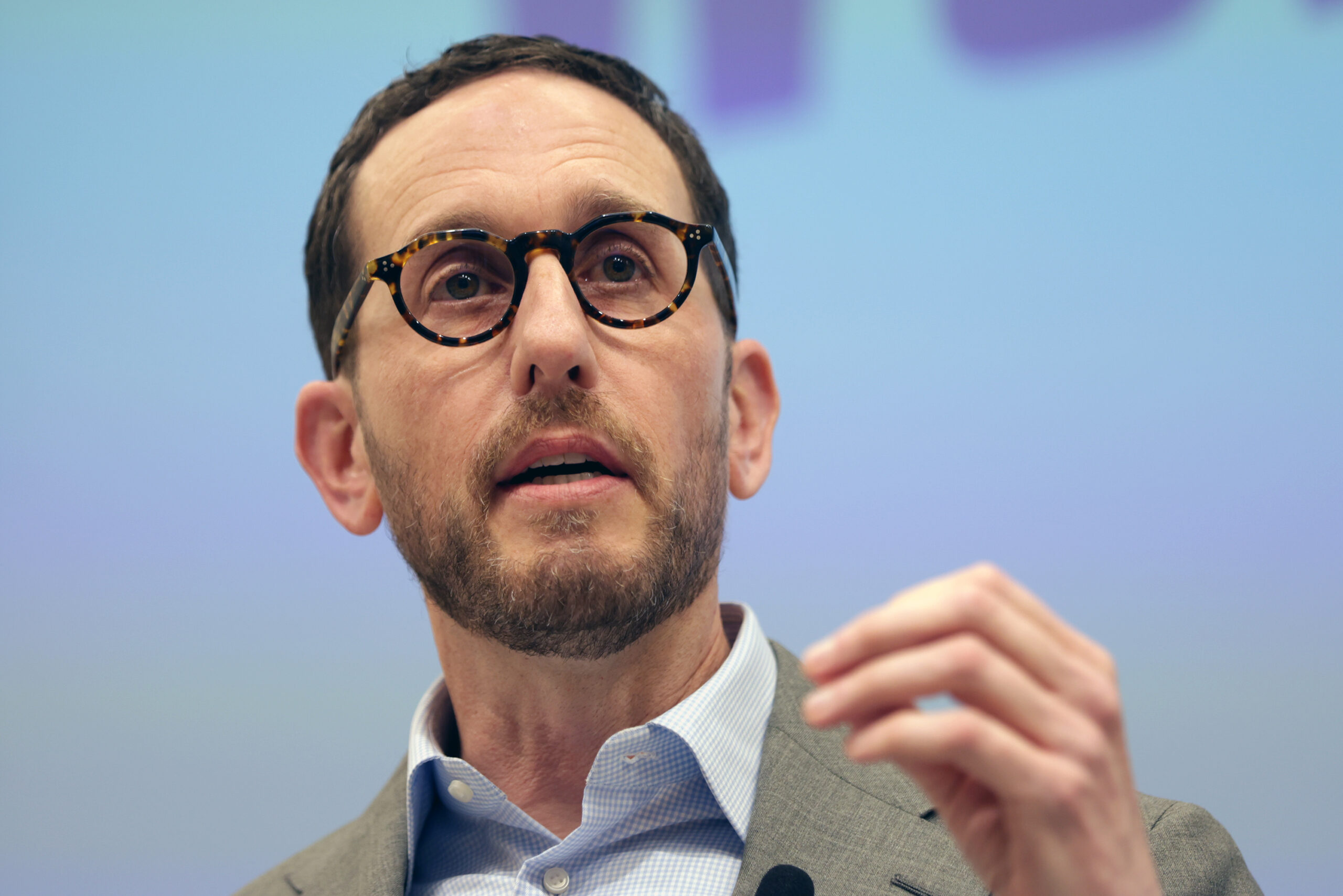
Elected officials in California swiftly condemned an incident last week in which protesters accosted and harassed California state Sen. Scott Wiener at a transgender pride march, with one demonstrator shouting “F*** you and your Zionist handlers. F*** you and your Israeli masters.” A divide emerged, however, between the politicians who described the incident as antisemitic and those who did not. It was the second such incident in days, after Wiener was harassed at a bar by a protester demanding he say “Free Palestine” on camera, Jewish Insider’s Gabby Deutch reports.
Reactions: Wiener told CNN on Monday that the incident was “absolutely” antisemitic. “There were elected officials in that march who have not taken the positions that I’ve taken, and they were left alone,” said Wiener, who is running to replace retiring Rep. Nancy Pelosi (D-CA) in the San Francisco-based seat. San Francisco Mayor Daniel Lurie, who is Jewish, criticized the incident as “targeted, hateful and antisemitic.” San Francisco Supervisor Connie Chan, Wiener’s competitor in the congressional race who is running to his left, said in a statement that she stands “firm against threats of violence and hate speech. There is no place for hate and violence in our city.” Asked whether Chan believed the specific incident targeting Wiener to be hate speech, a spokesperson for Chan declined to say.
Read the full story here with additional comments from Sens. Adam Schiff (D-CA) and Alex Padilla (D-CA), Pelosi, Rep. Ro Khanna (D-CA) and former Health and Human Services Secretary Xavier Becerra, the Democratic nominee for governor in California.
Leadership message: Rep. Suzan DelBene (D-WA), the chair of the Democratic Congressional Campaign Committee, responsible for electing House Democrats, downplayed concerns about the party’s response to antisemitism in the wake of New York City elections that elevated several far-left candidates, JI’s Marc Rod reports. “If you look across the board and talk to individual candidates, that’s not representative of where other candidates land,” she said in an interview with former NBC News anchor Chuck Todd.
ON THE HILL

The top House Democrats on the Foreign Affairs and Armed Services committees said Monday that they will oppose efforts led by Rep. Thomas Massie (R-KY) to cut the $3.3 billion in U.S. aid to Israel expected under the memorandum of understanding if and when they come to a vote on the House floor, Jewish Insider’s Marc Rod reports.
No go: Reps. Greg Meeks (D-NY) and Adam Smith (D-WA), the ranking Democrats on the House Foreign Affairs and Armed Services committees, both told JI they intend to oppose the amendment. Meeks said there are “so many unanswered questions” about the implications and effects of the amendment. “I know there is still danger [in Israel]. I don’t want Israel to be without what they need,” Meeks said. He also noted that many of the weapons that would be purchased with the funding would not be built for years to come.
Read the full story here with additional comments from Reps. Rosa DeLauro (D-CT) and Greg Casar (D-TX).
Tehran talk: Rep. Brian Mast (R-FL), the chair of the House Foreign Affairs Committee, suggested following both unclassified and classified briefings from the Trump administration on Iran on Monday that talks with the regime for a final agreement could continue past the 60-day timeline laid out in the U.S.-Iran memorandum of understanding finalized earlier this month.
BOMBS TO BARGAINS

President Donald Trump confirmed on Monday that the U.S. and Iran will meet in Qatar on Tuesday to continue negotiations, as both nations attempt to step back from a weekend exchange of military strikes that threatened to derail the fragile ceasefire agreement. “IRAN HAS REQUESTED A MEETING. IT WILL TAKE PLACE TOMORROW IN DOHA!” Trump posted on Truth Social, Jewish Insider’s Matthew Shea reports.
Yes, but: Iran’s deputy foreign minister and senior negotiator Kazem Gharibabadi, however, dismissed the reports, telling Iranian state news agency IRNA that the technical talks in the Qatari capital “are not confirmed.” Esmaeil Baghaei, a spokesperson for Iran’s foreign ministry, later said Iran has no discussions scheduled with the U.S. and that an Iranian technical delegation heading to Qatar this week will not be meeting with U.S. officials.
Chief concerns: White House Chief of Staff Susie Wiles, according to a new book by New York Times journalists Maggie Haberman and Jonathan Swan, initially pushed back on U.S. military engagement against Iran, skeptical of Israel’s efforts to convince Trump to join a bombing campaign on Iran’s nuclear sites and fearful that any involvement from the U.S. military could “spiral into an Israeli regime-change war,” JI’s Gabby Deutch reports.
TEXAS TILT

Texas Democrats adopted several anti-Israel amendments into their party platform at a state party convention last weekend — a significant move to the left on Israel policy in a generally conservative state with marquee Senate and gubernatorial races this November. That said, much of the anti-Israel language was toned down from the original amendments as introduced — and the party also adopted some pro-Israel language in the platform, Jewish Insider’s Marc Rod reports.
Notable provisions: The platform offers support for the right of return for Palestinian refugees as well as for Palestine becoming a U.N. member state “when qualified under the U.N. Charter” and the International Court of Justice’s interim judgement in the genocide case against Israel — though it acknowledges that the ICJ has not ruled that Israel committed genocide — and recognizes the Palestinian “Nakba.” The platform urges Texas Democratic members of Congress to support the Block the Bombs Act and the end of U.S. offensive weapons sales to Israel, as well as calling for the repeal of Texas’ anti-Boycott, Divestment and Sanctions legislation.
WESTWARD BOUND

Former U.S. CENTCOM Commander Gen. Frank McKenzie on Monday voiced his support for the U.S. to shift its military footprint in the Middle East westward, including in Israel, to mitigate threats from Iran, Jewish Insider’s Matthew Shea reports.
Location, location, location: Speaking on a Jewish Institute for National Security of America webinar, McKenzie said, “No one in their right mind would ever put the CENTCOM forward headquarters, you know, 100 miles away from Iran [in Qatar], yet that’s where it is. Because when we put it in place many years ago, we were thinking Iraq, we were thinking Afghanistan, we were thinking other things, and not the growing threat from Iran.”
BACK IN THE FOLD
Luke Moon, a conservative Christian activist who has emerged in recent months as an outspoken critic of antisemitism on the right, has joined the Heritage Foundation as a part-time visiting fellow supporting the think tank’s work to combat antisemitism, Jewish Insider’s Gabby Deutch reports. Moon publicly disaffiliated from the prominent conservative institution in November after its president, Kevin Roberts, released a controversial video defending Tucker Carlson following the podcast host’s friendly interview with neo-Nazi Nick Fuentes.
Shift in position: Moon told JI in an interview on Monday that he believes the conservative movement has begun to make progress in fighting back against antisemitism within its ranks. “It’s a war where we lose some battles and win some battles, and I think I’m winning more than I’m losing,” Moon said. “What I didn’t have a year ago was enough allies and tools, and now I have a lot more allies, and I think I have a lot more tools, and so I’m actually optimistic.”
Worthy Reads
Mamdani’s Misunderstanding: Israeli journalist Nadav Eyal argues in his Substack that New York City Mayor Zohran Mamdani’s comments to ABC News rejecting support for Israel as a Jewish state reveal a fundamental misunderstanding of the Jewish people. “Either he knows very little about Judaism — an astonishing level of ignorance for the mayor of New York — or his hostility toward Israel has blinded him to one of the most elementary historical facts about the Jewish people. Judaism is both a religion and a nation. For thousands of years, Jews have understood themselves as a people with a shared history, a common language, collective institutions, diverse religious traditions, and — crucially — a homeland from which they originated.” [Substack]
Unfortunate Turn of Events: In The Wall Street Journal’s “Free Expression” newsletter, Masada Siegel uses “A Series of Unfortunate Events” — the children’s book series about orphans trying to elude a disguised villain and his followers — as a lens to examine institutional failure in addressing antisemitism in American schools and universities. “In the series, the children’s guardian Mr. Poe hesitates, doubts the children and is useless whenever the villain reappears. Mr. Poe isn’t evil; he’s self-absorbed and personifies institutions that exist to stop threats, but refuse to do their jobs. Since Oct. 7, the international community has acted as a global Mr. Poe. Institutions like the United Nations and Red Cross allowed hostages, including children, to be held by Hamas and to languish in terror tunnels. In the U.S., institutions failed our youth. School boards and Ivy League administrations showed little to no moral clarity, leaving Jewish students to fend for themselves in hostile environments.” [WSJ]
The Rubio Accord: The Wall Street Journal’s editorial board applauds Secretary of State Marco Rubio’s work securing the U.S.-Israel-Lebanon agreement signed last week. “Some Iran analysts associated with Vice President JD Vance have criticized the framework as ‘incompatible’ with the memorandum of understanding with Iran. But Trump Administration sources tell us this framework is the U.S. interpretation of the MOU’s language regarding Lebanon. On this the Vice President backs Mr. Rubio; nobody on the Trump team wants to force Israel to cede all of southern Lebanon to Iran’s proxy, as Iran demands.” [WSJ]
From Corbyn to Mamdani: Simone Rodan-Benzaquen, the Foundation for Defense of Democracies’ senior envoy for Europe, argues that New York City Mayor Zohran Mamdani poses the same threat to the Democratic Party as Jeremy Corbyn did to the U.K.’s Labour Party when he served as leader. “From London to Paris, from Paris to New York, one finds the same mechanism: anti-Zionism presented as courage, accusations of antisemitism dismissed as a right-wing maneuver, and the worried Jew transformed into an obstacle to progress. Labour thought it could absorb Corbyn. Part of the French left thought it could contain [Jean-Luc] Mélenchon. The Democratic Party may believe it can confine Mamdani and the DSA to a handful of urban districts. This is always how capitulations begin: with the idea that the problem will remain local.” [FDD]
Word on the Street
CENTCOM Commander Adm. Brad Cooper met with Lebanese Armed Forces chief Gen. Rodolphe Haykal in Beirut and senior civilian and military personnel in Israel to discuss implementing the Israel–Lebanon framework agreement signed last week…
New documents released by the State Department under Freedom of Information Act litigation show top Trump administration staffers continued to use the encrypted messaging app Signal for government communications after President Donald Trump suggested they stop when Atlantic Editor-in-Chief Jeffrey Goldberg was inadvertently added to an administration chat about bombing the Houthis last year…
New York state Democratic Party Chairman Jay Jacobs told the New York Post that anti-Israel sentiment helped propel to victory New York City Mayor Zohran Mamdani’s slate of candidates for Congress in last week’s primaries…
A new New York Times/Portland Press Herald/Siena poll shows Democratic Senate candidate Graham Platner and Republican Sen. Susan Collins in a statistical tie in Maine, 49-47%, among likely voters…
J Street President Jeremy Ben-Ami wrote on Substack that Mamdani “missed the mark” when he called AIPAC the “monsters of our time” and warned broadly against characterizing “every organization connected to Israel … as part of a uniquely sinister enterprise”…
Trump nominated acting Labor Secretary Keith Sonderling, who is the grandson of Holocaust survivors, to assume the role permanently. Read JI’s profile of Sonderling here…
CNN reports on since-deleted tweets from far-left New York congressional candidate Darializa Avila Chevalier hailing communism, Marxism and Soviet figures, including revolutionary Vladimir Lenin…
Jewish Voice for Peace Action, the political arm of the anti-Israel advocacy group, issued its first-ever Senate endorsement, backing far-left candidate Abdul El-Sayed in the Democratic primary for U.S. Senate in Michigan. The Detroit Free Press endorsed one of his opponents, state Sen. Mallory McMorrow…
Minneapolis Mayor Jacob Frey is backing Rep. Angie Craig (D-MN) for U.S. Senate against her more-progressive primary opponent, Lt. Gov. Peggy Flanagan, and Sen. Bernie Sanders (I-VT) endorsed Sen. Ed Markey (D-MA) as he fends off a generational primary challenge from Rep. Seth Moulton (D-MA)….
The New York Times talks to Jennifer Mnookin, who on Wednesday will begin her role as Columbia University’s fifth president in four years — and first Jewish leader in three decades…
TheNYTexplores how the raging debates over Israel and Iran are fracturing both parties ahead of the midterms, with far-left primary victories in New York rattling establishment Democrats and isolationist MAGA voters souring on Trump over the Iran war…
The Wall Street Journal reports that while a Trump administration waiver last week to let Iran sell its oil and receive dollar payments could bring in up to $10 billion over two months, it is likely to take much longer to reach the pockets of ordinary Iranians, some of whom have expressed skepticism that the deal will improve their daily life…
The IDF’s Military Intelligence Directorate and Southern Command told Chief of Staff Lt. Gen. Eyal Zamir last week that Hamas is reconstituting in order to resume war against Israel, Israeli broadcaster Kan reports, indicating the IDF is urging a return to fighting against the terror group but that the U.S. is opposed as it seeks to promote Trump’s Board of Peace…
Armenian Prime Minister Nikol Pashinyan, asked about Israel’s recent recognition of the Armenian Genocide, said, “We do not see a need for response,” adding that it is in his country’s interest to avoid “the weaponization of the Armenian Genocide”…
The New Yorker‘s Oscar Schwartz examines how former Prime Minister John Howard — architect of Australia’s celebrated post-Port Arthur gun laws — broke with Prime Minister Anthony Albanese after the massacre at a Hanukkah party at Bondi Beach, arguing the real culprit was rising antisemitism rather than lax gun control, a framing that has reshaped the country’s political discourse…
Former Walt Disney Co. CEO Bob Iger and Thrive Capital founder Josh Kushner are weighing making a bid for the NBA expansion team in Las Vegas, Bloomberg reports…
Yair Rosenberg, a longtime journalist and commentator on American Jewry, is joining The New York Times as a reporter covering Jewish American life, the Times announced on Monday, JI’s Haley Cohen reports…
Pic of the Day
Conference of Presidents of Major American Jewish Organizations CEO William Daroff (left) and Chair Betsy Berns Korn met with Under Secretary of Defense Elbridge Colby (second from left) and Alex Velez-Green, the embattled nominee to be deputy under secretary, at the Pentagon on Monday. The group’s discussion focused on the rapidly evolving geopolitical environment, regional security dynamics and the strategic challenges and opportunities facing the United States, Israel and the broader Middle East.
Birthdays

Film and television actor, Elizabeth Anne “Lizzy” Caplan turns 44…
Rapid City, S.D., resident, Leedel Chittim Williamson turns 82… Palm Beach Gardens, Fla., resident, podiatrist, Dr. David Peter Bartos… Executive coach to nonprofit leaders, he was the founding director of the Museum of Jewish Heritage, Dr. David Altshuler… Former New York state assemblyman for 36 years, he is the founder of Americans Against Antisemitism, Dov Hikind turns 76… Former Harvard professor and author of books on the Holocaust and antisemitism, Daniel Goldhagen turns 67… Staff writer at The Atlantic, podcaster, author of 10 books and former Bush 43 speechwriter, David Frum turns 66… Chief justice of the New Jersey Supreme Court, Stuart Jeff Rabner turns 66… Professor of astrophysics at McGill University, Victoria Michelle Kaspi turns 59… Independent philanthropic advisor, formerly the founding executive director of JOIN for Justice: the Jewish Organizing Institute and Network, Karla Van Praag… Professor of Jewish studies at the University of Georgia, he is the co-editor of a handbook on 25 different Jewish languages, Aaron David Rubin turns 50… Columnist, author, poet and screenwriter, Matthew “Matthue” Roth turns 48… Former sports business analyst and reporter, now focused on the collectibles market, Darren Rovell turns 48… Reggae and alternative rock musician, known by his stage name Matisyahu, Matthew Paul Miller turns 47… Partner at OnMessage Public Strategies, Kyle J. Plotkin turns 44… Senior software engineer at Bloomberg LP, Noam Lustiger… Chief marketing officer for Aleph Venture Capital, Erica Marom (Chernofsky)… COO at the Conference of Presidents of Major American Jewish Organizations, Stephanie Hausner… Head coach of the men’s lacrosse program at Long Island University, Jordan Levine turns 40… Rhythmic gymnast who represented the U.S. at the 2012 Olympic Games, now a fitness coach and personal trainer, Julie Ashley Zetlin turns 36… English teacher in Tel Aviv, Michal Adar… Real estate director at AIPAC in New York, Abbey Taub…
American Priorities’ spending has aided two Democratic Socialists of America-backed House hopefuls while drawing scrutiny over contributions from GOP donors and AI investors

Erik McGregor/LightRocket via Getty Images
NY Assemblymember Claire Valdez
American Priorities, a new super PAC created as a progressive counterweight to pro-Israel spending in Democratic primaries, has drawn scrutiny in recent weeks for accepting contributions from donors who have given to Republicans — even as its allies on the far left have accused AIPAC, a chief rival, of serving as a Trojan horse to advance GOP-linked interests in safe blue districts.
Meanwhile, filings show that the anti-Israel group has received $250,000 from a tech executive whose firm is developing AI data centers in New York State. That money has boosted two democratic socialist House candidates in New York City who oppose efforts to expand data centers.
Claire Valdez, a state assemblymember running to succeed retiring Rep. Nydia Velazquez (D-NY), and Darializa Avila Chevalier, an anti-Israel activist who is challenging Rep. Adriano Espaillat (D-NY), have benefited from over $2 million in estimated support from American Priorities in the final stretch of their closely contested primaries set for next Tuesday.
But the source of the group’s spending has not neatly aligned with the values its preferred candidates have promoted during their campaigns, underscoring the degree to which American Priorities has become a liability as well as a financial lifeline while emerging as a dominant player in the midterms.
Both Valdez and Avila Chevalier, for instance, have advocated for a federal moratorium on AI data center construction — despite the significant contribution to American Priorities from Nazar Khan, the co-founder of TeraWulf, a bitcoin mining company pivoting to AI infrastructure development. The firm is now pressing to move forward with proposed construction of an AI data center in New York’s Finger Lakes region, which has faced local opposition from residents questioning its environmental impact.
TeraWulf is also in the process of expanding another data center in western New York that “is expected to rank among the largest” facilities of its kind in North America, according to a February press release.
Khan did not respond to a request for comment from Jewish Insider, nor did campaign representatives for Valdez or Avila Chevalier.
Brad Lander, the former New York City comptroller mounting a challenge to Rep. Dan Goldman (D-NY), has also said he favors an AI data center moratorium. American Priorities has indicated that it would spend on his behalf as part of a multimillion-dollar pledge to elevate Mayor Zohran Mamdani’s endorsed slate of far-left House candidates, but it has yet to do so as it has focused on Valdez and Avila Chevalier, who are also backed by the Democratic Socialists of America.
The anti-Israel group has helped elevate a range of House candidates on the left this election cycle. But its aggressive spending in New York City has stoked backlash, particularly in light of its small handful of donors who have also given to far-right Republicans such as former Rep. Marjorie Taylor Greene (R-GA) and recently ousted Rep. Thomas Massie (R-KY).
For his part, Espaillat, a veteran incumbent backed by AIPAC, has accused Avila Chevalier of accepting support from “a millionaire in Texas” who “funded [Texas Gov.] Greg Abbott,” a reference to Hussein Mahrouq, who has contributed $525,000 to American Priorities in recent months.
Avila Chevalier, who vows to ban super PAC money from elections on her campaign website, has denied knowledge of American Priorities’ spending, though she has not discouraged the group from engaging in her primary.
“I control my campaign and the money that my campaign receives,” Avila Chevalier, whose past inflammatory social media posts have featured in attack ads from pro-Espaillat groups, said recently.
Meanwhile, Brooklyn Borough President Antonio Reynoso and City Councilmember Julie Won, who are both facing Valdez in the primary in the 7th District, teamed up in a joint statement last week to accuse their opponent of reneging on her pledge to reject super PAC spending.
“Claire has turned what should have been a race about our records and vision for the people of Brooklyn and Queens into a Super PAC-driven negative election,” Reynoso and Won wrote.
Valdez, who has sought to highlight small-dollar donations, has cautiously justified the super PAC investments as a response to heavy spending from the AI and crypto industries as well as AIPAC. “The way that some people are countering that is by also spending money,” she said last week.
Earlier this week, Valdez drew criticism for falsely speculating that AIPAC was behind a newly formed super PAC, Real Fight NYC, that is spending to boost Reynoso’s campaign. But AIPAC’s super PAC, United Democracy Project, said it had no involvement, while the American Federation of Teachers took credit for a large donation.
While AIPAC has been a regular source of attacks from Valdez and Avila Chevalier, the group’s super PAC has not been directly involved in their primaries.
'They took a page out of the AIPAC playbook over the past 30 years, in terms of recruiting and maintaining relationships with members of Congress,' Democratic operative Sara Forman said

(Myung J. Chun / Los Angeles Times via Getty Images
Randy Villegas, running for California's 22nd Congressional District walking neighborhoods in Bakersfield, Calif., on Saturday, May 23, 2026.
The far left is gaining traction in its electoral battle against the mainstream pro-Israel political community, notching a recent string of victories in high-profile Democratic primaries as it now finds itself on stronger financial footing compared to past campaign cycles.
Thanks in part to a range of new super PACs created to counter AIPAC’s political spending, the far left has elevated several anti-Israel Democrats in New Jersey, Pennsylvania and California to the nomination in key congressional primaries, with its sights set on closely contested upcoming matchups in New York City and Michigan.
In some cases, the anti-Israel left — buoyed by public opinion that has swung against the Jewish state in the wake of the war in Gaza — has been at parity or outspending pro-Israel groups, marking a significant change.
The most prominent vehicle for such spending is the recently launched American Priorities super PAC — which has pledged to spend at least $10 million during the midterms. The group most recently helped lift Randy Villegas, a progressive vying to unseat Rep. David Valadao (R-CA), in California. He claimed victory in the primary over Jasmeet Bains — a state lawmaker supported by pro-Israel activists and national Democatic leaders. American Priorities had invested heavily on behalf of Villegas, going toe to toe with Democratic Majority for Israel’s political arm — whose $500,000 for Bains failed to help her advance to the November election.
The anti-Israel PAC also played a role in securing wins for Pennsylvania state Rep. Chris Rabb, who faced scrutiny for pushing an antisemitic conspiracy theory before his House primary in Philadelphia last month, and Adam Hamawy, a retired Army surgeon who claimed the Democratic nomination in a central New Jersey district despite past controversial links to a convicted terrorist. American Priorities spent over $1.5 million in the crowded race to bolster Hamawy’s campaign.
Notably, AIPAC’s well-funded super PAC, United Democracy Project, chose to stay on the sidelines in all three of those races, as the far left has capitalized on the pro-Israel group’s unpopularity within the Democratic Party, particularly in heavily progressive districts where American Priorities is engaging most significantly.
AIPAC’s relatively cautious approach to Democratic races this cycle reflects a changing political landscape for the formidable pro-Israel group, which has flexed its financial resources in consequential primaries that meaningfully shaped the House Democratic caucus.
Just two years ago, UDP and DMFI PAC had both engaged in a well-resourced effort to defeat two of the most prominent Israel critics in the House, Reps. Jamaal Bowman (D-NY) and Cori Bush (D-MO), who were ousted by pro-Israel Democrats currently sitting in Congress.
By contrast, UDP has now been absent from major primaries where AIPAC-endorsed incumbents are facing serious challenges from the far left. In New York City’s June 23 primary, Reps. Adriano Espaillat (D-NY) and Dan Goldman (D-NY) are preparing to defend their seats in tough reelection fights against outspoken critics of Israel, backed by Mayor Zohran Mamdani, who have highlighted their ties to AIPAC as a top vulnerability.
American Priorities, in a joint effort with Justice Democrats — the far-left, incumbent-challenging group that helped propel the Squad to Congress in 2018 — is now investing aggressively in Espaillat’s race to help Darializa Avila Chevalier, a community organizer and anti-Israel activist whose past deleted extremist online posts have recently fueled attacks against her from super PACs backing the incumbent.
Justice Democrats, which had struggled to raise money last cycle as it found itself on the defensive in primaries against UDP, has rebounded and become a driving force behind far-left candidates in the current election cycle — powered in part by a major donation from an anti-Israel dark money group also connected to American Priorities.
The super PAC, led by a progressive strategist who was previously the independent expenditure director for Justice Democrats, has raised about $5.4 million primarily through a small network of Arab American donors who have contributed significant amounts. It entered June with $1.2 million on hand, according to its latest filing — a total that is greatly overshadowed by UDP’s nearly $95 million war chest.
But even critics of American Priorities and affiliated groups in its loose fundraising network acknowledge that the super PAC is spending wisely in races where it believes it can have a potential impact — especially as AIPAC has ceded some ground to its opponents by staying out of contested primaries in places including New Jersey and Pennsylvania.
“They took a page out of the AIPAC playbook over the past 30 years, in terms of recruiting and maintaining relationships with members of Congress,” Sara Forman, a longtime Democratic operative and Jewish community activist, told Jewish Insider on Thursday. “They understood that this was all about funding.”
In many ways, American Priorities in particular has imitated UDP in both style and strategy, down to its vaguely patriotic-sounding name. The group has also accepted contributions from several donors who have given to Republicans, even as it has criticized AIPAC, which is bipartisan, as a Trojan horse advancing GOP interests in Democratic strongholds.
One donor, Hussein Mahrouq, a Texas businessman who has contributed $625,000 while also supporting far-right Republicans, told JI that he is “not affiliated with any political party,” and believes that “decisions affecting our country should be made based on what is best for the United States, independent of pressure from any foreign government, foreign interest group or partisan agenda.”
American Priorities is also involved with a new super PAC called Fighting for Michigan, which vowed this week to invest in “a multimillion-dollar” campaign to boost Abdul El-Sayed, a far-left Israel critic gaining momentum in the state’s three-way Senate primary set for Aug. 4.
“We know big-money groups representing the Israel lobby, corporate interests and AI billionaires are going to spend heavily against Abdul in the coming days,” Connor Farrell, a progressive strategist who is working with the super PAC, told Axios of its effort.
While AIPAC is viewed as a lightning rod in Michigan’s competitive Democratic Senate primary, UDP notably jumped into the race this week with an initial ad buy of around $2 million to help Rep. Haley Stevens (D-MI), a pro-Israel moderate also favored by Senate Minority Leader Chuck Schumer (D-NY).
It remains to be seen if AIPAC and other pro-Israel organizations will be matched or outnumbered by opposing groups amid a surge of new spending in the race, which is among the most closely watched in the country.
With the anti-Israel left emboldened by a growing Democratic skepticism of the U.S. relationship with Israel and a national political environment favorable to anti-establishment views, some Jewish and pro-Israel Democrats are raising concerns that their community is not meeting the moment in response.
“This should be a wake-up call to the Jewish community,” said Kenneth Baer, a former Obama administration staffer who leads a communications firm.
Sam Lauter, a veteran pro-Israel strategist in the San Francisco Bay Area and a DMFI board member, said simply that the “playing field has gotten bigger” over the past several years.
But he also attributed the left’s ascendance to a strategic miscalculation in the pro-Israel activist community that had long been a dominant force in elections.
“Where our community failed is seeing that our opposition has been building and preparing and getting ready for the moment where they could take the fight to us, and our community neglected to pay close attention to that,” Lauter told JI.
Will Avila Chevalier’s ‘beyond the pale’ views sink the DSA challenger’s campaign against Espaillat?
Avila Chevalier has a long record of extreme views, including calling for the abolition of police, voicing pro-Russia sentiment and rejecting Israel’s existence
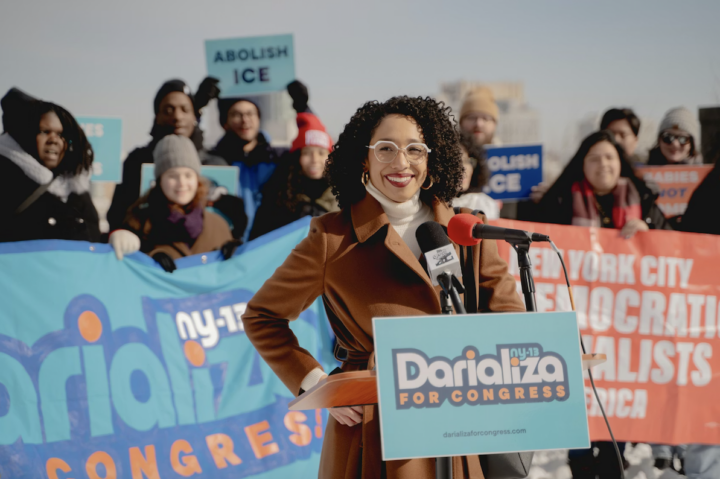
CAMPAIGN PAGE
Darializa Avila Chevalier
As Darializa Avila Chevalier mounts an insurgent campaign against Rep. Adriano Espaillat (D-NY) in Upper Manhattan, the democratic socialist has faced mounting scrutiny over past controversial posts that have surfaced in recent days, raising questions about whether the negative publicity will blunt her chances in the June 23 primary election.
While she has struggled to defend her posts when pressed by reporters, some strategists suggested that her incendiary views could get overlooked amid a national political landscape favoring extreme, anti-establishment sentiments now fueling the rise of several far-left candidates in Democratic primaries around the country.
“It seems to not matter in a way that it would have been a deal-breaker 15 or 20 years ago,” Chris Coffey, a Democratic strategist in New York City who is not involved in the primary, told Jewish Insider on Monday. “This race feels like our new outlier, where some of the things she’s said are so far beyond the pale.”
Avila Chevalier, endorsed by the Democratic Socialists of America and New York City Mayor Zohran Mamdani, has drawn backlash for a series of now-deleted social media posts in which she called for abolishing the police, voiced anti-American and pro-Russian sentiments, shared a post saying “Israel doesn’t exist,” and harshly criticized former President Joe Biden as well as former Vice President Kamala Harris, among other inflammatory comments that recently surfaced.
The 32-year-old Afro-Latina community organizer has been at pains to explain her remarks, which she has largely refused to disavow, alternately accusing Espaillat of “relitigating” old social media posts, saying that her “understanding of how to approach the systems has grown” and claiming that she is “not sure about the context” of some comments — including one arguing the United States had “bullied” Russia into attacking Ukraine.
Avila Chevalier, who helped lead anti-Israel protests at Columbia University, also showed no regret about her decision to join a widely condemned pro-Hamas rally in Times Square just a day after the terror group’s Oct. 7, 2023, attacks on Israel.
Despite the range of offensive posts, some strategists speculated that Avila Chevalier’s statements specifically calling Biden a “rapist” and “war criminal” and dismissing Harris with an expletive could dent her ascendant campaign in vote-rich Harlem — where older Black constituents would be most likely to find such views off-putting.
“The Biden-Harris tweets could be very damaging to her in Harlem, where the race will be won and lost,” Hank Sheinkopf, a Democratic strategist who is not affiliated with the race, told JI.
Still, he added, “There are a lot of people who will say she’s right.”
The primary challenge appears to have crept up on Espaillat, who has found himself playing defense in the closing stretch of the campaign, amid a surge of outside spending hoping to boost his reelection bid.
While some pro-Espaillat messaging has sought to highlight Avila Chevalier’s past posts, one strategist familiar with the congressman’s campaign, who was granted anonymity to speak candidly, said the congressman’s team broke an unwritten rule of political messaging when it went negative in a recent attack ad that ripped her remarks about Biden and Harris.
Typically, outside groups are tasked with such messaging, unless a campaign “really, really has to,” the strategist, who interpreted the Espaillat ad as a sign of weakness, said of the decision.
“It was an emotional, really irrational move from the campaign to put it out,” the political strategist told JI. “They’re being reactive and not proactive.”
The Latino Victory Fund and BOLD PAC, the political arm of the Congressional Hispanic Caucus chaired by Espaillat, have spent heavily in the race to bolster the endangered incumbent.
A Democratic operative familiar with the primary also indicated to JI that Espaillat could count on a separate seven-figure independent expenditure to boost his bid, but with early voting set to begin this weekend, the status of that spending was unclear as of Monday afternoon.
Justice Democrats, a far-left group that works to unseat incumbents, and American Priorities, a new anti-Israel super PAC created to counter AIPAC, have likewise invested aggressively on behalf of Avila Chevalier — even as she has condemned outside spending on her campaign site.
While she has accused Espaillat of being beholden to pro-Israel donors linked to AIPAC, the group’s super PAC is not expected to engage in the primary with just two weeks remaining.
Some strategists privately expressed surprise that Mamdani, who had reportedly promised to endorse Espaillat, backed his opponent, while raising doubts about whether the mayor and his team had properly vetted her online history.
Unlike Mamdani, who distanced himself during his mayoral bid from past social media comments calling to defund the police, Avila Chevalier has, for her part, strained to formulate a compelling argument for why she has evolved, her critics have noted.
Mamdani’s decision to wade into the closely watched race for Espaillat’s seat represents a major risk to his political credibility, as he also backs a challenger to a pro-Israel House incumbent while throwing support behind a DSA-aligned candidate running against the favored successor to an outgoing congresswoman in a pair of bitterly fought primary matchups.
But while those candidates — Brad Lander and Claire Valdez, respectively — are seen as likely to win, the results of Avila Chevalier’s race are more uncertain, observers note.
In light of her numerous problematic posts, Coffey, the strategist, said the outcome ultimately will show whether voters view such sentiments as disqualifying — especially among younger constituents most likely to back her campaign.
“We’re going to find out whether people care or not,” he told JI.
A top donor to American Priorities PAC, which has backed far-left Democratic candidates, has donated to Marjorie Taylor Greene, Thomas Massie and Greg Abbott

Drew Angerer/Getty Images
Rep. Marjorie Taylor Greene (R-GA) departs a closed-door GOP caucus meeting at the U.S. Capitol January 10, 2023 in Washington, DC.
A recently launched super PAC positioning itself as a progressive counterweight to AIPAC’s involvement in Democratic primary elections has accepted financial contributions from a number of individuals who have also donated to Republicans, campaign filings show.
The financial support for American Priorities PAC, created in February, has come even as AIPAC and its super PAC have faced backlash from critics on the left who accuse it of meddling in Democratic primaries as a sort of front group for GOP-funded attacks against anti-Israel candidates in safely blue districts.
AIPAC’s super PAC, United Democracy Project, has taken far more from GOP-linked donors than its new rival, American Priorities — now funded largely by a handful of deep-pocketed contributors. UDP supports both Democrats and Republicans.
But American Priorities, which has thus far only supported Democrats and pledged to spend at least $10 million during the midterms, has not acknowledged that the source of some of its funding is from donors who have at the same time given to GOP candidates and groups — and more extensively than previously reported.
A spokesperson for American Priorities did not respond to a request for comment about whether the group is comfortable with such financial support and how it views the donations in relation to AIPAC’s own pro-Israel fundraising.
American Priorities, which has raised $5.4 million thus far, has sought to mimic AIPAC’s playbook of spending aggressively in progressive congressional districts to elect its preferred primary candidates. The new group is investing significantly in New Jersey’s 12th District race on Tuesday on behalf of Adam Hamawy — a plastic surgeon who opposes all U.S. aid to Israel and whose past ties to a convicted terrorist mastermind as well as a now-shuttered al-Qaida-linked group in Bosnia have drawn scrutiny in the final weeks of the election.
The super PAC has vowed to spend around $2 million by the end of the crowded primary — where Hamawy has been surging — and it recently reached $500,000 in another race in California boosting Randy Villegas, a progressive critic of Israel running for a red-leaning seat held by Rep. David Valadao (R-CA), who is endorsed by AIPAC.
Those investments have been fueled, most notably, by at least $525,000 from Hussein Mahrouq, a Texas businessman who has backed far-right Republicans including the recently ousted Rep. Thomas Massie (R-KY) and former Rep. Marjorie Taylor Greene (R-GA), both of whom have been accused of using antisemitic tropes about Jews and Israel.
In 2024, Mahrouq, one of the top contributors to American Priorities, also gave $100,000 to boost Texas Republican Gov. Greg Abbott and donated $25,000 to Republican Lt. Gov. Dan Patrick, state filings show.
Meanwhile, American Priorities accepted a $5,000 contribution from Omar Khawaja, a personal injury lawyer in Houston, who in March donated to a super PAC supporting hard-right Texas Attorney General Ken Paxton, who won last week’s GOP primary run-off in the state’s closely watched Senate race. Khawaja has also contributed to a Republican House candidate in Texas as well as Massie, who is among the most vocal critics of Israel in the GOP congressional caucus, according to filings.
Moiz Ali, an entrepreneur and investor in Texas who gave $150,000 to American Priorities in March, also donated to Massie last fall — shortly before he drew a challenger, Ed Gallrein, who defeated the libertarian congressman earlier this month with the backing of President Donald Trump. AIPAC also spent heavily against Massie, a top target of the group this cycle.
Another American Priorities donor, Nadeem Baig, a gastroenterologist in New Jersey who gave $50,000, has previously contributed to former Sen. Ben Sasse (R-NE), former Rep. Leonard Lance (R-NJ) and Rep. Darin LaHood (R-IL), all of whom have been known as staunch supporters of Israel. LaHood is backed by AIPAC, while Lance served as a co-chair of the House Republican Israel Caucus before he was unseated in 2018.
In a statement shared with Jewish Insider by a spokesperson for Mahrouq, he called himself “an independent businessman, not affiliated with any political party,” and said that his “support has always been guided by what I believe is in the best interest of the United States, its economic strength, security and long-term prosperity.”
“I have supported individuals and organizations across the political spectrum when their positions align with those priorities,” he continued. “My focus is not partisan politics, but rather promoting policies that strengthen America, encourage opportunity, and serve the interests of American citizens. I believe decisions affecting our country should be made based on what is best for the United States, independent of pressure from any foreign government, foreign interest group or partisan agenda.”
Mahrouq was the only American Priorities donor reached for comment by JI who shared a response.
The contributions to Massie and Greene in particular suggest anti-Israel sentiment can transcend partisan boundaries, in the way pro-Israel advocacy has been seen as a bipartisan effort connecting Democrats and Republicans.
Still, American Priorities has only backed Democrats, while AIPAC has championed bipartisan advocacy — even as it has stirred controversy over its engagement in Democratic races that show the group is navigating mounting hostility toward Israel from candidates and elected officials.
American Priorities is led by Hannah Fertig, a strategist with ties to Sen. Bernie Sanders (I-VT) and the far-left group Justice Democrats, which also gave to the super PAC and is likewise backing Hamawy in his primary on Tuesday. “We want our foreign policy views to reflect where the Democratic base has moved, particularly on Gaza, and on unconditional U.S. military to Israel,” Fertig told Semafor in March following the group’s launch. “We’re seeing this as a generational inflection point, and we launched because there’s a huge gap in the progressive spending ecosystem.”
Daniel Moraff also recruited Rep. Summer Lee, a leading anti-Israel Democrat, to pursue her political career
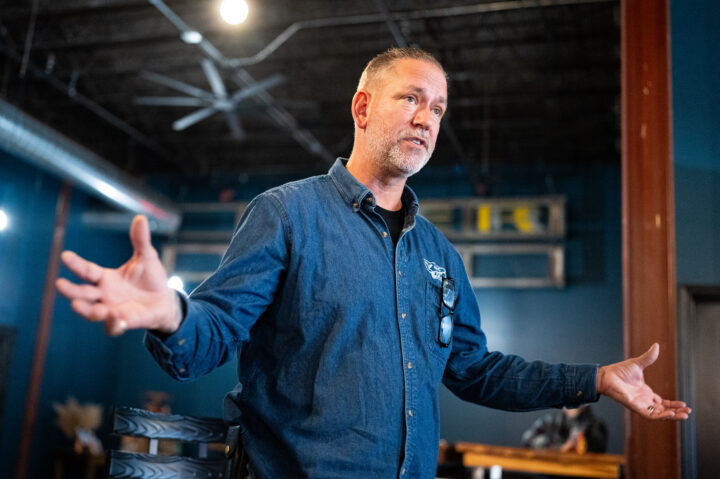
Bill Clark/CQ-Roll Call, Inc via Getty Images
Independent Senate candidate Dan Osborn speaks during his campaign stop at the in O'Neill, Neb., on Monday, October 14, 2024.
A former Democratic Socialists of America organizer has been a top advisor to independent Nebraska Senate candidate Dan Osborn and Democratic Maine Senate candidate Graham Platner.
Daniel Moraff was a longtime DSA member, including acting as a local and national DSA organizer and leader in the mid-to-late 2010s, though he said his membership lapsed in 2019 because his local chapter became too focused on internal matters. He argued in a now-deleted 2017 article that the best way for socialists to gain political power and achieve elective office would be by running in Democratic primaries.
He subsequently recruited now-Rep. Summer Lee (D-PA), among the farthest-left and most anti-Israel members of the House, to run for the Pennsylvania Statehouse, and served as her campaign manager.
Moraff reportedly helped recruit Osborn into the Nebraska Senate race in 2024 and has continued to serve as a consultant for Osborn. Campaign disclosures show that Osborn’s wife, Megan Osborn, has received compensation from Moraff’s firm for work on her husband’s current Senate campaign.
Osborn has cultivated an image as a heterodox populist, seeking to appeal to moderate and Republican voters, by adopting center-right views on border security and government spending while maintaining progressive views on abortion rights and unions.
Osborn was also recently endorsed by the anti-Israel group A New Policy.
“Daniel Moraff has advised candidates across the country who seek to give the working class a voice in our politics. The fact those candidates have diverse backgrounds and beliefs is not a story,” an Osborn spokesperson said in a statement to Jewish Insider.
Amid a reshuffle of Platner’s campaign — he shed staff as revelations emerged about his tattoo of a Nazi symbol and extreme prior social media posts — Moraff reportedly served as Platner’s de-facto campaign manager.
Platner’s campaign did not respond to a request for comment, nor did Moraff personally.
In addition to his DSA ties, as a Brown University student in 2012, Moraff was an undergraduate representative on an advisory committee on investment practices, responsible for “dialogue” with Brown Students for Justice in Palestine over its push for Brown to divest from Israeli-linked companies.
The committee, with Moraff as a signatory, said in a letter to Brown’s president that “the documented abuses of Palestinian citizens by the Israeli Defense Force in the Occupied Territories are deeply troubling” and “Israel is indisputably engaged in ongoing systemic abuses of human rights and violations of international law, as documented by the United Nations Human Rights Council and the International Court of Justice.”
The committee said that Brown University may be invested “in firms whose products and services are being used to commit human rights violations in Palestine” and recommended further discussions over divestment.
The vote was the latest defeat by anti-Israel activists within the Democratic National Committee
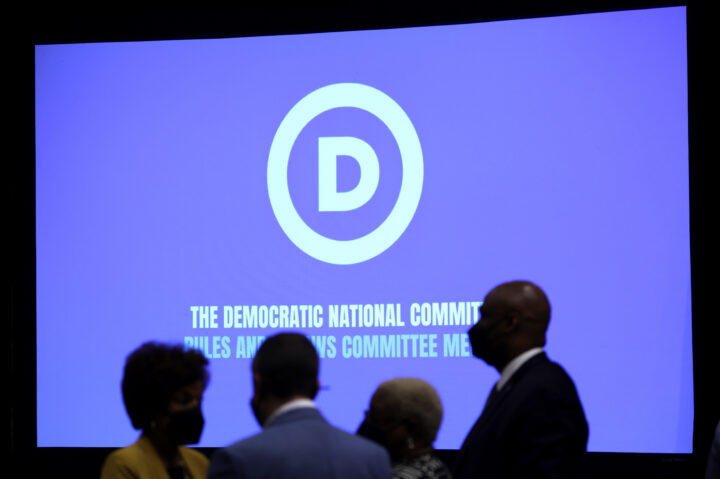
Alex Wong/Getty Images
Committee members wait for the beginning of a meeting of the Democratic National Committee’s Rules and Bylaw Committee in Washington, DC
Democratic Party activists on Thursday voted to reject a measure that criticized the involvement of AIPAC in Democratic primaries and the American political system.
The resolution was debated during a meeting of the Democratic National Committee’s Rules Committee at the DNC’s New Orleans meeting. Committee members were considering new policy resolutions, including one introduced by a Florida activist that took aim at AIPAC and the group’s “undue influence over democratic debate and policymaking.” It was voted down in a voice vote.
“The DNC made clear today that all Democrats, including millions who are AIPAC members, have the right to participate fully in the democratic process,” AIPAC spokesperson Deryn Sousa told Jewish Insider.
Jewish Democratic advocates who were in the meeting room praised the decision.
“We’re pleased that the resolution that wrongly singled out AIPAC was defeated, and that the other anti-Israel resolutions failed to move forward. These measures would be a gift to Republicans, would further fracture our party and do nothing to bring Israelis and Palestinians closer to peace,” Democratic Majority for Israel CEO Brian Romick, who attended the meeting, told JI after the vote.
Halie Soifer, the CEO of the Jewish Democratic Council of America, said the group agrees with the goal of getting dark money out of politics but that AIPAC should not be targeted explicitly.
“We agree with the rejection of dark money in politics — a topic covered in another more expansive resolution adopted by the committee — but also believe that singling out any individual organization is both unproductive and unnecessarily divisive,” Soifer, who also attended the meeting, told JI.
Earlier in the meeting, the committee voted to support a measure “condemning the influence of dark money in the 2026 Democratic primary elections” that called out the artificial intelligence and cryptocurrency industries.
The vote by the DNC’s resolutions committee comes as the Democratic Party faces growing internal strife about its long-standing support for the U.S.-Israel relationship, as some party activists seek to push the group to the left. A new Pew Research Center poll released this week revealed that 80% of Democrats and Democratic-leaning independents have an unfavorable view of Israel — an increase from 69% who said the same last year.
Two other resolutions that touched on Israel-related issues were referred to a working group on the Middle East that DNC Chair Ken Martin created last summer to help smooth over some of the party’s fissures on the Israeli-Palestinian conflict.
One of these referred to Israel’s actions in Gaza as a genocide and called for conditioning U.S. military aid to Israel, and the other called for de-escalation in Iran and Gaza. A third resolution on the Middle East, condemning the U.S. missile strike that hit a girls’ school in Iran and killed at least 165 people, passed.
Pro-Israel candidates who received backing from AIPAC or AIPAC-aligned groups won two of the four targeted Democratic primaries in Illinois
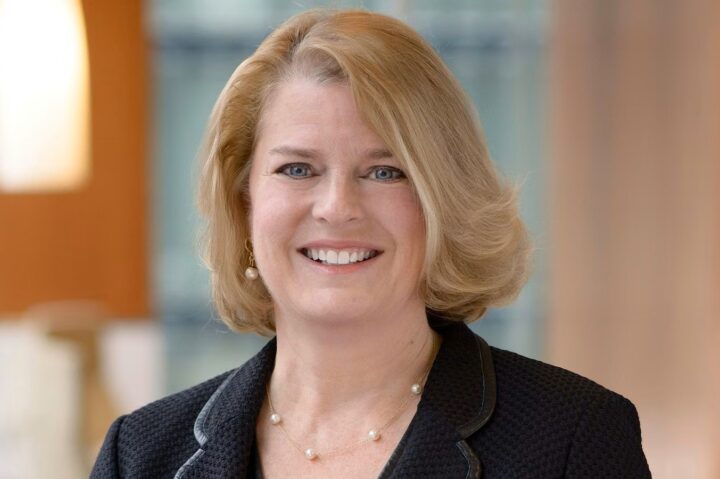
Melissa Bean campaign page
Former Rep. Melissa Bean (D-IL)
Reports of the demise of AIPAC’s political clout in Democratic primaries, it turned out, were greatly exaggerated.
Pro-Israel candidates who received backing from AIPAC or AIPAC-aligned groups won two of the four targeted Democratic primaries in Illinois — and helped block all the Squad-aligned far-left candidates from winning nominations in all of the races.
It was a respectable, if not dominant showing, but one consistent with making an impact with the $22 million pro-Israel groups spent in the four open congressional races.
Former Rep. Melissa Bean (D-IL) held off a credible challenge from anti-Israel activist and businessman Junaid Ahmed, and looks like a lock to hold onto the suburban district as long as she wants.
Cook County Commissioner Donna Miller, who benefited from about $4.5 million in outside spending from a pro-Israel group, comfortably outdistanced former Rep. Jesse Jackson Jr. (D-IL) by a double-digit margin (41-29%) — even though Jackson entered the race as the favorite. The anti-Israel candidate in the field, state Sen. Robert Peters, finished in a distant third place, with only 12% of the vote.
AIPAC’s biggest setback came in the affluent Chicago lakefront seat of retiring Rep. Jan Schakowsky (D-IL), where Evanston Mayor Daniel Biss prevailed over pro-Israel state Sen. Laura Fine despite facing a barrage of attacks from an AIPAC-aligned group. But pro-Israel voters also dodged the worst-case outcome, with anti-Israel social media influencer Kat Abughazaleh finishing in second, and trailing badly in the district’s suburban precincts.
All told, Biss won with 30% of the vote, Abughazaleh finished with 26%, and Fine tallied 20%.
And despite AIPAC’s super PAC spending nearly $5 million in positive ads to boost Chicago city Treasurer Melissa Conyears-Ervin, state Rep. La Shawn Ford narrowly prevailed in the crowded primary, 24-20%. Ford was backed by retiring Rep. Danny Davis (D-IL), with the congressman’s political machine ultimately making a bigger difference than the money spent on behalf of Conyears-Ervin.
Anthony Driver, Jr. and Kina Collins, the two candidates running on anti-Israel platforms, lagged well behind in third and fourth place, tallying a combined 20% of the vote.
AIPAC managed to block all six of the far-left candidates it viewed as potential Squad-aligned lawmakers, which a source close to AIPAC told JI was the group’s top goal in the home stretch of the campaign — once it backed off of anti-Biss attacks that failed to dislodge him as the front-runner and Abughazaleh closed in in second place. AIPAC is treating that as a win as well.
One way of looking at the Illinois results from a pro-Israel perspective is to consider whether the representation of any of the seats will be more or less favorable as a result of Tuesday’s results.
Biss is a self-described “progressive Zionist” in the mold of Schakowsky, another Jewish left-winger who gradually evolved into a reliable critic of Israel as progressive politics surrounding the Middle East shifted. Both Schakowsky and Biss have been embraced by J Street. Call it a wash.
The retiring Danny Davis had a fairly rocky relationship with Chicago’s Jewish community, and supported placing restrictions on aid to Israel. If his handpicked successor Ford follows in his footsteps (and he said he wouldn’t commit to unconditional Israel aid), there won’t be any change in representation — for better or worse. (J Street also endorsed Ford’s candidacy.)
But in Illinois’ 2nd District, Miller will likely be a decidedly more favorable vote than Rep. Robin Kelly (D-IL), who campaigned as the candidate in the state’s Democratic primary most critical of Israel. That counts as a likely upgrade for pro-Israel forces in Chicago.
And Bean was one of the most moderate Democrats during her first stint in Congress, compiling a reliably pro-Israel record. She’s likely to maintain the same mainstream voting record that Rep. Raja Krishnamoorthi (D-IL) held during his House tenure.
So all told, the Illinois delegation is likely to be slightly more pro-Israel next year as a result of this year’s primaries. Given the tough headwinds AIPAC is facing, that’s not a small accomplishment — aided by the successful fundraising of its super PAC.
And even though pro-Israel groups didn’t weigh in on the Illinois Senate race, AIPAC sounded a positive note on Illinois Lt. Gov. Juliana Stratton’s victory over Kelly, whose recent actions, it said, “undermined the U.S.-Israel alliance.” Stratton’s leading opponent was Krishnamoorthi, whose record was viewed as the most pro-Israel of the three leading candidates.
Given that outgoing Sen. Dick Durbin (D-IL) has become a vocal critic of Israel, if Stratton is more aligned with AIPAC, that would also be an improvement for pro-Israel advocates in the state, or at minimum a wash.
Stratton’s win was also a big victory for Gov. JB Pritzker, who spent significant political and financial capital on behalf of his running mate in preparation for a potential presidential campaign — and came out a winner.
In the end, pro-Israel forces can be reassured that they held their own despite the rough political environment, defeated all of the most virulently anti-Israel candidates, and began to repair their image from the New Jersey blunder that set the cycle on a down note. Five states down, 45 to go.
Democrats will be choosing whether to nominate moderate-minded lawmakers, or elevate potential future members of the far-left Squad

Scott Olson/Getty Images
Illinois Democratic Senate candidate Lt. Governor Juliana Stratton speaks to voters during a campaign stop on March 13, 2026 in Chicago, Illinois.
After months of an increasingly bitter campaign characterized by tens of millions in outside spending and increasingly heated debate over Israel policy, Democrats in the Chicagoland area head to the polls on Tuesday, with the outcome of the primaries potentially reshaping the political landscape in Chicago, one of the most Jewish cities in the country.
The races are also set to be a test of AIPAC and the pro-Israel community’s political strategy and heft. There are four House races that pro-Israel groups are reportedly engaged in, and their success rate in those primaries will be an early indicator of whether resources can overcome the shifting winds in a party that is becoming increasingly hostile to the Jewish state.
Broadly, a source close to AIPAC said, the group’s main goal in the primaries is to prevent six candidates — state Sen. Robert Peters in the 2nd District, activist Kina Collins in the 7th, activist Junaid Ahmed and Hanover Park Trustee Yasmeen Bankole in the 8th and influencer Kat Abughazaleh and Skokie School Board member Bushra Amiwala in the 9th — from being elected, as it believes those candidates would be aligned with the far-left ‘Squad’ on Israel policy issues if elected to Congress.
That’s an apparent change in strategy from the recent special election in New Jersey’s 11th Congressional District, where spending by the AIPAC-affiliated United Democracy Project against a relative moderate who had expressed an openness to conditioning aid to Israel helped elect a far-left candidate with more hostile views.
Here’s what we’re watching, and where the races stand.
Illinois Senate
This race appears to be effectively a two-way contest between Rep. Raja Krishnamoorthi (D-IL) and Lt. Gov. Juliana Stratton. Rep. Robin Kelly (D-IL), who has been carving out the left-most lane (including on Israel policy), has been trailing further behind in most polling and will have the hardest climb to victory, despite backing from the Congressional Black Caucus.
Krishnamoorthi, who has taken the most moderate and most pro-Israel posture, would likely benefit most from Stratton and Kelly splitting the Black and progressive Democratic vote in the state. A super PAC backing Krishnamoorthi has taken to promoting both him and Kelly while attacking Stratton.
Some recent polling has shown Stratton, who has been trying to balance criticism of Israel while also maintaining support within the Jewish community, closing in on Krishnamoorthi in the final stretch of the race.
Though Krishnamoorthi has been the most prolific fundraiser in the race, Stratton has benefited from more than $13 million in spending by the Illinois Future PAC, backed by Illinois Gov. J.B. Pritzker and his family, Stratton’s main political backer.
Stratton has hit Krishnamoorthi as overly supportive of Immigration and Customs Enforcement, in part by pointing to his vote in support of a resolution condemning the attack on an Israeli hostage awareness march in Boulder, Colo., last year, which also included language thanking ICE.
Krishnamoorthi also took a hit last week with a story that described him as mistreating employees as he amassed his war chest for this Senate run. Meanwhile, Stratton’s campaign is touting what it says is a deathbed endorsement by Rev. Jesse Jackson, who died last month.
2nd Congressional District
Despite poor fundraising as compared to others in the field and a term in prison for a corruption scandal, former Rep. Jesse Jackson Jr. (D-IL) has long been the favorite to win the 2nd Congressional District seat, an effort likely aided by national attention over his father’s death.
Affordable Chicago Now, a new super PAC reported to be supported by pro-Israel backers, has been boosting Cook County Commissioner Donna Miller, putting $4.3 million behind her campaign.
An AI industry-linked super PAC has stepped in to help boost Jackson’s chances. Miller has also faced attacks from the Working Families Party for receiving pro-Israel support.
Peters has been trying to carve out the far-left lane in the district, including by taking a strongly critical line toward Israel and AIPAC, though Jewish Insider reported that he had previously reached out to the group early in his campaign, offering a very different set of policy priorities.
7th Congressional District
The AIPAC-linked United Democracy Project and a cryptocurrency industry group have been supporting Chicago Treasurer Melissa Conyears-Ervin in the race, helping push her toward the top of the field. UDP has spent more than $5 million in the race. Conyears-Ervin has also received support from the Chicago Teachers’ Union, which has been hostile toward Israel.
Other notable candidates include state Rep. LaShawn Ford, who is Rep. Danny Davis’ (D-IL) preferred successor, and has taken significant heat from the crypto-backed Fairshake.
The progressive Collins, who has long held hostile stances toward Israel, is making her third run at the seat, but attention from progressive and anti-Israel interests has also turned toward Anthony Driver Jr., a union organizer who has seen support from outside spending by an SEIU-linked group, among other progressive candidates. That group has spent more than $550,000 hitting Conyears-Ervin, in part for receiving pro-Israel support.
Jason Friedman, a Jewish real estate developer and longtime Jewish federation leader who has taken a largely pro-Israel stance, has led the field in fundraising, but it’s unclear how he might fare in a historically Black district. UDP’s ads have also directly responded to Friedman’s criticism of Conyears-Ervin’s past corruption issues, attacking Friedman.
8th Congressional District
Former Rep. Melissa Bean (D-IL) is seen as the strong front-runner in the race, and is the most likely victory for pro-Israel voters in the Chicagoland House primaries.
By contrast, Ahmed has consolidated support among the progressive left and has staked out an anti-Israel stance on the trail. A poll released Sunday showed Bean in the lead, but Ahmed closing in, just five points behind.
Bean has been backed by pro-Israel groups, the AI industry and cryptocurrency advocates. Meanwhile, Justice Democrats and the anti-Israel IMEU Policy Project have been spending in the district in an attempt to undercut Bean and boost Ahmed.
Chicago Progressive Partnership, a group rumored to be linked to AIPAC, has recently been hitting Ahmed from the left, putting $664,000 behind that effort.
Other candidates in the race include Bankole, Cook County Commissioner Kevin Morrison and entrepreneur Neil Khot. Khot has led the field in fundraising with around $2 million, though a majority of that has been self-funded.
9th Congressional District
The 9th District seat has become the most watched and most bitter of the four House primaries in the Chicago area — with Middle East policy and pro-Israel funding becoming one of the most contentious issues, to the extent that those issues dominated a recent televised debate.
The top tier of candidates includes Evanston Mayor Daniel Biss, far-left activist and influencer Abughazaleh and state Sen. Laura Fine. Fine has charted out the most moderate and pro-Israel stance of the three, while Biss has leaned toward a progressive posture critical of Israel and Abughazaleh has taken an even harder anti-Israel line.
Though Biss and Fine at one point appeared to be the top candidates, recent polling has shown Fine falling behind and Abughazaleh closing the gap with Biss, who has consistently led in polling.
Abughazaleh finished out the race as the top fundraiser, pulling in $3.4 million, followed by Fine and Biss neck-and-neck at $2.6 and $2.5 million, respectively.
Elect Chicago Women, reportedly backed by pro-Israel donors, has put $5.8 million into supporting Fine and attacking Biss, but pro-Israel groups appear to have shifted their strategy in the final weeks of the campaign amid Abughazaleh’s surge.
Attacks on Biss have tapered off, while Chicago Progressive Partnership has been hammering Abughazaleh with more than $1.2 million in spending in just a few weeks. Most recently, the group has also been boosting Skokie School Board member Bushra Amiwala, in an apparent attempt to siphon off some of Abughazaleh’s base.
Meanwhile, Rep. Rashida Tlaib (D-MI) and actor and anti-Israel activist Mark Ruffalo offered endorsements for Abughazaleh over the weekend.
Though the pro-Israel community’s strategy in this race has been different than the one it took in New Jersey’s 11th Congressional District, where attacks on a liberal candidate helped elect another candidate from the far-left, there’s been longstanding fear among some in the local Jewish community that outside groups’ concerted anti-Biss attacks could end up electing the far-left Abughazaleh.
JI found that Biss reached out to AIPAC before formally announcing his campaign, and that his stances on Israel policy have also evolved significantly since he entered the race, including supporting efforts to cut off weapons transfers to the Jewish state.
Biss also faced grilling from the House Education Committee over his decision to withhold police support when Northwestern University sought to clear an anti-Israel encampment on campus in 2024.
J Street has spent around $150,000 boosting Biss.
Recent rhetoric by Rep. Dan Goldman and California state Sen. Scott Wieneris a shift from their recent comments about the U.S.-Israel relationship
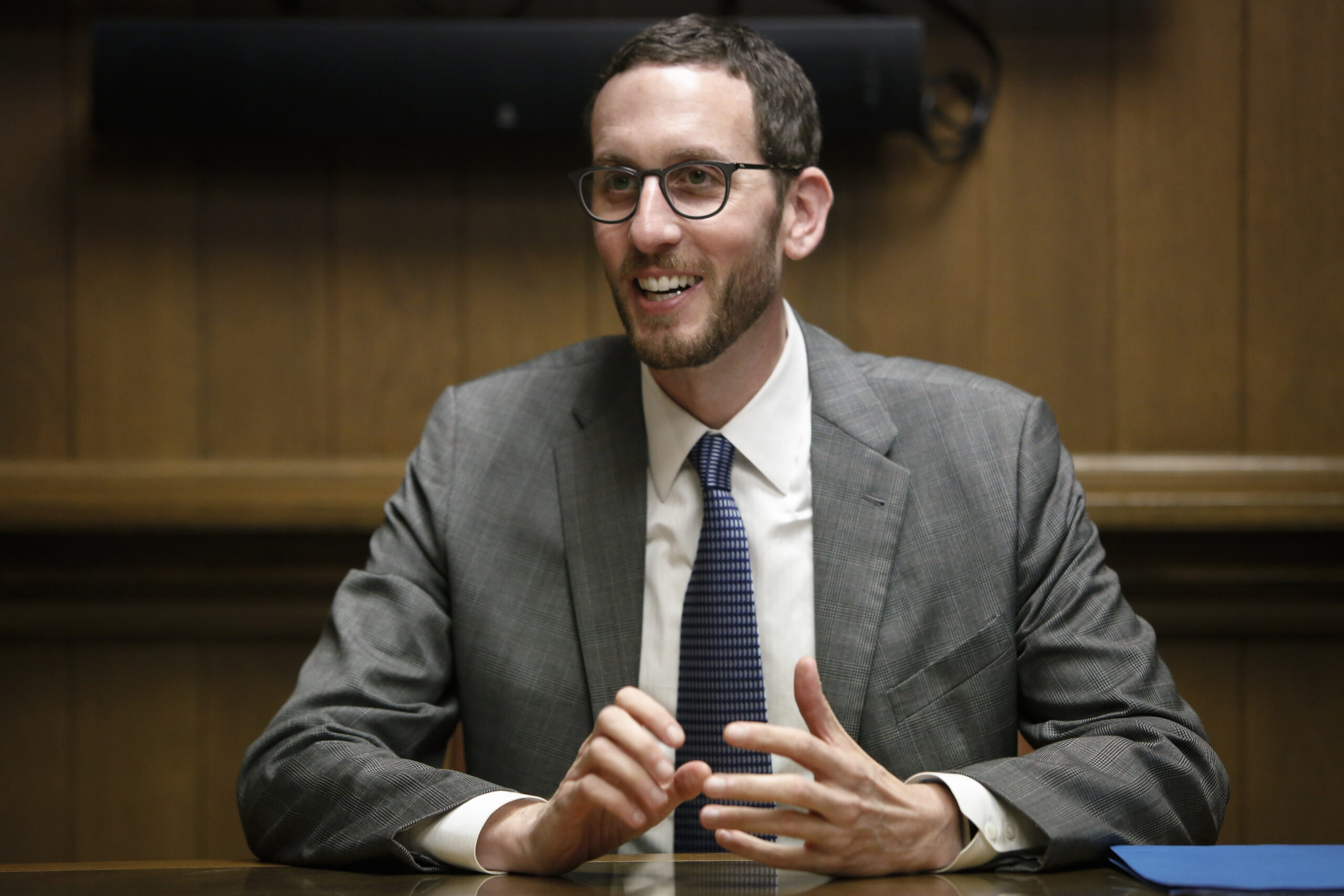
Russell Yip/San Francisco Chronicle via Getty Images
California State Senator Scott Wiener addresses the SF Chronicle Editorial Board on Thursday, Jan. 18, 2018 in San Francisco, Calif.
As another election year gets underway, two liberal Jewish politicians offered a window last week into just how fraught the issue of Israel has become in some Democratic primaries — and how even pushing back against claims that Israel is committing genocide is inviting intraparty political backlash, at least in the deepest-blue parts of the country.
Rep. Dan Goldman (D-NY) faces a primary challenge from the left in Brad Lander, the former New York City comptroller endorsed by Mayor Zohran Mamdani. When Goldman formally launched his reelection campaign last week, he was asked by a reporter if he believes Israel has committed genocide in Gaza. Goldman equivocated — a notable shift for a lawmaker who in February 2024 signed onto a letter calling claims of genocide in Gaza “false.”
“I think there needs to be a serious investigation into what went on in Gaza during the war,” Goldman said. “What you call it is I think more of a legal matter, in my view, but what we all can agree on is that the destruction [in Gaza] was unconscionable and devastating and I am really grateful that it is over and the hostages are out and we can move forward.” (Lander, in contrast, has accused Israel of genocide.)
Across the country, in San Francisco, California state Sen. Scott Wiener, a Democrat running to replace Rep. Nancy Pelosi (D-CA), was asked the same question at a candidate forum. His two primary opponents — Connie Chan, a member of the San Francisco Board of Supervisors, and Saikat Chakrabarti, former chief of staff to Rep. Alexandria Ocasio-Cortez (D-NY) — both raised placards that said “yes.” Wiener did not raise either the “yes” or “no” placard.
Wiener followed up with a post on X claiming that the Israeli-Palestinian conflict “demands more discussion and certainly more time,” which, after receiving blowback on social media, he subsequently deleted. He then backtracked completely: On Sunday afternoon, Wiener posted a video to social media stating that he’s “stopped short of calling [Israel’s actions in Gaza] a genocide, but I can’t anymore.”
“To those of you who saw the debate clip from last week,” he said in the video, “I want to clarify that I do believe Israel has committed genocide in Gaza and I want to explain why I hesitated at the debate. For the past two years, I have harshly opposed Israel’s escalations in Gaza and I’ve used phrases like ‘total destruction’ and ‘catastrophic levels of death’ and ‘moral stain,’ but I haven’t used the word genocide.” He went on to explain that, for Jews, associating the word “genocide” with Israel “is deeply painful and frankly traumatic.” But “we all have eyes,” he said, “and to me the Israeli government has tried to destroy Gaza and to push Palestinians out, and that qualifies as genocide.”
These Democrats’ latest rhetoric is a shift from their recent comments about the U.S.-Israel relationship, which they have historically supported, though with caveats about the current Israeli government.
“I have a very strong support for the State of Israel and its right to exist as a Jewish state, the only Jewish state in the world,” Goldman said last week, “But I have voiced my serious opposition to the Israeli government.” Wiener told Jewish Insider in October that the U.S.-Israel relationship “is incredibly important, and the U.S. should continue to support Israel’s defense,” but that Israel’s current ruling coalition is “horrific” and that he is in favor of withholding offensive weapons to Israel because of its “extremist, messianic government.”
The about-face from Wiener, along with the more incremental shift in tone from Goldman, underscores signs that the two Democrats are trying to pander to a party base that, at least in these deep-blue urban districts, has turned against the Jewish state.
The candidates are running in two of the most progressive districts in the country, in New York City and San Francisco. Despite his rhetorical manuevering, Goldman is clearly the most pro-Israel candidate in his race (and has continued to underscore his support for the Jewish state as a central part of his faith), while Wiener’s challengers are even more hostile to Israel than he is.
All told, despite a monthslong ceasefire in Gaza, the “genocide” debate looks likely to remain a factor in many Democratic primaries, challenging even ostensibly pro-Israel Democrats on how to maintain their principles against the creeping hostility towards Israel among the party base.
Please log in if you already have a subscription, or subscribe to access the latest updates.
 Continue with Google

 Continue with Apple