






























































Netanyahu rising in weekend polls
Both Netanyahu’s bloc and the opposition fall short of the votes necessary to form a coalition in most polls
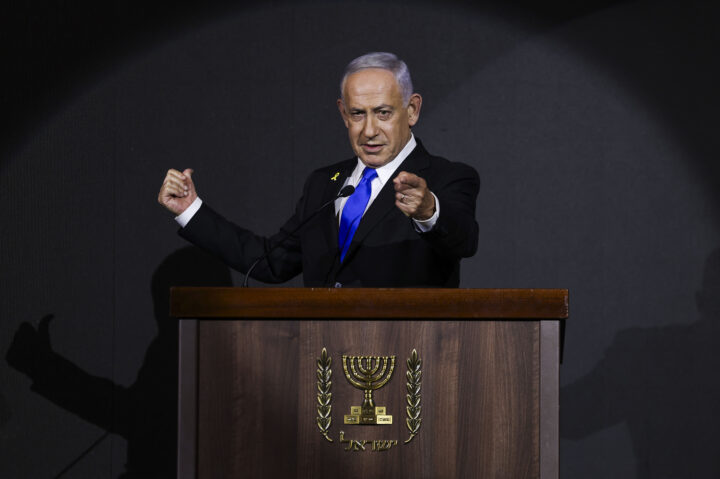
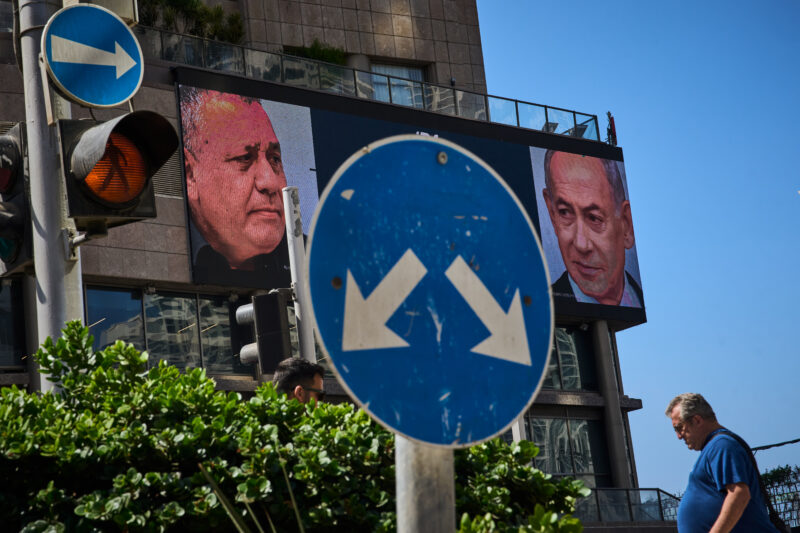
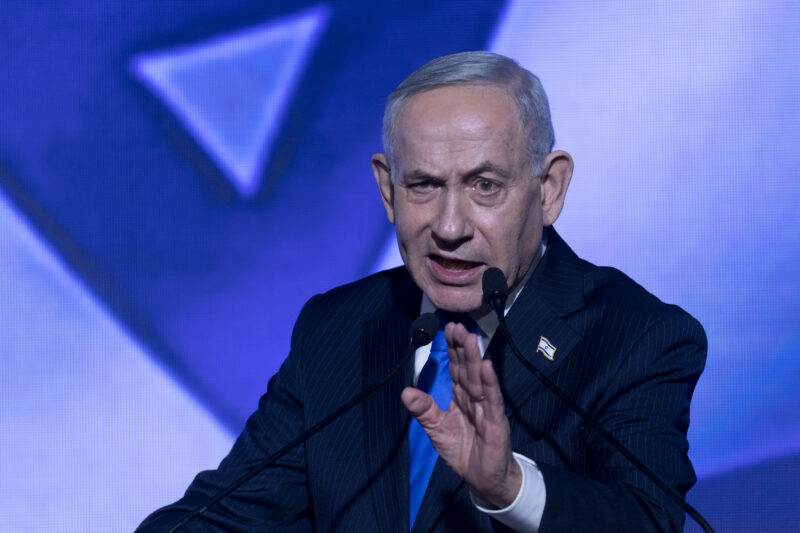
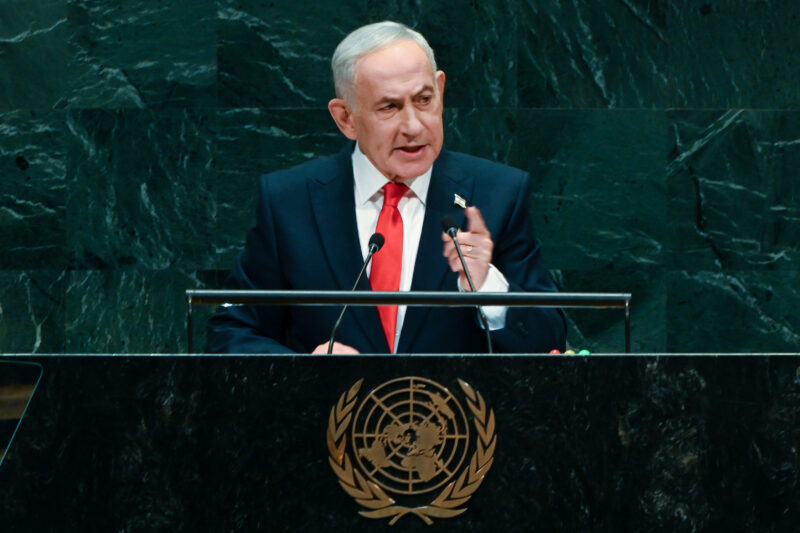
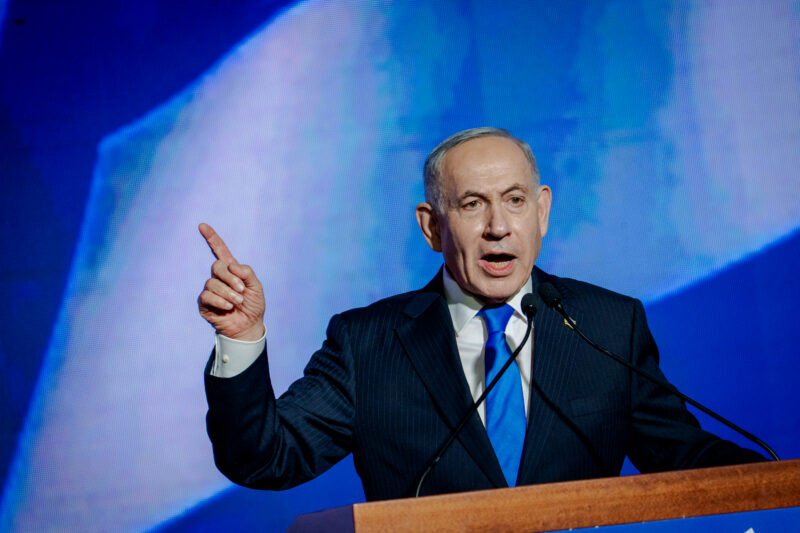
Israeli Prime Minister Benjamin Netanyahu (Photo by Ronen Zvulun / POOL / AFP) (Photo by RONEN ZVULUN/POOL/AFP via Getty Images)


 Add JewishInsider on Google
The bloc of political parties backing Israeli Prime Minister Benjamin Netanyahu had its best showing of the campaign ahead of the Oct. 27 Knesset election.
In eight polls published by Israeli media outlets in the last week, the pro-Netanyahu bloc led in four and tied in two, while the opposition bloc led by Gadi Eisenkot’s Yashar party, won in two. In all polls, the bloc sizes are very close, except for two polls in which Netanyahu’s bloc leads by 12 and 18 seats, respectively.
The average of the eight polls puts Netanyahu’s bloc at 55 seats and the Eisenkot bloc at 51. Without the outlier polls, the average for Netanyahu’s bloc drops to 52 and the opposition bloc leads with 53 seats.
In a poll in the Hebrew daily Ma’ariv, taken by veteran pollster Menachem Lazar, the Netanyahu bloc tied with the center-left opposition bloc for the first time in three years, with each receiving a projected 52 seats. The Netanyahu and Eisenkot-led blocs tied in an Israel Hayom poll, as well.
The Netanyahu bloc also reached a two-year high in Channel 13’s poll, conducted by Shmuel Rosner, with 55 seats, and the opposition bloc was projected to receive fewer votes than in any of his polls in recent years, with only 50 seats.
Notably, the pro-Netanyahu bloc still did not receive enough votes to form a coalition in either poll in which Likud performed better than before. In addition, in each poll, a party that often fails to clear the 3.25% mark necessary to win seats in the Knesset cleared the threshold.
The pro-Netanyahu bloc is large enough for a governing coalition in two polls: One, conducted by former Netanyahu adviser Shlomo Filber for the pro-Netanyahu Channel 14, gives the bloc 63 seats, compared to the opposition bloc’s 45. The other, from i24 News and conducted by Direct Polls, in which Filber used to be a partner, gives the Netanyahu bloc 60 seats — a very narrow, but legitimate coalition — and the opposition bloc 48.
The Eisenkot bloc outperformed the right and religious parties in two polls: Times of Israel, in which the opposition received 55 and Netanyahu 51, and Channel 12, in which the opposition received 54 and Netanyahu 49.
Public Security Minister Itamar Ben-Gvir’s Otzma Yehudit has an average of about eight seats, while Finance Minister Bezalel Smotrich’s Religious Zionist Party averages six seats, putting them roughly at the same number of seats as they currently have and only slightly smaller than the Haredi parties. While they are much smaller than Likud, which is averaging at 23 seats, they still have significant leverage to demand senior cabinet positions, as Netanyahu will need every party in his current bloc, and more, to form a coalition. Ben-Gvir has said he will request the defense portfolio.
The Israel Hayom poll also found that the top issue for Israeli voters is the economy, with 29% saying it will determine their vote, followed by security at 23%, democracy and rule of law at 13%, Israel’s Jewish identity 9%, Haredi conscription 9%, a commitment to establish a commission of inquiry on the Oct. 7 attacks 7%, and judicial reform 4%.
Netanyahu bloc voters put security first (30%), followed by Israel’s Jewish identity (22%) and then the economy (20%), while Eisenkot bloc voters put the economy first (35%) followed by democracy and rule of law (20%), and then security (19%).
More Stories
OBAMA BOOST
Obama to campaign with Abdul El-Sayed at rally with Michigan Dems

Arrivederci, Reggio
Jewish preschool educators forced to condemn Israel to attend Reggio Emilia conference

SEEDS OF PEACE
Slotkin defends El-Sayed, says not all Jewish voters have the same priorities

chesapeake challenge
Maryland GOP gubernatorial nominee Dan Cox says he disagrees with son’s antisemitic posts

Gaza Grift?
Department of Justice operation targets Hamas network of fake charities

CAMPAIGN TRAIL
‘There is no Palestinian nation,’ Ofer Winter says as party dips in polls
Please log in if you already have a subscription, or subscribe to access the latest updates.
 Continue with Google
 Continue with Apple