





























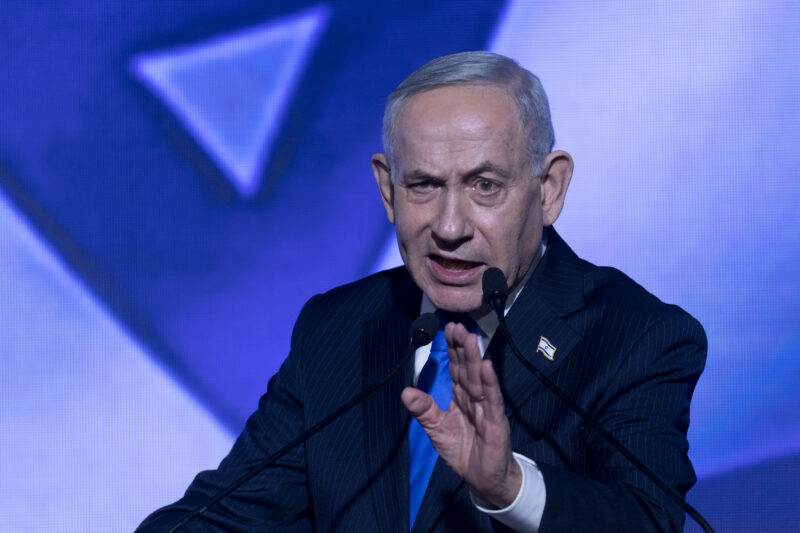














U.K. Foreign Secretary Ed Miliband announces sanctions against Israeli settlements
The move was roundly criticized by British Jewish leaders, along with the conservative opposition parties in Parliament
Wiktor Szymanowicz/Future Publishing via Getty Images
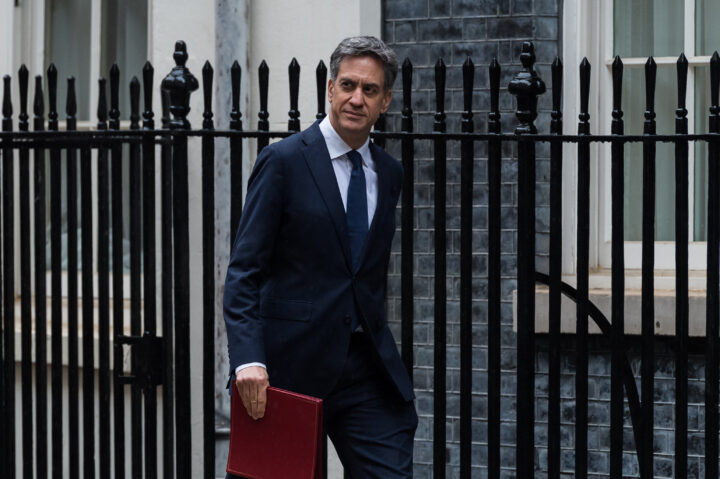
U.K. Foreign Secretary Ed Miliband arrives in Downing Street to attend weekly Cabinet meeting in London, U.K. on Sept. 8, 2026.


 Add JewishInsider on Google
U.K. Foreign Secretary Ed Miliband announced a sweeping new sanctions regime targeting Israeli settlements in the West Bank on Tuesday, marking a major escalation in Britain’s diplomatic stance toward Israel.
Addressing the House of Commons, Miliband unveiled an import ban on goods produced in settlements alongside targeted sanctions against individuals and corporate entities involved in constructing, advertising or financing settlement expansion.
The secretary also announced a ban on real estate events in the U.K. promoting the purchase of homes in West Bank settlements. Miliband went further than any previous British official in accusing extremist Israeli settlers of carrying out “ethnic cleansing” of Palestinians in the West Bank and calling them “terrorists” with the tacit backing of the Israeli government.
“My parents came here as Jewish refugees and found sanctuary and a country that stood up for the law, freedom and self-determination,” said Miliband, describing himself as a proud British Jew. Expressing a “deep sense of shame” over the actions and policies of the Israeli government in Gaza, he insisted the policy is intended to target illegal settlements — not Israel or the Jewish community — and is distinct from the Boycott, Divestment and Sanctions movement.
“We absolutely oppose the BDS movement against Israel. This is about the Occupied Territories, settlements in the Occupied Territories,” Miliband said. “[It takes] six to nine months precisely so that we get this regime right so it does not affect, so it does not impinge, on Green Line Israel,” he continued, referring to the Israeli borders established in the aftermath of the 1948 war.
Miliband also announced that the U.K. would be reimposing strict economic sanctions on Iran, as well as sanctions on Al-Qard al-Hassan, a Hezbollah-run financial institution.
The measures, triggered in part by Israel’s plans to expand the contentious E1 settlement zone east of Jerusalem, were coordinated with France and Canada. Denmark, Finland, Iceland and Poland joined the countries in announcing they would enact similar sanctions in a joint statement alongside countries that have already taken similar measures — such as Ireland, Spain, Netherlands, Norway and Belgium.
The countries reaffirmed their commitment to a two-state solution, firmly opposing “actions tantamount to the annexation of Palestinian land and forcible displacement” while reiterating Israel’s legitimate security needs and condemning the Oct. 7, 2023, Hamas terrorist attacks.
Denouncing what he described as a “hostile sanctions package,” Israeli Foreign Minister Gideon Sa’ar announced on Tuesday that Israel would be taking swift retaliatory measures, such as closing the British Consulate in Jerusalem, expelling British representatives from the U.S.-backed International Gaza Support Center, terminating the British Support Team in Ramallah tasked with training members of the Palestinian Authority Security Forces and barring 12 British officials “involved in antisemitic and anti-Israel activity.”
U.S. Ambassador to Israel Mike Huckabee suggested that Britain will face “repercussions” and accused the U.K. of “discrimination against the Israeli government.” The U.S. is expected to release a statement about the sanctions later today.
Despite gaining support within the Labour Party the government’s announcement triggered immediate pushback from the political opposition and British Jewish organizations, who warned the policy could inflame tensions at home.
Speaking to Miliband in the House of Commons, Reform U.K. Deputy Leader Richard Tice condemned the sanctions as a “grave mistake” that risks fueling anti-Jewish hostility. The U.K. has seen a spate of violent attacks against its Jewish communities in recent months.
“We all deplore settler violence, but the simple reality is these sanctions are a grave mistake,” Tice said, questioning whether the policy would “embolden the scourge of antisemitism against British Jews on British streets.” He added that the move risks damaging relations with the U.S., harming U.K. security and inviting retaliatory sanctions from Israel.
Conservative leader Kemi Badenoch similarly criticized the measures, accusing the Labour Party of being driven by domestic political motives rather than Middle East diplomacy.
“Labour’s obsession with Israel is rooted in U.K. politics — it’s got less to do with peace in the Middle East and more to do with trying to keep the peace in the Labour Party,” Badenoch said, warning that British Jews should not have to watch politicians condemn antisemitism while ignoring the ideologies that drive it.
Jewish community groups also raised alarms over the diplomatic fallout. The Board of Deputies of British Jews, the leading representative body of British Jews, cautioned against prioritizing party politics over national interests, warning that eroding ties between London and Jerusalem could undermine economic security, damage national security ties and heighten community friction within the U.K.
“As we have told both governments over recent weeks, the deteriorating relationship between the U.K. and Israel has the potential to negatively impact the two countries’ security and their economies and further inflame community tensions here too,” the statement read.
Meanwhile, the Jewish Labour Movement, while acknowledging that curbing settlement expansion and opposing Israeli Prime Minister Benjamin Netanyahu’s policies were worthy goals, voiced serious misgivings regarding the government’s timing and execution of the policy.
“Action against settlement expansion and settler violence is absolutely necessary, as well as the increased opposition to Netanyahu’s ruinous ideology, but many in our community and our membership will hold questions and voice concerns about the timing and specifics of the policy.”
More Stories
SECURITY SETBACK
Saudi Arabia postpones ‘Davos in the Desert’ until 2027 amid Houthi attacks
Super Ball
Robert Kraft’s Blue Square gala pulls in $32 million as NYC’s Waldorf glows blue

DFL DISCORD
Amy Klobuchar, Angie Craig condemn Hasan Piker ahead of Minneapolis event with Ilhan Omar
WAR WORRIES
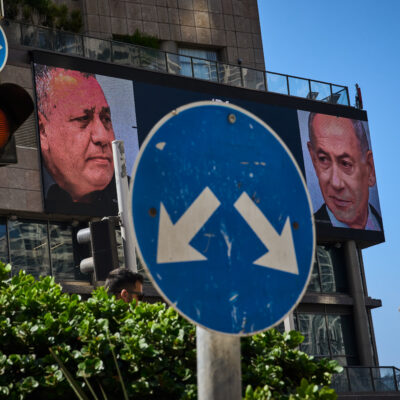
Could another war with Iran be the October surprise of the Israeli election?

NEW CHAPTER
High Line Publishing launches with fanfare to counter barriers for Jewish authors

COMINGS AND GOINGS
Heritage Foundation taps critic of U.S. involvement in Middle East as distinguished fellow
Please log in if you already have a subscription, or subscribe to access the latest updates.
 Continue with Google
 Continue with Apple