

































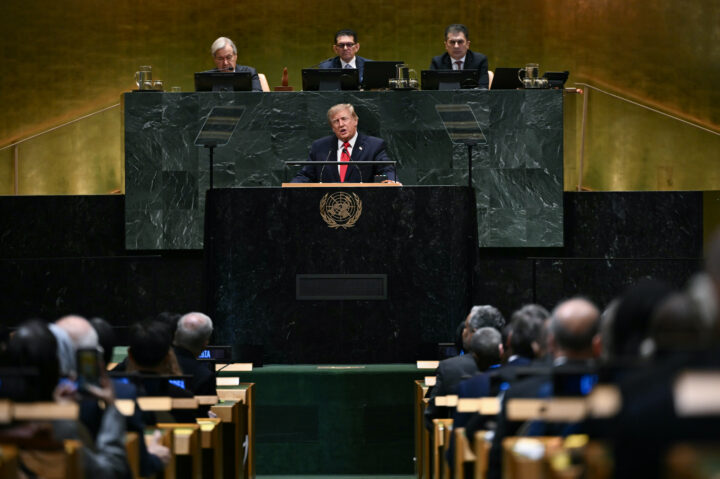
Addressing the UNGA, Trump said, ‘Will a deal be made … or do I annihilate the Islamic Republic?’
Brendan Smialowski-Pool/Getty Images
President Donald Trump speaks during the 81st United Nations General Assembly at the United Nations Headquarters on September 22, 2026 in New York City.


 Add JewishInsider on Google
President Donald Trump said on Tuesday that he faces a “big decision” between making a deal with Iran and escalating military conflict, as he predicted the sides would reach an agreement following the midterm elections.
“I have a big decision to make,” Trump told the U.N. General Assembly in New York, on the first day of the high-level week. “Will a deal be made with Iran that lets them rebuild and create a far greater country than it ever was before? … Or do I annihilate the Islamic Republic and do it quickly, never giving them a chance to kill and destroy people and countries again? Do I drive them into hell with no chance of survival and no hope of future greatness or generations?”
The president has recently made similar statements suggesting he must choose between negotiations and further confrontation, though there appear to be no serious negotiations underway and U.S. strikes have been sporadic.
"I have a big decision to make,” Trump said at the UN. “Will a deal be made with Iran that lets them rebuild and create a far greater country than it ever was before? … Or do I annihilate the Islamic Republic? … I believe we’ll make a deal right after the [midterm] election.” pic.twitter.com/LYB5f2i0Fd
— Jewish Insider (@jewishinsider) September 22, 2026
Trump said he believes an agreement with Iran will ultimately be reached after the U.S. midterm elections in November, arguing that Tehran is waiting to see how Republicans perform.
“I believe we’ll make a deal right after the [midterm] election because it doesn’t make sense for them not to,” Trump said. “They’re waiting to see how I do in the midterm election. What they don’t realize is that I’m not running.”
Even absent a deal, Trump argued that U.S. efforts in Iran have yielded success, including stopping Iran from being the “bully” of the Middle East.
“For 51 years, the fanatical Iranian regime has ruled by bloodshed and mass murder, spreading death and carnage and chaos across the entire Middle East and beyond,” Trump said. “They were the bully of the Middle East, but they are the bully no more.”
While no bilateral sit-downs between Trump and Iranian leadership were scheduled, Trump said during a meeting with Ukrainian President Volodymyr Zelensky that White House Special Envoy Steve Witkoff and Jared Kushner had a “very good meeting” with Iranian officials on Tuesday.
“It was a meeting that lasted for three hours … They had a very good meeting, very productive meeting, and they have another one scheduled in the near future,” Trump said. “We’ll see how it turns out, but, certainly, it’s to their advantage to make a deal, and if we can do that, it’s preferable.”
Prior to the meeting a U.S. official had told CNN that Trump said he would be open to arranging a meeting with Iranian officials in New York “if the conditions are right,” or delegating senior advisors traveling with him to meet with them. Axios further reported that mediating Arab countries had been trying to arrange a meeting as well.
Trump called on “all nations” to “join us in enforcing the complete economic isolation of Iran until they stop their attacks on commercial shipping, relinquish their nuclear ambitions and cease their support of terror.”
Praising international support for Washington’s stance, Trump thanked the U.N. Security Council for passing a resolution in March condemning Iranian attacks on maritime trade.
“That resolution, I’m pleased to say, received more co-sponsors from U.N. member nations than any Security Council resolution in history,” Trump said. “That’s something. Now we must be equally united in maintaining pressure.”
He added that the U.S. Navy has recently escorted more than 1 billion barrels of oil out of the Strait of Hormuz, maintaining that “more oil is flowing than at any point since the start of the war.”
He also dismissed reports suggesting the U.S. military is running dangerously low on munitions as a result of the conflict.
“We have more munitions than we could ever possibly even think of using, and we’re building them at levels that we have never done before. We are adding to our stockpiles faster than we have ever been able to do before,” he said.
Trump noted that 18 new munitions facilities are currently under construction by defense contractors, promising that the expansion will lead to the “very rapid deployment of missiles of every type and ammunition of every type,” as well as faster resupply for allies.
Turning to the Middle East more broadly, Trump touched on the situation in Gaza, where implementation of his administration’s 20-point peace plan remains stalled as Hamas refuses to disarm. The president thanked countries that joined the Board of Peace, as well as those that committed personnel to secure Gaza.
“We ended the war in Gaza, saving untold thousands of lives. We also brought home all the remaining hostages, both living and dead, every single one of them,” Trump said. “Nearly 30 countries have joined the board, which I am honored to chair, and we’re thankful to many of those member nations for contributing billions and billions of dollars to relief. I also want to thank those who have committed troops, police, and training to help stabilize Gaza, including Indonesia, Morocco, Albania, Kosovo, Kazakhstan, Egypt, Jordan and more.”
Analysts warn the proposed 60-day arrangement, if signed as reported, would mark the first time Iran formally directs shipping through the international waterway, setting a dangerous precedent

Amirhossein KHORGOOEI / ISNA / AFP via Getty Images
Vessels are pictured anchored in the Strait of Hormuz off Bandar Abbas in southern Iran on May 5, 2026.
Experts are expressing growing concern over reports that an emerging deal between Iran and Oman to reopen the Strait of Hormuz could grant Tehran unprecedented oversight over the international shipping route, ceding control to Iran that it did not possess prior to the conflict.
The potential agreement comes as President Donald Trump suggested on Tuesday that “a lot of progress had been made” in negotiations and signaled a deal on the strategic waterway could be announced as soon as this week. Iranian Foreign Ministry spokesperson Esmail Baghaei confirmed on Wednesday that an arrangement with Oman had reached the “final stage.”
Iran’s deputy foreign minister has denied direct negotiations with the U.S. and warned that an agreement would not automatically reopen the waterway. Iranian state media also reported that, under a draft bill currently being reviewed by an Iranian parliamentary committee, U.S. and Israeli ships may also be barred from crossing the strait.
Reports indicate any agreement would likely last for 60 days and require the U.S. to lift its naval blockade on Iranian ports. A deal would potentially initiate the clearing of naval mines in the strait, a return to a broader ceasefire and resumption of talks with the U.S. on Tehran’s nuclear program.
Under the proposed terms, inbound commercial vessels would be directed through a northern route in Iranian waters, while outbound ships would traverse a southern route in Omani waters, managed in coordination with Iran. Although a U.S. official told the Associated Press that such a deal would preclude Iran from issuing formal approvals for transiting ships, tolls or service fees, regional analysts warn that formalizing Iranian oversight over the chokepoint represents a significant strategic concession.
Matthew Levitt, a senior fellow at The Washington Institute for Near East Policy, told Jewish Insider that Washington’s drive for a resolution with Iran may be driving it to agree to a less-than-ideal scenario.
“President Trump is very eager for a deal that reopens the strait, and seems inclined to accept a deal under which Iran has greater oversight of ships entering and exiting the strait,” Levitt said. “The key is denying Iran any way of monetizing the flow of traffic through this international waterway.”
Daniel Shapiro, a former U.S. ambassador to Israel under President Barack Obama who also served as President Joe Biden’s Iran liaison to Israel, told JI that “if the deal that is being described comes into effect, it is a strategic win for Iran.”
“[Iran] will emerge with effective control over the Strait of Hormuz, which was a fully open international waterway before the war,” Shapiro said. “The United States will be strategically worse off with this outcome than we were before the war, but it is almost certainly the only way to prevent an escalation that would produce even greater global economic disruption than we have already seen.”
Shapiro noted that even after a deal is made, Iran “will probably receive early sanctions relief … and they will only be expected to start negotiations on their nuclear program, which could turn out to be fruitless and endless.”
Analysts emphasized that the disconnect between Washington and Tehran regarding the scope of the agreement poses risks to maritime security.
Jonathan Ruhe, director of foreign policy at the Jewish Institute for National Security of America , pointed out that much like the June U.S.-Iran memorandum of understanding, the potential deal means vastly different things to each side. While the U.S. expects international shipping to resume unencumbered, Tehran views the arrangement as a vehicle to establish long-term authority.
“Iran expects much more, including at least de facto ability to toll and veto passage through Hormuz,” Ruhe said. “Tehran’s redline for a deal is recognition of its ‘right’ to determine and deter shipping in Hormuz, as the spoils of its victory and a key counterweight to further U.S. pressure.”
“Combined with the complications of gaining signoff from Iran’s Supreme Leader, and Iran’s predictable tendency to seek additional U.S. concessions, these differences explain the lack of a deal so far – despite U.S. anticipation of an imminent announcement,” he continued.
Ruhe said that even if the Trump administration secures a deal that reopens the strait, the precedent set by such an agreement could remain dangerous.
“It would affirm that the fate of this critical waterway is subject to Iran’s approval, and undermine America’s abiding interest in free navigation,” he said. “By cementing a key wartime gain, it would embolden Tehran to take the hardest possible line in any follow-on talks.”
Richard Goldberg, a senior advisor at the Foundation for Defense of Democracies and a former Trump administration official, cautioned that the final structure of the deal will determine whether Washington is conceding leverage or calling Tehran’s bluff.
“I find it difficult to believe we would ever cede formal control over a critical international waterway to a terrorist group, or otherwise tolerate that group collecting tolls or fees for what is already an international right to freedom of navigation,” Goldberg said.
Goldberg noted that Iran’s rhetoric may ultimately be bluster.
“Oftentimes the reality of a situation might differ from Iran’s propaganda — that is, in this case, Iran might claim it’s ‘allowing’ ships to pass through its claimed ‘territorial waters’ but in practice it could mean ships are just moving through the strait as they always used to without taking drone or missile fire,” Goldberg explained. “If we see formal control, tolls or fees, that’s a terrible outcome; if we see Iran just making claims that it’s allowing something to happen but there is no formalized control, no extortion payments being made, that could very well be a propaganda-disguised-victory for the United States.”
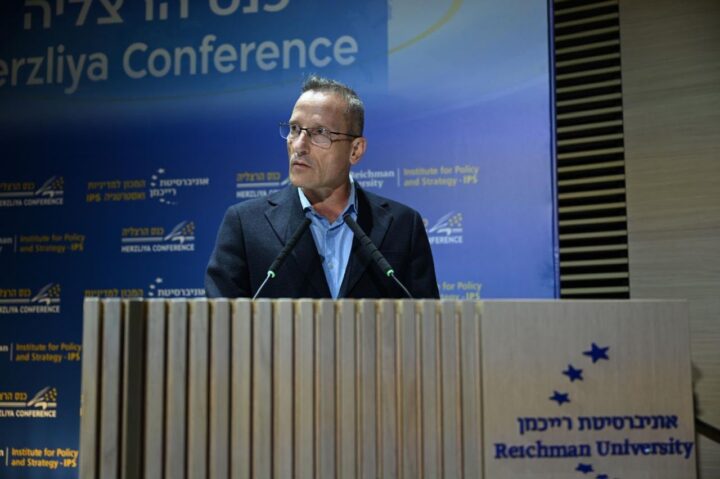
‘We think Tehran, they think Taiwan,’ Maj. Gen. (res.) Amir Baram said of diverging U.S.-Israeli foreign policy at the Herzliya Conference at Reichman University
Israeli Ministry of Defense/LinkedIn
Maj. Gen. (res.) Amir Baram, director general of Israel’s Ministry of Defense, speaks at the Herzliya Conference at Reichman University on July 1, 2026.
The director general of Israel’s Ministry of Defense, Maj. Gen. (res.) Amir Baram, urged Israelis on Wednesday to understand Washington’s perspective as the U.S. and Israel negotiate the next memorandum of understanding, cautioning against judging American policy through a purely “provincial lens.”
“What some in Israel perceive as weakness or folly, an apparent disregard for every warning sign on the ground, is viewed in Washington as cold, calculated and clear-eyed risk management in an era of shifting global attention,” he said at the annual Herzliya Conference at Reichman University.
The divergence between the two allies, he concluded, is not a misunderstanding of the fundamental threat, but rather a byproduct of different national security priorities.
“For us, Iran is an existential threat; for the United States, it is a chronic regional challenge, while China and the Indo-Pacific theater remain the core concern,” Baram said. “We think Tehran, they think Taiwan.”
“At the same time, based on my deep familiarity with the range of views within the American system, if there is one thing Americans hate more than this war that has dragged on for them, it is losing a campaign they have already won,” he added of the conflict with Iran.
Ultimately, Baram asserted that as Washington increasingly operates under an “America First” framework, the historic bilateral relationship must pivot toward concrete, mutually beneficial strategic dividends.
“Our partnership cannot rest on shared values alone. It must also rest on hard interests: a strong, independent, and proactive Israel that stabilizes the Middle East is the very asset that allows the United States to redirect resources toward Asia,” Baram stated. “This is the foundation of the next memorandum of understanding on security cooperation now being formulated. The agreement will need to generate security, economic, and strategic benefits for both countries for years to come.”
The director general also noted that he understands the differing strategic realities in Washington, including a growing American desire to avoid prolonged Middle East entanglements while prioritizing competing global theaters.
“From the Pentagon’s perspective, with American munitions stretched between supporting current wars and preparing for a potential confrontation in the Taiwan Strait, a prolonged war in the Middle East runs counter to America’s global posture,” Baram observed.
Baram emphasized that the war with Iran has fundamentally transformed Jerusalem’s strategic military calculus, warning that an escalating Iranian threat necessitates a sweeping, expanded regional security alliance.
“The war has sharpened, for every actor in the region, the price of Iran’s military buildup,” Baram said. “It has created a shared interest in forging a broader alliance, from India through the UAE to Greece and Cyprus. Israel’s strengths in technology, proven operational experience, and defense innovation, combined with the Gulf’s financial power, could enable a new security-economic front.”
Baram said that building these alternative multilateral partnerships is “not a substitute” for Israel’s bedrock security relationship with the United States. Rather, he argued, the strategy allows Israel to “broaden its room to maneuver and its standing on the international stage, and allow us to diversify our strategic footing.”
In Israel, the deal is being met with dismay across the board
Samuel Corum/Getty Images
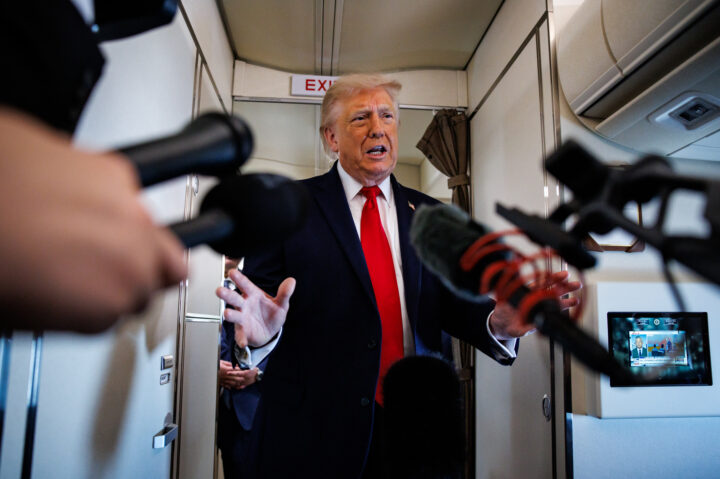
President Donald Trump speaks with reporters while aboard Air Force One on June 5, 2026 en route to Chippewa Falls, Wisconsin.
A year and a day after Israeli fighter jets first opened fire above Iran, setting off a year of intermittent fighting and numerous failed negotiations, President Donald Trump announced on Sunday that an agreement with Iran to end the war had been reached. A signing ceremony set for later this week in Switzerland — which is expected to be attended by Vice President JD Vance — will kick off a 60-negotiation period to address Iran’s nuclear program and U.S. sanctions on the Islamic Republic.
For Americans, the deal closes a chapter that saw high gas and food prices as well as schisms in the GOP as the party’s wings fought over how the war should be fought and ended. Among Democrats, legislators and activists from the party’s progressive wing — from Rep. Ro Khanna (D-CA) to the National Iranian American Council’s Trita Parsi (who additionally gloated, “Netanyahu failed!”) — praised the deal.
But Israel was not part of the negotiations, nor did it have final say in what was in the agreement inked between Washington and Tehran. As the Is were dotted and Ts were crossed on the agreement, tensions between Trump and Israeli Prime Minister Benjamin Netanyahu — already on display following Israel’s threatened escalation last week in Beirut, followed by an actual escalation on Sunday when Israel struck Beirut’s Dahiyeh neighborhood — deepened. In a call on Sunday after Israel conducted the strike — later claiming to have killed a senior Hezbollah commander — Trump told Axios he had conveyed to Netanyahu that he “was so pissed off.” Netanyahu, Trump said, “has no f***ing judgement. I let him know that.”
In Israel, the deal is being met with dismay across the board, as neither of the war goals laid out by Netanyahu last June — removing Iran’s “existential threats” to Israel and ending Tehran’s support for its terror proxies across the region — have been met, even after a year of fighting.
With elections in the country fast approaching, Netanyahu, who has long billed himself as “Mr. Security,” is already finding himself on the receiving end of criticism from across the political spectrum. Former Israeli Defense Minister Avigdor Liberman blasted the deal as “catastrophe from Israel’s perspective,” while prominent right-wing Israeli journalist Amit Segal posted an ominous quote from former U.S. Secretary of State Henry Kissinger: “It may be dangerous to be America’s enemy, but to be America’s friend is fatal.”
The question now is what, exactly, is in the agreement. Iran’s state-linked Mehr agency reported that under the terms of the agreement, the U.S. will release $12 billion in frozen assets to Iran before talks begin.
Fox News reported that the $12 billion figure, as well as other reports of the deal’s stipulations, are incorrect, and that officials within the Trump administration are growing frustrated over rumors about the contours of the agreement.
Calls for the deal’s text to be made public have come from even Trump’s staunchest supporters. Commentator Mark Levin said he has “asked for days, why can’t we, the people, see the damn MOU?” Levin added that he had “never seen anything like this. If it is a great outcome for peace, then release it.”
Sen. Lindsey Graham (R-SC) said on X on Sunday that he was “somewhat concerned” that Iran’s account of the U.S.-Iran ceasefire deal diverges sharply from what the U.S. negotiators are claiming, and demanded Vice President JD Vance personally present the deal to Congress.
The vice president, who two months ago traveled to Pakistan for high-level negotiations with Iranian officials, has increasingly become the public face of the Iran talks. In an interview last week that aired yesterday on “CBS Sunday Morning,” Vance said he believed “that we are in a position to get a deal that is good for the United States economically and that really does deal with the Iranian nuclear program” in the long term.
For Vance, the success or failure of the deal, and of the negotiations to follow, could become one of the defining political issues of his rumored 2028 presidential bid — one in which he will likely find himself up against Secretary of State Marco Rubio in what could be a bruising primary.
With the deal’s signing later this week, the military phase of the war — begun just over a year ago — will conclude. But what comes next is the political phase, which will determine Iran’s nuclear future, Israeli security policy and the direction of U.S. foreign policy in the region for decades to come.
Iranian state media and Iran’s foreign ministry have said that Trump’s claims that Iranian leadership had approved the deal are ‘speculative’
Brendan SMIALOWSKI / AFP via Getty Images
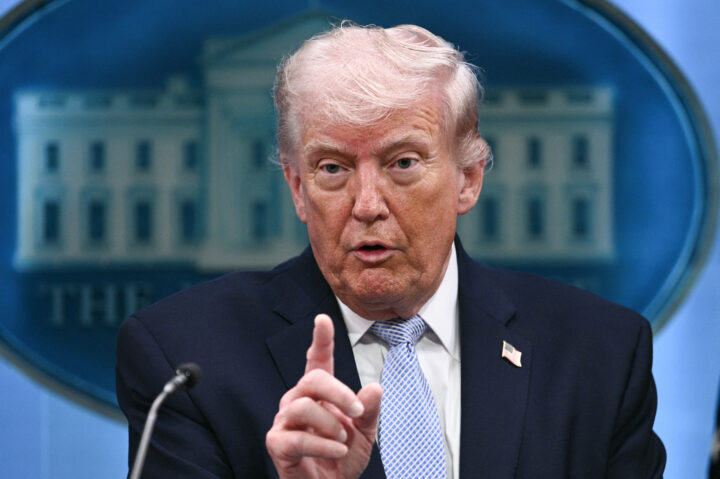
US President Donald Trump speaks about the conflict in Iran in the James S. Brady Press Briefing Room of the White House on April 6, 2026, in Washington, DC.
President Donald Trump said on Thursday that negotiations with Iran had reached a breakthrough and that he expected there to be a signing, possibly in Europe, in the coming days. With the diplomatic developments, Trump said he would cancel planned strikes against Iran, and call off an operation to take control of Kharg Island.
“Based on the fact that discussions with the Islamic Republic of Iran have been brought to the highest level of Iranian leadership and approved, I have, as President of the United States of America, cancelled the scheduled strikes and bombings against Iran this evening,” Trump posted on Truth Social.
In the Oval Office, the president said the deal was “in pretty final shape” and predicted that it would “get done over the next few days.” He also claimed that the agreement would ultimately deliver on his assurance that Iran would be prevented from having nuclear weapons and open up the Strait of Hormuz.
“The signing of the agreement will be in Europe, perhaps during the weekend,” Trump told reporters in the Oval Office on Thursday afternoon. “I won’t be able to be there, but Vice President [JD] Vance and the [White House special] envoy [Steve] Witkoff will.”
Trump also said that Iran’s supreme leader had approved the deal. However, Iranian state media and a spokesperson for Iran’s foreign ministry have reportedly asserted that Trump’s claims that Iranian leadership had provided approval are “speculative” and that “nothing has been finalized.”
The president spoke with the Emir of Qatar following the announcement and also with Israeli Prime Minister Benjamin Netanyahu. Reports indicated that Netanyahu was initially surprised by the statement. However, after the conversation between the two leaders, the Prime Minister’s Office said that Netanyahu “expressed his appreciation” for the framework and the inclusion of key objectives related to Iran’s nuclear program and support for terrorism.
The U.S. and Iran have reportedly closed vital gaps on three main issues that have prolonged diplomatic efforts, including the protocol for releasing Iranian frozen assets, reopening the Strait of Hormuz, and negotiations over Iran’s nuclear program.
The announcement came after two days of tit-for-tat strikes between the U.S. and Iran. Earlier on Thursday, Trump warned that the U.S. would hit Iran “VERY HARD TONIGHT” and threatened to seize Kharg Island, which handles roughly 90% of Iran’s oil exports.
Plus, Ron Klain goes to bat for Platner
Getty Images
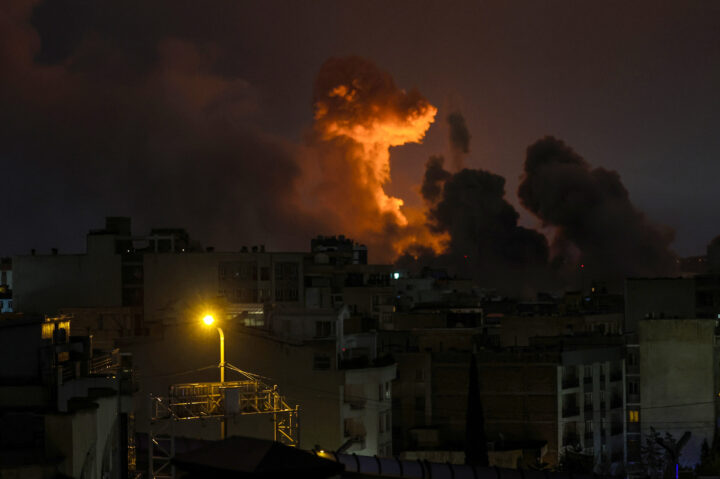
A large plume of smoke rises over Tehran after explosions were reported in the city during the night on March 28, 2026 in Tehran, Iran.
This P.M. edition is reserved for our premium subscribers like you — offering a forward-focused read on what we’re tracking now and what’s coming next.
Today’s Daily Overtime was curated by JI U.S. Editor Danielle Cohen-Kanik.
📡On Our Radar
Notable developments and interesting tidbits we’re tracking
After the U.S. conducted strikes yesterday in Iran, President Donald Trump said from the Oval Office this morning that the U.S. would “hit them hard again today” and told Fox News that he may target Iranian power plants and bridges because Tehran is “tapping the United States along” in negotiations.
As Trump convened his national security team in Washington this afternoon to discuss military options, Defense Secretary Pete Hegseth told reporters CENTCOM will be “busy tonight” with “bombs dropping on key facilities in Iran”…
Trump also revealed today that he directed the U.S. military last month to “execute a secret mission” to assist oil tankers and other commercial vessels in transiting the Strait of Hormuz, an effort that “has resulted in more than 100 MILLION Barrels of Oil” and over 200 commercial ships moving through the waterway. His Truth Social post was a clarification of earlier comments that seemed to suggest the U.S. was stealing this oil directly out of Iran; U.S. operations to facilitate passage in the strait have been previously reported…
Trump provided Fox News with new details of the downing of the U.S. Army helicopter earlier this week, describing how an Iranian drone became lodged between the two pilots in the cockpit who guided the helicopter into the sea, where they were rescued “for the first time in U.S. military history” by an unmanned sea drone…
Qatari mediators visited Tehran today in the hopes of pushing Iranian officials to engage more effectively in negotiations with the U.S., Axios reports, after Trump had grown increasingly frustrated with their intransigence over the last two weeks, even as he continued to signal the two sides were approaching a deal…
U.S. Ambassador to the U.N. Mike Waltz met with UAE Foreign Minister Abdullah bin Zayed Al Nahyan in Abu Dhabi, the highest-level U.S. official to publicly visit the Gulf since the Iran war began…
Israeli Prime Minister Benjamin Netanyahu blasted Turkish President Recep Tayyip Erdoğan as an “antisemitic dictator” today after Erdoğan condemned Israel’s “network of murder” in Syria and Lebanon and threatened a “very clear and strong response” if Turkish interests in the region were jeopardized. Netanyahu said Erdoğan, whom he accused of supporting Hamas, lacks the moral authority to criticize Israel.
Trump, when asked in the Oval Office about the potential for war between Israel and Turkey, described Erdoğan as a “hell of a leader” and said, “I don’t think that will happen as long as I’m president”…
More than 20 countries, including the U.S., issued a joint statement condemning “lethal plotting and malign actions” by Iran’s security forces working with international and local criminal groups in Europe, North America and Australia, including their efforts to target “Iranian dissidents, journalists and Jewish and Israeli communities and interests”…
The Department of Justice indicted eight individuals associated with the University of Michigan for allegedly threatening university leaders, law enforcement, businesses and the Jewish Federation of Metropolitan Detroit over the conspirators’ perception of their “purported financial support of Israel.”
The individuals “discussed methods by which to harm the targets and their families, including poison, bombs, and psychological torture,” engaged in extensive vandalism and threw jars filled with noxious chemicals into homes, according to the department…
An immigration judge ordered earlier this month that Columbia University anti-Israel protest leader Mohsen Mahdawi be deported to Jordan, after a lengthy legal battle in which the Trump administration claimed Mahdawi has been involved in and supported terrorist violence. Mahdawi, who has not been charged with a crime, is still seeking review of his removal proceedings in federal court…
The Senate Education and Natural Resources Committee advanced the Holocaust Education and Antisemitism Lessons (HEAL) Act by a voice vote…
The National Republican Senatorial Committee, in a memo to donors, acknowledged that the “political fundamentals in Maine remain challenging” for Sen. Susan Collins (R-ME) to retain her seat against scandal-plagued challenger Graham Platnerand called it a “fatal mistake to assume Platner is too damaged to win”…
Trump offered Collins his backing today after having long been at odds with the senator: Asked if she has his full endorsement, Trump said, “She does, because she’s a sane woman. She’s not my best friend at all … but she’s a sane person and she’s a respected person.” He called Platner a “thug,” a “phony” and a “bad person”…
Ron Klain, the former chief of staff to President Joe Biden, defended Platner’s tattoo of a Nazi symbol in a comment responding to the Republican Jewish Coalition on Instagram, Jewish Insider’s Marc Rod reports: Klain claimed the Totenkopf “was a skull and crossbones to remember [Platner’s] fallen comrades from his service in Afghanistan,” an explanation Platner’s campaign has not previously offered…
Former New York City Comptroller Brad Lander, running against Rep. Dan Goldman (D-NY) in the 10th Congressional District, denied to JI’s Will Bredderman that he’s backing Darializa Avila Chevalier in her race against Rep. Adriano Espaillat (D-NY) — even as the two appeared together in an ad paid for jointly by both of their campaigns…
Kennedy scion Jack Schlossberg, running in the Democratic primary for New York’s 12th District, came out yesterday in support of the Block the Bombs Act, JI’s Matthew Kassel reports, despite having previously expressed skepticism about the bill seeking to broadly restrict weapons sales to Israel…
Meanwhile, Public First Action, the PAC linked to AI giant Anthropic, is spending $1.2 million on a Knicks-themed ad in support of Schlossberg’s opponent, Alex Bores, who has become a leading advocate for AI regulation on the campaign trail. The ad is set to air tonight during Game 4 of the NBA Finals, Politico reports…
⏩ Tomorrow’s Agenda, Today
An early look at tomorrow’s storylines and schedule to keep you a step ahead
Keep an eye out in Jewish Insider for a look at the state of play in Israel’s elections, taking place this fall.
The House Appropriations Defense Subcommittee will hold a closed-door markup of the 2027 defense spending bill.
Reps. Don Beyer (D-VA) and Ritchie Torres (D-NY) will speak at a Progressive Policy Institute event on “Working Toward a New Era of Patriotism and Democratic Renewal” at the National Press Club in Washington.
Stories You May Have Missed
SIDESTEPPING QUESTIONS
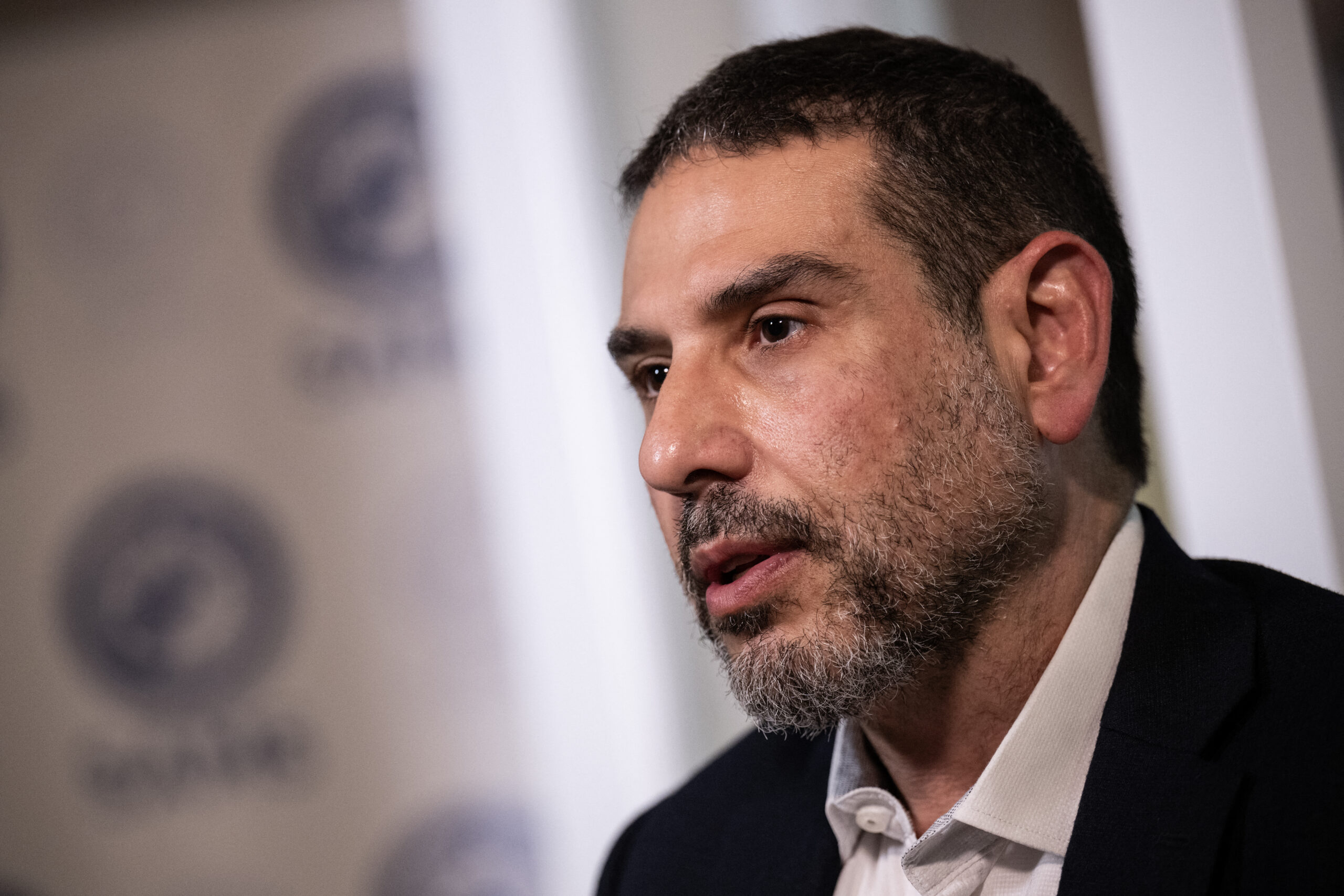
House Foreign Affairs Committee ranking member Greg Meeks said of the Democratic N.J. congressional nominee, ‘I don’t like to talk about somebody I don’t know’
LASHING OUT

The Democratic congressional hopeful aired his frustration when asked about his stance regarding U.S. aid to the Jewish state at a candidate forum
Plus, Israeli confidence in Trump hits new low

U.S. Navy via Getty Images
A U.S. Sailor signals the launch of an MH-60R Sea Hawk helicopter, attached to Helicopter Maritime Strike Squadron 70, on the flight deck of the world's largest aircraft carrier, USS Gerald R. Ford (CVN 78), while supporting Operation Epic Fury on February 28, 2026.
This P.M. edition is reserved for our premium subscribers like you — offering a forward-focused read on what we’re tracking now and what’s coming next.
Today’s Daily Overtime was curated by JI U.S. Editor Danielle Cohen-Kanik.
📡On Our Radar
Notable developments and interesting tidbits we’re tracking
President Donald Trump announced today that Iran was responsible for downing a U.S. Apache helicopter over the Strait of Hormuz last night, and vowed to respond out “of necessity.” Trump had reportedly told aides his “red line” for resuming military action would be if Iran killed any more Americans, though he confirmed in his post on Truth Social that both American pilots involved were “safe and uninjured.”
Later, however, in a call with The Wall Street Journal, Trump appeared to downplay the incident, saying it “wasn’t a big deal” and that “the pilot is fine”…
Top GOP lawmakers echoed Trump’s initial assessment that the U.S. must respond: Sen. Ted Cruz (R-TX) told Jewish Insider’s Matthew Shea that Iran should face “significant consequences.” Rep. Mike Rogers (R-AL), chairman of the House Armed Services Committee, similarly said the U.S. must “vigorously respond,” and Sen. Ted Budd (R-NC) pushed for “decisive action”…
Iranian Foreign Minister Abbas Araghchi signaled that Tehran is distancing itself from the episodeand not claiming it as a direct attack on the U.S. He said in a statement, “Foreign forces in proximity to our territory are at constant risk on account of their own human errors, plain accidents, or potentially being caught in crossfire. To reduce risk, best solution is for them to leave”…
Trump, speaking to ABC News, openly mused about whether Israeli Prime Minister Benjamin Netanyahu “even wants to continue” and run in Israel’s upcoming elections, slated to take place this fall. “He’s a wartime prime minister. We will very shortly win the war one way or the other, and you know he’s a wartime prime minister,” Trump said…
A gunman from Lebanon entered Israeli territory and fired on IDF troops, who killed him before he crossed the border fence, the IDF said. The infiltration set off a widespread search for potential accomplices, though none were found…
Before the latest round of missile fire between Israel and Iran, U.S. and Iranian negotiators had focused their discussions on four major elements of a nuclear deal, officials told The New York Times, even as the Trump administration has said nuclear issues will be discussed in a subsequent round of negotiations.
The key points reportedly include how long Iran will suspend uranium enrichment, diluting the country’s stockpile of already enriched uranium, dismantling three of its major nuclear facilities and “snap” inspections of all relevant sites inside the country…
A new survey from the Israel Democracy Institute found the share of Israelis who believe the country’s security is a primary consideration for Trump has plummeted to 44%, down from 60% who said the same in March at the beginning of the Iran war, JI’s Matthew Shea reports.
It’s the lowest level of Israeli trust in Trump since the institute began tracking the metric when he was elected to a second term in November 2024, coming as Washington and Jerusalem seemingly diverge on their strategies and ultimate goals of the war with Iran…
Twenty-one countries issued a joint statement urging Israel not to implement a new law requiring international NGOs wanting to operate in the West Bank and Gaza to register with and be vetted by the Israeli government, calling the law “part of a broader pattern of restrictive measures” that “constrain the urgently needed humanitarian response.”
Israel’s Foreign Ministry dismissed the concerns and claims of the countries as “completely unfounded and detached from reality” as it said there are “immense amounts of humanitarian aid entering the Gaza Strip”…
Randy Villegas, a left-wing Democrat running to unseat Rep. David Valadao (R-CA) in California, claimed victory today in the jungle primary over Jasmeet Bains, a moderate Democrat who had been favored by pro-Israel leaders as well as the party’s national leadership, JI’s Matthew Kassel reports. Democratic Majority for Israel’s super PAC had spent heavily to help Bains with a $500,000 TV ad buy opposing Villegas…
United Democracy Project, the AIPAC-affiliated super PAC, is spending $2 million on an initial ad buy this week to boost Rep. Haley Stevens (D-MI) in the Democratic primary for Michigan’s open Senate seat, a UDP spokesperson confirmed to JI’s Matthew Kassel. The ad touts Stevens’ record fighting for the auto industry, opposing Medicare cuts and working to cap insulin prices in Congress…
⏩ Tomorrow’s Agenda, Today
An early look at tomorrow’s storylines and schedule to keep you a step ahead
Keep an eye out for timely analysis of today’s primary election results in Maine, Nevada and South Carolina from Jewish Insider Editor-in-Chief Josh Kraushaar — premium JI subscribers like you will receive it first.
The Senate Energy & Natural Resources Committee will hold a markup of the HEAL Act, a bipartisan bill examining Holocaust education efforts across the country.
The Culture for Peace Institute will hold a conference in Washington with speakers including State Department antisemitism envoy Rabbi Yehuda Kaploun; Sens. John Fetterman (D-PA) and Dan Sullivan (R-AK); and Reps. Nick LaLota (R-NY), Randy Fine (R-FL), Andy Barr (R-KY), Mike Lawler (R-NY), Max Miller (R-OH), Tom Suozzi (D-NY), Elise Stefanik (R-NY) and Derrick Van Orden (R-WI).
Elsewhere in Washington, Iran International will hold a town hall focused on the conflicts in Lebanon and Iran, featuring the Middle East Institute’s David Hale and Alex Vatanka as well as Dan Diker, president of the Jerusalem Center for Security and Foreign Affairs.
In the evening, lawmakers will take the field for the annual Congressional Baseball Game at Nationals Park.
In New York, the Conference of Presidents of Major American Jewish Organizations will hold its annual antisemitism convening, bringing together communal professionals, experts and others to discuss efforts to combat antisemitism.
New York state Assemblymember Claire Valdez, Brooklyn Borough President Antonio Reynoso and City Councilmember Julie Won — the top Democratic candidates for New York’s 7th Congressional District to replace retiring Rep. Nydia Velázquez (D-NY) — will face off for a debate on local news channel PIX11.
The Auschwitz Jewish Center Foundation will honor New York City Council Speaker Julie Menin, former Israeli hostage Elkana Bohbot and Gazan human rights lawyer Moumen Al-Natour at its gala in Manhattan.
Stories You May Have Missed
MOUNTING SCRUTINY
Will Avila Chevalier’s ‘beyond the pale’ views sink the DSA challenger’s campaign against Espaillat?
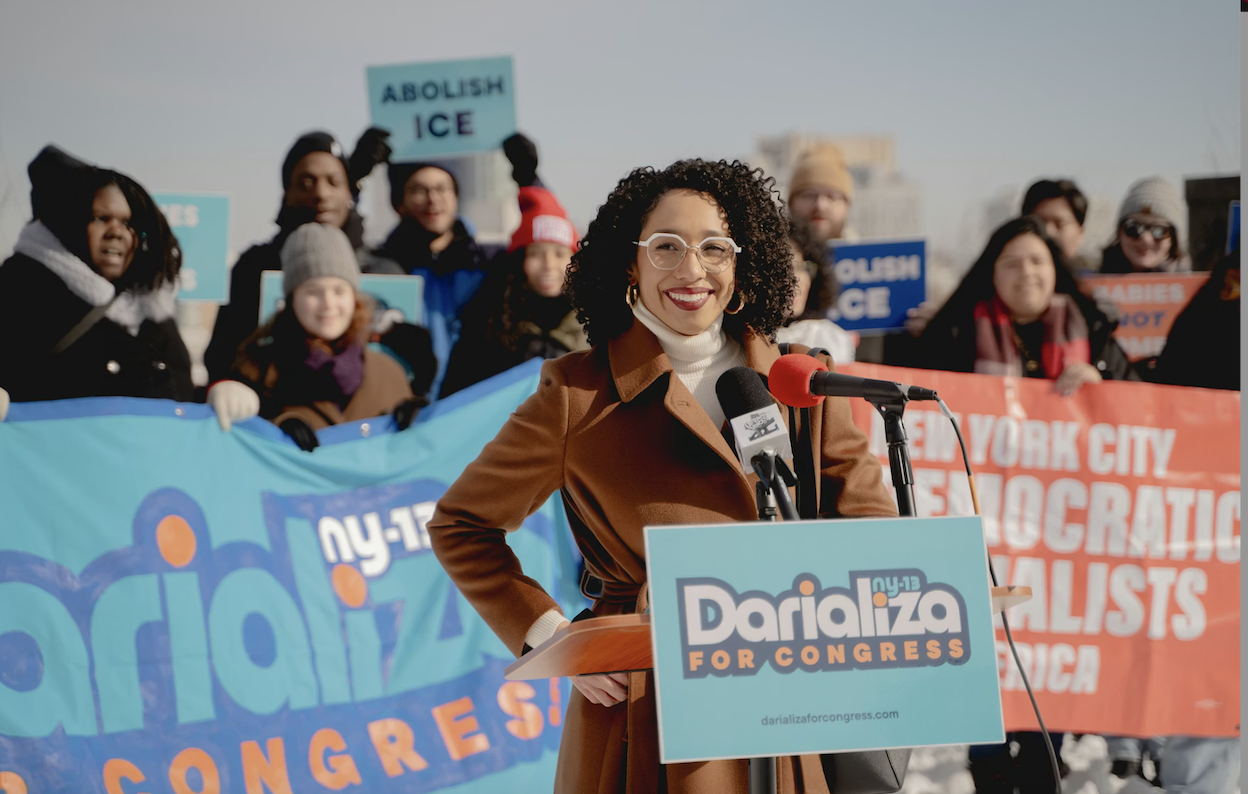
Avila Chevalier has a long record of extreme views, including calling for the abolition of police, voicing pro-Russia sentiment and rejecting Israel’s existence
SPECTATOR SPECTACLE
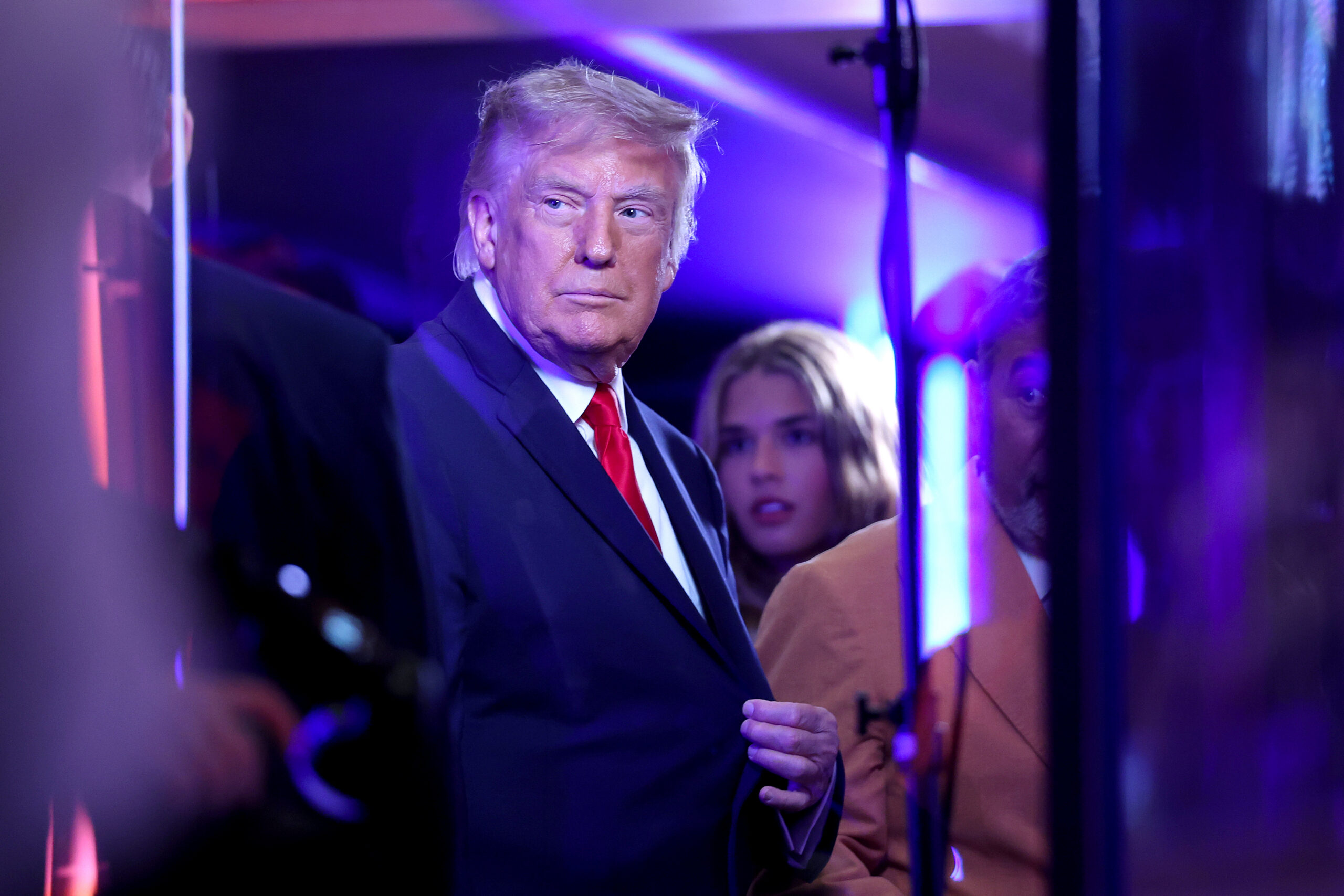
Trump, Mamdani, Witkoff, Kraft, Lutnick and more watched the game
Plus, AIPAC wades into Mich. Senate race

SAUL LOEB/AFP via Getty Images
President Donald Trump shakes hands with Israeli Prime Minister Benjamin Netanyahu during a meeting in the Oval Office of the White House in Washington, DC, on April 7, 2025.
This P.M. edition is reserved for our premium subscribers like you — offering a forward-focused read on what we’re tracking now and what’s coming next.
Today’s Daily Overtime was curated by JI U.S. Editor Danielle Cohen-Kanik.
📡On Our Radar
Notable developments and interesting tidbits we’re tracking
President Donald Trump cautioned Israeli Prime Minister Benjamin Netanyahu that if Israel went forward with a plan to escalate its strikes on Iran today, “you will be on your own very soon,” the president recalled in an interview with Axios, after which the Israeli leader reportedly called off the attack. Trump also claimed the U.S. and Iran are nearing a “phenomenal deal. We are getting everything we wanted”…
Netanyahu subsequently said in a video statement that, while Israel is “holding its fire” against Iran, Jerusalem has “a full right to self-defense” and is “exercising it to the extent necessary” — a message he said he relayed “with appreciation and respect in my good conversations with my friend President Trump.” But Netanyahu warned that if Iran resumes its attacks on Israel, the IDF would respond with “overwhelming force”…
Mohammad Bagher Ghalibaf, the speaker of the Iranian parliament, said in an address today that Iran’s simultaneous military strikes and diplomacy are part of an intentional strategy and that, though Tehran is seeking to end the war, it does not want to normalize relations with Washington…
U.S. forces disabled another empty oil tanker attempting to sail to Iranian ports today after it failed to disobey orders to stop by firing a precision munition into the ship’s engineering and steering spaces, CENTCOM announced. It’s the seventh such vessel U.S. forces have disabled since the blockade began…
Thirty-eight Senate Democrats, led by Sens. Adam Schiff (D-CA), Tim Kaine (D-VA) and Minority Leader Chuck Schumer (D-NY), demanded in a letter to Trump that the administration provide Congress with the legal opinion backing its determination that U.S. hostilities against Iran have ended, given the ongoing strikes and U.S. presence in the region…
At next week’s G7 summit in France, which Trump will be attending, European leaders will attempt to secure the president’s support for a U.K. and France-led effort to de-mine the Strait of Hormuz, Bloomberg reports…
The J7, a coalition of Jewish communal organizations representing the seven largest Jewish Diaspora populations, urged Canadian Prime Minister Mark Carney to prioritize action over further study after he announced Ottawa’s new Ministerial Advisory Council on Rights, Equality and Inclusion would examine rising antisemitism in the country.
Arguing that the problem has already been well documented, the groups called for a “whole-of-government” response focused on enforcement and countering extremist ideologies and terror movements…
United Democracy Project, the AIPAC-aligned super PAC, began buying ad time in Michigan today, in what appears to be the pro-Israel group’s first foray into the state’s heated Democratic Senate primary…
The Wall Street Journal interviews activists Daniel Moraff and Leanne Fan, who, along with consultant Morris Katz, recruited Graham Platner to run for Senate in Maine. The two said that their own vetting process of Platner did not turn up the Nazi tattoo he had on his chest, nor the full extent of his controversial Reddit posts, but they believed none of what they had seen at the time “will or should stop him from becoming a U.S. senator”…
The two factions of Williamsburg, Brooklyn’s Satmar community united behind Brooklyn Borough President Antonio Reynoso in the race to succeed retiring Rep. Nydia Velazquez (D-NY). Reynoso, a native of the district, clashed with some of the Hasidic sect’s leaders as a city councilmember but rebuilt relationships in subsequent years. New York City Mayor Zohran Mamdani, who has found allies in the Satmar sect while in office, is backing Reynoso’s opponent, Assemblymember Claire Valdez…
Ahead of tonight’s Knicks NBA Finals game against the San Antonio Spurs at Madison Square Garden, The Forward examines the chant sweeping New York City — “My mayor Muslim, my bagel Jewish, my Christian Dior, Knicks in four!” — and what it says about the city’s identity…
⏩ Tomorrow’s Agenda, Today
An early look at tomorrow’s storylines and schedule to keep you a step ahead
Keep an eye out in Jewish Insider for a look at the view from Washington on Trump’s attempt to pressure Netanyahu not to retaliate to Iran’s recent ballistic missile attacks.
Maine, Nevada, North Dakota and South Carolina will hold their primary elections tomorrow.
The House Foreign Affairs Committee will hold a markup of various bills, including one to direct the State Department to impose sanctions on the leaders and family members of the Rapid Support Forces (RSF) and the Sudanese Armed Forces (SAF) responsible for genocide, war crimes and crimes against humanity in the Sudanese civil war.
The House Appropriations Committee will mark up the FY 2027 spending bills for Labor, Health and Human Services and Homeland Security.
The Atlantic Council will kick off its two-day Global Energy Forum with remarks from Energy Secretary Chris Wright; Ben Black, CEO of the U.S. International Development Finance Corporation; Alaska Gov. Mike Dunleavy; and representatives from Kuwait, Egypt, Syria and more.
Agudath Israel of America will celebrate the opening of its new office on Capitol Hill with a tribute to its longtime vice president for government affairs, Rabbi Abba Cohen, who is set to step down after 37 years at the organization.
Stories You May Have Missed
PROMISES AND PERILS

Rabbi Mordechai Lightstone: ‘When we ascribe human attributes — emotions, consciousness and soul — to AI, we risk transforming a sophisticated instrument into an idol’
GOLDEN MEMORIES

A new exhibition at the Upper East Side synagogue uses paintings of everyday Jewish life to explore nostalgia and identity as Jewish artists increasingly feel unwelcome in cultural spaces
Plus, John's bolting to a guilty plea
Daryn Slover/Portland Press Herald via AP
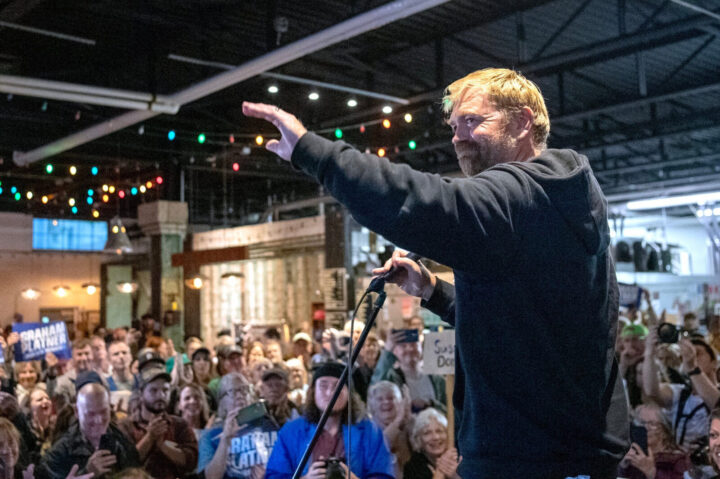
Senate candidate Graham Platner acknowledges the large crowd that attended Platner's town hall, Sept. 25, 2025, at Bunker Brewing in Portland, Maine.
This P.M. edition is reserved for our premium subscribers like you — offering a forward-focused read on what we’re tracking now and what’s coming next.
Today’s Daily Overtime was curated by JI U.S. Editor Danielle Cohen-Kanik.
📡On Our Radar
Notable developments and interesting tidbits we’re tracking
Three women who were romantically involved with Maine Senate candidate Graham Platner told The New York Times in a detailed exposé that the presumptive Democratic nominee had been “toxic,” physically threatening, misogynistic and unfaithful during their yearslong relationships.
One former partner, Lyndsey Fifield, confirmed Jewish Insider’s reporting from October that Platner had known what the Nazi symbol tattooed on his chest represented and had taught her the word for it, calling it “my Totenkopf”…
John Bolton, President Donald Trump’s national security advisor during his first term, intends to plead guilty to illegally retaining sensitive national security information, CNN reports, a charge that could carry up to five years in prison…
Trump told aides he would only consider resuming military action against Iran — besides the skirmishes in the Strait of Hormuz, which the administration has insisted do not qualify as warfare — if Iran were to kill American troops, U.S. officials told The Wall Street Journal…
Trump lambasted the House’s “meaningless vote” yesterday passing an Iran war powers resolution “right in the middle of my final negotiations to end the War with the Islamic Republic of Iran. Who would do such an unpatriotic thing,” he mused…
Lebanese President Joseph Aoun told reporters today that the ceasefire announced yesterday with Israel would take effect only after Hezbollah approved of the proposal, given that it’s contingent on the terror group’s disarmament and withdrawal from southern Lebanon; Hezbollah leader Naim Qassem then rejected the agreement, calling the negotiations “absurd, humiliating and insulting,” and claiming Hezbollah’s withdrawal at this time would mean “surrender, defeat and achieving the enemy’s goals”…
Israel and Hezbollah then continued to exchange fire in southern Lebanon, where a UNIFIL peacekeeper was killed today after a mortar shell struck a U.N. position in the area. The IDF said the launch trajectory of the mortar “clearly indicates” it was launched by Hezbollah…
The House rejected a war powers resolution by Rep. Rashida Tlaib (D-MI) that aimed to block U.S. support for the Israeli operations in Lebanon, after House Democratic leaders publicly came out against the effort. But the Democratic leaders said they would support a future effort by Tlaib along similar lines that will include carveouts for other U.S. operations inside Lebanon, indicating that Tlaib’s next effort is likely to pick up greater Democratic support…
Iran and Russia signed a $25 billion memorandum of understanding on nuclear cooperation, Iranian state media reported…
The Times takes a look at how Qatar and the U.S. came to dominate the global liquefied natural gas market and how disruptions to Qatari exports amid the Iran war are exposing the risks of that concentration while potentially increasing America’s energy and geopolitical leverage…
In its markup of the 2027 National Defense Authorization Act, the House Armed Services Committee blocked by a voice vote an effort to strip out a relatively routine provision on cooperation with Israel, which has become the subject of criticism and misinformation online. Both the chairman and ranking member of the committee said that critics were misrepresenting the provision and what it entails…
Republicans on the House Appropriations Committee proposed providing $315 million for the Nonprofit Security Grant Program in 2027, a slight increase from 2026 funding levels but far below the $1 billion that supporters of the program in the House and Jewish and other faith communities have advocated for, JI’s Marc Rod reports. Jewish groups called the proposal appreciated, but vastly inadequate, given the current threat level…
Sen. Chris Van Hollen (D-MD) called out recent AIPAC and crypto-linked spending in the crowded Democratic primary to replace retiring Rep. Steny Hoyer (D-MD), where AIPAC’s super PAC has invested heavily in support of Hoyer-endorsed Adrian Boafo, JI’s Matthew Kassel reports. Van Hollen accused the “outside groups” of “trying to buy this congressional seat,” and said the groups “do not have the voters’ interests at heart”…
A week after winning his primary runoff against anti-Israel Rep. Al Green (D-TX), Rep. Christian Menefee (D-TX) co-sponsored the Block the Bombs Act. Menefee was seen as the more pro-Israel choice in the race, who Jewish community leaders hoped would provide a fresh start after their relationship with Green collapsed…
Israeli Prime Minister Benjamin Netanyahu appointed Brig. Gen. Guy Markizeno as his military secretary, after his previous military secretary, Maj. Gen. Roman Gofman, became director of the Mossad earlier this week. Markizeno, who currently serves as military secretary to Defense Minister Israel Katz, has “extensive experience in coordinating between the political echelon and the military echelon,” Netanyahu said in a statement…
Israeli Foreign Minister Gideon Sa’ar announced Israel will open its first embassy in the Slovenian capital of Ljubljana, calling the rise of center-right Prime Minister Janez Janša, whose government was approved by the country’s parliament today, a “new chapter” in Israel-Slovenia relations after “years of the hostility of the previous government”…
The Times interviews Iranian soccer federation head Mehdi Taj, who said the Iranian national team’s U.S. visas have still not been approved less than two weeks before the team is set to play its first World Cup match in the country, while the team trains in Mexico rather than its planned home base in Arizona. Taj was formerly a commander in Iran’s Islamic Revolutionary Guard Corps…
⏩ Tomorrow’s Agenda, Today
An early look at tomorrow’s storylines and schedule to keep you a step ahead
Keep an eye out in Jewish Insider for a look at the new art exhibit at Manhattan’s Altneu synagogue grappling with the end of American Jewry’s “golden age.”
We’ll be watching to see how the latest revelations about Platner‘s past play out on the campaign trail ahead of Tuesday’s primary election, where Democratic Gov. Janet Mills is still on the ballot. Rep. Ro Khanna (D-CA) is expected to join Platner at his Get Out the Vote rally in Bar Harbor, Maine, tomorrow evening.
We’ll be back with the Daily Overtime on Monday. Shabbat Shalom!
Stories You May Have Missed
SITTING IT OUT

Hamawy, despite his past ties to a convicted terrorist, faced minimal scrutiny from outside groups — including many of his primary rivals
CAPITOL CONCERNS
‘Anybody that’s tied to that should never be elected to Congress, and if he is, I think should never serve on a national security committee,’ Rep. Michael McCaul told JI
Plus, Rubio defends Israel's Lebanon strikes
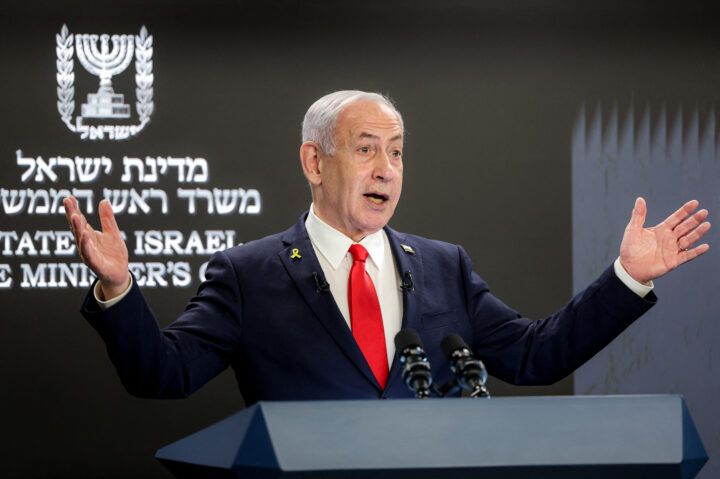
ABIR SULTAN/POOL/AFP via Getty Images
Israel's Prime Minister Benjamin Netanyahu gives a press conference at the Prime minister's office in Jerusalem on August 10, 2025.
This P.M. edition is reserved for our premium subscribers like you — offering a forward-focused read on what we’re tracking now and what’s coming next.
Today’s Daily Overtime was curated by JI U.S. Editor Danielle Cohen-Kanik.
📡On Our Radar
Notable developments and interesting tidbits we’re tracking
Israeli Prime Minister Benjamin Netanyahu told CNBC’s Sara Eisen today that he wants to start the process of winding down U.S. aid to Israel in the final two years of the Trump administration, as both countries work toward reaching a new memorandum of understanding, Jewish Insider’s Emily Jacobs reports.
“We’re now working on a memorandum of understanding which will bring down the aid,” Netanyahu said. “I want it to start in the last two years of the Trump administration and I want it to keep going down, coming to zero.” His comments suggest he’s looking to begin phasing out aid even while the current MOU is set to provide Israel with $3.8 billion in U.S. military assistance annually through FY 2028…
Despite President Donald Trump’s public acknowledgement of a confrontational phone call with Netanyahu regarding Israeli operations in Lebanon, Secretary of State Marco Rubio largely defended Israel’s attacks against the Lebanese terrorist group, JI’s Marc Rod reports.
Rubio said at a House Foreign Affairs Committee hearing today that Hezbollah reached out to the U.S. government through Lebanese authorities and said that it would stop launching missiles into Israeli territory if Israel did not attack Beirut, but Hezbollah went back on that agreement and launched rockets at Israel within hours…
Trump avoided directly answering a question from reporters this afternoon if the U.S. ceasefire with Iran still stands, after Iran launched several ballistic missile attacks around the region last night.
“There is a reason for certain things, and there’s usually a reason that sometimes makes sense. We got it, we nipped it in the bud very quickly … but some people would say they were slightly provoked because we took a strong action for a different reason. So they were reciprocating,” the president said…
Sens. John Fetterman (D-PA) and Dave McCormick (R-PA) told JI’s Emily Jacobs on Tuesday that they both believe antisemitism is worse on the left than on the right, arguing that the electoral success of far-left candidates with antisemitic records in Democratic primaries distinguishes the left from the right, as similarly controversial candidates have struggled in GOP primary contests…
The anti-Israel American Priorities super PAC pledged to spend $2 million backing New York City Mayor Zohran Mamdani’s chosen congressional candidates: former City Comptroller Brad Lander, running to unseat Rep. Dan Goldman (D-NY); Darializa Avila Chevalier, challenging Rep. Adriano Espaillat (D-NY); and Claire Valdez, running to succeed Rep. Nydia Velazquez (D-NY). All three candidates have denounced super PAC spending in the past…
Maine Senate candidate and presumptive Democratic nominee Graham Platner released an internal poll showing he still leads his general election opponent, Sen. Susan Collins (R-ME), by a margin of four points after potential voters are told about his most recent scandals. The latest figures from Platner’s camp mark a drop from the roughly eight-point advantage the Democratic candidate has held in previous polls…
In the race to succeed retiring Rep. Nancy Pelosi (D-CA), state Sen. Scott Wiener and Connie Chan, a member of the San Francisco Board of Supervisors who was endorsed by Pelosi, will advance to the general election. With half of votes counted so far in the jungle primary, Wiener won 41% and Chan received 28%, while Saikat Chakrabarti, a wealthy tech entrepreneur aligned with the anti-Israel left, came in third with 15%…
In Montana’s 1st Congressional District, where Rep. Ryan Zinke (R-MT) is retiring, smokejumper Sam Forstag prevailed in the Democratic primary, where several of the candidates, including Forstag, had expressed views critical of Israel. Forstag now faces an uphill battle against Trump-endorsed Republican military veteran Aaron Flint in the general election, given the district’s GOP leanings…
The NYPD arrested an NYU student today for raising a flag that displayed swastikas and a Star of David atop a university building last month. The perpetrator was a fourth-year NYU student at the time of the incident and has not yet received a diploma, a university spokesperson told JI’s Haley Cohen. The New York Times reported that the man is named Alexander Stepnowsky, a music technology student who was charged with a hate crime and trespassing…
⏩ Tomorrow’s Agenda, Today
An early look at tomorrow’s storylines and schedule to keep you a step ahead
Keep an eye out in Jewish Insider for a look at why pro-Israel groups chose not to engage in New Jersey’s 12th Congressional District to oppose anti-Israel Democratic nominee Adam Hamawy in yesterday’s primary election.
The House Armed Services Committee will hold a markup of the 2027 National Defense Authorization Act, where Rep. Ro Khanna (D-CA) said he will attempt to strip out a routine provision facilitating expanded U.S.-Israel cooperation.
Treasury Secretary Scott Bessent will testify before the House Ways & Means Committee.
New York City Council Speaker Julie Menin and City Councilmember Virginia Maloney will meet with Manhattan Holocaust survivors at UJA-Federation of New York headquarters to mark Holocaust Survivor Day.
Brandeis University’s Jonathan Sarna will sit in conversation with Princeton’s Laura Arnold Leibman at Temple Emanu-El in New York City to discuss the Jewish experience of the American Revolution, a month ahead of the U.S. Semiquincentennial.
UN Watch will hold its annual gala in Geneva, where the group will honor free speech and women’s rights activists Abnousse Shalmani and Ayaan Hirsi Ali.
Stories You May Have Missed
PAC PLAY
State Del. Adrian Boafo is Steny Hoyer’s favored candidate, and is getting support from Democratic leaders across the state
PLATNER POSITIONS
Most aren’t calling for him to leave the race, or throwing their support behind Gov. Janet Mills, who still remains on the primary ballot even after suspending her campaign
Plus, Trump's unconventional pick for intel chief
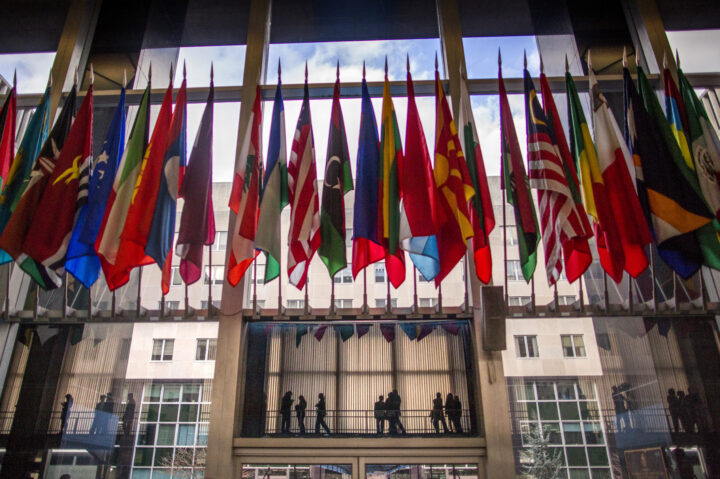
Brooks Kraft LLC/Corbis via Getty Images
International flags at the State Department in Washington.
This P.M. edition is reserved for our premium subscribers like you — offering a forward-focused read on what we’re tracking now and what’s coming next.
Today’s Daily Overtime was curated by JI U.S. Editor Danielle Cohen-Kanik.
📡On Our Radar
Notable developments and interesting tidbits we’re tracking
President Donald Trump again dismissed reports that Iranian negotiators have cut off dialogue with the U.S. as “false and erroneous,” writing in a post on Truth Social that discussions have continued “four days ago, three days ago, two days ago, one day ago, and today”…
About the current talks, Secretary of State Marco Rubio told the Senate Foreign Relations Committee today that the U.S. is not offering Iran any sanctions relief in exchange for reopening the Strait of Hormuz, and that sanctions relief would only be on the table if Tehran makes concessions related to its nuclear program in the next phase of negotiations, Jewish Insider’s Marc Rod reports…
The Trump administration sent a fresh slate of diplomatic nominations to the Senate for approval today, but noticeably absent was a full-throated push to fill critical ambassadorial vacancies across the Middle East and North Africa, even as the Iran conflict has increased the need for coordination and dialogue in the region, JI’s Matthew Shea reports.
The newest list of nominees included only two names for the MENA area: Donald Blome, tapped to serve as assistant secretary of state for Near Eastern affairs — a role that acts as the principal advisor on U.S. foreign policy across the region — and Nick Oberheiden, nominated to be U.S. ambassador to Egypt…
In a highly unusual move, Trump appointed Bill Pulte, the director of the Federal Housing Finance Agency and chairman of Fannie Mae and Freddie Mac, as acting director of national intelligence, after DNI Tulsi Gabbard announced she will resign effective June 30. Pulte, who has no prior experience in an intelligence role, has been a staunch Trump loyalist and led some of the president’s retribution efforts against his political adversaries…
The fourth round of Israel-Lebanon diplomatic talks began at the State Department today, and is expected to last through tomorrow…
At an emergency meeting of the U.N. Security Council yesterday requested by France, every country except for the U.S. called for Israel to immediately withdraw from southern Lebanon and deescalate military hostilities in the country…
The heads of the Conference of Presidents of Major American Jewish Organizations met today with Egyptian President Abdel Fattah El-Sisi and Maj. Gen. Hassan Rashad, head of the country’s General Intelligence Service, in Cairo, where they discussed U.S.-Egypt relations and Middle East security…
A new poll of 600 likely voters in the Michigan Senate Democratic primary conducted for the campaign of physician Abdul El-Sayed found him leading the pack with 34% of the vote, two months ahead of Election Day. Rep. Haley Stevens (D-MI) came in second with 31% and state Sen. Mallory McMorrow trailed at 19%…
Harmeet Dhillon, the assistant attorney general for civil rights, appearing at the American Jewish Committee’s Global Forum in Washington, condemned the “egregious examples of antisemitism that have transpired here at home on American soil” since the Oct. 7, 2023, attacks on Israel as “devastating and antithetical to our values as a nation,” JI’s Emily Jacobs reports…
The backlash to the participation of Israeli Finance Minister Bezalel Smotrich and other far-right Israeli politicians in the Israel Day on Fifth parade in New York City over the weekend continues: Mark Treyger, the head of the Jewish Community Relations Council of New York, which organizes the parade, told The New York Times that he had been blindsided by their attendance.
“There was a complete lack of transparency here,” Treyger said, adding that the Israeli consulate in New York had declined to share with him who would be attending. Dan Rosenthal, a top official at the UJA-Federation of New York, wrote on X that both New York City Mayor Zohran Mamdani and Smotrich “believe in a one-state solution”…
White House Correspondents’ Association President Weijia Jiang announced that the Correspondents’ Dinner will be rescheduled for July 24, after April’s event was cut short by a shooting attack. Trump said he will once again give remarks at the gathering, which will take place at the Waldorf Astoria hotel in Washington…
⏩ Tomorrow’s Agenda, Today
An early look at tomorrow’s storylines and schedule to keep you a step ahead
Keep an eye out in Jewish Insider for the results of today’s high-stakes Democratic primary in New Jersey’s 12th Congressional District, where plastic surgeon Adam Hamawy, whose past terror ties have raised red flags about his candidacy, is the favorite to win.
Secretary of State Marco Rubio will be back on the Hill testifying before the House Foreign Affairs Committee and a Senate Appropriations subcommittee, while Homeland Security Secretary Markwayne Mullin will appear before the House Homeland Security Committee.
State Department antisemitism envoy Yehuda Kaploun and the Argentine Embassy in Washington will co-host a commemoration ceremony at the U.S. Institute of Peace marking the 32nd anniversary of the bombing of the Argentine Israelite Mutual Association (AMIA), with remarks from House Foreign Affairs Committee Chairman Brian Mast (R-FL) and AMIA President Osvaldo Armoza.
The Jewish Democratic Council of America will host a candidate forum for the New York 12th Congressional District Democratic primary at the Streicker Center in New York City.
Stories You May Have Missed
Hard Ro To Hoe

His critics once saw him as an ally, but fear he’s pandered to extremists as he raises his national profile ahead of the 2028 presidential election
GROWING THREAT

‘You just have Israeli soldiers completely unaware. If you can’t hear the drone, if you don’t know that it’s there until it’s too late, it’s too late,’ said FDD’s David Daoud
Plus, Huckabee says next MOU will end Israel aid
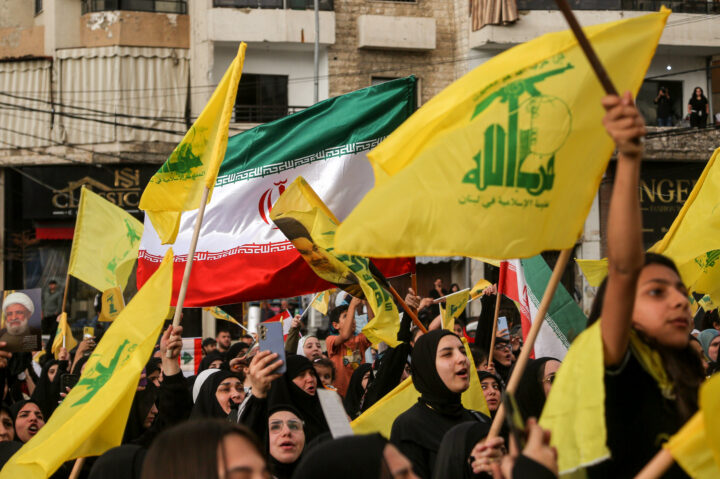
Marwan Naamani/picture alliance via Getty Images
Pro-Iranian Hezbollah supporters wave the party flags during a ceremony in a southern Beirut suburb on May 5, 2026.
This P.M. edition is reserved for our premium subscribers like you — offering a forward-focused read on what we’re tracking now and what’s coming next.
Today’s Daily Overtime was curated by JI U.S. Editor Danielle Cohen-Kanik.
📡On Our Radar
Notable developments and interesting tidbits we’re tracking
President Donald Trump announced that Israel would not carry out strikes against Hezbollah in Beirut in exchange for the terror group halting its attacks on northern Israel, hours after Israeli Prime Minister Benjamin Netanyahu made a statement instructing the IDF to strike Hezbollah targets in the Lebanese capital.
While Trump said he had a “very good call with Hezbollah” as part of the negotiations, the Lebanese Embassy in Washington later clarified that the message was relayed through Lebanese officials rather than communicated directly from the president to the terror group.
Netanyahu said after the announcement that he had informed Trump that “if Hezbollah does not stop attacking our cities and civilians, Israel will strike terrorist targets in Beirut,” while the IDF will continue hitting targets in southern Lebanon as planned…
The news came hours after Iranian state-linked media reported that Tehran had suspended negotiations with the United States and warned it could direct its proxies, including the Houthis in Yemen, to target shipping through the Bab el-Mandeb Strait — another critical global trade route — in response to Israel‘s continued military operations against Hezbollah…
Trump disputed the reporting, writing on Truth Social this afternoon that “talks are continuing, at a rapid pace, with the Islamic Republic of Iran,” despite having told NBC News earlier in the day that he would welcome a pause in talks if the reports were accurate. “I think we’ve been talking too much, if you want to know the truth,” Trump told the outlet. “I think going silent would be very good, and that could be for a long time”…
Amid the diplomatic dance, military operations have escalated: The U.S. struck several sites in Iran over the weekend after Iran downed an American MQ-1 drone. U.S. forces also intercepted two Iranian ballistic missiles targeting American forces based in Kuwait last night, CENTCOM said…
Michael Makovsky, the president and CEO of the Jewish Institute for National Security of America, criticized the Trump administration’s recent handling of the U.S. war in Iran, telling Jewish Insider’s Emily Jacobs on Friday, before the events of this weekend, that the “U.S. has lost the plot on Iran” and that a deal with the regime now “wouldn’t be worth the paper it’s written on”…
Responding to claims from former National Counterterrorism Center head Joe Kent that U.S. aid to Israel does not confer benefits to America, U.S. Ambassador to Israel Mike Huckabee defended the relationship and said the next U.S.-Israel memorandum of understanding, after the current one expires in 2028, will end aid to Israel and “be based on trade”…
Republican Jewish Coalition CEO Matt Brooks celebrated his group’s role in ousting Rep. Thomas Massie (R-KY) in his primary election earlier this month at the organization’s “America 250”-themed gala held last night in Manhattan, JI’s Haley Cohen reports.
“Being anti-Israel in today’s Republican Party is not — unlike the Democratic Party — a path to success,” said Brooks, who called defeating Massie a “critical victory” for the direction of the GOP and conservative movement…
Pennsylvania Gov. Josh Shapiro told CNN that he believes Israel is being unfairly singled out for criticism as a Jewish state: “For those who do not want there to be a Jewish state, oftentimes they will predicate their views on this notion that being grounded in a religion and being a democracy can’t coexist,” he said.
“I think it’s important to point out the hypocrisy of that view when there are 46 majority Muslim nations, 23 of which have Islam as their official religion … and only one has Judaism as their official religion, and yet we’re focused on just the Jewish state,” Shapiro continued. (Important to note: While Israel has a Basic Law declaring it the nation-state of the Jewish people, the country does not have an official state religion)…
El Al announced it will restart nonstop flights between Israel and San Francisco on Oct. 25, citing high demand for the route between the tech hubs, which was paused in 2020 at the beginning of the COVID-19 pandemic. The three weekly flights will be numbered LY49, in a nod to the San Francisco 49ers NFL team…
The Israeli Ministry of Defense said France has barred Israeli officials from participating in the Eurosatory defense show in Paris later this month. Israeli defense firms, which can participate but will not have a dedicated Israeli national pavilion, can only showcase air-defense systems and are prohibited from displaying offensive weapons systems…
⏩ Tomorrow’s Agenda, Today
An early look at tomorrow’s storylines and schedule to keep you a step ahead
Keep an eye out in Jewish Insider for coverage of tomorrow’s key primary elections across the country — including House races in New Jersey, California, Montana, Iowa, New Mexico and South Dakota, California’s gubernatorial race and Montana’s open-seat Senate race — several of which will serve as a referendum on the Democratic Party’s progressive versus establishment divide.
On the Hill, Secretary of State Marco Rubio will appear before the Senate Foreign Relations Committee and the House Appropriations Committee. Homeland Security Secretary Markwayne Mullin will testify at a Senate Appropriations Committee hearing, and acting Attorney General Todd Blanche will speak at a House Appropriations Committee hearing. The Senate Select Committee on Intelligence will also hold a closed intel hearing.
Israeli Prime Minister Benjamin Netanyahu and President Isaac Herzog will attend a command change ceremony at Mossad headquarters to inaugurate Maj. Gen. Roman Gofman as the new head of the agency, after the Israeli High Court rejected petitions today calling for Gofman’s appointment to be annulled on ethical and procedural grounds.
The Israel Democracy Institute will kick off its two-day Eli Hurvitz Conference on Economy and Society in Jerusalem.
Stories You May Have Missed
ANGELENO AFFAIRS

The race features an embattled Mayor Karen Bass facing a spirited challenge from her right in reality TV star Spencer Pratt, and from her left in City Councilmember Nithya Raman
BIG SKY BATTLE
Two of the four Democrats in the race have also faced scrutiny over antisemitic activity online
Plus, Jill Biden's advice to Joe on Bibi
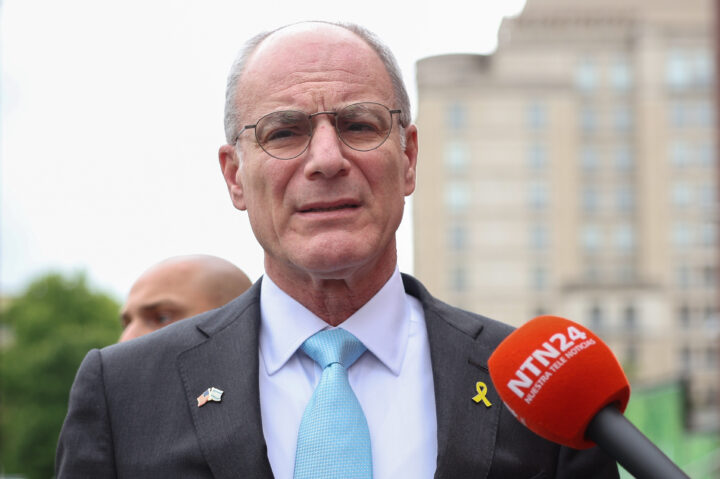
Tasos Katopodis/Getty Images
Israeli Ambassador to the United States Yechiel Leiter
This P.M. edition is reserved for our premium subscribers like you — offering a forward-focused read on what we’re tracking now and what’s coming next.
Today’s Daily Overtime was curated by JI U.S. Editor Danielle Cohen-Kanik.
📡On Our Radar
Notable developments and interesting tidbits we’re tracking
Despite recent clashes between the U.S. and Iran — including Iranian missile and drone attacks around the region last night — negotiators from both countries have reportedly agreed to terms for a 60-day ceasefire with continued negotiations on Iran’s nuclear program, U.S. sources confirmed to the White House press pool.
President Donald Trump has not yet given his stamp of approval to the deal, Axios reports, and has told mediators he wants a couple of days to consider it…
In the meantime, Iranian state media reported a renewed exchange of fire in the Strait of Hormuz this afternoon, as Iranian forces were said to have fired “warning shots” at four vessels and engaged air defenses against a “hostile aircraft”…
Treasury Secretary Scott Bessent warned that the U.S. “will not tolerate any effort to impose a tolling system in the Strait of Hormuz,” specifically cautioning Oman that the Treasury Department will “aggressively target” any actors involved in facilitating such tolls. Bessent said during a press conference this afternoon that he spoke with the Omani ambassador to the U.S. this morning who assured him Muscat has no plans to do so…
In an excerpt of her forthcoming memoir, View From the East Wing, shared with The Atlantic, former First Lady Jill Biden recalls leaving her husband notes on the bathroom mirror during his time as president, including her views on Israel’s war in Gaza. “Net has to stop,” she once wrote, in a reference to Israeli Prime Minister Benjamin Netanyahu. Before a phone call between him and President Joe Biden, she advised, “Be strong. Don’t let BN use your goodness”…
A week after describing J Street as “a cancer within the Jewish community,” Israeli Ambassador to the U.S. Yechiel Leiter doubled down on his critique of the organization, stating that the liberal advocacy group’s recent actions are “decidedly not pro-Israel,” Nira Dayanim reports for Jewish Insider.
Speaking today at the Re-Charging Reform Judaism summit at the Stephen Wise Free Synagogue in Manhattan, Leiter was resolute, but more measured in his criticism: “I believe the tent, as we call it, should be wide and as inclusive as possible. But it cannot be inclusive to those who are contributing to the efforts of those seeking the collapse of the tent,” he said…
Rep. Jared Moskowitz (D-FL) announced today that he would seek reelection in a new South Florida House district recently drawn to favor Republicans, after his own was largely erased, JI’s Matthew Kassel reports, setting the stage for what is expected to be a costly and competitive race…
Rep. Josh Gottheimer (D-NJ) met with UAE National Security Advisor Tahnoon bin Zayed Al Nahyan in Abu Dhabi today, where the two “reviewed the distinguished strategic relations” between the UAE and U.S…
Kip Talley, the chief of staff to Rep. Mike Collins (R-GA) — who is currently the front-runner for the GOP runoff in Georgia to take on Sen. Jon Ossoff (D-GA) — used his position to push to free Charles Johnson, a notorious Holocaust denier who was jailed for contempt of court, according to text messages reviewed by Slate. Talley sent the messages in a group chat that also included neo-Nazis Nick Fuentes and Richard Spencer…
A new Democratic super PAC called Project 218 dropped nearly $400,000 in support of progressive organizer Sue Altman in New Jersey’s 12th Congressional District Democratic primary, just days ahead of the election next week. The paid ads are intended to counter the nearly $1.5 million spent by the anti-Israel American Priorities super PAC in support of Altman’s opponent, Adam Hamawy, who has faced scrutiny over his work with a group tied to Al-Qaida…
New York City Mayor Zohran Mamdani is considering endorsing democratic socialist Darializa Avila Chevalier in her insurgent bid to unseat Rep. Adriano Espaillat (D-NY), according to The New York Times, changing course from his pledge to back Espaillat, which came after the congressman endorsed Mamdani in the mayoral general election…
UJA-Federation of New York purchased 20,000 bags of Bamba peanut snacks in response to the Park Slope Food Coop’s decision to boycott Israeli-made products, which the federation intends to distribute at the Israel Day parade in the city on Sunday…
Democratic Michigan Gov. Gretchen Whitmer, seen as a potential presidential contender, ruled out a run for the White House in the next election, telling a local Fox outlet, “I think there will be a robust group of people running for president. I will not be one of them in 2028”…
CBS Editor-in-Chief Bari Weiss tapped former New York Times and Vanity Fair contributor and documentarian Nick Bilton as executive producer of “60 Minutes,” after the former head of the program, Tanya Simon, was fired today amid disagreements over issues including editorial independence of the top-rated weekly news program…
Mutra, a high-end kosher restaurant in North Miami run by Israeli chef Raz Shabtai, received a Michelin star today, which the restaurant said makes it the first fully kosher establishment to do so…
⏩ Tomorrow’s Agenda, Today
An early look at tomorrow’s storylines and schedule to keep you a step ahead
Keep an eye out in Jewish Insider for a look at how Israel and antisemitism have become a flashpoint in the Democratic primary for Montana’s 1st Congressional District. A sneak peek:
“Though the district leans Republican, that hasn’t stopped a majority of Democrats in the field from racing to the left on Israel policy, a dynamic that was on clear display at a recent debate.”
Rep. Jim Clyburn (D-SC) will host his annual Famous Fish Fry tomorrow in Columbia, S.C., an event that has evolved into a key stop for Democratic presidential hopefuls. Among those with an eye on 2028, Rep. Ro Khanna (D-CA) and Kentucky Gov. Andy Beshear are expected to attend the gathering.
Israeli and Lebanese military representatives are expected to hold discussions at the Pentagon tomorrow, Israeli media reports, without diplomatic representation.
Defense Secretary Pete Hegseth is in Singapore, where he will deliver remarks at the Shangri-La Dialogue, a high-level defense summit, on Saturday.
The annual “Israel Day on Fifth” parade will take place in New York City on Sunday, with organizers predicting “one of the biggest turnouts ever” as well as the largest-ever Knesset delegation, JI’s Will Bredderman reports. Breaking with 61 years of tradition, Mayor Zohran Mamdani will skip the festivities, while NYPD Commissioner Jessica Tisch will serve as grand marshal.
Elsewhere in the city on Sunday, the Republican Jewish Coalition will hold its gala celebrating the forthcoming 250th anniversary of the United States with speakers including U.S. Ambassador to the U.N. Mike Waltz, Israeli Ambassador to the U.N. Danny Danon, Knesset Speaker Amir Ohana, Rep. Randy Fine (R-FL) and Republican Nassau County Executive Bruce Blakeman, who is running for New York governor.
In Washington, the American Jewish Committee’s Global Forum kicks off on Sunday with a plenary featuring former Israeli hostages Keith and Aviva Siegel, Vanderbilt University Chancellor Daniel Diermeier and AJC CEO Ted Deutch.
We’ll be back with the Daily Overtime on Monday. Shabbat Shalom!
Stories You May Have Missed
SCOOP
Two DSA-backed challengers have a credible shot at winning seats, while Rep. Dan Goldman is down in polls against Brad Lander
Q&A
‘The Nazis may have the right to post, but also the Nazis are bad and sick and stupid,’ Rogers told JI
Vance has struggled to appease a coalition of anti-war critics on the populist right who feel his alignment with Trump’s foreign policy agenda represents not only a betrayal of their values but also the noninterventionist views he long espoused
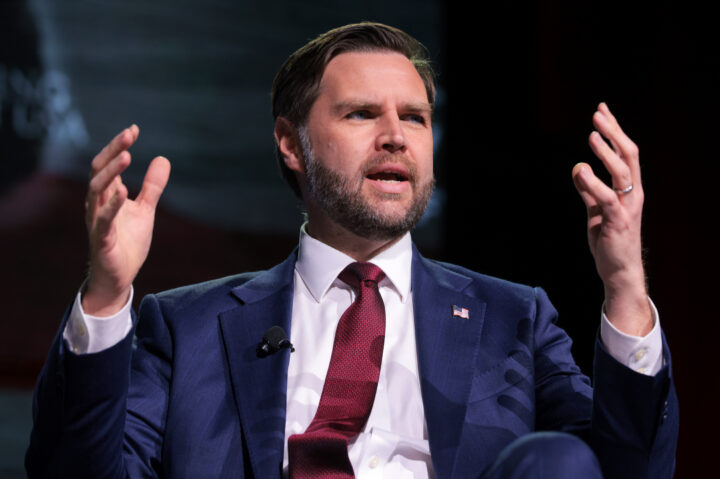
Chip Somodevilla/Getty Images
U.S. Vice President JD Vance speaks during a Turning Point USA event at Akins Ford Arena at the Classic Center on April 14, 2026 in Athens, Georgia.
As Vice President JD Vance has recently found himself navigating tenuous negotiations between the United States and Iran, his central role in the talks to end the war is highlighting his own vulnerabilities on the domestic front — where he is facing pushback from the isolationist right that is seen as part of his coalition.
In many ways, Vance’s political troubles recall his predecessor, former Vice President Kamala Harris, who in her 2024 presidential campaign drew fierce protests from far-left activists who objected to former President Joe Biden’s support for Israel amid the war in Gaza.
Harris, who has grown more openly critical of Israel since losing the race and leaving office, strained both to articulate a consistent message on Gaza that would satisfy the far and center left and to distance her campaign from an aging, unpopular president whose approach to Israel, according to her recent memoir, was not fully aligned with her own.
Anti-Israel activists continue to insist, even years after the election, that Harris’ association with Biden while he supported Israel’s war against Hamas cost her votes that contributed to her defeat, while pro-Israel Democrats claim she failed to draw red lines around growing extremism within the party that alienated moderates, and is now inflecting the midterm elections. More recently, the former vice president faced anti-Israel hecklers during a book tour last year.
In recent weeks, Vance, who is widely seen as a top 2028 presidential prospect, has likewise struggled to appease a restive coalition of anti-war critics on the populist right who feel his alignment with President Donald Trump’s robust foreign policy agenda represents not only a betrayal of their values but also the noninterventionist views he himself had long espoused.
Last week, in a disruption reminiscent of Harris’ campaign experience, Vance was notably heckled during a speaking appearance at a Turning Point USA event held at the University of Georgia, where an attendee interrupted his comments to accuse the Trump administration of supporting “genocide” in Gaza and “killing children.”
“If you want to complain about what happened in Gaza, why don’t you complain about Joe Biden and the last administration? We’re the administration that solved that problem,” Vance said in response to the heckler, after defending what he called Trump’s “peace agreement in Gaza.”
He also touted his so far unsuccessful efforts to broker a resolution to the Iran war — about which he reportedly voiced resistance behind the scenes before Trump greenlit the campaign in late February — saying he is pursuing the president’s goal to achieve an ambiguously outlined “grand bargain” on nuclear enrichment.
“The United States had never had meetings at that level with the Iranian government in 49 years,” Vance said at the event, days after returning from talks with Iran in Islamabad where he tried and failed to reach a diplomatic agreement.
The vice president was expected on Tuesday to leave for resumed negotiations in the Pakistani capital as a two-week ceasefire was set to soon expire, but his trip was put on hold and the ceasefire extended, raising questions about the prospect of a swift settlement.
While Vance had sought to keep the war at arm’s length in the initial days after the attack on Iran, his high-profile position in the negotiation process has now forced him to identify more closely with the sort of foreign military conflict he had built his political career on opposing.
As a junior senator from Ohio, Vance even wrote in a January 2023 opinion piece that he was supporting Trump’s reelection campaign because the president “started no wars” in his first four years in the White House.
With Trump’s approval ratings trending downward — and as Republicans fret that the war in Iran as well as rising gasoline prices could undercut their chances of holding the House and Senate in the midterms — much is riding on Vance’s efforts to put an end to the conflict as he lays the groundwork for a potential White House bid.
While polling has shown that Trump’s war aims continue to garner widespread backing within his party, including the MAGA wing, independent voters who were a key part of his winning coalition in 2024 are divided, as are younger voters whom Vance has targeted.
In Georgia last week, Vance seemed to acknowledge disappointment among audience members over the war. “I recognize that young voters do not love the policy we have in the Middle East, OK,” he said. “I understand.”
“I’m not saying you have to agree with me on every issue,” he said at the Turning Point event. “What I am saying is: Don’t get disengaged because you disagree with the administration on one topic. Get more involved, make your voice heard even more. That is how we ultimately take the country back.”
Ahead of 2028, Vance is no doubt hoping that his involvement in the Iran negotiations will help yield a deal that satisfies the president and that he can wave before the far-right base he has continued to indulge, even as it has grown increasingly hostile to Jews and Israel.
Meanwhile, Vance has at the same time made some overtures to pro-Israel Republican donors skeptical of his close relationship with Tucker Carlson, a vocal detractor of Israel whose commentary regularly veers into antisemitic rhetoric that the vice president has ignored or downplayed.
But as Harris’ problems demonstrated two years ago, Vance may ultimately find it is not possible to have it both ways.
The lack of clarity is reason for concern in Jerusalem, where the line on any potential American agreement with Iran has long been zero enrichment, extensive limitations on ballistic missiles and regional proxy activity
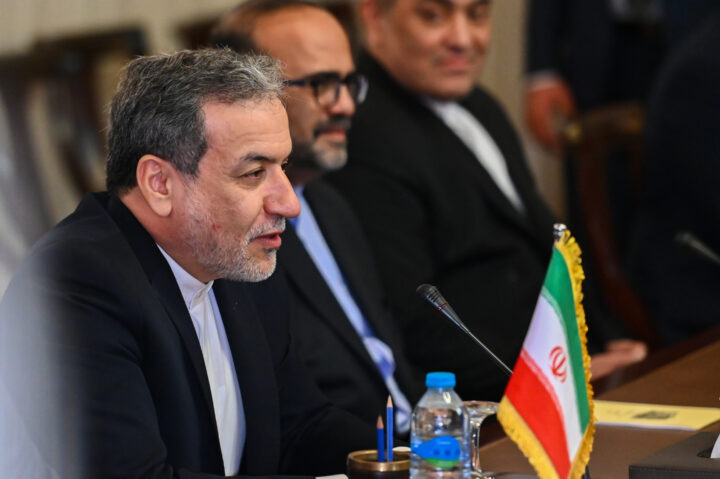
Sayed Hassan/Getty Images
Iran's Foreign Minister Abbas Araghchi meets with his Egyptian counterpart on October 17, 2024 in Cairo, Egypt.
For a brief moment on Wednesday, it looked like Iran talks were off. Tehran wanted to move their location from Turkey to Oman and narrow the scope of the negotiations to its nuclear program. The Trump administration saw this as a bad sign, and anonymous American officials began leaking to the media that Iran wasn’t taking the negotiations seriously.
Secretary of State Marco Rubio acknowledged that the negotiations were uncertain in remarks to the press at the Critical Minerals Ministerial, a conference of 43 foreign and other ministers: “As far as the talks are concerned, I think the Iranians had agreed to a certain format. For whatever reason, it changed … We’ll see if we can get back to the right place. The U.S. is prepared to meet them,” he said.
Meanwhile, President Donald Trump relayed a warning to Iranian Supreme Leader Ali Khamenei in a prerecorded interview with NBC News: “I would say he should be very worried.”
It didn’t take long – just over two hours, to be precise – between the news of the apparent collapse of talks between the U.S. and Iran and Iranian Foreign Minister Abbas Araghchi’s announcement on X that they were back on: “Nuclear talks with the United States are scheduled to be held in Muscat on about 10 am Friday.” Anonymous American sources then confirmed to various media that negotiations were set to take place, after leaders of Arab and Muslim countries urged the Trump administration to give them a chance, despite Iran’s prevarications.
Still, Araghchi’s statement alludes to one of the major reasons that the talks were, briefly, called off: Are they only “nuclear talks” or are they about a range of malign behavior by the Islamic Republic?
The Iranian answer to that question is clear, but the Trump administration sent mixed messages.
The Trump interview with NBC provided few clues. The president expressed support for the protesters against the Iranian regime, saying “we’ve had their back.”
Yet, in a bit of revisionist history, he portrayed his recent threats to Iran as being solely about the nuclear file: “They were thinking of starting a new [nuclear] site in a different part of the country. We found out about it and said, ‘you do that, we’re going to do very bad things to you,'” Trump said. He didn’t mention ballistic missiles in the interview.
Rubio, however, specified that “as far as the topics [of negotiations] and what the agenda needs to be, I think that in order for talks to actually lead to something meaningful, they will have to include certain things, and that includes the range of their ballistic missiles, that includes the sponsorship of terrorist organizations across the region, that includes the nuclear program and that includes the treatment of their own people.”
“Beyond that,” Rubio said, “the president retains a number of options as to how to respond to [the violent crackdown on protesters] and future events.”
Vice President JD Vance told Megyn Kelly that stopping Iran from getting a nuclear weapon was the main concern: “In a perfect world, would I love it if a bunch of freedom-loving Iranians… had a government that was much more friendly to the United States of America? Would that be a good thing? Absolutely.”
“But fundamentally,” he added, “the president has been focused … on this question of ensuring that they don’t get a nuclear weapon. .. I feel 100% confident that even if the Iranians were rushing toward a nuclear weapon, they couldn’t get one during the Trump administration. But we’re not thinking about the next three years; we’re thinking about the next 30 years.”
Vance argued that “global nuclear proliferation” is “the biggest threat to the world,” and as such, Trump is seeking to stop Iran from obtaining nuclear weapons so that other countries in the region do not seek to attain them, as well, and is willing to work with unfriendly countries like Russia and China to achieve that because it is “the most important thing you can do for peace and stability.”
The lack of clarity is reason for concern in Jerusalem, where the line on any potential American agreement with Iran, going back to the Obama-era negotiations, has long been zero enrichment and extensive limitations on ballistic missiles and regional proxy activity.
Israel regarded U.S.-Iran negotiations with deep skepticism even before the latest bumps on the road to Oman, with Israeli Prime Minister Benjamin Netanyahu telling White House Special Envoy Steve Witkoff during his visit to Israel on Tuesday that “Iran proved time after time that its promises cannot be trusted.” Talks that do not include missiles and proxies will likely be viewed with alarm.
The Trump advisors said the president felt the Israelis were ‘out of control' and it was 'time to be very strong' with them
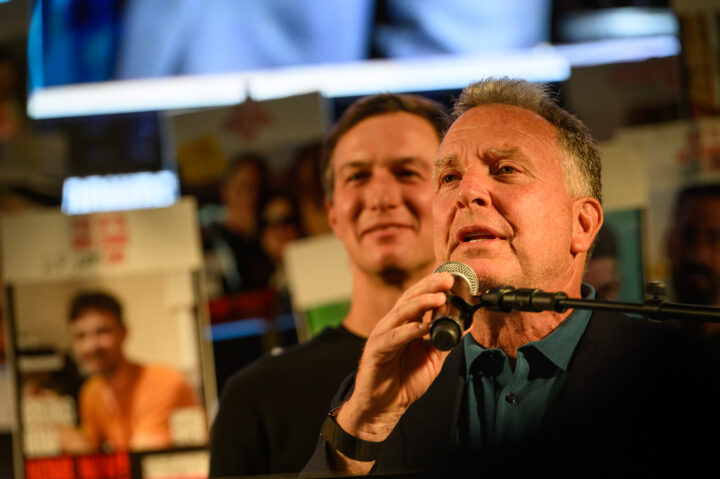
Alexi Rosenfeld/Getty Images
U.S. Middle East envoy Steve Witkoff (C), flanked by Jared Kushner (L), speaks at the weekly 'Bring Them Home' rally in Hostage Square Hostages Square on October 11, 2025 in Tel Aviv, Israel.
Two clashing narratives have emerged about Israel’s strike on a meeting of senior Hamas terrorists in Doha, Qatar, in September, following the release of a preview of an interview with U.S. Middle East envoy Steve Witkoff and Jared Kushner on CBS’ “60 Minutes” program that aired on Sunday evening.
Both narratives posit that the strike hastened the arrival of President Donald Trump’s 20-point plan to free the hostages and end the war. Figures close to Israeli Prime Minister Benjamin Netanyahu said that the attack pushed an anxious Qatar, Hamas’ patron and host of its senior officials, to do more to get the terrorist organization across the finish line.
Trump’s negotiators, however, presented a scenario in which the president, unhappy about the strike, pressured Israel to end the war.
Of the Israeli strike on Doha, Witkoff said that he and Kushner, who in recent months has also played a key role in the administration’s Middle East efforts, “felt a little bit betrayed.”
Kushner added, “I think [Trump] felt like the Israelis were getting a little bit out of control in what they were doing, and it was time to be very strong and stop them from doing things he thought were not in their long-term interest.”
Witkoff said that Qatar, which served as a key mediator between Hamas and Israel for much of the negotiations, said that, following the strike, “we had lost the confidence of the Qataris, so Hamas went underground. It was very difficult to get to them … and it became very, very evident as to how important, how critical [Qatar’s] role was.”
Jerusalem, however, had a different version of the events, as told by Israeli Strategic Affairs Minister Ron Dermer, Netanyahu’s closest confidante, in an Israel Hayom column by journalist Amit Segal.
Israelis involved in the negotiations viewed Qatar as a “spoiler,” such as when they talked Hamas out of accepting a deal proposed by Egypt earlier in the year, according to Segal.
Dermer, Segal wrote, “links the strike to the agreement … The Qataris, it turns out, were convinced that by agreeing to host the negotiations, they had obtained immunity from Israeli strikes on their soil. From their perspective, the strike was a blatant, offensive breach of the commitment. … The Americans’ genius was to convert that negative energy into fuel to propel negotiations to their goal. ‘You want Israel to stop? Then let’s end the war.'”
Netanyahu’s office and the White House closely coordinated throughout subsequent talks to end the war, Segal reported. Then came an agreement backed by several Arab states calling for Hamas to disarm and without the immediate involvement of the Palestinian Authority.
Reactions in Israel to the “60 minutes” preview fell on predictable lines. Netanyahu’s critics said that the U.S. officials’ comments demonstrated that the prime minister did not want to enter the agreement, but instead was pushed into it by Trump.
Israeli Opposition Leader Yair Lapid argued that Witkoff and Kushner’s comments made clear that “after the failed attack on Doha, Trump thought that Netanyahu lost control and forced an agreement on Netanyahu that he didn’t want. … An American administration has never described an Israeli government like this.”
Ha’aretz journalist Amir Tibon, who lived in one of the kibbutzim attacked by Hamas on Oct. 7, 2023, posted on X: “Witkoff and Kushner say in their own voices: Trump understood that Netanyahu was not on the right track and acted aggressively against him to reach a ceasefire and free the hostages.”
Nava Rozolyo, a prominent figure in the protests against Netanyahu years before the Gaza war began, wrote: “Thank you … for forcing Hamas and Netanyahu to reach an agreement on the return of all hostages and ending the war. Thank you for saving us from our own government and for saving lives.”
On the Israeli right, many took issue with Witkoff and Kushner’s retelling of events.
Jerusalem Center for Security and Foreign Affairs President Dan Diker posted on X that “the Israelis ‘getting out of control’ is what helped bring the hostage deal to the table, scaring the Qataris out of their minds.”
Some highlighted Kushner and Witkoff’s business dealings in Qatar. Kushner’s investment company, Affinity Partners, manages billions of dollars in investments from Qatar’s sovereign wealth fund. Witkoff’s son sought Qatari investments in commercial real estate projects earlier this year, and in 2023, Qatar bought the Park Lane Hotel in Manhattan from Witkoff and his partners.
Yishai Fleisher, spokesman for the Jewish community in Hebron and an informal advisor to Israeli National Security Minister Itamar Ben-Gvir, who opposes the ceasefire deal, posted on X in response to the video: “Two American Jews, with no blood on the line in Israel (their wife and kids don’t drive on the roads with Jihadis), but lots of money on the line and business with Qatar, wag their finger at the Jewish State as they cut an awful deal that is certain to bring war.”
Other moments in the interview courted further controversy in Israel, such as when Witkoff described an Israeli cabinet meeting that he attended, in which Ben-Gvir talked about “all the death and all the carnage” from the Oct. 7, 2023, Hamas attacks and was “emotional.” In response, Witkoff described his son Andrew’s death from an overdose and told the Israeli cabinet minister to “let it go, you just can’t play the victim all the time.”
Witkoff also brought up his son’s death in the interview in relation to his meeting with Hamas lead negotiator Khalil al-Haya, whose son was killed in the Doha strike.
“We expressed our condolences to him for the loss of his son, and I told him that I had lost my son and we are both members of a really bad club, parents who had buried children,” he said.
Kushner said of Witkoff and the senior Hamas terrorist: “When Steve and him talked about their sons, it turned from a negotiation with a terrorist group to seeing two human beings kind of showing a vulnerability with each other.”
Kushner also said that he sought to relay a message to Israel’s leadership that “now that the war is over, if you want to integrate Israel with the broader Middle East, you have to find a way to help the Palestinian people thrive and do better.”
“How are you doing with that message?” Leslie Stahl asked.
Kushner smiled and replied: “We’re just getting started.”
This report was updated on Oct. 20, 2025, after the CBS “60 Minutes” interview aired in full.
Israeli PM Netanyahu: ‘We are on the verge of a very great achievement. ... It is not yet final; we are working on it diligently’
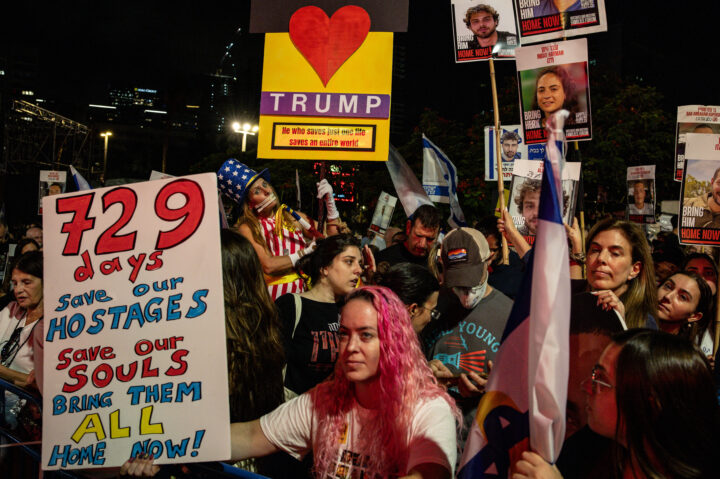
Chris McGrath/Getty Images
People chant slogans and hold placards in support of hostages still held by Hamas during a solidarity protest, calling for an end to the war and the release of all remaining Israeli hostages on October 4, 2025, in Tel Aviv, Israel.
Israeli Prime Minister Benjamin Netanyahu, hostage families and others in Israel expressed cautious optimism over the weekend, after Hamas agreed to enter talks to free the 48 remaining hostages in exchange for a partial Israeli withdrawal from Gaza.
An Israeli team consisting of Strategic Minister Ron Dermer, diplomatic advisor Ophir Falk, Coordinator for the Hostages and Missing Gal Hirsch and representatives of the Mossad and Shin Bet are expected to head to Cairo on Monday for proximity talks to negotiate the implementation of President Donald Trump’s 20-step plan to end the war. Trump’s special envoy, Steve Witkoff, and Jared Kushner, who has been involved in the talks, will represent the U.S.
Netanyahu said in a video statement Saturday night that Israel and the U.S. intend to “limit this negotiation to a few days” and that it would be about “technical details” of the Trump plan.
“We will not tolerate any more delay tactics, time-wasting or evasion on the part of Hamas,” he said.
As Trump noted on Truth Social, the ceasefire would immediately take effect once it is agreed to by Hamas. The terror group would have to release the remaining 48 hostages – 20 of whom are thought to be alive – in exchange for Israel’s freeing of over 1,700 Palestinian prisoners, hundreds of whom are serving life sentences on terrorism charges, and the rest arrested in Gaza in the last two years. Then, Israel would withdraw to an initial line, as part of a gradual withdrawal toward a buffer zone along Gaza’s perimeter.
The details likely to be negotiated include the precise line to which Israel will withdraw initially and, at the end of the process, which countries will make up the International Stabilization Force meant to be the “long-term internal security solution” to keep Gaza demilitarized and prevent the resurgence of terrorism, according to the Trump plan, and who will be part of the transitional technocratic committee meant to govern Gaza. Former U.K. Prime Minister Tony Blair and Apollo Global Management CEO Marc Rowan are expected to be involved in the Peace Board led by Trump that will oversee the transitional government.
Netanyahu vowed that “Hamas will be disarmed and the Strip demilitarized. This will happen either via a diplomatic route, according to the Trump plan, or via a military route by us.”
The talks come after Hamas released a statement early Saturday in which it embraced parts of the Trump plan — exchanging Israeli hostages for Palestinian prisoners, an influx of aid and encouraging Palestinians to remain in Gaza — but rejected the concessions the plan would entail, including the demilitarization and deradicalization of Gaza. Hamas said it would punt that decision to “a collective national position … to be discussed within a comprehensive Palestinian national framework, in which Hamas will be included.”
Despite Hamas accepting only a fraction of his plan, Trump wrote on Truth Social that he believes the terrorist group is “ready for a lasting PEACE” and called on Israel to “immediately stop the bombing of Gaza so that we can get the hostages out safely and quickly.”
IDF Chief of Staff Eyal Zamir then “instructed to advance readiness for the implementation of the first phase of the Trump plan for the release of the hostages,” according to an IDF statement early Saturday morning. At the same time, Zamir said, “all troops must maintain high alertness and vigilance, in addition to reinforcing the need for a rapid response to neutralize any threat.”
In his video statement, Netanyahu presented Trump’s plan as being coordinated with Jerusalem. “As a result of the intense military pressure we applied and the diplomatic pressure, Hamas was pressured into agreeing to the plan we presented,” Netanyahu said.
The prime minister added that “we are on the verge of a very great achievement. … It is not yet final; we are working on it diligently, and I hope, with G-d’s help, that in the coming days, during the Sukkot holiday, I will be able to inform you about the return of all our hostages, both living and deceased, in one phase, while the IDF remains deep within the Strip and in the controlling areas within it.”
Tel Aviv’s Hostage Square was filled with demonstrators on Saturday night, calling for the deal to be implemented.
Liran Berman, brother of hostages Ziv and Gali Berman, said that “with hope comes fear. Will the deal be signed? When will I see my brothers again? We are suspended between hope and dread. We have lived through Hamas’s lies before. We cannot let another deal collapse. Not again. President Trump, we stand with you. Do not stop. It is now or never.”
Former hostage Gadi Moses said, “I know the road is still long and riddled with obstacles, but today I can say that for the first time since my release from captivity, I have heard declarations that may give us some hope. This is the time to cease fire and focus on returning all the hostages and ending the war.”
Also Saturday, Netanyahu held meetings and discussions with the leaders of right-wing parties in his governing coalition, National Security Minister Itamar Ben-Gvir and Finance Minister Bezalel Smotrich, both of whom have called to annex and settle the Gaza Strip.
Ben-Gvir said that “we will be happy like everyone to see all the hostages returning to us,” but “if Hamas continues to exist after all the hostages are freed, Otzma Yehudit [Ben-Gvir’s party] will not be part of the government. We will not be part of a national defeat that will turn into a ticking time bomb until the next massacre.”
Smotrich did not threaten to leave the coalition, but he said that Netanyahu made a “severe mistake” by acquiescing to Trump’s call to stop the attack on Gaza City rather than holding “negotiations under fire.”
“It’s a recipe for Hamas to waste time and wear down Israel’s stance,” he posted on X.
Opposition leader Yair Lapid has said his party will vote to prop up the government if parties within the coalition attempt to bring it down to stop a hostage and ceasefire deal.
On Saturday afternoon, Lapid said: “When Shabbat ends and you hear Smotrich and Ben-Gvir’s threats, remember they have nothing to threaten with. We won’t let them sabotage the deal. A clear majority of the Knesset and a clear majority of the nation support the Trump plan.”
President Trump, reacting to the statement, said he believes Hamas is ‘ready for a lasting PEACE’ despite the group’s clear differences with the White House proposal
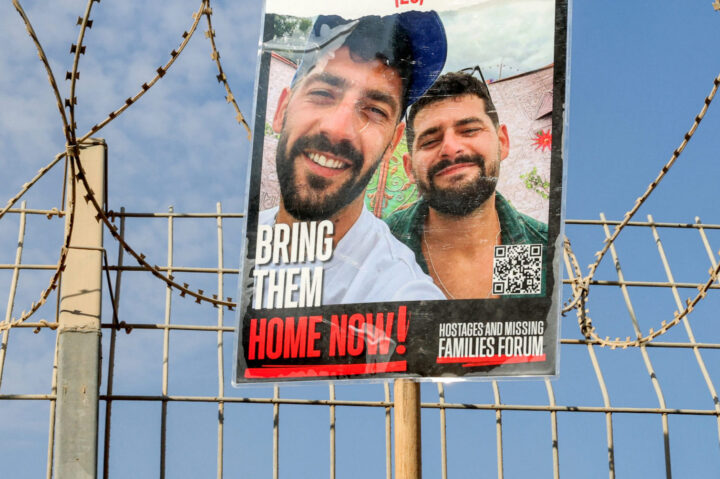
JACK GUEZ/AFP via Getty Images
A sign identifying Israeli hostages Gali and Ziv Berman is raised by the barbed-wire fence during a demonstration by the families of the hostages taken captive in the Gaza Strip
Hamas said in a statement on Friday night that it was ready to enter final negotiations over the Trump-authored peace plan and that it was willing to release all the hostages remaining in Gaza.
The Palestinian terror group said it would release the living hostages and the bodies it has held hostage since the Oct. 7 attacks nearly two years ago. Twenty of the 48 hostages are believed to still be alive.
Hamas added it is willing to hand over administration of the Gaza Strip to a “Palestinian body composed of independents.” But the terror group also insisted — contradicting the terms of the Trump proposal — that Hamas will maintain a role in discussions over the future of Gaza through a “comprehensive Palestinian national framework.”
The deal is not yet final, and in its response to the Trump plan, Hamas said that the group is ready to enter negotiations to discuss the remaining details.
In response, Trump said in a post on Truth Social that he believes Hamas wants to make a deal, and called on Israel to “immediately stop the bombing of Gaza.”
“Based on the Statement just issued by Hamas, I believe they are ready for a lasting PEACE,” Trump wrote. “Israel must immediately stop the bombing of Gaza, so that we can get the Hostages out safely and quickly! Right now, it’s far too dangerous to do that. We are already in discussions on details to be worked out.”
A spokesperson for the Israeli embassy declined to comment.
This story was updated at 5:32 p.m.
The next U.S.-Israel memorandum of understanding will need to be secured in a political environment much more hostile to Israel than 10 years ago

GETTY IMAGES
A general view of the U.S. Capitol Building from the National Mall, in Washington, D.C., on Thursday, May 29, 2025.
In September 2016, when President Barack Obama announced that the U.S. and Israel had signed a 10-year deal pledging a total of $38 billion in military assistance to Israel, the news was generally uncontroversial and greeted with bipartisan plaudits — a striking contrast to the nasty presidential campaign playing out across the country at the time.
That deal, known as the U.S.-Israel Memorandum of Understanding, is now close to expiring, and the next one — if there is a next one — will be negotiated in an entirely different political environment. Israel remains deeply enmeshed in a nearly two-year war in Gaza, with little indication of an end in sight, making forward-looking negotiations more difficult.
A new MOU is not a given. U.S. support for Israel has dramatically declined on the left, and it is fracturing in isolationist corners of the right as well. Even some staunchly pro-Israel Republicans have grown wary of foreign aid in general, a shift that could affect U.S. policy toward Israel.
“When many of the threats that have faced Israel in the past have been largely neutralized, Israel will need to figure out how to make the case that it is in need of over half of the U.S. security assistance budget,” a former Biden administration State Department official told Jewish Insider. “They will need to demonstrate the threats that they face in order to warrant this level of funding when Hamas has been decimated, when Hezbollah is a shadow of what it once was, when Iranian air defenses are nonexistent and Israel has proven its ability to be able to infiltrate Iran.”
The conversation about the next U.S.-Israel MOU came to the fore last month, when Pete Buttigieg, the former transportation secretary and a potential 2028 Democratic presidential candidate, became the first prominent Democrat to say the U.S. should not enact another 10-year military aid deal with Israel.
No other potential Democratic presidential contenders have weighed in on the issue, though it could become a litmus test for a party whose base is steadily turning more hostile to Israel.
The current U.S.-Israel MOU, which expires in 2028, is the countries’ third. President Bill Clinton and Israeli Prime Minister Ehud Barak signed the first 10-year MOU in 1999. It was meant as a way to phase out U.S. economic aid to Israel, which Jerusalem no longer needed as an emerging economic and technological powerhouse. Another MOU was negotiated by President George W. Bush and completed in 2007.
“Ten-year MOUs have communicated an ongoing, consistent and bipartisan commitment to support Israel’s security by crossing administrations and demonstrating that it’s an ongoing relationship,” said former U.S. Ambassador to Israel Dan Shapiro. “It allows planning for big ticket acquisitions.”
The long-standing commitment allows Israel to plan to make large purchases that could take several years to acquire, such as fighter jets.
The MOU is not actually a binding agreement, it’s a framework. Congress must still approve the $3.3 billion in military financing and $500 million in missile defense laid out in the MOU each year during the annual appropriations process, and could do so even in the absence of an MOU.
“It’s simply a political commitment that Congress and the president can honor or not honor, and not having an MOU does not necessarily mean that we won’t have foreign military financing,” said Brad Bowman, an analyst at the Foundation for Defense of Democracies and former national security advisor to Sen. Todd Young (R-IN).
“But if we’ve had MOUs with Israel for so long under presidents of both parties, to not have one, I think, would really be quite a political statement about what’s going on with Israel, and would undermine the efforts of both Americans and Israelis to do necessary planning,” Bowman added.
“Both the left and the right are having deep reservations about the U.S.-Israel relationship, and that could very much have negative consequences for the MOU,” a former Biden administration State Department official said.
Congress has in the past weighed in to signal its support for the MOU. In 2016, Congress voted overwhelmingly to endorse the new MOU, with 405 members of the House voting for the measure. Just four representatives — all Republicans — voted against the bill. Only one of them, Rep. Thomas Massie (R-KY), is still in the House.
Since then, American support for Israel has shifted significantly, particularly since Israel’s response to the Oct. 7 Hamas attacks in 2023. A Quinnipiac poll released in August found that 60% of voters oppose sending more military aid to Israel for its war with Hamas, while only about one-third (32%) support it.
Meanwhile, only 13% of Democrats say their sympathies lie more with the Israelis than the Palestinians, a decline from 34% when asked the same question in November 2023. Far more Republicans side with the Israelis — 66% — but that’s down from 80% in November 2023.
“Both the left and the right are having deep reservations about the U.S.-Israel relationship, and that could very much have negative consequences for the MOU,” the former Biden State Department official said.
Congressional efforts to place conditions on American military aid to Israel have gained steam since Oct. 7.
Twenty-seven Senate Democrats voted last month on a resolution to block the shipment of certain weapons to Israel. The measure was largely symbolic and destined to fail in the Republican-led Senate. Still, even with an MOU, Congress would not be prevented from passing a bill further restricting U.S. aid to Israel.
“We continue to have an interest in ensuring that Israel can defend itself. They continue to be an important partner in the Middle East addressing many threats that threaten them, but also threaten us,” said former U.S. Ambassador to Israel Dan Shapiro. “If our relationship with Israel were to become far less supportive and far less intimately connected, we would quickly see a decline in our influence much more broadly in the region. That doesn’t mean we can’t also have critical conversations and use our leverage as a provider of assistance when we have concerns about Israeli military actions.”
That’s not considering the leeway given to the State Department, which approves arms sales. Last year, President Joe Biden held up a shipment of 2,000-pound bombs for months over concerns about Israel’s incursion into Rafah.
The Trump administration, which would be the one to negotiate and sign off on a new MOU before its expiration, has not yet indicated any reservations with the process.
Israel is by far the largest recipient of U.S. foreign military financing. The U.S. and Jordan have their own security MOU, though Jordan receives roughly a tenth of the annual military aid that Israel gets. Shapiro, the former U.S. ambassador to Israel, said the reason for the high level of support goes beyond Israel, and deep into the Middle East. He urged the U.S. to raise concerns with Israel about its conduct when issues arise, but not to cut into the aid itself.
“We continue to have an interest in ensuring that Israel can defend itself. They continue to be an important partner in the Middle East addressing many threats that threaten them, but also threaten us,” he said. “If our relationship with Israel were to become far less supportive and far less intimately connected, we would quickly see a decline in our influence much more broadly in the region. That doesn’t mean we can’t also have critical conversations and use our leverage as a provider of assistance when we have concerns about Israeli military actions.”
It would be tempting for Israel to try to increase its defense production to account for such a turbulent political environment. Israel has grown its military exports substantially in recent years and some Israeli lawmakers have indicated they’d like to phase out reliance on U.S. aid, but it would be very difficult for Israel to domestically produce everything it needs.
“The problem is that’s never going to happen,” Bowman said. “Israel, as impressive as it is, is never going to be completely self-sufficient in producing its own weapon systems. The United States is not. If we’re not, Israel never will be. Israel is a technology superpower. It’s not an industrial superpower.”
Netanyahu, Zamir and Katz held a three-hour meeting on Tuesday, which was reportedly very tense due to disagreement over the plan
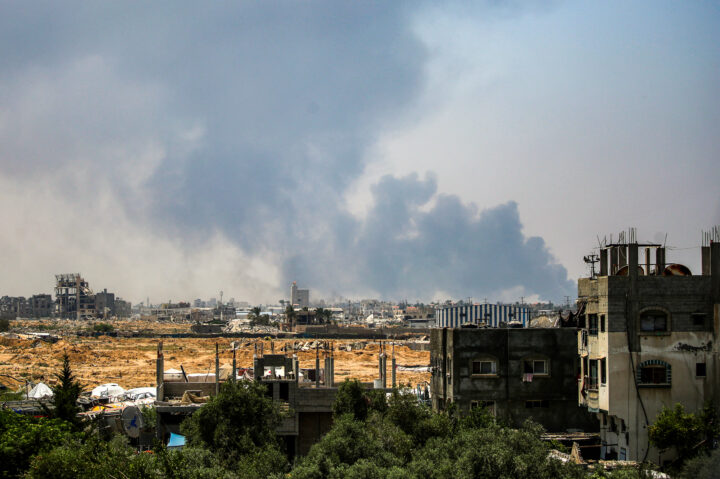
EYAD BABA/AFP via Getty Images
Smoke billows from Israeli bombardment as pictured from Deir el-Balah in the central Gaza Strip on July 21, 2025.
Israel’s Security Cabinet is set to vote this week on occupying the remaining parts of Gaza that it does not currently control, after Hamas refused last month’s ceasefire and hostage deal proposal and did not return to negotiations.
Israeli Prime Minister Benjamin Netanyahu, IDF Chief of Staff Lt.-Gen. Eyal Zamir and Defense Minister Israel Katz held a three-hour meeting on Tuesday, which was reportedly very tense due to disagreement over the plan, though Zamir ultimately said he will follow through with the government’s decision.
Zamir argued that the IDF should surround the areas in Gaza in which it currently does not have a presence, including Gaza City and towns in the center of Gaza in which hostages are believed to be held. Entering those areas, Zamir warned, would endanger the lives of the 20 hostages who are thought to be alive. Hamas has threatened to kill hostages if the IDF approaches, as it had executed six hostages a year ago.
Beyond the fraught issue of the hostages, there is the matter of what “occupation” means.
Broadly, the war in Gaza was initially conducted via raids in which the IDF would warn civilians to leave a given area, enter, destroy terrorist infrastructure and combat terrorists, and eventually leave to move to a different part of Gaza, letting the population return. Hamas terrorists would also end up returning to those areas, leading the IDF to have to enter some of the same places repeatedly.
In March, Israel embarked on Operation Gideon’s Chariots, in which Israel entered Gaza from its perimeter on all sides, and moved inwards, capturing territory and maintaining control of it, in contrast to its previous strategy. That operation has, in effect, resulted in Israel controlling 75% of Gaza.
The remaining 25% is what Israel would move to control under the plan Netanyahu supports.
Brig.-Gen. (res.) Yossi Kuperwasser, head of the Jerusalem Institute for Strategy and Security and the former head of research for IDF intelligence, told the Misgav Mideast Horizons podcast this week that the commonly used 75%-25% formulation is “a misrepresentation.”
“Almost all the population of Gaza is in areas controlled by Hamas, which allows Hamas to keep its grip over the population, and this is the source of its power … It’s not about the percentage of the area, it’s about who controls the population,” he said.
While “occupation” is the correct military term for what Israel would be doing by taking control of territory, the connotation of the word in the Israeli context tends to be the West Bank, which Israel has controlled since 1967 and where over half a million Jewish citizens of Israel live.
Some Cabinet ministers have advocated for allowing Israelis to move to Gaza, where 21 Israeli settlements were forcibly evacuated in 2005; Netanyahu has repeatedly rejected such a plan.
What senior Israeli officials have long said is that, while Israel seeks to have other countries and some Palestinians administer Gaza, they will not do so until it’s clear that Hamas has been ousted. As such, Israel may have to take control for some time until other arrangements are made.
Kuperwasser said that while Netanyahu’s decision may be risky, Zamir’s preference of surrounding the remaining 25% of Gaza is more of the same.
“In Gaza, there are no good options,” he said. “The option of continuing what we have done for the last 22 months is not a good option, because it didn’t put enough pressure on Hamas to release the hostages and accept the idea that they should give up their arms. The option of succumbing to Hamas demands … is a very bad idea, too. And taking over Gaza is also a bad idea, because you end up being responsible for the population of Gaza and there is going to be a lot of criticism around the globe … you cannot guarantee that you are going to get the hostages alive.”
Kuperwasser argued that the only way at this point for Israel to move towards freeing the hostages and removing Hamas from power is if Hamas is “convinced that we are about to take over Gaza by force and remove them from power by force … So we have to make this decision, and yes, it comes with a price.”
Starting on the new strategy may be enough to convince Hamas to reach a deal, Kuperwasser said, but in order to get to that point, he argued, Israel has to prepare to actually occupy Gaza.
“We have to convince Hamas that we are serious, that we are really preparing for this eventuality,” including for civil administration of Gaza, he said.
Please log in if you already have a subscription, or subscribe to access the latest updates.
 Continue with Google
 Continue with Apple