






































Gaza ceasefire and hostage-release talks may continue past this week, senior Israeli official says
Israel getting ‘80-90%’ of what it wants from a temporary ceasefire, but Hamas not willing to take steps towards ending the war, official says
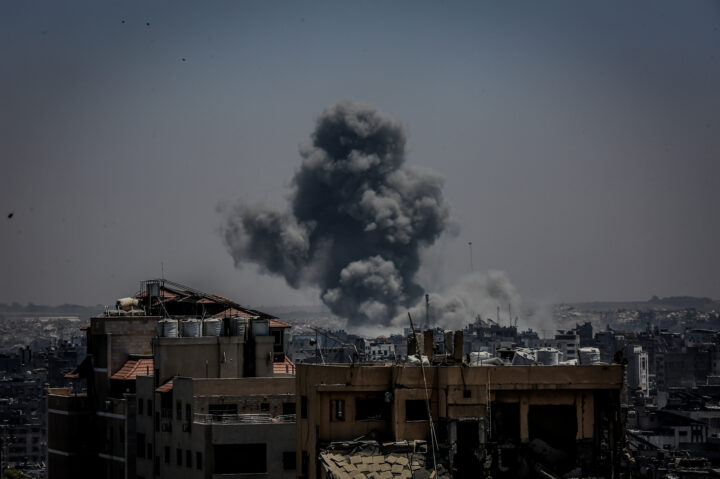
Saeed M. M. T. Jaras/Anadolu via Getty Images
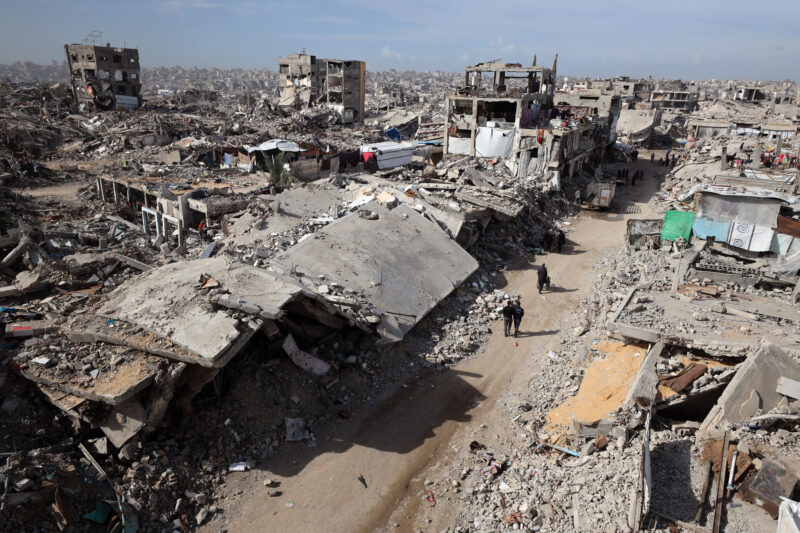
Smoke rises after an Israeli strike in the eastern part of Gaza Strip on July 3, 2025.


 Add JewishInsider on Google
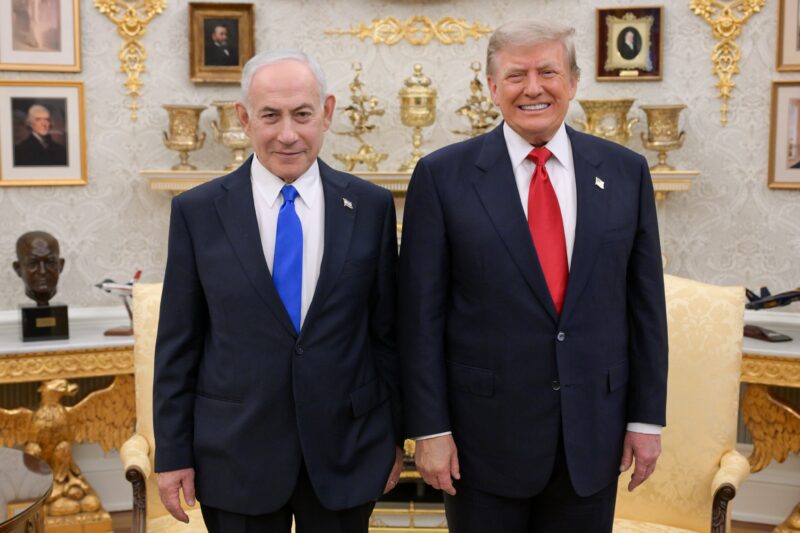
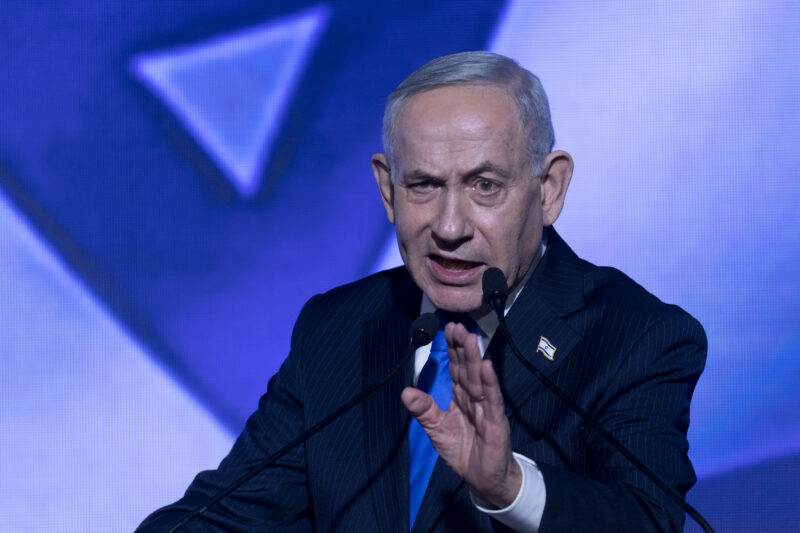
A breakthrough in negotiations between Israel and Hamas for a temporary ceasefire and hostage-release deal is likely to take longer than expected, a senior Israeli official in Prime Minister Benjamin Netanyahu’s delegation to Washington told reporters on Monday, after Netanyahu’s dinner with President Donald Trump.
“We hoped that [a deal] would take a few days, but it may take more time,” the official said.
The negotiations in Doha, Qatar, are “fully coordinated” with the Trump administration, and Netanyahu and Trump may meet again “if necessary” while the prime minister is in Washington this week, the official said. Netanyahu is expected to return to Israel on Thursday afternoon, but in the past, he has extended his visits.
Israel and Hamas have been in negotiations mediated by the U.S. and Qatar for a 60-day ceasefire, in which Hamas would gradually free half of the 50 remaining hostages, approximately 20 of whom are thought to be alive, in exchange for the release of hundreds of Palestinian prisoners. In addition, Israel would withdraw from parts of the Gaza Strip, while keeping troops in the area’s perimeter and along key corridors.
Hamas responded to the temporary ceasefire proposal over the weekend, asking for many changes, the senior Israeli official said, to the extent that “Hamas’ answer was essentially no.”
Hamas previously rejected a similar proposal when Middle East envoy Steve Witkoff presented it earlier this year, but now, the official said, “the gaps are small enough for there to be talks.”
A second official on the delegation said the current proposal presents Israel with “80-90% of what it wanted to get.”
In addition to a continued presence on the Philadelphi Corridor, along the Gaza-Egypt border, where Israel has insisted on maintaining control since it reached the area in May 2024, the senior official said that Israel is demanding to keep troops along the Morag Corridor, slightly north of Philadelphi, which separates the southern Gazan cities of Rafah and Khan Younis.
A deal to end the Gaza war is not on the table because “Hamas is not responsive to the conditions that would allow a comprehensive agreement,” such as demilitarization for Gaza and exile for remaining Hamas leaders, the senior official explained. Without those conditions, “Hamas could do [the Oct. 7, 2023 attacks] again.”
“The conversation in the [news] studios that we can finish the war now is delusional. [Hamas] would see that as a major victory that could allow Iran to recover and Hezbollah to recover. I believe that with military and diplomatic pressure, we can bring back all of the hostages. Our pressure is neutralizing Hamas’ ability to control [Gaza],” the official said.
Israel’s vision for Gaza after the war is that “there is no more Hamas; Hamas is dismantled. Another force takes over the territory, the leaders are exiled and Hamas lays down its weapons … I need Gaza demilitarized, and I mean it.”
The senior official did not rule out the possibility that forces affiliated with the Palestinian Authority could be part of the other force, noting that there may be Fatah members in the existing militias that are pushing back against Hamas in Gaza.
“There needs to be another system that administers life [in Gaza]. I’m not certain that it won’t be [Israel], maybe it will be for some time and then we’ll pass it to someone else,” the senior Israeli official said.
The senior Israeli official addressed a plan, previously proposed by Trump, in which the population of Gaza is relocated outside of the Strip, saying that after the meeting between the president and Netanyahu, the official is convinced that the president was serious.
“The plan is alive,” he said. “What is needed is operational coordination, not just in the goal but how to achieve it, and that is what we discussed. The will is there.”
When it comes to Iran, the senior Israeli official said that Jerusalem and Washington are now working “to preserve our achievements against Iran, to prevent uranium enrichment and ballistic missile [production].”
According to the official, there has never been a time in which the governments of Israel and the U.S. have been more coordinated, and that the sides trust each other.
Israel “didn’t ask for and didn’t receive a green light from Trump to attack Iran. There is a different relationship now,” the official said. “We agree on things … You also don’t need to get approval. He understands that we have existential needs.”
A second Israeli official said Netanyahu and Trump’s administrations “had diplomatic coordination before the attack, military coordination during the attack, and now diplomatic coordination again.”
More Stories

NEW CHAPTER
High Line Publishing launches with fanfare to counter barriers for Jewish authors
FOLLOW THE MONEY
Brandeis Center, FDD urge federal court to allow disclosure of campus foreign funding data
PRAIRIE STATE PRIORITIES
Illinois Democrats spend big for anti-Israel candidate running for state Senate
POLL POSITION
U.S. experts split on Netanyahu’s prospects ahead of Israel’s election
ALBANY ALLIANCE
Jewish New York Dems launch PAC to counter antisemitism and anti-Zionism

AID ARGUMENTS
Michael Oren, Jonathan Schanzer split over when Israel should move past U.S. aid
Please log in if you already have a subscription, or subscribe to access the latest updates.
 Continue with Google
 Continue with Apple