





















State Dept official Sarah Rogers urges protecting free speech while fighting antisemitism
‘The Nazis may have the right to post, but also the Nazis are bad and sick and stupid,’ Rogers told JI
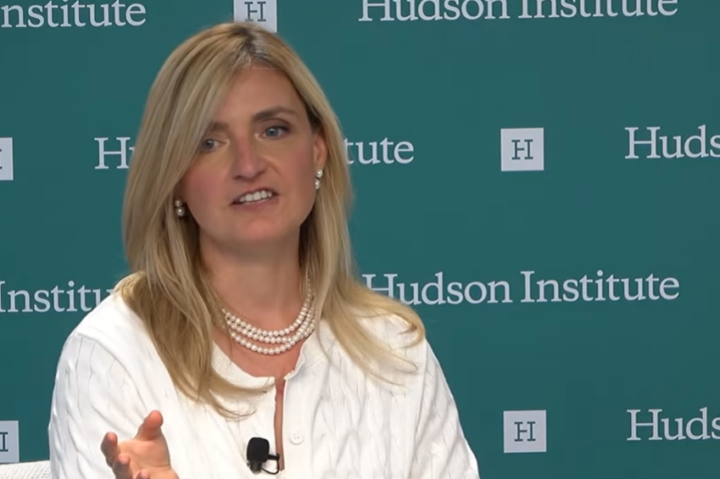
Screenshot
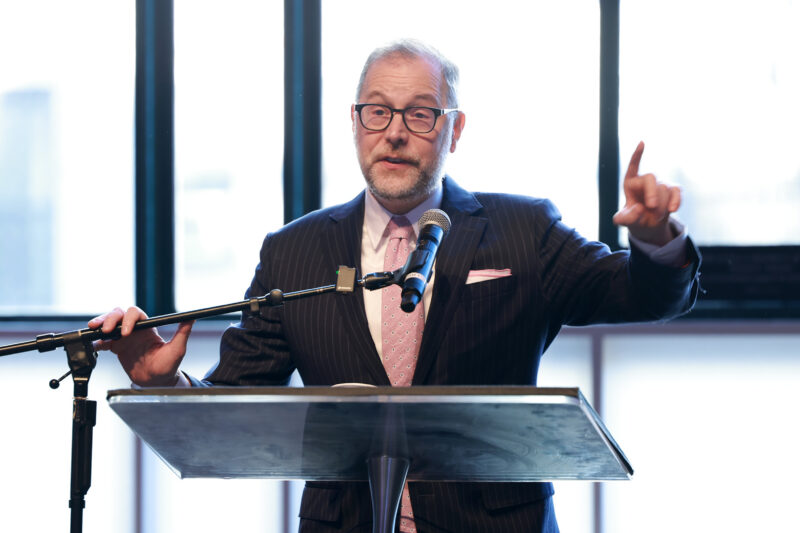
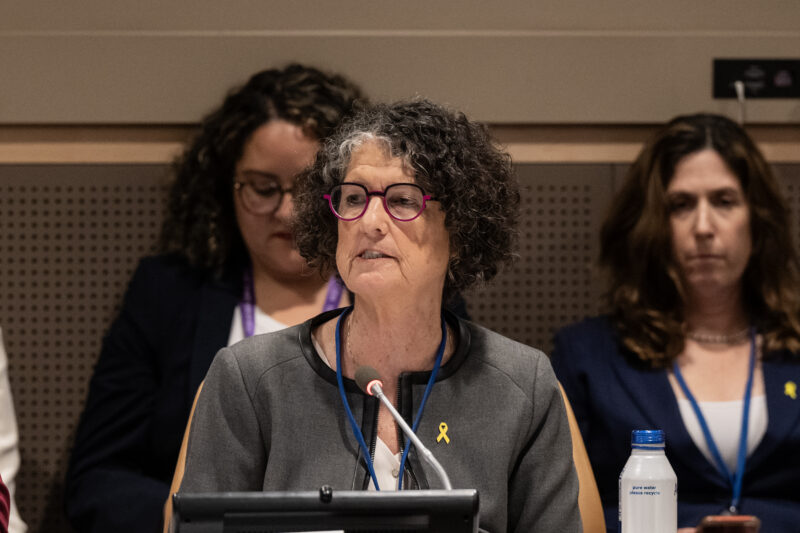
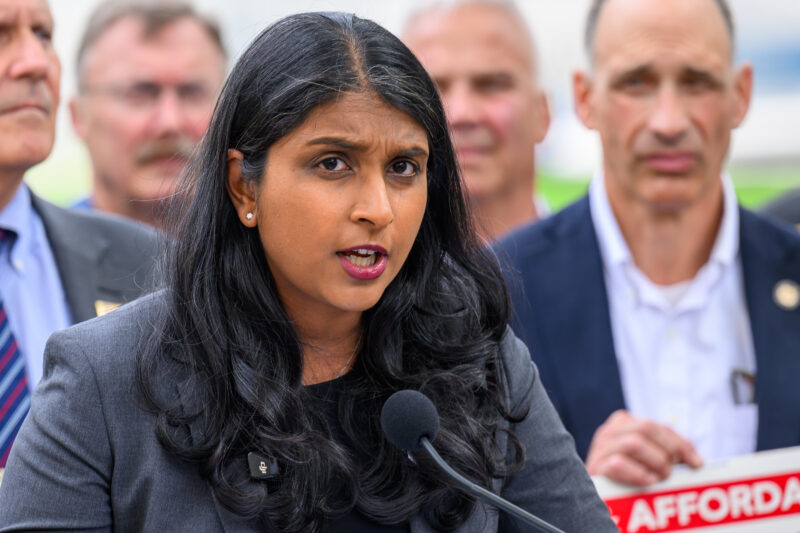
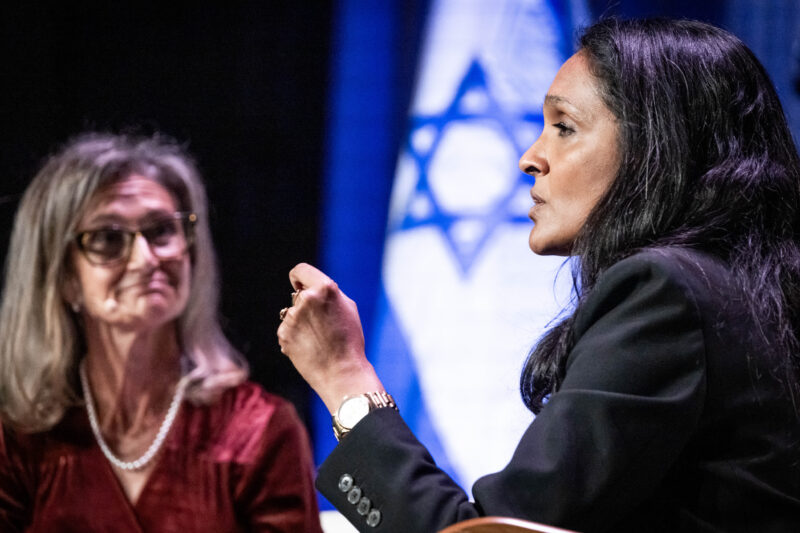
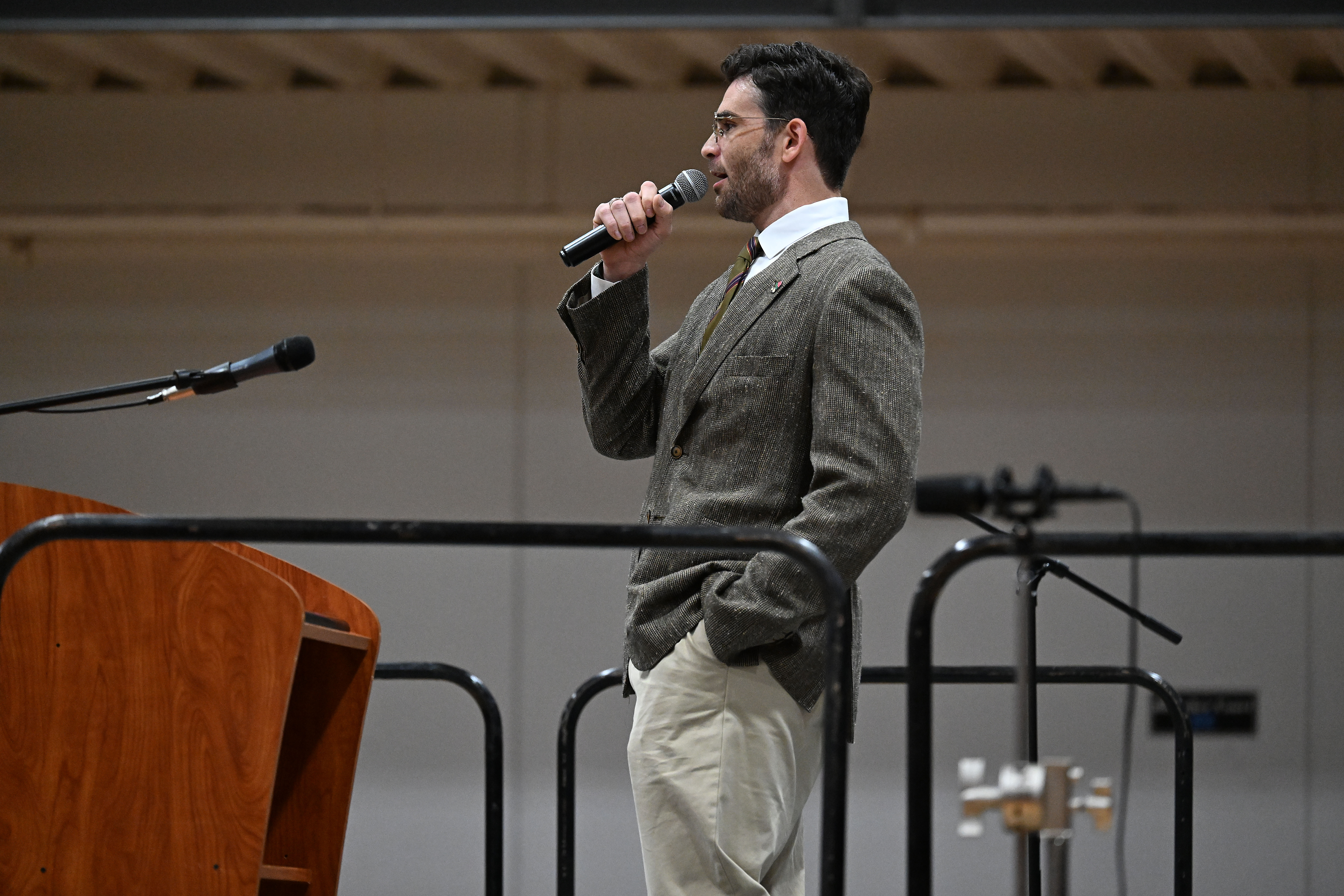
Sarah Rogers, under secretary of state for public diplomacy, speaks at the Hudson Institute on May 20, 2026.


 Add JewishInsider on Google
Sarah Rogers, the under secretary of state for public diplomacy, maintained that the Trump administration’s commitment to free speech, including for extreme views, does not take away from its opposition to antisemitism, telling Jewish Insider in a wide-ranging interview that “the Nazis may have the right to post, but also the Nazis are bad and sick and stupid.”
The senior U.S. diplomat acknowledged the tension between allowing hateful views on social platforms and concerns about rising rates of antisemitism globally, though she maintained that the path to successfully responding to Jew hatred requires support for free speech protections, and said that she looks forward to visiting Israel in the future.
This interview has been condensed and edited for clarity.
Jewish Insider: You have been unequivocal in your public statements about the rise of antisemitism globally being a serious problem, while also maintaining your position on free speech protections. How do you draw that line between promoting free speech culture while ensuring you have the tools to fight antisemitism?
Sarah Rogers: I don’t see this as a line-drawing exercise between opposed priorities. There’s really no conflict between opposing antisemitism on the one hand and opposing censorship on the other. America has a proud history of opposing both. Censorship has not kept antisemites out of power, it has been deployed by antisemites who gain power.
[Supreme Court Justice] Oliver Wendell Holmes was the first to say that freedom of speech really means freedom for the thought that we hate. You can guard that principle while still saying, “Okay, there are some thoughts that we hate, and we’re going to speak against them, and we’re going to explain why these people are wrong, and we’re going to fight that battle in the marketplace of ideas.” I think every free speech advocate makes normative judgments about the speech that’s on offer, and a normative judgment I’ve always made is that the Nazis may have the right to post, but also the Nazis are bad and sick and stupid.
JI: How do you, or the State Department more broadly, view efforts to counter foreign operations and propaganda campaigns, especially with regard to media where the location of origin is often hidden?
SR: Countering what is called in the [State Department] statute “foreign malign influence” is part of my statutory mandate, and we take it seriously. There are a whole bunch of tools in what you might call the counter-propaganda toolbox.
This is an information environment where legitimacy and trust are more important than ever. Right now, we’re in this liminal zone. I think technology will refine this landscape a bit, but we’re in a zone where any image or any video can be fake, and so it is more important than ever if we were trying to persuade the global public that they can trust us.
What I’m looking for ways to do now, and what the State Department wants to do now, is to counter these kinds of influence operations chiefly through exposure and through counter speech. We can expose the foreign providence of a lot of information and the inauthentic nature of some of the behavior. That doesn’t mean we have to reach out behind closed doors to Twitter or Facebook and urge them to censor anyone concurring with a particular narrative. We don’t have to do that. It is not my job to dictate what Americans can say or see online, but I can tell Americans what we and our partners are seeing online and let them make up their own minds.
One thing that my office has done in the past also is try to promote technologies that improve the information environment and make that environment one in which we can more easily communicate about American priorities.
I don’t want to fund tools that put a centralized thumb on the scale of permissible opinion, or that try to choke off permissible opinion before it gets to the public sphere. What I’d rather do is prospect and promote tools that respect and empower the audience to discern true and authentic information and have the kinds of conversations they want to have.
Both X, formerly Twitter, and Meta have started rolling out the “Grok, is this true?” feature. It’s kind of interesting. Everyone knows the LLMs are trained on a consensus model of available opinion. A lot of them have gobbled up like most books ever written. They’ve scoured social media. When these models first debuted, they were pretty clunky. There was a whole genre of AI discourse that just consisted of people making their LLM say insane, woke, Kafkaesque things, but the models have gotten better. They’ve gotten better to the point where most people, even people with unpopular opinions, trust them to kind of collate facts.
There are now some early scientific studies showing that, as a result, interacting with AI chatbots depolarizes people politically. It is conducive to lessened political extremism, and I think making that kind of tool available is an example of something we can do that doesn’t make people feel coerced or condescended to, it doesn’t spark that kind of oppositional, anti-institutional reflex, because you’re just letting them have access to something that they want and they enjoy. We’ve also seen those exact tools used to push back on antisemitic propaganda online.
JI: Can you speak to how private industry and social media companies have responded to your engagement on these issues?
SR: I’ve had a lot of congenial interactions with the tech sector. I’ve been accused by critics, including in Europe, of essentially being too staunch an advocate for the tech sector, which is ironic because I started my free speech activism career as a thorn on the side of Big Tech. When we’re advocating for the freedom of our companies not to censor, then of course they’re grateful. I also think, though, that within Silicon Valley, within the investor class and the executive class, and then the user bases of these companies, there is a real organic demand for ways to harness the powers of invention to make the information environment better.
I have intentionally avoided having any interactions with tech companies that could reasonably be expected to result in the removal of content. If I ever had reason to do that, like if there was a tweet with the nuclear codes in it or something like that, I would try to make sure that I disclosed that to the public, but I avoid it as a matter of practice. Still, I have conversations all the time with people in the tech industry who are interested in how we discern content provenance, how we can help people integrate AI in ways that are less conducive to kind of AI psychosis type outcomes, how we can promote truthful information.
The only reason the information environment feels so new and different is because Americans are so good at innovating things that spread like wildfire and change the world. That’s fundamentally good. Now we’re in this new information environment, and you’ve probably heard me say this before, that this is on par with the invention of the telegraph or the film strip, and so there’s going to be some shudders and spasms as we adjust, but we can use the power of innovation and invention to make our environment better, not worse. I think tech is very receptive to that, especially because there’s all this kind of almost superstitious anti-tech discourse right now, and so there’s a natural appetite to prove that chorus wrong.
JI: With that in mind, how would you describe your role in terms of responding to this growing threat of foreign disinformation and the outgrowth of antisemitism that such propaganda efforts cause? Do you see your role as more of a behind the scenes dealmaker or something else?
SR: I would not say my role principally consists of brokering informal understandings with tech companies. I think because my role has a tech component of its portfolio, it’s just natural that I have some conversations and relationships with tech companies, but zooming out, my role is public diplomacy. That includes civil society grant making, it includes a lot of public advocacy, it oversees educational and cultural affairs, so I have a really broad umbrella of stuff I can do to interact with the information environment generally.
On antisemitism, we have funded interfaith cultural restoration projects and educational projects to promote cross-cultural understanding and diffuse hatred. We are trying to promote tools like AI to rationalize and depolarize the information environment. We’re doing all that stuff, but the information environment part is only part of it.
We are looking for more opportunities to publicly and candidly communicate on trends we’re seeing in the information environment, and we want to do it in a way where it doesn’t sound like we’re scolding the audience and telling them what not to believe. We just want to credibly share aggregated statistics and facts about what we’ve observed, and I want to make sure that we get that right.
That means number one, I’ve actually instructed my staff, like whenever we operate on this issue, we need to literally or figuratively make a commitment to not censor American speech or censor anybody. We want to do the counter speech and exposure, and I think you’re going to see more of that.
I’ve collaborated a lot on the antisemitism issue with Rabbi [Yehuda] Kaploun, who’s our special envoy to monitor and combat antisemitism. We have participated in the Shabbat dinners with him. We had Rabbi Kaploun organize a Shabbat with officials from Saudi Arabia and the Emirates, and with a bunch of members of the administration. It was a really powerful coming together around this issue, and I think you’re gonna see more of those kinds of activities that my office is proud to be involved with, too.
JI: Do you coordinate with other agencies and other departments to ensure that these efforts don’t overlap or contradict each other, be it about antisemitism or free speech or anything else that you’re doing?
SR: So one thing that I’ve done is I’ve encouraged my public diplomacy staff, who do kind of overt messaging for the State Department, to make sure that they are coordinated with other parts of the government, including, for example, the Department of War, who are engaged in messaging activities of overlapping topics in the same region. That’s just common sense, so we want to make sure that all of our messaging activities are aligned, or at least not at odds with each other.
I think a great thing about this administration compared to the first one is that when President Trump staffed his first administration, he was kind of newly triumphant and his coalition was still consolidating, so there wasn’t this existing infrastructure and existing talent pool of people who were aligned with the administration’s foreign policy vision, and now there are. Because of that, I have great relationships with counterparts at other agencies, and it’s very easy for us to have these conversations, though all conversations you have in the government take longer and are more kind of bureaucratically ritualized than they should be.
JI: Have you made any efforts in your role promoting public diplomacy to highlight the U.S.-Israel relationship?
SR: The answer is yes. I was actually just in close touch with the Israeli Embassy about some America 250 commemorative activities that we were going to undertake, including “America Day” celebrations at three university campuses in Israel. We’ve done a lot of interfaith and church restoration activities in the Middle East that Israel is very supportive of.
I also hope to visit Israel when scheduling considerations permit.
JI: Looking toward Europe, you and Sen. Eric Schmitt (R-MO) both spoke at the Hudson Institute last week about the free speech conversations we’re seeing across the Atlantic. What we’re also seeing are sharp rises in antisemitism across the continent. Do you connect the two? And if so, what do you see as the prescription for solving both issues?
SR: I absolutely connect the two. It’s interesting, another thing I always say when people ask me about this sort of tension between antisemitism and free speech is that I had my staff run numbers on this. When it comes to actual antisemitic hate crimes, not speech crimes, but crimes where someone gets hit or synagogues vandalized, the per capita rate of those in continental Europe and elsewhere in the Anglosphere is much higher by orders of magnitude than it is the United States, even though we have open season free speech, and they all reportedly have laws against antisemitism.
There was this incident in London a few years ago where a caravan of pro-Palestine protesters drove through a reputedly Jewish neighborhood in London, screaming through a megaphone, “F*** Jews. Rape their daughters. Free Palestine.” There were no hate crime charges. I think London police claimed there wasn’t enough evidence that they’d done it, even though it’s on video. So who does get prosecuted under these hate crime laws?
There is this famous Nazi hunter in France, Serge Klarsfeld. He’s one of the most famous Nazi hunters. He has a son, Arno Klarsfeld, who’s a well-regarded French jurist who actually helped prosecute some of the Nazi collaborators. Arno Klarsfeld was pursued by French authorities under French hate speech laws for basically saying that France should do mass deportations of people who’d already had their asylum hearings and were adjudicated as deportable. He was basically advocating for the same kind of policy that President Trump has tried to use to mitigate antisemitism in the United States.
You have this decorated French Jewish antisemitism jurist being threatened with legal punishment just for advocating a deportation policy, so that’s an obvious nexus, and I’m not saying it’s the only one, but it’s an obvious nexus between censorship law and antisemitism.
After the Bondi Beach massacre in Australia, you had a proposed hate speech law in response that would have had an exemption for any speech that’s religious. Well, if you were an ISIS jihadist, your speech was religious, so you’re basically carving out the exact ideology that appeared to have motivated that attack. So that’s how I see these issues in relation to one another.
JI: Is there anything else about Europe’s broader handling of antisemitism that concerns you?
SR: I think often there’s a sense that if you ban antisemitism legally then you have done the work required to oppose it, and I don’t think that is the story that the crime statistics tell. I don’t think it is the story that the political landscape tells. I’ve had many conversations with earnest European interlocutors who genuinely oppose antisemitism and want the best for the Jewish people in their countries, and so I don’t think bad faith is to blame. I just think that these laws are not the answer.
JI: One last question. I want to ask about Germany, specifically the far-right Alternative for Germany party. You’ve met with some of their officials and praised them specifically on free speech issues. AfD is a far-right ultra-nationalist party whose leaders have espoused antisemitic and pro-Nazi sentiments. Do you see these parties as antisemitic, and do you think the same free speech principles should apply to them despite their historical legacy?
SR: I had one meeting with one AfD official and immediately was lambasted for purportedly being pro-Russia. The point I made at the time was that if this guy were really a Russian asset, he’s a pretty bad Russian asset, because he condemned censorship in that meeting and Russia’s a big fan of censorship. I also stand by what I also said at the Hudson Institute, which is that European policymakers don’t need to give right-wing parties a monopoly on common sense when it comes to mass migration or things like internet regulation. In fact, it would be healthy to have a democracy where multiple parties are against destructive mass migration, for example.
In terms of Germany and its specific legacy on Holocaust denial laws, what I would say is this: I come from an American First Amendment tradition, so I would not want to see laws in the United States like that, but if the only thing these European countries were prohibiting was actual Holocaust denial or actual rank incitement of genocide against Jews, then I don’t think you’d be seeing as many arguments between, for example, European authorities and American internet platforms.
We didn’t sanction [Former European Commissioner] Thierry Breton for asking that X take down a Holocaust denial post — that post would be protected under the First Amendment, but that didn’t lead to the sanctions. What we sanctioned Thierry Breton for doing was threatening an American company with European regulatory penalties for allowing an American politician, President Trump, to speak on an American platform, so our laws do differ there, but if that were the only difference, I don’t think you’d be seeing these flare-ups. The differences are far greater than that.
More Stories
Daily Overtime
Dublin hotel dumps antisemitism conference

CONTROVERSIAL COCKTAIL
Busboys and Poets CEO Andy Shallal adds ‘Free Palestine’ drink to menu, alienating Jewish patrons
ON DEFENSE
El-Sayed dismisses half-sister’s comments about family’s Muslim Brotherhood ties as ‘hearsay’
DAYLIGHT DEBATE
Brett McGurk pushes back on former Biden WH colleagues who called for greater pressure on Israel
PREDECESSOR PROBLEMS
The Lander policy at the heart of Levine’s Israel bonds reversal
HISTORY LESSON
Brett McGurk’s fact check of former Harris advisor Phil Gordon on hostage negotiations
Please log in if you already have a subscription, or subscribe to access the latest updates.
 Continue with Google
 Continue with Apple