




























The condolence visit at Lusail Palace drew Qatar’s prime minister and the chief rabbi of Iran
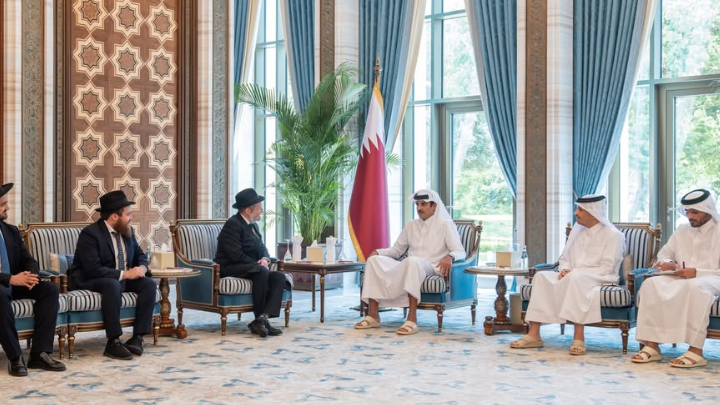
Emir of Qatar
Qatari Emir Tamim bin Hamad Al Thani and Prime Minister Mohammed bin Abdulrahman Al Thani met with Rabbi Mendy Chitrik on July 27, 2026.


 Add JewishInsider on Google
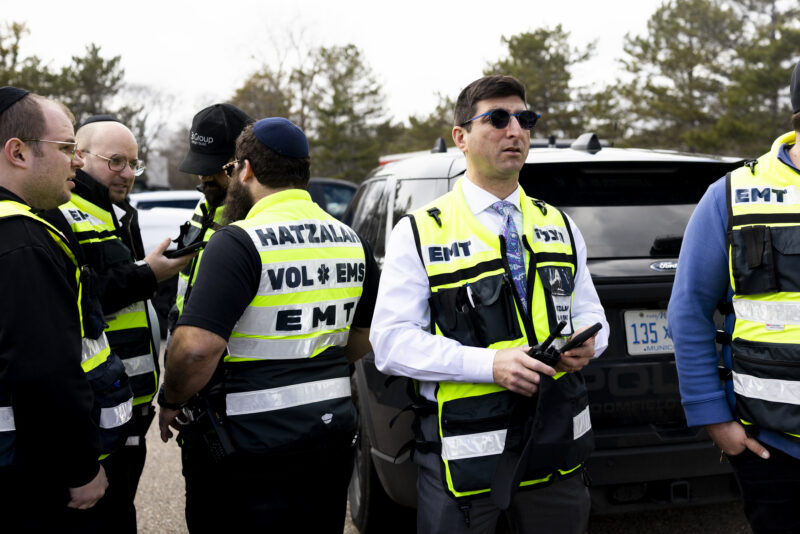
Qatari Emir Sheikh Tamim bin Hamad Al Thani hosted a group of rabbis on Monday at Lusail Palace in Doha. Rabbi Mendy Chitrik, chairman of the Alliance of Rabbis in Islamic States, led the delegation along with his son, Rabbi Eliyahu Chitrik, who organizes Jewish communal programming in Qatar. They were joined by Rabbi Yehuda Gerami, the chief rabbi of Iran.
The emir’s office publicized the meeting, posting on the palace’s social media account that the delegation offered condolences on the passing of the emir’s father and predecessor, Sheikh Hamad bin Khalifa Al Thani.
Qatari Prime Minister Sheikh Mohammed bin Abdulrahman Al Thani also attended the meeting.
The emir’s decision to publicize the visit on his official channels is a rare public acknowledgment of Jewish communal ties by a Gulf state that has no formal relations with Israel and funds the news outlet Al Jazeera that amplifies narratives hostile to the Jewish state.
After the hour-long meeting, the elder Chitrik told Jewish Insider that “the emir received us very warmly.”
“We conveyed to him the sympathy and condolences of the Jewish community in Qatar and we spoke about Jewish life in Qatar and different ways we can strengthen Jewish life in the Muslim world,” said Chitrik, chief rabbi of the Ashkenazi Jewish community of Turkey.
Jason Greenblatt, former White House Middle East envoy in the first Trump administration, told JI that the public announcement of the meeting signals warming ties between members of the Jewish community and Qatar.
“Over the past decade, in all my dealings across the region, including with the State of Qatar, I have been treated with genuine warmth and courtesy as both a proud Jew and a strong supporter of Israel,” said Greenblatt.
“Many people there, including some at the leadership level, may disagree with my position on Israel, yet I have consistently been received graciously. As an observant Jew, I have also found Qatar and other countries to be as accommodating as possible of my religious requirements. We may have serious differences over the Israeli-Palestinian conflict, but those differences have always coexisted with mutual respect for our views, beliefs and religions.”
ARIS represents rabbis who serve about 110,000 Jewish people across 18 countries with a Muslim majority. The delegation of rabbis also met with Nickolay Mladenov and Aryeh Lightstone, respectively the high representative for the Board of Peace and the body’s senior advisor, in Brussels earlier this month.
Northwestern has received approximately $737 million from the Qatari government in connection with NU-Q operations

Al Drago/Bloomberg via Getty Images
Mung Chiang, incoming president of Northwestern University, during the US Chamber of Commerce's Global Aerospace Summit in Washington, DC, on Sept. 10, 2025.
Critics of Qatari funding of American universities are watching Northwestern University’s incoming president to see how he handles the school’s upcoming contract renewal for its satellite campus in Doha, Qatar’s capital.
Northwestern’s contract to operate its campus in Qatar (NU-Q) is set to expire at the end of the 2027–2028 academic year. In an interview published May 11 with The Daily Northwestern, the university’s student newspaper, interim President Henry Bienen said the NU-Q review process is “ongoing” and would be left up to the university’s new leadership.
“So I was planning to be in Doha for commencement, and a set of events made it hard for me to do it,” said Bienen, referring to the U.S.’ war with Iran. Bienen served as Northwestern president from 1995-2009 and assumed the role of interim university president in September. He established Northwestern’s Qatar campus in 2008, which has faced scrutiny for faculty ties to Hamas.
“The provost-elect is there now. … [we] are talking about Qatar a lot, and I think it’s fair to say Qatar is very eager that we renew the relationship. So that’s a process of discussion back and forth. And that process is ongoing,” said Bienen. The Doha campus is currently remote, as a security precaution following Iranian missile strikes on the Gulf country.
“Of course, Qatar is a board decision,” continued Bienen. “I have my ideas. I’m positive about the relationship, frankly. I do think at the end of the day, it’s a board issue, and a new president has to sign off on this one. But the conversations are going on. But the wild card is obvious in this fraught area. … There’s just a lot of variables, and nobody can predict with any certainty what the next month will bring, much less the next year.”
On Monday, Northwestern announced the appointment of Mung Chiang as the school’s new president. Members of the Jewish community expressed optimism that Chiang — who assumes the role on July 1 — will leverage the supportive environment he fostered for Jewish students at Purdue University to help combat the antisemitism seen at Northwestern in recent years.
However, questions remain regarding how Chiang will address NU-Q and shape the long-term trajectories of both the Doha and Evanston, Ill., campuses.
The Coalition Against Antisemitism at Northwestern, a group of Northwestern students, faculty, parents and alumni, said in a statement to Jewish Insider that it is “hopeful that President-elect Chiang can help lead a serious, transparent, and institutionally credible review of Northwestern University’s relationship with Northwestern University in Qatar” amid “the increasing federal, congressional, donor and public scrutiny surrounding NU-Q.”
CAAN asserted that Bienen “is materially conflicted with respect to any decision-making process concerning NU-Q and therefore should not serve as the principal decision-maker regarding the future of the Qatar campus. Publicly available disclosures show that Dr. Bienen has served on the advisory board of the Qatar Foundation, the entity that funds and oversees NU-Q.”
Among CAAN’s concerns include “that NU-Q is deeply integrated with Northwestern’s Medill School of Journalism and communications programs.”
“Northwestern has used Qatar Foundation funding to support journalism and communications education through NU-Q, while congressional investigators and outside watchdogs have increasingly questioned whether partnerships involving Al Jazeera and Qatar-backed media ecosystems create risks relating to editorial independence, ideological influence, and institutional neutrality,” CAAN said.
Northwestern has received approximately $737 million from the Qatari government in connection with NU-Q operations, including annual payments reportedly totaling approximately $70 million per year to sustain the campus, according to CAAN.
Brandy Shufutinsky, director of the Foundation for Defense of Democracies’ Program on Education and National Security, pointed to Georgetown University’s Bridge Initiative, a multiyear research project on Islamophobia, which reportedly requires Qatari approval for speakers and programming.
“I’m wondering if Northwestern’s campus in Doha — and even their main campus — [would] have a similar type program where they’re basically handing over final say to the [Qatari] government,” Shufutinsky told JI.
Last year, the House Committee on Education and Workforce released transcripts of an interview with former Northwestern President Michael Schill on the school’s relationship with Qatar. Committee staff noted during the interview that a section of Northwestern’s agreement with the Qatar Foundation, which funds Northwestern’s satellite campus, legally binds staff and students to follow the country’s laws and “social customs.”
“NU, NU-Q, and their respective employees, students, faculty, families, contractors and agents, shall be subject to the applicable laws and regulations of the State of Qatar, and shall respect the cultural, religious and social customs of the State of Qatar,” the agreement reads.
Shufutinsky said she would like to see Chiang address “what does that mean related to gender segregation and women’s rights, considering Qatar is the last Gulf nation to require unmarried women [under age 25] to have a male companion or get male approval if they want to travel.”
“Those values are counter to American social values, customs and norms,” said Shufutinsky. “What does that mean for the girls and women who are studying and teaching on that campus?”
Northwestern did not respond to a request for comment from JI asking if Chiang has indicated his plans for NU-Q.
The questions around contract renewal come as the Iran war is damaging Qatar’s once booming economy, particularly in the oil and gas sector. The country, one of the world’s wealthiest nations, could need to reevaluate foreign partnerships to cut spending.
A report released Tuesday shows dozens of established American universities are also nearing financial trouble.
That leads to a bigger question, said Shufutinsky. “Are these universities becoming so dependent on foreign dollars that they are unable to function, and does that mean they’re going to be willing to turn a blind eye to things like human rights abuses?”
They said, however, it’s unlikely the rift with Tehran will engender any goodwill towards Israel
Mahmud HAMS / AFP via Getty Images
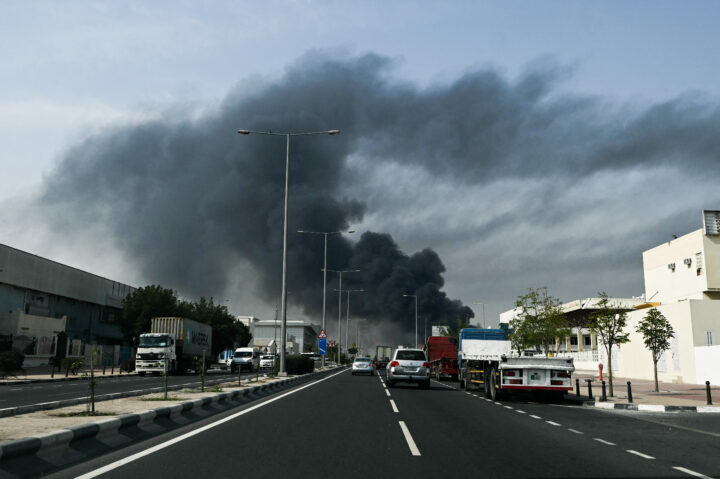
Motorists drive past a plume of smoke rising from a reported Iranian strike in the industrial district of Doha on March 1, 2026.
Iranian attacks on Qatar could prompt Doha to reassess its regional alignment and relationship with Tehran, experts said, though they expressed skepticism that the strikes would change Qatar’s antagonistic posture toward Israel, its funding of anti-Israel media or its harboring of Muslim Brotherhood-aligned groups.
Prior to the Iran war, Doha and Tehran maintained close and pragmatic diplomatic relations centered on economic cooperation. In the leadup to hostilities, Qatar aimed to balance its ties with Iran and the U.S., however the conflict has brought to light the difficulty of this balancing act.
Qatar has suffered severe damage to its civilian, energy and military infrastructure from Iranian strikes, launched as Tehran has targeted American allies in the region amid the war with the U.S. and Israel, including over $20 billion in lost revenue caused by a strike on Qatar’s liquified natural gas facility.
“Iran’s strikes have created real fissures,” said Natalie Ecanow, a senior research analyst at the Foundation for Defense of Democracies. “For example, Qatar expelled Iran’s military and security attachés and cracked down on IRGC cells within its borders. Notably, Qatar’s prime minister called Iran’s strikes ‘a big sense of betrayal,’ which is language typically reserved for friends or partners, not foes. That tells you something about Qatar’s mindset before the war.”
Kristan Diwan, a senior resident scholar at the Arab Gulf States Institute, told Jewish Insider that the rift will likely push Doha closer to other countries in the region with aligned interests.
“I think we will see Qatar working even more closely in concert with the new ‘Sunni’ regional coalition led by Saudi Arabia with Turkey, Pakistan and perhaps Egypt and other Arab players,” Diwan said. “While not identical, their interests align,” Diwan added, on Syria, Lebanon and the Palestinian territories. “Working together will increase their impact while lessening the burden on any one state.”
But Diwan said that while Doha may distance itself from Tehran, it should not be mistaken for a more favorable posture toward Israel. She said the emerging coalition “shares a belief that the current Israeli government represents a threat to regional stability.”
“Unlike the UAE, these countries are likely to take up positions confronting both Iran and Israel,” Diwan continued. “This will allow for a more accommodating posture on Muslim Brotherhood-aligned groups and perhaps even a recalibration of hostilities toward other radical movements such as the Houthis and Hezbollah.”
Other experts warned that Qatar’s significant financial losses during the war are unlikely to alter Doha’s ideological posture toward Israel or its funding of anti-Israel antagonism.
“Frankly it’s hard to imagine Qatar ever becoming less ideological or antagonistic toward Israel,” Jonathan Ruhe, a fellow at the Jewish Institute for National Security of America, told JI. “Despite the Iran war’s economic toll, Doha still can afford to propagate anti-Israel, anti-Western extremism through Al Jazeera, the Muslim Brotherhood and other actors. And it still has every incentive to support Islamist groups and media to buttress its own credibility in the Arab and Muslim worlds.”
Additionally, Ruhe said there is little external pressure forcing Qatar to change course, pointing to the Trump administration’s favorable posture toward Doha.
“The war has not altered the Trump administration’s reliably favorable attitude toward Qatar,” Ruhe said. “Qatar’s relationship with Tehran is now severely damaged, but it can compensate through stronger ties with Turkey and Saudi Arabia, both of whom have been propagating anti-Israel rhetoric, and possibly Pakistan, too.”
But Ecanow said the prospect of a full break between Qatar and Iran remains complicated by geography and shared economic interests. Qatar’s wealth is tied to the world’s largest natural gas reservoir, which it shares with Iran.
“Qatar’s wealth flows from sitting on the world’s largest natural gas reservoir — one it shares with Iran. That ostensibly gives Doha an economic interest in the regime’s survival because a regime that’s down but not out poses little competition for Qatar’s liquefied natural gas exports. Regime change may not be an immediate U.S. objective, but this dynamic inherently puts Qatar’s interests at odds with those of the United States,” Ecanow said.
The Al Thanis decided to lash out at Israel rather than the country that launched the attacks on the Gulf state
Karim JAAFAR / AFP via Getty Images
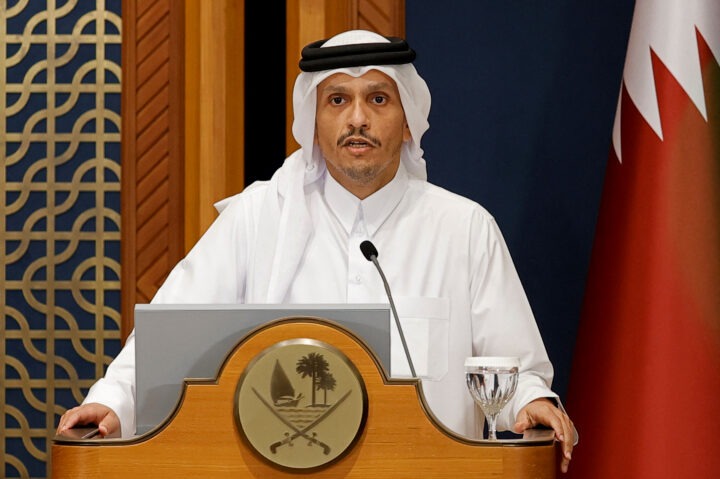
Qatar's Prime Minister and Foreign Minister Sheikh Mohammed bin Abdulrahman Al Thani speaks during a joint press conference with Turkey's Foreign Minister Hakan Fidan, in Doha on March 19, 2026.
Over the last three weeks, Qatar’s leadership has woken up to a reality it had long seemed determined to disprove: that money will only take you so far. And so Doha has fallen back on a longstanding Middle Eastern tradition of blaming Israel for its problems.
Qatar is the top foreign contributor to American universities, World Cup host, patron of the arts and donor of the new Air Force One, and the influence that comes with philanthropy led much of the world to turn a blind eye to the dark side of the Al Thani royal family’s generosity: Funding perhaps the world’s most effective propaganda arm for radical Islam, Al Jazeera, hosting the leaders of Hamas and other terrorist groups, and more.
With a massive real estate portfolio that includes properties in London and Manhattan, its efforts to bail out White House Special Envoy Steve Witkoff in 2023 and 2025, and its work with former lobbyists now in the Trump administration — such as Attorney General Pam Bondi and FBI Director Kash Patel — Doha appeared to have built a winning strategy to ensure its voice was heard in the White House.
Despite public opposition from Qatar and other Gulf states, the U.S., alongside Israel, went to war with Iran. Now, Doha finds itself on the receiving end of attacks from the Islamic Republic. Tehran’s attacks on Qatari gas facilities have led to a loss of 17% of Qatar’s capacity to export liquefied natural gas and an estimated $20 billion loss of annual revenue for the next three to five years, QatarEnergy CEO Saad al-Kaabi told Reuters.
The latest Iranian assault on Doha’s gas industry came after Israel struck the Iranian side of the South Pars gas field, shared with Qatar. In a message that appeared, at least in part, an attempt to appease Doha, President Donald Trump blamed Israel — in mild terms by Trump standards — and said he had no idea about the attack, a claim experts and former Israeli and U.S. officials have said is unlikely to be true. Israeli Prime Minister Benjamin Netanyahu said in a Thursday night press conference that Israel “acted alone” and will respect Trump’s request that Israel not bomb the gas field again.
In addition, Trump threatened that if Iran attacks “a very innocent, in this case, Qatar,” the U.S. will “massively blow up the entirety of the South Pars Gas Field at an amount of strength and power that Iran has never seen or witnessed before.”
Ariel Admoni, a Qatar expert at the Jerusalem Institute for Strategy and Security (JISS), said Trump’s statement shows “great anger” in Doha “expressed through pressure on Trump and a demand to clarify that he wasn’t part of this, in order not to hurt [Qatar’s] image” of being well-connected to the administration.
Realizing that their checkbook diplomacy is no longer enough to get what they want from the Trump administration, the Al Thanis decided to lash out at Israel rather than the country that launched the attacks on the Gulf state.
Qatar continued to triangulate with Iran. Doha expelled Iran’s military and other attaches based in Doha in response to Tehran’s “hostile approach,” but left the Iranian ambassador in place, and hours later, Admoni said, a senior Islamic Revolutionary Guard Corps official was given a favorable interview on Al Jazeera.
Qatari Prime Minister and Foreign Minister Mohammed bin Abdulrahman Al Thani said in a statement to the press alongside Turkish Foreign Minister Hakan Fidan on Thursday that “This war needs to stop immediately. The aggression needs to stop immediately. Because everyone knows who the main beneficiary of this war is, and [who is] dragging the whole region into this conflict.”
Fidan was less subtle in his remarks, adding: “It should be especially noted that the primary responsible party for this war, which has drawn our region into an unprecedented crisis, is Israel.”
Former Qatari Prime Minister Hamad bin Jassim bin Jaber Al-Thani (known as HBJ) asserted in an X post that even after Iran’s assault on Qatari gas facilities, Israel is the enemy and Iran is simply misguided: “What Israel wants, unfortunately, is coming to pass … leaving us in a scene of regional war or a confrontation between the two sides of the Gulf.”
To Iran, HBJ wrote: “We have never been your enemy … What you are doing now does not deter the enemy; rather, it serves him, achieves his goals. … I previously warned of the consequences of such acts that serve only Israel alone.”
According to Admoni, HBJ is known to speak frankly and “say things that the official government can’t say … and therefore can be seen as a test balloon.”
“The fact that the message right after the attack is anger at Israel,” Admoni said, “shows how there is no desire in Qatar to make moves against Iran.”
While Qatar is beginning to “see the limitations of their strategy,” Admoni said, “in the end, they will continue to use their leverage on Trump and probably demand compensation, possibly in the form of more [missile] interceptors. They realize that Trump is one thing, but they cannot give up on the U.S. entirely and will want to ensure that when Trump leaves, they will maintain their standing in the U.S.”
Experts were divided if Hamas’ alignment with Iran as it attacks Qatar will cause Doha to reassess the value of hosting the terror group
Ali Altunkaya/Anadolu via Getty Images
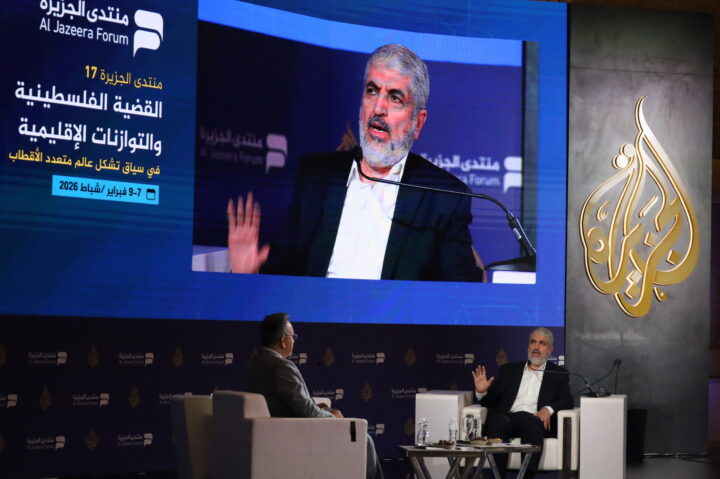
Hamas leader Khaled Mashaal speaks on the second day of the 17th Al Jazeera Forum held in Doha, Qatar on February 8, 2026.
Despite Qatar’s anger with Iran over the regime’s continued attacks on its territory and civilian infrastructure, experts are divided over whether the conflict will ultimately force Doha to reconsider its long-standing policy of hosting Iranian-backed Hamas officials.
Qatar has hosted Hamas’ political office and leadership, who have been reported to live lavishly and amass significant wealth, since 2012. Doha previously agreed to expel Hamas officials during hostage negotiations with Israel, but ultimately did not follow through.
Some experts told Jewish Insider that shifting regional dynamics amid the U.S. and Israeli conflict with Iran could be sufficient to change Qatar’s calculus. In the days following the launch of the joint U.S. and Israeli military operation against Iran, Tehran has launched widespread drone and missile strikes at multiple Arab nations, including Qatar.
Qatari Prime Minister Mohammed bin Abdulrahman bin Jassim Al Thani condemned the Iranian strikes last week as a “flagrant violation” of Doha’s sovereignty in a phone call with Iranian Foreign Minister Abbas Araghchi and “categorically rejected” Tehran’s claims that the strikes were directed only at American interests and not intended to target the Gulf state.
Hamas — which has received significant funding, training, arms and intelligence from Tehran for decades — has not denounced the Iranian strikes, instead placing the blame on the U.S. and Israel.
Anne Dreazen, vice president of the American Jewish Committee’s Center for a New Middle East, told JI that while Doha has raised the possibility of expelling Hamas leadership in the past, the recent attacks and the group’s lack of condemnation of the Iranian strikes signals that “the situation is a little bit different now.”
“These Iranian attacks across the Gulf have really forced many regional governments to reassess how much space they want to give the Iranian regime-aligned groups,” Dreazen said. “I think Qatar probably perceives that Hamas is siding with the Iranian regime, and so that could create some additional pressure on Qatar to act.”
Edmond Fitton-Brown, a former British diplomat and senior fellow at the Foundation for Defense of Democracies, echoed those sentiments, telling JI that the current conflict between the U.S. and Israel and Iran could challenge Qatar’s long-standing balancing act between Islamist movements and Western allies.
“Before the current Iran war, it [Qatar] was pursuing a business model that had it as international mediator, media superpower, host of a U.S. military base and sponsor of the Muslim Brotherhood’s global ambitions,” Fitton-Brown told JI. “It was a tightrope act, reliant on neither Iran objecting to the U.S. military base nor the U.S. objecting to the Muslim Brotherhood angle.”
However, Fitton-Brown said “the extent of the betrayal in the face of Iranian military aggression is on a different level from previous issues. “The comment made by Qatar about ‘everything being ruined’ strikes me as an acknowledgement that a return to the status quo ante is unlikely,” he added.
Fitton-Brown said that Qatar “looks unlikely to offer a stable haven” for Hamas leadership, adding that the group could find itself “sandwiched between U.S. allies on both sides of the Gulf.”
Meanwhile, other experts and former White House officials remained more skeptical that current hostilities would push Qatar to finally expel Hamas.
“I will believe it when I see it,” Steven Cook, a senior fellow at the Council on Foreign Relations, told JI. Cook noted that while the “Qataris are angry about Iranian strikes on their territory,” it would likely not change the dynamics of their relationship with Hamas. He added that “hosting Hamas has become an instrument of Qatar’s regional power and global influence.
“Qatar has been playing both sides for decades — supporting Islamist groups including terrorist groups like Hamas, while housing the Al-Udeid base and spending billions in the U.S. to buy political protection,” Elliott Abrams, the former U.S. special representative for Iran during the first Trump administration, said.
Abrams said it is “possible that this war has awakened them to the inherent contradictions in this game, where they protect Hamas — but Hamas doesn’t side with them,” however, he also expressed skepticism that such a move would ultimately be carried out.
Abrams said Qatar is “too used” to their current posture of playing both sides, adding that Doha receives “too many benefits from it.”
Richard Goldberg, a former Trump administration official, also said he will “believe it when I see it.” He noted that Qatar “appears to have intentionally shut down their liquified natural gas exports and hyped the market … as a favor to Tehran and an attempt to pressure President Trump into backing down.”
Earlier this month, Qatar halted liquefied natural gas production — which accounts for roughly 20% of global supply — after Iranian drone attacks targeted key operating facilities and infrastructure.
If the conflict does push Qatar to expel Hamas leaders, experts said Turkey could serve as a potential refuge.
“Turkey is the obvious refuge for Hamas: a powerful and self-confident Sunni Islamist state that also functions as the headquarters in the region for the International Organization of the Muslim Brotherhood,” Fitton-Brown added. “The Hamas leaders may move there soon, or may wait until the U.S.-Israel-Iran outcome is clear.”
“It would not be the end of Hamas” if they were expelled from Doha, Dreazen said. “Hamas has extensive operational infrastructure still in Gaza, and it has networks throughout several countries, Turkey being one of them. In terms of Hamas’ ability to carry out operations in Gaza, I think the impact would actually probably be limited.”
The GOP senator also told JI he doesn’t believe Iran will abide by ‘one sentence, one word of any negotiated agreement’ with the U.S.

Kayla Bartkowski/Getty Images
Sen. John Cornyn (R-TX) speaks with press in the Hart Senate Office Building on April 07, 2025 in Washington, DC.
Sen. John Cornyn (R-TX) warned on Thursday that the U.S. needs to continue to monitor the “shifting loyalties” of Saudi Arabia, amid concerns that Riyadh is pivoting away from its traditional allies and toward Islamist actors.
The Texas senator, who serves on the Senate intelligence Committee and foreign relations committees, told Jewish Insider that while he supports the Trump administration working to add Saudi Arabia to the Abraham Accords, the U.S. should be cognizant of “shifting loyalties and alliances there.”
“The Abraham Accords were a huge and important development, and I think it’s something worth continuing to try to expand and encourage, but I think we have to go in with our eyes open and realize there’s a lot of shifting and maybe even divided loyalties occurring in this region,” Cornyn told JI.
“Qatar has been problematic for all sorts of reasons that we all know, playing both ends against the middle, and I think Saudi Arabia is probably looking to figure out how to gain advantage, but my hope would be that we continue to put pressure on Iran and its proxies, which we’ve done,” he continued.
Talking to JI a day after Israeli Prime Minister Benjamin Netanyahu’s White House sitdown with President Donald Trump that largely focused on Iran, Cornyn said that he was skeptical of the regime’s ability to conduct diplomacy with the U.S. or honor the terms of any agreement.
“I think diplomacy is destined to fail because they’re not going to live up to one sentence, one word of any negotiated agreement, so they can be depended on to cheat. They are determined to destroy Israel and start a war in the Middle East. I know the president is taking it very seriously,” the GOP senator said. “I think the president is preserving all of his options, but again, how do you negotiate with somebody who cheats and who will not abide by any part of any negotiated agreement?”
“I don’t think it necessarily hurts at least to suggest that there may be some negotiations that could occur, but again, I don’t expect Iran to stand behind any negotiated outcome. I think given their commitment to the destruction of Israel, and obviously they are an ideological movement, a theocracy,” he added. “Negotiating with somebody like that is asking them to change who they are, and that will never happen.”
Despite this, Cornyn argued that it was important for the U.S. to “acknowledge that any military action against the regime in Iran would likely spill over to other places.”
Plus, the stakes of Bibi's upcoming White House visit
Rob Kim/Getty Images for Fanatics
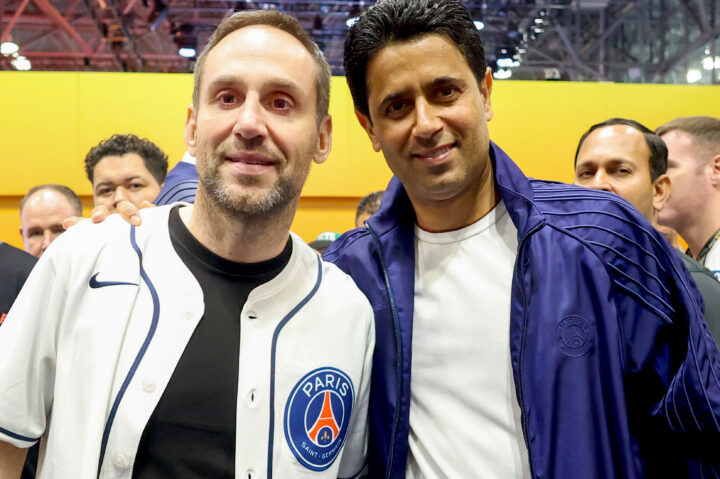
Michael Rubin and Nasser Al-Khelaifi attend Fanatics Fest NYC 2025 at Javits Center on June 22, 2025 in New York City.
👋 Good Monday morning!
In today’s Daily Kickoff, we preview Israeli Prime Minister Benjamin Netanyahu’s trip to Washington this week following the White House’s talks with Iran on Friday, and have the exclusive on a new report from the North American Values Institute on antisemitism in K-12 schools. We report on Hamas leader Khaled Mashaal’s praise for the Oct. 7 attacks at the Al Jazeera Forum in Doha, Qatar, over the weekend, as Fanatics CEO Michael Rubin hosted his annual Super Bowl lunch that was attended by a senior Qatari official. Also in today’s Daily Kickoff: Rep. Alexandria Ocasio-Cortez, Yakir Gabay and Narges Mohammadi.
Today’s Daily Kickoff was curated by JI Executive Editor Melissa Weiss and Israel Editor Tamara Zieve, with assists from Danielle Cohen-Kanik and Marc Rod. Have a tip? Email us here.
What We’re Watching
- Vice President JD Vance is traveling to Armenia today as part of a two-country trip that will also include a stop in Azerbaijan later this week, in a last-minute trip first reported yesterday. Vance will not be in Washington during Israeli Prime Minister Benjamin Netanyahu’s visit to the White House, slated for Wednesday.
- Former Israeli hostage and musician Alon Ohel will play a one-night concert in Tel Aviv this evening. In videos shared by his loved ones during his more than two years in captivity, Ohel deftly played the piano, drawing widespread praise for his talent. He’ll be performing alongside a number of high-profile Israeli musicians, including Idan Amedi and Eviatar Banai for the performance, titled “Alon Ohel, Playing for Life.”
- The Religious Liberty Commission is holding its fifth hearing on issues related to antisemitism today at the Museum of the Bible. Speakers at the gathering, which begins this morning and runs through the mid-afternoon, include the Justice Department’s Leo Terrell, former Auburn men’s basketball coach Bruce Pearl and former U.S. Ambassador for Religious Freedom Sam Brownback.
Prince William is making his first official visit to Saudi Arabia this week. The trip comes as Riyadh hosts the World Defense Show, and as the U.K. works to establish Saudi Arabia as a partner in its next-generation Tempest fighter aircraft program. - Somali Defense Minister Ahmed Moallim Fiqi is also in Riyadh, where earlier in the day he inked a new defense cooperation agreement with Saudi Defense Minister Prince Khalid bin Salman. The Saudi official had met with Jewish leaders in Washington last month, during which he reiterated Riyadh’s opposition to Israel’s recent recognition of Somaliland.
What You Should Know
A QUICK WORD WITH JI’S LAHAV HARKOV
Israeli Prime Minister Benjamin Netanyahu plans to fly to Washington for a Wednesday White House meeting amid increasing concern in Jerusalem that the U.S. and Iran are headed towards a nuclear deal that does not meet Israel’s immediate security need — to drastically limit Iran’s ballistic missile program.
After the first round of indirect negotiations in Oman on Friday, President Donald Trump told reporters on Air Force One that talks had been “very good” and that “Iran looks like it wants to make a deal very badly.”
Asked about Iran’s demand that the talks only be about nuclear weapons, Trump said, “That would be acceptable. One thing, right up front, no nuclear weapons. … They weren’t willing to do that [last year]; now they are willing to do much more.” That message contrasted with Secretary of State Marco Rubio’s remarks from last week, that “in order for talks to actually lead to something meaningful, they will have to include certain things, and that includes the range of their ballistic missiles, that includes the sponsorship of terrorist organizations across the region, that includes the nuclear program and that includes the treatment of their own people.”
Netanyahu announced the urgent meeting with Trump, less than two months after they last met at Mar-a-Lago, with a statement that said: “The Prime Minister believes any negotiations must include limitations on ballistic missiles and a halting of the support for the Iranian axis.”
For Israel, while the Iranian nuclear program may be the biggest threat, Operation Midnight Hammer did enough damage that the ballistic missiles are the more urgent concern, one that Iran has been threatening to use against Israel if the U.S. launches an attack.
Though Israel destroyed hundreds of missiles, launchers and production sites during the 12-Day war last June, most of Iran’s missiles remained intact. The prime minister presented the president with evidence during their December meeting that Iran has been working to rebuild its ballistic missile program and air defenses with help from China and Russia.
Any deal that does not include significant limitations on the range of Iran’s ballistic missiles will be woefully inadequate from Israel’s perspective. Plus, as Netanyahu’s office said on Saturday, Israel wants a deal that addresses Iran’s sponsorship of terrorist proxies like Hamas and Hezbollah.
Sen. Lindsey Graham (R-SC) expressed skepticism that the negotiations would bring about an acceptable agreement and noted the legal requirement to bring any such deal before Congress, writing on X: “I hope it can meet our national security objectives and the needs of the people of Iran through diplomacy. Given Iran’s behavior regarding deals, it could be a tough sell. However, I am open-minded, understanding [that] any agreement with the Islamic Republic and the United States must come to Congress for review and a vote.”
FROM CENTER STAGE
In Qatar, Hamas leader Khaled Mashaal headlines Al Jazeera Forum focused on defaming Israel
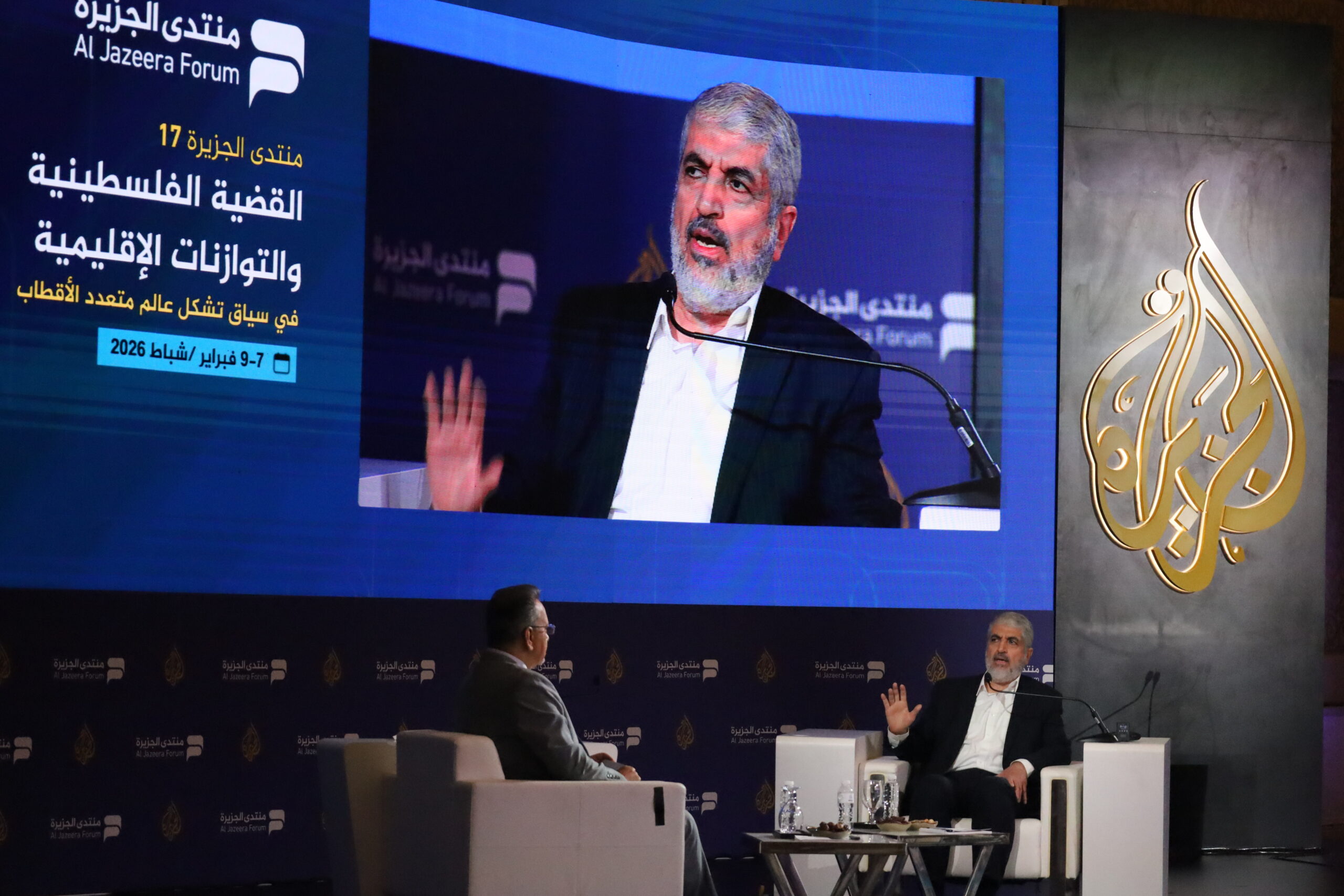
Hamas leader Khaled Mashaal addressed Qatar’s 17th Al Jazeera Forum on Sunday in Doha, at a conference that focused heavily on denigrating Israel, while featuring senior officials from Iran and Somalia. Mashaal applauded the group’s Oct. 7, 2023, attacks on Israel as having “brought the Palestinian cause back to the forefront of the world” and said that Palestinians “take pride” in “resistance,” a euphemism for violence against Israelis. He called to “pursue Israel and establish that it is a pariah entity that is losing its international legitimacy,” noting the “changes in the elites, universities and social networks” against Israel, Jewish Insider’s Lahav Harkov reports.
Peak promotion: The Hamas leader, who resides in Doha, also hailed Qatar’s “honorable role in the [Palestinian] cause.” Hamas is designated by the U.S., European Union and other countries as a terrorist organization, and Mashaal is wanted in the U.S. for terrorism, murder conspiracy and sanctions evasion relating to his role in planning the Oct. 7 attacks. Mashaal was listed on the conference’s program and list of speakers in versions of the Al Jazeera Forum website archived by independent researcher Eitan Fischberger, but as of Sunday, Mashaal was no longer listed. At the same time, the Al Jazeera Forum X account extensively promoted Mashaal, with 19 posts about the terror leader’s remarks. The account featured two posts about conference keynote speaker Abbas Araghchi, the foreign minister of Iran.
Elsewhere at the Forum: Another speaker was Francesca Albanese, the U.N. special rapporteur who has been sanctioned by the U.S. for “infringement on the sovereignty” of Israel and the U.S. by pursuing International Criminal Court prosecutions of citizens of both countries, as Secretary of State Marco Rubio described her actions last year. Albanese claimed in her remarks, delivered via video, that Israel had committed a premeditated genocide of Palestinians in Gaza, and that all of humanity “now has a common enemy” in Israel.
DOHA DISSONANCE
As speakers in Doha brand Israel as humanity’s ‘common enemy,’ Michael Rubin hosts Qatari minister at Super Bowl lunch
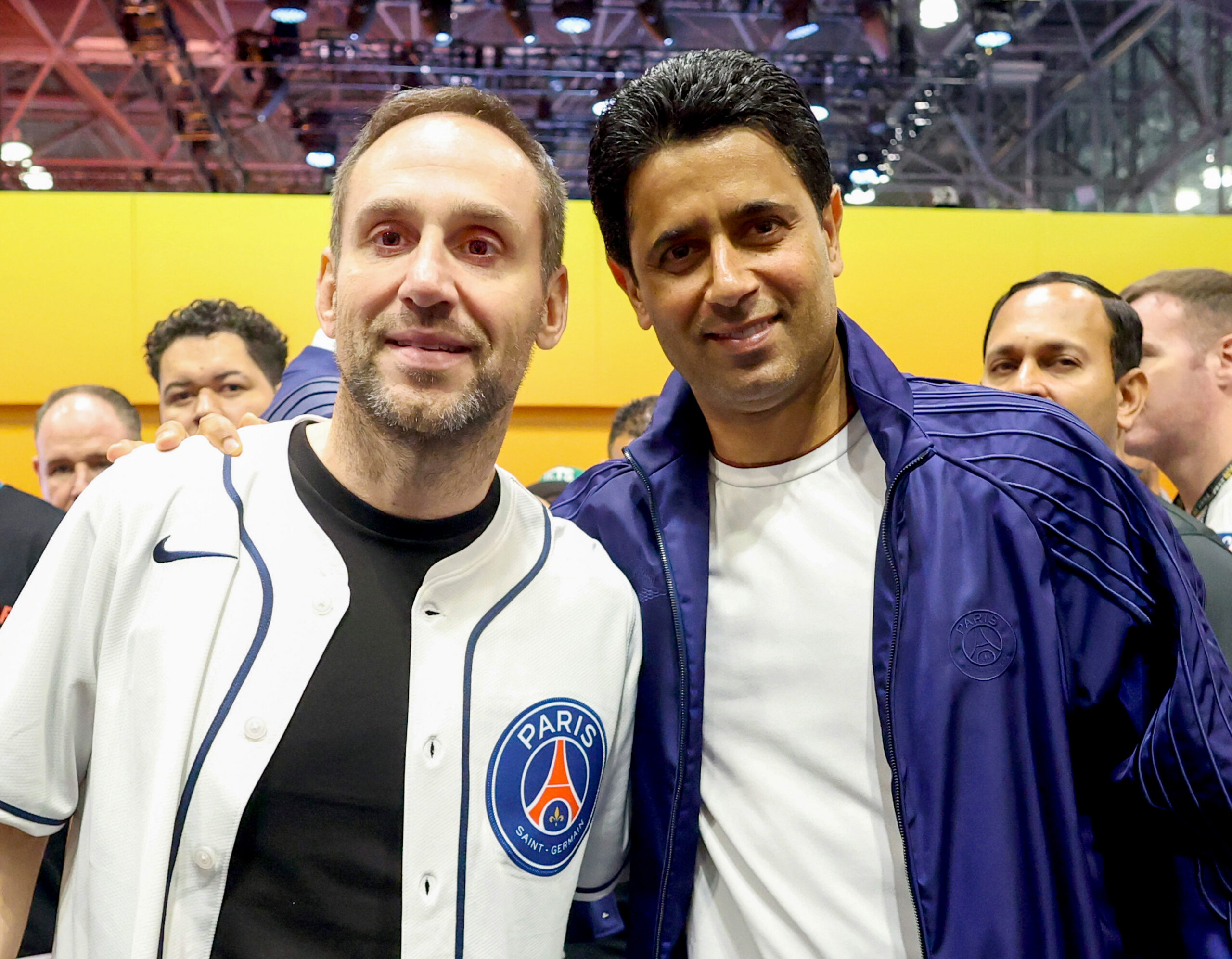
As the Al Jazeera Forum took place in Doha, Qatari minister Nasser Al-Khelaifi was being feted by Fanatics CEO Michael Rubin at another high-profile convening — Super Bowl weekend, taking place in Santa Clara, Calif. Al-Khelaifi is the chairman of Qatar Sports Investments (QSI), one of the Qatari sovereign wealth funds that invests heavily in international sports and entertainment. Among his other titles, Al-Khelaifi is also a board member of the Qatar Investment Authority, a minister of state and the president of the Paris Saint-Germain Football Club in France and the Qatar Tennis Foundation.
Flourishing friendship: Rubin posted a picture with Al-Khelaifi from his annual Super Bowl luncheon on Instagram with the caption, “Incredible lunch with amazing people across sports, business, and culture.” Rubin and Al-Khelaifi have developed a friendship in recent years, including a long-term partnership between Fanatics and Paris Saint-Germain. Rubin posted a photo with Al-Khelaifi at the F1 Qatar Grand Prix last November, where he called the Qatari minister his “brother” and said, “What you did for both the city of Paris and country of Qatar is truly amazing.”
STICKING BY THE STICKY NOTE
Amid criticism, Kraft’s anti-hate group defends Super Bowl ad against antisemitism

The Blue Square Alliance Against Hate’s widely watched Super Bowl ad last night designed to combat antisemitism instead sparked a heated divide within the Jewish community over the effectiveness of its message, Jewish Insider’s Haley Cohen reports. Titled “Sticky Note,” the ad from New England Patriots owner Robert Kraft’s group featured a Jewish student being harassed by his high school classmates because of his religion, with bullies placing a “dirty Jew” sticker on his backpack. In a show of allyship, a Black classmate puts a blue square over the note. “Do not listen to that,” he tells his Jewish classmate. “I know how it feels.”
Target audience: A chorus of commentators criticized the advertisement, which is part of a $15 million media campaign that will also include ad spots during the Winter Olympics, for depicting Jews as victims in need of protection from non-Jews and for avoiding the reality that the source of many antisemitic incidents in schools stem from hostility toward or hatred of Israel. But the leader of Kraft’s group told JI that the ad wasn’t trying to appeal to a Jewish audience. Instead, Blue Square Alliance President Adam Katz told JI that with more than 100 million viewers, the Super Bowl provides an opportunity to reach an audience that is “unengaged — and in many cases uninformed — about antisemitism … We’re very focused on this audience that’s lacking awareness, empathy and motivation to act,” he said.
MEJIA MOMENTUM
Will Democrats rally behind progressive socialist Mejia as she vies to represent wealthy N.J. district?
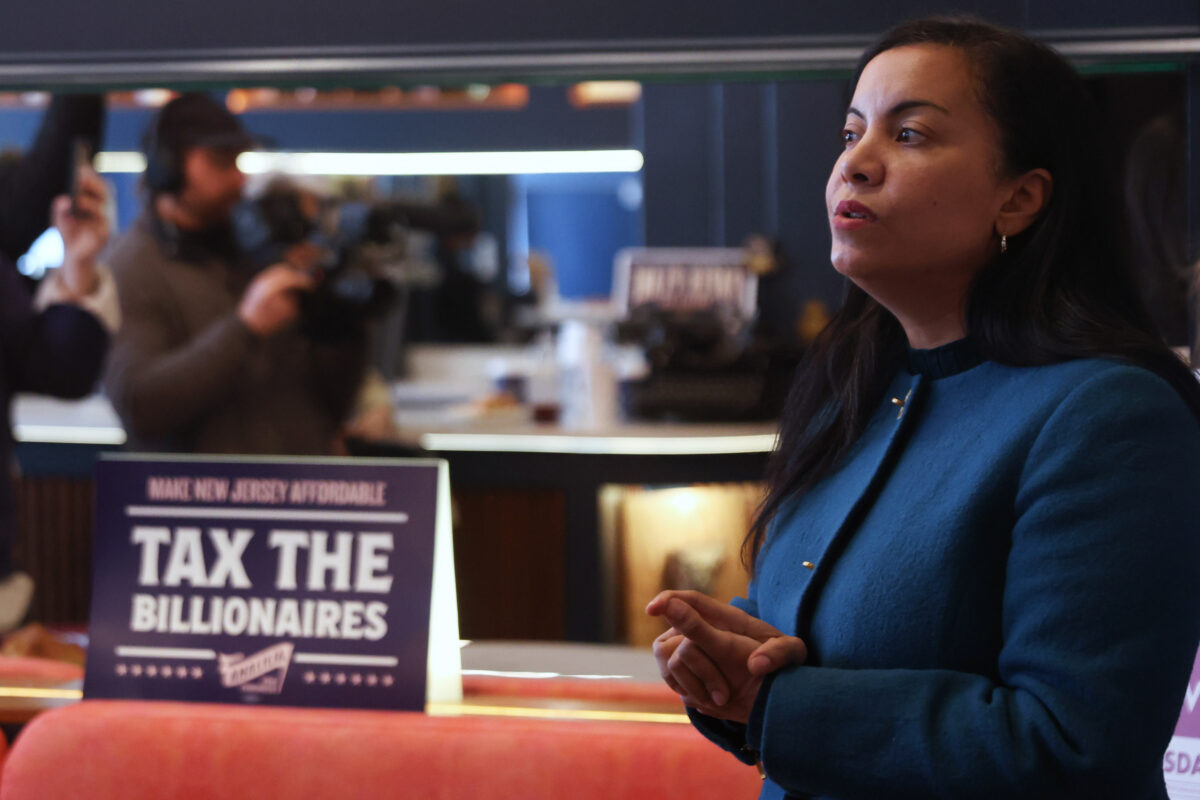
With progressive activist Analilia Mejia’s expected victory in the special election Democratic primary in New Jersey’s 11th Congressional District, attention is now turning to the upcoming April special election and the June regular election primary as the last chances for moderates and pro-Israel groups to defeat her, Jewish Insider’s Marc Rod reports.
Looking ahead: “June is potentially irresistible for the other candidates who ran … if any of these candidates could get a one-on-one shot at making it in June,” Micah Rasmussen, the director of the Rebovich Institute for New Jersey Politics at Rider University, said. But unless the field can consolidate, Rasmussen said, it’s hard to see how the result would be any different in June. He said former Rep. Tom Malinowski (D-NJ), who closely trails Mejia, would have the strongest shot at defeating her head-to-head, while former Lt. Gov. Tahesha Way might have a tougher battle.
UDP’s outlook: “The outcome in NJ-11 was an anticipated possibility, and our focus remains on who will serve the next full term in Congress,” UDP spokesperson Patrick Dorton said in a statement on Friday. “UDP will be closely monitoring dozens of primary races, including the June NJ-11 primary, to help ensure pro-Israel candidates are elected to Congress.”
EXCLUSIVE
New report warns about the rise of activists smuggling in antisemitic content in K-12 schools

Political activists seeking to push extremist perspectives into the classroom are behind a nationwide acceleration of antisemitic content in K-12 classrooms, with increasingly active movements targeting school boards, district leadership and teacher organizations, according to a report published Monday by the North American Values Institute, Jewish Insider’s Haley Cohen reports.
Findings: The group’s 58-page report, “When the Classroom Turns Hostile: A Strategic Response to Extremism and Antisemitism in K-12 Education,” shared exclusively with JI, found that in the aftermath of the Oct. 7, 2023, Hamas terrorist attacks in Israel, what it described as radical ideological frameworks have dominated key education institutions across the country. Ideologies such as “oppressor-oppressed” are common in schools of education, accreditation bodies, teacher unions and district bureaucracies, all of which shape classroom materials.
MENTORSHIP MOVES
AOC under Matt Duss’ foreign policy tutelage as she makes 2028 moves

Rep. Alexandria Ocasio-Cortez (D-NY) has been receiving briefings from Matt Duss, an outspoken critic of the U.S.-Israel alliance and former foreign policy advisor to Sen. Bernie Sanders (I-VT), as she prepares for a high-profile appearance at the Munich Security Conference this week, The New York Times reported on Friday. Duss, who is now executive vice president at the Center for International Policy, a left-wing think tank, has long been a prominent detractor of U.S. relations with Israel, Jewish Insider’s Matthew Kassel reports.
Duss’ record: He has called for blocking aid to Israel and has expressed opposition to renewing the 10-year memorandum of understanding, which is set to expire in 2028 and currently provides $3.8 billion in military funding to Israel annually. He has also cast doubt on the Abraham Accords, accusing the normalization agreements between Israel and several Arab countries of using “racist logic” that is “premised on the perpetual repression of Palestinians” and helping to fuel Hamas’ Oct. 7, 2023, terror attacks. Duss has frequently called Israel’s resulting war in Gaza a genocide. “I don’t think a Democrat can be nominated in ‘28 without acknowledging that it is a genocide,” Duss suggested in an interview with The Financial Times last September.
Worthy Reads
Baker’s Recipe: Politico’s Diana Nerozzi and Ian Ward profile the Trump administration’s Andy Baker, whose “fingerprints are evident on some of the Trump administration’s most norm-shattering postures,” including Vice President JD Vance’s address at last year’s Munich Security Conference and the White House’s National Security Strategy. “Behind the scenes, the seldom-pictured and extremely private deputy national security adviser has emerged as a key figure in Vance’s orbit, shaping both the vice president’s foreign policy thinking and some of the White House’s most consequential national security decisions — especially its increasingly confrontational stance toward America’s allies in Europe. … With Vance emerging as a leading candidate to secure the 2028 Republican nomination, Baker, a self-described ‘realist’ who is skeptical of traditional American alliances and U.S. military intervention abroad, is expected to play an even more important role in shaping the future of the GOP’s foreign policy.” [Politico]
Harassed at Haverford: In The Free Press, Haviv Rettig Gur recounts his recent experience as a guest speaker at Haverford College, where his talk was disrupted by anti-Israel student protesters. “It was the strangest thing: The more I treated them like neglected children hungry for knowledge, the more likely they were to respond in healthy and productive ways. I didn’t meet violent illiberal radicals that evening at Haverford; I met children playing at violent illiberal radicalism. I met young people starved for wisdom and authority who had been told that their every emotional kink and outburst was valid and unassailable truth. … In the end, we managed to have an honest exchange of ideas, but it felt as though we had to buck everything their campus culture had taught them in order to reach that point. I met a real hunger for depth and understanding among young people who’d been told in a hundred different ways that their unexamined emotions were wisdom enough.” [FreePress]
The Two Elites: The Financial Times’ Janan Ganesh observes the “fatally interlocking” relationship between the private and public elite, against the backdrop of the resignation of former U.K. Ambassador to the U.S. Peter Mandelson over his ties to Jeffrey Epstein. “Most people do not find money — or the main ways of making money, such as banking — intrinsically interesting. This might be less true in societies that are new to wealth. But it holds in the established western cities. There, the self-made often discover too late that all their work and risk-taking has brought them less social status than expected. A minor magazine editor outranks them at a party. A hand-to-mouth actor is more welcome at Soho House. A bureaucrat can affect their business. Most rich people don’t mind. Even those who do tend to react maturely, perhaps sponsoring the arts for some reflected glory or buying a media outlet. But some will cross the line in seeking to be near the beau monde. Which consists of whom? Artists, intellectuals, politicians, even the occasional journalist: the public rather than private 1 per cent. Their value in social settings is high. Their income might not be.” [FT]
Word on the Street
The Pentagon is cutting its graduate-level programmatic and fellowship partnerships with Harvard, alleging that the school is imparting “globalist and radical ideologies” amid ongoing tensions between the school and the Trump administration…
NYPD Commissioner Jessica Tisch named Cardinal Timothy Dolan and the Rev. A.R. Bernard co-heads of the department’s chaplaincy unit, where they will jointly oversee a team of 10 chaplains; Dolan and Bernard, who respectively represent Catholic and Black churches, succeed Rabbi Alvin Kass, who died last year after six decades with the NYPD…
The New York Times looks at how conspiracy theories about the U.S.S. Liberty incident, in which Israel mistakenly fired on a U.S. naval ship during the Six-Day War, are spreading in far-right circles and are being promoted by Tucker Carlson and Candace Owens…
The Washington Post profiles American Conservative editor Curt Mills as the “avatar of a new right” works to shape the future of a post-Trump Republican Party; the “the No. 1 item on Mills’s agenda,” the Post reports, “is pushing back against Trump on U.S. support for Israel’s retaliation against Hamas after the attacks on Oct. 7, 2023, and agitating for a hard turn away from America’s 80-year bond with the Jewish state”…
The New York Times reviews Allegra Goodman’s This Is Not About Us, a collection of short but intertwined stories about generations of a fictional large Jewish family…
Israeli Olympic bobsled captain AJ Edelman said the apartment where the Israeli team had been staying in Milan ahead of the Olympic Games had been robbed; among the items taken, Edelman said, were thousands of dollars in cash as well as some of the team’s passports…
The Australian state of Queensland introduced a series of hate speech reforms that include the banning of the public use of such slogans as “globalize the intifada” and “from the river to the sea”; the move was undertaken in response to the December terror attack on a Hanukkah celebration at Sydney’s Bondi Beach…
Israeli President Isaac Herzog and First Lady Michal Herzog visited the site of the Bondi attack earlier today as part of a four-day visit to the country that will also include stops in Melbourne and Canberra…
Israeli carrier El Al was fined $39 million by the country’s Competition Authority over its price-gauging of tickets after the Oct. 7, 2023, Hamas terror attacks and through May 2024, finding that El Al raised prices on routes — a majority of which were only being served by the airline due to security concerns that resulted in widespread route suspensions — by between 16-31%…
Ynet profiles Israeli real estate investor Yakir Gabay, who was named to the executive board of the Trump administration’s Board of Peace…
The families of Druze children killed in a Hezbollah strike on a soccer field in the Israeli town of Majdal Shams in July 2024 are suing the terror organization for 80 million shekels ($25 million); 12 children were killed and dozens injured in the attack…
Israel’s Security Cabinet approved a series of measures that will allow Israeli authorities to exert more control in the West Bank, with far-right Finance Minister Bezalel Smotrich, who backed the expansion, saying, “we will continue to bury the idea of a Palestinian state”…
Iran sentenced activist Narges Mohammadi, who had been imprisoned since her arrest in December and had begun a hunger strike, to seven years in prison…
The new sentence against Mohammadi comes as Iranian security forces arrested four senior politicians affiliated with the country’s reformist parties…
Israeli music icon Matti Caspi died at 76…
Pic of the Day

Attendees of the International Conference of Shluchot in Brooklyn, N.Y., posed for the annual “class photo” outside the Chabad-Lubavitch world headquarters over the weekend. Some 4,500 women representing more than 100 countries traveled to New York for the annual gathering.
Birthdays
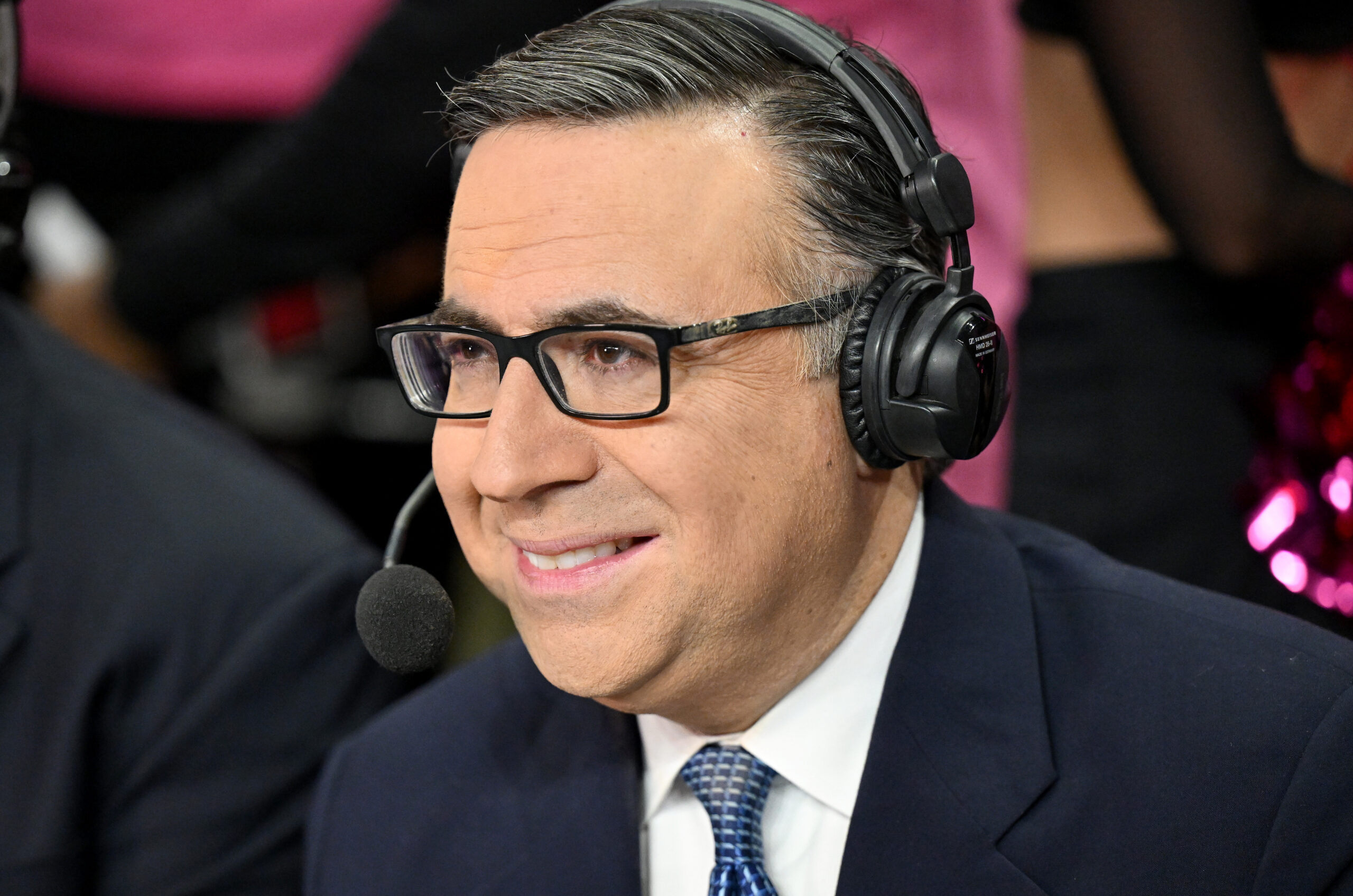
Sports announcer for NBA, NFL and college basketball games on CBS, TNT and TBS, as well as Brooklyn Nets games on the YES Network, Ian Eagle turns 57…
Grammy Award-winning songwriter of over 150 hits including “Somewhere Out There” from the movie “An American Tail,” in partnership with his late wife Cynthia Weil, Barry Mann (born Barry Imberman) turns 87… Singer-songwriter, she wrote 118 songs that made it to the Top 100 between 1955 and 1999 and was inducted into the Songwriters Hall of Fame and the Rock & Roll Hall of Fame, Carole King (born Carol Klein) turns 84… Professor of economics at Columbia University, Nobel laureate in 2001, former SVP and chief economist of the World Bank, Joseph Stiglitz turns 83… Three-time Tony Award and three-time Emmy Award-winning actress, Judith Light turns 77… Professor of history and modern Jewish studies at UCSD, Deborah Hertz turns 77… Israeli singer mostly in the Mizrahi music tradition, he has released over 30 albums, Shimi Tavori (born Shimshon Tawili) turns 73… Former governor of Virginia, chair of the DNC, chair of two Clinton presidential campaigns (Bill’s in 1996, Hillary’s in 2008), Terry McAuliffe, a/k/a “the Macker,” turns 69… Creator of the HBO series “The Wire” (2002-2008) and NBC’s series “Homicide: Life on the Street” (1993-1999), winner of a 2010 MacArthur genius fellowship, David Simon turns 66… Theoretical physics professor at Columbia University since 1996, author of multiple books written for the general public such as Icarus at the Edge of Time, Brian Greene turns 63… Isaac Lieberman… Managing director with the Draper Richards Kaplan Foundation, he was the lieutenant governor and then attorney general of Delaware, Matthew P. Denn turns 60… Play-by-play announcer for ESPN’s men’s college basketball and for the Toronto Blue Jays, Dan Shulman turns 59… British broadcasting executive who is currently chief content officer at the U.K.’s Channel 4, Ian Katz turns 58… President of the K-12 education portfolio at the Charles and Lynn Schusterman Family Philanthropies, Julie Mikuta… Assistant adjunct professor of journalism at UCLA, she was a Pulitzer Prize-winning reporter for the Los Angeles Times for 16 years, Abigail Helaine “Abbe” Goldman turns 56… Managing director of AlTi Tiedemann Global, Jeffrey L. Zlot… Charleston, S.C., resident, Ellen Miriam Brandwein… Television and film actress, Margarita Levieva turns 46… Member of the Minnesota state Senate since 2011, Jeremy R. Miller turns 43… Senior director of public policy and strategy for Christians United for Israel Action Fund, Boris Zilberman… Director of development for Ben-Gurion University, Jason Pressberg… Member of the Pennsylvania House of Representatives (D-182) since 2023, Benjamin R. Waxman turns 41… Managing partner of Precision Infrastructure Management, Thomas Szold… Brazilian chess grandmaster, André Diamant turns 36… Associate director at Merck Research Laboratories, Carly Abenstein Myar… Israeli judoka, he competed for Israel at the 2020 and 2024 Summer Olympics, Baruch Shmailov turns 32… Offensive tackle for the NFL’s Carolina Panthers, Jake Curhan turns 28…
The two scenes underscored the striking contrast between the rhetoric Qatar promotes at home and the reception its officials enjoy abroad
Rob Kim/Getty Images for Fanatics
Michael Rubin and Nasser Al-Khelaifi attend Fanatics Fest NYC 2025 at Javits Center on June 22, 2025 in New York City.
As the Al Jazeera Forum, which features Hamas leader Khaled Mashaal among other speakers defaming Israel on the gathering’s main stage, takes place in Doha, Qatari minister Nasser Al-Khelaifi was being feted by Fanatics CEO Michael Rubin at another high-profile convening — Super Bowl weekend, taking place in Santa Clara, Calif.
Al-Khelaifi is the chairman of Qatar Sports Investments (QSI), one of the Qatari sovereign wealth funds that invests heavily in international sports and entertainment. Among his other titles, Al-Khelaifi is also a board member of the Qatar Investment Authority, a minister of state and the president of the Paris Saint-Germain Football Club in France and the Qatar Tennis Foundation.
Rubin posted a picture with Al-Khelaifi from his annual Super Bowl luncheon on Instagram with the caption, “Incredible lunch with amazing people across sports, business, and culture.”
Rubin and Al-Khelaifi have developed a friendship in recent years, including a long-term partnership between Fanatics and Paris Saint-Germain. Rubin posted a photo with Al-Khelaifi at the F1 Qatar Grand Prix last November, where he called the Qatari minister his “brother” and said, “What you did for both the city of Paris and country of Qatar is truly amazing.” The two spent time together at the World Cup finals in July at MetLife Stadium in New Jersey, where Al-Khelaifi’s team, Paris Saint-Germain, was playing Chelsea.
Al-Khelaifi also spoke at Fanatics Fest NYC last June, an event that kicked off a five-year strategic partnership between the Fanatics and Qatar’s Government Communications Office. Rubin appeared in Doha in December at the inaugural Wall Street Journal Tech Live Qatar summit. The Qatar Investment Authority, of which Al-Khelaifi is a board member, also holds a minority stake in Fanatics.
While the Super Bowl festivities were underway, the 17th annual Al Jazeera Forum was taking place back in Doha, where Mashaal applauded the group’s Oct. 7, 2023, attacks on Israel as having “brought the Palestinian cause back to the forefront of the world.” Mashaal, who resides in Doha, also hailed Qatar’s “honorable role in the [Palestinian] cause.”
Other speakers at the forum included Iranian Foreign Minister Abbas Araghchi, Somali President Hassan Sheikh Mohamud and U.N. Special Rapporteur Francesca Albanese, all of whom used their speaking time to denounce Israel. Albanese, who addressed the gathering virtually, claimed all of humanity “now has a common enemy” in Israel, while Mohamud accused Israel of “preparing or positioning itself” for an attack in the region. Al Jazeera is backed by the Qatari government and ruling Al Thani family.
Pictured alongside Rubin and Al-Khelaifi was Ari Emanuel, CEO of TKO Group Holdings, which owns the UFC and WWE. The Qatar Investment Authority is a key investor in Emanuel’s new entertainment holding company, MARI, which raised over $2 billion last October.
Among other A-listers at Rubin’s annual lunch were NFL great Tom Brady, New England Patriots owner Robert Kraft, TikTok CEO Shou Zi Chew, Netflix Chief Content Officer Bela Bajaria, quarterback Joe Burrow, former tennis player Roger Federer, actress Emma Roberts and rappers Jay Z, Meek Mill and Travis Scott.
Speaking at Web Summit Qatar, the creator of a new social media app surging in popularity after TikTok’s acquisition evoked a classic antisemitic trope from the mainstage in Doha
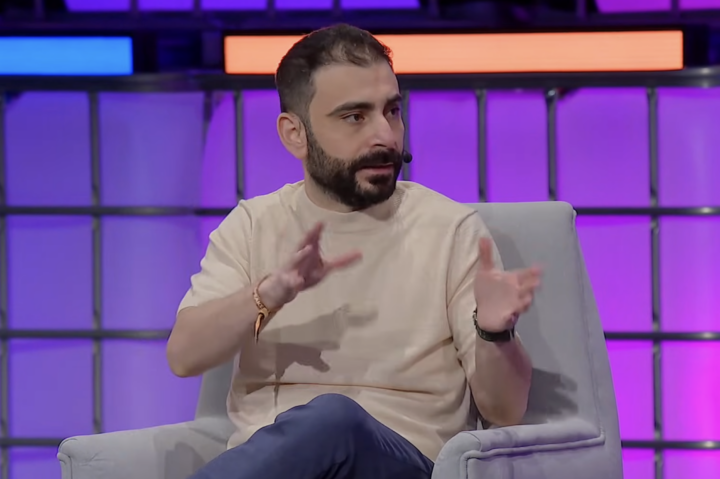
Screenshot
Issam Hijazi, creator of social media platform UpScrolled, speaking at Web Summit Qatar, Feb 1, 2026
Issam Hijazi, creator of the new social media platform UpScrolled, presented his app as a way to escape “control [of] the narrative” by pro-Israel figures and said that he doesn’t need to rely on “Zionist money,” in his remarks at Web Summit Qatar in Doha on Sunday night.
UpScrolled topped the charts in Apple’s app store in recent days, after an American investor group finalized a deal to buy part of TikTok from its Chinese owners.
Hijazi, a Jordan-born Australian citizen who identifies as Palestinian, said in an onstage interview that “we cannot keep blaming the algorithm or tech” for censorious social media, “because there are people who are gilding this tech … who train this algorithm to flag things that don’t really go well with their propaganda or agendas.”
“It became very obvious from the latest acquisition of TikTok by Larry Ellison and [Michael] Dell, and [Ellison] is one of the biggest donators [sic] for the Friends of the IDF. I mean, that tells you a lot,” Hijazi said.
The UpScrolled founder then evoked a classic antisemitic trope to describe the Jewish tech entrepreneurs: “They’ve been controlling the media, as in the TV news outlets, for the past, I don’t know, six years, and now they understand social media is the new way to get information out, so they want to control the narrative again. … They don’t want the free flow of data across the globe.”
The moderator, The Economist’s Gregg Carlstrom, challenged Hijazi’s claims, asking if he had evidence of the broad censorship of anti-Israel views. Hijazi responded by asking the audience for a show of hands if they had ever had such posts taken down; many in the Qatari audience raised their hands.
“I’m speaking from experience about what’s happening to us in Gaza,” said Hijazi, who has claimed to have had 60 relatives killed in the war that began when Hamas invaded Israel on Oct. 7, 2023.
Hijazi later spoke about how his app does not downgrade or amplify posts based on their content, and is not made to be maximally addictive like other social media algorithms.
When Carlstrom asked Hijazi if he had trouble raising money for his product as a result, he responded: “There’s always ugly and there’s always good. We are fortunate to have a lot of good people reaching out to us and wanting to be part of our mission. … We don’t have to rely on Zionist money — I’ll put it out there — or on Silicon Valley money in order to become big.”
Asked if he is positioning UpScrolled as a pro-Palestinian network, Hijazi said: “We’re pro-humanity.”
Since UpScrolled launched last year, users have expressly moved to the app in order to post antisemitic and anti-Israel content. One anti-Israel influencer posted on TikTok that the app “has fallen officially under the control of Zionist billionaire and MAGA oligarch Larry Ellison … I need you to switch apps. At least download this app called UpScrolled.”
While Hijazi claimed that UpScrolled does not boost content, a Jewish Telegraph Agency reporter found posts on the app’s “discover” page, recommending new accounts, with messages such as “all kikes face the wall #fuckthejews” and “I stand with Khamenei, Hezbollah, Houthis & Hamas.”
Web Summit has held an annual conference in Qatar, a key Hamas sponsor, in recent years. The events are organized in cooperation with the Qatari government. Web Summit CEO Paddy Cosgrave has come under fire since the Oct. 7 attacks for accusing Israel of war crimes, and Israeli companies, followed by Google, Intel, Meta and others, withdrew from past Web Summits in Europe.
Cosgrave wrote enthusiastically about UpScrolled on LinkedIn last week, calling it “the first breakout app of 2026,” and a social media platform that lacks “some of the infuriating censorship and shadow banning you find on other apps.” He called Hijazi the “star attraction” at Web Summit Qatar, in a post on X, one of several about UpScrolled in the past week.
Hijazi had been listed as a speaker at the upcoming Al Jazeera Forum, which begins this weekend, but no longer appears on the public list of speakers.
Asked at a press conference on Wednesday if he intends for the body to replace the U.N., Trump said it ‘might’
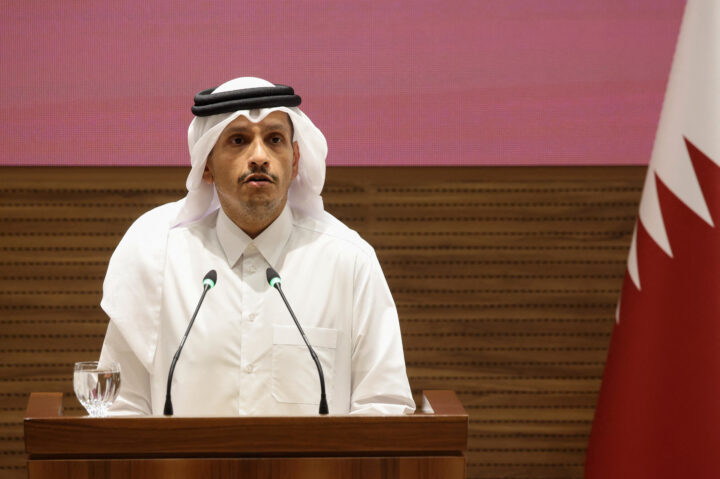
KARIM JAAFAR/AFP via Getty Images
Qatar's Prime Minister and Minister of Foreign Affairs Sheikh Mohammed bin Abdulrahman Al-Thani speaks during a press conference in Doha on April 27, 2025.
Sheikh Mohammed bin Abdulrahman Al Thani, Qatar’s prime minister and foreign affairs minister, said on Tuesday that President Donald Trump’s proposed Board of Peace represents the only viable path forward for Gaza, confirming that Doha has been invited to join the initiative.
“Yes, we were invited to the board,” Al Thani said at the World Economic Forum in Davos, Switzerland. “We are happy to be a contributor to peace and stability in our region. There are a lot of challenges in the implementation, but we have no alternative paths to seek right now.”
Al Thani emphasized that any participating countries would need to “work hard” to ensure the board functions effectively and serves as a stabilizing force.
“President Trump has proposed this path to move forward. We have a lot of work to be done,” said Al Thani. “I think that the most important thing right now is to ensure that Gaza is stabilized and we ensure that the withdrawal of the Israeli forces happens as soon as possible, and ensure that the people can get their life back as soon as possible. That should be the key focus for the Board of Peace.”
Trump has invited a range of countries to join the board, including the U.K., Canada, France and Jordan, as well as China and Russia. As of Wednesday, confirmed participants included Israel, Kosovo, Azerbaijan, Argentina, Hungary, Kazakhstan, Morocco, Belarus, Bahrain and the United Arab Emirates.
Under Trump’s 20-point Gaza peace plan, the board was initially created to oversee post-Hamas governance in Gaza and supervise a committee of Palestinian technocrats. However, the group’s new charter does not mention Gaza or the United Nations. Critics have argued that the board’s expanded mandate, along with Trump’s ramped up criticism of the U.N., are signs the group could evolve into a larger international authority intended to rival or sideline existing institutions.
Asked at a press conference on Wednesday if he intends for the body to replace the U.N., Trump said it “might.” “Wish the United Nations could do more, wish we didn’t need a Board of Peace,” he said.
Al Thani also addressed rising tensions with Iran, urging regional leaders to remain “cool-headed” and “resort to wisdom” amid the unrest inside the country in recent weeks. Earlier this month, Israel and regional partners watched closely as the Trump administration weighed — and ultimately held off on — military strikes in response to Tehran’s crackdown on protesters, which Trump had described as a red line.
While the president has not specified what steps the U.S. may take next, reports have indicated that Israel and Arab states, including Qatar, conveyed concerns about military action. Asked whether Doha had clashed with Washington over the issue, Al Thani suggested otherwise.
“We didn’t argue with the Americans,” he said. “What we offer, as a partner and as an ally of the United States, is honest advice that the best way forward is to find a diplomatic solution.”
Al Thani said Qatar and the U.S. remain in “continuous dialogue,” but reiterated Doha’s opposition to military escalation, even as a means of addressing Iran’s nuclear ambitions.
“We don’t want to see military escalation in our region,” said Al Thani. “We always believe that there is a room for diplomacy, and that’s been our approach in the State of Qatar, and we will always keep advocating for peaceful resolution. We need to understand that any escalation will have consequences.”
The newspaper’s partnerships with Qatar come after its editorial page previously slammed the Gulf monarchy as a Hamas sponsor
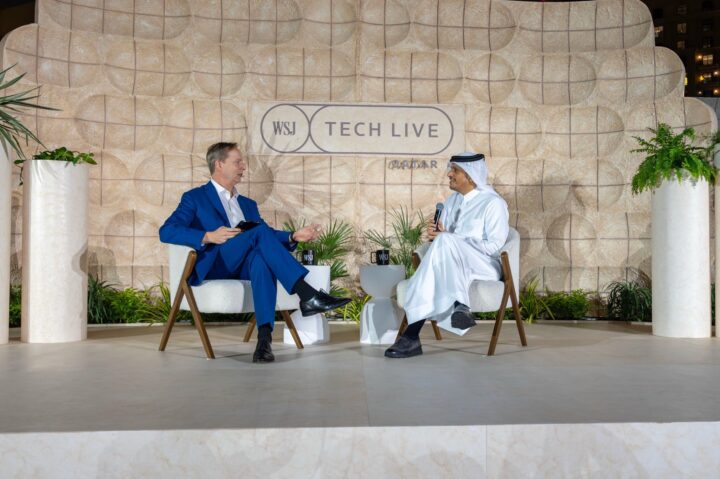
Qatari Prime Minister Sheikh Mohammed bin Abdulrahman Al-Thani/X
Qatari Prime Minister Sheikh Mohammed bin Abdulrahman Al-Thani in an onstage discussion with Dow Jones CEO Almar Latour at the Tech Live conference in Qatar, Dec. 3, 2025
The Wall Street Journal kicked off its Tech Live conference in Qatar on Tuesday, underscoring a deepening partnership between the publication and the controversial Gulf state that has raised ethical questions among media watchers over possible conflicts of interest as well as an ideological incongruence with the traditionally conservative, pro-Israel bent of its editorial page.
The exclusive summit, making its debut in the Middle East, will continue to be held in Doha, the Qatari capital, for the next five years, according to an initial announcement from Dow Jones, which publishes the Journal. The event, gathering over 200 executives and other business leaders at the Waldorf Astoria “for three days of conversations, networking and curated experiences” focused on topics ranging from media to the cryptocurrency industry, is sponsored by the state-owned Qatar Airways, among a handful of other companies.
Qatar’s prime minister, Sheikh Mohammed bin Abdulrahman Al-Thani, who spoke at the event on Tuesday in an onstage discussion with Dow Jones’ CEO, Almar Latour, said in a social media post that the conference “represents a key platform to discuss technology’s role in business and advance Qatar’s digital standing.”
Sheikh Jassim bin Mansour Al-Thani, the director of the Government Communications Office of the State of Qatar, also joined the Journal’s Tech Live event in Napa Valley, Calif., in early November.
“With the MENA region’s growth and increased role in tech — especially at the intersection of AI and the energy sector — we are delighted to be partnering with Qatar,” Latour said in an announcement last year touting the new relationship.
In addition to signing a multiyear agreement with Qatar to host its tech summit — whose attendees include Serena Williams, Alex Rodriguez and Washington, D.C. sports magnate Ted Leonsis — Dow Jones recently opened an office in Doha’s Media City as part of an effort to “strengthen its operations throughout the Middle East.”
The Journal’s advertising department, meanwhile, has run a series of online posts sponsored by Qatar and promoting investment in the Gulf state, though the publication notes in a disclaimer that “the news organization was not involved in the creation of” the paid content.
Still, the newspaper’s growing embrace of Qatar has drawn the attention of media critics who have aired strong reservations about partnering with a regime that has faced scrutiny over a long record of human rights abuses, press censorship and hosting Hamas leadership before and after the Oct. 7, 2023, attacks on Israel.
Even as other media outlets have likewise joined forces with Qatar, the Journal‘s relationship stands out in particular because its conservative editorial page has frequently turned a skeptical or jaundiced eye toward the Gulf monarchy — which one contributor called “a theocratic monarchy that is Hamas’s main financial and diplomatic sponsor” in an August opinion piece.
In an October article casting doubt on an executive order signed by President Donald Trump vowing to protect Qatar if it comes under attack, the editorial board also reminded its readers that the country “is a benefactor of Hamas that took the terrorists’ side against Israel on Oct. 7, 2023.”
“It is fair to say that Qatar plays both sides,” the board added. “This is useful at times, but it is far from the typical profile of a state receiving U.S. guarantees.”
Qatar has in recent years significantly expanded its partnerships with U.S. media companies including Bloomberg and CNN, the latter of which is sponsoring the Doha Forum that begins this weekend, after the network previously inked a deal with the Gulf monarchy to launch an office in Media City, which the emirate describes on its website as a “global hub for media companies” and other related businesses.
Sources have told Jewish Insider that the Media City deal includes an annual fee of several million dollars that Qatar will pay to CNN. The network has said that “anything related to CNN editorial content is fully controlled and funded by CNN and entirely independent,” noting the agreement “centers on the provision of facilities and technical support for” the new operation.
It is unclear if Qatar agreed to pay the Journal or Dow Jones to host the tech conference or open the office in Doha. Representatives for Dow Jones did not respond to a request for comment on Tuesday, nor did the Qatari government.
Qatar has also invested in conservative media, part of an expansive lobbying effort to burnish its image in the United States that otherwise includes funding higher education and ongoing outreach to federal lawmakers.
The Journal’s news reporters, for their part, had previously extensively documented Qatar’s influence efforts in the United States.
The Vogue fashion icon was in Doha to co-host the inaugural Franca Fund Gala at the Qatar Museum of Islamic Art
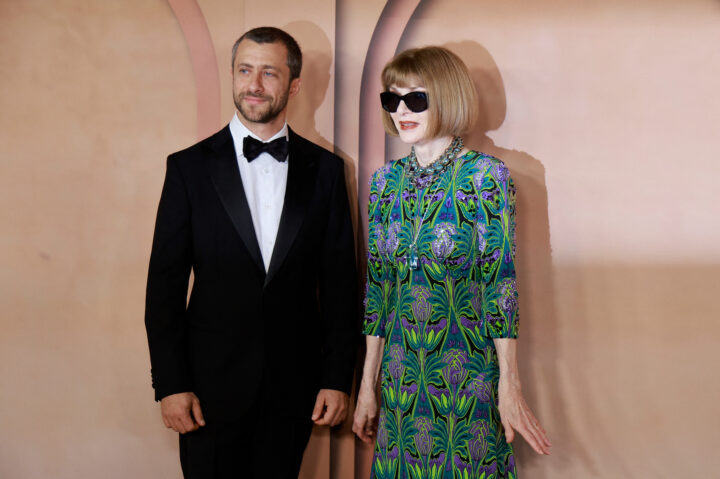
Karim JAAFAR / AFP via Getty Images
Italian director and photographer Francesco Carrozzini (left) and British-U.S. fashion editor Anna Wintour attend the Franca Fund Gala 2025 on Sunday at the Museum of Islamic Art in Doha, Qatar. Wintour was seen with Sheikha Moza bint Nasser at a separate gala on Saturday.
Anna Wintour, the Vogue figurehead and fashion icon, mingled in Doha, Qatar, over the weekend alongside Sheikha Moza bint Nasser, the mother of the Qatari emir, who has drawn controversy for celebrating the slain Hamas leader Yahya Sinwar after he was killed by Israeli forces operating in Gaza last year.
“The name Yahya means the one who lives,” Moza wrote on social media in October 2024, mourning the man who orchestrated the Oct. 7 attacks. “They thought him dead but he lives. Like his namesake, Yahya bin Zakariya, he will live on and they will be gone.”
Wintour, Vogue’s global editorial director and chief content officer for Condé Nast, was pictured sitting next to the sheikha during the Fashion Trust Arabia awards ceremony at the National Museum of Qatar on Saturday.
Moza, who is among the most famous women leaders in the Arab world and seen as a Middle East style icon, has been a fierce critic of Israel following Hamas’ Oct. 7 terror attacks — frequently using her social media platform to denounce the Jewish state and to spread anti-Israel content.
The sheikha has been described as “the public face of Qatar,” which has drawn criticism from American lawmakers for hosting Hamas leadership.
Wintour, who recently relinquished her title as the U.S. editor of Vogue, was also in Doha on Sunday to co-host the inaugural Franca Fund Gala at the Qatar Museum of Islamic Art, which celebrated the legacy of the late Franca Sozzani, former longtime editor of Vogue Italia who died in 2016.
A spokesperson for Vogue did not respond to a request for comment on Monday.
The Trump advisors said the president felt the Israelis were ‘out of control' and it was 'time to be very strong' with them
Alexi Rosenfeld/Getty Images
U.S. Middle East envoy Steve Witkoff (C), flanked by Jared Kushner (L), speaks at the weekly 'Bring Them Home' rally in Hostage Square Hostages Square on October 11, 2025 in Tel Aviv, Israel.
Two clashing narratives have emerged about Israel’s strike on a meeting of senior Hamas terrorists in Doha, Qatar, in September, following the release of a preview of an interview with U.S. Middle East envoy Steve Witkoff and Jared Kushner on CBS’ “60 Minutes” program that aired on Sunday evening.
Both narratives posit that the strike hastened the arrival of President Donald Trump’s 20-point plan to free the hostages and end the war. Figures close to Israeli Prime Minister Benjamin Netanyahu said that the attack pushed an anxious Qatar, Hamas’ patron and host of its senior officials, to do more to get the terrorist organization across the finish line.
Trump’s negotiators, however, presented a scenario in which the president, unhappy about the strike, pressured Israel to end the war.
Of the Israeli strike on Doha, Witkoff said that he and Kushner, who in recent months has also played a key role in the administration’s Middle East efforts, “felt a little bit betrayed.”
Kushner added, “I think [Trump] felt like the Israelis were getting a little bit out of control in what they were doing, and it was time to be very strong and stop them from doing things he thought were not in their long-term interest.”
Witkoff said that Qatar, which served as a key mediator between Hamas and Israel for much of the negotiations, said that, following the strike, “we had lost the confidence of the Qataris, so Hamas went underground. It was very difficult to get to them … and it became very, very evident as to how important, how critical [Qatar’s] role was.”
Jerusalem, however, had a different version of the events, as told by Israeli Strategic Affairs Minister Ron Dermer, Netanyahu’s closest confidante, in an Israel Hayom column by journalist Amit Segal.
Israelis involved in the negotiations viewed Qatar as a “spoiler,” such as when they talked Hamas out of accepting a deal proposed by Egypt earlier in the year, according to Segal.
Dermer, Segal wrote, “links the strike to the agreement … The Qataris, it turns out, were convinced that by agreeing to host the negotiations, they had obtained immunity from Israeli strikes on their soil. From their perspective, the strike was a blatant, offensive breach of the commitment. … The Americans’ genius was to convert that negative energy into fuel to propel negotiations to their goal. ‘You want Israel to stop? Then let’s end the war.'”
Netanyahu’s office and the White House closely coordinated throughout subsequent talks to end the war, Segal reported. Then came an agreement backed by several Arab states calling for Hamas to disarm and without the immediate involvement of the Palestinian Authority.
Reactions in Israel to the “60 minutes” preview fell on predictable lines. Netanyahu’s critics said that the U.S. officials’ comments demonstrated that the prime minister did not want to enter the agreement, but instead was pushed into it by Trump.
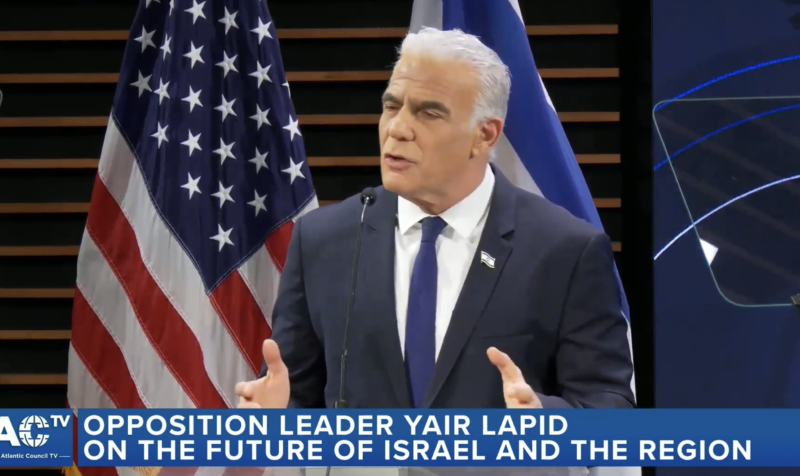
Israeli Opposition Leader Yair Lapid argued that Witkoff and Kushner’s comments made clear that “after the failed attack on Doha, Trump thought that Netanyahu lost control and forced an agreement on Netanyahu that he didn’t want. … An American administration has never described an Israeli government like this.”
Ha’aretz journalist Amir Tibon, who lived in one of the kibbutzim attacked by Hamas on Oct. 7, 2023, posted on X: “Witkoff and Kushner say in their own voices: Trump understood that Netanyahu was not on the right track and acted aggressively against him to reach a ceasefire and free the hostages.”
Nava Rozolyo, a prominent figure in the protests against Netanyahu years before the Gaza war began, wrote: “Thank you … for forcing Hamas and Netanyahu to reach an agreement on the return of all hostages and ending the war. Thank you for saving us from our own government and for saving lives.”
On the Israeli right, many took issue with Witkoff and Kushner’s retelling of events.
Jerusalem Center for Security and Foreign Affairs President Dan Diker posted on X that “the Israelis ‘getting out of control’ is what helped bring the hostage deal to the table, scaring the Qataris out of their minds.”
Some highlighted Kushner and Witkoff’s business dealings in Qatar. Kushner’s investment company, Affinity Partners, manages billions of dollars in investments from Qatar’s sovereign wealth fund. Witkoff’s son sought Qatari investments in commercial real estate projects earlier this year, and in 2023, Qatar bought the Park Lane Hotel in Manhattan from Witkoff and his partners.
Yishai Fleisher, spokesman for the Jewish community in Hebron and an informal advisor to Israeli National Security Minister Itamar Ben-Gvir, who opposes the ceasefire deal, posted on X in response to the video: “Two American Jews, with no blood on the line in Israel (their wife and kids don’t drive on the roads with Jihadis), but lots of money on the line and business with Qatar, wag their finger at the Jewish State as they cut an awful deal that is certain to bring war.”
Other moments in the interview courted further controversy in Israel, such as when Witkoff described an Israeli cabinet meeting that he attended, in which Ben-Gvir talked about “all the death and all the carnage” from the Oct. 7, 2023, Hamas attacks and was “emotional.” In response, Witkoff described his son Andrew’s death from an overdose and told the Israeli cabinet minister to “let it go, you just can’t play the victim all the time.”
Witkoff also brought up his son’s death in the interview in relation to his meeting with Hamas lead negotiator Khalil al-Haya, whose son was killed in the Doha strike.
“We expressed our condolences to him for the loss of his son, and I told him that I had lost my son and we are both members of a really bad club, parents who had buried children,” he said.
Kushner said of Witkoff and the senior Hamas terrorist: “When Steve and him talked about their sons, it turned from a negotiation with a terrorist group to seeing two human beings kind of showing a vulnerability with each other.”
Kushner also said that he sought to relay a message to Israel’s leadership that “now that the war is over, if you want to integrate Israel with the broader Middle East, you have to find a way to help the Palestinian people thrive and do better.”
“How are you doing with that message?” Leslie Stahl asked.
Kushner smiled and replied: “We’re just getting started.”
This report was updated on Oct. 20, 2025, after the CBS “60 Minutes” interview aired in full.
White House readout: ‘Prime Minister Netanyahu expressed his deep regret that Israel’s missile strike against Hamas targets in Qatar unintentionally killed a Qatari serviceman’
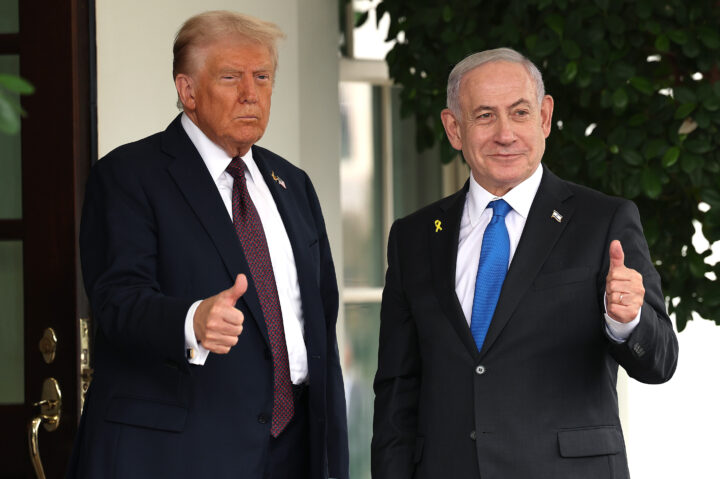
Win McNamee/Getty Images
President Donald Trump (L) greets Israeli Prime Minister Benjamin Netanyahu as he arrives at the White House on September 29, 2025 in Washington, DC.
During a meeting between Israeli Prime Minister Benjamin Netanyahu and President Donald Trump at the White House on Monday, Netanyahu apologized to Qatar’s prime minister, Sheikh Mohammed bin Abdulrahman al-Thani, for killing a Qatari serviceman in an attempted strike on Hamas leadership in Doha and promised not to violate Qatari sovereignty again.
The strike, which reportedly failed to eliminate any members of Hamas’ top political leadership, caused a public rift between the U.S. and Israel. The Trump administration attempted to warn Qatar about the strike before it happened and Trump said he promised Qatar that such attacks would not be repeated in the future.
According to a readout from the White House, “Prime Minister Netanyahu expressed his deep regret that Israel’s missile strike against Hamas targets in Qatar unintentionally killed a Qatari serviceman” and that “in targeting Hamas leadership during hostage negotiations, Israel violated Qatari sovereignty and affirmed that Israel will not conduct such an attack again in the future.”
According to remarks released by the Israeli government, Netanyahu told Al Thani, “I want you to know that Israel regrets that one of your citizens was killed in our strike. I want to assure you that Israel was targeting Hamas, not Qataris. I also want to assure you that Israel has no plan to violate your sovereignty again in the future, and I have made that commitment to the president.”
Netanyahu also acknowledged Qatar’s “grievances against Israel” as well as Israel’s own issues with Qatar “from support for the Muslim Brotherhood to how Israel is portrayed on Al Jazeera to support for anti-Israel sentiment on college campuses.”
Trump, during the call, “expressed his desire to put Israeli-Qatar relations on a positive track after years of mutual grievances and miscommunications,” and the three leaders agreed to establish a trilateral mechanism “to enhance coordination, improve communication, resolve mutual grievances, and strengthen collective efforts to prevent threats,” per the White House release.
According to his remarks, Netanyahu said that the mechanism is intended to “address both our countries outstanding grievances.”
Netanyahu and Al Thani “underscored their shared commitment to working together constructively and clearing away misperceptions, while building on the longstanding ties both have with the United States,” according to the White House readout.
The three leaders discussed efforts to end the war in Gaza as well as “the need for greater understanding between their countries.”
Al Thani “emphasiz[ed] Qatar’s readiness to continue contributing meaningfully to regional security and stability.”
Israel and Qatar do not have formal relations and public high-level diplomatic engagements between their leaders are rare.
From the Israeli side, news of the apology has been met with frustration and scorn from Netanyahu’s political allies and opponents.
Finance Minister Bezalel Smotrich compared the apology to U.K. Prime Minister Neville Chamberlain’s appeasement of Adolf Hitler during WWII. Netanyahu’s “groveling apology to a state that supports and funds terror is a disgrace,” Smotrich said on X.
National Security Minister Itamar Ben-Gvir expressed continued support for the Qatar strike, calling it “important, just, and supremely moral.”
Orit Strock, a member of the Israeli Cabinet, asked, “Did the Emir of Qatar apologize to PM Netanyahu for Oct. 7?”
Yair Golan, chairman of opposition party The Democrats, called the apology “a humiliation” and said that, “In order to beat Hamas, we need to replace Bibi and Qatar.”
Israeli political analyst and author Amit Segal said, “The Qatari scum have not condemned the October 7 massacre to this day. Even if there is a diplomatic need for this, it is repulsive and disgusting.”
Haaretz reporter Amir Tibon and others expressed anger that Netanyahu had apologized to the Qataris before he apologized to Israeli victims of Oct. 7.
Nadav Pollack, a lecturer at Israel’s Reichman University, said that the apology and promise show that Qatar holds stronger influence in the White House than Israel.
Foundation for Defense of Democracies CEO Mark Dubowitz downplayed the significance of the apology.
“Apology or not, Qatar is on notice that Israel will eliminate Hamas terrorists where and when it chooses,” Dubowitz told Jewish Insider. “The overarching message is more important: Get your Muslim Brotherhood cousins to agree to a deal, and release the hostages, or next time we won’t miss.”
Rich Goldberg, a senior advisor at FDD and a former Trump administration official, responded similarly.
“If that’s the worst thing Israel has to do to save face while Qatar acquiesces to U.S. pressure to secure the release of all hostages, let it be the last insult endured,” Goldberg told JI. “There is a cold dark place in hell awaiting all Hamas sponsors, and I expect the Mossad will help them find that place at the right time in the future.”
Both Dubowitz and Goldberg have publicly maintained that the U.S. was likely aware of and approved of the Israeli strikes in Qatar, in spite of Trump’s own public condemnations and denials.
Former U.S. Ambassador to Israel Dan Shapiro, a senior fellow at the Atlantic Council and former top Pentagon official in the Biden administration, told JI that the apology “was a useful diplomatic maneuver, likely pre-scripted, to ensure Qatar would do its part to deliver a yes from Hamas on release of all hostages and disarmament. Trump pressuring Netanyahu was necessary, but no less needed was his pressure on Qatar. The apology gave him that leverage.”
Michael Makovsky, the CEO of the Jewish Institute for National Security of America said that “Based on what we know, it’s understandable that Netanyahu felt compelled to apologize to the Qatari PM. Pres Trump asked him to do it, and Trump has collaborated with Israel in the 12-Day War, and backed Israel on Gaza.”
“But it’s unfortunate, because Israel doesn’t owe Qatar an apology—Qatar owes Israel an apology for supporting Hamas for so many years, by hosting its leaders, funding its operations, offering verbal support, etc.,” Makovsky continued. “Qatar should also apologize for spreading anti-Israel (and anti-American) hate on its al-Jazeera news organization. The bigger question is why Pres. Trump is so favorable to Qatar.”
Dana Stroul, the research director for the Washington Institute for Near East Policy and Shapiro’s predecessor at the Defense Department in the Biden administration, said that the statement echoes past engagements.
“It’s almost reverting to traditional US diplomacy of facilitating rapprochement between long-standing US partners,” Stroul said. “Recall then-President Obama brokering a phone call and an Israeli apology to Turkey in 2013 for its role in a 2010 Gaza flotilla incident. It also is a critical step in coalescing Arab support for providing meaningful support and resources to post war Gaza.”
She added that the administration “definitely believes it needs Qatar on its side.”
“When you read all of the various statements from the Trump administration about the peace and de-escalation agreements they are brokering, Qatar is very frequently thanked in these statements for its mediation role,” she explained.
At a press conference with Israeli PM Netanyahu, Rubio said an agreement with Hamas to end war ‘probably won’t happen’ because ‘savage terrorists don’t often agree to disarm’
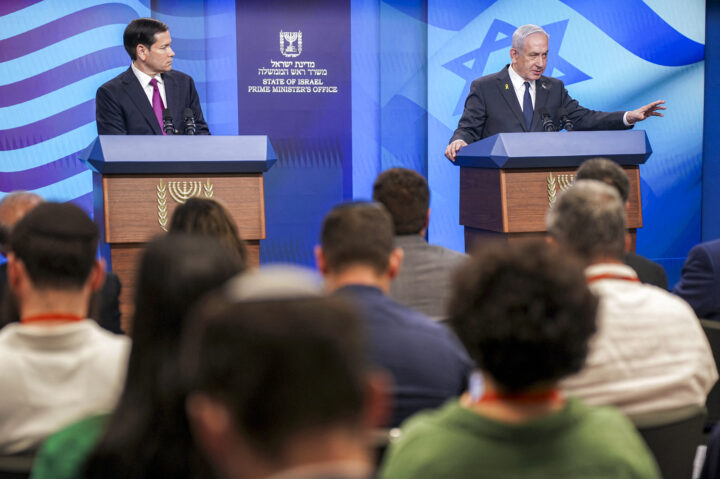
NATHAN HOWARD/POOL/AFP via Getty Images
Secretary of State Marco Rubio and Israeli Prime Minister Benjamin Netanyahu give a joint press conference at the Prime Minister's Office in Jerusalem on September 15, 2025.
Secretary of State Marco Rubio said the U.S. is focused on moving forward from Israel’s strike on Qatar last week, refraining from doubling down on criticism during a joint press conference with Israeli Prime Minister Benjamin Netanyahu in Jerusalem on Monday.
“We are just focused on what happens next,” Rubio said, when asked about Tuesday’s strike aiming at Hamas’ leadership in Doha, Qatar’s capital. On Saturday, Rubio had echoed comments by President Donald Trump that the U.S. “is not happy” about the strike.
“Some fundamentals still remain that have to be addressed, regardless of what has occurred,” Rubio said at the press conference on Monday. “We still have 48 hostages. Hamas is holding not only 48 hostages but all of Gaza hostage … As long as they still exist, are still around, there will be no peace in this region.”
Rubio said the end of the war in Gaza, disarmament of Hamas and freeing the hostages are “pillars of what we hope will happen in the region.”
The secretary of state said that the U.S. not only wants Qatar to continue to play a role in those matters “but also in a better future for the people of Gaza, which cannot happen with Hamas intact. We are going to continue to encourage Qatar to play a constructive role in that regard.” Rubio is scheduled to visit Qatar on Tuesday after concluding his trip in Israel.
As to the chance of a negotiated deal to end the war, Rubio said that “the problem is Hamas is a terrorist group, a barbaric group, committed to destroying the Jewish state, so it probably won’t happen.”
“I don’t think there’s anyone who wouldn’t prefer a negotiated settlement,” he added. “That would be the ideal outcome we can see, one we worked on, but we need to be prepared for the reality that savage terrorists don’t often agree to disarm.”
Netanyahu reiterated that “Israel’s decision to act against Hamas’ terrorist leadership was a wholly independent decision by Israel … It was conducted by us and we assume full responsibility for it, because we believe terrorists should not be given a haven.”
As to those saying Israel violated Qatari sovereignty, Netanyahu said that the U.S. took similar action against the Taliban in Afghanistan and Osama bin Laden in Pakistan.
“You don’t have such sovereignty when you are effectively giving a base to terrorists, a place where they can ply their gruesome trade,” he said.
Netanyahu also took issue with a claim made by a reporter during the press conference that the Doha strike was a failure, because it remains unclear if any of Hamas’ leaders were killed. The prime minister said Israel is waiting for further reports on the matter.
“I’ll tell you the results,” he added. “We sent a message to the terrorists. You can run, you can hide, but we’ll get you. … I don’t accept the premise that the raid failed, because it had one central message. … If the terrorists think they enjoy immunity they’ll do it again and again, and if you deny that immunity, they’ll think twice.”
Netanyahu opened the press conference by paying tribute to the “powerful bond” between Israel and the U.S. and thanking Trump for helping target Iran’s nuclear facilities in June, as well as his efforts to free the hostages remaining in Gaza, 20 of whom are believed to still be alive.
Rubio said that Iran is a threat not only because of its pursuit of nuclear weapons, but because of its development of short and midrange missiles that can reach across the Middle East and into Europe.
“This is an unacceptable risk not just for Israel but for the U.S. and the world, which is why the president has continued with his campaign of maximum pressure on Iran until they change course,” Rubio said. “We are encouraged by our partners in Europe beginning the process of snapping back [sanctions] on Iran, who are clearly out of compliance [with the 2015 nuclear deal]. We 100% support that; that’s what needs to happen.”
The secretary of state criticized countries that recently announced they would recognize a Palestinian state.
“The things these nations are doing in the U.N. are largely because of domestic politics. They’re largely symbolic. The only impact they have is to make Hamas feel emboldened … You know, there’s a negotiation going on and maybe you think you made some progress on getting hostages released and ending the war, and then these things come out and Hamas walks away … They see international support, they believe they’re getting what they want, and they walk away,” Rubio said.
Rubio also spoke about his plan to attend the inauguration of the Pilgrims Road on Monday evening. The site features the path on which Jewish pilgrims walked to the Second Temple in Jerusalem, which Rubio described as “perhaps one of the most important archeological sites on the planet, important to many in the U.S.”
The secretary of state arrived in Israel on Sunday, beginning his visit with prayers at the Western Wall with Netanyahu. He also met with Israeli Foreign Minister Gideon Sa’ar and Strategic Affairs Minister Ron Dermer on Monday.
The Democratic pro-Israel group is supporting the strike, a split from most congressional Democrats, including other pro-Israel voices

Tasos Katopodis/Getty Images
President Donald Trump
Democratic Majority for Israel suggested in a new searing statement that the Trump administration’s warning to Qatar about the impending Israeli attack in Doha earlier this week may have foiled the effort.
The Democratic pro-Israel group is taking a different approach to the strike than most Democratic lawmakers, who have been highly critical of the operation, with few exceptions.
“After years of criticizing Democrats — despite our party’s 75-year history of supporting Israel — President Donald Trump yesterday broke with our vital ally in an unprecedented manner,” DMFI CEO Brian Romick said in a statement.
“He even went as far as to direct his special envoy to alert Qatar, and in so doing risked alerting Hamas, about the attack,” Romick said. “The White House must answer whether their pre-warning of the attack in any way compromised Israel’s ability to eliminate Hamas’ terrorist leadership.”
Trump said in a statement on Truth Social that he “immediately directed Special Envoy Steve Witkoff to inform the Qataris of the impending attack, which he did, however, unfortunately, too late to stop the attack.” Qatari officials have said that the U.S. warning came while the strike was underway and explosions had already begun; another U.S. official told Axios the same.
Romick also criticized Trump for breaking publicly with Israel over the strike, which the president has condemned.
“Trump used his platform to undermine Israel at a time when we must demonstrate a unified front to get the hostages home and bring a negotiated end to the conflict,” Romick said.
The former Defense Department official said, ‘The risk is actually that these kinds of actions do set back the cause of normalization and integration’
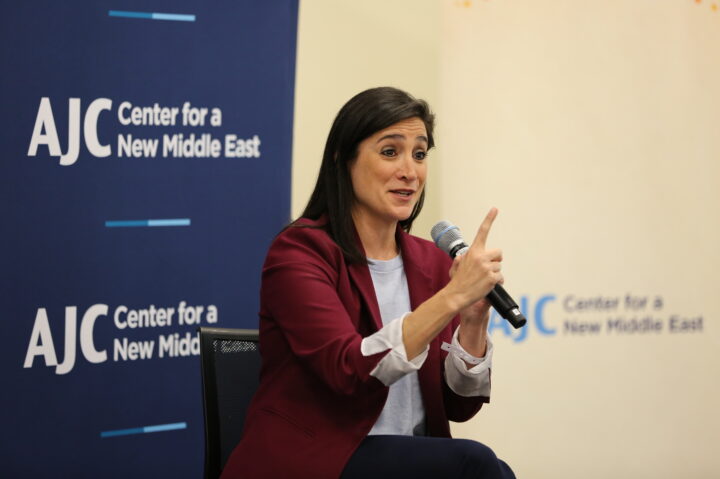
Martin H. Simon/AJC
Dana Stroul, the director of research at the Washington Institute for Near East Policy, speaks at AJC's Abraham Accords 5th Anniversary Commemoration on Capitol Hill in Washington on Sept. 10, 2025.
Dana Stroul, the director of research at the Washington Institute for Near East Policy and a former senior Defense Department official in the Biden administration, warned on Wednesday that the Israeli strike on Hamas leaders in Doha is leading Arab states to rally around Qatar, potentially dealing setbacks to regional normalization.
Stroul, speaking at an American Jewish Committee event in Washington to mark the five-year anniversary of the Abraham Accords, said that Arab leaders are offering support for Qatar following the strike, and that both Israeli and Iranian moves to make the Gulf a “new battlefield in the Middle East” are making the U.S.’ regional partners “very nervous.”
“It is really disappointing that not one [Arab] government acknowledged Hamas,” Stroul said. “What’s very clear is that everyone else in the region is aligned that this was a strike on Qatar,” as opposed to a strike on Hamas. “This is about Qatari sovereignty. We’ve seen really a shoring up of Arab leaders’ alignment with and defense of Qatar.”
She said that there had been relatively little criticism in the region for Israel attacking Iran’s nuclear program, undermining Hezbollah or helping bring down the Assad regime in Syria, but “this time Israeli military action didn’t happen on what everyone sort of agrees is an adversary … that was a major non-NATO ally of the United States who is actively participating in diplomatic processes.”
“Now we have the leader of the [United Arab Emirates], who years ago was the leader of the Gulf Rift in isolating Qatar — he just went to Qatar,” she continued, noting as well that Israel was disinvited today from the Dubai Air Show, where it had a significant presence in previous years.
“The risk is actually that these kinds of actions do set back the cause of normalization and integration,” she continued.
She also called Qatar, as the host of the U.S. air base in the region, a critical hub of regional defense integration efforts.
Another crucial question, she added, is how the Hamas military leadership in Gaza holding the remaining living hostages will react to the Doha strike.
“I’m very, very worried about the hostages,” she said.
She said it’s unlikely that the strikes will make Hamas leaders in Gaza more willing to negotiate or release hostages. The dispute between the U.S. and Israel over the strikes, compounded by growing international criticism of Israel, could further harden their resolve to not negotiate or compromise.
Stroul said that the strike’s apparent failure to kill any of the senior echelon of Hamas leaders could make it a “worst-case scenario,” in which Hamas leaders are less incentivized to negotiate and could cause Qatar to withdraw from any further mediation.
She added that it’s unclear how ceasefire negotiations can continue, and that parties may look to Egypt to step up as the new mediator, placing it in a potentially precarious position.
She said it was common knowledge in the region that the Hamas leaders are “dead men walking,” but said it’s an “open question” whether now was the right time to carry out that strike, or its broader implications.
Stroul also said that Qatar had never been formally asked to expel the Hamas leaders — she said that former Secretary of State Tony Blinken had asked the Qataris to do so in late 2024 when ceasefire talks yielded little progress, but the Trump administration’s special envoy Steve Witkoff asked that be walked back so that he could continue talks. Stroul was out of government at the time.
And she said that Qatar’s support of Hamas pre-Oct. 7, frequently cited by the country’s critics, was conducted with Israel’s knowledge and support, and that of the United States.
Leiter compared Israel’s campaign against Hamas to the U.S. pursuing the perpetrators of 9/11
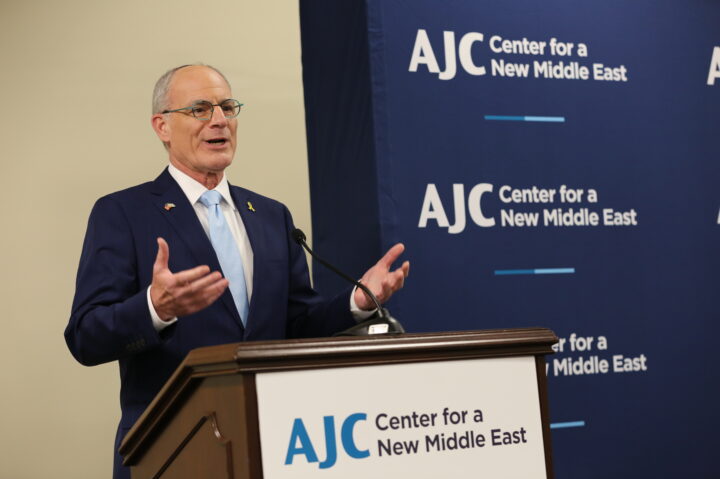
Martin H. Simon/AJC
Israeli Ambassador to the U.S. Yechiel Leiter speaks at AJC's Abraham Accords 5th Anniversary Commemoration on Capitol Hill in Washington on Sept. 10, 2025.
Israeli Ambassador to the U.S. Yechiel Leiter offered a strong defense of Israel’s strike on Hamas leaders in Doha, Qatar, as the Israeli government doubled down on the strategy in the face of strong pushback from the Trump administration.
Speaking at an American Jewish Committee event on Capitol Hill, Leiter argued that, in carrying out the strike, Israel was only doing what it and other countries have always done in the past: hunting down terrorists who perpetrate attacks on them wherever they may be.
He made repeated reference to Jordan’s King Hussein’s Black September campaign against Palestinian terrorists in Jordan, Israeli Prime Minister Golda Meir pursuing those responsible for the 1972 Munich Olympics attack and the U.S. launching wars to hunt down those responsible for the 9/11 attacks.
“Israel acted in the context of what any normal country does, it pursues terrorists and eliminates them, like King Hussein, like Golda Meir, like the United States of America,” Leiter said.
Leiter also highlighted U.N. Security Council Resolution 1373, presented by the U.S. and passed weeks after the 9/11 attacks, which “obligates states to prevent and suppress the financing and support of terrorism, including the harboring of terrorists.”
“Now what is Qatar doing if not financing and supporting terrorism by playing host to Hamas, the very people who sent the terrorists who murdered six people sitting at a bus stop in Jerusalem, waiting to go about their business?” Leiter said, referencing a Hamas-linked attack days before the Israeli strike in Doha.
“Who sent them? The terrorists we targeted in Doha. They celebrated the murder of these six innocents the same way they celebrated, on camera, the slaughter of 1,200 innocents on Oct. 7,” Leiter added.
Leiter said that, in striking Hamas leaders in Doha, “We are acting in the context of the U.N. charter, of international law, in the cause of sanity and morality.”
He noted that the campaigns by both Jordan against Palestinian terrorists and the United States against terrorist groups in Iraq could also have been considered “disproportionate,” a criticism that some in the international community have leveled over Israel’s operations in Gaza.
Leiter also argued that Israel’s ongoing military operations in the Middle East increase, rather than hurt, the prospects for expanded normalization, “because we are empowering the moderate elements within Islam.” The AJC event was a celebration of the fifth anniversary of the Abraham Accords.
Addressing criticisms that Israel has failed to properly plan for the day after the war in Gaza, Leiter insisted that those plans are in place — but can’t be safely discussed in public.
“We’re preparing for the day after. The day after is going to be brilliant and for it to succeed, we can’t talk too much about it, and it certainly can’t be an Israel-sponsored day after to enjoy success,” Leiter said.
Plus, Ziv and Gali Berman's second birthday in captivity

(Photo by JACQUELINE PENNEY/AFPTV/AFP via Getty Images)
This frame grab taken from an AFPTV footage shows smoke billowing after explosions in Qatar's capital Doha on September 9, 2025.
Good Wednesday morning.
In today’s Daily Kickoff, we report the latest on the Israeli strike targeting senior Hamas officials in Doha, and look at how Capitol Hill is responding to the operation. We report on Texas state Rep. James Talarico’s criticism of Israel following the launch of his Senate campaign, and talk to friends of Israeli hostages Gal and Ziv Berman, who are marking the twins’ second birthday in Hamas captivity. Also in today’s Daily Kickoff: Elizabeth Tsurkov, Scarlett Johansson and Amb. Mark Wallace.
Today’s Daily Kickoff was curated by Jewish Insider Executive Editor Melissa Weiss and Israel Editor Tamara Zieve, with assists from Marc Rod and Danielle Cohen-Kanik. Have a tip? Email us here.
What We’re Watching
- We’re keeping an eye on the situation in the Middle East and Washington following Israel’s targeting of senior Hamas officials in Doha yesterday. More below.
- The California Senate’s Education Committee is holding a hearing this afternoon on AB 715, legislation meant to address antisemitism in the state’s K-12 schools. One of the legislators supporting the bill told The Jewish News of Northern California that the text had become “narrower” after the bill’s backers “compromised on numerous things with our colleagues who expressed concerns” over the legislation.
- Yeshiva University’s Rabbi Ari Berman will serve as the Senate’s guest chaplain today. C-SPAN’s Howard Mortman, author of When Rabbis Bless Congress, notes that Berman, who delivered the benediction at President Donald Trump’s inauguration earlier this year, will become the third rabbi to have prayed both in Congress and during a presidential inauguration.
- Elsewhere on Capitol Hill today, the House Committee on Education and the Workforce’s subcommittee on early childhood, elementary and secondary education is holding a hearing on antisemitism in K-12 schools. The Foundation for Defense of Democracies’ Brandy Shufutinsky, the Louis D. Brandeis Center for Human Rights Under Law’s Rachel Lerman, Defending Education’s Nicole Neily and T’ruah’s Rabbi Jill Jacobs are slated to testify.
- Brandeis University is unveiling its “New Vision for American Higher Education” this afternoon at the National Press Club. Sen. Ed Markey (D-MA) is slated to speak at the event. Across town, Sen. Ted Cruz (R-TX) is speaking at a Heritage Foundation event focused on the Muslim Brotherhood.
- The American Jewish Committee is holding an event this morning marking the upcoming fifth anniversary of the signing of the Abraham Accords.
- This afternoon, the Jewish Democratic Council of America is hosting “Israel and Gaza: Two Years Later and What Comes Next” with Israel Policy Forum’s Michael Koplow.
- Elsewhere in DC, the National Union for Democracy in Iran and MEAD are continuing their conference in Washington today.
- Some MEAD attendees are heading to Israel for the Jefferies TechTrek conference in Tel Aviv, which kicked off with a welcome reception last night. Former U.S. Ambassador to Israel Tom Nides, Paul Singer, Bill Ackman, Shaun Maguire and Dan Loeb are among those gathered for Jefferies.
- The Climate Solutions Prize Tour kicks off today in the United Arab Emirates, before moving to Israel on Sunday.
- Israeli President Isaac Herzog arrived in London today for a two-day visit.
- In Canada, “The Road Between Us,” about Israeli Maj. Gen. (res.) Noam Tibon’s efforts to rescue his son’s family from their Gaza envelope home on Oct. 7, 2023, will premiere at the Toronto International Film Festival, after it was previously removed from the slate of films over what organizers said was a failure to get Hamas to approve the use of its videos of the attacks.
- In Pennsylvania, representatives from the Jewish Federation of Greater Pittsburgh will deliver a victim impact statement at the sentencing of Talya Lubit, who pleaded guilty in May to charges of conspiracy and defacing and damaging Chabad of Squirrel Hill.
What You Should Know
A QUICK WORD WITH JI’S MELISSA WEISS AND Lahav harkov
Nearly a day after an Israeli airstrike targeted a meeting of high-level Hamas officials in Doha, Qatar, there are more questions than answers, both in Jerusalem and Washington. Israel has not confirmed which officials were killed in the strike, while Hamas has said that five officials from the group, including the son of Hamas’ chief negotiator, Khalil al-Hayya, were killed in addition to a member of the Qatari security forces.
Israeli reports earlier today indicate that the strike did not kill the most senior echelon of the terror group, which for years has been based in Qatar, a U.S. ally.
Amid ongoing uncertainty over the success of the strike, the operation was met with rare condemnation from the White House, first from Press Secretary Karoline Leavitt and then from President Donald Trump himself, who said he “was very unhappy about it, very unhappy about every aspect” — perhaps, in part, because the operation is not believed to have taken out the most senior Hamas officials.
But it was Trump himself who said over the weekend on his Truth Social site that he had “warned Hamas about the consequences of not accepting” the ceasefire and hostage-release deal that had been put forward by the U.S.
At the same time that Trump officials, including the president, were criticizing the operation, U.S. Ambassador to Israel Mike Huckabee was embracing Israeli Prime Minister Benjamin Netanyahu at the U.S. Embassy’s belated Independence Day celebration in Jerusalem, where the prime minister addressed a smaller group of VIPs attending the party.
HILL REACTIONS
Partisan divide emerges over Israeli strike on Hamas leadership in Qatar
A partisan divide quickly emerged Tuesday over the Israeli strike on Hamas leadership in Qatar, with senior Republican lawmakers expressing support for the attack, while top Democrats criticized it, Jewish Insider’s Marc Rod reports.
What they’re saying: Sen. Roger Wicker (R-MS), the chair of the Senate Armed Services Committee, told JI, “I support it.” He continued, “I think Hamas has got to be destroyed, and there’s no sense in doing half measures.” But Wicker’s Democratic counterpart, Sen. Jack Reed (D-RI), called the strike “extremely disruptive, provocative and dangerous” and a “great strategic mistake.” He praised Qatar as “a strong ally of the United States” and argued that the strike, which targeted Hamas leaders who were part of negotiations with the U.S. and Israel, showed that Israel is not serious about reaching a ceasefire deal.
doha debate
Senate Republicans address differences with White House over Israel’s Doha strike
The Israeli strike targeting Hamas leaders in Qatar is dividing the White House, which strongly criticized Israel for attacking Qatari territory, and Senate Republicans, who have been overwhelmingly supportive of the Israeli action, Jewish Insider’s Marc Rod and Emily Jacobs report.
Divisions: Sen. Lindsey Graham (R-SC), asked about the White House statement on the attack, told JI, “I understand we have troops there, but my focus is Israel. Hamas has had every chance. … Lay down your weapons, release the hostages — you live. If you don’t — it keeps going.” Sen. Roger Marshall (R-KS), the most outspoken supporter of Qatar among Senate Republicans, stood alone in offering a full-throated criticism of the Israeli strike.
Breaking rank: Breaking with many of his Senate Democratic colleagues, Sen. Richard Blumenthal (D-CT) sounded a supportive note on the Israeli strike on Hamas leaders in Qatar on Tuesday. “I strongly support Israel’s right to defend itself against Hamas,” Blumenthal told Jewish Insider’s Marc Rod. “I want to know more about the details of this particular strike — I’m learning about it in real time and anything done to destroy Hamas’ leadership or its terrorist capability or military capacity is a step in the right direction.”
HOSTAGE RELEASE
Elizabeth Tsurkov released after months of torture by Iraqi terror group, Trump says

President Donald Trump announced Tuesday that Elizabeth Tsurkov, an Israeli-Russian researcher at Princeton University, was released by an Iranian-backed terrorist group in Iraq to the U.S. Embassy in Baghdad, Jewish Insider’s Marc Rod reports.
What he said: “I am pleased to report that Elizabeth Tsurkov, a Princeton Student, whose sister is an American Citizen, was just released by Kata’ib Hezbollah (MILITANT Hezbollah), and is now safely in the American Embassy in Iraq after being tortured for many months,” Trump said on Truth Social. “I will always fight for JUSTICE, and never give up. HAMAS, RELEASE THE HOSTAGES, NOW!”
Talarico talk
Texas Democratic Senate recruit James Talarico takes critical view of Israel
James Talarico, a Democratic state representative in Texas seen as a rising star in his party, launched a campaign for Senate on Tuesday, joining a crowded primary to claim the seat held by veteran Sen. John Cornyn (R-TX). The 36-year-old former public school teacher, who has studied to become a Presbyterian minister, has drawn national attention for openly embracing his Christian faith to connect with voters. In his launch video, he referred to Jesus, invoking him as “a barefoot rabbi who gave two commandments: love God and love neighbor,” Jewish Insider’s Matthew Kassel reports.
Israel approach: Talarico, who is calling for a generational shake-up in a party he sees as largely out of touch with voter concerns, until this week had no apparent record of public commentary on Middle East policy, a subject that is likely to stir debate in the upcoming election cycle amid Democratic divisions over Israel’s war in Gaza. In interviews published on Tuesday, he indicated that he would adopt a more critical approach to Israel, calling the war a “moral disaster” that his party has failed to address. “One of the primary reasons that the Democratic Party lost young voters in particular last election was our party’s failure to recognize the moral disaster in Gaza, and I hope that we have leaders who recognize that mistake,” he said in comments to Punchbowl News that were echoed in an interview with The Washington Post.
CAMPUS BEAT
Faculty and staff drive antisemitism on college campuses, ADL/AEN survey finds
Much of the antisemitism on college campuses is fueled by faculty and staff — both on campus and within professional academic organizations — according to a survey released on Wednesday by the Anti-Defamation League and the Academic Engagement Network. Seventy-three percent of the 209 Jewish faculty members polled from universities around the U.S. reported observing antisemitic activities or statements from faculty, administrators or staff on campuses, including calls to boycott Israel and doxxing campaigns. Forty-four percent said they were aware of an organized Faculty for Justice in Palestine chapter on their campus, Jewish Insider’s Haley Cohen reports.
Testimony: “My chair is pro-Hamas (explicitly so) and has turned our department into an encampment, full of ‘river to the sea’ slogans and propaganda,” an anonymous faculty member shared in the survey. “When I and a few other Jewish faculty objected, the chair organized about 50 people to verbally attack us, including one who told me that we had all the money and power. Consequently, my department is a hostile work environment, and I can no longer attend events or participate in departmental life there.”
SOMBER DAY
‘We won’t normalize it’: Friends of Ziv and Gali Berman mark twins’ 28th birthday in Hamas captivity
As Israeli twins Ziv and Gali Berman mark their 28th birthday in captivity on Wednesday — their second since being kidnapped to Gaza from Kibbutz Kfar Aza during the Hamas-led terror attacks of Oct. 7, 2023 — their close-knit group of friends is quietly commemorating the day while continuing their public campaign for the brothers’ release. Known to their loved ones as inseparable, Ziv and Gali are not only the best of friends but also deeply connected to — and the center of — their childhood circle in Kfar Aza. Ziv, the more quiet and reserved twin, and also the funny one, and Gali, the loud, extroverted and charming one, complement one another and gravitate toward each other, friends say. But testimonies from released hostages suggest that the two have been separated from each other while in captivity, Jewish Insider’s Tamara Zieve reports.
Friends reflect: Their birthday, said Inbar Rosenfeld, a lifelong friend of the twins, “makes us stop for a moment and remember, and get a sense of the time that they haven’t been here — and this is the second birthday [in captivity.]” Rosenfeld told JI on Tuesday, “It’s crazy, it’s tough — we never thought we would get to this situation.” Ido Felus, another close friend of the twins from Kfar Aza, said that their second birthday in captivity fills him with a mix of pain and perseverance. “I am sure they are coming back, I have no doubt of that,” Felus told JI.
Another birthday in captivity: Another Israeli hostage, Yosef Haim Ohana, is also marking his second birthday, his 25th, in captivity in Gaza today. Ohana was kidnapped from the Nova music festival on Oct. 7 after he chose to stay and help the wounded instead of fleeing. “On your 25th birthday, we gather not to celebrate, but to remember, to pray, and to amplify your voice until you come home. Let us surround Yosef with love, with faith, and demand: bring them all home now,” his father, Avi Ohana, said in a message.
Worthy Reads
Empty Gestures: The New York Times’ Bret Stephens considers the ramifications of the “gesture politics” that politicians and activists engage in around the Israel-Palestinian conflict. “What, then, do these gestures accomplish? The legitimate needs of the Palestinian people are these: an end to this war; an end to being dragged into future wars by Hamas; an end to the chronic misgovernance of the Palestinian Authority; the establishment of a self-governing political order that improves the lives of Palestinians without endangering the lives of Israelis; the eventual creation, under conditions of mutual trust, of a Palestinian state. Immediate recognition of such a state advances none of this. It is the proverbial cart before the horse. France and its fellow travelers aren’t aiming to do much to help actual Palestinians. Mainly, they seek to congratulate themselves. Countries achieve irrelevance when moral onanism takes the place of serious policy as the principal instrument of national policy.” [NYTimes]
Bullish Economy: In The Wall Street Journal, Nimrod Sapir considers why Israel’s economy has “defied expectations and displayed remarkable resilience” over nearly two years of war and growing international isolation. “Demographics further bolster Israel’s prospects: a growing, youthful labor force. Israel has the highest population growth rate among Organization for Economic Cooperation and Development countries, and that growth goes far beyond the Haredi and Arab sectors. Surging global demand for Israeli defense systems likewise strengthens the export base and opens new markets. Israel’s military achievements — particularly in neutralizing Iran’s nuclear ambitions and diminishing threats from its proxies — are reshaping the geopolitical landscape. For the first time in decades, investors can anticipate a gradual easing of geopolitical risks that have long weighed heavily on Israel’s economic potential.” [WSJ]
New Stage of War: The Free Press‘ Jay Solomon spotlights Qatar’s years of engaging in “one of the Middle East’s most dangerous games of double-dealing” by hosting Hamas officials as it benefits from its allyship with Western nations. “Israel’s attack on Qatari soil, and the U.S.’s connivance, marks the crossing of another boundary in the Jewish state’s two-year war with Hamas, sparked by the October 7 attack. … Israel’s attack inside Qatar may open a new chapter of direct conflict between Netanyahu’s government and the Al Thanis, though likely not involving their militaries. Qatar is one of the world’s richest nations per capita and possesses vast resources to challenge the legitimacy of the state of Israel through Doha’s global media operations, including the Al Jazeera television network and support for international bodies like the United Nations and the International Criminal Court.” [FreePress]
Word on the Street
Reps. Mike Lawler (R-NY) and Ritchie Torres (D-NY) wrapped up a bipartisan delegation to Italy, Tunisia and Morocco…
Democrat James Walkinshaw is won the special election in Virginia’s 11th Congressional District, succeeding Rep. Gerry Connolly (D-VA), who died earlier this year and for whom Walkinshaw served as chief of staff until 2019…
Syrian President Ahmad al-Sharaa is slated to travel to the U.S. for the U.N. General Assembly later this month; al-Sharaa, who will speak to the gathering on Sept. 24, is expected to meet with President Donald Trump on the sidelines of the annual confab…
Northwestern University announced the hiring of Henry Bienen to succeed outgoing President Michael Schill; Bienen previously led the school from 1995-2009, during which time he spearheaded the launch of Northwestern’s campus in Qatar…
The FBI is investigating threats made to several Pittsburgh-area Jewish organizations, including the Tree of Life…
Police in Oregon are searching for an individual who spray-painted swastikas on the Oregon Jewish Holocaust Museum earlier this summer…
Actress Scarlett Johansson said she intentionally cast Holocaust survivors in “Eleanor the Great,” her directorial debut, about an elderly American Jewish woman who assumes the childhood storyline of a deceased friend who had survived the Holocaust…
United Against Nuclear Iran CEO Mark Wallace sent a letter to the head of the U.S.-based Marriott International, inquiring about the hotel chain’s hosting of Hamas officials at the Ritz Carlton in Doha, Qatar…
The Wall Street Journal reports that Turkey and Egypt warned Hamas officials abroad in recent weeks to tighten security measures around their meetings…
Spain banned Israeli National Security Minister Itamar Ben-Gvir and Finance Minister Bezalel Smotrich, amid rising tensions between Jerusalem and Madrid over the war in Gaza and a Spanish arms embargo on Israel…
Former National Security Council staffer Oliver North quietly married his former secretary, Fawn Hall, nearly four decades after the Iran-Contra affair both were involved in…
The son of a British couple detained since January in Iran said his parents’ situation is “dire” following their meeting with the British ambassador in Tehran…
The International Atomic Energy Agency reached an agreement with Iran to resume inspections of the country’s nuclear facilities, three months after cooperation ceased amid the 12-day Israel-Iran war…
Zachary Isakowitz, who previously worked at the Semiconductor Industry Association as head of government affairs and at the Treasury, is joining Nvidia as a director of government affairs.
Pic of the Day

U.S. Ambassador to Israel Mike Huckabee (on guitar) and Paul Singer (on keyboard) jammed out to Chuck Berry’s “Johnny B. Goode” at the embassy’s belated Independence Day celebration last night at the Museum of Tolerance Jerusalem.
Birthdays
Writer, columnist and author of four New York Times bestsellers, Amity Ruth Shlaes turns 65…
Chairman of Shamrock Holdings, Roy Disney’s private investment company, Stanley Gold turns 83… Retired realtor in Southern California, Dianne Varon… Former EVP and general counsel at Chicago’s futures broker Rosenthal Collins Group, Gerald Fishman… Past president of Congregation Ahavas Israel in Passaic, N.J., Howard Penner… Retired coordinator at Truman Heartland Community Foundation, she had been a Hebrew teacher at Congregation Beth Torah in Overland Park, Kan., Henri Goettel… Houston attorney, and Republican Party activist, Gary M. Polland turns 75… Denver attorney and politician, he served in the Colorado House of Representatives for eight years, Joel Judd turns 73… Executive assistant to the office managing partner of the E&Y office in Tampa, Nancy Carol Finkel… U.S. senator (R-WY), Cynthia Lummis turns 71… Retired VP at Goldman Sachs, now a part-time elementary school teacher, Matthew Fried… Real estate attorney in South Florida, Steven A. Greenspan… Award-winning journalist and author, he wrote a 2024 book on Bernie Madoff, Richard Behar… Former acting administrator of the DEA, now a senior counsel at D.C.’s Crowell & Moring, Charles Philip “Chuck” Rosenberg turns 65… Founder and managing director at Beacon Global Strategies, Andrew Shapiro… NYC trusts and estates attorney, Lawrence Ira Garbuz… Co-founder and partner of One Madison Group, Jonathan Soros turns 55… Television writer and producer whose work includes “The Big Bang Theory,” Eric Kaplan turns 54… Executive director of the Maryland/Mid-Atlantic region of Agudath Israel, Ariel Sadwin… Writer, actress and comedian, she was a writer for “Saturday Night Live,” Sarah Schneider turns 42… Principal at Blue Zone Partners and managing partner at Precision Infrastructure Management, Charles Szold… PR strategist, Josh Nass… Chief foreign correspondent for Fox News, his 2024 book, Black Saturday, covers the events of Oct. 7 and the war that followed, Trey Yingst turns 32… Jennifer Meyer…
As conflicting accounts emerge about the strike’s outcome, Trump voices frustration while Netanyahu says the operation could bring the war in Gaza closer to an end
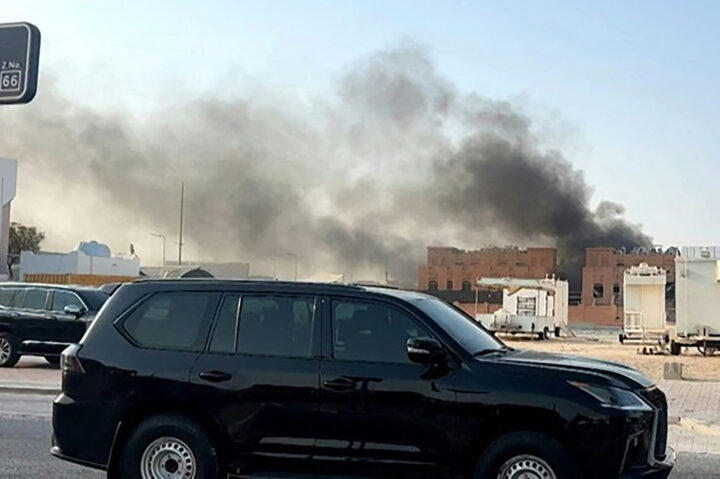
JACQUELINE PENNEY/AFPTV/AFP via Getty Images
This frame grab taken from an AFPTV footage shows smoke billowing after explosions in Qatar's capital Doha on September 9, 2025.
Nearly a day after an Israeli airstrike targeted a meeting of high-level Hamas officials in Doha, Qatar, there are more questions than answers, both in Jerusalem and Washington. Israel has not confirmed which officials were killed in the strike, while Hamas has said that five officials from the group, including the son of Hamas’ chief negotiator, Khalil al-Hayya, were killed in addition to a member of the Qatari security forces.
Israeli reports earlier today indicate that the strike did not kill the most senior echelon of the terror group, which for years has been based in Qatar, a U.S. ally.
Amid ongoing uncertainty over the success of the strike, the operation was met with rare condemnation from the White House, first from Press Secretary Karoline Leavitt and then from President Donald Trump himself, who said he “was very unhappy about it, very unhappy about every aspect” — perhaps, in part, because the operation is not believed to have taken out the most senior Hamas officials.
But it was Trump himself who said over the weekend on his Truth Social site that he had “warned Hamas about the consequences of not accepting” the ceasefire and hostage-release deal that had been put forward by the U.S.
At the same time that Trump officials, including the president, were criticizing the operation, U.S. Ambassador to Israel Mike Huckabee was embracing Israeli Prime Minister Benjamin Netanyahu at the U.S. Embassy’s belated Independence Day celebration in Jerusalem, where the prime minister addressed a smaller group of VIPs attending the party.
“Israel acted wholly independently and we take full responsibility for this action,” Netanyahu said of the Doha strikes. “This action can open to an end of the war in Gaza.”
Israeli officials and defense sources said on Wednesday that they are waiting for better intelligence before commenting on who was killed, but they viewed the operation as a success.
Israeli Defense Minister Israel Katz warned that there could be additional strikes of this kind: “The long hand of Israel will act against its enemies anywhere in the world. There is no place where they can hide. Whoever was a partner in the Oct. 7 massacre will be fully brought to justice.”
Everyone from Israeli Opposition Leader Yair Lapid to Finance Minister Bezalel Smotrich put out statements praising the IDF and Shin Bet and saying the terrorists got what they deserved.
At the same time, the Hostages and Missing Families Forum said the affiliated families felt “deep concern and heavy anxiety” that their loved ones would pay the price. “We know from survivors who have returned that the revenge directed at the hostages is brutal. The chance of bringing them back now faces greater uncertainty than ever before.”
However, Shimon Or, uncle of hostage Avinatan Or, said on Kan radio that “this action brings us closer to bringing Avinatan and the rest of the hostages. …We will not bring back the hostages anymore with military operations and ‘the gates of hell,’ but with control over Gaza.”
Meanwhile, Israeli officials have pushed back on criticism that the strikes would affect ceasefire talks, briefing press in Hebrew and English that the operation will help talks, because there are other channels for negotiations.
The IDF said it targeted Hamas’ senior leadership amid explosions in Doha
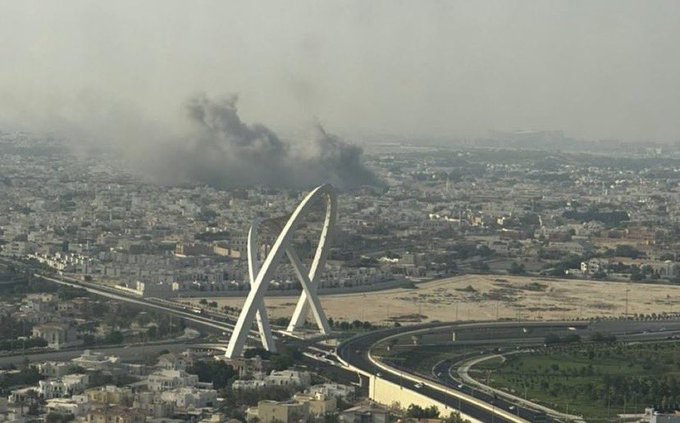
Screenshot/X
Israel strikes Hamas leadership in Doha, Qatar on Sept. 9, 2025.
Israel conducted a strike against senior Hamas leaders, the IDF said on Tuesday, following reports of explosions in Doha, Qatar.
The operation, whose Hebrew name translates to “Judgment Day,” reportedly targeted Khalil al-Hayya, Hamas’ chief negotiator in hostage and ceasefire talks, and longtime senior Hamas official Khalid Mashaal, as well as Hamas officials Zaher Jabarin and Nizar Awadallah, though reports conflict as to the success of the strike.
Israeli Prime Minister Benjamin Netanyahu and Defense Minister Israel Katz said in a joint statement that the Israeli defense establishment unanimously supported the strike.
“The action is totally justified in light of the fact that Hamas leadership initiated and organized the Oct. 7 massacre and did not stop launching murderous actions against Israel and its citizens since then, including taking responsibility for the murder of our civilians in the terrorist attack in Jerusalem yesterday,” they stated.
President Donald Trump was informed of the strike in advance and supported it, Israel’s Channel 12 reported. Netanyahu’s office said that “today’s action against the top terrorist chieftains of Hamas was a wholly independent Israeli operation. Israel initiated it, Israel conducted it, and Israel takes full responsibility.”
“The IDF and [Israel Security Agency (Shin Bet)] conducted a precise strike targeting the senior leadership of the Hamas terrorist organization,” the IDF Spokesperson’s Office stated. “For years, these members of the Hamas leadership have led the terrorist organization’s operations, are directly responsible for the brutal October 7th massacre, and have been orchestrating and managing the war against the State of Israel.”
The IDF said that it used precision munitions and intelligence to reduce harm to civilians.
Hamas leadership is based in the Al-Qatar neighborhood of Doha, where the explosions took place, according to videos posted on social media.
Qatar said it “strongly condemns” the strike in a statement posted to X by Majed Al-Ansari, spokesman for the Qatari Ministry of Foreign Affairs, which described the operation as “a cowardly Israeli attack that targeted residential buildings housing several members of the Political Bureau of Hamas in the Qatari capital, Doha.”
“This criminal assault constitutes a blatant violation of all international laws and norms, and poses a serious threat to the security and safety of Qataris and residents in Qatar,” he added, and said that Qatar “will not tolerate this reckless Israeli behavior and the ongoing disruption of regional security, nor any act that targets its security and sovereignty.”
The strike took place days after the Trump administration sent a Gaza ceasefire and hostage deal proposal via intermediaries, which Israel accepted and a senior Hamas official based in Istanbul rejected.
Earlier Tuesday, Netanyahu left a hearing in his ongoing corruption trial early due to “an exceptional security matter,” Israeli public broadcaster Kan reported.
In 1997, Israel attempted to assassinate Mashaal, the head of Hamas’ political bureau at the time, in Jordan, but gave Amman the antidote for the poison after then-King Hussein threatened to cancel the peace treaty between the countries.
The Democratic congressman, in a letter rejecting an offer for a staffer to travel to Qatar, said that the kingdom needs to do more to pressure Hamas
Tom Williams/CQ-Roll Call, Inc via Getty Images
Rep. Greg Landsman (D-OH) is interviewed by CQ-Roll Call, Inc via Getty Images in his Longworth Building office on Friday, November 3, 2023.
Rep. Greg Landsman (D-OH) called on Qatar last week to step up more forcefully to pressure Hamas and bring about a hostage-release and ceasefire deal in Gaza, including taking into custody the Hamas leaders who have long enjoyed safe haven in Doha.
Landsman, in a lengthy X thread about the conflict in Gaza, took aim at various parties, including Qatar, which he called a “huge barrier” to peace given its continued support for Hamas. He revealed that he had rejected an invitation from the Qatari government for one of his staff members to travel to the country.
“It’s time to call the question on everybody, including the Qataris. There are legitimate questions about whether or not they should be doing more, they could be doing more,” Landsman said in an interview with Jewish Insider. “[Hamas] just refuses to engage anymore.”
In light of that situation, Landsman argued that every potential lever to change Hamas’ calculus must be explored and pursued.
He said that Qatar, as “the entity that has the most influence” over Hamas at this point, “has to feel way more pressure from the international community to do everything in their power” to get to a deal. The status quo of Hamas leaders living lavish lives in Qatar “should absolutely be questioned,” Landsman said.
He said he’s heard from Israeli officials and others involved in the hostage talks that the Qataris are “not seen as a trusted partner in this effort to end the war.”
In a letter to the Qatari ambassador rejecting the invitation for his staffer to travel to the kingdom, Landsman offered bracing criticism of Qatar’s role in hostage talks.
“Qatar’s gross mishandling of the hostage crisis in Gaza and failure to sufficiently pressure Hamas into ending the war prevents me from allowing staff to visit your country,” Landsman said. “That you continue to tolerate this obstructionist behavior from your terrorist beneficiary is incomprehensible.”
Calling the Hamas political leaders in Qatar who are representing the terrorist group in hostage talks “useless,” Landsman called on Qatar to detain the Hamas leaders until the hostages are released and other reforms are implemented in Gaza.
He called on Doha to end “future financial support for Hamas and Gaza” until the hostages are released and other reforms are implemented and to take steps to address antisemitic and pro-Hamas content on Al-Jazeera, the Qatari state-run media outlet.
He said he would be glad to send his staff on a trip to Qatar and to work with the country after it had taken the steps he outlined.
Landsman told JI that his conversations with Israeli leaders, on issues such as the need for additional humanitarian aid, produce change — albeit sometimes not as fast as or as comprehensively as he would hope.
With Qatar, he said, “I have had so many conversations and nothing changes.” He indicated that his engagements with Qatar earlier in the war had been more productive, noting that he’d arranged to bring a delegation of hostage families to meet with the Qatari ambassador shortly after the Oct. 7, 2023, Hamas-led attacks during which their family members were kidnapped.
Beyond squeezing Hamas’ leadership in Qatar, Landsman said he wants to see the country step up as not just a meditator and facilitator of dialogue, but as a more active partner in pursuing a two-state solution and regional peace.
He said that Qatar’s lobbying efforts in the United States, its outreach to lawmakers and their staff, its funding of U.S. colleges and universities and other efforts to assert its influence domestically show that the country “care[s] deeply about what we think.”
“That is why I sent the letter and why I’m pushing and doing it publicly,” Landsman said. “I’m sitting here as one member of Congress trying to do everything in my power to end this crisis. … They want the West to like them. They want us to see them as a partner, as an ally.”
In spite of his current criticisms, Landsman did not at this point embrace the idea of moving the U.S. airbase in Qatar elsewhere in the region, arguing that the U.S. should not give up on its relationship with Doha.
“What I am saying is there are expectations of partners, and our partnership will be so much stronger if [Qatar’s] relationship with this terrorist entity ends,” he explained. “That relationship has potential, but it should go in the direction that makes the most sense for our national security and peace and stability in the region, and that means resolving their Hamas issue.”
Landsman also called for shifts in Israel’s strategy in Gaza, saying that the humanitarian crisis is real and that he has spoken directly to Prime Minister Benjamin Netanyahu about the need to increase humanitarian aid.
He said Israel should be doing more to create humanitarian safe zones for civilians and to separate Hamas from the rest of the population of Gaza. And he argued that by sending in an “avalanche” of aid, Israel would diminish the impact of Hamas’ diversion of aid shipments.
He said Israel should also pull back on its large-scale campaign in Gaza and focus on targeted operations to find and liberate the hostages.
Asked about the impact of fellow Democratic lawmakers and the international community blaming Israel for the continuation of the war, Landsman said that there is a place for pressure on Israel to adjust its strategy, “but don’t abandon our ally. This is one of the most important allies we have.”
He also emphasized that Hamas has shown no interest in or willingness to agree to a new hostage deal and that international attacks on Israel will embolden it further.
“If they continue to see people just hammering away at Israel — which they believe is critical for them to achieve their goal, which of course is to destroy the State of Israel — they will continue to [fight],” Landsman said.
Landsman characterized the recent Arab League statement condemning the Oct. 7 attack and calling for Hamas to release the hostages as an important public step in pressuring Hamas.
He said the statement’s public rejection of Hamas mirrors what he has heard privately from Arab leaders for months. “I think this is going to put more pressure on Qatar to figure out a much better path forward with their unique issues with Hamas,” Landsman said.
Qatar’s be-everywhere, invest-in-everything strategy has allowed Doha to gain footholds across the global economy and in diplomatic circles

Jacquelyn Martin/AP
Qatari Prime Minister and Minister of Foreign Affairs Sheikh Mohammed bin Abdulrahman bin Jassim Al-Thani, attends a news conference about the Israel-Hamas war, and pressure to reduce civilian casualties, Friday, Dec. 8, 2023, in Washington.
Ceasefire and hostage-release talks have been ongoing in Doha, Qatar, for the last week. But one of the most consequential meetings in the negotiations could be happening tonight in Washington, when President Donald Trump hosts Qatari Prime Minister Mohammed bin Abdulrahman Al Thani for dinner at the White House.
This continues a new tradition for Trump of hosting prominent Gulf royals who aren’t the heads of state of their respective countries for dinner at the White House. In March, Trump hosted a dinner in the White House’s State Dining Room for Sheikh Tahnoon bin Zayed Al Nahyan, the United Arab Emirates’ national security advisor and chairman of several sovereign wealth funds.
Qatari officials have been in the U.S. all week. Qatari Emir Sheikh Tamim bin Hamad Al Thani was rumored to have met with Trump on the sidelines of the FIFA finals in New Jersey on Sunday, after being spotted in New York over the weekend.
White House Middle East envoy Steve Witkoff, whose trip to Doha last week was postponed over stalled talks, told reporters over the weekend that he planned to meet with Qatari negotiators on the sidelines of the match. And Trump shared a suite with senior Qatari sports officials at the match, including Nasser bin Ghanim Al-Khelaifi, the president of the Paris Saint-Germain team who played in New Jersey on Sunday and chairman of beIN Sports, previously known as Al Jazeera Sport. (In a weekend interview at the FIFA match, Trump even noted Qatar’s “big presence.”)
Qatar also loomed large in Washington this week, where legislators on the House Education and the Workforce Committee pressed university leaders from Georgetown, CUNY and the University of California, Berkeley about their foreign funding sources during a hearing about antisemitism in higher education. Former Rep. Jim Moran (D-VA), one of Qatar’s top lobbyists in Washington, was seen sitting right behind Georgetown University interim President Robert Groves as Groves testified on Tuesday. The school has received over $1 billion from Qatar, and has a campus in Doha.
Qatar’s be-everywhere, invest-in-everything strategy has allowed Doha to gain footholds across the global economy and in diplomatic circles. And since the start of the war, it has sought to highlight its role as a facilitator of ceasefire talks between Israel and Hamas, the latter of which Doha supports financially and diplomatically.
With Iran weakened following last month’s war, Qatar remains the Hamas sponsor with the most leverage on the terror group. Despite pledges last year to expel senior Hamas officials to Turkey, many of those officials remain in Qatar.
Earlier this week, Trump threatened steep tariffs on Russia if Moscow doesn’t reach a peace agreement with Ukraine before the end of August. But the Qatari royal family, with endless wealth and more favored global standing, does not face the same fiscal and geopolitical challenges and limitations as Russian President Vladimir Putin. It’s unclear what leverage Trump could use to push Qatar to exert pressure on Hamas as he seeks a resolution to the war.
Doha has the power to push Hamas to accept a ceasefire. Whether tonight’s dinner will exact a change in Qatar’s approach to Hamas remains to be seen. The sit-down between Trump and the Qatari prime minister could change the tide in the 21-month war, or it could serve as yet another missed opportunity in a war full of stalemates and diplomatic posturing — with fresh casualties mounting on both sides and 50 hostages still languishing in captivity.
'We are going to succeed, we’ll bring them all home,' Netanyahu said, repeatedly acknowledging hostage family members in the room
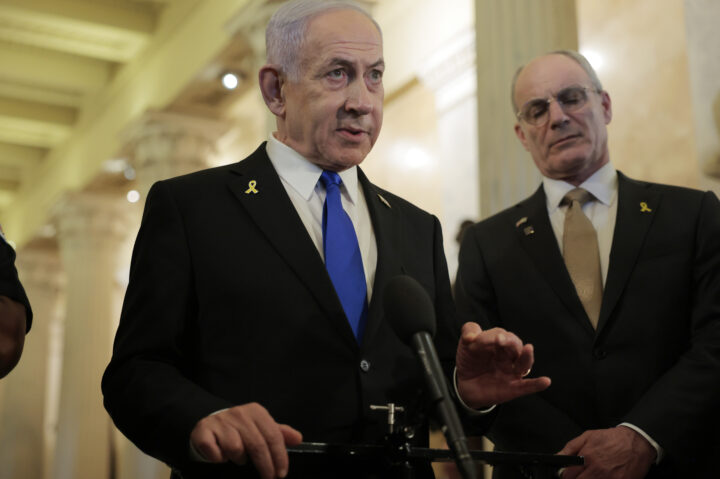
Anna Moneymaker/Getty Images
Israeli Prime Minister Benjamin Netanyahu speaks to reporters after meeting with U.S. Speaker Mike Johnson (R-LA) at the U.S. Capitol on July 8, 2025, in Washington, D.C.
Israeli Prime Minister Benjamin Netanyahu hosted senior administration officials, leaders from Jewish and pro-Israel Christian groups and hostage families for a reception last night at Blair House during his third visit to the United States this year.
Netanyahu was introduced by Paula White-Cain, the senior advisor to the White House Faith Office. “Israel, you are never, never alone,” she told the audience, pledging that evangelicals “will always stand with Israel.”
The Israeli prime minister spoke about efforts to free the hostages, both living and deceased, held in Gaza, saying, “We’re committed to getting every last one out … we don’t leave this sacred mission for a second.” He said he’d arrived a few minutes late because he had been speaking with the Israeli delegation engaging in hostage talks in Doha, Qatar, adding that he and President Donald Trump had spoken extensively about those efforts.
“We are going to succeed, we’ll bring them all home,” Netanyahu said, repeatedly acknowledging hostage family members in the room. “Each family has their own history of suffering, of hope, of prayer. … We do not forget, we will not relent, we’ll get them all home. All of them.”
Netanyahu also said that Iran would have had nuclear weapons within a year if Israel and the U.S. had not struck its facilities. He suggested that the U.S.’ show of force should also put to rest any questions about continued American supremacy in the 21st century, which “bodes well for the future.”
He honored Gen. Erik Kurilla, the outgoing head of U.S. Central Command — a rare public appearance in D.C. for the military leader. Netanyahu said Kurilla is a “commander without peer” whose successor would have “gigantic shoes” to fill, adding that Kurilla’s support has been “truly remarkable.” Netanyahu presented Kurilla with a sculpture made from a piece of an intercepted Iranian missile, featuring a map of Israel, a tree and a dove of peace, which Netanyahu said symbolized “peace through strength.”
Others in the crowded room — forced indoors by a torrential downpour and tornado watch in D.C. — included Education Secretary Linda McMahon, Commerce Secretary Howard Lutnick, Labor Secretary Lori Chavez-DeRemer, Small Business Administrator Kelly Loeffler, Under Secretary of Defense Elbridge Colby, U.S. Ambassador to Israel Mike Huckabee, Rep. Randy Fine (R-FL), Justice Department Senior Counsel Leo Terrell and Israeli Ambassador to the U.S. Yechiel Leiter. Brett McGurk, from the Biden administration’s National Security Council, was also in the crowd.
Jewish leaders in attendance included William Daroff, Elliot Brandt, Jonathan Greenblatt, Nathan Diament, Rabbi Moshe Hauer, former Sen. Norm Coleman (R-MN), Halie Soifer and Brian Romick. Christian leaders who attended included pastors Robert Jeffress, Mike Evans and Mario Bramnick.
The reception was the marquee event between the Israeli leader and officials from American Jewish groups during this visit. During recent visits to the U.S., Netanyahu skipped traditional sit-downs with Jewish leaders. Netanyahu has prioritized engagement with pro-Israel evangelical Christians and political conservatives, sometimes at the expense of more liberal-leaning American Jews.
Please log in if you already have a subscription, or subscribe to access the latest updates.
 Continue with Google
 Continue with Apple