



























New Northwestern president’s early test: how he handles renewal of school’s Qatar campus
Northwestern has received approximately $737 million from the Qatari government in connection with NU-Q operations
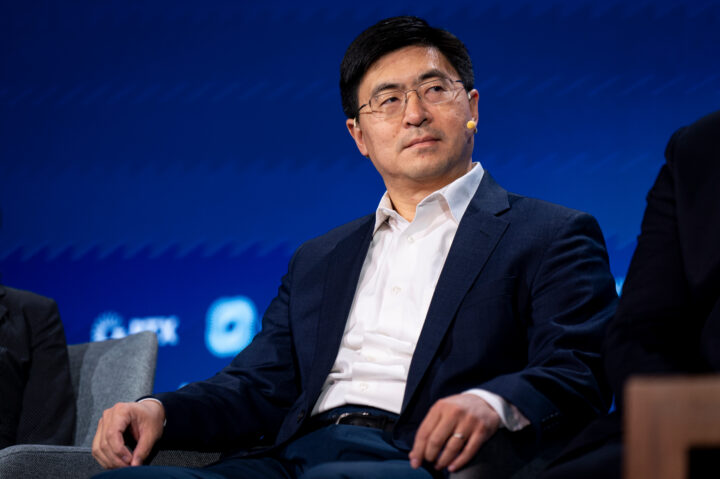
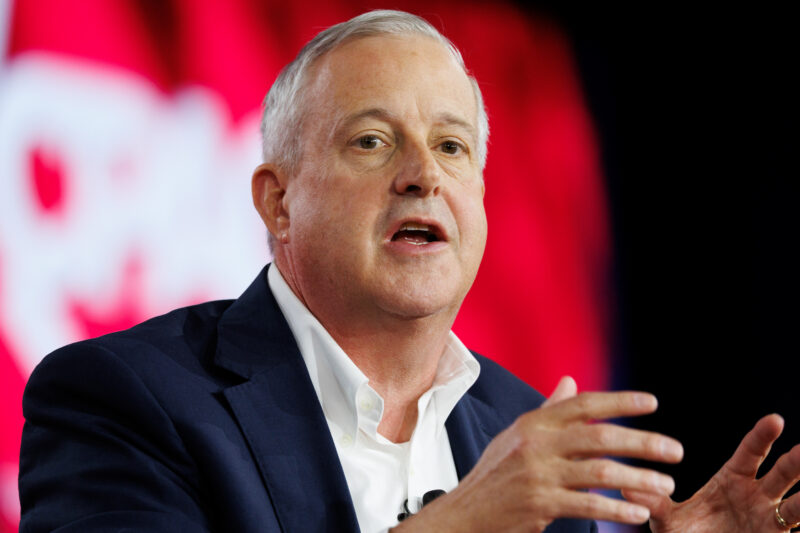
Al Drago/Bloomberg via Getty Images
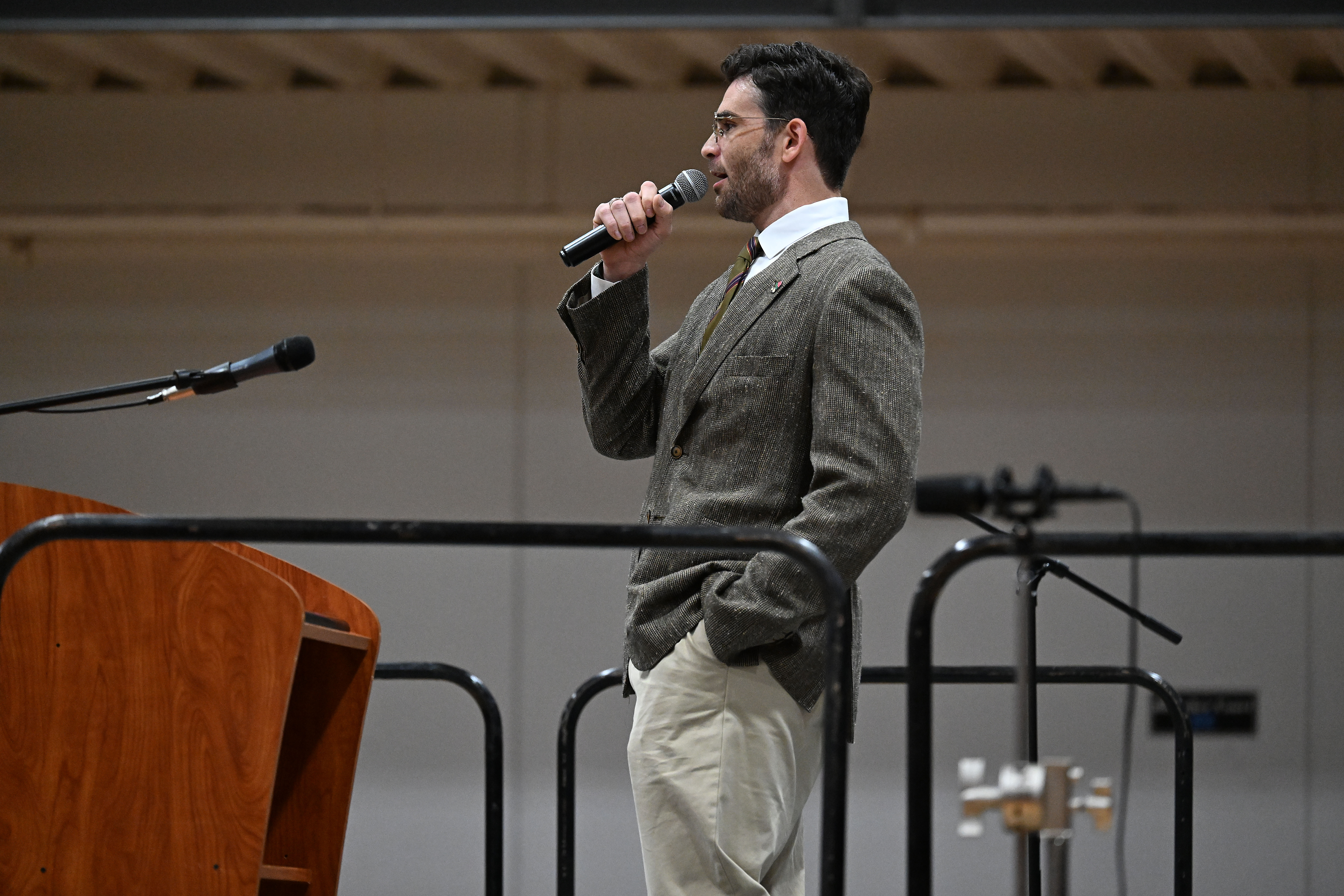
Mung Chiang, incoming president of Northwestern University, during the US Chamber of Commerce's Global Aerospace Summit in Washington, DC, on Sept. 10, 2025.


 Add JewishInsider on Google
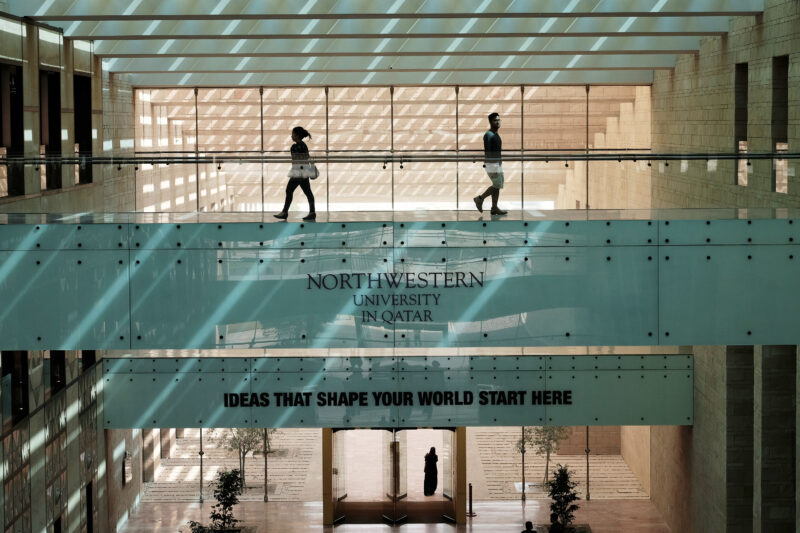
Critics of Qatari funding of American universities are watching Northwestern University’s incoming president to see how he handles the school’s upcoming contract renewal for its satellite campus in Doha, Qatar’s capital.
Northwestern’s contract to operate its campus in Qatar (NU-Q) is set to expire at the end of the 2027–2028 academic year. In an interview published May 11 with The Daily Northwestern, the university’s student newspaper, interim President Henry Bienen said the NU-Q review process is “ongoing” and would be left up to the university’s new leadership.
“So I was planning to be in Doha for commencement, and a set of events made it hard for me to do it,” said Bienen, referring to the U.S.’ war with Iran. Bienen served as Northwestern president from 1995-2009 and assumed the role of interim university president in September. He established Northwestern’s Qatar campus in 2008, which has faced scrutiny for faculty ties to Hamas.
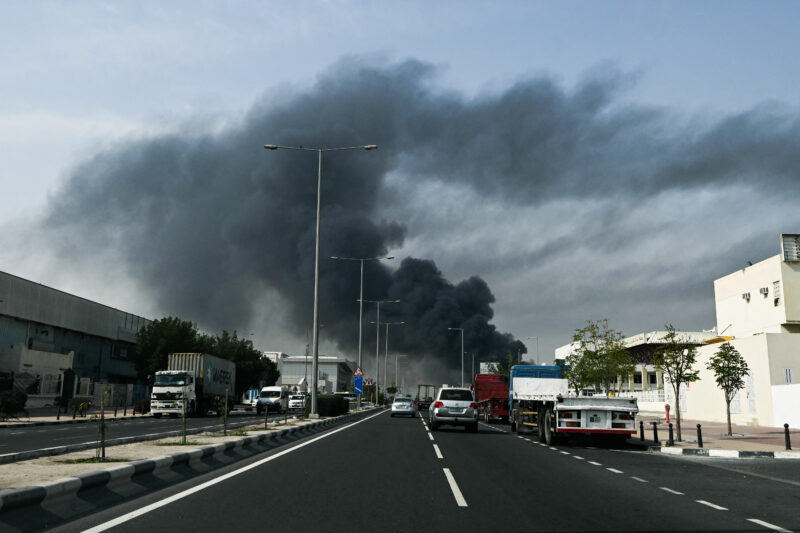
“The provost-elect is there now. … [we] are talking about Qatar a lot, and I think it’s fair to say Qatar is very eager that we renew the relationship. So that’s a process of discussion back and forth. And that process is ongoing,” said Bienen. The Doha campus is currently remote, as a security precaution following Iranian missile strikes on the Gulf country.
“Of course, Qatar is a board decision,” continued Bienen. “I have my ideas. I’m positive about the relationship, frankly. I do think at the end of the day, it’s a board issue, and a new president has to sign off on this one. But the conversations are going on. But the wild card is obvious in this fraught area. … There’s just a lot of variables, and nobody can predict with any certainty what the next month will bring, much less the next year.”
On Monday, Northwestern announced the appointment of Mung Chiang as the school’s new president. Members of the Jewish community expressed optimism that Chiang — who assumes the role on July 1 — will leverage the supportive environment he fostered for Jewish students at Purdue University to help combat the antisemitism seen at Northwestern in recent years.
However, questions remain regarding how Chiang will address NU-Q and shape the long-term trajectories of both the Doha and Evanston, Ill., campuses.
The Coalition Against Antisemitism at Northwestern, a group of Northwestern students, faculty, parents and alumni, said in a statement to Jewish Insider that it is “hopeful that President-elect Chiang can help lead a serious, transparent, and institutionally credible review of Northwestern University’s relationship with Northwestern University in Qatar” amid “the increasing federal, congressional, donor and public scrutiny surrounding NU-Q.”
CAAN asserted that Bienen “is materially conflicted with respect to any decision-making process concerning NU-Q and therefore should not serve as the principal decision-maker regarding the future of the Qatar campus. Publicly available disclosures show that Dr. Bienen has served on the advisory board of the Qatar Foundation, the entity that funds and oversees NU-Q.”
Among CAAN’s concerns include “that NU-Q is deeply integrated with Northwestern’s Medill School of Journalism and communications programs.”
“Northwestern has used Qatar Foundation funding to support journalism and communications education through NU-Q, while congressional investigators and outside watchdogs have increasingly questioned whether partnerships involving Al Jazeera and Qatar-backed media ecosystems create risks relating to editorial independence, ideological influence, and institutional neutrality,” CAAN said.
Northwestern has received approximately $737 million from the Qatari government in connection with NU-Q operations, including annual payments reportedly totaling approximately $70 million per year to sustain the campus, according to CAAN.
Brandy Shufutinsky, director of the Foundation for Defense of Democracies’ Program on Education and National Security, pointed to Georgetown University’s Bridge Initiative, a multiyear research project on Islamophobia, which reportedly requires Qatari approval for speakers and programming.
“I’m wondering if Northwestern’s campus in Doha — and even their main campus — [would] have a similar type program where they’re basically handing over final say to the [Qatari] government,” Shufutinsky told JI.
Last year, the House Committee on Education and Workforce released transcripts of an interview with former Northwestern President Michael Schill on the school’s relationship with Qatar. Committee staff noted during the interview that a section of Northwestern’s agreement with the Qatar Foundation, which funds Northwestern’s satellite campus, legally binds staff and students to follow the country’s laws and “social customs.”
“NU, NU-Q, and their respective employees, students, faculty, families, contractors and agents, shall be subject to the applicable laws and regulations of the State of Qatar, and shall respect the cultural, religious and social customs of the State of Qatar,” the agreement reads.
Shufutinsky said she would like to see Chiang address “what does that mean related to gender segregation and women’s rights, considering Qatar is the last Gulf nation to require unmarried women [under age 25] to have a male companion or get male approval if they want to travel.”
“Those values are counter to American social values, customs and norms,” said Shufutinsky. “What does that mean for the girls and women who are studying and teaching on that campus?”
Northwestern did not respond to a request for comment from JI asking if Chiang has indicated his plans for NU-Q.
The questions around contract renewal come as the Iran war is damaging Qatar’s once booming economy, particularly in the oil and gas sector. The country, one of the world’s wealthiest nations, could need to reevaluate foreign partnerships to cut spending.
A report released Tuesday shows dozens of established American universities are also nearing financial trouble.
That leads to a bigger question, said Shufutinsky. “Are these universities becoming so dependent on foreign dollars that they are unable to function, and does that mean they’re going to be willing to turn a blind eye to things like human rights abuses?”
More Stories
A FATHER'S LOVE
After son’s remains returned from Gaza, Ruby Chen continues his fight in Washington and beyond

BOOKSHELF
New book ‘In the War Room’ offers candid look at Netanyahu’s wartime decisionmaking
analysis
Pappas wins New Hampshire Senate nomination over anti-Israel Dem activist
SAFETY SURGE
Hochul announces security funding, enhanced police presence ahead of High Holy Days
SCOOP
Sen. Rick Scott urges Trump to pave pathway for Canadian Jews to emigrate to U.S.
CAMPUS CAUCUS
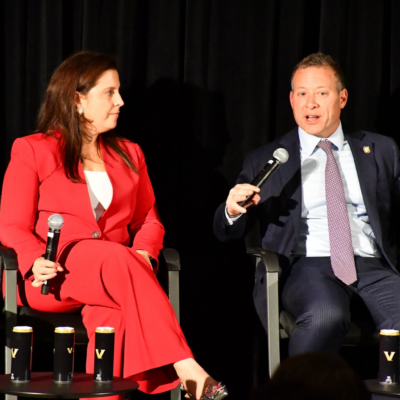
Gottheimer, Stefanik launch caucus to combat antisemitism on college campuses
Please log in if you already have a subscription, or subscribe to access the latest updates.
 Continue with Google
 Continue with Apple