















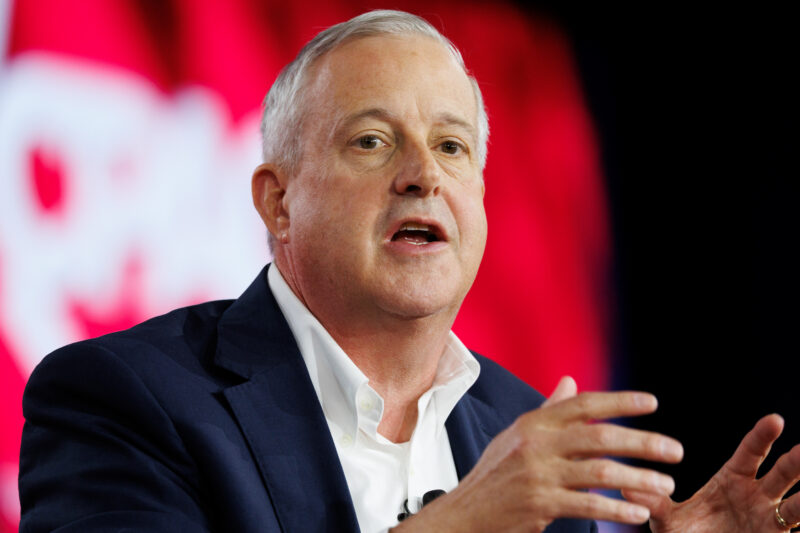



















GOP campaign veteran Colin Reed called Graham’s debate performance a ‘seismic moment in an otherwise sleepy race’
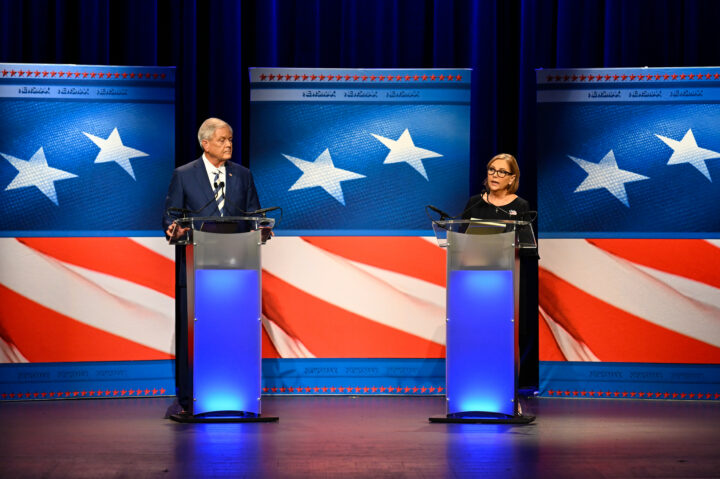
Peter Zay/Anadolu via Getty Images
Sen. Darline Graham (R-SC) and Rep. Ralph Norman (R-SC) participate in a televised debate ahead of the Republican primary runoff in Newberry S.C., on August 18, 2026.


 Add JewishInsider on Google
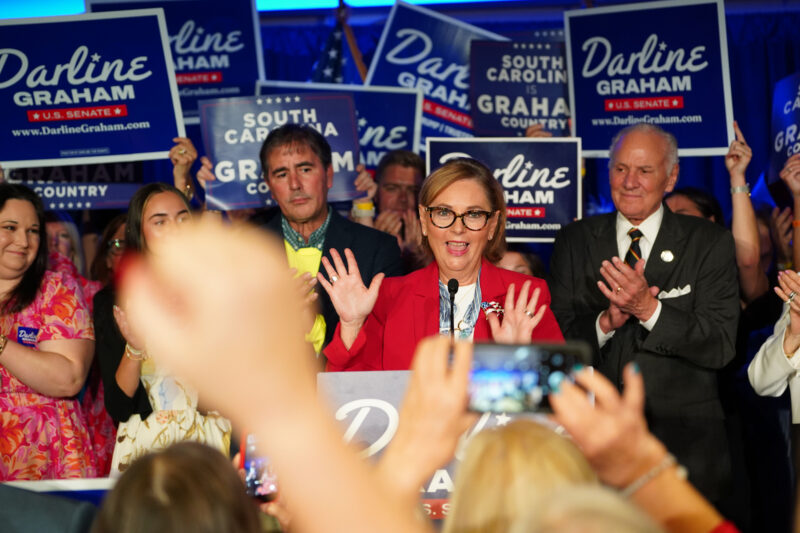
Sen. Darline Graham’s (R-SC) stumbling performance at the final GOP primary debate on Tuesday has prompted questions among Republicans in Washington about her prospects in next week’s runoff against Rep. Ralph Norman (R-SC).
Graham’s debate performance has been widely panned for her response to a question about Taiwan and the South China Sea, during which she admitted that she is “not that informed on national security.” The moment prompted national Republican operatives to question her qualifications to replace her late brother, Sen. Lindsey Graham (R-SC), and led to an avalanche of attacks from critics about her lack of policy experience.
Senior Republicans who have been involved in the race privately described Graham’s foreign policy flub as a pivotal moment that could cost her the nomination.
“It was always going to be a lot harder than she was told when she got into this, but I thought she could win before the debate. Now, I think she’s done for,” a senior GOP campaign official involved with the race told JI. “This loss is going to be an unfortunate embarrassment, and the way this played out could be somewhat of a stain on Lindsey’s legacy even though he had nothing to do with it.”
A spokesperson for Graham’s campaign declined to comment about her debate performance. Graham defended her answer while speaking to reporters in the spin room following the debate, arguing that, “The people of South Carolina, they’re worried about their pocketbooks more than they’re worried about the South China Sea, quite honestly.”
Veteran Republican strategists who have been involved in high-profile Senate races called Graham’s performance one of those rare moments that could change the trajectory of the race.
“The debate seems fairly consequential for a number of reasons,” Colin Reed, a founding partner of South & Hill Strategies and a GOP campaign veteran, told Jewish Insider. “To me, it seems like a fairly seismic moment in an otherwise sleepy race.”
Reed predicted that Graham’s inability to sound articulate on foreign policy — all but taking a pass on a consequential national security question — was likely to have an impact on the outcome of the race because of the importance of national security issues to South Carolina’s “heavy military presence and large veteran community.”
He added that her comments are already drawing comparisons to “the towering figure her brother was on the matter of foreign affairs” and the fact that the U.S. “happens to be engaged in multiple conflicts, or at least one conflict overseas with Iran, right now.”
“This is a late-summer primary and runoff, and only the most engaged audiences turn out,” Reed said. “Those types of audiences are the ones who were likely paying attention or discussing the debate.”
He argued that Graham’s lack of political experience makes her a “blank canvas” to voters and that, combined with the special election to replace her late brother on the ballot as the GOP nominee being truncated despite Republican primary voters being “wary of coronations,” the South Carolina senator had already been in a vulnerable political position prior to the debate.
Should Graham lose to Norman, it would mark the first time this cycle that a GOP candidate endorsed by President Donald Trump in a Senate race has lost their primary contest.
The president will hold a campaign rally for Graham in Myrtle Beach on Friday, even as he has scaled back his campaign appearances in recent months. Republicans in Washington expressed skepticism that the rally would significantly alter the outcome of this race, with two sources predicting that most of the attendees were only going to see the president speak. (For his part, Lindsey Graham was frequently booed and heckled when appearing at Trump rallies through the years.)
Norman said in a statement following the debate that South Carolina deserves to have a senator with “know-how” on foreign policy matters.
“Whether it’s spy balloons flying overhead or buying up land near South Carolina military bases, China continues to prove that it is a threat to the United States,” the House lawmaker told Politico.
Republican senators were told that Graham was not interested in seeking a full term when she agreed to the appointment in the immediate aftermath of her brother’s unexpected death last month. Graham said in a pre-debate interview on Monday that she “didn’t even realize I’d be asked to fill the seat temporarily” and did not accept the appointment last month with the idea of running for a full term. She instead credited the president with convincing her to run during an Oval Office meeting in her first week as senator.
Graham’s surprise decision to run, which two sources told JI came at the urging of Trump and several of Lindsey Graham’s campaign consultants, was met with apprehension in Washington. GOP circles. After Graham launched her campaign, Republican senators and strategists skeptical of her chances of winning began quietly voicing concern to one another about her lack of voting record or political background, the fact that she lacked a policy platform and the optics of sending a grieving sister out on the campaign trail. They also took note of how competitively Norman, Graham’s opponent in next week’s runoff election, was polling in the race.
One senior Senate GOP operative put it bluntly: “If we’re going to do a coronation, we need to be able to do a coronation. If we can’t get our s**t together, then we shouldn’t keep trying.”
Graham was cautioned by several Republicans, including two senators, that she would be setting herself up for a contentious election fight if she got in the race, according to two sources familiar with the matter. She was told by several of her brother’s campaign consultants, however, that while the contest would be challenging, she was likely to win with the president’s endorsement.
Graham prevailed in the first round of the primary election earlier this month, but only tallied 33% of the vote, far short of the majority necessary to avoid a runoff. She got a campaign boost after winning the endorsement of one leading rival, Rep. Russell Fry (R-SC), but her debate stumble only underscored her biggest vulnerability: lack of experience.
“The debate was challenging to watch. Her performance was very bad. We all empathize with her because of the circumstances she’s under, but that makes it all the more disturbing that folks who claim to love Lindsey would get in her ear and tell her she should run,” the Senate Republican campaign source said.
The winner of the Republican runoff next Tuesday will face Democrat Annie Andrews in the November election. Andrews, a pediatrician, is a decided underdog running in a solidly Republican state, but has been a strong fundraiser, bringing in over $10 million during the campaign cycle.
Plus, Darline Graham says natsec 'not my thing'
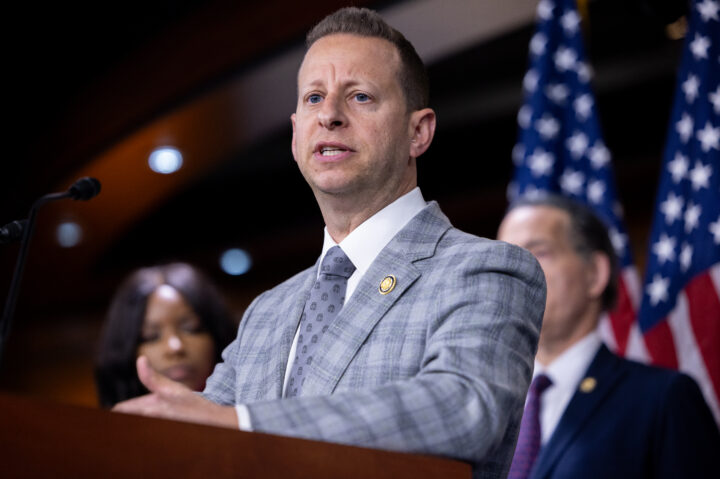
Nathan Posner/Anadolu via Getty Images
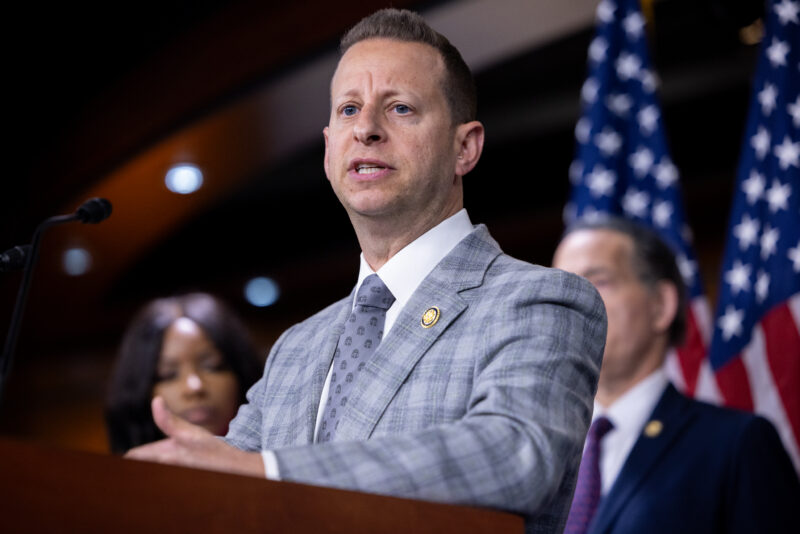
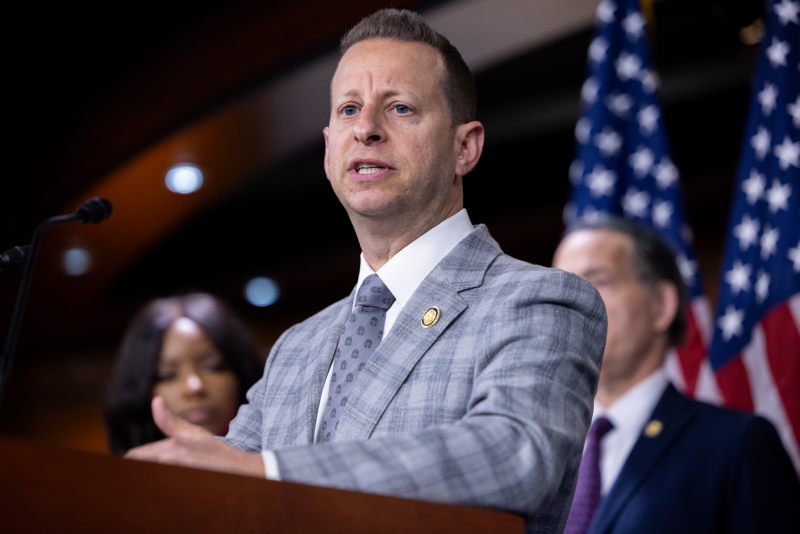
Rep. Jared Moskowitz (D-FL) speaks at a press conference on Capitol Hill on Sept. 8, 2025.
Good Wednesday morning.
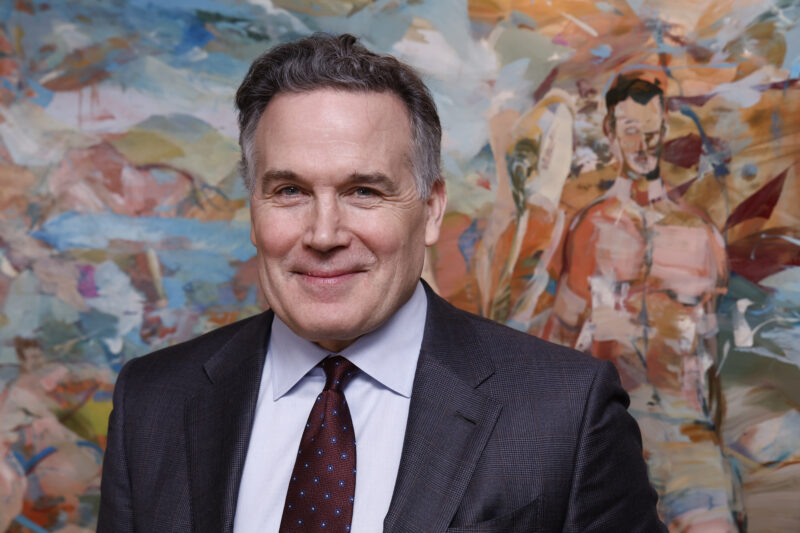
In today’s Daily Kickoff, we break down the results of yesterday’s primaries in Florida, and talk to foreign policy officials wary of the Trump administration’s Gaza diplomacy. We report on Sen. Darline Graham’s admission during last night’s South Carolina Senate debate that national security was “not my thing,” and cover a new report from the Anti-Defamation League and the Academic Engagement Network about anti-Israel activists’ efforts to exert control over higher education unions. Also in today’s Daily Kickoff: Ehren Stenzler, Jeremy Moss and Yossi Cohen.
Curated by JI Executive Editor Melissa Weiss, with an assist from Danielle Cohen-Kanik.
Today’s Agenda
We’re keeping an eye on the remaining races to be called in yesterday’s primaries in Florida and special election runoff in California’s 14th Congressional District, where state Sen. Aisha Wahab maintains a 1,300-vote lead over Melissa Hernandez with 62% of precincts reporting.
A number of the Florida races were called shortly after polls closed, with Reps. Debbie Wasserman Schultz (D-FL), Jared Moskowitz (D-FL) and Randy Fine (R-FL) fending off challengers from the more extreme wings of their respective parties. More below.
One Thing To Know

Florida Democrats and Republicans fended off extreme challengers against pro-Israel incumbents in Tuesday night’s primaries, indicating that the state’s older, moderate and notably Jewish electorate was uniquely inhospitable towards the anti-Israel left and the antisemitic right.
Rep. Jared Moskowitz (D-FL) handily defeated socialist challenger Oliver Larkin by nearly a 2-to-1 margin (64-36%), while Rep. Debbie Wasserman Schultz (D-FL) easily prevailed in a newly drawn district against a crowded field of challengers. Elijah Manley — the candidate running against Wasserman Schultz on the Democratic Socialists of America, anti-Israel platform — lagged in third place, with just 13% of the vote.
On the Republican side, Rep. Randy Fine (R-FL) dominated over a neo-Nazi podcaster who made hatred of Jews the central message of his campaign. Fine won renomination with 57% of the vote, while the antisemitic Dan Bilzerian tallied 17% of the GOP vote. And in the governor’s race, James Fishback, who used racist and antisemitic messages as part of his campaign, lagged well behind the Trump-endorsed winner, Rep. Byron Donalds (R-FL), finishing in third place with just 10% of the vote.
The Big Reads
DISARMAMENT DOUBTS
A diplomatic push by Jared Kushner to revive the stalled Gaza peace plan was met with widespread skepticism from Middle East analysts, who warned that the envoy’s timeline for Hamas disarmament is unrealistic, Jewish Insider’s Matthew Shea reports. “What Hamas wants is what Hezbollah has had in Lebanon: someone else runs schools and collects garbage, while they remain in charge behind the scenes. In my view, Kushner’s meeting with Hamas was a terrible mistake that helps to legitimize them,” said Elliott Abrams, who served as special envoy for Iran during the first Trump administration.
game changer
Sen. Darline Graham (R-SC) said at the final GOP primary debate on Tuesday to replace the late Sen. Lindsey Graham (R-SC) that she is “not that informed on national security,” Jewish Insider’s Emily Jacobs reports. Graham made the comments after being asked at Tuesday’s debate if she believed Taiwan and the South China Sea were national security issues for the United States. “My brother was in the Air Force for 33 years, so I will do everything I can to support the military. My dad was in the army. I’m not a polished politician up here. National security is not my thing, not my area of expertise,” Graham said.
campus beat
Dysfunctional union governance is leaving some Jewish faculty and graduate students marginalized and unrepresented by the labor organizations meant to advocate for them, a report released Wednesday by the Academic Engagement Network and the Anti-Defamation League documents. The report, “A Crisis of Representation: Antisemitism and Inclusion in Higher Education Unions,” highlights how activist factions have used low-turnout union elections to push anti-Israel positions without broad member buy-in — often at the expense of Jewish members who say they have faced targeted attacks, Jewish Insider’s Haley Cohen reports.
The Rundown
sunshine state socialism
a whole new ballgame
investigating the investigators
wolverine warriors
campaign controversy
sephardi spotlight
mixed messages
On Our Radar
● The Live Briefing. Word on the street, clips, podcasts and quick updates — the items we’re tracking all day in our Live Briefing on the app (on Apple and Android) and website.
The State Department announced sanctions against Tomoko Akane, president of the International Criminal Court, and Abdoulaye Seye, a senior trial lawyer at the court, as part of the Trump administration’s recently announced campaign to target the body; Secretary of State Marco Rubio said the two individuals “have directly engaged in efforts by the ICC to investigate, arrest, detain, or prosecute officials whose government has not consented to ICC jurisdiction”…
The Department of Defense is demanding that 30 U.S. academic institutions, including Georgetown, UC Berkeley, Harvard, UCLA, USC, Cornell, Duke, Johns Hopkins and NYU, conduct comprehensive reviews of their ties with “foreign entities of concern,” threatening future Pentagon funding for research projects…
A new Suffolk University/Boston Globe poll found Sen. Ed Markey (D-MA) with a 14-point lead over his primary opponent, Rep. Seth Moulton (D-MA), among likely voters…
Former Green Party presidential candidate Jill Stein is facing misdemeanor charges tied to her participation in an anti-Israel protest at Washington University in St. Louis in April 2024, during which she allegedly assaulted a police officer…
LionTree co-founder Ehren Stenzler is joining Moelis as a managing director, alongside Jake Donavan, who served as LionTree’s president of Europe…
Lawyers for Los Angeles Lakers Governor Jeanie Buss are contesting efforts to sell the Buss family’s stake — approximately 17.8% — in the team to Josh Kushner and Bob Iger; Kushner and Iger are still proceeding with their purchase of Mark Walter’s majority stake in the team…
Senior German lawmakers are calling on the EU to sanction Israeli National Security Minister Itamar Ben-Gvir over his comments earlier this week that Israel should conduct “targeted killings” to “remove 30, 40 [people] every night” in Gaza…
French Foreign Minister Jean-Noël Barrot said the country will expel two Iranian diplomats after members of the Islamic Republic’s security service interrogated and allegedly assaulted two French Embassy employees, including the cultural attaché, who were posted in Tehran…
The Israel Football Association withdrew its support for FIFA head Gianni Infantino in what IFA President Moshe Zuares, citing an “unprecedented crisis of confidence” in the FIFA chief, said was a unanimous vote; the move came after Infantino fired FIFA’s COO over his opposition to Infantino’s proposal to sell off portions of the World Cup…
Azerbaijan is suing CNN for defamation, accusing the network of endangering the country by falsely reporting that Baku had allowed Israel to operate from Azerbaijani territory as it mounted attacks against Iran during the war earlier this year…
The United Arab Emirates said it would be cutting off all trade and commercial ties with Iran due to “regional escalations that undermine regional and international peace and security,” after Tehran fired two ballistic missiles at the Gulf state on Tuesday…
Lebanon transferred an Assad-era Syrian military official to Damascus after he was questioned in Beirut earlier this month over crimes he allegedly committed in Syria in 2011; Maj. Gen. Adel Issa, who fled to Lebanon after the fall of Bashar al-Assad, is expected to face trial in Syria…
Former Mossad head Yossi Cohen, who joined SoftBank in 2021 as head of the company’s Israel operations, was appointed to the additional role of senior advisor to SoftBank founder, chairman and CEO Masayoshi Son…
Jewish Insider’s Gabby Deutch and The Forward’s Talia Zax are joining The Atlantic as a staff writer and senior editor, respectively…
Israeli businessman and investor Shmuel Harlap, the former chairman of Israeli auto importer Colmobil, died at 82…
Worthy Reads
Find more Worthy Reads in our Live Briefing via our app (on Apple and Android) and website.
Damage Control: In The Times of Israel, former U.S. Ambassador to Israel Jack Lew considers how Jerusalem can strengthen its relations with Washington amid a generational shift in the U.S. that threatens to derail the decades-long ties between the countries. “As a powerful but small country, Israel’s security depends on continued strategic cooperation with the United States. After fall elections in both countries, it will be urgent for a new government in Israel to take quick action to begin repairing this vital relationship. … This requires difficult decisions, and at least some humility, not a trait typically rewarded in Israeli political life.” [TOI]
Vilified on the Vineyard: The Atlantic’s Marc Leibovich travels to Alan Dershowitz’s home in Martha’s Vineyard to see how the lawyer has adjusted to life in the enclave after his public fallout with Larry David and what he alleges is ostracization from local events over his politics. “The week before our conversation, he had returned to the hallowed cultural battleground of the Pierogi Wars, the West Tisbury farmers’ market. He was wearing his U.S.-Israel shirt (or ‘my Zionist T-shirt,’ of which he has two — one red, one blue) and saw a guy wearing a Free Palestine shirt. ‘I walked up to him. I said, “Can we take a picture together?”’ The man refused. ‘He said, “No, no, no Israel,” and he walked away.’” [TheAtlantic]
EEOC Woes: In The Wall Street Journal, Ken Marcus, the founder of the Louis D. Brandeis Center for Human Rights Under Law, argues in favor of a proposal to end a requirement for large employers to submit race, sex and ethnicity employment data to the federal government. “Many employers and institutions have leaned on demographic frameworks to drive diversity and inclusion programs, sorting employees into broad categories of advantage and disadvantage. Within this schema, Jewish Americans are often folded into racial categories that have little or nothing to do with Jewish identity, meaning they are excluded from conversations about workplace discrimination entirely, even as antisemitic harassment has surged.” [WSJ]
Picture of the Day

Tadesse Getahon, Haimro Alame and Gashau Ayale — members of the Israeli men’s marathon team — showed off their gold medals (with Ayale also holding his individual bronze medal), after arriving at Israel’s Ben Gurion Airport in Lod following the European Athletics Championships in Birmingham, England.
Birthdays
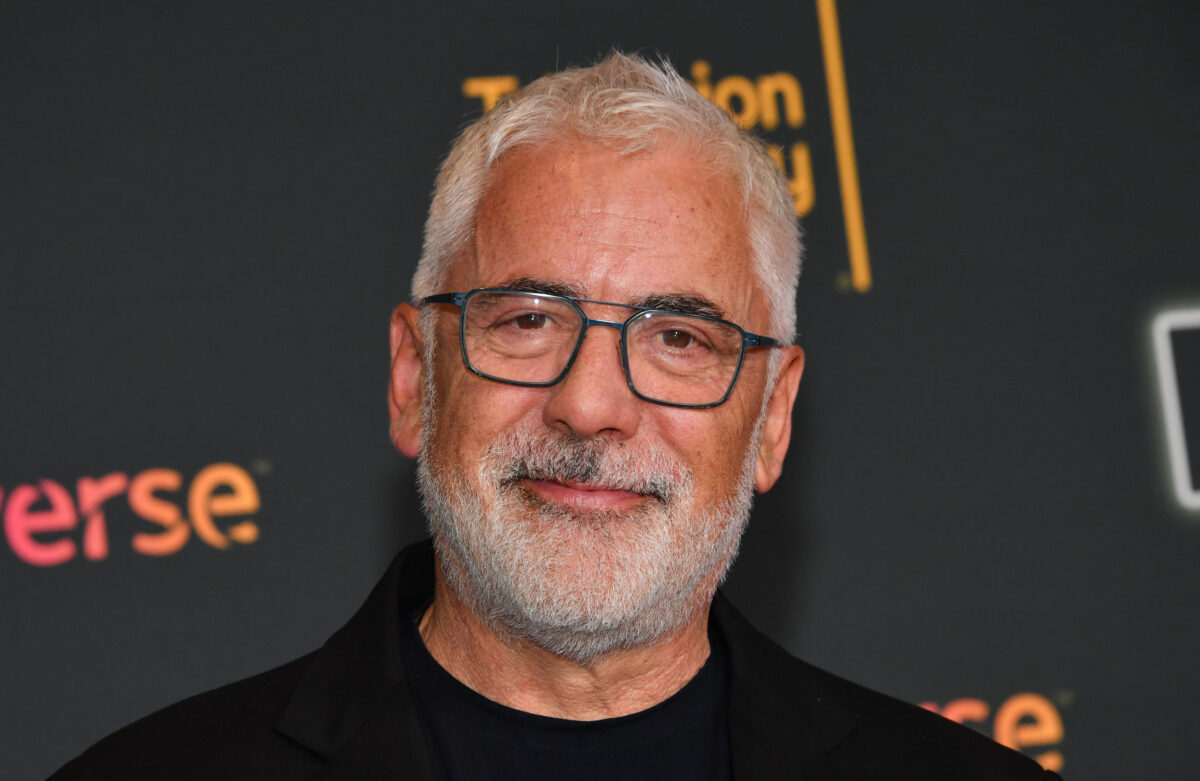
Adam Arkin, actor and director, turns 70
Arthur Rock, one of the earliest Silicon Valley venture capital investors with positions in firms like Intel and Apple, turns 100
Gabriela Shalev, retired as president of Ono Academic College in Israel, she was Israel’s ambassador to the United Nations from 2008 to 2010, turns 85
Neal Slavin, photographer and director of television programs and movies
David Novak, professor emeritus of religion and philosophy at the University of Toronto, he is the author of over a dozen books, turns 85
Bill Clinton, 42nd president of the United States, turns 80
Miriam Baum Benkoe, retired reading teacher for the NYC Department of Education, she co-founded the kosher pantry at Bethesda Hospital in Boynton Beach, Fla.
Mark C. Rifkin, managing partner at Wolf Haldenstein Adler Freeman & Herz
Marc J. Rowan, chairman and CEO of Apollo Global Management, he is the board chairman of the UJA-Federation of New York, turns 64
Julius Genachowski, chairman of the FCC in the Obama administration, he is now a senior advisor at the Carlyle Group, turns 64
Joseph Kahn, executive editor of The New York Times, turns 62
Dan Aloni, managing partner and talent agent at William Morris Endeavor, he is active in the contemporary art world as a collector, turns 62
Omri Sharon, former member of Knesset, he is the son of former Israeli Prime Minister Ariel Sharon, turns 62
Carolynn Wotman, executive administrator of Ventura, Calif., accounting firm, Morgan, Daggett & Wotman
Kyra Sedgwick, actor and producer, known for her role as Deputy Chief Brenda Leigh Johnson on the TNT crime drama “The Closer,” turns 61
Melinda R. Katz, district attorney of Queens, turns 61
Ezra Friedlander, founder and CEO of NYC-based government advocacy firm The Friedlander Group
Eric Louis Zinterhofer, private equity financier and a founding partner of Searchlight Capital Partners, he is on the board of Estee Lauder, turns 55
Yehuda Neuberger, chair of the Orthodox Union and past chair of The Associated: Jewish Federation of Baltimore
Molly Jong-Fast, writer and MS NOW commentator, turns 48
Brett Icahn, businessman and investor, he and a partner successfully managed a hedge fund for his father, Carl Icahn, turns 47
Ross Hinkle, managing partner of Handmade Capital
Nufar Edelman, laser radial sailor, she represented Israel at the 2008 and 2012 Olympics, turns 44
Aaron Yechiel Hirtz, founder and principal at Aron’s Kissena Farms and Cedar Market
Isaac Gortenburg, president at Kansas City-based Eighteen Capital Group
Steven Markowitz, rapper, singer and songwriter, known by his stage name Hoodie Allen, turns 38
Cassandra Federbusz, digital marketing and PR consultant, she is a team manager at HubSpot
Graham’s stumble comes one week before the special election runoff
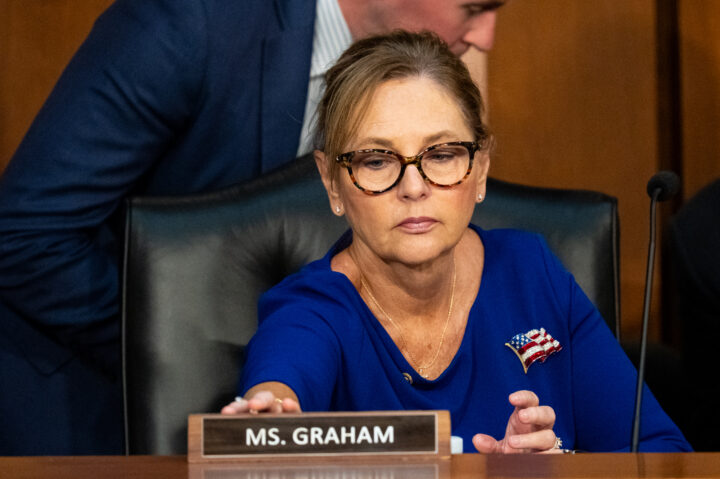
Sen. Darline Graham, R-S.C., arrives for the Senate Judiciary Committee vote to move the nomination of Acting Attorney General Todd Blanche out of committee in the Hart Senate Office Building on Tuesday, Aug 4, 2026. (Bill Clark/CQ-Roll Call, Inc via Getty Images)
Sen. Darline Graham (R-SC) said at the final GOP primary debate to replace the late Sen. Lindsey Graham (R-SC), one of Congress’ most engaged members on foreign policy, that she is “not that informed on national security.”
Graham made the comments after being asked at Tuesday’s debate, which was hosted by Newsmax and South Carolina ETV and Public Radio, if she believed Taiwan and the South China Sea were national security issues for the United States.
“I’m just going to be honest here. I’m not that informed on national security, but I do support the military,” Graham said. “My brother was in the Air Force for 33 years, so I will do everything I can to support the military. My dad was in the army. I’m not a polished politician up here. National security is not my thing, not my area of expertise. But I do support the military.”
Rep. Ralph Norman (R-SC), Graham’s opponent in next week’s special election runoff, responded by describing Taiwan as “a definite ally” of the U.S. and praising President Donald Trump for “enabling Taiwan to defend themselves against China.” Norman has served in Congress for nearly a decade, and has touted his legislative experience as a strength on the campaign trail.
Shortly after the debate concluded, former South Carolina Gov. Nikki Haley, who has endorsed Norman in the runoff, criticized Graham for her answer.
“Lindsey Graham was well informed on the United States’ national security. Darline Graham admits she’s not,” Haley wrote on X. “This is not something you inherit. And it’s critical in the U.S. Senate.”
At the start of the debate, Graham said while responding to a question about the cost of living that she trusted Trump “to get the Strait of Hormuz open.”
Asked if she supports continuing the U.S. war in Iran, Graham said, “I fully trust President Trump when it comes to the war in Iran. Forty-seven years this has been going on. Iran is the weakest they have been in 47 years. The one thing that concerns me is we cannot let them get a nuclear weapon. So I trust President Trump and everything he’s doing, I think he’s got this, and I trust him on it.”
Graham later cautioned, however, that she was not committed to supporting U.S. boots on the ground in Iran, a move that Trump has not indicated he’s considering.
“I think we should stand with Israel. They’re one of our strongest allies, so I definitely support standing with Israel,” Graham said. “I am a little concerned about troops on the ground. I don’t know that that’s necessary just yet. I would like to make sure that we try all economic solutions before we put troops on the ground.”
Norman, meanwhile, said that while he has been supportive of the president taking out the Iranian regime and its nuclear program, he believes the administration needs to justify why it is continuing the war and said that the U.S. should end its operations against Tehran.
“They were a severe threat, and he had the courage to do that. Now, I think that we’ve got to end it. I think that he’s going to have to tell the American people what it’s going to take,” Norman said. “If the Straits of Hormuz are still dominated by a country that’s supposed to be decimated, we’ve got to have some understanding on that because I’m not for endless wars. You win them and you get out.”
The South Carolina senator knocked Norman for voting against the National Defense Authorization Act on several occasions, which Norman responded to by pointing to his concerns about the size of the federal defense budget and the national debt.
While discussing U.S. support for Israel, of which Lindsey Graham was one of the most prominent champions in Congress, Norman described himself as a proponent of a strong U.S.-Israel relationship and vowed to continue being an ally to the Jewish state. He also praised Israel for what he characterized as its willingness to put troops on the ground in Iran to complete its military objectives.
“Israel is the only democracy in the Middle East. If you go there, that’s God’s country, and we have continued to maintain good relations,” Norman said. “The president, I think, has paid many a trip over there. You go over there, it changes you. It just does. … From what we’re hearing in Congress, they are ready, and willing and able to take out Iran if it means putting troops on the ground. They’re trained soldiers and they are true patriots. Yes, they are a friend, and we have to remain a friend.”
The South Carolina runoff between Graham and Norman is being held next Tuesday, August 25. Trump is headlining a campaign rally for Graham on Friday in Myrtle Beach.
Foundation for Defense of Democracies senior fellow Edmund Fitton-Brown: ‘For Turkey, it is an assertion of its centrality to security arrangements in the region’

Getty Images
Turkish President Recep Tayyip Erdogan delivers a speech during a joint press conference, July 19, 2022, in Tehran, Iran.
A coalition of Sunni regional powers signed a historic joint defense pact on Friday, but national security experts expressed deep unease over the arrangement, arguing that it reflects U.S. shortcomings in the Middle East while raising serious questions about its practical military feasibility.
The agreement, dubbed the Mecca Joint Defense Agreement, was signed in the Saudi holy city of Mecca by Saudi Crown Prince Mohammed bin Salman, Turkish President Recep Tayyip Erdogan, and Pakistani Prime Minister Shehbaz Sharif.
Under the pact, Saudi Arabia, Turkey, and Pakistan agreed to treat an armed attack on one signatory as an attack on all. The move solidifies security and defense cooperation between the three powers amid a period of heightened regional turmoil and uncertainty stemming from the war in Iran.
As a result of the ongoing conflict with Iran, Saudi Arabia has seen its critical infrastructure and oil facilities targeted by strikes, which analysts say has prompted Riyadh to diversify its strategic and security partnerships. The trilateral agreement follows a bilateral mutual defense pact signed between Pakistan and Saudi Arabia last September.
Edmund Fitton-Brown, a former British diplomat and senior fellow at the Foundation for Defense of Democracies, explained that the military alliance formed in response to an “uncertain security situation” across the wider region.
“For Turkey, it is an assertion of its centrality to security arrangements in the region. For Saudi Arabia and Pakistan, it is a reflection of weakness and uncertainty, as both feel threatened (by Iran and India respectively),” Fitton-Brown said. “Although the agreement is not primarily directed against Israel or the United States, both should be concerned about it.”
Fitton-Brown emphasized that the pact poses strategic complications for both Jerusalem and Washington, while raising alarms for regional actors.
“For Israel, it is further confirmation of Turkish ambitions, which are explicitly directed against Israeli interests,” Fitton-Brown said. “For the U.S., it is questioning how reliable or permanent it is viewed as a player in the region. Stirring up a hornet’s nest in the Gulf and then appearing unsure about an end game, or even clear red lines, has left American allies uncertain about the future and willing to hedge their bets.”
Jonathan Ruhe, a fellow at the Jewish Institute for National Security of America, similarly labeled the agreement as problematic, noting that it reflects U.S. diplomatic shortcomings rather than an effective counterweight to Tehran.
“This alignment is problematic to the extent it is about Washington and its regional relationships, not Tehran,” Ruhe said. “These three countries have almost zero shared ability or interest to meaningfully contain Iran. The Trump administration certainly should have done better coalition-building before the Iran war.”
Ruhe added that for Turkey, the pact serves to “support Ankara’s longstanding pretensions to be a major player and arms exporter in the Middle East and beyond, independent of the United States and NATO.”
Fitton-Brown also highlighted how regional shifts in Syria intersect with the new alliance.
“There is also a Syrian dimension: President Sharaa now leads a Sunni Islamist government in Damascus, where Turkey is the most influential foreign power and Saudi Arabia is a key investor and stabilizing influence,” Fitton-Brown said. “Israel will worry that this consolidates Turkish influence in Syria and will ultimately turn Sharaa’s Syria against Israel.”
Fitton-Brown noted that the emerging alliance signals a broader realignment of regional power dynamics following recent geopolitical shifts.
“On one hand, the new agreement looks like a Sunni axis that is replacing the Iran-led Axis of Resistance, following the weakening of the Islamic Republic, Lebanese Hezbollah, and the collapse of the Assad regime in Syria,” he explained. “On the other hand, Iran remains threatening to the Gulf States, especially, and the Saudis are probably comforted by the appearance of Sunni solidarity.”
Simon Henderson, a senior fellow at The Washington Institute for Near East Policy, similarly assessed that the pact acts as a strategic signal to Tehran.
“The alliance is reminding Iran that it isn’t the only big power in the region,” Henderson said, adding that the dynamic is less about sectarian identity than geopolitical posturing. “[The alliance is] not particularly a Sunni-Shia thing. Pakistan is mainly Sunni, but any tensions are mainly Iran and Saudi playing games.”
Despite the high-profile announcement, Fitton-Brown expressed skepticism over the operational capabilities of the agreement, noting that paper commitments rarely translate to direct military intervention across disparate conflicts.
“In practice, it is inconceivable that Turkey or Saudi Arabia would get involved in a conflict with India if the latter came to blows with Pakistan again, as is more or less inevitable on a regular basis,” Fitton-Brown said. “The extension of Pakistan’s nuclear deterrent to cover Saudi against Iran or Turkey in any circumstances looks equally implausible. But defense industrial collaboration may flesh out the substance of the alliance over time.”
Analysts warn that the emerging bloc could complicate future diplomatic breakthroughs in the region, particularly regarding U.S. efforts to broker Saudi-Israeli normalization. Ruhe noted that as a result of the new axis, Riyadh is significantly raising its leverage against Washington.
“With this new axis, Riyadh also is telling Washington that the price for normalization will be incredibly high, greater even than the incredibly one-sided deal for U.S.-aided nuclear enrichment on Saudi soil,” Ruhe said. “As part of the ultimate goal of normalization, the Trump administration should pursue a more comprehensive and balanced partnership with Saudi Arabia: Riyadh gets a truly safeguarded nuclear program and U.S. defense guarantees, but only in exchange for the kingdom formally aligning with Washington and concretely doing more for collective defense.”
To counter the fallout from the alliance, Ruhe argued that the U.S. must recalibrate its regional policy and tighten its focus on existing partnerships.
“The United States should focus more immediately on deepening, not broadening, the Abraham Accords, by redoubling security cooperation with Israel and the UAE,” Ruhe said. “Trump also needs to stop fawning over Erdogan and feeding his ambitions to reap all the benefits of being a U.S. partner without assuming any corresponding responsibilities.”
The INSS survey found that only 14% of Israelis now believe the country’s security interests are a top concern for the U.S. president — down 12 points since earlier this month

AHMAD GHARABLI / AFP via Getty Images
A photograph shows a banner depicting US President Donald Trump with the slogan "The Deliverer" in Jerusalem on April 20, 2026. Iran is not currently planning to attend talks with the United States, state media said, after the US president ordered US negotiators to travel to Pakistan on April 20, just days before a ceasefire in the Middle East expires.
The share of Israelis who believe President Donald Trump is “highly committed” to protecting Israel’s security interests has dropped to a new low, according to a new survey from Tel Aviv University’s Institute for National Security Studies.
The organization’s July 2026 National Security Survey found that only 14% of Israelis believe the country’s security interests are a top concern for Trump, representing a significant drop from the 35% recorded in March. This continues a downward trend observed as the conflict with Iran drags on, following an Israel Democracy Institute poll released earlier this month that found just 26% of Jewish Israelis believed Israel’s security was a key consideration for Trump – another record low at the time.
The results reflected a broader decline in Israeli faith in Trump, with 60% of respondents indicating that they believe Trump only supports Israel when it serves his own interests, while 23% view him as unpredictable and unreliable on security matters.
The survey also highlighted deep divisions over whether Israel should launch another offensive military campaign against Iran, with 42% of respondents favoring such a move and 46% opposing it.
Public optimism that another military offensive would achieve key strategic objectives remains low.
A majority of respondents, 64%, believed another campaign against Iran would only partially dismantle its nuclear program or fail to do so at all, compared to a combined 29% who believed it would fully or mostly dismantle the program.
Similarly, 65% of respondents said another offensive would yield only partial or negligible results against Iran’s ballistic missile program, while 72% stated that renewed military action would be unlikely to trigger the full collapse of the Iranian regime.
The results represent a major shift from the start of the Iran war, when a large majority of respondents indicated a strong belief that military action would fulfill those objectives. At the onset, 63% of Israelis said they believed Iran’s nuclear program would be significantly damaged or fully dismantled, and 73% held the belief that Iran’s missile program would be severely damaged or taken apart.
‘Without oil, they're nothing,’ the former national security adviser said at the Aspen Security Forum, adding that by cutting it off, the U.S. could ‘turn them into a ‘stan, turn them into a nonentity’
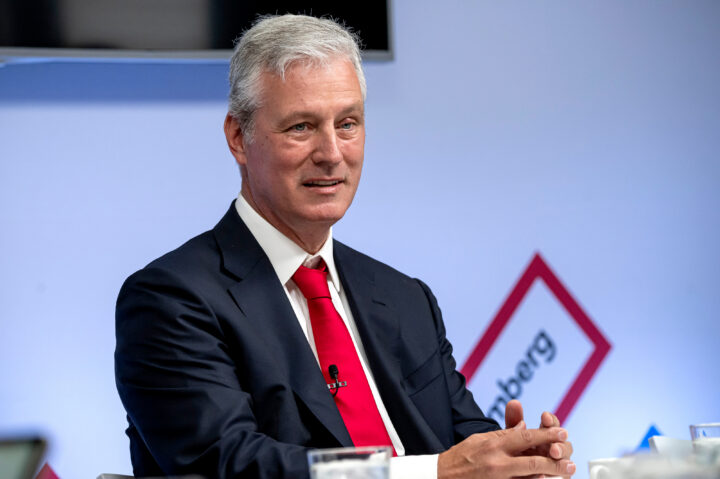
(David Paul Morris/Bloomberg via Getty Images)
Robert O'Brien, former national security adviser, at an interview during the Republican National Convention (RNC) near the Fiserv Forum in Milwaukee, Wisconsin, US, on Wednesday, July 17, 2024.
ASPEN, Colo. — Robert O’Brien, who served as national security advisor during President Donald Trump’s first term, said on Wednesday that the U.S. should target Iran’s oil infrastructure with the goal of choking off its economy — and predicted that the president is moving in that direction.
The former national security advisor said on a panel at the Aspen Security Forum that Trump had been “very, very generous” with Iran but he believes that Trump’s “patience” with Iran is running thin. The next steps, he predicted, would be for the U.S. to “hit them hard” and “finish the job” by targeting sites connected with Iran’s oil infrastructure, including the facilities at Kharg Island, in order to deprive Iran of its ability to produce and export oil.
“Without oil, they’re nothing. With oil, the regime thinks if they can survive, they can just buy more kit,” O’Brien said. “I think President Trump will finish the job. The Iranians are using the old playbook of extend, pretend and snowball. … They’re dealing with a whole new administration with Donald Trump. They don’t understand it, and I think that they’ll pay a heavy penalty for their lack of understanding.”
The first Trump administration’s strategy of maximum pressure through economic sanctions is “not enough” without strikes on Iran’s oil production, he continued.
O’Brien said that cutting short Iran’s oil exports would be the skeleton key to deafening the regime — cutting off its ability to build missiles, support terrorism or rebuild its nuclear program, and said that the U.S. could “turn them into a ‘stan, turn them into a nonentity” and prevent it from ever rebuilding.
The former national security advisor acknowledged that targeting Iranian oil production would hurt the world economy, but made the case that there are other oil producers that would be able to fill the gap with the right support, including Venezuela, Guyana and Mozambique, along with increased production in the U.S.
Asked after the panel by Jewish Insider about how he views the future of Israel policy among conservatives — and about comments by Vice President JD Vance accusing Israel of running a cover influence campaign to undermine the Iran deal and of having ties to sex offender Jeffrey Epstein — O’Brien insisted that support for Israel among conservatives, including Vance, remains strong.
O’Brien said he hadn’t heard Vance’s comments but called him a “supporter” and “friend of Israel.” He added that Trump is “a very good friend of Israel. President Trump has Jewish grandkids, I mean, so he cares deeply about it. He got the Abraham Accords for us and sent me to Jerusalem many times. And I can tell you, after Oct. 7, he was very concerned about Israel and has remained so ever since. No better friend to Israel than President Trump.”
He argued that recent polling indicates that support for Israel remains strong among Republicans in general, even among young people, and predicted that issues among “some conservatives — or people who claim to be conservatives” will not “hold.”
“Those of us who value the partnership, love our Jewish friends, our Israeli colleagues, just need to be forthright and stand up for Israel,” O’Brien said. “Israel, I’ve always said throughout my career, is a canary in the coal mine. If people are attacking Israel, the next country they’re going to attack is America, and so we need to stand strong with our allies in Israel, stand strong with Jerusalem, and I think it’s going to be a relationship that lasts long into the future.“
Stephen Hadley, who served as national security advisor in the Bush administration, said on the panel that the U.S. “can do better in terms of an outcome” with Iran, urging the administration to “stop chasing after the Iranians for an agreement on the nuclear issue,” adding that the U.S.’ operations have done significant damage to Iran’s nuclear program and can hit Iran again if it attempts to reconstitute the program.
It’s a similar strategy to that outlined by former Secretary of State Condoleezza Rice, also a Bush administration alumnus, a day prior at the Aspen conference.
Hadley said the U.S. should be open to nuclear talks if Iran seeks them out — but with the preconditions of no enrichment and no financial paydays for Iran.
He said that with continued sanctions, facilitation of trade along the Omani side of the Strait of Hormuz, strikes on Iranian capabilities threatening trade in the strait and assistance to countries in the region to diversify their export channels in the longer term, the U.S. could erode Iran’s ability to hold the global economy hostage and reach a stable situation.
“Hopefully, someday an Iranian regime will come forward and decide that their pursuit of nuclear weapons and support for Hezbollah and the like has been a dead end, and they will join the countries in the region to try to build a more prosperous and secure Iran for their people,” Hadley said. “If that happens, great. If it does not happen, the kind of arrangement I think I’ve described will protect our interests, protect the interests of our allies. “
At the same time, he emphasized that regime change through air power alone is likely off the table.
“[Trump] has to be clear that his objectives are consistent with the tools and means he has at his disposal,” Hadley said. “I think that’s a mistake he made in Iran initially when he was talking about regime change.”
Former Undersecretary of Defense Michèle Flournoy, who served under President Barack Obama, praised the U.S.’ Operation Midnight Hammer last June as “very targeted, very specific and very effective” — something few Democrats said at the time.
She contrasted her praise of that operation to the war this year, which she said started with unclear objectives, priorities and strategy, a lack of appreciation of the risks and a failure to appreciate the Iranian regime’s durability.
“I don’t know how this is going to conclude,” Flournoy said. “But the most likely outcome is we’re going to have a new normal. Even if the Strait opens, Iran is still going to have a few drones, a few mines to jerk the chain of the international economy when it’s unhappy.”
She said that, even if one agrees with the objectives of the war, “the way it’s been done has not paid enough attention to managing the risks, having a clear strategy, and ensuring you want to translate the military campaign into political outcomes.”
Dan Schueftan said that the agreement has surpassed Obama’s ‘high bar’ for bad diplomatic deals with Iran — undermining Israel and emboldening its enemies in the process

ATTA KENARE / AFP via Getty Images
Explosions erupt following strikes at Tehran Oil Refinery in Tehran on March 7, 2026.
Israeli national security expert Dan Schueftan said on Monday that President Donald Trump’s memorandum of understanding with Iran “proves nobody in the Western world is willing to fight. If we need to get permission from countries like Iran in order to use international waterways then we are in very deep trouble.”
The one exception, according to Schueftan, is Israel, which he called the “only one power in the Middle East that can contain the radicals … the only real power in this region that is committed to fighting the radicals and will fight the radicals.”
Schueftan, the chairman of the National Security Studies Center at the University of Haifa, made the comments while appearing on British journalist Jonathan Sacerdoti’s YouTube show.
Trump “built up the spirit of Hamas, Hezbollah, the Iranians, the Houthis,” Schueftan asserted. The president’s proposal that the terrorist groups disarm was “ridiculous,” continued Schueftan, who said the agreement with Iran has surpassed former President Barack Obama’s “high bar” for bad diplomatic deals with Iran — undermining Israel and emboldening its enemies in the process.
Schueftan’s comments came shortly after the U.S. and Iran reached a tentative agreement to end the recent fighting and enter into talks. The White House shared in a call with reporters on Wednesday the official text of the memorandum of understanding, to establish a ceasefire with Iran, permanently end Israel’s war against Hezbollah in Lebanon, reopen the Strait of Hormuz while ending the U.S. naval blockade and kickstart a 60-day negotiation period on the future of Iran’s nuclear program and the possibility of lifting U.S. sanctions on Tehran.
On Wednesday morning, Trump said that the U.S. would resume military activity against Iran if he did not like the MOU.
The deal could lead to confrontation between Israel and the U.S., Schueftan said. “If Israel responds in Lebanon, we have a major problem with the president of the United States,” he said.
“I don’t believe this will remain because Israel cannot afford tension with the only friend it has on the international arena … this is the worst that can happen from an Israeli point of view,” he continued. “But it will not stop Israel from doing what is vital for the existence of Israel.”
Schueftan further asserted that Trump betrayed and “abandoned” the Iranian people by failing to deliver on his promise that “help is on the way.”
“Israel will survive it, but they were reduced,” Schueftan said. He noted achievements in destroying Iran’s nuclear capabilities over the past year and policies adopted after Hamas’ Oct. 7, 2023, terrorist attacks.
At the same time, he said, “the challenge now is more serious, therefore Israeli actions will have to be more serious, and I don’t believe Trump will go as far as trying to break Israel.”
From an American perspective, Schueftan continued, such a move would be a strategic error; the U.S., he said, needs to shift its focus away from the Middle East and toward countering China. “Israel should be in a position where it can substitute the United States. When the U.S. leaves the Middle East, you can’t leave the Middle East alone,” said Schueftan.
The strikes reportedly targeted air-defense systems, radars and drone command-and-control units in southern Iran
ATTA KENARE / AFP via Getty Images
Explosions erupt following strikes at Tehran Oil Refinery in Tehran on March 7, 2026.
CENTCOM announced on Wednesday evening that it had begun launching additional “self-defense” strikes against multiple targets in Iran, after initially renewing its attacks on Tuesday. A U.S. official told Axios the latest targets included air-defense systems, radars and drone command-and-control units in southern Iran.
The strikes came hours after President Donald Trump met with his national security team to discuss military options, and as Defense Secretary Pete Hegseth told reporters that CENTCOM would be “busy tonight” with “bombs dropping on key facilities in Iran.”
The military action came as Qatari mediators were reportedly meeting with officials in Tehran in an effort to revive negotiations and close remaining gaps between the U.S. and Iran.
Earlier in the day, Trump raised the possibility of targeting Iranian power plants and bridges, expressing frustration that Tehran is, in his view, stringing the U.S. along in diplomatic discussions. The strikes ultimately focused on military targets, according to a U.S. official.
Given initial reactions from critical Senate Republicans, Pulte would likely struggle to be confirmed for a permanent position
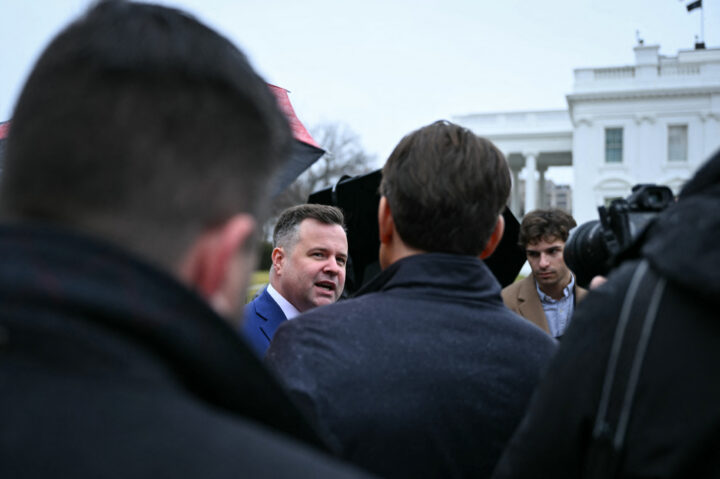
Brendan SMIALOWSKI/AFP via Getty Images
Bill Pulte, director of the Federal Housing Finance Agency, speaks to reporters outside the West Wing of the White House in Washington, DC, on January 9, 2026.
Senate Republicans on Tuesday expressed skepticism about President Donald Trump’s decision to name Bill Pulte, a lawyer and Trump ally who has been working on housing policy issues and has no known intelligence or national security background, as acting director of national intelligence.
Pulte will take over the agency, which coordinates efforts across the intelligence community, after DNI Tulsi Gabbard resigns later this month. Trump had originally announced that Gabbard’s current chief deputy, Aaron Lukas, a career intelligence official, would be assuming the acting role, but pivoted without explanation.
It’s not clear yet whether Trump plans to nominate Pulte, who he said will simultaneously continue in his current roles as director of the Federal Housing Finance Agency and chairman of Fannie Mae and Freddie Mac, as permanent DNI, but given initial reactions from critical Senate Republicans, he would likely struggle to be confirmed. The statute establishing the post also requires that the nominee be an individual with experience in national security.
Under federal law, Pulte could serve in the role in an acting capacity for up to 210 days, before requiring Senate confirmation.
Leading Senate Republicans said they did not think Pulte was qualified for the role.
“I don’t see any evidence of qualifications for that job, but as you know the Senate doesn’t have a role to play in acting [appointments],” Sen. John Cornyn (R-TX) said. Cornyn would be a crucial swing vote on the Senate Intelligence Committee if Pulte is nominated for the permanent role, and was recently defeated in his primary by a Trump-backed challenger.
“He doesn’t seem very qualified,” Sen. Bill Cassidy (R-LA), also recently defeated by a Trump-backed primary challenger, agreed.
Sen. Ted Budd (R-NC), who also sits on the Intelligence Committee, offered a terse response. “Certainly an interesting choice. There’s a lot of talented people that I probably would have considered. Congrats on his nom[ination],” Budd said.
Other Senate Republicans couched their comments, emphasizing their lack of familiarity with Pulte and his record, and saying they were not aware of whether he had any national security experience (per his public record, Pulte does not).
Sen. James Lankford (R-OK), a member of the Intelligence Committee, said that he did not know what experience Pulte has in intelligence, or whether he would be nominated for the role in the long-term. But he emphasized that intelligence experience is critical for the job.
“That role’s pretty important in coordinating people from a lot of different agencies, you’ve got to have some level of trust in the different agencies to be able to help move,” Lankford said. “The ODNI’s role is to be able to see where are the siloes and to be able to help tear those down to make sure we keep our nation secure. If you don’t know those different roles — it’s not a matter of knowing intelligence products, it’s knowing how each agency actually works. That’s the bigger challenge. If you don’t have any familiarity with that, that does make that job tougher.”
He said separately that it’s critical for the job to remain “nonpartisan.”
“I had no idea he had national security experience. I’m going to have to look into his resume,” said Sen. Thom Tillis (R-NC), who is retiring and has broken on numerous occasions with the administration.
Sen. Susan Collins (R-ME) said that she doesn’t know anything about Pulte, including whether he had any intelligence or military background or even a security clearance.
She said she’s not concerned about her lack of familiarity with Pulte “yet, because maybe there’s a lot in his background that is relevant to this important position. As one of the authors of the Intelligence Reform and Terrorism Prevention Act of 2004, which created the position of DNI, I obviously care a great deal about having a qualified individual in that position.”
Other top Senate Republicans were also hardly enthusiastic about Trump’s pick.
Senate Majority Leader John Thune (R-SD) said, when asked if he was worried about Pulte weaponizing the role, “we don’t need a weaponized DNI, we need professionals there,” but said he had “just heard about it.”
“If he’s somebody they want in that position permanently, he’s got, as you all know, a lengthy road ahead of him,” Thune continued.
Asked at a press conference later in the day about the choice, Thune deferred to Intelligence Committee Chairman Tom Cotton (R-AR), who said he has “no observations” on the choice of Pulte.
Trump’s choice of Pulte for the role is likely to fuel greater concerns that he aims to politicize and weaponize the role for his own ends. Pulte, in his current role, became perhaps best-known for pursuing investigations against and making allegations that various political adversaries of Trump were engaged in mortgage fraud.
Gabbard faced backlash for her alleged involvement in manipulating intelligence information to fit the administration’s preferred narrative, and for her involvement in an FBI raid on an elections office in Georgia, linked to Trump’s claims that the 2020 presidential election was fraudulent.
In a scathing statement, Sen. Mark Warner (D-VA), the ranking member of the Senate Intelligence Committee, said that Trump’s appointment of Pulte “makes clear that this president is not looking for an intelligence leader who will follow the facts or speak truth to power, but rather someone who will be willing to shape intelligence around the president’s wishes, regardless of the cost to the American people.”
He said that Pulte is not only unqualified for the job, but “appears to have been selected precisely because the White House believes he will provide the narrative it wants, not the intelligence we need,” ultimately raising the risk of a terrorist attack.
Pulte’s appointment could make the passage of critical legislation renewing federal foreign surveillance authorities more difficult. The legislation was already plagued by opposition on both sides.
The report from the Institute of National Security Studies argues that Israel’s alliance with the American Jewish community is a national security priority

(Noam Galai/Getty Images)
The Maccabeats perform during 'March For Israel' at the National Mall on November 14, 2023 in Washington, DC.
A new study from the Tel Aviv University-affiliated Institute of National Security Studies warns that American Jews’ ties with Israel have weakened in recent years, and Israeli leaders do not seem to care enough about how these shifting attitudes might affect Israel’s national security.
If Israel ignores the growing distance with the American Jewish community, the country could face long-term consequences, authors Ted Sasson and Avishay Ben Sasson-Gordis argue.
“An American Jewish community that is less supportive of Israel would leave Israel more isolated globally, less capable of extending soft power, and less confident in its role as the nation-state of the Jewish people,” Sasson, a Middlebury College professor and INSS scholar, and Ben Sasson-Gordis, director of the Israel-United States Research Field at INSS, write.
The report is one of countless documents and op-eds published by Jewish communal leaders and Israeli officials after the Oct. 7, 2023, attacks that call on Israel’s leaders to improve the country’s public diplomacy efforts.
Yet while many reports authored by pro-Israel analysts argue that Israel merely needs to change its messaging, the authors of the INSS report insist that Israeli leaders need to act differently, too, in order to reckon with the ways that Israel’s actions in Gaza have alienated even some American Jewish allies.
“Israel must undertake a comprehensive effort to rehabilitate its reputation in the United States,” the report states. “This effort should begin by reconsidering some of the more radical policies of the current government that have alienated many U.S. voters and American Jews.”
What the report offers is not a hasbara, or messaging, strategy. The document’s authors assert that it is a “national security strategy,” and that Israel’s leaders ignore their challenges with the American Jewish community at their own peril.
“Israel’s alliance with the American Jewish community is a national security asset and is core to its purpose as a democratic nation-state of the Jewish people,” the report states.
Among the policies Israel should reconsider, according to Sasson and Ben Sasson-Gordis: prioritizing efforts to “expand the Abraham Accords and open a renewed dialogue with the Palestinians,” and avoiding actions “that seriously harm [Israel’s] democratic character.” Both of those goals are tall orders for a government that has pursued controversial judicial reform efforts in the past and insisted a two-state solution with the Palestinians is not feasible. The country should try to “avoid causing unnecessary harm,” the authors add.
The report points out that even many highly engaged American Jews grew frustrated with Israel’s handling of the war.
“Israel’s policies during the October 7 war — as well as how Israel communicated about those policies — alienated large segments of the American public and raised deep concerns among many American Jews,” the report notes. “Israel’s decisions on how to proceed with the war and how to communicate about it were viewed by many of the Jewish leaders with whom we spoke as a driver of mounting anti-Israel sentiment and antisemitism in the United States.”
The report’s authors call on the Israeli government to draft an antisemitism national strategy, which “should focus mostly outward, on ways of holding other nations and non-governmental organizations accountable for combating antisemitism,” but that should also look inward, and “assess the ways Israel’s policies may have contributed to the capacity of antisemitic actors on both the right and the left to win new audiences and expand their influence.”
The report refers to the rise of an anti-Zionist segment of the American Jewish community, though it does not suggest that Israeli leaders should engage with them. Instead, it argues that Israel’s leaders should engage with the full spectrum of Israel advocacy organizations from J Street on the left to the Zionist Organization of America on the right, citing the fact that larger, centrist groups like AIPAC “are losing influence in the corridors of power” in the U.S. (Israeli Ambassador to the U.S. Yechiel Leiter on Monday called J Street a “cancer within the Jewish community” at a conference in Washington.)
Israel’s missteps in dealing with the American Jewish community come at a moment when the standing of the U.S. Jewish community has “diminished,” the report argues. Rising antisemitism and a rapidly growing anti-Israel political constituency should also concern Israeli leaders, the INSS authors state. American Jews should be a bulwark, but instead, their own ties with Israel are fraying, particularly on the left.
“The American Jewish community is deeply challenged not only by its own institutional weakening and division but also by an external environment that has grown exceedingly hostile,” the report states. “Further erosion of U.S. Jewish support for Israel could help pave the way for the Democratic Party to turn fully against the alliance.”
Policy proposals for remedying this growing rift include reinvesting in American travel programs to Israel that have been hampered by the COVID-19 pandemic and the war; making Israel a center of higher education that is more appealing to American Jews; better educating Israeli Jews about the diaspora; seeking the input of American Jews within the Israeli government; and devoting more funding to addressing the problem.
“Israel relies on a strong and flourishing American Jewish community, one that continues to support Israel’s core national interests,” write Sasson and Ben Sasson-Gordis. “It is in Israel’s best interest to take the actions that are within its power to reverse these damaging trends.”
Former Israeli Ambassador Akiva Tor: ‘We’ve seen clumsiness by Israel in the past, but I don’t think we’ve seen this level of dysfunction’
Christoph Schmidt/picture alliance via Getty Images
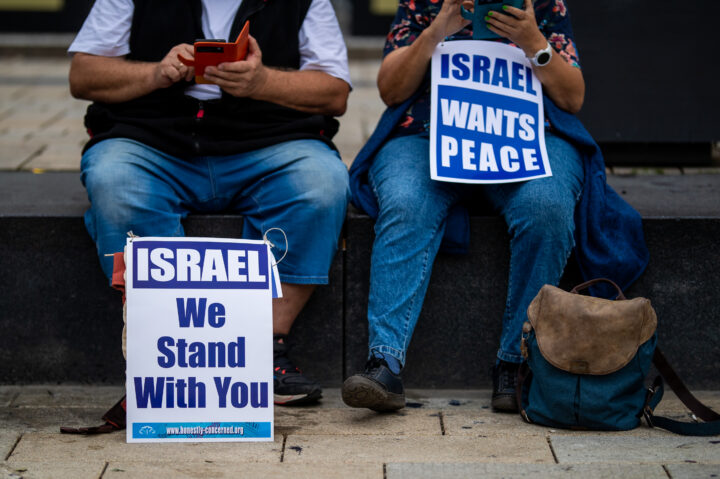
Posters of participants at a solidarity rally for Israel.
The perennial complaint from supporters of Israel that the Jewish state has “bad PR” has sparked dozens of organizations and books over the decades and prompted the Israeli government to invest hundreds of millions in public diplomacy, including a $730 million allocation in its 2026 budget.
Yet the problem has only worsened after the Oct. 7, 2023, Hamas attacks on Israel, during the subsequent Gaza war and through the war with Iran this year. A new paper from the Institute for National Security Studies at Tel Aviv University seeks to analyze the challenges and find solutions for Israel’s government to better handle them.
In an interview with Jewish Insider, the paper’s authors — Akiva Tor, a former Israeli ambassador to South Korea and head of the Israeli Foreign Ministry’s department for world Jewry and world religions, and Ofir Dayan, author of Intifada Globalized, about young Westerners’ turn away from Israel — characterized Israel’s image problem as a danger to its security.
“Everyone knows that there is a huge hasbara problem for Israel,” Tor said, using a Hebrew word that translates to “explaining” and is used to describe Israel’s efforts to portray the country in a positive light. “We tried to see what was unique in this moment … through a politically neutral perspective.”
Dayan noted that “it’s become a real issue of national security when Israel faces sanctions and countries are not willing to sell weapons. It affects Israel’s ability to execute plans and achieve its goals, and has a direct influence on Israel’s capability to fight.”
She added, “Since Oct. 7, we see a shift happening not only among youth and young adults, but it’s reaching positions of power, like [New York City Mayor Zohran] Mamdani and elsewhere.”
Dayan said that there is nothing new about the rhetoric or harassment of Israeli and pro-Israel students abroad — she encountered it personally as an undergraduate and graduate student at Columbia University in 2017-2022 — but “what is unique about this moment is that people who supported terrorist organizations and the destruction of the State of Israel, sanctions and boycotts are no longer hiding behind the facade of human rights. Individuals, organizations and countries are taking steps they have not taken before to significantly harm Israel’s national security.”
One example she gave was European Union member states taking steps toward canceling the EU-Israel Association Agreement, which would downgrade relations between Israel and its largest trading partner. In addition, she said academic boycotts of Israel, both overt and covert, are much broader than in the past.
Israel is also in the unprecedented situation in which its prime minister is under criminal indictment at the Hague and faces genocide charges at the International Court of Justice.
“I was consul-general in San Francisco during Operation Cast Lead [in 2008-2009],” Tor said, “and people talked about genocide when 3,000 [Palestinians] were killed … but now it’s at the ICJ and [former Deputy Secretary of State] Wendy Sherman is using the term. Things that existed in the past have now reached a level we haven’t seen before.”
The intended audience for Dayan and Tor’s 40-page paper, currently available only in Hebrew, is the Israeli government.
“We’ve seen clumsiness by Israel in the past, but I don’t think we’ve seen this level of dysfunction,” Tor said. “The clearest expression of this is … probably that at Israel’s worst moment of crisis, the job [of head of national public diplomacy directorate] was not filled for 2.5 years.”
At the outset of the Gaza war, Moshik Aviv held the position, but resigned in early 2024. This week, Israel’s Cabinet authorized the appointment of former Deputy Foreign Minister and Ambassador to the U.K. Tzipi Hotovely to fill the role.
“The system is not being run,” Tor said. “We spoke to journalists and newspaper editors about the way the media was simply not handled for the most part. The greatest example is Charlie Kirk’s letter to Netanyahu in May last year, where he said the only people defending Israel on [American] TV are you and me. Where are the Israeli spokespeople?”
Tor said that “internal political constraints” are behind much of the dysfunction, which has led to “self-censorship.”
For example, Israel allowed hundreds of aid trucks into Gaza each day for most of the war, but had Cabinet ministers and other political figures claim Israel was not in order to appeal to their far-right political bases.
“That’s a very dangerous situation for Israel. It’s very difficult to address Israel’s image problems seriously if the government is not interested in doing so,” Tor said. “I’m not aware of a situation [in the past] in which Israel’s government did not want to explain itself.”
Tor lamented that “Israel is judged by the statements of its most extreme ministers or members of Knesset who spoke. That is part of the politicization; the government is mute about its intentions, probably because of internal tensions within the government, and then the most extreme say we will destroy Gaza — it caused and is continuing to cause tremendous damage to Israel.”
Even if the government had done a better job, the fact that the war in Gaza lasted for two years posed immense challenges.
“Israel cannot fight for more than two years with the kinds of images it creates and avoid deep international isolation,” Tor posited.
The second half of Tor and Dayan’s paper provides suggestions for improvement.
One is to empower one governmental body to be in charge of public diplomacy across the entire government, including drafting messages, recruiting figures to spread those messages and measuring impact.
“We are realistic,” Dayan said. “No one is going to close government offices that are doing the exact same work, but we need one body that will say ‘this is the message Israel is trying to convey’ and make sure all of the relevant ministries are in line with it.”
Dayan served in the IDF Spokesperson’s Unit during her mandatory military service and again as a reservist in recent years, and said that “the IDF has no one telling them what to say. That is not the right process. [The government needs to] dictate one message so that all agencies and ministries will speak in one voice.”
There are four different government offices speaking for Israel on social media, and they do not work together, both Tor and Dayan pointed out.
“They’re all producing content that is very unlikely to become viral or speak to anyone under age 40,” Dayan said.
Tor said that, for Hotovely to be effective in her new role, she will have to have a voice at the Cabinet table.
“If there is going to be a plan to flatten Bint Jbeil [in Lebanon], she will have to say what that means for Israel’s image,” he said.
One step they suggested that Israel take immediately is a public diplomacy campaign to defend Israel against charges of genocide, ahead of the decision from the ICJ.
“Israel’s defense effort must include a strong public relations campaign using all available resources to prove Israel’s innocence before the ICJ and the court of world opinion,” they wrote. “The genocide charge is weak and specious, but Israel may lose its case if the hostile political agenda attempting to influence the court is not adequately countered.”
The report also suggests that Israel facilitate cooperation between Diaspora Jewry and Christian Zionists, something that Tor said was always a challenge when he led the Israeli Foreign Ministry department for world Jewry and world religions.
“Evangelicals are Israel’s friends, and liberal Jews are Israel’s friends, but they are very polarized from each other in American politics,” he pointed out. “This crisis moment may enable an opportunity for a new kind of cooperation, because both Jewish communities who love Israel and the pro-Israel Christians are under attack from the left and right.”
“We should come together to think about how to defend the basic legitimacy of Zionism,” he added.
Among their suggestions for those populations are to ensure 70,000 young Jews visit Israel on Birthright programs annually, and 100,000 young Christians do the same on a similar program each year. In addition, they call to encourage liberal rabbinical students and heads of liberal North American Jewish congregations to conduct study visits to Israel.
The INSS researchers also say that higher education is one of the most important spheres in which Israel can operate.
“Many Western university presidents would like to come back and work with Israeli institutions,” Dayan said. “They understand the academic excellence Israeli universities bring with them. But as of now, there is no concrete plan to rebuild those relations.”
The Association of University Heads – Israel wrote a plan that it submitted to the government, which has not adopted it, she noted.
The paper suggested the government start a $100 million fund to “jump-start Israeli research.” The report also suggests flying presidents of 100 top-rated universities and academic institutions with many Jewish students to Israel over the next 18 months, so they can return and tell their boards why they should work with Israel.
Another element of their plan is a reimagining of Israeli outreach in Arabic and Persian.
Asked if they would suggest that laws be passed requiring the government to not leave positions empty in this field, or to allocate a certain amount of funds, Dayan said that “Israeli governments find creative ways to bypass laws when they need it. We need more public awareness and for the Israeli public to demand these roles be filled and that this issue of national security be addressed.”
“We don’t vote according to who promises to better Israel’s international standing, so I think decision-makers get this cue that we don’t care,” Dayan added. “But post-Oct. 7, [Israelis] care more and more. When Israeli discharged soldiers can’t travel the world because they risk getting arrested, this is an issue more and more people in Israel are going to care about. … We need to force politicians to address it as well.”
In this polarized political landscape, support for Israel and Ukraine are now becoming partisan issues, with GOP elected officials and voters overwhelmingly supportive of Israel, while Democrats are standing by Ukraine
Matt Rourke/(AP
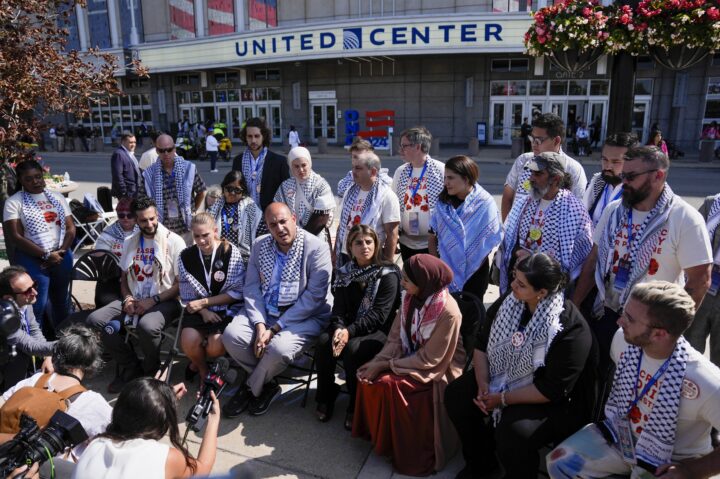
Uncommitted delegates hold a press conference outside the United Center before the Democratic National Convention Thursday, Aug. 22, 2024, in Chicago.
The rapid turn within the Democratic Party against Israel — especially from several of its prospective presidential candidates — is awfully reminiscent of right-wing Republicans’ growing agitation against Ukraine several years ago when the Biden administration provided support to Kyiv as it defended itself from Russian aggression.
Both situations involved an activist faction of the party out of the White House speaking out against a longtime ally, fueled by conspiracy theories and memes floating online. It was propelled by a growing isolationist vibe within both parties that the country should focus on domestic concerns instead of dealing with national security challenges abroad. And it led many politically ambitious elected officials who knew better to spout some of the most poisonous slander against close partners who are (literally) under fire from enemies.
In our polarized political landscape, support for Israel and Ukraine are now becoming partisan issues — Republican elected officials and voters are overwhelmingly supportive of Israel, while Democrats are standing by Ukraine.
As The Atlantic’s David Frum put it: “The two most militarily capable US allies are Ukraine and Israel. Weird to have a political system where one of the two parties despises the first, and the other is deciding it hates and resents the second. America needs and benefits from both those friendships!”
There were plenty of senior Republican figures who withstood political pressure to vote for military funding for Ukraine despite the tough internal politics, and now Democrats are facing that same type of pressure to abandon the Jewish state for short-term political gain.
Given that California Gov. Gavin Newsom — one of the leading Democratic presidential candidates — is now saying the U.S. should reconsider its military support for Israel, and that it’s reasonable to consider Israel as an apartheid state, it’s clear that the party is facing a moment of choosing.
Newsom has generally been a supporter of the U.S.-Israel relationship, and governs a state with a sizable Jewish constituency. But as Israel’s support within the Democratic Party drops, many elected officials are willing to jettison their long-held views on foreign policy for short-term political expedience. Newsom’s anti-Israel turn was so extreme and so sudden that he received praise from antisemitic podcaster Tucker Carlson on his most recent show.
If the consensus in the aftermath of the 2024 election was that the party needed to moderate and reject the left-wing activists that cost Kamala Harris the presidential election, the vibes have shifted dramatically since then. Moderate candidates like Gov. Josh Shapiro, Gov. Andy Beshear and former Chicago Mayor Rahm Emanuel emerged as trendy presidential candidates eager to speak out against the excesses of the far left.
Just look at all the developments since the resistance wing of the party has reasserted itself, capped by the election of an anti-Israel mayor in New York City. Graham Platner, an anti-Israel Maine Senate candidate who had a Nazi tattoo (that he later covered up when it was revealed) and has associated with antisemitic figures, is the unlikely star of the party’s leftward pivot. Sen. Ruben Gallego (D-AZ) entered the Senate as a pro-Israel moderate, and he’s now testing out tropes accusing Israel of leading the U.S. into war with Iran.
Party leaders are treating AIPAC, which advocates for a close U.S.-Israel relationship, as a slur in primaries across the country.
This is happening amid the rise in explicit antisemitism from the online far right, from Carlson’s routine blood libels against Jews — including an ugly slur against Chabad on his most recent show — to racist and antisemitic group chats percolating among young conservatives from New York to Florida.
A number of leading Republican elected officials, like Sens. Ted Cruz (R-TX) and John Cornyn (R-TX), have spoken out forcefully against rising antisemitism on the right, but far too often the response to some of the most egregious hate has been silence — even from typical allies.
The rise of anti-Jewish hate and conspiratorial anti-Israel nuttiness isn’t trivial. As we note in these pages, there has been a 95% increase in violent online posts targeting the Jewish community since the U.S. war against Iran has begun. Chabad, which Carlson is now going after, just faced a horrifying terror attack on Hanukkah that killed 15 in Australia — and recently experienced a car ramming at its Brooklyn headquarters closer to home.
Playing footsie with radical actors for short-term political gain or clicks — even if it feels advantageous in the moment — could carry all-too-serious consequences.
While the agreement’s details are vague, experts said Google’s backing brings a perception of legitimacy to the Qatar-backed media network
Getty Images
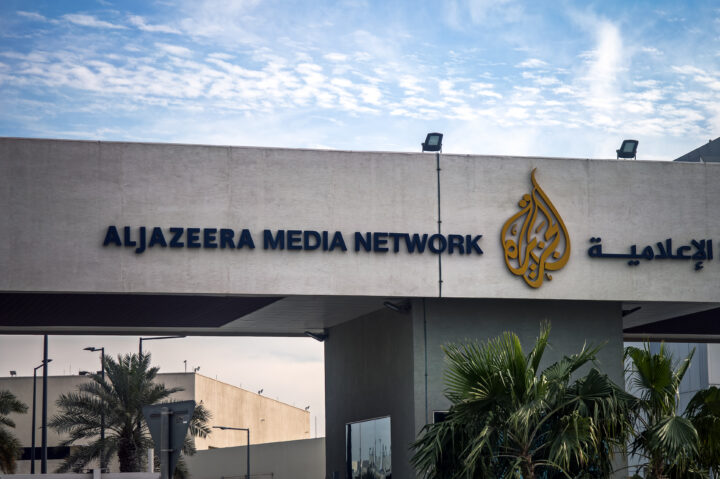
The headquarters of the Al Jazeera TV channel in Doha, Qatar. February 1, 2025
A recently announced AI partnership between Google and Al Jazeera, the Qatar-backed media network, is raising concerns among some national security experts who say the arrangement helps to legitimize a state-controlled news organization long criticized for its sympathetic coverage of Hamas and hostility to Israel.
The agreement, announced in December, allows Al Jazeera to use Google Cloud as its main technology provider powering the network’s newly launched AI initiative, known internally as “The Core,” according to a press release.
Though vaguely characterized, the collaboration will help Al Jazeera produce editorial content that draws on Google’s AI platforms including Gemini, a major component driving a key program called “AJ-LLM,” which the network describes as its “editorial brain.” The effort, which uses a large language model built on Al Jazeera’s archives, is among several so-called “pillars” of the media company’s AI project seeking to embed the technology in its workflow and output.
The deal represents a “major expansion” of Google’s deepening partnership with Al Jazeera that extends back to 2017, the press release says, as other leading U.S. tech companies — such as Microsoft and Cisco — have also forged closer ties to the media network.
But some experts are warning that Google’s new partnership in particular will help lend a sheen of institutional credibility to a channel that has faced accusations of spreading misinformation in service of promoting Qatar’s preferred narrative on a range of sensitive topics including the Israeli-Palestinian conflict.
Toby Dershowitz, a senior advisor at the Foundation for Defense of Democracies, an organization highly critical of Qatar, said that Al Jazeera “positions itself as an independent media outlet” even as it is “actually funded by and editorially governed by an authoritarian country,” noting the Department of Justice has required AJ+, its social media offshoot, to register as a foreign agent. “So far,” she said, “it has not obeyed the law.”
“Well-regarded Western big tech companies have a responsibility to ensure they are not colluding in Al Jazeera’s information capture, whether through the use of algorithms, AI or other methods,” she added in an interview with Jewish Insider on Wednesday. “Google’s expanding partnership with Al Jazeera is therefore deeply concerning.”
Dershowitz, who recently published an analysis investigating the Google partnership, suggested that “big tech companies like Google are being used to help amplify often compromised information and transform it into legitimate sources, allowing it to flow throughout the news ecosystem,” all “without proper labels.”
“Because it’s a black box, consumers don’t fully understand what is happening,” she explained.
Other critics have aired similar reservations about the agreement with Google, especially as Al Jazeera has emerged as a top source on such widely used AI assistants as Gemini for news summaries regarding Israel and Gaza, according to a recent analysis.
While it is unclear if the partnership will end up influencing Gemini’s broader public output, some observers say that Al Jazeera’s plan to train the AI tool with its own archives is a red flag.
“Those archives are not neutral,” Simone Rodan-Benzaquen, a Middle East analyst and former managing director of the American Jewish Committee’s European division, wrote of Al Jazeera in a recent Substack newsletter entry. “They encode years of narrative framing: legitimization of Islamist actors, systematic delegitimization of Israel, conflict framed as oppression versus resistance.”
Google’s role in the agreement, Rodan-Benzaquen argued, “adds a crucial layer of legitimacy.” Even as it “does not endorse Al Jazeera’s editorial line,” the tech company’s “infrastructure confers neutrality.”
“A tool hosted on Google Cloud is perceived as technical, professional, objective,” she concluded.
The Doha-based network, which broadcasts in Arabic, English and other languages, has drawn criticism from U.S. lawmakers in both parties who have called it a “state-controlled propaganda arm” used “to incite violence, glorify terrorist killers as ‘martyrs’ and broadcast hateful, extremist content.”
Al Jazeera has also faced bans from several Middle Eastern countries including Egypt, the United Arab Emirates and Israel, the latter of which has accused the network of acting as a “mouthpiece of Hamas,” whose leaders have been hosted in Qatar. Last year, the Palestinian Authority temporarily suspended Al Jazeera from the West Bank over accusations it was “inciting sedition” as well as “interfering in internal Palestinian affairs.”
A spokesperson for Google referred JI to its recent press release announcing the partnership but did not respond to additional questions about the new arrangement. Al Jazeera did not return a request for comment.
Michael O’Hanlon, the director of research at the Brookings Institution’s foreign policy program, told JI on Wednesday that he had reservations about the agreement, even as he suggested he was receptive to engaging with Al Jazeera. (Brookings has previously received funding from Qatar but says it chose to end the financial arrangement in 2017.)
“I have generally felt that in most cases it’s best to work with Al Jazeera,” he said. “That said, a formal partnership is a different matter. I’m not quite sure I’d do that.”
Rümeysa Öztürk, a Turkish student at Tufts University, was arrested by federal agents for co-authoring an anti-Israel op-ed in her college newspaper
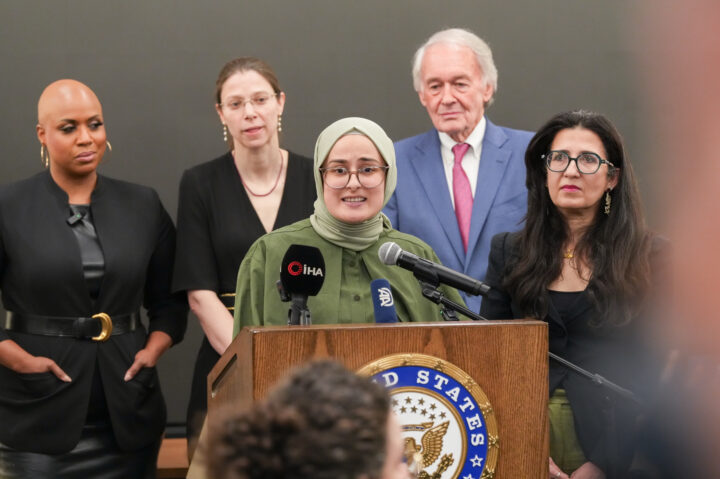
Mel Musto/Getty Images
Rümeysa Öztürk speaks to the media after arriving at Logan Airport on May 10, 2025 in Boston, Massachusetts.
State Department officials who were tasked with deporting foreign students accused of antisemitism and threatening American national security warned that the efforts may present free speech concerns, according to government documents that a federal judge released last week.
The several hundred pages of previously sealed federal documents are connected to the ongoing deportation cases against Mahmoud Khalil, Rümeysa Öztürk, Mohsen Mahdawi, Yunseo Chung and Badar Khan Suri, each of whom U.S. immigration authorities targeted because of their involvement in anti-Israel activity at American universities.
The Trump administration has said in public statements that the students were ordered to be deported because of their involvement in antisemitic and pro-Hamas activities, but little evidence was shared publicly at the time to back up the allegations.
The students have challenged the deportations with mixed results. Khalil — a protest leader at Columbia’s anti-Israel encampment in 2024 — was the first to be arrested, in March 2025. His detention, as a green card holder, became a cause célèbre on the left among activists who argued that President Donald Trump had overstepped his authority. Khalil was released from detention in June, but a federal appeals court last week paved the way for his deportation, potentially to Algeria.
In a series of memos last year sent to Secretary of State Marco Rubio from John Armstrong, a senior State Department official who oversees visas, Armstrong made clear that Rubio would have to directly approve the students’ deportations, noting that they are likely to draw intense scrutiny, particularly after Khalil’s legal challenge against his own deportation. For cases where the reason to deport somebody is based on their “past, current or expected beliefs, statements or associations that are otherwise lawful,” the secretary of state must “personally” make a determination that their actions “would compromise a compelling U.S. foreign policy interest,” a March 8, 2025, memo to Rubio said.
One case concerned the visa status of Öztürk, a Turkish student at Tufts University who was ordered to be deported last March and was arrested by federal agents on her way to a Ramadan event. A senior Department of Homeland Security official told Jewish Insider last year that federal investigators “found Öztürk engaged in activities in support of Hamas, a foreign terrorist organization that relishes the killing of Americans.” The only public evidence at the time connecting her to the anti-Israel protest movement was a 2024 op-ed in Tufts’ student newspaper that she penned with three other students calling for the university to divest from Israel.
One of the State Department memos unsealed last week revealed that this op-ed was the sole basis for the effort to deport her — and that department officials recognized it might face legal challenges.
The op-ed divulged that Öztürk was a member of Tufts Graduate Students for Palestine, which the immigration investigators noted was suspended by the university. Öztürk’s involvement with the group “may undermine U.S. foreign policy by creating a hostile environment for Jewish students and indicating support for a designated terrorist organization,” investigators concluded. The memo revoking her visa declared that she co-authored an op-ed “that found common cause with an organization that was later temporarily banned from campus.”
But in assessing the strength of DHS and Immigration and Customs Enforcement investigators’ conclusions, Armstrong noted one potential weakness: “While Öztürk has been involved with actions protesting Tufts’ relationship with Israel,” he wrote, the investigators have not “provided any evidence showing that Öztürk has engaged in any antisemitic activity or made any public statements indicating support for a terrorist organization or antisemitism generally.” Nor did they prove that she was involved in the activities that led to the pro-Palestine group being suspended by Tufts.
For Khalil and Mahdawi, the case to deport rested on their leadership roles in anti-Israel protests at Columbia. Khalil “created a hostile environment for Jewish students,” officials wrote, as an encampment leader and “a key figure in the March 6 Barnard College library occupation, where protestors distributed Hamas-authored flyers.”
Mahdawi, “through his leadership and involvement in disruptive protests at Columbia University, has engaged in anti-Semitic conduct through leading pro-Palestinian protests and calling for Israel’s destruction,” authorities concluded. “The activities and presence of Mahdawi in the United States undermines U.S. policy to combat anti-Semitism around the world and in the United States, in addition to efforts to protect Jewish students from harassment and violence in the United States.”
The only person who was directly linked to supporting Hamas was Suri, a Georgetown researcher whose wife is the daughter of a former Hamas official.
“The type of intimidation and incitement attributable to Suri potentially undermines the peace process underway in the Middle East by reinforcing anti-Semitic sentiment in the regional [sic] and thereby threatening the U.S. foreign policy goal of peacefully resolving the Gaza conflict,” officials wrote. But they also noted the challenges the case might face on freedom of expression grounds.
“Given the reliance on Suri’s public statements as an academic, and the potential that a court may consider his actions inextricably tied to speech protected under the First Amendment, it is likely that courts will closely scrutinize the basis for this determination,” one memo reads.
These immigration cases, early in the first year of Trump’s second term, were heavily scrutinized. Even though fighting antisemitism was a stated reason for the Trump administration’s decision to remove the students, some Jewish leaders were concerned about the heavy-handed tactics and limited information shared about their arrests.
None of the five students is still in detention, and they are each challenging their deportation orders.
The Iowa congressman championed two amendments to the NDAA that expand and build on collaboration with Israel
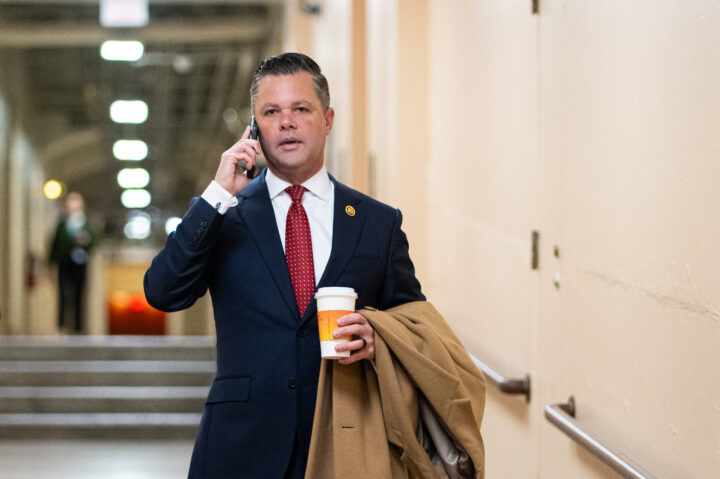
Bill Clark/CQ-Roll Call, Inc via Getty Images
Rep. Zach Nunn (R-IA) arrives for the House Republican Conference meeting in the U.S. Capitol on Wednesday, December 10, 2025.
At a time when an increasingly vocal minority on the right is questioning the future and the benefits of the U.S.-Israel relationship, Rep. Zach Nunn (R-IA) led a pair of amendments to the 2026 defense policy bill aiming to expand the relationship, with a particular focus on new technologies.
Asked how he responds to those on the right who question the value of the relationship, Nunn, the chair of the Republican Study Committee’s national security task force, told Jewish Insider, “Israel is the lone bastion of democracy, freedom and Western values in a region where the U.S. has vital national security interests. For decades, Israel has been a strategic partner in kinetic and non-kinetic action against bad actors like Iran.”
He added that programs such as the ones he championed would prepare the U.S. for all manner of challenges.
“As our adversaries embrace low-cost options like drones and cyberwarfare, it’s more important than ever that we not only coordinate closely on joint security, but also on the underlying technologies that will define the next generation of conflict,” Nunn continued. “My amendments are about ensuring that partnership continues to evolve. They are strategic investments that strengthen American security, deter our adversaries and deliver real returns for U.S. taxpayers.”
Versions of the two NDAA amendments that Nunn led related to expanding military technology partnerships with Israel are included in the final version of the bill the House passed on Wednesday and the Senate is expected to pass next week. One encourages the Defense Innovation Unit to consider opening an outreach office in Israel to deepen ties to the Israeli tech industry, while the other expands U.S.-Israel partnerships in counter-drone efforts.
“Israel has been right there on the front line with our American troops every step of the way,” Nunn said, explaining that his amendments aim to examine “what the future of the relationship with Israel is going to be” and leverage Israeli and American innovations to improve U.S. defenses. He said the Pentagon has backed his initiatives and that it will help “bring a lot more of the innovators to the table,” particularly in drone technology, and improve supply chains.
He said the technology also has dual-use capabilities that can contribute to agriculture and manufacturing in his home state.
“This is a really good partnership. I think that’s going to be part of what you’re going to see in this conversation on [the new U.S.-Israel memorandum of understanding] going into 2026 and beyond,” Nunn said, when asked about how such initiatives could play into the future of the U.S.-Israel relationship as the two sides negotiate the next phase of U.S. aid to the Jewish state.
“Some of the solutions coming out of [the U.S.-Israel partnership] — whether it’s counterinsurgency tactics, whether it’s border defense, whether it’s effective ways to find survivors, like what was discovered in the hostage rescue programs — these are things that can be replicated and return huge dividends to the United States,” Nunn said.
Though he said the U.S. had postponed the Iranian nuclear threat through its military action in June and Iran’s proxies have been weakened, he warned that the broader threat from Iran and its proxies remains. And he said that it’s “only a matter of time before they find an ability to bring those [nuclear] components back online.”
“We have an ongoing concern here between Hezbollah, the Houthis, Hamas, certainly, a radicalization which could retake over Syria in the near future,” Nunn said. “There’s a security envelope the United States is very concerned about, and candidly, there’s a threat vector here that’s real that every Iowan I talk to is concerned about. So this hits home on the direct home front of what we can do.”
In order to prevent Iran from rebuilding its nuclear capacity and delay a further conflict, Nunn, a former combat pilot who flew missions off the coast of Iran, said that the U.S. should focus on restricting Iranian financing and particularly target its “ghost fleet” of oil tankers; continue to build a coalition of both Arab and NATO partners to confront Iran and hold it accountable so that the U.S. does not need to shoulder the burden alone; and to empower the Iranian people.
“I think there has to be a conversation, as the president’s highlighted, with the Iranian people themselves,” Nunn said. “I don’t think the overwhelming majority of the Iranians want this regime to stay in power, and they may find that some of their best partners are actually other allies in the region. That means a return of Iran’s ability for self governance, an internal effort to get rid of the [Ayatollah], but one that immediately is welcome to the international community when they do that.”
The Trump administration believes ‘rigid adherence to non-interventionism is not possible,’ contrary to the isolationist wing of the GOP

Tasos Katopodis/Getty Images
U.S. President Donald Trump stops and talks to the media before he boards Marine One on the South Lawn at the White House on June 15, 2025 in Washington, DC.
As an ideological battle plays out in the Republican Party over whether America should adopt an engaged approach to global affairs or take a more restrained one, a new National Security Strategy authored by the Trump administration offers a clear-cut answer — presenting America as deeply engaged, so long as the policies adopted by Washington are deemed to put “America First” by President Donald Trump.
Trump has no qualms about using unusual strategies to achieve his national security aims (what the 29-page document refers to as his “unconventional diplomacy”), but the strategy paints a picture of a president who is intently focused on his global legacy and on shoring up his image as “the president of peace.”
“For a country whose interests are as numerous and diverse as ours, rigid adherence to non-interventionism is not possible,” the strategy states. “Yet this predisposition should set a high bar for what constitutes a justified intervention.”
The document takes aim at prior American commanders-in-chief, saying such documents authored by past administrations became “bloated and unfocused” by focusing on the entire world. “Not every country, region, issue, or cause — however worthy — can be the focus of American strategy. The purpose of foreign policy is the protection of core national interests; that is the sole focus of this strategy,” the document asserts.
The president abhors the use of traditional foreign policy language to try to categorize his approach, the strategy makes clear: “President Trump’s foreign policy is pragmatic without being ‘pragmatist,’ realistic without being ‘realist,’ principled without being ‘idealistic,’ muscular without being ‘hawkish’ and restrained without being ‘dovish.’ It is not grounded in traditional, political ideology. It is motivated above all by what works for America — or, in two words, ‘America First,’” according to the document.
Yet what is clear from the strategy is that Trump remains captivated by the world’s challenges and believes he can help remedy them. In a letter introducing the strategy, Trump writes that he has achieved a historically “dramatic … turnaround” on matters of foreign affairs.
Border security is a key focus — he touts his restoration of “the sovereign borders of the United States” and the deployment of the military “to stop the invasion of our country” — alongside culture war issues, with Trump saying the U.S. has rid the military of “radical gender ideology and woke lunacy.” He names the global conflicts he has played a role in helping to resolve, including “ending the war in Gaza with all living hostages returned to their family” and “obliterat[ing] Iran’s nuclear enrichment capacity” when America bombed Iran’s nuclear sites in June.
Trump’s key goal in the Middle East appears to be to keep Iran in check, though Iran is only mentioned three times in the report. In the first national security strategy of Trump’s first term, in 2017, Iran was mentioned 17 times.
“We want to prevent an adversarial power from dominating the Middle East, its oil and gas supplies and the chokepoints through which they pass while avoiding the ‘forever wars’ that bogged us down in that region at great cost,” the strategy states, without naming a particular adversarial power.
America historically prioritized the Middle East because of its dominant role in supplying energy, its position as “a prime theater of superpower competition” and seemingly needless conflict, the strategy states. The Trump administration argues the energy question takes less priority, with America now a net energy exporter; and that superpower competition has faded, with America in “the most enviable position, reinforced by President Trump’s successful revitalization of our alliances in the Gulf, with other Arab partners and with Israel.”
Conflict, the strategy asserts, “remains the Middle East’s most troublesome dynamic.” But it argues that Iran, “the region’s chief destabilizing force,” was “greatly weakened” by Israel’s actions after the Oct. 7 attacks two years ago and by U.S. involvement in the June war.
Trump visited Saudi Arabia in May, the first major international trip of his second term, and he recently welcomed Saudi Crown Prince Mohammed bin Salman to Washington. Both of these meetings were focused on investment and building economic ties between the U.S. and Gulf nations. The national security strategy makes clear that this is a core goal for Trump.
“The region will increasingly become a source and destination of international investment, and in industries well beyond oil and gas,” the strategy states. “We can also work with Middle East partners to advance other economic interests, from securing supply chains to bolstering opportunities to develop friendly and open markets in other parts of the world such as Africa.”
The Trump administration praised partners in the Middle East for combating radicalism, but also said the U.S. will no longer try to goad Gulf nations into democracy.
Continuing to fight radicalism in the region “will require dropping America’s misguided experiment with hectoring these nations — especially the Gulf monarchies — into abandoning their traditions and historic forms of government,” the strategy states. That pledge marks a significant shift from the Biden administration’s approach, which called for strengthening democracy around the world. The word “democracy” appears just three times in Trump’s national security strategy, and not as a goal of American foreign policy.
The White House said expanding the Abraham Accords will remain a policy priority. Other “core interests” include maintaining the security of Gulf energy supplies, ensuring that terrorism cannot be allowed to grow and reach the U.S. and “that Israel must remain secure.”
“But the days in which the Middle East dominated American foreign policy in both long-term planning and day-to-day execution are thankfully over,” the strategy asserts, “not because the Middle East no longer matters, but because it is no longer the constant irritant, and potential source of imminent catastrophe, that it once was. It is rather emerging as a place of partnership, friendship, and investment — a trend that should be welcomed and encouraged.”
The former congressman, now running in the special election to succeed Mikie Sherrill, says the U.S. should support Israel’s security while also serving as a ‘counterweight’ to its far right and exercising case-by-case oversight on military assistance

(Photo by Spencer Platt/Getty Images)
Democratic incumbent Representative Tom Malinowski participates in a get out the vote event ahead of next month’s midterm elections on October 29, 2022 in Rahway, New Jersey.
Former Rep. Tom Malinowski (D-NJ), who established himself as a prominent voice on Capitol Hill on foreign policy and national security issues in Congress between 2019 and 2023, told Jewish Insider last week, as he mounts a congressional comeback bid, that he’s “as pro-Israel as I have ever been.”
But he also expressed more openness to policies conditioning or restricting aid, and called for the U.S. to serve as a “counterweight” to the Israeli far right. And he said that U.S. aid shouldn’t be used in furtherance of Israeli actions that the U.S. itself doesn’t support. At the same time, he expressed support for the Trump administration’s Gaza peace plan and strikes on Iran’s nuclear program.
Malinowski is one of the many Democrats who have declared their candidacies in the special election in New Jersey’s 11th Congressional District, recently vacated by Gov.-elect Mikie Sherrill. The 11th District, an affluent suburb with a sizable Jewish population, borders and incorporates portions of the district Malinowski represented for two terms.
Malinowski said that he’s “as pro-Israel as I have ever been, in the sense that I believe that Israel should be safe and secure as a Jewish and democratic state, and that the United States has a moral and strategic interest in defending Israel as that kind of state at the same.”
Malinowski said that “to be pro-Israel for me also requires listening to what the hostage families have been saying for the last couple of years, to what hundreds of Israeli security officials have been saying to their government and directly to the United States about the need to bring the war in Gaza to an end and to have some plan that addresses the legitimate desire of Palestinians to have their rights respected and to have a future that they can strive towards.”
“I would not seek to enable [any] ally to do something that I thought should not be done. It’s just a basic foreign policy principle that I think most people would agree is straightforward,” Malinowski told JI, when asked about the possibility of conditioning or suspending aid to Israel. “I would make case-by-case judgments given what’s happening on the ground.”
He said he would not support U.S. policies that would hurt Israel’s ability to protect itself, but added that the U.S. should “serve as a counterweight” to the pressure that an Israel government may feel from Israel’s far right and “use our influence and leverage and our honest voice to steer our ally away from policies that are self-destructive.”
He expressed a similar view in public interviews last year when he offered support for President Joe Biden’s moves to suspend some U.S. arms sales to Israel to pressure Israel against mounting a military incursion into the southern Gaza city of Rafah.
“I would not seek to enable [any] ally to do something that I thought should not be done. It’s just a basic foreign policy principle that I think most people would agree is straightforward,” Malinowski told JI, when asked about the possibility of conditioning or suspending aid to Israel. “I would make case-by-case judgments given what’s happening on the ground.”
He said he was not committing to supporting conditions on aid but also did not rule them out depending on the situation. “There’s no U.S. ally in the world that I would guarantee a rubber stamp on every request for military assistance, that’s not the way U.S. foreign policy functions,” Malinowski said.
He said on X in April of last year that the U.S. has, in practice, failed to apply the globally applicable U.S. laws conditioning all arms sales on human rights compliance to Israel. He said that a decision to enforce that law last year to suspend arms sales to certain Israeli units was a “step towards treating Israel as we would any other partner.”
He added that the purpose of the law is to seek remediation of the issues to prevent the need to cut off arms, as was the case for most of the Israeli units to which it was applied.
At the same time, Malinowski indicated to JI a level of skepticism of efforts to halt all offensive aid to Israel, which have been pushed by some former colleagues, arguing that the “distinction between defensive and offensive is hard to make and a bit artificial.”
He expressed support for the Trump administration’s 20-point ceasefire plan for Gaza, saying it “offers the best possible hope for a way forward” and said the U.S. should focus on pushing all parties involved to implement it to its fullest extent, to deploy the international security force to neutralize Hamas and to surge humanitarian aid.
He said any decision on Israel in Congress, including with regard to aid, would be geared toward pursuing that goal.
“I think we’re very far from being able to address the issues of sovereignty and what the ultimate answer to those questions should be,” Malinowski said. “Even many of my Palestinian and Arab American friends, I think, would say that they’re not interested in lip service to a two-state solution right now.”
He said that “serious oversight” is needed from Congress on the deal because he is concerned that Trump will be “tempted to just declare victory and claim his Nobel Peace Prize without doing the hard work of securing implementation of the rest of the plan,” when it will require “steady pressure” — on Hamas and its interlocutors as well as on Israel — to ensure that the situation does not return to the pre-Oct. 7, 2023, status quo.
Malinowski was not supportive of an effort led by some progressive lawmakers to recognize Palestinian statehood, arguing that the U.S. focus should be — and that his focus would be — on more immediate humanitarian and security issues, including ensuring the Trump plan proceeds.
“I think we’re very far from being able to address the issues of sovereignty and what the ultimate answer to those questions should be,” Malinowski explained. “Even many of my Palestinian and Arab American friends, I think, would say that they’re not interested in lip service to a two-state solution right now.”
Malinowski said he did not oppose the U.S. strikes on Iran’s nuclear facilities earlier this year, adding that U.S. intervention likely helped bring the war to a quicker close than it would otherwise have, by bringing the U.S.’ superior capabilities to bear on Iran’s nuclear facilities. He also said he’s “very happy” the Assad regime fell, Hezbollah was “significantly weakened” and the “paper tiger of Iran’s defenses has been exposed.”
At the same time, he argued that any “lasting solution” to Iran’s nuclear program will require a diplomatic agreement with “highly intrusive inspections,” and said President Donald Trump had “exaggerate[d] the impact” of the U.S. strikes.
“My hope is that we will continue to pursue that, rather than imagining that this problem can be addressed just by going to war every few years,” Malinowski said.
At home, Malinowski has spoken publicly at various occasions since the Oct. 7 attacks about anti-Israel and pro-Hamas activism in the U.S. and on college campuses. He argued in May 2024 that students who care about protecting innocent Palestinians were being overshadowed by more extreme voices advocating for the end of Israel, which he called counterproductive.
“The loudest voices are using Gaza’s plight to push a sweeping & more radical agenda of defeating Zionism and “colonialism.” This is not about ending the war but about ending Israel,” Malinowski said on X. “But the actual political effect of these protests has been to shift attention away from Gaza at the very moment (after the World Central Kitchen strike) when opinion was shifting against the war. All our attention should be on getting aid to Gazans, freeing hostages, avoiding more deaths, and what happens post-war. Instead, we have to talk about dumb 19 year olds glorifying Hamas & ‘intifada,’ drowning out the voices of others who sincerely care about saving lives.”
He said those voices also gave right-wing “bad faith partisans” fodder to “cast all legitimate criticism of self-defeating Israeli government policies” as support for Hamas and demand police crackdowns.
“Even though there is a significant problem on the far left that involves anti-Israel protests morphing into calls for an end to Israel as a Jewish state, we don’t quite have a Nazi problem in the Democratic Party in a way that leading Republicans are now acknowledging they do on their side,” Malinowski said.
Malinowski told JI that leaders need to speak up and police antisemitism on their own sides, adding that he “probably underestimated the extent of the problem on the far left” during his time on office but argued that the “problem on the right has gotten much worse and is too often dismissed by critics of the Democratic Party.”
He argued that the problem in the GOP is much more severe than in the Democratic Party. “You have leaders of the party rightly worried, as some on the Republican side are, that a significant share of the young people going into administration positions … have something akin to a Nazi ideology,” he said.
“Even though there is a significant problem on the far left that involves anti-Israel protests morphing into calls for an end to Israel as a Jewish state, we don’t quite have a Nazi problem in the Democratic Party in a way that leading Republicans are now acknowledging they do on their side,” he continued.
He also said that holding social media platforms accountable — a longtime priority for Malinowski — for their amplification of content designed to fuel hatred, will be critical. He said that social media platforms “bear the largest share of responsibility” for increased extremism on both the far left and far right.
Asked about New York City Mayor-elect Zohran Mamdani’s record on Israel and antisemitism issues, Malinowski told JI the Jewish community is “rightly feeling a tremendous amount of anxiety” about rising antisemitic rhetoric and violence.
He said Mamdani has “made a lot of decent promises about the need to reject antisemitism and hatred of all stripes, and about his interest, his determination to listen to people and to bring communities together. And he needs to be held to those promises.”
Malinowski said that if Mamdani follows through, he could prove to be a “potentially very powerful ally against antisemitism” and help to rebuild Jewish-Muslim dialogue that has broken down since Oct. 7.
“But I also understand that he has said things in the past and failed to say some things in the present that cause people understandable anxiety, and therefore everyone has to be vigilant and hold him accountable to the better angels of his nature,” the former congressman continued.
Malinowski said he decided to run for Congress again because “it would be nice to have a Congress again, one that can fulfill its basic constitutional function of checking presidential policies that go too far. … I’d like to contribute to making Congress a coequal branch again.”
And he argued that his experience in foreign policy generally is one of the key factors that makes him stand out from the rest of the field, explaining that there is a “big shortage” in the House of “people who can conduct oversight of the administration’s foreign policy.”
Asked about emerging attacks on him as a carpetbagger — he previously represented a neighboring district that included only part of the district in which he is now running — Malinowski argued he’s the only lawmaker who has represented any part of the district before and he works in the district as a professor at Seton Hall University.
And he argued that voters are looking for a candidate who can effectively pick up Sherrill’s work where she left off from his first day in office, given his previous service. His previous service, he said “is one of the key distinctions” between him and the rest of the field.
Cheney, seen as a particularly powerful vice president, was a key voice in the George W. Bush administration during the War on Terror
AP Photo/Jae C. Hong
Former Vice President Dick Cheney attends a primary election night gathering for his daughter, Rep. Liz Cheney, R-Wyo., Aug. 16, 2022, in Jackson, Wyo.
Former Vice President Dick Cheney, who died Monday, was remembered by former officials and pro-Israel leaders as a supporter of the Jewish state and a strong voice on U.S. national security issues throughout his time in public service.
Cheney, seen as a particularly powerful vice president, was a key voice in the George W. Bush administration during the War on Terror and also served as secretary of defense under President George H.W. Bush, chief of staff to President Gerald Ford and a leader in the House Republican Conference as a representative from Wyoming.
“He was always a big supporter of Israel while he was in the Bush administration but also before, as a congressman and as defense secretary in the first Bush years,” Tevi Troy, a presidential historian who served in the George W. Bush White House, told Jewish Insider, also highlighting the prominent pro-Israel voices with whom Cheney surrounded himself as vice president.
“I was always very impressed by how well-prepared he was, how knowledgeable he was and how focused he was,” Troy continued. “In meetings with President Bush, he usually didn’t say much — because he knew that if he said something, it might color how the room reacted. But he would give his views. He would listen attentively in the meetings and he would give his views to Bush afterwards. … He was revered in the administration, and if he did weigh in on an issue, you knew that he was going to have a lot of sway on that issue. But he also knew what the role of vice president was.”
Troy, reflecting on the dynamics between the president and vice president in several recent administrations, said that Cheney stands out in both his skill and knowledge but also in the fact that he had no ambitions to run for president — which Troy said gave his counsel “more weight.”
“It wasn’t about what his long-term ambitions were, but what he thought was best for the administration and the country,” Troy said.
Danielle Pletka, a distinguished senior fellow at the American Enterprise Institute, said that like other Republicans of his generation, Cheney’s support for Israel deepened in the wake of the 9/11 attacks, as the U.S. and Israel faced a shared threat. She described him as a “great guy” who was “never confused about what was right.”
“I think he recognized that the Middle East that we had nurtured over decades was one that in many ways allowed for the growth of Al-Qaida and he set about helping to change those things,” Pletka said. “People excoriate him for the Iraq War — but I can assure you the people of Iraq don’t excoriate him.”
“At the end of the day, he was always an extremely fierce patriot and did what he thought was best for American interests, and like a lot of conservatives understood very clearly that our friendship and our partnership with Israel was part and parcel of that,” she continued.
Pletka also described Cheney as “very clear-eyed” about the threats the U.S. faced in the Middle East, including from Iran, and that he “believed in seizing opportunities” to disrupt Iran and other adversaries.
“When I think about how Iran was allowed to exploit the situation in Iraq — I know he did his utmost to ensure that we pushed back, often without success in the second half of the Bush administration,” she continued. “When we were losing in Iraq, he was absolutely instrumental in ensuring that the policy got turned around.”
Israeli Ambassador to the U.S. Yechiel Leiter said on X that the “passing of former U.S. Vice President Dick Cheney marks the loss of a great American patriot, a devoted public servant and a dear friend of Israel.”
“His leadership and his belief in the strength of the U.S.-Israel alliance will not be forgotten,” Leiter continued.
The Jewish Federations of North America, in a statement, described Cheney as a “a dedicated public servant who was a friend to the Jewish community and played a significant role in strengthening the strategic partnership between the United States and the State of Israel.”
JFNA said that Cheney “maintained enduring relationships with Jewish communal leaders and institutions, engaging in serious dialogue on matters of global security and the protection of Jewish communities worldwide,” “demonstrated an unwavering commitment to the security of Israel” and helped expand military ties between the U.S. and Israel.
AIPAC said in a statement that Cheney, in his various roles, “worked to strengthen the ties between” the United States and Israel and was “a strong supporter of the U.S.-Israel partnership.”
The Republican Jewish Coalition praised Cheney as “an American patriot and an unwavering friend of Israel and the Jewish community.”
“Vice President Cheney had a substantial role in meeting the greatest challenges our country faced in the last 40 years, including 9/11,” RJC Chairman Norm Coleman and CEO Matt Brooks said. “He understood the threats against the U.S. and the valuable role of U.S. allies, including Israel, in combatting them.”
Sen. Mitch McConnell (R-KY) said that Cheney’s “intellect, experience, and resolve made America safer” throughout his years in government service.
“As grave threats to our security continue to loom, his commitment to American leadership will remain a lesson,” McConnell continued.
In the latter years of his life, Cheney stood staunchly by his daughter, former Rep. Liz Cheney (R-WY), as she emerged as one of the most vocal critics of President Donald Trump in the Republican Party following the Jan. 6, 2021, attack on the U.S. Capitol.
Like his daughter, Cheney endorsed former Vice President Kamala Harris in the 2024 presidential election, describing Trump as a threat to democracy.
In an interview with JI, Nunn says the U.S.-Israel military relationship is crucial to pushing the boundaries of defensive technological development, keeping Americans safe and staying ahead of global adversaries
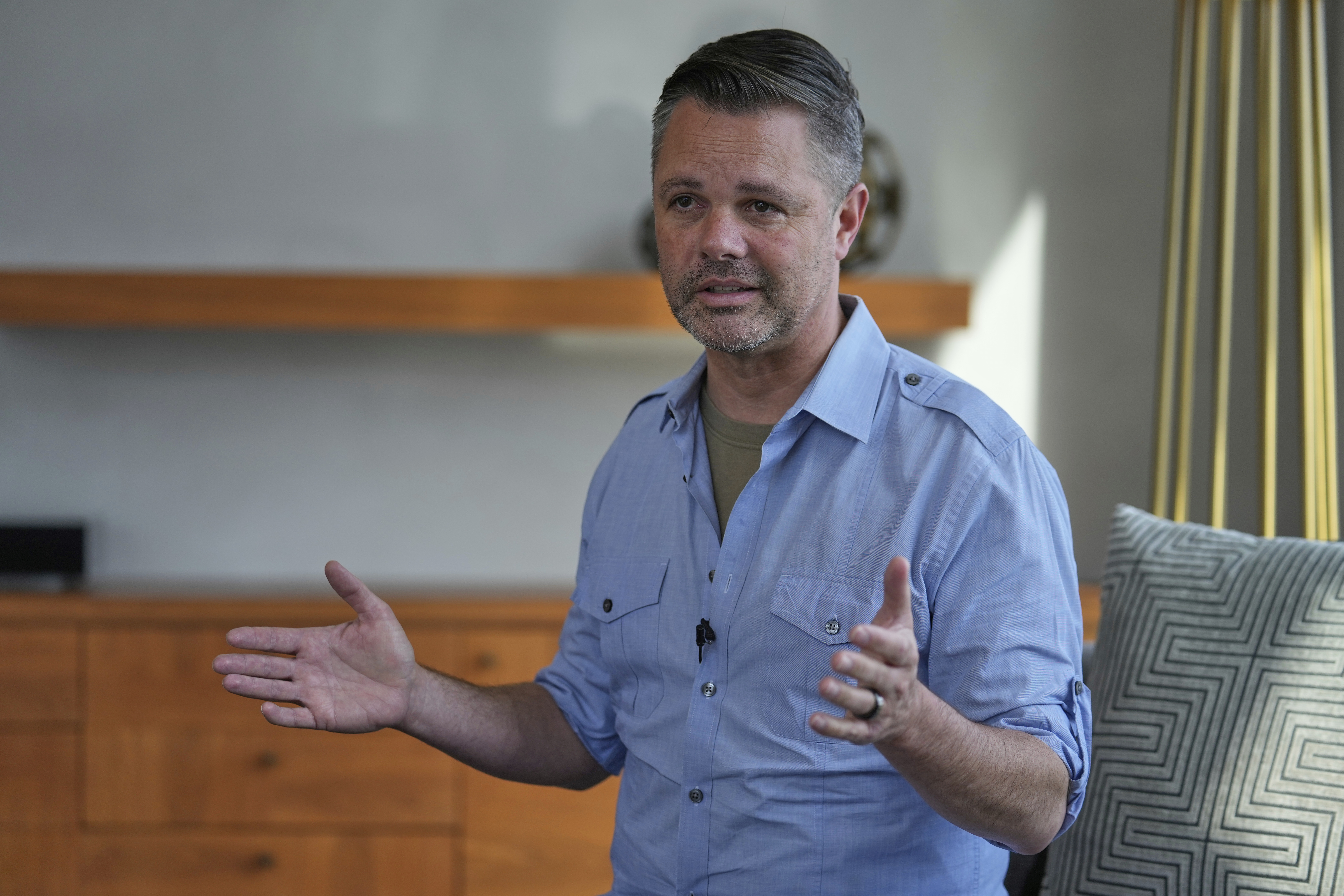
AP Photo/Altaf Qadri
U.S. Congressman Zach Nunn speaks to the Associated Press at a hotel in Dubai, United Arab Emirates, Wednesday, June 18, 2025.
For Rep. Zach Nunn (R-IA), the U.S.-Israel military relationship is crucial to pushing the boundaries of defensive technological development, keeping Americans safe, staying ahead of global adversaries and even providing advancements in sectors far removed from the battlefield.
Nunn is a rising national security voice on Capitol Hill, chairing the national security task force of the Republican Study Committee, is an Air Force veteran with experience in the Middle East and is also a longtime former intelligence officer. He hails from a competitive district in southwest Iowa, which includes much of Des Moines and stretches to the state’s southern border.
“We know that not only is Israel our best military partner for the region, it is the best stabilizing force,” Nunn, who led a pair of successful amendments in last week’s National Defense Authorization Act markup on the House floor aimed at improving U.S.-Israel military cooperation, told Jewish Insider in a recent interview. “Not only is Israel a force for good in the region, it’s one of our best innovative partners out here, and national defense begins with a tech and human capability that’s able to execute on it. And that really is funded through democracies that allow this type of innovation to take place.”
One of Nunn’s amendments, cosponsored by Reps. Josh Gottheimer (D-NJ) and Don Davis (D-NC), would establish a Defense Innovation Unit field office in Israel.
The DIU, which has offices throughout the U.S. and is headquartered in Silicon Valley, is a relatively new Pentagon body aimed at allowing the military to move more quickly to adopt emerging commercial and dual-use technologies — a “fast-track for a largely challenged defense apparatus … to onboard new technologies more quickly,” Nunn explained.
The tech sector, he said, starts on the West Coast, in Silicon Valley, and extends to “the East Coast, which in my mind is Tel Aviv.”
“I think that we have seen some of the best innovations coming out of Israel. Part of it is need, part of it is just the innovative spirit that Israel has brought to the fight on this,” he continued. “How do we onboard this so that the best technologies — and, candidly, the best tactics, techniques and procedures that Israel is literally field testing right now — can be replicated so that we help defend the men and women in uniform?”
He said that such efforts will save U.S. taxpayer money, help the U.S. keep ahead of its key adversary in Beijing and even provide advances in civilian technology. Precision-guidance weapon capabilities that Israel is developing can also be applied in precision agriculture techniques in Iowa, Nunn said.
Nunn’s other amendment, cosponsored by Davis, would require the Pentagon to review and report to Congress on progress made toward an integrated air and missile defense infrastructure in the Middle East, strategies and options for expanding those efforts and lessons learned from recent attacks throughout the region. Both amendments were incorporated into larger packages of amendments and passed by voice votes.
Of all the U.S.’ global allies, Nunn said, Israel is providing the most practical proving ground for new defensive technologies.
“It’s one thing to be able to do drills, to do innovation, to come up with new technologies. It’s another thing to be able to have to deploy them in the field … find out how they work and then be able to change your … tactics and employment in real time,” Nunn said. “That makes us much safer than just having the ideal weapons system on the shelf, to know how it’s going to work in battle and how our men and women in uniform can be best protected by it.”
Nunn noted that he was tied for the record of most amendments, nine in total, secured in the 2026 NDAA on the House floor.
Asked more broadly about the push from some, on both sides of the aisle, for the U.S. to reduce its focus and posture abroad, Nunn argued that relationships like the one with Israel pay dividends for the U.S.
“Peace through strength matters, and a peaceful Middle East is a lower cost to the American taxpayer,” Nunn said. “At the same time, it’s Israel who took out Iran’s missile defense systems. It’s Israel who’s provided the intelligence that has allowed us to not only save money, but save lives here on the home front. It’s Israel and the Mossad and IDF, who have taken out Iranian proxy groups, whether they be Houthi rebels, Hamas or Hezbollah, that have sent death squads after great leaders here in the United States.”
Efforts like the amendments he led, Nunn said, create American jobs, save the U.S. money, create technologies that can be used in both military and civilian applications and reduce the burden on the U.S.’ own forces.
“The United States is getting the best possible return when we partner with allies,” Nunn said, a position on which he said President Donald Trump and most members of Congress should be able to agree.
“Peace through strength matters, and a peaceful Middle East is a lower cost to the American taxpayer,” Nunn said. “At the same time, it’s Israel who took out Iran’s missile defense systems. It’s Israel who’s provided the intelligence that has allowed us to not only save money, but save lives here on the home front. It’s Israel and the Mossad and IDF, who have taken out Iranian proxy groups, whether they be Houthi rebels, Hamas or Hezbollah, that have sent death squads after great leaders here in the United States.”
Nunn noted that he was in the region, visiting Saudi Arabia, Bahrain and the United Arab Emirates on the eve of the U.S. strikes on Iran’s nuclear program in June.
He said that the U.S. strikes would not have seen the same level of success without Israel “doing all of the prep work on the front end,” and that the U.S. bombings sent a strong message to Iran and other adversaries.
“Clearly, President Trump is in a different league of presidents when it comes to negotiation,” Nunn said. “He’ll offer you peace. If you say no to it, he’s prepared to make sure that you can no longer be a threat to the world. I think that that sends a very important message to the next iteration of negotiations here with Iran. … The president has emboldened our allies, but also sent a very clear message to Iran that this is where it ends.”
“That’s a message that saves lives, saves taxpayer dollars and advances us when we look at emerging threats, whether they be in Moscow, Pyongyang and certainly Beijing,” Nunn continued. “The amount of investment that we have to make on the front end is much lower because we have those partnerships that amplify our ability, than if we were to have to do this all on our own, whether it’s domestically or internationally.”
Asked about the path forward with Iran, Nunn said that Trump’s approach to the conflict is distinctly different than that of past presidents. He said he was told by an Arab leader the day before the American strike on the Fordow nuclear facility that the Iranians had told that Arab leader that they believed they would secure further concessions from the U.S. by dragging out talks.
“Clearly, President Trump is in a different league of presidents when it comes to negotiation,” Nunn said. “He’ll offer you peace. If you say no to it, he’s prepared to make sure that you can no longer be a threat to the world. I think that that sends a very important message to the next iteration of negotiations here with Iran. … The president has emboldened our allies, but also sent a very clear message to Iran that this is where it ends.”
Nunn said that Iran now “has the opportunity” to cease its malign activities — funding for terrorism, weapons sales and development of nuclear and conventional weapons — and turn toward peace and collaboration with Israel and the United States.
The Iowan is also leading a bill to codify and build upon the maximum-pressure sanctions on Iran and ensure the enforcement of U.S. oil sanctions, describing it as a companion to the administration’s military strikes. He said the broad Republican support for the effort shows the conservative support for holding Iran accountable, for backing Israel and for providing relief to the Iranian people.
Nunn said he’s personally flown missions out of the Al-Udeid airbase in Qatar — the largest U.S. airbase in the Middle East — and that he agrees with the stance Trump took on the Israeli strike on Hamas officials in that country.
“In many ways there’s a shared concern here that Iran is the real radical, unhinged aggressor in the region, and there’s greater security by standing up not to a fellow Islamic state, but a state that is truly an autocrat and intends to threaten the rest of the world,” Nunn said.
“Qatar has been a great ally to us for decades now,” Nunn said. “They are a recognized partner in this. At the same time, there are bad actors everywhere. And as the president highlighted, I fully endorse — when Hamas is operating knowingly or unknowingly in a region — we’ve got to be able to decapitate that threat so it can’t reconstitute.”
He said he wants to see the U.S., Israel and the U.S.’ Arab partners pull closer together to counter threats from Hamas and other adversaries through the Abraham Accords and similar mechanisms.
“In an ideal situation, we never would have had these strikes to take place in the first place. We would have been able to share the intelligence and we would have eliminated this Hamas node working together,” Nunn said. “That’s the vision where I want to get to.”
The Abraham Accords, Nunn said, are helping to create a pathway for the region that Arab leaders remain excited about, based on recent visits to the region. He added that while many Arab countries’ populations remain hostile toward Israel, the tenor of anti-Israel public discourse has improved.
“In many ways there’s a shared concern here that Iran is the real radical, unhinged aggressor in the region, and there’s greater security by standing up not to a fellow Islamic state, but a state that is truly an autocrat and intends to threaten the rest of the world,” Nunn said.
Gor’s isolationist litmus test made it more challenging for mainstream conservatives to serve in the Trump administration
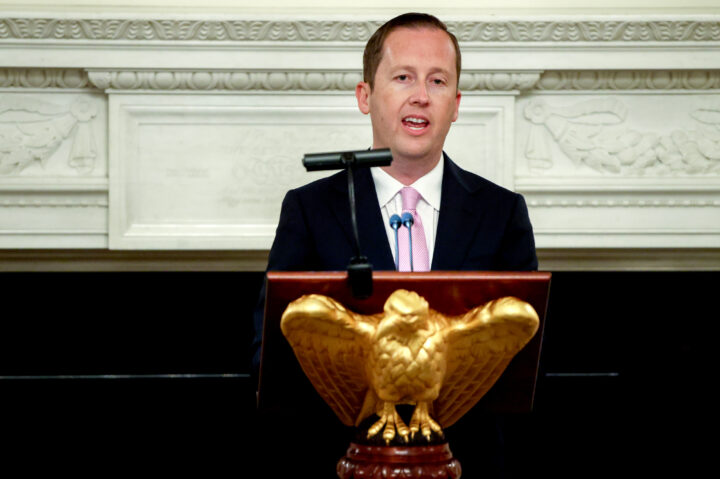
Samuel Corum/Bloomberg via Getty Images
Sergio Gor, director of the White House presidential personnel office, during a Kennedy Center Board dinner in the State Dining Room of the White House in Washington on May 19, 2025.
Sergio Gor’s expected departure from a key role in the White House, where he has vetted thousands of candidates for political jobs as the influential leader of the Presidential Personnel Office, is raising some questions about how his litmus tests and isolationist views will compare to his newly announced replacement, particularly with regard to national security hires.
Gor, 38, was nominated by President Donald Trump last week to be U.S. ambassador to India. If confirmed by the Senate, Gor, who was also tapped as special envoy for South and Central Asian affairs, will leave behind a powerful post at which he built a reputation as an ideological gatekeeper.
Throughout his time in the White House, Gor has drawn attention for his unyielding focus on loyalty to Trump and — more singularly — a fierce commitment to elevating national security and foreign policy hires who share his skepticism of American engagement abroad.
His successor, Dan Scavino, as the White House confirmed this week, is likewise a longtime Trump confidant who now serves as White House deputy chief of staff. But unlike Gor — whose background suggests an interest in imposing ideological litmus tests on job applicants — Scavino, 49, “has no ideology other than Trump,” according to a former top administration official.
Even as Gor has won plaudits from a range of high-ranking officials in the administration, the former official, who spoke anonymously to address a sensitive subject, suggested his approach to the White House role has been driven by his foreign policy worldview as well as his allegiance to the president, a tension that is unlikely to be replicated by Scavino.
“Sergio brought his own world with him to the job, not just Trump’s,” the former official told Jewish Insider on Wednesday. “Loyal to Trump, yes — loyal to a Paul-Tucker-Koch world ideology, I think yes as well,” he added, referring to Gor’s former boss Sen. Rand Paul (R-KY), podcast host Tucker Carlson and the activist network linked with Charles Koch, a leading conservative donor who has opposed Trump.
By contrast, Scavino, a former Trump golf club manager who has previously run the president’s prolific and unfiltered social media, seems to have few, if any, competing interests at stake. “There’s a reason Dan has a seat in the Situation Room when the toughest decisions are made,” the former Trump official elaborated. “Sergio never did. This should be a positive development for vetting and placement.”
It remains to be seen which positions Scavino will still need to help staff when he fully assumes Gor’s duties — especially with “over 95%” of departments and agencies now “filled,” according to a statement from Trump last week, which could not be verified.
“There is much still to be done, and Dan’s leadership will ensure the highest quality, most dedicated workforce ever,” Karoline Leavitt, the White House press secretary, said in a statement, calling Scavino “one of Trump’s most trusted and longest serving advisors.”
In his tenure, Gor, a former top aide to Paul, the libertarian Republican from Kentucky, has helped weaken the National Security Council and worked to install Pentagon officials who have pressed for a reduced U.S. military presence in the Middle East — fueling concerns among pro-Israel leaders who have questioned if such views were aligned with Trump’s approach.
The personnel chief, whose efforts highlighted an intra-party battle between warring traditional and MAGA Republican factions that has recently grown less fractious as the administration has taken shape, also promoted officials affiliated with the libertarian Koch network, in spite of a directive from Trump upon his reelection to avoid “people who worked with, or are endorsed by” the Charles Koch or his political advocacy group.
More recently, Gor has prominently clashed with some top Trump allies, including Elon Musk and Michael Anton, the State Department’s director of policy planning who served as a technical lead amid failed nuclear negotiations with Iran. Anton, who is now expected to leave the administration soon, has reportedly grown frustrated with Gor’s rejections of his proposed hires, among other sources of tension first detailed by Politico on Wednesday.
“He has the power to can people and for them not to get through,” one Trump official who has interacted with Gor and was not authorized to comment on the record said of his current role.
Meanwhile, Gor has advanced some officials widely criticized for espousing racist and antisemitic views, including Darren Beattie, who was fired in Trump’s first term for speaking at a white nationalist event and is now a top official in the State Department.
Beattie’s promotion, along with others who have drawn scrutiny for extreme views, underscores how Gor has been “clearing people who are unclearable,” said a former senior Republican Hill aide, who was granted anonymity in order to speak freely. “Sergio is obviously fine with that,” he said of Beattie’s past comments.
Trump, who in a social media post announcing his nomination last week called Gor’s time in the White House “essential” to upholding the administration’s agenda, said the personnel director would remain in his current role until his confirmation in the Senate, which has not yet scheduled a hearing.
A White House spokesperson confirmed to JI on Wednesday that Gor will stay in his post pending Senate approval for the ambassadorial role, which comes amid growing tensions between the United States and India, a major ally, over Trump’s tariff threats.
As Gor now prepares to leave the White House for a more public role, Danielle Pletka, a senior fellow at the American Enterprise Institute, suggested his approach to hiring ultimately demonstrated how he struggled to evolve with the administration on key issues.
“I think that the Trump administration has settled into a routine, and I think that people who are very ideologically rigid are finding less and less space for themselves,” Pletka told JI. “The president is not an isolationist, and those who are are discovering quickly that he does not appreciate being told how his staff have a stronger America first agenda than he does.”
After Australia revealed the IRGC was behind two attacks on a synagogue and kosher restaurant, observers call for ‘increased awareness’ in the U.S.

Asanka Ratnayake/Getty Images
Members of the synagogue recover items from the Adass Israel Synagogue on December 06, 2024 in Melbourne, Australia.
National security experts are warning that Jewish communities around the world could face increased Iranian threats following the recent accusation by Australian Prime Minister Anthony Albanese that the Islamic Revolutionary Guard Corps orchestrated attacks last year on a synagogue and kosher restaurant in the country.
“We’ve seen Iranian penetration in many Westernized countries, with Australia now being the latest. Though to see direct evidence of a linkage to actual violence — not just disinformation campaigns or cyber campaigns — is very frightening,” Rich Goldberg, a senior advisor at Foundation for Defense of Democracies, told Jewish Insider.
On Tuesday, Albanese announced the expulsion of the Iranian ambassador in Canberra — the first time Australia has expelled a foreign ambassador since World War II — as well as three other embassy staffers, and designated the Islamic Revolutionary Guard Corps as a terrorist group, after Australian intelligence indicated that Tehran was behind the 2024 attacks.
Goldberg called it “earth-shattering” that Australia’s “left-wing prime minister, who may not agree on a whole lot of politics with the U.S., has been woken up to the very sobering reality of Iranian threats in his own country.”
Goldberg urged Canada, the United Kingdom and the European Union to “follow swiftly” in severing diplomatic relations with Iran, and for the U.S. and Australia to put diplomatic pressure on other governments to designate IRGC as a terrorist organization. Nearly all the major EU countries still have full diplomatic ties with Iran.
“We know that Canada is highly penetrated by Iranian assets and the IRGC inside the country without having a very clear designation as a terrorist organization,” said Goldberg. “We’ve seen terrorist plots that are Iranian sponsored on British soil and the British government is still dragging its feet on prescribing the IRGC as a terrorist group. We know that they have operatives, both undercover as diplomats and as operatives, throughout the EU.”
More than a year ago, the Biden administration’s director of national intelligence, Avril Haines, warned of the Iranian regime’s efforts to take advantage of campus unrest. In light of Australia going public with the Iranian threat, Goldberg urged the Trump administration to order an updated review of Iranian influence efforts in the U.S.
“We all sort of forgot about that report, but it was big news at the time [even though] we never got a lot of detail on that,” he said. “Nobody has asked the question of what’s the current status of Iranian influence on protest movements or acts of violence in the U.S. We suspect that Iran has agents in the U.S. Some of those people have been arrested in the past. This has to remain a key priority for the FBI and [Department of] Homeland Security.”
Matt Levitt, director of the Jeanette and Eli Reinhard Program on Counterterrorism and Intelligence at The Washington Institute for Near East Policy, called for increased awareness of “Iranian external operations around the world, including in the U.S., in which the IRGC and other Iranian government agencies increasingly pay criminal proxies to carry out acts of violence, intimidation, and even kidnapping and murder on their behalf,” he said in a statement to JI.
Heads of security organizations that monitor American Jewish communal safety said that the latest news coming out of Australia — in addition to an already heightened fear of Iranian retaliation following the U.S. airstrikes on Tehran’s nuclear facilities in June — make threats from Iran and its proxy groups particularly alarming.
“The FBI and NYPD have had live investigations that have resulted in arrests of Hezbollah operatives in New York City casing out institutions,” Mitch Silber, executive director of the Community Security Initiative, which works to safeguard Jewish communities, told JI. “Iranians have a long timeline. Just because [an attack] hasn’t happened in the last six to eight weeks [since the airstrikes] doesn’t mean that the Iranians haven’t stopped plotting.”
Silber pointed to the recent case of a Hezbollah operative in Texas purchasing 300 pounds of ammonium nitrate. “Why would you [purchase] an explosive if you weren’t thinking of potentially trying to use it somewhere in the U.S.?” he said.
“These developments in Australia reflect yet another tentacle of the IRGC in its escalating influence campaigns: furthering violence, destruction and discord, with the Jewish community bearing the brunt,” Michael Masters, Secure Community Network director and CEO, told JI.
“We applaud the Australian government for shining the disinfecting light of day regarding these attacks. It only underscores the continued need for reporting, coordination and proactive security efforts by and for the Jewish community.”
Bennett is a former Navy helicopter and test pilot who served in the Middle East

Rebecca Bennett for Congress website
Rebecca Bennett
Rebecca Bennett is the kind of Democrat — combat-tested, pragmatic, pro-Israel — who moderates hope can be a balm to a battered Democratic brand, especially in competitive swing districts. The Navy veteran is hoping that her military background — which included stints as a helicopter pilot over the Strait of Hormuz and as a test pilot — will help her clinch victory over incumbent Rep. Tom Kean Jr. (R-NJ) in New Jersey’s 7th Congressional District, one of those purple districts.
Bennett, a Democrat, told Jewish Insider in a recent interview that national security, alongside affordability and health care, would be one of her core focuses if she’s elected.
“There’s two key areas in this bucket that I think about,” Bennett said. “One is, how are we preparing the United States and our allies for 21st-century conflicts? … And then the other piece of it is, what are we doing to support our veterans and military families, both when they’re serving and then when they come home?”
Bennett, 37, brings a personal perspective to the ongoing conflicts in the Middle East, having flown missions over the Strait of Hormuz to ensure the safe travel of an aircraft carrier strike group through the region.
“I really felt like I just needed to do everything I could to really fight for this country, because I love it, and I took an oath to support and defend the Constitution,” Bennett said.
While she was in the Navy, Bennett deployed to the Middle East with an aircraft carrier strike group in support of the war in Afghanistan, an experience she said showed her “how important Israel is as an ally, both from an intelligence perspective, but just how important Israel is as an ally for the United States. And so I will say it’s really shaped my worldview.”
She said she also worked with the Israeli military and Israeli contractors while serving as a test pilot. Bennett has never visited the Jewish state, but said she wants to.
“I just feel very strongly that Israel has a right to defend itself and has a right to exist, and that the United States needs to be able to support Israel, and it shouldn’t be partisan,” Bennett continued. “I think we should be supporting Israel as an ally, regardless of political party.”
Bennett said she supports continuing U.S. aid to Israel without restrictions or conditions.
Speaking to JI shortly after ceasefire talks between Israel and Hamas fell apart last month, Bennett said she was disappointed by the development, emphasizing the need to free the hostages and end the war in Gaza.
“I think this is why it’s so important that we have serious, experienced leaders that are at the table having these conversations,” she continued.
In the long term, Bennett said she supports a two-state solution, adding, “it’s incredibly important that we make sure that Israel is safe and secure.”
Asked about the U.S. strikes on Iran, Bennett said that she believes that Iran cannot have a nuclear weapon, but said that she didn’t want to weigh in directly on the U.S. strikes without having access to the intelligence that prompted them. She added that the strikes highlight the need for “serious people” in power who understand the consequences of U.S. policies.
Going forward, she said the U.S. should lean on diplomacy when possible to de-escalate the conflict with Iran and move it further away from nuclear weapons capacity, “but it’s also necessary to make sure that we have all options on the table when we’re having these types of conversations.”
In her own district, Bennett said she’s seen and heard about the impact of rising antisemitism. The day before her interview with JI, Bennett said she had spoken to a mother who was worried about sending her children to a Holocaust museum after the deadly shooting at the Capital Jewish Museum in Washington in May.
“It is just unacceptable that this is what’s happening in our country,” Bennett said. “I just want to make sure that is very clear.”
She said that leaders have an “obligation to try to bring down the temperature” on the rhetoric in this country, pointing as well to the shootings of Democratic state lawmakers in Minnesota. She said that such rhetoric must be taken seriously and denounced without hesitation.
“That’s something that I do feel very strongly about, because I think everyone has the right to feel free in this country,” she continued. “And I never want a mom to be worried about sending their kid to a Holocaust museum.”
Bennett told JI she joined the Navy to give back and noted that her husband is also a veteran. After her time in the military, she earned her MBA and worked in the healthcare field. She became politically active as a volunteer after her military service, and said she felt called to step up after the 2024 election.
“I really felt like I just needed to do everything I could to really fight for this country, because I love it, and I took an oath to support and defend the Constitution,” Bennett said.
Bennett said she’s running for Congress to “to stand up and fight for the version of the country that we want to live in and the version that I want to leave for my daughters in the next generation” as another form of service to the country.
She said her military background and experience with leadership in difficult environments it conveyed — as well as her role as a mother of two, and her time in the private sector — gives her the right profile to take on Kean.
She argued that military veterans like herself are “uniquely positioned” to win over independent voters — who she said make up around a third of the district — who might not otherwise vote for a Democrat.
During her interview with JI, Bennett made reference during to a group of Democratic women from the national security field who helped Democrats flip seats in the 2018 election, including Sen. Elissa Slotkin (D-MI), Rep. Mikie Sherrill (D-NJ) and former Rep. Abigail Spanberger (D-VA).
Bennett is reportedly a member of a group chat, the “Hellcats,” of Democratic women veterans running for competitive House seats.
New Jersey’s 7th is a swing district, represented by Rep. Tom Malinowski (D-NJ) prior to Kean. President Donald Trump won the district over Kamala Harris by two points, 50-48%, in the 2024 presidential election.
Bennett led the Democratic field in fundraising as of the close of the second quarter, with close to $1 million raised and $670,000 on hand. She’s trailed by businessman and political activist Brian Varela, who raised $693,000 and has $622,000 on hand; former Biden administration official Michael Roth who raised $302,000 and has $225,000 on hand; and Democratic activist Greg Vartan, who raised $150,000 and had $79,000 on hand.
All of them have a gap to close with Kean, who has raised nearly $2 million this cycle and has $1.5 million left on hand.
The report requires additional vetting for U.S. funding abroad, targeting the BDS movement and alleged U.S. support for political activity

Kevin Carter/Getty Images
The U.S. Capitol Building is seen at sunset on May 31, 2025 in Washington, DC.
Republicans on the House Appropriations Committee’s National Security, Department of State and Related Programs subcommittee are backing a significant increase in funding for the office of the State Department’s special envoy to monitor and combat antisemitism.
The explanatory report accompanying the subcommittee’s 2026 funding bill, which it advanced last week, proposes $2.5 million for the office, up from the $1.75 million provided in 2024 and 2025. The report also includes language calling for increased full-time staff in the office. The full Appropriations Committee will meet to discuss and vote on the bill on Wednesday.
The bill also expands vetting policies for U.S. funding abroad, requiring that no funding be provided to organizations that engage in the Boycott, Divestment and Sanctions movement targeting Israel, glorify violence or target the U.S. or Israel at the International Criminal Court or International Court of Justice.
Citing unspecified allegations that the U.S. provided assistance to organizations involved in political activity — a potential reference to GOP allegations that the U.S. funded protests against the Israeli government — the report directs the Department of State to expand its vetting procedures “to include an assessment of political neutrality and a review of statements by individuals or organizations that constitute engagement in political advocacy, incitement, or support for terrorism that would cause operational and reputational risks for the United States Government.”
The legislation, as approved by the subcommittee last week, would cut off U.S. funding to various United Nations initiatives, including the U.N.’s general budget.
The report explains that the cuts were motivated in part by the U.N.’s failure to address internal antisemitism and anti-Israel bias. It requests that the State Department report to Congress on the issue, including specific instances of antisemitism and their origins, statements by U.N. agencies or officials that may violate their responsibility to maintain neutrality toward Israel and an assessment of the U.N.’s plan to improve its response to antisemitism.
It also “strongly condemns” the U.N. General Assembly for passing a resolution granting the Palestinian Authority status nearly equivalent to that of a member state, describing the decision as having “undermin[ed] peace and security between the Israeli and Palestinian peoples.”
The report states that lawmakers are concerned about the continued relationship between Hamas and Turkey, which has hosted some of the group’s leaders. It makes no mention of the similar — and deeper — relationship between Hamas and Qatar.
The report calls for accountability for the United Nations Relief and Works Agency, including demanding that the U.N. address atrocities committed by UNRWA members on Oct. 7, 2023, and UNRWA’s alleged provision of support for and partnership with terrorist groups.
It demands that the U.N. provide unredacted files on these issues, which it has allegedly declined to do thus far, and asks the State Department to present a plan for aiding the Middle East without UNRWA and a report on whether U.S. aid to UNRWA was diverted to or paid the salaries of terrorist groups and their members.
The bill would block U.S. funding to South Africa unless it meets several conditions, including ceasing its cooperation with U.S. adversaries.
It would earmark $5 million for programs in Israel designed to support archeological and cultural heritage, like the City of David. It also urges the State Department to support programs and organizations that back the U.S.-Israel relationship and directs the department to make funding available for humanitarian needs in Israel, such as medical responses to Iranian missile attacks.
It would maintain funding, $50 million annually, for the Middle East Partnership for Peace Act and would provide $50 million for the Middle East Partnership Initiative, which aims to support leadership and public-private partnerships in the Middle East; $10 million for the Middle East Regional Cooperation program, which funds scientific collaboration between Israel and Arab States; and $4 million for cooperative development programs between Israel and the United States in third countries.
The report states that freeing the remaining hostages in Gaza “is a critical United States priority and urges regional partners and allies to intensify their efforts toward achieving this objective.”
The legislation creates new oversight requirements for U.S. aid to Syria, requiring the State Department to notify Congress about aid provided to Syria, to consult with Congress before initiating a new aid program or activity and to ensure that no U.S. aid will benefit members or affiliates of the former Assad regime.
The report expresses concern about antisemitic discrimination in Latin America, “particularly instances of elected leaders fueling prejudice against Jewish communities through social media and official government channels or otherwise neglecting their responsibility,” and encourages them to condemn and work to fight antisemitism.
The report also instructs the State Department to work with U.S. allies toward implementing snapback of United Nations sanctions on Iran.
It also asks the State Department to report to Congress on foreign governments and nonstate actors that are targeting the international Jewish community and using antisemitism and antisemitic symbols.
The report requests that the State Department update Congress on the status of negotiations with the PA to end its terror payments program and expresses support for continued efforts to dismantle Hamas in Gaza, stating that the group continues to pose a threat to the U.S., Israel and other partners.
It further mandates that the State Department update Congress on the situation in southern Lebanon, including the actions of Hezbollah, the Lebanese Armed Forces and the U.N. peacekeeping force and their actions to comply with and enforce U.N. Security Council Resolution 1701 and the Israel-Lebanon ceasefire agreement, which mandates the disarmament of Hezbollah.
And it directs the State Department to present a plan for the future of the U.S.-Egypt relationship, including to consider negotiating a memorandum of understanding between the two countries on security assistance, as the U.S. has in place with Israel.
The report additionally instructs the State Department to ensure sufficient resources are provided to support the Abraham Accords and their expansion, and to work to expand membership in the Comprehensive Security Integration and Prosperity Agreement with Bahrain.
The gathering also included the state’s two leading Democrats, Gov. Josh Shapiro and Sen. John Fetterman, and President Donald Trump
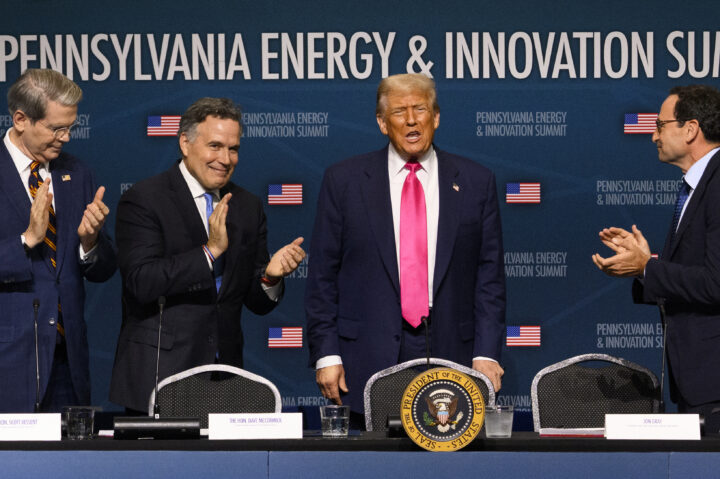
Jeff Swensen/Getty Images
President Donald Trump (C) arrives to speak to guests and investors at the inaugural Pennsylvania Energy and Innovation Summit at Carnegie Mellon University on July 15, 2025 in Pittsburgh, Pennsylvania.
PITTSBURGH — Pennsylvania’s top lawmakers put up a united front on Tuesday to emphasize to the hundreds of tech and energy investors at Sen. Dave McCormick’s (R-PA) inaugural innovation summit the benefits of working with states that embrace bipartisanship and the national security imperatives of investing domestically.
The Pennsylvania Energy and Innovation Summit brought top tech and energy executives to Carnegie Mellon University’s campus, home to one of the world’s most advanced AI programs. Tuesday’s gathering also included the state’s two leading Democrats, Gov. Josh Shapiro and Sen. John Fetterman (D-PA), and President Donald Trump, all of whom praised the conference as a strategic way to promote U.S. investment to the scores of foreign and American leaders in attendance.
Amazon Web Services’ $20 billion investment last month in three computing and AI campuses in the Keystone State was “an indicator of all that we can be when we harness the new things that we have going for us, and when we have government and the private sector working together, not at odds, and when we pull in our educational institutions … in a way that really helps move Pennsylvania forward,” Shapiro said during a panel discussion with McCormick and AWS CEO Matt Garman.
While McCormick and Shapiro acknowledged their political differences, they said they agreed that their state should be on the forefront of the technological innovation and investment happening in the United States. They also said they share the view that a unified team of statewide leaders is more appealing to outside investors and businesses than an assortment that’s at odds with each other.
“I look at this moment as a business guy, and so I say one of two things: If I’m a business guy, what do I want?” McCormick asked. “I want to come to a place that has all those ingredients and has uniform political leadership. … If you’re a CEO and you want to invest a bunch of money and you come in and sit down, you meet the governor and he’s talking bad about me and saying that I’m full of it, and vice versa, that makes you not want to invest, right? So we need to be aligned at all levels.”
“The governor and I are of different parties, we have plenty of differences, but on this, we agree. Sen. Fetterman was at our dinner last night. On this, we agree that we need to be at the crossroads of the energy revolution, the AI revolution. To have a leadership position, we need to show a unified front at the local level, at the state level, at the national level. That’s the only way to win,” McCormick continued.
The conversation, which took place as hundreds of AI and energy firms courted investors at tables around the Jared L. Cohon University Center on Carnegie Mellon’s campus, followed panel discussions from senior tech and finance executives about winning the race for AI and energy domination domestically and the benefits of investing in the Keystone State.
Shapiro and McCormick separately said that they view Pennsylvania as a purple state that requires bipartisan cooperation to push any legislation across the finish line.
“As a candidate, I promised I would get things done, and in Pennsylvania, you can’t get things done unless you’re able to work with people who you disagree with on certain things and find areas of common agreement,” McCormick said. “We can agree that we’ve got to have great jobs in Pennsylvania, we’ve got to take advantage of our energy resources, like there is so much to agree on. So I think this is a particularly special moment for Pennsylvania.”
Shapiro noted that his first two years as governor took place under a Republican state Senate, forcing him to reach across the aisle and find common ground on areas such as economic and education policy, before noting that he still takes issue with major GOP policy priorities such as Trump’s budget reconciliation bill.
“The last two years, I was the only governor in the entire country with a divided legislature. Senate led by Republicans, a House led by Democrats. This year, I think there’s one or two other governors with the same. For me to get any bill to my desk requires votes from the Republican Party and the Democratic Party. And I think if you enter every discussion focusing on your differences, you’ll never get anything done,” Shapiro said.
“We’re honest about differing on the bill that was just passed, the reconciliation bill that was just passed last week,” he added of his disagreements with McCormick. “But we also understand how critically important it is to grow our economy in Pennsylvania, this unique moment that we are in.”
Fetterman, who returned to Washington on Tuesday for Senate business, told Jewish Insider in a statement that he was fully supportive of the summit and the unity push by McCormick and Shapiro.
“Party aside, we’re all in – on Pennsylvania’s best interests,” Fetterman told JI, adding that he sent his “congratulations to Sen. McCormick for putting this tremendous event together for Pennsylvania’s future.”
McCormick later highlighted in his discussion with Shapiro and Garman the need for Pennsylvania and the U.S. to keep up with the rest of the world in economic development.
“If you travel around the world, if you go to the Middle East, if you go to other places, the pace of change is extraordinary. And it’s gonna require a level of urgency that I don’t think most people in this room have probably had in the past about this moment, particularly in Pennsylvania. And so that urgency, we need to grab the moment,” the senator said.
In response, Shapiro pointed out that one of McCormick’s top takeaways from his recent visit to the Middle East was the potential for U.S. investments from new partners.
“The senator, and I think Dina [Powell McCormick] as well, went to the Middle East a month or two ago, and we talked right when he came back. One of the things you were most jazzed up about, I thought, were the investments that folks in the Middle East shared with you that they wanted to make in America and how you were pitching Pennsylvania as part of that,” Shapiro said.
“This is a global race for both energy dominance and AI dominance. We need home-grown Pennsylvanians to be doing this work, and we need investment from all across the country and all across the globe. We do not want China to beat us in this AI race. This is one of the most important national security questions we have, and so if the senator and others can bring investment from around the globe to right here in Pennsylvania,” he continued.
During the president’s roundtable discussion with McCormick, leading executives and several members of his Cabinet, Trump touted the $5.1 trillion in domestic investments he claimed to have secured on his last visit to the Middle East while cheering the $90 billion in committed U.S. projects announced at the summit.
“Today’s commitments are ensuring that the future is going to be designed, built and made right here in Pittsburgh and I have to say right here in the United States of America,” Trump said.
Interior Secretary Doug Burgum described the president’s “vision of energy dominance” as the “foundation of this golden age for America.”
“You identified that there were a couple of threats to our country. One was Iran having a nuclear weapon. The other was losing the AI arms race to China. You took care of one of those a few weeks ago. You’re helping to take care of the other one here,” Burgum said of Trump’s agenda, prompting a smile from the president.
McCormick then noted that Trump’s attendance at the summit helped boost interest from industry leaders and investors alike. “I really believe, Mr. President, based on you being here, we’re going to look back on this day and say that this was a real, seminal moment in the history of our Commonwealth and maybe in the history of our country,” he told the president.
Trump then remarked that while McCormick had initially only asked him to make a brief appearance at the gathering, he decided to stay for longer once he saw the industry leaders on the high-profile guest list.
“When I saw the people gathered, I said, ‘I’m not leaving. I want to learn something.’ And I have learned something. This is the smartest group of talent, probably, that you’ve ever had in terms of energy and even finance, [that you’ve] ever had in one room,” Trump remarked to the crowd.
At the National Security Council, top officials focused on Israel and the Middle East were pushed out last month as President Donald Trump seeks to centralize foreign policy decision-making in the Oval Office
Andrew Harnik/Getty Images
U.S. President Donald Trump speaks during a swearing in ceremony for interim U.S. Attorney for Washington, D.C. Jeanine Pirro in the Oval Office of the White House on May 28, 2025 in Washington, DC.
Another week, another round of evidence showing that a growing faction of isolationist-minded foreign policy advisors — or, in the parlance of some on the MAGA right, the “restrainers” — are slowly but surely gaining influence in the Trump administration’s second term.
If personnel is policy, it suggests the second Trump term will feature a markedly different approach to the Middle East than his record from 2017-2021, which included the signing of the Abraham Accords between Israel and four Arab countries, the elimination of Iranian Revolutionary Guard leader Qassem Soleimani and the withdrawal from former President Obama’s nuclear deal with Iran.
We reported this week that the Senate will soon consider the nomination of Justin Overbaugh to be deputy undersecretary of defense for intelligence and security. Overbaugh is just the latest of several senior Pentagon nominees who come from Defense Priorities, a Koch-backed think tank that has generally argued the U.S. should scale back its involvement in global conflicts, including in the Middle East.
It’s not just at the Defense Department. A senior State Department official told Jewish Insider that at Foggy Bottom, too, the “restrainers” are ascendant. Morgan Ortagus, an Iran hawk who has been serving as deputy Middle East special envoy under Steve Witkoff, plans to depart the office. At the National Security Council, top officials focused on Israel and the Middle East were pushed out last month as President Donald Trump seeks to centralize foreign policy decision-making in the Oval Office.
This story is more than just a gossipy tale of White House palace intrigue. This factional foreign policy battle is set to have major global consequences. The impact is already clear: Trump is pursuing nuclear negotiations with Iran, led by Witkoff, that may result in a deal — one that reportedly could allow Iran to at least temporarily continue enriching uranium, a position that would have been unimaginable in Trump’s first term.
The ongoing, ever-extending negotiations and apparent concessions to Iran — along with occasional leaks from unnamed American officials telegraphing Israel’s military plans — have reduced the leverage to pressure Iran to make significant concessions. While Trump has threatened military action if the talks break down, the actions from the U.S. side suggest they’re eager to make a deal at any cost.
It’s not a coincidence that malign actors are taking advantage of American goodwill. Last month, Trump abruptly abandoned a bombing campaign against Yemen’s Houthi militia, announcing a truce with the Iranian proxy even as the group continues to threaten Israel with missiles. While Trump claimed to have reached a ceasefire with the Houthis to make the trade lanes safer, commercial shipping companies are continuing to avoid the Red Sea and Suez Canal shipping lanes, according to The New York Times.
Trump’s reassignment of hawkish former National Security Advisor Mike Waltz to serve as ambassador to the United Nations last month was the first of a series of moves that have since diminished the influence of those advocating a more traditional conservative foreign policy worldview of peace through strength, and projecting military power to deter American enemies.
Secretary of State Marco Rubio, who is also serving as U.S. national security advisor, would’ve been considered firmly in that camp until this year. But since joining the Trump administration, Rubio has managed to maintain his influence by accommodating the ascendant faction of isolationists in the administration.
Please log in if you already have a subscription, or subscribe to access the latest updates.
 Continue with Google
 Continue with Apple