








































Newly released memos reveal State Dept. concerns about basis for student deportations
Rümeysa Öztürk, a Turkish student at Tufts University, was arrested by federal agents for co-authoring an anti-Israel op-ed in her college newspaper
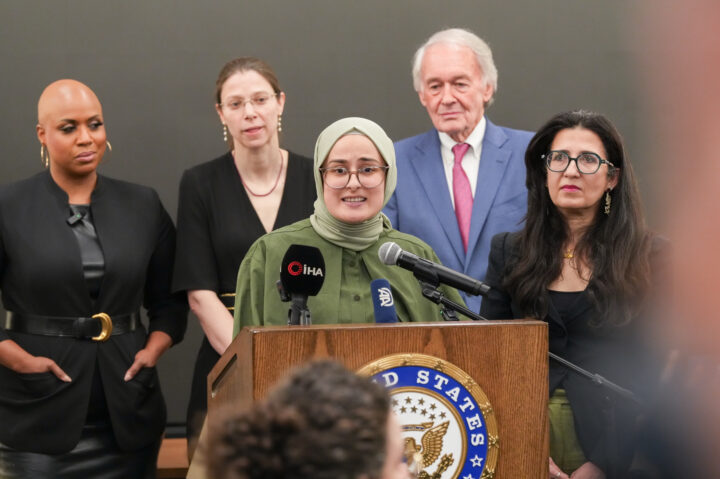
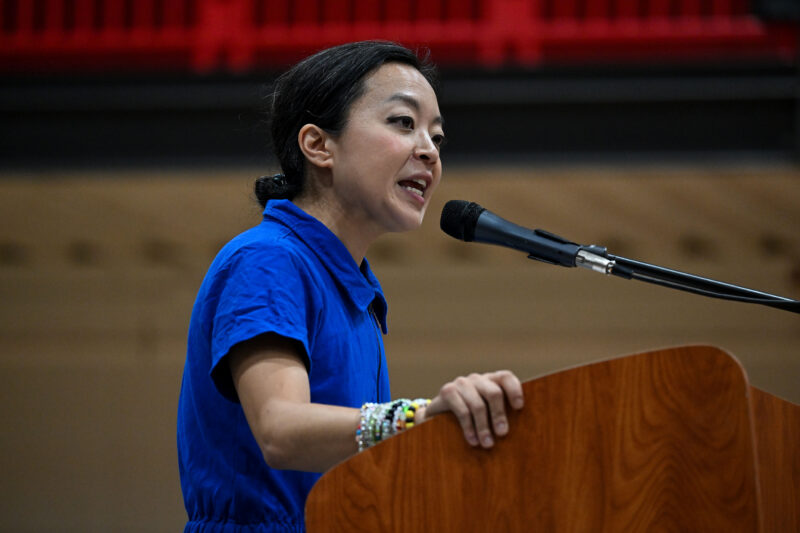
Mel Musto/Getty Images
Rümeysa Öztürk speaks to the media after arriving at Logan Airport on May 10, 2025 in Boston, Massachusetts.


 Add JewishInsider on Google
State Department officials who were tasked with deporting foreign students accused of antisemitism and threatening American national security warned that the efforts may present free speech concerns, according to government documents that a federal judge released last week.
The several hundred pages of previously sealed federal documents are connected to the ongoing deportation cases against Mahmoud Khalil, Rümeysa Öztürk, Mohsen Mahdawi, Yunseo Chung and Badar Khan Suri, each of whom U.S. immigration authorities targeted because of their involvement in anti-Israel activity at American universities.
The Trump administration has said in public statements that the students were ordered to be deported because of their involvement in antisemitic and pro-Hamas activities, but little evidence was shared publicly at the time to back up the allegations.
The students have challenged the deportations with mixed results. Khalil — a protest leader at Columbia’s anti-Israel encampment in 2024 — was the first to be arrested, in March 2025. His detention, as a green card holder, became a cause célèbre on the left among activists who argued that President Donald Trump had overstepped his authority. Khalil was released from detention in June, but a federal appeals court last week paved the way for his deportation, potentially to Algeria.
In a series of memos last year sent to Secretary of State Marco Rubio from John Armstrong, a senior State Department official who oversees visas, Armstrong made clear that Rubio would have to directly approve the students’ deportations, noting that they are likely to draw intense scrutiny, particularly after Khalil’s legal challenge against his own deportation. For cases where the reason to deport somebody is based on their “past, current or expected beliefs, statements or associations that are otherwise lawful,” the secretary of state must “personally” make a determination that their actions “would compromise a compelling U.S. foreign policy interest,” a March 8, 2025, memo to Rubio said.
One case concerned the visa status of Öztürk, a Turkish student at Tufts University who was ordered to be deported last March and was arrested by federal agents on her way to a Ramadan event. A senior Department of Homeland Security official told Jewish Insider last year that federal investigators “found Öztürk engaged in activities in support of Hamas, a foreign terrorist organization that relishes the killing of Americans.” The only public evidence at the time connecting her to the anti-Israel protest movement was a 2024 op-ed in Tufts’ student newspaper that she penned with three other students calling for the university to divest from Israel.
One of the State Department memos unsealed last week revealed that this op-ed was the sole basis for the effort to deport her — and that department officials recognized it might face legal challenges.
The op-ed divulged that Öztürk was a member of Tufts Graduate Students for Palestine, which the immigration investigators noted was suspended by the university. Öztürk’s involvement with the group “may undermine U.S. foreign policy by creating a hostile environment for Jewish students and indicating support for a designated terrorist organization,” investigators concluded. The memo revoking her visa declared that she co-authored an op-ed “that found common cause with an organization that was later temporarily banned from campus.”
But in assessing the strength of DHS and Immigration and Customs Enforcement investigators’ conclusions, Armstrong noted one potential weakness: “While Öztürk has been involved with actions protesting Tufts’ relationship with Israel,” he wrote, the investigators have not “provided any evidence showing that Öztürk has engaged in any antisemitic activity or made any public statements indicating support for a terrorist organization or antisemitism generally.” Nor did they prove that she was involved in the activities that led to the pro-Palestine group being suspended by Tufts.
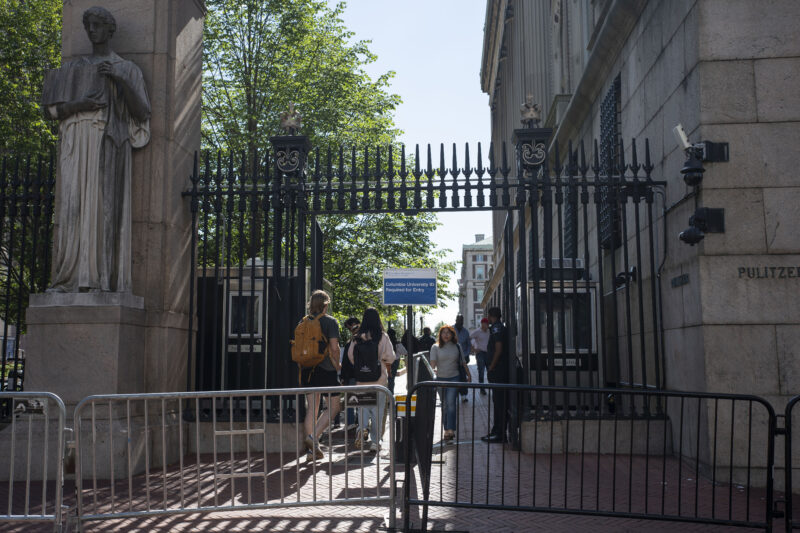
For Khalil and Mahdawi, the case to deport rested on their leadership roles in anti-Israel protests at Columbia. Khalil “created a hostile environment for Jewish students,” officials wrote, as an encampment leader and “a key figure in the March 6 Barnard College library occupation, where protestors distributed Hamas-authored flyers.”
Mahdawi, “through his leadership and involvement in disruptive protests at Columbia University, has engaged in anti-Semitic conduct through leading pro-Palestinian protests and calling for Israel’s destruction,” authorities concluded. “The activities and presence of Mahdawi in the United States undermines U.S. policy to combat anti-Semitism around the world and in the United States, in addition to efforts to protect Jewish students from harassment and violence in the United States.”
The only person who was directly linked to supporting Hamas was Suri, a Georgetown researcher whose wife is the daughter of a former Hamas official.
“The type of intimidation and incitement attributable to Suri potentially undermines the peace process underway in the Middle East by reinforcing anti-Semitic sentiment in the regional [sic] and thereby threatening the U.S. foreign policy goal of peacefully resolving the Gaza conflict,” officials wrote. But they also noted the challenges the case might face on freedom of expression grounds.
“Given the reliance on Suri’s public statements as an academic, and the potential that a court may consider his actions inextricably tied to speech protected under the First Amendment, it is likely that courts will closely scrutinize the basis for this determination,” one memo reads.
These immigration cases, early in the first year of Trump’s second term, were heavily scrutinized. Even though fighting antisemitism was a stated reason for the Trump administration’s decision to remove the students, some Jewish leaders were concerned about the heavy-handed tactics and limited information shared about their arrests.
None of the five students is still in detention, and they are each challenging their deportation orders.
More Stories
PIKER PROTECTOR
Rep. Pramila Jayapal rails against university decision to cancel Hasan Piker speech
campus beat
ADL-AEN report details higher ed unions being hijacked by anti-Israel activists
RED LINE
Randy Fine’s primary opponent pushes openly antisemitic, pro-Hitler messaging
PAC PUSH
J Street launches six-figure ad campaign to boost progressive in Swalwell’s former seat
senator sitdown
Rick Scott: We have to ‘fight, fight fight’ antisemites running in the Republican Party
Daily Overtime
Raskin investigates campus antisemitism investigators
Please log in if you already have a subscription, or subscribe to access the latest updates.
 Continue with Google
 Continue with Apple