

























































Sephardic leaders argue their tradition serves as a model for the future of Diaspora Jewry
'We don't want to "preserve" a Sephardic heritage; we want it to live; we want to draw on our past and bring it to life in new ways,' Rabbi Marc Angel told attendees
Haley Cohen
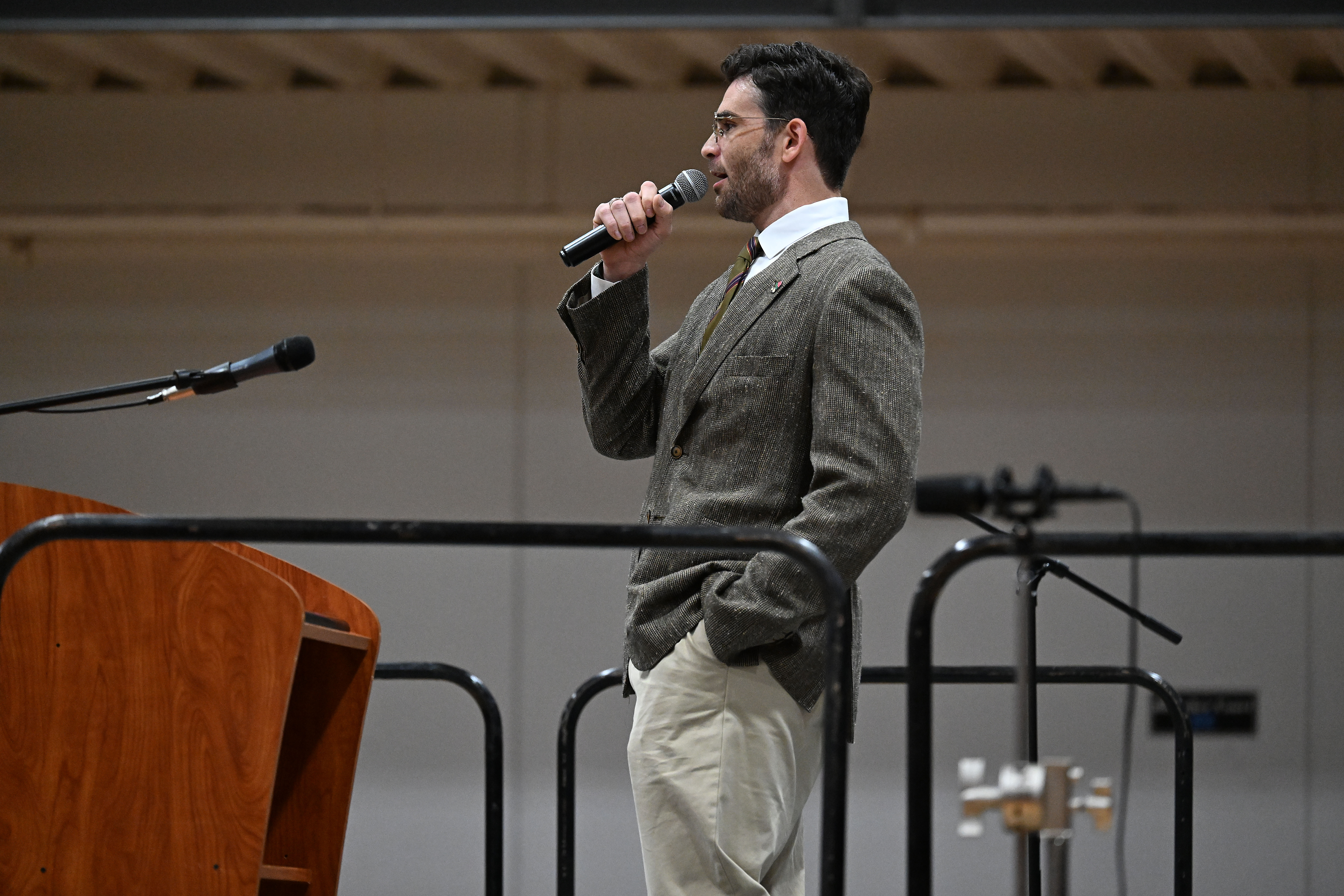
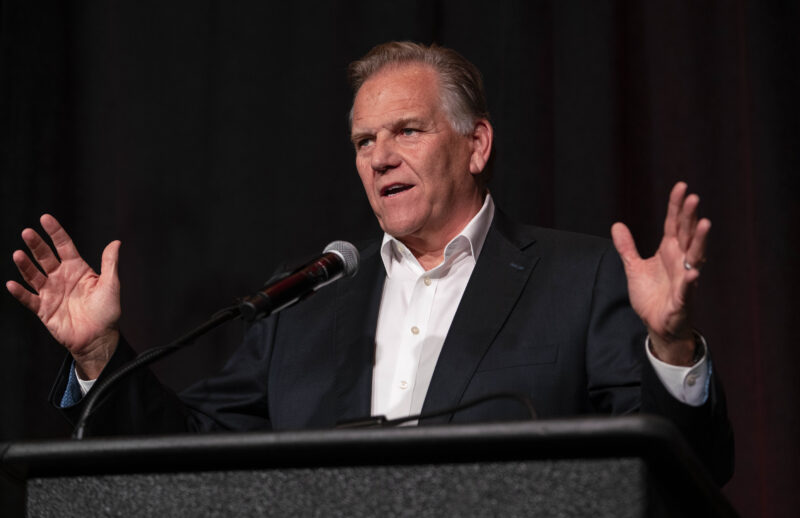
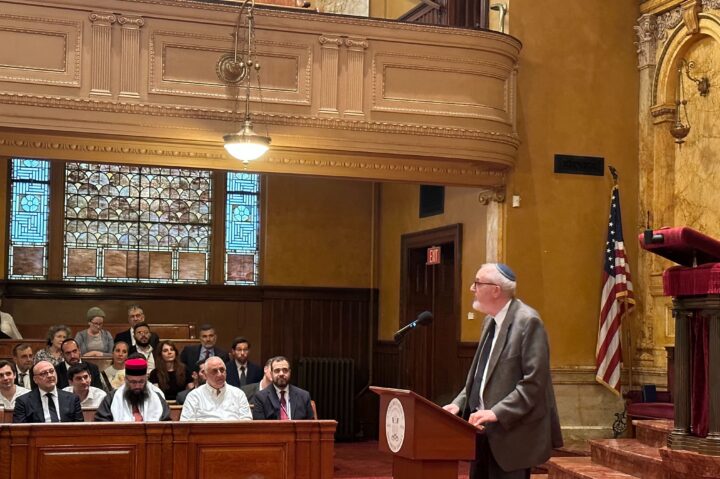
Rabbi Marc Angel addresses the Sephardic Rabbinic Conference at Congregation Shearith Israel in New York on Monday, Aug. 17, 2026.


 Add JewishInsider on Google
Rejecting a model of cultural preservation in favor of a religious and cultural heritage that is evolving, Rabbi Marc Angel argued on Monday that North America’s oldest Jewish congregation, New York’s Shearith Israel, serves as an example of enduring not as an ethnic relic in need of preserving but as a guide for the future of Diaspora Jewry.
“People speak of preserving the Sephardic heritage. I do not agree,” said Angel, rabbi emeritus of the Shearith Israel — often called the Spanish and Portuguese Synagogue — on Manhattan’s Upper West Side, which he led from 1969-2007.
“You preserve fish, you preserve fruit, you preserve things that are dead. Something alive grows and evolves,” he continued. “We don’t want to ‘preserve’ a Sephardic heritage; we want it to live; we want to draw on our past and bring it to life in new ways, to breathe wisdom and spirituality that can continue to fill our lives and inspire our future generations.”
Angel’s comments came during an address titled “Beyond Ethnicity: What Will Sephardic Judaism Mean 50 Years From Now?” during an evening reception for the second annual Sephardic Rabbinic Conference, a gathering aimed at strengthening a Jewish community that organizers say has long operated in a Jewish institutional landscape shaped by Ashkenazi-dominated institutions.
The Spanish and Portuguese Synagogue traces itself back to 1654. “People admire our history, as do I,” said Angel. “But when I look at our synagogue I don’t only see the past. I see a taste of the future of the Jewish people. We thrive as a synagogue in the Western Sephardic tradition, a tradition of formality, elegance, supreme reverence for God … but we are not an ‘ethnic’ congregation.”
Despite making up just an estimated 10% of the American Jewish population, today’s Sephardic and Mizrahi Jews in the U.S. report higher rates of Jewish communal participation, a stronger connection to Israel and are more likely to say that being Jewish is somewhat or very much a part of their daily life compared to Ashkenazi Jews, according to a 2025 report by JIMENA (Jews Indigenous to the Middle East and North Africa).
On the other side of Central Park, Angel recalled that when he first walked into the Spanish and Portuguese Synagogue 60 years ago, at least half the congregants were Ashkenazi.“
And most of the Sephardim were themselves either married to Ashkenazim or their children were married to Ashkenazim. In other words, our congregation flourished as a Sephardic congregation because it attracted those of various backgrounds who found the Western Sephardic traditions to be spiritually compelling to them,” he said.
Looking ahead to three or four generations from now, Angel predicted Sepharic practice will continue to attract all types of Jews.
“There will be very few — if any — purely ‘ethnic’ congregations,” he said. Rather, Angel asserted, “Jews of many backgrounds will be found within the Sephardic orbit.”
“What will draw them to the Sephardic traditions? What are basic ingredients in Sephardic civilization that are relevant and meaningful to all thinking Jews, regardless of ethnicity?” he said.
“Actually, we have a lot of powerful traditions — intellectual, cultural, synagogal — that will attract a great many people. I like to speak of ‘Sephardism’ — Sephardic civilization —- beyond ethnicity.”
The two-day conference, which was held at the UJA-Federation of New York headquarters in Manhattan and concluded on Tuesday, featured speakers including Israeli Consul General Ofir Akunis; Daniel Rosenthal, vice president for government relations at UJA-Federation; Rabbi Elie Buechler, director of programs at the Orthodox Union Advocacy Center; and rabbis from around the world.
More Stories

FLAGGING FICTION
Blinken denies report he delayed Hamas offer to free hostages
EXCLUSIVE
Brandeis Center urges Qatar to provide ‘complete public accounting’ of campus funding
SENSE OF SECURITY
Mamdani and NYPD unveil safety plans for 9/11 memorial, Rosh Hashanah

Democracy Deficit
New report warns civics education crisis is fueling antisemitism, eroding support for Israel

Settlement Showdown
U.K. Foreign Secretary Ed Miliband announces sanctions against Israeli settlements
CAMPUS CAUCUS
Gottheimer, Stefanik launch caucus to combat antisemitism on college campuses
Please log in if you already have a subscription, or subscribe to access the latest updates.
 Continue with Google
 Continue with Apple