



















































Rep. Zach Nunn stands by U.S.-Israel relationship as ‘returning huge dividends’
The Iowa congressman championed two amendments to the NDAA that expand and build on collaboration with Israel

Bill Clark/CQ-Roll Call, Inc via Getty Images
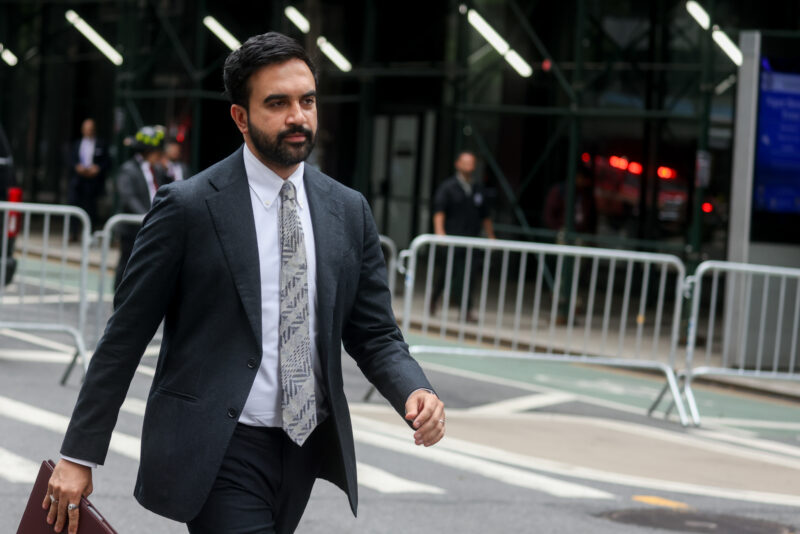
Rep. Zach Nunn (R-IA) arrives for the House Republican Conference meeting in the U.S. Capitol on Wednesday, December 10, 2025.


 Add JewishInsider on Google
At a time when an increasingly vocal minority on the right is questioning the future and the benefits of the U.S.-Israel relationship, Rep. Zach Nunn (R-IA) led a pair of amendments to the 2026 defense policy bill aiming to expand the relationship, with a particular focus on new technologies.
Asked how he responds to those on the right who question the value of the relationship, Nunn, the chair of the Republican Study Committee’s national security task force, told Jewish Insider, “Israel is the lone bastion of democracy, freedom and Western values in a region where the U.S. has vital national security interests. For decades, Israel has been a strategic partner in kinetic and non-kinetic action against bad actors like Iran.”
He added that programs such as the ones he championed would prepare the U.S. for all manner of challenges.
“As our adversaries embrace low-cost options like drones and cyberwarfare, it’s more important than ever that we not only coordinate closely on joint security, but also on the underlying technologies that will define the next generation of conflict,” Nunn continued. “My amendments are about ensuring that partnership continues to evolve. They are strategic investments that strengthen American security, deter our adversaries and deliver real returns for U.S. taxpayers.”
Versions of the two NDAA amendments that Nunn led related to expanding military technology partnerships with Israel are included in the final version of the bill the House passed on Wednesday and the Senate is expected to pass next week. One encourages the Defense Innovation Unit to consider opening an outreach office in Israel to deepen ties to the Israeli tech industry, while the other expands U.S.-Israel partnerships in counter-drone efforts.
“Israel has been right there on the front line with our American troops every step of the way,” Nunn said, explaining that his amendments aim to examine “what the future of the relationship with Israel is going to be” and leverage Israeli and American innovations to improve U.S. defenses. He said the Pentagon has backed his initiatives and that it will help “bring a lot more of the innovators to the table,” particularly in drone technology, and improve supply chains.
He said the technology also has dual-use capabilities that can contribute to agriculture and manufacturing in his home state.
“This is a really good partnership. I think that’s going to be part of what you’re going to see in this conversation on [the new U.S.-Israel memorandum of understanding] going into 2026 and beyond,” Nunn said, when asked about how such initiatives could play into the future of the U.S.-Israel relationship as the two sides negotiate the next phase of U.S. aid to the Jewish state.
“Some of the solutions coming out of [the U.S.-Israel partnership] — whether it’s counterinsurgency tactics, whether it’s border defense, whether it’s effective ways to find survivors, like what was discovered in the hostage rescue programs — these are things that can be replicated and return huge dividends to the United States,” Nunn said.
Though he said the U.S. had postponed the Iranian nuclear threat through its military action in June and Iran’s proxies have been weakened, he warned that the broader threat from Iran and its proxies remains. And he said that it’s “only a matter of time before they find an ability to bring those [nuclear] components back online.”
“We have an ongoing concern here between Hezbollah, the Houthis, Hamas, certainly, a radicalization which could retake over Syria in the near future,” Nunn said. “There’s a security envelope the United States is very concerned about, and candidly, there’s a threat vector here that’s real that every Iowan I talk to is concerned about. So this hits home on the direct home front of what we can do.”
In order to prevent Iran from rebuilding its nuclear capacity and delay a further conflict, Nunn, a former combat pilot who flew missions off the coast of Iran, said that the U.S. should focus on restricting Iranian financing and particularly target its “ghost fleet” of oil tankers; continue to build a coalition of both Arab and NATO partners to confront Iran and hold it accountable so that the U.S. does not need to shoulder the burden alone; and to empower the Iranian people.
“I think there has to be a conversation, as the president’s highlighted, with the Iranian people themselves,” Nunn said. “I don’t think the overwhelming majority of the Iranians want this regime to stay in power, and they may find that some of their best partners are actually other allies in the region. That means a return of Iran’s ability for self governance, an internal effort to get rid of the [Ayatollah], but one that immediately is welcome to the international community when they do that.”
More Stories
PRESIDENTIAL POV
Obama scrutinizes Israel’s founding, says Palestinians want their ‘land back’

SHOW OF SOLIDARITY
Jewish leaders offer support to Hindus amid rising threats to faith communities

SANCTIONS SUPPORT
Lander endorses settlement sanctions bill while on West Bank trip
RIPPLE EFFECT
New York’s suburban Dems face a Mamdani dilemma

AID ARGUMENTS
Michael Oren, Jonathan Schanzer split over when Israel should move past U.S. aid

CANCEL CALLS
Democratic push grows for Ilhan Omar, Fateh to cancel Hasan Piker event
Please log in if you already have a subscription, or subscribe to access the latest updates.
 Continue with Google
 Continue with Apple