






























Rallying for a memorial for Hamas victims, the city’s top two Jewish officials wouldn’t criticize mayor directly over his Oct. 7 statement
Adam Gray/Getty Images
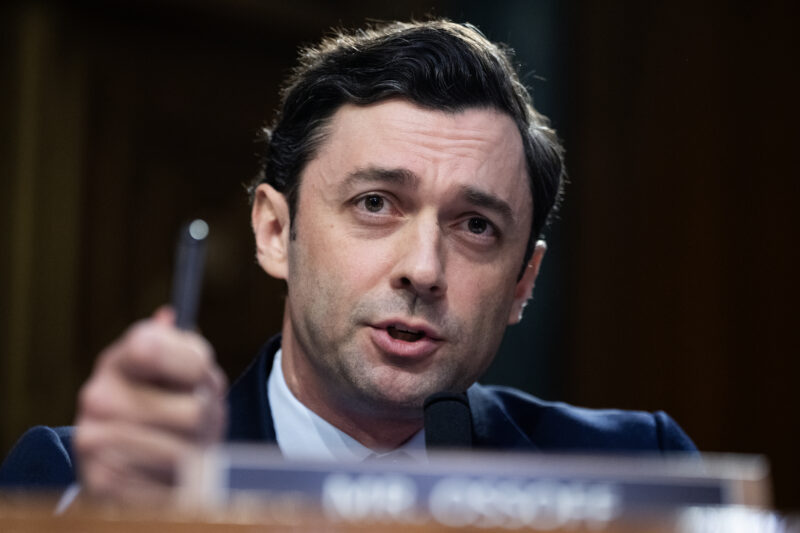
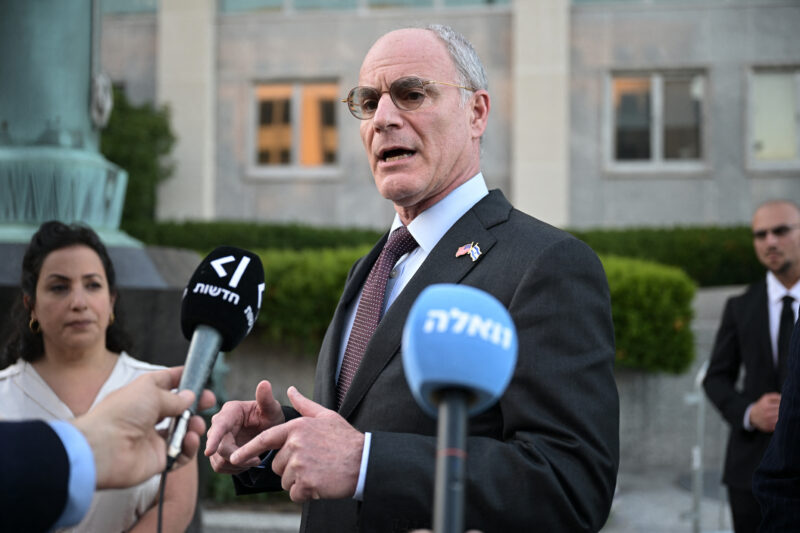
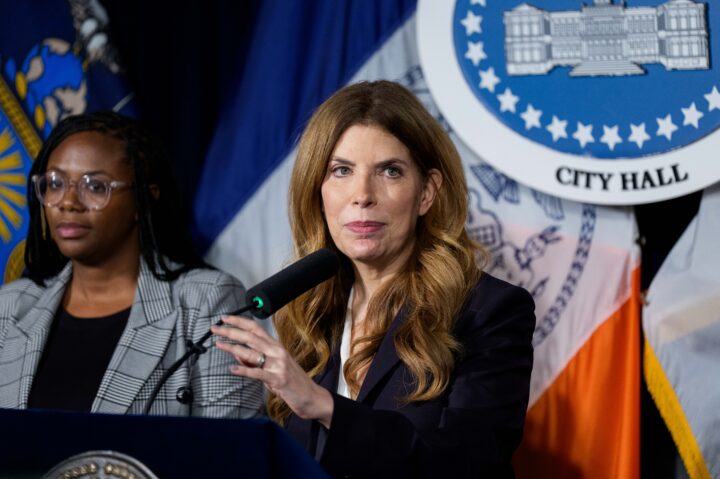
Julie Menin, Speaker of the New York City Council, addresses the media before a New York City Council Committee on October 5, 2026 in New York City.


 Add JewishInsider on Google
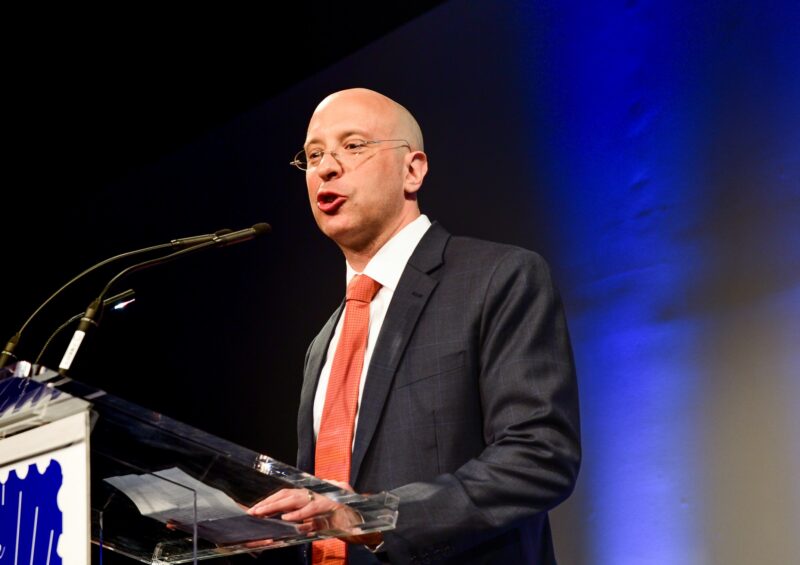
New York City’s two highest-ranking Jewish local officials turned down the opportunity to condemn Mayor Zohran Mamdani’s controversial comments on the third anniversary of the Oct. 7 Hamas attacks — even as their fellow Democrats railed against him — at a rally supporting a memorial to the Hamas victims.
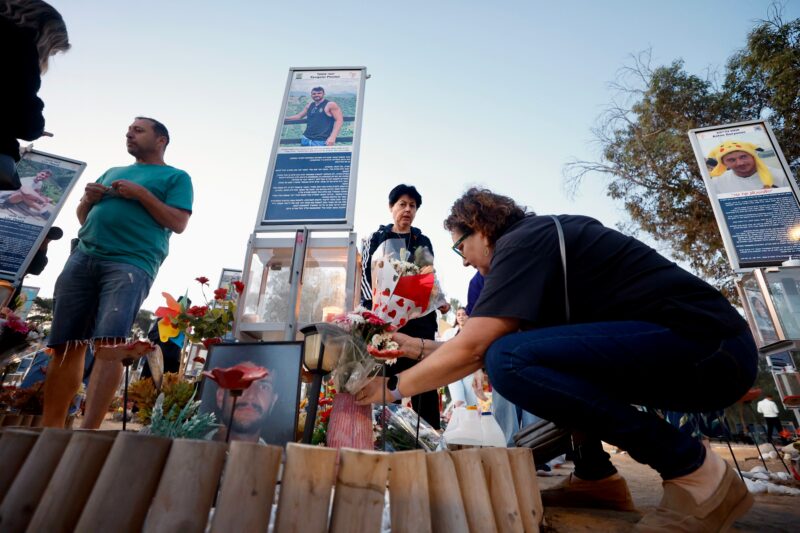
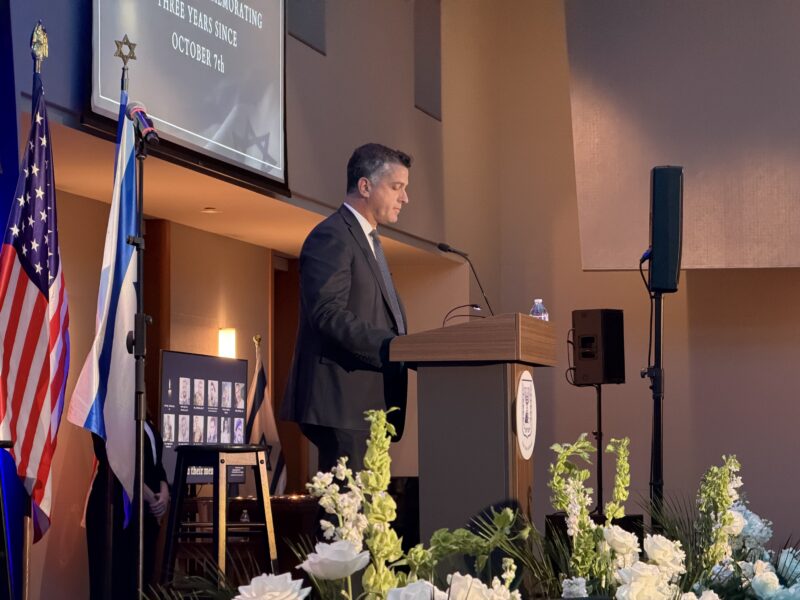
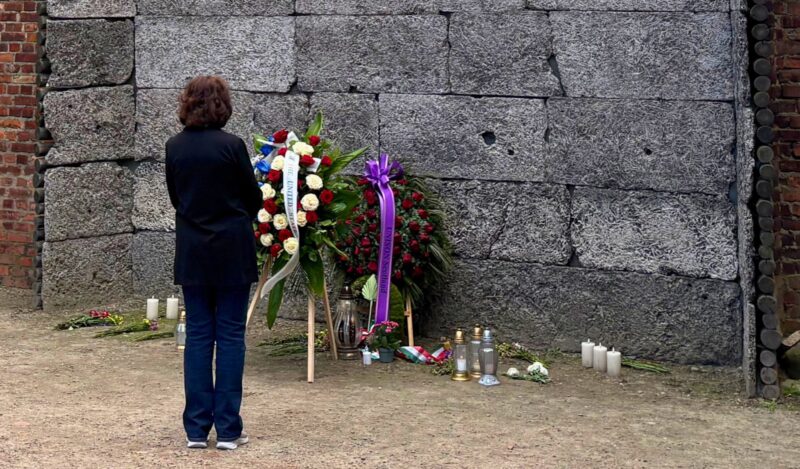
City Council Speaker Julie Menin and City Comptroller Mark Levine both turned out for an event organized by state Sen. Sam Sutton to advocate the establishment of a privately funded monument in a small Brooklyn park honoring those killed or abducted three years ago in the attacks. In their formal remarks, the pair deplored Hamas’ violence, and Levine even called a single heckler’s repeated cries of “free Palestine” during his address “very disappointing.”
But pressed by Jewish Insider and other reporters about Mamdani’s statement earlier in the day, which gave greater space to condemnations of Israel’s military response than to the attack that provoked it, neither would expressly criticize him.
“Look, I’m focused on Oct. 7 and memorializing the 1,200 people who were murdered by Hamas terrorists. I think the focus needs to be on Oct. 7, full stop,” Menin told JI as she headed for her city vehicle after speaking.
She would only reiterate this point about “focus” when JI pressed if the mayor’s statement was appropriate to the occasion.
Levine made a near-identical statement.
“Today needs to be about the victims of Oct. 7 — today of all days. And I want everyone to come together for one day to focus on the biggest loss of Jewish life since the Holocaust,” Levine told JI. “That is my message, it’s one that I hope all leaders would also deliver to their communities.”
"Today needs to be about the victims of Oct. 7." Asked by JI’s @WillBredderman about Mamdani’s statement on the Hamas attacks that assailed the "genocide in Gaza," NYC Comptroller Mark Levine said, "I want everyone to lower the temperature." Read more: https://t.co/Oyc4fzdhIB https://t.co/sp28wez7sO
— Jewish Insider (@jewishinsider) October 7, 2026
Asked if he had a specific message for the mayor, Levine again spoke only generally.
“I want everyone here to lower the temperature, to bring people together, and today more than any day to focus on the victims of this horrific attack,” he said, adding after further prompting, “I think his statement speaks for itself. And I issued my own statement. I think it’s pretty clear where I stand.”
The Manhattan politicians’ statements contrasted dramatically with those of Sutton, a conservative Democrat and longtime leader in Brooklyn’s Syrian Jewish community.
“There are those that check off a box by saying the line that Oct. 7 was a tragedy, and then they go on and on,” Sutton said, calling out the Democratic Socialists of America and the rally they promoted in Times Square one day after the attack. “Listen, DSA members, you guys celebrated on Oct. 8 when not one Palestinian was killed, but Israeli civilians were killed. Stop lying. The truth must be told.”
Joey Cohen-Saban, Sutton’s chief of staff and Democratic district leader — an unpaid but important role in the Brooklyn party organization — went further.
“The fact that [Mamdani] includes such disgusting remarks in a statement that’s allegedly supposed to remember victims of Oct. 7 shows again that he is inherently antisemitic, and that’s something that he just continues to prove over and over and over again,” Saban, now a candidate for state Assembly, told JI.
Jewish groups condemned Mamdani for amplifying rhetoric they said puts Jewish New Yorkers at risk — on a day of mourning for victims of Hamas attacks
Michael Nagle/Bloomberg via Getty Images
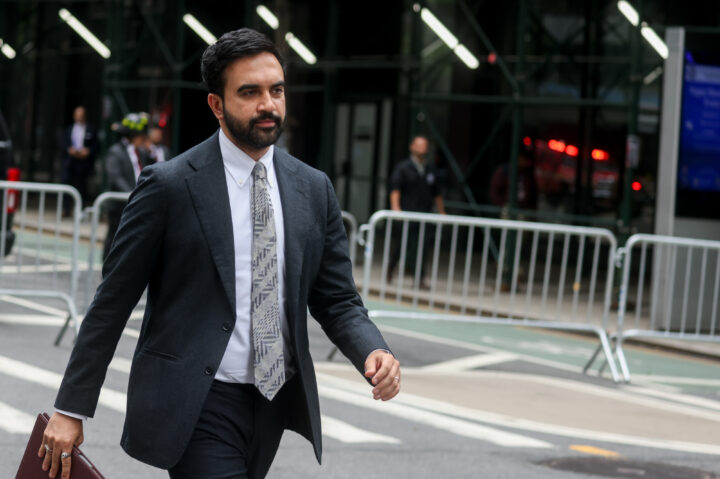
Zohran Mamdani, mayor of New York, arrives to speak to members of the media in New York, on July 7, 2026.
New York City Mayor Zohran Mamdani observed the third anniversary of the Oct. 7 attacks on Israel with a statement that opened with a denunciation of Hamas and the “horrific war crimes” it committed that day, but spent most of its length excoriating the Israeli response — drawing fierce criticism from mainstream Jewish organizations.
“We grieve alongside our many friends and neighbors who still carry that unthinkable loss,” the top of the statement concludes — before launching into the main body of his remarks attacking Israel. “The suffering did not begin nor end that day. It instead continued through the Israeli government’s devastating, ongoing genocide in Gaza,” it continues.
The mayor then launched into a litany of familiar criticisms of the Israeli military campaign in Gaza and of U.S. support for the Jewish state in a passage more than twice as long as his comments on Hamas and its victims.
“Many New Yorkers are reckoning with this unbearable grief, and we mourn alongside them — all while knowing that our tax dollars fund these war crimes,” the statement continues. “Three years later, we must refuse to accept a world in which occupation and apartheid continue, where war crimes are met with impunity, and our federal government continues its complicity with every arms shipment.”
The mayor concluded his statement with a call “to honor the dead, we must fight for a world in which every person can live with freedom, safety, and dignity.”
The decision to devote the bulk of his statement commemorating the deadliest day for Jews since the Holocaust to attacking Israel infuriated leading Jewish religious civic leaders.
“Today should have been a day for New York to stand with the victims of October 7, their families, and all those still living with the trauma of Hamas’s barbaric attack,” UJA-Federation of New York said in statement. “Instead, Mayor Mamdani chose to respond to the grief of Jewish New Yorkers by advancing false and inflammatory attacks against Israel — not only inappropriately shifting the focus away from the victims of Hamas’s cruelty, but also placing Jewish New Yorkers at risk.”
The Conference of Presidents of Major American Jewish Organizations also released a statement, saying, “Mayor Zohran Mamdani chose this solemn day to advance his familiar attacks on the Jewish state. There is a time for debate over Middle East policy. The anniversary of the October 7 massacre is not that time. Exploiting a day of profound grief to accuse Israel of genocide dishonors the memory of those who were murdered, deepens the pain of survivors and hostage families, and further alienates Jewish New Yorkers at a moment that should unite us in remembrance.”
“Mayor Mamdani cannot give Jewish New Yorkers even a single day to mourn without gaslighting us and appropriating the trauma of Oct. 7,” Rabbi Marc Schneier of the Foundation for Ethnic Understanding said in a statement, re-upping longstanding concerns that the mayor’s constant criticism of Israel feeds into the city’s spike in antisemitic hate crimes under his leadership. “His rhetoric fuels hostility toward Jewish New Yorkers. Today, he could have honored the victims and promoted peace and prosperity for Israelis and Palestinians. Instead, he chose to incite hatred.”
Andrew Gross, New York regional director for the American Jewish Committee, also criticized the mayor for what he described as injecting politics into a solemn occasion.
“Today is about the 1,200 lives stolen on October 7, 2023, the 251 who were taken hostage, and the countless others who were terrorized by Hamas and continue to be haunted by the violence inflicted on them, their families, and an entire country that day,” Gross wrote in a statement to Jewish Insider. “It is not about the mayor or his efforts to advance a false political narrative. His decision to use October 7 to promote slander against the Jewish state and amplify rhetoric that puts Jewish New Yorkers at greater risk is especially painful and egregious.”
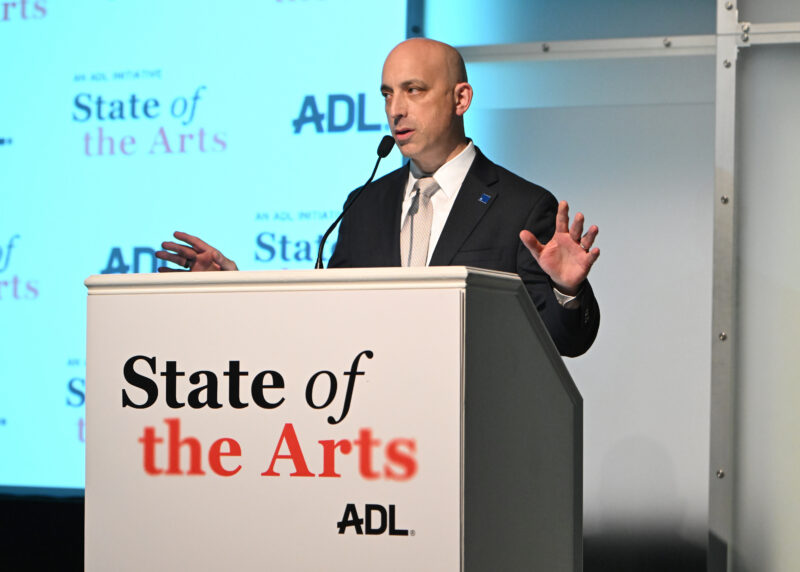
Anti-Defamation League CEO Jonathan Greenblatt, meanwhile, highlighted that the mayor’s statement made no reference to “Jews,” repeating a frequent criticism that Mamdani does not recognize or appreciate that many of the people he represents feel an affinity to Israel as a nation — even as he frequently and explicitly identifies New Yorkers of Palestinian background with events in Gaza and the West Bank.
“You are weaponizing a day meant for mourning the worst massacre of Jews since the Holocaust to recycle your usual antizionist talking points,” Greenblatt wrote to Mamdani on X. “The city with the largest Jewish population outside Israel deserves a mayor who can honor the dead without exploiting them.”
The mayor’s schedule indicated the mayor will attend first a vigil for the Oct. 7 victims before he “meets with Palestinian New Yorkers” on Wednesday. His office did not provide additional details.
JI reported in March that Mamdani’s wife liked multiple posts on Instagram celebrating the Oct. 7 attacks.
Ironically, Mamdani’s statement on X also prompted an outpouring of antisemitic commentary from the site’s users suggesting he was controlled by Jewish interests.
The plan provides $7.4 million in security grants but does not address Israel-related hate
Alexi J. Rosenfeld/Getty Images
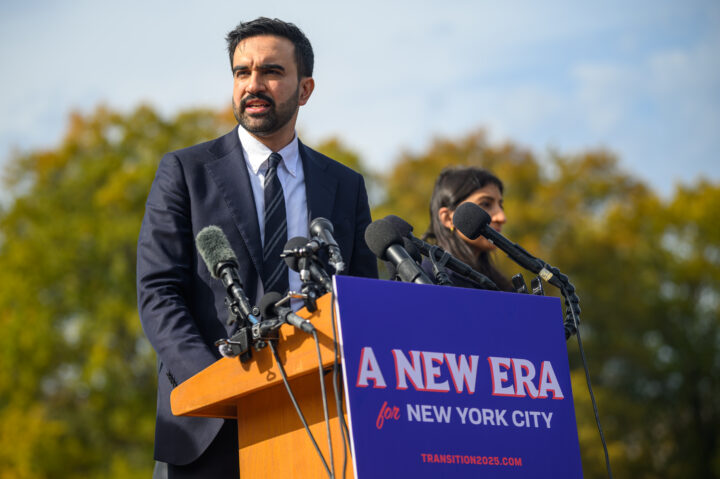
Mayor Zohran Mamdani speaks during a press conference at the Unisphere on Nov. 5, 2025.
New York City Mayor Zohran Mamdani’s administration on Tuesday released what it calls the country’s first municipal strategy to combat antisemitism, a 30-page plan that provides $7.4 million for security and prevention grants, but declines to adopt a definition of antisemitism and does not address Israel-related hate.
The report, titled “Tackling Hate: The Mamdani Administration’s Strategy to Combat Antisemitism,” features a photo of New York City’s oldest Jewish congregation, Congregation Shearith Israel, on its cover. The synagogue told Jewish Insider, “We were surprised to see our picture on the cover of the City’s brochure. The City did not advise us that it would be using a photograph of Congregation Shearith Israel for its brochure, which we didn’t know about and had no input into. Had they asked, we would have requested that they not use an image of our Synagogue for this purpose.”
The plan, developed by the Mayor’s Office to Combat Antisemitism, splits the $7.4 million in immediate hate-prevention funding — part of a $26 million increase for the Office for Prevention of Hate Crimes that was announced in May — into $1 million grants for physical security at synagogues and other vulnerable nonprofits, including lights, cameras, locks, risk assessments and bystander training. It also includes $6.4 million to double Partners Against Hate grants to community-based organizations that focus on data collection and countering online hate.
Other commitments include embedding Jewish history in public school education; launching a city-wide public campaign on how to report discrimination; initiating a campaign on Jewish New Yorkers’ contributions to be featured on LinkNYC kiosks; and providing $2 million towards finishing the Queens Holocaust Memorial at Queens Borough Hall, as well as $2.5 million to the Center for New Jewish Culture, a new cultural and community space in Central Brooklyn.
Mamdani said in a video accompanying the report’s release on Tuesday that the goal of the initiative is to “confront the scourge of antisemitism now and in the future,” noting that Jews make up only 12% of the city’s population but are the victims of around half the city’s reported hate crimes. “This is not only unacceptable, it’s something we all have an obligation to change. And City Hall will lead the way,” he said.
The strategy comes as Mamdani, the city’s first Muslim mayor, has faced sustained criticism from Jewish leaders over his rhetoric and policies on Israel and antisemitism, straining his relationship with parts of New York’s Jewish community.
Despite billing his strategy as the first in the nation, Mamdani’s predecessor, Mayor Eric Adams, had already released a “bluprint” for combating antisemitism on his last day in office, which included the city adopting International Holocaust Remembrance Alliance working definition of antisemitism — a policy that Mamdani repealed on his first day in office.
Jewish leaders offered a mixed response to the mayor’s new strategy, with some welcoming increased security funding and other measures while also arguing that the plan fails to address what they see as a key driver of anti-Jewish hostility — rhetoric targeting Israel and its supporters.
In a joint statement to JI, UJA-Federation of New York, JCRC-NY, AJC New York and New York Board of Rabbis said that “any effort to confront antisemitism in New York City must fully address the realities Jewish New Yorkers face today.”
The groups praised Mamdani’s plan for featuring “a number of positive elements, including some increased security funding for Jewish institutions and expanding proven programs,” but noted that “it fails to address a central issue that the mayor himself has perpetuated: rhetoric that demonizes and delegitimizes Israel inevitably leads to the targeting of Jewish New Yorkers.”
“Those who truly seek to address antisemitism must unequivocally reject such rhetoric and help ensure that Jewish New Yorkers are never made to feel suspect, excluded, or unsafe in their own city,” the statement continued.
Moshe Davis, founding executive director of the Mayor’s Office to Combat Antisemitism under the Adams administration, told JI he applauds the plan for its “protective measures [that] will greatly help safeguard Jewish New Yorkers against attempted terror attacks carried out by those seeking to ‘globalize the intifada.’”
“But the latest report seems to ignore anti-Israel protesters targeting synagogues and the hate being taught in our educational spaces,” said Davis. “In doing this, it seems to make a conscious effort to erase the connection between the violence against Jews we are seeing in our city and the anti-Israel propaganda clearly fueling it. A report on antisemitism that ignores what is driving much of the hate and violence against Jews is tone-deaf and dangerous.”
The Anti-Defamation League criticized the strategy, arguing that it fails to adequately address the threats facing Jewish New Yorkers — particularly condemning the mayor for not adopting a formal working definition of antisemitism. ADL said it has recorded hundreds of antisemitic incidents in New York City since Mamdani took office in January, nearly 40% of which were related to Israel.
“[Mamdani] has looked the other way as flags glorifying terror groups have been flown outside synagogues, a deliberate act meant to intimidate families walking in to pray, and as crowds gathered outside houses of worship voicing support for the same groups. At the same time, he continues prioritizing his anti-Israel agenda over the basic promises he made to Jewish New Yorkers,” the ADL wrote on X.
“Our expectations have not changed: zero tolerance for antisemitism and extremism in city government, real protection for Jewish institutions, a clear and formal definition of antisemitism that the city actually uses, and city contracts, pensions and procurement kept free of ideological boycotts.”
Gianpaolo Baiocchi and Defend Democracy in Brazil worked closely with groups backed by Marxist mogul Neville ‘Roy’ Singham
Spencer Platt/Getty Images
New York City Mayor Zohran Mamdani speaks at a food distribution center on July 27, 2026 in the Brooklyn borough of New York City.
A few months before New York City Mayor Zohran Mamdani met with Brazilian President Luiz Inácio Lula da Silva during the U.N. General Assembly on Monday, his administration hired an expatriate supporter of the left-wing South American leader — an academic and activist involved in a group tied to the sprawling global influence network of China-allied tech mogul Neville “Roy” Singham.
Hired in June as a deputy commissioner for international affairs focused on “municipal strategy and innovation,” Gianpaolo Baiocchi in July brought the organization Defend Democracy in Brazil (DDB) into his city office for a formal meeting to “strengthen ties of the Brazilian community in New York against ICE and to protect Brazil’s sovereignty.”
The summit, along with Baiocchi’s ascent into a key role in coordinating city contact with foreign consulates and world leaders, marked the culmination of years of work that the former New York University sociology professor had done as a member of DDB — which has included representing the group on Turkish and Iranian state television — and with its partners.
Those partners include multiple groups at the center of federal and congressional investigations into Singham, a Shanghai-based Marxist software magnate, and his support for the interests and narratives of Beijing, Moscow and Tehran: the People’s Forum, CODE PINK and the Party for Socialism and Liberation and its affiliate the ANSWER Coalition.
A 2025 report from The George Washington University identified these groups — though not DDB itself — as elements of a “covert funding network supporting extremist organizations in the U.S.”
Together, they have formed the core of multiple high-profile demonstrations against Israel, including a celebratory rally in Times Square a day after the Oct. 7, 2023, Hamas attacks that drew the now-mayor’s rebuke.
Mamdani’s team disregarded questions from Jewish Insider about Baiocchi’s associations with the Singham network, which include at least one foreign trip with other senior members of the administration. Mamdani’s office would also not answer which meetings between the mayor, his office and foreign figures he was personally involved in, though it acknowledged making such arrangements was the core function of the international affairs office. DDB did not respond to queries JI sent for this story.
Social media accounts for DDB, launched a decade ago to support the then-embattled Lula da Silva and his Workers Party, shows it has for years cooperated and coordinated around protest and even electoral activity with CODE PINK and the PSL/ANSWER. The group’s co-founder works as a Portuguese language instructor at the People’s Forum, which DDB has fundraised for and called “a HOME for us.”
DDB’s Instagram profile is rife with images of events it has run or participated in with Singham network affiliates at the People’s Forum’s Manhattan headquarters, including a “Benefit Concert for Gaza” held in March. Baiocchi himself has participated in at least two gatherings at the People’s Forum, the most recent recorded in 2023.
That same year, DDB arranged a “learning delegation” that sent “35 community leaders and organizers” to the Latin American nation, a trip that involved multiple meetings from another Singham-tied organization: the Landless Workers Movement, or MST, abbreviated for its name in Portuguese. The MST is part of Singham’s International People’s Assembly, an umbrella group of his left-wing allies across the planet, and the Brazilian organization coordinates closely with organizations the financier underwrites.
The trip included an extended stay at the MST’s Escola Nacional Florestan Fernandes, an organization that tax records show has received direct funding from the People’s Support Foundation Limited, an entity that The New York Times and other outlets have identified as one of Singham’s key vessels for bankrolling his empire of influence. DDB’s website describes the organization as “active members of the National Coordination of the Friends of the MST,” a U.S.-based group that raises awareness and support for the Brazilian organization.
The 2023 trip’s planners and participants included not just Baiocchi himself but Ana Maria Archila, now commissioner of Mamdani’s Office of International Affairs and Baiocchi’s boss. Archila, long a prominent left-wing activist, gained notoriety in early July for agreeing to meet with Iran’s U.N. ambassador before the State Department blocked the rendezvous.
Also attending the junket was Cea Weaver, now director of the newly created Mayor’s Office to Protect Tenants.
The Mamdani administration did not confirm or deny any awareness of this trip, but maintained Baiocchi was hired through a regular process and for his academic expertise in urban affairs. The professor previously served on the mayor’s transition team, as part of a new “committee on community organizing.” Baiocchi, who founded the school’s Urban Democracy Lab, was arrested in 2024 for his participation in an anti-Israel encampment.
A few months after the excursion’s end, Baiocchi co-signed a note on DDB’s website that hailed the trip as one of the year’s successes — along with protests organized with CODE PINK, the People’s Forum and PSL/ANSWER, including joint actions, “as part of the #shutitdown4Palestine coalition.”
Among the organizations Baiocchi brought into his new city office along with DDB after joining Mamdani’s administration was a sister organization to the MST, the MTST.
Foreign governments and influence operations have targeted New York City Hall in the past: federal prosecutors indicted Mamdani’s Gracie Mansion predecessor, Eric Adams, for allegedly accepting bribes from the Turkish government and its agents. Earlier this year, JI discovered that nearly half the New York City Council had signed onto a pro-Cuba relief campaign run through the People’s Forum.
Mamdani himself has had direct contact with persons tied to Singham: namely, the Maoist tycoon’s niece, whom the future mayor credited on the campaign trail with devising his “fast and free buses” campaign pledge.
The administration failed to produce the proposal it promised by Rosh Hashanah
Spencer Platt/Getty Images
New York City Mayor Zohran Mamdani speaks at a food distribution center on July 27, 2026 in the Brooklyn borough of New York City.
New York City Mayor Zohran Mamdani’s team vowed that it would produce its long-promised plan to fight antisemitism in the five boroughs “soon” — but declined to provide any specifics about when it might actually come out or why his administration failed to meet its original Rosh Hashanah deadline.
The mayor has repeatedly alluded to a forthcoming “first-in-the-nation municipal response” to anti-Jewish prejudice, even as his short tenure leading the city with the largest Jewish population in the world has seen a spike in hate crimes against Jews. The Jewish community is consistently the target of more than half of all hate crimes, despite making up around one-tenth of New York City’s population.
When asked why its Office to Combat Antisemitism had failed to produce the plan before the High Holy Days as promised, a City Hall spokesperson only promised it would be out “soon.”
“The mayor is fully committed to the safety of Jewish New Yorkers and to using every tool available to ensure that Jewish communities continue to thrive as an essential part of the fabric of the five boroughs,” Sam Raskin, Mamdani’s deputy press secretary, told Jewish Insider.
Mamdani himself did not answer a question from JI about the report’s status following an unrelated event — the release of a plan to combat traffic-related deaths — on Tuesday afternoon.
Former Mayor Eric Adams, Mamdani’s predecessor, released a “blueprint” for tackling antisemitism on his last day in office, largely detailing steps his office had already taken. This included an executive order Adams signed adopting the International Holocaust Remembrance Alliance’s working definition of antisemitism as official city policy.
The IHRA definition has been sharply criticized by Mamdani’s base for its assertion that the denial of the Jewish right to national self-determination and the comparison of Israeli actions to Nazi Germany are antisemitic, even though it explicitly states that criticism of Israeli policy that might be applied to any other country “cannot be regarded as antisemitic.”
Mamdani, whose frequent broadsides against Israel powered his rise to political prominence, repealed the Adams order, along with a dozen others his predecessor signed, the day he assumed office.
The administration’s failure to put out its program to counter anti-Jewish hate sparked outrage from the Anti-Defamation League, one of Mamdani’s most consistent critics.
“The delay from the @NYCMayor’s office to combat antisemitism is unacceptable,” the group posted on X. “The safety and security of Jewish New Yorkers is not a political football.”
The group further demanded the final plan include an official definition of antisemitism — which the administration has resisted setting — specific proposals for protecting Jewish institutions, “zero tolerance” for antisemitism in the municipal bureaucracy and a pledge not to boycott businesses and organizations linked to Israel.
Raskin did not respond to a JI request for his reaction to the ADL’s statement.
An insider with knowledge of the plan’s status told JI it remains unfinished. The source, who requested anonymity in order to speak freely, added that the administration had received input from the Jews for Racial and Economic Justice, an anti-Zionist activist group that supported Mamdani’s election.
Outreach to JFREJ was answered with an autoreply stating the group was inaccessible until after Yom Kippur.
Plus, Bibi's Big Apple trip tests Mamdani

Philip Dulian/picture alliance via Getty Images
Several AI applications can be seen on a smartphone screen, including ChatGPT, Claude, Gemini, Perplexity, Microsoft Copilot, Meta AI, Grok and DeepSeek.
Good Monday morning.
In today’s Daily Kickoff, we look at the political and logistical challenges facing New York City Mayor Zohran Mamdani and the NYPD ahead of Israeli Prime Minister Benjamin Netanyahu’s trip to the city for the U.N. General Assembly, spotlight a new report from Anthropic that revealed that Iran-linked actors used AI tools to target Jews and develop weapons, and talk to GOP Reps. David Kustoff and Craig Goldman about their party’s position on U.S. aid to Israel. Also in today’s Daily Kickoff: Robert Kraft, Stuart Zimmer and Judge Judith Sheindlin.
Today’s Daily Kickoff was by JI Executive Editor Melissa Weiss and Israel Editor Tamara Zieve.
Today’s Agenda
Members of Congress are back in Washington today for the final week before the House goes on recess until the November midterms. The Senate is also back in session today, and is slated to remain so until early October.
The International Atomic Energy Agency is holding its general conference in Vienna today, where Energy Secretary Chris Wright is expected to deliver a speech in which he will reiterate U.S. opposition to Iran obtaining a nuclear weapon.
Mohammad Eslami, Iran’s vice president for nuclear affairs, had been slated to address the gathering convened by the U.N. nuclear watchdog, but was denied entry to Austria, Bloomberg reports, following pressure from the Trump administration. In Tehran, Iran’s Foreign Ministry summoned the Austrian envoy over Vienna’s move to bar the Iranian nuclear chief.
We’re also keeping an eye on tensions in the Middle East as the Iran-backed Houthis in Yemen scale up their attacks on Saudi Arabia and the Yemeni government launches its own attacks on the Houthis. The escalation comes after the Houthis’ capture last week of the Yemeni port city of Mokha and an island on the Bab el-Mandeb Strait, as well as Riyadh’s shutdown on Friday of its East-West pipeline amid the escalation.
Elsewhere in the region, Omani Foreign Minister Badr Albusaidi said on Sunday that a meeting between Iran and Gulf countries over the Strait of Hormuz — intended to be held in Oman today — had been indefinitely postponed, citing “the interests of consensus.”
U.S.-brokered talks between Israel and Lebanon in Rome that had been slated for this week have been postponed to October, with an Israeli official saying that the rescheduled meeting was due to scheduling conflicts. The Israeli and Lebanese ambassadors in Washington are still slated to meet in Foggy Bottom ahead of the October talks to discuss the implementation of a framework agreement to wind down the conflict in Lebanon and disarm Hezbollah.
One Thing To Know
Analysis

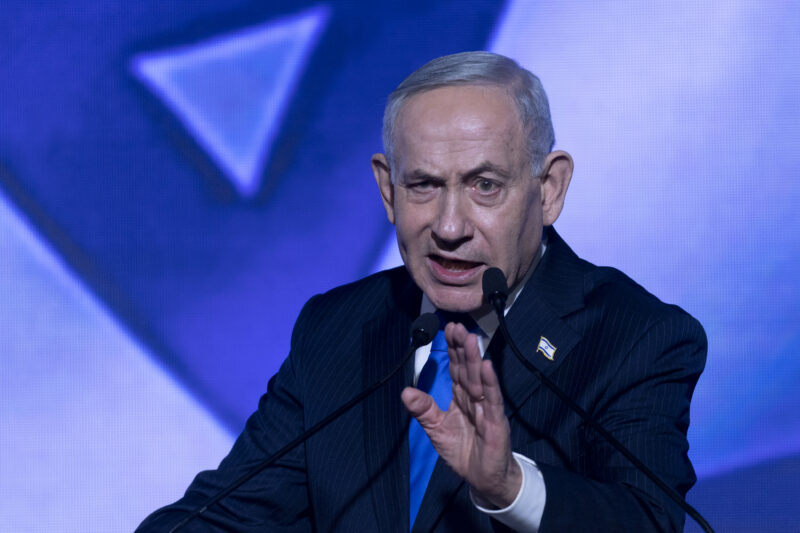
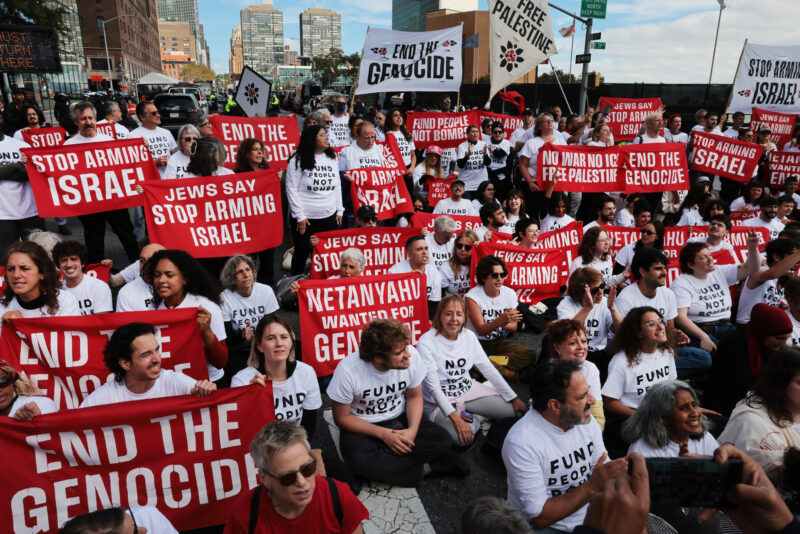
Israeli Prime Minister Benjamin Netanyahu’s trip to New York City for the U.N. General Assembly next week is expected to set up political and logistical challenges for Mayor Zohran Mamdani, one of Netanyahu’s foremost U.S. critics, experts tell Jewish Insider — a challenge that protests, which Mamdani has tacitly encouraged, may only exacerbate.
The Israeli leader is scheduled to arrive in New York on Sept. 23 and address the annual gathering the following day, during which time the NYPD’s dignitary protection detail will help ensure Netanyahu’s personal protection, its intelligence and counterterrorism teams will work to secure the gathering as a whole and an array of its officers will manage the Manhattan streets. The department reports to the mayor’s office.
The various law enforcement veterans who spoke to JI all underscored the scale of the department’s annual efforts to head off potential threats to the diplomatic summit, even without this year’s furor around Netanyahu’s attendance, the ongoing conflict with Iran and the proximity to both the Jewish High Holy Days and the 25th anniversary of 9/11.
The Big Reads
CLAUDE CONTROLS
Anthropic disclosed in a new report released on Thursday that it had over the past eight months disrupted efforts by Iran and other state-aligned groups and actors to use the AI giant’s artificial intelligence tools for “malicious activity” such as tracking U.S. forces, developing weapons guidance software and waging “cognitive warfare” to spread propaganda, Jewish Insider’s Matthew Kassel reports. The 154-page report also said it had identified an “Iran-nexus threat actor” using Claude, Anthropic’s chatbot, to target “hundreds of individuals in Israel and the Jewish diaspora.” The report did not specify the purpose of the activity or confirm whether it had been disabled.
AI alert: Anthropic CEO Dario Amodei published an essay on Saturday, calling on the AI industry to slow down and was met with agreement by OpenAI CEO Sam Altman, Google DeepMind Chairman Demis Hassabis and SpaceX CEO Elon Musk.
SELF SCRUTINY
A new survey of 470 Middle East scholars finds that nearly three-quarters believe American academia is less equipped to pursue truth than it was at the time of the 9/11 attacks, while two-thirds lack confidence that their students understand the attacks and say American academia has provided cover for ideologies, regimes or groups hostile to the United States, Jewish Insider’s Matthew Shea reports. The findings, released last week by the Association for the Study of the Middle East and Africa ahead of the 25th anniversary of 9/11, reflect what ASMEA’s executive director, Asaf Romirowsky, described as a broader failure by American universities to maintain objectivity and intellectual rigor in the quarter century since the attacks.
AID CONVERSATION
Jewish House Republicans said during the Republican Jewish Coalition’s leadership summit in Las Vegas earlier this month that there’s little appetite among Republicans to end U.S. aid to Israel as the two sides look toward the end of the current memorandum of understanding on military aid, Jewish Insider’s Marc Rod reports. “I think the message is that the majority of the members of the House want to see the aid continue, want to see this alliance continue, but elections have consequences, and we don’t know what the makeup of the next House is going to be on the Republican side and on the Democrat side,” Rep. David Kustoff (R-TN) told JI. Rep. Craig Goldman (R-TX) emphasized that Israel and the United States are facing threats not only from Iran and its nuclear program but also from the terrorist groups that Iran has spent decades funding. “I certainly will fight tooth and nail as long as I’m a member of [the] U.S. Congress to continue aid to Israel,” Goldman said.
The Rundown
NUCLEAR NEWS
EXCLUSIVE
Doha Dealings
FLAGGING FICTION
On Our Radar
● The Live Briefing. Word on the street, clips, podcasts and quick updates — the items we’re tracking all day in our Live Briefing on the app (on Apple and Android) and website.
President Donald Trump, speaking in Ireland on Sunday, suggested that the U.S. “ultimately get out” of Iran “unless we decide to stay and keep the oil, like Venezuela,” adding that Iran “wants to make a deal so badly, and is calling constantly”…
Jared Kushner said in virtual remarks to the Yalta European Strategy conference on Friday that the U.S. used Israel’s September 2025 “errant strike” targeting Hamas officials in Qatar to pressure Jerusalem to reach a deal to end the war in Gaza, saying that the strike “led to Israel being globally isolated,” creating a dynamic the U.S. “used … in order to push them into a deal that now, today, they’re quite happy with.” Watch the conversation here.
In response to Kushner’s comments, Israeli Prime Minister Benjamin Netanyahu’s Likud party issued a statement pushing back on the remarks, saying that Netanyahu’s “decision to send the IDF into Gaza City and to strike the Hamas leadership in Qatar, together with the intense pressure exerted by President Trump” led to Hamas dropping its demands as well as the release of the remaining hostages.
The New Yorker does a deep dive into Kushner’s approach to diplomacy as he represents the Trump administration in a voluntary capacity in negotiations to end a number of conflicts around the world while continuing to manage his own business interests, finding that “as [Kushner] has traversed the globe for Trump, he has grown more entangled in the commercial affairs of countries where he works”…
France and Lebanon are pushing to extend the mandate of the U.N. Interim Force in Lebanon, which is slated to expire at the end of this year, calling the move to end the decades-long U.N. presence in southern Lebanon “premature”…
The National Security Agency is planning a massive internal restructuring that will see the creation of five organizations within the agency that will focus on artificial intelligence, China, cybersecurity, combat support and global intelligence…
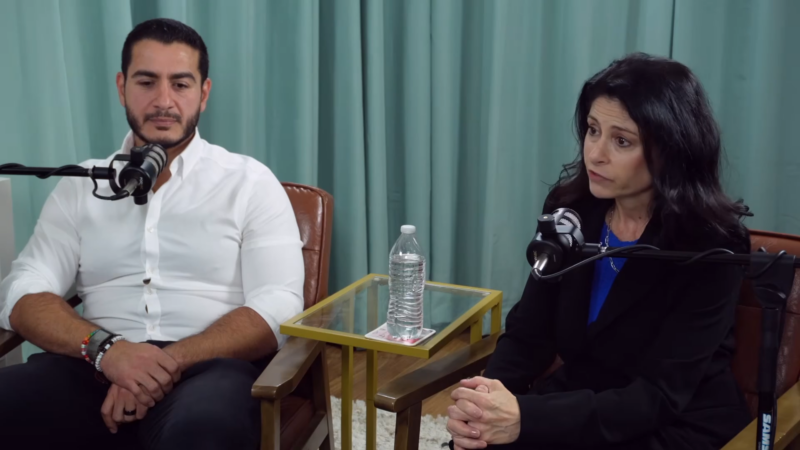
Front Line Action, a group linked to Sen. Ted Cruz (R-TX), released an AI-generated ad titled “Family Values” that spotlights relatives of Michigan Democratic Senate nominee Abdul El-Sayed who have made anti-Israel and anti-America statements…
Sen. Jon Husted’s (R-OH) reelection campaign fired its political director following a Washington Post report last week that he had in 2018 used an image of Nazi SS soldiers as his Facebook profile picture…
The Boulder Valley School District in Colorado settled a federal civil rights complaint with the Anti-Defamation League and the family of a Jewish middle schooler in the district who faced what the ADL described as years of “persistent, escalating, and severe antisemitic harassment” that went unaddressed by administrators in the district…
New England Patriots owner Robert Kraft donated $10 million to Brandeis University to name a new 28,000-square-foot facility for Jewish life, expected to open in spring 2028, eJewishPhilanthropy’s Nira Dayanim reports…
Philanthropist Stuart Zimmer, who with his wife in 2018 had pledged $100 million to Harvard University but froze the gift in response to the school’s handling of campus anti-Israel activity in the wake of the Oct. 7, 2023, Hamas terror attacks while their daughter studied at the school, quietly resumed funding; the gift will help expand kosher dining options on campus and will include the renaming of the school’s Science Center to honor Zimmer’s father…
CBS’ “60 Minutes” premiered its 59th season with an interview with the U.S. Air Force officer who was shot down over Iran and stranded in the Islamic Republic for two days before being rescued during the conflict earlier this year…
The Hollywood Reporter spotlights SHOOQ, a new online platform designed to boost Jewish filmmakers and help connect them to funding streams and financial backers; among those backing the initiative are former NBC Co-chair Ben Silverman, 30 West CEO Micah Green, Made by Us Co-CEO Tanya Cohen, actress Emmanuelle Chriqui and producer Anthony Bregman…
Singer-songwriter Pink published a lengthy statement explaining her criticism of rapper Macklemore, who led “Free Palestine” chants while opening for Ed Sheeran at a concert earlier this month, saying that the artist “stood in front of a stadium full of music-loving families, with violent images from a war on the screens, dedicated a song to the movement of his choice, and then took the mic to tell all of the Jews in the stadium that it wasn’t about them”…
Judge Judith Sheindlin — known as Judge Judy — is stepping back from the cameras after a decades-long television career as Amazon Prime stops releasing new episodes of her “Judy Justice” show; Sheindlin will serve as an executive producer for a new show starring her son, attorney Adam Levy…
Germany’s federal prosecutor said in an indictment filed last week that Hamas had planned terror attacks in Berlin and Vienna on the second anniversary of its Oct. 7, 2023, terror attacks in Israel; authorities in Germany made several arrests last year in connection with the alleged plots…
A Jewish Iranian-American man from New York who had been held in Tehran’s Evin prison was released from the notorious facility after serving approximately half of a two-year sentence but remains banned from leaving the Islamic Republic…
The New York Times spotlights the wedding of Adriana Fernandez, who has gained an internet following as “Now-Jewish Nanny,” and Jordan Langer…
Kimberly Colchamiro was announced as the new chief development officer of the Jewish Broadcasting Service…
Israeli planetary scientist Adi Ninio Greenberg died at 50… Longtime political columnist Roger Simon died at 78… Rachel Rabin Yaakov, the sister of assassinated Israeli Prime Minister Yitzhak Rabin, died at 101… Luthier Jonathan Cooper, who designed a quartet of string instruments to honor slain Wall Street Journal reporter Daniel Pearl, died at 76… Photographer Jay Maisel died at 95… Yehuda Widawski, believed to be the oldest Holocaust survivor in Israel, died at 107…
Worthy Reads
Find more Worthy Reads in our Live Briefing via our app (on Apple and Android) and website.
Hard-liners in Charge: The New York Times’ Farnaz Fassihi does a deep dive into the effort by Iranian hard-liners earlier this year to derail the ceasefire between Washington and Tehran. “The hard-liners succeeded in part because the only figure with the authority to resolve such disputes — the new supreme leader, Ayatollah Mojtaba Khamenei — has been a phantom since taking office in March. … Three Iranian officials said inquiries by the government and security forces traced the decision to strike the three commercial ships in July to the cleric Hossein Taeb, an influential spymaster who had opposed the peace deal with the United States from the outset.” [NYTimes]
Definition Debate: In The Wall Street Journal, the Foundation for Defense of Democracies’ Orde Kittrie and Andres Munoz-Mosquera, a former NATO chief legal advisor, warn of an effort tied to an International Court of Justice case involving Gambia and Myanmar that would change the definition of genocide. “The Myanmar judgment, expected in October, would establish the lower threshold before the ICJ judgment on Israel. It would change the rule first in the less-watched case against Myanmar rather than seemingly invent it for Israel. … ICJ judges who vote to lower the genocide threshold will damage the court’s credibility, invite an avalanche of politicized cases, and undercut democracies’ ability to fight terrorists and autocrats.” [WSJ]
Lambasting London: In Haaretz, Peter Lerner, director general of international relations at the Histadrut and a former IDF spokesperson, argues that Britain’s move to impose sanctions targeting Israeli settlements in the West Bank may prove to be politically counterproductive. “Britain has handed Netanyahu and his coalition an electoral gift. Extremists in the current government will present the sanctions as proof that the world is hostile to Israel and Israelis. … At the very moment Israelis must decide whether to replace the most extreme government in the country’s history, London has provided that government with an external enemy.” [Haaretz]
Picture of the Day
Birthdays
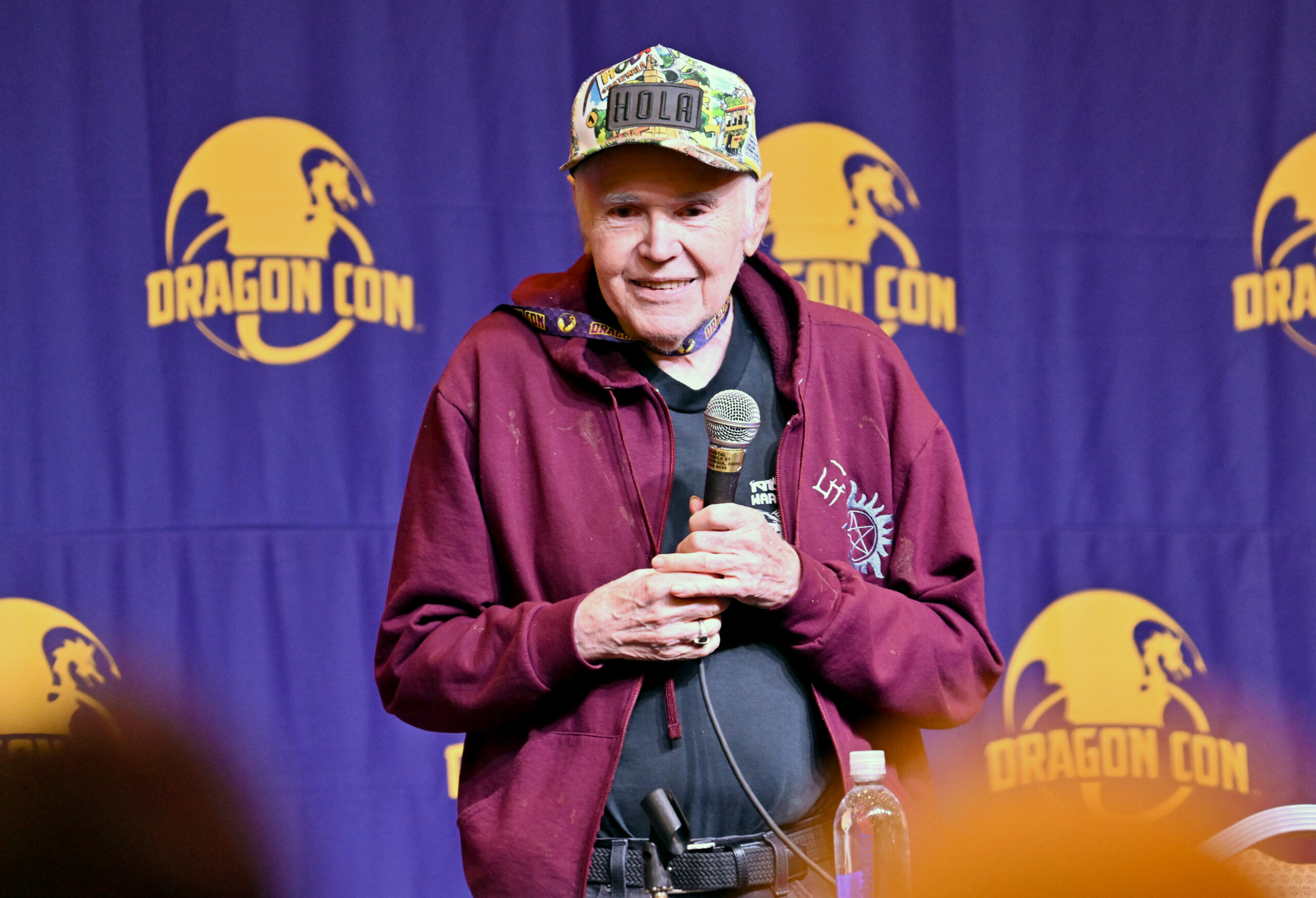
Walter Koenig, actor, writer and director, first known for his role as Chekov in the original “Star Trek” television series, turns 90
Lawrence Harvey “Larry” Brown, the only basketball head coach to have won both an NCAA national championship and an NBA championship, turns 86
Larry A. Mizel, founder of MDC Holdings (parent company to Richmond American Homes), CEO of the Mizel-Mandarich Foundation and the primary supporter of the Museum of Tolerance Jerusalem, turns 84
Frederick A. Schenk, San Diego-based attorney, a specialist in mass torts, turns 73
Daniella Levine Cava, mayor of Miami-Dade County, turns 71
Pope Leo XIV, born in Chicago as Robert Francis Prevost, turns 71
Dr. Terry Dubrow, plastic surgeon and television personality, turns 68
Thomas Scott Kaplan, chairman and chief investment officer of The Electrum Group, he is the world’s largest private collector of Rembrandt’s works, turns 64
Amy Kauffman, founder of Mindchat Research
Paul Budnitz, founder of Vermont-based Kidrobot, a retailer of art toys, apparel and accessories, and Ello, an ad-free social network, turns 59
Sir Grant Shapps, British secretary of state for defence until 2024 and knighted in 2025, he was a national president of BBYO, turns 58
Richard Strauss, president of Strauss Media Strategies, during the Clinton administration he became the first-ever White House radio director, turns 57
Ketanji Brown Jackson, associate justice of the Supreme Court of the United States, turns 56
Mark A. Semer, managing director at Gasthalter & Co., he is a past president of the Young Israel of New Rochelle
Elon Gold, comedian, television actor, writer and producer, turns 56
Elliot S. Berke, managing partner of Berke Farah LLP, his clients include Supreme Court Justice Clarence Thomas
Jennifer Jacobs, senior White House reporter for CBS News
Dana Sheanin, CEO of San Francisco-based Jewish LearningWorks
Courtney Cohen Flantzer, senior booking producer at CNN’s “Inside Politics with Dana Bash”
Ron DeSantis, governor of Florida and former 2024 POTUS candidate, turns 48
Hani Furstenberg, Israeli-American Actor, turns 47
Marisa Scheinfeld, artist, photographer and educator, turns 46
Russell Berman, staff writer at The Atlantic since 2014
Leah Greenberg, co-founder and co-executive director of the progressive Indivisible movement
Roxana Pourshalimi, Los Angeles-based attorney working as a contracts supervisor at MarketCast
Matt Flegenheimer, New York Times reporter since 2011, now focused on in-depth profiles
Jeremy Moskowitz, EVP at Voyager Global Mobility
Arkadiy Abramovich, founder and owner of ARA Capital, a British firm with holdings in e-commerce and energy, he is the son of Roman Abramovich, turns 33
Julia Savel, MSW graduate at Yeshiva University
Lihie Raz, artistic gymnast, she represented Israel at the 2020 (Tokyo) and 2024 (Paris) Summer Olympics, turns 23
The Israeli prime minister’s trip could spark protests and ‘a perfect storm’ of political and logistical complications for Zohran Mamdani and Jessica Tisch
Michael M. Santiago/Getty Images
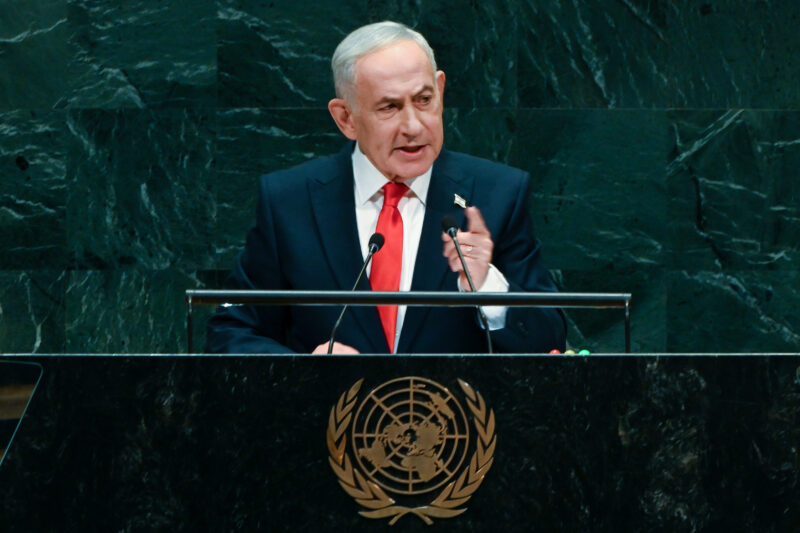
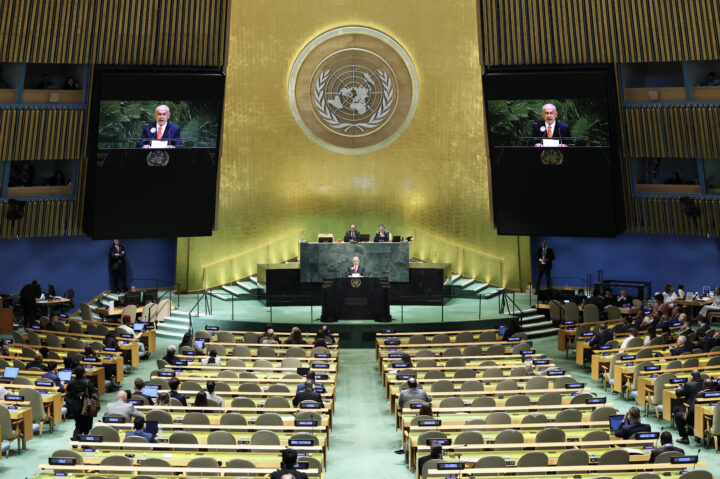
Israeli Prime Minister Benjamin Netanyahu addresses world leaders during the United Nations General Assembly (UNGA) at the United Nations headquarters on September 26, 2025 in New York City.
Israeli Prime Minister Benjamin Netanyahu’s trip to New York City for the U.N. General Assembly later this month is expected to set up political and logistical challenges for Mayor Zohran Mamdani, one of Netanyahu’s foremost U.S. critics, experts tell Jewish Insider — a challenge that protests, which Mamdani has tacitly encouraged, may only exacerbate.
The Israeli leader is scheduled to arrive in New York on Sept. 23 and address the global gathering the following day, during which time the NYPD’s dignitary protection detail will help ensure Netanyahu’s personal protection, its intelligence and counterterrorism teams will work to secure the gathering as a whole and an array of its officers will manage the Manhattan streets. The department reports to the mayor’s office.
The various law enforcement veterans who spoke to JI all underscored the scale of the department’s annual efforts to head off potential threats to the diplomatic summit, even without this year’s furor around Netanyahu’s attendance, the ongoing conflict with Iran and the proximity to both the Jewish High Holy Days and the 25th anniversary of 9/11.
“It’s a perfect storm of high-intensity events,” said Mitchell Silber, the former NYPD director of intelligence analysis who now serves as CEO of the Community Security Initiative, which helps address safety concerns for Jewish groups in the New York metro area. “At the same time, [the] NYPD is trying to bend over backwards to make sure that freedom of speech is allowed and robust.”
Silber noted that the struggle between the U.S., Israel and Iran has already spawned an alleged bomb plot against a New York synagogue from one of Tehran’s proxies. If recent remarks from Mamdani draw out larger than normal demonstrations, Silber warned such a scenario could create additional issues for both the department and the city’s Jewish institutions.
“They do have a possibility of reverberating, and have a chance of turning those forces and their ire against the Jewish community,” warned Silber, though he added that there was no specific threat. “It’s just going to make the NYPD’s job harder.”
Retired NYPD detective and John Jay College of Criminal Justice adjunct professor Michael Alcazar, meanwhile, recalled a March incident in which dueling pro- and anti-Mamdani demonstrations at Gracie Mansion saw an alleged ISIS acolyte hurl improvised explosives — an example, he said, of the kind of security risks a protest can present. He predicted a beefed-up presence of uniformed officers in the streets following remarks from Mamdani earlier this year, on top of standard security protocols.
“I’m sure the NYPD is expecting a lot more protests because of what the mayor said in support of protesting against Netanyahu,” said Alcazar. “You know his supporters are reading between the lines.”
Mamdani, for his part, has recently stepped up outreach to the Jewish community and vowed to “work tirelessly” for their security, though he has not backed away from his criticism of Israel. Asked in an August interview how he planned to host Netanyahu, he told commentator Joy Reid the city was readying “in the manner that we prepare every year.”
When JI asked the NYPD what special precautions it would take around Netanyahu’s visit, including around houses of worship, the agency provided only a general statement.
“As we do every year, the NYPD works with the Secret Service, the State Department, and other federal agencies to provide protection to foreign dignitaries traveling to New York City based on the level of threat assessed,” the public affairs office wrote in an email to JI.
New York has already seen, however, the result of tensions between a mayor’s political sympathies and executive duties.
In 2014, his first year in office, then-Mayor Bill de Blasio — whom Mamdani has cited as a role model — seemed a rising progressive star, having ascended to office on a platform of law enforcement reform, a cause many Democrats had hesitated to champion. Then Eric Garner, a Black man from Staten Island, died after an NYPD officer placed him in a banned chokehold, and thousands took to the streets. De Blasio was expected to stand with the protesters, but he also ran the police department that was policing them.
The demonstrations swelled into a national spectacle and saw violent altercations between protesters and police, followed by the killings of two officers and cops turning their backs on the mayor during the patrolmen’s funerals. As the situation spiraled, the mayor sought to align himself more with his politically moderate police commissioner, Bill Bratton. But this cost de Blasio much of his credibility on the left, both in New York and nationwide.
De Blasio went on to win reelection, but he lost much of his ability to project political power. His subsequent efforts to influence the direction of the Democratic Party across the state and nation ended in embarrassment.
Mamdani too captured the left’s affections, and ultimately Gracie Mansion, by embracing a scorching political issue his co-partisans had avoided: Israel and its military campaign in Gaza. As a candidate he pledged to arrest Netanyahu, and continued to float the notion long after city lawyers told him it lay outside his power. When he finally acknowledged he lacked the authority to do so, he made the comments in a viral video with the caption, “Benjamin Netanyahu is a war criminal,” in which he accused the Israeli leader of being a mass murderer responsible for the “maiming” of Palestinian children.
Pressed as to what opponents of the Israeli leader should do about his impending visit to New York, the mayor signaled his support for street demonstrations.
“One of the bedrocks of our city is protest,” the mayor said. “This is a city where, if anyone feels a level of frustration or opposition, protest is something that we will always respect. I leave it to New Yorkers themselves to make that decision.”
What made 2014 “a year of chaos,” according to John Jay lecturer Jillian Snider, was a large number of unpermitted protests with no central organization that drew large crowds and at times escalated into vandalism and violence. She warned that if similar “pop-up” demonstrations broke out during the U.N. General Assembly, it could complicate the work of the department.
“I would hope that a political figure would not encourage these large demonstrations, especially these undocumented events where we don’t have advance notice,” said Snider, who managed protests as an NYPD officer. “Members of the public often are influenced by city leaders. If they really, really, support that leader, they are going to do what that person supports.”
Veteran political consultant Chris Coffey, who counted the city’s largest police union among his clients during the de Blasio administration, noted that Mamdani is a far more agile politician than his progressive predecessor. Further, he argued Mamdani learned from de Blasio’s experience that he cannot alienate the department or allow the appearance of public disorder.
Yet Netanyahu’s visit could prove an exception.
“The one place where it’s a little bit unclear is that the Israel stuff is so personal to him that it might trump that philosophy,” Coffey said. “Or they’ve just decided they can do both, ‘we can condemn Netanyahu, we can encourage protest, and the police department can handle it.’”
But short of “something horrific” occurring during the General Assembly, Coffey argued that intense political polarization around Israel and Mamdani’s fervent personal following would likely allow the mayor to escape any political fallout. He also pointed out that NYPD Commissioner Jessica Tisch is a strong Israel supporter, and that the mayor has granted her broad latitude in her role as the city’s top cop.
Alcazar and Snider agreed, both lauding Tisch’s independence — with Snider even comparing Mamdani favorably with former Mayor Eric Adams, an ex-police captain who she complained excessively inserted himself into NYPD policy. Both predicted Mamdani’s views on Israel would have little influence on her handling of the U.N. event.
Silber, for his part, urged Jewish New Yorkers not to allow tension around Netanyahu’s visit or General Assembly security to interfere with their participation in religious and civic life.
“Keep calm and carry on,” he advised.
Mayor and police commissioner vow tight security as anniversary of attack coincides with start of Jewish New Year, intensifying antisemitism and Iran war
Michael M. Santiago/Getty Images
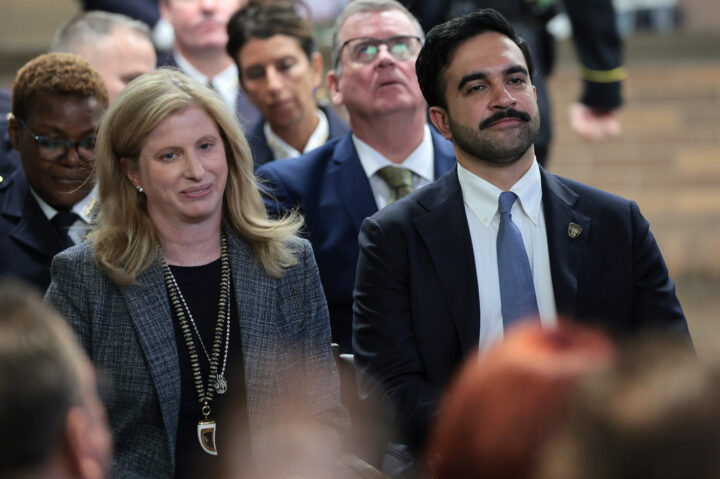
NYPD Commissioner Jessica Tisch and New York City Mayor Zohran Mamdani attend an unveiling ceremony for a new 9/11 Memorial Wall at One Police Plaza on Sept. 9, 2026 in New York City.
New York City Mayor Zohran Mamdani and NYPD Commissioner Jessica Tisch revealed plans on Wednesday to step up security measures at the 9/11 memorial on Friday and around Jewish institutions that evening and on Saturday for Rosh Hashanah — asserting that the department is unaware of any impending threat, but acknowledging a dangerous environment amid rising antisemitism and the conflict with Iran.
The mayor and police chief appeared together at City Hall to discuss measures to ensure safety around both observances, including “heightened” local and federal security and restricted street and transit access around Ground Zero during the 25th anniversary ceremony for the victims of the attack during the day. In the evening, they said Jewish New Yorkers can expect police deployment to synagogues, yeshivas and other communal spaces, to deter any person hoping to replicate the acts of violence and vandalism inflicted in recent months.
“We know that for many Jewish New Yorkers, there have been moments of immense sadness over this past year. Too many of our neighbors have been the victims of antisemitic hate crimes and too many are understandably afraid to come together and celebrate openly,” said Mamdani, addressing his comments directly to the city’s Jewish community. “Your safety during these sacred days is of the utmost importance to our administration and we will work tirelessly to ensure that you can observe the holiday securely.”
Antisemitic hate crimes have spiked under Mamdani, according to NYPD statistics, which some Jewish leaders have blamed on the mayor’s broadsides against Israel. Yet he has kept in place Tisch, a scion of a prominent Jewish family and a strong supporter of the Jewish state, who on Wednesday vowed a “massive security operation” for the 9/11 memorial — and a “major” one for the Jewish High Holy Days.
“I want all Jewish New Yorkers to know this. You have a partner in the NYPD now and throughout the year. As of today, there are no specific credible threats directed at High Holy Day celebrations in New York City, but we remain vigilant,” Tisch said, even as she acknowledged the rise in antisemitic attacks. “There will be assets you see and others that you don’t. Our intelligence and counterterrorism bureau is watching the threat environment here at home and around the world, working closely with our federal, state, local and international partners.”
“So whether New Yorkers are gathered Friday morning to remember those we lost 25 years ago or entering a synagogue that evening to welcome the new year, they should know that the NYPD will be there,” she concluded.
Tisch acknowledged that the ongoing struggle with Iran has “amped up” NYPD deployments for large events. Meanwhile, Deputy Commissioner Rebecca Weiner, the department’s top intelligence official, told reporters that terror had become more “individualized and idiosyncratic” in the quarter-century since the destruction of the World Trade Center towers — and the department’s focus has pivoted from Islamism to the homegrown political extremes.
“It’s diversified tremendously ideologically. Now, we’re not primarily dealing with al-Qaida or even al-Qaida ISIS, but a proliferation of threats coming from conspiracy theories, grievances, nihilistic violence, far-left, far-right, anti-government, all of those things,” said Weiner. “A lot of the trip wires that we established in those early years post-9/11 had to be altered and that’s just what we’ve done here at the NYPD.”
The NYC mayor engaged with local Hasidic leaders, who gifted him honey for Rosh Hashanah
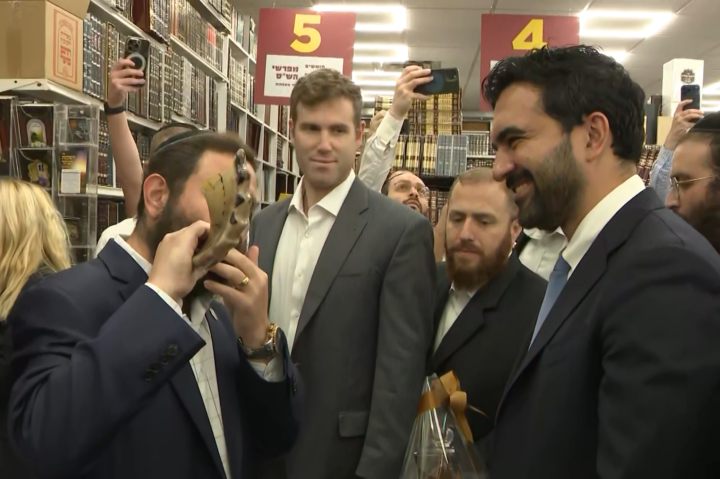
Uri Fraenkel blows a shofar during New York City Mayor Zohran Mamdani's visit to Borough Park.
New York City Mayor Zohran Mamdani on Wednesday visited Borough Park in Brooklyn, home to one of the largest Orthodox Jewish communities in the city and the world, a week and a half before the Jewish New Year.
Footage released by Mamdani’s office of his visit to Eichler’s Judaica — a purveyor of Jewish books and religious items that has been in business for nearly 40 years — showed the mayor discussing garbage pickup and curriculum at yeshivas with local leaders, who gifted him honey for Rosh Hashanah. In the recording, Uri Fraenkel, who works as director special projects at the mayor’s office, demonstrated the blowing of the shofar and explained elements of Hasidic garb.
In a brief statement to the invited press, the mayor wished them an early shanah tova, and thanked those who welcomed him for the “conversations.”
Despite facing strong criticism from many Jewish civic and religious leaders over his stance and statements toward Israel, Mamdani in his first year has cultivated relationships with figures from the city’s diverse Hasidic communities, including rabbis from the Satmar sects in Williamsburg and the Jewish Children’s Museum in Crown Heights.
The summit between the NYC mayor and Waltz comes ahead of the U.N. General Assembly next month
Michael M. Santiago/Getty Images
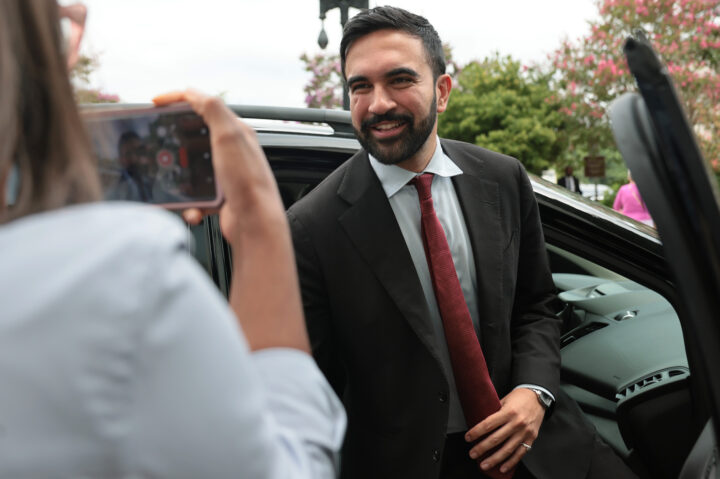
NYC Mayor Zohran Mamdani briefly speaks with reporters as he leaves the Dirksen Senate Office Building on July 16, 2025 in Washington, DC.
New York City Mayor Zohran Mamdani met with Mike Waltz, the U.S. ambassador to the United Nations, on Thursday morning — weeks after Waltz denounced the mayor’s suggestion that he might arrest Israeli Prime Minister Benjamin Netanyahu, and weeks before the leader of the Jewish state is set to arrive in the Big Apple for the U.N. General Assembly.
City Hall released an updated schedule for the mayor just minutes before the 10 a.m. meeting was set to begin, and did not disclose the location. No readout or statement from either official regarding the gathering had been released as of Thursday afternoon.
In July, Waltz took to X to castigate Mamdani for continuing to toy with a campaign promise to execute an International Criminal Court warrant against Netanyahu should he visit New York for the diplomatic summit. Waltz noted what, according to subsequent New York Times reporting, the mayor already knew from the city’s lawyers and NYPD Commissioner Jessica Tisch: he lacked authority to act on the pledge.
“Mayor Mamdani: here’s why your threat to arrest PM Netanyahu’s in NYC during UNGA is not going to happen,” the former Florida congressman wrote, before noting the U.S. is not a party to the ICC, that Netanyahu enjoys various legal protections as a head of state and participant in U.N. proceedings and that federal decision-making power preempts that of the city. “This is pure political theater.”
Mamdani subsequently admitted Waltz’s points in a fiery social media video that drew denunciations from leading Jewish groups and leaders.
Netanyahu has announced he intends to gathering the session in New York, which begins Sept. 8. High-level week, featuring heads of state, will run from Sept. 22-28.
The New York City mayor slammed a local party boss’ bid to retain power, but he did not do the same for antisemitic conspiracy-spreader Carmella Charrington
Michael Nagle/Bloomberg via Getty Images
Zohran Mamdani, mayor of New York, arrives to speak to members of the media in New York, on July 7, 2026.
New York City Mayor Zohran Mamdani refused on Monday to answer questions about a Brooklyn Democratic leader who promoted Henry Ford’s The International Jew and blamed a property dispute on “Zionists.”
Following an unrelated event in Queens, the mayor refused to answer on three separate occasions when Jewish Insider pressed him about Carmella Charrington, elected in June to the unpaid but important role of Democratic district leader. As first reported by JI, Charrington shared an Instagram video last fall boosting the notorious pamphlet series by the founder of the Ford Motor Company, a clip that blamed Jewish people for a range of societal maladies from slavery to the proliferation of alcohol and drugs.
Charrington first rose to prominence over a dispute over control of her family home, describing herself as a victim of deed theft, while New York State Attorney General Letitia James’ office found that the battle over her brownstone in Bedford-Stuyvesant was simply a complicated dispute over the estate of her Alzheimer’s-stricken father. Charrington has attacked the Jewish investors involved as “Zionists” and suggested some link between her situation and Israeli settlement activity in the West Bank.
After publication, Mamdani’s team reached out with a statement addressing Charrington’s attacks on the property investors.
“Suggesting that an alleged deed theft in Brooklyn is part of a global conspiracy involving Jewish people is blatant, reprehensible antisemitism,” the statement said. “Trafficking in these dangerous antisemitic tropes is vile and inexcusable.”
However, the administration did not answer a follow-up question about whether the mayor believed Charrington should step aside from her district leader role.
JI’s reporting on Charrington’s antisemitic posts prompted condemnations from James and from New York City Council Speaker Julie Menin, though neither has called for her to step aside from her district leader position.
Meanwhile Democrats aligned with Brooklyn Democratic Party boss Rodneyse Bichotte — whom Charrington and her slate aim to remove — have demanded Charrington’s resignation.
“Jewish New Yorkers are being attacked. Synagogues are being targeted. Public officials have a duty to lower the temperature and not amplify rhetoric that endangers their neighbors,” district leader and Assembly candidate Joey Cohen-Saban wrote last week on X. “Charrington has repeatedly crossed that line without remorse. She is unfit for public office and must resign. Every Brooklyn Democratic leader and anyone seeking to lead this party must say so clearly and unequivocally. No excuses. No equivocation. Period.”
Charrington was elected to party leadership during the Mamdani-aligned progressive wave in June, with support from leading figures in the New York City Democratic Socialists of America, all with the aim of ousting Bichotte from power. Bichotte has controversially proposed changes to the Brooklyn Democratic organization’s internal leadership selection process that might let her retain power, despite several of her candidates for district leader losing in June.
Unlike with Charrington, Mamdani was not shy with his opinion about the local party leader and her machinations.
“I very much oppose these proposed changes by the current Brooklyn Democratic Party chair,” Mamdani said. “They are an attempt to circumnavigate the will of voters and what we should see is a reflection of what New Yorkers want to see in their home, as opposed to a representation of so much of what has led New Yorkers to become — and Americans to become — disengaged and disaffected in politics at large.”
Julio Peña, the favorite to replace Bichotte, has issued only a general condemnation of antisemitism but has refused to directly address the remarks from Charrington, with whom he ran on a slate.
Charrington won her race with backing from key figures in the Democratic Socialists of America, state Sen. Jabari Brisport and state Assembly nominee Eon Huntley. On her Instagram account last November, Charrington declared the video — which also urged viewers to watch a notorious Swedish neo-Nazi documentary and read Holocaust denial literature — “the truth” and asserted, “This better be the topic at the table.” In a subsequent conversation with JI, she told a reporter to “get your rabbi” for a “roundtable” she planned to hold on a “bullying community.”
However, she later issued an apology for the video in a statement to The New York Times.
This story was updated on Aug. 24 with a statement from Mamdani’s office.
The mayor touted his forthcoming plan following his meeting with rabbis who voiced concerns about his anti-Israel rhetoric, which he did not mention or vow to adjust
Michael M. Santiago/Getty Images
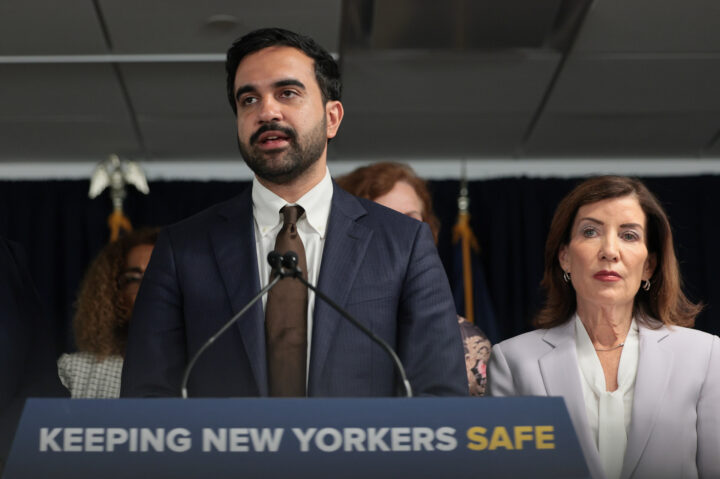
New York City Mayor Zohran Mamdani speaks during a press conference on Aug. 12, 2026 in New York City.
New York City Mayor Zohran Mamdani followed up his meeting with a group of rabbis earlier this week by touting a plan to battle antisemitism in the five boroughs — without committing to making changes in his rhetoric toward Israel that the group of Jewish religious leaders demanded.
“I had a candid and productive conversation with rabbis representing a wide swath of New York’s Jewish communities and affiliations, and I appreciated hearing from them,” Mamdani said after an unrelated event in Manhattan on Thursday.
During the mayor’s roundtable with Reform, Reconstructionist, Conservative and Modern Orthodox rabbis from predominantly liberal-leaning parts of the city, the rabbis made a near-unanimous call for Mamdani to back off his excoriations of Israel, warning that his focus on the Jewish state was alienating and even endangering Jewish New Yorkers.
But Mamdani did not explicitly state on Thursday that he would act on their recommendations, instead touting his increased spending on groups that run anti-hate crime initiatives and a plan his Office to Combat Antisemitism will release next month to tamp down on the anti-Jewish bias incidents that have risen on his watch.
“Our administration has been making steps, taking steps over the last many months of enacting that,” he said. “Expanding our city’s Office to Combat Antisemitism to its largest-ever size while developing a first-in-the-nation municipal response to combating antisemitism.”
“My door will always be open to every Jewish New Yorker. That is a door that is open not only to a conversation but to a commitment of what it actually looks like to deliver on an ideal of a city where not only is everyone safe but everyone belongs, everyone is made to feel as if this is their home,” he continued.
Mayor Eric Adams, Mamdani’s predecessor, released a “blueprint” for tackling antisemitism on his last day in office, largely detailing steps his office had already taken. This included an executive order Adams signed adopting the International Holocaust Remembrance Alliance’s working definition of antisemitism as official city policy. Mamdani repealed that order the day he assumed office.
Mamdani’s antisemitism czar invited a cross-section of rabbis and Jewish leaders broadly sympathetic to the mayor for the candid conversation
Spencer Platt/Getty Images
New York City Mayor Zohran Mamdani speaks at a food distribution center on July 27, 2026 in the Brooklyn borough of New York City.
A roundtable with New York City rabbis held at City Hall on Monday gave participants a chance to voice growing concerns about New York City Mayor Zohran Mamdani’s Israel rhetoric they felt had before gone unheard — with several attendees telling Jewish Insider the strong collective message, and Mamdani’s reaction, gave them hope he would change tack.
Multiple attendees of the meeting told JI that they had been in contact with Mamdani’s Office to Combat Antisemitism for months about his “single fixation” on Israel and his characterization of the Jewish state’s most politically active supporters as “monsters,” only to see the mayor dismiss such criticism. They said they viewed the gathering as an opportunity to bring their fears directly to him and to demonstrate communal unity amid a period of spiking antisemitic hate crimes.
“People talked about their own concerns, their families’ concerns, their congregations’ concerns. I think he heard them,” said one participant, who requested anonymity to speak freely about their ongoing contact with Mamdani’s antisemitism czar, Phylisa Wisdom, and her deputy, Josh Binderman. “When they framed the meeting, they said it was going to be an ‘open, honest dialogue.’”
A City Hall official said in a statement to JI that Mamdani’s team had “brought together a group of rabbis that reflects the diversity of New York’s Jewish community — including leaders from several major denominations and four of the city’s five boroughs who have leadership roles in some of the city’s largest congregations and denominations — so the mayor could hear directly from rabbis with a broad range of experiences and viewpoints.”
Several participants JI spoke with similarly remarked on the multi-denominational nature of the meeting, though one attendee noted the absence of more religiously conservative Orthodox leaders. The mayor met last week with leaders of Brooklyn’s anti-Zionist Satmar community.
Even as some critics of Mamdani said they were pleased he had taken the meeting on Monday, they expressed skepticism that the mayor would be open to acting on the message the group of rabbis shared.
The New York Board of Rabbis, the organization that has historically represented the city’s Jewish religious leadership, was not involved in planning the meeting, and an executive of the group suggested that Mamdani’s team had deliberately handpicked rabbis and Jewish leaders sympathetic to his political agenda.
Howard Wolfson, a longtime advisor to former New York City Mayor Michael Bloomberg, said that he was “glad” Mamdani had heard the feedback from Jewish leaders, but argued that “action, not just talk,” would help “create the conditions for a new relationship.”
“A good start would be to stop referring to American orgs that represent many Jews as monsters,” Wolfson said in a text message to JI, referring to controversial June remarks in which the mayor had singled out the pro-Israel group AIPAC while speaking at a campaign rally. Mamdani defended his rhetoric after it sparked an outcry from Jewish organizations that said he had invoked an antisemitic trope.
Meanwhile, Israeli Prime Minister Benjamin Netanyahu’s anticipated visit to New York City next month for the U.N. General Assembly “will be a big test,” Wolfson added of the mayor, who encouraged protests of the prime minister even as he acknowledged he cannot order his arrest. “How much does he want to focus on it? How much does he want to grandstand?”
Rabbi Ammiel Hirsch of the Stephen Wise Free Synagogue, a Reform congregation on Manhattan’s Upper West Side, who serves as the president of the New York Board of Rabbis, said he was not asked to attend the meeting on Monday but was encouraged by what he had heard about it. “If in fact it was a very frank conversation,” he told JI, “then that’s a good thing.”
“It’s not that the mayor is not aware of this. He’s heard it many times,” Hirsch added. “Hopefully it’ll make a difference,” he said, particularly ahead of the High Holy Days of Rosh Hashanah and Yom Kippur, when security concerns are top of mind for synagogues across the city. “It hasn’t made a difference so far.”
“He knows our fear, he is aware of our fear” and “he is pursuing it nonetheless,” Hirsch said.
One of the attendees, who asked for anonymity to talk openly, told JI that he came away suspecting that the Office to Combat Antisemitism had selected himself and his peers as a group that could communicate anxieties over the mayor’s heightened focus on Israel and its local repercussions in a manner Mamdani might be receptive and responsive to.
“The consistent message was, we have to address the mayor’s rhetoric around Israel, because that’s an obstacle to addressing anything else effectively,” said the attendee, who noted that the mayor’s team had told him they would be discussing an upcoming report on antisemitism in the city and initiatives to confront it at the meeting. “I shared similar sentiments to my colleagues about the desire to work together on so many issues of shared concern, and the feeling of alienation as a result of the mayor’s rhetoric, and the belief that it could be different.”
Both attendees who spoke to JI on the condition on anonymity praised Mamdani’s handling of the meeting, characterizing him as an active listener who asked thoughtful questions and took notes throughout the discussion, and who acknowledged synagogues’ charitable work assisting immigrants and feeding the needy. They admitted, however, that the gathering ended without any specific concessions or commitments.
“I’m suspending judgment and waiting to see,” one said.
Rabbi Rick Jacobs, president of the Union for Reform Judaism, came away from the gathering with similar impressions.
“Look, they picked a minyan of rabbis to come sit with the mayor, and I’m sure there are rabbis who just really would’ve just, you know, laid into him,” said Jacobs, known for both his pro-Israel record and outspoken criticism of the Israeli government. “Everybody was thoughtful, everybody was respectful, but everybody made sure that he knew that this is really deeply harmful to our community.”
Jacobs said he had brought his concerns to Mamdani personally in the past, but said he hoped that hearing the same message from so many rabbis would bring about change.
Wisdom said in a statement that the hourlong discussion had “focused on strategies to strengthen Jewish safety and belonging, maintain candid lines of communication and collaborate on issues where we have shared values and goals.”
“It was an open, positive and constructive conversation,” she added. “Mayor Mamdani has and will continue to engage with Jewish life in New York City in order to meet the needs of our communities and reaffirm his commitment to the thriving of Jewish communities across the five boroughs.”
The administration has been increasing its engagement with Jewish leaders ahead of the unveiling of the citywide strategy to combat antisemitism, expected next month.
One Jewish leader who was not invited to the Monday gathering, speaking on the condition of anonymity to address a sensitive issue, said he also met privately a few weeks ago with Wisdom and Binderman and raised concerns about Mamdani. “They listened,” he told JI. “They didn’t argue.”
After Mamdani shot a lengthy video last month in which he walked back his campaign vow to arrest Netanyahu while calling the prime minster a “war criminal” and “the architect of a horrific genocide,” the Jewish leader said he followed up with Wisdom and Binderman in a phone call to voice reservations. There was “not a lot of pushback,” he recalled of their conversation.
Rabbi Joseph Potasnik, executive vice president of the New York Board of Rabbis, lamented that the mayor had not reached out to his group and urged the mayor to engage more with the city’s longstanding Jewish communal organizations.
“When you’re the mayor of New York City, you have to be accustomed, or have to learn to deal with people who like you, don’t like you, agree with you, don’t agree with you. That comes with the territory,” he said. “I was glad to hear the people in the room pushed back on the rhetoric. That was heartening to hear.”
An account under the name Brayton Laschinger, charged with throwing a brick through the window of a Sarasota shul, reposted the mayor’s video declaring the Israeli prime minister a ‘war criminal’
Michael Nagle/Bloomberg via Getty Images
Zohran Mamdani, mayor of New York, arrives to speak to members of the media in New York, on July 7, 2026.
A Florida man accused of hurling a brick through the front window of a Sarasota Chabad House shared New York City Mayor Zohran Mamdani’s video labeling Israeli Prime Minister Benjamin Netanyahu a “war criminal” just days before the crime.
Local police arrested 30-year-old Brayton Laschinger on July 31 and charged him with felony criminal mischief for the attack two days prior on the Lubavitch Chabad of Downtown SRQ. The Sarasota Police Department stated that Laschinger had admitted to targeting the synagogue “because it was a Jewish place of worship” — and had blamed “propaganda on social media” for enraging him in the hours before the vandalism.
The police statements make no mention of Mamdani’s controversial July 21 video assailing Netanyahu as “the architect of a horrific genocide” and a mass maimer of women and children, which the mayor released as a way of confessing he could not make good on his campaign pledge to arrest the Israeli leader during the United Nations General Assembly in September. But an Instagram account bearing Laschinger’s name, and featuring photos of him dating back more than a decade, reposted the clip, which went out on City Hall’s official social media channels a week prior to the attack.
The only other politically tinged shares on Laschinger’s page deal with wildlife conservation.
Jewish leaders had warned that the mayor’s singular and relentless excoriation of Israel and its government could inspire violence against Jews — concerns that only intensified after the double-stabbing of an Asian American and a Jewish man wearing a kippah in Manhattan days after the social media post. There is no proven link between the attack, which authorities have deemed a hate crime, and the mayor’s video.
The accused assailant of the Manhattan stabbing allegedly shouted “Allahu Akbar” and “Justice for Islam” while passing a synagogue displaying the Israeli flag, before ramming a screwdriver into the chest of Moshe Grunhaus. Mamdani has to date refused to engage with suggestions from fellow Democrats that he temper his rhetoric about the Jewish state, even as he has vowed to combat the hate crimes against Jewish New Yorkers that have spiked under his watch.
Anti-Defamation League CEO Jonathan Greenblatt reiterated his call for the mayor to tone down his criticism of Israel on X in a post after highlighting Laschinger’s social media history.
“Words have consequences. Your inflammatory rhetoric can lead to violence,” Greenblatt wrote. “Jewish people and institutions are being attacked in NYC and across the country because of hateful and demonizing rhetoric.”
Mamdani spokesman Sam Raskin noted that the democratic socialist had explicitly denounced violence against Jewish people and institutions, and maintained his broadsides are meant for Israeli leadership alone.
“The mayor’s criticism has always been directed at Benjamin Netanyahu and the actions of his government. He has been clear that no political disagreement, no foreign conflict, and no public statement can ever justify antisemitism or violence against Jewish people or Jewish institutions,” Raskin said in a statement to Jewish Insider. “Every Jewish person deserves to be safe in their home, in their synagogue, and in every neighborhood across our city. The vandalism of a synagogue — whether in New York City or anywhere else — is an abhorrent act of antisemitism. It has no place in our city and stands in direct opposition to the values of this administration.”
Raskin did not answer whether the mayor would dial back his commentary if he believed there was any chance it could inspire violence.
Hate crimes against Jewish New Yorkers rose more than 50% in July and by almost 9% over the first seven months of Zohran Mamdani’s administration
Kyle Mazza/Anadolu via Getty Images
Members of the NYPD Crime Scene Unit investigate the scene of a stabbing attack at the intersection of West 86th Street and Amsterdam Avenue in Manhattan, New York, United States, on July 23, 2026.
Hate crimes — particularly against Jews — have spiked in New York City during the first seven months of Mayor Zohran Mamdani’s administration, new data from the NYPD shows.
The police department’s July statistics show general declines thus far in 2026 shootings and murders, and even in hate crimes against certain ethnic groups. But bias offenses were up overall last month, and during the entire period since Mamdani took office on the first of the year, with hate crimes targeting Jewish New Yorkers continuing to make up the majority of such incidents.
“More than half of the confirmed hate crimes for the first seven months of the year, or 56.9%, were anti-Jewish hate crimes, despite Jewish New Yorkers making up only 10% of the city’s population,” the NYPD’s report states.
There were 23 confirmed hate crimes against Jewish people in July of this year, compared to 15 in July 2025. To date, the Jewish community has suffered 205 confirmed criminal antisemitic incidents during Mamdani’s first seven months at City Hall, compared to 189 such transgressions up to this point in the final year of Mayor Eric Adams’ tenure.
Mamdani, whose broadsides against Israel and its leadership have both powered his political ascent and provoked warnings over potential repercussions for the city’s Jewish community, faced questions over the uptick in bias crimes after an unrelated press conference Monday morning.
“There’s no room for hate in our city. It will never be tolerated, it will never be accepted, and we know that this is something that we have to fight with every single tool at our disposal,” the democratic socialist mayor said. “The work to uproot antisemitism out of the city is one that will continue until we see hate crimes come to an end in the city.”
The mayor again underscored his increased investment in a hate crime prevention program, which allocates millions of dollars to a range of nonprofits.
July witnessed a double stabbing of an Asian American and a Jewish man on the holiday of Tisha B’Av, during which the assailant allegedly shouted “Allahu Akbar” and “Justice for Islam” as he passed a synagogue displaying the Israeli flag, before attacking the second victim, who was wearing a kippah. The accused, Raul Morales, now faces a raft of hate crimes charges.
Politico reported that NYPD Commissioner Jessica Tisch visited The Jewish Center — the Modern Orthodox synagogue where the victim Moshe Grunhaus had been praying before the stabbing — on Friday to denounce “antisemitic rhetoric” and assure the community of her continued protection.
Mamdani decided to keep Tisch, an Adams appointee, in her role when he entered office. Tensions between the two have surfaced on several occasions, most recently when the mayor continued to publicly toy with the idea of arresting Israeli Prime Minister Benjamin Netanyahu despite lacking the legal authority to do so.
Anti-Muslim offenses have also risen under Mamdani, but in much smaller numbers: five this past month compared to two the July prior, and 26 so far this year as opposed to 16 during the same period in 2025.
Please log in if you already have a subscription, or subscribe to access the latest updates.
 Continue with Google

 Continue with Apple