









































Brandeis Center urges Qatar to provide ‘complete public accounting’ of campus funding
The letter from CEO Kenneth Marcus follows a public spat in which Qatar's deputy ambassador accused the group of spreading disinformation about Qatari money in higher education

Bonnie Jo Mount/The Washington Post via Getty Images
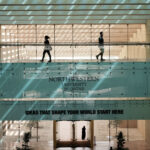
Students cross a sky bridge in the temporary campus of Northwestern University in Qater on the Education City campus in Doha, Qatar, on November 2, 2015.


 Add JewishInsider on Google
The Louis D. Brandeis Center for Human Rights Under Law wrote to Qatari Ambassador to the U.S. Sheikh Meshal bin Hamad al-Thani on Wednesday amid a back-and-forth online, urging the Qatari Embassy to release a full public accounting of its funding to U.S. colleges and universities.
“There is a straightforward way for the Government of Qatar to demonstrate that public accounts of its activities are inaccurate or misleading: full disclosure,” Brandeis Center CEO Kenneth Marcus said in a letter to Al-Thani. “We therefore respectfully ask Qatar to provide a complete public accounting, to the people and the Congress of the United States, of the funding and other financial support that its government, the Qatar Foundation, and other Qatari governmental or government-controlled entities have provided to U.S. colleges and universities.”
Marcus urged that such a disclosure “should identify the recipients and amounts, disclose the agreements governing the funds, and explain what Qatar expected or received in return for its largesse. This should include any financial, academic, or other benefits, as well as any role in university governance, faculty or administrative appointments, academic programs, curriculum, research, public communications, or the operation of overseas campuses.”
Marcus argued that a public disclosure would “serve Qatar’s stated interest in correcting purported misinformation” and allow Congress, the administration, schools and the public to assess the relationships based on firsthand information.
“Qatar has described its support for U.S. higher education as beneficial to both countries,” Marcus said. “If that is so, complete transparency should strengthen Qatar’s position. If particular public allegations are false, the documents will demonstrate that fact.”
The Qatari embassy did not respond to a request for comment.
The letter follows a public exchange on social media between Marcus and Qatar’s deputy ambassador, Hamad Al-Muftah, who claimed that critics of Qatar are engaged in a “coordinated disinformation campaign” to manipulate data on foreign funding in U.S. higher education — the release of which has been repeatedly postponed by the Department of Education — in order to accuse the Qatar Foundation of malign activities.
“Their goal appears to be eliciting reactions from House Education Republicans and, more broadly, spreading disinformation that serves the interests of their controllers,” Al-Muftah asserted.
He posted a diagram that he claimed outlined a network including the Foundation for Defense of Democracies, Brandeis Center and Jewish Insider, as well as op-eds published in The Wall Street Journal and Chicago Tribune, which he claimed is intending to influence Republicans on the House Education Committee to investigate the Qatar Foundation.
Marcus responded in a thread on X, stating that the diagram “identifies no disinformation.”
“My colleagues have also presented evidence in the [Chicago Tribune] concerning the relationship between Qatari funding, foreign influence and anti-Semitism on U.S. campuses. You may not like their conclusions, but disagreement is not disinformation,” Marcus said, adding that Al-Muftah’s language invoked an antisemitic trope.
Al-Muftah responded that “we have zero intention to hide anything. Everyone is fully cooperating with the appropriate authorities to ensure complete transparency.” He also said that Qatar has “observed instances of data manipulation and the amplification of misleading information,” denying any connection between Qatari funding and protests on college campuses.
“Regarding the accusation of antisemitism, I am unclear about its origin and why it has been brought up,” he continued. “I simply presented the facts and observations regarding those involved.”
Al-Muftah also said that Qatar’s only intention is “to provide world-class education to individuals in the region.”
Al-Muftah told another critic that presenting the aggregate totals of Qatari funding to various universities is “misleading.”
“The overwhelming majority of this funding is for the operation of American university campuses in Qatar,” he said. “It pays for the education of students, faculty, facilities, and the day-to-day costs of running those campuses. It is not a blank check to the universities’ U.S. operations, nor is it evidence that Qatar is funding antisemitism or campus protests in America.”
A long-delayed federal report on foreign spending in education is due out on Friday, unless its release is again postponed, for what would be the fifth time.
More Stories
SCOOP
Sen. Rick Scott urges Trump to pave pathway for Canadian Jews to emigrate to U.S.
OCEAN STATE OF PLAY
Antisemitism roils Providence mayoral race
PRESSURE CAMPAIGN
Rep. Jared Moskowitz: Pro-Israel Democrats are being ‘ostracized’ in the Democratic Party

COST CRISIS
New JFNA study: American Jewish community spends over $1 billion on security each year
DEM DIVIDE
House passes anti-BDS measure, even as most Democrats voted against it

SURVEY SAYS
New poll shows Vance with very low support among Jewish voters
Please log in if you already have a subscription, or subscribe to access the latest updates.
 Continue with Google
 Continue with Apple