
















































Mamdani won’t set definition of antisemitism after repealing IHRA, his antisemitism czar says
In testimony before the City Council’s antisemitism task force, an NYPD official said Mamdani played no role in a controversial change in reporting data from hate crimes
Spencer Platt/Getty Images
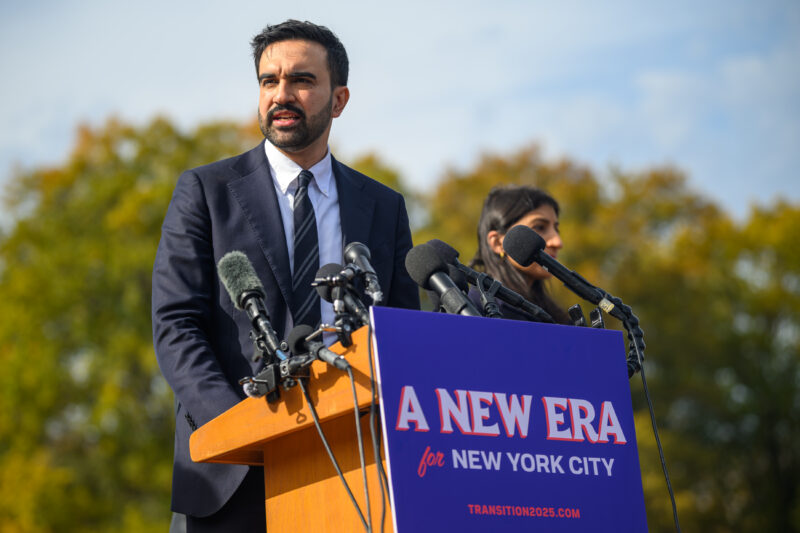
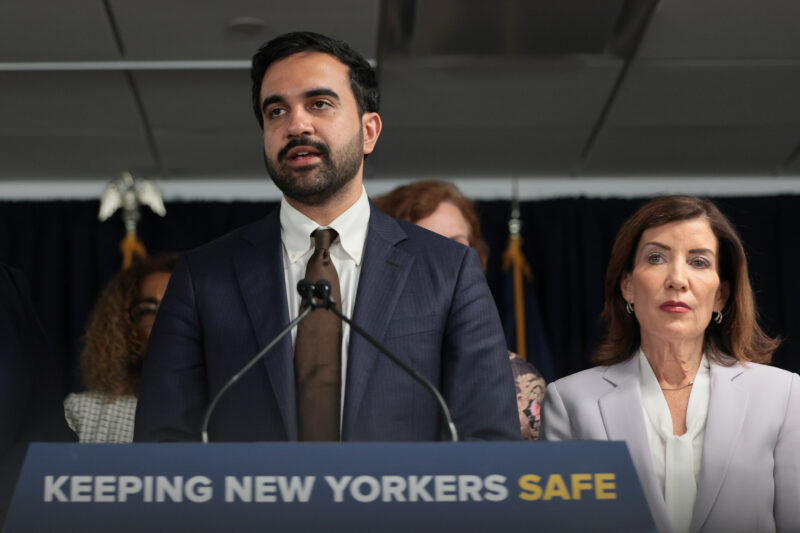
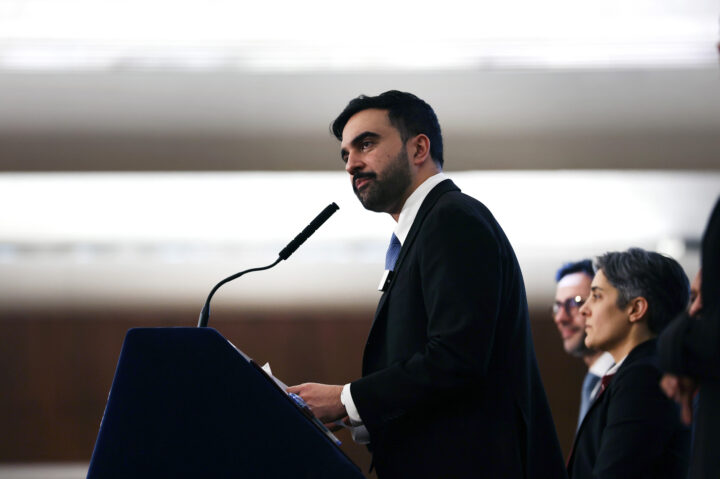
New York City Mayor Zohran Mamdani speaks at a "Rental Ripoff" hearing at Fordham University in the Bronx borough of New York on March 11, 2026, in New York City.


 Add JewishInsider on Google
New York City Mayor Zohran Mamdani’s antisemitism czar said on Wednesday that his administration won’t replace the International Holocaust Remembrance Alliance’s working definition of antisemitism he wiped off the books his first day on the job.
Speaking before the City Council’s Task Force Antisemitism alongside officials from the NYPD, the executive director of the Mayor’s Office to Combat Antisemitism, Phylisa Wisdom, said that city agencies do not and will not work off any official definition of antisemitism. Mamdani’s predecessor, former Mayor Eric Adams, adopted the IHRA definition and established the office Wisdom leads amid a dramatic uptick in hate crimes targeting Jewish New Yorkers in the wake of the Oct. 7 attacks and subsequent Israeli military campaign in Gaza.
“Across city government there is not a definition codified for any form of hate at all,” Wisdom told Republican Councilmember Inna Vernikov, one of the task force’s two co-chairs. “We don’t believe that there needs to be a codified definition at all.”
A total of 37 states, as well cities from D.C. to Los Angeles, have adopted the IHRA definition. But critics allege its assertion that certain antagonism toward the Jewish state can be classified as antisemitism serves to stifle criticism of Israel.
Instead of a formal, written classification, Wisdom, who previously led the progressive Zionist group New York Jewish Agenda, touted “an understanding that we share.”
“We understand broadly, in the universe of civil rights and combating antisemitism, it to be prejudice, violence and discrimination against Jews because they are Jewish,” she explained. “We understand usually what that looks like.”
Wisdom acknowledged the question of how the vast city bureaucracy recognizes antisemitism was “a hot one in the community.” When Vernikov pressed Wisdom on how the administration could address and rectify antisemitism without defining it, Wisdom acknowledged the difficulty, but fell back on equating it with other undefined forms of bigoted behavior.
She also alluded to previous testimony by NYPD Deputy Commissioner for Legal Matters Michael Gerber that the police department operates off a state-level hate crime statute, which does not feature definitions of prejudice, but only considers whether a victim was targeted because of their real or perceived identity.
“I think what you’re asking is a good question because it is hard,” Wisdom said. “In terms of bias and hate, it’s really sticky and extremely serious stuff, and it’s case by case.”
After the hearing, Wisdom avoided questioning from Jewish Insider about whether she considered it antisemitic to applaud the Oct. 7 attacks on Israel or the man behind them, late Hamas military leader Yahya Sinwar — as Mamdani’s wife and other personnel in his office have done.
In his testimony, Gerber said Mamdani and his team had no input on a data-reporting change that drew controversy after the city logged a 152% increase in hate offenses in January over the same month last year, driven by a spike in reported incidents targeting Jewish New Yorkers — then changed its reporting criteria for February. The move drew criticism from experts and transparency advocates.
But Gerber asserted the old methodology was deeply flawed, and that NYPD Commissioner Jessica Tisch, who was originally appointed by Adams, had only recently learned of it and ordered it changed.
“That data did not reflect confirmed hate crimes. It did not reflect reported hate crimes,” said Gerber. “It was numbers pulled from an informal tracker that had a mix of reported hate crimes that had not yet been classified by the [NYPD Hate Crimes] Task Force and confirmed hate crimes. These were hodgepodge numbers, resulting in clarity about nothing.”
He added that the decisions did not come “at the initiative or direction of anyone at City Hall” — a point he stressed under questioning.
“These were decisions by the NYPD. We made these decisions and we stand by them,” he told Vernikov. “These were not decisions made by anyone at City Hall.” The NYPD is formally part of Mamdani’s administration.
Gerber further asserted the mayor’s team was “notified” of the reporting change, but “not consulted.” He further highlighted a recent NYPD announcement that going forward, it would disclose to the public both reported and confirmed bias crime incidents, the favored approach of good government and civil rights supporters.
More Stories

Daily Overtime
Deadlocked dash to Israeli elections
SCOOP
Ro Khanna to urge negotiators to pull U.S.-Israel cooperation provisions from defense bill

TEXTBOOK TEST
Syrian textbooks under al-Sharaa deny Israel’s right to exist and promote antisemitism, report finds
NEW HIRE
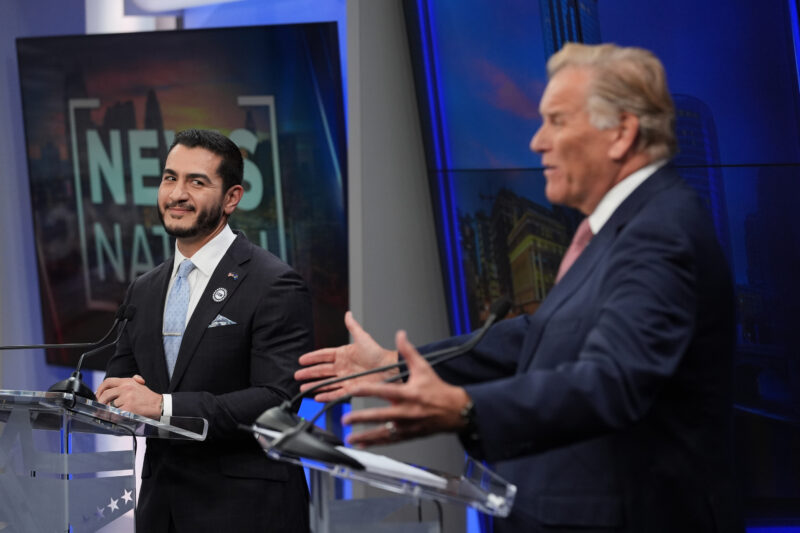
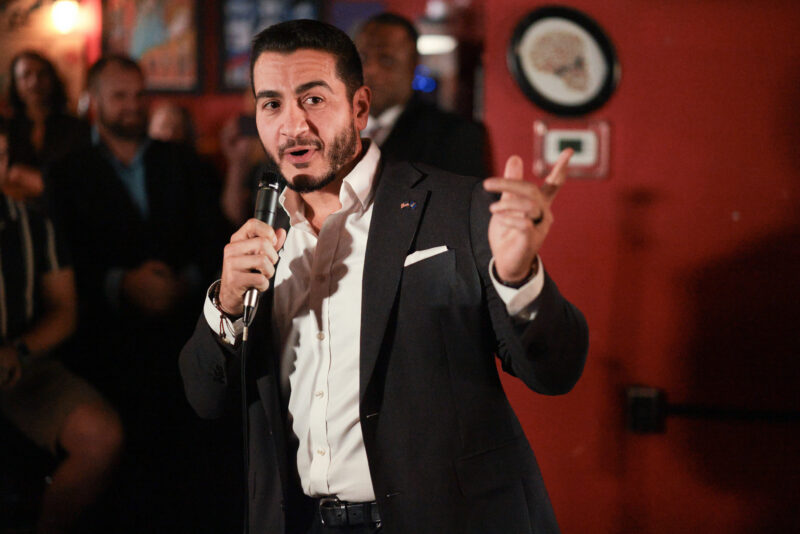
El-Sayed hires veteran political consultant Lenore Goldman as Jewish liaison
SCOOP
AIPAC to end candidate endorsements, PAC contributions to allies
SOCAL SHOWDOWN
Anti-Israel encampment member emerges as far-left threat to Rep. Jimmy Gomez
Please log in if you already have a subscription, or subscribe to access the latest updates.
 Continue with Google
 Continue with Apple