

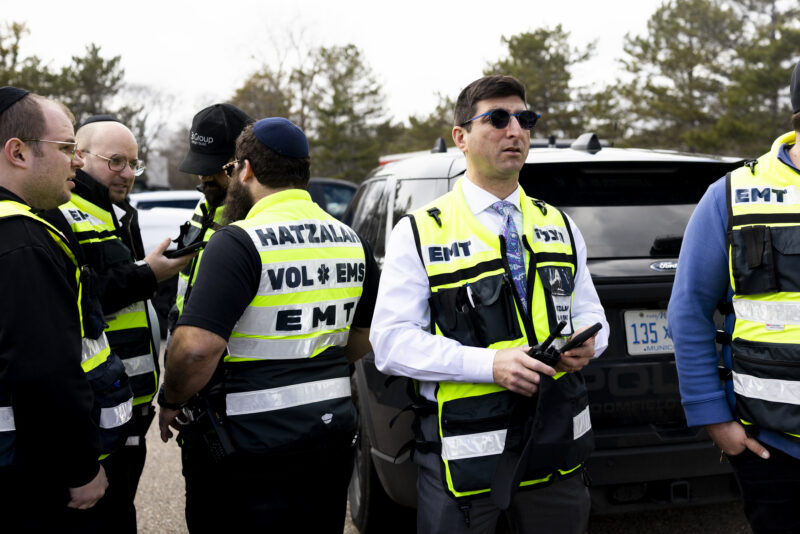






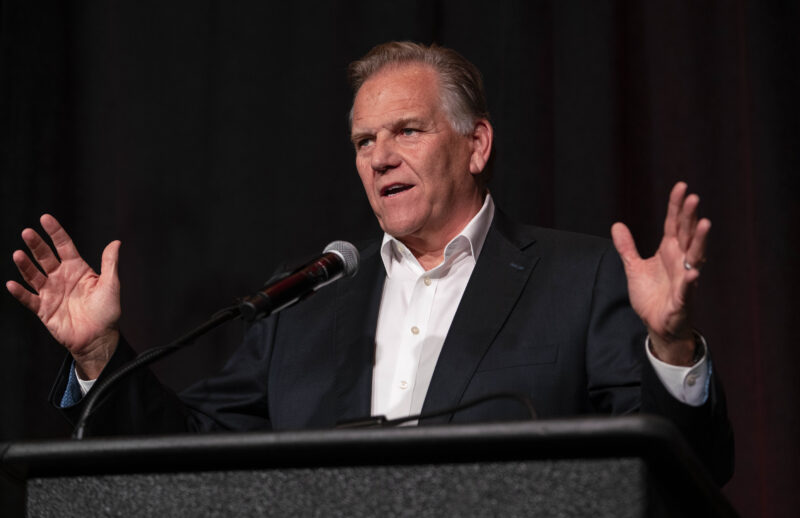
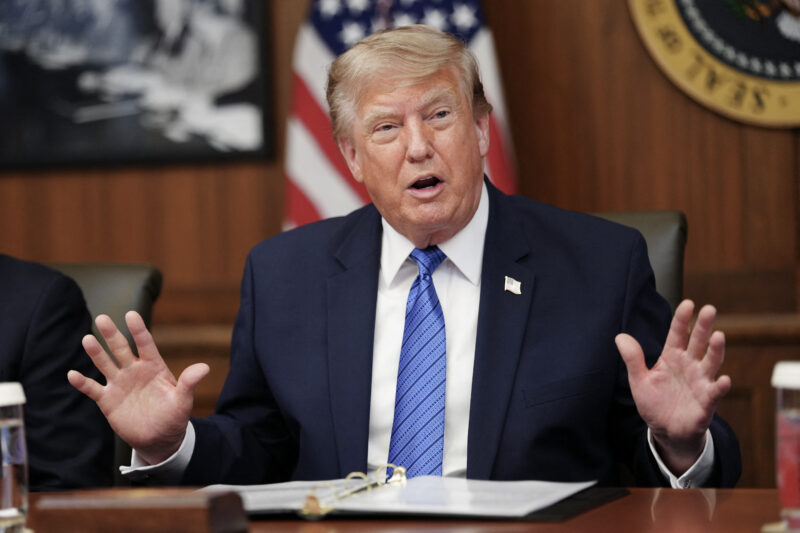

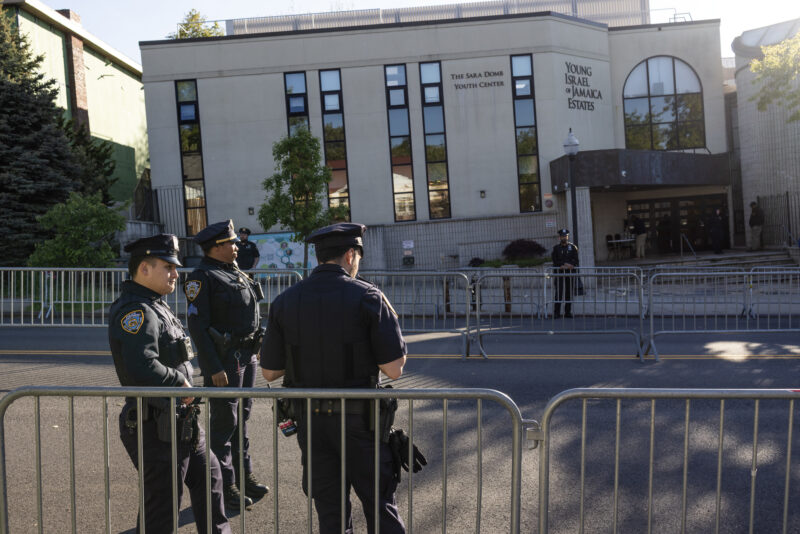
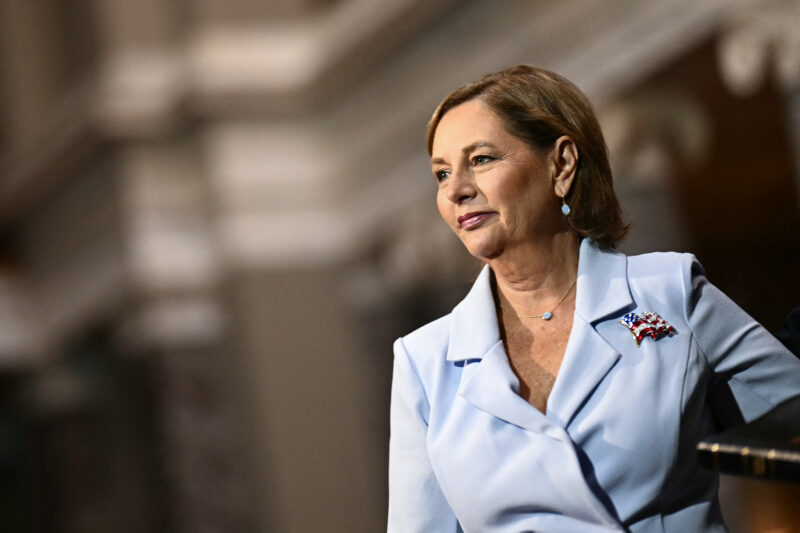








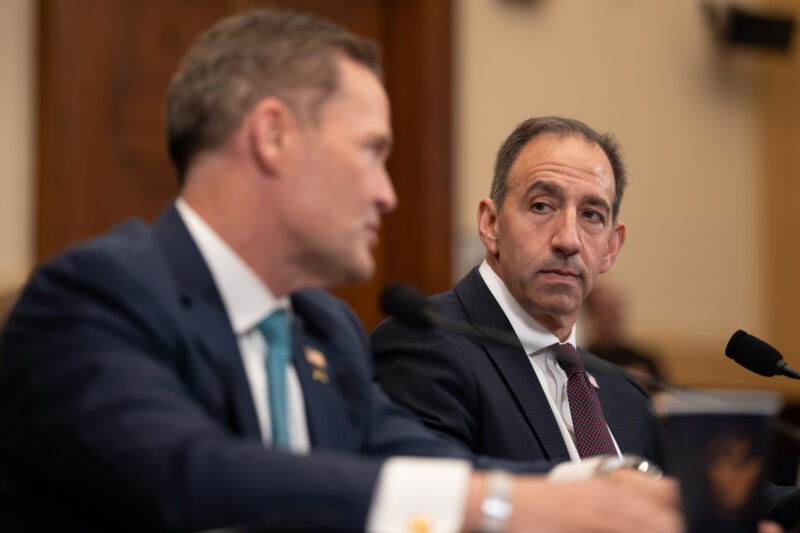












Miller is being accused of abuse by his ex-wife Emily Moreno, daughter of Sen. Bernie Moreno, who on Sunday said Miller is unfit for office

Anna Moneymaker/Getty Images
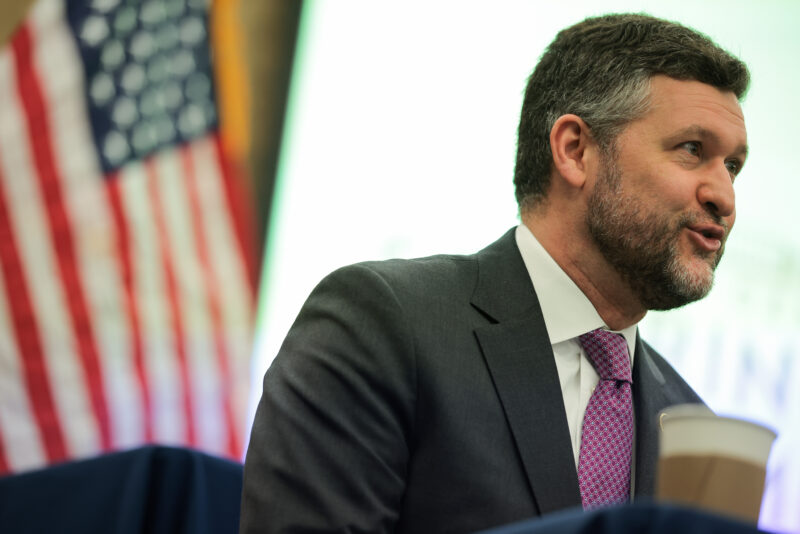
Rep. Max Miller (R-OH) leaves for a break during a House Republican Steering Committee meeting at the U.S. Capitol Building.


 Add JewishInsider on Google
Sen. Bernie Moreno (R-OH) publicly accused Rep. Max Miller (R-OH), his former son-in-law, of domestic abuse on Sunday and said Miller is unfit for office. Moreno’s comments came in response to a video address by Miller denying wrongdoing amid growing scrutiny of the allegations of domestic violence and abuse by his ex-wife Emily Moreno, the senator’s daughter.
Recent polling and reports indicate that the unfolding scandal could lead Miller, one of the few Jewish Republicans in the House to lose his House seat. The New York Times reported last week that Miller’s polling is slipping in the wake of the recent allegations about his past conduct, with a Democratic internal poll showing him just one point ahead of his Democratic challenger, progressive Brian Poindexter, despite the district favoring Republicans.
Another poll conducted by a Republican firm last week reported by NOTUS found Poindexter leading Miller by five points, with Miller’s favorability 15 points underwater.
The allegations against Miller include repeated physical abuse of both Emily Moreno and their daughter.
Democratic aides told the Times they intend to target the district, which the Cook Political Report rates as “likely Republican.” The handicapper already increased Democratic chances of winning the seat as the abuse allegations gained increasing attention.
White House officials are concerned that Miller’s continued candidacy endangers Republicans’ chances of holding the House, according to the Times. Miller, in a statement, vigorously denied to the newspaper that he was in any danger of losing his seat.
Miller released a video on Sunday denying the abuse allegations against him, also posting what he claimed was exculpatory evidence. He has argued that his ex-wife suffers from mental health issues, is fabricating her claims and is a danger to him and their child, repeating allegations he has made in other public interviews. Miller said in the video address he intends to stay in the race and continue campaigning.
He has emphasized that he has never been charged with or convicted of wrongdoing and has been permitted to maintain joint custody of their 2-year-old daughter.
A spokesperson for Emily Moreno called the statement “shameful” and “a bizarre and lie-filled rant about his ex-wife to desperately try to save his political career.”
After previously withholding comment, Moreno said in a lengthy statement that the past two years since his daughter’s divorce from Miller have been “hell” and that his priority has been keeping the matter private to protect his family but that Miller’s “increasingly erratic and dangerous behavior has made that impossible.”
He called Miller a “danger” to his daughter and granddaughter and said that he fails to meet any “basic standards of character” to serve in office and “should not continue to be free” until he receives psychological help.
Miller dismissed Moreno’s claims and accused him of trying to “hide from your own media circus” and of only speaking out for political reasons, as well as questioning why he had not spoken out earlier.
Some of Miller’s colleagues in Ohio’s congressional delegation were muted in their reactions to Moreno’s accusations against him, with no members of the House Republican Conference calling for Miller’s resignation.
Rep. Mike Turner (R-OH), the former chairman of the House Intelligence Committee and a fellow Ohio Republican, declined to answer several questions on the accusations against Miller on Sunday, telling CBS’ “Face the Nation” that the matter should be handled “in a courtroom” as opposed to the court of public opinion.
“This is a matter of litigation. This is best handled in a courtroom and not in a TV studio,” Turner told the network. “This is an issue that is currently part of a divorce and part of litigation that’s in a courtroom, and the court should be handling this, which is clearly ongoing, and that’s where this needs to be.”
Miller, while in office, has been a close ally of Ohio’s Jewish community and active on various issues of interest to the Jewish community including supporting Israel and combating antisemitism. He has also faced harassment, threats and violence for being a Jewish member of Congress.
He serves on the House Foreign Affairs Committee.
Miller also helped lead the charge to oust former Rep. George Santos (R-NY) from the House, during which time Santos alluded to allegations of domestic violence against Miller. That reference was to a separate, earlier allegation: in 2021, Stephanie Grisham, a former White House press secretary who dated Miller before his marriage to Emily Moreno, publicly accused him of physically abusing her during their relationship. Miller denied those allegations as well.
Miller’s challenger Poindexter is an ironworker, union organizer and Brook Park, Ohio city, councilmember whose record on Israel and other issues of interest to the Jewish community is largely undefined.
“No one credibly accused of holding a gun to his wife’s head and breaking their two-year-old daughter’s collarbone belongs in the halls of power,” Poindexter said on X on Sunday.
He has been endorsed by the Congressional Progressive Caucus PAC and Our Revolution, the progressive campaign group founded by alumni of Sen. Bernie Sanders’ (I-VT) presidential campaign.
The longtime Democratic insider prevailed in the crowded primary for the country’s most heavily Jewish congressional district, where the candidates’ views on Israel were a key focus of the race
John Lamparski/Bloomberg via Getty Images
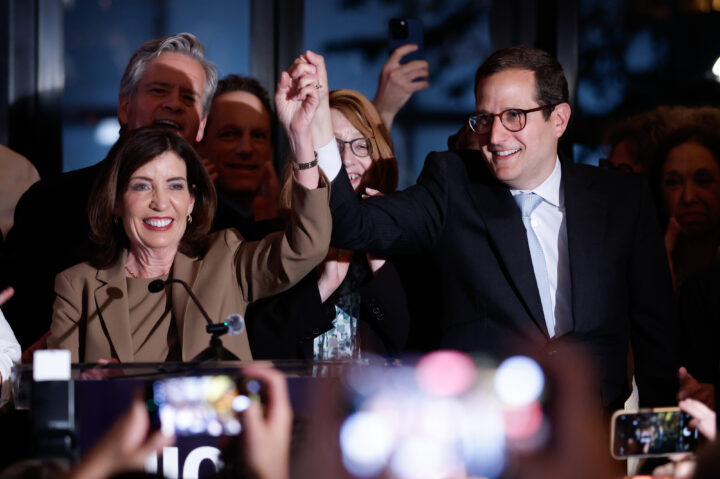
Kathy Hochul, governor of New York, and Assemblymember Micah Lasher, a House candidate, during a primary election night watch party in New York, on June 23, 2026.
New York state Assemblymember Micah Lasher, a Jewish Democrat, claimed victory on Tuesday night in a hard-fought primary for a coveted House seat in the heart of Manhattan, according to the Associated Press.
Lasher had won 39% with most of the vote tallied by the time his race had been called. He prevailed over a fellow assemblymember, Alex Bores, who pulled in 35%, as well as Jack Schlossberg, the Kennedy scion, who came in third with just 10% — followed by Nina Schwalbe and George Conway, both in single digits.
Lasher, 44, a longtime member of the Democratic establishment in New York, pitched himself as the most experienced candidate in the race, leaning into his identification as a policy wonk. He was backed by the district’s retiring congressman, Rep. Jerry Nadler (D-NY), as well as Gov. Kathy Hochul. He also drew a significant share of outside support from former New York City Mayor Michael Bloomberg, who spent $10 million to help boost Lasher’s campaign.
The closely watched primary became one of the most expensive on record, due in part to outside spending from AI-linked super PACs that helped to raise Bores’ profile as a leading advocate for industry regulation.
The race also focused heavily on Israel — though most of the top contenders were largely aligned on key issues. The district, New York’s 12th, is home to the largest Jewish constituency in the country, and many Jewish voters identify with the sort of liberal Zionist sentiments that Lasher expressed during the campaign.
In contrast with other primaries in New York City where Israel emerged as a lightning rod, the race to succeed Nadler was marked by more moderate views on Middle East policy. Lasher backed U.S. funding to boost Israel’s Iron Dome missile-defense system and opposed efforts to condition aid that single out Israel, for instance.
Lasher is now all but assured a seat in Congress thanks to the heavily Democratic tilt of the district.
“I think the message I send to Jewish voters is 44 years being a proud Zionist Jew and, God willing, another 44 years,” he said at a Jewish community forum in May, drawing applause from the audience.
Still, Lasher raised frustrations near the end of the race that the conversation had become too narrowly focused on Israel.
“I spend a great deal of time wrestling with the challenges and the horrors of what is going on in Israel,” Lasher noted earlier this month. “I am not obsessed with Israel, and I worry sometimes that our political dialogue — and the political dialogue in this race — is obsessed with Israel.”
The Kennedy scion was the only one of four NY-12 Democratic candidates to say he supports the legislation imposing restrictions on weapons sales to Israel at a debate on Tuesday
Edna Leshowitz/Getty Images
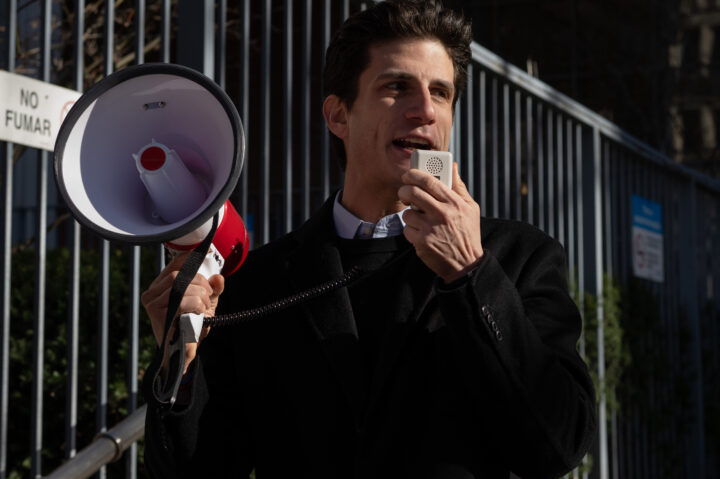
Jack Schlossberg, grandson of former President John. F Kennedy who is currently running for Congress, on Jan. 12, 2026 in New York City.
Jack Schlossberg, the Kennedy scion and social media influencer running for a coveted open House seat in Manhattan, came out on Tuesday in support of legislation that would impose unprecedented new restrictions on weapons sales or transfers to Israel, despite previously expressing skepticism of the bill.
During a debate on Tuesday evening, Schlossberg pledged that “as of today,” he would vote in support of the Block the Bombs Act, a controversial bill that has drawn backing from a growing number of left-wing House Democrats, casting his rejection of offensive weapons as a response to “a moral question that is being put to our country right now.”
He also reiterated he would vote for continued U.S. funding to boost Israel’s Iron Dome missile-defense system, saying his position aligns with a commitment to “protect civilian lives as best we can” in the region.
Schlossberg, who has shared inconsistent positions on aid to Israel throughout the campaign to succeed retiring Rep. Jerry Nadler (D-NY) in a heavily Jewish House district, wrote in a January questionnaire that he was “unsure” whether he would support the Block the Bombs Act, arguing that it “would not provide an avenue to peace and stability.”
Even as he has frequently voiced his objections to future weapons sales to Israel, Schlossberg had not appeared to publicly back the Block the Bombs Act until Tuesday’s debate, marking a clear divide over Israel in the race.
By contrast, Schlossberg’s top rivals in the June 23 primary — including state Assemblymembers Micah Lasher and Alex Bores and former GOP attorney George Conway — all declined to support the bill at the debate.
Schlossberg’s campaign did not respond to a request for comment about his evolution on the legislation.
The 33-year-old grandson of former President John F. Kennedy has criticized Lasher and Bores for opposing efforts to condition military aid to Israel that single out the Jewish state.
But despite claiming on social media last month that he supports “no weapons to Israel,” Schlossberg has reportedly stated otherwise behind closed doors.
Speaking in May at a private social club on the Upper East Side, he told members he “probably would have continued funding Israel’s offensive weaponry within the years following Oct. 7,” according to audio of the meeting obtained by Politico.
His campaign told Politico that Schlossberg’s “views have evolved as the situation has.”
For his part, Schlossberg insisted in a series of social media posts that the story had misrepresented his views and that his stance on offensive aid has been consistent, even though he also said his “position has changed as the situation does.”
During a candidate forum in January, meanwhile, Schlossberg was comparatively noncommittal about his stance on aid to Israel, which he called “a strong democratic ally historically to the United States.”
“I would want to have a full intelligence briefing to try to understand the situation before supporting any specific legislation,” he said.
Democrats are uniting to condemn Maureen Galindo’s extremist candidacy — and blame the GOP’s opportunistic intervention
Katina Zentz/San Antonio Express-News via Getty Images
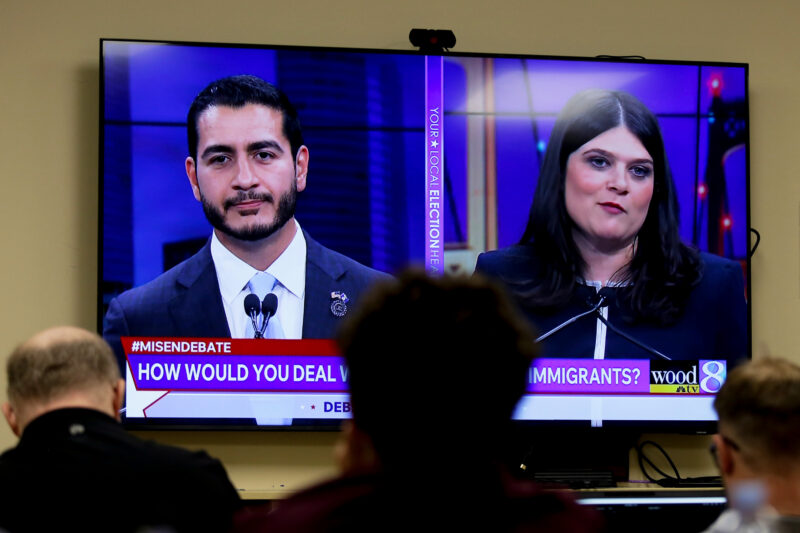
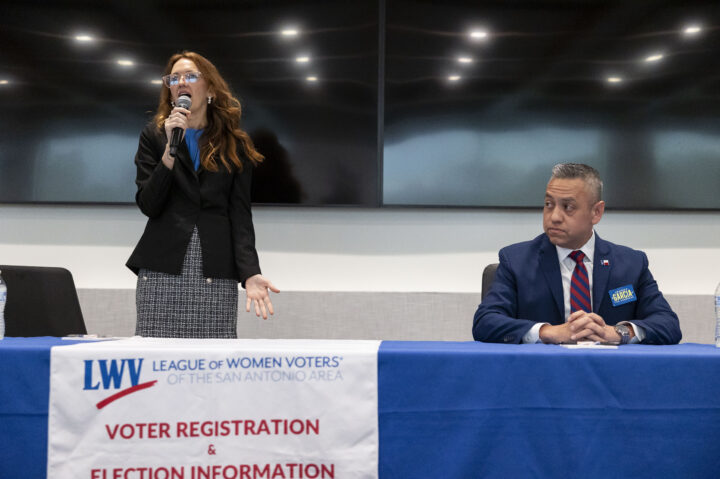
Maureen Galindo, left, and Johnny Garcia, right, participate in a TX-35 forum in San Antonio on May 6, 2026.
A newly launched super PAC with ties to Republicans has spent nearly half a million dollars to help boost a Democrat running for a competitive open House seat in Texas who is facing growing bipartisan furor over a series of virulently antisemitic social media remarks.
Lead Left PAC, the GOP-linked group, has been aggressively promoting Maureen Galindo, a fringe San Antonio activist who finished first in the primary and has said that Jews “own Hollywood” and “worship the synagogue of Satan.” Last week, she said that, if elected, she would turn a local immigration detention center “into a prison for American Zionists and former ICE officers for human trafficking,” while adding, “It will also be a castration processing center for pedophiles which will probably be most of the Zionists.”
The comments, which circulated online Tuesday, fueled widespread condemnation from members of both parties, and drew further scrutiny to Lead Left, which has faced accusations of meddling in the race to prop up a weaker candidate in the redrawn district. Democrats see the district as winnable in November if they elect Johnny Garcia, Galindo’s moderate rival, in the May 26 runoff.
Lead Left, which has not returned requests for comment, had invested around $430,000 in the runoff to elevate Galindo as of Tuesday, according to federal filings. The shadowy PAC was expected to double that figure on Wednesday with a roughly $500,000 investment, bringing its total spending in the district to around $1 million with less than a week until the election, according to media buying figures from an internal reporting database that were shared with Jewish Insider.
Lead Left, which has not yet disclosed its donors, has also recently spent in other Democratic races across the country. While no Republicans have taken credit for the group, the metadata for its website links to a major GOP fundraising platform, strongly suggesting Republican fingerprints.
In a joint statement on Tuesday, House Minority Leader Hakeem Jeffries (D-NY) and Rep. Suzan DelBene (D-WA), chair of Democratic Congressional Campaign Campaign Committee, said that “House Republican leadership must immediately cease propping up this antisemitic candidacy, pull spending in the race and forcefully condemn these comments.”
“This vile language by her is disqualifying and has no place in American politics, and certainly not in the Democratic Party,” the Democratic leaders added on Tuesday. “To embrace and uplift a fringe candidate with antisemitic — and extremely dangerous — rhetoric and views in order to win an election is beyond the pale.”
The DCCC recently added Garcia, a sheriff’s deputy in Bexar County, to its “Red to Blue” program for House candidates in battleground districts key to reclaiming the majority.
Democratic Majority for Israel’s political arm, which is also supporting Garcia, accused Republicans of “deliberately elevating one of the most grotesque antisemites in American politics this cycle because they think it helps them win.”
“It is sick, it is cynical, and it tells you everything about a party that will fund anyone, including someone openly invoking the language of pogroms, as long as it serves their politics,” Brian Romick, who leads DMFI PAC, said in a statement after Galindo’s most recent comments came to light. “Democrats across the ideological spectrum reject Maureen Galindo and everything she stands for, completely and without qualification. Republicans should explain why they’re paying to keep her viable.”
Galindo, whose endorsement from the extremist anti-Israel account Track AIPAC was rescinded on Tuesday, garnered nearly unanimous denunciations from across the political spectrum, including Reps. Elise Stefanik (R-NY), Alexandria Ocasio-Cortez (D-NY) and others who expressed outrage over her remarks.
Rep. Josh Gottheimer (D-NJ) called Galindo’s recent comments about imprisoning and castrating Zionists “straight out of the Nazi playbook,” while Rep. Jared Moskowitz (D-FL) urged Democratic leaders to speak out against rhetoric “suggesting concentration camps for American Jews.”
Galindo, who has gained prominence on social media promoting conspiracy theories about Jews and Israel, narrowly finished first in the crowded March primary with 29% of the vote, two points ahead of Garcia, who placed second. She did not respond to a request for comment.
Galindo has attributed the surge of spending from Lead Left to “a billionaire zionist who made the pac to sabotage candidates,” according to a text message to The New York Times last week.
The far-left congressional candidate also liked a post celebrating Oct. 7 shortly after the attacks
Erik McGregor/LightRocket via Getty Images
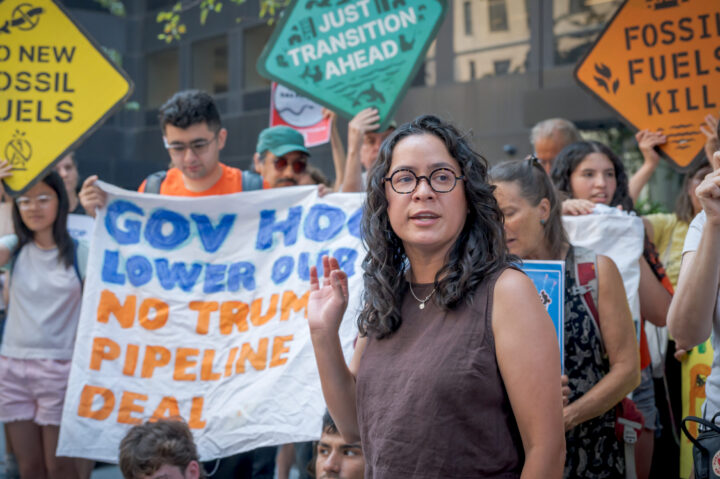
NY Assemblymember Claire Valdez
New York state Assemblymember Claire Valdez, a far-left Democrat now campaigning to fill an open House seat covering parts of Brooklyn and Queens, sat for a friendly interview released on Friday with a Twitch streamer who was once suspended from the platform for calling Jews a “demonic ethnicity.”
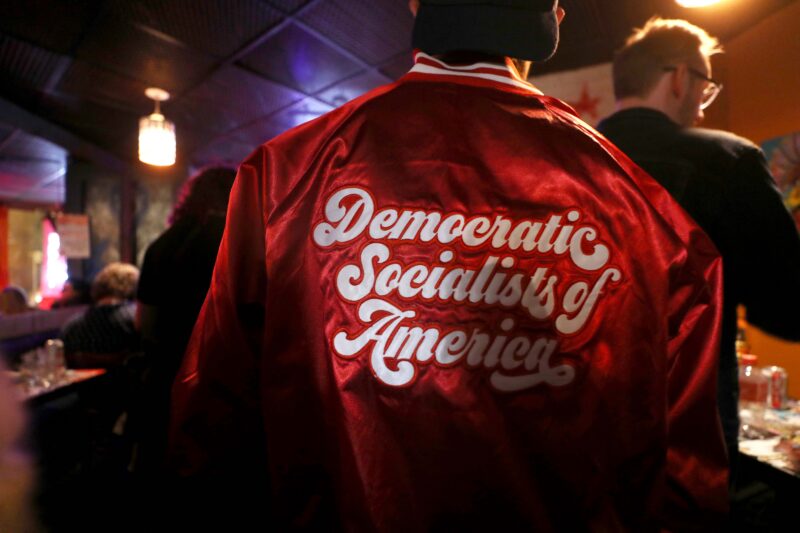
Valdez, who is backed by New York City Mayor Zohran Mamdani, Sen. Bernie Sanders (I-VT) and the Democratic Socialists of America’s New York City chapter, joined a nearly hour-long virtual conversation with Michael Beyer, a fellow DSA member who uses the online moniker “Mike from PA” and has drawn criticism for invoking antisemitic rhetoric about Jews and Israel.
Beyer, who now lives in Los Angeles, was suspended from Twitch last year after offensive comments about Jewish ethnicity he made during a livestream had been resurfaced online. “Jewish is not an ethnicity,” he said in remarks from 2024. “This constructed ethnicity, this demonic ethnicity —, wholly invented.”
The Anti-Defamation League commended Twitch’s decision to implement the suspension, saying that streamers “should use their platforms responsibly and not engage in inflammatory, dehumanizing and antisemitic rhetoric.”
Beyer apologized for the comments, insisting that he had misspoken and had meant to say that “Jewish ethnicity in Israel is a Zionist construction and is intended to flatten the true diversity of Judaism.”
Beyer has frequently used inflammatory rhetoric in his social media posts about Israel. He has said that “supporting Israel is treason,” referred to “Zionist spies in this country that must be rooted out” and criticized “Zionist scum,” among other incendiary comments.
A mayoral candidate in Los Angeles, Rae Huang, who is also a DSA member, faced scrutiny this month after she accepted a campaign donation from Beyer, which she has refused to return.
Valdez, who is facing off against Brooklyn Borough President Antonio Reynoso in a competitive race to succeed retiring Rep. Nydia Velazquez (D-NY), has long been an outspoken critic of Israel and supports the Boycott, Divestment and Sanctions movement targeting the Jewish state.
In a candidate questionnaire solicited by the DSA, Valdez pledged to “refrain from any affiliation with” what it called Zionist lobbying groups including J Street, AIPAC and Democratic Majority for Israel, according to a copy of the document obtained by Jewish Insider.
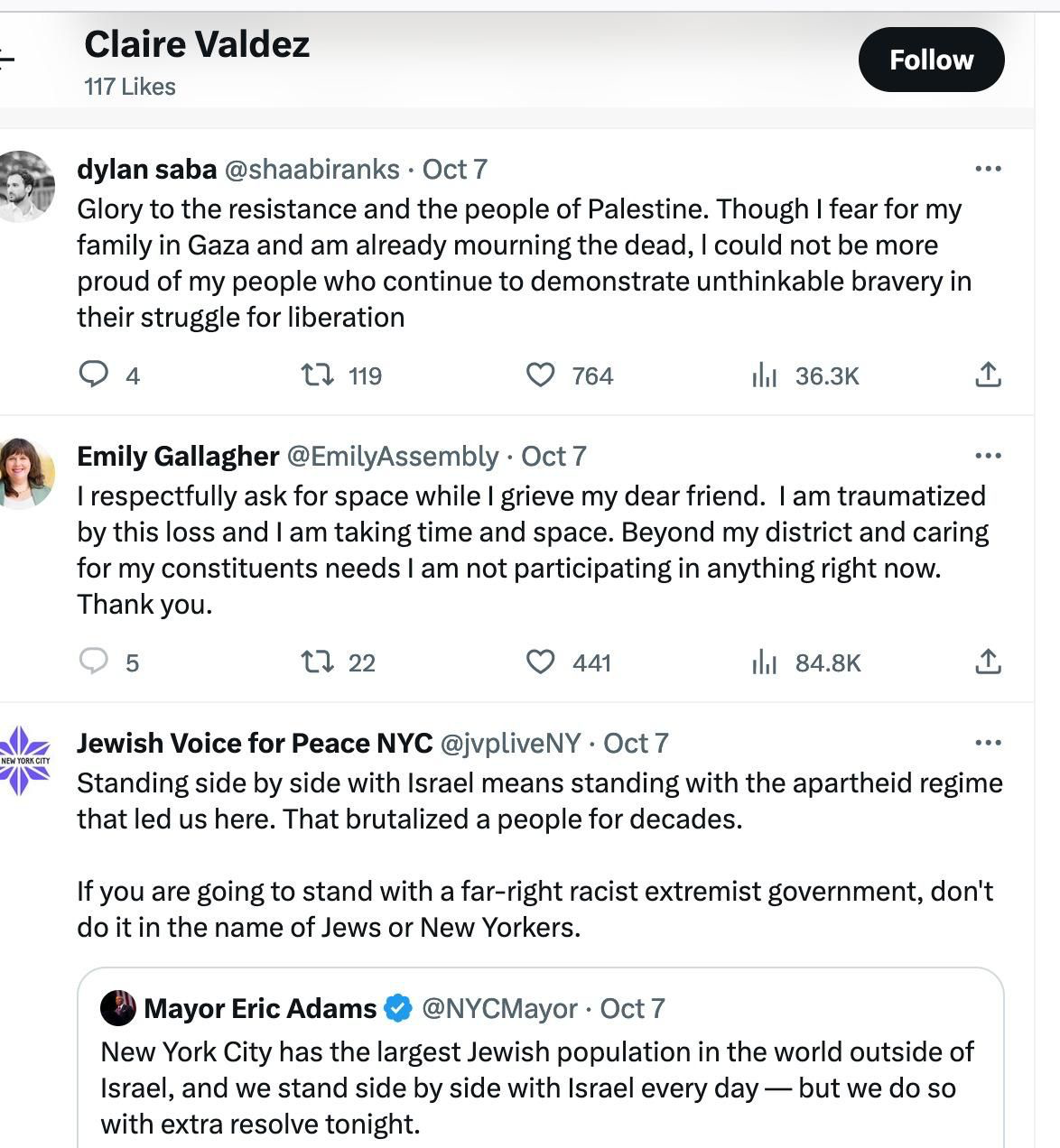
Shortly after Hamas’ Oct. 7, 2023, attacks, Valdez also liked an X post celebrating the violence, according to a screenshot shared with JI. “Glory to the resistance and the people of Palestinian,” the post said on Oct. 7.
During her new interview with Beyer, whose Twitch account claims more than 100,000 followers, Valdez was asked by the streamer if she believed “we need to be challenging more of these kind of Zionist politicians, or these right-wing Democrats.”
“This is such a DSA conversation,” Valdez replied, without directly alluding to Zionists. “This is exactly why I really love being a member of DSA.”
Elsewhere, she said she was running for Congress “in part because the Democratic status quo politicians turned away from our base when they committed to upholding Israel as an apartheid state and as a genocidal state.”
“Seeing how the Democratic base has shifted position on Palestine and Israel over the last two years,. I think there’s a real hunger within the Democratic base to think about our foreign policy and the investments that we’ve been making,” she told Beyer.
Valdez’s campaign did not respond to a request for comment on Friday afternoon about her appearance on Beyer’s show or the X post she had liked about the Oct. 7 attacks.
Her primary in the 7th Congressional District has been shaping up as a clash between the socialist left championed by Valdez and traditional progressivism embodied by Reynoso.
In a recent interview, Reynoso said he viewed himself as the underdog in the race, even as he holds support from the outgoing veteran incumbent as well as state Attorney General Letitia James and the left-wing Working Families Party.
Morris Katz, who helped propel Mamdani to power, has been advising some of the leading anti-Israel Democrats on the ballot this year

Lev Radin/Pacific Press/LightRocket via Getty Images
Micah Lasher campaigns and distributes flyers as he runs to represent Congressional District 12 on Lexington Avenue.
Micah Lasher, a Democratic state assemblymember who is running for an open House seat in Manhattan, has enlisted a top progressive consulting firm with ties to New York City Mayor Zohran Mamdani to cut ads for his campaign, Jewish Insider has learned.
Fight Agency, a media firm co-founded by Morris Katz, who rose to prominence as an advisor for Mamdani’s insurgent mayoral campaign, is working with Lasher as he seeks to succeed retiring Rep. Jerry Nadler (D-NY) in a crowded primary in New York’s 12th Congressional District, which has the largest Jewish electorate in the country.
“Team Lasher is thrilled to welcome Fight Agency to our team that includes powerhouses Mark Guma and Haley Scott,” Grace Peacore, a Lasher spokesperson, told JI on Wednesday, referring to other consultants advising the campaign. “We can’t wait for you to see what we’ve been cooking up. Stay tuned!”
Katz shot a new ad for Lasher this week at a bagel shop on the Upper West Side with Nadler and New York Gov. Kathy Hochul, both of whom have backed his campaign, according to Peacore.
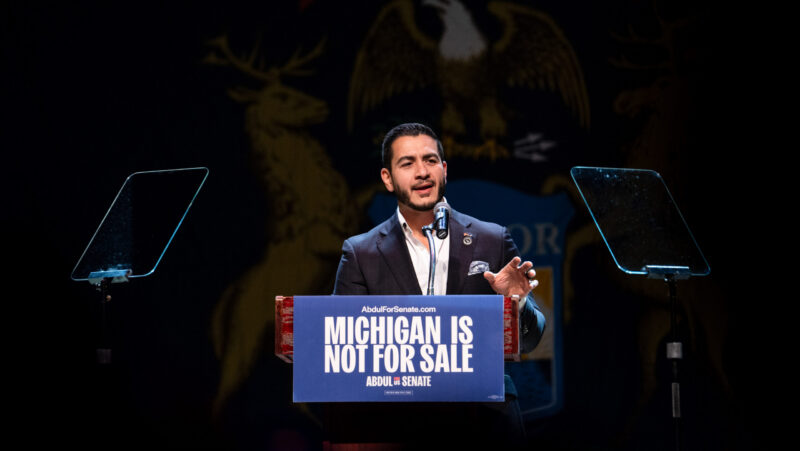
The relationship represents something of an unlikely pairing for both parties. Fight Agency prides itself on elevating anti-establishment candidates with left-wing worldviews — among its most high-profile clients this election cycle are Graham Platner, an oyster farmer who is now the presumptive Democratic nominee in Maine’s Senate race, and Abdul El-Sayed, who is running in Michigan’s crowded Senate primary. Both candidates have positioned themselves as staunch critics of Israel.
Katz, who is Jewish, is also an outspoken critic of Israel who has sought to push the party leftward on Middle East policy, while Lasher has called himself a “proud Zionist Jew” and opposed legislative efforts to block U.S. weapons sales to Israel. He is known as a policy wonk with close connections to the Democratic establishment in New York — thanks to his past roles working for Hochul and former New York City Mayor Michael Bloomberg, among others.
Katz had reportedly been working to help consolidate progressive backing for Lasher, though one of his top rivals in the June primary, Assemblymember Alex Bores, has drawn endorsements from a range of left-wing groups in recent days.
Lasher, whose campaign had not yet been up on the airwaves, is also facing Jack Schlossberg, a Kennedy scion and social media influencer, and George Conway, a prominent critic of President Donald Trump, among other lesser-known candidates.
One Jewish leader, speaking anonymously to discuss the race, called Lasher’s decision to hire Katz a smart move, even if he disagreed with his stances on Israel. “I would also use him!” he told JI on Wednesday.
The New York State assemblymember, who is consolidating progressive support in the race to succeed Jerry Nadler, said he told the Sanders-affiliated group that endorsed him that his position on Israel funding was different from theirs
John Nacion/Variety via Getty Images
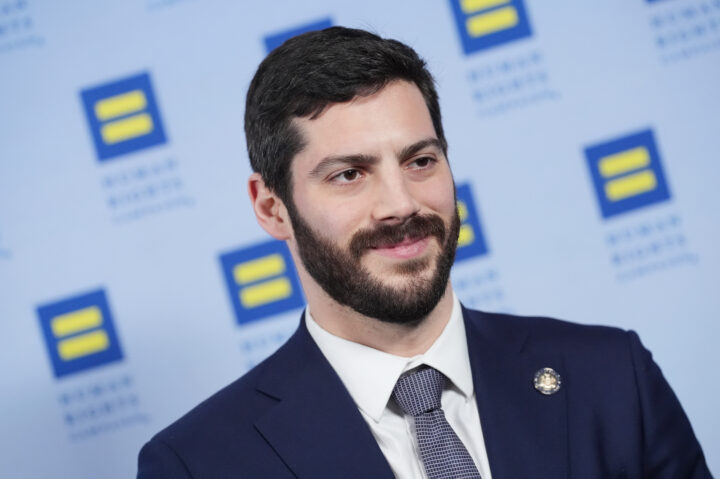
Alex Bores at Human Rights Campaign Greater New York Dinner held at the Marriott Marquis on February 07, 2026 in New York, New York.
New York State Assemblymember Alex Bores, a leading Democratic primary candidate for an open House seat in Manhattan, said on Tuesday that he disagreed with Our Revolution, the left-wing advocacy group that recently endorsed his campaign, over its opposition to U.S. military funding for Israel.
Speaking at a candidate forum hosted by West Side Institutional Synagogue and moderated by Jewish Insider’s editor-in-chief, Josh Kraushaar, Bores said that even as he welcomed the endorsement because of such shared interests as AI regulation, he was not aligned with Our Revolution’s approach to Israel, a key issue in the heavily Jewish 12th Congressional District.
The endorsement from Our Revolution, which is affiliated with Sen. Bernie Sanders (I-VT), drew some boos from the crowd when it was mentioned during the forum. Bores, a former Palantir employee facing attack ads from an AI-linked super PAC, clarified he was “happy to partner with” the organization “in the fight” to regulate the industry he has scrutinized as a state legislator.
“They asked me specifically about my position on Israel, which is well-documented and different from theirs,” Bores explained. “I said the same thing I say in every room.”
The endorsement last week had fueled skepticism among some Jewish leaders, raising doubts over his commitment to upholding support for Israel if he is elected to the House.
But Bores, who is now consolidating support from the progressive left in the crowded race to succeed retiring Rep. Jerry Nadler (D-NY), emphasized that “we need to make it acceptable for there to be people in progressive spaces that still believe in the right of Israel to exist and to defend itself.”
“I will always say the same things in every room. I said them there,” Bores said of his discussions with Our Revolution. “They made the decision to endorse. I view that as a sign that maybe we’re expanding this coalition.”
Later in the forum, Bores reiterated that he opposed Sanders-led legislative efforts to restrict arms sales to Israel.
More broadly, Bores sought to cast himself as a potential bridgebuilder who hopes to expand the progressive coalition to welcome more pro-Israel voices. “I would show that you can be someone who believes in” such goals as Medicare for All “and get support from progressive groups and still stand for supporting our allies, supporting a safe, democratic Jewish state,” he told the crowd.
“You need to be able to engage in all of these communities in order to do that, and I would be very happy to play that role,” he added.
Bores was joined at the forum on Tuesday by his fellow state assemblymember, Micah Lasher, and George Conway, a former Republican who is now a prominent critic of President Donald Trump. Both candidates have likewise expressed strong support for Israel.
Jack Schlossberg, the Kennedy scion who has called for blocking arms sales to Israel, declined to attend.
As Alex Bores and Jack Schlossberg woo the left, Micah Lasher emerges as favorite among Jewish voters
Brian Stukes/Lev Radin/Roy Rochlin/John Nacion
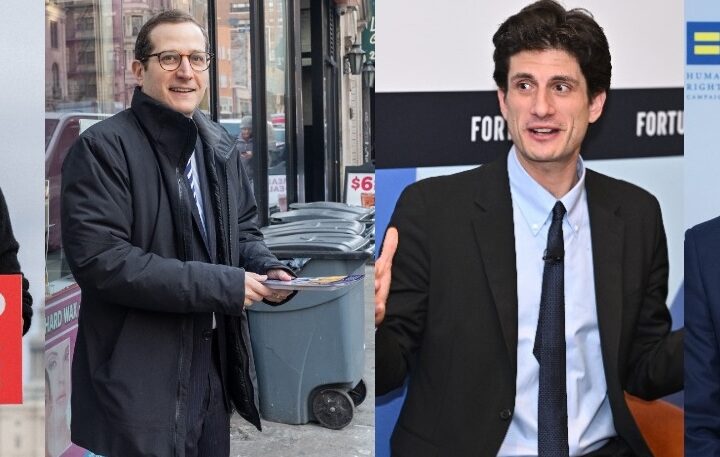
George Conway/Micah Lasher/Jack Schlossberg/Alex Bores
With seven weeks remaining until the Democratic primary for an open House seat in Manhattan, the crowded race is beginning to show emerging signs of division over Israel and rising antisemitism, key issues in the heavily Jewish district where many voters closely identify with liberal Zionist sentiments.
The last week — which included two candidate forums focused on Jewish community issues and was punctuated by an anti-Israel protest near a synagogue in the district hosting an Israeli real estate event — highlighted some of the subtle ideological fault lines inflecting the June 23 race to succeed retiring Rep. Jerry Nadler (D-NY).
From recent efforts to block U.S. weapons sales to Israel to the intersection between anti-Zionism and antisemitism, the four top candidates in the closely contested race — state Assemblymembers Alex Bores and Micah Lasher, Kennedy scion Jack Schlossberg and former Republican attorney George Conway — are by varying degrees staking out differing views on Middle East policy as well as domestic concerns affecting the Jewish community, while continuing to reaffirm their support for the Jewish state.
Meanwhile, some recent endorsements that Bores received from left-wing advocacy groups hostile toward Israel have fueled skepticism of that support among Jewish leaders, along with speculation he is seeking to carve out a progressive lane for himself that has been largely unoccupied for most of the campaign.
The starkest disagreements were on display last Wednesday during a candidate forum at the Stephen Wise Free Synagogue on the Upper West Side, where Schlossberg, a social media influencer with a narrow lead in most private polls, notably said he would have joined most Senate Democrats who voted last month to restrict arms sales to Israel — even as he continues to back defensive aid to help boost Israel’s Iron Dome system.
For their parts, Conway and Lasher both confirmed they would have opposed the legislation introduced by Sen. Bernie Sanders (I-VT). “I don’t support the withholding of aid from Israel,” Conway explained, drawing applause from the audience, while Lasher said he did not believe the bill “would have actually improved the lives of people on the ground,” echoing comments he had made in a candidate questionnaire opposing House legislation to block weapons sales to Israel.
Bores, who had previously committed to the event, pulled out the day before, citing a scheduling conflict in Washington.
The forum, which took place a day after anti-Israel demonstrators had chanted antisemitic slogans near Park East Synagogue to oppose an Israeli real estate event featuring some advertising for settlements in the West Bank, drew other distinct contrasts among the candidates.
Schlossberg, for instance, condemned what he called the “antisemitic rhetoric” used by demonstrators who had shouted slogans such as, “We don’t want no Zionists here,” “Death to the IDF” and “We don’t want no two-state, we want ‘48.”
Still, he added, “I don’t think that a land sale for real estate that is in violation of international law should be happening in a house of worship.”
In comparison, Lasher, a Jewish protégé of Nadler’s, questioned the protesters’ aims. The demonstration was more broadly about “framing Israel, and the idea of making aliyah to Israel, as illegitimate,” he argued. Earlier, he said the protest was “intended to create fear in the hearts of Jewish New Yorkers and stigmatize our community.”
“I think it’s important to speak with clarity,” added Lasher, who has touted his state legislation to ban protests directly outside houses of worship, which has been opposed by anti-Israel activists in the city. “When people are outside a synagogue shouting, ‘We don’t want two states, we want ‘48’ — that’s not about the question of West Bank settlements. That is about the legitimacy of Israel.”
Bores, whose state Assembly district includes Park East Synagogue, said in a joint statement with City Councilmember Virginia Maloney before the protest on Tuesday that the demonstration evoked “painful memories of times when people have been harassed while entering houses of worship.” He did not appear to have commented on the protest after it occurred.
While Bores has recently accepted support from some groups opposed to U.S. funding for Israel, he has indicated that he does not share such positions. He has rejected legislative efforts to condition aid — stating in one candidate questionnaire, for example, that “determining foreign policy through legislation that targets individual countries has overall not been beneficial for achieving universal rights.”
He reiterated that view last Monday during a separate forum at The Jewish Center, a Modern Orthodox synagogue on the Upper West Side, where he appeared with Lasher. “I support the consistent application of Leahy Laws across all countries,” he said, referring to U.S. laws banning security funding to foreign military units that engage in human rights violations.
Lasher also agreed with that position. “It should be a universal standard,” he said.
“We should be able to stand up to people in our party,” Bores added at the forum last week, “and say how important our relationship is with the State of Israel and how important it is to ensure the rights of everyone in the region, including the Palestinians.”
Still, his recent endorsement from Our Revolution, a Sanders-aligned group that has advocated for cutting military funding to Israel, has fueled questions about the sincerity of his positions. His decision to pull out of the Stephen Wise candidate forum on short notice last week also raised eyebrows, particularly as he had done so after winning support from a City University of New York union that has called for divesting from Israel.
Bores has otherwise claimed backing from New York Progressive Action Network, which likewise supports efforts to withhold U.S. military aid to Israel.
“There’s a lot of skepticism now,” said one Jewish community leader who is closely following the race, speaking on the condition of anonymity to address a sensitive issue. “You don’t get the endorsements of Our Revolution and PSC CUNY,” which represents faculty and staff in the university system, “without saying something differently privately than you do publicly.”
“There’s concern now that there wasn’t a few weeks ago,” the Jewish leader said, noting Bores had been calling community members to do “damage control” after receiving the Our Revolution endorsement. He has explained that the nod extends from their shared goal of regulating the AI industry, which is targeting the former Palantir employee aggressively in the race, according to the Jewish leader.
A spokesperson for Bores’ campaign did not respond to a request for comment about the endorsement last week.
While some Jewish voters in the district feel that Lasher’s views on Israel are to the left of their own, his outspoken opposition to rising antisemitism and commitment to Israel’s security are now appealing to a segment of the community that is questioning the apparent dissonance between Bores’ publicly stated positions and his endorsements from organizations with which he is not aligned on Middle East policy.
A graphic circulating in local Jewish WhatsApp groups on Friday, which was shared with Jewish Insider, warned that “a Bernie Sanders PAC just endorsed Alex Bores” and that “Jack Schlossberg wants to cut arms sales to Israel,” highlighting the names in red.
“Micah Lasher is the clear choice. The community and rabbis are rallying behind him,” the message continued. “It’s time to unite to win this seat.”
Garth Symonds, who chairs The Jewish Center’s committee to get out the vote, said in a statement to JI on Friday that Bores “has proven his toughness in the face of well-funded attacks by those resistant to AI regulation” and that he “appears to have a strong legislative record, but so does Lasher.”
“On Israel, Lasher has a supportive track record, whereas Bores appears close to some people in the Working Families Party, which is anti-Israel, and has been endorsed by One Revolution,” he said, claiming Lasher, a veteran Democratic operative, “has deeper political experience.”
The Working Families Party, which supports conditioning aid to Israel, chose not to issue an endorsement after soliciting questionnaires from Bores, Lasher and Schlossberg. But the group has recently indicated it could rethink that decision as Schlossberg has gained traction, saying “we can do better than that.” It is most likely to support Bores if it does weigh on the primary, City & State New York has reported.
Chris Rabb, the DSA-endorsed House candidate in a Philadelphia congressional race, blamed the Sydney Hanukkah attack on ‘Zionists’
Paul Weaver/SOPA Images/LightRocket via Getty Images
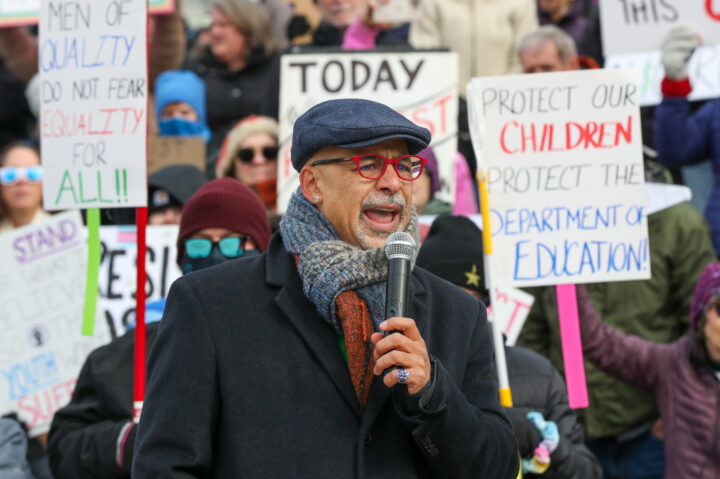
Pennsylvania state Rep. Chris Rabb speaks during a protest outside of the Pennsylvania Capitol.
Pennsylvania state Rep. Chris Rabb — a Democrat seeking the Philadelphia House seat of retiring Rep. Dwight Evans (D-PA) — shared an Instagram post blaming the massacre of Jewish Australians at a Hanukkah celebration at Sydney’s Bondi Beach on “Zionists,” the Philadelphia Inquirer reported.
In the aftermath of the attack, in which 14 were killed and 40 injured, Rabb’s account shared disinformation insinuating the slaughter was a false flag perpetrated by Israeli interests.
“We all know the gunmen were likely Zionists themselves,” read the post, which used an emoji in the place of the word “gun.”
Shortly after the attack, the alleged assailants were identified as a father and son whom authorities linked to an offshoot of the Islamic State. Rabb’s post further lamented that Ahmed al-Ahmed, a Muslim Syrian immigrant who intervened, had not received broader acknowledgment for his “hero” role of disarming one of the attackers.
A Rabb campaign spokesperson asserted to the Inquirer that the candidate not only did not share the post himself, but that he had “no knowledge” of it, and blamed a former staffer for posting it. The campaign declined to share the staffer’s name and the details of their dismissal with Jewish Insider, but stated that “Rabb has and does condemn [the post] in the strongest terms.”
Rabb is locked in a tight race with state Sen. Sharif Street and Dr. Ala Stanford. In recent weeks, Rabb was endorsed by Sen. Chris Van Hollen (D-MD) and Reps. Jamie Raskin (D-MD), Alexandria Ocasio-Cortez (D-NY) and Maxwell Frost (D-FL), and received the backing of the Congressional Progressive Caucus. He’s also gotten the backing of far-left streamer Hasan Piker and the Democratic Socialists of America.
Backed by prominent donors and polling at the top of the Democratic primary field for NY-12, Schlossberg says he supports Iron Dome but is open to restricting U.S. aid to Israel
Edna Leshowitz/Getty Images
Jack Schlossberg, grandson of former President John. F Kennedy who is currently running for Congress, on Jan. 12, 2026 in New York City.
As Jack Schlossberg gains a foothold in his primary campaign for a coveted open House seat in the heart of Manhattan, his views on Israel policy are drawing closer scrutiny, as he begins to stake out a stance on the increasingly heated subject of Democratic debate.
His decision to skip at least two upcoming Jewish community candidate forums occurring next month, meanwhile, is also raising some eyebrows among a key constituency in a district that has the largest Jewish voting population in the country.
On Middle East policy, the 33-year-old Kennedy scion has embraced positions that place him to the left of the field on Israel, a potentially consequential issue in the 12th Congressional District, which favored former New York Gov. Andrew Cuomo over New York City Mayor Zohran Mamdani in the November mayoral election.
Schlossberg, like his some of his Democratic rivals, had backed Mamdani, despite disagreeing with the now-mayor’s controversial campaign vow to arrest Israeli Prime Minister Benjamin Netanyahu and declining to call Israel’s war in Gaza a genocide, among other notable differences.
But as the fallout over Gaza and the war with Iran has stoked Democratic skepticism of the U.S. relationship with Israel, Schlossberg is now joining growing calls to oppose U.S. weapons sales to the Jewish state, though he has yet to clearly articulate his plans to enact such policies if elected to serve in the House.
During a candidate forum at 92NY last week, for example, Schlossberg, the grandson of former President John F. Kennedy, rejected continued U.S. funding for offensive weapons to Israel amid the war in Iran — even as he emphasized support for boosting the Iron Dome missile-defense system, which he described as a “critical” technology.
“I do not think the United States should back away from its ally completely and leave them hanging out to dry without any defenses,” he told the crowd, while saying Congress should hold a vote on funding for the war in Iran, including offensive weapons to Israel.
Schlossberg made no mention of Senate votes taking place that evening in which most Democrats favored resolutions led by Sen. Bernie Sanders (I-VT) seeking to block arms sales to Israel — which were ultimately rejected.
Meanwhile, in a questionnaire recently solicited by the Working Families Party, Schlossberg confirmed that he would co-sponsor legislation introduced by Rep. Betty McCollum (D-MN) “that would end U.S. military aid to Israel for any uses connected to the occupation of the West Bank and East Jerusalem.”
“Yes, I oppose the use of U.S. taxpayer dollars for abuse, illegal seizure and destruction of property and any violations of international humanitarian law anywhere,” he wrote.
For their part, two of his rivals in the race to succeed Rep. Jerry Nadler (D-NY), state Assemblymen Micah Lasher and Alex Bores, both declined to back the legislation. Another top primary opponent, George Conway, a former Republican lawyer and activist who has become a vocal critic of President Donald Trump, did not submit a questionnaire to the party.
Previously, Schlossberg had said at a candidate forum in January that he “would want to have a full intelligence briefing before supporting any specific legislation” related to Israel.
Schlossberg, who identifies as Jewish on his father’s side despite being raised Catholic, has taken steps to court the district’s sizable Jewish constituency. In the first policy proposal of his campaign, for instance, he pledged to fast-track legislation that would nearly double security funding for synagogues and other Jewish institutions amid an uptick in antisemitic violence.
It is unclear whether his views will shape pro-Israel spending in the race. Democratic Majority for Israel did not respond to requests for comment, though one person familiar with internal discussions told Jewish Insider late last year it was unlikely to engage in the primary, barring any major developments.
A spokesperson for AIPAC likewise declined to comment on the primary when reached by JI.
J Street, the progressive Israel advocacy group that has recently begun calling for ending U.S. funding to bolster Iron Dome, told JI it has “primary approved” Bores, Lasher and Schlossberg, meaning its members are able to contribute to all three candidates through its online political portal.
Tali deGroot, J Street’s vice president of political and digital strategy, told JI in a statement that all three of the candidates “are aligned with J Street’s pro-Israel, pro-peace, pro-democracy positions.”
“Ultimately, it is up to the district to determine who they want to represent them in Congress, and we are glad to see three J Street-aligned voices in this race,” she added.
Some Jewish leaders say that they are interested in hearing more from Schlossberg as he emerges as a leading candidate in the race. He attended Shabbat services in March at the Conservative Park Avenue Synagogue on the Upper East Side, a day after the terrorist attack against Temple Israel in suburban Detroit.
But he is otherwise expected to be absent from two Jewish community forums next month in the district at The Jewish Center and West Side Institutional Synagogue, the latter of which will be moderated by JI’s editor-in-chief.
Daniel Sherman, the rabbi of West Side Institutional Synagogue, said Schlossberg had been invited to the May 4 candidate forum “but his campaign responded that they had a scheduling conflict.” The event will be attended by Lasher, Bores and Conway, according to a flyer.
“As our goal is to engage with all of the candidates we would welcome his presence if the scheduling conflict can be resolved,” Sherman told JI.
Mordechai Schwarz, a longtime Jewish Center member who organized its upcoming forum, told JI that Schlossberg’s team had declined to join due to a busy schedule, even when asked if an alternative date would work better, while Conway’s campaign had not responded to repeated email invitations.
In an email to The Jewish Center shared with JI by its rabbi, Yosie Levine, Schlossberg’s team gave its “sincerest apologies” for skipping the forum, adding that “May is a busy, everchanging month for us, so we do not have alternative times to offer right now.”
In a statement to JI on Monday, a spokesperson for Schlossberg said, “Jack Schlossberg knows that Israel is a critical democratic ally for America and does not believe we should abandon Israel. That includes funding for the Iron Dome — which he would support should he be elected to Congress, so that Israel can protect itself from the myriad of threats facing it from all directions — as well as his local plan to boost protections at Jewish places of worship, given the increase in antisemitism and hate crimes.”
“With that said, Mr. Schlossberg is also the only NY-12 candidate fully opposed to the no-plan Iran war,” the spokesperson added. “That includes weapons to foreign countries, Donald Trump’s massive $200b supplemental request, and his record-breaking, bloated $1.5 trillion defense budget demands. No war means no funding for any part of the war. Schlossberg would vote accordingly.”
A spokesperson for Conway told JI on Friday he was unable to attend the forum because of a “scheduling conflict,” and said the campaign would be following up with The Jewish Center “to close the loop” on the pending matter.
Lasher and Bores are listed as attending The Jewish Center’s forum in a flyer.
The Stephen Wise Free Synagogue, a Reform congregation on the Upper West Side, is hosting a Democratic candidate forum scheduled for May 6, a representative confirmed to JI, but participants have not yet been finalized. Schlossberg’s team confirmed to JI after this story was published that he will be joining the Stephen Wise forum.
Most of the limited available polling conducted earlier this year shows Schlossberg narrowly leading the crowded primary field with a small plurality of the vote in the district that spans the Upper East and West Sides and stretches south to Union Square.
More recent private polling has indicated that Schlossberg continues to maintain a leading position in the race. According to a source briefed on an internal survey conducted for Schlossberg’s campaign in early April, who broadly described the results to JI on condition of anonymity, the Kennedy scion held a seven-point lead in the 20s — with his opponents all clustered in the high teens. The poll’s margin of error was three percentage points.
Jake Dilemani, a Democratic consultant who is not involved in the primary, suggested that Schlossberg’s favorable position most likely is “a function of name recognition,” saying that voters “are interested in his campaign because there’s a sexiness to a Kennedy running.”
Like other political observers, though, Dilemani told JI he expects the polling to shift as outside spending and other advertising influences the primary.
A star-studded list of campaign donors reflects Schlossberg’s celebrity status in the race, featuring prominent names from politics, fashion, music and entertainment such as Tory Burch, John Goodman, Bette Midler, Paul Simon, Lorne Michaels, Richard Plepler, Damon Lindelof, Bryan Lourd, Peggy Siegal, Chrissy Teigen, Jay Carney and Jon Corzine — all of whom have shown up in recent campaign filings to the Federal Election Commission.
Schlossberg, who had built a sizable online following as a social media influencer before launching his bid in November, pulled in nearly $1.2 million in the first quarter of 2026, according to his latest filing released last week, with most of that money on hand, less than his rivals have banked in their accounts.
Credibly or not, Schlossberg’s fresh perspective as a relative newcomer has provided him some license — despite his well-known family name — to call himself an “outsider” in a field populated by more established opponents with extensive records in both politics and government.
“President Kennedy was the first Catholic and the youngest president. He challenged the status quo, and he was an outsider. And that’s what I am in this race, so I’m proud to continue that legacy here,” he recently told a local news outlet, saying he will bring “new energy” to Washington.
But some critics point to Schlossberg’s otherwise thin resume, lack of reported income last year and history of bizarre and performative social media stunts, such as imitating a Nazi salute in a controversial video that surfaced at the start of his campaign, as evidence that his recent political makeover remains unconvincing.
While many of the district’s older constituents may still be unaware of Schlossberg’s unbalanced online record, Dilemani predicted that the other campaigns “will do their best to make it known” before the June primary.
High campaign staff turnover since he entered the primary has also drawn scrutiny to his operation. And he has faced some recent scrutiny for pulling out of other upcoming candidate forums.
Chris Coffey, a Democratic strategist who is not involved in the race, expressed strong doubts over Schlossberg’s bid to represent what he described as a “really important seat” in “one of the most educated and affluent districts in the country,” airing concerns about his “erratic background” and “online persona.”
“I have no doubt he is a great guy to go and have a Diet Coke with,” Coffey explained of Schlossberg. “But in an era where Democrats will hopefully be in an oversight position and needing to use all the tools they can to hopefully go after the president, he’ll be the guy making videos and doing press conferences.”
He also questioned the sincerity of Schlossberg’s comments on Israel as the party has shifted to the left, claiming he had not yet seen him “take a tough position” on any issue in the race.
“I honestly think Jack would say and do anything to get elected,” he told JI, citing Schlossberg’s recent opposition to a redevelopment project in Chelsea that some of his rivals have backed. “If he thinks today that it’s better to say, ‘I’m never going to give Israel a weapon again,’ he’ll say that,” Coffey added.
In Coffey’s assessment, “this race will test whether we’re in a moment where resumes don’t matter and nothing actually matters.”
Still, Schlossberg has managed to win some notable mainstream support, claiming a major endorsement in February from retiring Rep. Nancy Pelosi (D-CA), who said in a statement that he “represents the best of his generation” and “possesses a unique ability to navigate the digital and the classical political worlds in a way that can get things done for people.”
He has also garnered praise from Al Sharpton, joining the Democratic commentator for a “power breakfast” reported in Page Six this month and days later taking the stage at his National Action Network convention in New York, a closely watched annual political event.
Bexar County sheriff’s deputy Johnny Garcia is facing off against Maureen Galindo, who has made antisemitic conspiracy theories a key feature in her campaign

Courtesy
Bexar County sheriff’s deputy Johnny Garcia
An upcoming Democratic runoff for a red-leaning open House seat in Texas that could be competitive in November is now emerging as a stark example of the growing tensions between moderate candidates and their fringe opponents on the extreme left over how to approach Israel and the rise of antisemitism.
The May 26 election in Texas’ recently redrawn 35th Congressional District, which was created to favor Republicans and extends from San Antonio to Austin, pits Johnny Garcia, a Bexar County sheriff’s deputy who is backed by pro-Israel Democrats and establishment officials, against Maureen Galindo, a local activist who has used her growing social media presence to promote a range of conspiracy theories, including specious claims about Israel and its ties to the United States.
Despite spending only around $4,000 on her insurgent bid and raising no money, Galindo, 38, narrowly finished first in the crowded primary earlier this month, clinching just over 29% of the vote — two points ahead of Garcia, who placed second. The other two Democratic primary candidates, John Lira and Whitney Masterson-Moyes, each won about 20%. Both have since endorsed Galindo in the runoff.
The unexpected result has raised serious doubts among mainstream Democrats and nonpartisan election observers over whether the party can win the seat if it nominates Galindo, who last year ran unsuccessfully for San Antonio City Council — and whose unhinged rhetoric is likely to alienate voters in the general election.
Her upset also underscores how, on both sides of the aisle, fringe candidates prone to conspiracism that increasingly focuses on Israel are managing to gain some traction — amid an uptick in antisemitic violence linked to the war in Gaza and now in Iran.
In an interview with Jewish Insider last Friday, however, Garcia, 39, said he had anticipated the possibility of a runoff, projecting confidence about his ability to claim the nomination for a seat he and national Democratic leaders believe he is best suited to win this fall.
He said he had already expanded his coalition in the days after the primary, earning new endorsements from both current and former elected officials who had previously remained neutral, while otherwise drawing contrasts with an opponent whose unstable messaging, he argued, shows a lack of connection to voters’ everyday concerns in the heavily Latino district.
“Although the desired outcome would have been making sure that we powered through the primary without a runoff, here we are in a situation to make sure that we are educating the voters about who the two candidates are,” he said, claiming that only “one aligns with” a district that he described as “very blue-collar.”
He characterized Galindo, by comparison, as a polarizing figure whose penchant for incendiary rhetoric threatens to stoke intraparty divisions in the House and inflame tensions nationally, accusing her of fomenting antisemitism in her commentaries on social media.
“Antisemitism is dangerous, and this country has enough divide as it is with what we’re seeing at the top by those in power,” he told JI. “We don’t need more of that, in a time where division is so strong and hate is driven by antisemitism. We don’t need more of that, especially coming from a Democratic candidate running for Congress.”
During a moment of increased political tensions fueled in part by “wars in the Middle East” raising security concerns in the Jewish community, Garcia argued, “we don’t need somebody like that making antisemitic remarks, and conspiracy theories, that could potentially drive what we just saw yesterday in Michigan,” referring to the foiled terrorist attack that targeted a synagogue in suburban Detroit last Thursday.
Citing his career in law enforcement, Garcia, who said he had worked in construction and plumbing before serving as a corrections officer and later as a hostage negotiator on an elite SWAT team, broadly emphasized his appreciation for nonprofit security grants that help protect religious institutions from terror attacks. New federal funding is currently tied up in Congress amid a partial shutdown at the Department of Homeland Security.
“I support security grants for synagogues and Jewish schools, with the ability to also monitor hateful rhetoric and antisemitism online and to streamline the response across law enforcement agencies,” Garcia told JI. “Here in San Antonio, we understand that, when we have an attack anywhere in the nation, it is our direct response to make sure that the fates that are being directly impacted are remaining safe, and ensuring those who practice a particular faith, such those who attend synagogues, will be safe. That is a priority.”
In her own campaign, meanwhile, Galindo has demonstrated an unusual fixation on Israel, while using messaging that invokes antisemitic tropes. “We need Congress members that put America before Israel, I can’t even believe I’m having to say this!!” she wrote in one representative online post. “If it’s not clear, I DO NOT SUPPORT AMERICAN TAX DOLLARS GOING TO ISRAEL AND WILL NEVERRRR ACCEPT THEIR BLOOD MONEY.”
She has devoted much of her attention to what she suggests are pernicious links between San Antonio and Israel, while baselessly insinuating that “there may be Israeli soldiers” secretly embedded in U.S. federal immigration operations. She has frequently claimed that the Department of Homeland Security is based out of Tel Aviv, citing as evidence a screenshot purporting to show the agency had created its X account in the Israeli city — which X’s head of product has dismissed as “fake news” and a “hoax.”
Meanwhile, the first section in the issues page featured on Galindo’s campaign website refers to “genocide,” only mentioning Israel. “We must stop funding Israel with billions of American workers’ tax dollars every year,” she says. “Instead we can invest that money in a STRONGER AMERICA.”
In an email to JI last week, Galindo, who declined to be interviewed, did not answer questions asking if she was aware that her language on Israel echoes antisemitic conspiracy theories.
“Jewish-Americans are saying that Israeli government actions are escalating antisemitism which of course makes me fear how Israeli and American aggressions are harming Jewish people around the world!” she wrote in response.
She also refused to acknowledge that her repeated claims regarding DHS had been discredited. “It would be sus if the DHS in Tel Aviv post was debunked because I saw it with my own eyes that day!” Galindo said. “I hope X leadership isn’t compromised. You should look into that for the safety of all Jewish people — we must stop harm to Semites and end genocide!”
For his part, Garcia expressed strong support for Israel and its relationship with the United States last week. “I firmly believe the actors of Hamas are a terrorist organization,” he said. “We need to make sure our closest ally in the Middle East remains safe and has the ability to protect itself.”
“Making sure the region remains safe and remains stable is a priority,” he explained to JI. “We need to ensure the area does not destabilize and allow for other terrorist organizations to sprout and spring up, especially at a time where we are now in a new war with Iran.”
While he acknowledged Iran “has been a leading sponsor of terrorism for years and everyone agrees unilaterally that Iran cannot be allowed to obtain a nuclear weapon,” Garcia disagreed with the manner in which the Trump administration has prosecuted the war, saying it has endangered American soldiers and resulted in escalating gas prices back home, at a moment when voters are more concerned with basic affordability issues such as rising grocery and health care costs.
“This war is careless and it’s reckless,” he told JI, adding that military “families here in San Antonio are fearful their children will be going and fighting in this endless war.”
His centrist approach to foreign policy and other topics has earned Garcia endorsements from the moderate Blue Dog PAC and Democratic Majority for Israel, which recently included him on its first slate of non-incumbent House candidates for the midterms.
“Let’s be clear, there is only one Democrat who can win this race and it’s Johnny Garcia,” Brian Romick, DMFI’s president and chair of its political arm, said in a statement to JI. “DMFI PAC is proud to support him because if Democrats are going to win back the House, we need to support candidates like Johnny who can actually win in November.”
Even as the nonpartisan Cook Political Report has ranked the race “likely Republican” in its election forecast, the Democratic Congressional Campaign Committee has indicated it is optimistic it can win the seat, adding it to a list of “districts in play” late last year.
“Knowing their record of broken promises has turned voters against them, Republicans are attempting to save their microscopic majority by trying to diminish the power of voters of color in Texas,” Rep. Suzan DelBene (D-WA), who chairs the DCCC, said in December. “Democrats will not let their cynical power play go down without a fight. The DCCC will work to ensure the people of Texas’ 35th District have the representation they deserve.”
Local political experts agreed the race could be in reach for Democrats this November, depending on the outcome of the runoff — where Republicans also are fielding two candidates after a primary where no candidate came close to securing more than 50% of the vote required to win the nomination outright.
“I wouldn’t consider any runoff in which neither candidate broke 30% in the first round to be a sure thing,” David Crockett, a political scientist at Trinity University in San Antonio, warned last week about the Democratic runoff. “This will hinge on turnout and organization, and where the voters for the third and fourth place finishers go.”
Jon Taylor, a professor of political science at the University of Texas at San Antonio, shared a more sanguine assessment, suggesting Galindo “may have benefitted from a low name identification primary.”
“But based on the also-rans from the primary and Garcia’s fundraising and organizational advantage,” Taylor told JI, he suspects that Garcia will win the May contest. “Lira and Whitney Masterson-Moyes’ voters are more likely to gravitate toward the more moderate Garcia.”
Looking to the fall, “Garcia provides national Democrats with better material to work with in November and none of the liabilities of the more extreme and at times unbalanced Galindo,” noted Mark P. Jones, a political scientist at Houston’s Rice University.
Though the GOP had drawn the new seat to help give the party an edge — the product of mid-decade redistricting that transformed a solidly blue enclave held by progressive Rep. Greg Casar (D-TX), who is now running for a different seat — experts said that a difficult national political environment now facing Republicans could shape their chances for a pick-up in the general election.
The Democratic nominee will face off against either John Lujan, a state lawmaker backed by Republican Gov. Greg Abbott who flipped a blue San Antonio seat in 2021, or Carlos De La Cruz, a U.S. Air Force veteran who won a late endorsement from President Donald Trump that complicated the primary’s closing stage. Lujan, who placed first with 33% of the vote, bested De La Cruz, whose sister is Rep. Monica De La Cruz (R-TX), by six points, hardly a strong total for either candidate.
“Democrats across the country and in Texas over the last year and more have run well ahead of their historic vote shares,” said Cal Jillson, a professor of political science at Southern Methodist University in Dallas. “It looks like 2026 is shaping up to be a good Democrat year nationally and in Texas.”
Unless the political landscape changes “in the Republicans’ favor between now and Election Day,” he told JI, “I would think any district that is less than” heavily favorable for the GOP “might be available to a good Democrat candidate running a good race.”
In the meantime, though, Garcia said that he is focusing on shoring up support in advance of the runoff, as he works to prevent his extremist rival from another upset. “Now more than ever,” he said, “we need to be united — not just as Democrats, but as a nation. We can’t allow hateful vitriol or further divides to fuel tensions and create an environment for attacks” targeting the Jewish community.
“My title in law enforcement, in the state statute, is peace officer,” Garcia explained to JI. “That’s what we are, first and foremost. We’re not deputies, we’re not policemen. We are peace officers. And I believe strongly in peace and diplomacy.”
“That is what I starkly bring to this race” and what “we’re ultimately fighting to restore in Congress as well,” he said.
Greene has stayed on the sidelines in the race to replace her, not endorsing or rallying for any of the candidates, as she continues to air her disappointment with Trump and the GOP leadership
Chip Somodevilla/Getty Images
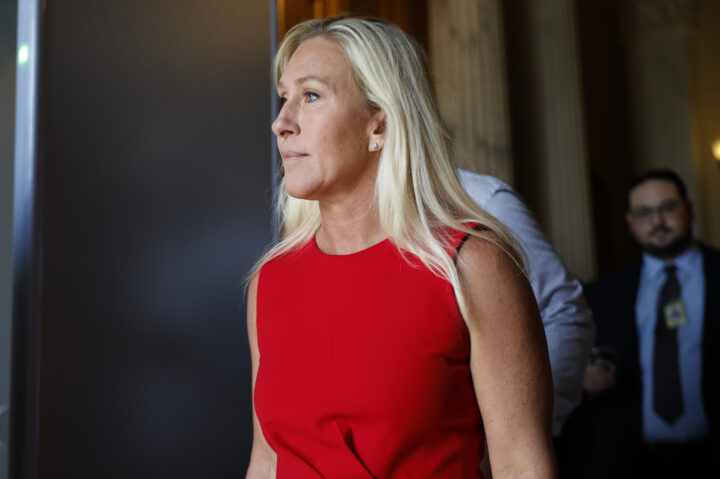
Rep. Marjorie Taylor Greene (R-GA) leaves the House Chamber following the last vote of the week at the U.S. Capitol on September 12, 2024 in Washington, DC.
Voters are casting ballots today in the special election for the ruby-red House seat previously held by Rep. Marjorie Taylor Greene (R-GA), but the final outcome will likely remain uncertain for another month.
With 17 candidates on the all-party ballot, the race is expected to go to a runoff — unless any candidate receives 50% or more of the vote, making today’s race effectively a competition over which two candidates are likely to finish with the most support.
On the GOP side, the race is dominated by two candidates. The first is Clay Fuller, a local district attorney, veteran and former White House fellow who is backed by President Donald Trump.
The second, former state Sen. Colton Moore, a hard-line conservative rabble-rouser often at odds with his own party’s leadership, is running as the anti-establishment populist — a profile that more closely matches Greene’s.
The district is one of the most Republican in the country: Trump carried the district by 37 percentage points in 2024, and paid a visit to the district in late February to throw his support behind Fuller.
A third Republican candidate, Brian Stover, a local businessman, has raised a significant amount of campaign cash and is a wild card.
On the Democratic side, the likely leader is Army veteran Shawn Harris, who lost to Greene in 2024 by nearly 30 points. He’s pulled in $4.2 million from Democrats outraged by Greene and who’ve been attracted by a far-fetched pitch that he can flip the seat. But he’s likely to secure a runoff spot, given how many Republican candidates are on the ballot.
Fuller’s campaign has been touting Trump’s endorsement, and his own military service. Fuller’s Air Force career included work on counterterrorism operations, and he was deployed in 2024 to the Al Udeid airbase in Qatar supporting U.S. Central Command operations. He also has the support of the conservative Club for Growth.
He has backed the U.S.-Israeli offensive against Iran, and expressed support for Israel. “President Trump tried the peace route with Iran not once, not twice, but THREE separate times—and they refused. He’s the peace President, but you can’t negotiate with a death cult,” Fuller said, emphasizing he had supported operations against Iran and that the regime and its proxies had killed many Americans.
Despite not receiving Trump’s support, Moore is also trying to tie himself closely to the president, describing himself on his campaign website as “Trump’s #1 Defender” and “a Proven Warrior for President Trump” — pointing to his vocal efforts to contest the results of the 2020 election and opposition to subsequent investigations of Trump and his allies — and using the campaign slogan, “God. Guns. Trump.”
Moore has repeatedly found himself at odds with Georgia’s GOP establishment, having been expelled from the Republican caucus, banned from the Statehouse floor and arrested when he tried to enter the 2025 State of the State address.
Moore doesn’t appear to have addressed the war in Iran, but said, days after the Oct. 7, 2023, Hamas attacks, “The Jewish people are the indigenous people of Israel.” And according to a candidate questionnaire from 2022, he is a longtime supporter of Israel, having attended AIPAC conferences and, as a college student, having served as co-chair of the University of Georgia AIPAC chapter. “There is no Palestinian land, it is all the land of Israel,” he said in the questionnaire.
So despite his MAGA bona fides, his record appears decidedly more supportive of Israel than Greene, who has advanced antisemitic conspiracy theories and became one of the few anti-Israel Republicans in Congress.
However, Moore was also the only Republican member of the state Senate to vote against a bill in 2024 codifying the International Holocaust Remembrance Alliance’s working definition of antisemitism — echoing Greene’s stance on the Antisemitism Awareness Act in the same year.
As of Feb. 18, Stover had raised $940,000 (around two-thirds of that was in the form of a personal loan to his campaign), Fuller $787,000 and Moore $342,000.
The normally voluble Greene has stayed on the sidelines in the race to replace her, not endorsing or rallying for any of the candidates, as she continues to air her disappointment with Trump and the GOP leadership.
The far-left state senator is now making his attacks against the pro-Israel group a central message of his campaign
Daniel Boczarski/Getty Images for People's Action
Sen. Robert Peters, IL State Senate 13th District, speaks during the protest in Chicago to hold AT&T accountable for contracts with DHS, CBP, and ICE on November 16, 2025 in Chicago, Illinois.
Robert Peters, a far-left state senator from Illinois who is now competing in a crowded Democratic primary for a safely blue Chicago-area House seat, has made anti-AIPAC messaging a central focus of his campaign, castigating the pro-Israel group as a corrupting force in congressional elections funded by Trump-aligned interests scheming to promote a “right-wing agenda.”
Just last week, for instance, Peters joined forces with a coalition of progressive House candidates in Illinois to decry AIPAC’s recently reported political engagement in key congressional races in the state, claiming that anyone who accepts support from the group will become “a ‘yes man’ to Trump donors to commit unspeakable horrors in another part of the world.”
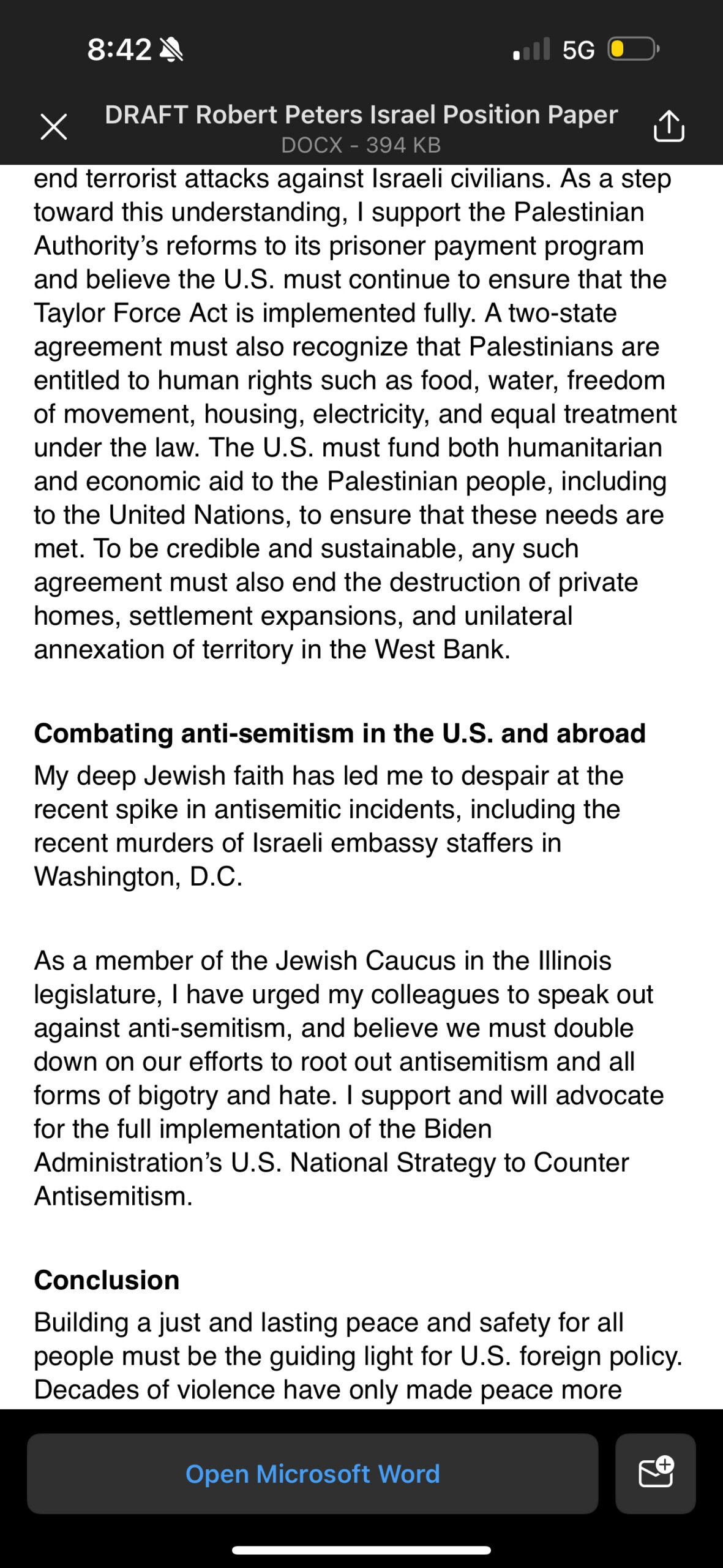
Not long after he had launched his campaign last year, however, Peters met privately with an AIPAC official in Chicago and then filed an Israel position paper at the group’s request, according to a person with close ties to the organization who reviewed the document at the time it was submitted.
The behind-the-scenes engagement — rumors about which have circulated among Peters’ opponents — raises questions about the sincerity of his hostile rhetoric toward AIPAC as he now is building support from prominent Israel critics.
Most likely, the source familiar with the matter suggested to Jewish Insider this week, Peters was “seeking AIPAC’s good grace” in a strategic effort to preempt attacks from its super PAC, United Democracy Project, which often targets candidates who stray from pro-Israel messaging.
“Israel is a vital partner to the United States, and Congress must ensure that this special relationship is preserved,” Peters wrote in his paper, confirming in a separate section he is “committed to ensuring the U.S. continues to be an essential ally of Israel, including funding foreign aid to protect the people of Israel from terrorism, cyber threats and missile attacks.”
The group is now facing scrutiny over its alleged covert funding of a newly formed super PAC, called Affordable Chicago Now!, which is investing heavily in Peters’ race to help boost a top rival, Cook County Commissioner Donna Miller, a pro-Israel Democratic candidate. Peters, for his part, has accused “AIPAC and Trump donors” of “pouring cash” into Miller’s primary bid, warning “AIPAC and Trump allies” are now “trying to buy this seat,” though AIPAC has not endorsed her and UDP is not publicly involved in the race in Illinois’ 2nd Congressional District. (UDP did not respond to a request for comment.)
The policy paper that Peters allegedly submitted to AIPAC — screenshots of which were obtained by JI — is far more measured than the anti-Israel stances he now espouses. Most strikingly, he voiced support for upholding continued U.S. military aid to Israel, which the group views as one of its top litmus tests. Earlier this month, for example, UDP invested millions on attack ads in a special House primary in a wealthy suburb of northern New Jersey, hitting an erstwhile ally, former Rep. Tom Malinowski (D-NJ), who had entertained policies to condition assistance to Israel.
“Israel is a vital partner to the United States, and Congress must ensure that this special relationship is preserved,” Peters wrote in his paper, confirming in a separate section he is “committed to ensuring the U.S. continues to be an essential ally of Israel, including funding foreign aid to protect the people of Israel from terrorism, cyber threats and missile attacks.”
By contrast, Peters has more recently condemned AIPAC-backed candidates as pro-Israel pawns “OK with unconditional military aid” to support what he calls Israeli Prime Minister Benjamin Netanyahu’s “war machine,” which he says committed genocide in Gaza. If elected, Peters has pledged to sign on to the Block the Bombs Act, a bill that seeks to impose sweeping new conditions on U.S. weapons transfers to Israel.
Matthew Fisch, a spokesperson for Peters, said in a statement to JI on Wednesday that the state senator has shared his Israel position paper “with a range of stakeholders and individuals upon request, some of whom responded with feedback for our campaign.”
“Among those stakeholders was AIPAC staffer Martin Ritter, who has a longstanding relationship with Robert going back to his days as an organizer with the Chicago Teachers Union,” Fisch said. He claimed that Ritter, who directs AIPAC’s Midwest outreach in Chicago, “requested the document and provided feedback, which our campaign promptly rejected.”
Peters “is not and has never been open to receiving support from AIPAC for his campaign,” Fisch said, noting the candidate’s “positions on this issue are well documented and have been widely discussed.”
When JI first reached out to Peters’ campaign last October to inquire about the paper, Fisch said the document had been “drafted in the early months of the campaign to share with any and all stakeholders from across the spectrum of viewpoints,” and that it had “reflected Robert’s nuanced position on a range of subjects in the context of that moment.”
He did not respond to follow-up questions from JI at the time asking if the paper had been submitted to AIPAC.
Peters, a Jewish convert, had long been prominently opposed to Israel’s war in Gaza, joining at least one anti-Israel protest affiliated with the far-left Jewish Voice for Peace and IfNotNow, the latter of which is now backing his campaign. He called for a ceasefire in mid-November 2023, just over a month after the Hamas attacks of Oct. 7, writing in an opinion piece that he had “watched the unprecedented bombing campaign rain down on” Gaza and “saw that it was being done in our name, as Jews and as Americans.”
But even as Peters’ outspoken views on Israel would seem to preclude any outreach to AIPAC, the source familiar with his engagement, granted anonymity to discuss a sensitive topic, said he had regularly been in touch with the group at least until January, when he spoke with Ritter to express his concerns that the paper had been leaked.
Fisch confirmed that a call took place last month but said Ritter initiated it. “At the time, he falsely insisted to Robert that AIPAC was not supporting Commissioner Miller,” he told JI, “something that proved demonstrably false just a few days later.”
“Robert has always supported conditioning aid and ensuring it is in full compliance with the Leahy Law and international law,” Matthew Fisch, a spokesperson for Peters, told JI, adding the paper “does not mention the Block the Bombs Act because it was drafted prior to the bill’s introduction.”
Ritter, for his part, referred questions to an AIPAC spokesperson. “Like many advocacy organizations,” the spokesperson said in a statement to JI, “AIPAC routinely meets with candidates across the country to understand their views on issues important to its members.”
In some ways, the paper seems written specifically to meet AIPAC’s approval — including in its support for “fully” implementing the Taylor Force Act, a key legislative tool favored by the lobbying group that withholds direct aid to the Palestinian Authority until it ceases payments to convicted terrorists or members of their families.
But Fisch insisted that the paper is consistent with Peters’ long-standing Middle East policy positions. “Robert has always supported conditioning aid and ensuring it is in full compliance with the Leahy Law and international law,” he told JI, adding the paper “does not mention the Block the Bombs Act because it was drafted prior to the bill’s introduction.”
In a section of the paper on foreign aid to Israel reviewed by JI, Peters made no explicit argument for conditions, saying only that he supports “the continuation of aid in the framework of President Obama’s 2016 Memorandum of Understanding, compliant with existing U.S. law.” The 10-year agreement, set to expire in 2028, provides $3.8 billion in military aid and missile-defense funding to Israel annually — assistance the Block the Bombs Act is designed to challenge. Critics have argued the proposed legislation would effectively amount to an arms embargo on Israel for many key weapons systems.
Peters, 40, has largely positioned himself as a progressive front-runner in the March 17 primary, where 10 candidates are competing to fill the seat being vacated by Rep. Robin Kelly (D-IL), who is running for Senate. In addition to Peters and Miller, the primary field includes former Rep. Jesse Jackson Jr. (D-IL), who is drawing support from an AI-backed super PAC, and state Sen. Willie Preston, among others candidates.
During a recent candidate forum, Preston accused Peters of being dishonest in his AIPAC messaging. “Robert Peters tells you AIPAC hates him,” Preston said, according to video of the event reviewed by JI. “He sought their support — they just didn’t give it to him.”
Peters, in his own remarks at the forum, said that he shared a “position paper” with “Palestinian-led organizations,” among other organizations he claimed “groups like AIPAC fundamentally hate,” according to the video. He denounced AIPAC as a “right-wing, Trump-allied” organization, and said that “anybody taking” its support “is disqualified to represent” the district in Congress.
Peters has claimed major endorsements from leading Israel critics, including Sens. Bernie Sanders (I-VT) and Elizabeth Warren (D-MA) and Reps. Ro Khanna (D-CA) and Delia Ramirez (D-IL) — who introduced the Block the Bombs Act last May. He has also won support from anti-Israel groups such as the Working Families Party, which endorsed his campaign on Tuesday, and the anti-Israel AIPAC Tracker, which has argued that candidates “only submit a policy paper to AIPAC if” they are “angling for” support from the organization.
Peters is not the only Israel critic now seeking the Democratic nomination in an Illinois primary race to have allegedly engaged in discussion with AIPAC. Daniel Biss, the mayor of Evanston who is hoping to succeed retiring Rep. Jan Schakowsky (D-IL) in the suburbs of Chicago, sought backing from the group before he announced his run for Congress last year, JI has reported, though he denies having done so.
Biss has claimed publicly he met with AIPAC in an effort to stave off potential spending by the group in his race.
In recent weeks, AIPAC has become a particularly divisive subject of debate in Illinois as the group has ramped up its spending while facing accusations it is attempting to hide its involvement in some districts by operating under the cover of newly created super PACs not required to disclose their funding sources until after the primaries.
“He is practiced in the ways of politics,” Tom Bowen, a Democratic strategist in Chicago who is not involved in Peters’ primary, told JI on Wednesday. “That he submitted a paper in order to demonstrate he would be a collaborative elected official, I’m not surprised at all. Robert understands politics, and you have to build coalitions in order to legislate.”
Last week, for example, Schakowsky said she was rescinding her endorsement of Miller because of support the county commissioner has reportedly received from AIPAC-aligned forces in her primary. “Illinois deserves leaders who put voters first,” the congresswoman said in a statement, “not AIPAC or out-of-state Trump donors.”
In a separate Democratic House primary in the state, meanwhile, Anthony Driver Jr., a progressive candidate critical of Israel, said recently that he was rejecting a campaign contribution from a prominent Jewish party donor in Chicago, Michael Sacks, over his ties to AIPAC — a move Sacks lamented as a sign of growing “anti-Israel sentiment and outright Jew hate.”
Tom Bowen, a Democratic strategist in Chicago who is not involved in Peters’ primary, said he would not be surprised if the candidate had privately engaged with AIPAC, calling him a savvy political operator.
“He is practiced in the ways of politics,” he told JI on Wednesday. “That he submitted a paper in order to demonstrate he would be a collaborative elected official, I’m not surprised at all. Robert understands politics, and you have to build coalitions in order to legislate.”
As for why he is “saying what he’s saying today,” Bowen suggested that there is “obviously political opportunity in corralling support from the folks in Congress who make” Israel “a top issue for national fundraising.”
“In many races in Illinois now, it is very difficult to forge broad coalitions,” Bowen added. “Ultimately,” the candidates are working to build coalitions “they think they need to win.”
The pro-Israel group’s super PAC has spent over $2 million in ads attacking Tom Malinowski, who has come out in favor of conditioning some aid to Israel, in hopes of electing a more reliable ally in Tahesha Way
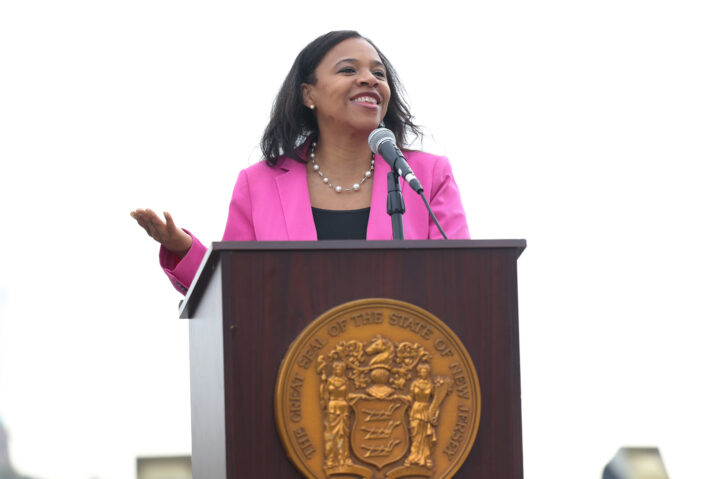
Michael M. Santiago/Getty Images
New Jersey Lt. Gov. Tahesha L. Way, speaks during a Naturalization Ceremony at Liberty State Park on September 17, 2024 in Jersey City, New Jersey.
Tomorrow’s New Jersey special Democratic primary election to fill Gov. Mikie Sherrill’s vacant House seat will offer an early test of AIPAC’s ability to continue showcasing its political clout. The pro-Israel group’s super PAC, in a potentially risky move, has spent over $2 million in ads attacking former Rep. Tom Malinowski (D-NJ), who has come out in favor of conditioning some aid to Israel, in hopes of electing a more reliable ally in former Lt. Gov. Tahesha Way.
The group’s ad hits Malinowski not for his views on Israel, but for a bipartisan vote in 2019 funding the Immigration and Customs Enforcement (ICE) and over stock trades he made as a congressman. The ICE attacks, in particular, are expected to resonate in the affluent, center-left district. Because of his name recognition representing a neighboring district before losing reelection in 2022, Malinowski started out as the early front-runner but is taking a serious hit on the airwaves.
But complicating that strategy is the presence of a far-left, anti-Israel candidate in Analilia Mejia, who leads a progressive advocacy group and has been endorsed by Sen. Bernie Sanders (I-VT) and Rep. Alexandria Ocasio-Cortez (D-NY). Mejia has been polling in second place, according to some reports, and has a path to winning the nomination — and the seat, given the 11th Congressional District’s Democratic lean.
The race also features Essex County Commissioner Brendan Gill, an establishment-oriented politician — endorsed by former Gov. Phil Murphy — who has expressed consistently pro-Israel views on the campaign trail and in an interview with Jewish Insider.
Even as the political environment within the Democratic Party has shifted to the left, AIPAC isn’t backing down from its aggressive, on-offense playbook from 2024, when a number of mainstream pro-Israel Democrats backed by the group won their elections to Congress — while two of AIPAC’s most extreme opponents, former Reps. Cori Bush (D-MO) and Jamaal Bowman (D-NY), fell short in their reelection bids.
Given the changed intraparty mood, there was a question about whether pro-Israel groups would need to play a little more defense this election cycle, or at least refocus attention on stopping the most radical candidates with a chance of winning instead of going all-out for the most principled allies.
That’s looking — at least for now — not to be the case.
In Illinois’ upcoming primaries, state Sen. Laura Fine has emerged as the pro-Israel favorite against one frequent critic of Israel (Evanston Mayor Daniel Biss) and one outspoken anti-Israel activist (social media influencer Kat Abughazaleh) in another affluent Democratic district just outside of Chicago. The pro-Israel community isn’t hedging its bets in a bid to prevent Abughazaleh from prevailing.
The confident pro-Israel playbook looks like it’s working. Fine just announced raising a whopping $1.2 million in the last three months of 2025, and a new internal poll for Fine’s campaign shows her tied with Biss in first place, holding the momentum in the crowded primary.
That same dynamic is playing out in Michigan’s three-way Senate primary, where Rep. Haley Stevens (D-MI) is being rewarded with political support and donations for her long record of pro-Israel allyship. Her opponents offer two different shades of opposition to Israel: state Sen. Mallory McMorrow, who tagged Israel’s war against Hamas as a genocide but has now been looking to pivot away from talking about the Middle East; and virulently anti-Israel physician Abdul El-Sayed, who has made hostility to Israel a central part of his campaign message. But McMorrow doesn’t appear to be winning — at least for now — much support from pro-Israel Democrats worried about stopping El-Sayed at all costs.
The New Jersey special election primary also features some quirks that incentivize AIPAC’s involvement. The district, in the northern part of the state, has a significant Jewish constituency, and is one of the most affluent districts in the country, making it uniquely well-suited for a mainstream pro-Israel centrist regardless of the national party trends. “This is a capitalist district,” one Democratic strategist who lives in the district told JI.
In addition, there will be another regularly scheduled primary in June for the full two-year term starting in 2027 — as opposed to the special election, which will only elect a lawmaker for the remainder of the year. If Malinowski gets elected, he’ll likely maintain a lock on the seat for as long as he wants it. As a former congressman, he’d reenter Congress as a more-influential, longer-tenured member of the House Foreign Affairs Committee. But if a left-wing candidate like Mejia surprisingly squeaks through, she’d likely face difficulty winning the primary for a full term.
AIPAC’s super PAC — the United Democracy Project — also has another good reason to play an active role in this year’s primaries. It reported $96 million cash on hand at the end of 2025, more than twice as much financial firepower as it had last cycle at this time.
The former congresswoman told JI, ‘Anything that needs to be done to stop Iran from acquiring a nuclear weapon needs to be done’
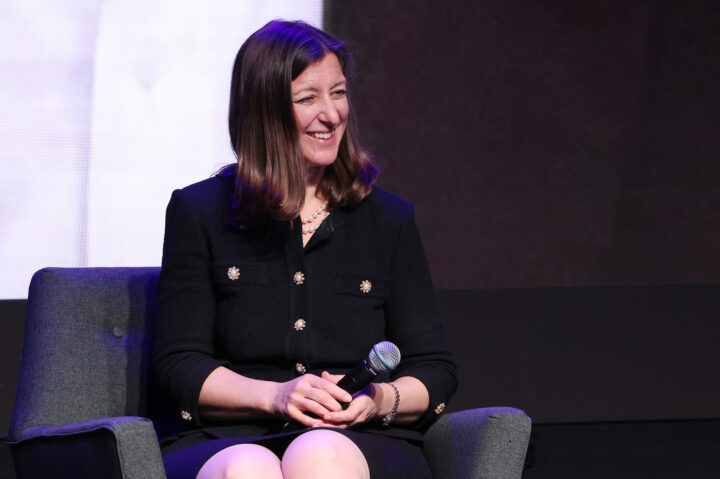
(Mike Coppola/Getty Images for Robert F. Kennedy Human Rights)
Rep. Elaine Luria speaks onstage during the Robert F. Kennedy Human Rights' 2023 Ripple of Hope Gala on December 06, 2023 in New York City.
As she launches a bid to reclaim her House seat, former Rep. Elaine Luria (D-VA) said that she wants to help lead the effort to push back against anti-Israel voices in the Democratic Party.
During her time in the House, from 2019-2023, Luria brought pro-Israel colleagues together to stand in support of the Jewish state in the face of others who were critical of it. She told Jewish Insider in an interview last week that those critics are loud and are “drowning out the fact that the support for Israel remains strong.”
“Having more people like me who are willing to speak up on that issue, in support of maintaining security assistance through the memorandum of understanding and continuing to maintain a strong relationship with Israel is important,” Luria said, adding that she wants to be a “leader” among new members and former colleagues “to show that the support [for Israel] remains strong.”
Luria said she continues to view Israel as the U.S.’ “strongest ally” in the Middle East and “key to our national security,” and that she continues to oppose any effort to condition U.S. aid to the Jewish state.
Luria said that Hamas’ attack on Oct. 7 was “unconscionable” and that Israel “has a right to defend themselves and respond to that kind of security threat.” She said she was glad to see the ceasefire deal and the release of hostages, but said that the path forward remains difficult, and will require the involvement of the U.S. and the world community, with the removal of Hamas from Gaza as the key first step.
The former congresswoman, a prominent Democratic Iran hawk during her time in office who was skeptical of efforts to reenter the 2015 Iran nuclear deal, said that the Trump administration’s military action against Iran last summer, done in conjunction with Israel, appears to have “slowed … and delayed” Iran’s capacity to develop a nuclear weapon.
But she argued that the administration, in claiming that the nuclear program had been effectively ended, had “overblown” the effect of the strikes. She also criticized the administration for its extensive use of U.S. military power, in Iran and elsewhere, without consultation with or approval by Congress.
“I’ve said over and over again that anything that needs to be done to stop Iran from acquiring a nuclear weapon needs to be done,” she added. “I think that the president made that decision to act in that moment because it was an imperative to stop them from having it. I just think it’s disingenuous to the American people to do a victory lap and say we were successful. Because the fact is, the threat is still there. They’re going to build it back, and we’re going to continue to be faced with this issue.”
Asked about the prospect of renewed strikes on the Islamic Republic in support of Iranian protesters, Luria said that such action could be contingent on who or what the targets are, who would come to power in the aftermath and whether the end state would actually improve the situation for Iranians.
“I think there’s so many unanswered questions, and it’s hard to say what way to go forward with the little amount of information that we’re able to receive” given the Iranian internet blackout, she explained. “I think that international diplomatic pressure, including very strongly from the U.S., to end the violence by the government against protesters is important.”
Luria said that she’s been concerned by the rise in violent rhetoric and actual violence against both the Jewish community and other communities — which she connected in part to the Jan. 6, 2021, Capitol riot.
Luria was a member of the House select committee that investigated the attack. She noted that one of the rioters, pardoned by President Donald Trump, wore a “Camp Auschwitz” sweatshirt to the riot.
“The kind of activity that is both violent rhetorically and in action has somehow become acceptable in our political discourse,” Luria said. “You have the president, who is trying to act like Jan. 6 didn’t happen. He’s trying to whitewash it. … When vitriol and hate and division is sown from the top, it filters down, and then whatever lens people see that through — if someone’s lens is that they want to take that out in a way that’s antisemitic and towards the Jewish community, they’ve been emboldened to do that.”
She said it’s critical to speak up against antisemitism, and for truth, and to prevent people from trying to rewrite history, vowing to continue to “stand up and speak out directly against antisemitism.”
Asked about antisemitism on the left, and efforts to rewrite the history of Israel, the Oct. 7, 2023, terror attacks and the Jewish people, Luria affirmed that she sees similar trends on the far left, and that she believes extremist anti-Israel rhetoric by leaders can normalize antisemitic violence.
“Everyone in leadership, everyone in government, everyone in the faith community, needs to stand up and say that this is unacceptable,” Luria said. “And I think that I have done that at every occasion that it was necessary and every opportunity that I had while serving in that kind of role, both in Congress and — smaller scale — when serving in the military.”
After leaving office, Luria spent a semester as a fellow at the Georgetown University Institute of Public Policy focusing on bipartisanship, and worked in the maritime defense industry. She also grappled with multiple deaths in her family, including her son-in-law, who was 28, and her father.
Luria said she decided to make a new bid for Congress because of the “the polarization, the fact that Congress is not doing their job, the Republicans in the House, in my mind, have no backbone, no ability to show any independent thought.” She said that Democrats retaking the House will be the best way to check the Trump administration’s power.
She acknowledged that the race, in Virginia’s 2nd Congressional District, centered in the Tidewater area, may be difficult, but emphasized she has won tough races in the district before.
“I think people are looking for change and looking for Congress to do more for them, and so, I’ve thrown my hat back in,” Luria said. “Listening to people on the ground, everybody is really focused on, you know, that high cost of living, access to health care, the cost of health care.”
One other major Democratic candidate remains in the primary against Luria, but she is strongly favored as the frontrunner.
The seat is currently held by Rep. Jen Kiggans (R-VA), who unseated Luria in 2022.
Luria sees the results of the November 2025 statewide elections, in which Democratic Gov. Abigail Spanberger and scandal-tarnished Attorney General Jay Jones, also a Democrat, both won the district, as a sign that “the political tide has turned.”
Luria said that affordability will be a major priority for her, including healthcare prices, and that she’ll maintain the focus she had in office on the military and the Navy — the district being home to the Norfolk naval station, the Navy’s headquarters. Overall, she said, she wants to tamp down on the “chaos” coming out of the Trump administration.
“I think Congress has a role in this, and they have not stood up and done their role,” she said, referring to Trump’s tariff policies, threats against Greenland, antagonism toward NATO and military action against Venezuela and alleged drug smuggling boats in the Caribbean.
In contrast with top candidates in the race, Kasky embraced stances far to the left of the Democratic mainstream

Sarah Morris/Getty Images
Co-founder of the student-led gun violence prevention group "Never Again," Cameron Kasky, speaks March For Our Lives II to protest against gun violence on June 11, 2022 in Los Angeles, California.
Cameron Kasky’s announcement on Wednesday that he was ending his bid for a coveted open House seat in the heart of Manhattan and pivoting to focus on advocating for human rights in the West Bank didn’t come as much of a surprise — given the 25-year-old progressive political activist’s almost exclusive fixation on targeting Israel as a first-time candidate.
Kasky, a Democratic upstart who was among a range of contenders vying to succeed retiring Rep. Jerry Nadler (D-NY) in the 12th Congressional District, had recently returned from a visit to the West Bank, and his experience meeting with Palestinians had left him with “one concern,” he said, motivating his decision to drop out of the primary and seek to promote legislation to counter Israeli settler violence in the territory.
Without providing specifics, Kasky said he looked forward to sharing more details of what he called a “West Bank human rights emergency plan” and said he had “consulted with experts extremely well-versed in the matter” to ensure that “the t’s are crossed and the i’s are dotted.”
Still, while Kasky framed his so far loosely defined next act as a “chance to do what must be done” in the wake of his brief “human rights-centered campaign,” as he described it, his explanation about the sudden withdrawal avoided mentioning that he had been seen as an unserious candidate struggling to gain any traction in the crowded race.
His harsh criticism of Israel generated online attention and helped him to build a relatively sizable and enthusiastic following on social media.
But Kasky’s early exit from the June primary, just two months after launching his bid, illustrates how digital clout is not a reliable indicator of meaningful voter support, particularly as a growing number of influencers has sought unsuccessfully to convert online popularity into a seat in Congress in a range of recent primaries.
It also underscores how Kasky’s anti-Israel views were likely alienating to many voters in one of the most heavily Jewish districts in the country — even as several far-left challengers across New York are taking on pro-Israel incumbents. One Democratic operative familiar with the district, which covers the Upper East and West Sides, called Kasky’s hostile positions on Israel a form of political “kryptonite.”
Former New York Gov. Andrew Cuomo, a pro-Israel moderate, won the district with 50% of the vote in November, beating now-Mayor Zohran Mamdani by five points.
In contrast with top candidates in the race, Kasky embraced stances far to the left of the Democratic mainstream, repeatedly accusing Israel of committing genocide in its war in Gaza, for instance, while pledging to vote against all aid to Israel, “‘defensive’ or otherwise,” as he wrote on his campaign site. He also said he was running to block what he called the “Greater Israel” agenda, accusing Israeli leadership of using “colonial violence” to expand the country’s territory across the Middle East.
Polling commissioned by a rival campaign, some details of which were relayed to Jewish Insider by a Democratic source familiar with the figures, showed Kasky far behind his leading opponents. Two recent polls put Kasky in sixth place, garnering just 5% of the primary vote in one and 8% in the other, according to the source, who shared the unpublicized numbers on condition of anonymity.
The polls showed two state assemblymen, Micah Lasher and Alex Bores, clustered at the top of the field along with Jack Schlossberg, a young Kennedy heir, and George Conway, a former Republican attorney and a prominent critic of President Donald Trump, the source confirmed on Thursday. While no candidate won more than 20% of the vote in either poll, Kasky was seen as operating in a lower tier and unlikely to break out.
His stances on Israel, among other issues, were “a dealbreaker” to a significant share of the electorate, the source noted to JI. “I don’t think that he had the means to become a compelling candidate and build a coalition,” he added.
Owing to his hasty departure from the race, some Democratic strategists and activists suggested that he had not intended to remain a candidate and was using his long-shot bid to build an online audience.
“Kasky saw the writing on the wall,” said another Democratic source who spoke with the candidate. “He did not have a sustainable campaign because it was never a campaign for Congress.”
For Kasky, a Jewish survivor of the 2018 shooting at Marjory Stoneman Douglas High School in Florida who became a gun control activist, “it was a campaign for new social media followers, the hard, hard left and activist clout,” the source told JI on condition of anonymity to offer a candid assessment. “He can absolutely claim victory for getting new followers on Instagram outside of Florida, but he achieved this milestone on the backs of the people he so shockingly vilified: NY-12 Jews.”
“He was never running to win,” added a Jewish Democratic leader familiar with Kasky’s abortive campaign, who was granted anonymity to weigh in freely about the race. “He was running to raise his profile and raise some money so he could continue to be an activist influencer.”
Kasky’s campaign, whose fundraising numbers will be reported later this month, did not return JI’s request for comment on Thursday.
Scott Stringer, a former city comptroller who previously lived in the district and now resides in Lower Manhattan, dismissed Kasky’s campaign as unviable from the beginning. “The bottom line is he wasn’t a factor when he was running, and he’s not a factor now that he’s not running,” Stringer, a Jewish Democrat backing Lasher in the primary, told JI. “I think he would have been better served by applying to his local community board.”
“There’s a whole lot of people on Twitter, unfortunately, who focus on Jewish hate,” he added. “But at the end of the day I think most people tuned out his rhetoric. I know I did.”
Crosswell, a former Republican who also served as a federal prosecutor, is touting his pro-Israel bona fides as he fights for the Democratic nomination against Rep. Ryan Mackenzie
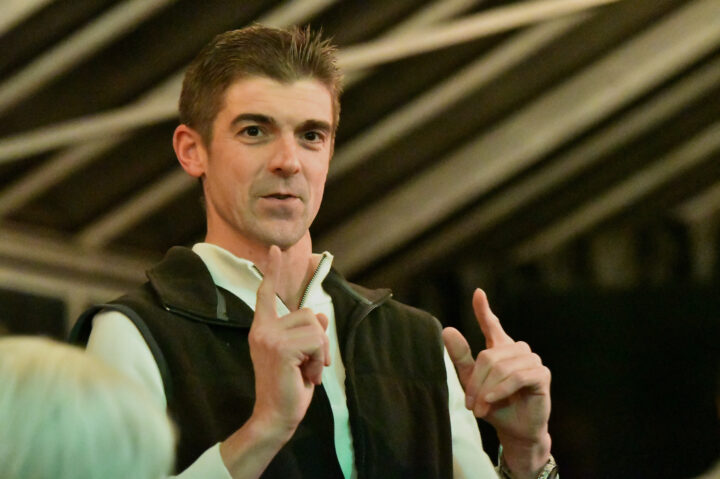
Marc Levy/AP
Ryan Crosswell, former federal prosecutor who quit the Department of Justice in protest, speaks at a campaign event for his run for Congress, Dec. 4, 2025, in Allentown, Pa.
Former federal prosecutor and Marine veteran Ryan Crosswell is hoping his military and professional background — as well as his past registration as a Republican — will provide a road map to winning the Democratic nomination and ultimately flipping a critical swing district in Pennsylvania.
The 7th Congressional District centered around Allentown and Easton and rated by the Cook Political Report as a toss-up is held by Rep. Ryan Mackenzie (R-PA), who himself flipped the seat in 2024. It was previously held by former Rep. Susan Wild (D-PA).
Crosswell, in an interview with Jewish Insider, characterized himself as a lifelong public servant and patriot, both as a Marine and as a federal prosecutor, who “always put my country first, even when it came at personal costs, as when I resigned from the Department of Justice because I felt I was being asked to do something that was inconsistent with my oath.”
Crosswell left the DOJ last February in protest of the Trump administration’s decision to drop corruption charges against former New York City Mayor Eric Adams.
He’s running for Congress because “this administration is dangerous,” and he wants to fight for affordability and safety for his constituents. He said his experience as an anti-corruption prosecutor makes him “uniquely suited to rebuild some of the guardrails that have been torn down.” He said that restoring those guardrails, including the public corruption section at the DOJ, is critical to having a “functioning democracy.”
Though he’s running in the Democratic primary, Crosswell was a registered Republican until after the 2024 election. But he said he’s voted consistently for Democratic presidential candidates since 2016.
“[We’re] at a point right now, there is one party that’s clearly on the right side of history, and one party is clearly on the wrong side of history,” Crosswell said.
Crosswell argued that he’s the best-placed candidate to flip Republican voters in November: He said a key takeaway from last year’s New Jersey and Virginia gubernatorial elections is that Democratic veterans are attractive candidates. He added that his background as a former Republican will help him connect with independent and GOP voters to “explain that the Republican Party is not what it once was.”
He also said that his experience as a veteran and federal prosecutor addressing a series of sensitive and high-profile issues makes him best prepared to address a range of subjects as a member of Congress in what he predicted “will be the most challenged Congress in American history.”
Croswell said that he’s “uncomfortable with cutting off aid” to Israel, as some in the Democratic Party are advocating for, “because Israel is surrounded by historical enemies and I don’t want to put the Israeli people in danger by cutting off aid.”
Crosswell is facing off against a series of other more liberal candidates in the primary, most notably Bob Brooks, the leader of the firefighters’ union who was endorsed by Gov. Josh Shapiro last month. Though Crosswell led among Democrats in fundraising as of the end of September, Shapiro’s endorsement and a fundraiser the popular governor held for Brooks last month are expected to help Brooks close the gap.
Crosswell described Israel as “an important ally to the United States” and the “only true democracy in the Middle East.” He visited Israel and the West Bank shortly before the Oct. 7, 2023, Hamas terror attacks. He said that he was “just so impressed by the Israeli people, their innovation and technology,” and their resilience in the face of both inhospitable environmental conditions and the enmity of surrounding nations.”
He said that he’s “uncomfortable with cutting off aid” to Israel, as some in the Democratic Party are advocating for, “because Israel is surrounded by historical enemies and I don’t want to put the Israeli people in danger by cutting off aid.”
He added that “no country is ever entitled to unconditional military aid from the United States under any circumstances, but I’m not willing to cut off aid now.”
Crosswell emphasized the need for the ceasefire in Gaza to continue, adding that those responsible for the Oct. 7 attack should be held accountable “through surgical special forces operations with a ceasefire in place.”
Asked about the U.S. strikes on Iran last summer, Crosswell said he’s “uncomfortable with direct military engagement in Iran at this time,” while adding that Israel must make its own decisions about “what the Israelis believe is necessary in their own interest.” Crosswell spoke to JI prior to the wave of public protests in Iran, which have led the Trump administration to contemplate renewed U.S. attacks.
“I would prefer to avoid U.S. engagement until it’s absolutely necessary,” he continued.
He said that, from his conversations in Israel and the West Bank during his visit, he believes both sides want peace, and emphasized the importance of continuing to pursue a two-state solution.
“It’s been frustratingly hard getting there, but it is the only solution and we can’t give up on it,” Crosswell said. “We need to demonstrate that we are advocates for peace, and that we’re advocating for both sides. We need to demonstrate that through our actions, that we’re committed to this, that we’re willing to have both sides at the table and to work through this, and we need to engage the other Arab nations.”
“I was a Justice Department prosecutor, and we have laws on the books to prosecute those who engage in hate crimes, and we should do that,” Crosswell said. “But I think also members of Congress — we need to be outspoken voices, and we need to speak out against it. And so I’d be in favor of any law that or any efforts to expand education on Jewish history, on the Holocaust, antisemitism, certainly any measures that can be taken to ensure the security of Jewish institutions and synagogues.”
He said that the U.S. should not, however, preempt direct negotiations between Israel and the Palestinians and recognize a Palestinian state. And he said that removing Hamas from leadership in Gaza is also a critical step to facilitate peace.
At home, Crosswell called the rise in domestic antisemitism “sickening” and said that it was “heartbreaking” to see armed guards outside a synagogue that he visited recently for an event.
“I was a Justice Department prosecutor, and we have laws on the books to prosecute those who engage in hate crimes, and we should do that,” Crosswell said. “But I think also members of Congress — we need to be outspoken voices, and we need to speak out against it. And so I’d be in favor of any law that or any efforts to expand education on Jewish history, on the Holocaust, antisemitism, certainly any measures that can be taken to ensure the security of Jewish institutions and synagogues.”
He added that, “more than anything else, it’s just being voices of moral clarity against hate against anybody, and in particular now, the antisemitic rhetoric and behavior that in some cases we’re seeing from both sides.”
The move by the prominent Republican, who gained attention for her grilling of university presidents amid federal inquiries into campus antisemitism, comes a month after she entered the race

Kent Nishimura/Getty Images
Rep. Elise Stefanik (R-NY) testifies before the Senate Foreign Relations Committee on her nomination to be Ambassador to the United Nations on Capitol Hill on January 21, 2025 in Washington, D.C.
Rep. Elise Stefanik (R-NY) announced on Friday that she was ending her campaign for governor of New York, an abrupt and unexpected move that comes just over a month after the Republican congresswoman launched her bid to unseat Gov. Kathy Hochul.
In addition to not running for governor, Stefanik said in a statement posted to social media that she also would not seek reelection to her House seat, making her future plans unclear. Stefanik said the decision to end her short-lived gubernatorial bid was based on her desire to spend more time with family and the uphill battle she would face in the general election after what would likely be a bruising Republican primary battle.
“While spending precious time with my family this Christmas season, I have made the decision to suspend my campaign for Governor and will not seek re-election to Congress. I did not come to this decision lightly for our family,” Stefanik wrote on social media.
Stefanik added, “As we have seen in past elections, while we would have overwhelmingly won this primary, it is not an effective use of our time or your generous resources to spend the first half of next year in an unnecessary and protracted Republican primary, especially in a challenging state like New York.”
“And while many know me as Congresswoman, my most important title is Mom. I believe that being a parent is life’s greatest gift and greatest responsibility,” she continued. “I have thought deeply about this and I know that as a mother, I will feel profound regret if I don’t further focus on my young son’s safety, growth, and happiness — particularly at his tender age.”
Stefanik’s withdrawal from the race came weeks after Nassau County Executive Bruce Blakeman, another close ally of President Donald Trump, jumped into the GOP primary, setting up a competitive fight ahead of what would be a difficult general election contest for Republicans in the blue state.
Stefanik was briefly Trump’s nominee to be U.S. ambassador to the United Nations, though she withdrew her nomination as it became clear that House Speaker Mike Johnson (R-LA) could not afford another vacancy in the House without risking Republicans’ already slim majority.
Trump said in a statement on his Truth Social platform after Stefanik announced her decision, “Elise is a tremendous talent, regardless of what she does. … She will have GREAT success, and I am with her all the way!”
Johnson, meanwhile, wrote on X, “I know this was a tough decision for my friend and colleague @EliseStefanik, but her resolve to put family first is one that everyone will respect. Elise is an exceptional talent who has served the people of New York valiantly in Congress.”
“She will continue to be [a] leading force for our party and its principles no matter what the next chapter brings,” he added. “We are grateful for her service and wish her well in her next endeavors.”
The upstate New York lawmaker, a pro-Israel stalwart in Congress, had said during her confirmation process earlier this year that anti-Israel and antisemitic bias at the U.N. was a major factor that drove her interest in the Turtle Bay role. As she began considering entering the governor’s race this fall, Stefanik became a vocal critic of Hochul, frequently tying her to New York City Mayor-elect Zohran Mamdani and his policies.
Stefanik has gained attention in the Jewish community in the two years since Hamas’ Oct. 7, 2023 attack on Israel, most notably due to her aggressive questioning of university presidents about campus antisemitism.
Andrew Cuomo carried the district in the NYC mayoral race, underscoring its pro-Israel constituency
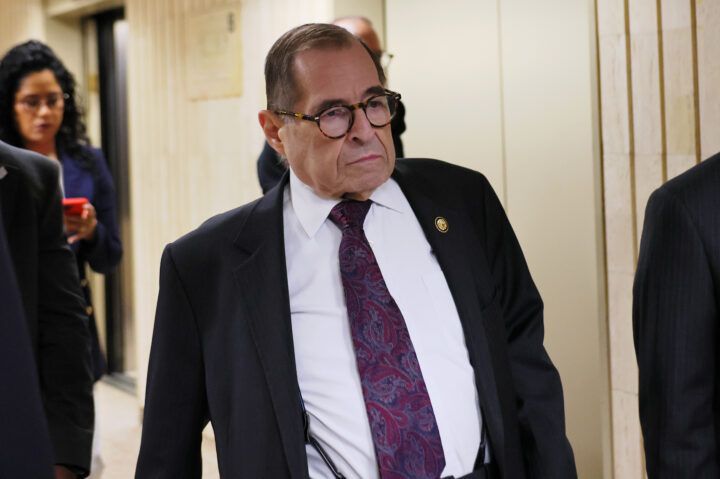
Michael M. Santiago/Getty Images
Rep. Jerrold Nadler (D-NY) arrives to view proceedings in immigration court at the Jacob K. Javitz Federal Building on June 18, 2025 in New York City.
An increasingly crowded race for a coveted House seat in the heart of Manhattan is shaping up to be among the most vigorously contested Democratic primary battles in next year’s midterms, with half a dozen — and counting — contenders now jockeying for the chance to succeed retiring Rep. Jerry Nadler (D-NY).
In a district home to one of the largest Jewish constituencies in the country, the open primary next June is likely to center in part on Israel as the candidates signal where they stand on an issue that has grown intensely charged over the war in Gaza.
Even as the far left now seeks to ride momentum from Zohran Mamdani’s mayoral victory — which elevated an unabashed socialist to executive office — experts suggested the primary could largely serve as an exception to the anti-Israel sentiments that became a trademark of his stunning rise.
Former New York Gov. Andrew Cuomo, who ran as an independent in the mayoral election this month, won the district by five points with 50%, indicating that a potentially meaningful share of Jewish voters were resistant to Mamdani’s hostile views on Israel and refusal to condemn rhetoric seen as antisemitic.
The district, which includes the Upper East and West Sides of Manhattan, “is more moderate and pro-Israel than” another heavily Jewish House seat in Brooklyn where Mamdani performed well, Chris Coffey, a Democratic strategist who is not involved in the race, told Jewish Insider on Thursday.
So far, however, most of the declared candidates have been relatively cautious about sharing their positions on Israel — underscoring the hazards of addressing a subject that has fueled deep divisions within the Democratic Party. “I would be surprised if they want to lead on this,” Coffey speculated. “It’s a contentious issue.”
With the exception of Alex Bores, an assemblyman who represents the Upper East Side, none of the top candidates who have launched bids in recent weeks answered a question from JI on Thursday asking whether they would support an embargo on offensive weapons to Israel, a measure backed by Nadler after he revealed in September that he would step down at the end of his current term.
“There are laws on the books about this and they should be applied across the board,” Bores said in a statement indicating he would oppose such efforts if elected. “There is no singling out or exemptions for any one country.”
Privately, Bores has been “clear” that an arms embargo is not “negotiable for him,” according to a person familiar with his thinking. Former Rep. Steve Israel (D-NY), a pro-Israel Jewish Democrat, endorsed the assemblyman on Tuesday but was not available to comment about his decision.
Alan Pardee, a former financial executive who is also seeking the nomination, was more direct in a statement shared with JI. “I believe that Israel has the right to defend itself, and that the United States is a critical ally in that regard. I do not support the proposed embargo,” he said.
Micah Lasher, a Jewish assemblyman on the Upper West Side and a protégé of Nadler who is viewed as traditionally pro-Israel, has yet to publicly confirm his own stance on the matter, even as he is expected to reject an embargo. Lasher also dodged a question about the issue while speaking at an Assembly town hall in September before he launched his House bid, saying he was unwilling to discuss topics outside his state legislative purview, according to audio shared with JI.
A poll that circulated in the district in September, which some observers suspected was affiliated with Lasher or allies of his campaign, asked respondents whether they supported Congress blocking “the sale of weapons to Israel” in order to “send a message to Israeli Prime Minister Benjamin Netanyahu,” a sign of the significance of such questions to voters in the race.
Like Nadler, a veteran Jewish lawmaker who has long sought to balance his progressive politics with support for Israel that dwindled during the war in Gaza, Lasher had faced backlash from some Jewish community leaders in the district for having endorsed Mamdani, though he has clarified they are not aligned on Israel issues.
Other candidates in the primary who backed the mayor-elect have similarly distanced themselves from his positions on Israel. Erik Bottcher, a city councilman from Chelsea who joined the primary on Thursday, has confirmed that, unlike Mamdani, he supports Israel’s right to exist as a Jewish state. Jack Schlossberg, an influencer and the grandson of John F. Kennedy, who also entered the primary this week, has said he disagrees with Mamdani’s pledge to arrest Netanyahu if he steps foot in the city. The political scion was raised Catholic but identifies as Jewish.
Bores, who endorsed Mamdani in September, has objected to a failed bill the mayor-elect introduced as an assemblyman to strip nonprofit groups of their tax-exempt status for “engaging in unauthorized support of Israeli settlement activity.” Bores has said he viewed the bill as “immediately suspicious” because it “singularly applies to organizations providing aid to a specific country and its people.“
And Liam Elkind, a Jewish former nonprofit leader who had launched a primary challenge to Nadler before he announced his plans to retire, has expressed his concern that Mamdani has refused to denounce the phrase “globalize the intifada” — seen by critics as a call to violence against Jews. Mamdani has, instead, pledged to “discourage” usage of the phrase.
Rounding out the primary field is Jami Floyd, an attorney and journalist who is seeking to occupy a centrist lane and has said that she did not vote for Mamdani.
The field could grow as other potential candidates are said to be mulling campaigns, including George Conway, a lawyer and outspoken critic of President Donald Trump who is an independent, and Nathalie Barth, former president of Park Avenue Synagogue.
Cameron Kasky, a young gun-violence prevention activist, has filed to run and said on Thursday he is now exploring a bid. He is expected to soon join the race, according to a person familiar with the matter. He would be one of the lone anti-Israel voices in the current primary field, testing the resonance of such views among an electorate that denied Mamdani the majority of the vote.
Kasky, who is Jewish, has frequently criticized Israel on social media and is in favor of an arms embargo. “If you are a Democrat running in 2026 and do not fully support an arms embargo to the to State of Israel amidst their ongoing genocide in Gaza despite Trump’s fake ‘ceasefire,’” he said in a recent post, “Stop wasting everybody’s time. It’s over. The people have spoken. Moral clarity is winning.”
Despite his recent loss, Cuomo, a staunch defender of Israel, is also exploring a campaign and has been making calls to donors who backed his mayoral bid, though it was unclear how seriously he is considering the move, people familiar with the matter told JI. Cuomo, who was once married to a Kennedy, has suggested that he can pull support from Schlossberg and told people he “already has the Kennedy voters,” one of the sources told JI. A spokesperson for Cuomo has dismissed speculation that he has been considering a House campaign.
The primary is also expected to attract outside spending from super PACs and major Democratic donors, including Reid Hoffman, the co-founder of LinkedIn who has reportedly committed to backing Elkind. One person familiar with the race suggested Lasher could claim support from a powerful former boss, Michael Bloomberg, the former mayor of New York City, for whom he once worked as a legislative director.
AIPAC, the pro-Israel advocacy group that has actively engaged in recent primary cycles, did not respond to a request for comment about how it is assessing the race.
Former state Rep. Rick Becker opposes most U.S. foreign aid; he expressed skepticism of aid to Israel in a recent interview but told JI he wants to continue it for now

AP Photo/Jack Dura/Tom Stromme/The Bismarck Tribune via AP File
North Dakota Republican Public Service Commissioner Julie Fedorchak steps up to a lectern to announce her U.S. House candidacy at Republican Party headquarters in Bismarck, N.D., Thursday, Feb. 15, 2024/In this Nov. 9, 2015 photo, North Dakota state Rep. Rick Becker, R-Bismarck, speaks in Bismarck, N.D.
In North Dakota, the race for the state’s sole House seat is set to play out as another battle between the Republican Party’s traditional wing and the Freedom Caucus-aligned insurgent right wing.
North Dakota Public Service Commissioner Julie Fedorchak faces former state Rep. Rick Becker, a plastic surgeon, in the primary. Fedorchak is defending U.S. engagement around the world, while Becker is pushing for scaled back U.S. involvement globally and opposes most foreign aid.
Fedorchak has backing from GOP leaders including Gov. Doug Burgum, former Gov. Ed Schafer, Sen. John Hoeven (R-ND), Attorney General Drew Wrigley and a slew of state officials, as well as House Republican Conference Chair Elise Stefanik (R-NY).
Becker, meanwhile, is endorsed by various right-wing leaders at the federal level including Sen. Rand Paul (R-KY), Vivek Ramaswamy and Reps. Bob Good (R-VA), Chip Roy (R-TX), Lauren Boebert (R-CO), Matt Gaetz (R-FL), Paul Gosar (R-AZ), Scott Perry (R-PA), Thomas Massie (R-KY) and Warren Davidson (R-OH), as well as former Rep. Ron Paul (R-TX). Becker challenged Hoeven in the 2022 North Dakota Senate race, first as a Republican and subsequently as an independent.
He significantly led Fedorchak in fundraising as of the end of March, with $828,000 raised throughout the campaign to her $449,000 raised. The primary election will be held on June 11.
One of the sharpest divides between the two Republicans is over foreign policy. Fedorchak is leaning into traditional conservative views on foreign policy in her campaign — expressing staunch support for continued U.S. assistance to Israel and Ukraine — while Becker favors dramatically cutting foreign aid.
“I think Israel needs to have the resources necessary to properly secure its safety and stability and help reinforce the stability in the broader region as a whole and the Middle East,” Fedorchak told Jewish Insider, adding that she’s “committed to ensuring the continuation of foreign aid to Israel.”
Speaking more broadly about the recent foreign aid bill, Fedorchak said, “We have to support our allies around the world and help them defend their democracies and stave off the aggressors that are anti-democracy and anti-American.”
She declined to weigh in specifically on the humanitarian Palestinian aid in the bill, but said that there need to be mechanisms to “ensure that it’s going to the right places to help the women and children” impacted by the war and will not ultimately be used against Israel.
She called Iran “the trouble source in the Middle East,” emphasizing the need to work with U.S. allies to crack down on Iran, its nuclear program and its regional influence, using “the strongest diplomatic and economic sanctions.”
Fedorchak said U.S. energy independence and production is a critical method to ensure that U.S. allies globally aren’t dependent on countries like Iran and Russia for their energy supplies.
She said stronger U.S. energy production could also stave off price fluctuation driven by Saudi Arabia and other oil-producing gulf states. She described herself as “very excited to join forces with President Trump and support his America First energy policy.”
When he spoke to JI, Becker said that he is “very much in favor of pulling foreign aid,” particularly from U.S. adversaries, but that “Israel should be the last place that we pull foreign aid” and he is “completely in favor” of continuing that aid in the near term.
Ultimately, he continued, he wants to see Israel in “a position where Israel no longer even desires or needs aid from the United States.” He said Israel’s continued reliance on the U.S. may not be in Israel’s “best interest” because it “makes them susceptible to these changes that we have whenever we get a new administration.”
Becker’s support for continued near-term aid for Israel appears different from a view he has expressed in at least one other interview.
In a Feb. 17 interview with The Dakotan, Becker said that foreign aid “is a bunch of bullcrap for the most part.”
“I respect Israel and I respect Israel’s right to defend itself completely but sending billions and billions of dollars to Israel — they are less in debt than we are. I understand they may even have a surplus, I don’t know,” he said. “But the point is we’re in the hurt bay. There’s no place for us to be lending money, even to our friends, Israel.”
He said the U.S. should stop sending money ”to both Israel and Israel’s enemies” and “just maybe let the taxpayers keep it.”
Pressed on the apparent contradiction between those past comments and his position expressed to JI, Becker said he didn’t recall having made them and suggested they were taken out of context, insisting that he’s been consistent in his views.
“It’s crazy to me that we will go further into debt and then send money overseas… that is the starting point of the principle from where I’m coming,” Becker said. “But we have the conundrum that we have an ally which we have put into a precarious position because of funding her neighbors.”
When he spoke to JI, he said he supported the $14.3 billion in U.S. military aid for Israel passed by Congress, but said he would have preferred to see it voted on by itself and is not sure how he would have voted on the full Israel portion of the aid package.
Many of Becker’s congressional allies voted against the Israel aid bill.
He called humanitarian aid for the Palestinians, also included in the bill, potentially problematic, adding that he’s “very skeptical that the humanitarian aid money is going to where it’s supposed to go and isn’t just funding Hamas.” But he said he might be supportive of purely humanitarian support like food and medical supplies.
He also said cuts to the U.S.’ own defense budget must be in consideration, arguing that there’s “very likely inefficiency and waste,” and overall advocated for scaled-back U.S. military involvement globally.
Becker said he wants to avoid direct armed conflict with Iran, and that sanctions, whenever possible and effective, should be used. He said he’s more open to direct military action against the Houthis.
He said unequivocally that he opposes additional U.S. aid for Ukraine and that he’s “very reluctant” to support aid to Taiwan without receiving intelligence briefings on the nature of the threat and the planned “endgame.” He said he wants to see action to “calm the waters” and avoid a military conflict between China and Taiwan.
In the Dakotan interview, Becker further claimed the U.S. had “manipulated the Ukraine government since 2014,” when a pro-Western protest movement overthrew the Russian-backed government, and said that the U.S. may have “set up a situation that puts Russia in a position where they maybe feel like they have to do this.”
Addressing antisemitism at home, Fedorchak told JI that the current wave of antisemitism “just can’t be tolerated in our country.”
She said that colleges need to “get tougher” on protests that are “getting out of hand,” and said that federal aid for colleges that support anti-Israel and anti-American agendas should be reexamined.
Becker said he sees fighting antisemitism as “much more of a state issue and maybe even much more of a local issue.” He said he’s concerned that powers granted to the federal government to fight antisemitism “can be used elsewhere… perhaps one day against us.”
But he said that if he were running for a state office, like governor, he’d be pushing to “get some bulldozers and clear the encampment.” He said that leveraging education funding would be the limit of federal government action.
Told about the Nonprofit Security Grant Program, which provides funding to religious institutions and nonprofits, Becker said it sounded like it is “outside of the scope” of proper federal authority and spending, and that the federal government should instead reduce taxes to allow people to choose to spend their money on increasing their institutions’ security themselves.
The two GOP rivals also view their priorities in Washington very differently. In the interview with JI, Fedorchak highlighted her background in business and public service, and said she believes she has “a lot of good experience” and “the passion for conservative solutions” to solve issues like energy policy and border security. Her in-state work has focused heavily on energy policy.
She said she’d be a “very serious-minded problem-solving member of Congress who’s ready to get to work on day one.”
Becker told JI he’s running for Congress because “the entire country is in a very precarious position,” warning that federal spending is “effectively sending America over a cliff.”
He said he wants to work with lawmakers like those who’ve endorsed him to help rein in spending, describing himself as having been “very principled and very consistent” in his time in state government. In North Dakota, he founded an ultra-conservative legislative caucus, the Bastiat Caucus, named for 19th-century French economist Frederic Bastiat, famous for his free trade theories.
“I am happy to label myself America First,” Becker said. “For me it means refocusing on American sovereignty and moving away from some of these international treaties” and organizations, warning that the executive branch is implementing a “very globalist agenda.”
Please log in if you already have a subscription, or subscribe to access the latest updates.
 Continue with Google
 Continue with Apple