




























Kasky’s NY-12 flameout highlights the limits of social media influence and anti-Israel activism
In contrast with top candidates in the race, Kasky embraced stances far to the left of the Democratic mainstream

Sarah Morris/Getty Images
Co-founder of the student-led gun violence prevention group "Never Again," Cameron Kasky, speaks March For Our Lives II to protest against gun violence on June 11, 2022 in Los Angeles, California.


 Add JewishInsider on Google
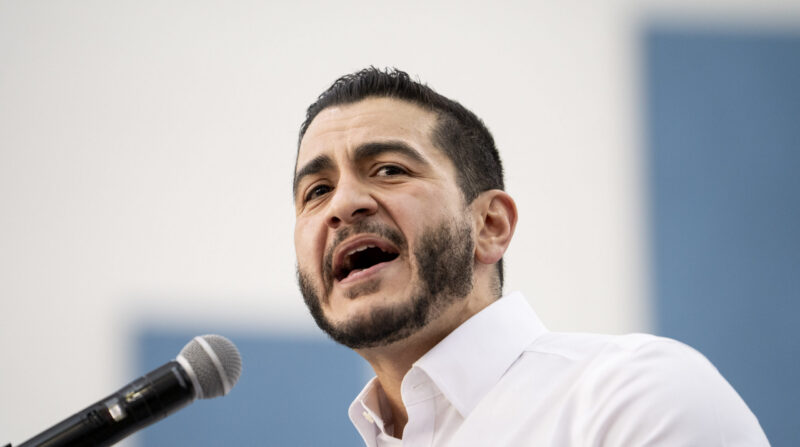
Cameron Kasky’s announcement on Wednesday that he was ending his bid for a coveted open House seat in the heart of Manhattan and pivoting to focus on advocating for human rights in the West Bank didn’t come as much of a surprise — given the 25-year-old progressive political activist’s almost exclusive fixation on targeting Israel as a first-time candidate.
Kasky, a Democratic upstart who was among a range of contenders vying to succeed retiring Rep. Jerry Nadler (D-NY) in the 12th Congressional District, had recently returned from a visit to the West Bank, and his experience meeting with Palestinians had left him with “one concern,” he said, motivating his decision to drop out of the primary and seek to promote legislation to counter Israeli settler violence in the territory.
Without providing specifics, Kasky said he looked forward to sharing more details of what he called a “West Bank human rights emergency plan” and said he had “consulted with experts extremely well-versed in the matter” to ensure that “the t’s are crossed and the i’s are dotted.”
Still, while Kasky framed his so far loosely defined next act as a “chance to do what must be done” in the wake of his brief “human rights-centered campaign,” as he described it, his explanation about the sudden withdrawal avoided mentioning that he had been seen as an unserious candidate struggling to gain any traction in the crowded race.
His harsh criticism of Israel generated online attention and helped him to build a relatively sizable and enthusiastic following on social media.
But Kasky’s early exit from the June primary, just two months after launching his bid, illustrates how digital clout is not a reliable indicator of meaningful voter support, particularly as a growing number of influencers has sought unsuccessfully to convert online popularity into a seat in Congress in a range of recent primaries.
It also underscores how Kasky’s anti-Israel views were likely alienating to many voters in one of the most heavily Jewish districts in the country — even as several far-left challengers across New York are taking on pro-Israel incumbents. One Democratic operative familiar with the district, which covers the Upper East and West Sides, called Kasky’s hostile positions on Israel a form of political “kryptonite.”
Former New York Gov. Andrew Cuomo, a pro-Israel moderate, won the district with 50% of the vote in November, beating now-Mayor Zohran Mamdani by five points.
In contrast with top candidates in the race, Kasky embraced stances far to the left of the Democratic mainstream, repeatedly accusing Israel of committing genocide in its war in Gaza, for instance, while pledging to vote against all aid to Israel, “‘defensive’ or otherwise,” as he wrote on his campaign site. He also said he was running to block what he called the “Greater Israel” agenda, accusing Israeli leadership of using “colonial violence” to expand the country’s territory across the Middle East.
Polling commissioned by a rival campaign, some details of which were relayed to Jewish Insider by a Democratic source familiar with the figures, showed Kasky far behind his leading opponents. Two recent polls put Kasky in sixth place, garnering just 5% of the primary vote in one and 8% in the other, according to the source, who shared the unpublicized numbers on condition of anonymity.
The polls showed two state assemblymen, Micah Lasher and Alex Bores, clustered at the top of the field along with Jack Schlossberg, a young Kennedy heir, and George Conway, a former Republican attorney and a prominent critic of President Donald Trump, the source confirmed on Thursday. While no candidate won more than 20% of the vote in either poll, Kasky was seen as operating in a lower tier and unlikely to break out.
His stances on Israel, among other issues, were “a dealbreaker” to a significant share of the electorate, the source noted to JI. “I don’t think that he had the means to become a compelling candidate and build a coalition,” he added.
Owing to his hasty departure from the race, some Democratic strategists and activists suggested that he had not intended to remain a candidate and was using his long-shot bid to build an online audience.
“Kasky saw the writing on the wall,” said another Democratic source who spoke with the candidate. “He did not have a sustainable campaign because it was never a campaign for Congress.”
For Kasky, a Jewish survivor of the 2018 shooting at Marjory Stoneman Douglas High School in Florida who became a gun control activist, “it was a campaign for new social media followers, the hard, hard left and activist clout,” the source told JI on condition of anonymity to offer a candid assessment. “He can absolutely claim victory for getting new followers on Instagram outside of Florida, but he achieved this milestone on the backs of the people he so shockingly vilified: NY-12 Jews.”
“He was never running to win,” added a Jewish Democratic leader familiar with Kasky’s abortive campaign, who was granted anonymity to weigh in freely about the race. “He was running to raise his profile and raise some money so he could continue to be an activist influencer.”
Kasky’s campaign, whose fundraising numbers will be reported later this month, did not return JI’s request for comment on Thursday.
Scott Stringer, a former city comptroller who previously lived in the district and now resides in Lower Manhattan, dismissed Kasky’s campaign as unviable from the beginning. “The bottom line is he wasn’t a factor when he was running, and he’s not a factor now that he’s not running,” Stringer, a Jewish Democrat backing Lasher in the primary, told JI. “I think he would have been better served by applying to his local community board.”
“There’s a whole lot of people on Twitter, unfortunately, who focus on Jewish hate,” he added. “But at the end of the day I think most people tuned out his rhetoric. I know I did.”
More Stories
COMMUNITY CONCERN
Atlanta Jewish Times publisher accuses Ossoff of ‘lying’ about Israel support
A WHOLE NEW BALLGAME
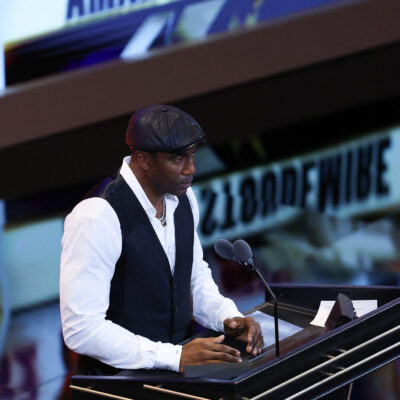
Amar’e Stoudemire details journey to Israel and Judaism in Hall of Fame induction speech
analysis
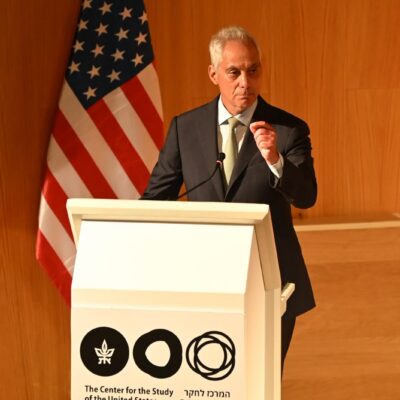
For 2028’s Jewish hopefuls, Israel is the test that decides who’s the ‘right’ kind of Jew
Trust, but verify
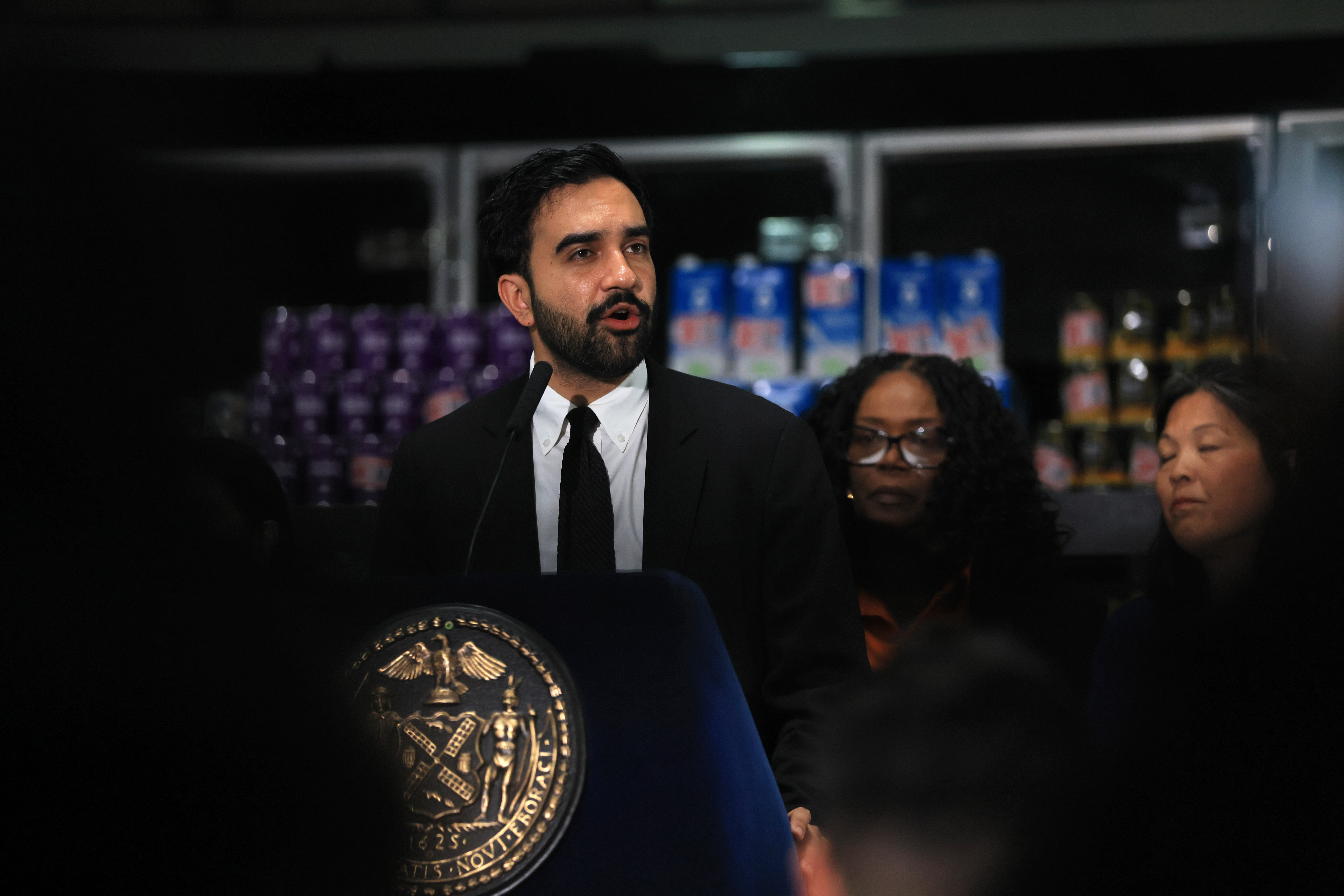
Rabbis hope ‘open, honest dialogue’ with Mamdani brings belated change in Israel rhetoric
PALMETTO STATE POLITICS
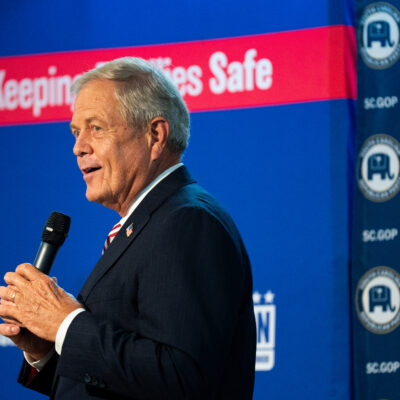
Both candidates in S.C. Senate runoff chase the pro-Israel vote, with very different records
MAYOR'S MOVE
Mamdani promises municipal plan to combat antisemitism
Please log in if you already have a subscription, or subscribe to access the latest updates.
 Continue with Google
 Continue with Apple