
































The pro-Israel advocacy group now allows its supporters to donate to 178 Republicans and 72 Democrats running for Congress
Alex Wong/Getty Images
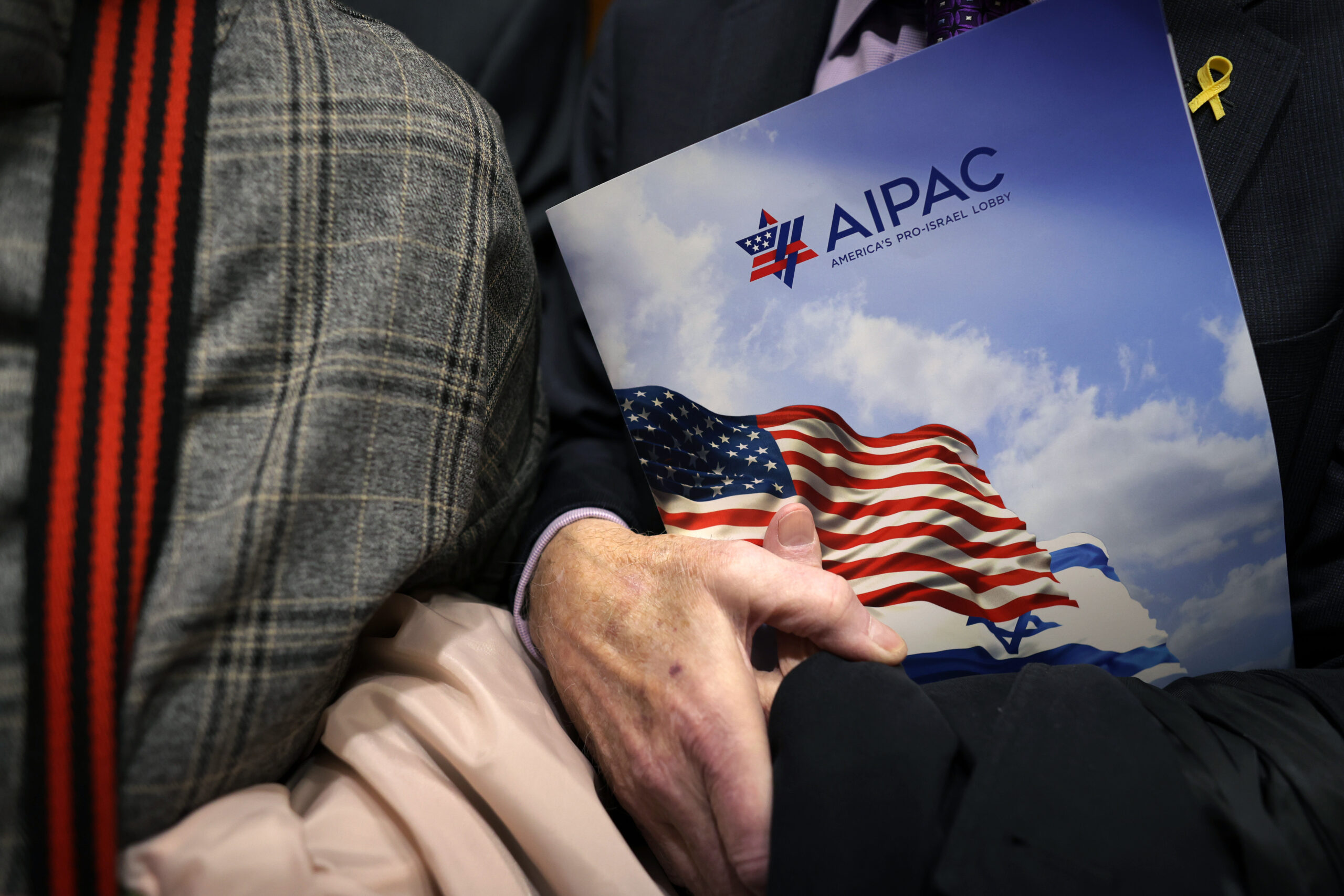
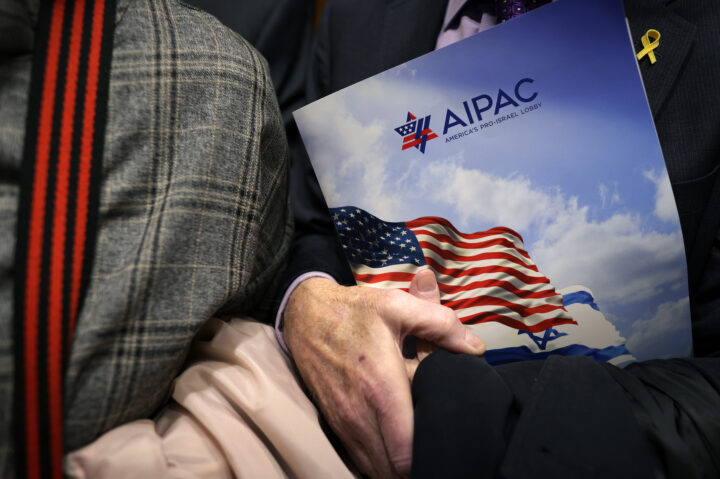
A visitor holds an AIPAC folder in an elevator in Rayburn House Office Building on March 12, 2024 on Capitol Hill in Washington, DC.


 Add JewishInsider on Google
Days after 104 members of Congress voted in favor of a measure that sought to end U.S. aid to Israel, AIPAC will no longer allow donations through its political action committee to 18 lawmakers it endorsed who voted in favor of the legislation.
The group did not announce the change. But the endorsement page on AIPAC’s political giving portal — where supporters can donate to candidates who have been endorsed by AIPAC — removed the option for individuals to route money to those lawmakers.
AIPAC now allows its supporters to donate to 72 Democratic candidates in the House and Senate, compared to 178 Republican candidates — meaning 71% of the candidates the group is now actively supporting are Republicans, and just 29% are Democrats.
Rep. Thomas Massie (R-KY), an anti-Israel Republican who was defeated this year in a GOP primary, introduced the amendment to a State Department funding bill knowing it would fail, which it did: 314 members voted against it.
He was the only Republican to support it, along with 103 Democrats. Ten Democrats voted present on the amendment, which would have eliminated the $3.3 billion in annual foreign military financing provided by the U.S. to Israel, according to the terms of the 2016 memorandum of understanding between the two countries.
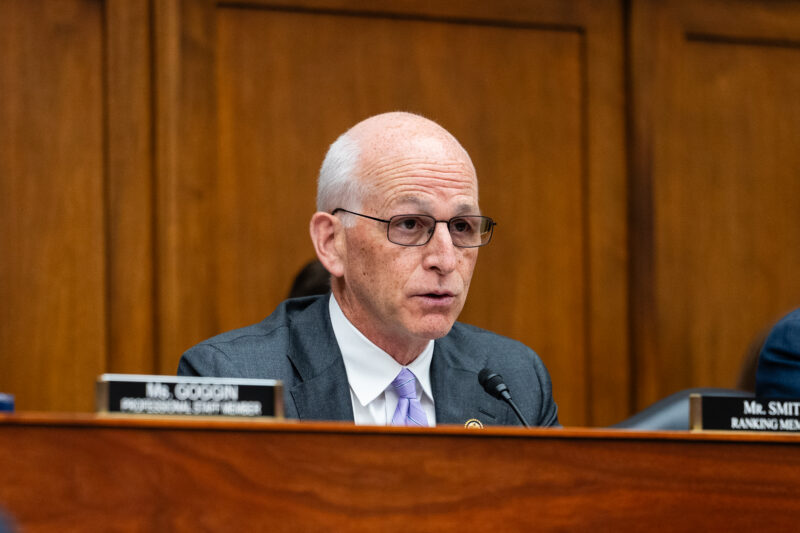
The 18 AIPAC endorsees who voted in favor of the measure were Reps. Gabe Amo (D-RI), Jake Auchincloss (D-MA), Julia Brownley (D-CA), Katherine Clark (D-MA), Laura Friedman (D-CA), Maggie Goodlander (D-NH), Josh Harder (D-CA), Steven Horsford (D-NV), Glenn Ivey (D-MD), Julie Johnson (D-TX), Bill Keating (D-MA), Seth Magaziner (D-RI), Richard Neal (D-MA), Joe Neguse (D-CO), Nancy Pelosi (D-CA), Brittany Pettersen (D-CO), Pat Ryan (D-NY) and Adam Smith (D-WA).
On its website, AIPAC delineates retiring lawmakers, who are no longer raising money, with a brief explanation thanking them for their “ongoing support for the U.S.-Israel relationship.” On the profiles of retiring Reps. Brownley, Pelosi and Johnson, AIPAC removed the line expressing thanks.
Three AIPAC-endorsed lawmakers — Reps. Shontel Brown (D-OH), Sarah Elfreth (D-MD) and Chris Pappas (D-NH) — voted “present” on the measure. AIPAC is still supporting them.
The group did not formally rescind its endorsement of any lawmakers after the vote, according to an AIPAC source, even though they are no longer going to receive financial support from the organization.
An AIPAC spokesperson declined to comment.
In throwing his support behind Adrian Boafo, Hoyer is using his connections to party leaders and ties with pro-Israel groups to boost his hand-picked choice to the nomination for a safely blue seat
Nathan Posner/Anadolu via Getty Images
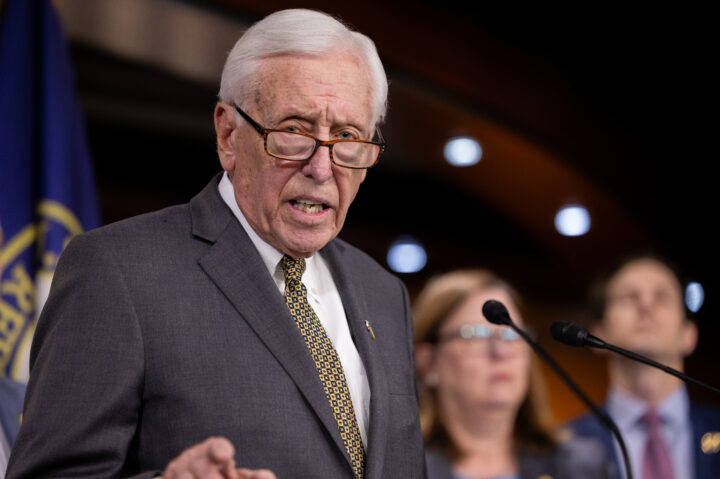
Congressman Steny Hoyer (D-MD) speaks at a press conference in Washington, DC on February 24, 2025.
As Rep. Steny Hoyer (D-MD) prepares to step down at the end of his current term, the former Democratic House majority leader is staking his pro-Israel legacy on a little-known candidate who he hopes will uphold his long-standing commitment to maintaining a close relationship with the Jewish state.
In throwing his support behind Adrian Boafo, a 32-year-old Maryland state delegate who is among nearly two dozen Democratic candidates running in Maryland’s 5th Congressional District primary on Tuesday, Hoyer, 87, is using his connections to establishment party leaders and ties with pro-Israel groups to boost his hand-picked choice to the nomination for a safely blue seat.
United Democracy Project, AIPAC’s super PAC, has emerged as the biggest spender in the race, investing more than $5.7 million as part of an aggressive effort to promote Boafo launched by Hoyer and his allies.
The well-funded foray is a useful illustration of the degree to which planning and organization helped put Boafo in contention for the seat Hoyer has held for 45 years, in contrast with recent primaries where UDP and other pro-Israel advocacy groups have been relatively cautious with their engagement while being outflanked by the far left.
A UDP source, granted anonymity to speak candidly about the race, said polling showed Boafo was not in the lead when Hoyer endorsed him in January. “It’s a super close race that could go either way,” the source told Jewish Insider on Monday, stressing a high level of undecided primary voters. “Many candidates are in contention.”
One Jewish Democrat in Maryland told JI that Hoyer “put a heavy finger on the scale” in the race, calling in “chits” with influential Democratic officials who gave endorsements to Boafo, such as Gov. Wes Moore and Sen. Angela Alsobrooks (D-MD) — both of whom are featured in UDP’s ad blitz that began late last month.
Boafo also gained support from Democratic Majority for Israel’s super PAC led by Brian Romick, a former longtime senior aide to Hoyer. The group backed him on its first slate of non-incumbent endorsements not long after Hoyer had expressed his preference in the race. Boafo is a former campaign manager for Hoyer.
In New York City’s closely watched primaries on Tuesday, meanwhile, UDP and DMFI PAC have largely been absent from key races where far-left challengers are threatening to unseat pro-Israel incumbents. Polling has indicated that Rep. Dan Goldman (D-NY) is facing long odds against Brad Lander, a former city comptroller, while Rep. Adriano Espaillat (D-NY) hopes to fend off Darializa Avila Chevalier, a democratic socialist insurgent with a long record of anti-Israel activism.
Both Lander and Avila Chevalier have been buoyed by endorsements from New York City Mayor Zohran Mamdani — who is using his own early political capital on a risky gambit to help lift a slate of candidates that has angered the Democratic establishment.
Mamdani has also joined forces with the Democratic Socialists of America’s New York City chapter, which is flexing its local organizational muscle to help Avila Chevalier and Claire Valdez, a state assemblymember who is facing off against Brooklyn Borough President Antonio Reynoso, a progressive backed by retiring Rep. Nydia Velazquez (D-NY).
Even as far-left super PACs like American Priorities, a new group created to counter AIPAC’s spending in Democratic primaries, have been surging money into New York City, UDP has remained on the sidelines — with the exception of money it recently funneled to a pro-Espaillat super PAC disclosed in campaign filings late last week. Still, the pro-Israel group has not been directly engaged in New York City, despite its historic support for Goldman and Espaillat.
UDP has reason for caution, as AIPAC’s brand has become toxic among a growing number of Democrats who have vowed to reject its support and view it as a noxious presence in contested primaries.
Pro-Israel activists speculated UDP chose to stay out of a crowded House contest in New Jersey this month featuring some credible moderate candidates because it had earlier bungled its involvement in another race in the state with an aggressive spending strategy that inadvertently helped elevate a far-left Israel critic to a seat in the House.
In the June primary, some Jewish leaders in New Jersey questioned if UDP’s lack of involvement had helped the nominee, Adam Hamawy, avoid credible opposition — even as he faced scrutiny over his past ties to a radical Muslim cleric convicted of terrorism.
Now, however, UDP is embracing a more proactive approach in Maryland as it seeks to push Boafo past the finish line on Tuesday, in a maneuver suggesting that it is comfortable courting a moderate voter base that Hoyer has represented as a staunch supporter of Israel as well as a close AIPAC ally.
While UDP has faced backlash from the left, the response has been largely reactive. In recent weeks, for instance, the group has drawn criticism from Sen. Chris Van Hollen (D-MD), a vocal detractor of Israel, who has accused AIPAC and crypto-linked interests in the race of “trying to buy” the seat, which extends southward from the eastern Washington suburbs of Prince George’s County. Van Hollen has not made an endorsement in the race.
Meanwhile, three Democratic primary candidates, including Capitol Police officer Harry Dunn, former Prince George’s County Executive Rushern Baker and businesswoman Quincy Bareebe, teamed up to decry the flood of outside spending that is shaping the race.
“Special interests don’t spend money out of civic goodwill,” Baker said last week. “They spend the kind of money that we see because they expect someone to work for them.”
Dunn, who faced opposition from UDP in a separate race last cycle, has claimed Boafo is “benefiting from the MAGA donors who fund AIPAC.”
In an unusual move, UDP released an ad last week seeking to counter the negative attention in which Hoyer himself spoke in a direct-to-camera appeal.
“You’ve probably seen the attacks on Adrian Boafo,” Hoyer said. “Let’s get something straight. Adrian is a man of deep integrity. He has the courage to stand up to any special interest. I trust him. You can, too.”
For his part, Boafo pledges on his campaign site to “strengthen the U.S.-Israel alliance and ensure” it “has the security assistance it needs to defend itself,” but has distanced himself from UDP, saying in response to Van Hollen’s remarks “that big money has no place in politics.”
His comments illustrate how even as AIPAC seeks to build new relationships amid declining support from Democratic members, its preferred candidates are — at least publicly — keeping the group at arm’s length.
If Boafo prevails in Tuesday’s primary, though, his victory could also help AIPAC to reset the narrative, while providing the group with a potential blueprint for engagement in future races as it seeks to fend off the anti-Israel left.
Businessman Brian Varela was recently endorsed by CAIR and the anti-Israel group A New Policy
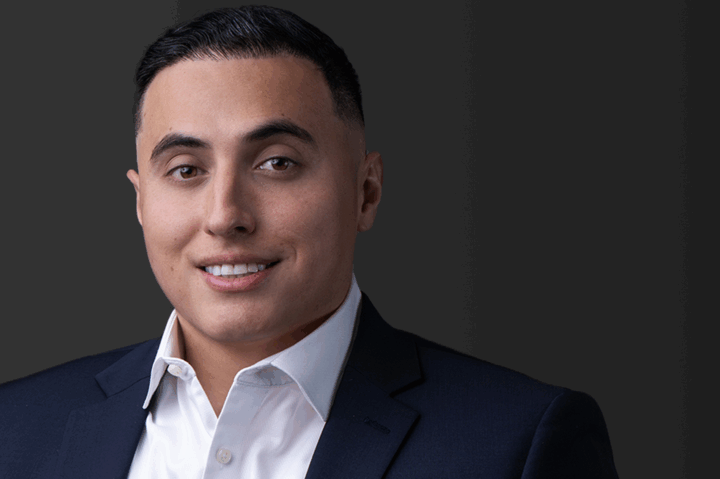
Campaign website
Brian Varela
Divides are emerging on aid to Israel among the Democratic candidates in the primary race in New Jersey’s 7th Congressional District as one candidate, businessman Brian Varela, picks up a series of endorsements from anti-Israel groups.
“If we’re going to provide aid to other countries, I don’t think it’s enough to just follow U.S. law and international law. I would actually support providing additional conditions to make sure that we can further American interests and to make sure that the countries that we are helping are living in alignment with our values,” Varela said in response to a question about conditioning aid to Israel at a debate in the district last week.
Varela previously told Jewish Insider in July 2025 that Israel has been a “strong ally for us, and I think it’s important to make sure that we are there for Israel, that we help Israel with their ability to defend themselves.”
His campaign clarified to JI this week that he was not calling for specific conditions on aid for Israel alone.
Emmett Shell, Varela’s campaign manager, told JI: “When Brian talks about conditioning aid, he is talking about every country that receives American taxpayer dollars, not Israel specifically. Conditioning aid is one of the most important tools of soft power we have. It is how we make sure American values and American interests are actually being advanced with American money abroad.”
Rebecca Bennett, a veteran who is seen as the favorite of national Democrats in the race, said at the debate she had, as a member of the military, “the opportunity to see how important Israel is as an ally to the United States,” but said that “I also think that what Netanyahu is doing is not in the best long-term interest of Israel.”
But she also emphasized that Israel should not be subject to a “higher standard or a lower standard” than any other ally. Pressed on whether she’d support new conditions on Israel, Bennett said, “I’m going to be focused on making sure that Israel is following U.S. law, and then we’ll go from there.”
Democrat Michael Roth, the former head of the Small Business Administration, who previously told JI he wanted to be a leader of a new generation of pro-Israel Democrats, said at the debate he supports “conditioning aid to Israel up to U.S. law, international law, humanitarian law.”
He said that, as “a Jew who has deep ties to Israel,” he believes that “[Israeli Prime Minister Benjamin] Netanyahu has been horrible,” and emphasized the “shared humanity” of Israelis and Palestinians.
Roth said in an interview with JI last May that U.S. aid to Israel is “some of the best investment that you can make” and that he had strong confidence in the Israeli military and would not support conditions or restrictions on aid to Israel.
In a follow-up interview with JI on Wednesday, Roth emphasized his strong personal ties to Israel and the need to “be honest with our friends and hold them accountable if we want to lead the world as we have done over the last 100 years.”
He said that “we need to make sure that we are enforcing our laws evenly, and that nobody is getting special treatment, and that we actually have enforcement,” but declined to specify whether he would also support new conditions on aid that apply to Israel alone.
Asked whether he thinks current U.S. laws have not been enforced on Israel, Roth responded, “I think Trump has very clearly not enforced international law, has had no interest in doing so.”
He said that the humanitarian crisis in Gaza has “made my heart bleed” and that, while he “strongly believe[s] in Israel’s right to defend itself … those actions are different than what they have been in the last year and a half.”
Roth said his views have evolved as a result of conversations with both Jewish and Muslim communities in the district. And he argued that long-term support for Israel requires leaders who will listen to all perspectives and speak with those who disagree.
Tina Shah, a physician, said she did not support conditioning aid to Israel.
Though she condemned the humanitarian situation in Gaza and Netanyahu specifically, she said, “I don’t think that [we] should change our relationship with the country because of one prime minister, and that’s why I don’t support conditioning aid.”
Varela, who entered the race as a centrist but has subsequently been working to pick up progressive support, also recently earned endorsements from several progressive and anti-Israel groups, including the Council on American-Islamic Relations, the founder of which expressed support for Hamas’ Oct. 7, 2023, attacks on Israel. The group’s New Jersey chapter justified the Oct. 7 attacks days after they occurred.
“As a leading Muslim American political advocacy organization, CAIR Action knows that I am committed to upholding the rights of all Americans, regardless of religion or race,” Varela said when he announced the endorsement. “They recognize that I have built a grassroots movement dedicated to protecting voting rights, lowering costs, and fixing our broken immigration system. They know I’m the fighter NJ-07 needs and the leader this district deserves.”
Asked about the endorsement, Shell, the Varela campaign spokesperson said Varela “has been clear and consistent in his opposition to Hamas from day one,” believes “there is no justification for the October 7 attack,” and “opposes violence in all of its forms, including the violence Palestinian civilians are facing in Gaza.”
“Brian was not aware of the specific referenced comments, and he does not share those views. He appreciates support from community organizations across NJ-07, including from Muslim American voters who want to see a representative who will fight for peace, but accepting an endorsement is not an endorsement of every statement an organization or its leaders have ever made,” the spokesperson continued.
Varela was also endorsed by A New Policy, a campaign and lobbying group that aims to shift U.S. policy toward Israel. The group’s advocacy arm has accused Israel of genocide, urges cutting off and conditioning U.S. aid to Israel and opposes the Antisemitism Awareness Act and the International Holocaust Remembrance Alliance’s working definition of antisemitism, among a range of other policies.
“This organization understands that America’s politics need to serve the people, not the powerful, and that our elected officials need to actually fight for working people, take on corporate power, and ensure Congress is acting in America’s best interests,” Varela said, in announcing the endorsement. “That is the kind of Democrat I am running to be, and that is the kind of leadership I will bring to Congress.”
Asked about the endorsement and A New Policy’s stances, the Varela campaign spokesperson said, “Brian welcomes support from a broad coalition, but his positions are his own. Brian has been clear about the humanitarian catastrophe and the unacceptable civilian death toll, and he believes the United States should use its leverage to push for complete peace in the Middle East.”
Regarding the Antisemitism Awareness Act, the spokesperson said, “Brian believes antisemitism is a real and growing threat that has to be confronted seriously, and he stands with the Jewish community in NJ-07 in saying so. He has concerns about how codifying any single definition into federal law could affect protected political speech, but he wants Congress to act on antisemitism and is open to working on language that does both.”
The 7th District, rated by the Cook Political Report as a toss-up race, is one of the strongest pickup opportunities for Democrats this cycle, especially given Rep. Tom Kean Jr.’s (R-NJ) monthslong absence from the House, which aides and family members have attributed to medical issues.
Recent internal polling by both Bennett and Shah’s campaigns have placed Bennett in the lead — but offer different pictures of the size of her lead in the race.
A Bennett poll showed her at 36%, far ahead of Shah at 15%, Varela at 13% and Roth at 12%. But a Shah poll showed a tight race between her and Bennett, at 26% and 23%, and Varela and Roth lagging farther behind at 10% and 7%, respectively.
A Nebraska-based group, Real Change PAC, has also recently begun spending close to $450,000 in the race, hitting Bennett as insufficiently progressive and boosting Shah and Varela.
Reports indicate the group may be backed by Republicans, and linked to another shadowy GOP-linked super PAC, Lead Left PAC, which has gained attention this week for boosting Maureen Galindo, an openly antisemitic Democrat running in a Texas congressional race.
The three leading Democratic candidates agreed that the county can do better dealing with anti-Jewish hate
Robb Hill for The Washington Post via Getty Images
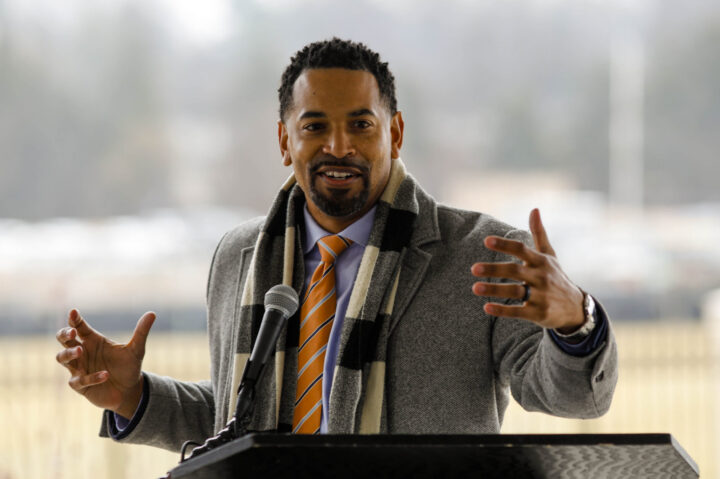
Will Jawando, of the Montgomery County Council, speaks at the dedication of the Phil Alperson Way on February 25, 2022.
The three leading Democratic candidates in the race for executive of Montgomery County, Md., pledged to address the rise of antisemitism within the local school system, while some noted their disappointment that the school board has yet to adopt a Jewish group’s recommendations for doing so.
As the June 23 primary approaches, the Jewish Community Relations Council of Greater Washington hosted a forum on Monday in which the group’s CEO, Ron Halber, asked Councilmembers Andrew Friedson, Evan Glass and Will Jawando how each would address rising antisemitism in Montgomery County’s K-12 schools if elected as executive.
Earlier this month, the JCRC called out the uniquely high rate of antisemitic incidents in the school district and called on the district to incorporate specific antisemitism training. Montgomery County, which is just outside of Washington, D.C., is home to more than 35 active synagogues and has the largest Jewish population in the state.
“I am disappointed that MCPS has not accepted that [training]. I will continue to urge them to do so,” said Jawando, the most progressive Democrat in the race. “There is some Holocaust and antisemitism education happening but we need to start it earlier, in middle school.”
Jawando said as county executive, he would create a Jewish community advisory board and dedicated Jewish liaison to work with schools.
Friedson called for “much better coordination between the school system, county government, JCRC and ADL to ensure better communication and coordination, and ultimately the training to avoid incidents.”
“That’s been offered” to MCPS, continued Friedson. “It has not been fully accepted, which continues to be a major frustration for all of us.”
Glass acknowledged that for years, “most of the antisemitism” in the area has come from schools. “The county executive has to use the bully pulpit to call out hate whenever they see it, wherever it is and for whomever it is pointed at.”
“I will continue to make sure that MCPS does better, either in their appointed leadership and also in their elected leadership.”
The question came at a fraught time for the district — located just outside of Washington, D.C. — as a new report from the Anti-Defamation League showed that Maryland ranked ninth in total antisemitic incidents nationwide in 2025, two-thirds of which occurred in Montgomery County. Among the top ten states with total incidents, Maryland ranked first in the percentage of incidents occurring at K-12 schools, at 34%.
Jawando, who has positioned himself as the most progressive of the candidates, has been critical of the Maryland Israel Development Center, which promotes relations between Maryland and Israeli businesses. “We should never use Montgomery County tax dollars to support the development or production of offensive weapons, whether that’s bombs or munitions or anything else. For me, that’s a nonstarter and I will always oppose it. That’s one reason my office is looking into exactly how MIDC funds are used,” he told the Montgomery Perspective last year.
Friedson, who has positioned himself as the most moderate among the Democratic candidates, has campaigned on a pro-business platform focused on job growth as the county faces slower economic expansion than some of its D.C. metro neighboring counties.
Both Friedson and Glass are Jewish and have longstanding ties to the county’s Jewish community.
Outside of the public school system, Montgomery County has experienced a surge in antisemitic vandalism targeting Jewish institutions.
All three candidates running to replace term-limited County Executive Marc Elrich also said they would retain the local Nonprofit Security Grant Program, one of the few outside of the federal program, in the county budget. Halber and other Jewish leaders have called for increasing NSGP funding in Montgomery County.
Ambitious Democrats are still trying to figure out a political message that manages to keep pro-Israel voters within their coalition while reacting to the dramatic shift in public opinion towards the Jewish state within their base
Kyle Mazza/Anadolu via Getty Images
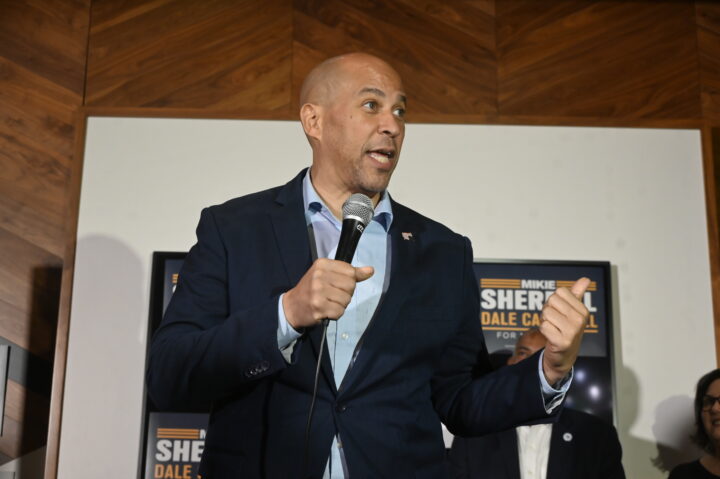
Sen. Cory Booker (D-NJ) speaks at a get out the vote rally in Camden, New Jersey, United States on November 2, 2025.
You would think the media wouldn’t need to twist Democratic candidates’ views on Israel, given the challenges pro-Israel supporters are already facing within the party. But in a Politico story suggesting that Democrats are running away from AIPAC, the publication misrepresented the views of two leading presidential contenders — and ignored the latest pro-Israel comments made in its own pages by a top-tier candidate.
The story leads by noting pro-Israel Sen. Cory Booker (D-NJ) said he’s not taking PAC money from anyone and then twists his comments to suggest that he had shifted his views on AIPAC or his support for Israel. The omission (buried at the end of the story) is particularly egregious because in the same interview, Booker told Politico that he was troubled by the “singling out of AIPAC” compared to other American advocacy groups.
“Somehow, AIPAC seems to be drawing a lot of attention, and that’s problematic to me,” Booker said. That doesn’t sound like an example of someone turning on the pro-Israel advocacy group.
The story then cites Pennsylvania Gov. Josh Shapiro, one of the leading supporters of Israel in the party, as someone who’s flip-flopping on AIPAC for noting that as a governor, he’s never taken or solicited money from AIPAC. (Which is true, as a matter of fact, because AIPAC only spends money in federal races, not statewide campaigns.)
But that narrow, semantic statement was taken as evidence that Shapiro has changed his tune, when in reality he’s been speaking on left-wing podcasts in defense of the Jewish state, testing a measured, pro-Israel message as he mulls over a presidential campaign.
And perhaps most notably, the story avoids referencing Politico’s own interview with California Gov. Gavin Newsom published the same day, where he backtracked from his anti-Israel comments on the “Pod Save America” podcast earlier in the month. In the interview, Newsom said he “revere[s]” Israel and is “proud to support the state.” And he walked back his earlier comments that seemingly called Israel an apartheid state, saying he was only referencing a column by the New York Times’ Tom Friedman. This latest article appears to fit a pattern of anti-Israel content from Politico that stands in contrast to the pro-Israel stance of its parent company, Axel Springer.
To be sure, Newsom has been carefully calibrating his remarks to different audiences, and has distanced himself from AIPAC lately, in a shift from his longtime support for a close U.S.-Israel relationship. But his latest favorable comments towards the Jewish state — clearly intended as cleanup from his overly zealous criticism just weeks before — is a sign that Democratic candidates are still calibrating their views, not embracing the anti-Israel activists.
The reality is that ambitious Democrats are still trying to figure out a political message that manages to keep pro-Israel voters within their coalition while reacting to the dramatic shift in public opinion towards the Jewish state within their base.
And while it may be easy for Democrats to look at the polling and use AIPAC as a convenient boogeyman, the reality is that by embracing an anti-Israel worldview, candidates will end up dealing with the baggage that comes with the movement — from associating with antisemitic podcasters to championing Senate candidates that had Nazi-linked tattoos. That’s where the polling doesn’t fully reflect the implications of any anti-Israel shift within the party.
It’s a reminder of how so many Democrats running for president in 2020 looked at the polling reflecting the party zeitgeist of the moment and embraced a whole panoply of radical views, from defunding the police to embracing government-funded benefits for undocumented immigrants. That sudden shift to the far left, backed up by the primary polling of the moment, still haunts the party to this day.
It’s why most of the opposition against Israel is still confined to progressive spaces, as more mainstream Democratic candidates try to figure out how to balance concern over Israel’s right-wing government with support for the country itself. The Politico story, in its haste to declare waning support for Israel within the party, instead got nuanced responses that didn’t fit the narrative.
Schneider called Piker ‘an unapologetic antisemite’ and warned ‘Democrats risk losing our credibility to condemn those on the right who traffic in bigotry’ if they continue to embrace him
Tom Williams/CQ-Roll Call, Inc via Getty Images
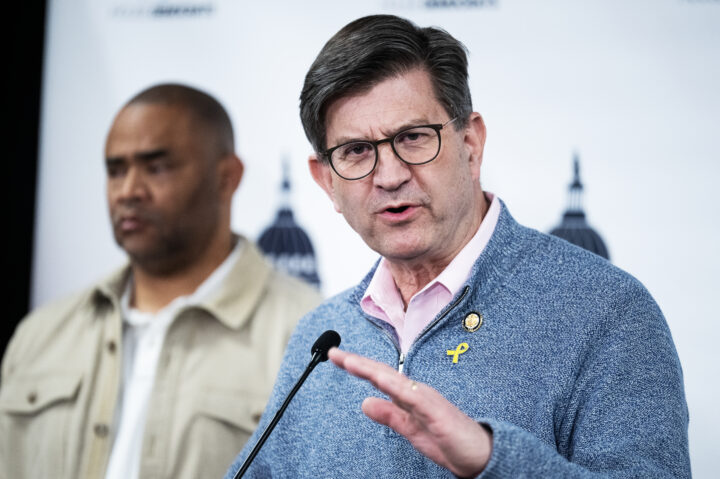
Chairman Brad Schneider (D-IL) conducts a news conference with members of the New Democrat Coalition during the House Democrats 2025 Issues Conference at the Lansdowne Resort in Leesburg, Va., on Thursday, March 13, 2025.
Rep. Brad Schneider (D-IL), who chairs the moderate New Democratic Coalition, called on Democrats on Tuesday to reject and distance themselves from Hasan Piker, the far-left media figure boosted by an increasing number of Democrats and Democratic candidates.
Piker has faced repeated criticism for antisemitic comments and support for terrorism, in addition to a range of other offensive remarks and activity. Schneider, in addition to his leadership in the New Dems -— one of the largest groups in the House Democratic Caucus — is a co-chair of the Congressional Jewish Caucus.
“Hasan Piker is an unapologetic antisemite,” Schneider said on X on Tuesday. “Democrats risk losing our credibility to condemn those on the right who traffic in bigotry, antisemitism, & hate when our own Members of Congress & candidates are celebrating or, worse yet, platforming those who espouse hate of any kind.”
Schneider said he is proud that the Democratic Party “welcome[s] a broad diversity of opinions and priorities. But we cannot allow those who preach hate & seek division to find safe harbor among us. We must call out hate & reject those who champion ideologies of exclusion and demonization.”
The moderate Democratic leader’s comments come on the same day that Michigan Senate candidate Abdul El-Sayed announced a rally alongside Piker, and after numerous other colleagues have appeared on Piker’s livestream show or defended him.
They also follow similar condemnation from Third Way, a prominent moderate Democratic group.
The centrist think tank called it 'morally repugnant and strategically self-defeating' for the left-wing Michigan Senate candidate to appear with Piker at an upcoming rally
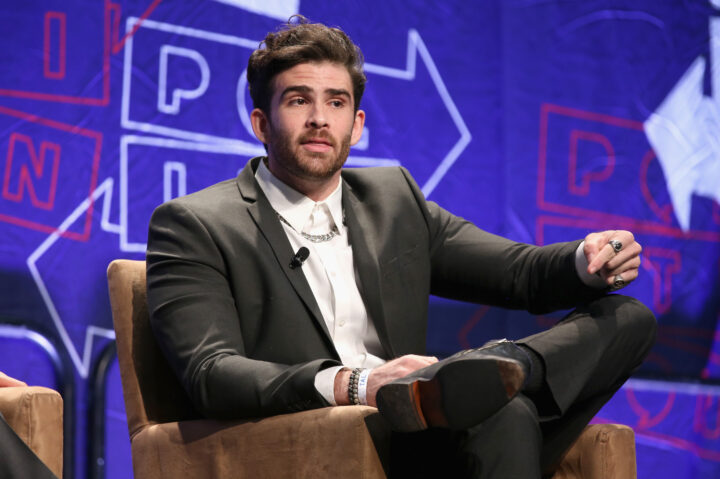
Phillip Faraone/Getty Images for Politicon
Hasan Piker speaks onstage during Politicon 2018 at Los Angeles Convention Center on October 20, 2018 in Los Angeles, California.
A prominent moderate Democratic think tank is continuing to call out Democratic candidates for being “too cozy” with antisemitic streamer Hasan Piker, who has been embraced by several left-wing Democrats in recent months.
In his latest statement, Jonathan Cowan, president of Third Way, condemned Michigan Senate candidate Abdul El-Sayed for his upcoming rallies with Piker, first reported by Politico, set to take place on April 7 at Michigan State University and the University of Michigan alongside Rep. Summer Lee (D-PA).
“It is morally repugnant and strategically self-defeating for Democrats like Abdul El-Sayed and Members of Congress like Summer Lee to cozy up to antisemitic extremists like Hasan Piker,” Cowan said. “Anyone eager to campaign with Hasan Piker is, at best, comfortable overlooking his antisemitic and anti-American extremism and, at worst, endorsing it.”
Cowan referenced a Wall Street Journal editorial he co-authored with Third Way’s Lily Cohen last week, titled “Democrats Are Too Cozy With Hasan Piker,” in which the two urged Democrats to follow the lead of Sen. Ted Cruz (R-TX) in calling out antisemitism in their own party.
“Piker’s depravity rivals that of far-right bigots. We will not defeat the surge of antisemitism in America without taking on its most influential proponents on our own side,” Cowan’s statement continued. “Embracing extreme bigots like Piker, who, for starters, has called religious Jews ‘inbred’ and said ‘America deserved 9/11,’ is not only dangerous and wrong, but antithetical to the urgent work of winning over the middle and defeating Trumpism.”
Other Democrats, including Rep. Ro Khanna (D-CA), have also embraced Piker, while California Gov. Gavin Newsom recently pledged to appear on Piker’s popular Twitch stream.
The progressive activist ran as a pro-Israel candidate in a neighboring swing district, but is now walking back her support as she runs to succeed Rep. Bonnie Watson Coleman

Courtesy
Sue Altman
Progressive activist Sue Altman shook up the race in New Jersey’s 12th Congressional District earlier this month when she announced she was entering the already packed field of Democratic candidates to replace retiring Rep. Bonnie Watson Coleman (D-NJ) in the House.
Altman ran as a pro-Israel progressive when she was the Democratic nominee in the neighboring district, where she lost to Rep. Tom Kean Jr. (R-NJ). She served as Sen. Andy Kim’s (D-NJ) state director before announcing her campaign to succeed Watson Coleman in a district that’s decidedly more liberal than Kean’s.
The question remains whether Altman will re-calibrate her views on Israel as she seeks to win a crowded Democratic primary in a farther-left district. In audio shared by the far-left publication Drop Site, Altman said she’s reassessing elements of her position toward Israel from 2024 and working on a new position paper.
“A lot has happened since then. It has been a horrific tragedy,” Altman said, in an unknown setting. “I always looked up to Israel as a young person. … Israel is an important ally to the United States, but what has happened in Palestine is just horrific, and I don’t want our taxpayer money being used to kill children and women who are innocent.”
She said that people she’s spoken to feel that the war in Gaza is a “betrayal that they feel is beyond the pale.” (The war had been taking place for nearly a year when she ran for Congress in the 2024 cycle.)
Altman also said she believes that “[Israeli Prime Minister Benjamin] Netanyahu and the State of Israel are not one and the same and that there’s nuance on all sides here.”
She said she would be “at least as far left as [former Rep. Tom Malinowski, the Democrat who lost his seat to Kean in 2022] if not more so” on the issue, and said she expected AIPAC and other groups might come after her, as AIPAC did with Malinowski in the recent special election in New Jersey’s 11th Congressional District.
“AIPAC and countless SuperPACs are destroying our democracy by polarizing and misleading the public,” Altman said on X last week. “They tried (and failed!) in NJ-11, and now they’re trying again in [Illinois]. We need to get dark money out of politics to prevent billionaires from controlling us and getting richer!”
In the comments released by Drop Site, however, Altman appeared to mischaracterize Malinowski’s stated position. Malinowski did not rule out supporting special, specific conditions to be applied only to aid to Israel. Altman claimed that Malinowski was only seeking to enforce existing conditions that apply to all U.S. aid globally — which already apply to aid to Israel — and that AIPAC had come after him for that stance.
Middle East politics have already entered the race in other ways, with Watson Coleman saying she would not weigh in on the race other than telling voters not to support East Brunswick Mayor Brad Cohen, who is Jewish, calling him a “hard-line supporter” of Netanyahu.
Cohen held a substantial fundraising lead as of the end of the year — though he was surpassed by Altman in her first day in the race — and is likely to receive the support of the Middlesex County Democratic establishment. Middlesex voters made up around 40% of the district’s voter population in recent elections, according to Micah Rasmussen, the director of the Rebovich Institute for New Jersey Politics at Rider University.
Also running are other local officials, including Plainfield Mayor Adrian Mapp and state Rep. Verlina Reynolds-Jackson, both of whom are likely to pick up the support of local Democratic officials in their areas.
The candidacy of Adam Hamawy, a physician and veteran who volunteered as a doctor in Gaza and has been an acerbic critic of Israel, could be of particular concern to the district’s Jewish community.
Dan Cassino, the executive director of the Fairleigh Dickinson University poll, said that Altman became the immediate front-runner upon entering the race, and that her biggest weakness in the 7th District, where she was perceived as too liberal to win a swing district, will not be an issue in this district.
“She can also raise lots of money, which might help to box out some other potential challengers, as it did when she ran in the 7th last cycle,” Cassino said.
Rasmussen said that Altman is hoping for a “divide-and-conquer” strategy — relying on other candidates such as Cohen, Mapp and Reynolds-Jackson to be siloed in their counties and hoping she’ll be able to win support across county lines.
Rasmussen added that if Altman is able to turn out progressive voters like Analila Mejia did in the 11th District special election primary, she’d be well-positioned to win.
But, unlike Mejia, who ultimately had the progressive lane largely to herself in the 11th District, Altman will have serious competition, including Reynolds-Jackson and Hamawy.
“What we don’t know is, are they going to have to share [the progressive lane] or is [Altman] going to be able to consolidate?” Rasmussen said. “You can have a really solid progressive record, but get out-organized and out-worked, then that record won’t count for much. … What Altman has in common with Mejia is both are organizers in that movement, know who to reach and how to fire them up and get them interested in voting.”
He said that attacks on Altman as a carpet-bagger don’t seem especially viable, noting that they were not particularly salient against Malinowski in the 11th District special election, and the district is already large and geographically diverse.
Among the field of nearly 20 candidates, Rasmussen said that Hamawy would be the one he would assess as most likely to have a surprise breakout from the field in a way similar to Mejia in the 11th District. “Given his very interesting life story, his very interesting professional background, I would say there’s a chance that captures people’s attention, that captures people’s interest.”
Generally, Rasmussen said, the county Democratic establishment might be able to push a favored candidate, such as Cohen, over the line but it will take serious dedication and effort, which is not guaranteed. Recent elections have shown the establishment no longer has the heft it once did.
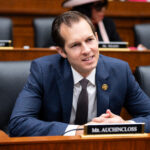
Only James Leuschen, a longtime former senior Capitol Hill staffer, did not say he would reject support from AIPAC and Democratic Majority for Israel
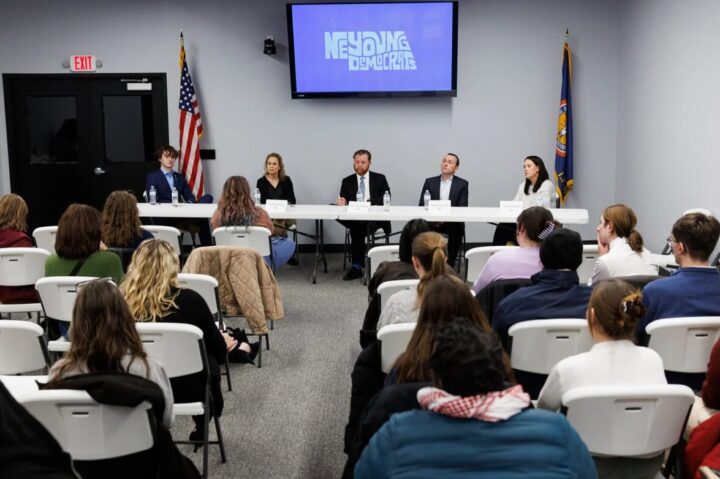
Kishla Askins, John Cavanaugh, James Leuschen and Denise Powell at a candidate forum hosted by the Nebraska Young Democrats, Jan. 23rd, 2026
Nebraska Young Democrats/Facebook
A majority of the Democratic candidates running in Nebraska’s 2nd Congressional District, a key swing seat that Democrats hope to flip in November, said at a candidate forum hosted by the Nebraska Young Democrats last week that they would reject support from pro-Israel groups, according to video of the event obtained by Jewish Insider.
The incumbent, Rep. Don Bacon (R-NE), who is retiring at the end of his current term, is an outspoken supporter of Israel and has also been active in combating antisemitism as a co-chair of the House Bipartisan Task Force for Combating Antisemitism. Bacon, a moderate, has repeatedly managed to fend off Democratic challengers in recent elections, but the Cook Political Report rates the seat as “Lean Democratic.”
Asked whether they would accept support from AIPAC or Democratic Majority for Israel, state Sen. John Cavanaugh committed to not taking any funding from either group, while activist Denise Powell said that she would not accept any funding from any special interest groups.
Navy veteran Kishla Askins offered a less definitive answer, saying she is “right now … not taking” funding from J Street, AIPAC or DMFI, while also noting that she had been to Israel and served alongside the IDF while she was in the military and understands how dangerous the region is.
“For me, every decision I make is about values and the rule of law, those two things. I do not align myself with anyone that breaks the law, nor aligns with Nebraskan values,” she said, describing the situation in Gaza as a humanitarian crisis. “Hamas is a terrorist group, and we need to all align around ridding this world of terrorism. Hamas is a terrorist group funded by Iran.”
She said she would “make decisions based on values and the rule of law.”
James Leuschen, a longtime former senior staffer for Rep. Steny Hoyer (D-MD) — a staunch Israel supporter who previously served in House Democratic leadership — was the only candidate to definitively say he would not commit to turning down support from the groups.
“Part of the reason why is I think that we, as Democrats, need to not unilaterally disarm when it comes to elections with Republicans that would be willing to do basically anything to win, right?” Leuschen explained. “The idea that we can win elections by pushing people away from us is, I think, wrongheaded, right? I think we need to be able to talk to folks in all communities. We need to be able to hear the concerns of folks who feel like, you know, maybe the things that happened on Oct. 7 weren’t quite the best thing in the world.”
He said that he wants to see the ceasefire agreement in Gaza hold, to pursue a two-state solution and to ensure that both Hamas and Israel abide by the terms of the deal reached last October.
“But at the same time, I think we have to acknowledge that the incident, the terrorist attacks on Oct. 7, were a tragedy in themselves and the situation we find ourselves in today — while not ideal — is progress toward that lasting peace and that two-state solution that I think we’re all going to get to,” he said. “It can’t be accomplished with coercion; it has to happen with both sides to get there on their own.”
Another prominent candidate, Douglas County district court clerk Crystal Rhoades, did not attend the forum. Rhoades has publicly expressed staunch support for Israel, saying in an op-ed published in The Jewish Press in Omaha, “no one will fight harder to strengthen the U.S.–Israel relationship than I will. My support for Israel isn’t political, it’s moral. It’s grounded in my values and in what I’ve seen firsthand about the importance of dignity, freedom and memory.”
In response to a later question, Leuschen also said he would have voted for a recent State Department funding package that included $3.3 billion in aid to Israel, maintained a block on funding for the U.N. Relief and Works Agency and contained provisions aimed at blocking Palestinian actions against Israel at the International Criminal Court and the International Court of Justice.
Askins and Cavanaugh both said they couldn’t weigh in on the legislation without having fully analyzed what was in it, though Cavanaugh added that he “would not be in support of defunding refugee services.”
Powell said that she hadn’t reviewed the bill but said that she was “a big believer that the U.S. needs to be doing more to support the Palestinian people in this moment. So I’m not sure what it all is in there. I’d love to read it. I don’t — from what you have said, it doesn’t feel like something I’d be super comfortable voting on. But I don’t have all the details on the bill.”
In a follow-up statement shared with Jewish Insider, Powell said that her answer at the forum did not fully capture her stance on the U.S.-Israel relationship.
“I have always unequivocally supported Israel’s right to exist and its right to defend itself. The question that was asked at a recent forum centered around a bill that would strip humanitarian aid to Gaza,” Powell said.
“My position is clear: I fully support providing aid to Israel and believe that we should ensure humanitarian aid reaches those in need,” the statement continued. “In order for the region to rebuild, it is imperative that we center our efforts around a two-state solution that both ensures Israel’s security and gives the Palestinian people the resources they need to reestablish their lives.”
Previously, Cavanaugh — who leads in polling of the race and hails from an established political dynasty in the state — has received pushback from pro-Israel voters for being one of 10 state senators who declined to sign onto a resolution supporting Israel and condemning Hamas on the first anniversary of the Oct. 7, 2023, attacks. He’s endorsed by progressive lawmakers including Reps. Pramila Jayapal (D-WA), Ro Khanna (D-CA) and Jamie Raskin (D-MD), as well as the Congressional Progressive Caucus PAC.
Gill is facing off against former Rep. Tom Malinowski and former lieutenant governor Tahesha Way, among other Dem challengers
Campaign website
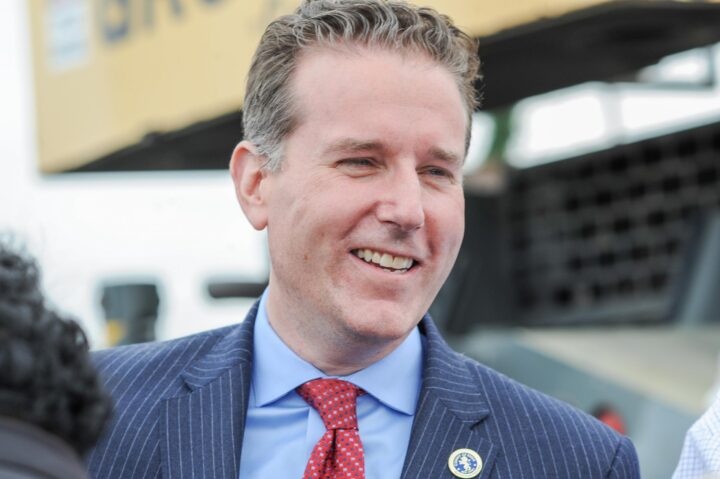
Brendan Gill
Essex County Commissioner Brendan Gill, one of the leading Democrats running for the vacant 11th Congressional District seat in New Jersey, told Jewish Insider he would be a strong supporter of Israel and the continued U.S.-Israel relationship, while also expressing concerns about the current Israeli government.
The race, which features a parade of Democratic candidates that also includes former Rep. Tom Malinowski (D-NJ), will determine who will fill the remainder of Gov. Mikie Sherrill’s term in the House. An AIPAC-affiliated super PAC is spending money on ads against Malinowski, amid reports that the pro-Israel group favors former lieutenant governor Tahesha Way in the race.
Gill — a longtime New Jersey political hand who has previously worked as a staffer for or on the campaigns of Sen. Cory Booker (D-NJ), former Sen. Frank Lautenberg (D-NJ), and former Reps. Steve Rothman (D-NJ) and Bill Pascrell (D-NJ) — said his time working with each of those lawmakers, all strong supporters of Israel, has served as his “North Star” for his policy toward the U.S.-Israel relationship.
Gill also previously worked for former Gov. Phil Murphy, who has endorsed his congressional bid.
“I very much believe that we absolutely can respect the ability to disagree with decisions that are made by an elected government that we might not agree with, but still at the same time never waver on Israel’s right to exist, never waver on protecting the strategic partnership in that region of the world that the United States has enjoyed with the only democracy that exists, to continue to aid Israel in ways that are both important to its own protection and, by extension, the protection of our own national interests,” he said.
Gill added that he personally disagrees with and has concerns about decisions made by Israeli Prime Minister Benjamin Netanyahu — mentioning the 2022 judicial reform effort in particular — but said he remains committed to protecting Israel’s right to exist and defend itself, as well as supporting democratic institutions in Israel.
Gill visited Israel in July 2024 with a local Jewish federation, visiting the Nova music festival site and meeting the family of Israeli American hostage Hersh Goldberg-Polin — who was killed by Hamas the following month — and with various Israeli leaders.
“That trip was incredibly impactful for me in terms of how I think about the relationship between the United States and Israel,” Gill said.
In a position paper shared with JI, Gill said he supported the current memorandum of understanding with Israel and would back continuing it, “governed by existing laws on American aid, not additional restrictions.” He also said that he would work to build and maintain bipartisanship in support of Israel.
Gill said in his interview with JI that he wants to continue U.S. aid to Israel, though he would “be open to conversations around requirements to receive that aid. But I would start in a place … that I would not have an issue on continuation of aid to Israel and allowing Israel to defend itself.”
Pressed on the sort of “requirements” he might support, Gill said he would begin by listening directly to Israeli leaders about what the Jewish state needs to defend itself, adding that he finds the distinction some lawmakers have drawn between offensive and defensive weapons “very difficult to discern.”
Asked about the potential discrepancy between the paper and the position expressed to JI, Gill spokesperson Toral Patel told JI that Gill’s position is as expressed in the paper, and that he does not support additional restrictions. “He would be open to discussions that are fully agreed upon between the US and Israel to modify aid, but still does not believe the US should unilaterally restrict aid in any way to our ally,” Patel said, when pressed on what Gill meant by “requirements.”
“My starting point has been, and continues to be, that we should absolutely be able to support Israel in the ways that we have in the past, and at the same time, start these conversations around, what does this aid look like in the future,” Gill reiterated in his interview with JI, noting Netanyahu’s own recent comments about phasing out U.S. aid in the next decade.
In his position paper, Gill said he would “work to ensure that the United States strengthens its unwavering support for Israel’s security while helping to shape a post-Hamas Gaza that is stable, demilitarized, and incapable of threatening the Israeli people,” highlighting the need to keep putting pressure on Hamas to disarm.
“My stance in Congress will be clear and unwavering: Israel has the absolute right to defend itself, and the United States should be its partner in ensuring it has the ability to do so. Removing Hamas from power is not only essential for Israel’s security, but it is also the only path to a better future for Palestinians as well,” he said.
He blamed Hamas for “the suffering of both Israelis and Palestinians” in its attack on Israel, its theft of aid intended for Gazan civilians and its use of Gazan civilians as human shields through the use of tunnels.
Gill said that Americans “are deeply concerned by the conduct, duration, cost, and human toll of” Israel’s war in Gaza and, to maintain popular support for Israel, “we must demonstrate that our engagement is principled, strategic, and ultimately aimed at a lasting resolution that works for all peace-loving people involved.”
In the long term, Gill also expressed support for a “two-state (or more) solution,” also making reference to a “multi-state solution.” He said achieving that goal will require a viable postwar governance plan for Gaza, ongoing U.S. support for Israel’s qualitative military edge and a credible and uncorrupted multilateral reconstruction and deradicalization effort in Gaza.
The AIPAC-affiliated United Democracy Project super PAC recently launched a $500,000 ad campaign opposing Malinowski, with a spokesperson for UDP telling JI that the group views multiple other candidates in the race as more pro-Israel than Malinowski.
But local reporting indicates that UDP favors Way in the race over Gill and other pro-Israel candidates. Other candidates in the race have also expressed more openly anti-Israel views than Malinowski.
Gill said in his interview with JI that he supported the U.S. strikes against Iran’s nuclear program last year. Going forward, he said that the U.S. must continue to prevent Iran from acquiring nuclear weapons.
He said he also wants to see U.S. lawmakers “speaking out, and louder, about the atrocities that are happening right now” against the anti-regime protesters in Iran, and to “find both in word [and] deed” ways to support the Iranian protests, while also ensuring proper congressional oversight of any potential military action.
At home in the U.S., Gill emphasized that the issue of rising antisemitism is “very, very real” and “not abstract” for him, with the Garden State having a high rate of antisemitic incidents per-capita and the 11th District having seen a series of alarming incidents, including a firebombing of a synagogue, fake blood thrown at children, the destruction of Israeli flags and an attempted plot to kill Jews.
“You need to speak out and be vocal immediately,” Gill said, arguing that, unlike some of his competitors, he has the local connections and experience to respond to such incidents — both in words and by working to help secure additional security resources — and has done so in his current role.
“This is an ongoing challenge that we have right now and a serious problem,” Gill said. “Our leaders need to acknowledge that — and not only acknowledge it, make sure that they’re advancing policies that help push back and fight against it and protect the Jewish community.”
He highlighted his ties to a variety of local Jewish leaders and elected officials, whom he said he would lean on as he considers issues relevant to the Jewish community.
He added that the federal government needs to provide sufficient funding through the Department of Education for educational programs on antisemitism, as well as funding for local law enforcement to ensure security.
Asked about the Trump administration’s policies that aimed to crack down on antisemitism on college campuses, including revoking federal funding to colleges and attempting to deport anti-Israel activists, Gill said it’s critical to address campus antisemitism but also to be “balanced about how you use the levers of power in order to execute that.”
“I support policies that go directly to dealing with the issue of antisemitism on college campuses. I do not support the way that, more broadly speaking, the Trump administration has utilized governmental policy in a[n] unethical, unconstitutional and corrupt way to force policy and outcomes in any space,” he said.
He said that there’s a difference between working to protect Jewish students and “telling an institution of higher learning or a health care institution that ‘they better do X, Y or Z, or their funding is going to be completely cut off.’ That’s extortion.”
In his position paper, Gill said that antisemitism is a problem on both sides of the political aisle that leaders must address, and accused some Republicans of ignoring “rampant hatred in their own ranks in an effort to score cheap political points” and of “purposeful conflation of disagreement with antisemitism,” which he said undermined the fight against antisemitism.
“I believe strongly in protecting the right to peaceful protest and free expression while drawing a clear line against threats, harassment and discrimination,” Gill said.
Gill told JI he supports legislation in New Jersey to codify the International Holocaust Remembrance Alliance’s working definition of antisemitism into state law, which was recently blocked by state Democratic leaders who feared political backlash, and expressed support for formally adopting the IHRA definition in his position paper.
Asked about New York City Mayor Zohran Mamdani’s record on antisemitism, Gill told JI that he “definitely [has] some concerns regarding, not necessarily statements that he has made, but statements that have been made by people that are part of his administration.”
In general, Gill said he’s going to “wait and see in terms of how he actually executes his role as mayor.”
Outside of antisemitism policy, Gill noted that “there are many aspects of [Mamdani’s] affordability agenda that I do think are important, that resonate with large portions of our Democratic base.”
In the race generally, Gill is highlighting both his local roots — he’s the son of a Montclair public school teacher and raised his own family in the township — and his experience working for members of Congress.
He argued that that experience gives him the “full skill set” other candidates don’t have and that he’s been “doing this work in the communities that I’m seeking to represent.”
That’s seemingly a dig at Malinowski, another likely front-runner, who previously represented a neighboring district. Gill targeted Malinowski in his first TV ads of the campaign, which began airing this week. “I think what helps you be the most effective member of Congress is understanding, having the relationships with the communities that make up your district, understanding the differences we have,” Gill said.
Gill argued that the numerous endorsements he’s received from local officials and from organized labor attest to his strengths.
He said he’s running for Congress because he sees the opportunities he had to pursue the American Dream slipping away from his own teenage children, and because he’s concerned about the “threat” he believes the Trump administration and its supporters pose to democratic norms and the Constitution.
“Because of both my Washington experience, the experience that I’ve had on the ground representing many of these communities — either as an Essex County Commissioner or doing the work with other federal officials — I think I have the right skill set to fight Donald Trump at this time, to fight MAGA Republicans, and also to deliver for the communities that I live in, that I work in, and that I’ve represented for many years,” Gill said.
Gill plans to focus on the “affordability crisis in this region,” highlighting issues like healthcare, transportation, infrastructure and the environment.
He said immigration is also a personal issue to him — his wife, a state assemblywoman, is Colombian American and his children are Latino. “These are not abstract issues right now for what’s going on in our country,” he said.
‘It is pathetic that in the state with the fourth largest Jewish population in the United States, we don't have that,’ local Jewish leader Jeff Grayzel said
Michael M. Santiago/Getty Images
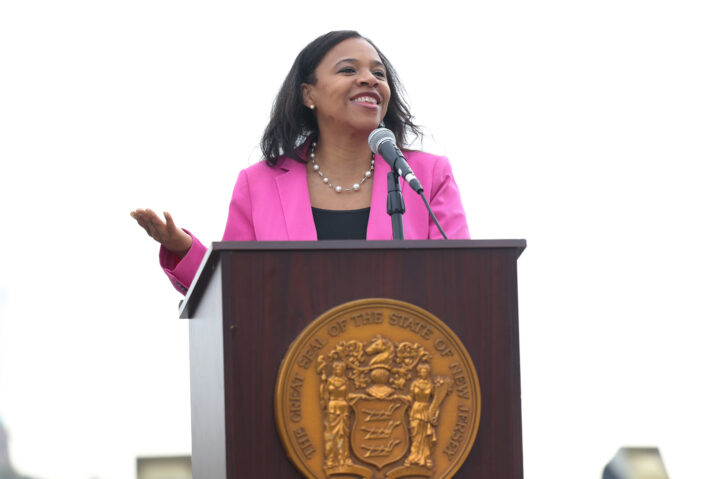
New Jersey Lt. Gov. Tahesha L. Way, speaks during a Naturalization Ceremony at Liberty State Park on September 17, 2024 in Jersey City, New Jersey.
Two Democratic candidates running in the crowded special election to replace New Jersey Gov.-elect Mikie Sherrill, including the state’s current secretary of state and lieutenant governor, criticized the state Assembly for failing to pass legislation codifying the International Holocaust Remembrance Alliance’s working definition of antisemitism.
Their comments came during a virtual forum hosted by the Jewish Democratic Council of America on Tuesday evening with most of the candidates in the race for the northern New Jersey House district, though some including Essex County Commissioner Brendan Gill, the likely front-runner, were missing; Gill was expected to join but organizers said he had unexpected family obligations.
“I, too, take offense that my own state did not adopt IHRA, and I will definitely move this forward as your congresswoman,” New Jersey’s lieutenant governor and secretary of state, Tahesha Way, said.
Multiple sources blamed the state’s governor and other senior Democratic officials for killing the bill due to concerns about political blowback from progressives targeting Democratic lawmakers who would vote for it.
Way issued a statement expressing similar support last week after the legislation failed to move forward in the legislature. “As we witness an alarming rise in antisemitism across our country, we must be unequivocal: hate has no place in our society. I will always stand by the Jewish community, and I support legislation adopting the International Holocaust Remembrance Alliance’s working definition of antisemitism in the New Jersey Assembly and will wholeheartedly support similar federal legislation if elected to Congress.”
Candidate Jeff Grayzel, the deputy mayor of Morris Township and a local Jewish leader who testified before the New Jersey Assembly in support of the bill, also expressed frustration that the legislation had failed, when similar legislation has passed in a majority of states.
“It is pathetic that in the state with the fourth largest Jewish population in the United States, we don’t have that,” Grayzel said.
In addition to her comments on the IHRA legislation, Way also emphasized her work with the New Jersey-Israel Commission, which falls under her purview as secretary of state, to address campus antisemitism, and said she would back efforts to “streamline access” to Nonprofit Security Grant Program funding.
She said that her trip with an American Jewish Committee delegation to Israel in 2019 “really underscored … the strong alliance between the U.S. and Israel,” and emphasized the need to rebuild Gaza without Hamas and to expand the Abraham Accords, as well as pursue a two-state solution.
Former Rep. Tom Malinowski (D-NJ), viewed as another top contender in the field, said that leaders need to police antisemitism on their own sides, while arguing that the far left “hates our leadership” and that the far right leads the GOP. He also called for proper resources and funding to combat domestic extremism, an effort he said is being undermined by shifting federal resources to immigration enforcement, and called for regulation of social media.
He said that he had a “perfect pro-Israel voting record in Congress as a pro-Israel Democrat,” while accusing Israeli Prime Minister Benjamin Netanyahu of dragging the war in Gaza out for his own interests, and calling for more pressure on both sides to continue the ceasefire agreement.
Grayzel, in his opening statement, described himself as a “proud Jew and a proud Zionist” and declared unequivocally that “anti-Zionism is antisemitism,” adding that he is running for Congress in part to stand up for the Jewish people.
He pushed back on suggestions from a fellow candidate that Israel is depriving members of its Arab population of equal rights, and emphasized his support for unconditional aid to the Jewish state.
Passaic County Commissioner John Bartlett noted that he had spent a year living in Israel studying at Hebrew University, experiencing the daily security threats that Israelis face. He said that he supports the continued U.S.-Israel relationship and rejected “arbitrary distinctions between offensive and defensive weapons.”
“I recognize the relationship between the United States and Israel as fundamental and rooted in shared democratic values. I’ve also heard loud and clear from you, your kids and your rabbis that families need to feel safe right here in New Jersey again. You can count on me to be a consistent and outspoken ally in Congress,” Bartlett said.
He also condemned those who are targeting the Jewish community over political differences with Israel, and said that he supports the IHRA working definition and the Antisemitism Awareness Act.
Army veteran and venture capitalist Zach Beecher noted that his wife is Jewish and they are raising their son Jewish, and highlighting his experience in combat in the Middle East. He called for expanded NSGP funding and greater Holocaust education.
He said he “categorically support[s] security assistance and the right of Israel to defend itself” following the Oct. 7, 2023, Hamas attacks on Israel.
Other candidates took a more hesitant stance toward support for Israel while expressing support for its right to exist.
Analilia Mejia, who leads a progressive advocacy group, said, “Israel has the responsibility to ensure freedom for all those who live within it,” and said U.S. funding should go “towards peace” and defensive systems “and not bombs.”
Community advocate Anna Lee Williams said, “I’m someone who really promotes peacebuilding and long-term diplomatic strategies so that we can properly support that. I think that’s the main thing — I just want to move forward in terms of, how do we use our partnership to value human rights and make sure that we are holding the Israeli government accountable when they are hurting people.”
Attorney J-L Cauvin, who has gone viral for his impersonations of President Donald Trump, said Netanyahu is “something of a monster,” and had “spit in the face of Joe Biden and is dragging America’s moral authority through the gutter.” Cauvin said that he wants to see less U.S. aid flowing to Israel.
On antisemitism, Cauvin highlighted his own experience with discrimination as the son of an immigrant and as a mixed-race person, arguing that he knows “how to fight it probably better than most people in this race.” He said that he had personally broken with a friend over his “disgusting” reaction to Oct. 7. He largely blamed Trump for the rise in antisemitism, saying he had given a “license to discriminate and speak horribly.”
Williams said her longtime partner is Jewish, and that they have had conversations about the fear that the Jewish community is feeling. She called for steps to make the Jewish community feel safe, to combat antisemitism online and in AI and to improve education.
Throughout the event, several of the candidates described the Trump administration’s policies, particularly its deportation efforts, as fascist and drew comparisons to the Nazi regime.
Grayzel said that the Jewish community “knows where fascism leads. We have an experience of what happened in Germany, and what happened in Minnesota last week is the next step in that fascist process,” referring to the killing of a woman by an Immigration and Customs Enforcement officer.
“We all know how the Nazis terrorized Jews in Germany, and ICE is now terrorizing our immigrants here in this country,” Grayzel said. “But I am so scared, so, so scared as a Jew of where this country is headed and how ICE is treating people and terrorizing them. It absolutely needs to stop.”
Malinowski agreed, describing the ICE arrests as “proto-fascist operations that we’re seeing on our street.”
Williams said, of recent ICE raids, “For those of us who are part of the Jewish community, and for anyone who studies history, alarm bells should be going off.”
Beecher alleged that a slogan displayed behind Homeland Security Secretary Kristi Noem at a news event this week echoed SS rhetoric, a characterization disputed by historians.
Jordan Wood, now running to succeed Rep. Jared Golden, said he won’t take money from AIPAC in his newly launched House campaign
Campaign website
Jordan Wood
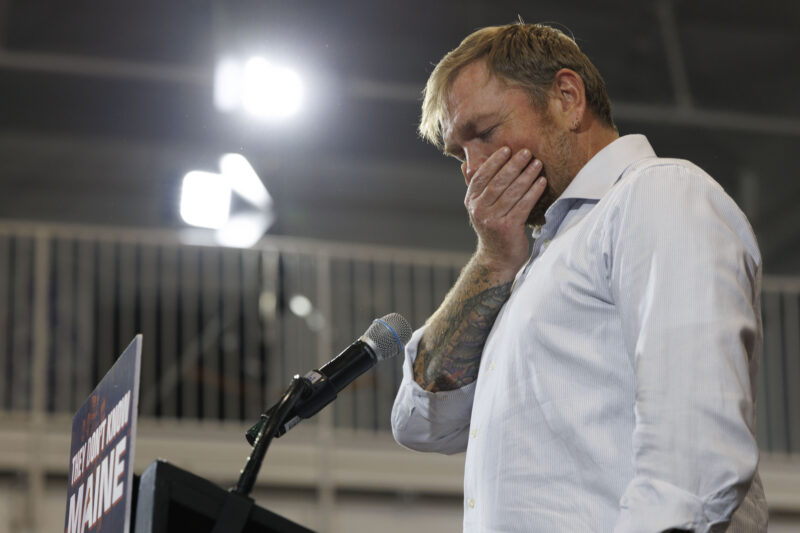
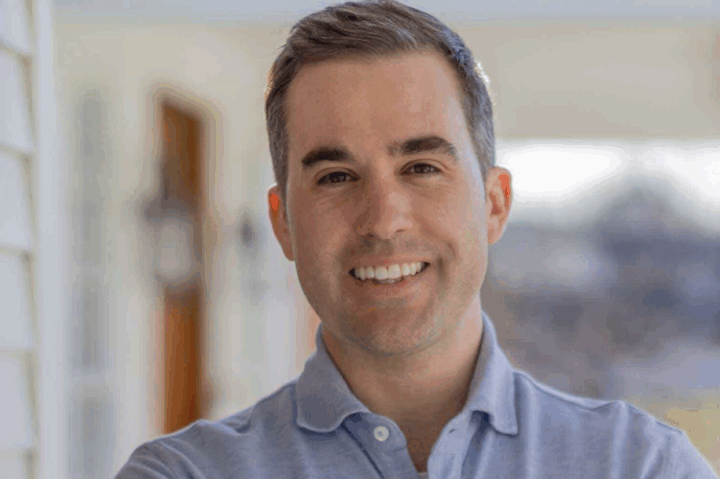
Jordan Wood, a Maine Democrat who dropped his Senate bid on Wednesday to run for the seat held by retiring Rep. Jared Golden (D-ME), said in a recent podcast interview that he would reject contributions from AIPAC, the pro-Israel advocacy group, joining a growing crop of Democratic candidates who have made similar pledges.
In the conversation with Kaivan Shroff, a Democratic activist, released last week, Wood pointed to what he called “a tremendous amount of distrust right now among Democratic primary voters that the money that AIPAC has put into our political system has affected our priorities when it comes to foreign aid to Israel.”
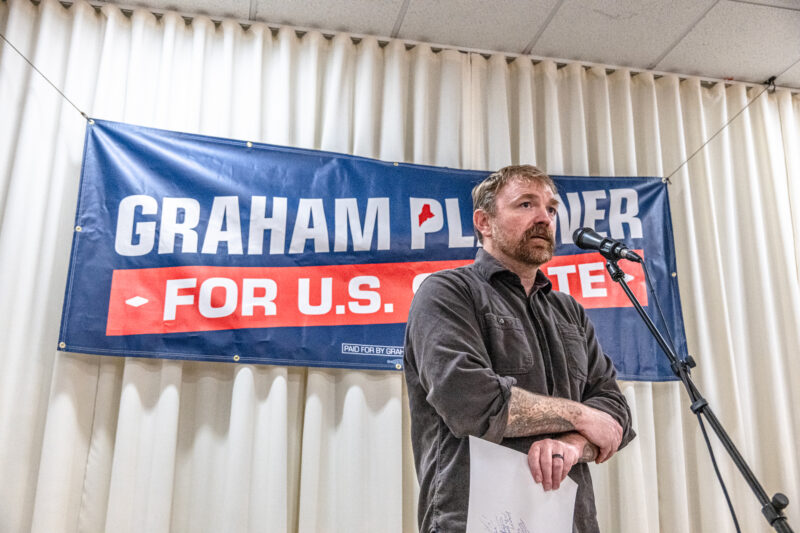
Graham Platner, a leading far-left candidate in the Democratic Senate primary facing Maine Gov. Janet Mills, has been a particularly hostile critic of AIPAC, which he has made a central focus of his anti-Israel messaging.
In a statement to Jewish Insider, Wood clarified that he does not “take money from AIPAC for the same reason I don’t take money from corporate PACs or lobbyists — because it guarantees voters trust that my policy positions and votes in Congress are not influenced by any campaign contributions.”
A spokesperson for AIPAC, Marshall Wittmann, dismissed that logic. “It’s outrageous to discriminate against pro-Israel Americans,” he said in a sharply worded statement to JI. “Ostracizing and making false accusations about fellow citizens’ democratic engagement to strengthen the U.S.-Israel partnership is contrary to American values and interests.”
“Our six million members will not be deterred by anti-Israel extremists, and their voices will be heard in the 2026 elections,” Wittmann said.
During the podcast interview, Wood stated that, even as he pulls away from AIPAC, “I do also still support aid to Israel,” albeit alongside “conditions on the continuation” of U.S. assistance, including “restrictions on offensive military weapons” to the Jewish state.
Wood, a former congressional staffer who was trailing his rivals in what has increasingly solidified into a two-person Senate race, declared on Wednesday that he was jumping into the open primary to succeed Golden, a moderate Democrat who has represented a GOP-leaning district for three consecutive terms.
The congressman said last week he would not seek reelection, writing he had “grown tired of the increasing incivility and plain nastiness” of American politics and that he and his family had faced “frequent threats” that ultimately contributed to his decision.
Golden, a retired Marine, has been a dependably pro-Israel voice in the House and was endorsed by AIPAC before he announced he was stepping down.
“With Jared not running, it leaves open one of the most competitive House races in the entire country, and so I’m stepping up to take that on,” Wood said on Wednesday.
Matt Dunlap, the Maine state auditor, was already challenging Golden from the left before Wood, who embraced progressive stances as a Senate candidate, said he would enter the race.
The primary field is expected to grow in the coming weeks as other potential candidates are floated, including Troy Jackson, the former president of the Maine Senate currently running for governor, and Kirk Francis, chief of the Penobscot Nation.
The Democratic Congressional Campaign Committee, looking for more-moderate candidates in the field, is still recruiting even with Wood and Dunlap in the race, according to a source familiar with the matter.
Former Maine Gov. Paul LePage is the frontrunner for the Republican nomination in the swing district, which backed President Donald Trump by a double-digit margin in 2024.
The longtime democratic donor hosted a fundraiser for the former vice president at his Manhattan home
Jack Rosen with former Vice President Joe Biden
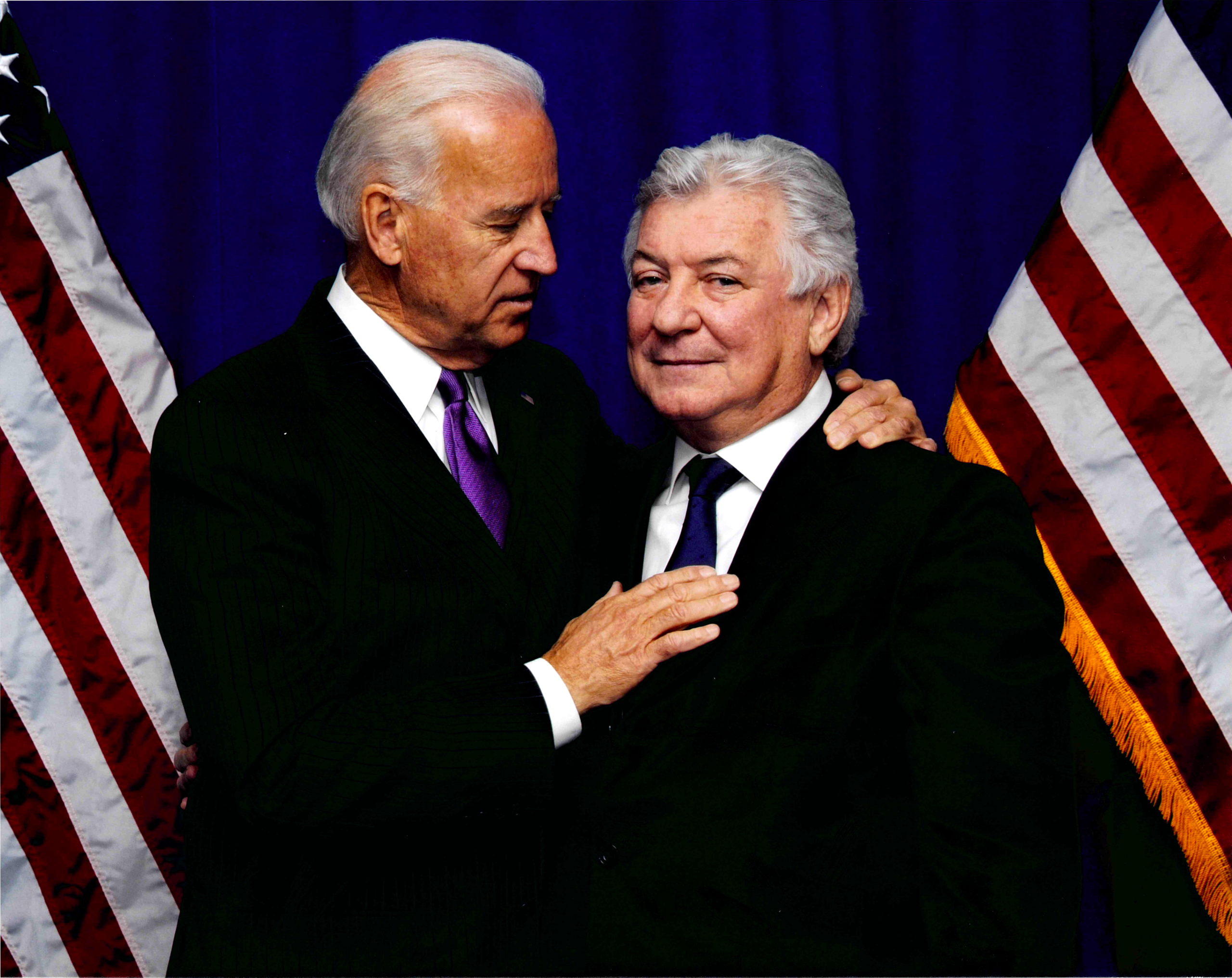
Jack Rosen, a longtime donor to Democratic candidates, hosted a fundraiser for former Vice President Joe Biden at his Upper East Side home in Manhattan on Thursday.
Rosen, currently the president of the American Jewish Congress, told Jewish Insider in a phone interview that — in addition to his decades-long friendship with Biden — the Democratic frontrunner’s years of experience and consistent support for Israel make him the right choice for president amid “challenging times” for the U.S. and Israel.
“We’re going through a difficult time in this country. It’s a difficult time in Israel,” said Rosen. “We know where [Biden] stands on issues critical to America, critical to the American Jewish community. We need someone experienced who understands the situation and knows Israel quite well. That matters in decisions that the president may have to make, and I trust his judgment.”
Rosen said he’s met with a number of presidential candidates in the past several months, and while he considers some of them personal friends and supporters of Israel, “this isn’t a time to take a risk. Now is not the time to experiment.”
During the Thursday evening fundraiser, Biden told attendees that he would make sure to “pull back together the international community” in rebuilding key tenets of the 2015 nuclear deal with Iran, according to a pool report provided by the Biden campaign.
Rosen told JI that he’s spoken to the former vice president about the nuclear deal and expressed his opinion that he doesn’t think the 2020 hopefuls “could be taken seriously by just checking a box and say[ing], ‘we’re going to go back to the same deal.’”
The longtime donor said he doesn’t believe “it’s a serious position to say we will automatically trigger going back to the nuclear deal. It’s not realistic.” Rosen said he told Biden that President Donald Trump’s Iran policies — which have included increased sanctions on Tehran and attempts to seize Iranian tankers believed to be in violation of European Union sanctions — “might provide an opportunity to improve the deal” in 2021, and that he trusts his judgement in how to best proceed on the matter.
Rosen also sees a difference between Biden and former President Barack Obama with regard to Israel. “[Biden] has a long history of support for Israel. He has his own point of view,” Rosen explained. “I never heard him say anything that would make me believe he’d follow [former Secretary of State John] Kerry’s method of finding a resolution to the Palestinian problem.”
“He’s never said to me that he would use the U.N. as a tool to force Israel into a position, which President Obama did,” Rosen continued. “I haven’t heard those things from Joe Biden. You know, he was the vice president at the time. But I think I trust that he’s got a balanced view.”
In terms of maintaining a warm relationship with Israeli Prime Minister Benjamin Netanyahu, Rosen predicted: “Assuming that Netanyahu gets reelected, I don’t think that there would be any kind of cracks in the friendship and support between Israel and America with Joe Biden as president.”
Please log in if you already have a subscription, or subscribe to access the latest updates.
 Continue with Google
 Continue with Apple