
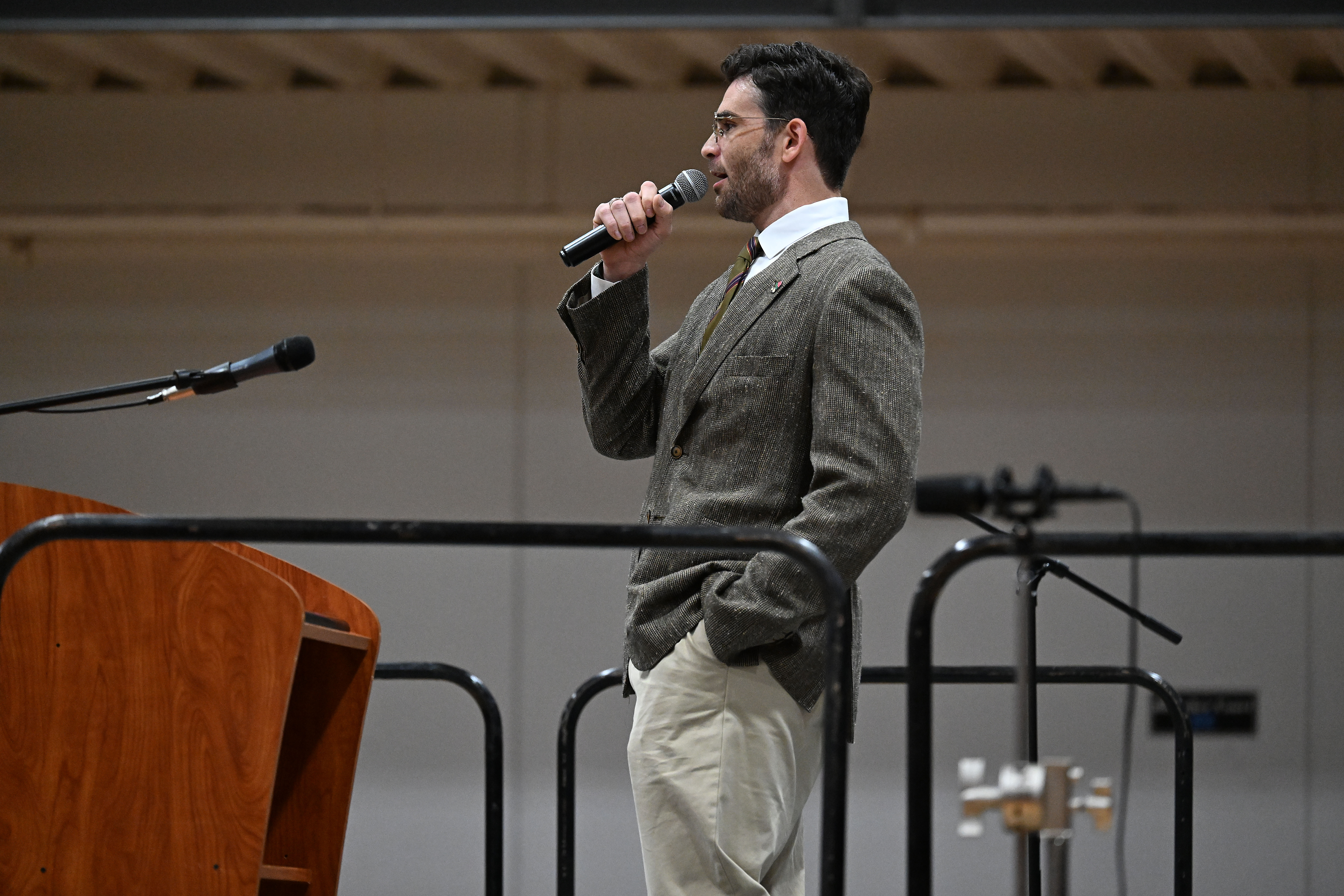
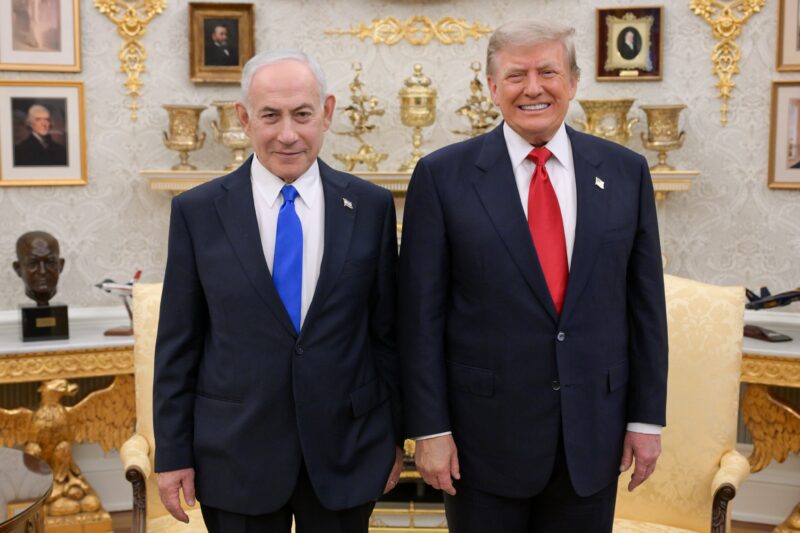










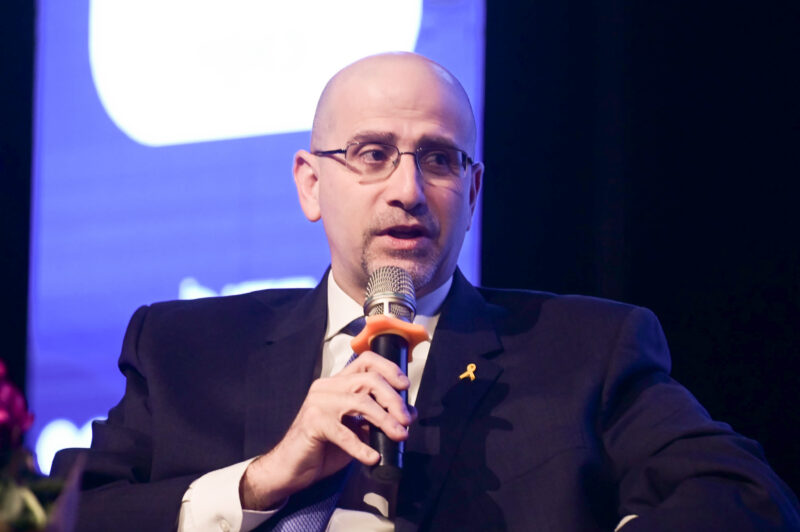





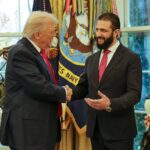


Dermer may well be the point person tasked to smooth over the differences that are likely to come up between Netanyahu and Trump
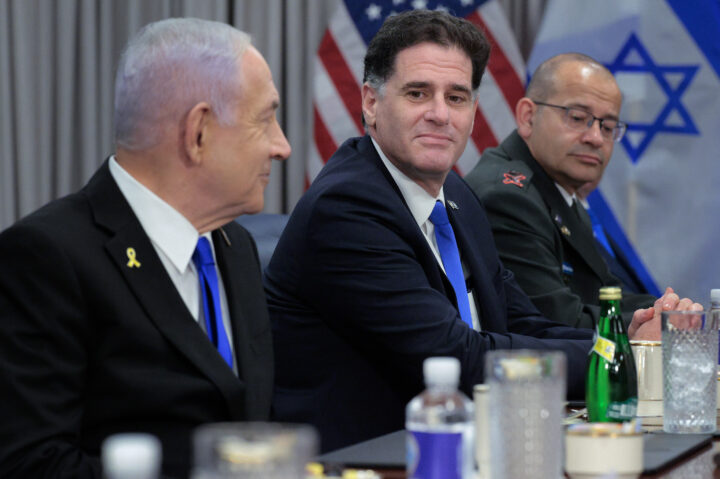
Chip Somodevilla/Getty Images
Israeli Prime Minister Benjamin Netanyahu (L) is joined by Israeli Minister of Strategic Affairs Ron Dermer and other officials for a meeting with U.S. Secretary of Defense Pete Hegseth at the Pentagon on July 09, 2025 in Arlington, Virginia.


 Add JewishInsider on Google
When Israel and the U.S. launched their first strikes on Iran, Ron Dermer was in Australia, about as far as one could get from the Israeli Prime Minister’s Office in Jerusalem or the Defense Ministry in Tel Aviv. He soon found himself, like many other Israelis wanting to get home from abroad, on a plane to Taba, Egypt, from which point he would cross back into Israel, where airspace remains restricted.
Since November, when he resigned from his official post as strategic affairs minister, Dermer has spent most of his time traveling for speaking engagements. But now, two sources with knowledge of the matter confirmed to Jewish Insider, Dermer is back again in public service.
He may not have an official title, but he is doing what he has done for the previous three years — serving as Israeli Prime Minister Benjamin Netanyahu’s closest and most trusted advisor. Israel’s Walla News quoted a source in the Prime Minister’s Office who said Dermer was reporting for “reserve duty,” like over 100,000 other Israelis since the outset of the war with Iran.
Netanyahu and Dermer’s relationship has been so close for the past 26 years that Dermer has been called the prime minister’s third son and nicknamed “Bibi’s brain.” With a very small inner circle and few advisors whom he truly trusts, Netanyahu views Dermer as a critical asset to his team at a time when the U.S. and Israel are making decisions that will determine the future of the Middle East for years to come.
Dermer is also known as having a good relationship with the Trump administration, and has reportedly been taking part in Netanyahu’s nightly calls with President Donald Trump.
Those relationships have served Dermer well. When Trump presented his 20-point plan to end the war in Gaza last September, he repeatedly said, “Right, Ron?” addressing his remarks to Dermer, who was sitting in the front row.
Trump and Netanyahu have been remarkably in sync since the war began on Feb. 28. But some cracks are beginning to show: After the IDF bombed an Iranian fuel depot earlier this week, Trump administration sources leaked that they thought Israel went too far.
Trump has sent mixed messages about the expected duration of the war, saying on Monday that it is “very complete,” but also “could go further,” while Netanyahu said on Saturday night, “We are continuing with full force.”
Dermer may well be the point person tasked to smooth over the differences that are likely to come up between the leaders. Netanyahu is counting on it.
Plus, Trump says Iran operation 'very complete'
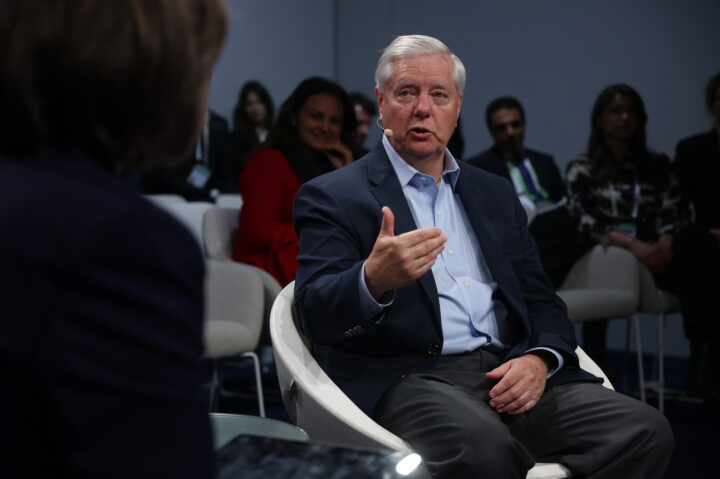
Sean Gallup/Getty Images
Sen. Lindsey Graham (R-SC) speaks at the 62nd Munich Security Conference on February 13, 2026 in Munich, Germany.
This P.M. edition is reserved for our premium subscribers — offering a forward-focused read on what we’re tracking now and what’s coming next. Please don’t hesitate to share your thoughts and feedback by replying to this email.
📡On Our Radar
Notable developments and interesting tidbits we’re tracking
President Donald Trump praised Australian Prime Minister Anthony Albanese for assisting the members of Iran’s women’s soccer team, who are in Australia competing in the Women’s Asian Cup, amid fears for their persecution should they be forced to return home.
The president had called for Albanese to grant the athletes political asylum, saying they would “most likely be killed” if they were repatriated to Iran, and later commended him for “doing a very good job having to do with this rather delicate situation,” with five athletes “already taken care of, and the rest are on their way”…
Trump disputed reports that the U.S. is preparing to deploy ground troops to secure nuclear material at the Isfahan enrichment site in Iran, telling the New York Post, “We haven’t made any decision on that. We’re nowhere near it.” He also told CBS News that “the war is very complete, pretty much,” and the U.S. is “very far” ahead of his initial four-to-five-week timeline…
Trump has communicated to aides that he would support the assassination of Mojtaba Khamenei, Iran’s new supreme leader, if Khamenei does not acquiesce to U.S. demands, including ending Iran’s nuclear program, U.S. officials told The Wall Street Journal…
The Lebanese government has requested direct negotiations with Israel, sending the message through U.S. Ambassador to Turkey Tom Barrack, Axios reports. Washington and Jerusalem were reportedly skeptical about the idea, with Beirut thus far failing to disarm or rein in Hezbollah activities as the terror group continues to launch missiles into Israel…
NATO missile defense systems intercepted another Iranian missile heading for Turkey, a spokesperson announced today, the second time Iran has attempted to strike the NATO country’s territory…
Sen. Lindsey Graham (R-SC) threatened to impose “consequences” on Saudi Arabia for its unwillingness to join the U.S. campaign against Iran, as the U.S. evacuates its embassy in Riyadh and the kingdom continues to endure Iranian attacks, which have so far resulted in the deaths of two civilians and one U.S. servicemember. “Question — why should America do a defense agreement with a country like the Kingdom of Saudi Arabia that is unwilling to join a fight of mutual interest?” Graham wrote on X…
Talks to advance Trump’s 20-point peace plan in Gaza, including the issue of Hamas’ disarmament, have been at a standstill during the campaign against Iran, Reuters reports, as Gulf countries that pledged funds to help rebuild the enclave have come under fire and flight disruptions have prevented mediators from traveling…
The criminal complaint filed in the Southern District of New York today against the two Pennsylvania men who allegedly hurled improvised explosive devices toward a protest against New York City Mayor Zohran Mamdani on Saturday stated that both men explicitly identified ISIS as their inspiration, Jewish Insider’s Will Bredderman reports.
“This isn’t a religion that just stands when people talk about the blessed name of the Prophet [Muhammad],” Emir Balat, 18, told police, according to the charging documents. He also said he had hoped to pull off something “even bigger” than the 2013 Boston Marathon bombing, which he noted had caused “only three deaths”…
The White House moved today to designate the Sudanese Muslim Brotherhood as a Specially Designated Global Terrorist entity and announced plans to impose a Foreign Terrorist Organization designation on March 16, JI’s Matthew Shea reports, in the Trump administration’s latest crackdown against Muslim Brotherhood affiliates…
A new poll from the campaign of Rushern Baker, former executive of Maryland’s Prince George’s County, found him leading the crowded Democratic field seeking to succeed retiring Rep. Steny Hoyer (D-MD). Though a plurality of likely primary voters (28%) said they’re still undecided, Baker polled at 22% compared to former U.S. Capitol Police officer Harry Dunn’s 15% and Hoyer-endorsed state Del. Adrian Boafo’s 3%…
Rep. Kevin Kiley of California officially switched his party affiliation from Republican to independent — he had filed for reelection as an independent, but said today he would leave the party for the rest of his term as well. The move narrows the GOP majority even further, 217-214, but Kiley said he’ll continue to caucus with Republicans, blunting the impact…
Politico looks at the flurry of independent candidates seeking to unseat congressional Republicans in GOP-leaning districts, clashing with local Democratic establishments in the process…
⏩ Tomorrow’s Agenda, Today
An early look at tomorrow’s storylines and schedule to keep you a step ahead
Keep an eye out in Jewish Insider — we’ll have a profile of Dario Amodei, the Jewish CEO of Anthropic, which sued the Pentagon today over its decision to label the AI company a “supply chain risk.”
The Senate Armed Services Committee is expected to receive a classified briefing on the status of the U.S. and Israeli campaign against Iran.
The Republican Jewish Coalition and conservative magazine National Review will hold a daylong symposium on antisemitism, with remarks from Sens. Jim Banks (R-IN), Tom Cotton (R-AR) and Ted Cruz (R-TX); Noah Pollak, senior advisor at the Department of Education; Kenneth Marcus, founder of the Louis D. Brandeis Center for Human Rights Under Law; Rabbi Yehuda Kaploun, the State Department’s antisemitism envoy; Leo Terrell, senior counsel to the assistant attorney general for civil rights; and Texas Lt. Gov. Dan Patrick.
Georgia’s 14th Congressional District will hold its special election to fill the seat vacated by Rep. Marjorie Taylor Greene (R-GA), with more than a dozen candidates on the all-party ballot. The district leans strongly Republican but the GOP field is split among nine candidates, raising the possibility that the Democratic front-runner — retired Army Brig. Gen. Shawn Harris — could slip into the April runoff.
Stories You May Have Missed
SCOOP
Zohran Mamdani’s wife liked social media posts celebrating Oct. 7 attacks
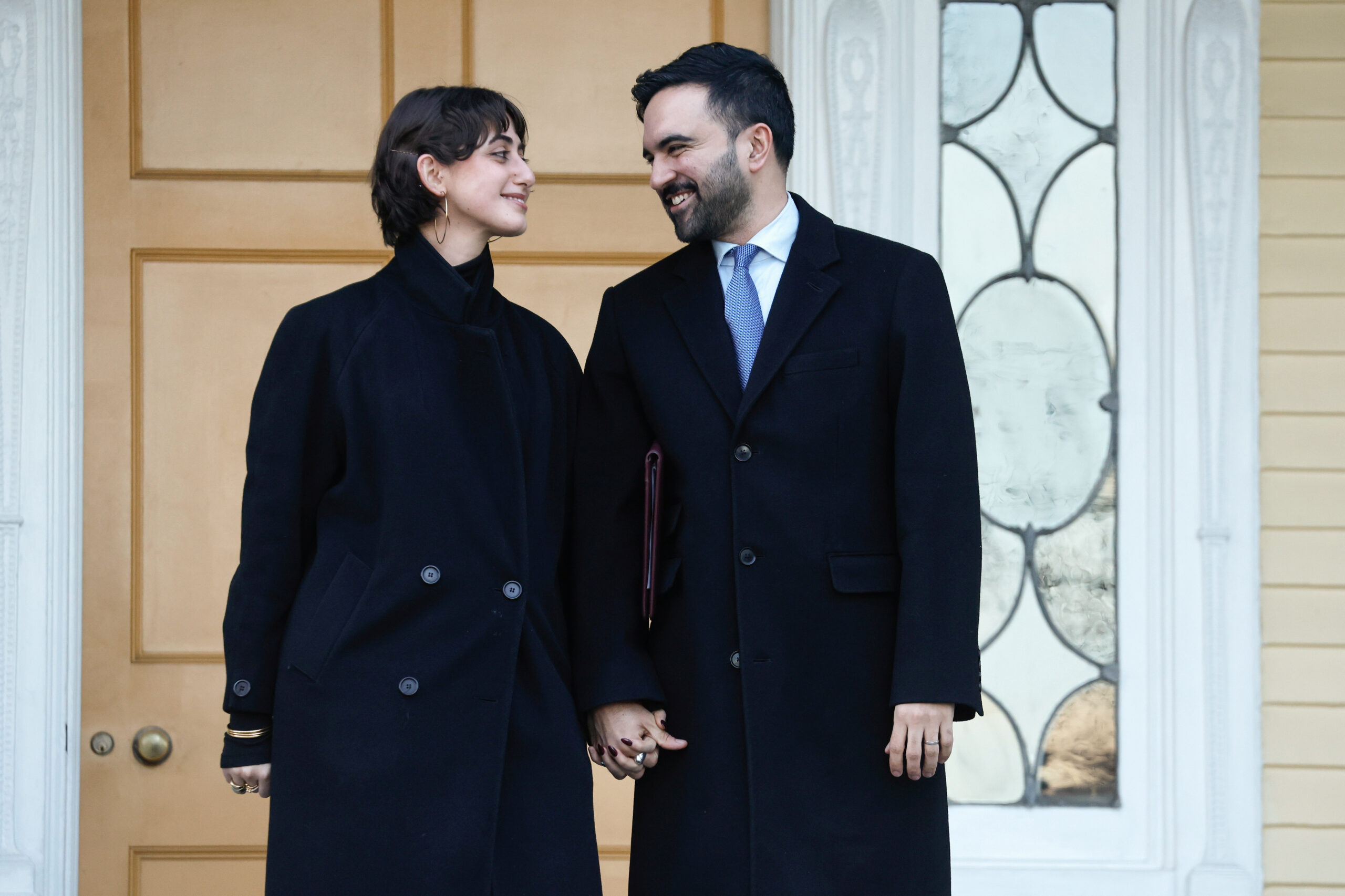
NYC First Lady Rama Duwaji showed support for far-left orgs applauding Hamas rampage
POWER PLAYER
The progressive operative nudging Democrats toward a hostile line on Israel
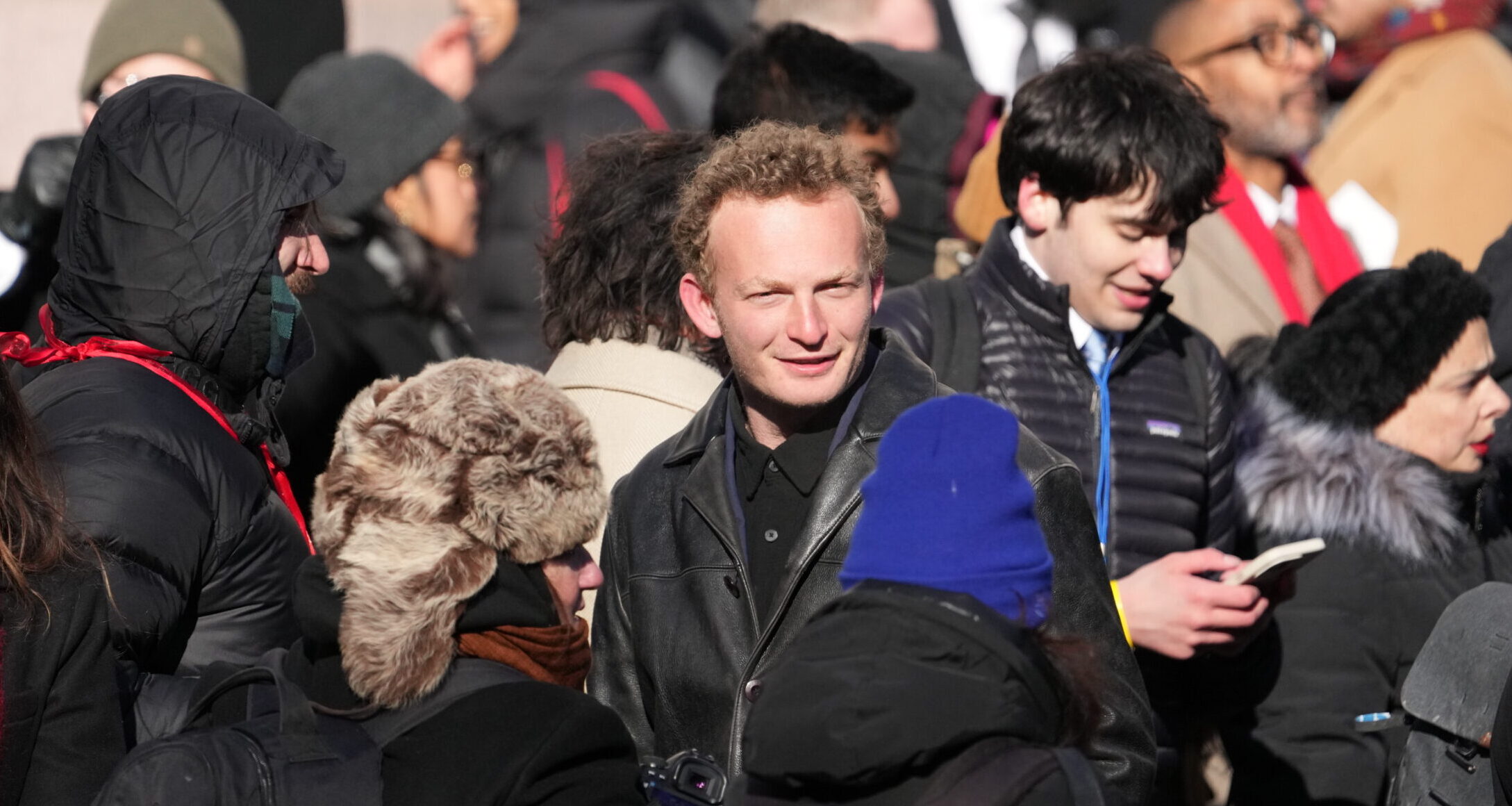
Ad maker Morris Katz has been instrumental in elevating Israel antagonists into office as part of a move to reshape the Democratic Party
Canada and Australia immediately offered support; European leaders signaled changing views amid Iran’s indiscriminate attacks in the region
Kay Nietfeld/picture alliance via Getty Images
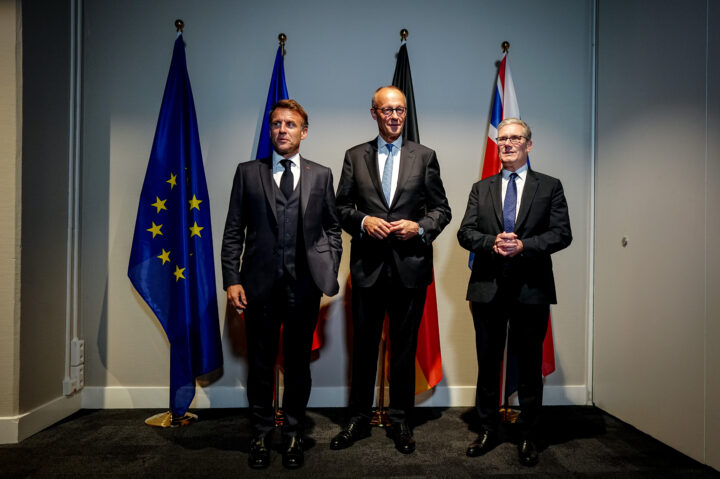
French President Emmanuel Macron (l-r), German Chancellor Friedrich Merz (CDU) and Keir Starmer, Prime Minister of Great Britain, meet in The Hague at the delegation hotel on the sidelines of the NATO summit for trilateral talks in the E3 format.
President Donald Trump’s decision to launch a military campaign against Iran has earned unexpected support from Western leaders who have otherwise sparred with Trump, particularly on trade policy. Canada and Australia, both of which are led by liberal parties, robustly backed the strikes that began on Saturday morning.
“We support the United States acting to prevent Iran from obtaining a nuclear weapon and to prevent Iran continuing to threaten international peace and security,” Australian Prime Minister Anthony Albanese said in a statement on Saturday.
Canadian Prime Minister Mark Carney, speaking to reporters during a trip to India, also threw his support behind the U.S.: “Canada supports the United States acting to prevent Iran from obtaining a nuclear weapon and to prevent its regime from further threatening international peace and security,” he said.
Meanwhile, three powerful European allies known as the E3 — France, Germany and the United Kingdom — were more circumspect after the military campaign began, with British Prime Minister Keir Starmer, French President Emmanuel Macron and German Chancellor Friedrich Merz calling on Saturday for nuclear negotiations to resume.
But by late Sunday, as Iran doubled down on its campaign of retaliation against American and Western assets across the Middle East, the E3 nations inched toward support for Washington with a statement strongly calling on Iran to cease its “indiscriminate and disproportionate missile attacks.”
“We call on Iran to stop these reckless attacks immediately. We will take steps to defend our interests and those of our allies in the region, potentially through enabling necessary and proportionate defensive action to destroy Iran’s capability to fire missiles and drones at their source,” the E3 leaders said. “We have agreed to work together with the U.S. and allies in the region on this matter.”
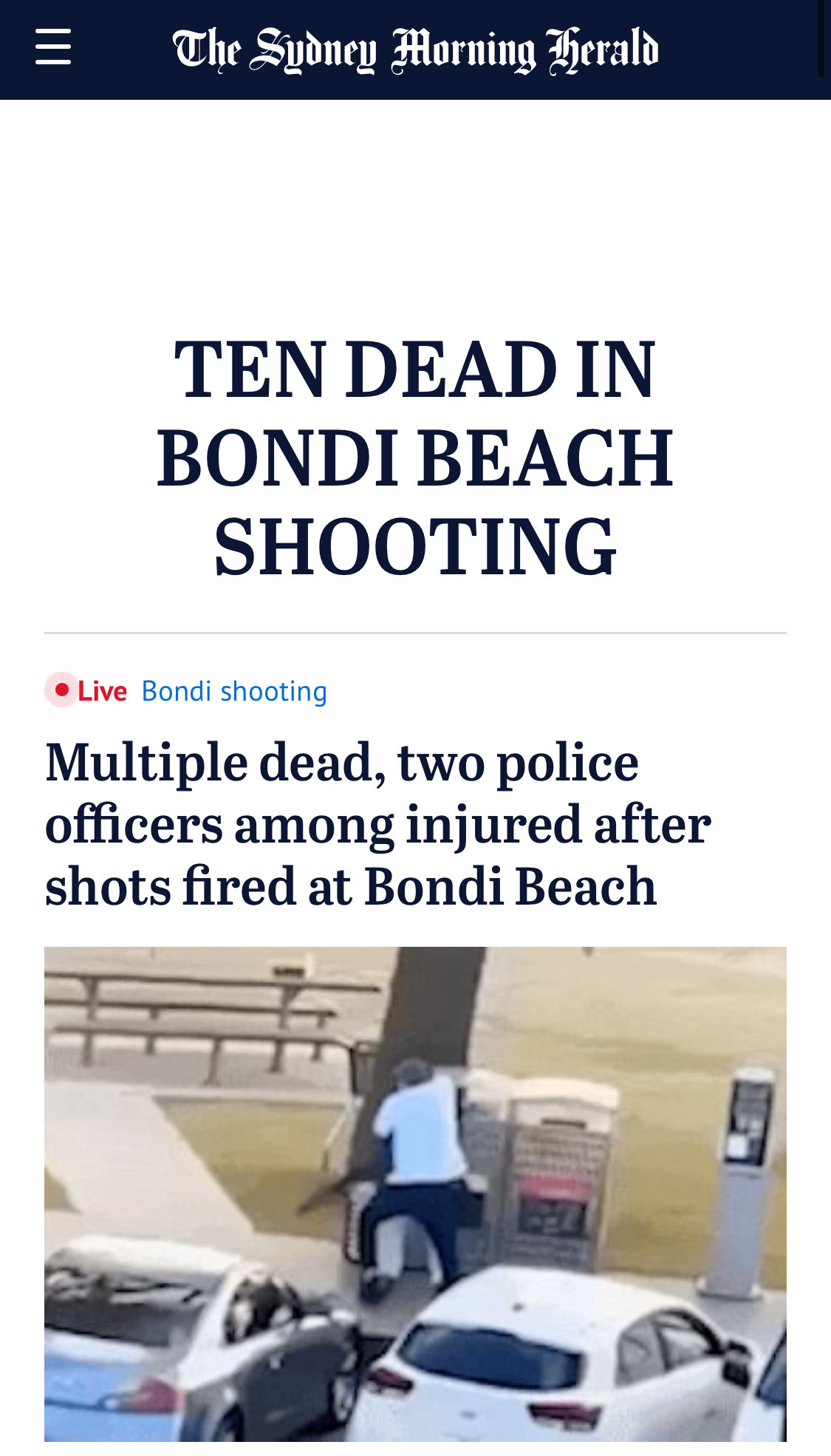
Rabbi Yehoram Ulman, the director of Bondi Beach’s Chabad, and Ahmed al Ahmed, the civilian who disarmed one of the gunmen, are visiting the U.S. this week
Nathan Posner/Anadolu via Getty Images
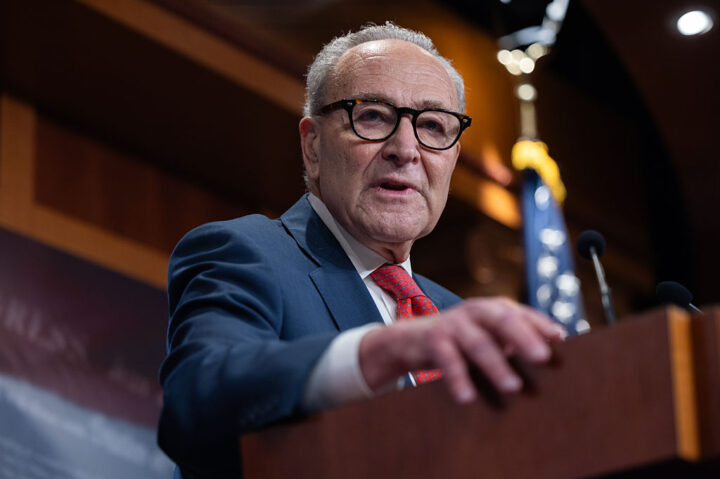
Senate Minority Leader Chuck Schumer (D-NY) speaks at a press conference following recent elections as the government shutdown continues in Washington, DC on November 5, 2025.
Senate Minority Leader Chuck Schumer (D-NY) will meet at the U.S. Capitol on Thursday morning with two survivors of the deadly terrorist attack during a Hanukkah celebration at Bondi Beach in Sydney, Australia, Jewish Insider has learned.
The two survivors are Rabbi Yehoram Ulman, director of Chabad-Lubavitch of Bondi, and Ahmed al Ahmed, the civilian who tackled and disarmed one of the gunmen during the attack. Ulman hosted the Hanukkah event where 15 people were killed, including his son-in-law, Rabbi Eli Schlanger.
Australian Ambassador to the U.S. Kevin Rudd, the country’s former two-term prime minister, will also be in attendance.
A source familiar with the matter told JI that the Senate minority leader will “listen to their stories and discuss the work that he and the Australian government are doing respectively to combat antisemitism.”
Ulman and al Ahmed are currently in the U.S. together for a joint trip. Ulman brought al Ahmed to Queens, N.Y., on Tuesday to pray together and pay respects at the gravesite of the Lubavitcher rebbe. Ulman said the trip was an opportunity for the American Jewish community to express their gratitude to al Ahmed, a Syrian-born Muslim, for his heroic actions last month.
“Ahmed did what he did that day because he believed that God placed him at the scene for a reason, and that’s what gave him the strength to save lives,” Ulman said from the gravesite. “This is something people from all walks of life can and must learn from.”
Al Ahmed suffered two gunshot wounds while taking down one of the two gunmen during the Hanukkah massacre, which also left more than 40 people injured, later undergoing a successful surgery.
Ted Deutch praised Sen. Ted Cruz as a particularly powerful voice standing up to the ‘horrific’ antisemitic conspiracy theories spread by right-wing extremists

Celal Gunes/Anadolu via Getty Images
Ted Deutch, CEO of the American Jewish Committee, testifies about 'The Crisis on Campus: Antisemitism, Radical Faculty, and the Failure of University Leadership" during a US House Committee on Ways and Means hearing on Capitol Hill in Washington, DC, on June 13, 2024.
Following the terrorist attack at a Sydney, Australia, Hanukkah event in which 15 people were killed, American Jewish Committee CEO Ted Deutch said that it is critical for Jewish communal organizations to join together around a campaign to protect the Jewish community worldwide and win over allies in that fight.
“The community organizations need to come together around an immediate effort to respond to Bondi Beach. This is urgent for us,” Deutch said. Even if various groups have different approaches to their work, “we’ve got to show the Jewish world” and the philanthropists who back them “that we can actually work together, all of us, in ways that will protect the Jewish community in response to what happened at Bondi Beach.”
He said all Jewish community organizations need to come together on “one campaign right now that seeks to help secure the Jewish community, to help the world better understand the Jewish community, to enlist allies in this fight, and to help everyone understand why fighting antisemitism is not just the right thing to do, but it is in everyone’s self interest, because our society will be strengthened as a result.”
And he said that the Jewish community needs to stand its ground and be clear that it has the right and expectation to have its concerns and security “treated as seriously as other communities” and the “expectation that when we’re at risk, there will be action, rather than asking that everyone please consider our plight.”
“We are a proud community that has experienced challenges for thousands of years. We’re not going anywhere. If you’re not going to take this seriously, then we’re going to keep ramping up the pressure until you do,” Deutch said. “We can’t just go from one of these tragedies to the next. At other moments in American history with rising antisemitism, the community came together in ways that forced policymakers to acknowledge what we’re going through. This is one of those moments.”
He said he’s begun reaching out to colleagues on the subject.
Deutch said that he sees a level of unified horror, “passion” and “resolve” following the Bondi Beach attack akin to that he saw after the Oct. 7, 2023, attacks on Israel, and said that the community and organizational leadership need to build on that.
He said it’s critical to make clear to non-Jews that the fear and horror they felt at the footage of the Sydney shooting is “what we think about every single day as a community” and whenever Jews gather together.
Asked how those efforts will be more successful and more durable than similar calls seen repeatedly since Oct. 7, Deutch responded, “because we have to.”
“One coordinated campaign … isn’t going to solve the thousands of years of antisemitism but it will help us in this moment and it will show that the Jewish community can actually work together on one effort in a meaningful way, which is what members of the Jewish community everywhere in America are desperate to see,” Deutch continued.
The AJC CEO said that lawmakers and leaders have a responsibility to mind their rhetoric, emphasizing that the Bondi attack has shown “yet again” that rhetoric can prompt violence against the Jewish community.
“The need for them to ratchet down the rhetoric, to focus on the dangers that spreading antisemitism and polarization is having on society, is something that they can do without passing legislation. That needs to be an ongoing topic of conversation,” Deutch said. “They need to lead by example.”
Deutch, a former Democratic member of Congress, said that antisemitic actors on both sides of the political aisle have “not been marginalized” in the way that they should be. He said he’d “like to see more from leaders across politics and throughout the country and in every part of our society.”
Calls to “globalize the intifada” and “casual accusations of genocide” lead people to “taking action against anyone they think is responsible,” Deutch said, pointing to the Capital Jewish Museum attack in which two Israeli Embassy staffers were killed outside an AJC event in Washington, perpetrated by an alleged shooter who witnesses said shouted that he had carried out the shooting in the name of Gaza and freeing Palestine.
“What the leaders need to understand in Australia and around the world is, this has always been about terrorism,” Deutch said. “It’s terrorism against the Jewish community. These are attacks against the Jewish community to terrorize us, to put us at risk. The motives have been clear throughout.”
Referencing comments from Democratic Party Chair Ken Martin calling the party a “big tent,” Deutch said that “both parties may claim to be big tents” but have the ability to decide “who’s in the tent and who’s outside of the tent.” He said that anyone targeting Jews should be excluded, regardless of which side they’re on.
Deutch praised Sen. Ted Cruz (R-TX) as a particularly powerful voice standing up to the “horrific” antisemitic conspiracy theories spread by far-right voices like Tucker Carlson, Candace Owens and Nick Fuentes, calling him a “model” for other leaders.
“There has to be an acknowledgement in both parties that there will be no place for that, for those kinds of voices,” Deutch said.
He expressed frustration with Australian Prime Minister Anthony Albanese and the Australian government’s response to the Sydney attack, which he said has ignored and de-emphasized the fact that the attack targeted Jews.
He also highlighted Canberra’s failure to fully implement the recommendations of its own antisemitism envoy, which were presented over the summer, saying Albanese should have made such a commitment immediately after the attack.
“What the leaders need to understand in Australia and around the world is, this has always been about terrorism,” Deutch said. “It’s terrorism against the Jewish community. These are attacks against the Jewish community to terrorize us, to put us at risk. The motives have been clear throughout.”
Earlier in the year, Deutch had offered a mixed response to the administration’s efforts to combat antisemitism, particularly on college campuses. In the months since, those efforts have mostly fallen out of the headlines. But Deutch largely praised the administration’s ongoing efforts and the “serious way they’re approaching these issues.”
Of Assistant Attorney General for Civil Rights Harmeet Dhillon’s work on antisemitism, he said, “the way that she’s approaching this fight is serious and thoughtful and aggressive and that’s the way that every part of the administration should be approaching it.”
“When protesters come and stand and march and scream outside of a synagogue, it’s clear that there’s not a question of why they’re doing this. It’s antisemitism and the idea that every, every Jew is to be held responsible for whatever ills they see in Israel,” Deutch said. “It all starts with this fundamental belief that, just as it’s true for Christians and for Muslims and for Hindus and for everyone else: Jews should not be afraid simply for gathering together.”
Deutch recently sent a letter to Dhillon urging her to investigate whether there is coordination or foreign involvement in recent synagogue attacks across the country, and to enforce applicable laws to ensure access to religious institutions.
He said that AJC is open to working with the administration and supporting legislation, if necessary, to ensure that blocking access to a religious institution is banned — even if the institution is not hosting a religious service, currently a gray area in existing law.
“When protesters come and stand and march and scream outside of a synagogue, it’s clear that there’s not a question of why they’re doing this. It’s antisemitism and the idea that every, every Jew is to be held responsible for whatever ills they see in Israel,” Deutch said. “It all starts with this fundamental belief that, just as it’s true for Christians and for Muslims and for Hindus and for everyone else: Jews should not be afraid simply for gathering together.”
Deutch said that the Department of Education has made “significant steps forward in working toward a real plan” that he hopes the administration will put into effect. And he praised Justice Department senior counsel Leo Terrell for his efforts as well.
Looking at the year in retrospect, Deutch said that it brought many unexpected developments in the foreign policy realm, especially the strikes against Iran’s nuclear facilities, Israel’s strengthened geopolitical position and the return of all but one of the hostages in Gaza.
“The administration’s leadership has been significant,” Deutch said. “The president’s decision about Iran and the president’s leadership on this peace plan have given us this opportunity to think about what comes next.”
He said the administration needs to continue to squeeze Qatar and Turkey to pressure Hamas to stand down and relinquish its arms, in accordance with the next stages of the ceasefire plan. He said key administration officials also need to stay focused on moving the plan ahead.
AJC has worked for decades to cultivate ties with the Gulf and pushed for greater regional integration and normalization. Asked about how he views the prospects for Saudi-Israeli normalization, Deutch said there have been some concerning developments, but said that the U.S. and other advocates “have to stick with this.” With progress on the peace plan, he said that movement toward normalization would also be possible, he argued.
Deutch also warned that, even after the 12-day war between Israel and Iran that included U.S. strikes on Iranian nuclear sites, the Islamic Republic continues to pose a threat through its international terrorism and plots against the Jewish community, its repression of its citizens, its continued desire to destroy Israel and its global efforts to foment conflict.
“Their desire to destroy Israel has not changed as a result of the strikes,” Deutch said. “So the advice to policymakers everywhere is Iran continues to be a threat, not just to Israel, but to the Jewish community around the world and more broadly beyond that, and they have to be treated that way. That requires being vigilant, both in the military context and through using economic force.”
While Israel did not have intelligence pointing specifically to Sunday’s attack, it had provided information to Canberra about threats to the Australian Jewish community
GIL COHEN-MAGEN/AFP via Getty Images
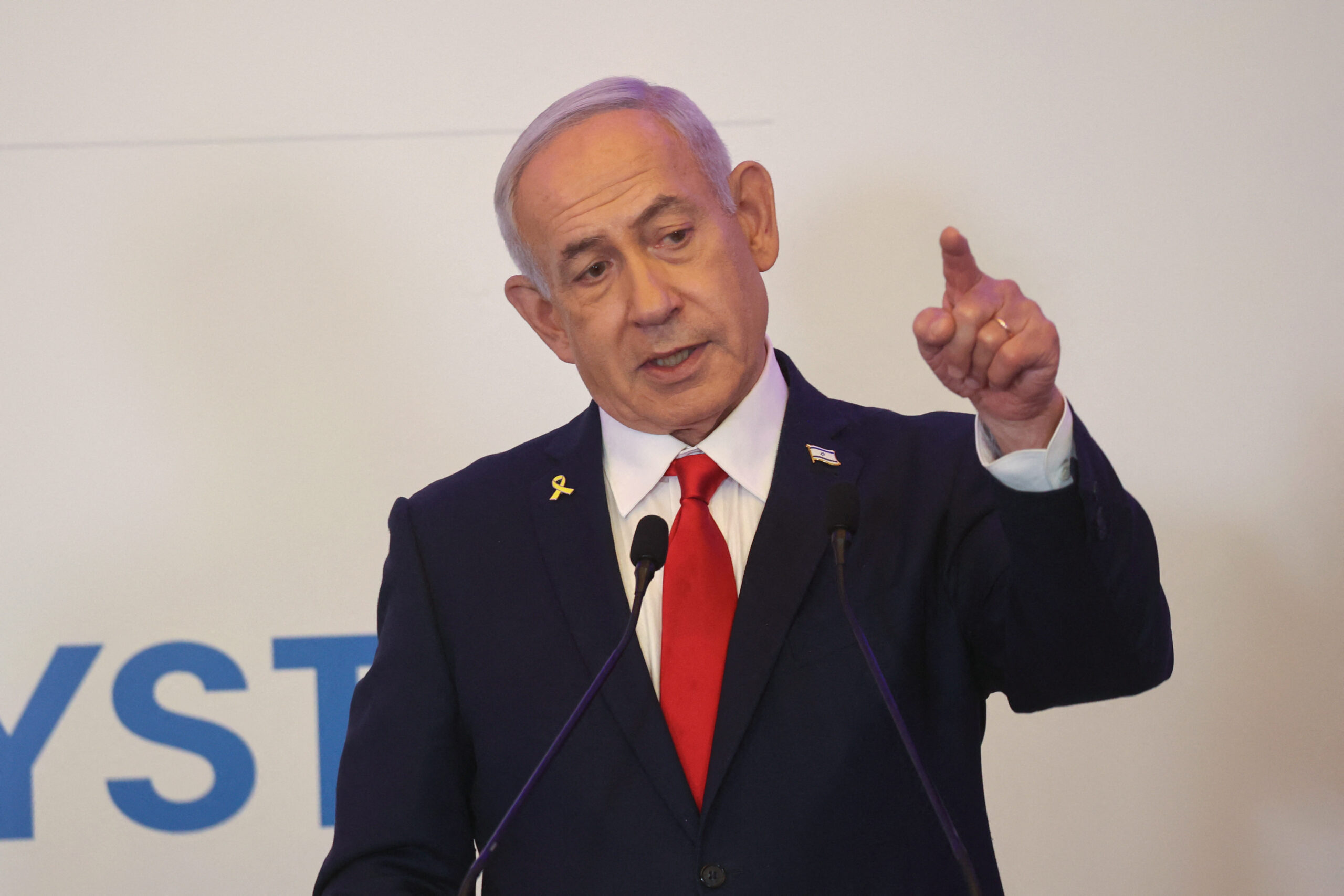
Israel's Prime Minister Benjamin Netanyahu speaks during an event at the Waldorf Astoria Hotel in Jerusalem on July 27, 2025.
In the wake of the deadly terrorist attack in Sydney, Australia, on Sunday in which 15 people were killed, Israel is imploring Western governments to heed its warnings about the potential for violent acts of antisemitism.
In a video statement on Tuesday, Israeli Prime Minister Benjamin Netanyahu said, “I demand that Western governments do what is necessary to fight antisemitism and provide the required safety and security for Jewish communities worldwide. They would be well-advised to heed our warnings. I demand action from them now.”
One of the recurring themes in Israeli officials’ statements after the attack on Bondi Beach, following condolences to the community, was “we told you so.” While Israel did not have intelligence pointing specifically to Sunday’s attack, it had provided information to Canberra about threats to the Australian Jewish community.
In his initial public statement following the attack, Netanyahu said, “Four months ago, I wrote a letter to the prime minister of Australia. I told him: ‘Your policy encourages terrorism. It encourages antisemitism. You call for a Palestinian state, and you are essentially giving a prize to Hamas for the terrible massacre they carried out on Oct. 7. You are legitimizing all these rioters and you are not lifting a finger to eliminate these terror hotspots. This will lead to more murders.’ [Prime Minister Anthony Albanese] did nothing.”
Israeli Foreign Minister Gideon Sa’ar said that “the Australian government, which received countless warning signs, must come to its senses.” President Isaac Herzog recalled that Israel “repeat[ed] our alerts time and again to the Australian government to seek action and fight against the enormous wave of antisemitism which is plaguing Australian society.”
American lawmakers and Jewish leaders also emphasized that Canberra had been repeatedly warned about a rise in violent threats to the local Jewish community.
In August, Netanyahu said that “history will remember Albanese for what he is: A weak politician who betrayed Israel and abandoned Australia’s Jews.”
At the time, the post seemed to be a response to Australia’s plan to recognize a Palestinian state. However, it was harsher and more personal than Netanyahu’s statements about the 10 other countries that did the same.
Days later, Australia expelled Iran’s ambassador, saying that intelligence services found Tehran was linked to arson attacks on a kosher cafe in Sydney and a synagogue in Melbourne in 2024. That intelligence reportedly came from Israel and included warnings that Iran was plotting more attacks.
Mark Regev, chair of the Abba Eban Institute for Diplomacy and Foreign Relations at Reichman University and former diplomatic advisor to Netanyahu, who was born and grew up in Australia, told Jewish Insider that “it’s clear that despite the bad political working relationship between the two governments, at least the channel between security services was working well. As a result of the information received in Australia, that they verified themselves, they took a stand against the Iranians.”
Michal Cotler-Wunsh, CEO of the International Legal Forum and Israel’s former special envoy for combating antisemitism, told JI that she has met with former and current chiefs of police in Canberra, and found them to be “well aware” that, quoting former British Chief Rabbi Jonathan Sacks, “antisemitism is the world’s most reliable early warning sign of a major threat to freedom, humanity and the dignity of difference.”
Regev said that usually, when Israel has reason to believe a Jewish community is in danger, it “expresses concern and talks to the relevant government.”
“Israel sees itself as the homeland of all Jewish people, so when Jews are under threat, it raises its voice,” he said.
Generally, “it is accepted that Israel has a say. Everyone understands it,” Regev said. “It’s not an accident that [Australian Foreign Minister] Penny Wong so quickly [after the attack] had a phone call with Sa’ar. That Israel has standing with Jews who are not Israeli citizens is commonly accepted in many parts of the world.”
There is little Israel can do beyond relaying warnings and intelligence, Regev said: “The Mossad can talk to local intelligence and give them information, and we can informally advise the Jewish community on how to protect synagogues, Jewish day schools and public events.”
“Ultimately, the job of protecting the Jewish community is the government” of the country in which the community lives, he added. “Israel is not in charge of law and order in Australia; that’s the Australian government.”
“Aside from saying ‘you have to do a better job,’ I’m not sure what else we can do,” Regev said.
Cotler-Wunsh argued on this week’s episode of the Misgav Mideast Horizons Podcast that Israel can be doing much more to combat antisemitism around the world. She resigned from her position as special envoy earlier this year in part because it remained voluntary and with little to no funding or ability to set policy. (JI’s Lahav Harkov cohosts the Misgav Mideast Horizons Podcast.)
“There needs to be some sort of authority, because it seems that there is no collaboration. … As Israel’s special envoy for combating antisemitism, different from many of my counterparts in the rest of the world, in the U.S., in Canada … I was not privy to the conversations that the security [establishment] was having, and I would say that is another testament to the lack of understanding of how severe an existential threat antisemitism is as both a symptom and a weapon in this eighth front of a raging war,” Cotler-Wunsh said.
“In no other war front would we say we have no strategy. We are just reacting,” Cotler-Wunsh lamented.
Jeremy Leibler, president of the Zionist Federation of Australia, told JI that the way Israeli leadership responded to the deadly terrorist attack did not take into consideration the particular concerns of Diaspora Jewry, and that their statements “go to the heart of Diaspora Jewry’s relationship with Israel and historic allegations of loyalties.”
Netanyahu and Sa’ar’s “immediate reaction is to attack the Australian government after this horrific terrorist attack for failing the Jewish community in relation to antisemitism … and I don’t disagree, but their first reaction should have been to convey condolences to the Australian government and the people of Australia,” he said.
“This is the greatest mass-casualty event [in Australia] since [1996] … This is an attack on Australia,” Leibler said. “It’s important to keep in mind, because the message you send otherwise is that the Jewish community is a fifth column. We’re not. We are passionately Zionist and that is completely consistent with being passionate Australians.”
“I don’t think people thought deeply about that, and it’s an important point,” Leibler added, saying that it may be a result of “politics in Israel [being] globally tough” and lacking “the same level of decency in the way people interact that perhaps there once was, and that does come out in the way some of the reactions were communicated.”
Regev recalled that when he was Israeli ambassador to the U.K. from 2016 to 2020, “the British Jewish community had nothing but praise for the seriousness with which [the government] took the safety of the Jewish community, and there were serious threats.”
This week, the police forces of London and Manchester said they would arrest people who chanted “globalize the intifada” in light of the Sydney attack.
“The Australian Jewish community is not in the same place in the way they look at the Australian government. … Jews were seen as whingers, overstating the threat, but obviously they weren’t,” he said.
“The general message [from Israel] is that Australia is not taking these things seriously enough,” Regev added. “What will [Canberra] do following this event? They say all of the right things, but are they taking steps?”
Leibler said that Albanese’s government has “absolutely, there is no doubt, failed since Oct. 7 to thwart the antisemitism that has exploded. They bear responsibility for an environment that has allowed antisemitism to thrive.”
He emphasized that “from a basic moral perspective, it is important to acknowledge the people responsible are the perpetrators and those who inspired, educated and financed them.”
“Had this government known about this attack, they would have tried to prevent it, but they are clearly not equipped to deal with it, and the response so far has been inadequate,” he said.
Leibler called on Australia to adopt its antisemitism envoy’s recommendations, made in July, and to acknowledge that the weekly anti-Israel protests on the streets have “crossed the line from criticism of Israel to full-blown antisemitism. … Ninety percent of the Jewish community has been demonized.” At the same time, he acknowledged that the government has increased funding for security Jewish sites and introduced hate speech laws.
“What they have not done is come to the defense of Israel’s legitimacy and model how one can criticize Israel’s policies of the day but vehemently come to its defense,” he said. “The Jewish community maybe would have disagreed with policy shifts, like recognition [of a Palestinian state] and changing [U.N.] voting patterns, but it wouldn’t have resulted in the same sense of isolation and demonization.”
Plus, the Coast Guard quietly walks back anti-swastika policy
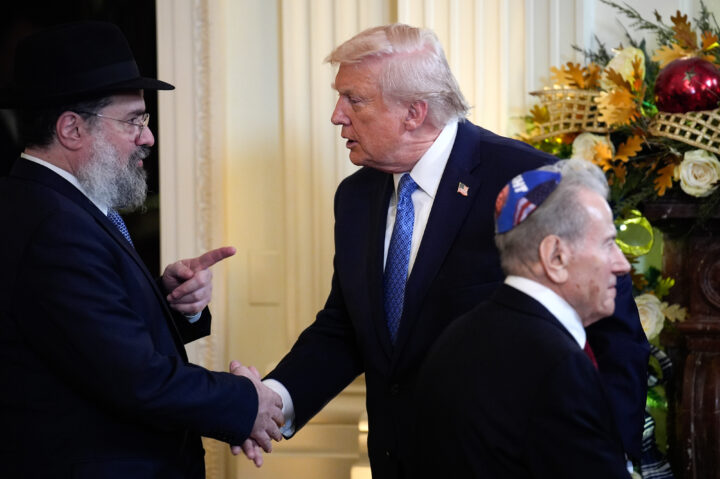
(Yuri Gripas/Abaca/Bloomberg via Getty Images)
US President Donald Trump greets Rabbi Levi Shemtov and Holocaust survivor Jerry Wartski during a Hanukkah reception in the East Room of the White House in Washington, DC, US, on Tuesday, Dec. 16, 2025.
👋 Good Wednesday morning!
In today’s Daily Kickoff, we report from Hanukkah receptions at the White House, on Capitol Hill and in New York, and cover concerns from U.S. lawmakers over Canberra’s failure to address concerns from Australia’s Jewish community prior to Sunday’s deadly attack in Sydney. We report on the Coast Guard’s quiet moves to reverse its policy on swastikas, and talk to Rep. Zach Nunn about his legislative work aimed at expanding the U.S.-Israel relationship. Also in today’s Daily Kickoff: UAE Foreign Minister Sheikh Abdullah bin Zayed, Mark Zuckerberg and Galia Lahav.
Today’s Daily Kickoff was curated by Jewish Insider Executive Editor Melissa Weiss and Israel Editor Tamara Zieve, with assists from Danielle Cohen-Kanik and Marc Rod. Have a tip? Email us here.
What We’re Watching
- President Donald Trump will give a televised address at 9 p.m. ET.
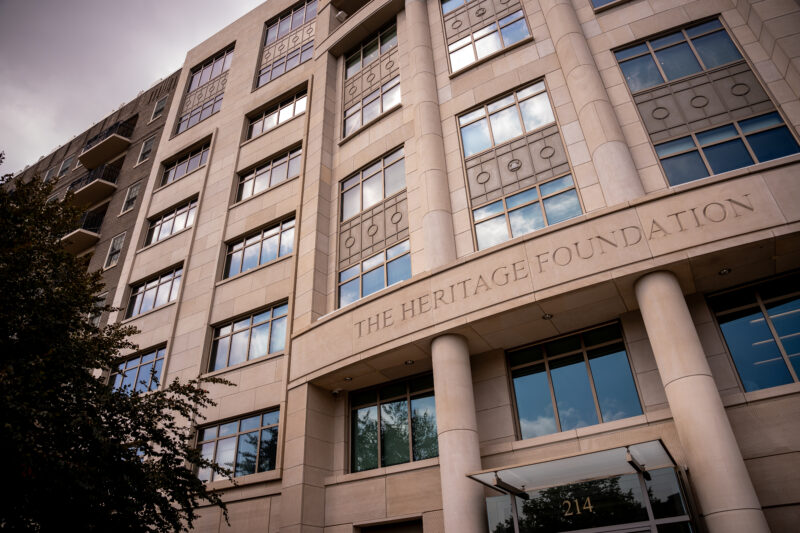
- The Heritage Foundation is hosting a sit-down this afternoon between Heritage President Kevin Roberts and conservative commentator Ben Shapiro.
- Elsewhere in Washington, Jewish members of Congress are hosting the annual Capitol Hill Hanukkah party. Across town, the Israeli Embassy in Washington is hosting its annual Hanukkah reception tonight.
- Norman Podhoretz, the longtime editor of Commentary magazine and influential conservative thought leader, died on Tuesday. In a remembrance of his father, John Podhoretz wrote: “He bound himself fast to his people, his heritage, and his history. His knowledge extended beyond literature to Jewish history, Jewish thinking, Jewish faith, and the Hebrew Bible, with all of which he was intimately familiar and ever fascinated.”
- Australian police charged Naveed Akram, one of the suspects in the Sunday terror attack in Sydney, with 15 counts of murder in addition to dozens of other offenses, including committing a terrorist act; Akram is in stable condition at a Sydney hospital after spending two days in a coma.
What You Should Know
A QUICK WORD WITH THE JI team
As Jewish communities are marking Hanukkah under the shadow of the deadly terror attack in Sydney that marred the beginning of the Jewish holiday, leaders in Washington and New York addressed growing concerns about antisemitism at several Hanukkah events held yesterday.
President Donald Trump warned that Israel and the “Jewish lobby” have lost their influence in Washington and that Congress is “becoming antisemitic,” in a holiday message delivered to attendees at the White House’s annual Hanukkah party.
Speaking from the East Room to a gathering of lawmakers and prominent Jewish figures ahead of a ceremonial menorah lighting, the president repeatedly cautioned that the Jewish community and its allies “have to be very careful because bad things are happening” to Jewish people and to Israel’s global standing, citing the shooting in Sydney and the ongoing denials of Hamas’ Oct. 7, 2023, attacks on Israel. Read the full story here.
Meanwhile, U.S. Ambassador to the U.N. Mike Waltz, speaking at a Hanukkah reception hosted by Israel’s U.N. mission at The Jewish Museum in Manhattan, said the U.S. “can and will confront antisemitism without apology, without hesitation and will do so everywhere around the world, including right here in the halls of the U.N.” Read the full story here.
On Capitol Hill, Rep. Debbie Wasserman Schultz’s (D-FL) annual Hanukkah party featured remarks by Shira Gvili, sister of Ran Gvili, the last hostage in Gaza, JI’s Marc Rod reports. Gvili highlighted that her brother had always dreamed of being a police officer and ran into the fight on Oct. 7 — when he was killed — despite waiting for surgery for a broken shoulder. She also noted that he volunteered to support Holocaust survivors.
“On this celebration of light, of heroes, as we do on Hanukkah, Ran is not only my hero, he is our hero. For everyone lighting a candle tonight, may the glow of the menorah [brighten] the darkened moments. May the glow of the menorah’s light bring Ran home tonight,” Gvili continued.
House Minority Leader Hakeem Jeffries (D-NY) also delivered remarks, and nearly 40 lawmakers — a majority of them Democrats — stopped through the gathering. These included Reps. Ed Case (D-HI), Lois Frankel (D-FL), Sara Jacobs (D-CA), Daniel Goldman (D-NY), Craig Goldman (R-TX), Steny Hoyer (D-MD), David Kustoff (R-TN), George Latimer (D-NY), Jared Moskowitz (D-FL), April McClain Delaney (D-MD), Brad Schneider (D-IL), Kim Schrier (D-WA), Shri Thanedar (D-MI), Grace Meng (D-NY), Adriano Espaillat (D-NY) and Don Davis (D-NC).
Jeffries said that, after the attack in Australia, “it’s incumbent on all of us as leaders not just to, of course, authentically express our thoughts and prayers on behalf and directed at those families who have suffered from this unconscionable, unthinkable, unspeakable tragedy, but to make it clear that we all have a responsibility to combat antisemitism whenever and wherever it’s found, and make sure that no matter what it takes, we’re committed, not as Democrats or Republicans, but as Americans, to bury antisemitism in the ground never to rise again.”
Jeffries continued, “At the same time, we’ll also make clear that we will continue to stand up for Israel’s right to exist as a Jewish and Democratic state and a homeland for the Jewish people.”
ON THE HILL
Australian Jews’ warnings about rising antisemitism were ignored, U.S. lawmakers say
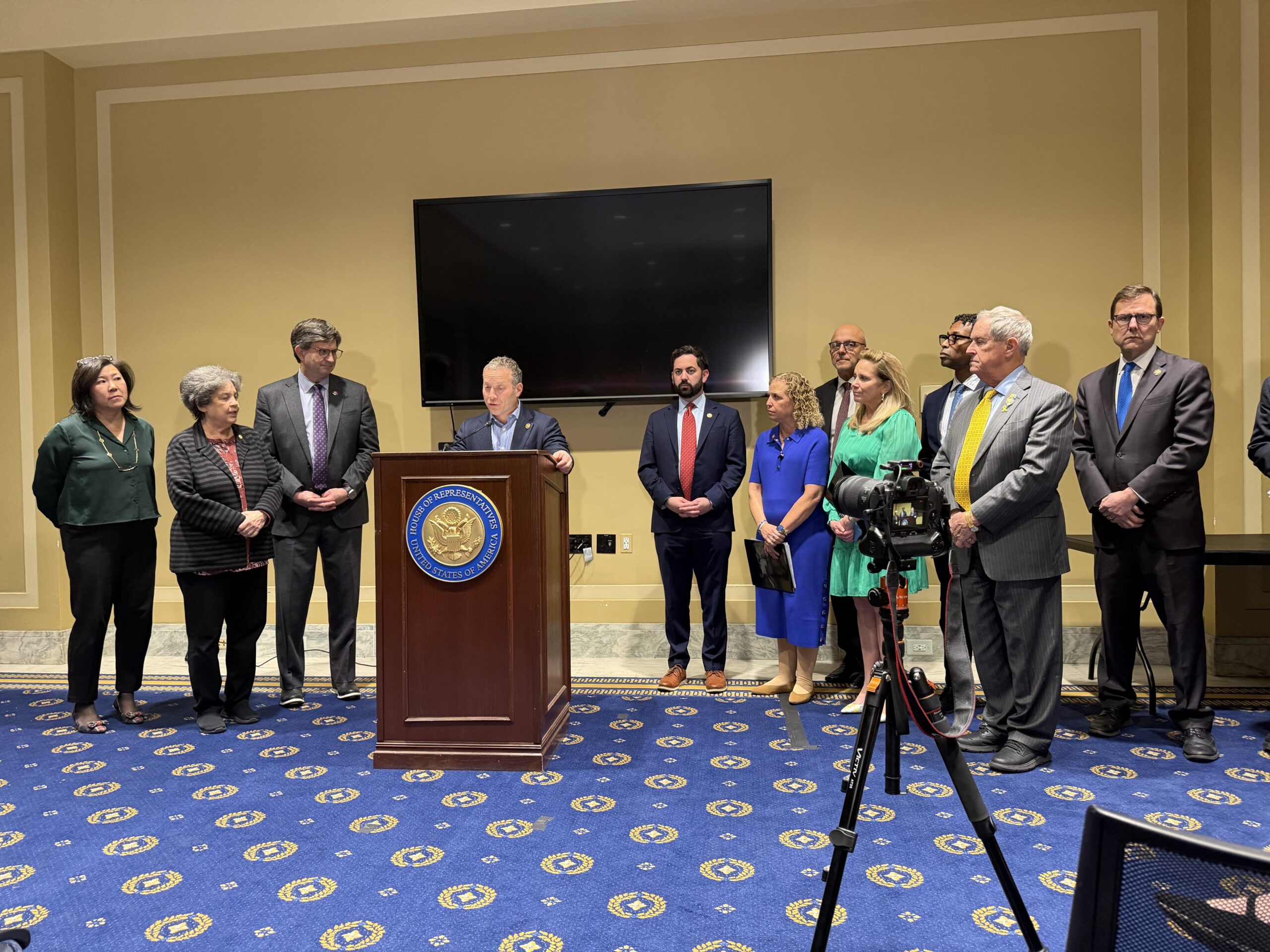
Speaking to reporters on Tuesday, multiple Jewish lawmakers emphasized that the Sunday massacre that killed at least 15 at a Hanukkah celebration in Sydney, Australia, came after many warnings from the Australian Jewish community, and Jewish communities around the world, about the rising violent threats they face — warnings that have often gone ignored, the lawmakers said, Jewish Insider’s Marc Rod reports.
Notable quotable: “That threat, those warnings, have fallen on deaf ears, and we are living with those consequences now,” Rep. Debbie Wasserman Schultz (D-FL) said. “I hope that this tragedy is the wake-up call that world leaders need to truly stand up and protect their Jewish communities from antisemitism, whether that manifests online or in person. … Lives are at stake. This is not pretend. These enemies of the Jewish people are not playing games. They mean to end our existence as a people.” Rep. Brad Schneider (D-IL), a co-chair of the Congressional Jewish Caucus, emphasized that the attack was “not predicted” but “it was predictable,” adding, “For too long, the Jewish community in Australia was saying to the authorities, saying to the government, ‘Antisemitism is a cancer eating away at the soul of the nation, and it’s going to result in the death of Jews in the land,’ and that’s what we saw on Sunday.”
Exclusive: The co-chairs of the House Bipartisan Task Force for Combating Antisemitism urged Australian Prime Minister Anthony Albanese to act more forcefully to protect Australia’s Jewish community and implement months-old recommendations from the country’s antisemitism envoy. They likewise highlighted the string of “warning signs” that preceded the attack.
SANDERS’ STATEMENTS
Bernie Sanders pivots from sympathy toward Sydney shooting victims to criticizing Netanyahu
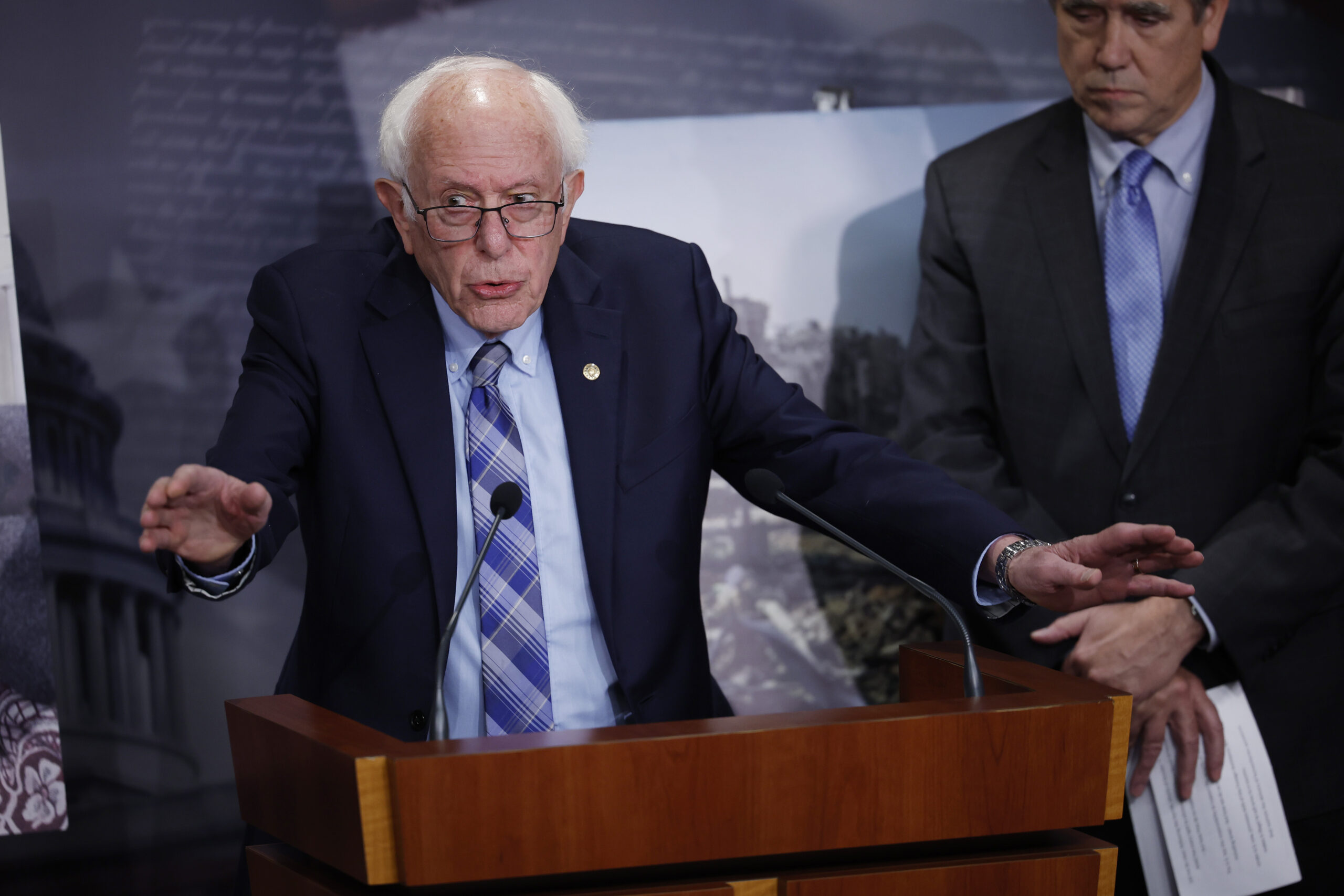
Sen. Bernie Sanders (I-VT) criticized Israeli Prime Minister Benjamin Netanyahu on Tuesday, after Netanyahu linked the terror attack in which 15 people were killed at a Hanukkah celebration in Sydney, Australia, to Canberra’s support for a Palestinian state, Jewish Insider’s Marc Rod reports.
What he said: Sanders issued a statement in response on Tuesday: “No, Mr. Netanyahu. Speaking out on behalf of the Palestinian people is not antisemitic. Opposing the disgraceful policies of your extremist government is not antisemitic. Condemning your genocidal war, which has killed more than 70,000 people — mostly women and children — is not antisemitic. Demanding that your government stop bombing hospitals and starving children is not antisemitic.”
BETRAYAL ON THE HIGH SEAS
Democratic lawmakers outraged by Coast Guard’s reported reversal on swastika policy

Weeks after the Coast Guard commandant personally called lawmakers to reassure them that swastikas and nooses would remain banned hate symbols within the service, the Guard quietly broke its pledge and diminished the severity of such displays as “potentially divisive” instead — the very language that had prompted outrage from lawmakers and the Jewish community, Jewish Insider’s Marc Rod reports.
The latest: Leading Democrats erupted in outrage on the news of the Coast Guard’s policy shift, while Republicans have thus far been silent. Several Republicans who spoke out against the initial policy change did not respond to JI’s requests for comment on the latest development on Tuesday. “The shocking news from the Coast Guard exposes a crisis of conscience enabled by the Trump administration’s stunning lack of moral clarity,” Rep. Ritchie Torres (D-NY) told JI. “The Trump Administration lied right to the American people’s faces when they indicated last month that they weren’t going through with this policy change,” Rep. Haley Stevens (D-MI) said.
BACKING BROOKS
Shapiro joins with progressives to back Dem recruit Bob Brooks in key Pennsylvania swing seat
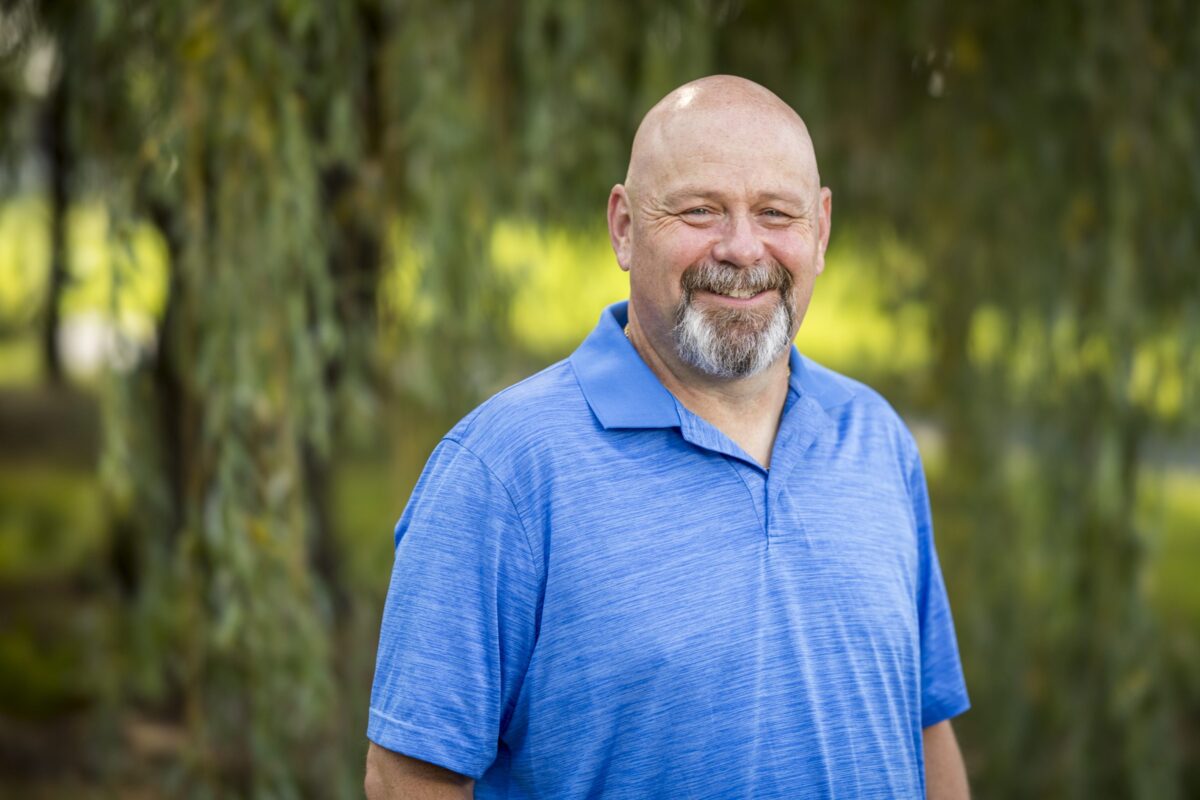
With backing from both moderate Pennsylvania Gov. Josh Shapiro and progressives like Sens. Bernie Sanders (I-VT) and Rep. Ro Khanna (D-CA), firefighter union leader Bob Brooks has emerged as a front-runner in the Democratic primary for Pennsylvania’s 7th Congressional District, a critical swing district that Democrats are aggressively contesting for next year’s midterms, Jewish Insider’s Marc Rod reports.
Endorsement insights: Christopher Borick, a political science professor at Muhlenberg College, said that Brooks’ background brings elements that appeal to various elements of the Democratic coalition, perhaps explaining his support from both sides of the party: his time as a leader in organized labor with a history on workers’ rights issues should resonate with progressive voters, while his “personal narrative fits if you’re trying to win over white working-class voters that might be more moderate or socially conservative.”
PUSHING PARTNERSHIP
Rep. Zach Nunn stands by U.S.-Israel relationship as ‘returning huge dividends’
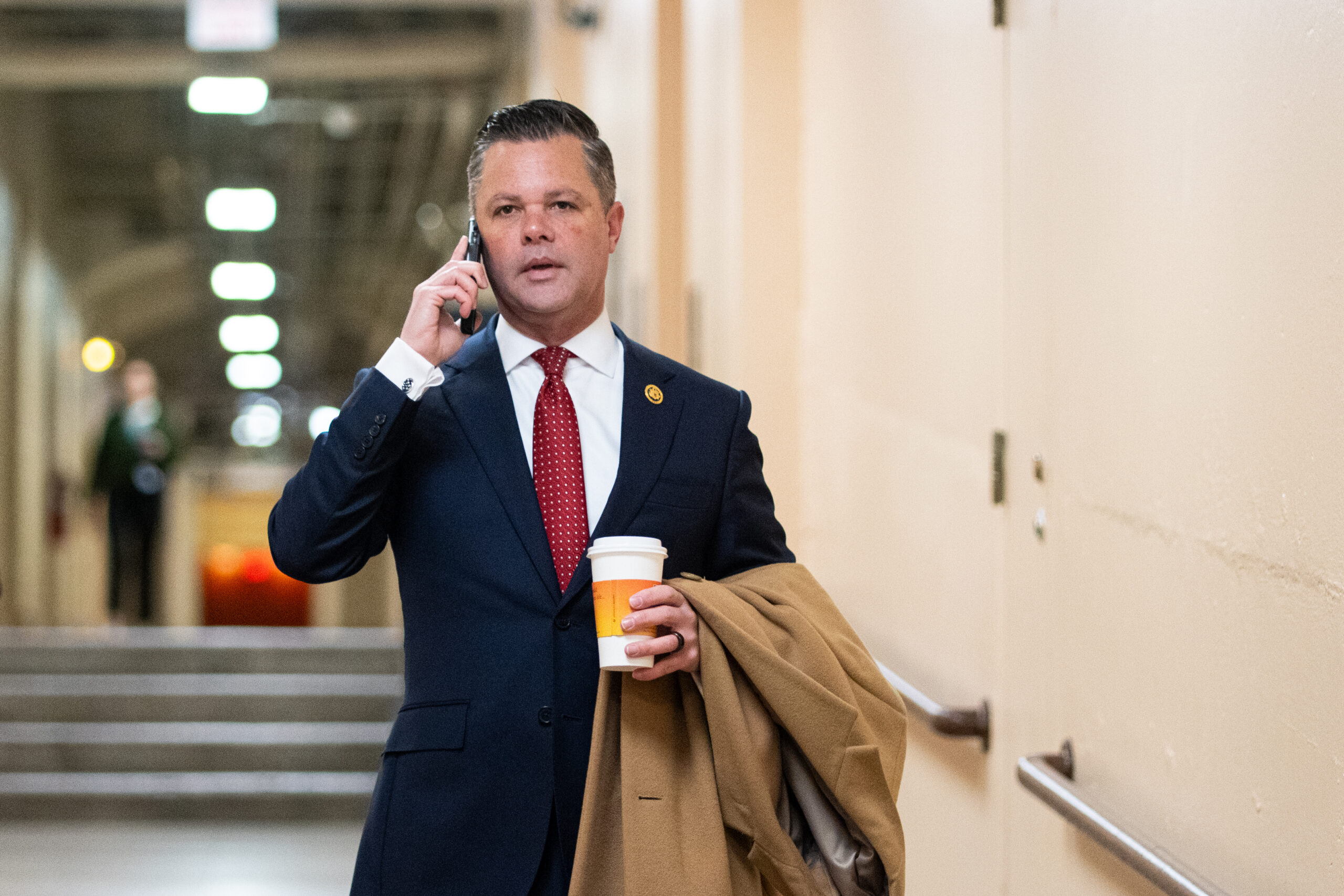
At a time when an increasingly vocal minority on the right is questioning the future and the benefits of the U.S.-Israel relationship, Rep. Zach Nunn (R-IA) led a pair of amendments to the 2026 defense policy bill aiming to expand the relationship, with a particular focus on new technologies. Asked how he responds to those on the right who question the value of the relationship, Nunn, the chair of the Republican Study Committee’s national security task force, said in an interview with Jewish Insider’s Marc Rod, “Israel is the lone bastion of democracy, freedom and Western values in a region where the U.S. has vital national security interests. For decades, Israel has been a strategic partner in kinetic and non-kinetic action against bad actors like Iran.”
Tech talk: Nunn added that programs such as the ones he championed would prepare the U.S. for all manner of challenges. “As our adversaries embrace low-cost options like drones and cyberwarfare, it’s more important than ever that we not only coordinate closely on joint security, but also on the underlying technologies that will define the next generation of conflict,” the Iowa lawmaker continued. “My amendments are about ensuring that partnership continues to evolve. They are strategic investments that strengthen American security, deter our adversaries and deliver real returns for U.S. taxpayers.”
Worthy Reads
⚠️ Shoulder to Shoulder: In The Times of Israel, Israeli President Isaac Herzog reflects on the Sydney terror attack and the meaning of Hanukkah. “Yet as we reflect on the miracle of the return home of our brothers and sisters, we also confront a deeply troubling reality beyond Israel’s borders. As the October 7th massacre in southern Israel was still ongoing, Jewish communities around the world began to experience a vicious wave of hatred. Institutional antisemitism, Holocaust inversion, conspiracies left and right, Jew-hatred platformed on social media, and moral bankruptcy masquerading as social justice have all disturbingly increased across the Western world. The deadly terror attack in Sydney this week demonstrates where these dangerous trends can lead.” [TOI]
👮 ‘Forever Changed’: In The New York Times, Alex Ryvchin, the co-chief executive of the Executive Council of Australian Jewry, mourns those killed in Sunday’s terror attack in Sydney, as well as the sense of communal security that no longer exists for Australian Jews. “Now we have suffered a loss that is impossible to measure or articulate. It is a loss felt nationally for a country that is forever changed. It is a loss felt communally for a way of life defined by pride and open observance that no longer exists. And it is a loss we feel individually for the friends and relatives who died in our arms from hideous wounds inflicted by high-powered shells used for hunting game. … My community will never recover from this, I am sure. My rabbi, my friend, Eli Schlanger lived by a mission of being proud of who he was as a Jew. The annual Hanukkah event he hosted on the beach was the ultimate evidence of our acceptance, the proof that we were safe in our acts of community pride. That is all gone now. And with it, a man who had shown us the way.” [NYTimes]
⚖️ After Bondi: In the wake of the Bondi Beach terror attack, The Atlantic’s Graeme Wood posits that governments need to take serious, tangible actions that go beyond antisemitism education to address threats to the Jewish community. “With an attack like this, the only effective response is the zealous prosecution of anyone who planned or supported it, and the protection of those who might be targeted in similar attacks in the future. Museum education is nice, but if an attack is under way, a police officer with a rifle has more stopping power. Self-study to determine whether Jews are systematically excluded or vilified is worthwhile but will take time. Restrictions on speech are another matter, and a distraction from real police work. It should not be a crime to inquire about the whereabouts of Jews, or even to say you wish to gas them. But if you spray-paint a Jewish school or set a car on fire, a government with its resources properly ordered will find and charge you before you graduate to violent crime.” [TheAtlantic]
Word on the Street
The Sudanese Armed Forces – backed by Saudi Arabia, Qatar, Turkey, Egypt and Iran – are the subject of a new CNN investigation that found them responsible for mass killing of civilians and dumping their bodies into canals…
United Arab Emirates Foreign Minister Sheikh Abdullah bin Zayed re-upped a 2024 Atlantic piece by Palestinian political activist Samer Sinijlawi calling for leadership changes in Israel and the Palestinian Authority…
Turkey was excluded from a CENTCOM-hosted conference in Doha, Qatar, focused on putting together an international stabilization force in the Gaza Strip…
Sen. Thom Tillis (R-NC) said that the Trump administration needs to put forward a new nominee for the post of ambassador for religious freedom as former Rep. Mark Walker’s (R-NC) nomination remains stalled in the Senate…
The widow of a security officer who was killed in a mass shooting at the Park Avenue building housing the headquarters of the NFL is suing the league, the real estate firm that owns the building and the building’s security company over their failures to prevent the attack, in which philanthropist Wesley LePatner and two others were also killed…
The NYPD is investigating an incident in which a group of Orthodox Jewish men were harassed and assaulted on a subway car after video of the confrontation was posted to social media; police are also investigating as a hate crime a separate incident, also filmed, in which a visibly Jewish man was attacked while walking down the street in Brooklyn’s Crown Heights neighborhood…
Two members of the Heritage Foundation’s board resigned amid a series of high-profile departures from the think tank over its embrace of Tucker Carlson and failure to denounce extremist views; Abby Spencer Moffat said Heritage was “unwilling or unable to meet this moment with the clarity and courage it requires,” while Shane McCullar said the think tank was “unwilling to confront the lapses in judgment that have harmed its credibility, its culture, and the conservative movement it once helped shape”…
Warner Bros. Discovery is expected to reject Skydance Paramount’s hostile takeover bid due to concerns over financing; Jared Kushner’s Affinity Partners, which had provided some backing to Paramount in its effort, withdrew its support for Paramount’s bid…
The Financial Times reports on Meta CEO Mark Zuckerberg’s efforts to build out AI infrastructure as he looks to compete with OpenAI and Google…
Qatar Sports Investments-owned Paris Saint-Germain was ordered by a French court to pay more than $70 million to former PSG star Kylian Mbappé resulting from unpaid wages and bonuses…
Actress Sydney Sweeney wore a gown by Israeli designer Galia Lahav to the premiere of her new film, “The Housemaid”…
Iranian victims of the Women, Life, Freedom protests that swept through the Islamic Republic in 2022 are suing more than three dozen Iranian officials in an Argentine court, alleging the officials committed or were complicit in crimes against humanity…
PBS reports from Hezbollah’s secretive military installations following their seizure by the Lebanese Armed Forces…
Wall Street investment banker Arthur Carter, who would go on to purchase The Nation and found The New York Observer, died at 93…
Pic of the Day
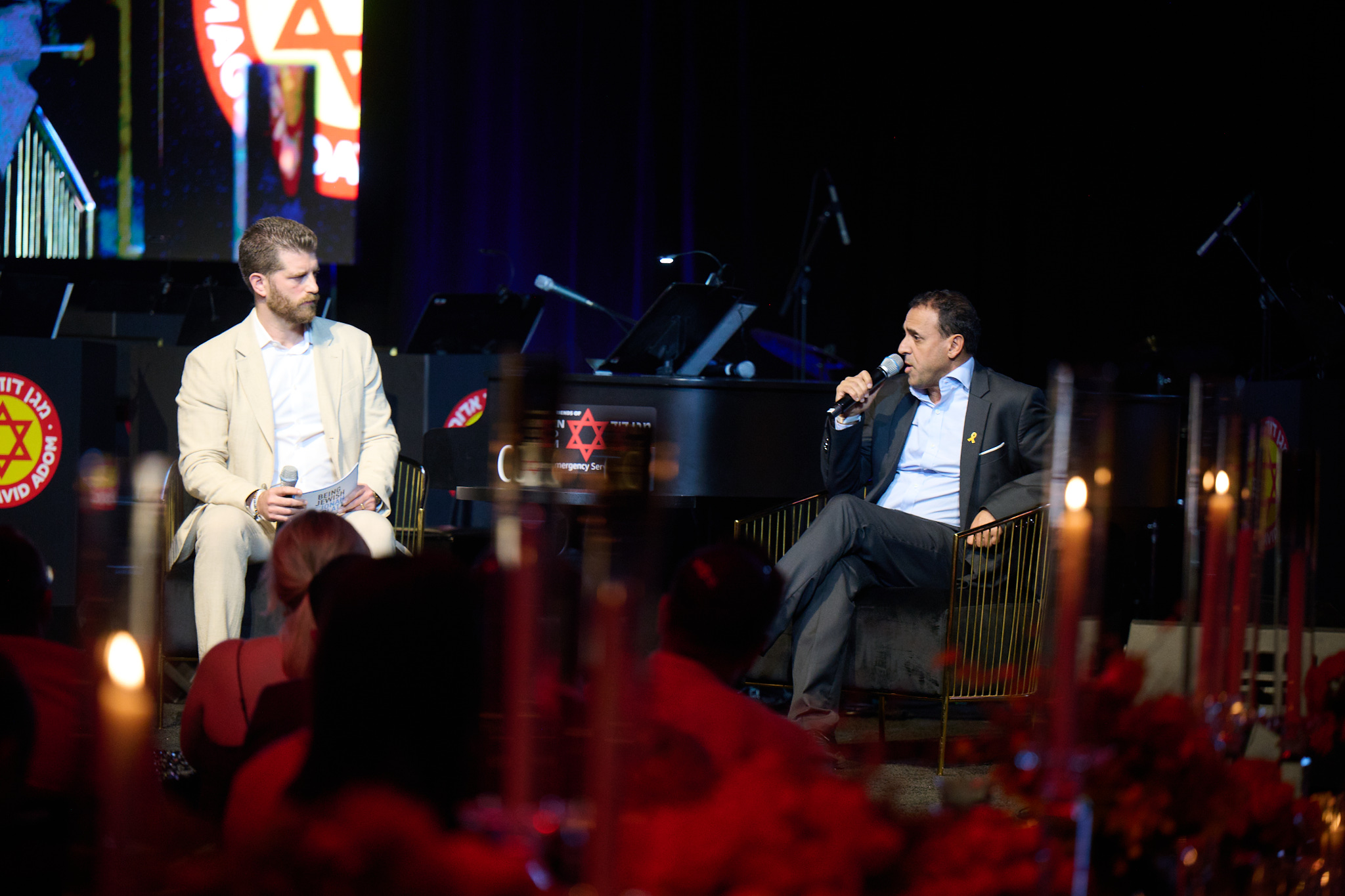
Actor Jonah Platt sat in conversation with former Israeli hostage Eli Sharabi on Monday night at the American Friends of Magen David Adom’s Miami Gala.
Birthdays
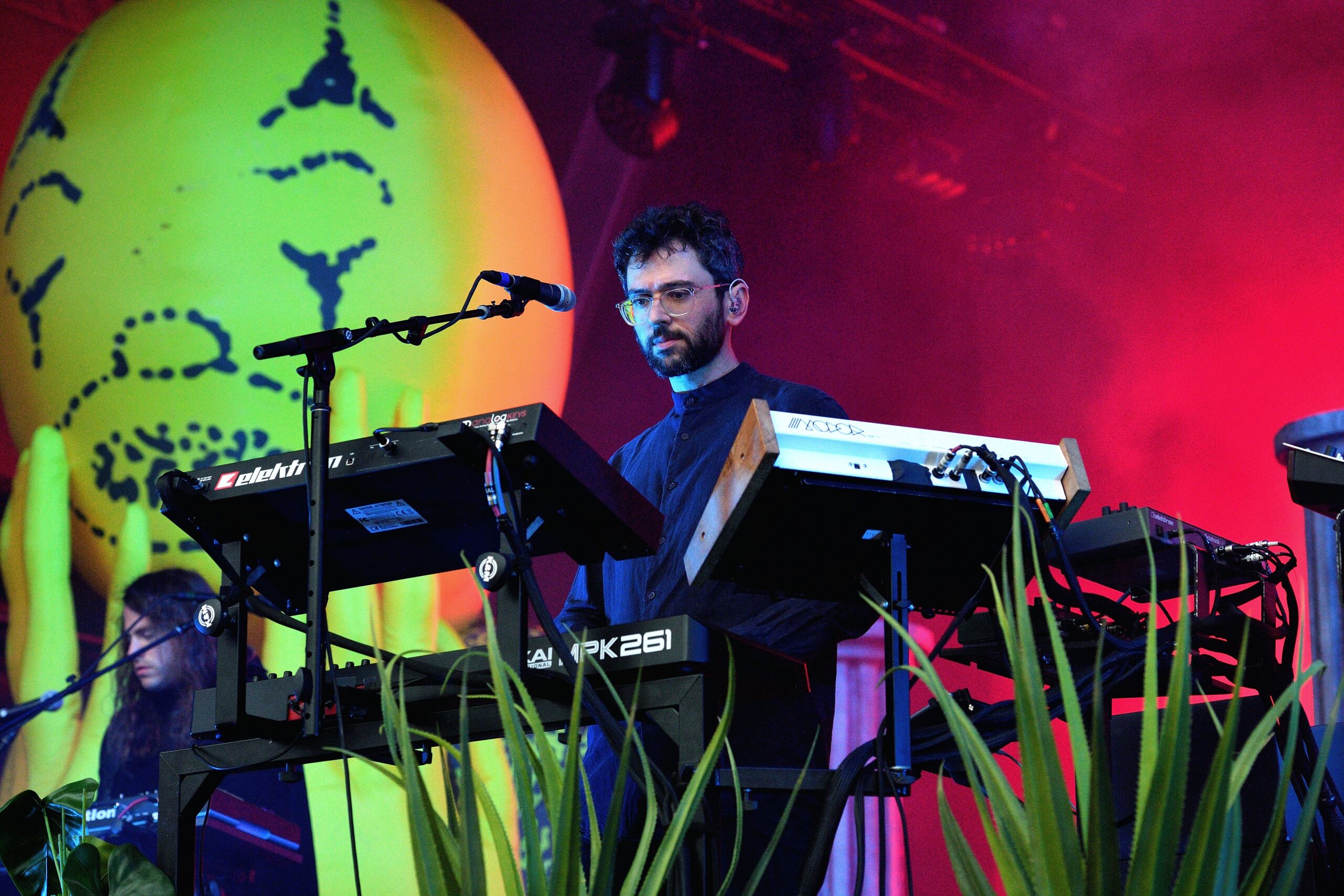
Grammy Award-winning songwriter and musician, Benjamin Goldwasser turns 43…
Retired attorney and vice chair of the American Jewish International Relations Institute, Stuart Sloame turns 86… Former CEO of multiple companies including the San Francisco 49ers and FAO Schwarz, Peter L. Harris turns 82… VP of strategic planning and marketing at Queens-based NewInteractions, Paulette Mandelbaum… Professor of Jewish history, culture and society at Columbia University, Elisheva Carlebach Jofen turns 71… Retired chair of the physician assistant studies program at Rutgers, Dr. Jill A. Reichman turns 70… Former Israeli ambassador to the U.S. and senior foreign policy advisor to prime ministers Sharon, Barak and Netanyahu, Danny Ayalon turns 70… Longtime chairman and CEO of HBO, he now heads Eden Productions, Richard Plepler turns 67… Israeli film director, screenwriter, animator and film-score composer, Ari Folman turns 63… Former president of Freedom House, now the director at Voice of America, Michael J. Abramowitz turns 62… Chief of the General Staff of the IDF until this past March, Herzl “Herzi” Halevi turns 58… Founder and CEO of LionTree LLC, Aryeh B. Bourkoff turns 53… Pastry chef, television personality and cookbook author, Jeffrey Adam “Duff” Goldman turns 51… Israeli former soccer goalkeeper, then on the coaching staff for the national team, Nir Davidovich turns 49… CEO of the New Legacy Group of Companies, he is also founder and chair emeritus of Project Sunshine, Joseph Weilgus… Co-director of New Public, Eli Pariser turns 45… Senior writer at National Review and author of Unjust: Social Justice and the Unmaking of America, Noah C. Rothman… Director of foundation partnerships at the UJA-Federation of New York, Julia Sobel… National correspondent for Vanity Fair and author of the 2018 book Born Trump: Inside America’s First Family, Emily Jane Fox… State general manager for Maryland at Entyre Care, Daniel Ensign… Actor, singer-songwriter and musician, he starred in the Nickelodeon television series “The Naked Brothers Band,” Nat Wolff turns 31…
The U.N. ambassador pointed to the recent unanimous U.N. Security Council vote supporting Trump’s Gaza peace plan
Haley Cohen
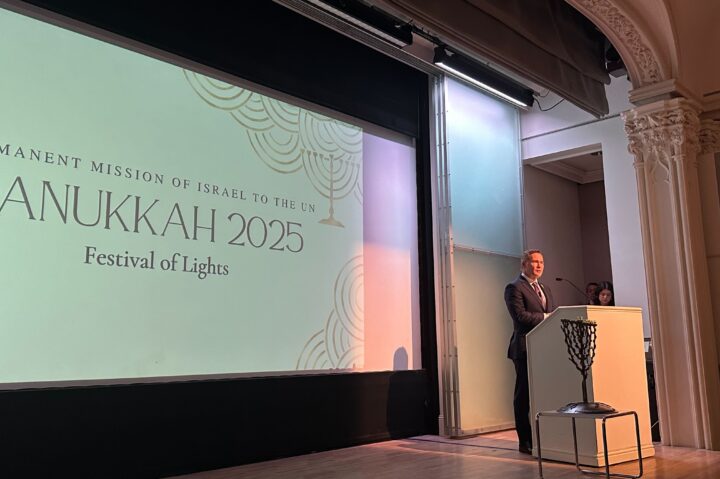
U.S. Ambassador to the U.N. Mike Waltz at Mission of Israel to the U.N. Hanukkah reception, The Jewish Museum, Dec. 17, 2025
As Jews worldwide face a scourge of antisemitism — including the mass shooting at a Hanukkah celebration at Australia’s Bondi Beach over the weekend — U.S. Ambassador to the U.N. Mike Waltz said on Tuesday night that the U.S. “can and will confront antisemitism without apology, without hesitation and will do so everywhere around the world, including right here in the halls of the U.N.”
“We are taking real action on those who perpetuate their antisemitic actions,” Waltz said at a Hanukkah reception hosted by Israel’s U.N. mission, held at The Jewish Museum in Manhattan. He pointed to recent U.S. sanctions on Francesca Albanese, the U.N. special rapporteur for the Palestinian Territories who has frequently bashed Israel.
At the event, which was co-hosted by UJA-Federation of New York to mark the third night of Hanukkah, Waltz also lauded President Donald Trump’s 20-point plan to end the war in Gaza, calling it “not perfect,” but offering “a far better chance [at peace] than where we were just a few months ago.”
“The goal is to break that cycle of insanity where Hamas is allowed to survive, attack Israel once again, Israel responds and here we are all over again,” continued Waltz. “President Trump’s plan will break that cycle. We are going to see it through, and ultimately, he is determined — and put his name on it in a huge way, to the point that we have hundreds of soldiers on the ground in Israel — in moving all of that forward so that we never experience another Oct. 7.”
Last month, the U.N. Security Council voted 13-0 in favor of Trump’s peace plan, which Waltz called “the most positive council, probably ever.”
“We will work in partnership with Israel, not only to fight antisemitism, but to bring peace and stability to that region so the next generation isn’t experiencing what the previous generation did. We can expand the Abraham Accords,” continued Waltz. “Let’s bring light to the darkness we’ve seen these last two years.”
“We are determined to make the U.N. great again. We have a new term called ‘MUNGA’ — Make the U.N. Great Again,” Waltz said as the crowd erupted in laughter.
As guests noshed on festive hors d’oeuvres — bite-sized latkes and sufganiyot — remarks were also delivered by Israeli Ambassador to the U.N. Danny Danon and Eric Goldstein, the outgoing CEO of UJA-Federation.
“What happened in Australia on the first night of Hanukkah was an act of terror targeting Jews,” said Danon. Among the 15 killed in the attack were 10-year-old Matilda Britvan, Chabad Rabbi Eli Schlanger and Holocaust survivor Alex Kleytman.
“Three generations targeted simply for being Jewish. Tonight we honor their memories,” continued Danon before — together with Goldstein and Chabad’s Rabbi Mendy Kotlarsky — lighting a menorah made from shrapnel of Iranian ballistic missiles intercepted by Israeli and U.S. interceptors.
‘Lives are at stake. This is not pretend. These enemies of the Jewish people are not playing games,’ Rep. Debbie Wasserman Schultz said
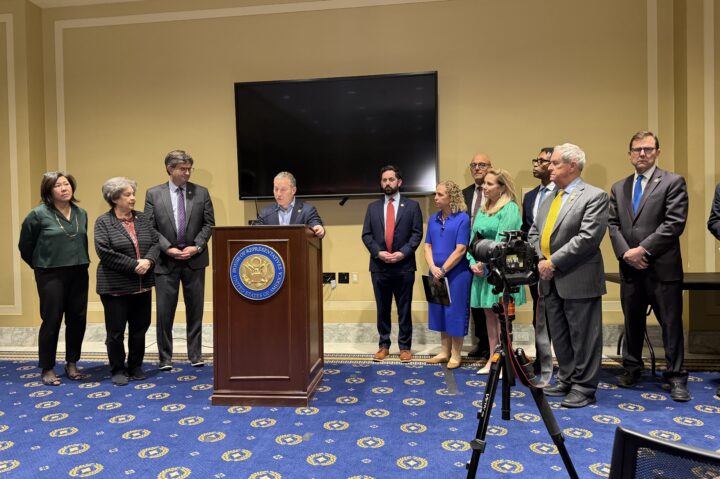
Marc Rod
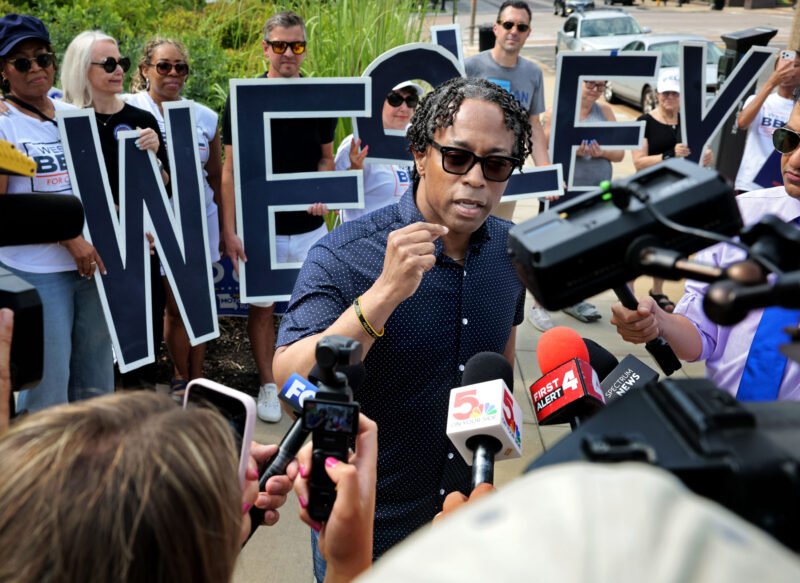
From left to right: Reps. Grace Meng (D-NY), Lois Frankel (D-FL), Brad Schneider (D-IL), Josh Gottheimer (D-NJ), Mike Lawler (R-NY), Debbie Wasserman Schultz (D-FL), AJC CEO Ted Deutch, Laura Gillen (D-NY), Wesley Bell (D-MO), Joe Wilson (R-SC), Tom Kean Jr. (R-NJ), Dec. 16, 2025
Speaking to reporters on Tuesday, multiple Jewish lawmakers emphasized that the Sunday terror attack in which 15 people were killed at a Hanukkah celebration in Sydney, Australia, came after warnings from the Australian Jewish community, and Jewish communities around the world, about the rising violent threats they face — warnings that have often gone ignored, the lawmakers said.
Rep. Debbie Wasserman Schultz (D-FL) said that Australian Jews and others around the world have been warning “for far too long” about the “alarming, explosive rise in violent antisemitism.”
“That threat, those warnings, have fallen on deaf ears, and we are living with those consequences now,” Wasserman Schultz said. “I hope that this tragedy is the wake-up call that world leaders need to truly stand up and protect their Jewish communities from antisemitism, whether that manifests online or in person.”
She said that leaders around the world “must do better.”
“Lives are at stake. This is not pretend. These enemies of the Jewish people are not playing games. They mean to end our existence as a people,” she continued. “We will not allow that. Our allies and friends must help us make sure that never happens.”
Rep. Brad Schneider (D-IL), a co-chair of the Congressional Jewish Caucus, emphasized that the attack was “not predicted” but “it was predictable.”
“For too long, the Jewish community in Australia was saying to the authorities, saying to the government, ‘Antisemitism is a cancer eating away at the soul of the nation, and it’s going to result in the death of Jews in the land,’ and that’s what we saw on Sunday,” Schneider continued.
Rep. Brad Sherman (D-CA) emphasized that Australia’s special envoy for antisemitism had in July offered a plan to combat antisemitism, but the plan had not been fully implemented by the Australian government.
The briefing was hosted by Reps. Josh Gottheimer (D-NJ) and Mike Lawler (R-NY) and the American Jewish Committee.
Gottheimer said that the public outcry he had seen since the Sydney massacre “is a sign to me that there is a recognition that we can do something if we stand together.”
“We should all be going after the root of the rising scourge of antisemitic hate around the world,” he added. “We must stand up to our foreign adversaries like the government of Iran, and the terrorist organizations that they support, for driving this hatred and violence for the Jewish people.”
Lawler said that the lawmakers had gathered “united in a bipartisan way to say that we will not tolerate this. We will not accept this as the norm that our Jewish brothers and sisters have to live in fear of being murdered while practicing their faith.”
AJC CEO Ted Deutch, who previously represented a South Florida House district, urged lawmakers to act promptly to confirm Rabbi Yehuda Kaploun as the U.S. special envoy to monitor and combat antisemitism and to provide adequate funding for the office, to strongly condemn the attack, to publicly stand with the Jewish community and to investigate foreign-backed antisemitism and influence operations targeting Jews globally.
“In the U.S. and with our allies, we’ve got to take concrete steps to strengthen our intelligence and counterterrorism cooperation, protect our communities, to preserve democratic stability and to prevent massacres like the one that happened on Bondi Beach,” Deutch continued.
William Daroff, the CEO of the Conference of Presidents of Major American Jewish Organizations, said, “If there was ever any doubt that anti-Zionism and antisemitism are one and the same, the attacks since Oct. 7 erase it. Jews are being targeted not for policy, but for presence. Not for politics, but for being Jewish, visible and alive.”
Marina Rosenberg, the Anti-Defamation League’s vice president of international affairs, said that she and a global coalition of Jewish leaders had visited Australia just days before the massacre to “sound the alarm on the dangers of surging antisemitism, calling on officials to act before it was too late. Tragically, for our brothers and sisters in Australia, it is too late.”
Rosenberg also emphasized that the attack is part of a “global pattern targeting Jewish communities,” not an isolated incident. She said that Congress must boost security funding for religious institutions and confirm Kaploun.
Other lawmakers who attended the briefing included Reps. Tim Burchett (R-TN), Chris Smith (R-NJ), Tom Kean Jr. (R-NJ), Madeleine Dean (D-PA), Nick LaLota (R-NY), Jonathan Jackson (D-OH), Brad Sherman (D-CA), Steve Cohen (D-TN), Grace Meng (D-NY), Lois Frankel (D-FL), Laura Gillen (D-NY), Wesley Bell (D-MO), Joe Wilson (R-SC) and George Latimer (D-NY).
Netanyahu said on Sunday that Jerusalem had previously warned Australia’s PM that Palestinian statehood recognition endangered Jews in the country

Kevin Dietsch/Getty Images
Sen. Bernie Sanders (I-VT), joined by fellow senator Sen. Jeff Merkley (D-OR) (R), speaks at a news conference on restricting arms sales to Israel at the U.S. Capitol on November 19, 2024 in Washington, DC.
Sen. Bernie Sanders (I-VT) criticized Israeli Prime Minister Benjamin Netanyahu on Tuesday, after Netanyahu linked the terror attack in which 15 people were killed at a Hanukkah celebration in Sydney, Australia, to Canberra’s support for a Palestinian state.
Netanyahu highlighted in a speech on Sunday that he had warned Australian Prime Minister Anthony Albanese that Canberra’s recognition of a Palestinian state was fueling antisemitism and endangering Australian Jews. Netanyahu further accused Albanese of failing to take action against antisemitism.
Sanders issued a statement in response on Tuesday: “No, Mr. Netanyahu. Speaking out on behalf of the Palestinian people is not antisemitic. Opposing the disgraceful policies of your extremist government is not antisemitic. Condemning your genocidal war, which has killed more than 70,000 people — mostly women and children — is not antisemitic. Demanding that your government stop bombing hospitals and starving children is not antisemitic.”
He said that “we must continue to oppose antisemitism and all forms of racism and bigotry. At the same time, we must demand a world in which international law and human rights are respected by all governments, without exception.”
Sanders opted against signing onto a joint statement issued Monday by Jewish Senate Democrats condemning the Sydney attack. Asked about his decision not to join the collective statement from Jewish Senate Democrats, a Sanders spokesperson pointed JI to Sanders’ comment on Sunday mourning the attack, in which the Vermont senator called antisemitism “a disgusting and cowardly ideology” that is “growing worldwide” and added, “we must be equally committed to fighting all forms of” bigotry.
The bipartisan group pressed Prime Minister Anthony Albanese to implement the Australian antisemitism envoy’s months-old recommendations
HILARY WARDHAUGH/AFP via Getty Images
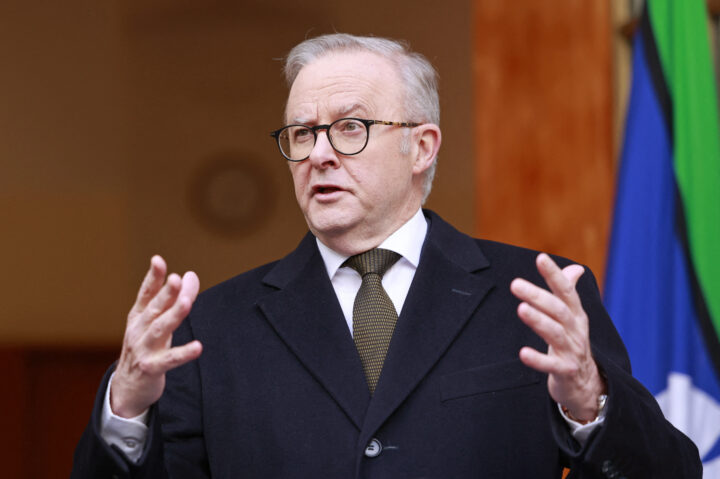
Australian Prime Minister Anthony Albanese speaks during a press conference in Canberra on August 11, 2025.
The co-chairs of the House Bipartisan Task Force for Combating Antisemitism are urging Australian Prime Minister Anthony Albanese to act more forcefully to protect Australia’s Jewish community and implement months-old recommendations from the country’s antisemitism envoy.
In a letter to Albanese sent Monday, the ten lawmakers said that the attack, which killed at least 15 people at a Hanukkah celebration, “comes in the wake of the Australian Jewish community repeatedly raising the alarm and urging swift action to counter the spread of unchecked antisemitic rhetoric and demonstrations occurring in Australia for far too long.”
The lawmakers said that there have been repeated “warning signs,” including firebombings of synagogues, graffiti, assaults and threats of violence, which “have now led to a tragic reality.”
They noted that Jillian Segal, the Australian special envoy to combat antisemitism, released 49 recommendations to be implemented across a range of institutions in July, and questioned what the Australian government has done to enact that plan and how it will protect the Jewish community going forward.
The lawmakers called on Albanese to “move swiftly and decisively” to implement those recommendations.
“While we appreciate Australia joining the Global Guidelines for Countering Antisemitism led by the United States, we urge your government to implement and actively utilize this document and its recommendations within,” the letter continues. “We also encourage you to further insulate Australia from malign foreign influence, like that of Iran and possibly others, which has been found to be supporting antisemitic attacks in Australia.”
The letter states that Australia’s designation of the Islamic Revolutionary Guard Corp as a terrorist organization “is an important first step, but it cannot be the last step if Australia is to address the antisemitism brewing at home while also thwarting collusion from abroad.”
The letter was signed by Reps. Grace Meng (D-NY), Chris Smith (R-NJ), Dan Goldman (D-NY), Don Bacon (R-NE), Ted Lieu (D-CA), Brian Fitzpatrick (R-PA), Haley Stevens (D-MI), Randy Weber (R-TX), Marc Veasey (D-TX) and Dan Meuser (R-PA).
For the American Jewish community, the prospects for much-needed help from the federal government in the form of additional Nonprofit Security Grant Program funding remain unclear
Brandon Bell/Getty Images
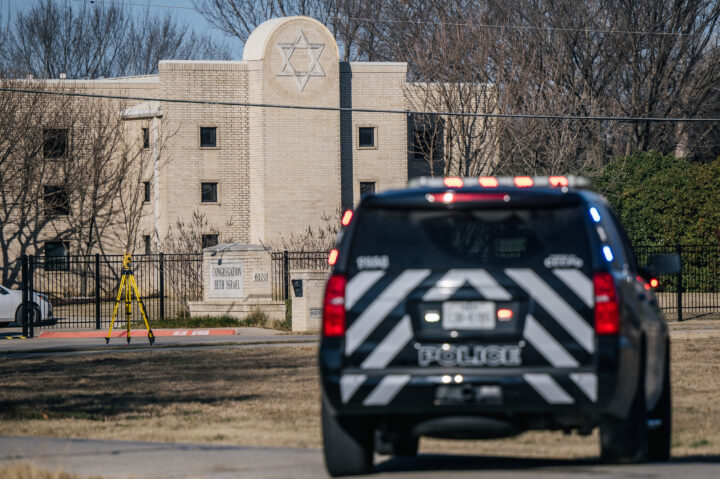
A law enforcement vehicle sits near the Congregation Beth Israel synagogue on January 16, 2022 in Colleyville, Texas.
The massacre in which 15 people were killed at a Hanukkah celebration at Bondi Beach in Sydney, Australia, on Sunday has once again brought the Jewish community’s security vulnerabilities into stark focus.
But for the American Jewish community, the prospects for much-needed help from the federal government in the form of additional Nonprofit Security Grant Program funding remain unclear.
The Senate Appropriations Committee’s homeland security subcommittee still hasn’t released a draft bill for 2026, greatly increasing the chances of a full-year continuing resolution that would keep funding for the program flat, at $274.5 million, a level that advocates and proponents on the Hill and Jewish groups say is severely insufficient. The House has passed its own version of the bill with $335 million in funding for the program.
Eric Fingerhut, the CEO of the Jewish Federations of North America, told JI, “The events in Australia and California these past days are terrible reminders of the violent antisemitism Jewish communities face. We’ve worked to ensure that every Federation community has a professional security program and director, but at the end of the day it is the government’s responsibility to keep its citizens safe from terrorism, and that’s why it is critical to both ensure that the Nonprofit Security Grant Program is fully funded and not allowed to lapse.”
Multiple lawmakers on the committee and those who follow the NSGP funding process closely said they have little clarity on the state of play on the funding bill, including subcommittee ranking member Sen. Chris Murphy (D-CT) and Sen. James Lankford (R-OK), a co-chair of the Senate antisemitism task force.
Sen. John Kennedy (R-LA), who serves on the homeland security subcommittee, told JI that a full-year continuing resolution is “a real possibility” at present, noting that the legislation “is always tough to put together.”
But Kennedy said there are other ways to boost funding for the grant program. “There’s no reason we can’t do that [add more money for NSGP] if we end up with an omnibus for the remainder of the bills that don’t pass. But every day that goes by that we don’t do something on [Appropriations], an omnibus or CR looks more and more likely,” Kennedy told JI.
Government funding runs out again at the end of January, so lawmakers will need to put together a plan quickly on how they plan to proceed when they return from the holidays.
Grant funding allocations for this year also remain pending — the administration announced applications months ago, but lawmakers have repeatedly raised concerns about unclear timelines and a failure by the Department of Homeland Security to conduct statutorily required outreach programs.
Lankford told JI, “I’ve been calling all year” for the funding to be disbursed, but indicated he hasn’t heard any updates.
Looking into next year, the agenda for combating antisemitism on Capitol Hill also remains unclear. The momentum from Jewish communal institutions and lawmakers that in 2024 drove a push for the Antisemitism Awareness Act has largely died down. It’s been months since the last hearing on antisemitism — once a regular occurrence after Oct. 7, 2023. The volume of legislation introduced and congressional letters on the issue has also seemed to flag.
It’s still early, but there’s little sign that the events of this weekend are fundamentally altering the inertia that seems to have set in on antisemitism policy. Which raises the question: what can?
Jerry Nadler protege Micah Lasher: ‘The spread of violence against Jews is intertwined with the social acceptability of violent rhetoric directed at Jews’
(Photo by DAVID GRAY / AFP via Getty Images)
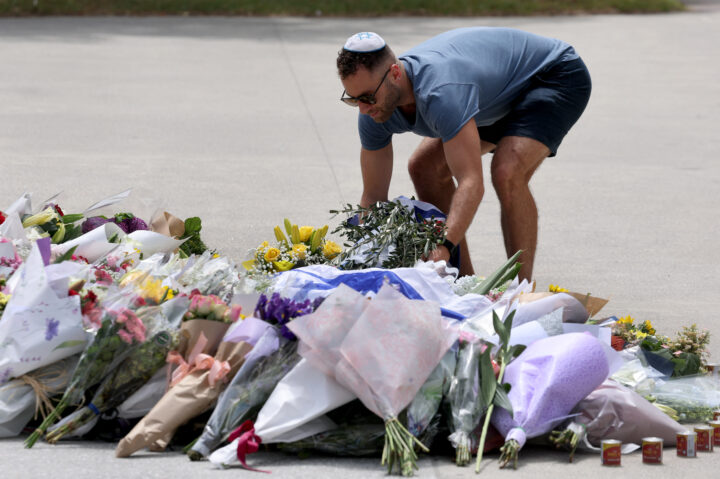
A man lays flowers at the Bondi Pavillion in memory of the victims of a shooting at Bondi Beach, in Sydney on December 15, 2025.
The deadly terrorist attack during a Hanukkah celebration in Australia on Sunday is sparking a renewed debate within the Democratic Party over anti-Israel slogans including “globalize the intifada,” and whether such extreme rhetoric fuels antisemitic prejudice that can lead to violence against Jews.
Some candidates and elected officials in New York City, where recent anti-Israel demonstrations have raised alarms within the largest Jewish community in the world, are tying such rhetoric directly to the carnage at Bondi Beach in Sydney — after two gunmen killed at least 15 people and wounded more than three dozen in the deadliest attack against the Jewish community in Australian history.
Eric Adams, the outgoing mayor, said on Sunday that “the attack in Sydney is exactly what it means to ‘globalize the intifada,’” and cast the shooting as “the real-world application of that call to violence.”
Erik Bottcher, a city councilman who is among several Democrats now competing to succeed Rep. Jerry Nadler (D-NY) in a heavily Jewish district in Manhattan, said that, in the wake of “an attack like Bondi Beach, we should be unequivocal: antisemitic violence is unacceptable, full stop.”
“And we should also be honest that slogans like ‘globalize the intifada’ don’t advance justice, they escalate hostility and make Jewish communities feel targeted,” Bottcher continued in a statement shared with Jewish Insider on Monday. “Leaders should be lowering the temperature.”
Alex Bores, a state assemblyman also seeking to replace Nadler, called the attack “horrifying and despicable” and said “antisemitism is a growing threat around the world,” while noting that “New York City has a special responsibility to confront it head‑on.”
“Any rhetoric or actions that dehumanize Jews, incite violence or put Jewish communities at risk must be called out and stopped, without exceptions. I have repeatedly condemned the use of the slogan ‘globalize the intifada,’” Bores told JI. “I believe that phrase, regardless of a specific speaker’s intent, has been tied inextricably to violent attacks, strikes fear in many New Yorkers and has no place in our city.”
Micah Lasher, a Jewish state assemblyman and another Democrat in the race, asked rhetorically in a social media post Sunday whether there was “any question” that “the spread of violence against Jews is intertwined with the social acceptability of violent rhetoric directed at Jews.”
“People of good will must confront this reality,” he concluded.
Such discourse is likely to intensify in next year’s primaries, where several anti-Israel candidates in New York City are seeking to challenge incumbent Democrats over their positions on Gaza and ties to AIPAC, the pro-Israel advocacy group increasingly demonized by the far left.
For now, however, those challengers were largely reluctant to weigh in on the heated rhetoric used by anti-Israel protesters — including just last month at at a synagogue in Manhattan where demonstrators chanted such phrases as “globalize the intifada” and “death to the IDF” — and if such language deserves further scrutiny amid heightened security concerns in the Jewish community following the Bondi Beach attack.
Darializa Avila Chevalier, an organizer in Harlem who helped to lead anti-Israel protests at Columbia University and recently launched a bid to challenge Rep. Adriano Espaillat (D-NY), did not respond to a request for comment.
Michael Blake, a former state assemblyman who is now challenging Rep. Ritchie Torres (D-NY) in the Bronx and who has drawn charges of hypocrisy for pivoting from his past outspoken support for Israel and close relations with AIPAC, also did not return a request for comment — even as he condemned the shooting in Australia.
For his part, Torres, a pro-Israel stalwart and top ally of the Jewish community, described the attack as “part of a global surge in antisemitism fueled by an ever-escalating campaign of demonization and dehumanization.”
A spokesperson for Brad Lander, the outgoing city comptroller mounting a newly launched bid to unseat Rep. Dan Goldman (D-NY) in a left-leaning district covering Lower Manhattan as well as parts of Brooklyn, likewise declined to comment, instead referring to his “several public comments about the Sydney shooting.”
The spokesperson also cited previous remarks in which Lander voiced reservations about calls to “globalize the intifada,” shortly after Zohran Mamdani, who is now the mayor-elect of New York City, had faced widespread backlash for refusing to denounce the slogan.
“Maybe you don’t mean to be saying it’s open season on Jews everywhere in the world, but that’s what I hear,” Lander, a top Jewish ally of Mamdani, said in comments in June. “And I’d like to hear that from other people.”
A spokesperson for Goldman, a pro-Israel Jewish Democrat, also declined to weigh in on the matter.
Mamdani, who condemned the Bondi Beach attack as a “vile act of antisemitic terror” in a social media post on Sunday, has refused to denounce the phrase “globalize the intifada,” but has vowed to discourage its usage.
In a Friday interview with WCBS in New York, Mamdani responded to feedback from a prominent local rabbi, Ammiel Hirsch, who expressed concern about the mayor-elect’s “ideological hostility to the very existence of Israel” and said that “anti-Zionist rhetoric and anti-Israel policies will threaten Jewish safety” in the city.
“Rabbi Hirsch is entitled to his opinions,” Mamdani stated. “The positions that I’ve made clear on Israel and on Palestine, these are part of universal beliefs of equal rights and the necessity of it for all people everywhere.”
A spokesperson for Mamdani did not respond to a request for comment.
Despite reluctance among Mamdani and some of his allies to now more openly grapple with rhetoric many Jews have found threatening, one progressive challenger to Rep. Grace Meng (D-NY), a pro-Israel incumbent in Queens endorsed by AIPAC, said that he has come to view phrases such as “globalize the intifada” as harmful, thanks to conversations with his Jewish friends.
Chuck Park, a former City Council aide and foreign service officer who has criticized Meng’s donations from AIPAC, said “Jewish people around the world — from Bondi Beach to Bushwick — are very scared right now,” while adding “it is the job of non-Jewish leaders like myself to listen to them.”
“When I listen to my Jewish friends,” he said in an interview with JI on Monday, “they tell me that they hear” the phrase particularly “as a call to violence against them.”
“The swastika is no longer a Buddhist symbol of good fortune, right?” Park added. “The pointed white hood is no longer a Catholic symbol of penance. And in a very similar way, that phrase is not a call for the liberation of an oppressed people, and I think it has instilled and maybe even inspired dangerous attacks on Jewish people around the world.”
Plus, Mast flags coordinated antisemitism campaign
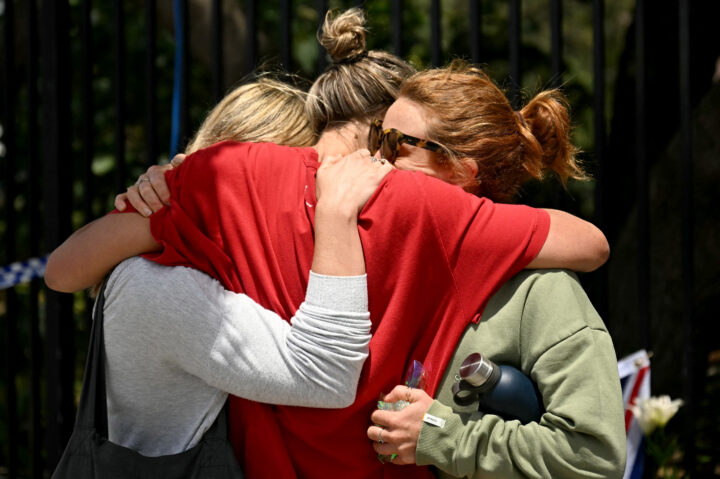
(Saeed KHAN / AFP via Getty Images)
Members of the local community embrace at the Bondi Pavillion in memory of the victims of a shooting at Bondi Beach, in Sydney on December 15, 2025.
👋 Good Monday morning!
In today’s Daily Kickoff, we report on the aftermath of yesterday’s deadly attack on a Hanukkah celebration in Sydney, Australia, and look at U.S. lawmakers’ responses to the shooting, in which 15 people were killed. We cover the House Education Committee’s new investigation into antisemitism at the American Psychological Association, and spotlight the Jewish military chaplains serving at U.S. bases across Europe. Also in today’s Daily Kickoff: Rep. Brian Mast, Gov. JB Pritzker and Narges Mohammadi.
Today’s Daily Kickoff was curated by Jewish Insider Executive Editor Melissa Weiss and Israel editor Tamara Zieve with an assist from Marc Rod. Have a tip? Email us here.
What We’re Watching
- As Australia’s Jewish community mourns those killed in yesterday’s terror attack at a Hanukkah celebration at Sydney’s Bondi Beach, we are continuing to monitor the situation. More below.
- U.S. Ambassador to Turkey Tom Barrack is in Israel today, where he is meeting with Prime Minister Benjamin Netanyahu.
- Tonight, Vice President JD Vance is holding the vice president’s annual Hanukkah party at the Naval Observatory.
- Elsewhere in Washington, the Jewish Federations of North America is holding its Hanukkah celebration with Capitol Hill staff, while Young Jewish Conservatives is holding its “Liberty & Latkes” party, honoring the Heritage Foundation’s Daniel Flesch.
- In New York, outgoing Mayor Eric Adams is hosting a Hanukkah party.
What You Should Know
A QUICK WORD WITH JI’S MELISSA WEISS
For the Jews of Sydney, Australia, the horror that unfolded on the popular Bondi Beach during a Hanukkah celebration was a shock, but not a surprise.
Nor was it a surprise for much of the global Jewish community, which, while always on alert and monitoring threats, scales up its efforts around holidays — a task even more critical in the wake of antisemitic terror attacks earlier this year on Passover and Yom Kippur.
But the deadly attack in Sydney seemed — somehow — to have caught Australian officials by surprise, despite a warning from Israeli Prime Minister Benjamin Netanyahu four months ago over the potential for attacks against the Australian Jewish community, as well as a spate of attacks targeting Jewish institutions, some of which were orchestrated by Iran.
An Israeli tourist who was at Bondi during the attack who spoke to JI on Sunday said that he sensed “that [Australian authorities] don’t know how to deal with mass casualty events. … I didn’t see anything on the news for almost an hour, and when I asked locals why they weren’t calling news hotlines or reporting on news apps, they said Australia doesn’t have that. In Israel, it would be in the news three minutes later.”
Indeed, within an hour of the onset of the attack, Israeli news networks were covering the carnage. International news outlets and networks, as well as Australian media, were slow to note that the attack had taken place at a Hanukkah celebration. Three hours after the attack, the Sydney Morning Herald’s top story was headlined “Ten Dead in Bondi Beach Shooting.” The subhead, too — “Multiple dead, two police officers among injured after shots fired at Bondi Beach” — gave no indication that the attack had taken place at a Hanukkah celebration, and that rabbis and Jewish community members had been shot.
It was a year ago this week that JI reported on concerns from Australian Jewish leaders over Canberra’s response to the antisemitism that dramatically increased following the Oct. 7, 2023, Hamas terror attacks and ensuing war between Israel and Hamas.
A travel advisory issued by the Simon Wiesenthal Center more than a year ago specifically cited the Australian government’s response, saying that “in failing to act against the demonization of Jews, Israel and Zionism on the streets of Australian cities, the Australian government has allowed violence against Jews and Israelis to be normalized.”
“Moreover,” the advisory continued in an ominous and prescient warning, “authorities have failed to take necessary measures to protect Jewish communities from increasingly belligerent and violent targeting by Islamists and other extremists.”
TERROR DOWN UNDER
Fifteen dead in shooting at Sydney Hanukkah event
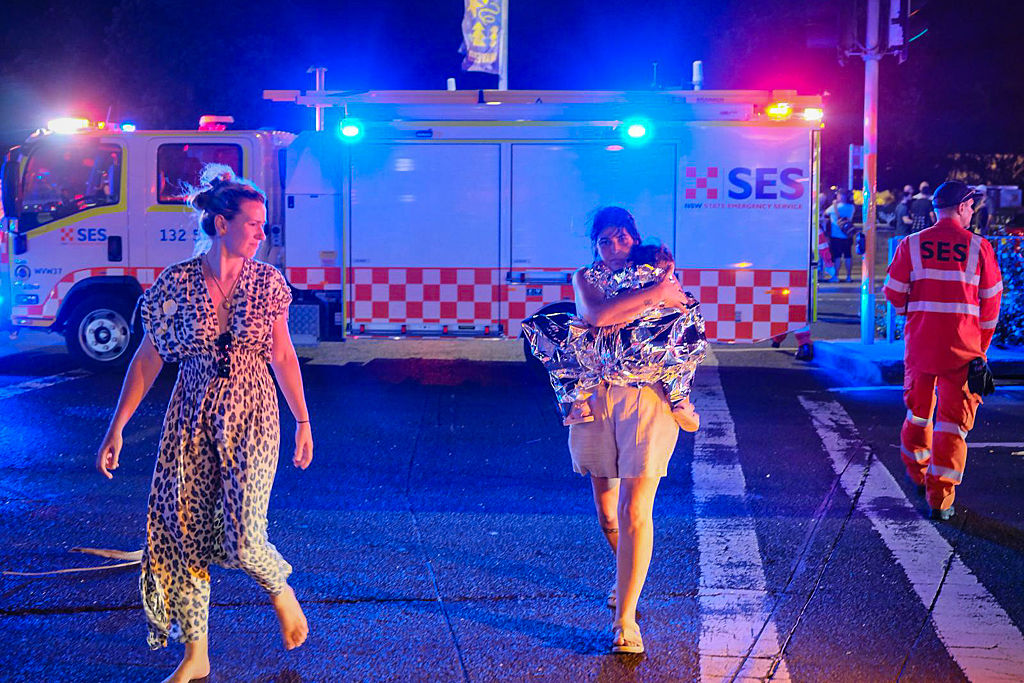
At least 15 people were killed on Sunday in an attack at a Hanukkah event in Sydney, Australia, in what authorities described as a targeted terror attack on the Jewish community. The event was hosted by Chabad of Bondi, a neighborhood with a major Jewish community in Sydney. Two gunmen opened fire with long rifles from outside the gated-off event, killing at least 15, and injuring 40. Among the victims were Rabbi Eli Schlanger, the Chabad emissary to Bondi, Holocaust survivor and immigrant from the Former Soviet Union Alex Kleytman, 87, and a 10-year-old girl identified by the Australian press only as Matilda. Eyewitnesses spoke with Jewish Insider’s Lahav Harkov.
At the scene: Lissy Abrahams was walking with her adult daughter to a bar mitzvah party being held nearby and parked by where the Chabad party was being held. As they were walking, she and her daughter heard gunshots. “We looked at each other and said ‘run,’” Abrahams recounted to JI. Abrahams and her daughter saw a storage area, where lifeguards keep their equipment, and ran down to the beach to take shelter with beachgoers, including parents holding babies. “People were standing in the doorway and didn’t know what to do, but as Jews, we understood what was going on.”
‘Horrified but not surprised’: U.S. officials and lawmakers across the political spectrum are condemning the terrorist attack, tying the murder of 15 attendees to the rise of antisemitism across the world, Jewish Insider’s Danielle Cohen-Kanik reports.
MAST’S MESSAGE
HFAC chair Brian Mast calls out global network seeking to fuel antisemitism on the left and right
Rep. Brian Mast (R-FL) said on Friday that there is a concerted network, on both the right and left, pushing antisemitic and anti-Israel ideology to the point that it has become “pervasive,” particularly among younger people, Jewish Insider’s Marc Rod reports.
What he said: Speaking at a Hudson Institute conference on antisemitism, Mast, the chair of the House Foreign Affairs Committee, said he does not have a “silver bullet” to address the problem because of how widespread it has become. He recounted a speech in a class at a military academy where he saw “probably a 50/50 divide about why we have this relationship [between the U.S. and Israel], what is the benefit of this relationship?” He said that he sees a “very specific network that is in place that works together to sow antisemitism that is now, in many cases, working on the left and right across the media, to go out there and put this wedge in this relationship.” Mast described the effort as “pervasive, systematic, planned out, orchestrated” and a “very, very serious global threat across multinational organizations, media across the globe and adversaries and terrorist organizations.”
PSYCH OUT
House Education Committee opens investigation into antisemitism at the American Psychological Association
The House Education and Workforce Committee announced on Friday that it’s opening an investigation into antisemitism in the American Psychological Association, a move that follows mounting reports of antisemitism and unaddressed discrimination inside the organization, which represents more than 170,000 individuals in the psychology field and is responsible for the accreditation of psychology professionals, Jewish Insider’s Marc Rod reports.
On notice: “The Committee is gravely concerned about antisemitism at the APA,” Committee Chairman Tim Walberg (R-MI) wrote in a letter to APA President Debra Kawahara on Friday informing the organization of the investigation. “Jewish APA members have reported being harassed and ostracized by their colleagues within the APA and at APA events because of their Jewish identity, their efforts to speak out against antisemitism, and their Zionist beliefs. Members have also stated that their complaints to the association have gone unanswered, raising significant concerns about the APA’s commitment to addressing harassment.”
ON DEFENSE
NSC’s Gorka pushes back on criticisms of Muslim Brotherhood executive order
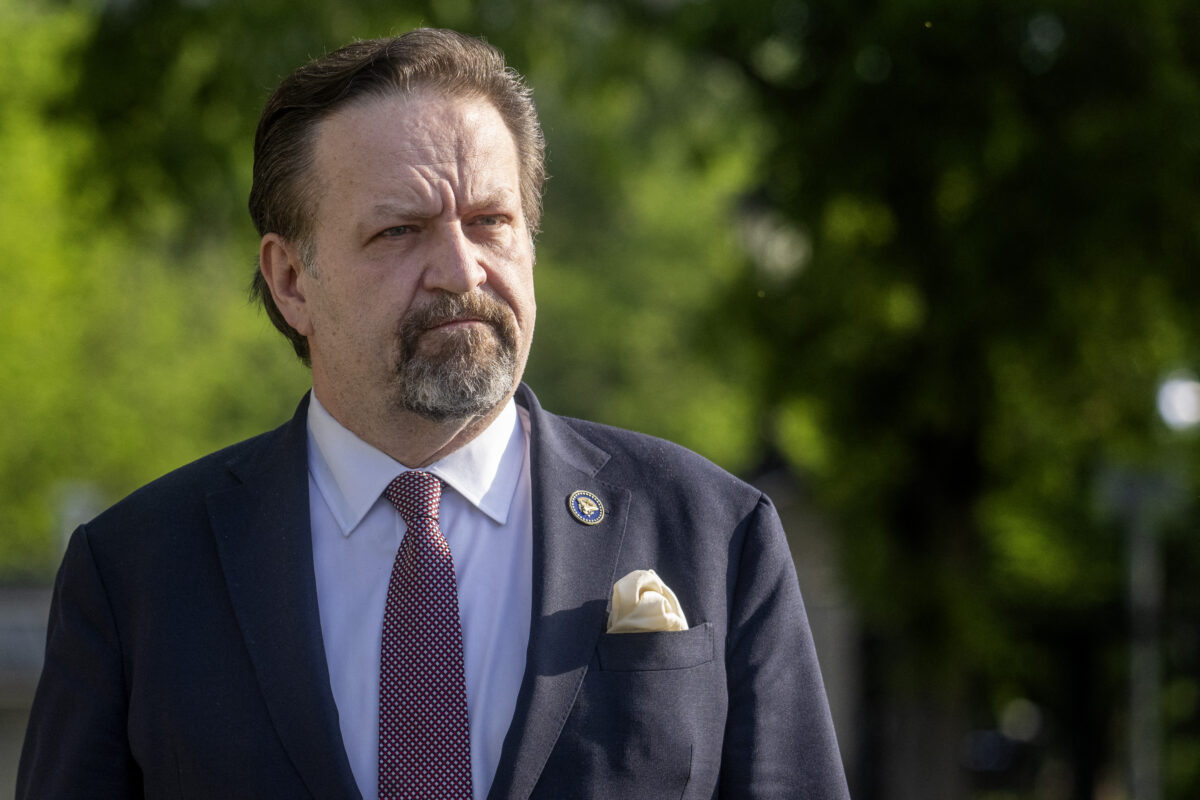
Sebastian Gorka, the National Security Council’s senior director for counterterrorism, defended the Trump administration’s executive order mandating the assessment of certain branches of the Muslim Brotherhood for designation as foreign terrorist organizations, which some critics have argued does not go far enough, Jewish Insider’s Marc Rod reports.
Pushback: “It’s a statement of designation to occur, not a de facto designation, because we follow the law in the Trump administration. We believe in the Constitution and the statutes agreed upon by Congress and signed by the president. We don’t just do stuff because we want to,” Gorka said. Gorka said that the three branches named in the executive order are “slam dunk cases,” and that the administration plans to go after additional branches. “For the record, this is not the end, it is just the beginning, and we are assiduously working on the next tranche of designations right now,” Gorka continued.
PRIMARY MATCHUP
Lander struggles to land hits on Goldman — beyond disagreeing on Israel

The primary matchup between outgoing New York City Comptroller Brad Lander and Rep. Dan Goldman (D-NY) was widely expected to be a bellwether race that would test the strength of pro-Israel sentiment within the Democratic Party. The race pits Lander, an outspoken critic of Israel and its war in Gaza, against Goldman, a more moderate incumbent viewed as a strong defender of the Jewish state. But nearly a week after announcing his challenge, Lander, the progressive New York City comptroller, is so far tiptoeing around such differences, even as they are arguably the driving contrast in the primary, Jewish Insider’s Matthew Kassel reports.
Trump talk: Instead, Lander has more actively emphasized a message that is casting Goldman as ineffective in countering President Donald Trump — declaring it is “time for fighters” and “not folders” in Congress. Such comments, however, have failed to note that Goldman, who was elected to Congress in 2022, is recognized as a leading Trump antagonist, having served as the top prosecutor in the president’s first impeachment case.
SPREADING LIGHT
Serving faith and nation: The rabbis bringing light to U.S. troops on Europe’s front lines
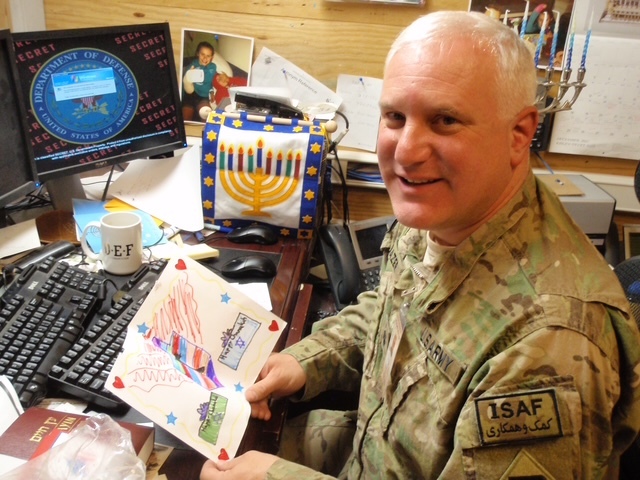
From Germany to Poland, Jewish military chaplains are counseling soldiers, leading religious services and connecting Jewish troops to their heritage — often alongside non-Jewish service members. Rabbis Aaron Gaber, Aaron Melman and Laurence Bazer spoke to Jewish Insider’s Gabby Deutch about their drive to be ohr l’goyim, a light unto the nations.
New Year’s in the old country: Last year, Gaber volunteered to spend the High Holidays in Poland and Lithuania. He drove between several different bases to make sure Jewish soldiers had access to religious services, food and learning opportunities tied to the holidays. “I take the idea of ohr l’goyim, or bringing light to the world, I was able to bring light to the world,” Gaber told JI. “If I met 10 Jewish soldiers through the entire two weeks, that was a lot. So it was individual work.”
Worthy Reads
Blood on the Beach: In The Wall Street Journal, law professor Peter Kurti, the director of the Culture, Prosperity and Civil Society program at the Australia’s Center for Independent Studies, looks at how Canberra’s response to antisemitism in recent years affected the Australian government’s ability to prevent terror attacks on the country’s Jewish community. “Australia faces a choice familiar to other liberal democracies: whether to confront antisemitism clearly and decisively or to continue managing it as an embarrassment to be explained away. Too often, political leaders have preferred ritual condemnation over moral clarity and bureaucratic language over responsibility. In the U.S., that choice has already forced a reckoning — from congressional hearings on campus antisemitism to the adoption of a national strategy to counter it. Australia’s hesitation stands in contrast, not because the threat is smaller, but because our political class has been slower to accept that antisemitism is a stress test for democratic institutions.” [WSJ]
From Rhetoric to Violence: The Atlantic’s David Frum considers how anti-Israel rhetoric can morph into antisemitic violence. “Yet there has remained, until now, terrible reluctance by Western governments to accept the appearance on their soil of deadly threats to their Jewish citizens from people motivated by anti-Israel ideology. Those movements have progressively tested what used to be red lines: blocking access to synagogues, for example, as happened in recent weeks in Los Angeles and New York City. … People who dress up like Hamas terrorists and brandish their insignia and chant their slogans are not merely opining. They are propagating, recruiting, and inciting the actions they believe in. Among Western liberals is a strong impulse to show respect to people from other cultures — or who hold other beliefs — by interpreting their words and actions in the most benign way. But sometimes the way to show the deepest respect is by taking people seriously, believing their words as they are spoken, heeding their own accounts of their intentions.” [TheAtlantic]
Flicker of Light: In The Free Press, Rachel Goldberg-Polin reflects on the recently released video of her son, Hersh, and five other Israeli hostages commemorating Hanukkah while captive in Gaza nine months before they were killed by Hamas terrorists. “Seeing these young, vibrant, and luminous Jews keeping alive their over-2,000-year-old tradition of lighting Hanukkah candles, even when in the bowels of hell on earth, you cannot help but feel something. I won’t suggest what you should feel. … In these dark times, it is a flicker of light. The flame is whispering something. If you are quiet and you lean forward, you will hear it. Did you grasp it? The Beautiful Six did. It is hope. Hope! It’s not a suggestion, or advice. It is a command. Hanukkah teaches us there is light. Even in the darkest of times and the most upside-down of places. The camera sweeps by Hersh and he says, ‘Wishing you a Hanukkah of peace.’ From hell, without a hand, he wished us peace.” [FreePress]
Word on the Street
Ben Black was ceremonially sworn in by President Donald Trump to be the CEO of the U.S. International Development Finance Corporation…
The Washington Post spotlights Illinois Gov. JB Pritzker — and his vast war chest, owing to a personal fortune nearing $4 billion — as the Democrat mulls a 2028 presidential bid…
Former Israeli hostage Eli Sharabi met former President Joe Biden on the sidelines of the Philadelphia Eagles’ Sunday game against the Las Vegas Raiders…
EPA Administrator Lee Zeldin had a basal cell carcinoma removed from his face…
Two U.S. servicemembers and an interpreter were killed in an attack in Palmyra, Syria, by a Syrian member of the country’s security forces who was set to be fired over his extremist views…
Harvard removed the head of its public health school, which had increasingly come under fire over what the school’s antisemitism task force described as programming and curricula that focused “heavily on Palestinians” and “also rarely presented Israeli points of view except those of the state’s harshest critics”…
Conservative lawyer José Antonio Kast won Chile’s presidential election in a landslide on Sunday over Communist leader Jeannette Jara…
Israel’s Cabinet approved the construction of 19 West Bank settlements, including two that had been evacuated during the 2005 disengagement…
Israel killed senior Hamas commander Raed Saad in a targeted drone strike on Saturday; Saad had been involved in preparations for the Oct. 7, 2023, Hamas terror attacks…
U.S. forces last month raided a ship bound for Iran from China that was carrying military-related materials; the cargo was seized from the vessel and allowed to continue on…
Iran seized a tanker transiting through the Gulf of Oman that was carrying 6 million liters of what Iranian state media described as “smuggled diesel”…
The family of Narges Mohammadi said the Nobel peace laureate was arrested by Iranian authorities while giving a speech at a memorial service in the Iranian city of Mashhad…
Rob Reiner died at 78; the actor and director was killed at his Los Angeles home, along with his wife; LAPD is investigating the deaths as homicides…
Pic of the Day
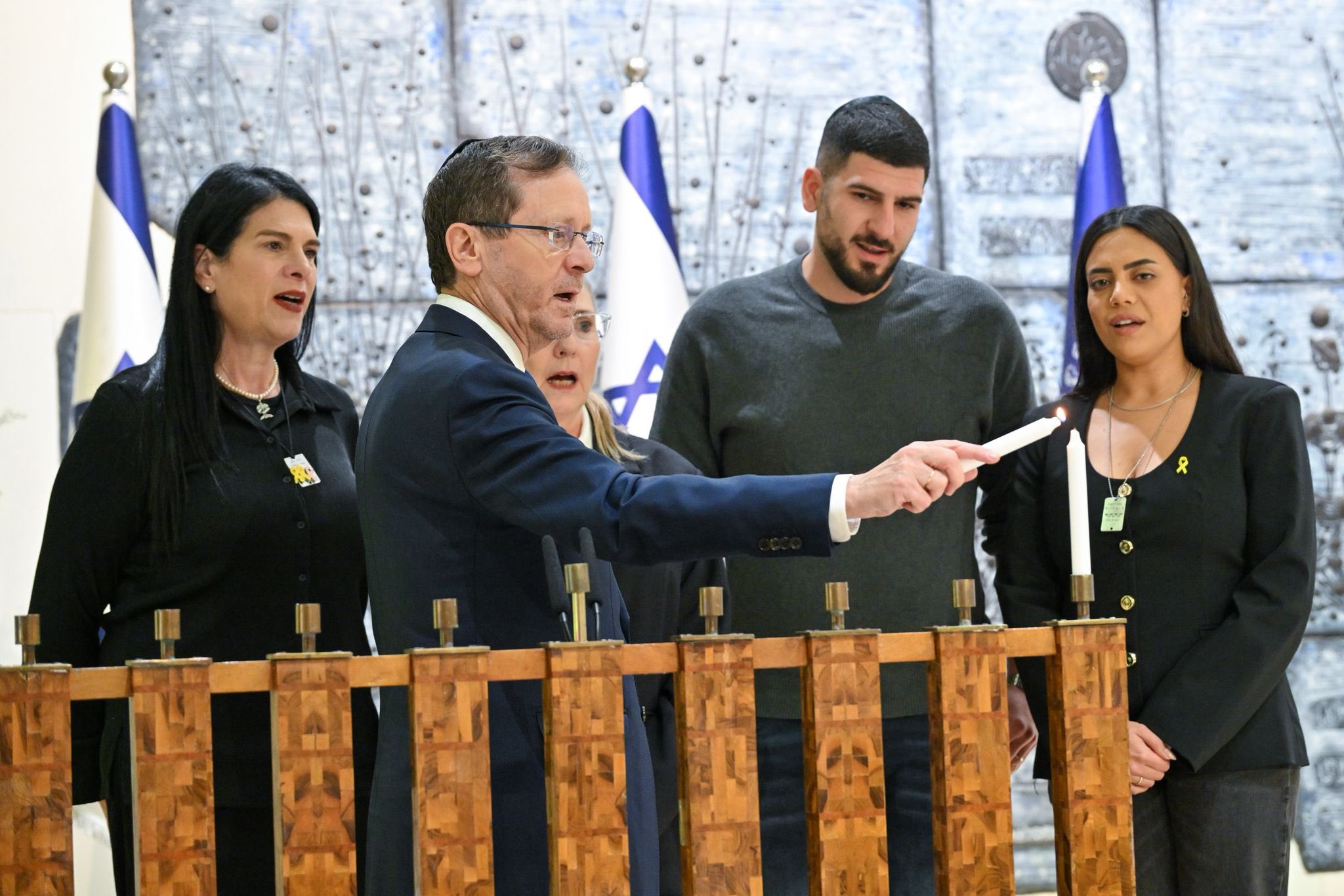
Israeli President Isaac Herzog and First Lady Michal Herzog lit the first Hanukkah candle with the family of Staff Sgt. Ran Gvili, the last hostage still held in Gaza, at the President’s Residence in Jerusalem last night. Gvili was injured in battle and taken hostage during the Oct. 7, 2023, Hamas terror attacks on Israel and later died in captivity.
Birthdays

Washington, D.C.-based chef and restaurateur, Spike Mendelsohn turns 45…
Former member of the New York State Assembly, attorney general of New York and member of the New York City Council, Oliver Koppell turns 85… Senior rabbi emeritus at Congregation Mt. Sinai in Brooklyn Heights and EVP of the New York Board of Rabbis, Rabbi Joseph Potasnik turns 79… Film, stage and television actress and voice artist, Melanie Chartoff turns 75… Owner of the largest construction company for gas pipelines in Russia, Arkady Rotenberg turns 74… University of Wyoming professor for over 20 years, now president of the Colorado Hebrew Chorale, Seth Ward turns 73… President and CEO at Jewish Family & Children’s Services of the Suncoast in Sarasota, Fla., Dr. Helene Lotman… Founder and former chairman of BizBash, David Adler turns 72… Sportscaster, he was the radio voice for the Alabama Crimson Tide football team for 36 years, Eli Gold turns 72… U.S. senator (D-VA), Mark Warner turns 71… Executive chairman of South Africa’s Resolve Communications, Tony Leon turns 69… Executive director at Silicon Couloir in Jackson Hole, Wyo., until 2024, Gary S. Trauner turns 67… Partner at Wachtell, Lipton, Rosen & Katz specializing in M&A, Adam O. Emmerich turns 65… Actress, singer and songwriter, she appeared in the title role of the 1984 film “Supergirl,” Helen Slater turns 62… Television and movie producer, screenwriter and executive, producer of the first eight seasons of the “Pokémon” TV series and writer of most of the “Pokémon” films, Norman J. Grossfeld turns 62… Rabbi serving communities in California’s Central Valley including as a prison chaplain, Paul Gordon… Chicago-born stand-up comedian and author, Joel Chasnoff turns 52… Director of community relations and Israel affairs at the Jewish Federation of Greater Charlotte, Tal Selinger Stein… Actor, writer and musician, he is known for his role as Seth Cohen on “The O.C.,” Adam Brody turns 46… Former mayor of Bal Harbour, Fla., he is an attorney and public speaker, Gabriel Groisman turns 45… Israeli singer-songwriter and actress, she played the role of Hila Bashan on Season 3 of “Fauda,” Marina Maximilian Blumin turns 38… Client solutions manager at Samsung Ads, Julie Winkelman Lazar… Musician and actress, her first major film, “Licorice Pizza,” was released in 2021, Alana Mychal Haim turns 34… Associate partner at Activate Consulting, Lily Silva… and her twin brother, a special policy advisor at the U.S. Department of Homeland Security until earlier this year, Nicholas Silva… Figure skater who represented the U.S. at the 2014 and 2022 Winter Olympics, Jason Brown turns 31…
For the Jews of Sydney, the horror that unfolded on Bondi Beach was a shock, but not a surprise
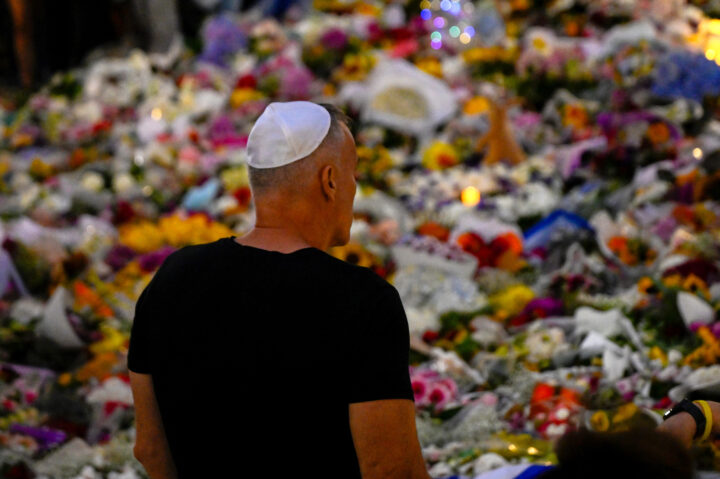
(Photo by Izhar Khan/Getty Images)
Mourners gather at the Bondi Pavilion as people pay tribute to the victims of a mass shooting at Bondi Beach yesterday, on December 15, 2025.
For the Jews of Sydney, Australia, the horror that unfolded on the popular Bondi Beach during a Hanukkah celebration was a shock, but not a surprise.
Nor was it a surprise for much of the global Jewish community, which, while always on alert and monitoring threats, scales up its efforts around holidays — a task even more critical in the wake of antisemitic terror attacks earlier this year on Passover and Yom Kippur.
But the deadly attack in Sydney seemed — somehow — to have caught Australian officials by surprise, despite a warning from Israeli Prime Minister Benjamin Netanyahu four months ago over the potential for attacks against the Australian Jewish community, as well as a spate of attacks targeting Jewish institutions, some of which were orchestrated by Iran.
An Israeli tourist who was at Bondi during the attack who spoke to JI on Sunday said that he sensed “that [Australian authorities] don’t know how to deal with mass casualty events. … I didn’t see anything on the news for almost an hour, and when I asked locals why they weren’t calling news hotlines or reporting on news apps, they said Australia doesn’t have that. In Israel, it would be in the news three minutes later.”
Indeed, within an hour of the onset of the attack, Israeli news networks were covering the carnage. International news outlets and networks, as well as Australian media, were slow to note that the attack had taken place at a Hanukkah celebration. Three hours after the attack, the Sydney Morning Herald’s top story was headlined “Ten Dead in Bondi Beach Shooting.” The subhead, too — “Multiple dead, two police officers among injured after shots fired at Bondi Beach” — gave no indication that the attack had taken place at a Hanukkah celebration, and that rabbis and Jewish community members had been shot.
It was a year ago this week that JI reported on concerns from Australian Jewish leaders over Canberra’s response to the antisemitism that dramatically increased following the Oct. 7, 2023, Hamas terror attacks and ensuing war between Israel and Hamas.
A travel advisory issued by the Simon Wiesenthal Center more than a year ago specifically cited the Australian government’s response, saying that “in failing to act against the demonization of Jews, Israel and Zionism on the streets of Australian cities, the Australian government has allowed violence against Jews and Israelis to be normalized.”
“Moreover,” the advisory continued in an ominous and prescient warning, “authorities have failed to take necessary measures to protect Jewish communities from increasingly belligerent and violent targeting by Islamists and other extremists.”
Speaking to Australian media, Jillian Segal, Australia’s special envoy to combat antisemitism, said on Monday that antisemitism had been “seeping into society for many years and we have not come out strongly enough against it.”
It was five months ago that Segal released an extensive plan for Canberra to address rising antisemitism. The plan, which faced pushback from critics at the time, had only partially been put into effect, Segal told the Australian Jewish News after yesterday’s attack.
Jewish leaders from around the world had been in Australia in the days prior to the Bondi Beach attack as part of the J7 Task Force, a group representing the world’s largest Jewish Diaspora communities, that had traveled specifically to Australia out of concern over rising antisemitism down under.
“We came to Australia because we saw the red lights flashing — because the Australian Jewish community has been under siege since Oct. 7, 2023, facing a nearly fivefold increase in antisemitic incidents since Hamas’ deadly attack on Israel,” Marina Rosenberg, the senior vice president of international affairs at Anti-Defamation League, wrote in an op-ed published in eJewishPhilanthropy this morning. “In meetings with high-level government officials and members of Parliament, our message was explicit and urgent: What begins with words can end with violence.”.
“Tragically,” Rosenberg continued, “those warnings were not acted upon fast enough.”
Sen. John Fetterman (D-PA): ‘Tree of Life to 10/07 to Bondi Beach: antisemitism is a rising and deadly global scourge’
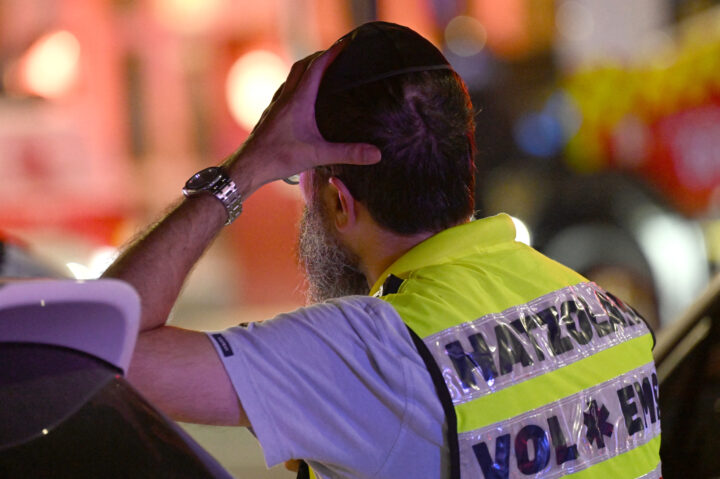
Saeed KHAN / AFP via Getty Images
A Jewish community member reacts as he stands at the site of a terror attack at Bondi Beach in Sydney on December 14, 2025.
U.S. officials and lawmakers across the political spectrum are condemning the terrorist attack at a Chabad Hanukkah celebration Sunday outside Sydney, Australia, tying the murder of 15 attendees to the rise of antisemitism across the world.
Secretary of State Marco Rubio said in a statement that the United States “strongly condemns” the attack and that “antisemitism has no place in this world.”
U.S. Ambassador to the U.N. Mike Waltz said the “horrific and deadly terrorist attack” is a “sickening reminder that antisemitism remains a global threat. Under President Trump’s leadership, the United States will confront this hatred — at the U.N. and around the world — without apology or hesitation.”
FBI Director Kash Patel said he is “in touch with our counterparts in Australia” regarding the attack and is “providing the requested assistance,” while Attorney General Pam Bondi called it “heartbreaking news.”
U.S. Ambassador to Israel Mike Huckabee noted, as did several others, that Australian Prime Minister Anthony Albanese’s original statement on the attack did not specify its antisemitic nature. “The disgraceful statement from Australia PM never mentioned it was jihadist attack on Jews on first day of Hanukkah. Hope he’s ashamed of antisemitic statements past year,” Huckabee wrote on X.
On the Hill, lawmakers from both parties also expressed their shock and sadness. All 25 Jewish members of the House, on both the Republican and Democratic sides, issued a joint statement remembering the “Jewish families in Australia” who were “grotesquely targeted with hate and murderous intent.”
“Sadly, this attack does not come as a surprise to the Jewish community of Sydney who have been raising a clarion call for local and national authorities to take concrete steps against a rising tide of antisemitism,” the members, organized by Rep. Brad Schneider (D-IL), wrote. “Antisemitism is a cancer that eats at the core of society, whether in Australia, the United States, or anywhere it is allowed to take root and grow. We join leaders around the globe in condemning this evil act and in calling for justice, peace, and unwavering support for those affected. We also call on all leaders to do better standing up to antisemitism, bigotry, and hate.”
House Speaker Mike Johnson (R-LA) said the “tragic news” is “another wake-up call.”
“Jewish people must be free to practice their faith openly and without fear. Antisemitism must be confronted and defeated wherever it appears,” he wrote on X.
House Minority Leader Hakeem Jeffries (D-NY) said in a statement he was “horrified by the attack” and that it is “our collective responsibility to aggressively eradicate the poison of antisemitism whenever and wherever it is found.”
“Today, as the Jewish community throughout America gathers with their loved ones to celebrate Hanukkah, the New York Police Department and law enforcement resources across the country must be vigorously deployed to keep everyone safe. It is my sincere hope that the story of Hanukkah and the candles that will shine on windowsills in homes around the world will bring needed light and resolve that the powerful resilience of the Jewish people that has existed for millennia will continue to endure always and forever,” Jeffries wrote.
Senate Minority Leader Chuck Schumer (D-NY) said the attack “is beyond appalling” and “a shocking reminder that antisemitism and hate is not only toxic and far too present and widespread around the world, it is deadly. It must be vigorously condemned, confronted and overcome.”
Sen. Ted Cruz (R-TX) called it “an act of barbaric, antisemitic terrorism.”
“It was the outrageous, but all-too-predictable result of far too many leaders around the world tolerating and even fomenting hatred of Jews, instead of countering the evil of antisemitism with moral clarity and unrelenting condemnation.”
Sen. John Fetterman (D-PA) connected the attack to other antisemitic acts of violence: “Tree of Life to 10/07 to Bondi Beach: antisemitism is a rising and deadly global scourge,” he wrote. “I stand and grieve with Israel and the Jewish global community.”
Rep. Ritchie Torres (D-NY) said, “Terror and violence against Jews are part of a global surge in antisemitism fueled by an ever-escalating campaign of demonization and dehumanization. Yet the Australian Prime Minister’s initial statement expressed sympathy for ‘every affected person,’ conspicuously omitting any mention of Jews or Jew-hatred: a sin of omission that constitutes a fundamental failure of moral clarity at the very moment it is most urgently needed.”
Rep. Elise Stefanik (R-NY) called it “heinous” and said, “We must root out the rot of this most ancient hatred to bring safety and security for all humanity. Never Again is NOW.”
Rep. Ro Khanna (D-CA) called the “targeted terrorist attack … appalling and sickening,” and Rep. Haley Stevens (D-MI) said she was “horrified by the news of yet another disgusting act of antisemitic violence … Antisemitism has no place in our world.”
Sen. Rick Scott (R-FL) wrote, “Allowing antisemitism in Australia created the environment for this despicable act. Globalize the antifada [sic] is not a slogan — it’s a promise. A promise we all have to stop.”
Sens. Jacky Rosen (D-NV), Amy Klobuchar (D-MN), Lindsey Graham (R-SC), Mark Warner (D-VA), Tim Scott (R-FL), John Curtis (R-UT), Dave McCormick (R-PA), Katie Britt (R-AL), Ted Budd (R-NC), Jim Banks (R-IN) and Marsha Blackburn (R-TN) and Reps. Mike Lawler (R-NY), Raja Krishnamoorthi (D-IL), Rudy Yakym (R-IN), House Majority Whip Tom Emmer (R-MN), and Shontel Brown (D-OH) also offered their condemnation of the attack and prayers to the victims, among others.
Deborah Lipstadt, former special envoy to monitor and combat antisemitism under the Biden administration, called out New York Mayor-elect Zohran Mamdani for contributing to rhetoric that she said fueled the attack. “Mr. MayorElect, when you refuse to condemn & only ‘discourage’ use of the term ‘Globalize the Intifada, you help facilitate (not cause) the thinking that leads to Bondi Beach,” she wrote of Mamdani.
In a subsequent post, she asked, “Some asked has Mamdani condemned this? Not yet but he will. Strongly. But the time 2speak is before tragedies. The ‘wink & nod’ to Jew-hatred by facilitating language that leads to murdering Jews is unacceptable — and need we say it — so is murdering Jews.”
Mamdani did issue a statement about the attack, which he called “a vile act of antisemitic terror.”
“Another Jewish community plunged into mourning and loss, a holiday of light so painfully reduced to a day of darkness. This attack is merely the latest, most horrifying iteration in a growing pattern of violence targeted at Jewish people across the world. Too many no longer feel safe to be themselves, to express their faith publicly, to worship in their synagogues without armed security stationed outside. What happened at Bondi is what many Jewish people fear will happen in their communities too,” the mayor-elect wrote.
Jewish organizations also came out in force to share their condemnation and pain.
Ted Deutch, CEO of the American Jewish Community, said he was “Horrified. But not surprised.”
“Bondi Beach is one of the most beautiful places in the world. And Jewish kids celebrating the joyous holiday of Hanukkah with their families is likewise one of the most beautiful images of our people. Both have now been ripped to pieces. … This week, we will be reaching out to leaders from around the world to unite around a shared commitment to eradicate the evil scourge of antisemitism. Take our call. Stand with the Jewish community.”
“But don’t wait to speak out,” he continued. “Do it today. Wherever you live. If you are a leader, then lead. Stand with your Jewish community where you are. Yes, reach out privately to your friends in the community to express your support. But speak out as well for all the world to hear. Everyone who looks up to you needs to hear you condemn the antisemitic slaughter in Australia and the ongoing threats to our community everywhere. We are 16 million people in the world. We cannot do this on our own. Stand with us.”
William Daroff and Betsy Berns Korn, respectively the CEO and chair of the Conference of Presidents of Major American Jewish Organizations, recalled their own recent trip to Australia in a statement, including meeting with a Chabad emissary who was killed in the attack: “Just last week, we joined a delegation of Jewish leaders from the seven largest Diaspora Jewish communities in Australia as they confronted a sharp rise in antisemitism. … This past Shabbat, we attended morning services at Chabad of Bondi Beach. We davened in their beautiful new building and saw a community full of warmth, faith, and energy. After services, we had the honor of sharing Shabbat lunch in the home of Rabbi Yehoram and Shternie Ulman with their family, including Rabbi Eli Schlanger and his wife, Chaya. We are devastated to learn that Rabbi Schlanger, z’l, was among those murdered today.”
“Our hearts are with the families of those killed and injured, and with our brothers and sisters in Sydney as they confront this brutal tragedy. The story of Chanukah speaks to Jewish survival and resilience in the face of persecution. This attack on the Bondi Beach community strikes at the heart of the entire Jewish people. We pray for the swift recovery of the injured and mourn those whose lives were taken in this senseless antisemitic act,” Daroff and Korn wrote.
Karen Paikin Barall, chief policy officer at The Louis D. Brandeis Center for Human Rights Under Law, wrote in a post, “In 2008, as Deputy Special Envoy to Monitor and Combat Antisemitism, I traveled to Australia amid rising antisemitic incidents and a troubling lack of response from law enforcement and government leaders. Australia is home to the largest population of Holocaust survivors outside Israel. The Bondi attack is not isolated. It reflects years of inaction and minimization. Antisemitism doesn’t fade when ignored, it grows more violent.”
The Orthodox Union called the attack “a direct assault on Jewish life.”
“Chanukah is the most public of Jewish holidays. We mark the defeat of ancient antisemitic persecution by lighting our menorahs openly and unapologetically. That is precisely why this attack matters. It was meant to intimidate, silence, and drive Jews out of the public square. It will fail. At a time when antisemitism is being normalized, excused, and even justified in public discourse, this attack is no longer shocking. It is the predictable result of unchecked incitement, extremist rhetoric, and repeated failures by leaders to draw red lines,” the organization wrote.
“Calls to ‘globalize the intifada’ are not slogans. They are threats, and they lead directly to violence. … Silence, moral equivocation, and inaction are no longer acceptable. Jews have the right to celebrate their faith openly and safely, without fear, anywhere in the world.”
Democratic Majority for Israel said the attack “makes painfully clear that antisemitic violence remains a grave and growing threat. Jews must be able to gather, pray, and celebrate their religion openly and safely. From the Tree of Life to Poway, from Boulder to Washington, D.C., and now Bondi Beach, the rise of violent antisemitism demands urgent and sustained action from our leaders and communities.”
“At this moment of darkness, as we prepare to begin Hanukkah, we draw strength from the story of the Maccabees, who faced hatred and persecution with courage and resilience. That spirit endures today.”
The Jewish Council for Public Affairs wrote, “Our hearts are shattered for those murdered and injured, all those impacted, and the entire Australian Jewish community. And we are angry: That Jews around the world are now beginning Hanukkah fearful of showing up and celebrating. That after years of us sounding the alarm about the crisis of antisemitism, our leaders and our society have still failed to truly recognize and effectively address this threat. That too many loud voices seek to politicize and exploit our real, legitimate fears — rather than taking the comprehensive, whole-of-society action necessary to keep us safe.”
The Jewish Federations of North America, Anti-Defamation League, Secure Community Network, Community Security Service and Community Security Initiative issued a joint statement with increased security recommendations for “all Jewish organizations that are hosting events in the coming days to undertake.”
Australian Prime Minister Anthony Albanese called the attack, among whose victims was a Chabad emissary, an ‘act of terror’
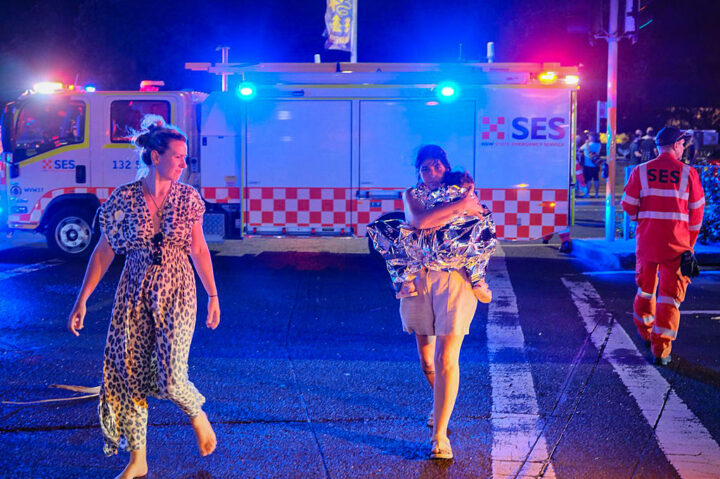
George Chan/Getty Images
A member of the public leaves the scene with her child, who is covered in an emergency blanket, after a shooting at Bondi Beach on December 14, 2025 in Sydney, Australia.
At least 15 people were killed on Sunday in an attack at a Hanukkah event in Sydney, Australia, in what authorities described as a targeted terror attack on the Jewish community.
The event was hosted by Chabad of Bondi, a neighborhood with a major Jewish community in Sydney.
Two gunmen opened fire with long rifles from outside the gated-off event, killing at least 15, and injuring 40. Among the victims were Rabbi Eli Schlanger, the Chabad emissary to Bondi, Holocaust survivor and immigrant from the Former Soviet Union Alex Kleytman, 87, and a 10-year-old girl identified by the Australian press only as Matilda.
The terrorists were Naveed Akram, an unemployed bricklayer and his father, Sajid, a grocer, who was killed at the scene. Naveed was shot, as well, and was in critical condition in the hospital on Monday. They were known to Australian Federal Police, which were investigating their possible ties to the ISIS offshoot the Islamic State of East Asia.
Police also found unexploded bombs in the area, near Sydney’s most popular beach, as well as additional weapons in the Akrams’ car.
Chris Minns, the premier of New South Wales, the province in which Sydney is located, said that the shooting was a “targeted attack on the Sydney Jewish community.” NSW Police declared the attack a terrorist incident. One of the two assailants was identified by authorities as Naveed Akram, and was killed at the scene.
Australian Prime Minister Anthony Albanese said following the attack that his government would implement parts of its special envoy on antisemitism’s recommendations, including additional funding for security.
“This senseless attack is one which is an act of terror. It is aimed at creating fear. But we will stand with the Jewish community and Jewish Australians at this time,” Albanese said in a statement to the press.
Kobi Farkash, an Israeli tourist in Sydney and an eyewitness to the attack, told Jewish Insider that he went to the beach and happened upon the Chabad event.
“It was surrounded by a simple fence. There were four or five Jewish security guards without weapons, and maybe two police officers there before the attack,” he recalled. “Someone from Chabad, a man with a kippah and tzitzit, invited me in … he told the security guard to let me in because I’m Israeli. I put on tefillin, ate a sufganiya [jelly doughnut]. There were activities for kids, like at any community event.”
After spending some time at the event, Farkash said, “I heard gunshots … I saw people running and someone on the floor, bleeding. I started running away with everyone else.”
“People were running in all directions, like the Nova,” Farkash said, referring to the Hamas massacre of revelers at a rave in southern Israel on Oct. 7, 2023. “It’s an event where people are celebrating and happy, and you can’t believe this happened a moment later. It felt like the Nova.”
When things seemed quieter, Farkash returned to the scene and found that first responders “were working very slowly. In Israel, we’re used to this and things work much faster. The ambulances, police, news reports, come sooner. My sense was that [Australian authorities] don’t know how to deal with mass casualty events. … I didn’t see anything on the news for almost an hour, and when I asked locals why they weren’t calling news hotlines or reporting on news apps, they said Australia doesn’t have that. In Israel, it would be in the news three minutes later.”
“I have never been in a terrorist attack in Israel,” Farkash, who grew up in Bnei Brak, near Tel Aviv, said. “It’s crazy that I went to the end of the world and experienced a terror attack here.”
Lissy Abrahams was walking with her adult daughter to a Bar Mitzvah party being held nearby and parked by where the Chabad party was being held. As they were walking, she and her daughter heard gunshots.
“We looked at each other and said ‘run,’” Abrahams recounted to JI. “I was wearing high heels that were strapped on and couldn’t just flick them off. My daughter was wearing flat shoes, and she kept coming back for me, but I told her to go. … She looked at me and made a decision that she couldn’t.”
Abrahams and her daughter saw a storage area, where lifeguards keep their equipment, and ran down to the beach to take shelter with beachgoers, including parents holding babies.
“People were standing in the doorway and didn’t know what to do, but as Jews, we understood what was going on,” she said. “I said ‘this is a terrorist attack. We need to be very careful and we need to pull this [garage] door down.’ … We needed a barrier. I had to be very firm with them, because they didn’t understand, but I had Oct. 7 footage in my mind.”
“Time was distorted, it was moving fast and slow, so I have no idea how long it took, but someone from the [local] council came and said we can go. We decided to trust that advice and go out … My daughter and I just ran. … We hitchhiked; we jumped into a stranger’s van. … We were so lucky,” she said.
Abrahams said she kept thinking about the Oct. 7, 2023, Hamas attacks on Israel: “It really struck me how many decisions I had to make and I had no idea where they would lead me. I didn’t know how many terrorists there were. I was making decisions that could have ended my life. … Jews on Oct. 7, they just had to make decisions, too.”
Abrahams was part of a group of Sydney residents who would meet weekly to read the names of the hostages taken in the Oct. 7 attacks, and she said she was very moved to see the letter written by the Hostage Families Forum to the community.
“On Saturday [the group] met for lunch. We were happy; we could breathe; we were proud of our commitment. And there we were the next day, with our community suffering,” she said. “We are feeling the love from Israel and around the world. We are one big Jewish family.”
Abrahams spoke to JI on Monday, after returning to Bondi Beach to retrieve her car, and said she saw Chabad rabbis had set up a booth at the site to help people put on Tefilin: “These are the cousins, the brothers-in-law and the best friends of people killed.”
Prominent pro-Israel activist Arsen Ostrovsky, who recently moved back to Australia after living in Israel for 13 years to head the advocacy group Australia Israel & Jewish Affairs Council, was injured by a bullet that grazed his head during the attack. His wife and two daughters also attended the event, but were not injured.
“I was here with my family, it was a Hanukkah event, there were hundreds of people, there were children, families, elderly, enjoying themselves,” Ostrovsky told Australia’s News 9. “All of a sudden, there’s absolute chaos, there’s gunfire, people ducking. … I saw blood gush in front of me, I saw people hit. … My only concern was where are my kids? Where is my wife? … I survived Oct. 7, I lived in Israel 13 years. We came here only two weeks ago to work with the Jewish community, to fight antisemitism, to fight this bloodthirsty ravaging hatred. … We’ve lived through worse. We’re going to get through this and we’re going to get the bastards that did this.”
“It was an absolute bloodbath, blood gushing everywhere. Oct. 7, that’s the last time I saw this. I never thought I’d see this in Australia, not in my lifetime,” Ostrovsky added.
Ostrovsky’s brother-in-law, Rabbi Menachem Creditor, founder of Rabbis Against Gun Violence, posted a photo of Ostrovsky being evacuated, writing, “Antisemitism is blasphemy against life, and I know this will not slow my brave brother Arsen down. It will fuel his work with AIJAC … on behalf of the Jewish community in Sydney … All Jews are family and are responsible for one another. In this case, that hit even closer to home. We will not be quiet. We will not hide. We are Jews. We are proud. We are strong. And we have work to do in the world, and this will not slow us down. Am Yisrael Chai!”
There has been a sharp increase in antisemitic attacks in Australia since the Oct. 7, 2023, Hamas attacks on Israel and the subsequent war. In the decade before October 2023, there was an average of 342 anti-Jewish incidents a year in Australia; since then, the average has risen to 1,858. Two days after the Oct. 7 attacks, thousands gathered outside the Sydney Opera House to protest Israel and chanted “f*ck the Jews.” Incidents since October 2024, the period that the latest antisemitism report from the Executive Council of Australian Jewry measures, included an arson attack on a kosher caterer, burning of cars and vandalizing buildings in a Sydney suburb, and the firebombing of a synagogue in Melbourne.
Australia expelled the Iranian ambassador earlier this year and designated the Islamic Revolutionary Guard Corps a terrorist organization, after intelligence services found that Iran was linked to the arson attacks.
Israeli President Isaac Herzog said, “The heart of the entire nation of Israel skips a beat at this very moment, as we pray for the recovery of the wounded … and we pray for those who lost their lives.”
Herzog and Israeli Foreign Minister Gideon Sa’ar noted that Israel had warned Australia that it needs to do more against antisemitism.
“We repeat our alerts time and again to the Australian government to seek action and fight against the enormous wave of antisemitism which is plaguing Australian society,” Herzog stated.
Sa’ar posted that the attack is “the results of the antisemitic rampage in the streets of Australia over the past two years, with the antisemitic and inciting calls of ‘globalize the Intifada’ … The Australian government, which received countless warning signs, must come to its senses!”
Plus, CAIR sues over antisemitism training video
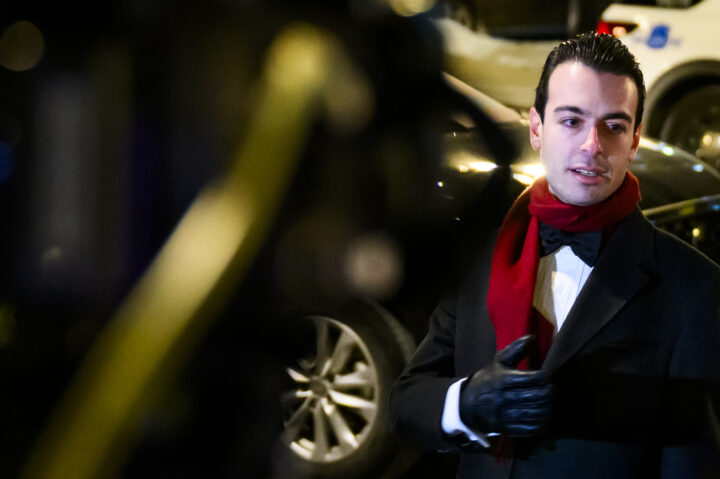
Pete Kiehart for The Washington Post via Getty Images
Paul Ingrassia, forer White House liaison to the Justice Department, left, announces the release of brothers Andrew and Matthew Valentin outside of the DC Central Detention Facility on January 20, 2025 in Washington, DC.
Good Monday afternoon!
This P.M. briefing is reserved for our premium subscribers like you — offering a forward-focused read on what we’re tracking now and what’s coming next.
I’m Danielle Cohen-Kanik, U.S. editor at Jewish Insider and curator, along with assists from my colleagues, of the Daily Overtime briefing. Please don’t hesitate to share your thoughts and feedback by replying to this email.
📡On Our Radar
Notable developments and interesting tidbits we’re tracking
President Donald Trump continued to voice his frustration today with Hamas’ ongoing violence in the Gaza Strip, including a recent ceasefire violation where Hamas terrorists shot an anti-tank missile at IDF machinery and killed two soldiers, though he stopped short of calling for action against the terror group.
At a bilateral lunch at the White House with Australian Prime Minister Anthony Albanese, Trump told reporters, “We made a deal with Hamas that they’re going to be very good, they’re going to behave, they’re going to be nice and if they’re not, we’re going to go in — we’re going to eradicate them if we have to, they’ll be eradicated.”
Trump claimed the violence was committed by rogue members of the terror group: “I don’t believe it was the leadership — they had some rebellion in there among themselves — and they killed some people, a lot of people.”
Despite his phrasing, Trump emphasized that the U.S. will not send troops into Gaza. “We don’t need to [have U.S. boots on the ground] because we have many countries, as you know, signed on to this deal,” he said. “We had countries calling me when they saw some of the killing with Hamas, saying, ‘We’d love to go in and take care of the situation ourselves.’ In addition, Israel would go in in two minutes if I asked them to go in. … But right now we haven’t said that. We’re going to give it a little chance and hopefully there will be a little less violence”…
Trump advisors Steve Witkoff and Jared Kushner, in Israel to help shore up the ceasefire, reportedly told Israeli Prime Minister Benjamin Netanyahu in their meeting today not to take any action that could risk the first phase of the agreement, Israeli media reports, despite the recent violations by Hamas…
Netanyahu appointed Israeli-American businessman Michael Eisenberg as his representative to the U.S.-led international body monitoring the implementation of the ceasefire, according to Israeli media. Eisenberg previously helped establish the Gaza Humanitarian Foundation. Vice President JD Vance, set to land in Israel tomorrow, is expected to visit the monitoring body’s command center…
The Trump administration’s nominee for ambassador-at-large for international religious freedom, former Rep. Mark Walker (R-NC), is also in Israel this week on a trip focused on “religious freedom, unity and resilience after the release of hostages.” Yesterday, he met with American hostage families and today visited Yad Vashem and the Western Wall…
The military wing of the Popular Front for the Liberation of Palestine said today it was handing over the remains of a hostage held in Gaza to IDF troops. The army announced the casket is now in Israel and headed for identification…
Meanwhile in the U.S., Politico reports that Paul Ingrassia, the Trump administration’s nominee to head the Office of Special Counsel, said on a text chain of Republican operatives last year that he has “a Nazi streak” in him “from time to time” and that all holidays commemorating Black communities “need to be eviscerated.”
Ingrassia, who has a history of promoting antisemitic conspiracy theories, including calling the Oct. 7 attacks in Israel a “psyop,” is scheduled receive a confirmation hearing in the Senate on Thursday…
The Council on American-Islamic Relations filed a lawsuit against Northwestern alleging that the university violated Title VI of the Civil Rights Act of 1964 by adopting time, place and manner restrictions on student protest and requiring students to watch an antisemitism training video, Jewish Insider‘s Danielle Cohen-Kanik reports.
Among other allegations, the suit, filed in federal court in Illinois, claims Northwestern violated students’ rights by requiring them to agree to the school’s code of conduct, which now incorporates the International Holocaust Remembrance Alliance’s working definition of antisemitism, as well as mandatory bias training that includes a video on antisemitism created in collaboration with the Jewish United Fund, the city’s Jewish federation…
Dartmouth College joined five other universities in rejecting the Trump administration’s “Compact for Academic Excellence” over the weekend. With a deadline of today, the University of Arizona, the University of Texas at Austin and Vanderbilt University are the only schools offered early access to the compact that have yet to respond publicly…
John Kirby, spokesman for the National Security Council under the Biden administration, is set to become director of the University of Chicago’s Institute of Politics on Nov. 15, according to Axios…
⏩ Tomorrow’s Agenda, Today
An early look at tomorrow’s storylines and schedule to keep you a step ahead
Keep an eye on Jewish Insider tomorrow morning for reporting on the U.K. Jewish community’s reaction to rising antisemitism in the country after the Yom Kippur attack on a Manchester synagogue and reflections from a 21-year-old Argentinian activist who was awarded with a trip to the U.S. Holocaust Memorial Museum for her work in tolerance.
This evening, Aish is hosting former New York Gov. Andrew Cuomo in conversation with Elisha Wiesel on “the future of New York City” about the upcoming mayoral elections.
Tomorrow, the Senate Caucus on International Narcotics Control will hold a hearing on Hezbollah’s drug trafficking activities in Latin America.
Hillel International CEO Adam Lehman will appear at 92NY in New York City tomorrow evening to discuss “the state of Judaism on campus.”
Stories You May Have Missed
SUOZZI’S STAND
Tom Suozzi finds comfort zone in the political middle, speaking up for Israel

The New York Democrat praised Trump for the hostage deal: ‘We thank God and congratulate President Trump and all those who helped make the return of the hostages a reality’
HERITAGE OF HOPE
In Israel and Gaza, Nelson Mandela’s granddaughters find hope amid devastation
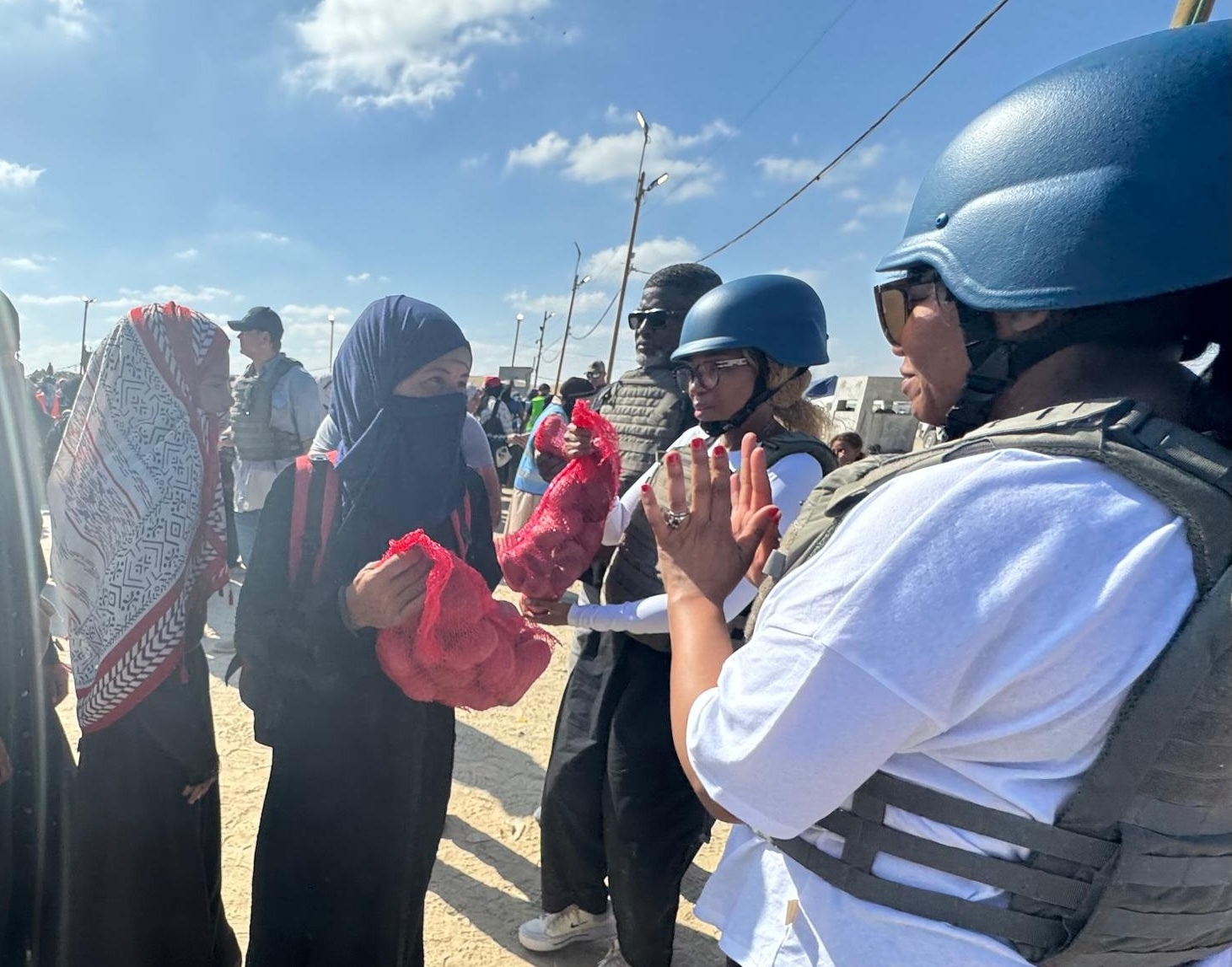
Zamaswazi (Swati) Dlamini-Mandela and Zaziwe Dlamini-Manaway traveled to the region earlier this month, ahead of an announced ceasefire between Israel and Hamas
As the UNGA begins, several countries are recognizing a Palestinian state and the EU is considering suspending free trade with Israel
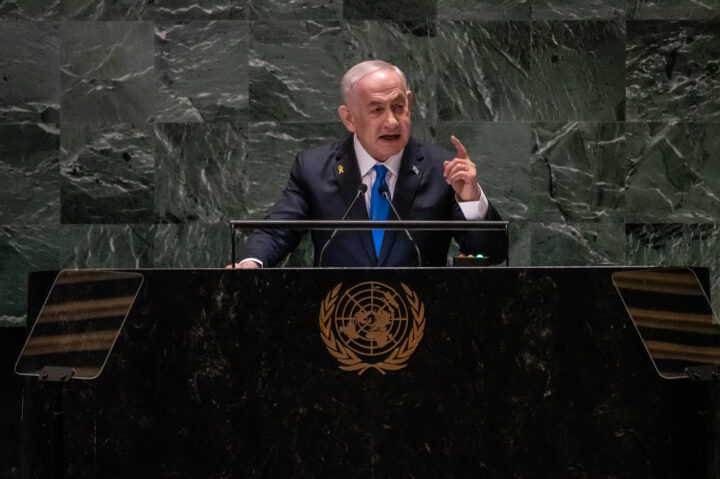
Stephanie Keith/Getty Images
Israeli Prime Minister Benjamin Netanyahu speaks during the United Nations General Assembly (UNGA) at the United Nations headquarters on September 27, 2024 in New York City.
Israeli Prime Minister Benjamin Netanyahu’s planned speech to the United Nations General Assembly on Friday is being overshadowed by European moves to isolate Israel, with the U.K., as well as Canada and Australia recognizing a Palestinian state on Sunday and more to come, as well as an upcoming EU vote on sanctions against Israel.
Netanyahu released a statement, in which he said he has “a clear message to the leaders who recognize a Palestinian state after the terrible massacre of Oct. 7: You are giving a massive prize to terror. … It will not happen. There will not be a Palestinian state west of the Jordan River.”
The prime minister hinted that Israel will increase settlement activity in response: “For years I prevented the establishment of this terror state facing great pressures, domestic and foreign … Not only that, we doubled the Jewish settlement in Judea and Samaria. The response to the latest attempt to force a terror state on us in the heart of our land will be given after my return from the U.S. Wait.”
U.K. Prime Minister Keir Starmer said on Sunday that his country is “acting to keep alive the possibility of peace and a two-state solution. That means a safe and secure Israel alongside a viable Palestinian state. At the moment, we have neither.”
He pushed back against the Israeli argument that recognition of a Palestinian state at this time acts as a reward for Hamas, arguing that “our call for a genuine two-state solution is the exact opposite of [Hamas’] hateful vision. … This solution is not a reward for Hamas, because it means Hamas can have no future.”
Hamas, however, praised the recognition as an “important move” and called for it to be accompanied by ending the “Judaization of the West Bank and Jerusalem, Israel’s isolation and Israel’s leaders brought before international court,” as well as the recognition of the Palestinians’ “natural right to resistance.”
The High-Level Conference on Palestine Statehood, led by France and Saudi Arabia, is set to take place Monday, on the eve of Rosh Hashanah. Nearly a dozen countries have said they would recognize a Palestinian state as part of that effort, following the announcements of the U.K., Canada and Australia on Sunday.
French President Emmanuel Macron argued in an interview with Israel’s Channel 12 News that “recognition of a Palestinian state is the best way to isolate Hamas … What they want is to destroy [Israel], but if we consider that the Palestinian state will always have the objective to destroy Israel, how [do] they want to build a sustainable future? There is no way.”
A recent poll commissioned by the French-Jewish umbrella organization CRIF found that 71% of French people reject the recognition of a Palestinian state before the hostages are freed and Hamas gives up power. In the U.K., a survey in The Telegraph showed 87% of Britons disagree with recognition of a Palestinian state without preconditions, including 89% of Labour voters. A YouGov poll, however, found that 44% of Britons supported the move, while 18% were opposed and 37% unsure.
U.S. Ambassador to France Charles Kushner noted that in conjunction with his announcement of Palestinian state recognition, Macron called for Palestinian recognition of Israel as a Jewish state, the demilitarization of Hamas and the establishment of strong governance for the Palestinians as preconditions for any recognition of Palestinian statehood. “These were France’s own conditions for recognition of a Palestinian state. How can France move forward with next week’s vote when none of these have been met?” Kushner said.
Netanyahu, who was Israel’s ambassador to the U.N. from 1984-1988, is known to relish his addresses to the U.N. General Assembly, embracing theatrical props, puns and long pauses on a platform where he hopes to capture the world’s attention for Israel’s benefit.
After his UNGA speeches, Netanyahu holds court, with other leaders visiting him in a conference room in Turtle Bay. This year, he is expected to meet with Argentinian President Javier Milei, the leaders of Paraguay and Serbia and New York Mayor Eric Adams, and there are reports that he will meet with Syrian President Ahmad al-Sharaa ahead of a possible security agreement between Damascus and Jerusalem. Then, Netanyahu is expected to fly to Washington to meet with President Donald Trump.
Meanwhile, Israel’s Foreign Ministry and Economy Ministry, which oversees foreign trade, have been pushing back against proposed European Union sanctions. The European Commission proposed the roll-back of relations between the bloc and Israel after it “found that actions taken by the Israeli government represent a breach of essential elements relating to respect for human rights” given “the rapidly deteriorating humanitarian situation in Gaza following the military intervention of Israel, the blockade of humanitarian aid, the intensifying of military operations and the decision of the Israeli authorities to advance the settlement plan in the so-called E1 area of the West Bank, which further undermines the two-state solution.”
The proposal, if accepted, would suspend free trade between Israel and the European Union, its largest trade partner.
A source in Brussels estimated that the move would cost Israel 227 million Euros ($266 million) in customs duties per year.
A date has not yet been set for voting on the suspension of free trade, which requires a qualified majority, also known as a “double majority,” meaning 55% of member states, and states representing 65% of the EU population, with at least four states opposed.
Hungary and the Czech Republic said they would oppose the proposal, following calls between their foreign ministers and Israeli Foreign Minister Gideon Sa’ar.
Sa’ar called the proposal “morally and politically distorted.”
“Moves against Israel will harm Europe’s own interests,” Sa’ar warned. “Israel will continue to struggle, with the help of its friends in Europe, against attempts to harm it while it is in the midst of an existential war. Steps against Israel will be answered accordingly, and we hope we will not be required to take them.”
Economy Minister Nir Barkat sent letters to Germany, Hungary, Czechia, Italy, Bulgaria, Greece, Lithuania, Cyprus, Croatia and Latvia asking them to oppose the measure to suspend free trade.
The European Commission also suspended 20 million Euros ($23.5 million) in projects with Israel, dealing with civil service training and regional-EU cooperation related to the Abraham Accords, through 2027. The commission was able to end the cooperation without a vote and noted in repeated statements that it was exempting “civil society and Yad Vashem.”
In addition, the European Commission proposed sanctions against Israeli Finance Minister Bezalel Smotrich and National Security Minister Itamar Ben-Gvir, as well as “violent settlers” and 10 members of the Hamas politburo, which would require a unanimous vote by EU member states. The ban on Israelis is unlikely to be approved, especially not the cabinet ministers.
In another sign of Israel’s increased isolation in Europe, several countries’ public broadcasters said they would boycott the 2026 Eurovision Song Contest if Israel were to take part, as it usually does.
Spain, the Netherlands, Slovenia, Iceland and Ireland have said they will not participate in the contest along with Israel, and Belgium threatened to follow suit.
Israeli public broadcaster Kan said that it will continue to be “a significant part in this cultural event, which cannot become political.”
“Israel is one of the most successful participants in the Eurovision contest — in the past seven years its songs and representatives have finished in 5th, 3rd, 2nd and 1st place,” Kan CEO Golan Yochpaz said.
Austrian Foreign Minister Beate Meinl-Reisinger, whose country is due to host the Eurovision next year, posted on X that the contest “is a symbol of peace, unity, and cultural exchange — not an instrument for sanctions.”
A group of lawmakers threatened potential ‘punitive measures’ in response to the European allies’ move

Kevin Carter/Getty Images
U.S. Capitol Building on January 18, 2025 in Washington, DC.
A group of 28 Republican lawmakers in the Senate and House wrote to the leaders of Australia, Canada, France and the U.K. urging them to walk back their plans to recognize a Palestinian state this month and threatening potential retaliation if they proceed.
“This is a reckless policy that undermines prospects for peace. It sets the dangerous precedent that violence, not diplomacy, is the most expedient means for terrorist groups like Hamas to achieve their political aims,” the Republicans, led by Sen. Rick Scott (R-FL) and Rep. Elise Stefanik (R-NY), wrote. “Accordingly, we respectfully request that you reconsider your decision, especially as Hamas continues to hold Israeli citizens hostage while still refusing to agree to a ceasefire.”
The Republicans suggested that the move could prompt “punitive measures” by the United States, without offering further details.
They said that unilateral recognition “undermines the principles of direct negotiations and imperils Israel’s security by removing incentives for Palestinian groups to repudiate terrorism, recognize Israel’s right to exist, and address final-status issues” and is “especially troubling” in the context of the Oct. 7, 2023, Hamas attacks on Israel.
They said that granting statehood now would only serve as a validation of Hamas’ activities and fuel more violence in the future, and that statehood should not be granted “until the Palestinians are willing to take responsibility for their people, renounce terrorism, and come to the negotiating table in good faith.”
They emphasized that France, the U.K., Canada and other countries lost citizens as well in the Oct. 7 attacks and that Hamas continues to hold hostages in “deplorable conditions.”
“Hamas’ war crimes are clear, and its rejection of diplomacy should lead your countries to impose more pressure. Instead, you offer greater rewards,” the lawmakers continued.
They said that the “misguided effort to reward terrorism” will also endanger the Jewish populations in the U.S. ally nations, where they already face rising antisemitism, harassment and attacks.
“You have the responsibility to stand against this scourge, denounce violence, and protect Jewish communities,” the lawmakers argued. “Sadly, your actions to legitimize a Palestinian terror state will only provide greater motivation to the violent antisemitic mobs.”
The letters were co-signed by Sens. Tom Cotton (R-AR), John Cornyn (R-TX), Ted Cruz (R-TX), Mike Lee (R-UT), Bill Cassidy (R-LA), Bill Hagerty (R-TN), Cynthia Lummis (R-WY), Pete Ricketts (R-NE), Steve Daines (R-MT), Dan Sullivan (R-AL), Joni Ernst (R-IA) and Dave McCormick (R-PA) and Reps. Rudy Yakym (R-IN), Greg Steube (R-FL), Barry Moore (R-AL), Jefferson Shreve (R-IN), Josh Brecheen (R-OK), Chris Smith (R-NJ), Craig Goldman (R-TX), Mike Flood (R-NE), Marlin Stutzman (R-IN), John McGuire (R-GA), Scott Franklin (R-FL), Claudia Tenney (R-NY), Doug LaMalfa (R-CA) and August Pfluger (R-TX)
Stefanik said in a statement to Jewish Insider, “Unilateral recognition of a Palestinian state undermines the principles of direct negotiation and imperils Israel’s security. This absurd action would reward the behavior of Hamas terrorists and does nothing to secure the release of the 48 hostages still held by Hamas.”
After Australia revealed the IRGC was behind two attacks on a synagogue and kosher restaurant, observers call for ‘increased awareness’ in the U.S.
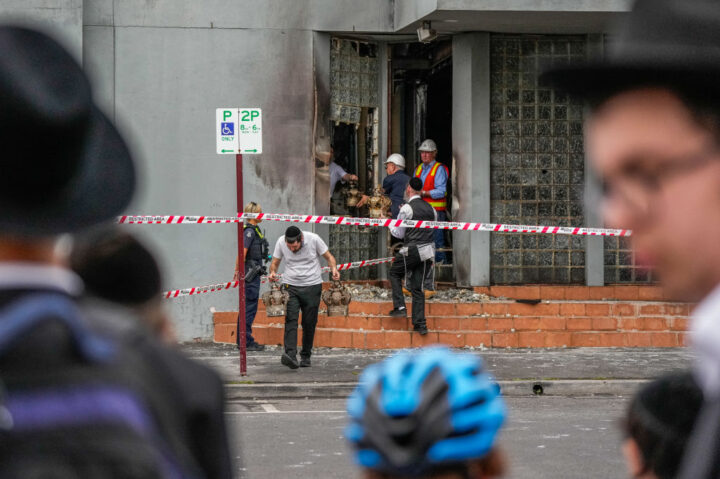
Asanka Ratnayake/Getty Images
Members of the synagogue recover items from the Adass Israel Synagogue on December 06, 2024 in Melbourne, Australia.
National security experts are warning that Jewish communities around the world could face increased Iranian threats following the recent accusation by Australian Prime Minister Anthony Albanese that the Islamic Revolutionary Guard Corps orchestrated attacks last year on a synagogue and kosher restaurant in the country.
“We’ve seen Iranian penetration in many Westernized countries, with Australia now being the latest. Though to see direct evidence of a linkage to actual violence — not just disinformation campaigns or cyber campaigns — is very frightening,” Rich Goldberg, a senior advisor at Foundation for Defense of Democracies, told Jewish Insider.
On Tuesday, Albanese announced the expulsion of the Iranian ambassador in Canberra — the first time Australia has expelled a foreign ambassador since World War II — as well as three other embassy staffers, and designated the Islamic Revolutionary Guard Corps as a terrorist group, after Australian intelligence indicated that Tehran was behind the 2024 attacks.
Goldberg called it “earth-shattering” that Australia’s “left-wing prime minister, who may not agree on a whole lot of politics with the U.S., has been woken up to the very sobering reality of Iranian threats in his own country.”
Goldberg urged Canada, the United Kingdom and the European Union to “follow swiftly” in severing diplomatic relations with Iran, and for the U.S. and Australia to put diplomatic pressure on other governments to designate IRGC as a terrorist organization. Nearly all the major EU countries still have full diplomatic ties with Iran.
“We know that Canada is highly penetrated by Iranian assets and the IRGC inside the country without having a very clear designation as a terrorist organization,” said Goldberg. “We’ve seen terrorist plots that are Iranian sponsored on British soil and the British government is still dragging its feet on prescribing the IRGC as a terrorist group. We know that they have operatives, both undercover as diplomats and as operatives, throughout the EU.”
More than a year ago, the Biden administration’s director of national intelligence, Avril Haines, warned of the Iranian regime’s efforts to take advantage of campus unrest. In light of Australia going public with the Iranian threat, Goldberg urged the Trump administration to order an updated review of Iranian influence efforts in the U.S.
“We all sort of forgot about that report, but it was big news at the time [even though] we never got a lot of detail on that,” he said. “Nobody has asked the question of what’s the current status of Iranian influence on protest movements or acts of violence in the U.S. We suspect that Iran has agents in the U.S. Some of those people have been arrested in the past. This has to remain a key priority for the FBI and [Department of] Homeland Security.”
Matt Levitt, director of the Jeanette and Eli Reinhard Program on Counterterrorism and Intelligence at The Washington Institute for Near East Policy, called for increased awareness of “Iranian external operations around the world, including in the U.S., in which the IRGC and other Iranian government agencies increasingly pay criminal proxies to carry out acts of violence, intimidation, and even kidnapping and murder on their behalf,” he said in a statement to JI.
Heads of security organizations that monitor American Jewish communal safety said that the latest news coming out of Australia — in addition to an already heightened fear of Iranian retaliation following the U.S. airstrikes on Tehran’s nuclear facilities in June — make threats from Iran and its proxy groups particularly alarming.
“The FBI and NYPD have had live investigations that have resulted in arrests of Hezbollah operatives in New York City casing out institutions,” Mitch Silber, executive director of the Community Security Initiative, which works to safeguard Jewish communities, told JI. “Iranians have a long timeline. Just because [an attack] hasn’t happened in the last six to eight weeks [since the airstrikes] doesn’t mean that the Iranians haven’t stopped plotting.”
Silber pointed to the recent case of a Hezbollah operative in Texas purchasing 300 pounds of ammonium nitrate. “Why would you [purchase] an explosive if you weren’t thinking of potentially trying to use it somewhere in the U.S.?” he said.
“These developments in Australia reflect yet another tentacle of the IRGC in its escalating influence campaigns: furthering violence, destruction and discord, with the Jewish community bearing the brunt,” Michael Masters, Secure Community Network director and CEO, told JI.
“We applaud the Australian government for shining the disinfecting light of day regarding these attacks. It only underscores the continued need for reporting, coordination and proactive security efforts by and for the Jewish community.”
HILARY WARDHAUGH/AFP via Getty Images
Australian Prime Minister Anthony Albanese speaks during a press conference in Canberra on August 11, 2025.
Good Tuesday morning.
In today’s Daily Kickoff, we report on Australia’s expulsion of Iran’s top diplomat over evidence of Tehran’s involvement in attacks on Jewish institutions in the country, and have the scoop on New York Gov. Kathy Hochul’s plans to sign into law legislation requiring schools in the state to designate anti-discrimination coordinators. We report on Mahmoud Khalil and Rep. Rashida Tlaib’s upcoming appearances at the University of Michigan, and cover the House Education and the Workforce Committee’s investigations of allegations of antisemitism at three medical schools. Also in today’s Daily Kickoff: Israeli Foreign Minister Gideon Sa’ar, Katharina von Schnurbein and Ken Martin.
What We’re Watching
- The Treasury Department is lifting its remaining U.S. sanctions on Syria today, two months after an order from President Donald Trump.
- The Democratic National Committee’s Resolutions Committee is set to vote today on two Israel-related resolutions at the DNC summer meeting in Minneapolis. One resolution, proposed by a Gen Z DNC member from Florida, calls for an arms embargo on the Jewish state, and the other — backed by DNC Chair Ken Martin — calls for a ceasefire, an influx of humanitarian aid into Gaza and a two-state solution.
- New York Gov. Kathy Hochul is slated to sign into law legislation mandating that state schools designate anti-discrimination coordinators to enforce Title VI of the Civil Rights Act. More below.
- Iranian officials are in Geneva today to meet with U.K., French and German officials for nuclear talks.
What You Should Know
A QUICK WORD WITH JI’S MELISSA WEISS
Australian Prime Minister Anthony Albanese announced on Tuesday that Iranian Ambassador to Australia Ahmad Sadeghi, along with three other Iranian diplomats, is being expelled from the country over findings from Australia’s security service that Iran was behind multiple antisemitic attacks in the country — the first time Canberra has expelled a foreign ambassador since World War II.
Albanese, speaking at a press conference alongside the country’s top intelligence official, foreign minister and home affairs minister, called the plots “extraordinary and dangerous acts of aggression orchestrated by a foreign nation on Australian soil.”
The expulsion of the Iranian diplomats comes shortly after the arrests of two individuals in connection with a December 2024 Melbourne synagogue attack, in which a synagogue was firebombed while nearly two dozen people were inside. The arson at Sydney’s Lewis’ Continental Kitchen, which took place in October 2024, caused $1 million in damage to the kosher restaurant.
Sadeghi’s expulsion comes amid an explosion of antisemitism down under in the wake of the Oct. 7, 2023, Hamas attacks on Israel and Israel’s ensuing war against the terror group in Gaza. More recently, tensions between Canberra and Jerusalem have been strained following Australia’s revocation of visas for several Israeli officials and activists and its plans, announced earlier this month, to recognize a Palestinian state.
Iran and its proxies have an extensive history of plotting attacks against Jewish, Israeli and diplomatic targets abroad, dating back decades. Tehran and its Hezbollah proxy were determined by Argentine courts to be behind the 1992 bombing of the Israeli Embassy in Buenos Aires as well as the 1994 bombing of the AMIA Jewish community center in the city, which collectively killed 114 people and injured hundreds. More recently, Iran was discovered in 2011 to be plotting to assassinate the Saudi ambassador in Washington.
Tehran has also been discovered to be behind attacks and plots across Europe and Asia, though few countries have taken significant steps to address the Islamic Republic’s malign behavior. Israel has since last April, when Iran launched its first wave of ballistic missile attacks against the Jewish state, pushed for countries to designate the IRGC as a terrorist group.
Capitol Hill has backed such efforts, with more than 130 House legislators signing onto a letter in 2023 calling on the EU to issue such a designation.
mea culpa
Netanyahu: IDF strike on Gaza hospital a ‘tragic mishap’
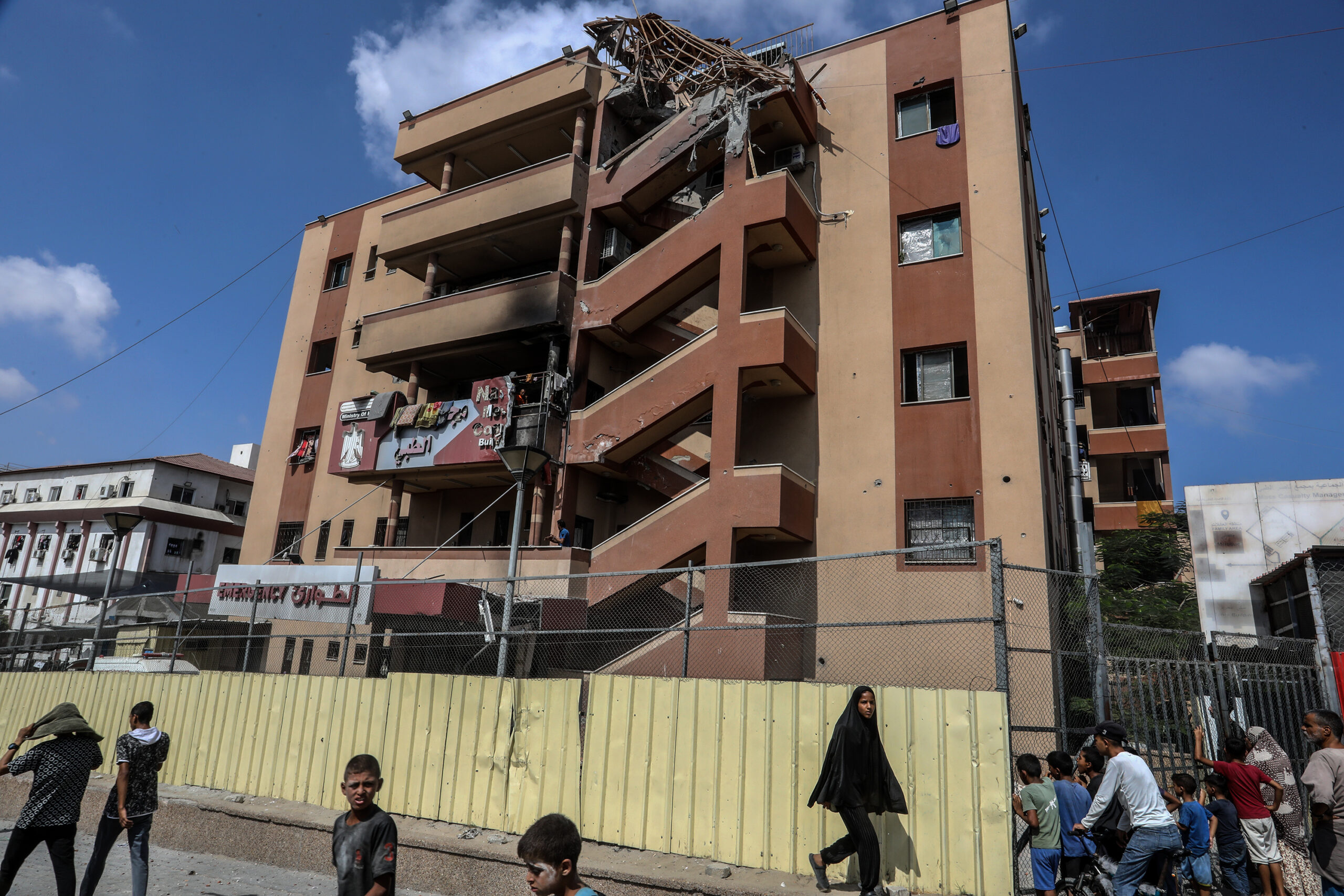
An Israeli strike on a Gaza hospital yesterday that reportedly killed 20 people, including four journalists, was a “tragic mishap,” Israeli Prime Minister Benjamin Netanyahu said on Monday, not long after President Donald Trump criticized the attack, Jewish Insider’s Gabby Deutch reports.
Probe underway: “Israel deeply regrets the tragic mishap that occurred today at the Nasser Hospital in Gaza. Israel values the work of journalists, medical staff and all civilians,” the Prime Minister’s Office said in a statement. “The military authorities are conducting a thorough investigation. Our war is with Hamas terrorists. Our just goals are defeating Hamas and bringing our hostages home.” Trump told reporters in the Oval Office that he is “not happy” about Israel’s strike on the Nasser Hospital, in the southern Gaza Strip.
Inside Israel: IDF Chief of Staff Eyal Zamir said in remarks during a visit to a Haifa naval base on Sunday that the Israeli army has met its objectives in its war with Hamas in Gaza, “including deeply damaging Hamas,” and “as a result of the military pressure, we created the conditions for the release of the hostages.” Read more from JI’s Danielle Cohen-Kanik here.
new york minute
Israeli Foreign Minister Sa’ar meets with American Jewish leaders in New York
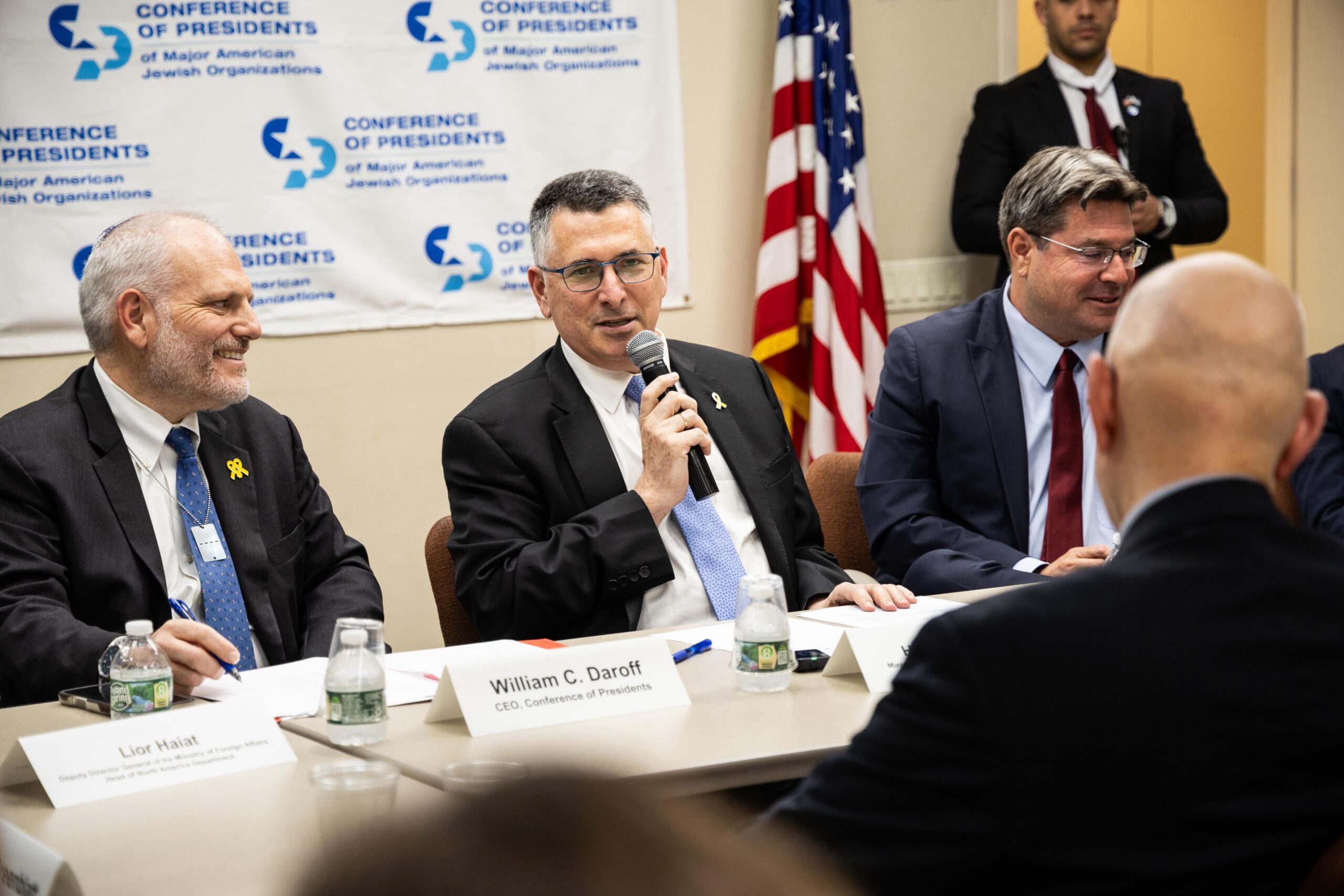
Israeli Foreign Minister Gideon Sa’ar met on Monday with American Jewish leaders in New York, speaking with the group at a moment when tensions between Diaspora Jews and Israel’s leaders over the conduct of the war in Gaza seem to be growing, Jewish Insider’s Gabby Deutch reports. The meeting was organized by the Conference of Presidents of Major American Jewish Organizations, and most of its members — representing the Reform, Orthodox and Conservative movements, as well as major national organizations including the Anti-Defamation League and the Jewish Federations of North America — were present in the room.
Mixed readouts: “We spoke about the war, the plight of the hostages, and the challenges facing Israel, with a clear focus on strengthening U.S.-Israel relations,” Conference of Presidents CEO William Daroff told JI about the “positive and wide-ranging” 90-minute meeting. “The exchange underscored our unity, our partnership with Israel and our shared commitment to the Jewish future.” But two attendees, who requested anonymity, described the meeting as antagonistic, saying Sa’ar took an argumentative tone against Jewish leaders in America who have raised concerns about the humanitarian situation in Gaza.
phone a friend
Bernie Sanders campaigns with Israel critics running for Senate
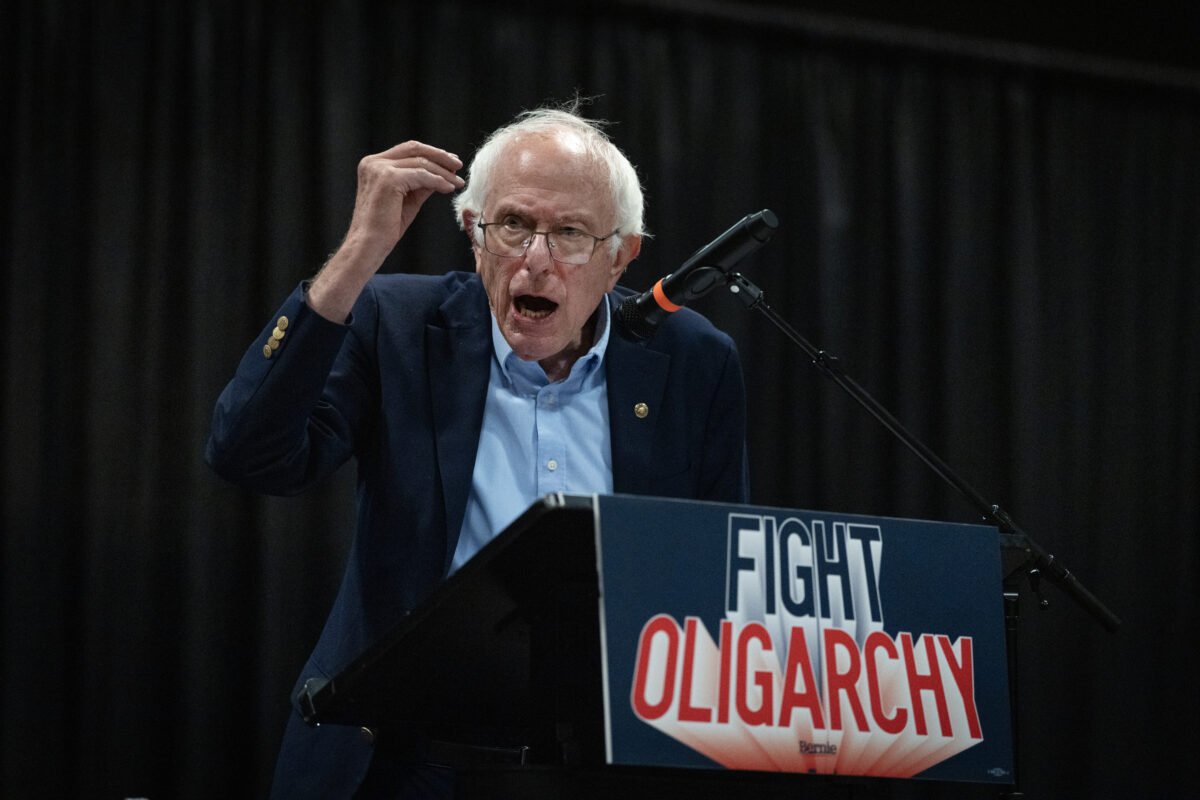
Sen. Bernie Sanders (I-VT) is slated to appear with Graham Platner, a Democrat running to unseat Sen. Susan Collins (R-ME), at a rally in Portland, Maine, on Labor Day, as the progressive leader from Vermont steps up his efforts to boost left-wing candidates who have been outspoken in their criticism of Israel and its ongoing war in Gaza, Jewish Insider’s Matthew Kassel reports.
Michigan to Maine: Platner, who launched his campaign last week, has accused Israel of committing genocide in Gaza and backed Sanders’ recent resolutions to block arms sales to Israel. The Portland event on Sept. 1, the next stop on Sanders’ nationwide “Fighting Oligarchy” tour, follows a rally in Michigan on Saturday at which the senator sought to boost Abdul El-Sayed, a staunch critic of Israel who is vying to replace retiring Sen. Gary Peters (D-MI) in a crowded primary next year.
SCOOP
Hochul to sign Title VI legislation to counter rising campus antisemitism

Responding to heightened campus antisemitism, New York Gov. Kathy Hochul will sign legislation on Tuesday afternoon that requires all colleges in the state to designate anti-discrimination coordinators to enforce Title VI of the Civil Rights Act of 1964, her office confirmed to Jewish Insider’s Matthew Kassel. The bill passed the Legislature unanimously in June.
‘Top priority’: “By placing Title VI coordinators on all college campuses, New York is combating antisemitism and all forms of discrimination head-on,” Hochul, a Democrat, told JI. “No one should fear for their safety while trying to get an education. It’s my top priority to ensure every New York student feels safe at school, and I will continue to take action against campus discrimination and use every tool at my disposal to eliminate hate and bias from our school communities.”
in the hot seat
House Education Committee to investigate antisemitism at UCSF, UCLA, Illinois medical schools

The House Committee on Education and the Workforce will investigate three medical schools over their “failures to address antisemitism,” Rep. Tim Walberg (R-MI), the chair of the committee, announced on Monday. The three schools targeted in the probe are the University of Illinois College of Medicine (UICOM), University of California, San Francisco and University of California, Los Angeles Geffen School of Medicine, Jewish Insider’s Gabby Deutch reports.
‘Hostility and fear’: The investigations come as medical schools and the medical profession have faced increasing scrutiny over rising antisemitism since the Oct. 7, 2023, Hamas attacks. “The Committee has become aware that Jewish students, faculty, and patients have been experiencing hostility and fear at the university, and it has not been demonstrated that the university has meaningfully responded to address and mitigate this problem,” Walberg wrote to each institution, followed by a list detailing alleged incidents of antisemitism.
back to school
Mahmoud Khalil, Rep. Rashida Tlaib slated to headline August events at University of Michigan

Days after the University of Michigan kicks off the new school year this week, the campus is slated to host two anti-Israel speakers — former Columbia University protest leader Mahmoud Khalil and Rep. Rashida Tlaib (D-MI), one of the most outspoken critics of Israel in Congress, Jewish Insider’s Haley Cohen reports.
Campus calendar: On Wednesday afternoon, Tlaib is scheduled to speak at an on-campus press conference titled “United Against Genocide, United Against Repression” hosted by The People’s Coalition Michigan. Later that evening, the campus chapter of Students Organize for Syria is scheduled to host Khalil, who was released in June from the immigration detention center where he had been held for three months as the Trump administration sought to have him deported. The events come days before thousands of pro-Palestinian activists are set to gather in Detroit, beginning Aug. 29, for the second annual People’s Conference for Palestine, under the slogan “Gaza is the Compass.”Read the full story here.
Worthy Reads
Israel, Alone: The New York Times’ Tom Friedman reflects on Israel’s increasingly isolated global status amid the continuation of its war in Gaza and its blunders on the battlefield. “[The Israeli government] is destroying Israel’s standing in the world, it is killing Gazan civilians with seemingly no regard for innocent human life, and it is tearing apart Israeli society and world Jewry, between those Jews who want to still stand with Israel no matter what and those who can no longer tolerate, explain or justify where this Israeli government is taking the Jewish state and now want to distance themselves from it. … So why is the world ganging up only on Israel now? Because it holds Israel to a higher standard than Hamas, because Israel has always held itself to a higher standard. And because the world can tell the difference now between a war being waged for the survival of the Jewish state and a war being waged for the political survival of its prime minister.” [NYTimes]
The Mamdani Effect: In The Washington Post, Ramesh Ponnuru considers the liabilities New York City mayoral nominee Zohran Mamdani brings to the Democratic Party as he looks increasingly likely to win the November general election. “This debate ignores what might be the biggest danger that Mamdani poses to the Democratic Party. That danger is not that his performance as mayor, assuming his polling lead holds, will turn off swing voters nationally (although it might). It’s that he will excite Democratic activists in all the wrong ways. His example will encourage them to do what a lot of them already want to do: get louder and lefter. Committed partisans are always tempted to find evidence, however dubious, that being more hard-line is the path to political victory. It happens to people of all political descriptions. In recent years, though, Democrats have been especially prone to political misjudgments of this kind.” [WashPost]
The New Anti-Zionism: In The Jerusalem Post, Betsy Berns Korn and Eric Mandel raise concerns about a new effort to push “Anti-Palestinian Racism,” as the effort, which originated in Canada, gets a foothold in the U.S. “If left unchallenged, APR will reshape public discourse, empower hostile NGOs, and normalize antisemitism in schools, governments, and even corporations. Policymakers must act now. Congress, state legislatures, and school boards should ensure anti-racism curricula are not hijacked to advance anti-Israel ideology. Universities should adopt the IHRA definition of antisemitism and resist attempts to elevate APR. Civil society must demand equal standards, where Palestinians are held accountable for terror and incitement just as Israelis are for policy decisions. The stakes could not be higher. Anti-Zionism has always adapted to survive, and APR is its newest disguise.” [JPost]
Word on the Street
The State Department is backing U.S. Ambassador to France Charles Kushner amid a diplomatic row with Paris following the weekend publication of a Wall Street Journal op-ed in which Kushner slammed the country for its failure to address antisemitism; France’s trade minister said in response to Kushner’s criticism that Paris “need take no lessons whatsoever” from the U.S. regarding antisemitism…
More than 75 Jewish organizations around the world signed on to a letter spearheaded by the American Jewish Committee voicing “unequivocal support” for Katharina von Schnurbein, the European Commission coordinator on combating antisemitism, amid calls for her dismissal by EU parliament members over her support for Israel, Jewish Insider’s Haley Cohen reports…
The Associated Press looks at internal dissent and fundraising challenges facing the Democratic National Committee and its chair, Ken Martin, amid the group’s summer gathering in Minneapolis, which kicked off on Monday…
In the Minnesota Star Tribune, Sarah Clarke, the wife of Minneapolis Mayor Jacob Frey, raises concerns about a planned protest outside the couple’s home on Thursday; in the op-ed, Clarke slams the “threats, harassment and even vandalism that my family endures when people feel entitled to target our family and home for perceived political gain”…
Police in Philadelphia are investigating the vandalism of the Weitzman National Museum of American Jewish History early Friday morning, in which red paint was sprayed on the side of the building over the words “the Weitzman stands with Israel,” which appeared under an Israeli flag…
The George Mason University chapter of Students for Justice in Palestine, which had been dormant since it was suspended in the aftermath of the arrests of several chapter leaders, posted a video ahead of the start of the fall semester in which a masked speaker pledged that “the spirit of resistance will not be quenched until we see full liberation of Palestine from the river to the sea”…
The Irish rap group Kneecap canceled the U.S. stops on its upcoming tour, citing the London court appearance of one of its members on terrorism charges as a scheduling conflict; Kneecap member Liam O’Hanna is facing the charges following his display of a Hezbollah flag at a November 2024 show…
Israel announced plans for a “phased reduction” in troops in southern Lebanon as part of an agreement in which Beirut will force the disarmament of Hezbollah…
Israel’s Foreign Ministry downgraded its ties with Brazil, following the South American country’s rejection of former Israeli Ambassador to Colombia Gali Dagan as Jerusalem’s envoy to Brasilia…
Belgium-born diamond baron Maurice Tempelsman, who for more than a decade was the partner of Jacqueline Kennedy Onassis, died at 95…
Pic of the Day
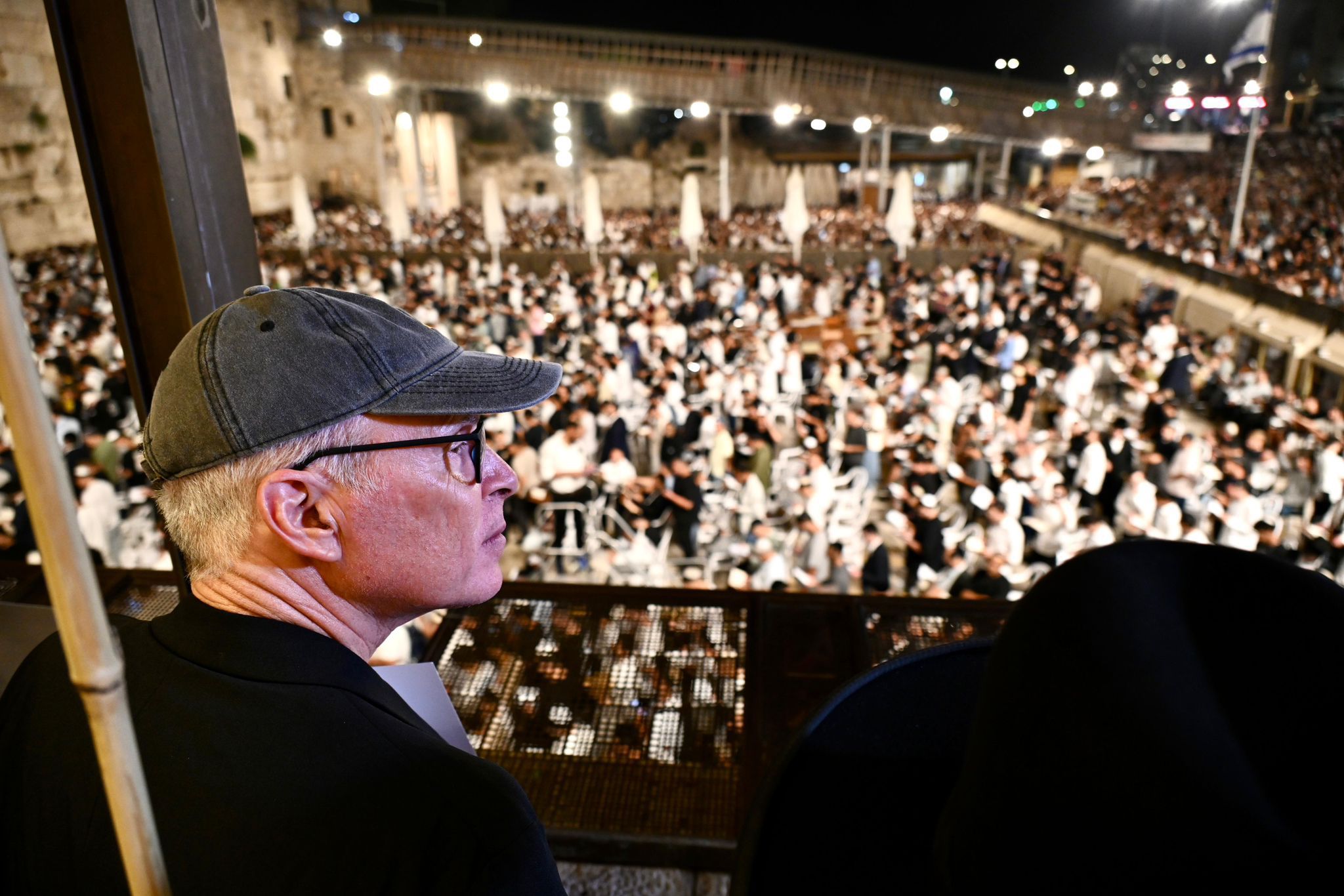
Former hostage Keith Siegel looked on at the First Selichot gathering at the Western Wall in Jerusalem last night, at the start of the Hostages and Missing Families Forum’s “National Day of Struggle” taking place today across the country to call attention to the plight of the remaining 50 hostages.
Birthdays
Rapper, known professionally as Kosha Dillz, Rami Matan Even-Esh turns 44…
Rabbi (now emeritus) of Congregation Beth Jacob of Atlanta, he made aliyah in 1991, Rabbi Emanuel Feldman turns 98… CEO of Siegelvision, a brand identity consultancy, he is also the founder and chairman emeritus of global brand strategy firm Siegel+Gale, Alan Siegel turns 87… Owner of You Save On Meds, Martin J. Portnoy… Mayor of Tel Aviv since 1998, Ron Huldai turns 81… Partner at the D.C. law firm of Williams & Connolly, Robert B. Barnett turns 79… Former Democratic member of the Florida House of Representatives, Irving Slosberg turns 78… Sales representative for ADT Security, Jay Caplan… Vaudeville performer, clown, mime, juggler and sleight of hand magician, known by his stage name “Avner the Eccentric,” Avner Eisenberg turns 77… Co-owner of Rochester, N.Y.-based August Moon Imports and World Tae Kwon Do Center, Jane Cota August… First vice president of the French Senate from 2020 until 2023, Roger Karoutchi turns 74… Venture capitalist, social policy researcher and philanthropist, Freada Kapor Klein turns 73… Board chair of Gap, a retail chain founded by his parents, Robert J. Fisher turns 71… EVP and managing director of polling and consulting at The Mellman Group, Michael J. Bloomfield… CEO of LawMedia Group (LMG), Julian Epstein turns 64… Journalist and co-author of the “Freakonomics” series, Stephen J. Dubner turns 62… Member of the Maryland Senate since 2020, Michelle “Shelly” Laskin Hettleman turns 61… President of NARAL Pro-Choice America for eight years until 2021, Ilyse Hogue turns 56… CFO at Cornerstone OnDemand, Perry Wallack… Managing partner of Austin-based Texas Venture Partners, Lorne Abony turns 56… Managing partner of RNS Strategies based in Portland, Ore., Robert Sacks… Professor at the Olin Business School of Washington University in St. Louis, Steven Malter turns 52… Deputy general counsel at ICANN Internet Corporation for Assigned Names and Numbers, the coordinator of the Internet’s naming system, Samantha Eisner… Co-founder and CEO of Danari Global, Ariel Maurice (“Ari”) Ratner… Founder and CEO of The Lemon Perfect Company, maker of the enhanced water brand Lemon Perfect, Yanni Hufnagel turns 43… Member of the Knesset for Yesh Atid, she served in the previous government as minister for social equality and minorities, Meirav Cohen turns 42… Singer-songwriter, vocalist, guitarist and co-writer for the indie rock band Tally Hall, Robert Howard “Rob” Cantor turns 42… Principal and founder of Inspire Capital and Development, Brielle Joy Appelbaum… Managing partner of Victor Capital Partners, Doug Korn… John Train… Carrie Shapiro…
PM Anthony Albanese blasted the ‘extraordinary and dangerous acts of aggression orchestrated by a foreign nation on Australian soil’
HILARY WARDHAUGH/AFP via Getty Images
Australian Prime Minister Anthony Albanese speaks during a press conference in Canberra on August 11, 2025.
Australia expelled the Iranian ambassador in Canberra as well as three other embassy staffers on Tuesday, with Prime Minister Anthony Albanese accusing the Islamic Revolutionary Guard Corps of orchestrating attacks on a synagogue in Melbourne and a kosher restaurant in Sydney.
Albanese, speaking at a press conference alongside the country’s top intelligence official, foreign minister and home affairs minister, called the plots “extraordinary and dangerous acts of aggression orchestrated by a foreign nation on Australian soil.” The expulsion of Ahmad Sadeghi marks the first time Australia has expelled a foreign ambassador since World War II.
Canberra also withdrew its diplomatic staff from Iran and has encouraged Australian citizens to leave the country if they are able.
Australian intelligence indicates that Tehran was behind additional antisemitic attacks in the country since the Oct. 7, 2023, Hamas terror attacks. The country has seen an explosion of antisemitism, with a 316% year-over-year increase in antisemitic incidents in the year following the attacks.
Mike Burgess, the director-general of the Australian Security Intelligence Organisation, said that the plots were carried out “through a series of overseas cut-out facilitators to coordinators that found their way to tasking Australians,” describing the scheme as a “layer cake” of middlemen originating with the IRGC.
The expulsion of the Iranian diplomats comes shortly after the arrests of two individuals in connection with the December 2024 Melbourne synagogue attack, in which a synagogue was firebombed while nearly two dozen people were inside.
The arson at Sydney’s Lewis’ Continental Kitchen, which took place in October 2024, caused $1 million in damage to the kosher restaurant. Court documents released earlier this month indicate that a middleman, Sayed Moosawi, who was directing the Sydney attack, was to receive $12,000 for his work. Prior to the fire at Lewis’ Continental Kitchen, two men directed by Moosawi mistakenly set fire to a brewery with a similar name to the restaurant.
Please log in if you already have a subscription, or subscribe to access the latest updates.
 Continue with Google
 Continue with Apple