



























Missouri is playing the role of the must-watch undercard, marking another significant bellwether contest between the center and the left

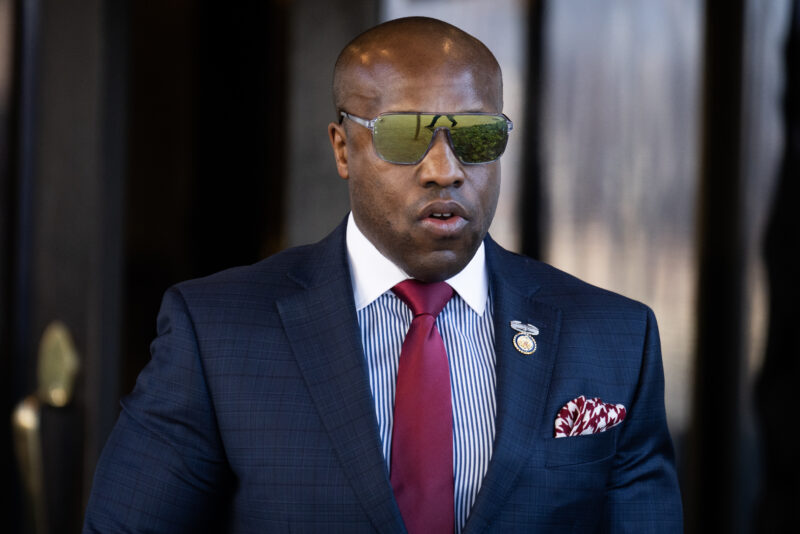
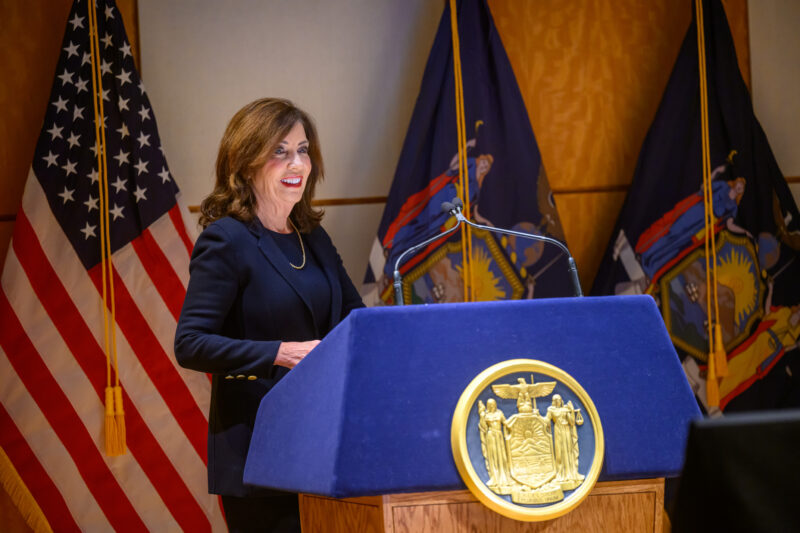
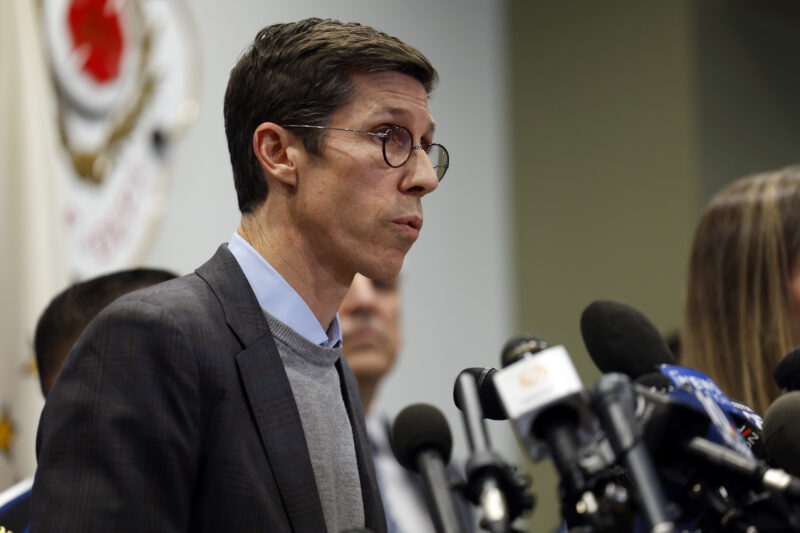
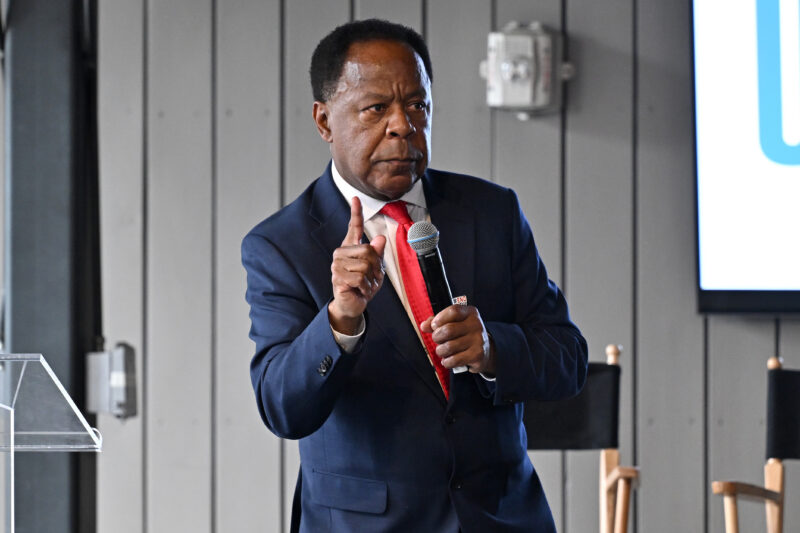
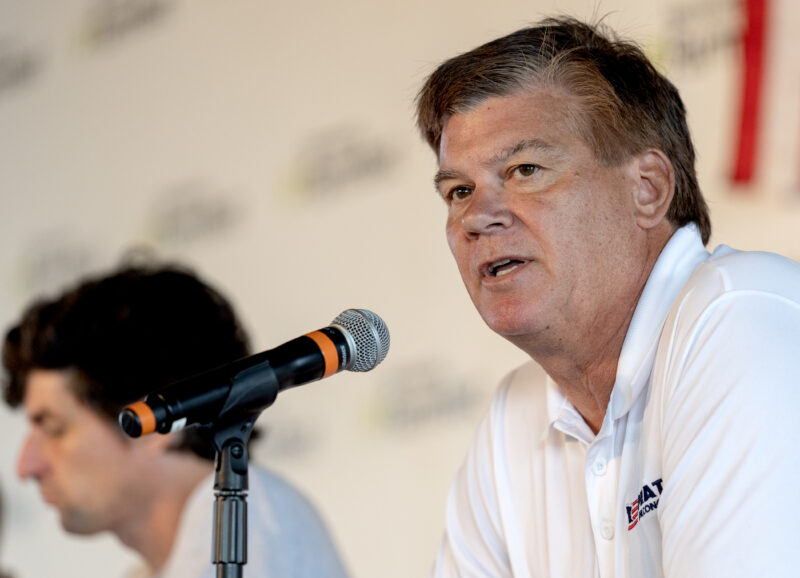
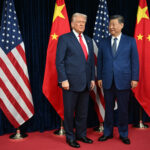
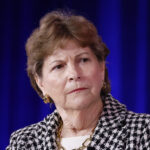
Then-Rep. Cori Bush (D-MO) speaks at the "Just Majority" Supreme Court press conference on June 22, 2023 in Washington, DC. / Then-Louis County Prosecutor, Wesley Bell gives remarks at the Urban League Empowerment Center on June 17, 2020.


 Add JewishInsider on Google
Michigan will take center stage this week as it holds its marquee Senate primary and consequential downballot races that showcase the divide between the Democratic mainstream and its left-wing, anti-Israel activists.
But Missouri is playing the role of the must-watch undercard, with the rematch between Rep. Wesley Bell (D-MO) and Democratic Socialists of America-aligned former Rep. Cori Bush (D-MO) marking another significant bellwether contest between the center and the left.
Bell, a stalwart supporter of Israel who was championed by AIPAC in both of his congressional campaigns, is facing a changed political environment within the Democratic Party with public opinion turning against the Jewish state.
Bell defeated Bush by five points in 2024, but the race could end up being closer this time around given the ascendance of socialist candidates in urban, deep-blue districts like Missouri’s First District.
Bush, however, has myriad other vulnerabilities beyond her far-left policy views, from missed votes during her time in Congress to ethical questions surrounding her handling of campaign funds.
Bell is also being boosted by outside groups, led by the AIPAC-affiliated United Democracy Project super PAC, which has spent over $2.6 million in the race hitting Bush, along with the New Democrat Coalition-affiliated super PAC, which has poured in just over $1 million on Bell’s behalf. Bell has also outspent Bush on the airwaves by about a ten-to-one margin, according to the Cook Political Report.
Jewish groups, both locally and nationally, are also organizing get-out-the-vote efforts on Bell’s behalf. The Jewish Democratic Council of America has been rallying its national membership for an in-person canvassing campaign, and Agudath Israel’s Missouri office mobilized its volunteers to help boost nonpartisan Jewish turnout.
The Cook Political Report gives Bell the advantage in the race, noting that Sen. Bernie Sanders (I-VT) (despite endorsing Bush) hasn’t campaigned on her behalf and underscoring the spending disparity which appears to be stunting Bush’s ability to grow support in the St. Louis-area district.
But given the overall momentum in Democratic primaries for anti-Israel candidates, the race is still expected to be worth tracking closely.
The anti-Israel activists have certainly captured a faction of the Democratic Party, but their ties to so many unpopular views and causes make the whole movement politically toxic in middle America
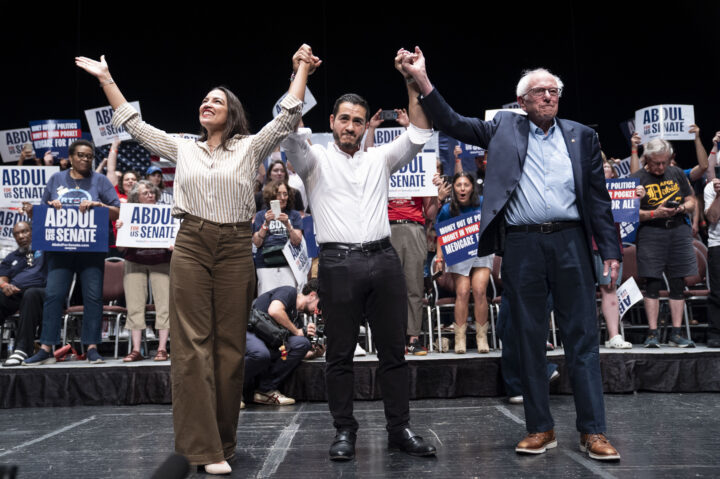
(Sarah Rice/Getty Images)
U.S. Rep. Alexandria Ocasio-Cortez (D-NY), Michigan Democratic candidate for Senate Abdul El-Sayed and U.S. Sen. Bernie Sanders (I-VT) greet the crowd after El-Sayed spoke at The People V. The Powerful rally at the Detroit Opera House on July 18, 2026 in Detroit, Michigan.
So far, the success of far-left, anti-Israel candidates has been confined to Democratic primaries in deep-blue districts largely in big cities or college towns. The biggest test ahead for the socialist movement is whether it can prevail in primaries outside its geographic base, and more importantly, if such candidates can win general elections in battleground states or districts.
All of the available evidence and recent history suggests that nominating extreme candidates in enough key races would threaten Democrats’ chances of winning a Senate majority and would dampen the party’s pickup potential in the House.
Indeed, the victories by radical nominees in recent House primaries — combined with the high-profile collapse of the like-minded Graham Platner’s Maine Senate campaign — are already doing damage to the Democratic Party’s brand.
Looking at the big picture: In poll after poll, Democrats are now underperforming expectations on the generic congressional ballot — and have lost notable ground over Republicans in the last month alone.
In his analysis of congressional polling, Nate Silver documented that the Democrats’ advantage on the generic ballot in the polling average declined by one point since June, from seven points to six. At this point in the 2018 cycle, the Democrats’ generic ballot advantage was close to eight points, according to Silver’s analysis.
Democrats still hold a decided edge, but the massive blue wave that could have emerged in this year’s midterms is now looking a bit more modest. That means it’s much more difficult for Democrats to overcome their partisan disadvantage in the red states they need to retake the Senate, while Republicans may have some outside hope that redistricting and enough flawed Democratic candidates could keep the House majority in play.
CNN political analyst Ron Brownstein also notes that Democrats are failing to win over as many voters who disapprove of President Donald Trump as they did during the 2018 midterms — another signal that the party’s negative image and leftward lurch is costing them among the swing-voting suburbanites who formed a critical mass of the anti-Trump movement in the president’s first term.
Recent history also points to candidates significantly underperforming if they are ideologically out of step with their constituents. In the 2018 midterms, Democrats swept the vast majority of competitive battlegrounds, riding the wave of anti-Trump sentiment even in some districts that had long been held by Republicans.
There were two notable outliers in that year’s Democratic wave — very winnable races that Democrats lost because they nominated progressives in swing districts. In that election, Rep. Don Bacon (R-NE) faced a challenger (Kara Eastman) who ran what Politico called a “Brooklyn-style campaign” in the Omaha-based district that former President Joe Biden comfortably carried. Bacon prevailed by three points.
The other missed opportunity that year for Democrats was in a Syracuse-area district that favored their party. Despite the blue wave, the party’s decision to nominate an outspoken progressive (Dana Balter) cost them a victory against a vulnerable House Republican, former Rep. John Katko.
This year, the party has lurched further to the left and is likely to nominate more ideologically extreme candidates in even bigger races.
Michigan is a swing state, but Democrats are at risk of handing their Senate nomination to Abdul El-Sayed, a Bernie Sanders acolyte whose incessant animus against Israel has defined his campaign message. If he’s the nominee, some Democrats believe their shot at a Senate majority could be lost. (The RealClearPolitics polling average shows that El-Sayed, in a general election, is statistically tied with expected GOP nominee Mike Rogers — a notable underperformance given the national environment.)
In the state’s biggest swing district, which is currently held by Rep. Tom Barrett (R-MI), Democrats are so concerned about the far-left candidacy of Will Lawrence that even Rep. Alexandria Ocasio-Cortez (D-NY) snubbed him at the El-Sayed rally this past weekend. Two other mainstream candidates — former U.S. Ambassador to Ukraine Bridget Brink and former Navy SEAL Matt Maasdam — are splitting the moderate vote.
And there are numerous other contests, from the Senate races in Maine and Minnesota to House races in California, Colorado and Maine, where left-wing candidates threaten to jeopardize the party’s prospects.
Ultimately, the most consequential political test of the anti-Israel movement will come in this November’s general election. The anti-Israel activists have certainly captured a faction of the Democratic Party, but their ties to so many unpopular views and causes make the whole movement politically toxic in middle America.
JI looked into how ascendant anti-Israel candidates raised and spent money just before and after their primaries

Getty Images
Illustrative
Left-wing candidates, including several members of the Democratic Socialists of America, rode a wave of anti-Israel sentiment — and donor cash — to victory in primaries in New York and New Jersey in June.
The latest fundraising filing period highlighted the diverse donor bases backing some of the most outspoken critics of Israel and capitalism, with candidates raking in hundreds of thousands from executives and entrepreneurs in tech, medicine and finance:
Here’s a round-up of how some of the most prominent figures got that windfall — and what they did with it:
- Darializa Avila Chevalier, the radical grad student who defeated Rep. Adriano Espaillat (D-NY), reported nearly $350,000 in donations in the last three weeks of June. Among the many medical professionals to cut checks to Avila Chevalier was Dr. Mohammed Hadi, a Long Island-based physician charged in 2015 with conspiring to defraud Medicare and distribute oxycodone. Hadi ultimately pleaded guilty in 2024 to misdemeanor theft of government funds. Another filing the former Columbia encampment leader submitted on Wednesday lists among the campaign’s expenses $7,000 in compensation to Avila Chevalier herself on June 1. Federal law allows for candidates to pay themselves salaries out of their donor dollars.
- Another candidate getting revenue from their campaign is Adam Hamawy, who in early June became the Democratic nominee to succeed Rep. Bonnie Watson Coleman (D-NJ). The candidate paid $23,700 of the $504,855 his campaign brought in during the latest filing period to his own plastic surgery practice, continuing a pattern Jewish Insider first reported on in May. The Federal Election Commission also allows candidates to purchase goods, services and working space from themselves and family members so long as the transactions are market-rate. The Hamawy campaign — which has leaned into the candidate’s military record and fierce criticism of Israel while downplaying his past ties to Islamist figures — told JI in May that an outside consulting firm arrived at the $7,900 monthly rent paid to Princeton Plastic Surgeons.
- Assemblymember Claire Valdez reported just shy of $293,000 in campaign contributions for her bid to succeed Rep. Nydia Velazquez (D-NY). One of her most notable donors was Shanti Singham, the sister of Shanghai-based Maoist tech mogul Neville “Roy” Singham, currently under federal investigation in connection to his bankrolling of far-left nonprofits that promote pro-Iran, pro-Russia and pro-Chinese propaganda. Shanti Singham — who gave Valdez $2,000 in the most recent filing period, bringing her total contributions to her fellow DSA member to $3,500 — has her own ties to China, having held a post at state-run East China Normal University and promoted the country’s controversial Confucius Institutes in Africa. The Marxist academic’s daughter, Alicia Singham Goodwin, served as political director for the anti-Zionist group Jews for Racial and Economic Justice and is a leading activist in DSA’s electoral efforts, having even helped shape New York City Mayor Zohran Mamdani’s platform in 2025.
- A key cash-raising tool for both Avila Chevalier and Valdez has been their joint fundraising committee, which raised $165,551 in less than a month, and disbursed most of it to their campaigns. One of its largest contributors was prominent Jewish Democratic donor Morris Pearl, chairman of Patriotic Millionaires, a group that advocates heavier taxes on high earners such as himself. The former BlackRock managing director, who has in past years advocated for peace processes in the Middle East, donated $7,000 to the fundraising committee.
- The biggest winner of all this cycle may be Mamdani himself: not just for getting his slate of House candidates elected, but for raising more than $300,000 for his reelection campaign, even though he is three years away from a reelection bid. The haul was big enough that the campaign told local outlet City & State that it will abstain from the city’s matching funds program, which provides public cash to amplify small-dollar donations but caps donation size and spending. And Mamdani is already spending his war chest, contributors to which include tech investor Omer Hasan, who also underwrote his 2025 super PAC and new anti-AIPAC super PAC American Priorities. On July 10, the campaign paid more than $9,500 to longtime DSA activist Nadia Tykulsker. In 2023, it fell to Tykulsker to defend her organization’s decision to promote a celebratory rally in Times Square one day after Hamas’ Oct. 7 attacks — a gathering even Mamdani, then a state lawmaker, condemned.
A sprawling web of cash and staff connects anti-Israel candidates and PACs nationwide
Getty Images
Illustrative
The Justice Democrats PAC, the outside group best known for elevating the congressional Squad to power in 2018, has become the driving force behind this cycle’s slate of far-left primary candidates.
And powering the Justice Democrats this year is a dark-money machine operating out of a PostalAnnex in a strip mall near Anaheim, Calif: the Institute for Middle East Understanding, a fierce critic of Israeli policy, and its new political arm, the IMEU Policy Project.
A review of financial disclosures from these three groups reveals that just as the Middle East conflict has become a defining issue for insurgent candidates on the left, it has also become increasingly crucial to Justice Democrats’ outreach and finances.
With Israel at the center of this year’s primary debates, Justice Democrats has lent considerable resources — cash, staff and know-how — to an array of socialist-minded candidates and smaller committees, including American Priorities super PAC. And helping bankroll it is the IMEU Policy Project, which formed just five months after the Oct. 7 attacks and quickly took in $400,000 from its parent organization.
That $400,000 figure is the exact amount IMEU Policy Project has since pumped into Justice Democrats’ accounts. There is no record of the Policy Project supporting any other federal PAC, just as there is no record of the decades-old Institute for Middle East Understanding providing financial assistance to another organization besides its new political spin-off.
Neither group responded to questions from Jewish Insider. Federal rules prohibit using money raised by organizations with the IMEU’s tax designation for political purposes. The funding from the institute makes up about half of the Policy Project’s budget in its most recent tax filings, meaning it has other revenues from which to pay for its electoral efforts, even as the start-up cash from its progenitor set it on its mission “to educate elected officials, policy-makers, and voters.”
But the original donors behind all of the Policy Project’s income remain hidden from public view.
“Either way, we don’t know where it came from, so it’s dark money being pushed into a PAC,” said Brendan Glavin, director of insights at pro-transparency group OpenSecrets. “People being targeted with content don’t know who’s trying to influence them.”
Progressive politicians and advocates have long decried dark money for enabling the ultra-wealthy to influence elections while concealing their involvement from public view. But Justice Democrats has historically defended its acceptance of such funds to avoid being “outgunned,” in the words of former spokesman Waleed Shahid, now a top aide to New York City Mayor Zohran Mamdani.
For the first 21 years of its existence, IMEU promoted Palestinian narratives in media and the arts but avoided the electoral fray. That changed beginning with the formation of the IMEU Policy Institute in March 2024, and when it made its first gift to Justice Democrats three months later.
But California records show that despite using the same shopping center maildrop address in Tustin, Calif., as the original institute — and despite taking $250,000 in the form of a charitable grant for “Palestine Awareness” from its parent organization, plus a $150,000 loan — the IMEU Policy Project has never registered to operate in the Golden State, the state attorney general’s office confirmed.
That hasn’t stopped the Policy Project from fundraising, or from running multiple ad campaigns in key electoral battlegrounds criticizing elected officials it deems pro-Israel: attacking Rep. Mike Lawler (R-NY) in his swing district, lambasting Sen. Cory Booker (D-NJ) and Kentucky Gov. Andy Beshear in New Hampshire and blasting Sen. Ruben Gallego (D-AZ) in Iowa. It also has run ads and a petition site supporting the Block the Bombs Act to deny military aid to Israel.
It also operates PunishGenocide.org, backing a resolution proposed by Rep. Rashida Tlaib (D-MI) to declare the Jewish state guilty of genocide, and NoWarForIsrael.com, which explicitly blames Israel for President Donald Trump’s decision to bomb Iran.
“This is not America First. This is Israel First,” the webpage reads.
The group also runs the Peace, Accountability and Leadership Political Action Committee, PAL-PAC, which has raised tens of thousands from figures affiliated with the institute and the Policy Project and dumped into the campaigns of such candidates as New York’s Darializa Avila Chevalier and Texas’s Rev. Frederick D. Haynes. Leading the PAC is Amira Hassan, former political director and current board member for Justice Democrats. Its webpage prominently features an endorsement from Tlaib, who calls it “only PAC exclusively committed to justice and accountability for the Palestinian people.”
But the Policy Project’s largest recorded intervention in the political process is the $400,000 it has injected directly into Justice Democrats’ coffers. It is the single biggest donor to Justice Democrats this cycle, outstripping even the left-wing PAC’s principle patron of past years, the Tlaib campaign. The Policy Project also works closely with the congresswoman, platforming her on its social media channels, boosting her bills and lending quotes to her press releases.
Tlaib did not answer questions from JI regarding her relationship with Justice Democrats and the IMEU Policy Project, and whether she had any role beyond providing money for one and publicly supporting the other. The Michigan congresswoman was part of Justice Democrats’ freshman class of elected officials in 2018.
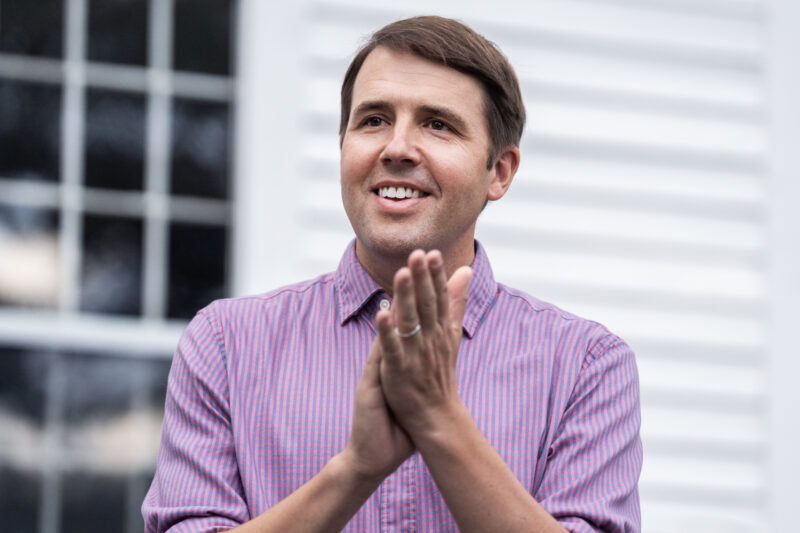
In March, a writer for the left-wing media outlet Zeteo posted that the IMEU Policy Project and Justice Democrats had spent $100,000 on an ad campaign attacking congressional candidate and former Rep. Melissa Bean (D-IL) and pushing her ultimately unsuccessful anti-Israel opponent Junaid Ahmed. In late May, Justice Democrats uploaded an ad to Instagram boosting Philadelphia congressional contender Chris Rabb, who went on to win the nomination, a spot the PAC reported having “put $260,000 behind” as part of a “partnership” with IMEU Policy Institute.
The Policy Institute affirmed this figure in a joint statement with Justice Dems when Rabb triumphed on primary night last week. The two also boasted of spending $200,000 on mail ads promoting the campaign of Adam Hamawy, who carried a plurality of the vote in a crowded Democratic contest to replace Rep. Bonnie Watson Coleman (D-NJ).
The Justice Democrats and IMEU Policy Project did not respond to questions about the cost breakdown for these ad efforts, or whether the Policy Project solicited contributions for Justice Democrats to help pay for them.
Justice Democrats has also coordinated closely with American Priorities super PAC, the professed anti-AIPAC committee, which at its launch described itself as part of a “partner network” that included the IMEU Policy Project and Justice Democrats. That same press release also identified American Priorities’ independent expenditure director as Hannah Fertig, who previously held the identical title at Justice Democrats.
Justice Democrats’ support for the younger organization has come mainly in the form of in-kind donations of digital production services. However, reports of the value and purpose of those services that the two PACs have made to the Federal Election Commission differ radically.
According to Justice Democrats’ most recent FEC reports, it has provided $23,500 worth of production costs to American Priorities, mostly for ads attacking Bean and supporting Ahmed in March.
But in American Priorities’ submissions to the commission, this support is nowhere to be found. Rather, American Priorities recorded $50,000 in donated production costs from Justice Democrats in February, in support of Nida Allam’s failed challenge to Rep. Valerie Foushee (D-NC). It did not report any help from Justice Democrats in the Illinois race.
Neither American Priorities nor Justice Democrats responded to questions from JI about these discrepancies. Glavin, of OpenSecrets, noted that the FEC has repeatedly flagged problems in Justice Democrats’ disclosures, including over in-kind contributions, compelling it to file multiple amended filings in recent months.
“I’m not sure what’s going on with their reporting,” the campaign finance expert said. “We expect to see some things that aren’t here.”
The bulk of American Priorities’ funding has come from three individuals: tech investors Omer Hasan and Tariq Afaq Ahmed, who gave $1 million and $500,000 respectively; and e-commerce executive Mohammad Waqas Javed, who chipped in an additional million. Waqas Javed is also one of Justice Democrats’ largest donors after the IMEU Policy Project and the Tlaib campaign, having contributed $50,000 to the PAC.
This same trio provided much of the money for the New Yorkers for Lower Costs super PAC that helped propel Mamdani into City Hall.
Mamdani attended the institute’s gala in April.
Mamdani’s office — including Shahid, the former Justice Democrats spokesman — did not respond to questions about their awareness of the IMEU Policy Project and its relationship with Justice Democrats.
The Policy Project shares the original institute’s longtime executive director, Margaret DeReus. Early in the institute’s existence, DeReus penned an editorial for the Houston Chronicle calling for immediate recognition of and engagement with the then-newly elected Hamas leadership on the Palestinian Legislative Council.
“When Palestinians in the occupied territories gave Hamas a resounding victory, they sent the world a message. The status quo of Israeli colonization and denial of Palestinian rights is unsustainable,” she wrote under her maiden name Zaknoen. “Hamas earned people’s trust by providing social services, hospitals and schools, and running municipal governments free of corruption. Ironically, Hamas may provide the Palestinians with the good governance and true political reform Fatah denied them.”
The two IMEU groups also share a policy director: Georgetown University adjunct Josh Ruebner. A co-founder of Jews for Peace in Palestine and Israel, which eventually merged into Jewish Voice for Peace, Ruebner blasted then-Georgetown President John DeGioia just days after Oct. 7 for his “one-sided condemnation of Hamas.”
Rep. Dan Goldman badly trails Brad Lander in his reelection bid; a DSA-endorsed candidate holds a narrow lead in a nearby deep-blue NYC district

Mary Altaffer/AP
Rep. Dan Goldman (D-NY), left, is joined by New York City Comptroller Brad Lander during a news conference outside the Metropolitan Detention Center in the Sunset Park neighborhood of Brooklyn on Tuesday, Aug. 16, 2022.
A new series of Emerson College polls of three closely watched New York Democratic congressional primaries shows a strong left-wing, anti-establishment sentiment coursing through the party.
The polls, commissioned by WPIX-TV, find that a sitting congressman, party-backed borough president and experienced state assemblyman championed by local political leaders are either trailing or barely leading their insurgent challengers.
Rep. Dan Goldman (D-NY), a pro-Israel liberal and fierce critic of President Donald Trump, is badly trailing by 34 points (57-23%) his left-wing challenger Brad Lander, who most recently served as New York City comptroller and has been deeply critical of Israel.
Lander, who was endorsed by New York City Mayor Zohran Mamdani, holds a substantial advantage among voters under 40, winning 73% of the younger constituency. Mamdani, who comfortably carried the district in last year’s mayoral election, holds a 79% approval rating among Democrats in the progressive district.
Goldman’s campaign manager, Simone Kanter, questioned the poll’s methodology in a post on X: “Emerson is assuming an electorate that looks exactly like the once-in-a-generation turnout Mamdani mobilized when he was on the ballot.”
In New York’s 7th Congressional District, the poll finds Assemblymember Claire Valdez, the Democratic candidate backed by Mamdani and the local chapter of Democratic Socialists for America (DSA), holding a narrow lead (23-21%) over Brooklyn Borough President Antonio Reynoso, the candidate endorsed by retiring Rep. Nydia Velazquez (D-NY). A near-majority of Democratic voters (43%) are still undecided.
And in the race to replace retiring Rep. Jerry Nadler (D-NY), state Assemblymember Micah Lasher has a small advantage over Assemblymember Alex Bores, and a larger lead over social media influencer Jack Schlossberg and attorney George Conway.
Lasher holds more institutional support in the race, boasting the endorsements of Nadler, Gov. Kathy Hochul and former New York City Mayor Michael Bloomberg, but that backing hasn’t automatically led into widespread party support. Still, this poll shows Lasher leading, in contrast to other recent public and internal polls that found Bores with a narrow edge.
The goal of the spending is to combat antisemitism and anti-Muslim hate
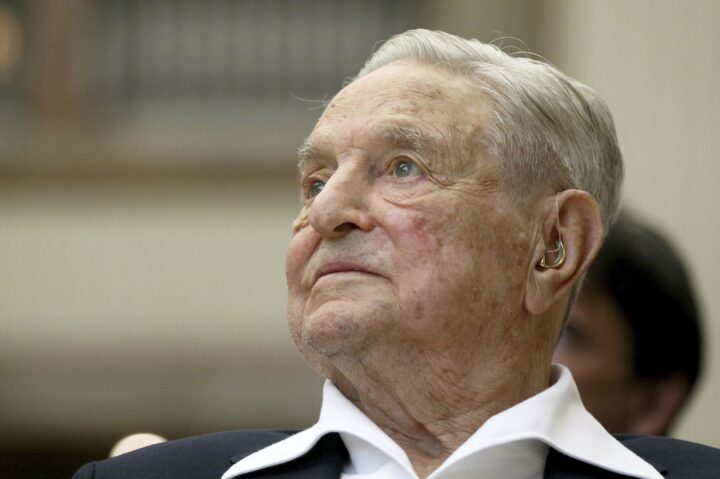
Ronald Zak/AP
George Soros, founder and chairman of the Open Society Foundations, attends the Joseph A. Schumpeter award ceremony in Vienna, Austria, June 21, 2019.
The Open Society Foundations, the major international philanthropy founded by left-wing billionaire George Soros, has pledged $30 million over three years to combat antisemitism and anti-Muslim hate, directing those funds to a number of progressive groups, some of which are at odds with the mainstream Jewish establishment.
Jewish recipients of the funding include progressive Jewish groups such as the Jewish Council for Public Affairs, the Nexus Project and Jewish Social Justice Roundtable. Alexander Soros, George Soros’ son, was also a founding chair of Bend the Arc Jewish Action, another grantee. The younger Soros is a longtime donor to progressive Jewish causes and chairs OSF’s board of directors.
The OSF has also come under fire within the Jewish community for funding initiatives seen as hostile to Israel, including providing grants for Jewish Voice for Peace — which has spearheaded anti-Israel campus demonstrations.
Asked about the OSF’s support of anti-Israel groups, a spokesperson for the organization told Jewish Insider, “We’re a human rights organization and we were created in part to counter discrimination and hatred which are contrary to ideas an open society needs to flourish. Everything we fund is aligned with those values but a lot of the work is focused on many other issues [unrelated to antisemitism].”
The commitment, announced Wednesday, marks an alternative approach to the community’s fight against rising antisemitism, which has traditionally focused on legacy organizations including the Anti-Defamation League, the American Jewish Committee and the Jewish Federations of North America that have historically been at the forefront of combating antisemitism. The spokesperson told JI that the commitment “supports organizations on the frontlines standing against antisemitism and other forms of hate — not by challenging another organization.”
JCPA, one of the grantees, is a member of the Conference of Presidents of Major American Jewish Organizations — the umbrella organization of mainstream American Jewish groups. “JCPA is a legacy Jewish organization [that] already collaborates with other legacy Jewish organizations, including on campus and broader education-related issues,” the group’s CEO, Amy Spitalnick, told JI.
“No grantee of any foundation agrees with every position of every other grantee,” said Spitalnick. “We’ve been a clear voice calling out antisemitism wherever it exists across the ideological spectrum and underscoring that our legitimate concerns should not be exploited to attack democratic norms and institutions, including university research funding.”
But other organizations selected, such as Nexus, are newer and use a more left-wing lens to combat antisemitism than the approach taken by the largest Jewish organizations. Nexus released the Nexus Document to challenge the adoption of the International Holocaust Remembrance Alliance’s working definition of antisemitism, specifically arguing that double standards targeting Israel are not inherently antisemitic. The IHRA definition is largely embraced among mainstream Jewish organizations.
Nexus also faced backlash after it defended a recent New York Times column by Nicholas Kristof that alleged widespread rape of Palestinian prisoners by Israeli security forces. The Israel Foreign Ministry and AJC called the column a “blood libel.”
Nexus wrote on Tuesday that “Kristof’s article is a challenging and important read. It takes courage and care to expose sexual violence” and accused Israel of “weaponiz[ing] the term ‘blood libel’ to dismiss Kristof’s thorough reporting.”
Other recipients of the foundation’s funding include Jewish Social Justice Roundtable — a coalition of 60+ progressive member and partner organizations focused on humanitarian and social justice — and Bend the Arc, a national progressive Jewish group, which offers a guide and trainings focused on dismantling antisemitism, focused primarily on right-wing antisemitism.
Open Society’s commitment comes amid broader conversations in the Jewish world about the efficacy of legacy Jewish institutions’ efforts to combat antisemitism. In February, at Manhattan’s 92Y, New York Times columnist Bret Stephens called to “dismantle the Anti-Defamation League,” arguing Jewish philanthropy’s allocation of funds to fight antisemitism were “mostly wasted.”
Recent moves by the ADL, including their creation of a “Mamdani monitor” after the election of New York City Mayor Zohran Mamdani and the organization’s initial collaboration with the second Trump administration, have raised the ire of left wing Jewish groups.
An OSF spokesperson told JI that organizations were selected based upon ones “we knew were doing great work in this space, which is certainly already underway.”
“Some of these organizations have been on our radar for a long time; either we had a relationship with them or we had been aware of their work for a while,” the spokesperson said.
The left-wing advocacy group endorsed Assemblymember Alex Bores in the crowded primary for the heavily Jewish district
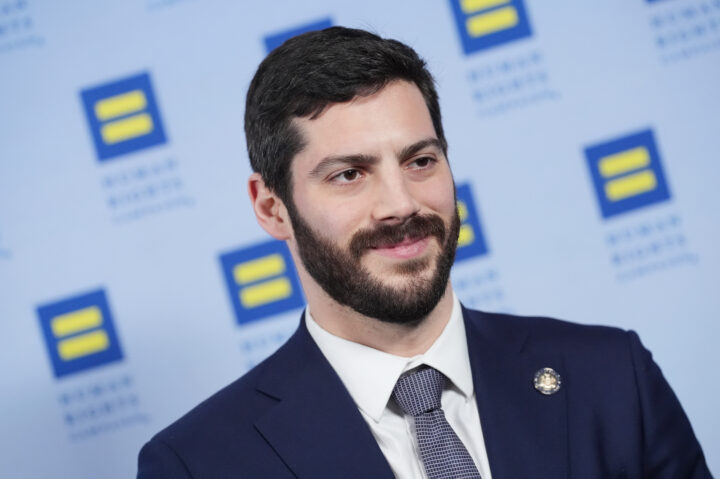
John Nacion/Variety via Getty Images
Alex Bores at Human Rights Campaign Greater New York Dinner held at the Marriott Marquis on February 07, 2026 in New York, New York.
A left-wing group aligned with Sen. Bernie Sanders (I-VT) and fiercely critical of Israel has backed Assemblymember Alex Bores in the race to succeed Rep. Jerry Nadler (D-NY) in a heavily Jewish Manhattan district.
Our Revolution, an advocacy group spun off Sanders’ 2016 presidential campaign, endorsed Bores on Wednesday, news first reported by Politico and subsequently shared on both Bores’ and Our Revolution’s social media pages. Following Sanders, Our Revolution has aligned with student anti-Israel protesters and advocated against military aid to the Jewish state.
The group’s endorsement of Bores emphasized his signature issue: regulating artificial intelligence.
“While billionaire-backed tech interests spend millions trying to block oversight and accountability, Alex is actually taking them on,” Our Revolution wrote on X. “He’s leading the fight for some of the strongest AI regulations in the country and is running on taking on corporate power, political corruption, and concentrated wealth — not empty personality politics.”
AI firms have poured massive sums into opposing Bores, a former employee of Palantir whose wife works in the AI division of Microsoft.
Nadler’s district is heavily Democratic and liberal, but many of its synagogues and social organizations have strong ties to Israel, and particularly to Labor Zionism. Far-left activist Cameron Kasky, who has put criticism of Israel at the center of his online persona, dropped out of the race for the congressional seat after failing to gain traction.
As a result, a left-wing lane in the race has opened up, and observers suggested Bores has sought to shift into it. However, influencer and Kennedy heir Jack Schlossberg — who has led in most polls to date — has taken a harder line on Israel than Bores.
At a candidate forum Wednesday night at Manhattan’s Stephen Wise Free Synagogue, Schlossberg endorsed Sanders’ effort to limit further U.S. military assistance to the country. Candidates George Conway and Micah Lasher both said they oppose halting military aid. Bores was slated to appear at the forum, but withdrew the day prior, citing a schedule conflict in Washington.
While Bores has not commented directly on Sanders’ measure, he said in a questionnaire for the Working Families Party about another legislative effort to condition arms sales to Israel, “I think the strategy of determining foreign policy through legislation that targets individual countries has overall not been beneficial for achieving universal rights. If changes of US aid policy are needed, it should be through broad pieces of legislation that tighten our requirements around governmental aid to all countries.”
The Texas senator called Tucker Carlson ‘the single most dangerous demagogue in this country’
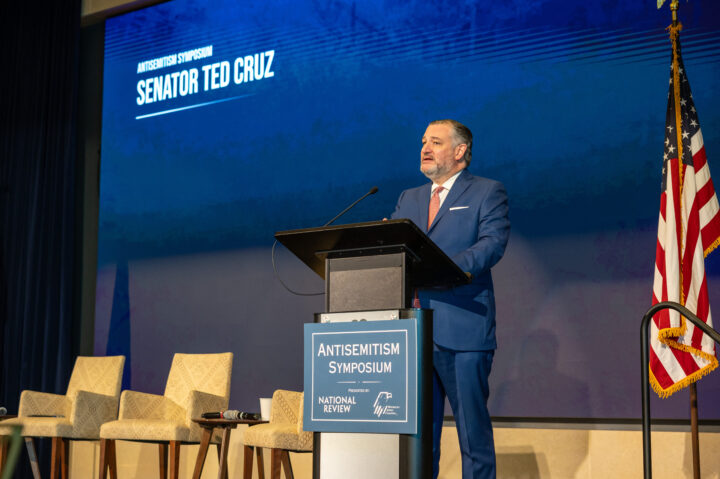
Republican Jewish Coalition
Sen. Ted Cruz (R-TX) speaks at antisemitism symposium in Washington on March 10, 2026.
Antisemitism is rising on the American right, Sen. Ted Cruz (R-TX) warned on Tuesday, expressing concern that efforts to combat it are not doing so quickly or effectively enough.
“I want us to be winning, but I’m not sure it is accurate as a descriptive manner that we are winning right now,” Cruz said at an antisemitism symposium in Washington organized by the Republican Jewish Coalition and the National Review.
Cruz has emerged in recent months as one of the Republican Party’s most vocal critics of right-wing antisemitism. He has targeted influential commentator Tucker Carlson and his strain of isolationist, anti-Israel politics that has in recent months crossed over into overt antisemitism, though Cruz has bemoaned other Republicans’ wariness to criticize Carlson by name.
At the RJC event, Cruz called Carlson “the single most dangerous demagogue in this country.”
But he said that not enough of his colleagues and allies on the right are aware of the extent of the problem.
“I don’t want to wake up in five years and find myself in a country where both major political parties are unambiguously anti-Israel and unapologetically antisemitic, and I think that is a real possibility. If Tucker and his minions prevail, that will happen,” Cruz argued.
Cruz expressed fear that this attitude is not just present but popular among young people on the right, as evidenced by two viral Turning Point USA events last fall where students at Auburn and Ole Miss cheered after deeply anti-Israel questions were asked.
“I worry about the 19-year-olds who say, ‘Oh, that’s what our team believes. That’s who we are.’ Let’s be clear, if you are a young, ambitious Democrat, it is obvious what you should do. You should be viciously anti-Israel,” said Cruz.
He applauded the people who came out to the Museum of the Bible on Tuesday to discuss antisemitism but pointed out that their concern does not reflect how the rest of the country thinks about the issue.
“The fact that this room is persuaded does not mean that the college campus is. It does not mean that the Capitol Hill interns are. It does not mean that the interns at Heritage, at [Conservative Partnership Institute] and every other conservative institution in this country, that they’re persuaded,” said Cruz. “We need to fight and engage it and take on the core premises, because if we lose the next generation, we lose the country.”
Cruz posited that Carlson and other anti-Israel influencers are being paid by foreign nations like Qatar, China and Russia, though he acknowledged that he lacks proof for that theory.
“I don’t believe all of these voices who have suddenly discovered that Israel is the source of all evil, that everything bad in the world was done by the Jews, that America is controlled by the Jews and that radical Islamic terrorists are really nice, wonderful people — I don’t think these people just arrived on this view organically and magically,” said Cruz.
“I think many of these influencers are cashing a check,” he added. “The people in this room could do an enormous service by documenting that. I don’t have the evidence right now to prove it, but Occam’s razor: the simplest explanation is usually the right one.”
Gonzales announced he would drop out of his reelection race, which had been headed to a runoff, at the urging of GOP leaders

Anna Moneymaker/Getty Images
Rep. Tony Gonzales (R-TX) speaksat a news conference on border security outside of the U.S. Capitol Building on November 14, 2023 in Washington, DC.
Brandon Herrera, a social media influencer and far-right Republican congressional candidate, moved significantly closer to Congress on Thursday as his Republican opponent, Rep. Tony Gonzales (R-TX), dropped out of the race, making Herrera the presumptive GOP nominee in a deeply conservative district.
Herrera has called for the U.S. to end aid to Israel and faced criticism for videos in which he included imagery, music and jokes related to the Holocaust.
Gonzales has been under scrutiny amid growing allegations that he pressured an aide, who later died by suicide, into a sexual relationship with him, a violation of House ethics rules. Both were married with children at the time.
The House Ethics Committee announced an investigation into Gonzales this week, and Gonzales admitted to the relationship for the first time on Wednesday, after previously denying it, though he claimed it had played no role in her death.
Amid mounting pressure, the embattled congressman said in a statement Thursday night that he would leave the race “after deep reflection and with the support of my loving family,” though he said he would serve out the remainder of his term.
Gonzales’ withdrawal came after House Speaker Mike Johnson (R-LA), Majority Leader Steve Scalise (R-LA), Majority Whip Tom Emmer (R-MN) and Republican Conference Chairwoman Lisa McClain (R-MI) said in a joint statement on Thursday afternoon that they had asked him to withdraw from the race, which had been to a runoff in May.
National Republican Campaign Committee Chair Rep. Richard Hudson (R-NC) echoed the call for Gonzales to drop out.
“I would like to thank Speaker Johnson and House leadership for holding Congressman Tony Gonzales accountable for actions that have tarnished the office,” Herrera said in response to Gonzalez’s announcement. “I’m looking forward to representing the district the way the people of West Texas have always deserved.”
Gonzales finished second in Tuesday’s four-way Republican primary in Texas’ 23rd Congressional district, advancing to a head-to-head runoff against Herrera. Herrera, who lost by just a few hundred votes to Gonzales in 2024, picked up 43% of the primary vote to Gonzales’ 42%.
Herrera faced a barrage of attacks and criticism from Jewish and pro-Israel groups in the 2024 race over his stance on Israel and social media videos, but those groups — including the Republican Jewish Coalition and AIPAC’s United Democracy Project — have not intervened against him in this election.
Herrera was also a member of a neoconfederate group.
The Cook Political Report rates the district as “Solid Republican,” but Brendan Steinhauser, a Texas Republican strategist, said in mid-February as the Gonzales scandal gained more attention that Democrats could see the race as winnable with Herrera as the GOP nominee in a potential Democratic wave cycle.
The House Majority PAC, a super PAC tied to House Democratic leadership, has already seized on Herrera’s anticipated nomination highlighting some of his controversial past videos.
Democrats nominated attorney and educator Katy Padilla Stout in their primary this week.
This article was updated to reflect Gonzales’ withdrawal from the race.
The influential philanthropist also praised Spain for refusing to allow the U.S. to use joint bases and called on other European countries to do the same
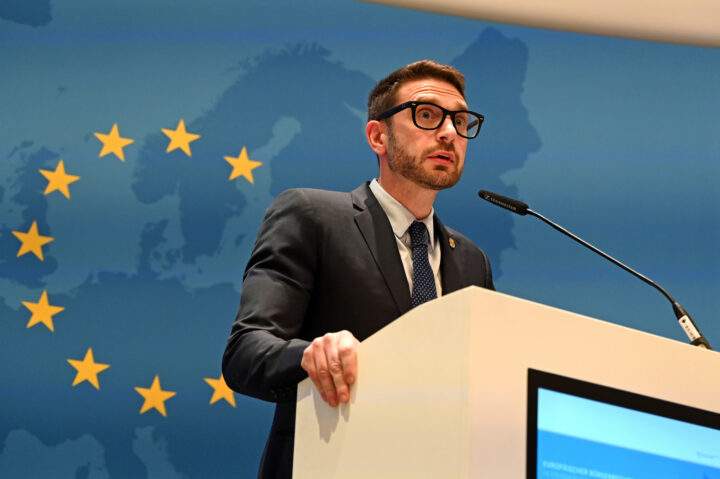
Elisa Schu/picture alliance via Getty Images
Alex Soros speaks during the presentation of the European Civil Rights Prize for Sinti and Roma on Oct, 23 2025.
The left-wing philanthropist Alex Soros on Monday boosted a social media post from Max Blumenthal, a prominent anti-Israel conspiracy theorist who has spread misinformation questioning Hamas’ atrocities on Oct. 7, 2023, while promoting sympathetic coverage of Iran and Russia as well as the toppled Assad regime in Syria, among other authoritarian countries.
While the content of Blumenthal’s X post was relatively benign, citing a Washington Post report on concerns over American military casualties in the ongoing Iran war, Soros’ decision to elevate a known conspiracy theorist raises questions about the media sources he consumes, as he now leads a multi-billion-dollar grantmaking network that has funded a range of groups and causes shaping views on the Middle East.
Soros, one of the progressive movement’s most influential donors, has been outspoken against President Donald Trump’s unilateral decision to attack Iran in a joint operation with Israel, praising Spain for refusing to allow the U.S. to use bases on its soil and reprimanding other European countries for not doing the same.
“Why aren’t more Europeans standing up to an illegal war! Same with Canada! They make nice speeches at conferences, but do little,” Soros wrote on X on Monday, saying Spain is “becoming the leader of the free world.”
The Open Society Foundations, which Soros, 40, inherited in 2023 from his father, the billionaire philanthropist George Soros, recently contributed $250,000 to establish a Middle East desk at Drop Site News, a media outlet that frequently publishes hostile coverage of Israel and credulous interviews with Hamas leaders. Drop Site has also amplified Blumenthal’s commentary.
Blumenthal, for his part, has spread false claims about the Hamas attacks — denying widespread evidence of sexual violence and suggesting Israel killed most of the victims during the massacre. He has pushed propaganda denying Syrian war crimes and China’s genocide of its Uyghur population. He regularly promotes pro-Kremlin talking points and appears on Russian television. A top editor for The Grayzone, his website, has received payments from Iranian media, according to The Washington Post.
After this story was published, a spokesperson for the Open Society Foundations told Jewish Insider that Soros had been unaware of Blumenthal’s background when he shared the post and was trying to highlight the Post’s reporting. He has since deleted the message from his X profile and shared a separate link to the same article.
A fact sheet posted to the Open Society website explicitly states the network does “not support Hamas,” saying “false accusations that are being repeated in some media circles in the United States” are “untrue.”
In January 2024, Soros, who is Jewish, wrote in an essay on his efforts to counter antisemitism that Open Society “has supported a diverse group of partners” with “different views on Israel and Palestine and what the peaceful resolution of the historic conflict might look like.”
“Their common bond: their belief that antisemitism — and also the disingenuous weaponization of the term to silence debate — presents a grave threat to democracy,” he added.
In addition to J Street, the progressive Israel advocacy group that is among the network’s top Middle East-related recipients, Open Society has given to organizations that have backed the Boycott, Divestment and Sanctions movement, according to NGO Monitor.
More recently, Soros has voiced support for New York City Mayor Zohran Mamdani, a vocal critic of Israel who has long endorsed BDS campaigns.
Blumenthal, meanwhile, has also previously aimed his conspiratorial eye at Soros himself, claiming in a social media post shortly after the 2024 presidential election that the philanthropist “might have been an X factor in Trump’s victory.”
Story updated on March 4 at 9:55 a.m.
Plus, the spread of 'Epstein class' conspiracy theorizing
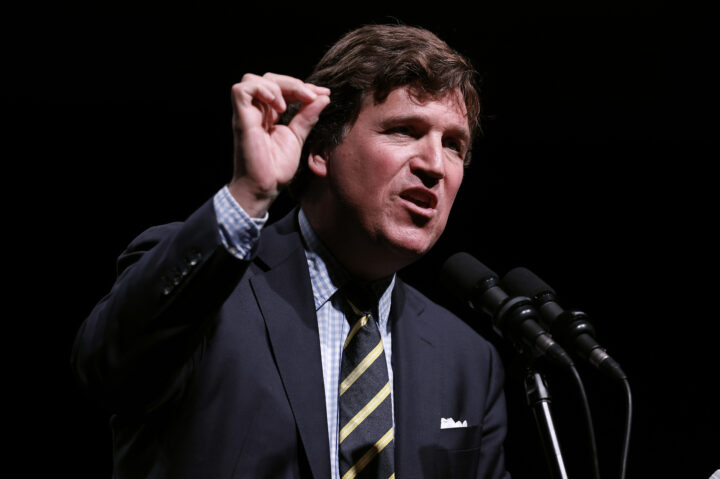
Chip Somodevilla/Getty Images
Tucker Carlson speaks at his Live Tour at the Desert Diamond Arena on October 31, 2024 in Phoenix, Arizona.
👋 Good Wednesday morning!
In today’s Daily Kickoff, we look at the rise of the “Epstein class” turn of phrase that has increasingly come to describe politically and financially connected individuals with no links to the disgraced financier, and report on efforts by left-wing congressional candidates in Illinois to band together against AIPAC and pro-Israel groups. We talk to Rich Goldberg about what he characterizes as Iran’s posturing in negotiations with the U.S., and report on a call from the leading U.S. social work group denouncing efforts to expel Israel from the International Federation of Social Workers. Also in today’s Daily Kickoff: Josh Kushner, Eli Sharabi and Tracy-Ann Oberman.
Today’s Daily Kickoff was curated by JI Executive Editor Melissa Weiss and Israel Editor Tamara Zieve, with assists from Danielle Cohen-Kanik and Marc Rod. Have a tip? Email us here.
What We’re Watching
- Tucker Carlson, who has frequently railed against the U.S.-Israel relationship and Christian Zionism, is in Israel today, where he is conducting an extensive interview with U.S. Ambassador to Israel Mike Huckabee. Israeli media reported that the interview is slated to take place at Israel’s Ben Gurion Airport, with Carlson arriving by private plane and not leaving the airport premises. Earlier this week, Huckabee, a Baptist minister, told the Conference of Presidents of Major American Jewish Organizations, “I figure instead of him talking about me, he should talk to me.”
- The International Federation of Social Workers is holding a vote today on whether to expel members of the Israeli Union of Social Workers, a day after the U.S.-based National Association of Social Workers came out against the move. More below.
- In California, the trial of the man accused of killing activist Paul Kessler during an incident at dueling pro- and anti-Israel rallies in Los Angeles a month after the Oct. 7, 2023, Hamas terror attacks is slated to begin.
- Qatari Prime Minister Sheikh Mohammed bin Abdulrahman al-Thani is in Venezuela today for meetings with senior officials. The trip is the Qatari leader’s first since the U.S. apprehended former President Nicolás Maduro last month.
- The Geneva Summit for Human Rights and Democracy is taking place today in Switzerland. Speakers at the daylong gathering, which is being co-sponsored by dozens of organizations, include UN Watch Executive Director Hillel Neuer, who is giving opening remarks on behalf of the sponsoring organizations, Iranian dissident writer Masih Alinejad and the Raoul Wallenberg Centre for Human Rights’ Brandon Silver.
- The Kigali Forum, a conference bringing together policy leaders and think tanks from the United States, Africa and Israel to discuss “the new Middle East,” is taking place today in Kigali, Rwanda. Attendees include representatives from AIPAC, the Hudson Institute, the Atlantic Council and the American Foreign Policy Council.
What You Should Know
A QUICK WORD WITH JI’S JOSH KRAUSHAAR
After AIPAC’s super PAC suffered an embarrassing setback in this month’s New Jersey special primary election — unwittingly helping boost the fortunes of Analilia Mejia, an anti-Israel, far-left candidate, with its attacks against former Rep. Tom Malinowski (D-NJ) — all eyes will be on Illinois’ upcoming primaries, and the impact of a surge in pro-Israel spending on ads in four closely watched congressional contests.
AIPAC’s super PAC, the United Democracy Project, along with other outside groups boosting the fortunes of pro-Israel candidates, are betting big on four Chicago-area candidates in crowded Democratic primaries: Cook County Commissioner Donna Miller (for the seat of retiring Rep. Robin Kelly); Chicago City Treasurer Melissa Conyears-Ervin (for the seat of retiring Rep. Danny Davis); former Rep. Melissa Bean (for the seat of Rep. Raja Krishnamoorthi, who is running for Senate); and state Sen. Laura Fine (running for the seat of retiring Rep. Jan Schakowsky).
The biggest beneficiaries of outside group spending are Fine and Bean, receiving about $1.25 million apiece in air cover from Elect Chicago Women, a super PAC formed to boost their campaigns (and which appears to be a vehicle for pro-Israel supporters).
Both of those primaries, in the affluent Chicago suburbs, are developing differently.
The race to succeed Schakowsky, in a progressive-minded but notably Jewish Lakefront district, is shaping up to be the most hotly contested primary in the state. The field is similar to a lot of emerging Democratic primaries this year — one mainstream pro-Israel candidate (Fine), one harsh critic of Israel (Evanston Mayor Daniel Biss) and one all-out anti-Israel activist (social media influencer Kat Abughazaleh).
Fine, fueled by support from pro-Israel allies, raised over $1 million in the last fundraising quarter and was the first candidate to spend money on the air. That jump-start helped give her early momentum, with an internal poll from her campaign showing her tied for the lead with Biss at 21%, with Abughazeleh lagging in third place. (A subsequent internal poll released by Biss’ campaign showed Biss leading with 31%, while Fine and Abughazaleh were tied in second with 18% apiece.)
MONIKER MEANING
Since late last year, when the Justice Department began releasing millions of documents from its investigation into Jeffrey Epstein, the well-connected financier and sex trafficker, each day seems to bring news of yet another luminary who had a relationship with Epstein. The revelations of Epstein’s ties to elite power brokers on both the political left and right has contributed to a deepening conspiratorial mindset among the public, as people understandably question why influencers and titans of finance stayed in close touch with a man who had been convicted of sex crimes. But the legitimate outrage at the powerful people who ignored and at times enabled Epstein’s crimes has spread beyond just those who appear in the chummy emails he exchanged. It has now, in some corners, bled into conspiratorial finger-pointing on issues that have nothing to do with the ethical concerns raised in the document dump, Jewish Insider’s Gabby Deutch reports.
Part of the conversation: Rep. Ro Khanna (D-CA), a Silicon Valley progressive, has begun referring to this hodgepodge of people as the “Epstein class.” But usage of the term is not precise. It’s an anti-elite message, and Khanna is applying it more widely than just the people with whom Epstein had a relationship. “These people were at the Davos conferences together, they were financing the same politicians together,” Khanna said in a recent interview. “It’s all the same club. It’s a club. And they don’t want that club to be broken.” Rep. Thomas Massie (R-KY), an anti-Trump Republican who worked with Khanna on the legislation that forced the release of the files, said last week, “This is about the Epstein class,” when asked about President Donald Trump’s efforts to unseat him in this year’s midterm election.
JOINING FORCES
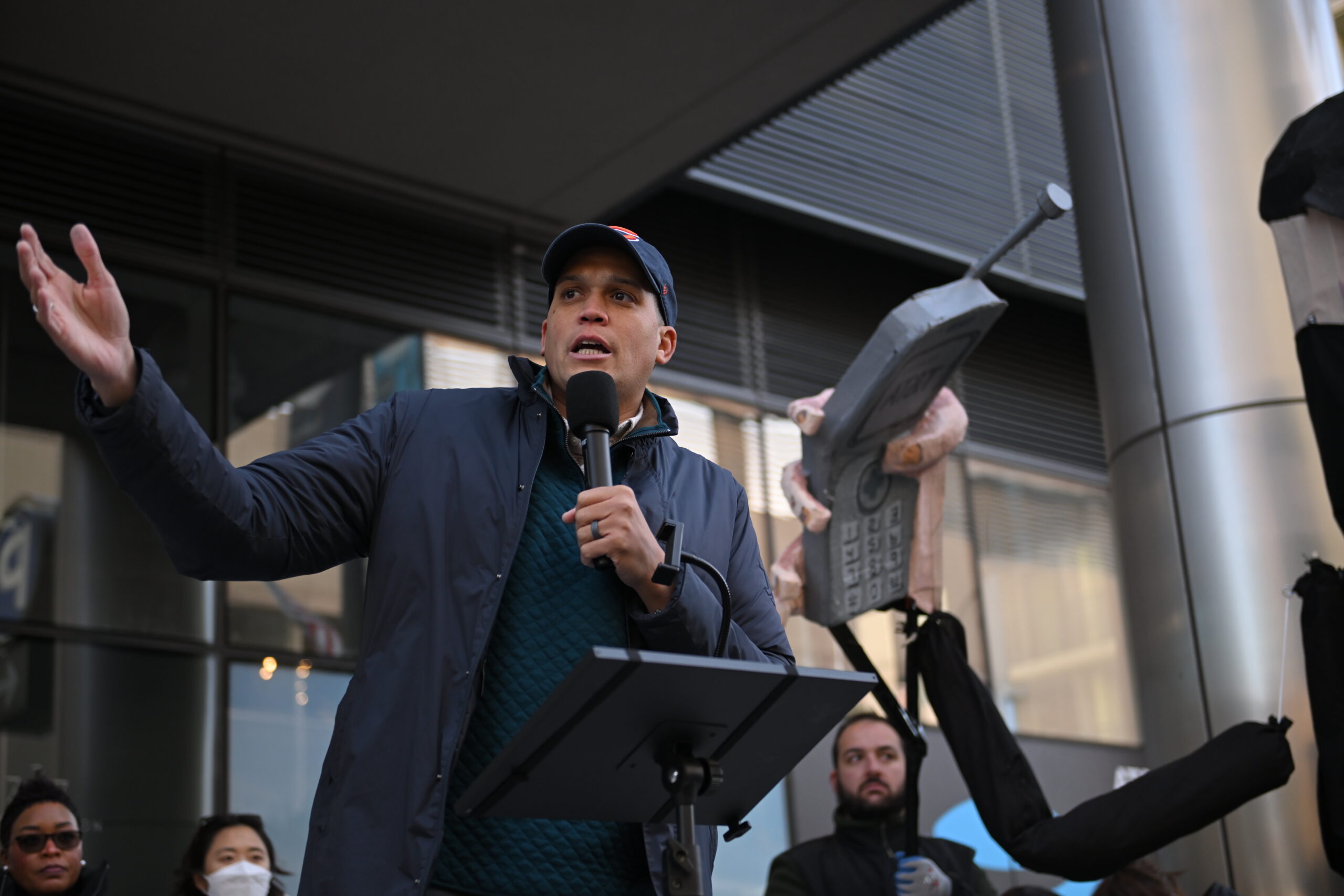
Four progressive House candidates came together in the Chicago area on Tuesday to condemn reported pro-Israel spending in their districts, a sign of growing cross-district collaboration among candidates hostile to Israel as they seek to push back against pro-Israel interest groups, Jewish Insider’s Marc Rod reports. The joint press conference included Evanston, Ill., Mayor Daniel Biss, state Sen. Robert Peters, activist Junaid Ahmed and union organizer Anthony Driver Jr. All four are endorsed by the Congressional Progressive Caucus PAC.
New voice: Driver’s attendance was particularly notable given that he has little public record on Israel policy issues. He’s running in the 7th Congressional District, where the AIPAC-linked United Democracy Project has spent $753,000 — and reportedly plans close to $3 million in spending — in support of Chicago Treasurer Melissa Conyears-Ervin. He was endorsed by the CPC on Tuesday. Meanwhile, in the 9th District, Biss has been leaning aggressively into Israel and AIPAC-related attacks on state Sen. Laura Fine as a centerpiece of his campaign.
ROCK AND A HARD PLACE
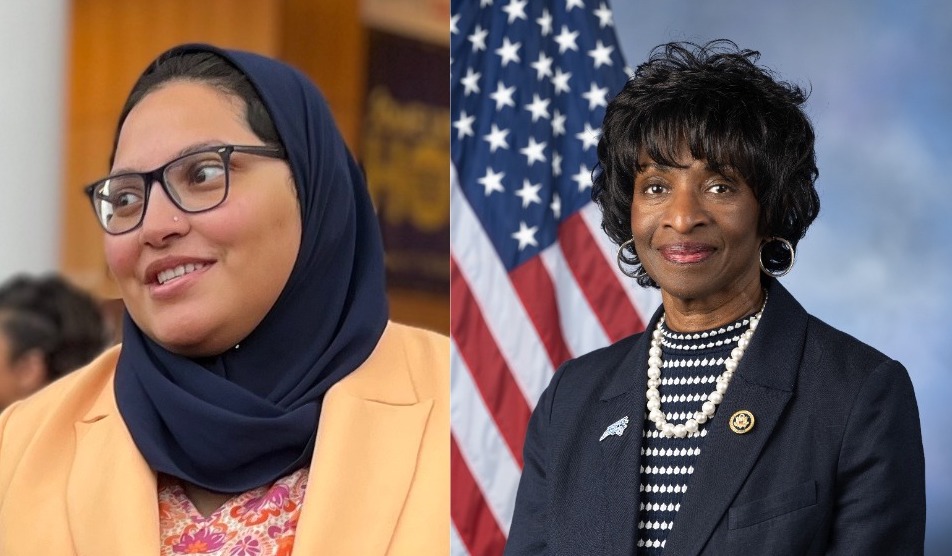
Four years after their first showdown, progressive anti-Israel activist Nida Allam and Rep. Valerie Foushee (D-NC) are facing off for a second time in the Durham, N.C.-based 4th Congressional District — but under very different circumstances, Jewish Insider’s Marc Rod reports.
No clear choice: While the pro-Israel community stepped in strongly to back Foushee against the stridently anti-Israel Allam, a Durham County commissioner, in 2022, Foushee has since shifted significantly to the left on Israel policy, leaving pro-Israel backers with no clear choice in the race between an incumbent who has abandoned her support of Israel and a challenger with a deeper hostility to the Jewish state. Foushee, in 2022, was backed by more than $2 million in outside spending by the United Democracy Project, marking one of the AIPAC-aligned super PAC’s early, defining victories. But this time, that pro-Israel support for Foushee is unlikely to materalize in what has become a sprint to the left. This time, Allam is benefiting from substantial outside spending.
Q&A
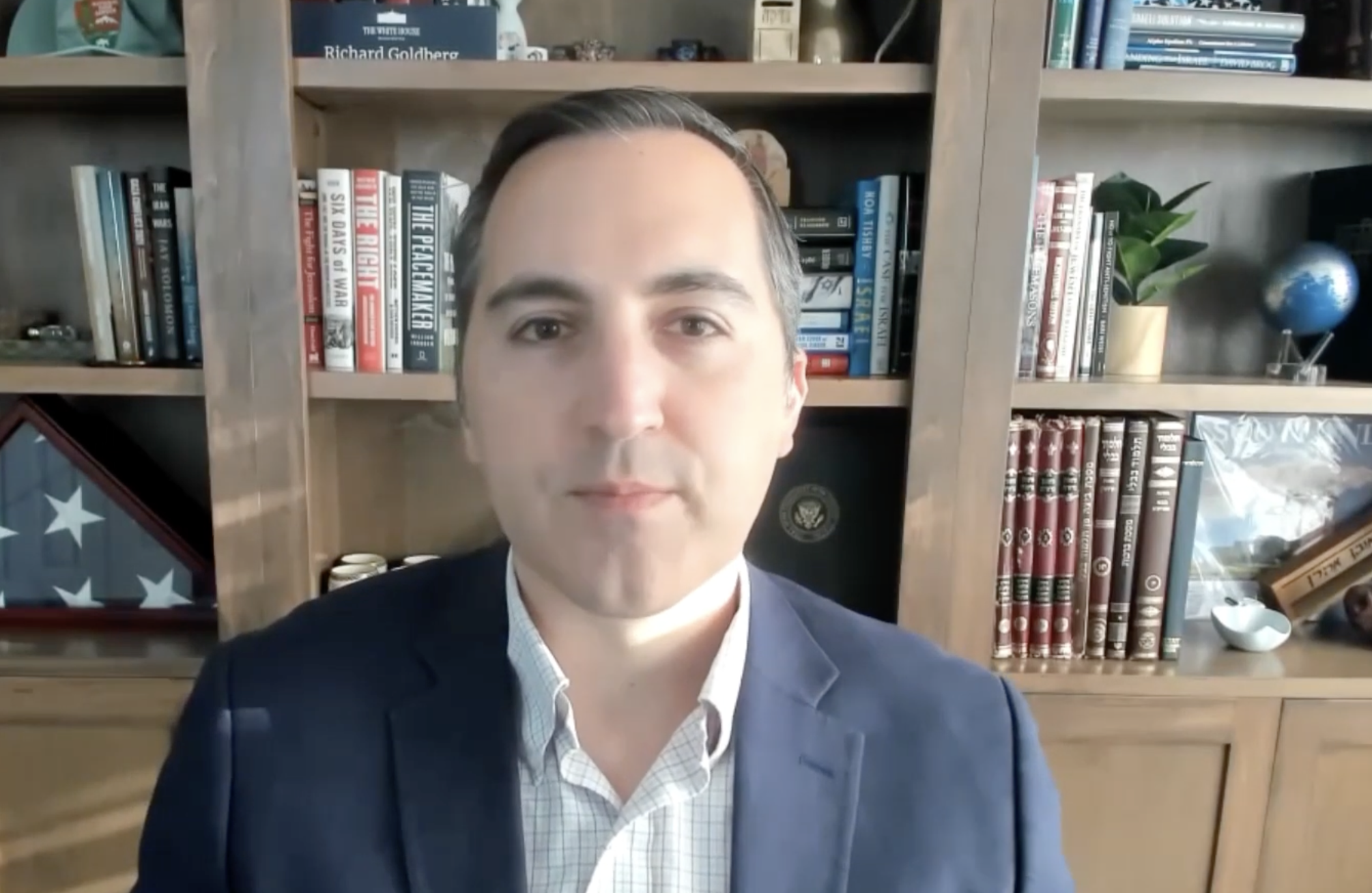
Readouts from Iran on progress made in the latest round of negotiations with the U.S. are evidence of the regime “simply buying for time” and evidence that Tehran isn’t willing to make the concessions demanded by the Trump administration, Richard Goldberg, a former Trump administration official and senior advisor at the Foundation for Defense of Democracies, told Jewish Insider’s Matthew Shea in an interview Tuesday. Following the second round of nuclear negotiations, which Iranian Foreign Minister Abbas Araghchi called “serious, constructive and positive,” Goldberg made the case for why he thinks there’s a high likelihood of future U.S. military action against Iran, and why he sees the negotiations as diplomatic theater.
Talks takeaway: “If this was operating in a vacuum, and I saw that readout from the Iranian foreign minister, I would tell you that I thought this was a readout of one of the many rounds the regime held with [Special Envoy for Iran under President Joe Biden] Rob Malley or other diplomats from past administrations, Obama or Biden, with the sort of silliness of the readout of ‘We’ve agreed to terms in principle of what we might talk about,’” Goldberg said. “It is one of the clearest signs of a regime that’s not willing to make the tough concessions that the president has demanded, and instead is simply buying for time.”
AGAINST THE TIDE

The leading membership organization of U.S. social workers called on Tuesday for the field’s largest international body to oppose efforts to expel Israel’s association of social workers, ahead of a planned vote on that question slated for Wednesday, Jewish Insider’s Gabby Deutch reports. The International Federation of Social Workers will vote on Wednesday on a contentious effort to expel the Israeli Union of Social Workers, after some European members complained that Israeli social workers had served in combat roles during Israel’s war against Hamas in Gaza. A petition, organized by several Jewish social work associations, circulated last week urging the U.S.-based National Association of Social Workers and the Canadian Association of Social Workers to come out against the measure garnered more than 12,000 signatures.
Speaking out: NASW — which boasts more than 120,000 members and claims to be the largest national social work organization in the world — weighed in for the first time with a statement on Tuesday urging IFSW members to vote against the measure in order “to uphold the profession’s core values of unity, dialogue and compassion.” The NASW said in a statement, “We are deeply surprised and disappointed that our European colleagues, who have not experienced circumstances comparable to those faced by their Israeli counterparts, are now seeking to judge and exclude them. We hope that, should they ever face similar challenges, they are met with the compassion, understanding, and empathy that they are currently denying to their Israeli colleagues.”
brussels debacle
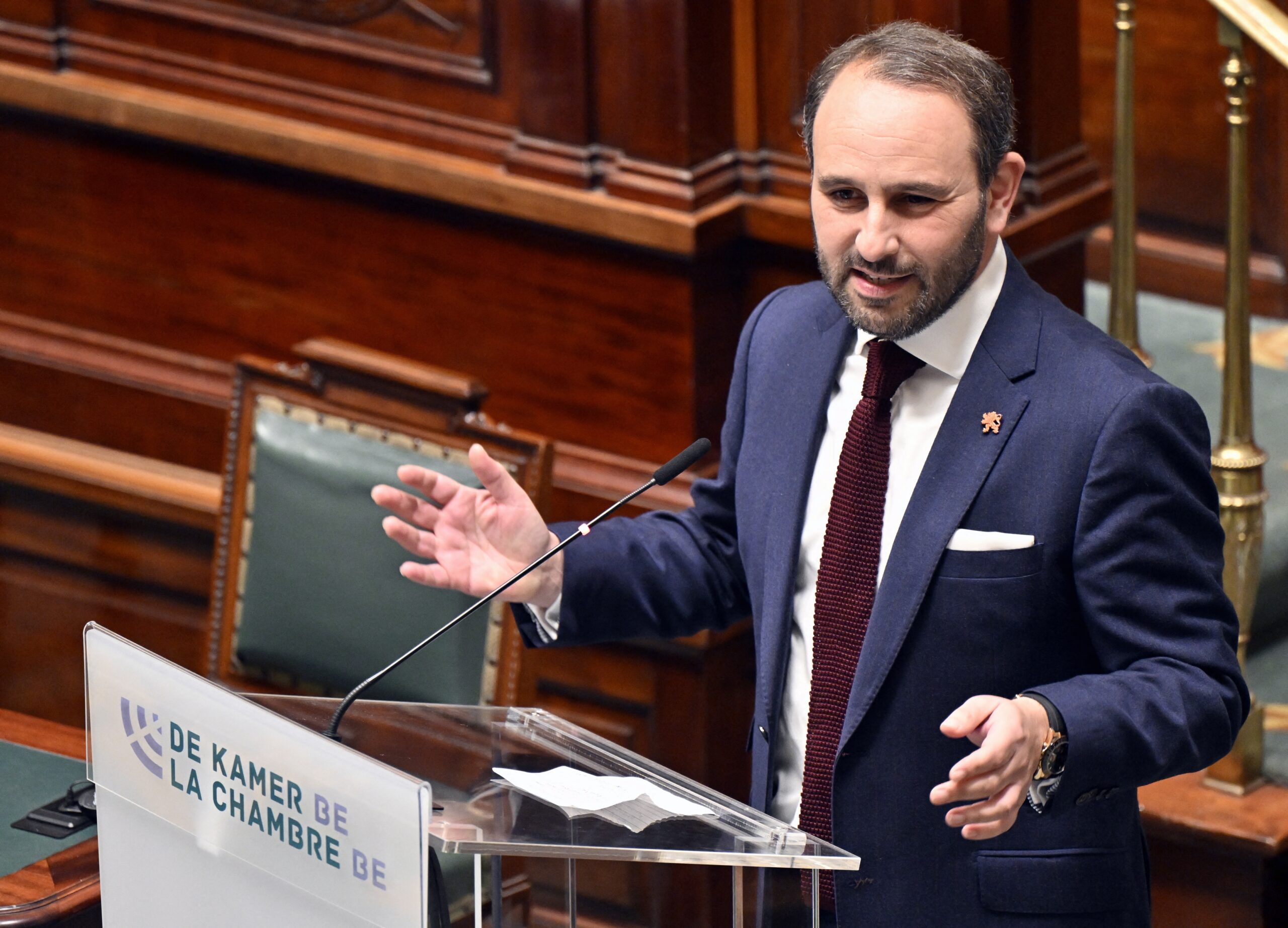
The long-simmering controversy over whether mohels can perform ritual circumcisions in Belgium broke dramatically into international public view this week, over a case involving the prosecution of three mohels. The controversy, which touches on sensitive religious, legal and diplomatic matters, has ensnared the only Jewish lawmaker in Belgium, Michael Freilich, as well as the U.S. ambassador to Belgium, Bill White, who accused the country of antisemitism over the legal action. And it stretches from Antwerp, home to a large Orthodox Jewish community, to Washington, to Jerusalem, where Israel’s foreign minister has weighed in, Jewish Insider’s Lahav Harkov reports.
The matter at hand: It comes after Belgian police arrested the mohels, Jewish religious authorities who conduct circumcisions, during a series of raids last May in Antwerp. The individuals have been charged with performing a medical procedure without a license. While Brussels has not specifically outlawed ritual circumcision, it requires a doctor to perform the procedure. There are no mohels who are also doctors in Belgium, a source close to Freilich told JI, and Jewish law requires a mohel to be Jewish. Freilich has become the target of accusations from his fellow lawmakers, in light of a recent interview to a Yiddish-language newspaper Der Yid, in which he recounted raising the matter at a roundtable discussion with members of Congress during a visit to Washington.
Worthy Reads
Ignoring Red Lines: The editorial board of The Wall Street Journal warns that Iran is hoping the Trump administration will follow in the footsteps of the Obama administration and only focus on Iran’s nuclear program in talks, even as President Donald Trump has pledged to come to the defense of Iranian protesters. “Mr. Trump prizes flexibility, and he could ignore any red line he has drawn, as Mr. Obama did at great cost in Syria. But given the ideas Iran has floated so far, a deal would likely require Mr. Trump to cave. Why would he do that while the regime is afraid of its own people, badly weakened militarily by Israel and under financial pressure? The main concession Iran is discussing is to suspend uranium enrichment for a time. But Iran isn’t enriching now, thanks to U.S. bombers, and it isn’t ready to resume. In exchange for that status quo, Tehran wants U.S. sanctions relief, which would be a lifeline to the regime and a betrayal of the protesters.” [WSJ]
Vance’s False Idol: Tablet’s Liel Leibovitz shares a letter he wrote to an unnamed Catholic friend about his concerns around antisemitism and anti-Zionism in the Catholic Church, following the controversy last week resulting from comments by a Catholic member of the White House’s Religious Liberty Commission. “I admire Vice President JD Vance’s journey, and I want to believe that he respects my people and faith as much as I respect his. But watching him in public these days sends shivers down my spine. With one morally clear statement, he could disempower this entire emerging false idol. Instead, he’s doing the opposite. … That the Vice President would choose to center his faith not in deep, meaningful, personal, and evocative ways but as a facile and misdirected talking point is concerning. When we say we want more faith in public life, I’m not sure even the most ardently observant among us has in mind a world in which our elected officials are guided by theological urges rather than by America’s cold, hard interests.” [Tablet]
Word on the Street
Vice President JD Vance said that Iranian officials were still unwilling to acknowledge “some red lines” set by the U.S. in negotiations over Tehran’s nuclear program, as Axios reports that a war between the U.S. and Iran, likely with Israeli involvement, “could begin very soon”…
A week after Carrie Prejean Boller was removed from the White House Religious Liberty Commission after making stridently anti-Zionist comments at a hearing on antisemitism last week, Sameerah Munshi, a member of the commission’s advisory board, came to Prejean Boller’s defense. “It is my hope as an American that ‘America First’ prevails for Carrie and ordinary Americans over an ‘Israel First’ project bent on eroding the constitutional protections that belong to every American,” Munshi said on Monday. She remains an advisor to the commission…
Kentucky Gov. Andy Beshear, a potential 2028 Democratic presidential candidate, is releasing a book later this year focused on his Christian faith…
House Democrats are mulling a forced vote to censure Rep. Randy Fine (R-FL) for recent Islamophobic comments made on social media if House Speaker Mike Johnson (R-LA) does not take action…
The New York Times does a deep dive into the fractured relationship between the Black and Jewish communities following comments by Rev. Jesse Jackson, who died yesterday, to The Washington Post in 1984 in which he referred to Jews as “Hymies” and New York City as “Hymietown”…
Thrive Capital founder Joshua Kushner announced that Thrive was closing its 10th fund, with the majority of the more than $10 billion raised going to designated growth-stage investments…
Eric Trump is investing in Israeli drone maker Xtend in a deal that will merge the Israeli company with Florida-based construction company JFB Construction — which says it already has a multimillion-dollar Pentagon contract — with plans to take the new company public…
Scotiabank dissolved its remaining 165,000 shares in Israel’s Elbit Systems, after facing activist pressure, including protests outside branches of the Canadian bank and the disruption of an awards ceremony sponsored by the bank…
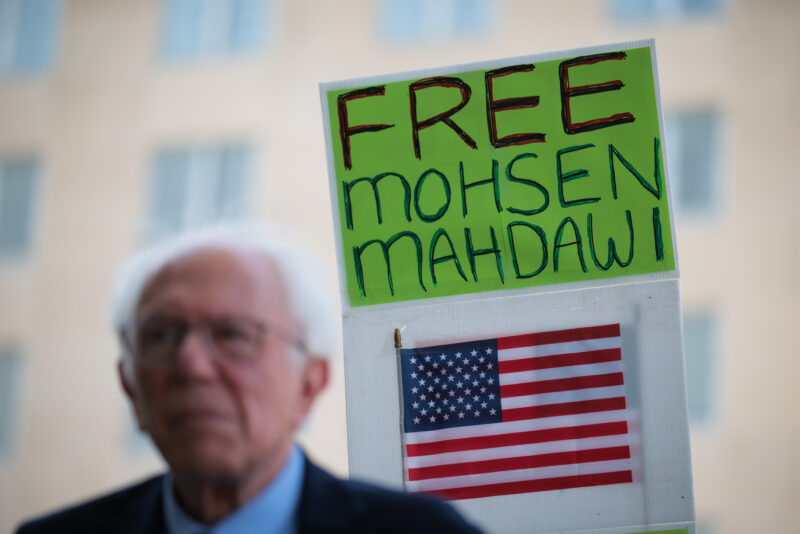
A federal judge blocked the deportation of Columbia University graduate student Mohsen Mahdawi, who led anti-Israel protests at the university, citing a procedural misstep by federal attorneys who failed to certify a document that was to be used as evidence against Mahdawi…
A U.N. committee under the body’s Human Rights Council rebuked the European countries that have in recent days called for the removal of Francesca Albanese as special rapporteur for the Palestinian territories, saying that the moves against Albanese, who recently came under fire for comments in which she called Israel the “common enemy” of humanity, were “vicious attacks, rooted in disinformation”…
Radio Télévision Suisse removed commentary from one of its broadcasters covering the Olympic men’s bobsled races over his remarks regarding Israeli bobsled captain AJ Edelman’s support for Israel, which the commentator described as support for “genocide,” saying that Stefan Renna’s comments “may have appeared inappropriate due to its length within the context of a sports commentary”…
A new YouGov poll commissioned by the Council for a Secure America found majority support in Syria for both U.S. engagement (65%), as well as a security arrangement with Israel (64%)…
Syria is closing the al-Hol detention camp that previously housed tens of thousands of people, including Islamic State members and their families, weeks after the Syrian Democratic Forces, a Kurdish group that had been supported by the U.S. and had been overseeing it, withdrew amid a takeover of the region by Syrian government forces…
Turkish Prime Minister Recep Tayyip Erdogan on Tuesday slammed Israel’s recent recognition of Somaliland, arguing that the recognition does not help any party…
Eli Sharabi’s Hostage, which recounts his 16 months in Hamas captivity, was named the book of the year at the Jewish Book Council’s National Jewish Book Awards…
Yoav Gonen, formerly a reporter at The City, is joining the office of New York City Council Speaker Julie Menin as communications director…
Jewish Currents tapped former Forward reporter Joshua Nathan-Kazis to join its staff…
Cato Institute co-founder Edward Crane, who established the libertarian think tank in 1977, died at 81…
Pic of the Day

British actor Tracy-Ann Oberman was named as a member of the Most Excellent Order of the British Empire from King Charles in a ceremony on Tuesday at Windsor Castle.
Birthdays
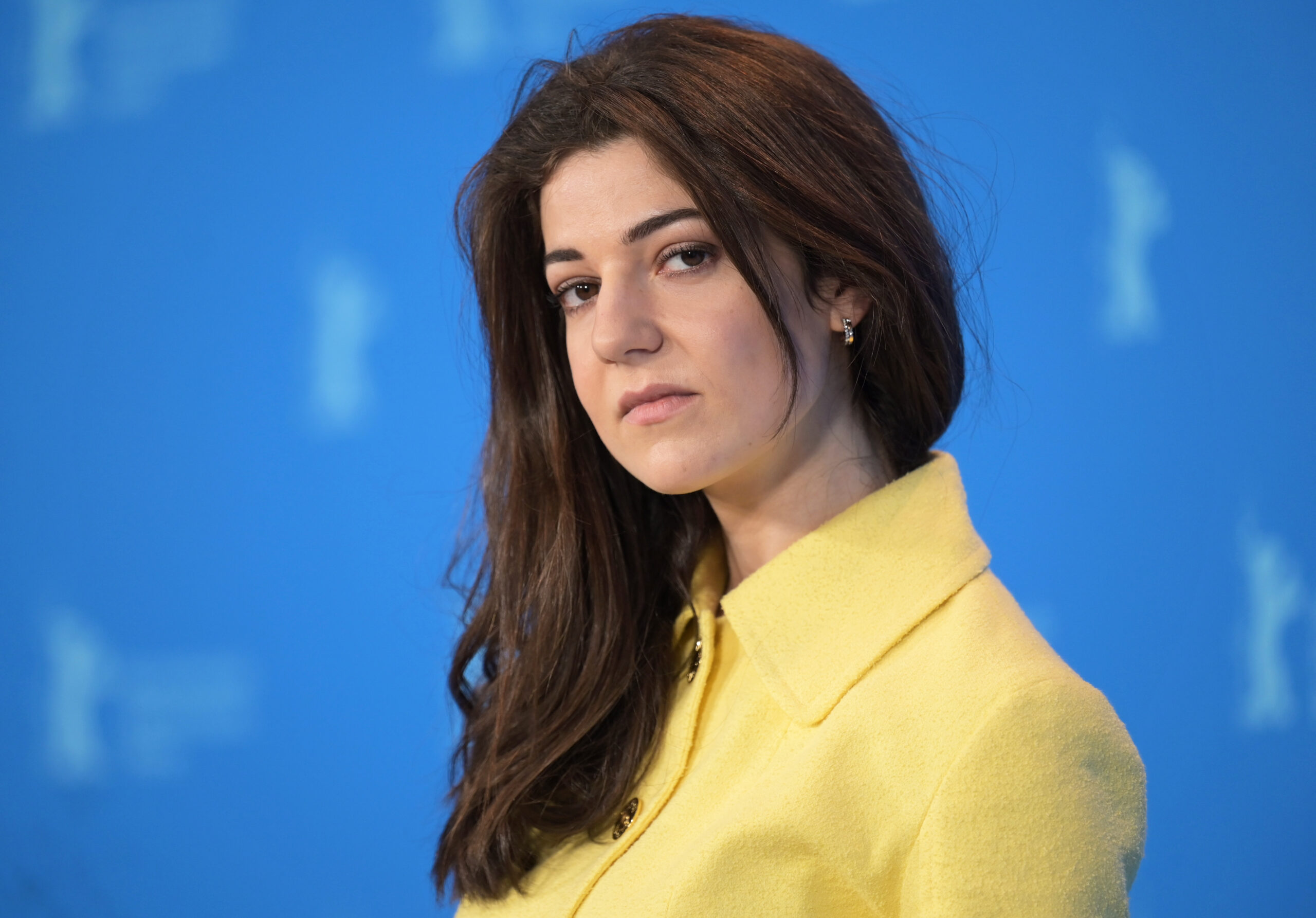
French movie actor, Esther Garrel turns 35…
Rosh yeshiva at Yeshiva University, he also holds a Ph.D. in operations research from NYU, Rabbi Hershel Reichman turns 82… Former U.S. representative from New York for 32 years, he was chairman of the House Foreign Affairs Committee, Eliot Engel turns 79… Former national and Washington correspondent for The New York Times for 24 years, Michael Janofsky… Russian pharmaceutical businessman, Boris Spiegel turns 73… Principal at NYC-based Liebman Advisors, Scott Liebman… Israeli singer and actress, Ilana Avital turns 66… Portfolio manager at Capital Group, she holds a master’s degree in economics from New York University, Hilda Lea Applbaum… Co-principal of the Institute for Wise Philanthropy, Mirele B. Goldsmith… Mayor of Miami Beach, Fla., from 2013-2017, Philip Louis Levine turns 64… National director of events at the Simon Wiesenthal Center, Lori Tessel… Director of the digital diplomacy bureau at Israel’s Ministry of Foreign Affairs, David Saranga turns 62… Author and school safety activist who had a daughter, Meadow, who was killed in the Marjory Stoneman Douglas High School shooting in 2018, Andrew Scot Pollack turns 60… Professor emeritus of the chemistry department at Stony Brook University, she was the Democratic nominee in 2020 for the 1st Congressional District of New York, Nancy Sarah Goroff turns 58… President of Yeshiva University since 2017, Rabbi Ari Berman turns 56… CEO of an eponymous Baltimore-based branding, marketing, PR, advertising and design firm, David F. Warschawski turns 55… Fitness expert, nutritionist, media personality and author, Jillian Michaels turns 52… Actor, comedian, writer, director and producer, Isaac “Ike” Barinholtz turns 49… Co-founder (with Dan Gilbert) of StockX, the stock market for high-end product resale, it started as a secondary market for sneaker sales, Joshua Eliot “Josh” Luber turns 48… Singer-songwriter and pianist, Regina Spektor turns 46… Chief development officer for J Street, Adee Telem… Instagram celebrity, with 9.4 million followers, known commonly as The Fat Jewish, Josh Ostrovsky turns 44… President of baseball operations for the New York Mets, David Stearns turns 41… Editorial writer and opinion columnist for The Washington Post, James P. Hohmann… Deputy director of strategic planning at NYC’s Housing Authority, Dylan Sandler… Producer and off-air reporter on Capitol Hill for NBC News, Rebecca R. Kaplan…
The Texas senator recalled a conversation with Israeli PM Benjamin Netanyahu where he dismissed the severity of the issue on the American right
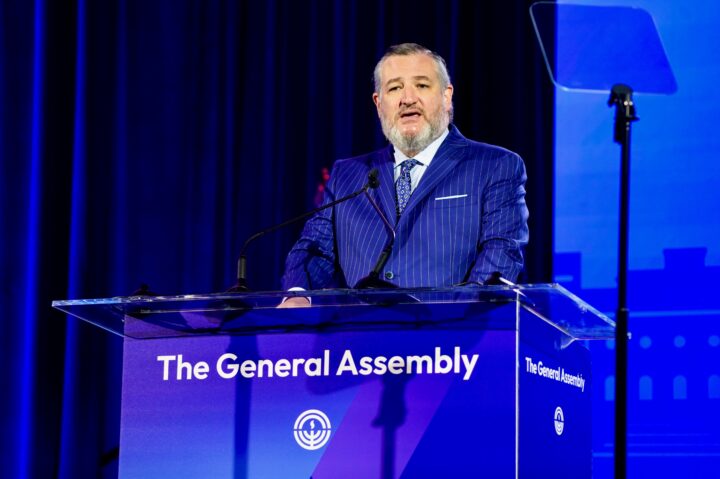
Jewish Federations of North America
Sen. Ted Cruz (R-TX) speaks at the Jewish Federations of North America's General Assembly on Nov. 18, 2025.
Sen. Ted Cruz (R-TX) upped the ante on his recent rhetoric targeting right-wing podcaster Tucker Carlson, telling a gathering of Jewish leaders in Washington that calling out antisemitism from Carlson and his Republican allies is necessary to defend American values. He said America faces an “existential crisis” if the rising antisemitism on the American right is not addressed.
“I do not want to wake up in five years and find that the Republican Party has become like the Democrat Party,” Cruz said on Tuesday at the Jewish Federations of North America’s General Assembly, which brought together 2,000 philanthropists, activists and Jewish communal professionals. “I do not want to wake up in five years and find that both major parties in America have embraced hatred of Israel and have tolerated, if not embraced, antisemitism.”
The conservative movement has faced internal division and tensions since Carlson hosted neo-Nazi Nick Fuentes on his podcast last month.
By digging in on his campaign against Carlson, Cruz further separated himself from President Donald Trump, who on Sunday night offered praise for the former Fox News host when he was asked about Carlson’s decision to do a friendly interview with Fuentes.
“He said good things about me over the years. I think he’s good,” Trump said. “You can’t tell him who to interview.”
Cruz, meanwhile, has gone after Carlson in increasingly sharp messages, after having his own heated interview with the podcaster in June — including at the recent Republican Jewish Coalition conference in Las Vegas, then at a Federalist Society conference in Washington and now at the GA.
In his latest speech, he did more than calling out Carlson and his Republican enablers. He made the case that countering Carlson’s influence is necessary for the future of America.
“That is a poison that not only does damage to Israel. That is a poison that does damage to America,” Cruz said. “And if we’re going to stop it, we’re going to stop it because we stand up and say, ‘No, this is not who we are. This is not what we believe. This is not what the Constitution and the Declaration [of Independence] were all about. This is not what America was all about.’”
At the GA, Cruz was addressing a friendly audience who had spent two days immersed in programming about antisemitism in America. But he warned that many people are not fully grasping the scope of the problem. He described a meeting with Israeli Prime Minister Benjamin Netanyahu this year where, he said, Netanyahu tried to push back on the idea that right-wing antisemitism was a threat.
“I’ll tell you, he actually was a little dismissive of that. He said, ‘No, no, no, that’s Qatar, that’s Iran, that’s bots,’” Cruz said. “My response: ‘Mr. Prime Minister, yes, but no. Yes, that’s happening. Yes, there are millions of dollars being spent to spread this poison. Yes, that’s happening online. But it is real and organic.’”
The misunderstanding, Cruz said, also exists in the Christian world.
“My message to the Christians is, this poison is spreading. There are pastors who love Israel, who think all is fine,” Cruz said. “My message to them is, ‘Go and talk to the teenagers in your congregation. Go and talk to the 20-somethings in your congregation, because they’re picking up their phone and they’re watching Tiktok and they’re watching Instagram, and they’re hearing this message being driven, and it is resonating.’”
The answer, Cruz said, is for other public officials — Republicans in particular — to speak out. But what’s at stake, he argued, is more than just their party or the Jewish community. He made the case that they must do so for the good of America.
“My hope is that we see other Republicans willing to stand up, willing to stand up and to be clear, willing to draw a line,” he said. “This is a fight worth fighting. Saving America is worth fighting. Bringing us back to our founding principles — that is worth fighting.”
The senator’s comments at the Republican Jewish Coalition gathering came after the Heritage Foundation defended Tucker Carlson and refused to disavow neo-Nazi Nick Fuentes
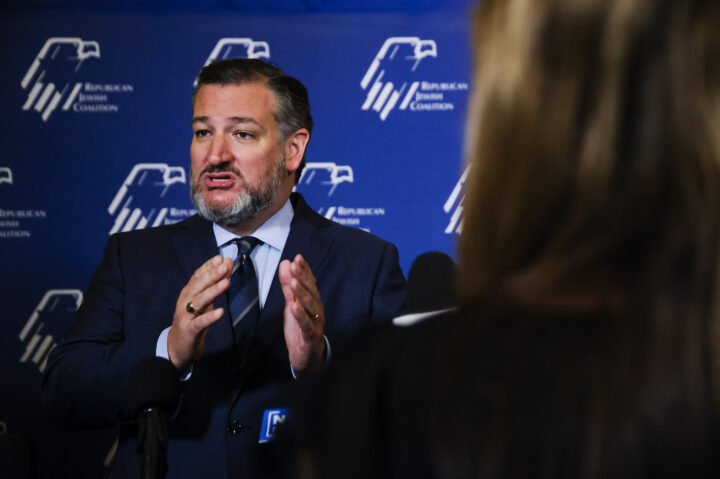
WADE VANDERVORT/AFP via Getty Images
Sen. Ted Cruz (R-TX) speaks during the Republican Jewish Coalition Annual Leadership Meeting in Las Vegas, Nevada, on November 19, 2022.
Sen. Ted Cruz (R-TX) criticized Republicans who refuse to disavow prominent antisemites in the conservative movement as “cowards” after the Heritage Foundation and its president, Kevin Roberts, defended Tucker Carlson and his friendly interview with neo-Nazi influencer Nick Fuentes.
Cruz warned during a half hour address at the opening of the Republican Jewish Coalition’s annual summit in Las Vegas on Thursday evening that young Christians were turning away from supporting Israel, something he argued was the result of pro-Israel Christians being maligned by leading voices in the America First movement.
The Texas Republican senator did not mention the Heritage Foundation, Roberts, Carlson or Fuentes by name, though he accused anyone who uncritically promotes Adolf Hitler of being “complicit” in spreading virulent antisemitism.
Fuentes has praised Hitler on multiple occasions; in his statement, Roberts said he “disagree[s] with” some of Fuentes’ views, “but canceling him is not the answer.”
“The last year, we’ve seen three prominent people on the right publicly muse, ‘Gosh, maybe Hitler’s not all that bad.’ No. He is the embodiment of evil, a grotesque bigot. And if you’re confused by that, you’re an imbecile,” Cruz said on Thursday. “Too many people are scared to confront them. I want to ask you, how many elected Republicans do you see standing up and calling this out? How many do you see willing to take on the voices in the anti-Israel right?”
“More than a few of my Republican officeholders are terrified of upsetting people with really big megaphones,” he explained.
Cruz warned that antisemitic ideas are spreading among young Americans through social media and argued that rising support for isolationism and the pro-Israel community’s failure to adequately explain the benefits of the U.S.-Israel relationship accounted for the broad ideological shifts on the issue — but he noted that there “is also a theological argument” being made on the Christian right against Jews.
“We are seeing young Christians and young evangelicals turning against Israel, and they are being pitched lies,” Cruz said. “One particular lie is something called replacement theology, and replacement theology is a twisted view that the Jews are no longer God’s chosen people, that the promises in the Old Testament no longer apply and that Christians have replaced Jews. Now in my Bible, I believe every word of it is true, and I believe every promise that God made to the people of Israel remains a promise that is made to the chosen people.”
After noting that he was “proud to be a Christian Zionist,” Cruz noted Carlson’s recent comments expressing his disdain for people who identify as such while appearing to note his protected status in the Trump administration. Carlson attacked Cruz and other pro-Israel conservatives, including U.S. Ambassador to Israel Mike Huckabee, by name in his podcast conversation with Fuentes, where Carlson claimed that those who identify as Christian Zionists have been infected by a “brain virus.”
“There are some people who are embraced at the highest level of government who said there is no one they hate more than Christian Zionists,” Cruz said. “Well, I’ll tell you what, there’s no one I hate more than communists and jihadists who want to murder us. Now is the time for choosing. Now is the time for courage.”
“If you sit there and nod adoringly while someone tells you that Winston Churchill was the villain of World War II, if you sit there and nod while someone says, ‘Well, there’s a very good argument that America should have intervened on behalf of Nazi Germany in World War II.’ If you sit there with someone who says Adolf Hitler was very, very cool and that their mission is to combat and defeat global Jewry, and you say nothing, then you are a coward, and you are complicit in that evil,” he added.
Omri Ceren, Cruz’s legislative director and longtime advisor, criticized Heritage directly in a post on X on Friday morning, writing that: “I mean, if Republican Jews don’t have a place at @Heritage that’s a choice its current leadership is institutionally empowered to make, but it sits uncomfortably with the organization’s history.”
Cruz’s comments were met with praise from Deborah Lipstadt, the State Department’s special antisemitism envoy during the Biden administration, who posted a message on X commending the Texas Republican.
Carlson: ‘I can just sort of picture the scene in a lamp-lit room with a bunch of guys sitting around eating hummus, thinking about, ‘What do we do about this guy telling the truth about us?’
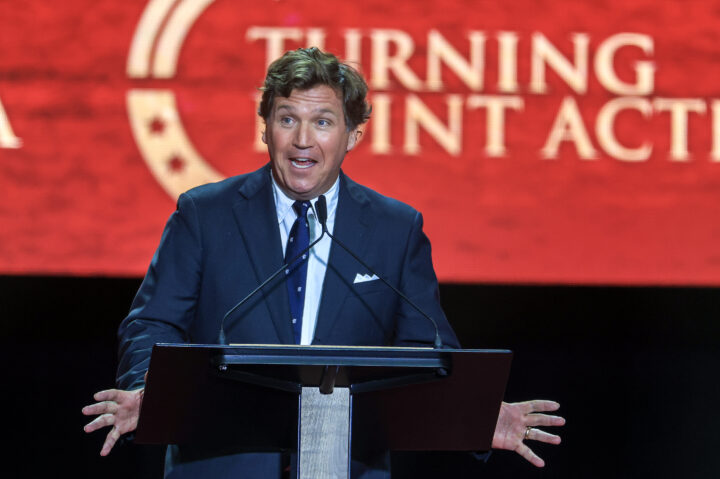
Joe Raedle/Getty Images
Tucker Carlson speaks during the memorial service for political activist Charlie Kirk at State Farm Stadium on September 21, 2025 in Glendale, Arizona.
Right-wing political commentator Tucker Carlson, who has hosted Holocaust deniers and antisemitic influencers on his podcast, used his address at the memorial for conservative influencer Charlie Kirk in Arizona on Sunday to compare Kirk’s assassination to the killing of Jesus.
The former Fox News host began his remarks to the more than 70,000 people in attendance at State Farm Stadium in Glendale by noting that the political engagement brought on by Kirk’s killing “actually reminds me of my favorite story ever,” before offering an account of how Jesus was killed in Jerusalem. While he never brought up the Jewish people by name, he made references to Jewish culture to suggest that he was referring to the antisemitic trope that Jews were responsible for the killing of Jesus.
“It’s about 2,000 years ago in Jerusalem and Jesus shows up, and he starts talking about the people in power, and he starts doing the worst thing that you can do: just telling the truth about people, and they hate it, and they just go bonkers. They hate it, and they become obsessed with making him stop. ‘This guy’s got to stop talking. We’ve got to shut this guy up,’” Carlson said.
“I can just sort of picture the scene in a lamp-lit room with a bunch of guys sitting around eating hummus, thinking about, ‘What do we do about this guy telling the truth about us? We must make him stop talking.’ There’s always one guy with the bright idea, and I can just hear him say, ‘I’ve got an idea. Let me just kill him. That’ll shut him up, that’ll fix the problem.’ It doesn’t work that way,” he continued.
Carlson, who spoke for just under six minutes, then quoted the beatitude from Matthew 5:4: “Blessed are those who mourn, for they will be comforted.” He connected the passage to Kirk’s political message, making the argument that the slain conservative activist “was bringing the gospel to the country. He was doing the thing that the people in charge hate most, which is calling for them to repent.”
“How is Charlie’s message different? Charlie was a political person who was deeply interested in coalition building and getting the right people in office, because he knew that vast improvements are possible politically, but he also knew that politics is not the final answer. It can’t answer the deepest questions, actually, that the only real solution is Jesus,” Carlson said. “Politics at its core is a process of critiquing other people and getting them to change. Christianity, the gospel message, the message of Jesus, begins with repentance.”
Carlson went on to praise Kirk for not having “hate in his heart” and being able to “forgive other people” by following “a call to change our hearts from Jesus,” before acknowledging his own shortcomings.
“Charlie was fearless at all times, truly fearless. To his last moment, he was unafraid. He was not defensive, and there was no hate in his heart. I know that because I’ve got a little hate compartment in my heart, and I would often express that surely about various people,” Carlson said. “He would always say, ‘That’s a sad person, that’s a broken person, that’s a person who needs help, that’s a person who needs Jesus’. He said that in private, because he meant it.”
Progressive groups are hoping New York City comptroller Brad Lander enters the race

Anna Moneymaker/Getty Images
Rep. Dan Goldman (D-NY) returns to a hearing with the House Committee on Homeland Security on Capitol Hill on January 30, 2024 in Washington, DC.
A new poll commissioned by a left-wing advocacy group is raising hopes among progressive activists eager to enlist a challenger to take on Rep. Dan Goldman (D-NY), a pro-Israel Democrat whose House district leans heavily to the left, in next year’s June primary election.
The poll, released this week by Demand Progress Action, shows Brad Lander, the New York City comptroller, leading by 19 points in a hypothetical head-to-head matchup with Goldman, who wins just 33% of the vote. Lander, who served as a longtime city councilman in the district, claims 52% among likely Democratic primary voters, while also boasting a higher favorability rating, according to the poll.
While the survey was meant to coax Lander into entering the primary, it remains unclear if he has the appetite to compete in what would likely be a bitter race for the seat covering Lower Manhattan and a swath of Brooklyn, including such progressive enclaves as Park Slope.
Lander, a well-known progressive who has not explicitly ruled out a congressional bid after losing in the New York City mayoral primary, is more widely expected to accept a senior role in a potential administration of Zohran Mamdani, the far-left Democratic nominee for mayor whose upset in June lent renewed energy to progressive activists who have eyed challenges to several mainstream House Democrats in New York City.
Still, Lander had been looking at Goldman’s seat since before the primary concluded, according to a political consultant familiar with the situation, who suggested the city comptroller could be “serious” about a campaign.
Lander’s team, several members of which have joined Mamdani’s campaign, has also reportedly clashed with the nominee’s aides, fueling speculation about his prospects for securing a position in a potential future administration. A person familiar with some of the internal tensions said broadly that they stem in part from a lingering Brooklyn political dispute involving Lander and grudgingly recalled by some close aides to Mamdani.
“I think that Lander can beat Goldman, but I thought that even before the poll came out,” said a political consultant who worked to elect Goldman during his first primary in 2022, when the former Trump impeachment prosecutor beat a crowded field of progressives to clinch the nomination with a plurality of the vote.
A spokesperson for Lander did not respond to a request for comment from Jewish Insider on his plans for a challenge. His team has otherwise said that “there is no drama between Brad and Zohran or their ‘camps.’”
If Lander chooses to run for the seat held by Goldman, a two-term Jewish Democrat whose strong support for Israel and refusal to endorse Mamdani have sparked backlash among left-wing voters, he would be a formidable candidate, experts say, citing his widespread popularity in a district he has long called home.
“I think that Lander can beat Goldman, but I thought that even before the poll came out,” said a political consultant who worked to elect Goldman during his first primary in 2022, when the former Trump impeachment prosecutor beat a crowded field of progressives to clinch the nomination with a plurality of the vote.
The potential matchup would also set up a unique primary between two Jewish Democrats who both identify as Zionists but have differing approaches to what that label means, particularly in the aftermath of Hamas Oct. 7, 2023, attacks and the ensuing war in Gaza.
Goldman, for his part, has continued to back U.S. military aid to Israel, even as he recently said the “crisis in Gaza shocks the conscience” and Israeli Prime Minister Benjamin Netanyahu’s “personal and political interests are guiding Israel’s actions, rather than what is best for” the Jewish state.
The 49-year-old lawmaker has also withheld an endorsement of Mamdani until he takes “concrete steps” to address concerns raised by Jewish voters over his anti-Israel rhetoric, including his refusal to explicitly condemn calls to “globalize the intifada,” a phrase many Jews view as antisemitic. Mamdani has said he does not use the slogan and that he will discourage its usage.
Goldman’s largely left-leaning House seat “is probably one of the biggest changes in terms of pro-Israel to not pro-Israel districts in the city,” said Chris Coffey, a veteran Democratic strategist who lives in the district and helped advise former Gov. Andrew Cuomo’s mayoral bid during the primary.
Lander, who has long identified as a progressive Zionist, is a vocal critic of Israel’s war in Gaza and has called for pulling aid to Israel. The 56-year-old comptroller has faced criticism from the organized Jewish community for divesting from Israel bonds while in office, though he has said the decision was not political. Lander was a key Jewish validator for Mamdani in the primary, cross-endorsing with the 33-year-old democratic socialist and assemblyman from Queens. Mamdani won Goldman’s district in June.
Speaking at a Jews for Racial and Economic Justice event earlier this week, Lander said he had not done enough “to speak out against Israel’s war crimes, against ethnic cleansing, against forced starvation of Palestinians.”
Chris Coffey, a veteran Democratic strategist who lives in the district and helped advise former Gov. Andrew Cuomo’s mayoral bid during the primary, said that Goldman is not likely to find himself in a vulnerable position unless Lander chooses to run, an outcome he does not anticipate with Mamdani well poised to win the general election.
Still, Goldman is now in a “precarious place,” Coffey told JI, “where he’s a pro-Israel Democrat in a time when it’s been harder to be a pro-Israel Democrat.”
Goldman’s largely left-leaning House seat “is probably one of the biggest changes in terms of pro-Israel to not pro-Israel districts in the city,” he added, noting the shift had occurred in recent years amid growing Democratic divisions over Israel and Gaza.
Some observers recently speculated that Goldman could switch districts and run for retiring Rep. Jerry Nadler’s (D-NY) seat further north in Manhattan, where he would likely face a more friendly electorate. But his team has dismissed that idea as unfounded and said Goldman had no plans to run for another seat.
“Dan Goldman isn’t a moderate, he’s definitely left of center,” said the political consultant close to Goldman, who is now working on a super PAC to oppose Mamdani. “Brad may win because of his name ID and reputation but any other opponent would likely lose.”
The poll released on Wednesday underscored that view, showing that Goldman would win with 41% of the vote against an unnamed Democratic candidate. His lead evaporated after the poll had, among other things, linked him to the pro-Israel lobbying group AIPAC, which had quietly funded a local super PAC three years ago to help boost his first primary bid.
AIPAC, whose political arm endorsed Goldman in February, did not return a request for comment on a potential primary.
“Dan is laser-focused on rooting out government corruption, defending our democracy from Donald Trump and leveling the playing field for all New Yorkers.” Simone Kanter, a senior advisor to Goldman, told JI. “Anyone who would like to throw their hat in the ring is more than welcome to.”
David Greenfield, a former city councilman who leads the Jewish anti-poverty group Met Council, said the results of the poll were unsurprising, even as he dismissed the survey for posing a “misleading” question. “Everyone knows Brad is not running for Congress,” he told JI, “because he’s slated to join a Zohran Mamdani administration.”
It was unclear if the poll had surveyed respondents about other potential candidates. Demand Progress Action did not return requests for comment, nor did Data for Progress, a progressive firm that conducted the poll.
Simone Kanter, a senior advisor to Goldman, told JI the congressman’s team is “not paying any attention to agenda-driven push polls.”
“Dan is laser-focused on rooting out government corruption, defending our democracy from Donald Trump and leveling the playing field for all New Yorkers.” Kanter said on Thursday. “Anyone who would like to throw their hat in the ring is more than welcome to.”
While a competitive primary would likely attract spending from outside groups, Goldman, an heir to the Levi Strauss fortune whose estimated net worth is up to $250 million, could also self-fund his bid as he did in 2022 — when he prevailed with 26% of the vote in a crowded field of well-known politicians.
Yuh-Line Niou, a former state assemblywoman who came in second in 2022 with 24%, has said privately she plans to run again and has been making calls to feel out support, according to a person familiar with the matter.
Niou, an outspoken progressive who faced backlash in the last race for backing the Boycott, Divestment and Sanctions movement against Israel, declined to comment on the record when reached this week by JI.
Goldman is also likely to face a repeat challenger from his 2024 primary, Evan Hutchison, who won 24% of the vote last cycle and has recently sent out fundraising texts saying that the incumbent “won’t condemn Israel’s genocide in Gaza.” But strategists said they do not see his campaign as a serious threat to Goldman, who claimed 66% in his last primary.
Even as the president has prioritized tackling antisemitism in his second term, leading conservatives are quietly pushing for more engagement against far-right hate
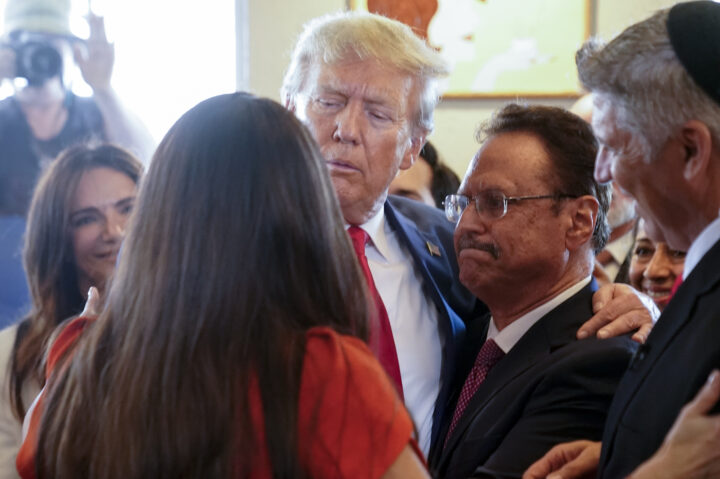
AP Photo/Alex Brandon
President Donald Trump talks with supporters while standing with pastor Mario Bramnick, second from right, at Versailles restaurant on Tuesday, June 13, 2023, in Miami.
President Donald Trump came into office with a promise to make tackling antisemitism a priority of his second term. So far, the focus of that effort has been almost exclusively on addressing left-wing and Islamist antisemitism, primarily tied to anti-Israel extremism — while leaving out antisemitism emerging from the political right.
Now, a group of staunch Trump allies from within the evangelical Christian community is urging Republicans to also focus on countering what they describe as a growing threat of antisemitism from within their own camp. They see prominent MAGA-aligned figures such as podcast hosts Tucker Carlson and Candace Owens platforming overtly antisemitic views, and worry that those voices — with massive social media followings — could play a role in shaping the direction of the Republican Party.
Last month, an organization called the Conference of Christian Presidents for Israel hosted a meeting to discuss the topic at the Family Research Council, a powerful Christian advocacy group. Billed as a “private roundtable for key Christian leaders,” according to the event invitation, it identified right-wing antisemitism as a high-stakes challenge: “It is vital that Christian leaders counter the forces on the right who are demonizing the state of Israel, its leadership and the Jewish people,” stated the invitation, which was obtained by Jewish Insider.
“We’ve been very concerned about the progressive leftist [antisemitism],” Mario Bramnick, a pastor in South Florida who is the president of the Latino Coalition for Israel, told JI on Tuesday. He is also the founder of the Christian Conference, and he organized last month’s event with Luke Moon, the executive director of the Philos Project. “But some of the statements coming out on the right, to me, are possibly more brazen and more troubling and clearly, clearly, do not represent President Trump or his administration,” added Bramnick.
The meeting was attended by Rabbi Yehuda Kaploun, Trump’s nominee to serve as the special envoy to monitor and combat antisemitism, as well as Mark Walker, a former congressman from North Carolina who is Trump’s pick to serve as ambassador-at-large for international religious freedom. Yair Netanyahu, the eldest son of Israeli Prime Minister Benjamin Netanyahu, addressed the group virtually.
“Antisemitism is a bipartisan issue and needs to be condemned anytime, anyplace,” Kaploun told JI. “It is imperative that all parties educate their members about the dangers of antisemitism.”
The Christian group is concerned about a small but growing anti-Israel faction within the Republican Party. In a press release on Tuesday, Bramnick called out Carlson and Owens, as well as two figures who remain close to Trump: Steve Bannon and Rep. Marjorie Taylor Greene (R-GA). A Trump administration spokesperson did not respond to a request for comment on Tuesday.
“It’s almost like we have more of an onus to handle this, because it’s our own camp, our own family. Imagine something goes wrong with someone in your family, you feel more of an obligation,” Bramnick told JI. “Who better than us to be able to handle it?”
Bramnick met last week with Justice Department senior counsel Leo Terrell, the chair of the federal government’s antisemitism task force, to raise the issue of antisemitism on the right.
“They are clearly on this and following it, from my understanding, and wanting to work with us,” Bramnick said. A spokesperson for Terrell did not respond to a request for comment.
The Conference of Christian Presidents has ties to influential conservative groups in Washington. Hours after the meeting at the Family Research Council, the Conference co-hosted an event on the Trump administration’s policies in the Middle East with the Heritage Foundation. The event featured video remarks from U.S. Ambassador to Israel Mike Huckabee and a keynote speech by evangelical leader Rev. Johnnie Moore, executive chair of the Gaza Humanitarian Foundation.
Last year, the Heritage Foundation released a policy document focused on antisemitism, called Project Esther, which identified left-wing antisemitism as the main form of antisemitism in the U.S., without mentioning any issues on the right. An inquiry to the authors of the Project Esther report did not garner a response.
Christians United for Israel, the largest Christian pro-Israel group with more than 10 million members, is not part of the Conference of Christian Presidents for Israel. But Sandra Hagee Parker, chair of the CUFI Action Fund, told JI that the organization agrees with the need to combat antisemitism on the right.
“One cannot be a Christian and antisemitic. The two are mutually exclusive,” Parker said in a statement. “Just as liberals must condemn those who use human rights as cover for their Jew-hatred, conservatives must call out those who drape themselves in the flag or the banner of the cross while bastardizing the former and defiling the latter.”
Republican Jewish Coalition CEO Matt Brooks said antisemitism is “percolating out there at the extreme ends of the far right, well outside of the mainstream of the Republican Party.”
“I don’t know that it’s growing. It’s gotten a little louder,” he told JI. “Our challenge and our effort going forward is to ensure that it doesn’t take hold in the Republican Party as it did in the Democratic Party.”
Right now, this looks more like the party of Sanders, Mamdani and AOC
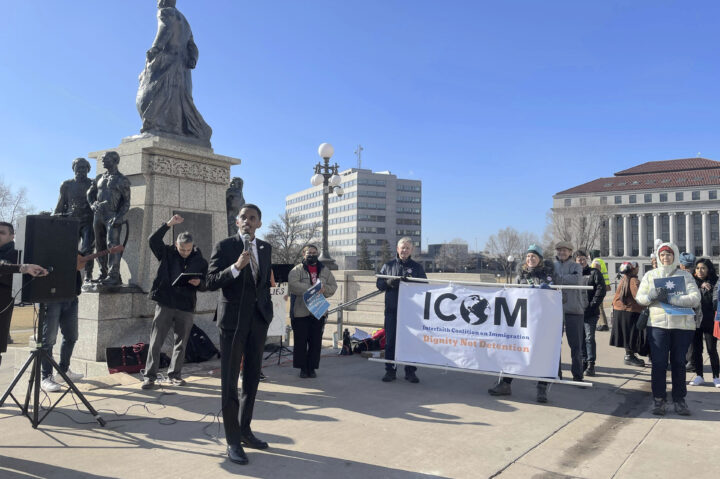
Trisha Ahmed/AP Photo
Minnesota Sen. Omar Fateh, of Minneapolis, speaks in front of the state capitol building in St. Paul, Minn., on Monday, Feb. 12, 2024.
Based on the latest wave of Democratic primary results, it’s looking more likely that the hard-left “resistance” faction of the Democratic Party, which was muted in the aftermath of the 2024 election, is reasserting itself in a consequential way — especially in the deep-blue cities that make up much of the party’s voting base.
Democratic socialist Zohran Mamdani’s come-from-behind victory in the New York City mayor’s primary was a major wake-up-call for party leadership. His success came after a surge of progressive discontent with the Democratic establishment, a sentiment fueled by the Trump administration’s aggressive (and at times, unlawful) deportation push, the imposition of tariffs and the general sense that party leaders in Washington weren’t doing everything they could to oppose President Donald Trump’s polarizing policies.
The reason the Democratic Party brand is polling at historic lows is because a sizable share of younger, progressive voters are expressing their discontent with their own party leadership — even as most still plan to vote Democratic in a general election. We’re seeing the growth of the left-wing faction within the party, in real time.
The fact that Mamdani’s radical views on the economy, crime and antisemitism did little to dissuade a critical mass of rank-and-file Democrats is a sign of the changing mood of the party.
That same dynamic that drove New York City Democrats was apparent in the first round of results in Seattle’s local primaries Tuesday night.
In the early returns from the city’s all-party primary, moderate incumbents — serving as mayor, city attorney and council president — were all trailing left-wing challengers. The moderate city officials were elected in 2021, largely as a backlash to the crime, homelessness and disorder in the city under progressive leaders.
In the most high-profile race, Mayor Bruce Harrell is trailing progressive activist Katie Wilson, 46-45%. “Wilson’s campaign generated new excitement when Zohran Mamdani, a Democratic Socialist, won the mayoral primary in New York City in June,” Seattle’s NPR affiliate reported.
In Washington, the primary results aren’t determinative; the top two vote-getters compete against each other in the general election. But they suggest moderates will be facing an uphill battle against left-wing insurgents.
The same dynamic is at play in Minneapolis, where conventionally liberal Mayor Jacob Frey decisively lost the Democratic Party endorsement to a democratic socialist state senator, Omar Fateh.
Frey still can win reelection in November, when all candidates appear on the general election ballot regardless of party, but the rebuke from the Democratic delegates is another sign that the party is facing a revolt from its left-wing activists.
Right now, this looks more like the party of Bernie Sanders, Mamdani and AOC. Those are the candidates that are energizing the grassroots and driving social media engagement— especially when it comes to the party’s urban voters.
These results send a strong signal that the Democratic Party vibes have shifted. In the first few months of Trump’s second term, party leaders were desperately trying to distance themselves from the ideological baggage of the left. More recently, they’re coming to terms with the possibility that the left is taking over the party.
Please log in if you already have a subscription, or subscribe to access the latest updates.
 Continue with Google
 Continue with Apple