

























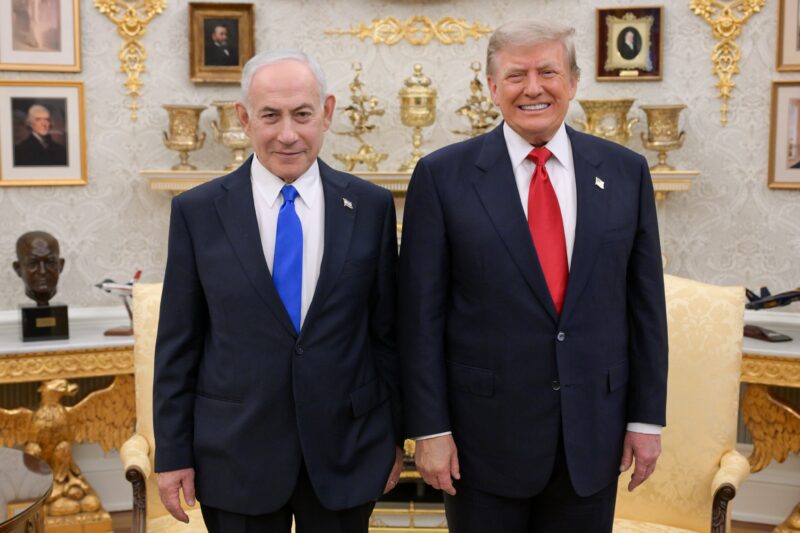












Former Trump admin official Richard Goldberg bullish on Trump enforcing Iran red line
Goldberg, a senior advisor at the Foundation for Defense of Democracies: ‘We remain headed toward the president enforcing his red line’
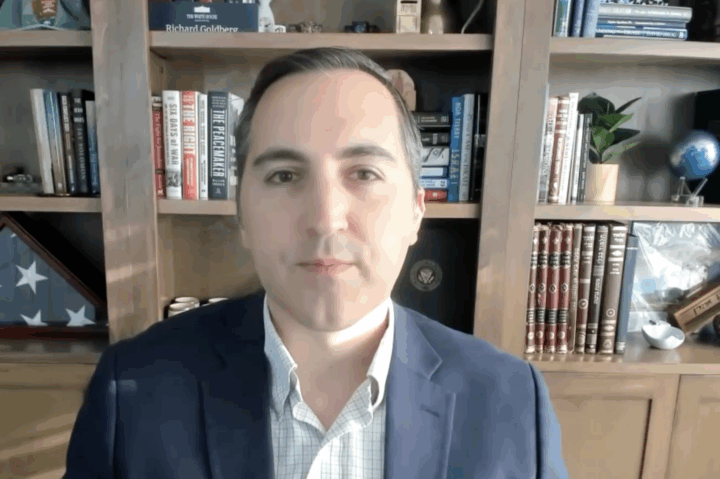
Screenshot
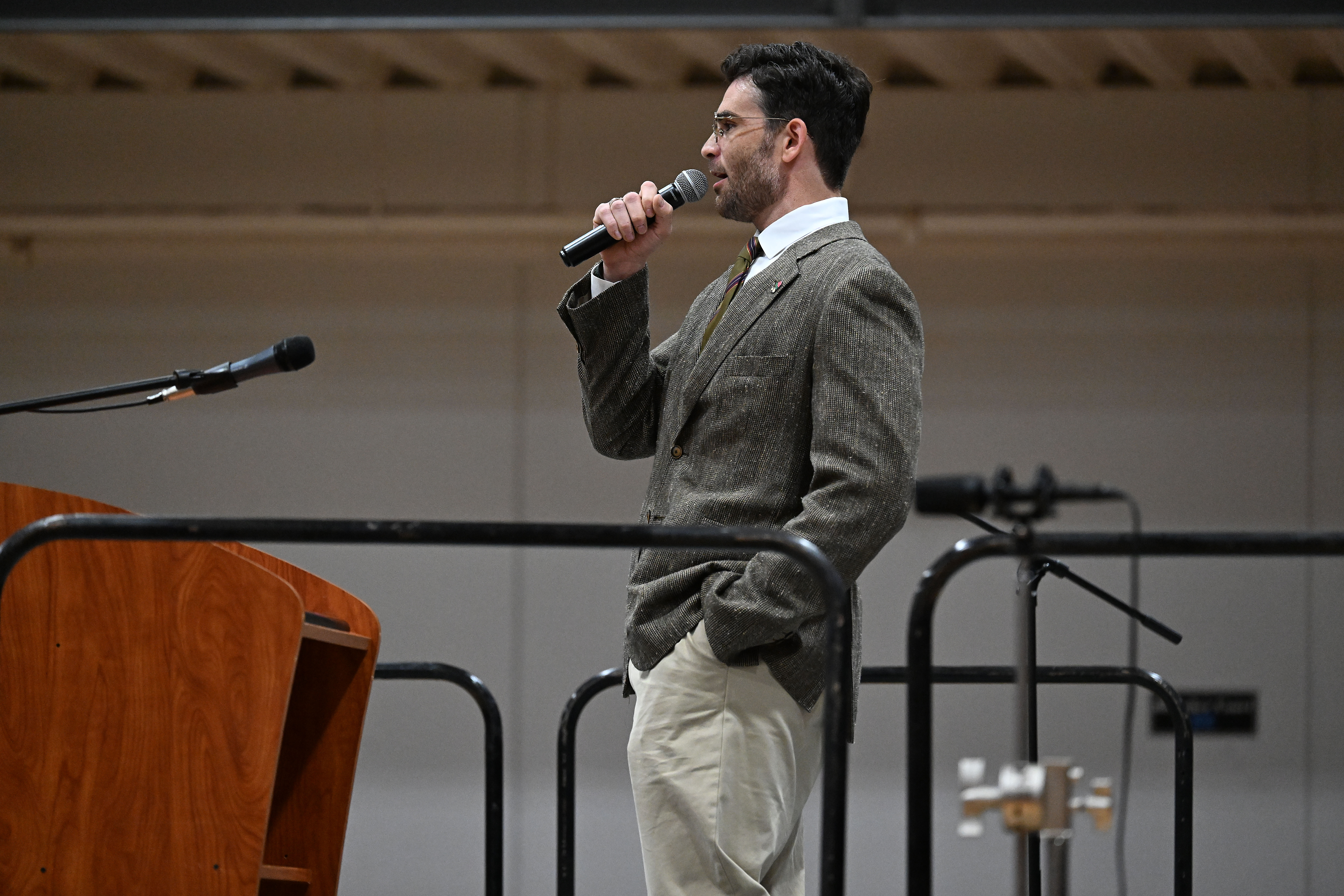
Foundation for Defense of Democracies senior advisor Richard Goldberg on the Misgav Institute for National Security and Zionist Strategy’s Mideast Horizons podcast, Sept. 2025


 Add JewishInsider on Google
Readouts from Iran on progress made in the latest round of negotiations with the U.S. are evidence of the regime “simply buying for time” and evidence that Tehran isn’t willing to make the concessions demanded by the Trump administration, Richard Goldberg, a former Trump administration official and senior advisor at the Foundation for Defense of Democracies, told Jewish Insider in an interview Tuesday.
Following the second round of nuclear negotiations, which Iranian Foreign Minister Abbas Araghchi called “serious, constructive and positive,” Goldberg made the case for why he thinks there’s a high likelihood of future U.S. military action against Iran, and why he sees the negotiations as diplomatic theater.
This interview has been condensed and edited for clarity.
Jewish Insider: What is your initial takeaway from the second round of discussions and the Iranian foreign minister’s comments that the parties reached agreements on “guiding principles” for a potential deal?
Richard Goldberg: If this was operating in a vacuum, and I saw that readout from the Iranian foreign minister, I would tell you that I thought this was a readout of one of the many rounds the regime held with [Special Envoy for Iran under President Joe Biden] Rob Malley or other diplomats from past administrations, Obama or Biden, with the sort of silliness of the readout of “We’ve agreed to terms in principle of what we might talk about.”
It is one of the clearest signs of a regime that’s not willing to make the tough concessions that the president has demanded, and instead is simply buying for time. I think that in their mind, so long as they appear to be the party that wants to talk, that is willing to keep talking, it somehow boxes in the president, politically, from being able to use force. Obviously it does not, but from their perspective, it also is a lifeline to talk like that, because it’s probably the only thing that separates them from financial collapse at this point.
Remember, at the beginning of the year, we saw a bank collapse in Iran, with reports that five other banks were to shortly follow. One of the narrative economic strategies of the regime when they see economic peril is to hold diplomatic talks and to speak positively about those talks and to create a pathway for those talks to extend themselves, because it creates confusion in the market and puts a bottom on the deterioration of the financial system for those who believe that there might be a deal at the end of the rainbow.
If you were to remove that false optimism, then the bottom drops out. There is no pot of gold waiting at the end of the rainbow. So politically, they think that they’re boxing in the president and delaying military action. Economically, they think they’re staving off financial collapse, but there’s nothing to demonstrate any credible willingness to dismantle all of their threats to the United States and the rest of the world, be that their nuclear program, their missile program, their sponsorship of terrorism and the repression apparatus that we just saw demonstrated at maximum violence.
In fact, we have seen just [yesterday], while they were talking, reports coming out of a round of more protesters being gunned down the streets at the end of the mourning period for the first slaughter. So I think the president is pretty clear-eyed on all of this. I think he can tell the difference between rope-a-dope and credible concessions. I think he knows when a red line has been obliterated and we should be focused on the fact that force posture continues to build up in the region, and the president has indicated his continued willingness to use force. So all things being equal, it would appear that we remain headed towards the president enforcing his red line.
JI: If these negotiations should fail, what would the military option look like?
RG: Well, no one knows. Obviously, there’s a range of targets that you would be thinking about in Iran. You would start with the greatest threats to the United States, those being nuclear and missile threats, and then you would move into the potential to degrade the regime’s command-and-control communications, the repression apparatus and, of course, the potential for a decapitation strike at the highest level of of the escalation ladder.
We could also see a quarantine of Iranian oil exports the way that the president had conducted against Venezuela. Again, the regime is trying to project threats right now to deter that specific plan of action. I think that’s why you see [yesterday’s] news of them conducting some sort of military drills around the Strait of Hormuz, threatening to sink U.S. naval vessels, showcasing their missile threat, not just to the United States, but to energy infrastructure in the region. I think they are saber rattling for the oil market and to deter the president from taking action to strangle their financial lifeline.
So where do you go back to at the beginning? You go back to their missile threat, their drone threat, their naval threat and, if they’re able to already, attempt to blackmail the international community with those threats. Those are threats that are long term and systemic, and we do the United States, our national security, our economic security, a great service by degrading those threats.
Many of the target sets come back to the same top-tier ones. That which poses the greatest threat to the United States needs to be at the top of the target list. But if you can mitigate those threats and degrade them, then you open up more options to strangle the regime economically by cutting off the oil flow, and you also open up more opportunity to degrade the regime’s control and power via precision strikes, not just by the United States, but potentially by Israel as well.
JI: If the U.S. takes military action, do you think there’s any concern from the American side about the potential fallout in the region?
RG: The United States has defensive measures to slow an attack and mitigate an attack, and it has a range of offensive capabilities to remove the threat once it has attacked. We have seen the Iranians, both from their territory and via proxies, most specifically the Houthis, launch many of the capabilities that they’re threatening today. We saw a short-range ballistic missile attack against our base in Qatar at the end of the 12-day war [in June]. We have seen other ballistic missile strikes in the past against Iraq after killing [Iranian Gen. Qassem] Soleimani. We have seen the Houthis using anti-ship ballistic missiles, anti-ship cruise missiles and drones to attack the U.S. Navy in the Red Sea over many months — notably, our defenses destroyed all those threats. In the case of the ballistic missile attack on Qatar, I think the public reporting is that we were able to destroy most of the missiles, and those that got through did minor damage – and that’s on the defensive measure side.
Then comes the offense. If the regime wants to open up that can of worms, attack the United States in that respect, and the attack is mitigated, the next strike will not be one that they come back from. Their goal right now in Tehran is to scare the president, scare the American people, and scare the oil market.
The objective from military planners inside the Pentagon, for the chair of the Joint Chiefs [of Staff] and for the president should be to stick to reality — What can they do? What do we need to defend against it? What are we going to do to remove those threats from any second or third third wave? What are the clear objectives that we want to have with the outcomes of our strikes that we want to achieve? How are we going to reassure the oil market that energy continues to flow, even if the regime attempts to disrupt flows through the Strait of Hormuz or attacks energy infrastructure? What are the relief valves we have at our disposal throughout the world? – and move in in the best interest of the United States, and I think that’s what the president has shown he’s willing to do.
JI: Iran has indicated that they would retaliate against U.S. military bases in the region in the event of any military intervention. Many Arab allies host American troops and have expressed concern about tensions turning into a wider conflict. What is your read on how Arab countries might be feeling?
RG: If you are a neighboring state that is an ally or partner of the United States, and your neighbor has a large missile and drone force like Iran, and you have critical infrastructure that could be hit by those missiles and drones, you would likely, whether true or untrue, distance yourself from any plans to attack. You’d want to be able to say to your diplomatic counterparts: “We were against this. We cautioned against it. We urged dialogue. We didn’t want to see this happen. Don’t attack us.”
At a very basic level, that seems obviously what is happening and understandably so, and then there’s also the potential that, in fact, some of these Arab dictatorships don’t mind a weak dictatorship in Tehran that they know rather than having that dictatorship actually fall.
JI: Which path do you think the administration is ultimately going to take?
RG: My suspicion is that the president has already made up his mind. He’s moving in a very specific direction. Everything we see is quite calculated and with specific reason. The regime will not give him a deal that would be viewed as credible and history achieving, and the president, someone who has achieved history in his own action, multiple times by use of limited, but precise military action, will be called to repeat history and create even greater chapters for the history books.
More Stories

PIKER PUSHBACK
University of Texas College Dems invitation to Hasan Piker sparks campus outrage, GOP fire

SELF-SCRUTINY
Most Middle East scholars say U.S. academia has lost its way since 9/11, survey finds

TOUR TROUBLE
Macklemore dropped from Ed Sheeran’s U.S. tour after venues refuse to host him over anti-Israel activism
SENSE OF SECURITY
Mamdani and NYPD unveil safety plans for 9/11 memorial, Rosh Hashanah

Democracy Deficit
New report warns civics education crisis is fueling antisemitism, eroding support for Israel
TEPID RESPONSE
Rubio holds back criticism of U.K. sanctions against Israeli settlements
Please log in if you already have a subscription, or subscribe to access the latest updates.
 Continue with Google
 Continue with Apple