






















Meta’s director of content policy spoke at a ‘Hack the Hate’ tech conference as the ADL released a report documenting antisemitism spreading unchecked on its platform Instagram
Shahar Azran/WJC
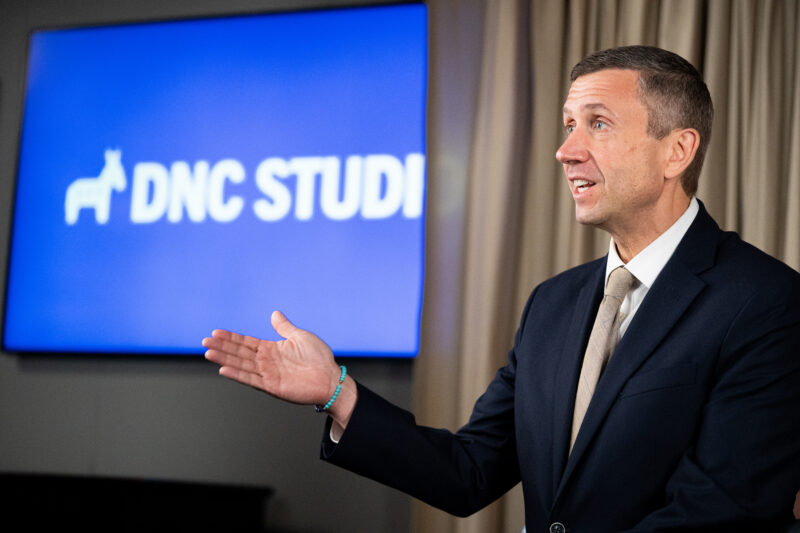
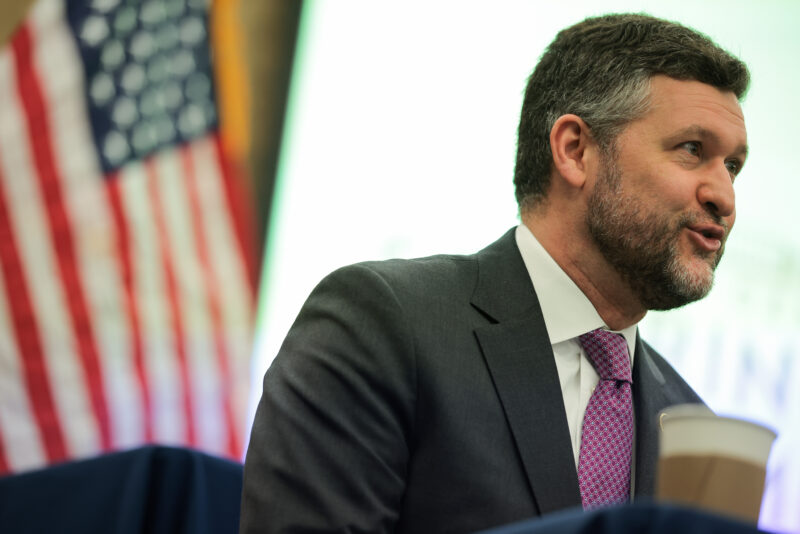
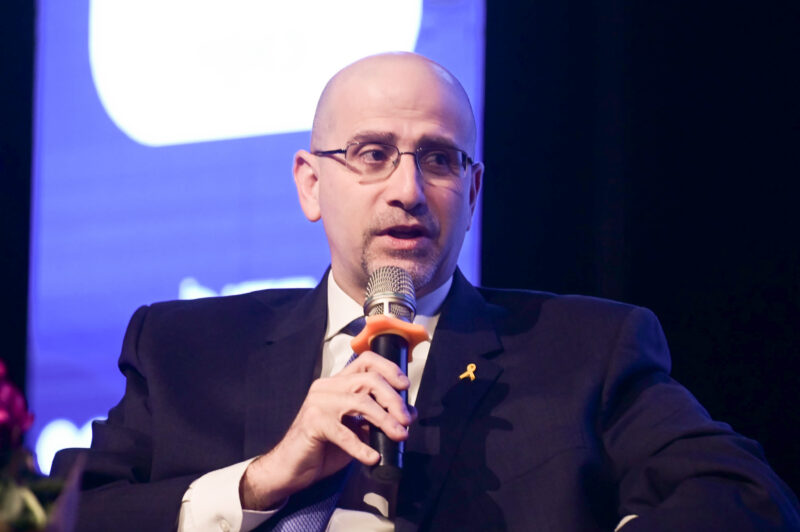
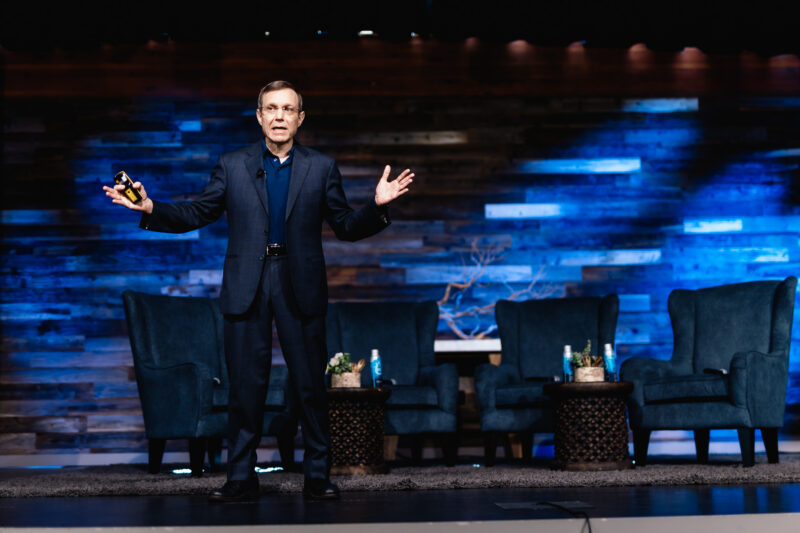
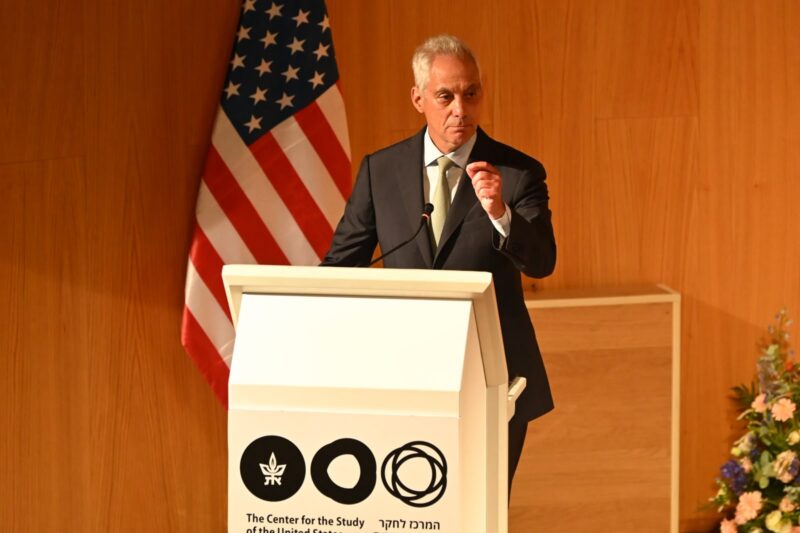
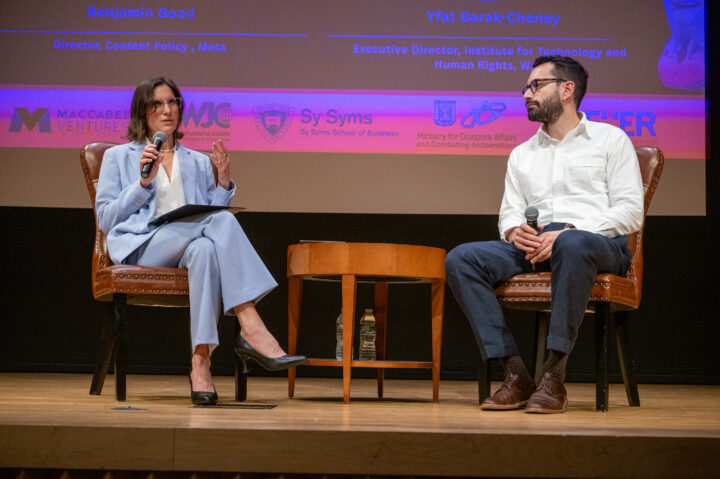
Ben Good, Meta's director of content policy, speaks at the 2026 Hack the Hate summit in Manhattan.


 Add JewishInsider on Google
Amid accusations that Meta’s moderation policies enable antisemitic content to circulate on its platforms, a Meta leader on Tuesday highlighted efforts to combat online Jew-hatred, including restrictions on Holocaust denial.
“We remove Holocaust distortion and denial, not because it’s false, which it is, but because it’s antisemitic. It is hate speech against Jewish people, so we’ve drawn a clear line against it,” said Ben Good, director of content policy at Meta, the parent company of Instagram, Facebook and WhatsApp.
Good spoke at “Hack the Hate NYC 2026,” an event at the Yeshiva University Museum in Manhattan spotlighting Israeli tech experts and Jewish leaders working to combat digital antisemitism.
Good, who leads Meta’s team that writes content policies — the rules for what can be posted to the platforms — spoke during a fireside chat with Yfat Barak-Cheney, executive director of the Institute for Technology and Human Rights at the World Jewish Congress.
“Those are policies that govern the global speech of 3 billion people, so we take the responsibility extremely seriously. We want to make sure people can express themselves maximally but we also have to keep our community safe,” said Good.
The event was held as Jewish communities in Israel and around the world marked Yom HaShoah. Barak-Cheney noted that it took four years of advocacy from groups like WJC for Meta to recognize Holocaust denial as antisemitism. In October 2020, the company updated its policies to explicitly prohibit content that denies, distorts or minimizes the Holocaust.
Even after that recognition, she said, the situation remains “especially alarming because it’s not just that we see a larger quantity of AI-generated material, but the quality is different, it’s getting better.”
“Holocaust denial is looking very realistic,” she said. “There’s fabricated quotes. I am worried that we’re losing our grip on the reality of the Holocaust. Does Meta see this as alarming from the inside as it is from our point of view?”
“I have seen new trends putting words in people’s mouths that were not said, having prominent Nazis say things that aren’t true. Those violate our policies. It’s hate speech and we remove it,” said Good. “The same goes for a lot of other conspiracy theories that are misinformation but really are about dehumanizing Jewish people. The most prominent one being the centuries-old tropes that Jewish people control the media or government. We know that underlies dangerous acts so we remove it.”
Good said that Meta, which uses AI-generated content moderation, has “tremendous potential to advance AI systems in dealing with what we call ‘integrity work’ in social media.”
He said that “traditional machine learning,” utilized about two years ago, required being fed “a ton of data, some content that violates [Meta policies], some that doesn’t and they begin to understand [and match] patterns.”
Modern LLMs are able to analyze context on their own, said Good, allowing for more accurate reasoning.
“That is extremely important in an area such as Holocaust denial because it’s very coded and can often be long-form speeches and text which can be hard to understand even for a human,” said Good. “The LLMs are really good at understanding coded language and context.”
But even as Meta has made strides in addressing Holocaust denial, the Anti-Defamation League released a new report on Wednesday revealing that Instagram failed to remove 93% of reported extremist and hateful content, tying the trend directly to Meta’s efforts to roll back content moderation last year.
A spokesperson for Meta told Jewish Insider after the report was released that “over two-thirds of the accounts and posts flagged by the ADL were removed prior to the publication of this report, while some did not violate our policies.” ADL told JI it gave Meta a two-week window from reporting the content to getting a response from the platform.
The January 2025 rollback of content moderation included ending the platform’s third-party fact-checking program and replacing it with a system modeled after the community notes feature on Elon Musk’s X.
At the time, some Jewish leaders expressed concern that the move would “open the floodgates to content” that could target Jewish communities and individuals, and called the decision a “step back” in the fight against rising antisemitism. Meta had said the relaxed guidelines aim to “allow more speech by lifting restrictions on some topics that are part of mainstream discourse.”
“The name of the game isn’t just relying on the magic of AI and setting it loose on our platform,” said Good. “Instead, we have to be extremely positive that it understands our written policies and will apply and enforce them. We don’t want to leave the guesswork to the technology. We will always be reporting our enforcement metrics. But this is a chance to bring contextual understanding to content moderation.”
Barak-Cheney asked Good what guardrails Meta, which produces its own AI system called Llama, has in place to stop its LLMs from generating content that might be antisemitic.
“We do train the models on our safety standards,” said Good. “The unique challenge with generative AI is that it’s interactive and adaptable. When we train the models to prevent harm, we’ve learned it’s not so much the ‘what’ but the ‘why.’ It’s not so much telling the model that it can or can’t say this, it’s explaining to the model why we have certain rules, prohibitions and standards and reasoning with it so it can extrapolate that reasoning into situations.”
“This can mean a number of things, but an old-school way of doing it would be to say ‘here are 500 words we consider slurs, don’t say them.’ A more dynamic rule might be ‘this is what a slur is, this is why we consider a word a slur and these are the circumstances in which you can say it,’ and let the model reason through various situations,” explained Good.
He added that “there’s no limit” to how much help antisemitism watchdogs can provide to Meta.
“To be clear, we understand that generally it’s our job to understand how problems manifest and address them, but when people who are on the ground in a given space give us reports and intel it allows us to validate our own research in a way that helps us make decisions better. The policy shouldn’t be a bunch of people in Silicon Valley deciding things. They should be decided collaboratively,” Good said.
The event, attended by some 150 Jewish leaders and innovators, opened with remarks from Rabbi Ari Berman, president of Yeshiva University. It was organized by Generative AI for Good and the 8200 Alumni Association, which preserves the legacy of IDF Unit 8200, in partnership with the Israeli Ministry for Diaspora Affairs and Combating Antisemitism, Gesher Israel, Maccabee Ventures, President Isaac Herzog’s Voice of the People Initiative, the World Jewish Congress’ TecHRI and Yeshiva University’s Sy Syms School of Business.
Podcaster Nate Cornacchia has said that Israel was behind John F. Kennedy’s assassination and the global war on terror
Sophie Park/Getty Images
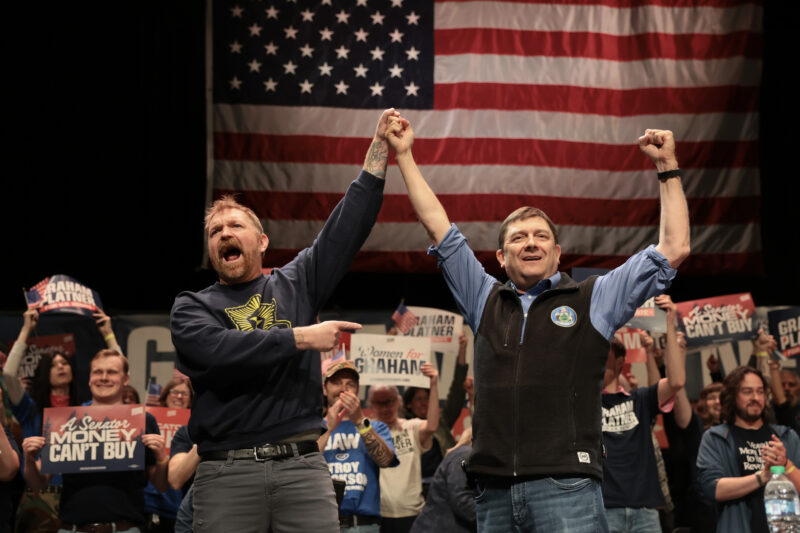
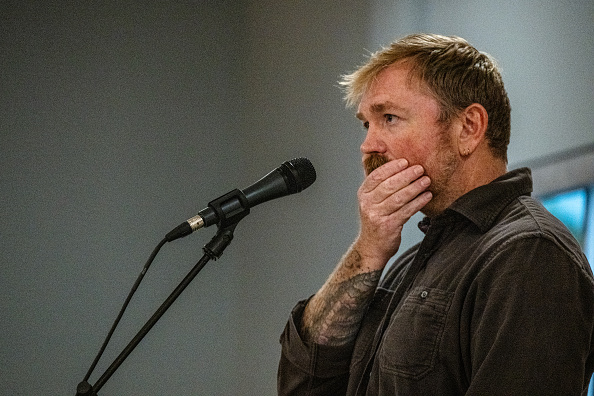
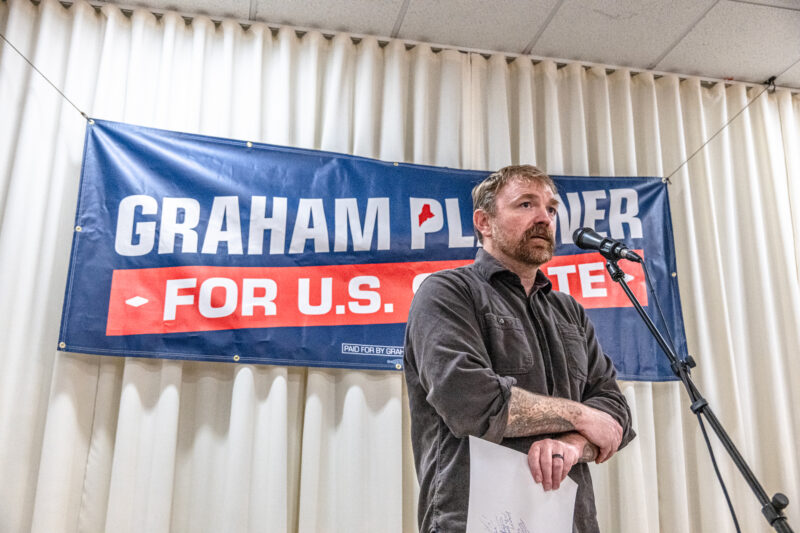
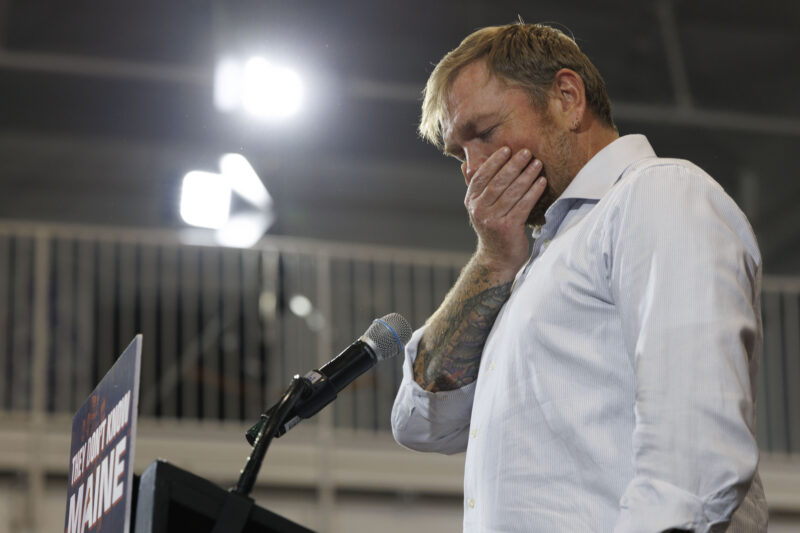
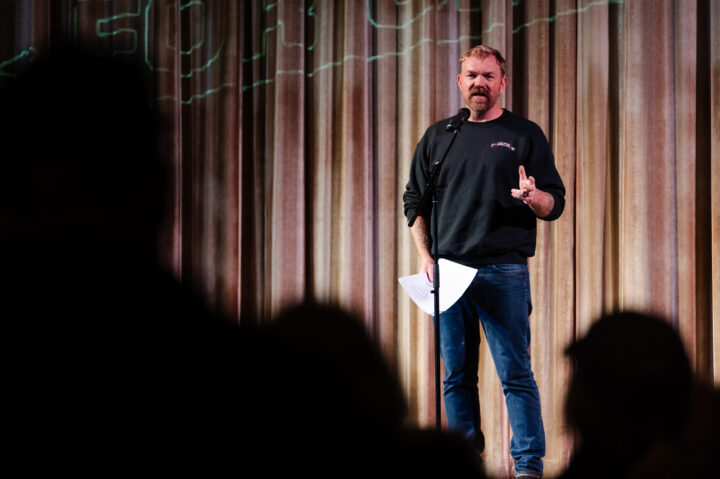
Maine Senate Graham Platner speaks at a town hall at the Leavitt Theater on October 22, 2025 in Ogunquit, Maine.
Weeks before Graham Platner promoted an antisemitic conspiracy theorist in a now-deleted social media post on Thursday, the controversial Maine Senate candidate appeared on a popular YouTube show whose host has spread specious claims about Jews and Israel.
Platner faced blowback this week for boosting a social media comment about a looming war with Iran by Stew Peters, a neo-Nazi influencer who has frequently espoused antisemitic tropes and engaged in Holocaust denial. Platner’s team said the post was made in error and “immediately” removed it after learning it elevated a “despicable account.”
In late January, however, Platner sat for a lengthy online interview with Nate Cornacchia, a retired Green Beret who has also promoted antisemitic conspiracy theories. Near the end of their hour-long conversation, Platner, a fellow military veteran, called himself “a longtime fan” of Cornacchia’s YouTube channel, “Valhalla VFT,” and said it was “an absolute pleasure being” on the show.
Cornacchia, whose show claims nearly 500,000 YouTube subscribers, has in recent months helped stoke a burgeoning far-right conspiracy theory alleging that Israel was involved in the assassination of the conservative activist Charlie Kirk.
Two days before speaking with Platner, for instance, Cornacchia went on a podcast hosted by Jake Shields, a former mixed martial arts fighter who is now a prominent Holocaust denier, and pointed to what he described as “huge links” connecting Israel to Kirk’s killing. “The biggest one, the way I look at it, is because he was basically so important from the Zionist side to the young right wing, sort of that counter Nick Fuentes audience” that “Israel needs desperately,” he said.
“Charlie Kirk said that he was tired of being bullied by his Jewish donors” and that he “no longer could support the pro-Israel cause, and he was dead 48 hours later,” Cornacchia added on the show, where he also agreed with Shields’ assertion that President John F. Kennedy had “probably” been assassinated in a covert “venture between the CIA and Mossad,” the Israeli intelligence agency. “100%,” he replied.
In addition, Cornacchia has suggested that the global war on terror was conducted “on behest of Israel” and claimed Israel would benefit if another 9/11-style attack were carried out during the tenure of New York City Mayor Zohran Mamdani, saying it would help to drum up Islamophobic sentiment and lead to another foreign military entanglement in the Middle East.
The Jewish state “got exactly who they wanted” in Mamdani, the city’s first Muslim mayor whom the Israeli government has accused of antisemitism, he argued on his own show in November. “That’s their candidate, guys. You got to pay attention.”
The conservative YouTube commentator has also questioned why George Soros’ son Alex was seen posing for a photograph with Mamdani on the night of his election. “You may immediately be thinking, ‘Oh, well, of course, that’s because Soros funds all the socialists,’” Cornacchia said of George, a Jewish billionaire donor to left-wing causes and a Holocaust survivor who is often a target of antisemitic attacks.
“No, no, no, no, that’s surface level,” he told his viewers, claiming that the philanthropist “moves in coordination with our greatest ally,” a term he uses to sarcastically allude to Israel.
Platner’s interview with Cornacchia, which he promoted on his social media channels, did not touch on such topics. His team did not respond to a request for comment on Friday about Cornacchia’s antisemitic remarks.
The 41-year-old Senate candidate, who is running in a competitive Democratic primary to challenge Sen. Susan Collins (R-ME), faced skepticism from critics last fall after he denied knowing a tattoo that was on his chest for years closely mirrored a Totenkopf, the skull-and-crossbones icon adopted by an infamous Nazi SS unit. A former acquaintance of Platner who spoke with Jewish Insider said he had identified the symbol as such more than a decade ago, a claim he has denied. He had the tattoo removed last October.
Still, even as he maintains a commanding polling advantage in the Maine Democratic primary against Gov. Janet Mills, Platner’s explanation of the tattoo — combined with past and recent online blunders — is raising questions about whether he can weather scrutiny in a general election that party leadership views as key to reclaiming the Senate majority.
Mills, for her part, strongly hinted at such doubts in a snarky X post on Friday. “For what it’s worth,” she wrote, “I don’t have any tattoos.”
And on the same day he was drawing backlash for amplifying a conspiracy theorist this week, Platner was fielding a combative call from a listener during an appearance on a podcast hosted by the comedian Tim Heidecker.
The caller cast suspicion on Platner’s claim that he did not know the tattoo represented a Nazi symbol until recently, citing his self-proclaimed knowledge of World War II history, and called on the candidate to apologize rather than “dodging around” the issue.
But Platner held firm. “I’m not going to apologize for something that I didn’t know about or do,” he insisted. “The moment that it was clear and I was putting it in that context I had it covered, because I don’t want that on my body.”
In normal times, a candidate would be ashamed to be associated with extremists, and would immediately cut ties with the offending staffers
AP Photo/Abbie Parr
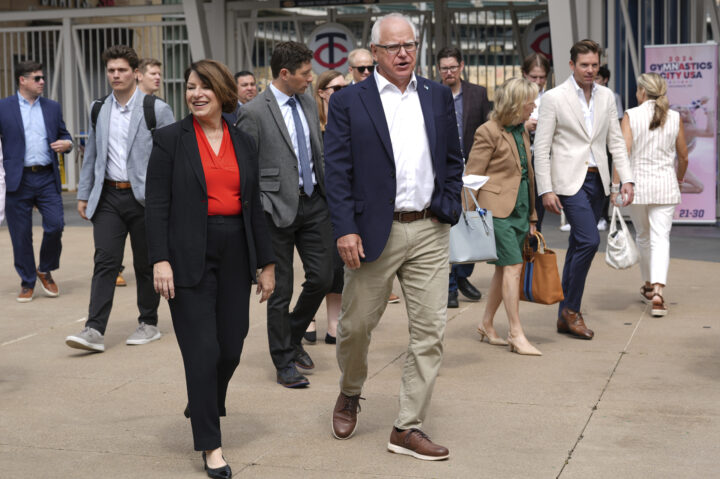
U.S. Senator Amy Klobuchar, left, and Minnesota Gov. Tim Walz, right, arrive at a press conference ahead of the U.S. Gymnastics Olympic Trials Monday, June 24, 2024, in Minneapolis.
If there is one word to describe the political mood in dealing with rising antisemitism, it would be apathy. Even the most jaw-dropping displays of anti-Jewish hatred — from abject Holocaust denial on far-right podcasts to support for Hamas’ atrocities on the extreme left — are increasingly responded to with shrugs from mainstream political leaders.
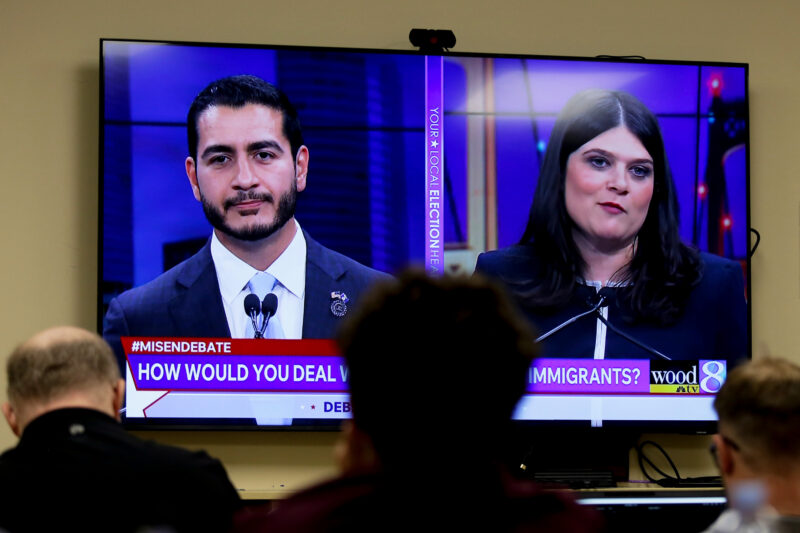
The most recent example of obvious antisemitism being ignored by a party’s political class came out of Minnesota, where we reported about Minneapolis Democratic mayoral candidate Omar Fateh — running as a democratic socialist against sitting Mayor Jacob Frey — hiring top staff who celebrated Hamas’ Oct. 7 terror attacks.
In normal times, a candidate would be ashamed to be associated with extremists, and would immediately cut ties with the offending staffers. Not long ago, having ties to that type of extremist rhetoric would be disqualifying for the candidate as well.
But these are not normal times. Not only has Fateh, a state senator, ignored the controversy entirely, but the local and national media has been uninterested in following up on Jewish Insider’s reporting about the radical operatives on Fateh’s team.
Even more shocking: Two of Frey’s most prominent backers, Sen. Amy Klobuchar (D-MN) and Minnesota Gov. Tim Walz — have remained silent when asked about their thoughts about the antisemitism stemming from an endorsee’s political rival. It’s a sign that many mainstream Democrats fear that speaking out against antisemitism or anti-Israel extremism could lead to a backlash from other grassroots supporters.
At best, it’s a sign that speaking out against hate carries few political benefits these days.
We saw a similar dynamic in Virginia this month, when former Rep. Abigail Spanberger (D-VA), the Democratic nominee for governor, initially avoided answering questions from our reporters when asked about the rhetoric from an influential Democratic legislator tagging Zionism as “evil.” (After other leading Democrats weighed in, she responded: “One can and must denounce these tragedies without using antisemitic language, whether intentional or not.”)
Unlike in Minneapolis, which is heavily Democratic and deeply progressive, Virginia is a more competitive battleground. But even in battleground states, the makeup of the Democratic Party has changed to the point where speaking out against virulent anti-Israel rhetoric carries the potential for backlash from Arab and left-wing voices within the party coalition.
The apathy towards antisemitism is far from only a left-wing issue. On the right-wing side of the ledger, there are numerous examples of a grassroots infrastructure — from podcasts to social media influencers — that has become openly antisemitic and hostile to Israel.
Tucker Carlson is the most prominent of these voices, but the number of podcasters and so-called influencers who share his worldview is growing. It’s as much a demand-side problem as a supply-side one. It’s now perfectly plausible to build a niche as a far-right purveyor of hate in the new social media ecosystem, and build a lucrative audience from that base.
We’ve also seen, on the Republican side, the reticence to confront antisemitism when it’s happening from within its own ranks. When the Pentagon hired a deputy press secretary with a long history of promoting antisemitic conspiracy theories, barely a peep of protest was heard from within partisan circles. In fact, she’s since been promoted to become the lead press secretary at the Defense Department.
There’s something broken in our political culture where we’ve, broadly speaking, become numb to the crazy. It’s a bipartisan phenomenon. And it’s happening as real-life antisemitic violence is at record levels, highlighted recently by the firebombing against Jews in Boulder, Colo.; the murder of two Israeli Embassy staffers in Washington; and the attack on Gov. Josh Shapiro’s home in Harrisburg, Pa.
The trend only underscores the need for Jewish organizations to speak up in the face of this rising hate, and if necessary, turn up the political pressure on all fronts.
Please log in if you already have a subscription, or subscribe to access the latest updates.
 Continue with Google
 Continue with Apple