



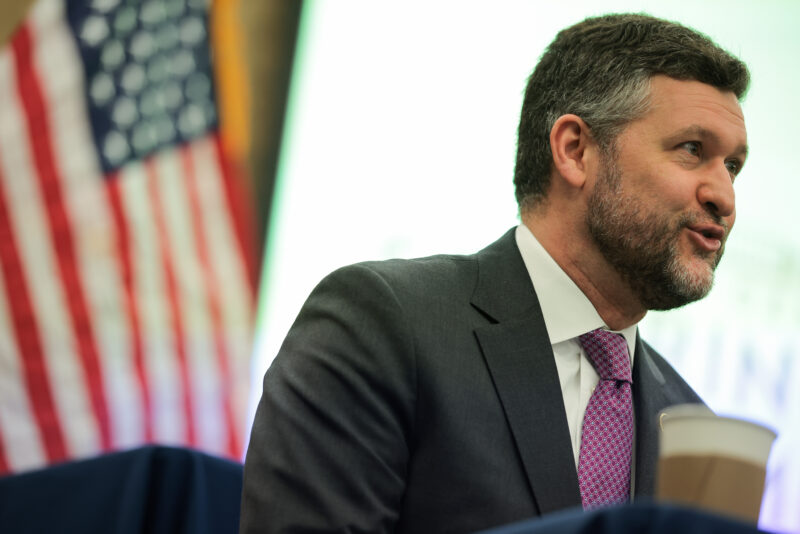




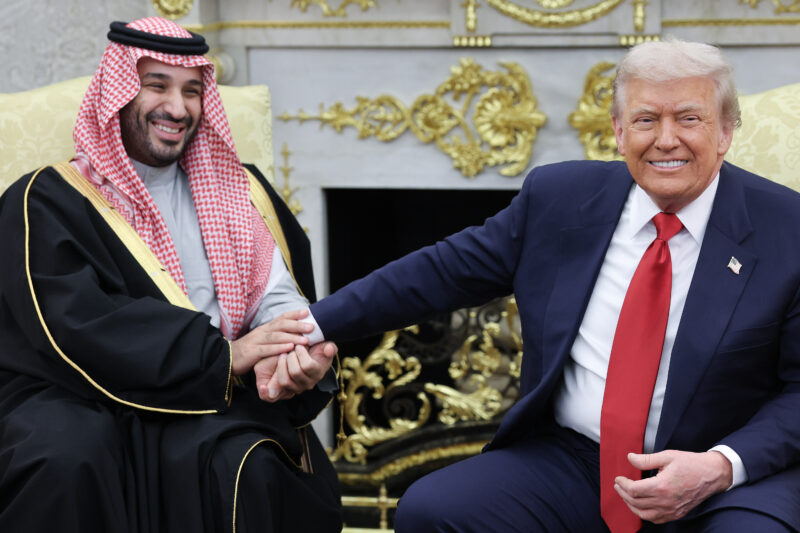






























Plus, Tom Barrack's Israel bypass

(Ryan Murphy/Getty Images)
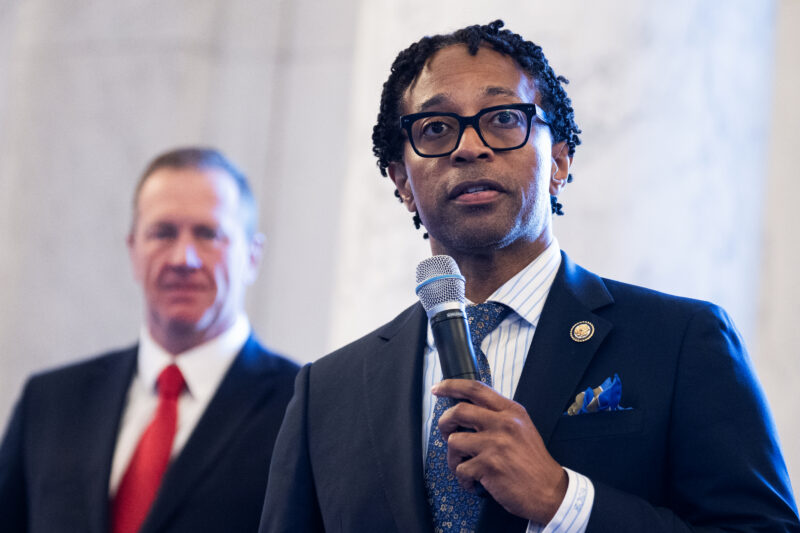
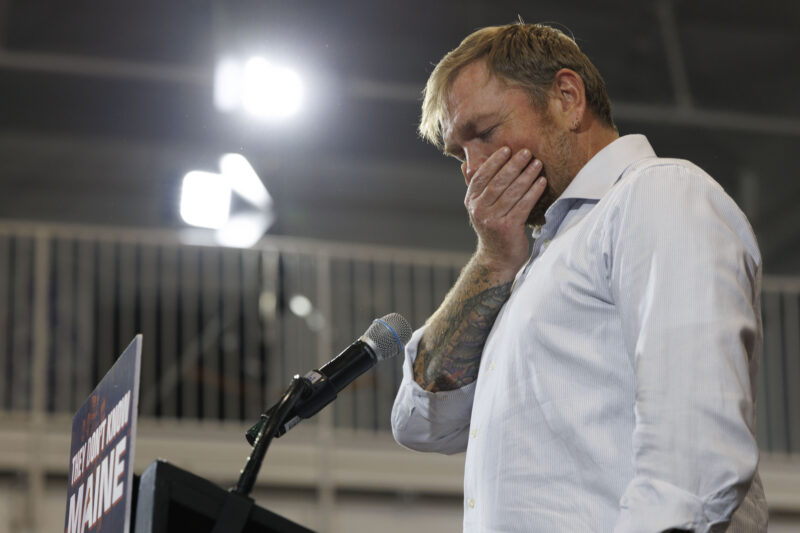
Troy Jackson, Democratic candidate for U.S. Senate, speaks during a demonstration outside of a federal immigration office after a man was fatally shot by U.S. Immigration and Customs Enforcement (ICE) agents, on July 14, 2026 in Scarborough, Maine.


 Add JewishInsider on Google
Good Monday morning.
In today’s Daily Kickoff, we look at how pro-Israel advocates are adjusting their approaches to Democratic lawmakers following last week’s failed vote to cut U.S. aid to Israel that garnered the support of 103 House Democrats, and report on antisemitic streamer Hasan Piker’s surprise appearance at a College Democrats of America convention over the weekend. We talk to former U.S. Ambassador to Israel Dan Shapiro about Israel’s ability to repair its relationships in the U.S., and look at U.S. Ambassador to Turkey Tom Barrack’s effort to create a Middle East trade alignment that excludes Israel. Also in today’s Daily Kickoff: Rabbi Efrem Goldberg, Michael Rubin and Judit Polgar.
We have also launched a new on-demand Live Briefing that you can access throughout the day via our new app (on Apple and Android) and on our website.
Today’s Daily Kickoff was curated by JI Executive Editor Melissa Weiss and Israel Editor Tamara Zieve, with assists from Danielle Cohen-Kanik and Marc Rod. Have a tip? Email us here.
What We’re Watching
- Tensions in the Middle East continue to rise following the deaths of four U.S. service members resulting from Iranian attacks targeting U.S. bases in Jordan and Iraq. As the White House considers a broader offensive against Iran, it is moving dozens of military refueling planes to Israel.
- Secretary of State Marco Rubio, meanwhile, told reporters before departing for the Association of Southeast Asian Nations summit in the Philippines on Sunday that the U.S. was still open to diplomacy with Tehran. “We’ve tried multiple times with Iran, and we’ll continue to try. If that door opens, we’ll be happy to see it open,” Rubio said. “Their behavior has to change in order for ours to change.”
- Before departing for Manila, Rubio met with Lebanese President Joseph Aoun, who is in Washington this week, where he’s slated to meet with President Donald Trump on Tuesday.
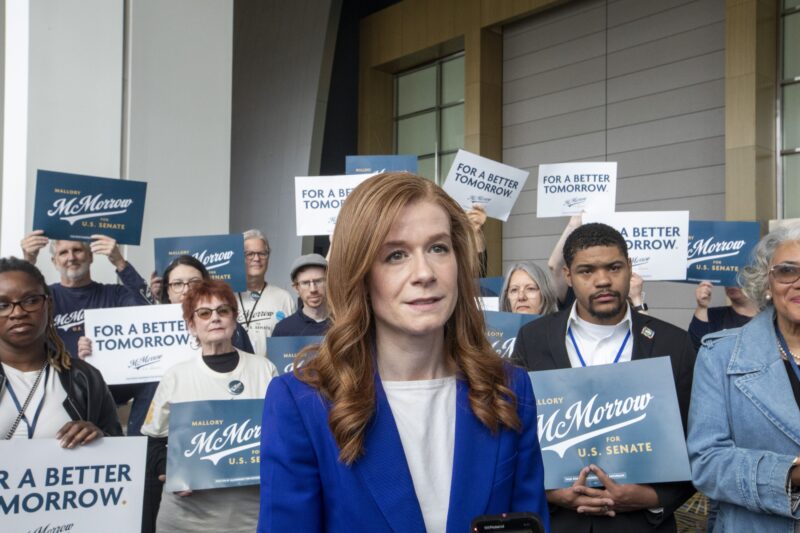
- Support is growing for former Maine state Sen. Troy Jackson to succeed Graham Platner as the Democratic Party’s nominee to challenge Sen. Susan Collins (R-ME), with most of Jackson’s rivals dropping their bids ahead of the state party’s nominating convention set for Saturday. More below.
- Keir Starmer delivered his final address as U.K. prime minister today before formally submitting his resignation to King Charles III. Former Greater Manchester Mayor Andy Burnham then separately traveled to Buckingham Palace to meet with the king and accept his request to form a new government.
- In Israel, Yair Golan’s Democrats party is holding its primary today to determine its slate for the upcoming election.
What You Should Know
A QUICK WORD WITH JI’S JOSH KRAUSHAAR
July was scheduled to offer a break from primary politics, but two seismic developments this month — the collapse of scandal-plagued Graham Platner’s campaign in Maine and the sudden death of Sen. Lindsey Graham (R-SC) — are forcing both parties to deal with messy internal conflicts as they choose replacements in these key races.
The outcome of the July 25 Maine Democratic convention choosing an alternative candidate to run against Sen. Susan Collins (R-ME) and the Aug. 11 special election primary to choose a GOP nominee for Graham’s seat are offering clarity on the ideological directions of the two parties as the November midterm elections approach.
Already, we’re seeing that Democrats want to nominate a candidate as ideologically similar to Platner as possible, with most of the convention delegates chosen this weekend gravitating towards former state Senate President Troy Jackson, an anti-Israel progressive who unsuccessfully ran for governor this year as a champion of Sen. Bernie Sanders (I-VT).
As Maine counties completed the process of choosing delegates for the nominating convention, Jackson’s campaign expressed confidence that he rallied enough backers to secure a victory. Most of his leading rivals dropped out of the race on Sunday, indicating that the state party is clearly intent on pushing forward a candidate that shares Platner’s anti-establishment, left-wing worldview but without the personal baggage he brought to the table.
TRUST FALL
House vote on Israel aid forces pro-Israel advocates to reassess trusted allies
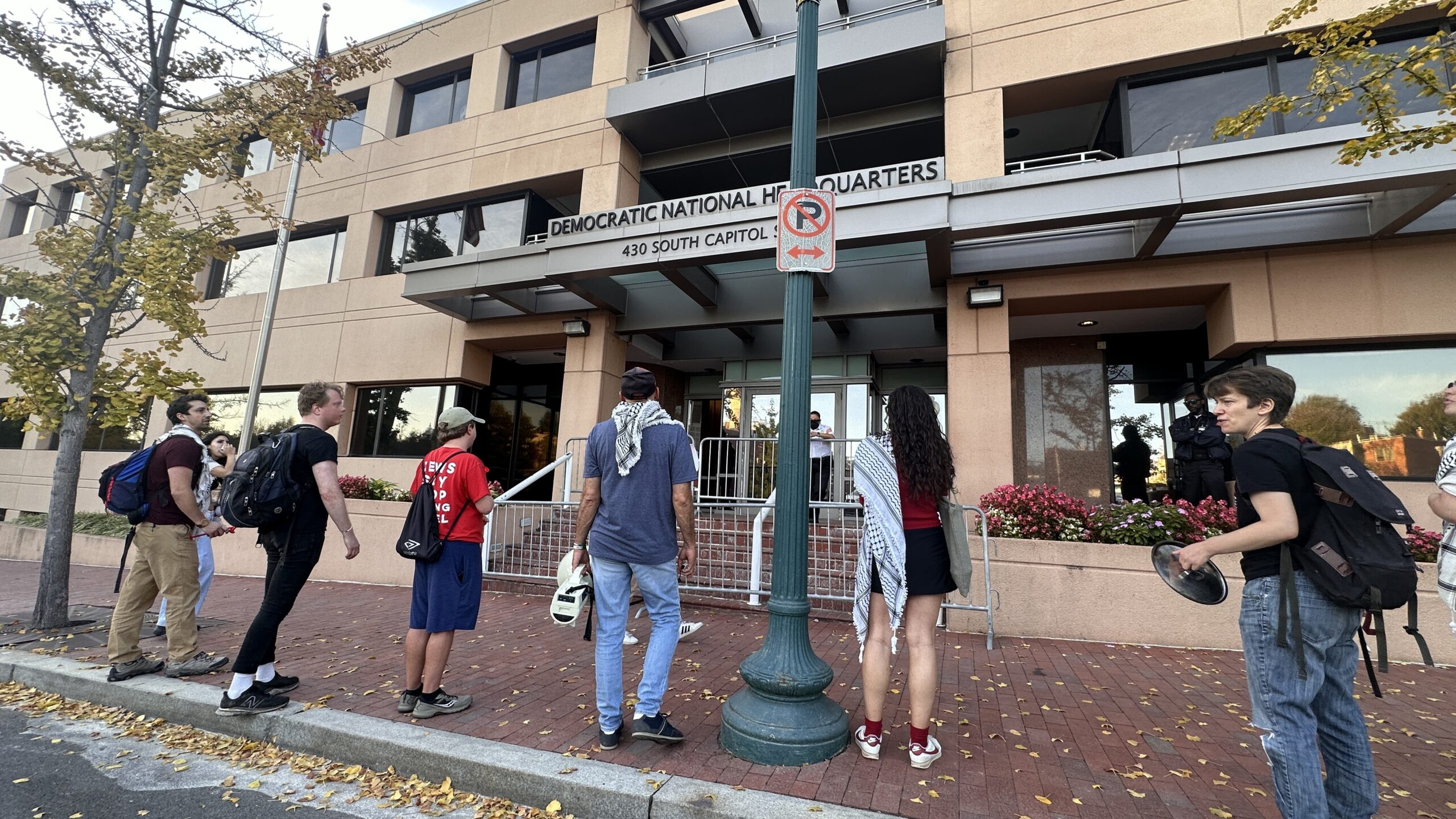
After 104 members of the House voted last week in favor of an amendment to eliminate all $3.3 billion in annual military aid to Israel, pro-Israel activists across the country who have spent years building ties with lawmakers are now wondering how to approach those relationships following a vote that some see as a betrayal, Jewish Insider’s Gabby Deutch reports.
Looking ahead: Several friends and backers of the members of Congress who voted for the amendment told JI that a single vote on a measure that was sure to fail should not spell the end of years of friendship. But even as they acknowledged the seismic reverberations of the vote, many also spoke of the need to tread carefully at a politically uncertain moment. “Our issues are too important to not hold onto the ability to have a conversation with the person, because the votes are not going to end. It’s not going to all of a sudden stop,” Sam Lauter, a major Democratic donor and pro-Israel activist, said. He talked to several members of Congress in the days before the vote, urging them to vote no.
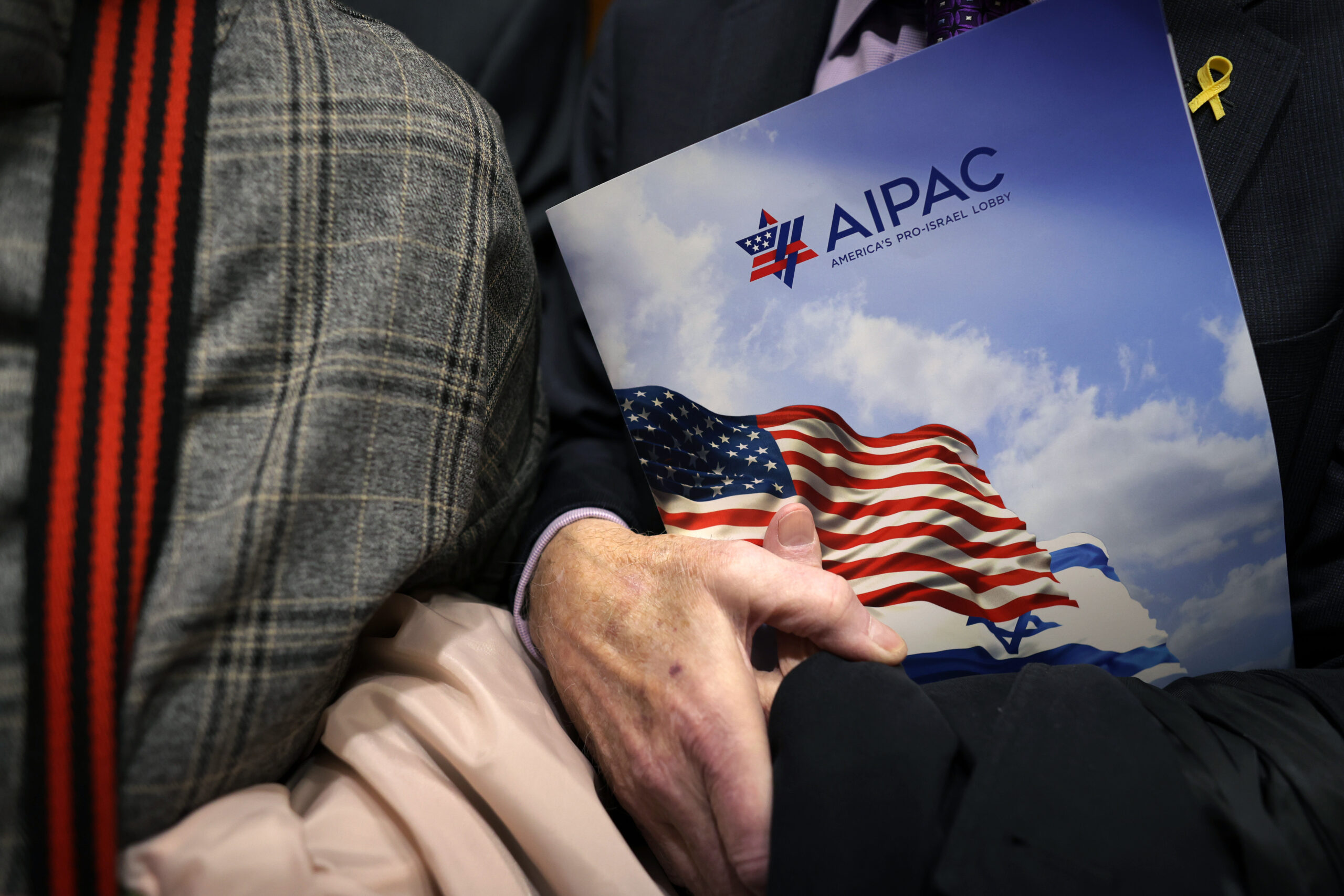
Silent rebuke: AIPAC will no longer allow donations through its political action committee to 18 lawmakers it endorsed who voted in favor of the legislation. The group did not announce the change. But the endorsement page on AIPAC’s political giving portal — where supporters can donate to candidates who have been endorsed by AIPAC — removed the option for individuals to route money to those lawmakers.
SPEAKER SCRUTINY
College Democrats’ conference, co-sponsored by J Street U, features Hasan Piker

J Street’s college group sponsored the College Democrats of America convention over the weekend that featured far-left, antisemitic influencer Hasan Piker. J Street U, the student organizing arm of J Street, “is proud to sponsor and participate in the College Democrats Convention,” Jeremy Ben-Ami, president of J Street, told Jewish Insider’s Haley Cohen on Friday, hours after Piker was announced as the convention’s “surprise speaker.”
J Street’s position: “We had no role in the selection of speakers and we’re sure there will be speakers — including Hasan Piker — with whom we disagree,” said Ben-Ami. “Being in venues like this is even more important when there are participants with whom we disagree. Failing to show up would be an abdication of our responsibility to make the case for our pro-Israel views.”
Turning tides: Rep. Steve Cohen (D-TN) told CNN he left the Congressional Progressive Caucus last year — and decided not to run for reelection this year — in part because of the rise of socialist leadership in the caucus. The Democrat said there’s now a growing contingent of anti-Israel Democrats as well within the Congressional Progressive Caucus, which he said was not present when he first came to the Hill, JI’s Marc Rod reports.
TRADE ROUTES
Tom Barrack promotes Middle East trade alignment cutting out Israel
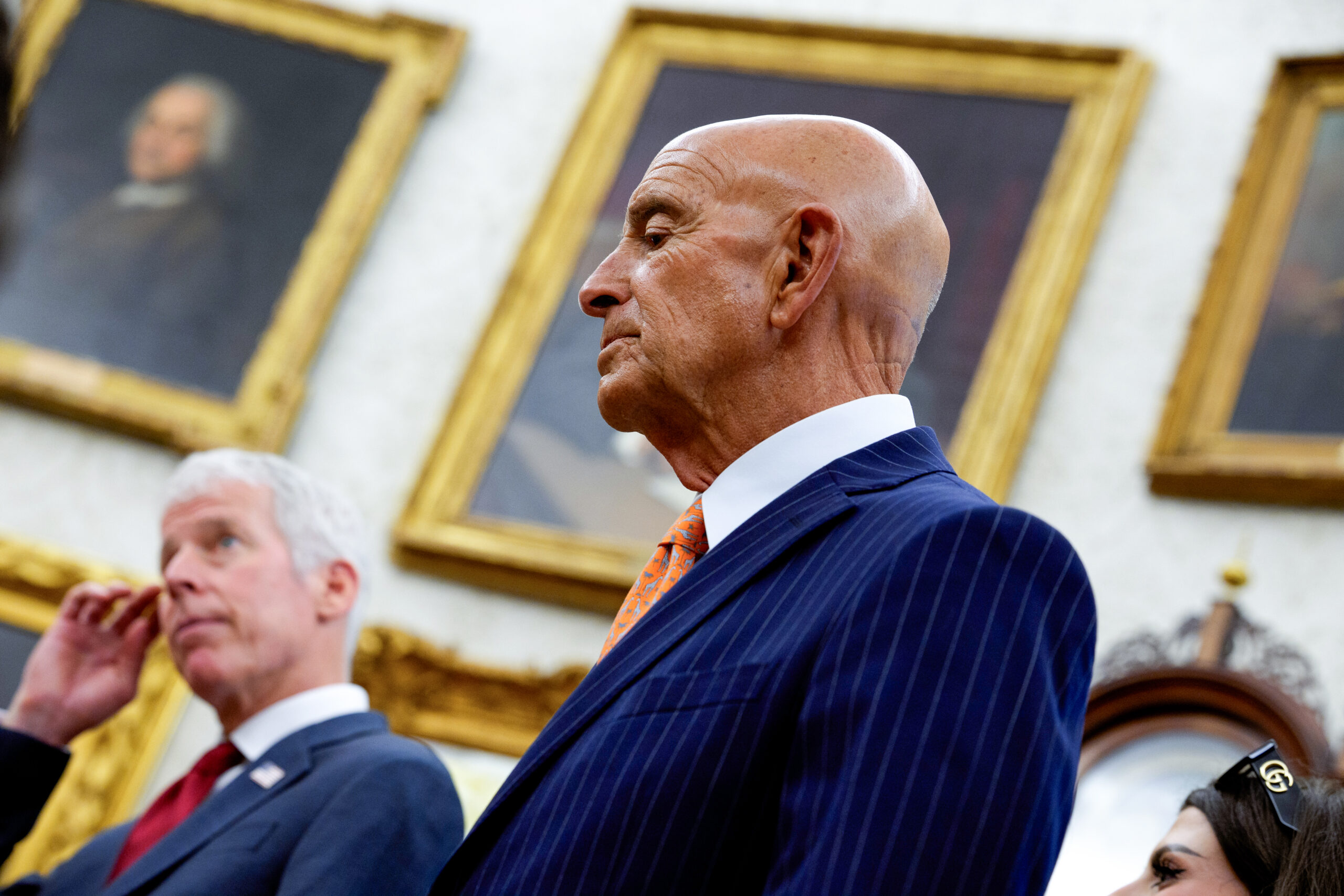
U.S. Ambassador to Turkey Tom Barrack on Friday promoted a new regional trade and security alignment in the Middle East centered around Iraq, Turkey and neighboring Arab states, appearing to sideline a similar regional project including Israel, Jewish Insider’s Matthew Shea reports.
What he said: Speaking at the U.S.-Iraq Business Summit, Barrack told attendees that Iraqi Prime Minister Ali al-Zaidi, who visited with President Donald Trump at the White House last week, is considering a transformative agreement. “What this young leader [al-Zaidi] has in mind — aligned with Syria, Jordan, Turkey, Lebanon, Egypt — is a program that will make the Strait of Hormuz an afterthought in two years,” Barrack said. “We’re going from just-in-time delivery on boats through these minor straits to just-in-case delivery going the other way.”
NO STRINGS ATTACHED
Lawmakers split on whether Trump should have tied Syria sanctions relief to Israel normalization
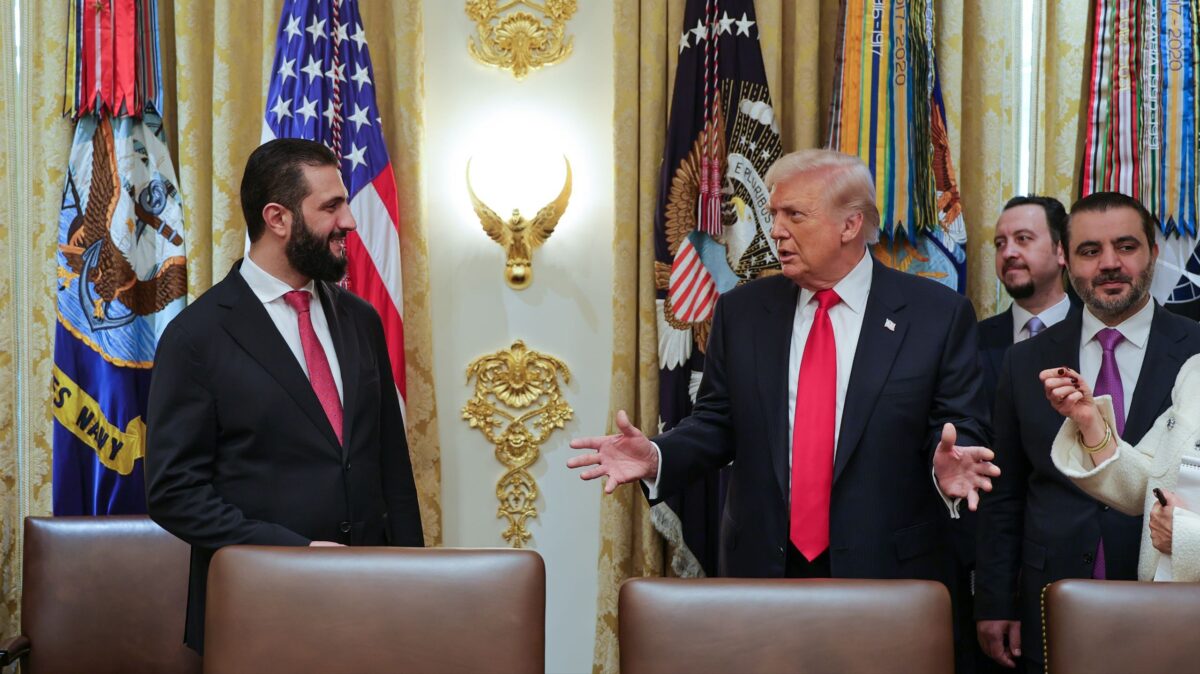
As the Trump administration moves to end the diplomatic isolation of Syria, dismantling decades of U.S. sanctions in the process, lawmakers are offering mixed assessments of whether Washington should have conditioned that relief on steps toward normalizing relations with Israel, Jewish Insider’s Matthew Shea reports.
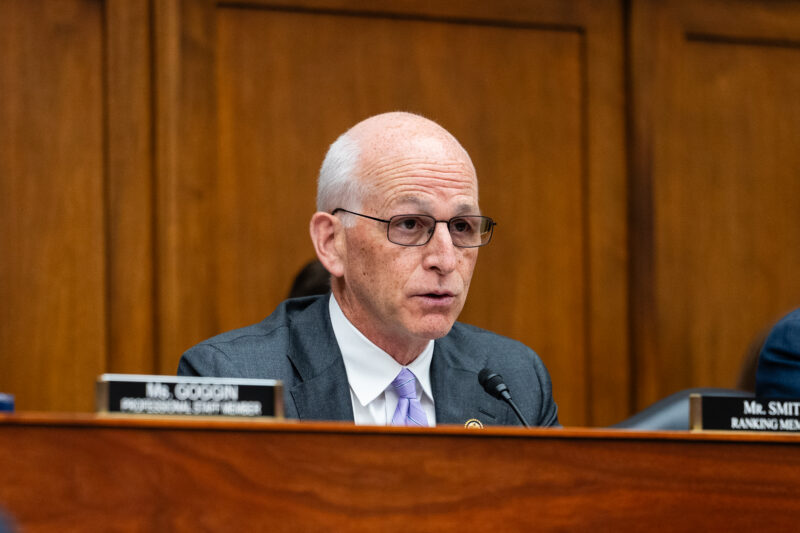
What they said: Rep. Brad Sherman (D-CA) said the Trump administration “should be urging” Damascus to improve economic and political relations with Jerusalem in exchange for sanctions relief, “but I would say that you’ve got to have a consistent standard.” Sherman noted he would “like to see Syria move in that direction,” toward joining the Abraham Accords, “even if they can’t join the accords yet.” Rep. Steny Hoyer (D-MD) agreed that the Trump administration should be pursuing normalization as part of its efforts with Damascus, but said the current focus on prioritizing stability is a “worthwhile objective” and “positive” effort. “I think a stable, democratic [Syria] may be too much of a hope, but a stable and non-terrorist-supporting Syria is important to the Middle East and to the United States of America and to some type of global stability,” Hoyer told JI.
Read the full story here, with additional comments from Reps. Brad Schneider (D-IL), Troy Nehls (R-TX) and Tim Burchett (R-TN).
HEARD AT ASPEN
Repairing Israel’s standing in the U.S. requires new leader in Israel, Dan Shapiro says
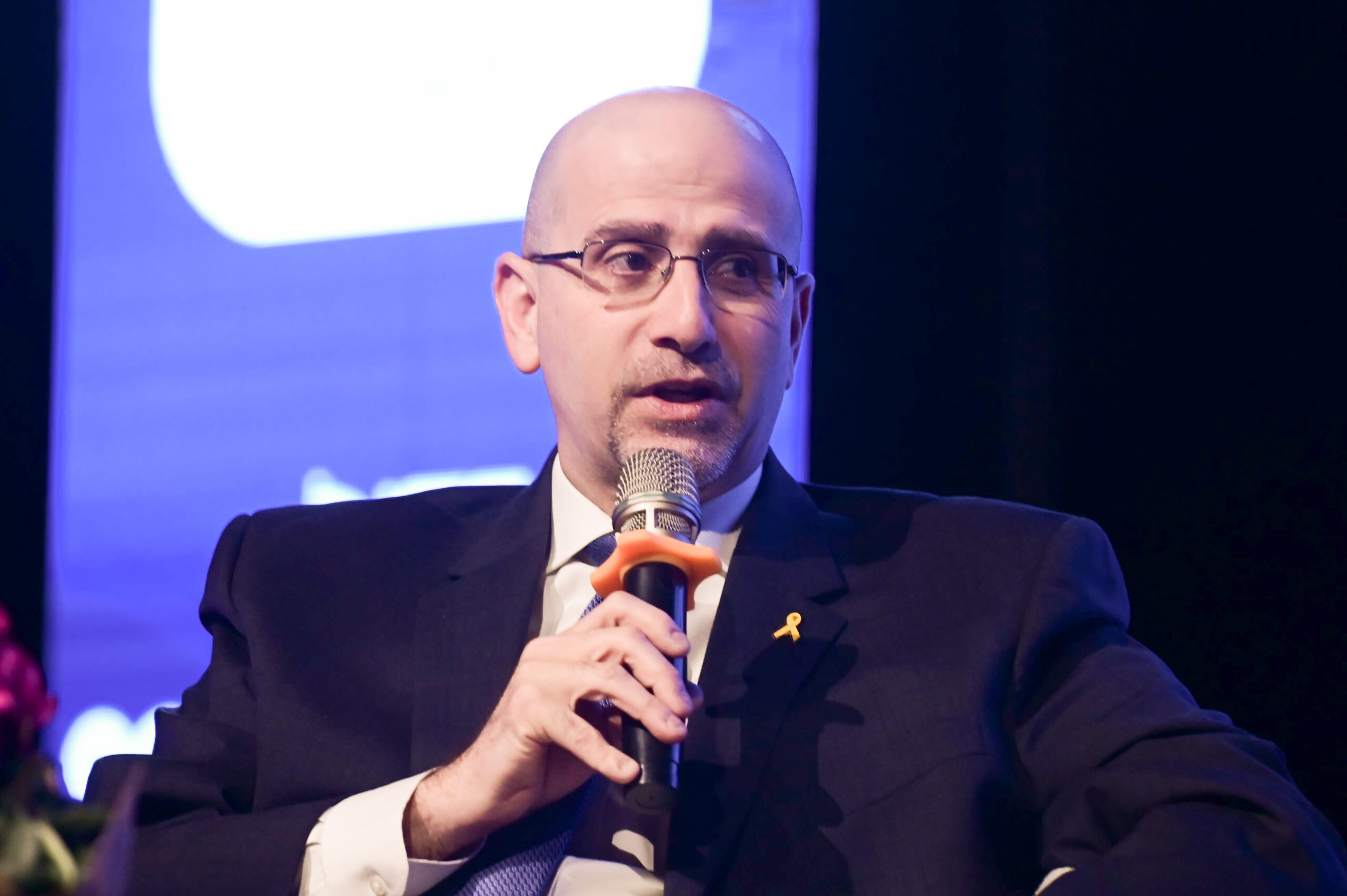
Former U.S. Ambassador to Israel Dan Shapiro told Jewish Insider’s Marc Rod on the sidelines of the Aspen Security Forum last week that without new leadership in Israel — meaning a defeat for Prime Minister Benjamin Netanyahu in Israel’s elections — he does not know how Israel can repair its reputation in the United States.
Notable quotable: “I don’t see a path to repairing Israel’s deteriorating standing in the United States on both sides of the aisle without a change of leadership in Israel,” Shapiro told JI, a sentiment he repeated during a panel on Israel and the U.S.-Israel relationship at the conference. Speaking to JI shortly after more than 100 House Democrats voted to cut off U.S. military aid to Israel, Shapiro said that, while there’s “legitimate ground for concern and for criticism” of Israel’s operations in Gaza, cutting off all $3.3 billion wholesale is not “a very thoughtful way” to address concerns about civilian harm and that maintaining the U.S.-Israel relationship remains in America’s interests.
IRAN ADD-ON
Trump’s push to add Iran to Russia sanctions bill confuses Democrats
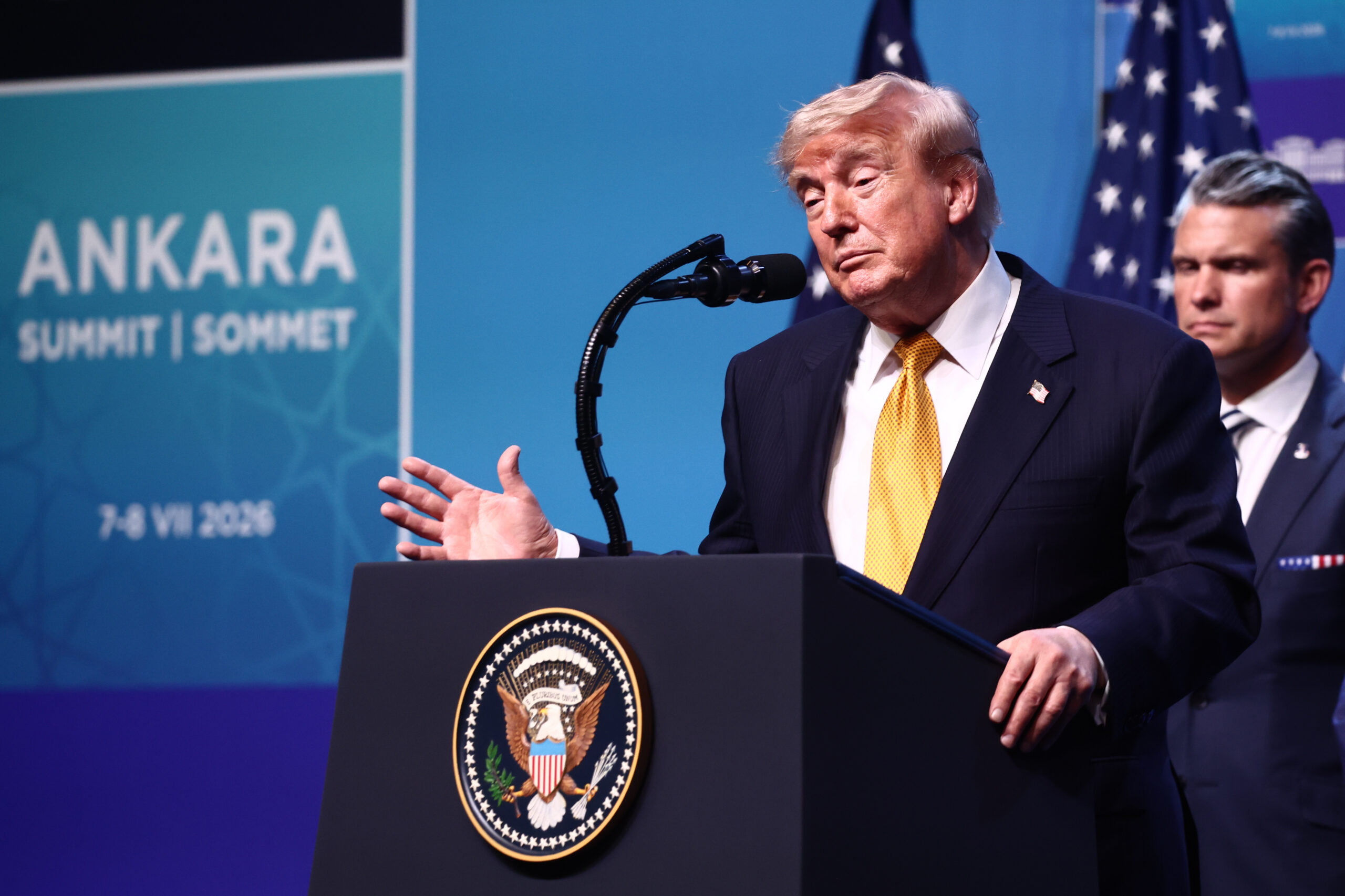
President Donald Trump’s call for Republicans to incorporate sanctions against Iran into the late Sen. Lindsey Graham’s (R-SC) bipartisan legislation sanctioning Russia and countries that buy Russian oil was met with confusion by some of the Democrats supporting the bill, Jewish Insider’s Emily Jacobs reports.
Dem dismay: “Our Russia sanctions bill was meticulously crafted during painstaking, sometimes painful negotiations over many months,” Sen. Richard Blumenthal (D-CT), who spearheaded the effort alongside Graham for over a year, told JI in a statement. “This bill should move forward as quickly as possible — as is — without additional provisions, which can be done separately.” Sen. Jeanne Shaheen (D-NH), the top Democrat on the Senate Foreign Relations Committee, told Bloomberg’s “This Weekend” on Sunday that, “Sen. Graham never raised the concern about putting Iranian sanctions on the bill.”
Institution clash: Annalena Baerbock, the president of the United Nations General Assembly and former foreign minister of Germany, on Friday criticized the Board of Peace, the U.S.-led body responsible for managing the ceasefire in Gaza, JI’s Marc Rod reports.
Worthy Reads
Swamp Creatures: In his Substack, Erick Erickson examines “self-dealing” among Trump administration officials who have personally financially benefited from their professional roles, despite President Donald Trump’s oft-repeated campaign pledge to “drain the swamp.” “It does not matter whether each arrangement is technically legal. The swamp was never a legal problem; it was a trust problem. When the party that promised to end influence-peddling instead perfects it — when access to the president can be bought with a memecoin and a black-tie ticket — the lesson every ambitious operator learns is that the spoils go to whoever holds power, and restraint is for suckers. That is the real cost.” [Substack]
Taking on Tehran Together: In the Arab News, former White House Middle East Envoy Jason Greenblatt posits that unified Gulf states — which over the last six months have all sustained attacks from Iran — can push back against the Islamic Republic’s malign behavior in the region. “The scale and consequences differed by country. The decision behind them did not. Six governments. One regime deciding, each time, that Gulf territory was a legitimate target. … The differing intensity of Iran’s attacks reflects Tehran’s country-by-country calibration of pressure. Iran weighs its own exposure, the relationships it still hopes to preserve, how much pressure it mistakenly believes it can place on Washington, and how much pressure it wants to place directly on each Gulf government.” [ArabNews]
The Future of Faith: In The Washington Post, David DeSteno considers how religiously engaged people are interacting with AI on issues of moral guidance. “As of yet, the data don’t show that people of faith are forsaking the moral teachings and advice of clergy in favor of that offered by AI; they’re utilizing both. But that might soon change. … According to Anthropic’s own research, its AI chatbot Claude just happens to be most sycophantic when it discusses spiritual themes, meaning that it could be especially persuasive while dispensing moral and religious advice.” [WashPost]
A larger selection of Worthy Reads is available in our Live Briefing.
Word on the Street
Joining President Donald Trump in his suite at MetLife Stadium for Spain’s 1-0 win over Argentina in Sunday’s World Cup final were Mexican President Claudia Sheinbaum, Canadian Prime Minister Mark Carney, Spain’s King Felipe VI and Queen Letizia, Spanish Prime Minister Pedro Sánchez, First Lady Melania Trump, Secretary of State Marco Rubio, FIFA President Gianni Infantino, Commerce Secretary Howard Lutnick, Homeland Security Secretary Markwayne Mullin, Andrew Giuliani, Barron and Eric Trump and Robert Kraft…
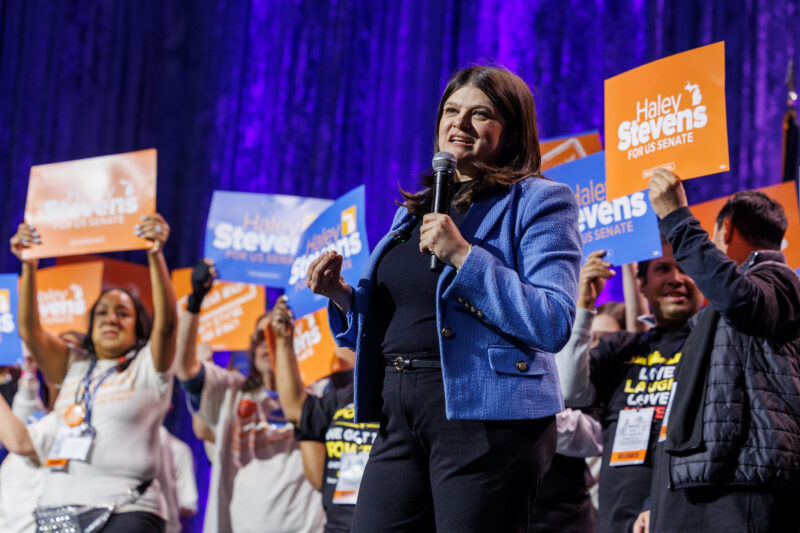
Rep. Haley Stevens (D-MI) rejected claims, including those made recently by Vice President JD Vance, of Israeli influence over Trump’s decision-making on Iran, calling it “a fool’s run to place blame on him supposedly being dictated by others”…
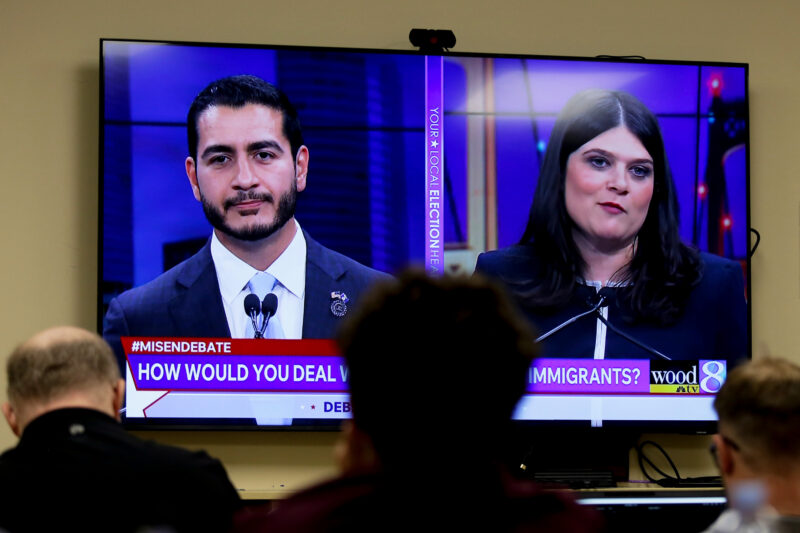
Abdul El-Sayed, who is up against Stevens in next month’s Michigan Democratic Senate primary, deflected a question from CNN’s Jake Tapper on Sunday’s “State of the Union” about audio in which El-Sayed was heard telling staff there were “a lot of people in Dearborn who are sad” over the death of former Iranian Supreme Leader Ayatollah Ali Khamenei; in response, El-Sayed criticized the war with Iran and the recent deaths of U.S. service members…
Iran reportedly moved $6 billion in oil out of the country during the roughly four weeks that the Strait of Hormuz was open in accordance with the memorandum of understanding between Washington and Tehran…
The Wall Street Journal looks at Iranian efforts to make Jordan a flashpoint in its war with the U.S., which stations thousands of soldiers at a base in the country — three of whom were killed in an Iranian ballistic missile attack last week…
New York City Mayor Zohran Mamdani told The New York Times he was in “an active conversation” with legal officials regarding the potential arrest of Israeli Prime Minister Benjamin Netanyahu, who is expected to travel to New York in September for the U.N. General Assembly; Mamdani had said during his campaign for mayor that he would order the arrest of Netanyahu should the Israeli leader travel to New York, despite doubts from experts over the legality of such a move…
Rabbi Efrem Goldberg, who leads the Boca Raton Synagogue, an Orthodox congregation in South Florida, is urging members of his congregation to register as Democrats ahead of the upcoming Florida primary in order to help Rep. Jared Moskowitz (D-FL) fend off a far-left primary challenger, Jewish Insider’s Marc Rod reports…
Fanatics CEO Michael Rubin wrapped tefillin — reportedly for the first time — at Fanatics Fest in New York over the weekend…
eJewishPhilanthropy’s Judah Ari Gross talks to Amy Spitalnick, the CEO of the Jewish Council for Public Affairs, about the group’s engagement with education associations and unions on efforts to address antisemitism…
The Wall Street Journal profiles Emily Austin, a sports and pro-Israel influencer with deep ties to the Trump administration who leveraged her relationships in Washington to score a gig as a content creator for FIFA during the World Cup…
Hungarian Prime Minister Péter Magyar announced the nomination of Hungarian chess grandmaster Judit Polgar, who is Jewish, to serve as the country’s interim president…
An Israir plane slated to depart from London’s Luton Airport last week was damaged by an aircraft tug — the third such incident involving an Israir flight at that airport in the last year — prompting concerns that the airline is being targeted by ground workers…
The Wall Street Journal does a deep dive into a $700 million effort by Israel to help improve its global public image, including a $45 million contract with Trump ally Brad Parscale, as well as through influencers and AI-generated texting campaigns…
Cisco is in advanced talks with Zafran Security to purchase the Israeli cybersecurity startup for between $150-200 million…
The Associated Press reports on how a conflict between the Bank of Israel and the Palestinian Monetary Authority as Israel caps the amount of shekels it takes back from the West Bank is causing cash surpluses in the territory…
Fortune compares and contrasts the power of the Israeli shekel and the Japanese yen as the former gains strength and the yen, once one of the world’s strongest currencies, drops in value…
NPR looks at efforts by Israeli paraglider Amnonn Hahn to help swifts during their migration to Israel for the spring nesting season as the global population of the birds faces a steep decline…
The New York Times spotlights the wedding of Pamela Soberman and Rabbi Beni Summers, who met at a Jewish singing retreat in upstate New York…
Simone Kanter, who previously worked for Rep. Dan Goldman (D-NY), is joining Tusk Strategies as a vice president in the group’s public affairs practice…
Israeli actor and singer Shoshik Shani died at 91…
Shoshana Bryen, the senior policy director at the Jewish Policy Center, died last week…
Pic of the Day

U.S. Ambassador to Argentina Peter Lamelas participated in an event on Saturday marking the 32nd anniversary of the bombing of the AMIA Jewish community center in Buenos Aires.
Birthdays

Actor and comedian, Joey Bragg turns 30…
Retired U.S. senator (D-MD), Barbara Mikulski turns 90… Professor emeritus of mathematics at Penn State University, Paul Baum turns 90… Retired president of the National Endowment for Democracy, Carl Gershman turns 83… Long-time Israeli diplomat, he served as Israel’s ambassador to Germany, Yoram Ben-Zeev turns 82… Former commissioner on the Civil Rights Commission, assistant secretary of HUD in the Clinton administration, presently vice chair of the Bank of San Francisco, Roberta Achtenberg turns 76… Senior U.S. District Court judge in Massachusetts, Judge Patti B. Saris turns 75… New York Times weekly columnist and three-time Pulitzer Prize winner, Thomas Loren Friedman turns 73… Molecular geneticist at NYC-based Rockefeller University and an investigator of the Howard Hughes Medical Institute, Jeffrey M. Friedman turns 72… Broadcast and digital media consultant, Farrell Meisel… Professor of sociology at the University of Illinois at Chicago, Barbara Risman turns 70… Past president of the Women’s Department at the Jewish Federation of Detroit, she is the mother of fashion designers Matthew and Alex, Marcie Hermelin Orley… Head of a women-led political network for the U.S.-Israel relationship, also a mahjong instructor, Linleigh Ayn Richker… Public policy expert and author, Jane S. Hoffman turns 62… Former member of the Knesset for the Yesh Atid party, she is a brigadier general in the IDF (res.), Nira Shpak turns 60… Member of Knesset for the United Torah Judaism party, Yitzhak Ze’ev Pindros turns 55… Attorney, Jack Achiezer Guggenheim… SVP, Washington bureau chief and political director of CNN, where he oversees the political coverage across all of CNN’s platforms, David Marc Chalian turns 53… Author of World Without Mind: The Existential Threat of Big Tech, he is a staff writer at The Atlantic, Franklin Foer turns 52… Miami-based EVP at AIPAC, David Fox… Singer who came on the scene as a finalist on the fifth season of “American Idol,” Efraym Elliott Yamin turns 48… Assistant commissioner in the Community Affairs Bureau at the NYPD, Fred Kreizman… Co-founder and managing partner of the communications and branding firm of Main+Rose, Beth Doane… Co-founder and co-executive director of the progressive Indivisible movement, Ezra Levin turns 41… Former MLB player, he was a shortstop for Team Israel in 2023, Ty Kelly turns 38… Comedian and former regular player on “Saturday Night Live,” Chloe Fineman turns 38… Software engineer at Home Chef, Ashley Abramowicz Gibbs… Anesthesiologist, Dr. Sheila Ganjian Navi… VP of business development and operations at Thyme Care, Etan Raskas… Principal at Blackstone, Jonathan Tamir Alden… Intellectual property attorney at Ballard Spahr, Goldie Fields…
Former House Majority Leader Steny Hoyer said antisemitism has worsened to the point that Jews aren’t guaranteed safety in the U.S.
Marc Rod
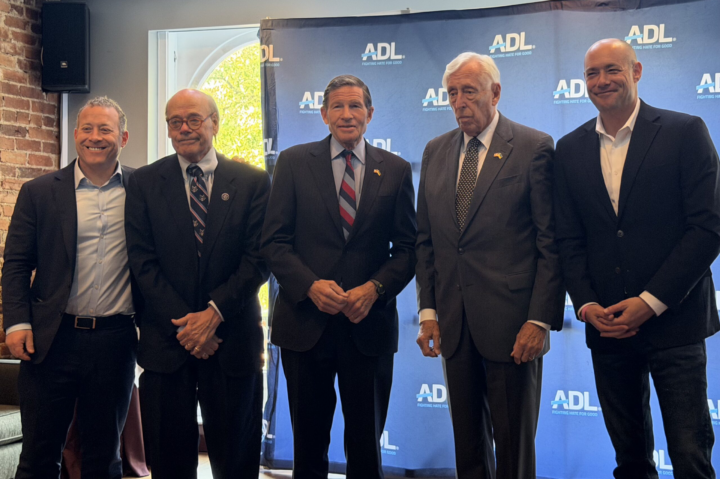
Lawmakers attend Anti-Defamation League reception honoring Jewish American Heritage Month on Capitol Hill on Tuesday, May 12, 2026
A series of largely Democratic lawmakers painted an unusually dire portrait of the state of rising antisemitism and threats to the Jewish community in remarks at an Anti-Defamation League reception honoring Jewish American Heritage Month on Capitol Hill on Tuesday evening.
Several emphasized the need for those in the audience, many of them young Jewish congressional staffers and Washington professionals, to continue speaking out and fighting for the Jewish community in a time of crisis.
Rep. Steny Hoyer (D-MD), the retiring former No. 2 House Democrat, said that antisemitism has escalated to the point that Jews are no longer guaranteed safety in the United States.
“There were two places in the world where Jews felt really safe. One, of course, was Israel, and the second was the United States of America,” Hoyer said. “That’s not true today, and that is a sad statement of what’s going on in the country today. So you all need to be involved. You all need to when you see something that’s not right, not fair, not just stand up, speak up and make a difference.”
Rep. Laura Friedman (D-CA) emphasized that efforts to fight antisemitism have often been met with additional hostility.
“It is a very scary time for the Jewish community,” Friedman said. “And to make matters worse, when we express that we’re scared and that there’s this rising level of hatred directed towards the Jewish community, we’re often met with people telling us that we’re not allowed to feel that way. And how dare we even say that there’s anything wrong with treatment towards Jews in this country?”
She offered as an example of “how bad it’s gotten” that her synagogue was graffitied this year with a swastika, and that she ended up in an argument online with local activists “who were trying to tell me why it was appropriate for people to put swastikas on the sides of buildings in the Jewish part of Los Angeles, where there are Holocaust survivors still living, why they thought that was OK and not antisemitic.”
Friedman used as another example a recent ad created by a super PAC backing Rep. Thomas Massie (R-KY) in his reelection race attacking a Jewish conservative donor, Paul Singer, who is supporting Massie’s opponent, which prominently featured a graphic of a Jewish star alongside the Singer’s face.
“A super PAC thought it was totally fine to do a hit on a candidate by showing one of their donors and by flashing a Jewish star behind that donor to let everyone know that, ‘Hey, if everything else we’ve said about this candidate isn’t convincing enough, they have a donor who’s Jewish,’” Friedman said.
“I don’t think anyone can sit this one out and you all being here is part of that effort, so thank you … for showing up, thanks for the work you do,” she concluded.
Rep. Haley Stevens (D-MI), who is running for Senate in Michigan and has faced attacks over her support for Israel and ties to the Jewish community, said that she would not “sugarcoat” the situation, explaining that “the faces of hate in this country have morphed into violent extremism,” with an increasing pace of violent attacks targeting the Jewish community, including in her own district.
“Extremist words matter. They absolutely matter,” Stevens said.
She also maintained that she is “unequivocal in declaring that I am very much a proud Zionist” in spite of facing attacks for that stance. “When I show my face in my community, every so often [I] get chased out because of violent extremism, because people feel so emboldened to shout at me that I am a ‘Zionist pig.’ That cannot be acceptable.”
Rep. Steve Cohen (D-TN), whose congressional district was recently carved up by Tennessee Republicans, likely ending his career, warned that prejudice is still a real and very active problem.
He recounted a story of when he ran for governor in 1994: “I went to a little radio station in Dixon, Tenn. — one person radio station, gravel road. [I] came in, talked to the man for a while and he said, ‘Son, you Jewish?’ I said, ‘Yes sir.’ He said, ‘Good luck,’” Cohen recounted. “It ain’t changed a lot since then. Be careful. There’s a lot of mamzers out there. They don’t know us, but they don’t like us,” he said, using the Hebrew word for bastard.
Rep. Greg Landsman (D-OH) said that it is “obviously a very bad time” for the American Jewish community and “in my opinion, it’s going to get a lot worse.” He urged the crowd “to lead through such difficult, chaotic, awful times.”
Rep. Mike Lawler (R-NY) lambasted New York City Mayor Zohran Mamdani as emboldening and encouraging antisemitism.
“We see a mayor in New York City who has, in many respects, OKed his supporters engaging in antisemitic hate, engaging in conduct that threatens Jewish students and Jewish lives,” Lawler added. “We see these protests happening outside places of worship — these are real issues that we have to combat.”
He also emphasized that antisemitic influencers like Hasan Piker, Candace Owens and Tucker Carlson have been using antisemitism as a “grift” and playing on hatred to “make a buck” and create further division.
Rep. Jake Auchincloss (D-MA) said that it is “unacceptably scary to be a Jew in the United States” and that the country is “violating the core promise that George Washington made” to the Jewish community in Rhode Island in 1790 that the country would be one of religious freedom and pluralism.
Auchincloss highlighted his efforts in Congress to combat antisemitism on social media, describing platforms as having become “failed societies online. It’s become so toxic, it’s become so rotten on these platforms that antisemitism is mushrooming as a symptom of something that is deeply rotten underneath.”
Rep. Kim Schrier (D-WA) said that Jews are “all feeling so threatened right now” and emphasized the need for broader understanding of antisemitism.
“They need to understand that anti-Zionism is kind of a new iteration [of antisemitism], if you don’t want another country wiped off the map,” Schrier said. “And I just think we all need to recognize that we all need to call it out, whether it’s in our party or another party.”
Rep. Jamie Raskin (D-MD), the ranking member of the House Judiciary Committee, said that “antisemitism and racism are the gateway to the destruction of liberal democracy” and that “the extremism, the fascism, the racism and the antisemitism” are infecting politics in the U.S. and around the world.
He praised Hungary as an example of a country that had been able to buck such trends, ousting its longtime right-wing government.
Several of the lawmakers who addressed the group also offered remembrances about Abe Foxman, the former longtime ADL leader who died last weekend.
“We’re all thinking about Abe Foxman right now, who looms over this room in a powerful way and taught us so much,” Rep. Josh Gottheimer (D-NJ) said. “I think what he taught us most was to be courageous, to fight, to never back down. That’s my ask of you. It’s tough out there, by the way. The harder they hit us, the more fight I feel.”
Rep. Debbie Wasserman Schultz (D-FL) said that Foxman was “a giant, a hero of mine, hero of so many, and really built this organization practically from the ground up.” She said she’d been stunned by his death, having spoken to him at a Holocaust remembrance event at the Capitol just weeks ago.
Sen. Richard Blumenthal (D-CT) also urged those in attendance to follow Foxman’s model, and emphasized the need for additional funding for the Nonprofit Security Grant Program.
In a statement, Lauren Wolman, ADL’s senior director of government relations and strategy, said the group was “honored to host our annual Jewish American Heritage Month (JAHM) reception celebrating Jewish Members of Congress and congressional staff.”
“At a time when many of these dedicated public servants are navigating rising antisemitism and growing challenges on Capitol Hill, the reception served as an important opportunity to celebrate their work and create a space for Jewish professionals to come together in community, connect with one another, and feel supported,” Wolman continued.
Rep. Josh Gottheimer called the trend ‘deeply alarming’ as Spain and Ireland moved to downgrade EU ties with Israel

Jens Kalaene/picture alliance via Getty Images
The flags of Israel (l-r), the EU and Germany fly in front of the Berlin House of Representatives.
Democratic lawmakers are expressing concern over Israel’s fracturing relationship with key European allies, while experts say the shifting dynamics could carry longer-term economic and political risks for Jerusalem, even if Israel weathers threats to unwind largely symbolic defense agreements.
Israel’s relationships with various European countries have come under increasing strain in recent weeks. Last month, Israel halted all defense procurement from France amid worsening bilateral ties, while Italian Prime Minister Giorgia Meloni announced last week that Italy would cancel the automatic extension of its defense agreement with Jerusalem.
On Tuesday, Spain and Ireland led a push to suspend the EU’s association agreement with Israel — which has governed the bloc’s trade and political ties with Jerusalem since 2000. However, the move stalled as member states remained divided on the issue. A suspension of the full association agreement would require unanimity, a threshold that is not expected to be met as Germany and Italy indicated they would remain opposed for the time being. The European Commission has previously proposed suspending trade-related provisions of the agreement — which would only require a majority vote out of the 27 member states.
Rep. Josh Gottheimer (D-NJ) told Jewish Insider that the latest slate of moves unfolding in Europe is “deeply alarming” and “dangerous for all of us.”
“NATO allies like Spain, France and Italy are turning their backs on Israel, a key democratic partner that is actively fighting on the front lines against Iran,” Gottheimer said. “Singling out Israel represents a double standard.”
Gottheimer said that the U.S. “must make it clear” to European allies that “abandoning the world’s only Jewish state does not make them safer — it puts all of us at risk.”
Rep. Jake Auchincloss (D-MA) argued that the U.S. response should focus on strengthening regional and transatlantic ties, calling for an expanded Abraham Accords that are “knitted together with economic, energy and defense ties with Europe,” something he said would “create a more durable Eurasian security infrastructure.”
“As we look towards the next MOU [memorandum of understanding], it needs to be a regional security architecture,” Auchincloss said. “I think this Iran war has been such a complete catastrophe. As it relates to Europe, the president should close his mouth and stop belittling and degrading NATO.” President Donald Trump has taken repeated aim at the North Atlantic alliance over its leaders’ refusal to engage with the war in Iran.
When asked whether the U.S. should intervene in response to recent European measures, Rep. Brad Schneider (D-IL) said he believes the U.S. is “engaging” with European countries.
“We should continue to engage and work,” Schneider said. “My goal is to find a path to peace, Israel’s security and stability in the region, and ultimately peace for all peoples.”
“Israel is an incredible ally in an important region,” he continued. “We got to make sure we work together and strengthen that relationship and the same is true for Europe.”
Experts said that while the deterioration in Israel-Europe relations is real, the immediate military implications of these moves are limited.
“Israel’s relationship with Europe is certainly deteriorating,” Steven Cook, a senior fellow at the Council on Foreign Relations, told JI. But he called the moves from European countries “mostly symbolic.”
“There are European countries that have already embargoed weapons and parts, but it has not affected Israeli security,” Cook said. “Regardless, I suspect that the very fact that European countries are trying to use defense agreements and weapons systems as leverage with the Israeli government will only encourage the Israelis to be more self-sufficient in defense.”
Elliott Abrams, who served as Iran envoy during the first Trump administration, similarly told JI that the “military impact on Israel is not very large.” He noted that Israel did not maintain a serious military relationship with Spain and France.
Additionally, Abrams said that Meloni’s decision to cancel the automatic extension of the Israel-Italy defense agreement was not a sign that those ties are permanently broken, but rather it could provide her “leeway to renew” down the road “if the political situation is easier.”
“Nearly all of Israel’s military equipment comes from domestic production, the United States or Germany, so the deteriorating defense ties with European countries will not have a major impact on Israel’s military procurement,” David May, a senior research analyst at the Foundation for Defense of Democracies, said. “If anything, the European countries will be harmed by losing access to Israel’s battle-tested and innovative defense technology.”
Edmund Fitton-Brown, a former British diplomat and a senior fellow at FDD, also said that “defense issues are more symbolic than practical.”
“Israel’s overwhelming primary partnership is with the U.S., which regards Israel as a model ally,” Fitton-Brown said. However, he noted that putting “all Israeli eggs in one U.S. basket has drawbacks.”
“In an ideal world, any independent country will seek to diversify its supplies and partnerships to guard against excessive dependency on a single ally — but it reflects the reality that Israel no longer has any other load-bearing alliances besides the U.S. Netanyahu is investing everything in his management of the relationship with Trump,” Fitton-Brown added.
But while the military impact may be slim, experts warned of serious potential economic and political consequences of the worsening ties. Cook said that while he believes Sanchez’ EU push is unlikely to be successful due to a lack of support, he noted that it still has “enough support that it should make Israelis uncomfortable.”
“Israel’s security relationship pales in comparison to its economic relationship,” Cook said. “If the Europeans took action against Israel — like Sanchez’s proposal to end Israel’s association agreement with the EU — it would likely hurt the Israeli economy.”
The EU is currently Israel’s largest trading partner, accounting for roughly one-third of its total trade. Trade in goods between Jerusalem and the union has reached up to 42.6 billion euros in 2024. Israel is the EU’s third largest trading partner in the Mediterranean.
Fitton-Brown said that it would be a “serious matter” if Sanchez could “force the European Union to end its association agreement with Israel.” However, he similarly predicted that “he [Sanchez] probably can’t deliver on that threat.”
Abrams said that while Israel maintains relationships in “Central and Eastern Europe, and with Germany,” he warned that the changing dynamics among European nations could have political consequences.
“The political impact is serious, and here I would hope the U.S. can help,” Abrams said. “I am not sure we [the U.S.] can right now, given Trump’s own unpopularity in Europe and his too-frequent criticism of NATO countries.”
“The better path for Israel right now, in my view, is for Israel to ask friends like Germany, Poland and Czechia to block any Spanish initiative, and I think they will,” Abrams continued. “Sanchez’s hostility to Israel is not consensus among EU leaders, even given their criticism of [Israeli Prime Minister Benjamin] Netanyahu.”
Cook said Washington is unlikely to step in unless core defense supply chains are threatened. He noted that the “only way the U.S. would get involved is if Europeans tried to hold up parts for [Israel’s] F-35s [fighter jets],” adding that “critical components are built in Europe.”
Fitton-Brown, on the other hand, said that the U.S. should take action in response. He argued that a potential option could be for Washington to “question Spain’s right to protection from NATO,” adding that the U.S. could argue that such members that “undermine a key U.S. ally do not qualify as allies themselves.”
“The U.S. should make clear that it will not tolerate anti-Israeli policies beyond a certain point,” Fitton-Brown said. “Sanchez is almost equally showy in his anti-Americanism, and should be taught that such a policy is not without costs.”
‘Injecting the views of antisemites into’ the rise of political extremism ‘and welcoming those views is dangerous,’ Deutch said

Celal Gunes/Anadolu via Getty Images
Ted Deutch, CEO of the American Jewish Committee, testifies about 'The Crisis on Campus: Antisemitism, Radical Faculty, and the Failure of University Leadership" during a US House Committee on Ways and Means hearing on Capitol Hill in Washington, DC, on June 13, 2024.
Ted Deutch, the CEO of the American Jewish Committee and a former Democratic congressman, said that Democratic lawmakers and candidates should not associate with far-left streamer Hasan Piker, who has a record of antisemitism and support for terrorism.
His comments come at a time when a small but growing group of Democrats has begun speaking out against Piker, particularly as he’s set to join a far-left Michigan Senate candidate on the trail.
Deutch drew parallels between Piker on the far left and white supremacist influencer Nick Fuentes on the far right.
“In both cases, each party should make clear that voices that aren’t representative of their parties have no place in an official campaign setting — shouldn’t be welcomed, shouldn’t be welcomed in to share their views,” Deutch said. “In Piker’s case, his record speaks for itself, the same with Nick Fuentes. I don’t need to go into details about who they are or what they represent. Neither one of them belongs in the middle of the political process as a result of candidates choosing to put them there.”
He said he’s expressed that view to candidates on both sides of the aisle and would keep those conversations private, but “my hope is that we’ll see some clarity on that issue going forward.”
“The challenges that we’re facing now with increasing polarization and the rise of extremism on the edges of both political parties is bad enough. Injecting the views of antisemites into that mix and welcoming those views is dangerous,” Deutch said.
The ADL’s annual summit comes amid high-profile antisemitic attacks during the Iran war
Courtesy
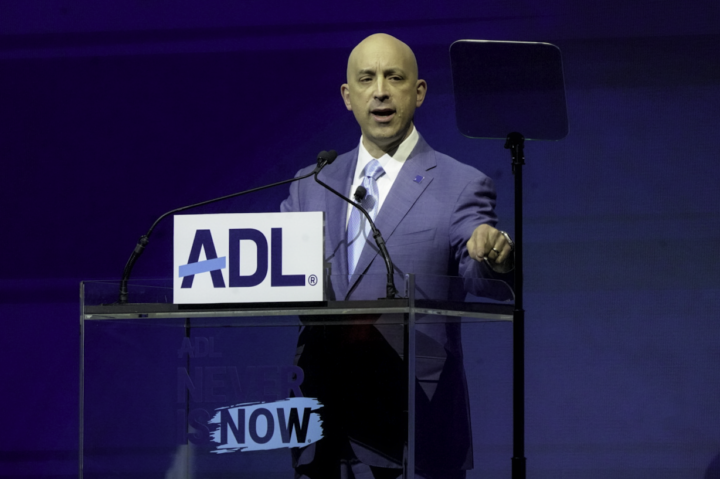
ADL CEO Jonathan Greenblatt speaks at the 2026 Never is Now summit.
Jonathan Greenblatt, CEO of the Anti-Defamation League, called out two Democratic lawmakers from the main stage of the organization’s Never is Now conference in Manhattan on Monday, accusing them of perpetuating antisemitism.
“For the senior senator from Maryland — a state with one of the largest, most active and most observant Jewish populations in the country — he blamed AIPAC, which he slandered as ‘un-American,’” Greenblatt said during his State of Hate address, referring to Sen. Chris Van Hollen’s (D-MD) address at the J Street convention where he attacked the pro-Israel advocacy group earlier this month.
“Then, there is the U.S. congressman who stated that he stands against the ‘neoconservatives’ who led the U.S. into the current war [with Iran] and instead is ‘proud to stand’ with Hasan Piker, one of the most outspoken, virulent antisemitic influencers in the world … who the congressman described as one of the representatives of the ‘new moral order,’” continued Greenblatt, a reference to Rep. Ro Khanna (D-CA).
Van Hollen and Khanna have previously faced blowback from Jewish leaders and centrist Democrats for their antagonistic rhetoric.
“Other elected officials fell over themselves to make big splashy announcements of not taking money from the largest pro-Israel organization in the country — but seemingly have no problem taking money from anyone else,” Greenblatt added.
In an apparent reference to a recent speech by conservative New York Times columnist Bret Stephens, in which he questioned the necessity of Jewish civil rights groups like the ADL, Greenblatt made the case that fighting antisemitism and building thriving Jewish communities should not be mutually exclusive.
“Recently, some have argued that we need to choose between ‘fighting antisemitism’ or ‘building Jewish life,’” he said, apparently alluding to Stephens’ call last month for the American Jewish community to dismantle the ADL and reallocate its ample communal resources to building Jewish identity, rather than combating antisemitism.
“But they got it wrong. Security and identity aren’t competing priorities; they’re inseparable preconditions for the flourishing of Jewish life in an open society,” continued Greenblatt.
As America’s 250th anniversary approaches this summer, Greenblatt said that fighting antisemitism does not only protect Jews but is also a fight to “save America itself … to keep this incredible, 250-year experiment alive and thriving.”
The address, opening the two-day conference which is being attended by about 4,000 people, was followed by a conversation between Greenblatt and Rev. Samuel Rodriguez, a prominent American evangelical leader.
The Latino Christian community “will not tolerate” antisemitism, said Rodriguez, president of the National Hispanic Christian Leadership Conference, the largest Hispanic Christian organization in the country.
He said that his pledge comes as “sectors and segments of the evangelical community have unfortunately [started] to advance a narrative that is antisemitic.”
The ADL and NHCLC announced a partnership in October aimed at combating antisemitism and deepening Hispanic-Jewish solidarity.
Greenblatt called the collaboration “one of the most important undertakings I have had the privilege to be a part of.”
“The bigots are afraid of this kind of alliance,” said Greenblatt. “They’re afraid of Jews and Christians coming together to push back on the bigotry.”
Rodriguez, who leads a Pentecostal church in Sacramento, Calif., added that “education of our children at an early age” is the first step in combating hate.
“We engage the culture in order to reform the culture, and push back on manifestations of hate in society, [including on] college campuses.”
This year’s Never is Now summit comes as Jewish communities continue to see a persistent rise of antisemitism that started after the Oct. 7, 2023, terrorist attacks, and has been sparked anew by Israel’s ongoing war with Iran. Last week, a synagogue in Michigan faced an attempted terrorist attack, and several Toronto synagogues were targeted in shootings the week prior.
‘If you can't stand against that, you don't stand for a f***ing thing,’ the former Obama admin official said
Cheriss May/NurPhoto via Getty Images
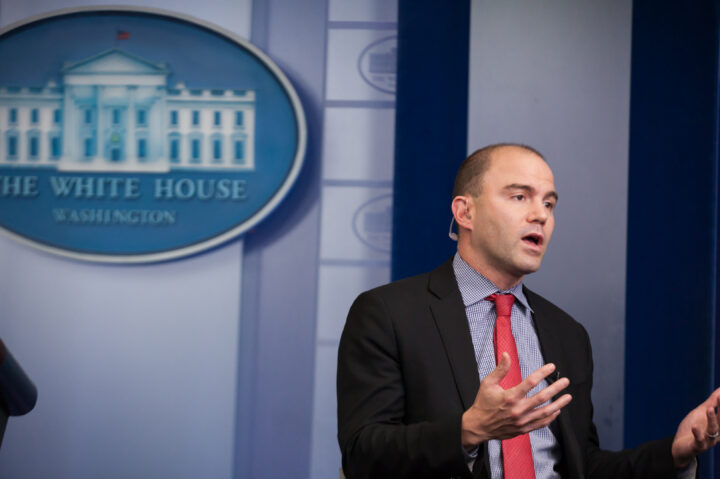
Ben Rhodes, then-deputy national security advisor to President Barack Obama, participates in an interview with press at the White House in on Wednesday, December 14, 2016.
A former top Obama administration foreign policy official said on Wednesday that any Democratic lawmakers who vote to support U.S. strikes on Iran should be primaried.
“If you vote for the funding of this war, you should be primaried. I don’t want you in the Democratic Party,” said Ben Rhodes, co-host of the “Pod Save the World” podcast and former deputy national security advisor under President Barack Obama.
He was referring to Reps. Greg Landsman (D-OH), Henry Cuellar (D-TX), Jared Golden (D-ME) and Juan Vargas (D-CA), the only four Democrats to vote against a war powers resolution last week that sought an immediate end to the U.S. military campaign in Iran.
Rhodes, who was one of the biggest boosters of the 2015 Iran nuclear deal and a leading Israel critic on the left, said the Democratic Party should have a big tent — but that support for President Donald Trump’s actions in Iran falls outside of that tent.
“I would like to have a big tent in this party. I think there should be people with different ideas of how to get health care, different ideas of taxation,” Rhodes said to co-host Tommy Vietor. “To me, this is not a left-center issue. This is a right and wrong issue. Morally, what do we stand for as Democrats?”
Rhodes suggested that Democrats who cast a vote in support of the war are doing so because of donor pressure.
“How is anybody going to trust you to fight for their health care if you’re too afraid to cast a vote, that someone might call you weak or some donor might call you and complain?” Rhodes asked. “If you as a Democrat can’t say that I am against a war and I’m not going to fund a war that is being launched by an authoritarian president, illegally, with no rational basis that is explained to the American people, that has already unleashed these consequences, if you can’t stand against that, you don’t stand for a f***ing thing.”
Speaking at J Street’s national summit, Sen. Tim Kaine also said ‘virtually all’ Democratic senators now seek the group’s endorsement

Drew Angerer/Getty Images
Sen. Tim Kaine (D-VA) speaks to reporters on his way to a classified all-Senate briefing
Democratic lawmakers speaking at the Monday evening gala of J Street’s Washington conference argued that the joint U.S.-Israel operation that killed many top Iranian leaders, including Supreme Leader Ayatollah Ali Khamenei, would ultimately make Iranians, Israelis and the United States less safe.
“I do not believe that the United States or Israel should be leading a regime change operation in Iran. It will not bring safety or security to the people of Iran, to the region or to the United States, and it’s important that all of us here in this room continue to stand up and say that,” Rep. Sara Jacobs (D-CA) said. “We’ve lived through this before. Regime change often backfires. It creates power vacuums, leads to even harder-line leaders and civil wars and failed states.”
She also argued the U.S. set Iran on the path toward the current regime’s leadership by backing the 1953 overthrow of the Mossadegh government in Iran.
Expressing her support for the war powers resolution vote taking place in the House later this week, Jacobs said, “We can’t be equivocal, that we have to say strongly and clearly that what is happening is not OK, and it is not making Jews in Israel or here in the United States any safer.”
Sen. Adam Schiff (D-CA) said that he does not mourn Khamenei nor the other Iranian leaders who have been killed, “but we have not just cut off the head of the snake. We have almost certainly kicked up a hornet’s nest, one with remaining capabilities and appetite for revenge. Now we ask, what comes next?”
He said that the administration entered into the operation without any clear plan to effect the regime change it appears to desire, nor how to protect and support the Iranian civilians the Trump administration has urged to rise up against the regime.
Sen. Tim Kaine (D-VA), the lead sponsor of the war powers resolution set for a vote this week in the Senate, made the case for his legislation, saying, “That vote in front of the American people is a way of clarifying what’s at stake and deciding if the mission is so important that we should risk our own kids’ lives.”
Former House Speaker Nancy Pelosi (D-CA) said that the “vote is not about whether we should go in or not. The vote is that you cannot go in unless Congress gives you the [authority],” framing the vote as an affirmation of Congress’ constitutional power to declare war.
Kaine emphasized that J Street’s influence within the Democratic Party has grown, saying that “virtually all” Democratic senators now seek the group’s endorsement.
Throughout the Purim-themed evening, speakers repeatedly drew comparisons between Trump, Israeli Prime Minister Benjamin Netanyahu and members of Trump’s administration and Haman, the villain of the Purim story.
“This is a moment not unlike the scenes that gave us the story of Purim: a hedonistic king less interested in justice than in his own pride and pleasure. A ruler flanked by evil advisors, his toxic grip on power unleashing danger and violence,” Schiff said. “It is all too reminiscent of the plots against the Jews driven by him.”
And in an unusual moment, Kaine capped off his remarks with a sing-along rendition of Woody Guthrie’s “This Land is Your Land,” playing his harmonica through the choruses.
J Street members are heading to Capitol Hill on Tuesday to lobby members of Congress to vote in favor of constraining military action in Iran
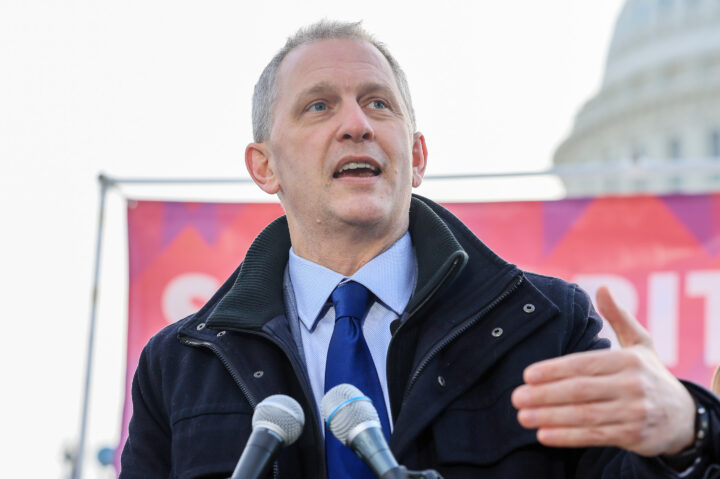
Jemal Countess/Getty Images for Protect Borrowers
Rep. Sean Casten (D-IL) speaks on Capitol Hill on February 09, 2026 in Washington, DC.
Democratic members of Congress addressing J Street’s national convention in Washington on Monday used the occasion to rally support for long-shot resolutions coming before the House and Senate this week that will attempt to end U.S. military strikes against Iran.
“The president’s refusal to pursue consent from Congress, as required by the Constitution, is perhaps his most grievous assault on democracy, and we should not let it stand,” Sen. Chris Murphy (D-CT) said to the 1,500 activists gathered at J Street’s morning plenary.
Rep. Sean Casten (D-IL) told the crowd that he expects to see “very robust, possibly unanimous support” from congressional Democrats on the measures, which would put an immediate end to U.S. operations against Iran.
“I’m not the whip, but certainly the caucus seems to be very on board with asserting their constitutional authority,” Casten said. Even some hawkish Democrats, like Sen. Jacky Rosen (D-NV), are expected to vote in support of the measure, although a handful of Democrats, including Reps. Josh Gottheimer (D-NJ) and Jared Moskowitz (D-FL), have already said they will oppose it.
Casten was speaking alongside Rep. Madeleine Dean (D-PA), both of whom had recently returned from a J Street-sponsored trip to Israel and the West Bank. Dean said President Donald Trump should have used his State of the Union address last week to more directly discuss the coming attacks on Iran.
“Wouldn’t that have been the time, at least by then, to begin messaging to the American people what the vision and the mission was — if he was going to take this extraordinary military action, and of course, to message it to Congress, to say to Congress, ‘I recognize your role’?” Dean said. “We are a constitutional democracy. We are supposed to actually make sure that the people closest to the ground, closest to the people, have some say.”
The war powers resolutions are likely to fail, given Republicans’ control of Congress and their overall support for the military action ordered by Trump over the weekend. Even if passed, they would need two-thirds support to override an inevitable presidential veto.
Sen. Brian Schatz (D-HI) told the audience that even if the war powers resolutions are defeated, Congress still has a role to play in further authorizing U.S. military strikes against Iran.
“Republicans defeating the resolution is not a war authorization. The law is clear: Congress needs to explicitly authorize war through an authorization of the use of military force,” said Schatz. “Congress has a duty not just to check a reckless and lawless president, but also to represent the will of the people. And the people want nothing to do with this.”
On Tuesday, J Street members will go to Capitol Hill to lobby lawmakers to oppose the strikes and to vote in support of the war powers resolutions.
“Elected officials are elected for a reason: to put themselves on the record at important moments, and this is one of those moments,” J Street President Jeremy Ben-Ami told reporters on Monday. “We urge senators and congressmen to vote in favor of a war powers resolution when it comes to the floor.”
Most Democrats are pushing for a war powers resolution next week, amid ongoing military operations

Win McNamee/Getty Images
The American flag flies in front of the U.S. Capitol on February 28, 2026 in Washington, DC. U.S.
A number of Republican lawmakers rallied behind President Donald Trump’s military strikes against Iran on Saturday, while leading Democrats expressed quick and strident opposition to the administration’s decision to attack Iran.
Democrats are also demanding Congress reconvene promptly next week to vote on war powers resolutions to block further military operations in Iran without congressional approval. The resolutions were already expected to come up for votes in the coming week.
A few Democratic lawmakers sounded more open-minded about the attack against Tehran. Sen. John Fetterman (D-PA), one of the few foreign policy hawks in his party, said the president “was absolutely” correct to attack Iran in an appearance on Fox News. “God bless the United States, our great military, and Israel,” Fetterman said.
Rep. Greg Landsman (D-OH), who told Jewish Insider earlier this week that limited strikes on Iran could be necessary and productive, echoed that stance on Saturday. He said that he would oppose the war powers resolution.
“I hope these targeted strikes on the Iranian regime’s military assets end the regime’s mayhem and bloodshed and makes way for this lasting peace in the region,” Landsman said. “Thank you to our brave service members who are leading this effort, and I pray their work will finally free the people of Iran and those in the region from more violence or war. May peace emerge from all of this.”
Rep. Josh Gottheimer (D-NJ), who had been planning to oppose the war powers resolution, praised the attack while highlighting the administration’s obligations under the War Powers Act, which limits the duration for which the president can unilaterally commit forces to armed conflict without congressional approval.
“Today, the United States, with our key democratic ally Israel, took decisive action to defend our national security, fight terror, protect our allies and stand with the Iranian people who have been massacred in the streets for demanding freedom from the murderous Iranian regime,” Gottheimer said. “I applaud the extraordinary bravery and professionalism of our servicemembers and pray for their safety as Iran and its terrorist proxies retaliate against American bases and our partners in the region.”
“Confronting the Iranian threat is essential to America’s national security and to global stability. The world is safer because of the courage and skill of our service members. I am praying for their safety and the safety of all of our allies who have been targeted by Iranian retaliation,” he continued.
Sen. Jacky Rosen (D-NV) offered more muted support for the operation, praising U.S. servicemembers while saying she “stand[s] with the Iranian people in their hope for a better future and will continue to work in a bipartisan way in Congress to provide them the support they need.” She called for an immediate and detailed briefing on the administration’s plans, and highlighted Iran’s long record of malign activity and attacks on its own citizens.
But Rosen also warned against a protracted conflict and criticized the lack of congressional authorization.
Rep. Tom Suozzi (D-NY), among the most moderate Democrats in the House and a potential swing vote on the war powers resolution, said Trump needs to seek congressional authorization for the operation, while offering support for the administration’s goals.
“I agree with the President’s objectives that Iran can never be allowed to obtain nuclear capabilities. The President must now clearly define the national security objective and articulate his plan to avoid another costly, prolonged war in the Middle East,” Suozzi said. “Iran remains the leading state sponsor of terrorism in the region and must never be allowed to obtain a nuclear weapon. Preventing that outcome is vital to our national security, the safety of our allies, and the stability of the Middle East.”
Most of the leading voices in the Democratic Party, however, are rallying against the Iran attack.
Sen. Tim Kaine (D-VA), who is leading a war powers resolution in the Senate that he planned to call up for a vote next week, said in a statement, “Every single Senator needs to go on the record about this dangerous, unnecessary, and idiotic action,” calling the strikes a “colossal mistake,” accusing the president of having “learned nothing from decades of U.S. meddling in Iran and forever wars in the Middle East” and of being “mentally incapacitated.”
Rep. Ro Khanna (D-CA), who is leading similar legislation in the House, said that “the American people are tired of regime change wars that cost us billions of dollars and risk our lives. We don’t want to be at war with a country of 90 million people in the Middle East.”
Rep. Thomas Massie (R-KY), one of the few GOP isolationists in Congress and Khanna’s cosponsor on that resolution, also said he opposes the operation.
“This is not ‘America First,’” Massie said. “When Congress reconvenes, I will work with @RepRoKhanna to force a Congressional vote on war with Iran. The Constitution requires a vote, and your Representative needs to be on record as opposing or supporting this war.”
Rep. Warren Davidson (R-OH), another isolationist-minded Republican who indicated this week that he was leaning toward voting for the war powers resolution, sent similar signals on Saturday.
“We need a government small enough to fit within the Constitution. We need a government effective enough to solve problems and serve its own people. Or, we need a new Constitution,” Davidson said.
The House is not scheduled to reconvene until Wednesday.
Rep. Jim Himes (D-CT), the top Democrat on the House Intelligence Committee, who was one of the handful of congressional leaders briefed on the administration’s plans earlier this week, said that “everything I have heard from the administration before and after these strikes on Iran confirms this is a war of choice with no strategic endgame.”
He said he expressed his concerns to Secretary of State Marco Rubio during the briefing this week.
Republicans are largely lining up behind the administration, with the exception of Massie.
Sen. Lindsey Graham (R-SC), who had urged Trump to take action, praised the administration, saying Trump had “met the moment.”
“My mind is racing with the thought that the murderous ayatollah’s regime in Iran will soon be no more. The biggest change in the Middle East in a thousand years is upon us,” Graham said. “The likelihood of normalization between Saudi Arabia and Israel getting back on track is exceedingly high – a subject I brought up last week to the key players in the region who concurred if the ayatollah goes down, historic peace advances.”
Graham met with leaders in Israel, Saudi Arabia and the United Arab Emirates this month and said on Fox News on Saturday morning that he plans to return soon. Following retaliatory strikes by Iran on U.S. military facilities in several Arab states, Saudi Arabia issued a statement condemning Iran and offering its support for measures the Arab states may take in response.
“This operation has been well-planned,” Graham continued. “It will be violent, extensive and I believe, at the end of the day, successful. Again the demise of the ayatollah’s regime with American blood on its hands is necessary and more than justified.”
He later urged Arab and other allies to “get behind President Trump and go all in to ensure the ayatollah’s Iran, which has become the largest state sponsor of terrorism in the world is no more.”
Sen. Tom Cotton (R-AR), the chairman of the Senate Intelligence Committee, who was also briefed, said, “The butcher’s bill has finally come due for the ayatollahs. May God bless and protect our troops on this vital mission of vengeance, and justice, and safety,” highlighting the regime’s long record of attacks against Americans.
House Speaker Mike Johnson (R-LA) said Iran is “facing the severe consequences of its evil actions,” and said Trump had “made every effort” at diplomacy. “For decades, Iran has defiantly maintained its nuclear program while arming and funding Hamas, Hezbollah, and other internationally recognized terrorist organizations. Iran and its proxies have menaced America and American lives, undermined our core national interests, systematically destabilized the Middle East, and threatened the security of the entire West.”
“The Gang of 8 was briefed in detail earlier this week that military action may become necessary to protect American troops and American citizens in Iran. I received updates from Secretary Rubio thereafter, and I will remain in close contact with the President and the Department of War as this operation proceeds,” Johnson continued.
Other rank-and-file Democrats, including some moderates, drew parallels with the Bush administration’s war against Iraq in their criticism.
Sen. Mark Warner (D-VA), the top Democrat on the Senate Intelligence Committee, said that the strikes raise “serious legal and constitutional concerns.”
“The American people have seen this playbook before — claims of urgency, misrepresented intelligence, and military action that pulls the United States into regime change and prolonged, costly nation-building,” Warner continued. “We owe it to our service members, and to every American family, to ensure that we are not repeating the mistakes of the past. The president owes the country clear answers: What is the objective? What is the strategy to prevent escalation? And how does this make Americans safer?”
Sen. Ruben Gallego (D-AZ), an Iraq war veteran representing a GOP-leaning state, expressed concern for U.S. forces, who Trump acknowledged could be lost in the ensuing war.
“I lost friends in Iraq to an illegal war. Young working-class kids should not pay the ultimate price for regime change and a war that hasn’t been explained or justified to the American people,” Gallego said. “We can support the democracy movement and the Iranian people without sending our troops to die.”
Rep. Brad Schneider (D-IL), a co-chair of the House Jewish caucus and a key pro-Israel leader, criticized the administration’s move and said he would support the war powers resolution. “The President of the United States is not allowed to take our nation to war without authorization from Congress.”
“This is a moment of peril and opportunity,” Schneider said. “Congress must step up to meet the moment, fulfill its constitutional duties, and ensure American action — with our allies in the region and around the world — leads to a more stable and peaceful Middle East, not another generational entanglement ending in failure.”
Former Rep. Elaine Luria (D-VA), among the House’s most vocal Democratic Iran hawks while she was in office and who is now running to reclaim her former seat, also said Congress should “immediately return to Washington” to vote on Kaine’s war powers resolution.
Rep. Jake Auchincloss (D-MA) said that Trump has “no credibility on either the strategy or law guiding foreign policy” — pointing to the president’s delayed promise to Iranian protesters earlier this year that help would be coming — and said he plans to support the war powers resolution.
“I am ready to work across the aisle to craft congressionally directed strategy on Iran, especially for securing American air supremacy in the region and supporting the Iranian people’s right to self determination,” Auchincloss said. “But first congressional Republicans must call the question on this fundamental issue of war powers by voting against a reckless commander-in-chief and for the Constitution.”
Senior Democrats urged caution in any deal that would allow the Gulf kingdom to enrich uranium

Jemal Countess/Getty Images for Fair Share America
Sen. Richard Blumenthal speaks at a rally at the Capitol on April 10, 2025 in Washington, DC.
Democratic lawmakers are expressing concerns about the administration’s apparent moves toward a nuclear deal with Saudi Arabia that would allow the kingdom to enrich uranium, lacking the safeguards that were included in a similar nuclear cooperation deal with the United Arab Emirates.
There had previously been bipartisan support in Congress for including such safeguards, including intrusive International Atomic Energy Agency inspections, under an “additional protocol” of the Nuclear Nonproliferation Treaty, and the “gold standard” commitment of renouncing nuclear enrichment and reprocessing included in the UAE deal. Even Energy Secretary Chris Wright last year denied that the U.S. would allow Saudi enrichment.
Asked about the situation this week, Democrats — across a broad ideological spectrum — expressed concerns, while Republicans generally avoided commenting, saying they weren’t familiar with the administration’s apparent plans.
“I think we should be extremely cautious and scrutinize — very exactingly — any deal with Saudi Arabia that provides nuclear know-how or fuel, and certainly it has to be a part of a broader agreement for normalizing relations with Israel that expands the Abraham Accords,” said Sen. Richard Blumenthal (D-CT).
“It can’t be a separate action, apart [from] everything else that’s going on, where we need Saudi cooperation,” Blumenthal continued.
Sen. Mark Kelly (D-AZ) told JI he wasn’t aware of the terms of the proposed deal, but said that there is a “whole range” of what enrichment can entail.
“You see this with Iran,” he said. “We gave them, in the 1970s, the ability to do medical-grade enrichment. [There is a] big difference with that and enriching uranium up to 90% have the ability to then make a weapon. I haven’t looked at the proposal. I think we’ve got to be generally very careful about how we transfer this technology.”
Sen. Ed Markey (D-MA) last week accused the administration in a statement of “caving to Saudi demands and … writing a recipe for disaster with its plan to give nuclear-weapon-wannabe Saudi Arabia nuclear technology without the strongest safeguards.” He said Congress should block the deal in order to prevent a nuclear arms race in the Middle East.
Rep. Brad Sherman (D-CA), a vocal critic of efforts to allow Saudi Arabia to enrich, re-introduced legislation on Tuesday requiring a congressional vote of support for an agreement with Saudi Arabia, saying in a statement, “Any nuclear agreement with Saudi Arabia must include ironclad nonproliferation protections. … Without the strongest safeguards, we risk fueling nuclear proliferation in one of the world’s most volatile regions.”
He has previously warned that a Saudi nuclear program could ultimately be turned to target Israel should the kingdom’s stance change or the ruling family fall from power.
Previously, lawmakers on both sides of the aisle have demanded the same “gold standard” commitments from Saudi Arabia that the U.S. received from the UAE, with both the chair and ranking member of the Senate Foreign Relations Committee affirming that stance last year.
Sen. Jim Risch (R-ID), the committee chair, said last year that any nuclear deal with Saudi Arabia “has to” include the “gold standard.” He did not provide a comment this week.
Asked by JI about the latest developments, several Senate Republicans said they had not been following the situation and largely declined to comment.
A group of nine Jewish House Democrats last year also raised concerns about efforts to move toward a nuclear deal with Saudi Arabia unless “explicitly … tied to the Kingdom’s recognition of Israel and normalization of relations between the two countries.”
Andrea Stricker, a research fellow and deputy director of the nonproliferation program at the Foundation for Defense of Democracies, told JI that Israel should be “worried” about a potential nuclear deal between the U.S. and Saudi Arabia, describing it as a “stunning reversal” of longstanding U.S. policy.
She noted that the decision to disregard typical safeguards is cause for concern, warning that completing such a deal can have unpredictable consequences down the line.
“We can’t control how the Saudis will use enrichment and reprocessing in the future, even if they are a partner today,” said Stricker. “With weak safeguards in place, Riyadh could duplicate the technology and set up covert fuel-making plants for nuclear weapons.”
Jonathan Ruhe, a fellow at the Jewish Institute for National Security of America, said that Saudi Arabia cannot be trusted with a nuclear deal, adding that it is “bad politics” for the U.S. to “demand that Iran end enrichment while possibly partnering up with its rival’s enrichment program.”
“It also sends the wrong message to partners like the UAE that signed up for the gold standard deal with the United States, which rightly prohibits such activities,” Ruhe added. He warned that such a deal could “set off a regional proliferation cascade,” from actors such as Iran, Turkey and Egypt.
Simon Henderson, a senior fellow at The Washington Institute for Near East Policy, said the United States faces a delicate balancing act: pursuing a deal that could carry long-term proliferation risks while also trying to prevent Saudi Arabia from turning to rival powers for nuclear cooperation.
“The United States is trying to do what is arguably impossible: allow Saudi Arabia to acquire American civil nuclear technology while hoping that it isn’t used as a cover for being able to make an atomic bomb,” Henderson said.
Henderson downplayed concerns that the prospective deal is not explicitly tied to Saudi-Israel normalization, telling JI that normalization is “delayed rather than dead.” He also dismissed the notion that a civil nuclear agreement with Riyadh would pose a threat to Israel.
“Iran is the threat to Israel, not Saudi Arabia,” Henderson said. “Even without formal relations, Riyadh and Jerusalem are on the same page on many issues.”
Rep. Ritchie Torres: ‘Hopefully you’ll have a Democratic Party with enough successors to sustain and strengthen the U.S.-Israel relationship’
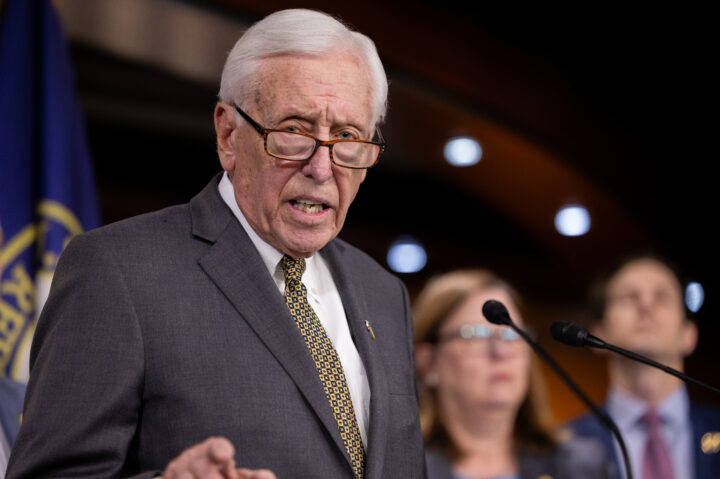
Nathan Posner/Anadolu via Getty Images
Congressman Steny Hoyer (D-MD) speaks at a press conference in Washington, DC on February 24, 2025.
Democratic lawmakers and leaders are lauding Rep. Steny Hoyer (D-MD), the longtime former No. 2 Democratic House leader, as a champion for Israel and say that his retirement, announced Thursday, will deprive Democrats of one of the leading congressional advocates of a strong U.S.-Israel relationship.
Hoyer, 86, has served in Congress since 1981, and was the second-most senior House Democrat from 2007-2023. A prominent voice respected by colleagues on both sides of the aisle, Hoyer has for years led first-term Democrats on trips to Israel with the AIPAC-affiliated American Israel Education Foundation. His retirement comes at a time of a sea change on Israel policy among Democratic lawmakers and the party base.
Though he has at times offered criticism of Israeli policies and voted — despite serious objections — for the 2015 Iran nuclear deal, Hoyer has remained among the most steadfast and outspoken Democratic supporters of Israel during the war in Gaza and was largely supportive of the U.S. strikes on Iran last June.
Rep. Ritchie Torres (D-NY) told Jewish Insider that Hoyer has “historically … been one of the guardians of the U.S.-Israel relationship within the Democratic Party.”
“He will have no replacement, but hopefully you’ll have a Democratic Party with enough successors to sustain and strengthen the U.S.-Israel relationship,” Torres continued.
“He has been a great friend to Israel. I’ve traveled to Israel with him. I’ve stood with him in the Appropriations Committee to make sure Israel gets the financial support that it needs to be secure,” Rep. Lois Frankel (D-FL) told JI. “When you look around this chamber, it’s hard to find many members who have been so long standing advocate[s] for the security of Israel.”
“You see a new wave of of members coming in on both sides who don’t really have the historic context of the importance of security for Israel — and so, yeah, he’s a big loss,” Frankel continued.
Rep. Jared Moskowitz (D-FL) told JI that Hoyer’s retirement would be a “huge loss” for supporters of the U.S.-Israel relationship.
“We’re seeing that — not just with people like [Hoyer], but other senior members — that when they leave, the people who are replacing them are not just [not] pro-Israel. They’re anti-Israel,” Moskowitz said. “What flavor of anti-Israel are we going to get? So for the pro-Israel community, it’s a whole separate concern.”
Hoyer’s suburban Maryland district is safely Democratic, and includes the eastern D.C. suburbs and the outskirts of Annapolis and Baltimore. Five candidates have already declared their candidacy in the district, and several ambitious Maryland political figures could join the race.
Former House Speaker Kevin McCarthy (R-CA) noted in a statement that the two leaders’ experience leading delegations to the Jewish state was one of the factors that united them across the partisan divide.
Brian Romick, the CEO of Democratic Majority for Israel, who previously served as Hoyer’s chief of staff and worked for the congressman for almost three decades — beginning as a teenage campaign volunteer — said that one of the critical lessons Hoyer taught him was “why America must remain a steadfast friend of Israel.”
“I helped him lead 12 congressional delegations there, ensuring that members of Congress learned not just about the important strategic relationship between the United States and Israel but also about the miracle of Israel’s very existence,” Romick said. “Those trips were powerful and transformative experiences for us. He worked relentlessly to ensure Israel had the resources it needed to defend itself by itself and fought back against attempts to undermine the U.S.-Israel relationship.”
“Our country, the Democratic Party and the pro-Israel movement are all in a better place today because of his service,” Romick continued.
In a statement, AIPAC praised Hoyer as “one of the most principled champions of the U.S.-Israel alliance to ever serve in Congress.”
“His unwavering commitment to building bipartisan support for Israel’s security, leadership on dozens of congressional delegations to Israel, and moral clarity in defending this partnership have made an impact that will be felt for generations to come,” the organization said.
Outside of his support for Israel, colleagues praised Hoyer as a leader, mentor and a steadfast champion of Congress as an institution.
“Congressman Hoyer is just a very good friend,” Frankel said. “I love him, and I’m going to miss him a lot, and his legacy is amazing. … His departure is going to be a loss in a lot of areas. I mean, the man is amazing, and his historic knowledge of this body is just awesome.”
Moskowitz said that the “institution won’t be the same without him.”
“Steny’s record on a whole host of issues — and also, when new members come in, Steny’s one of the folks that takes you on a tour of this building,” Moskowitz continued. “He brings you along, he helps train you, he also makes you understand when you’re in the majority how you govern, and when you’re in the minority, how you [can] be the loyal opposition. His presence is going to be deeply missed.”
Torres called Hoyer “an institution” who has “dedicated 45 years of his life to serving Congress.”
“You’d be hard-pressed to find someone who has a greater reverence for Congress as an institution than Steny Hoyer,” he said.
Romick lauded Hoyer for teaching him “lessons that will stay with me for a lifetime,” and said that his work with Hoyer “profoundly … shape[d] my career and my character.”
“His strong leadership and ability to build consensus to pass important legislation improved the lives of Americans,” Romick added.
Even McCarthy, in his statement, said that Hoyer “earned the mutual respect of his colleagues on both sides of the aisle — as a fair dealer, a respected leader, and an institution within the institution he most loved,” calling Hoyer “a good friend” and “the only one trustworthy in his party’s leadership team.”
“The House, his constituents in Southern Maryland he has represented for over 40 years, and our nation are indebted to the service of a statesman like Steny Hoyer,” McCarthy said.
Republican and Democratic lawmakers express hope that the new feature will expose the level of foreign involvement in domestic online political discourse

Subaas Shrestha/NurPhoto via Getty Images
A Nepali X (formerly Twitter) user opens the mobile app on September 4, 2025, following the announcement of the government to ban the social media platform in the Himalayan nation.
Republican and Democratic lawmakers alike are cheering the implementation of X’s new location feature this week — allowing users to see what countries accounts are operating from — with some expressing hope that the move will expose the level of foreign involvement in domestic online political discourse.
Lawmakers on both sides of the aisle touted the new feature as a useful way to identify if an account commenting on U.S. political matters could potentially be a foreign actor.
The new feature has exposed a variety of far-left and far-right accounts engaging in U.S. political discourse and spreading antisemitic and anti-Israel sentiments as they operate from various foreign countries.
Rep. Don Bacon (R-NE) said the information gleaned from the platform’s new feature crystalized the degree to which “foreign interests are trying to spread” antisemitic ideas in the United States. “The evidence is insightful,” Bacon, who is leading a bill with Rep. Josh Gottheimer (D-NJ) aimed at addressing antisemitism on social media, told Jewish Insider.
“On one hand I’m glad much of the antisemitism poison is not coming from the U.S., but it is alarming that so many foreign interests are trying to spread that poison by pushing it in the U.S. and masquerading as Americans,” the Nebraska Republican continued. “We need to keep informing Americans that much of the antisemitism is coming from abroad.”
Several lawmakers argued that the feature would help with the broader effort to prevent worsening domestic partisan divides, especially those fueled by U.S. adversaries.
“Foreign adversaries have spent years flooding social media with hate-filled and antisemitic propaganda to divide Americans,” Sen. James Lankford (R-OK), the GOP co-chair of the Senate Bipartisan Task Force for Combating Antisemitism, told JI. “Americans deserve to know which accounts are run from abroad so we know the true source of these narratives.”
Rep. Tom Suozzi (D-NY), who represents a Trump district and has been critical of X owner Elon Musk, said in a statement, “I have always suspected that many anti-Israel, antisemitic, Jew hate accounts are promoted by our adversaries.”
“Beijing, Moscow and Tehran know they cannot defeat us economically or militarily, so they exploit controversial issues, like Israel and antisemitism, and try to divide,” Suozzi told JI. “We must defend America by pushing back on external adversaries seeking to divide us internally.”
Others noted in statements to JI that ensuring transparency from major social media platforms was a necessary step in combating the rise in online antisemitism.
“Transparency on social media is crucial to fighting misinformation and antisemitism online. We’ve seen cases of foreign actors like Russia, China and Iran attempting to use these platforms to sow division and spread hate,” Gottheimer told JI. “I am glad they implemented this change and hope they will work with Congress to take steps to fight antisemitism and prevent malicious foreign influence.”
Rep. Laura Friedman (D-CA), who led a letter to Defense Secretary Pete Hegseth in July about X’s AI program Grok expressing antisemitic and pro-Nazi ideas, told JI in a statement, “This transparency is an important step. No matter what side of the aisle you’re on, bad actors spreading antisemitic narratives to divide Americans is a real threat. There’s much more tech companies should do to expose and stop this manipulation.”
Other Republicans also commented on the new feature this week.
Sen. Ted Cruz (R-TX), who has become a leading voice targeting right-wing antisemitism, posted on X on Tuesday that “America-hating foreign bots are at it again,” in response to a tweet from an account that is based in South Asia, according to the new location feature.
Former U.S. Ambassador to the U.N. Nikki Haley tweeted her support for the new service, writing on Tuesday, “I have long said foreign actors are using social media to poison our politics and divide Americans. The location feature on X is a huge win for transparency and American security. Other social media platforms should do the same.”
Please log in if you already have a subscription, or subscribe to access the latest updates.
 Continue with Google
 Continue with Apple