






















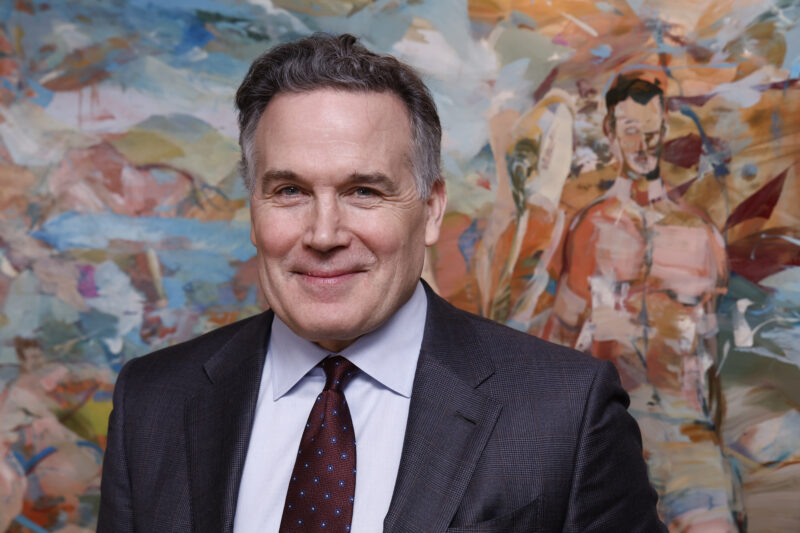
















Plus, Moskowitz opens up about anti-Israel bullying
Leon Neal/Getty Images
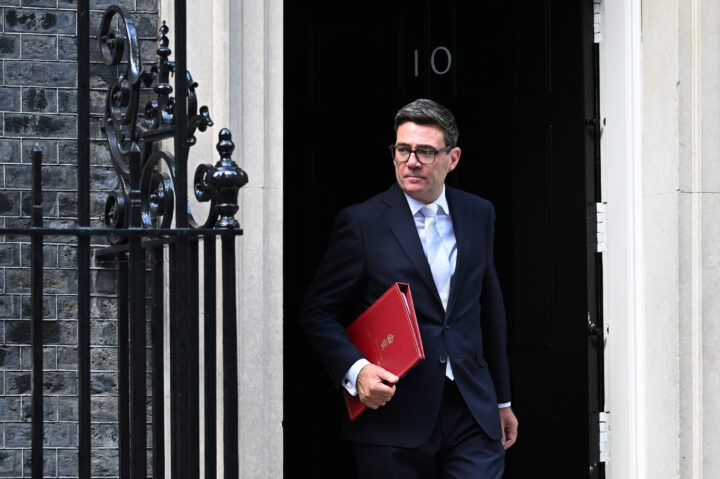
Prime Minister Andy Burnham departs 10 Downing Street to address the House of Commons on Sept. 1, 2026 in London, England.


 Add JewishInsider on Google
Good Tuesday morning.
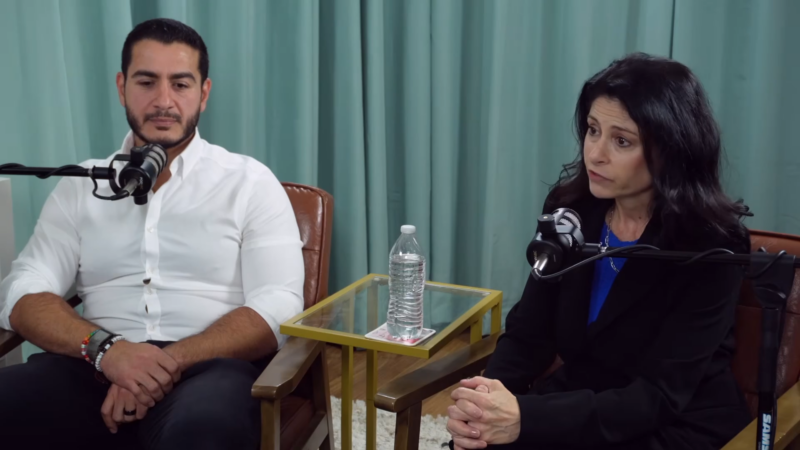
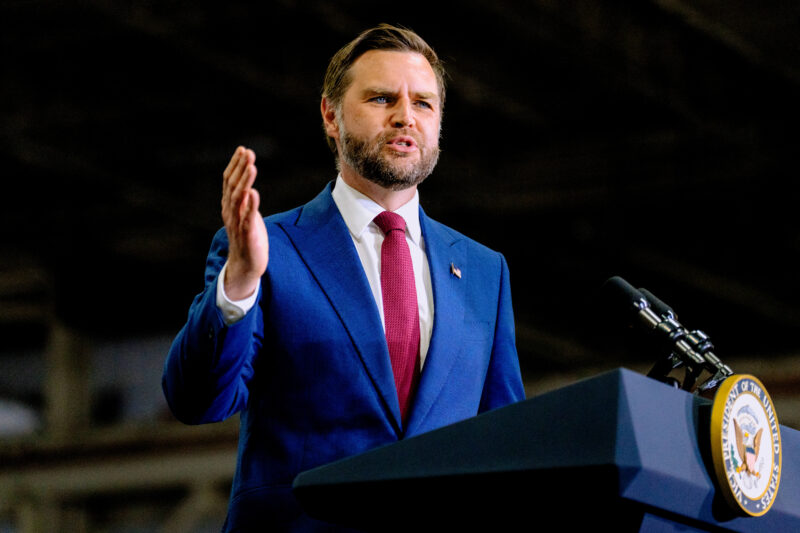
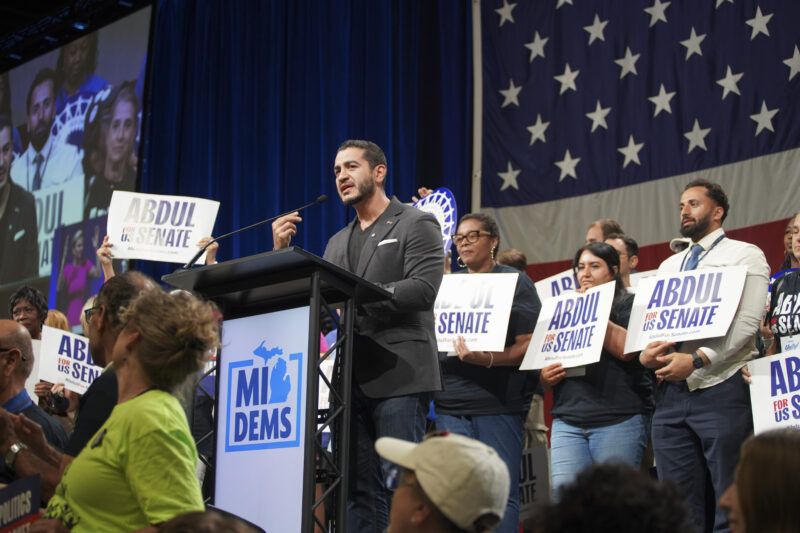
IIn today’s Daily Kickoff, we cover comments by Rep. Mike Collins (R-GA) at the Republican Jewish Coalition’s annual leadership summit in Las Vegas and preview Vice President JD Vance’s fireside chat at the event tonight. We talk to Jewish Democrats in Michigan about Democratic Senate nominee Abdul El-Sayed’s apology for equivocating in response to a terrorist attack against a Michigan synagogue in March, and spotlight New York City Council Speaker Julie Menin and City Comptroller Mark Levine’s upcoming appearances on the Style Across the Aisle runway at the Metropolitan Opera House next week. Also in today’s Daily Kickoff: Brian Poindexter, Eyal David and Brett McGurk.
Curated by Israel Editor Tamara Zieve and U.S. Editor Danielle Cohen-Kanik.
Today’s Agenda
British Prime Minister Andy Burnham is expected to announce sanctions against Israeli settlements in the West Bank today, including a trade ban on goods produced in the area, in what would be a significant escalation of hostilities from the recently elected U.K. government towards Israel.
Israeli Foreign Minister Gideon Sa’ar said that “Israel will act” against any sanctions, but did not offer any details about what the Israeli response would be. Finance Minister Bezalel Smotrich called for the expulsion of Britain’s ambassador from Israel, while National Security Minister Itamar Ben Gvir said Israel should recognize Argentina’s sovereignty over the disputed Falkland Islands, which are held by Britain.
The announcement will be delivered by new U.K. Foreign Secretary Ed Miliband, as part of what The Guardian reports as the new Labour government’s “broad reset of the UK’s relations with Israel.”
Meanwhile, Britain published legislation on Tuesday to toughen sanctions on Iran.
In Germany, embattled German Chancellor Friedrich Merz pledged to fight on as his country’s leader despite his center-right Christian Democratic Union party suffering an embarrassing defeat to the far-right Alternative for Germany in a regional election over the weekend. It is still unclear whether the AfD party — whose leaders have minimized the Holocaust and used Nazi slogans — will be able to form a governing coalition in Saxony-Anhalt, a small state of 2.1 million in eastern Germany.
The American Jewish Committee said on X that the win “marks a grim milestone,” and noted that AJC Berlin has been “sounding the alarm on the AfD’s rampant, intrinsic, and foundational antisemitism that is deeply embedded in its authoritarian-nationalist politics.”
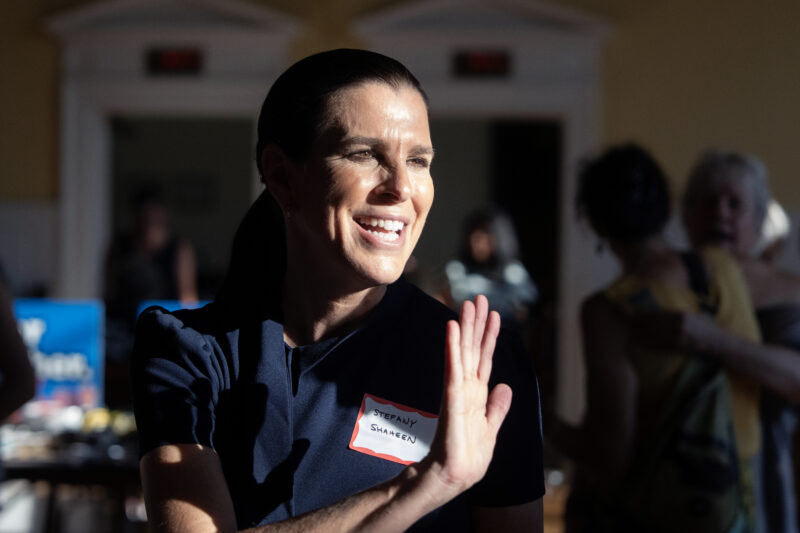
Voters in New Hampshire are heading to the polls today for the state’s primary elections. The most competitive contest is the Democratic primary for New Hampshire’s 1st Congressional District, where military veteran Maura Sullivan is looking to fend off a challenge from Stefany Shaheen, the daughter of Sen. Jeanne Shaheen (D-NH), who has run as an outspoken critic of Israel and pro-Israel donors. Read more from JI’s Marc Rod below.
The 81st session of the U.N. General Assembly opens today in New York, though the high-level meetings of world leaders do not begin for several more weeks.
Reps. Josh Gottheimer (D-NJ) and Elise Stefanik (R-NY) will appear this evening at Vanderbilt University to speak with Chancellor Daniel Diermeier.
The U.S. Embassy in Jerusalem is hosting a “Freedom 250” celebration in partnership with the Museum of Tolerance Jerusalem this week in honor of the U.S.’ semiquincentennial.
The National AI Directorate at the Israeli Prime Minister’s Office is convening AI industry leaders, entrepreneurs and leading deep-tech companies in Tel Aviv today for what is being billed as the “First National Physical AI Conference” to discuss turning Israel into a leader of physical AI.
The third annual Hili Forum is continuing in Abu Dhabi, United Arab Emirates, where policymakers and experts are convening to discuss the growing role of the Gulf states in Middle East geopolitics. The forum is organized by the Emirates Center for Strategic Studies and Research (ECSSR) and the Anwar Gargash Diplomatic Academy (AGDA).
Tonight, Dara Horn will speak in conversation with author Coleman Hughes about her new book, The Final Solution to the Jewish Question: A Love Story for the Living, at 92NY in New York City in collaboration with UJA-Federation of New York.
One Thing To Know
PRESSURE CAMPAIGN
By Marc Rod
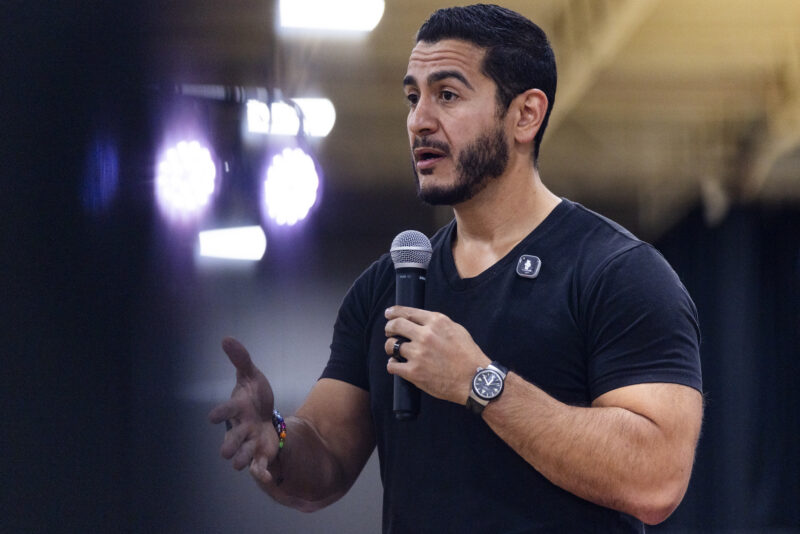
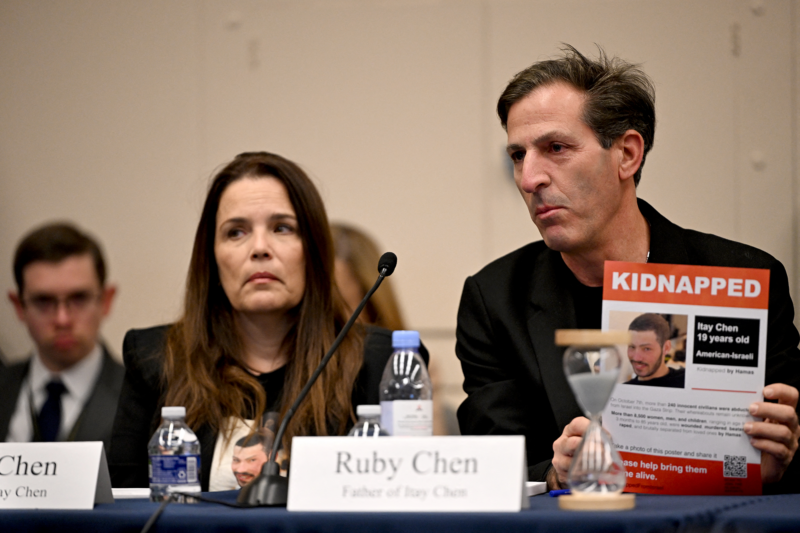
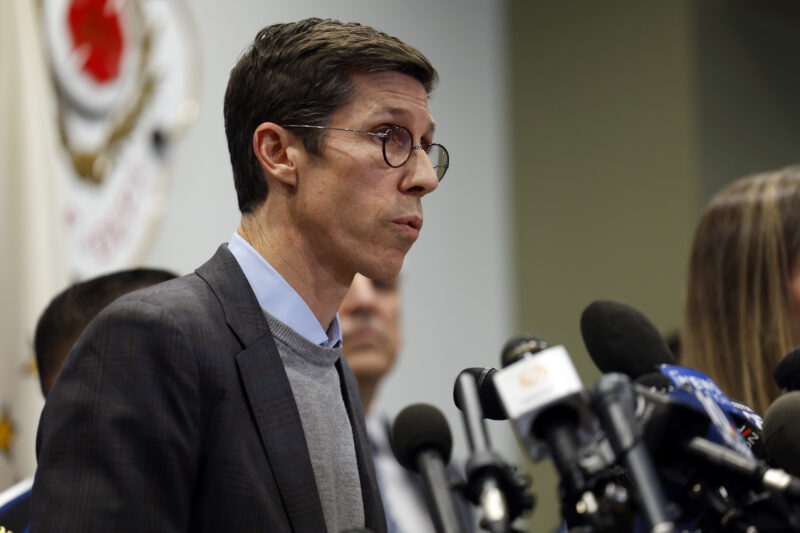
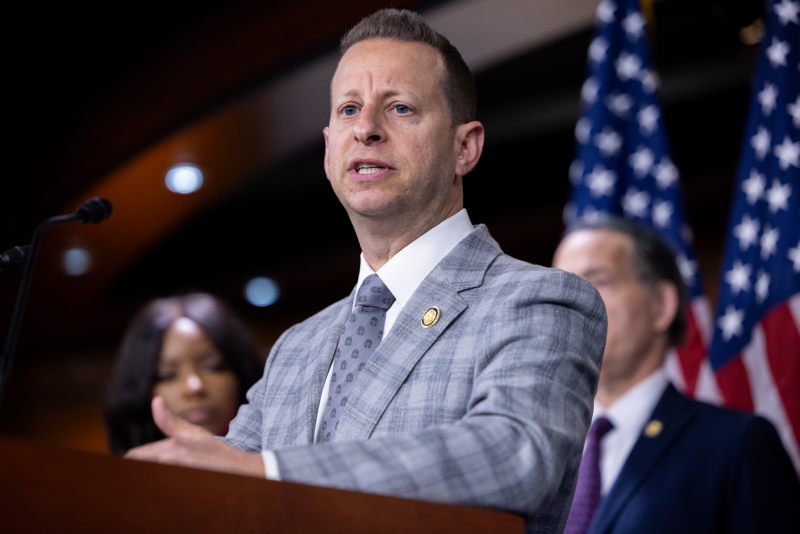
For Rep. Jared Moskowitz (D-FL), the Democratic caucus has become an increasingly lonely place for those who remain staunchly pro-Israel, with what he described as bullying, harassment and threats from the anti-Israel camp contributing to the shift away from Israel among Democratic lawmakers.
“What is it like to be in the caucus? It’s become lonely,” Moskowitz said during a wide-ranging interview with Jewish Insider in his Capitol Hill office last week. “None of my colleagues are mean to me, but it is an ostracizing feeling. There’s no doubt that the Democrats that are super pro-Israel, in general, feel somewhat ostracized, and how could you not?”
He said that the “mushy middle” of the party is being pushed left, explaining that he has had colleagues tell him that consultants have told them that, in order to win reelection, they’ll need to reject AIPAC or vote against pro-Israel legislation or express opposition to Israeli missile-defense systems.
The Big Reads
GRANITE STATE GAMBIT
Stefany Shaheen, the daughter of Sen. Jeanne Shaheen (D-NH), has been attacking AIPAC as a central message of her campaign in the closing days of her congressional primary. But unlike some other Democrats who have used attacks against Israel to boost fortunes with the progressive base, Shaheen has fallen behind her primary opponent, military veteran Maura Sullivan, who holds a narrow lead in the latest public polling, Jewish Insider’s Marc Rod reports. Sullivan, who entered the race as a supporter of Israel, has also taken a more critical turn, supporting blocking at least some offensive weapons sales to the Jewish state.
PAPPAS UNDER PRESSURE
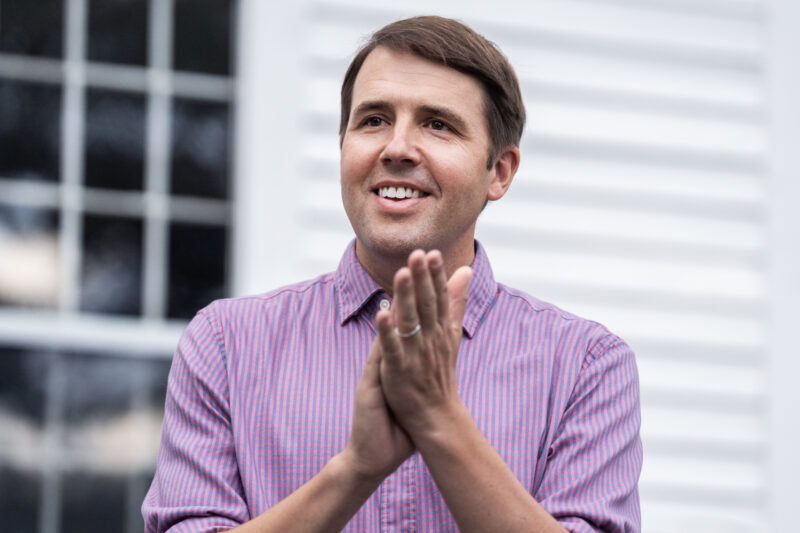
Moderate Rep. Chris Pappas (D-NH) remains favored to win the New Hampshire Democratic Senate primary, but the race is shaping up to be more competitive than expected, both in the Democratic primary and in the general election, Jewish Insider’s Marc Rod reports. In the primary, Pappas’ progressive challenger, Karishma Manzur, has been gaining ground against him, and leveling attacks related to Pappas’ past support from AIPAC and backing of the U.S.-Israel relationship. Pappas has subtly recalibrated his foreign policy views during the primary.
THREADING THE DIVIDE
In the upcoming Democratic mayoral primary in Providence, R.I., on Wednesday, Israel and antisemitism have claimed prominence as unusually divisive sources of debate for a municipal race, raising concerns among Jewish leaders who worry the focus on Middle East policy in particular will only contribute to further polarization on a sensitive issue, Jewish Insider’s Matthew Kassel reports. The election pits Mayor Brett Smiley, 47, a first-term incumbent who converted to Judaism while in office in 2024, against state Rep. David Morales, a 27-year-old democratic socialist backed by Sen. Bernie Sanders (I-VT) and leading progressive groups including the Working Families Party.
The Rundown
MUM’S THE WORD
Mamdani’s Mensch
COST CRISIS
On Our Radar
● The Live Briefing. Word on the street, clips, podcasts and quick updates — the items we’re tracking all day in our Live Briefing on the app (on Apple and Android) and website.
UAE President Sheikh Mohammed bin Zayed reportedly warned Israeli Prime Minister Benjamin Netanyahu a week and a half before the Oct. 7, 2023, terror attacks that Hamas was planning a major operation against Israel, according to journalists Shlomi Eldar and Ruth Yuval, who cited three sources familiar with the reported 45-minute-long conversation, in a Haaretz report based on their forthcoming book…
Netanyahu’s office called the investigation an “absolute lie,” saying “Prime Minister Netanyahu didn’t speak to the president of the UAE during the period in question and received no warning from him”…
Netanyahu will speak at the U.N. General Assembly in New York on Sept. 24, Israeli Ambassador to the U.N. Danny Danon announced, with a warning to New York City Mayor Zohran Mamdani to “stay tuned” after the mayor admitted he could not arrest Netanyahu when he visits the city…
Netanyahu has instructed that unauthorized settler outposts in the West Bank be dismantled, two sources told Reuters on Sunday, amid pressure from the U.S. for Israel to crack down on attacks by settlers against Palestinians…
Meanwhile, U.S. Ambassador to Israel Mike Huckabee held a rare town hall with Palestinian Americans in the West Bank town of Turmus Aya on Saturday where he denounced Israeli settlers who have carried out attacks against Palestinians as “terrorists” and said he would exert “pressure” to “get some resolution” to such issues raised by the attendees…
Former U.S. Ambassador to Israel David Friedman warned Huckabee in a post on X on Sunday that using the term “terrorists” to define Israelis — whom Friedman said are only “fight[ing] back” against the “ruthless thugs” who commit violence against Jews in the West Bank — is a “win for the anti-Israel PR machine”…
Iran’s state media said Monday that an improved ballistic missile, the Qassem Basir, marks a “turning point” in Tehran’s defense strategy under a new doctrine of taking preemptive action against threats…
Attacks by Yemen’s Houthis on Tuesday disrupted some energy facilities in Saudi Arabia and wounded more than 70 people, Saudi authorities said…
The Israeli National Security Council released its assessment of threats to Israelis and Jews traveling abroad ahead of the High Holy Days, naming as continued threats Iran and its proxies, including Hamas, Hezbollah and the Houthis, as well as ISIS and al-Qaida. The NSC advised Israelis to avoid countries including Jordan, Qatar, Somaliland and Egypt, and to avoid displaying Jewish symbols or speaking Hebrew in public…
Corey Lewandowski, while working as a top Department of Homeland Security advisor, reportedly approached Qatari and UAE officials, offering them side deals with department-related issues, according to The Wall Street Journal, which added that both countries turned him down. A representative for Lewandowski denied he had sought contracts with foreign governments…
NBC News reports that Jewish voters who have typically voted for Democrats are considering voting Republican for the first timein key Senate races over concerns over rising antisemitism and Democratic candidates’ hostility to the U.S.-Israel relationship. The story focuses on the Michigan and Texas races, where Jewish voters could make the difference in the highly competitive contests…
Progressive House members and incoming candidates are pushing House Minority Leader Hakeem Jeffries (D-NY) to move left, frustrated by his public rejection of “Medicare for All” and by the elevation of pro-Israel Rep. Jared Moskowitz (D-FL) to a Foreign Affairs subcommittee post…
Nate Hochman, a former campaign speechwriter for Florida Gov. Ron DeSantis, who was fired after he promoted a pro-DeSantis video featuring a Nazi symbol embraced by white supremacists, is now working as a senior aide and speechwriter to Secretary of State Marco Rubio,The New York Times reports…
Delta and United Airlines are restarting direct flights between the U.S. and Israel, with Delta resuming a once daily direct flight from New York’s JFK International Airport to Ben Gurion on Sunday, and United beginning two daily direct flights from New Jersey’s Newark Liberty International Airport on Tuesday. Israir is also expected to launch a direct flight from New York next month…
Volkswagen sealed a preliminary deal to convert its Osnabrück factory to produce military equipment with Israel’s Rafael Advanced Defense Systems, with Tel Aviv-based Aurelius Capital and the state of Lower Saxony taking over the plant, Bloomberg reports. Structuring the deal without a direct VW-Rafael partnership may have helped overcome resistance from the Qatar Investment Authority, a major VW shareholder that had reportedly held up the collaboration previously…
Anthropic has decided not to acquire Israeli startup Decart AI, after engaging in talks to buy the company in a deal reportedly valued at $6 billion…
Haifa-based startup HydroSight, an AI-powered marine technology company, emerged from stealth with $5 million in seed funding led by StageOne Ventures, CTech reported on Monday. The company, founded last year by Tomer Adler, Haitham Ezzy and Chen Megera, serves ports, energy companies and telecom cable operators…
The New York Times interviews “Fauda” writers Lior Raz and Avi Issacharoff ahead of the Netflix premiere of the series’ new season, which depicts the Oct.7, 2023, Hamas attacks and their aftermath…
Ambassador David Satterfield and former Rep. Chris Stewart (R-UT) have joined the advisory board of the Council for a Secure America… of mission in Rabat, Morocco, and Nairobi, Kenya…
Worthy Reads
Find more Worthy Reads in our Live Briefing via our app (on Apple and Android) and website.
A Losing Horse: Ahmed Fouad Alkhatib, a Gaza native and senior fellow at the Atlantic Council, calls in The New York Times for Western left-wing activists to abandon their romanticization of Hamas as “resistance” in favor of a Gaza rebuilt on peace and self-governance now that the group has agreed in principle to disarm. “Hamas is now facing a humiliating defeat. Despite Israeli rejection of the initial phased disarmament framework, Hamas acquiesced to the Board of Peace’s demands. All the devastation was for nothing. Large segments of the pro-Palestine community and Western left bet on a losing horse and embraced a rotten resistance narrative now invalidated by Hamas itself. The last thing Palestinians need is more denial from the left. The Palestinian national project has a rare chance to evolve toward nation-building, peace and coexistence alongside a Jewish Israel that is not about to be exterminated. Chants of ‘from the river to sea’ and the like are destructive conceits.” [NYTimes]
The Pen Handoff: The Wall Street Journal’s “Free Expression” editor Matthew Hennessey argues that New York City Mayor Zohran Mamdani insulted the memory of 9/11 victims last Friday when, after signing executive orders marking the attacks’ 25th anniversary, he handed the ceremonial pen to Police Commissioner Jessica Tisch and directed her to pass it to his chief counsel, Ramzi Kassem — a former lawyer for a Guantanamo Bay detainee. “He might as well have turned to the cameras and winked. How has it come to this? … The radical leftists taking over the Democratic Party don’t look at the victims of 9/11 as countrymen. They don’t think of that day and feel the enormity of the loss or the magnitude of the injustice. They think we had it coming. They think we’re the bad guys.” [Wall Street Journal]
Picture of the Day
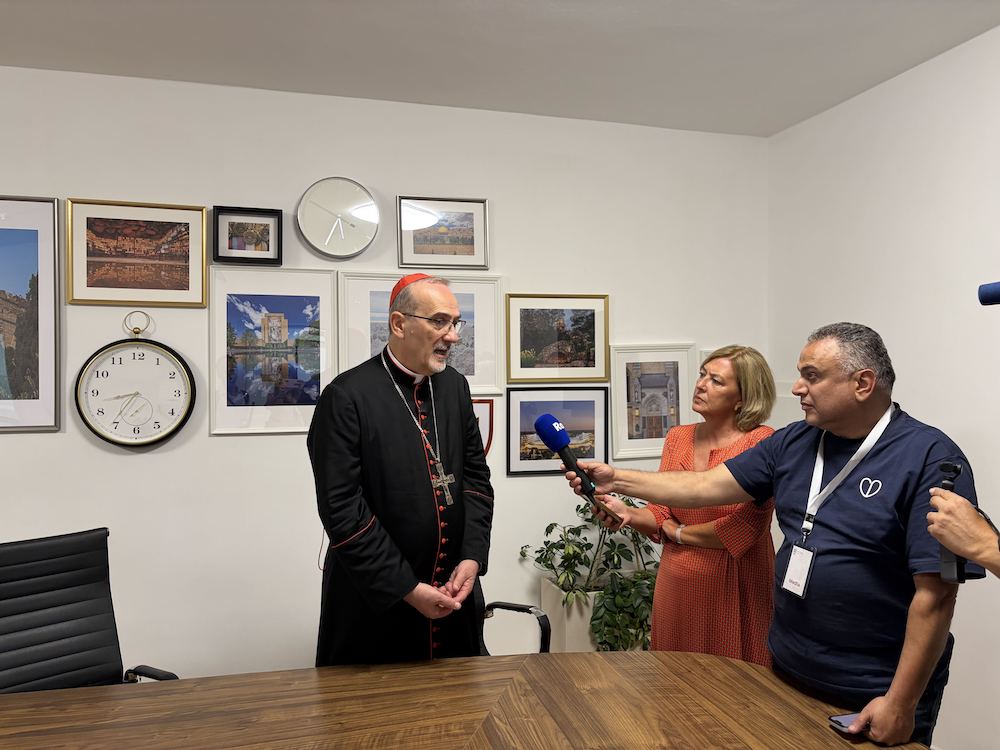
Cardinal Pierbattista Pizzaballa, the Latin Patriarch of Jerusalem, held a press conference on Monday at the conclusion of a launch event held at the University of Notre Dame, Jerusalem, for the “Within Your Gates” forum, which seeks to encourage and advance dialogue between the church, Israelis and Palestinians.
Birthdays
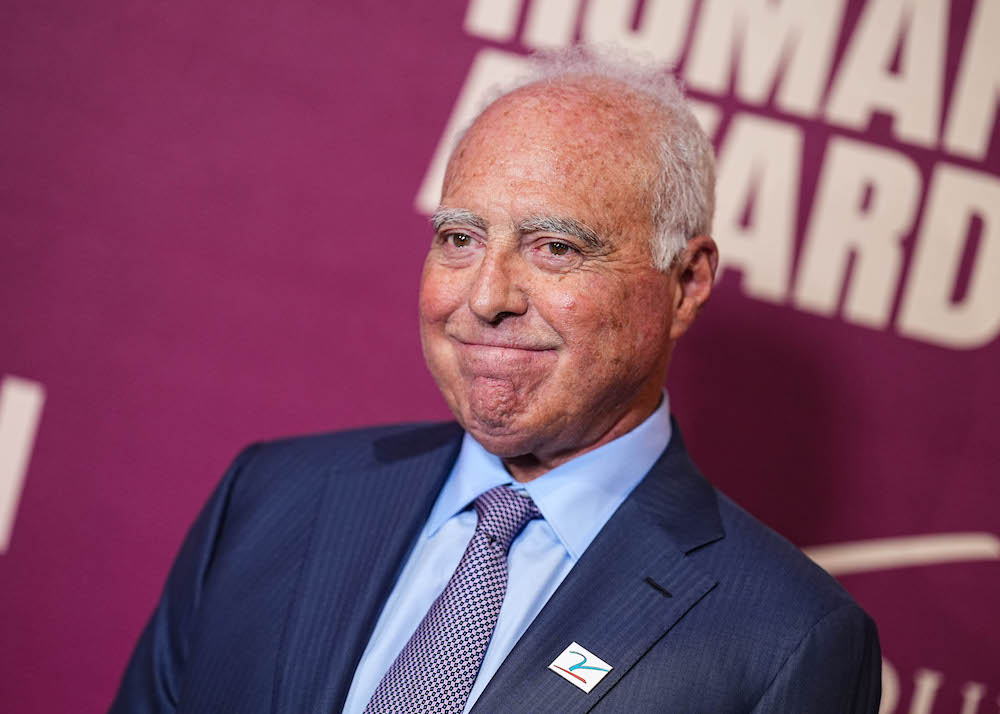
Jeffrey Lurie, owner of the NFL’s Philadelphia Eagles, winners of the Super Bowl in 2017 and 2024, turns 75
John Nacion/Getty Images
Leslie H. “Les” Wexner, chair emeritus of Bath & Body Works, turns 89
Bernie Sanders, U.S. senator from Vermont, he was a 2016 and 2020 presidential candidate, turns 85
Samuel D. Waksal, pharma executive, turns 79
Howard Mark Lorber, former chairman of Douglas Elliman and its former parent company, Vector Group, he is also executive chairman of Nathan’s Famous, turns78
Eli Aflalo, former co-chair of the Jewish National Fund, he was previously a member of Knesset, turns 74
Mindy Grossman, CEO of Weight Watchers until early 2022, turns 69
Jay W. Abarbanel, owner of Sam’s Fine Wines & Spirits in Walpole, Mass., for 41 years until 2022
Daniel Wolpert, British physician and professor of neuroscience at Columbia University, turns 63
Scott Levy, professional wrestler, known by his ring name, Raven, turns 62
James Ginsburg, founder and president of Cedille Records, a classical music label, he is the son of the late Justice Ruth Bader Ginsburg, turns 61
Zarakh Iliev, real estate developer in Russia owning 14 million square feet of retail as well as many luxury hotels and shopping centers, turns 60
James Packer, Australian businessman, turns 59
Rabbi Andrea Merow, senior rabbi of the Jewish Center of Princeton
Adam Goldsmith, Aspen, Colo., resident
Brooke Burke, actor, model and television personality, she is the host of “Penn & Teller: Fool Us,” turns 55
Robyn Faintich, founder and executive education consultant at Atlanta-based JewishGPS
Jonathan Leshnoff, classical music composer and professor of music at Towson University, whose works include “Zohar,” “Nekudim” and “Heichalos,” turns 53
Jonathan Rosen, CEO of Orchestra
Alecia Beth Moore, one of the world’s best-selling music artists, known professionally as Pink, turns 47
Asaf Ganot, head coach for the University of Hawaii men’s basketball team
Spencer Gerrol, founder and CEO at SPARK Neuro
Andrei Berman, executive vice president at Biederman LLC.
Jay Weinberg, drummer for the funk metal band Infectious Grooves, he is the son of Bruce Springsteen drummer Max Weinberg, turns 36
Serena Deutch, an MBA candidate at Tulane&
Gabby Deutch, former senior national correspondent for Jewish Insider, now a staff writer at The Atlantic
Gilad Peled, director of education at Itrek
Philip Ehrensaft
The signatories say they ‘fear the far-left and anti-Jewish elements in the Democratic party would become dominant’ if Abdul El-Sayed is elected
Paul Sancya/AP
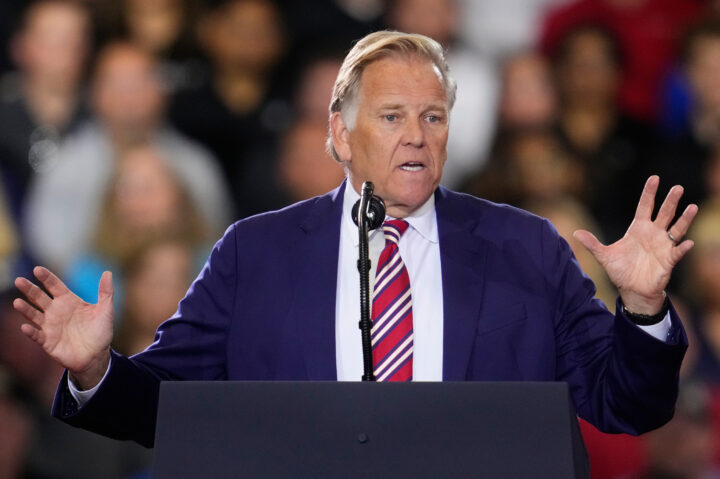
Republican Senate candidate Mike Rogers speaks before President Donald Trump at an event at the General Motors Proving Ground Monday, July 27, 2026, in Milford, Mich.
Jewish leaders in Michigan are circulating an open letter urging Jewish Democrats and independents in the battleground state to sign their names in support of former Rep. Mike Rogers (R-MI) as he faces Abdul El-Sayed, the far-left Democratic nominee for Senate whose hostile positions on Israel have alarmed many Jewish voters.
The letter, which was obtained by Jewish Insider on Wednesday and has not yet been publicized, is led by Eric Bronstein, a Detroit businessman, among others identifying as Democrats and independents.
It came to light after a fundraiser for Rogers on Tuesday night hosted by three prominent Jewish Democratic bundlers in Michigan who are likewise alarmed by El-Sayed’s candidacy. The growing efforts among Jewish Democrats to rally support for Rogers in the key Senate race illustrate the degree to which El-Sayed has alienated a sizable and politically active swing voting bloc in what is expected to be a close election.
“We know it is unusual for many Jewish voters to support a Republican candidate for senate and we understand the implications,” Bronstein wrote in a recent email courting Jewish signatories that was also reviewed by JI. “Our fellow Jewish voters need to see their friends and neighbors — including you — willing to take a stand in this specific, crucial race.”
Bronstein did not immediately return a request for comment on Wednesday.
The open letter, which the authors intend to share online once it has gained “a significant initial group of signers,” emphasizes that many signatories “have been fiercely supportive of Democratic candidates and principles.”
“All of us have felt threatened and alienated by the politics and allies embraced by Abdul El-Sayed,” the letter continues, “which has included demonization of Jews, equivocation on terrorism, exclusion of Jewish Americans from public life, and expression of implacable hatred of the world’s only Jewish nation.”
If El-Sayed were to claim victory in the general election, the authors say, “we fear the far-left and anti-Jewish elements in the Democratic party would become dominant, including in the imminent 2028 presidential race,” when Michigan will be among the early nominating states in the Democratic primaries. “We cannot allow him to become the Democratic standard-bearer or Michigan’s senator.”
While the letter calls Rogers “a friend to the Jewish community,” it clarifies the signatories’ endorsement “does not require that we agree with him on every issue or that we support” President Donald Trump. “There are other elections locally and nationally, with different candidates aligned with our values,” it says. “Here in Michigan this year and in this Senate race, our own well-being and our own voice are at stake.”
“This is a moment when each of us must speak out,” the letter states. “We’re voting for Mike Rogers. We ask other Michigan Jewish voters to join us.”
Following the primary early this month, Rogers has been working to fine-tune his outreach to disaffected Jewish voters — balancing private engagement with a key constituency alongside a more broadly calibrated public invitation for Democrats to join his coalition.
On Tuesday, Rogers posted a video testimonial to social media from a supporter in the heavily Jewish Detroit suburb of West Bloomfield who called herself a “lifelong Democrat” and said that she had chosen to cross party lines to support “candidates that actually share our values.”
The voter did not say she was Jewish but was wearing a necklace featuring a Star of David and another with the shape of the State of Israel.
Reps. Jared Moskowitz (D-FL) and Debbie Wasserman Schultz (D-FL) are the latest DSA targets
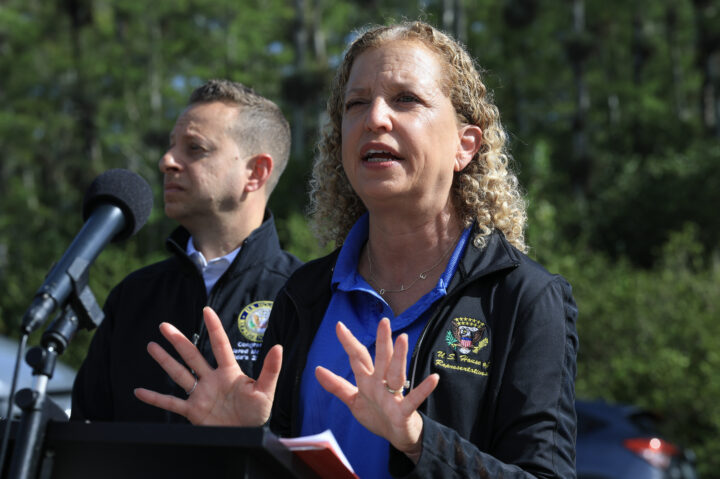
Joe Raedle/Getty Images
Reps. Jared Moskowitz (D-FL) and Debbie Wasserman Schultz (D-FL) speak to the media before a visit to the Dade-Collier Training and Transition Airport on July 12, 2025 in Ochopee, Florida.
Reps. Jared Moskowitz (D-FL) and Debbie Wasserman Schultz (D-FL), two Florida Jewish Democrats known as champions of Israel, are facing primary battles on Tuesday against Democratic Socialists of America-aligned candidates who have made criticism of the incumbents’ stances on Israel major planks of their campaigns.
Moskowitz, running in a heavily Jewish south Florida district, faces a challenge from DSA member Oliver Larkin.
Wasserman Schultz is facing a slew of Democratic opponents after redistricting broke up her previous district. She decided to run instead in a plurality Black seat, a decision that has sparked controversy in both the state and on the Hill. Her most prominent challenger is Elijah Manley, a former DSA member who converted to Judaism as an adult.
Larkin and Manley — alongside progressive Senate candidate Angie Nixon, who faces Jewish Democrat Alex Vindman — rallied on Friday with Rep. Rashida Tlaib (D-MI), one of the most prominent critics of Israel in the House. The event was forced to relocate after the original business hosting the event, The Venue Fort Lauderdale, cancelled the reservation following backlash from Democratic state Rep. Michael Gottleib and others, including far-right commentator Laura Loomer.
“Once we became aware of the full scope and nature of the event and reviewed the publicly circulated promotional materials, we immediately began addressing the matter. Due to security concerns as well as the welfare of attendees and staff, the decision was then made that the event would not proceed at our property,” The Venue said in a statement. “The Venue Fort Lauderdale is Jewish-owned and operated and our values and commitment to the Jewish community are deeply important to us.”
Local media reported that a second venue also backed out of hosting the event before organizers were able to secure a third location, where the event went forward.
Larkin, Tlaib and Nixon also attended a Shabbat event organized by Jewish Voices for Peace. JVP did not identify any Jewish leaders attending the Shabbat event on the invitation.
In spite of the national attention toward the races, longtime Democratic insiders in the state are skeptical that far-left politics is a winning formula in Florida.
“I don’t think this entire state is great for that,” Steve Schale, a longtime Florida Democratic strategist said, pointing to the defeats of former gubernatorial candidate Andrew Gillum and Sen. Bernie Sanders’ (I-VT) presidential campaign in the state.
Mitch Ceasar, a former chair of the Broward County Democratic Party and a former state Democratic chairman, agreed that far-left and anti-Israel positions aren’t likely to have much purchase in the Sunshine State. “I don’t think either one of those things plays in Florida like it would in New York or some other places.”
Neither Larkin nor Manley have picked up the prominent national endorsements of figures such as Sanders or Rep. Alexandria Ocasio-Cortez (D-NY) that have been a boon to other progressive congressional hopefuls. Manley, for his part, secured the endorsement of Rep. Ro Khanna (D-CA).
But other far-left figures have been rallying in support of Larkin in particular, including antisemitic streamer Hasan Piker; far-left Democratic nominees Darializa Avila Chevalier, Claire Valdez and Melat Kiros; former Rep. Jamaal Bowman (D-NY); childrens’ entertainer Ms. Rachel; former Ohio state Sen. Nina Turner; and anti-Israel activist Linda Sarsour.
Manley also appeared on Piker’s livestream show.
Moskowitz — despite an unrelenting barrage of attacks from Larkin’s campaign — has largely stuck to a positive message and declined to engage directly with Larkin.
But Moskowitz has said he believes that he’s “being targeted simply because of my faith and being pro-Israel” and that Larkin has embraced supporters who have “repeatedly trafficked in antisemitic rhetoric and hostility toward the Jewish community.”
Moskowitz has raised nearly $3 million, but has reserved close to $2 million of that for the general election. Larkin raised $689,000 and would enter the general election with just $170,000 left on hand.
Ceasar said Larkin’s campaign has also brought in “a lot of very anti-Jewish overtones,” which have raised particular concerns in light of the public death threats and assassination attempts that Moskowitz has faced.
Schale said he’s been dubious of polling and other data the Larkin campaign has put out that has suggested Larkin is gaining ground on Moskowitz. He added that a Larkin victory would virtually guarantee that Democrats lose the seat in November.
“I remain skeptical that that race is actually going to be all that close,” Schale said, emphasizing that the district, geographically and demographically, is very different from most of the other districts where DSA candidates have had success, including being less urban, older and heavily Jewish.
A poll from Larkin’s campaign on Aug. 5 of 403 likely voters showed Moskowitz leading Larkin by two points, while a Moskowitz poll on July 22 showed Moskowitz leading by 36 points.
Ceasar agreed that Moskowitz should win reelection, noting his strong fundraising performance and that his new district shares about half of its territory with the previous one. “Jared’s a hard worker,” Ceasar said.
He also emphasized that Moskowitz is a well-known quantity in the district since the beginning of his political career.
An individual close to Moskowitz’s campaign noted that half of the expected voters have already voted early, and that the district is generally older. The district is also 25% Jewish and 25% Hispanic — mostly of Cuban and Venezuelan ancestry, populations that are generally hostile to socialist policies. The source noted that the district is deeply purple — split around evenly among Democrats, Republicans and Independents.
All of those factors are likely to favor Moskowitz. There’s also been an effort among Republican-leaning Orthodox Jewish voters to re-register as Democrats to vote for Moskowitz in the primary.
Another source who requested anonymity to speak freely told Jewish Insider they expect Moskowitz to win, but said that his one potential vulnerability is that he’s been somewhat absent from local Democratic club meetings and other gatherings in the district. Moskowitz has also faced criticism, including from the Sun Sentinel — which declined to reendorse him — for failing to appear with or debate Larkin.
Moskowitz, who has young children, faced a credible assassination attempt in 2024 and repeated death threats and other harassment, largely tied to his Jewish identity.
The source said, however, that Moskowitz is very well-known and well-liked and has a long history in the district, and noted that his father was also a leader in the Broward County Democratic Party.
Schale said he was skeptical of a characterization of Moskowitz as disengaged. The lines of the district, Schale noted, changed around three months ago and around 40% of the district is new to him, so campaigning on the ground in much of the district would have been difficult before then as well. He said he’s found Moskowitz to be “incredibly in-touch with his constituents” and “responsive” to them throughout his career.
Caesar told JI that Wasserman Schultz remains the favorite in her race in part because her opponents failed to consolidate. Some Black community leaders had hoped to narrow the field to a head-to-head challenge against Wasserman Schultz, but ultimately the other candidates declined to do so.
Democrats have expressed frustrations with Republicans for creating the redistricting situation, accusing them of deliberately stoking racial tensions through their decisions in drawing the district boundaries in addition to carving up Democratic-held seats.
“I hate the situation all around,” Schale said.
“What the Republicans are doing is they’re going for what I would call a political [Buy One, Get One], and that is that they’re seeking to steal Democratic districts in Florida, while also creating racial disharmony,” Ceasar said.
Wasserman Schultz, Ceasar noted, maintains a substantial fundraising advantage over her opponents. She’s raised $3.3 million, far surpassing Manley’s $1 million, former Broward County Mayor Dale Holeness’ $394,000, former Rep. Sheila Cherfilus McCormick’s (D-FL) $389,000 and rapper and free speech activist Luther Campbell’s $163,000.
The seat has a plurality Black population but not necessarily a majority, and includes a diverse set of communities, Schale noted.
“I’ve talked to several people that think she probably is going to win,” Schale said. “She’s probably in the strongest position to win this thing, but assuming she wins, she’s going to have a very real challenge on Day 1 to build trust in the community with folks who feel like she shouldn’t have run there … and to deliver in a real way. The one thing about her that I know is she’s as tireless as any human being I’ve ever known and she’ll work her tail off.”
Though Manley’s campaign has gained the most national attention, as well as endorsements from some local newspapers, Schale said that Holness is likely to be a strong candidate as well. Cherfilus-McCormick, he said, likely still maintains a base of support in spite of the scandals that led to her resignation from Congress earlier this year, while Campbell has also been an interesting and unique candidate.
“I wouldn’t be surprised if Elijah finished second if he doesn’t win. I also wouldn’t be surprised if Dale was [second],” Schale said. “I don’t know that [Holness] is raising the kind of money and communicating in the same way, but he’s also got a substantially deeper relationship with the district than Elijah does.”
He said Manley’s path to victory would be if other candidates split the more moderate vote and he’s able to squeeze through to victory with around 30% of the vote. With significant Black, Caribbean, Cuban, Venezuelan and Colombian voting populations, “just demographically, the district isn’t set up well for a socialist. And also … a good chunk of them came there escaping socialism.”
A third pro-Israel Jewish Democrat, Rep. Lois Frankel (D-FL), is also facing a challenge that’s gone largely unreported at the national level. Rick Stark, the chair of the Florida Democratic Party’s Jewish Caucus, said that Frankel’s reelection race may be flying under the radar as a true contest.
Her main opponent, Victoria Doyle, who is running to Frankel’s left and has expressed hostility toward AIPAC, has loaned her own campaign $325,000. Frankel is in a much stronger position financially, having raised $2.2 million.
Stark, who lives in Frankel’s district, said he hasn’t seen much outreach from Doyle’s campaign, but noted that Democrats have been particularly hostile this cycle toward older and long-tenured Democratic leaders like Frankel.
“I do think [Frankel] pulls it off, [but] I think it’s going to be a lot closer than [people are] thinking,” Stark said. “A lot of the young folks are tired of us old folks.”
Schale said he hadn’t heard any indication that Frankel’s race would be competitive.
“Our campaign is directed at fighting Donald Trump‘s policies and not on attacking other Democrats. I’m laser-focused on building an affordable America, protecting our Social Security and Medicare, and fighting Trump’s threat to our democracy,” Frankel said in a statement to JI.
In the Senate race, Schale predicted victory for Vindman, a military veteran and National Security Council whistleblower, but said that Nixon is likely to put up a strong performance.
“Angie’s running a very energetic [campaign]. I think she’s created a bunch of buzz for herself,” Schale said. “I think Alex will win, but I wouldn’t be surprised if it’s not close-ish.”
He emphasized that many Florida voters will be unfamiliar with either candidate going into the polls — though Vindman has been able to communicate with more voters — but Nixon will have a base of voters in Jacksonville and Black voters statewide, beyond only progressive and DSA-aligned voters.
Stark said that Nixon had spoken at a Jewish Democratic Caucus Zoom event where she did not demonstrate a clear understanding of issues in the Middle East.
Plus, Hawaii's sleeper House race
(Scott Olson/Getty Images)
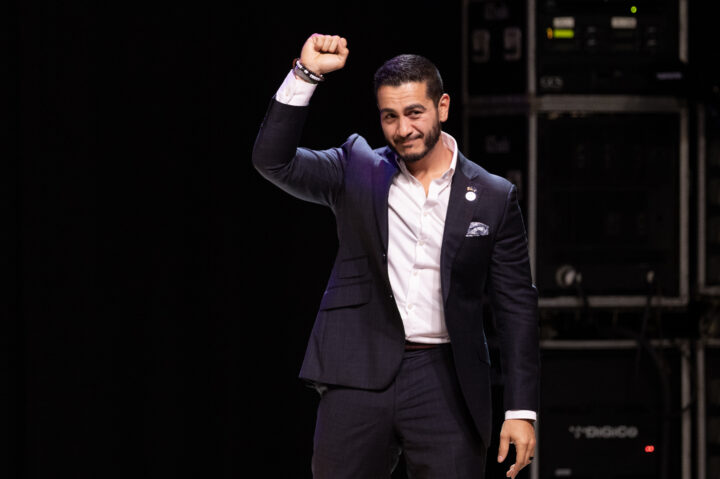
Democratic candidate for U.S. Senate Abdul El-Sayed speaks to supporters at an election-night rally at the Majestic Theatre on August 04, 2026 in Detroit, Michigan.
Good Thursday morning.
In today’s Daily Kickoff, we cover the fallout from Abdul El-Sayed’s narrow victory over Rep. Haley Stevens in Michigan’s Democratic Senate primary, and talk to Jewish Democrats in the state who are considering crossing party lines to vote for GOP nominee Mike Rogers in the November election. We report on the obstacles facing Rep. Ed Case ahead of a challenge from his left in Saturday’s primary in Hawaii’s 1st Congressional District, and cover a Senate Judiciary subcommittee hearing examining Muslim Brotherhood networks and affiliates in the United States. Also in today’s Daily Kickoff: Benny Stanislawski, Tom Kahn and Gianni Infantino.
We also have a new on-demand Live Briefingthat you can access throughout the day via our new app (on Apple and Android) and on our website.
Today’s Daily Kickoff was curated by JI Israel Editor Tamara Zieve and U.S. Editor Danielle Cohen-Kanik. Have a tip? Email us here.
What We’re Watching
- U.S.-led talks between Israel and Lebanon in Rome are slated to conclude today, after yesterday’s discussion was cut short by several hours “due to events on the ground,” the State Department said.
- The decision to pause talks came after the IDF conducted strikes in southern Lebanon over what it said were “blatant violations” of the ongoing ceasefire by Hezbollah, including an incident in which two IDF reservists were killed and four seriously wounded by an explosive device in southern Lebanon.
- Reports continue to indicate Iran and Oman are inching toward a deal to reopen the Strait of Hormuz after earlier agreements on the issue fell apart. An Iranian Foreign Ministry spokesperson said on Wednesday that Tehran and Muscat were close to finalizing an agreement, so long as “certain parties do not obstruct this process” — an apparent reference to the U.S.
- Tennessee is holding its primary elections today. In the state’s 5th District, Rep. Andy Ogles (R-TN), a far-right lawmaker, is facing a serious primary challenge from Charlie Hatcher, a former state commissioner of agriculture.
What You Should Know
A QUICK WORD WITH JI’S MATTHEW KASSEL
Abdul El-Sayed’s narrow victory over Rep. Haley Stevens (D-MI) in Michigan’s bruising Democratic Senate primary on Tuesday is forcing many Jewish leaders in the state to confront an uncomfortable decision as they now look ahead to the general election in November.
Several Jewish Democrats in the battleground state are now indicating that they will break with a party they have long called home and instead vote for the Republican nominee, Mike Rogers, in the November election, citing their continued alarm over El-Sayed’s hostile rhetoric toward Israel as well as remarks they have interpreted as indifferent to rising antisemitism, among other concerns.
“I can’t vote for El-Sayed,” Michael Horowitz, a Jewish community leader and Detroit businessman who supported Stevens, a pro-Israel moderate, told Jewish Insider. “So many things I find despicable about him, not the least of which is his close association with Hasan Piker,” the antisemitic Twitch streamer, who Horowitz said “demeans America, demeans Jews and demeans all but the most radical among us.”
Horowitz confirmed he was now “leaning strongly to Rogers,” a former congressman who narrowly lost in his bid for Senate last cycle. “And I have heard from many in the Jewish community who say they will be supporting Rogers,” he said on Wednesday.
Hannan Lis, a Democratic fundraiser and Jewish leader who splits his time between Michigan and Israel, was among those who had told JI before the primary that he would vote for Rogers in the general election if El-Sayed won the nomination, noting he knows “many” Jewish Democrats who plan to do the same.
His reservations about Republicans preserving their Senate majority by picking up the Michigan seat held by retiring Sen. Gary Peters (D-MI), he clarified, were superseded by his objections to El-Sayed’s stances on Israel and responses to antisemitism. “El-Sayed is no Democrat,” he claimed.
CASE STUDY
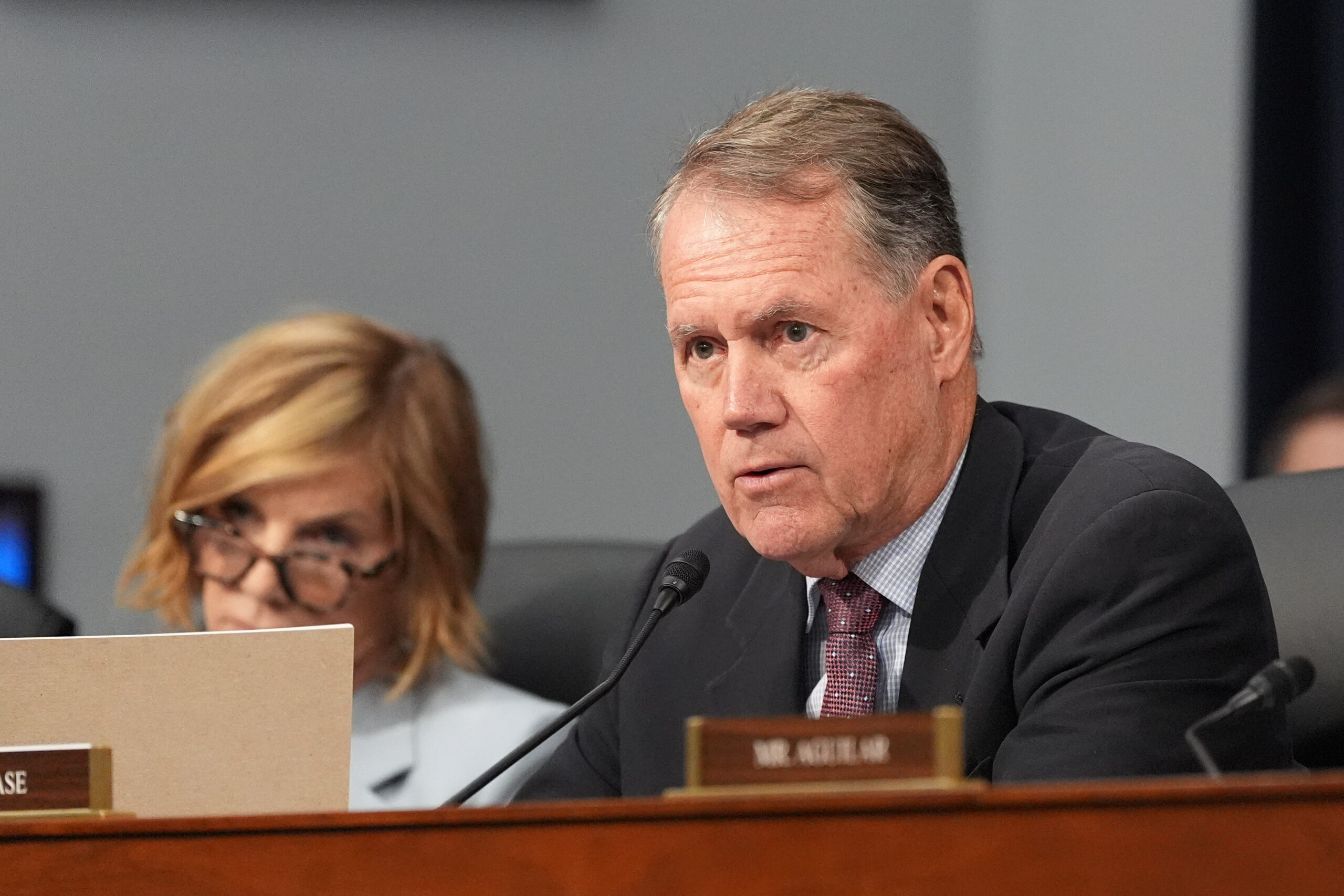
Rep. Ed Case (D-HI), a moderate pro-Israel Democrat in Hawaii who was first elected to the House in 2002, has not drawn a serious primary threat in several years. Now, as he prepares to defend his seat in a primary on Saturday that has largely flown under the radar, some Democrats are warning that the 73-year-old could be at risk of losing to a younger challenger capitalizing on a national political environment that has proven unfavorable to Democratic incumbents amid broader calls for generational change from the party’s activist base, Jewish Insider’s Matthew Kassel reports.
While you were sleeping: “It’s one of those sleeper races where there’s definitely an upset brewing,” said a Democratic operative who worked on the Case campaign until a few months ago, speaking on condition of anonymity to avoid professional reprisals. “Ed is running a poor race,” the former staffer told JI, echoing other observers who described a sluggish approach in which Case has largely foregone campaign events and avoided debates with his opposition.
ON THE HILL
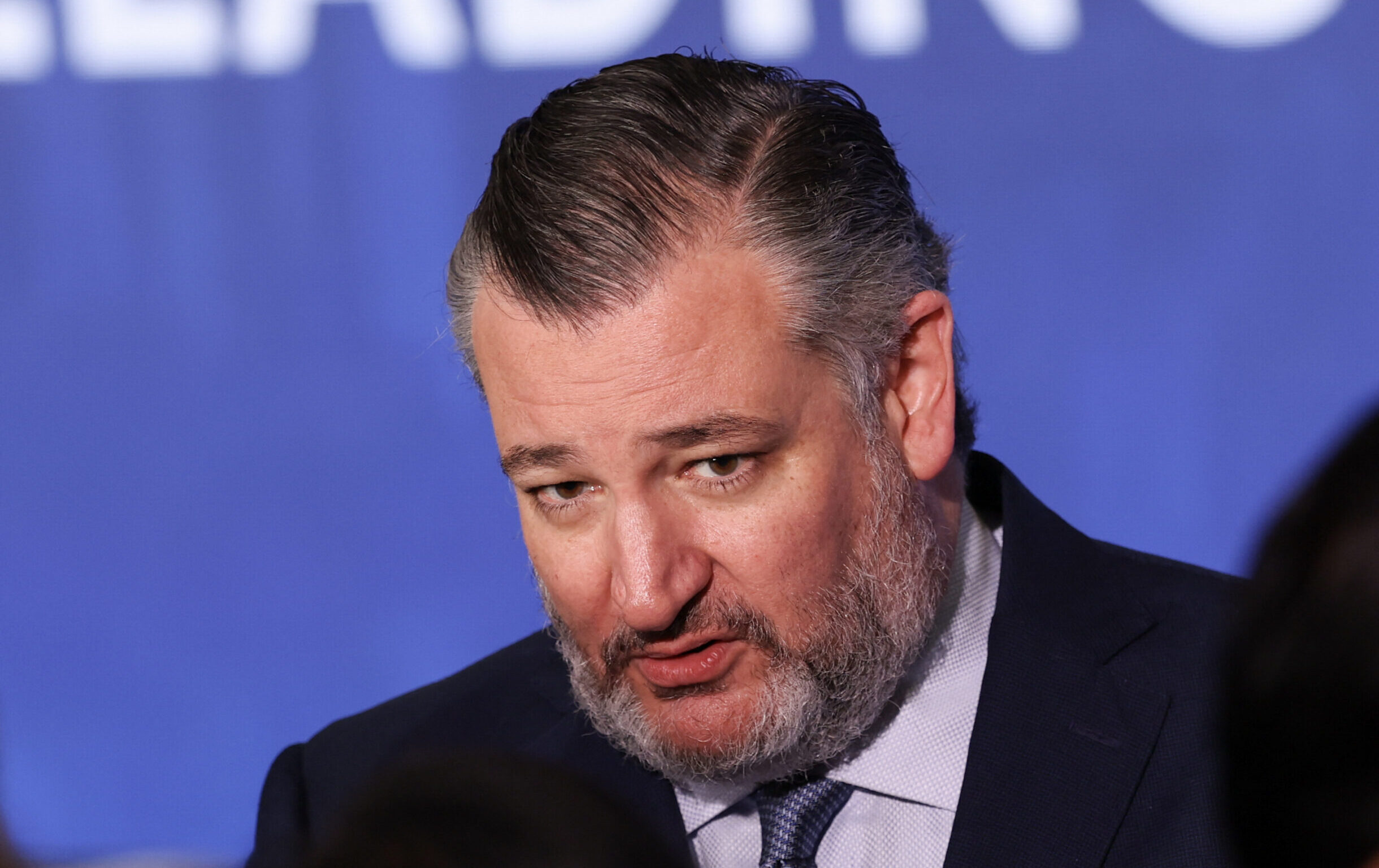
Sen. Ted Cruz (R-TX), speaking at a Senate Judiciary subcommittee hearing on Wednesday that he organized to examine Muslim Brotherhood networks and affiliates in the U.S., suggested that Michigan Senate candidate Abdul El-Sayed was tied to such networks and that his Democratic primary win represented a victory for them. “Behind El-Sayed’s political rise sits a much older and more entrenched institutional network,” Cruz asserted, Jewish Insider’s Marc Rod reports.
Zoom out: Kyle Shideler, a senior analyst for homeland security and counterterrorism at the Center for Security Policy, testified under questioning from Cruz that El-Sayed’s win concerned him given the nominee’s father-in-law’s ties to Muslim Brotherhood-linked groups and El-Sayed’s own relationship with groups connected to the Council on American-Islamic Relations. “It shows the success of the Muslim Brotherhood network over multiple decades. It achieved what they said they were going to achieve, which was to normalize support for Hamas and normalize support for terrorism,” Shideler said.
COMMUNITY CONCERN
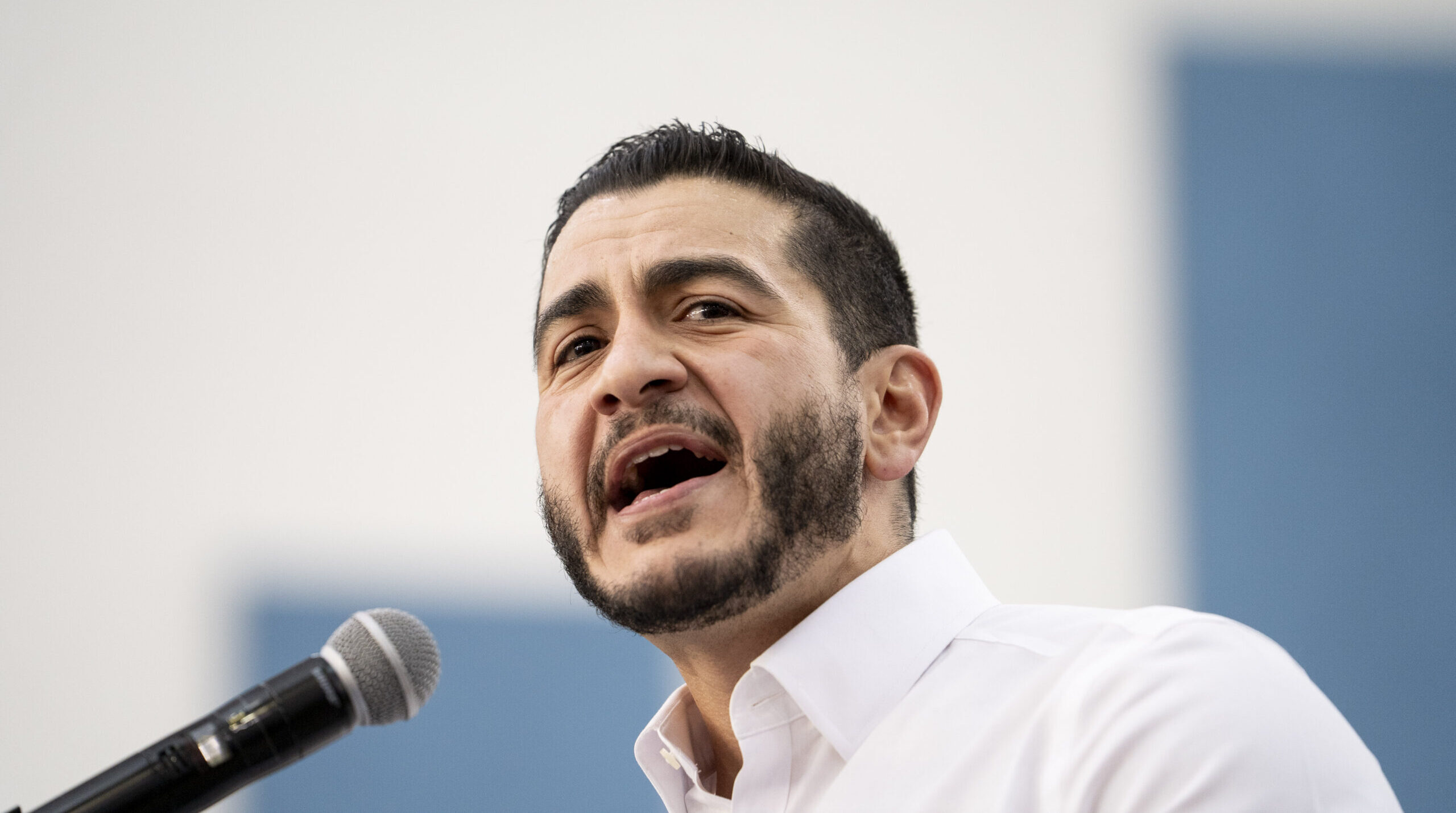
Jewish groups expressed concern on Wednesday about the victory of Abdul El-Sayed in the Democratic primary for U.S. Senate in Michigan, highlighting his extreme rhetoric on Israel and the broader rise of the far left, Jewish Insider’s Marc Rod reports.
Reactions: Jewish Democratic Council of America CEO Halie Soifer said in a statement that the group was “disappointed” by the results of the primary, in which the group had endorsed and campaigned strongly for Rep. Haley Stevens (D-MI). Soifer congratulated but stopped short of endorsing El-Sayed. AIPAC, while declining to preview specific plans, indicated it intends to stay engaged in the Michigan race through November. “Our members remain determined to ensure that voters reject Dr. El-Sayed and his radical anti-Israel agenda in November,” spokesperson Deryn Sousa told JI.
Trump’s take: President Donald Trump, speaking at an event in Las Vegas on Wednesday, said al-Sayed “hates Jews and he hates Israel,” adding, “He’s a man of hate, and now he’s going around saying, ‘Oh I love everybody.’ He doesn’t love everybody. Put him in office, and you’re going to find out what he loves.”
WITHHOLDING SUPPORT
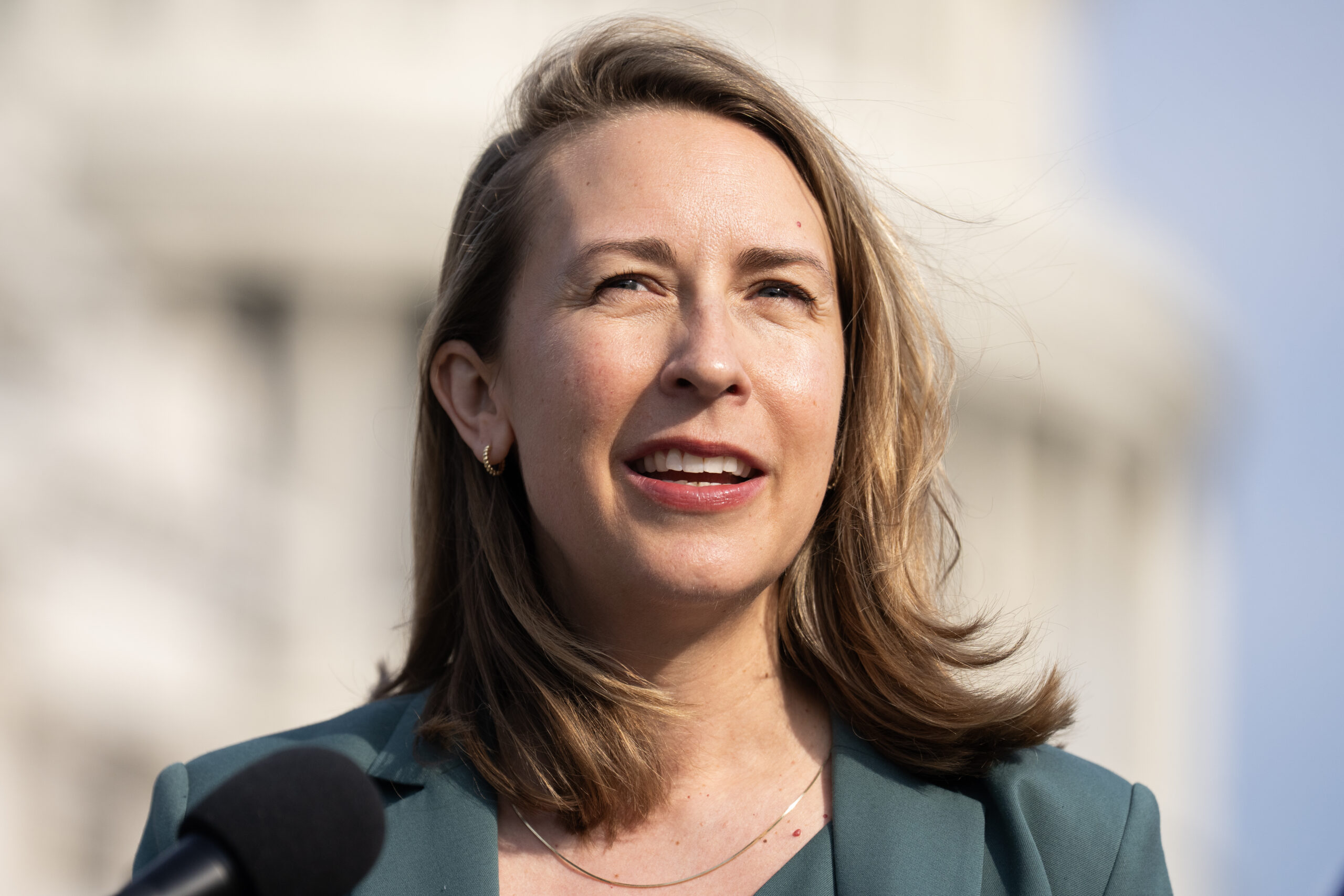
Rep. Hillary Scholten (D-MI), a moderate Michigan lawmaker representing a swing district, broke with most other Democratic members of the state’s congressional delegation in declining to offer an explicit endorsement of Democratic Senate nominee Abdul El-Sayed, after offering strident criticism of him during the primary campaign, Jewish Insider’s Marc Rod and Matthew Shea report.
What she said: “Congratulations to everyone who participated in Michigan’s hard-fought primary elections last night, and thank you to every voter who made your voice heard. In these close elections, we want you to know — you are HEARD,” Scholten said in a statement that did not mention El-Sayed. “Now our focus turns forward. I’ve always said I’ll work with anyone committed to lowering costs, expanding affordable health care, creating more opportunity, and fighting corruption. I mean that.”
Phone a friend: New York City Mayor Zohran Mamdani refused to close the door on a trip to Michigan to campaign for El-Sayed, whom Mamdani praised for what he described as a focus on “the concerns of working-class Americans” — even as he tried to explain away El-Sayed’s poor performance in the areas where working-class voters live, JI’s Will Bredderman reports.
RACE RHETORIC
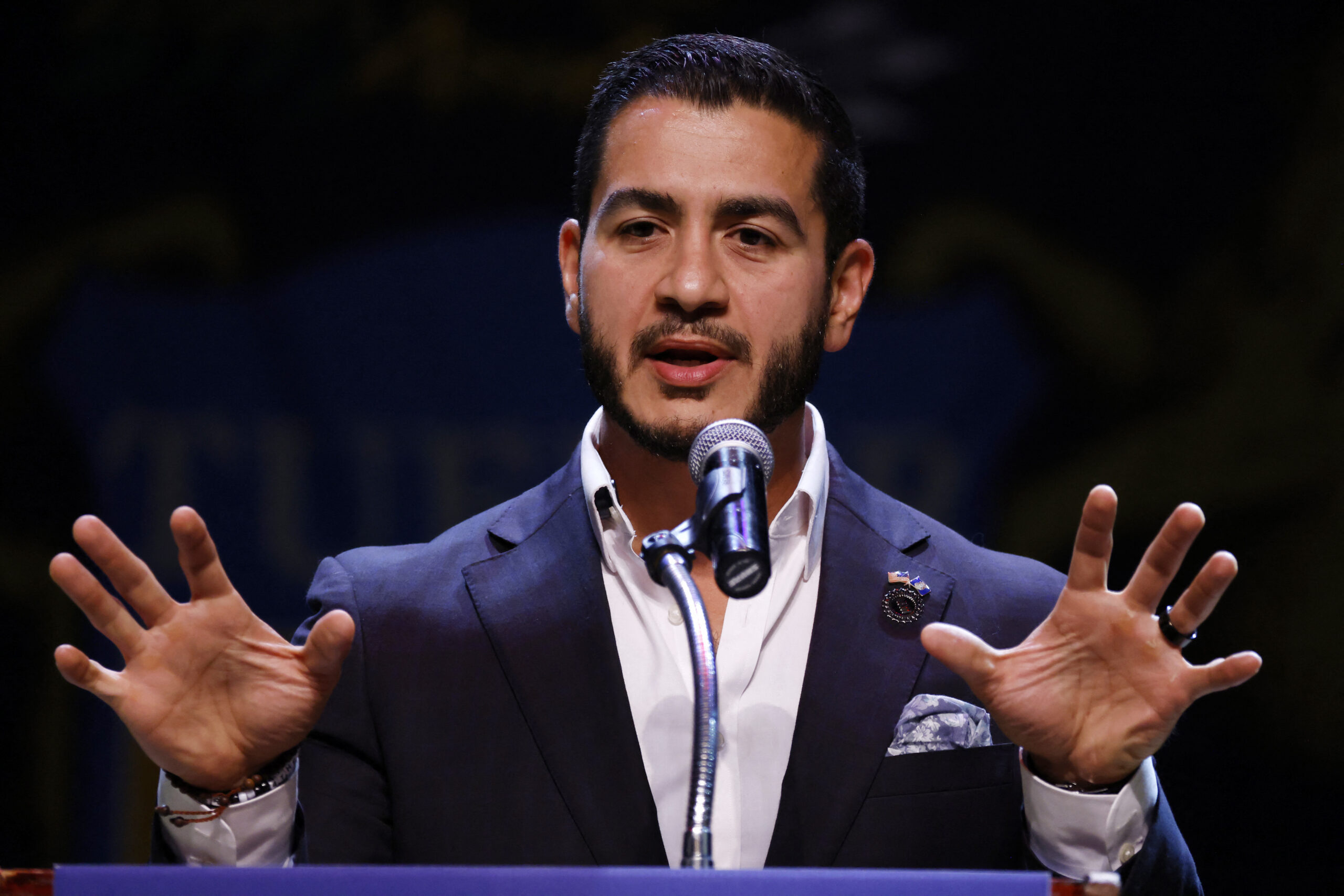
Appearing on MS NOW’s “Morning Joe” on Wednesday, Abdul El-Sayed doubled down on his criticism of Israel, calling the Jewish state “bloodthirsty” and saying his critiques go beyond the government of Israeli Prime Minister Benjamin Netanyahu, Jewish Insider’s Danielle Cohen-Kanik reports.
What he said: “I think we’ve seen the worst of what the Israeli government has done [under Netanyahu] but don’t forget that we’ve been talking about an illegal apartheid regime for a very, very long time, and that supersedes Netanyahu himself,” El-Sayed said. “I understand that Netanyahu is a big reason why they’ve gotten so aggressive and frankly so bloodthirsty under his reign, but I also understand that it’s impossible for us to say we want a two-state solution while we’ve been aiding, arming and abetting the very people who have been trying to foreclose on the possibility of a Palestinian state.”
It’s all over: Democrats quickly coalesced behind El-Sayed after the far-left candidate narrowly clinched victory in Michigan’s Democratic primary on Wednesday morning, while Republicans quickly pounced on his extremist history and ties, JI’s Marc Rod reports.
Worthy Reads
Reassessing Reality: The Atlantic‘s Jonathan Chait contends that, in order to wrest back their party from the far left, moderate Democrats will have to reevaluate some of their core stances, including support for AIPAC and Israel. “Fending off a leftist insurgency will be all but impossible unless Democrats reject AIPAC’s endorsements and stop supporting unconditional aid for an Israel that no longer works toward a two-state solution. Democrats also have to stop passively allowing multiple candidates to split the mainstream vote while the leftist vote consolidates behind a single candidate, as occurred in Michigan’s Seventh District and the Wisconsin governor’s race. But the greatest challenge for mainstream liberals is to find a way to engage in and win the substantive argument with the left.” [TheAtlantic]
Lemons into Lemonade: Tablet‘s Jacob Siegel argues that the U.S.-Israel alliance is loosening, and that the moment presents an opportunity for Israel to reduce its dependence on Washington and diversify its alliances. “A greater degree of separation between the United States and Israel is not only inevitable, it is desirable. Many supporters of Israel seem to be aware only of the significant challenges that this will create for the small country. They overlook the significant opportunities it presents for Israel’s growth. … With the chapter closing on its role as an outsize client state, Israel needs to develop itself as an independent regional power that is a desirable partner by virtue of its ability to innovate technologies and project force.” [Tablet]
Fashion Faux Pas: In The New York Times, John Galliano biographer Dana Thomas cautions against the decision by the Metropolitan Museum of Art to honor the designer, who was convicted of antisemitic abuse after praising Adolf Hitler. “Not all great creators deserve a retrospective, and someone as incendiary as Mr. Galliano certainly shouldn’t be the subject of one during his lifetime, when he stands to profit from the honor personally. With ‘John Galliano: Horizons,’ the Met and Ms. Wintour are selling the idea that they can tell the rest of us how to think about a difficult and divisive figure. Maybe they didn’t notice that idea has gone badly out of fashion.” [NYTimes]
Find more Worthy Reads in our Live Briefing via our new app (on Apple and Android) and website.
Word on the Street
Asked about an Axios report that claimed Israeli Prime Minister Benjamin Netanyahu “confronted” him over their diverging policy views during his visit to Washington last week, Vice President JD Vance said in an interview on Fox News on Wednesday, “He didn’t confront me. We had a nice and frank conversation. … I would describe it as a pleasant but direct conversation”…
The White House denied a Washington Post report that President Donald Trump and Defense Secretary Pete Hegseth clashed last week at Camp David over the war in Iran; the Post reported that the president asked why he had been misled about a shortage of munitions…
A group of far-right figures, including Tucker Carlson, outgoing Rep. Thomas Massie (R-KY), former Rep. Marjorie Taylor Greene (R-GA) and former National Counterterrorism Center head Joe Kent — who gathered over the weekend at Carlson’s Maine home — are considering launching a third-party political organization…
The Israeli Foreign Ministry denounced a joint statement adopted by Arab states — including Qatar, Saudi Arabia, Turkey, Pakistan and Egypt, among others — whose foreign ministers convened in Jordan on Wednesday to discuss Israel’s policies in Jerusalem and said that Israel, which the statement claimed “has no sovereignty” over the city, had “alter[ed] the Arab Islamic and Christian identity of occupied Jerusalem”…
The IDF is investigating a reported arson attack by Israeli settlers in a Palestinian village in the West Bank overnight in which suspects allegedly set fire to homes and attacked residents, including children…
A new Israel Democracy Institute survey found that a majority of Israelis believes the integrity of the October election is in danger…
The Iran-backed Houthis in Yemen said on Wednesday that they struck a Saudi oil tanker in the northern Red Sea, escalating the group’s stated blockade against Riyadh and strikes on Saudi ships that have thus far been focused in the southern Red Sea, near the Bab el-Mandeb strait…
James Stavridis, former supreme allied commander of NATO, argues in Bloomberg that a Saudi-led naval coalition could help protect commercial shipping in the Red Sea from Houthi attacks, though it would likely still require U.S. and European intelligence and logistical support to be effective…
An Azerbaijani official said on Turkish TV that Baku lobbied Israel to stop the Knesset from voting to recognize the Armenian genocide…
FIFA officials gathered in Morocco this week reaffirmed their support for Gianni Infantino, days after the FIFA president faced widespread criticism from within the organization over a plan to privatize elements of the World Cup…
The Atlantic investigates whether al-Qaida, 25 years after the 9/11 attacks, is quietly rebuilding or if its core organization is effectively defunct…
A new poll shows left-wing Brazilian President Luiz Inácio Lula da Silva‘s lead over conservative challenger Flávio Bolsonaro, the son of former President Jair Bolsonaro, narrowing ahead of the country’s October elections…
Benny Stanislawski, previously the communications director for Rep. Ritchie Torres (D-NY), is joining Pennsylvania Democrat Bob Brooks‘ congressional campaign as communications director…
American University’s School of Public Affairs named Tom Kahn as director of its Center for Congressional and Presidential Studies; Kahn, who served as acting director for the past year, was the longest-serving staff director in history for the House Budget Committee…
Find on-demand Live Briefing updates throughout the day via our new app (on Apple and Android) and website.
Pic of the Day

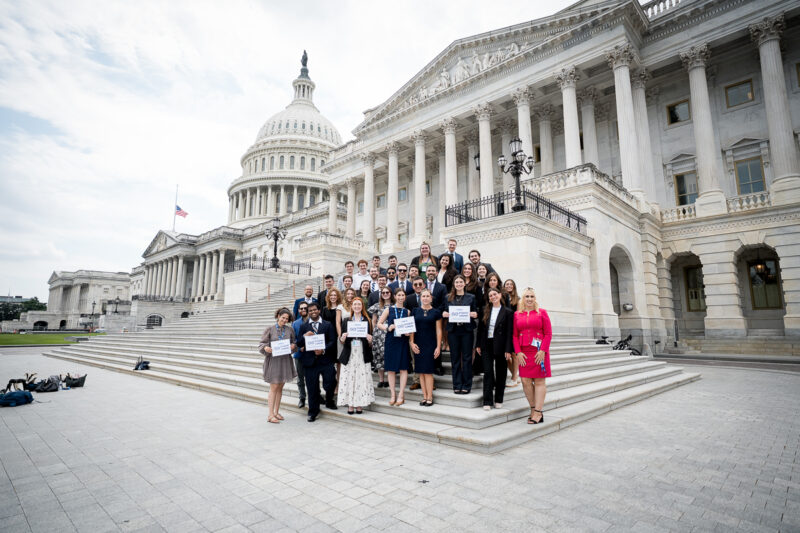
The Louis D. Brandeis Center for Human Rights Under Law hosted 34 law students from leading law schools, including Columbia, Cornell, Duke, Georgetown, NYU and Vanderbilt, for its three-day Law Student Leadership Conference in Washington, D.C., this week. The students received training in civil rights law, Title VI, free speech and advocacy on behalf of Jewish students from a range of experts, including Brandeis Center founder Ken Marcus, pictured here addressing attendees.
Birthdays

Actor, director, producer and screenwriter, Soleil Moon Frye turns 50…
Retired founding partner of the Jaffe Family Law Group, Daniel J. Jaffe turns 89… Esports executive and casino owner, he is a three-time bracelet winner at the World Series of Poker, Lyle Berman turns 85… Professor emerita and former dean at Bar Ilan University, Malka Elisheva Schaps turns 78… Film director, television director, producer and screenwriter, Brian Michael Levant turns 74… Austrian businessman with many U.S., Israeli and Eastern European investments, Martin Schlaff turns 73… Former state treasurer of Virginia and then state secretary of finance, she is now a gourmet popcorn manufacturer, Jody Moses Wagner turns 71… Professor of public diplomacy at The Fletcher School of Tufts University, she was formerly undersecretary of state for public diplomacy, Tara D. Sonenshine turns 67… Professor of psychiatry and behavioral sciences at The George Washington University Medical Center, Alan J. Lipman, Ph.D. turns 66… Israeli diplomat, he served as Israel’s consul general in NYC between 2000 and 2004, Alon Pinkas turns 65… NASA astronaut who spent 198 days on the International Space Station, he brought 18 bagels from his family’s bagel store in Montreal into space, Gregory Chamitoff turns 64… Chair of White & Case’s white collar practice group, Joel M. Cohen… Executive director of public affairs and policy communications at the American Council on Education, Jonathan Riskind… CEO of Elluminate (formerly known as the Jewish Women’s Foundation of New York), Melanie Roth Gorelick… Vice chair of Jewish California and a board member of JFNA and JCRC Bay Area, Susie Sorkin… Television and radio sports anchor on ESPN and ABC, he was one-half of the “Mike & Mike” team but now hosts his own ESPN morning program, Mike Greenberg turns 59… Chief economist at The Burning Glass Institute, Gad Levanon, Ph.D…. Law professor and associate dean at Michigan State University College of Law, David Blankfein-Tabachnick turns 55… Former boxing commentator and co-host of ESPN’s “This Just In,” Yiddish speaking Max Kellerman turns 53… Co-founder and former CEO of Uber, Travis Kalanick turns 50… Founder and CEO at Climb Together which helps prepare people from low-income backgrounds for entry level jobs, Nitzan Pelman… Screenwriter and television producer, he is best known for creating and executive producing the Fox teen drama “The O.C.,” Joshua Ian Schwartz turns 50… Former comms director for Zohran Mamdani’s New York City mayoral general election campaign, Jeffrey Lerner… Creative director and visual strategist, Rachel Gogel… Member of the New York State Assembly, Simcha Eichenstein turns 43… Winner of two gold medals in swimming at the 2008 Summer Olympics in Beijing, he is now CEO of Gather Campgrounds north of Austin, Garrett Weber-Gale turns 41… Director of strategy and policy at K2 Space Corporation, he is also a non-resident senior fellow at the Atlantic Council, Corey A. Jacobson… Reporter at San Antonio Express-News, Elizabeth Teitz… Special advisor at the Department of Homeland Security and former student at Marjory Stoneman Douglas High School, Hunter Pollack turns 29…
For many Jewish Democrats in Michigan who have long called the party home, the bruising lead-up to the primary on Tuesday has been difficult to experience
Sarah Rice/Getty Images
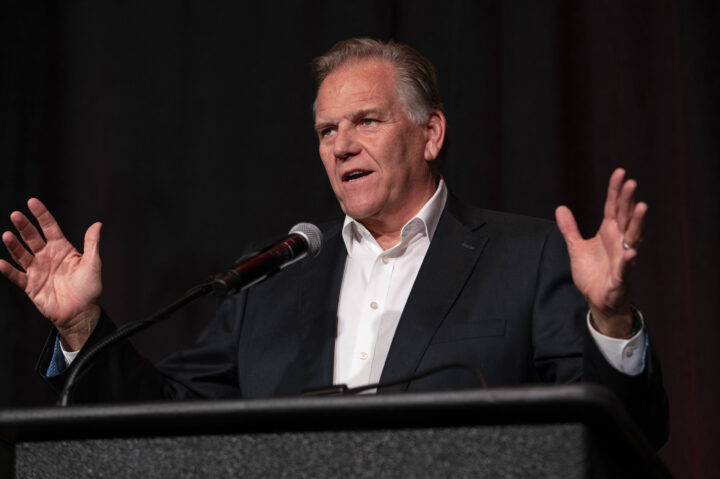
Michigan Senate candidate Mike Rogers speaks at his election watch party.
As Abdul El-Sayed pulls ahead in the final days of Michigan’s bitter Democratic Senate primary race, Republicans are eyeing a chance, in the general election, to peel support from disaffected Jewish Democrats anxious about their party’s sharp turn to the left on Israel and its tolerance for actions they view as antisemitic.
For many Jewish Democrats in Michigan who have long called the party home, the bruising lead-up to the primary on Tuesday has been difficult to experience, as El-Sayed, a far-left former public health official, has continued to gain traction while fiercely attacking Israel, using anti-Zionist rhetoric and centering his messaging on opposition to AIPAC, the pro-Israel advocacy group whose super PAC is aggressively promoting Rep. Haley Stevens (D-MI) in a record ad barrage that has exceeded $30 million.
If Stevens loses, Republicans are eager to present former Rep. Mike Rogers (R-MI), the GOP’s presumptive nominee who was narrowly defeated in his bid for Senate last election cycle, as a safe alternative to El-Sayed for Jewish Democrats in the general election who may not be able to stomach voting along party lines.
“I think that Jewish voters and many Democrats in general feel” the party “has moved away from them,” Bobby Schostak, a former chairman of the Michigan Republican Party who sits on the Republican Jewish Coalition’s board, told Jewish Insider, calling Rogers “unconditionally and unapologetically pro-Israel and part of the fight against antisemitism in America.”
He predicted that Jewish Democrats “are going to flock to” Rogers “come November if El-Sayed wins the nomination,” referring, among other things, to the candidate’s refusal to distance himself from the antisemitic streamer Hasan Piker and controversial remarks following a foiled terrorist attack against a synagogue in Michigan in March in which he said, “Hurt people do hurt people.”
“Playing that response back is all it takes,” Schostak said of the anticipated GOP attacks against El-Sayed in the still-hypothetical general election. “That clearly showed his position and lack of concern for Jews and Jewish children,” he added of the comments. “I don’t think it takes much more than that.”
Sam Markstein, a spokesperson for the RJC, which has endorsed Rogers, said that “Michigan’s open U.S. Senate seat is at the center of the political battlefield” in the fight for control of the upper chamber.
“I think there’s a real opportunity for Mike and other Republicans in Michigan to build on Jewish support,” Jason Cabel Roe, a GOP strategist who has served as the executive director of the state’s Republican Party, told JI.
“With nearly 100,000 Jewish voters in a state where the margins of victory are incredibly close,” he said in a statement to JI, “Michigan’s Jewish community will once again be a decisive group in one of the most important contests in the country this November.”
Markstein suggested that “Michigan Jews are well aware of the stakes,” pointing to divisive comments in which El-Sayed declined to acknowledge Israel’s right to exist and said “I call bullshit” on “a definition of antisemitism to include a foreign government and its leaders,” among others that have faced scrutiny.
“I think there’s a real opportunity for Mike and other Republicans in Michigan to build on Jewish support,” Jason Cabel Roe, a GOP strategist who has served as the executive director of the state’s Republican Party, told JI.
While he called El-Sayed’s rhetoric on Israel “a big factor” influencing that dynamic, Roe argued there are deeper issues at play, notably including the Democratic state party convention in April at which pro-Israel candidates were heckled by activists and an attorney with a history of praising Hezbollah was nominated to sit on the University of Michigan Board of Regents.
Michigan Attorney General Dana Nessel, a Jewish Democrat, said last week that she planned to skip her party’s nominating convention next month, citing the episodes as sowing fears of antisemitic harassment.
“What happened at the” state convention “has really animated Jewish donors and voters and moved them in the direction of Republicans,” Cabel Roe explained to JI. “I think it’s very significant.”
Alyssa Brouillet, a spokesperson for Rogers, said his campaign is “beginning to see more and more Jewish Democrats coming to us who feel abandoned by their party.”
“It’s easy to see why when you have a candidate in this race who fundraised off of Oct. 7 and sympathized with the terrorist attacker who attempted to mass murder 140 kids at Temple Israel synagogue. That’s terrifying,” she told JI in a statement. “Unlike his opponents, Mike Rogers stands with the Jewish community in Michigan and across the country — and he will continue fighting to make life better for working families all across the state.”
The former congressman, recognized as a pro-Israel hawk while serving in the House from 2001 to 2015, has also raised concerns over rising antisemitism as well as anti-Israel sentiment on the far right, which he has said the GOP needs to more forcefully fight.
He has said publicly that it “doesn’t matter” who he faces in the general election, claiming he is confident that he will beat either of them. During a private call with supporters last month, he said that he would be “in good shape” if El-Sayed clinched the nomination as opposed to the moderate Stevens, describing him as “so radical,” according to audio obtained by CNN.
Polling has suggested that a general election matchup between Rogers and El-Sayed would be competitive.
It remains to be seen if the depth of disillusionment among Jewish Democrats in Michigan who feel their party is abandoning them will ultimately translate to a vote for Rogers should El-Sayed be the nominee — given accompanying reservations with how it could help Republicans flip a crucial seat held by retiring Sen. Gary Peters (D-MI).
But Stevens herself in some ways gave Rogers a path to make inroads with Jewish Democrats who distrust El-Sayed when she directly accused her opponent of antisemitism in a fiery social media post on Thursday underscoring the increasingly personal animosities in the closing stretch of the primary.
“After Tuesday, you will see a plethora of Jewish Democrats openly supporting Mike Rogers,” said Dennis Bernard, national chair of government relations at the Jewish Federations of North America, adding such support could help tip the scales in a general election that is expected to be close. He said Rogers has been doing “significantly more events in the Jewish community” and is being more favorably received than last cycle, when he lost to Sen. Elissa Slotkin (D-MI), a Jewish Democrat.
“Everyone in America understands you want to blame all of your problems on Jewish Americans,” she wrote in the post addressed to El-Sayed, after he had taunted AIPAC and called her the “least capable candidate in America.”
A spokesperson for AIPAC’s super PAC, United Democracy Project, did not return a request for comment about its plans for the general election.
A source familiar with UDP’s thinking told JI that “no decision has been taken yet because we’re not there,” but suggested that the group would support Rogers if Stevens loses to El-Sayed. “What would the expectation be?” the source told JI. “That they would do everything they can do to beat this guy.”
Dennis Bernard, a Jewish leader in Michigan who says he supports both Stevens and Rogers in their respective primaries, echoed others who told JI that even as there are Jewish Democrats planning to pull the lever for Rogers if Stevens loses on Tuesday, they are not willing to admit that publicly until the results are in.
“After Tuesday, you will see a plethora of Jewish Democrats openly supporting Mike Rogers,” said Bernard, national chair of government relations at the Jewish Federations of North America, adding such support could help tip the scales in a general election that is expected to be close. He said Rogers has been doing “significantly more events in the Jewish community” and is being more favorably received than last cycle, when he lost to Sen. Elissa Slotkin (D-MI), a Jewish Democrat.
Hannan Lis, a Democratic fundraiser and Jewish leader who splits his time between Michigan and Israel, said he would vote for Rogers in the general election if El-Sayed wins the nomination, adding he knows “many” Jewish Democrats who plan to do the same.
His reservations over the prospect of Republicans preserving their Senate majority by picking up the Michigan seat, Lis told JI, were overshadowed by his deeper objections to El-Sayed and his views on Israel and antisemitism. “El-Sayed is no Democrat,” he told JI.
“If Abdul El-Sayed wins the primary, I will have to spend more time seeing if El-Sayed is as dangerous to Israel, America and American Jews as he appears — and I haven’t seen anything so far to the contrary — and I will also spend some time examining Mike Rogers’ record on Israel and other issues that the Jewish community cares deeply about,” Asher Lopatin, a rabbi who serves as director of community relations at the Jewish Federation of Greater Ann Arbor and is backing Stevens, told JI.
El-Sayed’s campaign did not respond to a request for comment about tensions with Jewish voters.
One pro-Israel strategist in the state who is close to Stevens estimated, on gut instinct, that it was more likely what he called mainstream Jewish Democrats who support Israel would not vote at all rather than pull the lever for Rogers if El-Sayed is the nominee, pegging that number at some 50% of the community.
He speculated that 25% of such voters would support Rogers because they are “disgusted with Democrats,” while another 25% could swallow their concerns and choose El-Sayed, motivated by loyalty to their party.
Asher Lopatin, a rabbi who serves as director of community relations at the Jewish Federation of Greater Ann Arbor and is backing Stevens, said he is trying to keep an open mind for the general election if the congresswoman loses, even as he has “been deeply disturbed by many quotes from El-Sayed regarding Israel and by many of his ads, in which AIPAC is attacked as what I see as an antisemitic dogwhistle.”
“If Abdul El-Sayed wins the primary, I will have to spend more time seeing if El-Sayed is as dangerous to Israel, America and American Jews as he appears — and I haven’t seen anything so far to the contrary — and I will also spend some time examining Mike Rogers’ record on Israel and other issues that the Jewish community cares deeply about,” he told JI.
Lopatin added that he would also “want to make sure” that Rogers is “someone who can stand up to” President Donald Trump.
Noah Arbit, a Jewish Democratic state legislator in Michigan who is outspoken against antisemitism in his party, declined to confirm how he would vote in a general election without Stevens as the nominee, even as he has accused El-Sayed of helping to “stoke and inflame hatred against Jews” and grappled with whether he belongs in a party he sees as “hostile” to his community.
For now, he told JI, “I’m entirely focused on winning a third term representing my district in Greater West Bloomfield,” a heavily Jewish suburb of Detroit, “and electing a Democratic House, Senate and governor in Michigan.”
Michael Horowitz, a Jewish community leader and Detroit businessman, was reluctant to engage in any hypotheticals before the primary’s end. “I still think Haley is going to pull it out on Tuesday,” he told JI on Friday.
Pressed to clarify how he would vote if she loses, he wrote in a text, “I try to avoid playing games with the Devil,” inserting an upside-down smiley face emoji reflective of the uncomfortable position that Jewish Democrats now find themselves confronting as the primary finally comes barreling to a close this week.
In one of the bluest states in the country, Jewish Democrats feel increasingly estranged from a party they helped build — but the answer, they say, is to lean in

Getty Images
Seattle Skyline with the Space Needle and Mount Rainier, Washington
SEATTLE — David Kaplan has been attending Washington state Democratic conventions since he was 6 years old.
He was brought to his first convention in 1960 by his mother, who was, as Kaplan put it, a “Warren Magnuson Democrat,” while his father was a “Henry Jackson Democrat.” The two legendary former Washington senators who served from roughly the 1940s to the ‘80s differed on several issues, including Cold War and defense policy, “but one common denominator has always been support for Israel,” Kaplan said.
Six decades later, that consensus feels to him like a relic of a bygone era.
The past few years of rising tensions in the Democratic Party over Israel and antisemitism have been marked for many Jewish Democrats in Washington — one of the country’s bluest states, which has a Jewish population of about 90,000 — by disappointment, anger and a growing sense of isolation within a party they have spent decades supporting.
But the answer, they say, is not to walk away; rather, it’s to try to reclaim influence from within.
That effort begins with rebuilding the party’s own Jewish infrastructure. The Washington State Democratic Party’s Jewish caucus has gone “by the wayside, because it takes a lot of organizing and energy to keep it up,” said Linda Clifton, a longtime member of the caucus.
“It’s all volunteer [work], and people had other jobs and other things they had to pay attention to. I think we need to revive it, and there’s been some effort to do that … but I think people are so disheartened that that becomes very difficult,” she continued.
At the state party’s June convention, delegates adopted a resolution condemning “genocide and apartheid in Palestine” and calling for an arms embargo on Israel. They also adopted a plank in their party platform calling out a “dramatic resurgence in antisemitism in recent years on all sides of the political spectrum” while claiming it has risen “due in part to actions taken by the Israeli government.”
And in its foreign policy section, dedicated overwhelmingly to Israel and Palestinian issues, the platform states that the party “reject[s] racist political ideologies rooted in supremacy, including forms of Zionism,” and calls for an end to the “mass civilian casualties, destruction, displacement and starvation of Palestinians in Gaza and [the] West Bank,” among other stances critical of Israel.
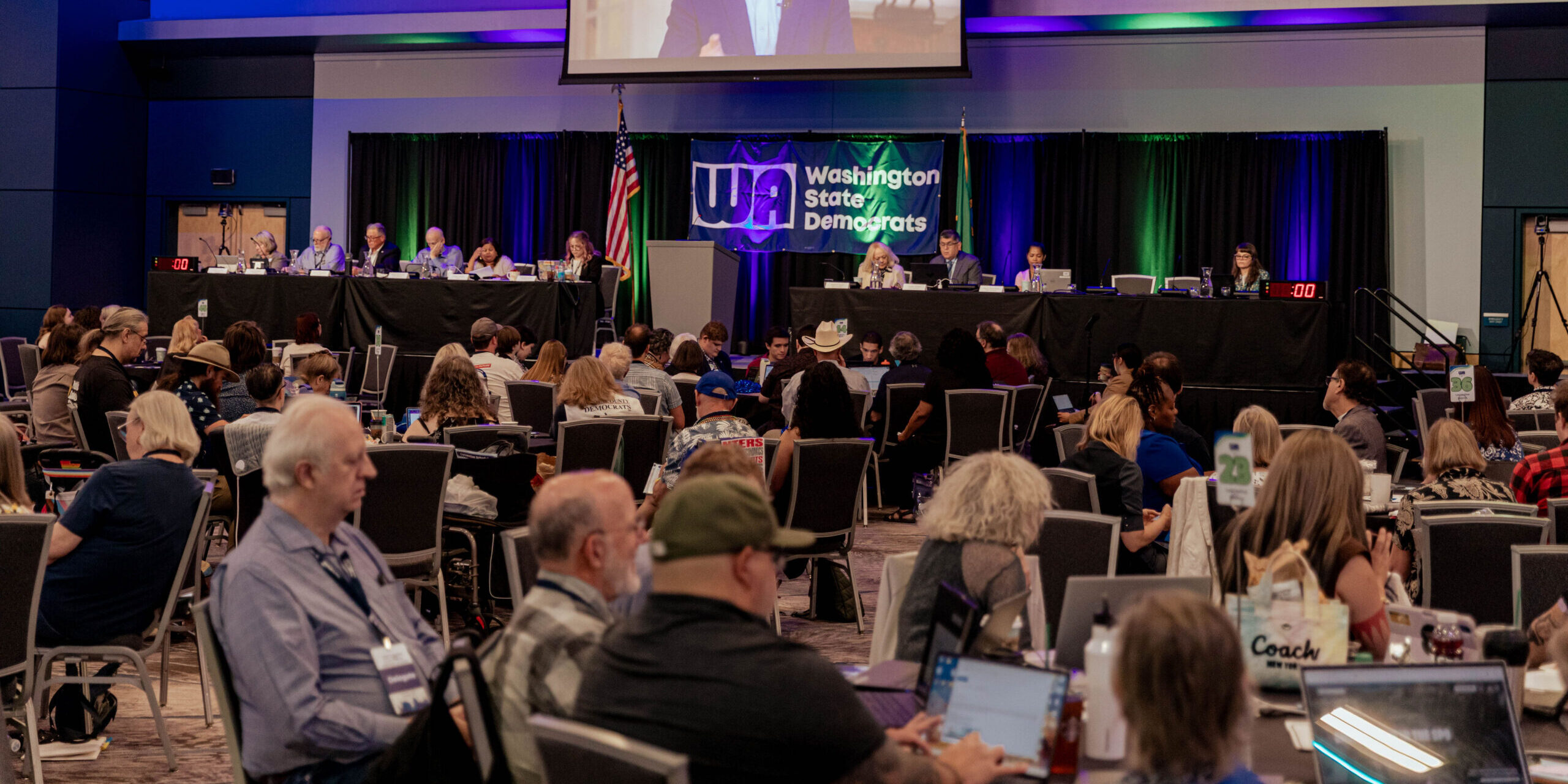
“My only issue with the platform, honestly, was that it singles one country out and that, to me, crosses the line,” said Kaplan, a founding member of the party’s Jewish caucus. “But I can tell you that I was not one of the volunteers for the platform committee, so I can’t point fingers.”
Kaplan’s deep engagement in the party has provided him a front row seat to its shift over time. These days, “I have my local Democrats piling on,” he said, referencing his representative in Congress, Rep. Pramila Jayapal (D-WA), the former chair of the Congressional Progressive Caucus. “On many levels, I admire her courage and her principles. But I get her emails where AIPAC becomes the straw man for everything that’s evil.”
Kaplan is no apologist for AIPAC, though he once served on its regional board, nor Israeli Prime Minister Benjamin Netanyahu — “I actually think he’s evil,” he said — but “in a world that contains all sorts of bad sh*t, why [Israel] is singled out … It transcends policy differences. It becomes less-than-subtle antisemitism, and I’m struggling with it mightily as a Democrat.”
“I’ve been as active as you can be in Washington Democratic politics. I never before had to worry about whether my local [representatives] harbored antisemitic beliefs or had them use AIPAC as a straw man,” he said.
Clifton, too, is dismayed by the rising hostility in a party that she’s been engaged in for decades. She said she sees it most clearly in her home 43rd Legislative District, which is based in some of the most progressive neighborhoods of Seattle, including the University of Washington campus.
“The [Democratic Socialists of America] has really organized here, and one of the main impetuses for that organization was [former] Councilwoman Kshama Sawant,” Clifton said. Sawant, a far-left socialist who promoted several anti-Israel measures during her tenure on the Seattle City Council, is now running as a long-shot independent candidate against Rep. Adam Smith (D-WA).
“She’s been very effective in building a constituency within the 43rd that is pretty young and pretty hostile to the interests of the Jewish community,” Clifton said of Sawant, “so it’s been much, much more difficult to remain an active member of the 43rd. It just hurts.”
Where she used to regularly attend the organizing meetings for the 43rd District Democrats, “I just got really tired of being the only vote on one side of an issue on a Zoom call. So I’ve really pulled back,” she said.

The Washington State Democratic Party begins at the most local level with precinct committee officers (PCOs), who are elected every two years — oftentimes uncontested — to represent a voting precinct. Democratic PCOs are officers of their party and vote on a wide range of party business, including endorsements, resolutions, local party leadership and convention delegates.
About organizing efforts at the state party convention, another longtime activist said the state’s Jewish Democrats “are not in the room, or not noticeably so as Jews,” instead focusing their advocacy on other policy priorities like education, healthcare and housing. “As Jews and as an organized Jewish community, we need to decide if the party platform matters, and if so, we need to be involved in the grassroots of the Democratic Party.”
“It doesn’t take many people, but it does take some,” the activist added. They emphasized the ease with which people can run for and be elected as a PCO. “If 100 Jews signed up as PCOs, that would change the party over the next two years and the next decade,” they said.
Kaplan had similar advice for his fellow Jewish activists: “In terms of getting involved, I recommend people become PCOs. It’s actually a relatively easy gig. Just join. Just show up!”
As far as the Jewish caucus goes, he said, “I wish we could be more proactive, you know, as a formally recognized constituency caucus within the Washington State Democratic Party.”

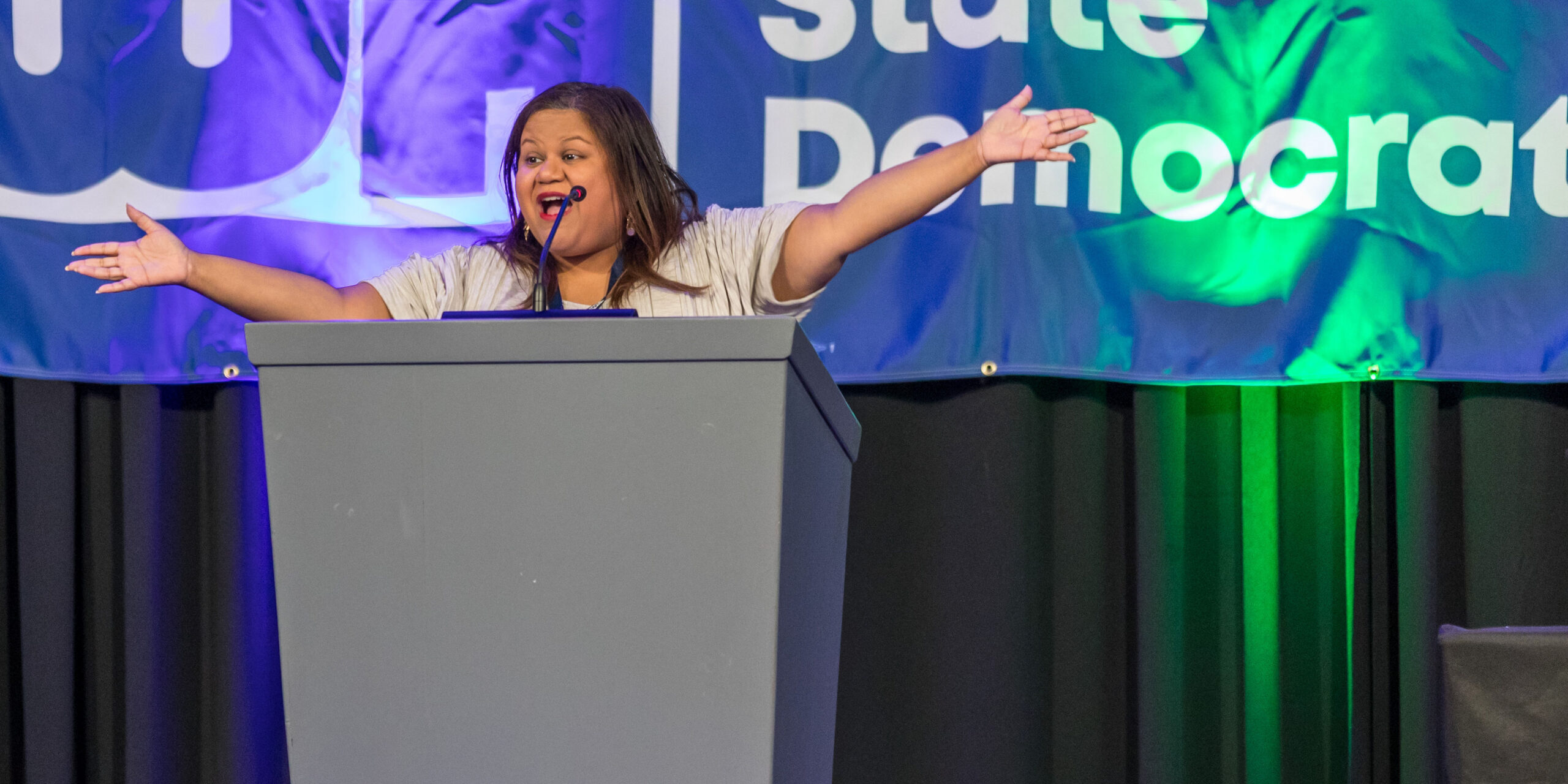
The Jewish caucus activists spoke highly of the state Democratic Party chair, Shasti Conrad, praising her outreach efforts. “She is doing the best she can to thread this needle and have differing opinions come together under a bigger tent to hash things out,” Kaplan said.
Conrad told JI in an interview, “I have always strived to try to build a party that is as inclusive as it can be, and it’s been really important to me, particularly as our first woman of color chair, that we build a party that does feel like it has people from diverse backgrounds who are able to be their full selves in the party.”
“Especially since Oct. 7, 2023, that really has focused largely on the Jewish community, alongside the Muslim community and Palestinians as well. We have really tried to sort of hold space for people that have been impacted on all sides of the conflict,” she continued.
Since she became chair in 2023, Conrad said she realized that the state party structure, which is broken into 49 legislative districts, “may have made it a little bit more challenging for particular communities” to organize and promote their priorities “because they get sort of split across geographic lines.” To help alleviate these issues, the party will look to “make sure that we are including the constituency caucuses in the drafting of the platform” for the 2028 convention.
Conrad said antisemitism is “something that I want to disavow as loudly and clearly as possible.”
“There is no room for antisemitism in our party. We have been trying to fight against it as it has really become a sort of central organizing point, I believe, for the Republican Party.”
Conrad said that at the Democratic National Committee, where she also currently serves as one of five vice chairs, she was one of the first officers to co-sponsor the creation of a DNC Jewish caucus. “I’ve done a lot of organizing alongside our Jewish caucus, and I’ve learned a lot and grown, and it’s been one of the most important parts of my learning.”
Asked about the state party’s inclusion of foreign policy in its platform, Conrad said the party is “responsive to what our delegates feel strongly about,” emphasizing that the platform is drafted before every convention by the relevant committees made of local activists and voted on by delegates. “I don’t feel like many international leaders are looking to see, you know, ‘What do the Washington state Democrats think about X, Y and Z?’ I don’t think that’s often the case, but I do think that we hear from our delegates and from our grassroots members that these are issues that are very important to them.”
Outside the party structure, some Jewish community members have turned to electoral politics to advance their priorities. Washingtonians for a Brighter Future, a PAC formed in 2024, calls itself the “political action arm of the Jewish community and its allies in Washington state.”
“The Jewish community in Washington state is under attack,” said Nevet Basker, one of the PAC’s co-chairs. “It’s under attack from many, many places, including by people who are hostile to Israel, but they take it out on the Jews here,” she said, referencing the November 2023 vandalism of Herzl-Ner Tamid Conservative Congregation on Mercer Island, an area that serves as a hub of Jewish life in the state.
She also raised the forthcoming 20th anniversary on July 28 of the deadly shooting at the Seattle Jewish Federation — an event that still weighs heavily on the area’s Jewish community — which was carried out by a man who reportedly shouted during the attack, “I am a Muslim American, angry at Israel.”
In order to receive WBF’s endorsement, candidates must “make a public statement supporting the Jewish community and opposing antisemitism … We have a lot of friends who are shy, who will say, ‘Oh yes, I heard about the attack in Colorado, and I called the rabbi to express my support.’ And we say, ‘That’s lovely of you. Thank you for calling the rabbi. Will you put out a public statement?’ And they will say, ‘No, that’s not my lane.’”
Basker’s message to these candidates? “We’re not interested in being the person that you are secretly dating, but won’t introduce to your friends.”
Sam Jefferies, chair of The Kids Table, a PAC created in 2025 to support “pro-Jewish” candidates in the state, told JI, “Jews helped build the Democratic Party and contributed to political and policy victories at every level of government for more than a century. At this moment of crisis, the party should be standing firmly and unequivocally with Jews across Washington state and rejecting extremism at every turn. It isn’t.”
For all their efforts to organize, reclaiming a place in the party is not simply a matter of Jewish Democrats showing up. It requires them to navigate a political environment where they often feel both committed to the process and isolated within it. Kaplan recalled the 2024 state party convention, where he said the Jewish caucus was “not prepared.”
“As we walked in, we were given pieces of paper or leaflets from, you know, white college kids in keffiyehs, and there were three resolutions” targeting Israel. As the discussion around the resolutions began, “I came to the realization, quite honestly, that half the people that I would work with and have known for years, even Jewish ones — I wouldn’t trust them to know where Anne Frank lived.”
Taking matters into his own hands, Kaplan stood to speak against one resolution calling on the Democratic Party to support restoring funding to the United Nations Relief and Works Agency — funding which the Biden administration had paused earlier that year due to findings that some UNRWA employees had participated in the Oct. 7 attacks.
“I remember it’s the first time I’ve ever been afraid to speak, so I was really nervous,” Kaplan said. “I remember not getting the reaction that I would have expected to get, not being heard, and it was very painful at that moment. I vowed I was never coming back.”
The resolution passed, but Kaplan went back for this year’s convention anyway. “I still believe the Democratic Party is the best place to be,” he said.
JDCA’s top activists made clear this week that a major concern is making sure pro-Israel Jews continue to be welcome in the party
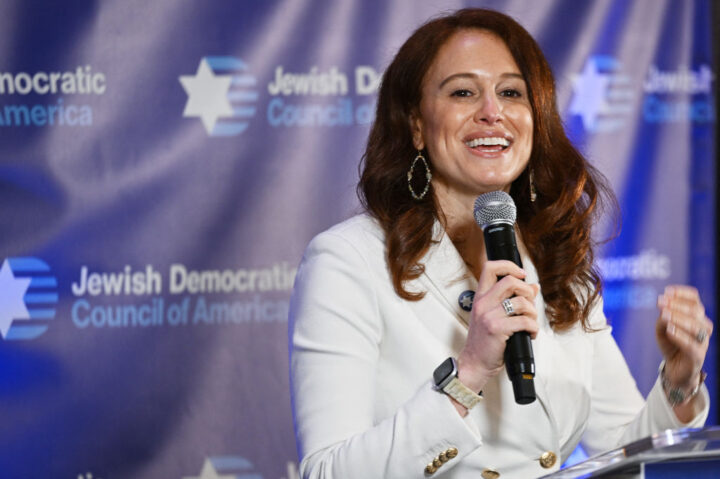
MANDEL NGAN/AFP via Getty Images
Jewish Democratic Council of America CEO Halie Soifer in Washington on May 24, 2023.
When a group of Jewish Democratic activists and donors convened in Washington this week for the annual leadership summit of the Jewish Democratic Council of America, the message seemed to be one of defiance: defiance against President Donald Trump, to be sure, but also a defiant attitude pushing back against some of the recent shifts within the party.
JDCA’s primary objective is to elect Democrats. But as more Democrats have taken positions critical of or outright hostile to Israel, JDCA’s top activists made clear this week that another major concern is making sure pro-Israel Jews continue to be welcome in the party.
“We are fighting to ensure that the views and values of Jewish Americans continue to find their political home in the Democratic Party in Michigan and beyond, and we have work to do,” Halie Soifer, the group’s CEO, said on Tuesday night. She noted that the JDCA hopes to help defeat Michigan Senate candidate Abdul El-Sayed, a far-left candidate who appears to be rising in the polls.
“It’s clear there’s one candidate whose views are antithetical to ours, and we want to ensure he’s defeated,” said Soifer, though she did not name El-Sayed directly. JDCA has not endorsed either of his opponents, state Sen. Mallory McMorrow or Rep. Haley Stevens (D-MI).
“We at JDCA only support Democrats, but we do not support them all,” Soifer told the summit. “We understand it’s not just about electing Democrats. It’s about electing Democrats who align with us, and this includes efforts to ensure that candidates who have espoused anti-Israel and/or antisemitic views are defeated before November.”
Over the two-day gathering, a parade of high-profile speakers from Democratic leadership — Senate Minority Leader Chuck Schumer (D-NY) and House Minority Leader Hakeem Jeffries (D-NY), along with Reps. Nancy Pelosi (D-CA) and Steny Hoyer (D-MD), respectively the former House speaker and majority leader — addressed the convening. Their appearances seemed designed to affirm that Democrats remain pro-Israel and committed to fighting antisemitism.
“We have to decisively confront antisemitism from wherever it comes from,” said Jeffries. “I will always hold firm in my support for the State of Israel as a Jewish and democratic state and eternal homeland for the Jewish people.”
Schumer did not specifically discuss Israel but raised concerns about the increasing use of the word “Zionist” as a slur.
“I’ve long said we must fight antisemitism wherever and whenever it appears, even if it’s in our own party. I’ll continue to do so,” said Schumer. “Today, antisemitism takes all different forms: Holocaust denialism, conspiratorial delusions of Jewish or Zionist control of the world, replacing the word ‘Jewish’ with the word ‘Zionist’ to demonize Jewish communities.”
The outgoing Democratic leaders were not as sanguine, instead offering a note of caution about how the dynamic towards Israel has shifted within the Democratic Party.
“Always, but right now, we really have to work together to make sure that support for Israel is, without question, bipartisan,” Pelosi said. “It doesn’t mean we don’t have our differences of opinion … but it should not weaken the fact that we have bipartisan support. That has always been the tradition, and we must make sure we get through this place where we are, where there may be some doubt in people’s minds as to whether that is a value.”
Pelosi is retiring at the end of this year, as is Hoyer, who was even more blunt: “How many of you have been anxious yourselves about rhetoric heard from some Democratic officials and candidates? We ought to be,” he said.
Speaking to reporters on Wednesday, Sen. Chris Coons (D-DE) said he hoped to prove that Sen. Bernie Sanders (I-VT) does not speak for the party on matters related to Israel, though he noted with worry that Sanders’ attitude — one that is deeply critical of Israel — appears to be on the rise.
“It’s clearer and clearer to me that there is real alarm about a fundamental break between Democrats as a party and Israel as a nation, and I’m going to do everything I can to resist and oppose that break, while criticizing [Benjamin] Netanyahu and his values and decisions,” said Coons. “I’m trying to be an effective and engaged voice with a perspective that you just heard and not have Bernie Sanders be the only senator whose perspective and attitude is heard across the country.”
Forty Senate Democrats voted last month for a Sanders-authored resolution attempting to block some arms sales to Israel, a record high. Coons said he knows those senators still support Israel’s right to exist, but cautioned that being too critical of Netanyahu can give cover to people who are actually anti-Israel.
“I strongly support Israel’s right to exist, its right to be a Jewish homeland and a democracy, and its value to the American people as a partner and ally,” said Coons. “I think we are at risk of some of my colleagues, in trying to send a message to Netanyahu or in opposition to his policies and stances, to be misunderstood as abandoning that commitment.”
Coons said that on the campaign trail, and on recent trips around the country, he hears “profound concern about where’s the Democratic Party going on Israel.” Some Jewish politicians who addressed the JDCA summit expressed a deeper sense of unease and discomfort about their Jewish identity, against the backdrop of rising antisemitism.
Sen. Elissa Slotkin (D-MI), who spoke at a cocktail reception Tuesday evening, talked about how challenging it is to be a Jewish elected official in the current environment.
“It has become deeply, deeply complicated to be a Jew in America,” said Slotkin. “There’s not a single day that goes by for myself representing the state of Michigan that I am not feeling torn.”
Minneapolis Mayor Jacob Frey delivered a jolt of energy to the room with an impassioned speech about his community’s support for immigrants in the face of ICE enforcement activity, which resulted in the killing of two American citizens by ICE agents in his city in January. When a JDCA member asked him for advice on how to respond to others in the Democratic Party who have made anti-Zionism a political litmus test, he expressed concern.
“It has been deeply concerning for me personally, as a proud Jew,” Frey said. “I am a great supporter of the endurance of our American Republic, a big believer that America should continue to exist, and an adamant opponent of Donald Trump. The same thing can apply to Israel.”
Ultimately, though, the gathering was a political pep rally — a chance for Democratic activists and donors to hear from politicians at all levels of government and gin up excitement ahead of this year’s midterm elections. Everyone who addressed the gathering all but guaranteed that Democrats would take back control of the House and Senate.
The conversations seemed meant to ressure Jewish Democrats about both the party’s fortunes for November and its treatment of pro-Israel Jews. One JDCA activist described the group’s work as “grasstops,” which was demonstrated by the appearances from top party leaders.
But the anti-Israel sentiment that has steadily grown within the party over the past three years is not coming from party leaders; it is driven by far-left activists. Whether JDCA has a plan to counter that grassroots energy remains to be seen — and the answer will only come at the ballot box later this year.
The former House majority leader urged American Jews not to abandon the Democratic Party, despite acknowledging many now feel unwelcome

JDCA
Rep. Steny Hoyer (D-MD) at the Jewish Democratic Council of America’s annual leadership summit, May 12, 2026
Rep. Steny Hoyer (D-MD), a pro-Israel stalwart and a former House majority leader, said on Tuesday that Jewish Democrats “ought to be” concerned about the critical way that some of their Democratic colleagues talk about Israel.
“How many of you here tonight have been trying to convince a family member, a friend, a neighbor not to abandon the party that has long been their political home?” Hoyer said in remarks at the Jewish Democratic Council of America’s annual leadership summit, where he was honored with an award marking his upcoming retirement, after 45 years in Congress.
He was introduced by three of his current and former Jewish senior staffers, including Brian Romick, the CEO of Democratic Majority for Israel.
“How many of you have been anxious yourselves about rhetoric heard from some Democratic officials and candidates? We ought to be,” said Hoyer. “I will stand up and say, ‘I do not agree with that.’”
Hoyer, a longtime champion of pro-Israel legislation, used the speech to reiterate his commitment to the Jewish state and explain why he thinks Democrats should support Israel. But even as he acknowledged issues of antisemitism and anti-Israel sentiment in the party, he also pitched American Jews to maintain their historic support for Democrats and urged those who are unhappy with the party’s leftward shift on Israel to allow room for nuance, and to work to reverse it.
He said he disagreed with the 40 Senate Democrats who voted in April against certain arms sales to Israel, but added that he still believed those lawmakers would support the Jewish community. He encouraged JDCA activists to keep calling those senators to push them to change their minds.
“Those same 40 senators will stand up for you all the time. I disagree with them, but the fact of the matter is, keep in mind, it is not day to day. It is long-term commitment that counts. They need to keep hearing from you,” said Hoyer. “They need to keep seeing us fight to keep our party strong and pro-Israel, and consistent with its values. And they need to see our passion and our resolve.”
Reflecting on his 22 visits to Israel over the last five decades, Hoyer called the trips particularly meaningful due to his Baptist faith. Still, he said he could not distill into words the reason for his deep-rooted affection for Israel.
“I really can’t put my finger on why, but I know that’s what I feel. I know that I feel that the Jewish community … for millennia has been the object of scorn, derision, prejudice, hate and violence,” said Hoyer. “At a very early age, I thought that was wrong, and I am so proud that I had the opportunity to not only say it was wrong, but to try and make it right.”
Hoyer described himself as “a champion for Israel,” a title he said made him proud. He insisted he is not alone in that category among Democrats.
“The majority of Democrats still stand, in my view, and will continue to stand with Israel and with the Jewish people,” said Hoyer. “I’m confident we will be able to overcome this moment and defeat Trumpism at the ballot box, while defeating antisemitism and anti-Zionism in our politics.”
In the speech, Hoyer praised American Jews for the leading role they have played in Democratic politics. He insisted that he will make sure they are still welcome even as he leaves office.
“The Democratic Party has long stood for the same values that Jewish tradition teaches: caring for the sick and hungry, ensuring equal opportunity for all, freedom of conscience, freedom of religion, freedom of choice, freedom for workers to organize and justice for all under the rule of law,” said Hoyer.
“For as long as I am in office, and even in retirement,” he continued, “I will stand with you in strong support, strong foundation for our party as the warm and welcoming home for pro-Israel Jewish voters who care deeply about equal rights, justice and opportunity for all Americans.”
Pritzker, Emanuel take contrasting paths on Israel, antisemitism ahead of possible presidential runs
In two separate interviews published Tuesday, Pritzker came out as a more forceful voice against antisemitism and in support of the U.S. relationship with Israel

U.S. Embassy in Japan/United States Department of Defense
Rahm Emanuel/Illinois Gov. JB Pritzker
Two Jewish Democrats from Chicago are looking to run for president.
One, Illinois’ two-term governor, JB Pritzker, has built up a reliably progressive record while steering clear of ideological fights over Israel, antisemitism and other cultural issues fueling the Democratic Party.
The other, former Chicago Mayor Rahm Emanuel, is one of his party’s leading pragmatists, known for feuding with left-wing Democrats over education, the power of unions and the degree to which cultural progressivism cost the party on the ballot box.
So it came as a surprise that, in two separate interviews each published Tuesday, it was Pritzker who came out as a more forceful voice against antisemitism and in support of the U.S. relationship with Israel, while Emanuel sounded like he was all too eager to blame Israeli Prime Minister Benjamin Netanyahu as he anticipated a future breakup between the two close allies.
Pritzker offered the point that relationships between allies aren’t dependent on whether you personally like the elected leadership in charge. It’s a line you’d expect more mainstream Democrats to invoke, especially as Israel’s favorability within the Democratic Party has sunk to new lows.
“There are a lot of people who don’t like Netanyahu, but you shouldn’t take it out on Israel. It’s a democracy that elected him. There are a lot of people who don’t like Trump. I mean, should we be tossed into The Hague as a country because of Trump?” Pritzker told Politico over matzoh ball soup at Manny’s Deli, referring to the home of the International Criminal Court.
Emanuel, when asked by Jewish Insider if there was a special relationship between the U.S. and Israel, agreed with the premise but then quickly pivoted to arguing the state of the relationship should be premised on Israel’s efforts contributing to peace in the region. It’s an implication that its post-Oct. 7 efforts at self-defense have gone too far.
“Every risk you will take, the State of Israel takes, for peace, then America will stand by you,” he told JI. “We understand there’s risks. We have stood by Israel through thick and thin.” “But,” he said, “when one friend in that relationship abandoned something that’s contrary to our interests and contrary, in my view, also to Israel’s interests,” it is reasonable to rethink that alliance.
Pritzker also spoke directly about the scourge of antisemitism, laying most of the blame for the rise in anti-Jewish hate on President Donald Trump, but when pressed, also laid out a clear red line that it’s never acceptable to invoke antisemitism for disagreeing about Israel’s policies.
“Antisemitism has often been connected to people’s views about Israel. That is: If you don’t like what Israel and, in particular, Netanyahu are doing, now it’s OK to have slurs that you’re spewing about Jews,” Pritzker said. “It’s not. It’s never OK.”
Asked about whether anti-Zionism intersects with antisemitism, Emanuel touted his own experiences fighting neo-Nazis in Skokie, Ill., and relentlessly attacking anti-Jewish hate as an elected leader. He told JI that “we have to confront” antisemitism wherever it emerges, referencing Maine Senate candidate Graham Platner not knowing he had a neo-Nazi tattoo on his chest. One day later on CNN, he endorsed Platner’s campaign.
At a time when unfavorable views of Israel are at historic highs within the Democratic Party and open antisemitism is being tolerated in a way unimaginable not long ago, the trajectory of these two prominent Jewish presidential contenders — along with the fate of Pennsylvania Gov. Josh Shapiro — will be instructive on the future role of Jewish voters within the Democratic coalition.
Pritzker, with strong anti-Trump and progressive bona fides, may feel a little more comfortable tacking to the center when talking about Israel and antisemitism. Emanuel, who has made a name for himself as a moderate calling out the excesses of the left as he travels across the country (and speaks on TV), may be a little more reticent to tout his pro-Israel credentials, given the ideological direction the party is headed in.
National Security Action named Maher Bitar, a former Biden official and Students for Justice in Palestine student activist, as its new leader
Screenshot/C-SPAN
Maher Bitar
Several top Jewish Democrats are expressing concerns about the ideological direction of a newly revived foreign policy group now aiming to shape the party’s approach to Israel in the 2028 presidential election as well as a future Democratic administration.
National Security Action, an influential Democratic foreign policy organization that launched in 2018 and helped staff the Biden administration, is returning to the political arena with a new leader, Maher Bitar, who has served in high-level defense and intelligence roles on Capitol Hill and in the White House, the group confirmed on Sunday.
Bitar, a deputy assistant to President Joe Biden and coordinator for intelligence and defense policy at the National Security Council who most recently served as chief counsel and national security advisor to Sen. Adam Schiff (D-CA), has faced scrutiny over his past record of anti-Israel activism.
During his time in the Biden administration, Bitar, who is Palestinian American, drew criticism from Republican lawmakers who alleged that he had demonstrated bias against Israel, citing, among other things, his past board membership with Students for Justice in Palestine while attending Georgetown University. As a student, he had also helped organize a pro-Boycott, Divestment and Sanctions conference and was shown in a university yearbook performing a dance in front of a banner that called to “divest from Israeli apartheid.”
Ben Rhodes, a former deputy national security advisor in the Obama administration who is now a leading left-wing critic of Israel, co-founded NSA with Jake Sullivan, most recently Biden’s national security advisor. Sullivan drew headlines last year when he came out in support of withholding arms to Israel, an argument he reiterated last month on “Real Time With Bill Maher” while defending the majority of Senate Democrats who had recently voted to block some weapons sales to the Jewish state.
Both sit on NSA’s board and will be involved in the group, Rhodes told Axios, saying he is invested in building a “pipeline” to help “populate a Democratic administration” as well as crafting “ideas that can form a progressive or Democratic foreign policy going forward.”
“The center of gravity has shifted on the relationship with Israel, and there will be a debate about the nature of the relationship going forward,” Sullivan told the outlet.
“We urge National Security Action to continue to be an honest convener about these important issues,” Brian Romick, the president of Democratic Majority for Israel, told Jewish Insider. “There is a strong majority of Americans, including Democratic primary voters, who support the U.S.-Israel relationship because they understand that doing so is in the best interest of the United States.
“DMFI is proud to advocate for those voices and we recognize they have a major role to play in choosing our 2028 nominee,” Romick said.
Bitar told Axios, which first reported his role, that NSA would be a “big-tent” organization seeking to unite the party. “We are not excluding anyone,” he said, noting that the group will serve as a “hub” to discuss Democratic foreign policy “to be ready for 2028 and beyond.”
A former senior foreign policy official in the Biden administration, who was granted anonymity to address a sensitive issue, told JI that Bitar “was part of a small cohort of senior White House advisors who worked to actively undermine President Biden’s policy preferences by inserting their own anti-Israel ideology, especially” following Hamas’ Oct. 7 attacks.
“National Security Action exists to help empower our leaders and broad community of stakeholders to communicate effectively about foreign policy and bring together a wide range of perspectives,” David McGonigal, a spokesperson for the group, said in a statement to JI.
“Maher’s deep relationships across the national security community and the outpouring of support for his appointment — including from members of Congress and organizations such as J Street, the Jewish Democratic Council of America and the Nexus Project — underscore how National Security Action is uniquely positioned to carry out this important mission.”
Ethan Wolf, a Democratic strategist who previously worked as a communications director for Rep. Tom Suozzi (D-NY), told JI he was “concerned National Security Action is rewriting everything they’ve ever stood for and putting their pen in the hand of a ‘Pod Save America’ bro,” referring to Rhodes’ association with the left-wing political podcast hosted by former Obama officials who have grown increasingly hostile to Israel.
DMFI, for its part, also alluded to Rhodes and the podcast in a heated social media post on Monday. “Democrats and Americans do not want Pod Save America hosts dictating our future national security platform,” the group wrote.
Despite other reservations over Bitar’s new role, some Jewish Democrats voiced positive views about his extensive resume.
“Maher has held multiple high-level national security positions in government — in the House, in the Senate and in the Biden and Obama administrations — where he was deeply respected for his pragmatism, depth and expertise,” said Halie Soifer, CEO of the Jewish Democratic Council of America. “I enjoyed working with Maher in the Obama administration and think National Security Action is lucky to have him at the helm.”
Daniel Shapiro, a U.S. ambassador to Israel in the Obama administration who served as a top defense official in the Biden administration, said he had worked with Bitar “in various capacities for over a decade, and know him to be a thoughtful and talented national security professional.”
“When we agree and when we disagree — and we do both — Maher has always been dedicated to pursuing smart, strategic, productive policy in the national interest,” Shapiro told JI. “I am confident we will continue to have a productive dialogue. And I completely reject the prejudiced attacks against him based on his Palestinian-American identity.”
In an unsolicited statement shared by a spokesperson for Schiff, the senator said Bitar “has been devoted to addressing the country’s most complex foreign policy challenges while upholding our values and protecting America’s national security interests.”
“In this new role with National Security Action, I know Maher will continue to provide the great insights and leadership we need to get through these turbulent times,” Schiff told JI.
Joel Rubin, a progressive strategist involved in Jewish and pro-Israel causes, acknowledged what he called a “freak-out” among some Jewish leaders over Bitar, but expressed optimism that the new NSA head would be open to constructive dialogue on a divisive issue.
“As long as multiple voices are included at the table, and I have no reason to believe they won’t be, this is the reality of the Democratic Party,” said Rubin, who is releasing a new book on Democratic foreign policy this week.
Michael Makovsky, the president and CEO of the hawkish Jewish Institute for National Security of America, said, “Given the recent anti-Israel statements and actions of possible Democratic presidential candidates, even historically pro-Israel ones such as Rahm” Emanuel “and centrist former officials like Jake Sullivan, it will be interesting to see if the big tent the organization says it’s seeking will include real pro-Israel voices.”
NSA is also hiring an associate director for polling and outreach to “support its work advancing a smart, principled vision of U.S. foreign policy, while pushing back on the Trump administration’s reckless national security policies,” according to a job listing posted to its website.
The group’s previous executive director, Caroline Tess, a former National Security Council official in the Obama administration, stepped down in 2025.
Plus, Kayne West walks into Wiesenthal

Alexi Rosenfeld/Getty Images
People sit on the boardwalk with Israeli flags on the 78th independence day (Yom HaAtzmaut) on April 22, 2026 in Tel Aviv, Israel.
Good Wednesday morning.
In today’s Daily Kickoff, we look at the state of the State of Israel as the country celebrates the 78th anniversary of its founding, and talk to Jewish Democrats in Michigan who plan to continue engaging politically, even as the state party increasingly backs radical, anti-Israel candidates. We report on a statement by the University of California, Los Angeles student government condemning a recent on-campus event featuring former Israeli hostage Omer Shem Tov, and talk to Sens. Adam Schiff and Mark Kelly about the future of U.S. arms sales to Israel. Also in today’s Daily Kickoff: Gov. Ron DeSantis, Mark Cuban and Michael and Susan Dell.
Today’s Daily Kickoff was curated by JI Executive Editor Melissa Weiss and Israel Editor Tamara Zieve, with an assist from Danielle Cohen-Kanik. Have a tip? Email us here.
What We’re Watching
- President Donald Trump announced on Tuesday afternoon that the ceasefire with Iran that was set to expire shortly would be extended “until such time as their leaders and representatives can come up with a unified proposal,” even as a second round of talks between Washington and Tehran remained on pause. The president said the extension was made at the request of Pakistani army chief Asim Munir and Prime Minister Shehbaz Sharif, whose country hosted the first talks.
- Trump said that the U.S.’ maritime blockade of the Strait of Hormuz would remain in place. The Wall Street Journal reports that ahead of the first round of talks between the U.S. and Iran earlier this month, Tehran went into the negotiations believing that its drone and UAV capabilities and control over the strait gave it leverage, but found that the U.S. blockade “has chipped away at Tehran’s advantage.”
- Shortly after Trump’s announcement, Iranian boats fired on two cargo ships off the coasts of Oman and Iran.
- Senate Democrats will make a fifth attempt to pass a war powers resolution today after the vote, which was expected yesterday, was bumped.
- TheAnti-Defamation League is hosting a fly-in in Washington today, with members of the West Bloomfield, Mich., Jackson, Miss., and Boulder, Colo., Jewish communities — all of which have been targeted in antisemitic attacks in the last year — as well as the organizer of the event last May at the Capital Jewish Museum in Washington in which two Israeli Embassy staffers were killed. The community representatives will be lobbying officials on the Nonprofit Security Grant Program, the Pray Safe Act and the Safeguarding Access to Congregations and Religious Establishments from Disruption Act.
- Jonathan Burke, the Treasury Department’s assistant secretary for terrorist financing, is slated to testify before the House Financial Services Committee this afternoon on the effectiveness of U.S. sanctions.
- Sen. Ted Cruz (R-TX) and the Justice Department’s Leo Terrell are slated to speak at a forum on Capitol Hill focused on terrorism and religious violence being hosted by the International Committee on Nigeria and EMET.
- Elsewhere in D.C., mayoral candidate Kenyan McDuffie is holding a meet-and-greet with young Jewish professionals.
- In Pittsburgh tonight, Robert Kraft’s Blue Square Alliance Against Hate will host a unity dinner and fireside chat — featuring Gov. Josh Shapiro — for Black and Jewish college students in partnership with the NFL, Hillel International, United Negro College Fund and the Pittsburgh Steelers.
- In New York, the City Council’s task force on antisemitism will hold its first hearing this afternoon on antisemitic hate crimes and bias.
- This morning, New York City Council Speaker Julie Menin, Manhattan Borough President Brad Hoylman-Sigal and New York City Comptroller Mark Levine will sit in conversation at an event at 92NY focused on the future of the city’s Jewish community.
- And further uptown, Rep. Elise Stefanik (R-NY) will be interviewed by Yeshiva University President Rabbi Ari Berman about her new book, Poisoned Ivies.
What You Should Know
A QUICK WORD WITH JI’S LAHAV HARKOV
Every year, ahead of Yom HaAtzmaut, Israel’s Independence Day, the country’s Central Bureau of Statistics releases the latest population figures. As Israel turns 78, the country’s population stands at 10.2 million, up 1.4% from last year, which the bureau said is one of the highest growth rates in the Western world.
In the last year, 177,000 babies were born in Israel, and 27% of the population is under age 14.
If having a baby is an expression of hope, then clearly Israelis, with the highest birthrate by far among developed countries, are an optimistic bunch. According to the CBS, 91% of Israelis are satisfied or very satisfied with their life, 96% are satisfied or very satisfied with their family and even two-thirds of Israelis are happy with their economic situation.
That would explain why, despite the events of recent years, Israel was ranked the eighth-happiest country in the world, according to the World Happiness Index released last month.
You couldn’t blame Israelis if they felt differently. After all, the last year was a roller-coaster of emotions.
This time in 2025, there were still dozens of hostages in Gaza, with weekly protests for their freedom but little by way of any plan or agreement to get them out. Fighting continued in Gaza, even though Hamas’ leadership had largely been eliminated, the Houthis were regularly launching missiles at Israel and Iran was rushing toward a nuclear weapon.
Then came the 12-day war with Iran in June, with the U.S. joining for the coda to destroy much of the Islamic Republic’s nuclear facilities. Finally, in October, the last of the living hostages held in Gaza passed from Hamas’ hands, and they were home.
DEM DIVIDES
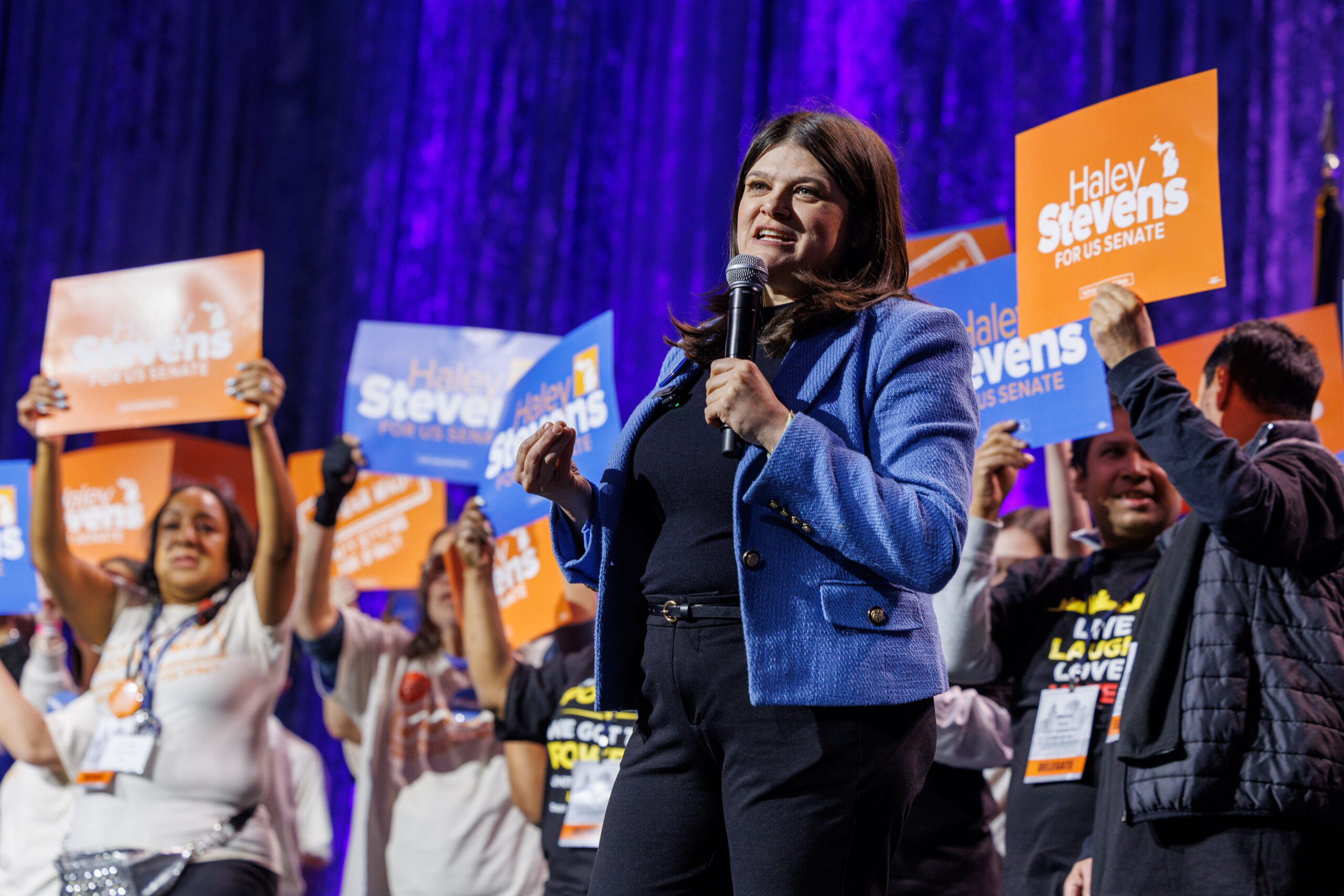
Jewish Democrats described a “shell-shocked” atmosphere at their statewide convention in Detroit on Sunday, which saw marked hostility to pro-Israel voices within the party that were marginalized and shouted down, Jewish Insider’s Gabby Deutch reports.
Tense climate: Rep. Haley Stevens (D-MI), a moderate and pro-Israel candidate for Senate, faced loud, sustained boos when she spoke in front of the main convention room. One person spotted an attendee on Sunday wearing a shirt that said “Resistance until liberation,” with an image showing someone wearing a keffiyeh throwing rocks. Rep. Kristen McDonald Rivet (D-MI), a moderate Democrat representing a swing district, who is not Jewish, on Tuesday described the scenes from the convention as “deeply troubling,” and in particular criticized the party’s nomination of Amir Makled, a Dearborn attorney with a history of social media posts praising Hezbollah, for a position on the University of Michigan Board of Regents.
Further fallout: Sen. Gary Peters (D-MI) also criticized the divisive behavior by Democratic Party activists at the convention, JI’s Marc Rod reports.
SCOOP
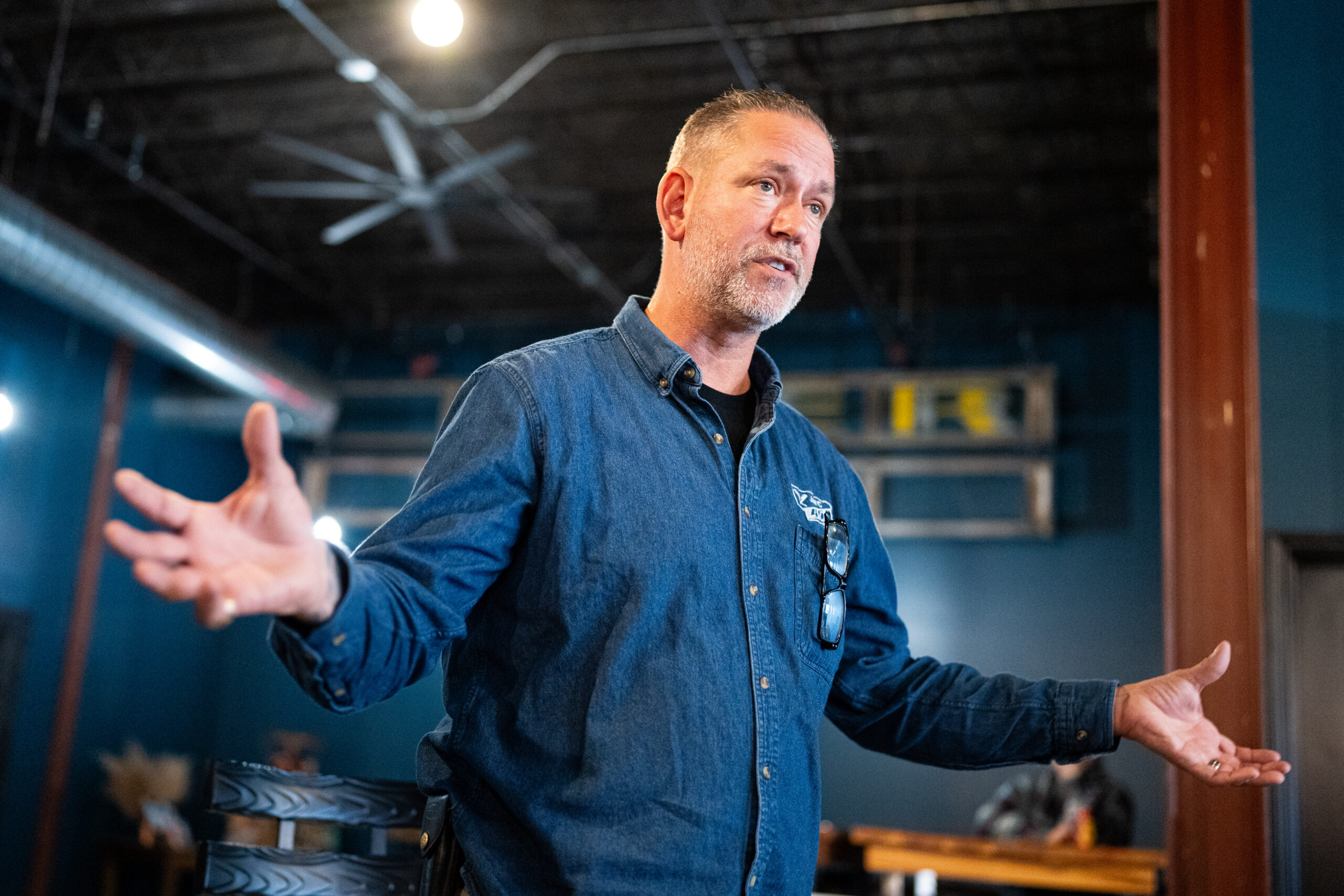
A former Democratic Socialists of America organizer has been a top advisor to independent Nebraska Senate candidate Dan Osborn and Democratic Maine Senate candidate Graham Platner, Jewish Insider’s Marc Rod reports.
Background: Daniel Moraff was a longtime DSA member, including acting as a local and national DSA organizer and leader in the mid-to-late 2010s, though he said his membership lapsed in 2019 because his local chapter became too focused on internal matters. He argued in a now-deleted 2017 article that the best way for socialists to gain political power and achieve elective office would be by running in Democratic primaries.
CAMPUS CONTROVERSY

UCLA’s student government condemned a recent campus event featuring former Israeli hostage Omer Shem Tov, labeling the speaker selection as “selective platforming of narratives that obscure the broader reality of ongoing state violence” and “a troubling disregard for Palestinian life,” Jewish Insider’s Haley Cohen reports.
Council’s condemnation: In an undated letter to UCLA administration, as well as the organizers of the event — UCLA Hillel and the UCLA Y&S Nazarian Center for Israel Studies — and “affiliated campus stakeholders,” the UCLA Undergraduate Students Association Council wrote that it “condemns” the April 14 event, held on Yom HaShoah, which was titled “505 Days in Captivity: Omer Shem Tov’s Testimony of Resilience.” The council represents over 29,000 undergraduates at UCLA.
EXCLUSIVE
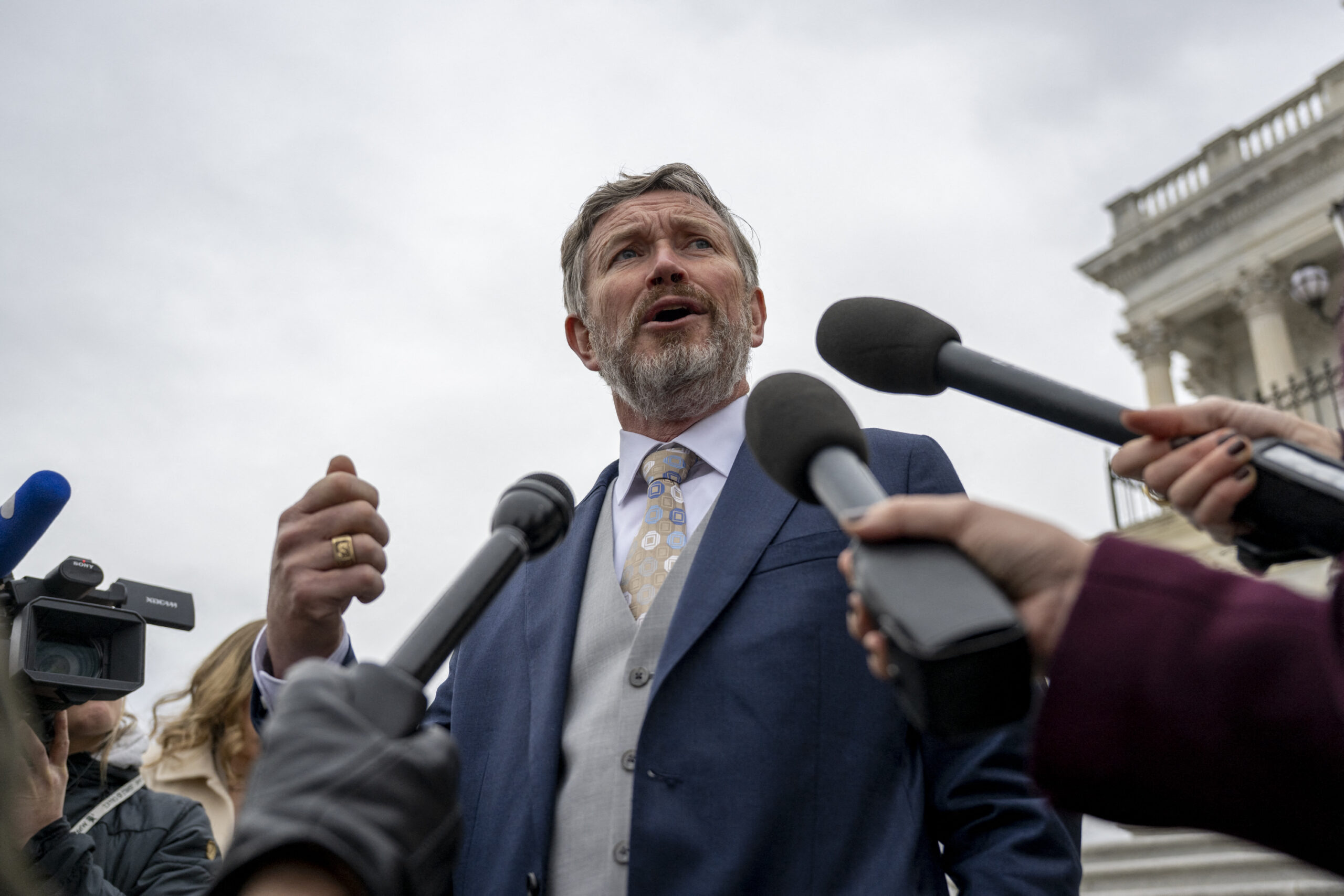
President Donald Trump’s effort to unseat Rep. Thomas Massie (R-KY), a longtime thorn in his side, got another big-money boost as Christians United for Israel Action Fund, the advocacy arm of the Christian Zionist group, announced that it is spending six figures to blanket Massie’s congressional district with dozens of billboards hitting the congressman over his opposition to the Iran war, Jewish Insider’s Marc Rod reports.
What it involves: “For one full month, CUFI Action Fund will dominate Kentucky’s 4th Congressional District outdoor advertising space by securing every available billboard in the district, creating a broad and highly visible message presence across the region,” CUFI Action Fund senior director Ari Morgenstern told JI. “The buy spans key communities across the district, ensuring the message reaches voters in both local population centers and along major commuter and travel routes.” The Kentucky primary election, where Massie is facing off against Trump-endorsed Navy veteran Ed Gallrein, is on May 19.
ARMS ARGUMENTS
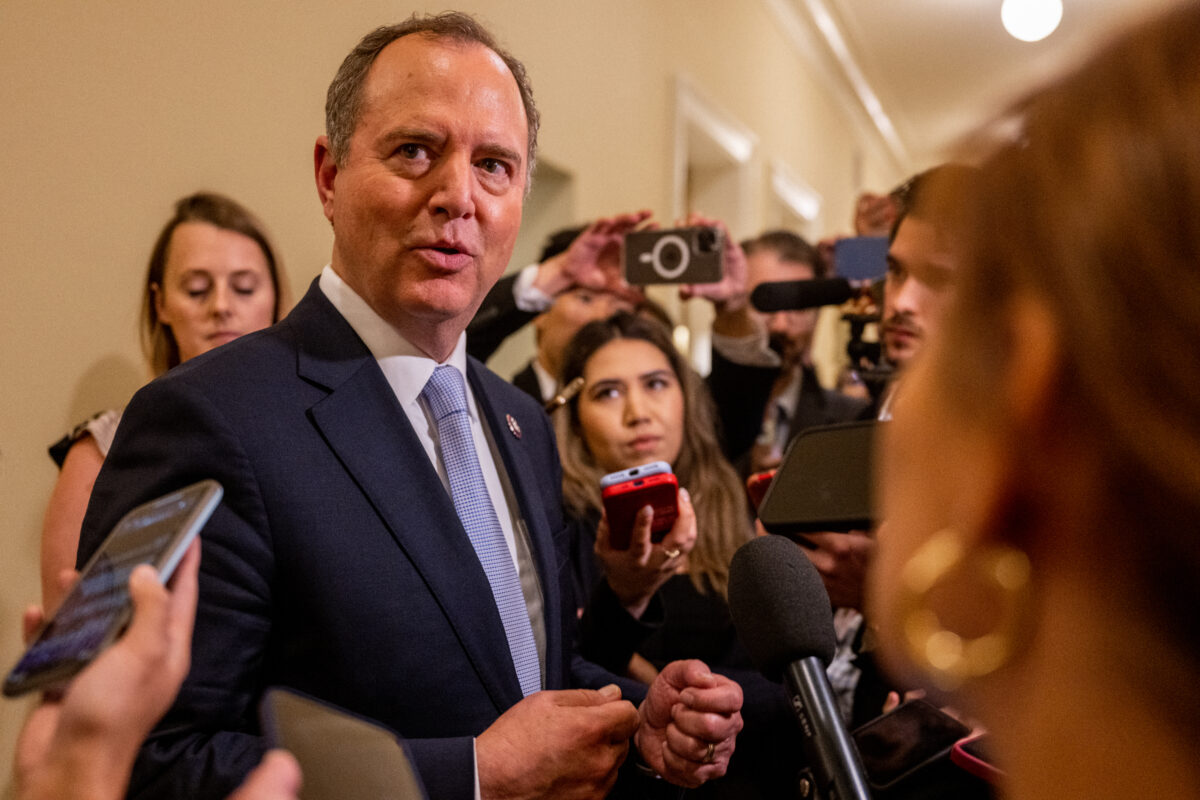
Sens. Adam Schiff (D-CA) and Mark Kelly (D-AZ), both of whom voted for the first time last week in favor of blocking some U.S. arms sales to Israel, said that their future positions on such votes would be made on a case-by-case basis, determined by the specific sales in question and the circumstances surrounding the votes. The two were somewhat surprising votes in favor of Sen. Bernie Sanders’ (I-VT) effort to block U.S. arms sales, having generally maintained pro-Israel records while in Congress, Jewish Insider’s Marc Rod reports.
What they’re saying: “I was, and am, strongly opposed to the war in Iran, and I couldn’t justify voting against our own supplemental funding bills, which I plan to, and supporting funding for the same war in a JRD,” Schiff told JI, referring to the Joint Resolutions of Disapproval to block specific arms sales to Israel. “I’ll evaluate each circumstance as they come.” Kelly disputed the notion that his vote had flipped, saying, “I make these decisions based on what is the current situation, and what is the vote on — I don’t make these [decisions] in a vacuum.”
Transatlantic tensions: Democratic lawmakers are expressing concern over Israel’s fracturing relationship with key European allies, while experts say the shifting dynamics could carry longer-term economic and political risks for Jerusalem, even if Israel weathers threats to unwind largely symbolic defense agreements, JI’s Matthew Shea reports.
ACROSS THE POND

The arsonist who pleaded guilty to attacking a North London synagogue on Saturday night was released on bail by the Westminster Magistrates’ Court on Tuesday. The 17-year-old boy, whose name has not been disclosed due to his age, threw a bottle containing accelerant through the window of Kenton United Synagogue, according to the Metropolitan Police, Jewish Insider’s Haley Cohen reports.
Details: The Community Security Trust, U.K.’s Jewish security organization, said that the building faced minor smoke damage but no injuries. It was the third such attack on a Jewish institution in London within a week. District Judge Nina Tempia granted the arsonist bail under the conditions that he live and sleep at his home address and not enter any synagogue, or he will be rearrested, The Independent reported. A second suspect, a 19-year-old male, was also arrested after the attack and had been released on bail earlier this week, the Met Police said.
Worthy Reads
Barrack Going Rogue: The Wall Street Journal’s editorial board raises concerns that U.S. Ambassador to Turkey Tom Barrack is deviating from U.S. foreign policy in the Middle East. “In 30 minutes at Turkey’s Antalya Diplomacy Forum on Friday, Mr. Barrack managed to counsel the Middle East against democracy, push cooperation with Hezbollah, mock the Lebanon cease-fire, call to include Iran in Lebanon talks, play down Turkey’s purchase of Russian air defenses, and threaten Israel on Turkey’s behalf. On each point, Mr. Barrack is undermining U.S. policy. Iran has no business in Lebanon’s affairs, and President Trump has been at pains to distance Iran from the Lebanon cease-fire.” [WSJ]
Poison For the Dems: In The Washington Post, Democratic strategist Ethan Wolf posits that efforts by some Democrats to engage with extremists, such as Hasan Piker, risk damaging efforts to expand the party’s footprint ahead of the midterms and 2028 presidential election. “Democrats have been here before. The party’s most successful leaders understood that expanding the tent and policing its boundaries are necessary complements, not contradictions. … Open the tent. Talk to more people. Take more communication risks. But do it in a way that affirms the truth. The left is culturally savvy, not aloof; it is scornful of anti-Americanism, antisemitism and bigotry, not tolerant of them.” [WashPost]
Gaza Lit: In The Free Press, Matti Friedman introduces the concept of “Gazology,” a literary genre that removes Hamas and its Oct. 7, 2023, attacks from discourse around Gaza and is powered almost entirely by authors with no firsthand experience. “And lastly, and most importantly, Gazology rests on the idea that the Gaza war is not just Israel’s fault, a bad decision, or even a crime, but the doorway to the dark workings of the world. It’s in the last point that a reader glimpses the battery powering the genre. Gazology is a literature of Jewish evil. Its origins lie not in journalism or academic inquiry but in the pseudosciences that have sprung up over the centuries to explain the problems of humanity with stories about the malevolence of this group of people.” [FreePress]
What War Goals?: Puck’s Peter Hamby looks at recent polling indicating that Americans are confused about the Trump administration’s goals in the Iran war. “The takeaway from that thicket of answers is that there is no consensus view among voters as to what the war is for. … Taken together, it’s an ugly messaging failure for the president and his team at the White House. An imperfect comparison: After the invasion of Iraq, regardless of whether they supported the war or not, almost 90 percent of American voters agreed that the United States would find weapons of mass destruction there. Dubya and his crew of neocons might have cooked up the evidence, but at least they sold it.”[Puck]
Word on the Street
The University of Texas’ Dell Medical Center announced a $750 million gift from Michael and Susan Dell to fund what UT officials are calling the country’s first “AI-native” medical campus. The Dells are now the first UT donors to surpass over $1 billion in donations…
Kanye West was spotted leaving the Simon Wiesenthal Center in Los Angeles as the singer faces the cancellation of numerous stops on his upcoming European tour; some countries, including the U.K. and France, have revoked his entry permit, while in others, the venues and organizers themselves canceled shows due to West’s past antisemitic comments…
The Treasury Department announced sanctions targeting more than a dozen individuals and companies in Iran, Turkey and the United Arab Emirates that assisted Iran in procuring and transporting weapons and aircraft…
The U.S. suspended cash transfers to Iraq — including a delivery of $500 million in U.S. currency — with Treasury officials pressing Baghdad to dismantle Iran-backed militias in the country…
Half an hour before Rep. Sheila Cherfilus-McCormick (D-FL) was set to face a House Ethics Committee hearing recommending sanctions for a range of financial crimes, the Florida Democrat stepped down from Congress…
Representatives from the Board of Peace have reportedly met with officials from DP World to discuss the United Arab Emirates-owned company’s potential overseeing of humanitarian aid distribution in the Gaza Strip…
President Donald Trump has reportedly told aides that Florida Gov. Ron DeSantis is “begging” for a job in the administration — including potentially secretary of defense or being named a Supreme Court justice — when his term ends in early 2027…
Speaking at a health care summit on Tuesday, Mark Cuban, who had backed Vice President Kamala Harris in the 2024 election, said he would not support her in a future bid as she mulls entering the 2028 race…
A number of private-equity firms and investors are expressing interest in acquiring Casey Wasserman’s talent and marketing agency, which could be valued at $3 billion, as Wasserman looks to sell the company after the release of emails earlier this year between him and Jeffrey Epstein associate Ghislaine Maxwell…
The Department of Justice announced an investigation into the University of Washington’s handling of antisemitism, citing an event by an anti-Israel group that aimed to raise funds for Lebanon; the university distanced itself from the group, SUPER UW, saying that its status as a registered student organization was revoked last year, though the group’s membership is comprised of current students…
Two IDF soldiers involved in the desecration of a statue of Jesus in a southern Lebanese Christian town were sentenced to 30 days in military detention and will be removed from combat duty; six others who witnessed the incident, a photo of which went viral earlier this week, will be summoned for further discussions…
U.N. officials convened representatives from Saudi Arabia and the Iran-backed Houthis in Yemen in Amman, Jordan, for a meeting aimed at de-escalating tensions…
New York magazine profiles Rabbi Eliezer Lawrence, New York City’s “most in-demand mohel,” who has built a full-time practice performing hundreds of ritual circumcisions each year across the tri-state area…
Pic of the Day

Birthdays
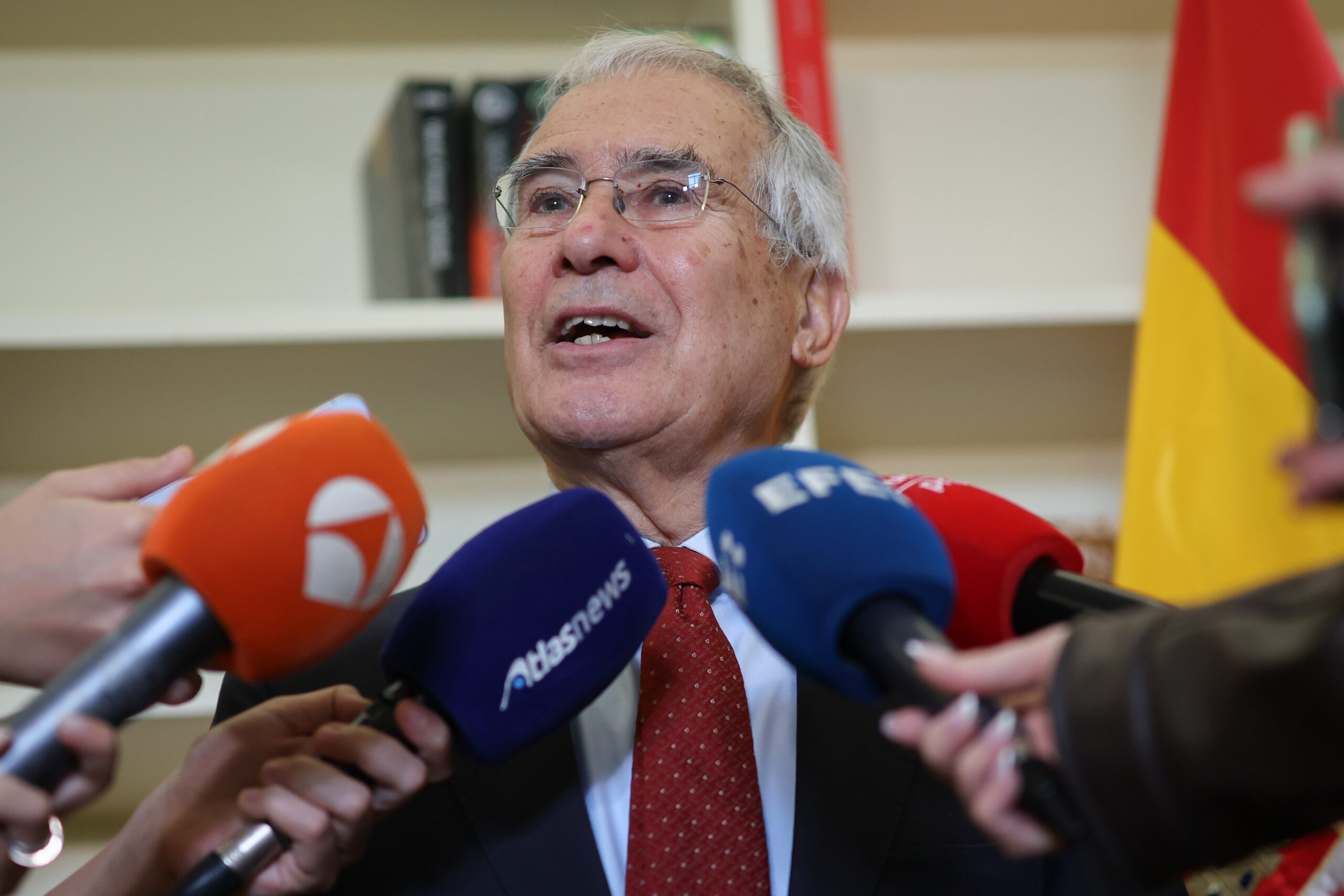
Former chief economist at the World Bank, Sir Nicholas Herbert Stern turns 80…
Calgary-based CEO of Balmon Investments, Alvin Gerald Libin turns 95… Co-founder of Human Rights Watch, formerly national director of the ACLU and then president of George Soros’ Open Society Institute, Aryeh Neier turns 89… English journalist and former anchor of BBC Television’s “Newsnight,” Adam Eliot Geoffrey Raphael turns 88… Conductor and professor of music at Boston University, Joshua Rifkin turns 82… Former mayor of Madison, Wis., he has served as mayor three times for a total of 22 years, Paul R. Soglin turns 81… Managing director emeritus of Kalorama Partners, D. Jeffrey “Jeff” Hirschberg… Real estate developer and principal owner of the NFL’s Minnesota Vikings, Zygmunt “Zygi” Wilf turns 76… President and chief investment officer of Alphabet Inc. and its subsidiary Google, Ruth Porat turns 69… Four-time Pulitzer Prize-winning investigative reporter for The Washington Post, Sari Horwitz turns 69… NYC-area accountant, he is chief financial officer at Melar Acquisition Corp, Edward Lifshitz… Chicago-based philanthropist and immediate past board chair of Ramah Camping Movement, Arnie Harris… New Zealand native now serving as the CEO of Australian-based job-board SEEK, Ian Mark Narev turns 59… Founder and editor of the data-journalism and research initiative themadad, Shmuel Rosner turns 58… NYC-based attorney, co-founding partner of Kriss & Feuerstein LLP, Jerold C. Feuerstein turns 58… Senior writer at The Forward and the author of My Jesus Year: A Rabbi’s Son Wanders the Bible Belt in Search of His Own Faith, Benyamin Cohen turns 51… Russian and Israeli public figure, media manager and an art dealer, Yegor Altman turns 51… Member of the Knesset for the National Unity party, Yehiel Moshe “Hili” Tropper turns 48… Tel Aviv-based deputy bureau chief for The Wall Street Journal, Shayndi Raice… Associate VP of external communications for the Jewish Federations of North America, Niv Elis… Former president of Y Combinator and now the CEO of OpenAI, Samuel H. “Sam” Altman turns 41… Associate at Skadden, Arps, Slate, Meagher & Flom, Zachary Krooks… Retired competitive ice dancer, Elliana Pogrebinsky turns 28…
Jewish Democrats described a ‘shell-shocked’ atmosphere at their statewide convention that saw marked hostility to pro-Israel voices
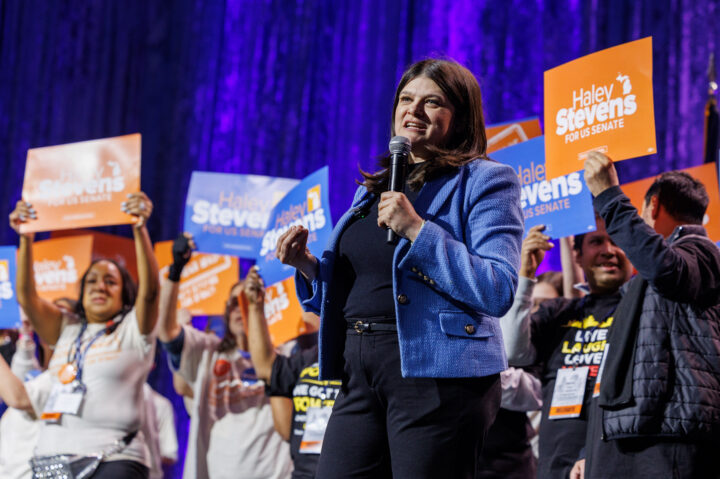
Andrew Roth/Sipa USA via AP Images
U.S. Rep. Haley Stevens speaks at the Michigan Democratic Party Endorsement Convention in Detroit, Mich., on April 19, 2026.
When thousands of Michigan’s most ardent Democratic activists gathered in Detroit on Sunday for the party’s nominating convention, Decky Alexander was thrilled: 200 people were in the room for a Jewish Democratic Caucus meeting, more than double the 70 people who showed up last year in its first official gathering.
Candidates for statewide office, from the U.S. Senate to attorney general, came by to pitch voters as activists schmoozed over bagels.
“It was incredibly energizing and affirming. That’s how the day began,” Alexander, who chairs the caucus, told Jewish Insider in an interview on Tuesday. “It didn’t end that way.”
As the day went on, Jewish Democrats were alarmed to see pro-Israel voices within the party marginalized and shouted down.
“Our Jewish caucus brought a lot of people to the convention, and I was with many of those people who were first-time conventiongoers. They were — I would use the term shell-shocked,” said Joan Lowenstein, a lawyer and former Ann Arbor city councilmember.
Rep. Haley Stevens (D-MI), a moderate and pro-Israel candidate for Senate, faced loud, sustained boos when she spoke in front of the main convention room. One person spotted an attendee on Sunday wearing a shirt that said “Resistance until liberation,” with an image showing someone wearing a keffiyeh throwing rocks.
The main reason that activists gathered that day was to vote to nominate candidates for a range of positions, including attorney general and secretary of state, distinct from other states where voters directly elect their party’s primary nominees.
The outcome of one relatively low-level race generated the most headlines: delegates’ decision to nominate Amir Makled, a Dearborn attorney with a history of social media posts praising Hezbollah, for a position on the University of Michigan Board of Regents. He unseated incumbent Jordan Acker, who is Jewish and was in part targeted due to his calls to discipline anti-Israel student protesters during the 2024 encampment at the Ann Arbor campus.
Acker told The Detroit News afterward that the level of antisemitism among Michigan Democrats is “extensive.”
“The question we have to ask as Jews is whether we still belong here,” said Acker, a Democrat.
The Democratic Party congratulated Makled in social media posts. What remains unclear is just how far party leaders will go to support Makled as he proceeds to the general election. Curtis Hertel, the chair of the Michigan Democratic Party, did not respond to a request for comment.
But Makled’s nomination is cause for concern among many Jewish Democrats.
“I certainly cannot vote for somebody who praises Hezbollah and uplifts posts that use ‘Jew’ as a slur. This was an unacceptable nomination, and I simply cannot affiliate with somebody who harbors those views,” Jeremy Moss, a state senator who is running for Congress in the Detroit suburbs, told JI on Tuesday.
Rep. Kristen McDonald Rivet (D-MI), a moderate Democrat representing a swing district, who is not Jewish, on Tuesday described the scenes from the convention as “deeply troubling,” and in particular criticized the party’s nomination of Makled.
For Jewish Democrats who are not willing to disavow Israel, the question of what to do in a race like the Board of Regents is uncertain. Lowenstein, the Ann Arbor activist, said she would “never” support Makled, but that she also would not vote for a Republican.
“I think Jewish voters are now in a position where we have to look at each person, and not look at their party, but look at what they stand for,” she said.
“I need to create the table, not just always be invited to the table. I just don’t know what that looks like,” said Decky Alexander, the Jewish caucus chair. “It’s a heartbreak. I felt, in moments, is this going to be a breakup? I don’t think so, but we’ve been feeling this way, a lot of us, for a long time.”
The Jewish voters who attended the convention on Sunday are among the most committed Democrats in the state, which makes it more notable that some were left questioning their place in the party.
“They think that there’s shrinking room for them in spaces that claim to be inclusive,” said Elyssa Schmier, the Anti-Defamation League’s Michigan director. “That’s kind of the saying of the Democratic Party: ‘We have a big tent, big-tent politics.’ It did not feel that way at the convention.”
Even the activists most disillusioned by Sunday’s events acknowledge that the convention attendees are not necessarily representative of the state’s Democratic electorate. All it took to attend the convention was registering as a party member a month beforehand and paying a nominal fee.
“I don’t know that it was an accurate representation of where the broader Democratic electorate would be, say, in a primary,” said Moss. “But there’s no question, there was incivility at best [and] displays of Jewish antagonism at worst in the convention hall.”
Jewish activists hope this moment of upheaval can be a chance for Jewish Democrats to reassert their place in the party, even if things feel tenuous and difficult at present.
“I need to create the table, not just always be invited to the table. I just don’t know what that looks like,” said Alexander, the Jewish caucus chair. “It’s a heartbreak. I felt, in moments, is this going to be a breakup? I don’t think so, but we’ve been feeling this way, a lot of us, for a long time.”
Between now and the general election, Alexander wants to talk to as many candidates as possible about whether they plan to take the concerns of Jewish voters seriously.
“I haven’t changed. I am not a Republican or a conservative. I cannot win my district as an independent. But I also wonder how I can continue to carry this party banner with anything approaching pride, or rather, without anxiety and ambivalence,” state Rep. Noah Arbit, a Democrat who represents West Bloomfield, told JI.
“This isn’t identity politics. This is figuring out, in a pluralistic nation like the United States, does everyone have a place? And we want the people who are running for office to answer: Do the Jews have a place in your vision and your platform?” she said.
Moss said he intends to use his platform as a state lawmaker and congressional candidate to answer that question clearly: Jews do have a place in the Democratic Party.
“My solution is to offer my candidacy for everybody and to ensure that folks know that there is a lane for Jewish Democrats in this moment, that we don’t have to feel hopeless, we don’t have to feel politically homeless, that this is a lane that we have to solidify here,” said Moss. “My core values as a Democrat are really Jewish values.”
For state Rep. Noah Arbit, a Democrat who represents West Bloomfield, the site of an antisemitic attack last month, Sunday’s convention adds to angst he has been feeling about his party for years. He was the one who founded the Jewish caucus in 2019, in response to rising antisemitism on the political left.
“I haven’t changed. I am not a Republican or a conservative. I cannot win my district as an independent. But I also wonder how I can continue to carry this party banner with anything approaching pride, or rather, without anxiety and ambivalence,” he told JI. Yet he said he will not cave to pressure from the party’s far-left flank.
“I certainly won’t be run out of representing my community by a band of extremists,” said Arbit. “So I need to stay.”
Plus, Michigan Dems swap Jewish regent for Hezbollah cheerleader
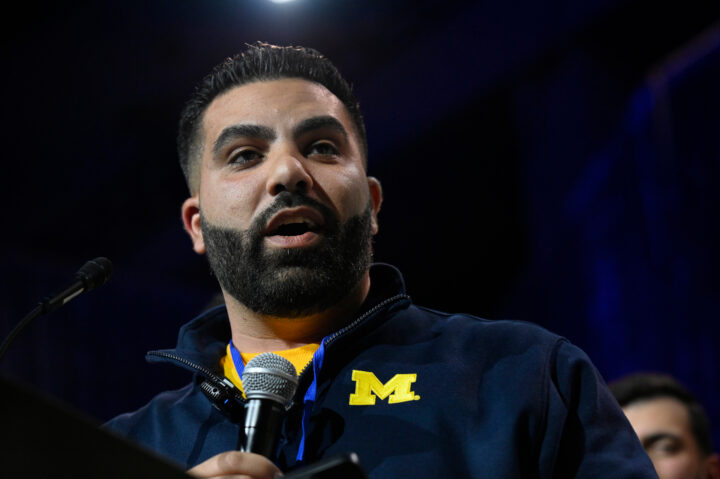
Jose Juarez/AP
Amir Makled, a candidate for the University of Michigan Board of Regents, addresses delegates after winning the party's nomination during the Michigan Democratic Party State Endorsement Convention, Sunday, April 19, 2026, in Detroit.
👋 Good Monday morning!
In today’s Daily Kickoff, we look at deepening concerns among Jewish Democrats over the party’s increasing embrace of terror supporters and antisemitism, and report on recent polling from Israel that indicates a divide in public opinion over the Trump administration-brokered recent ceasefires with Iran and Lebanon. We cover the weekend’s Alex Soros-backed inaugural Global Progressive Summit in Barcelona, and break down the results of last week’s special election in New Jersey’s 11th Congressional District, where progressive Analilia Mejia sailed to victory, despite a lack of support from some of the district’s most Jewish areas. Also in today’s Daily Kickoff: Rabbi Ephraim Mirvis, Raz Hershko and Luke Lindberg.
Today’s Daily Kickoff was curated by JI Executive Editor Melissa Weiss and Israel Editor Tamara Zieve, with assists from Danielle Cohen-Kanik and Marc Rod. Have a tip? Email us here.
What We’re Watching
- Vice President JD Vance is expected to return to Islamabad, Pakistan, this week for a second round of talks with senior Iranian officials amid conflicting reports over the status of the talks, with Iran saying it has not yet decided whether it will send representatives to the negotiations.
- Meanwhile, Tehran threatened retaliation this morning for the U.S.’ weekend attack on and seizure of an Iranian-flagged ship in the Gulf of Oman that had attempted to evade the Navy’s blockade of the Strait of Hormuz.
- Argentine President Javier Milei is in Israel today after arriving over the weekend ahead of events around Israel’s Yom HaZikaron and Yom HaAtzmaut, the country’s back-to-back commemorations of Israel’s fallen soldiers and victims of terror, and its Independence Day. Yesterday, Milei and Israeli Prime Minister Benjamin Netanyahu launched the Isaac Accords between the two countries. Read more about the initiative here.
- Israel will hold official Yom HaZikaron events at the Western Wall this evening and at Mt. Herzl, the country’s military cemetery, tomorrow morning.
- In Washington, Secretary of State Marco Rubio will speak this morning at a State Department ceremony unveiling the portrait of former Secretary of State Mike Pompeo.
What You Should Know
A QUICK WORD WITH JI’S JOSH KRAUSHAAR
Events in recent days may well be marking a tipping point in the decline of the Democratic Party — at least when it comes to its treatment of Jews, on top of its growing hostility toward Israel.
The weekend ended with the news that Michigan Democratic delegates, at their statewide convention Sunday, nominated a Hezbollah supporter, Amir Makled, to the University of Michigan Board of Regents, choosing to oust a Jewish member, Jordan Acker, whose home and car were repeatedly vandalized with antisemitic graffiti and his family threatened.
Acker’s offenses? He backed efforts to hold anti-Israel campus protesters at the University of Michigan accountable for assaulting police and engaging in intimidation of Jewish students, among other instances of student misconduct. He declined to support efforts to divest university funds from Israel, along with other members of the Board of Regents, as a radical faction of students had demanded.
Acker’s non-Jewish Democratic ticketmate, Paul Brown, who also supported discipline against anti-Israel students, wasn’t targeted and was renominated for election. But the Democratic delegates ousted Acker in exchange for Makled, who has posted on social media with comments praising Hezbollah’s leaders and retweeted antisemitic messages from the conspiracy-theorizing influencer Candace Owens.
The results mark a new low for Michigan Democrats. Also over the weekend, Michigan Senate candidate Abdul El-Sayed told CNN that he believes the Israeli government is just as evil as Hamas. Read more here.
In the same interview, El-Sayed also said that Sen. Chris Van Hollen (D-MD) should replace Senate Minority Leader Chuck Schumer (D-NY) as the Democratic leader in the upper chamber, citing Schumer’s continued support for U.S. aid to Israel. Van Hollen is among the most vocal critics of Israel in the Senate.
Michigan is a closely watched bellwether of the direction of the Democratic Party, and the latest developments underscore that a more radical faction of the party appears to be growing. This, in the state where dozens of Jewish preschoolers were nearly killed in a terrorist attack last month by a Hezbollah sympathizer who targeted the state’s largest synagogue.
dem defections
Rep.-elect Analilia Mejia (D-NJ) cruised to victory in last Thursday’s special election for New Jersey’s 11th Congressional District, but the results showed notable defections among Jewish Democrats — an early warning sign for both the left-wing Mejia and her party, Jewish Insider’s Marc Rod reports.
By the numbers: Mejia ran significantly behind other recent Democratic candidates in two municipalities that have traditionally strongly favored Democrats — Livingston Township and Millburn Township — both areas with significant Jewish populations. In Millburn, Mejia lagged 22 percentage points behind former Vice President Kamala Harris’ performance in the 2024 presidential election, and 17 percentage points behind Harris in Livingston.
SPEAKING OUT
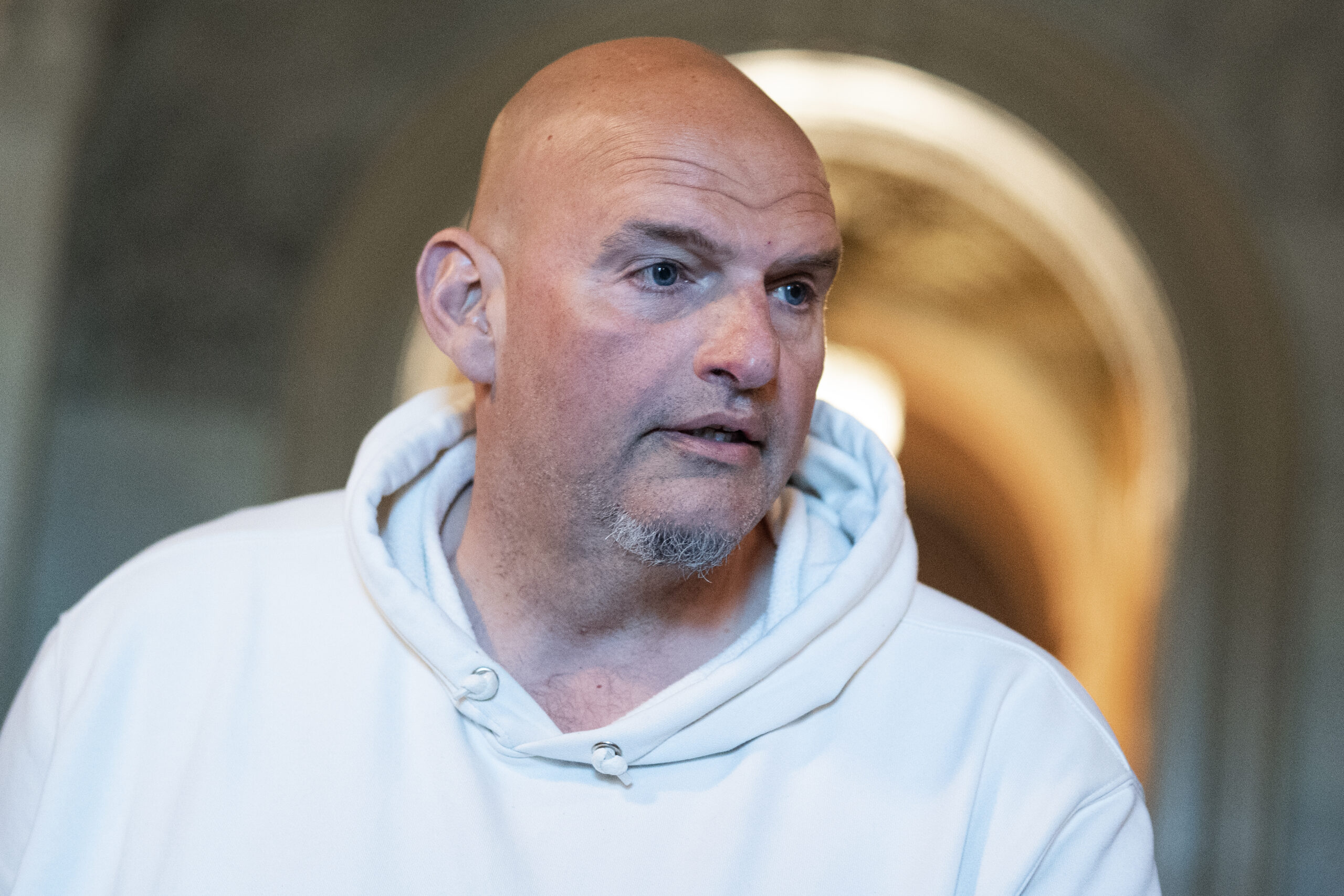
Sen. John Fetterman (D-PA) said on Friday that the Democratic Party “absolutely” has an issue with rising antisemitism, calling out the party’s embrace of candidates including Graham Platner in Maine and Abdul El-Sayed in Michigan while criticizing the recent progressive push to cut off defensive aid to Israel, Jewish Insider’s Emily Jacobs reports.
What he said: The Pennsylvania senator made the comments after being asked on CNN’s “The Arena with Kasie Hunt” if he believed the Democratic Party has a problem with antisemitism. Fetterman argued that the growing support for both candidates in their respective primaries was indicative of a tolerance for antisemitism within the party. “I mean, the guy that’s going to win the primary in Maine has a Nazi tattoo on his chest and now that’s no problem for a lot of voters,” Fetterman said.
IDENTITY CRISIS
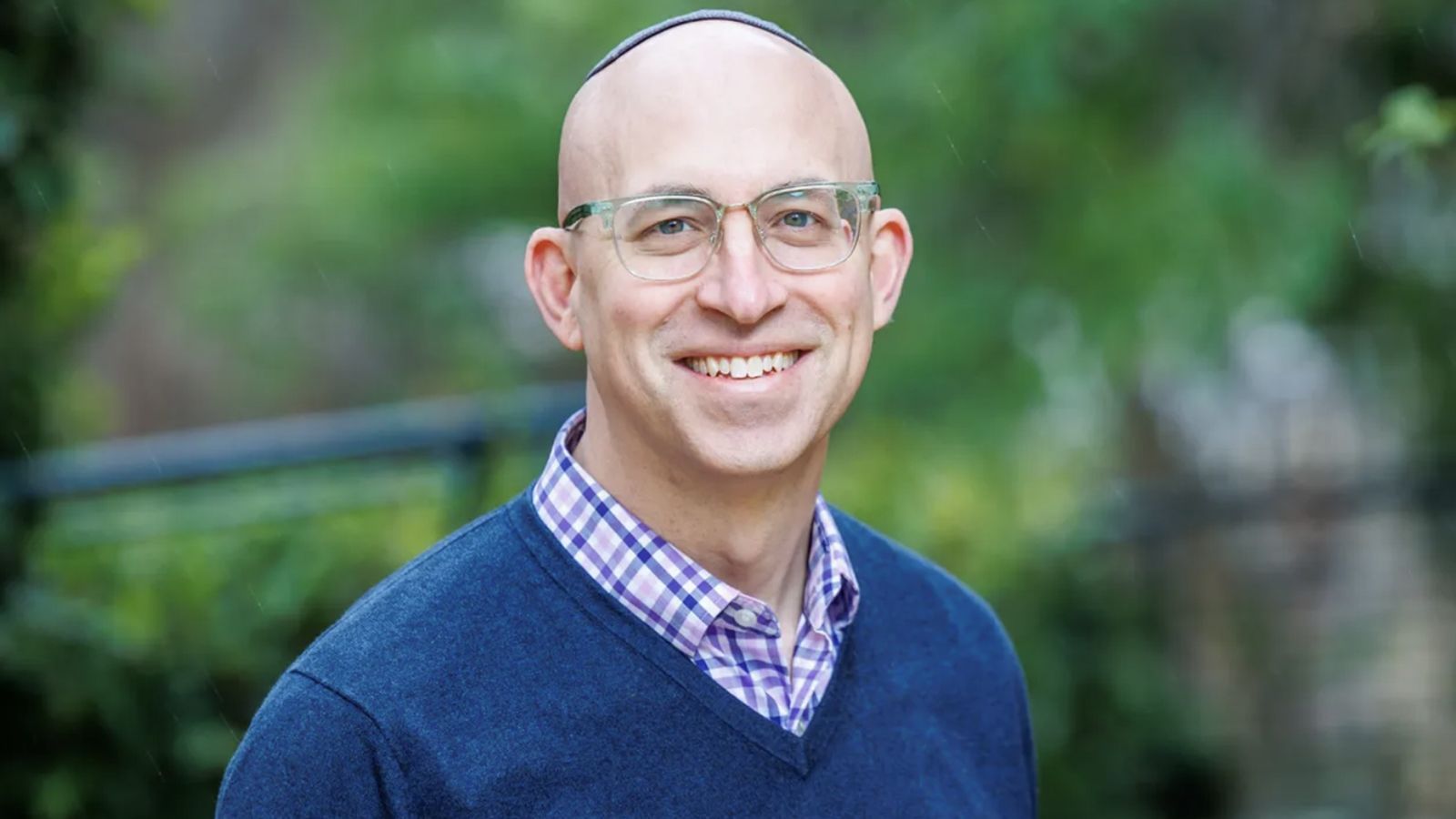
Amid a surge in antisemitism across the political spectrum, many American Jews have described feeling a growing sense of isolation. But for Yehuda Kurtzer, president of the Shalom Hartman Institute, being “politically homeless” is not a crisis to be solved, but rather a position to be embraced, Jewish Insider’s Matthew Shea reports.
A different perspective: “I don’t think some measure of political homelessness is a fundamentally bad thing,” Kurtzer said on Thursday while speaking alongside Jeffrey Goldberg, editor-in-chief of The Atlantic, at the Capital Jewish Museum in Washington. “I think Americans have become hyper-partisan in ways that reflect that partisan political identity has become part of our identities in ways that are not healthy for Americans.” Kurtzer and Goldberg sat in conversation at an event focused on American Jewry ahead of the upcoming 250th anniversary of the founding of the United States.
the view from israel

A weekend of diplomatic turbulence has deepened fault lines in Israel over the ceasefires in Lebanon and Iran, with public opinion split along political lines over whether President Donald Trump is serving Israeli interests — or overriding them. Trump’s announcement of a ceasefire in Lebanon on Thursday, before any known progress had been made in talks between Jerusalem and Beirut toward dismantling Hezbollah, already made waves in Israel, Jewish Insider’s Lahav Harkov reports.
Tough talk: Israeli Prime Minister Benjamin Netanyahu said on Friday that “we have not yet finished the job,” but said Israel was “provid[ing] an opportunity to advance an integrated diplomatic and military solution with the Lebanese government,” at Trump’s request. Within an hour of the release of Netanyahu’s statement, Trump published a Truth Social post in which he “PROHIBITED” Israel from continuing to bomb Hezbollah targets, adding: “Enough is enough!!!” Shira Efron, a senior fellow at RAND who serves as the think tank’s distinguished chair for Israel policy, told JI that “there is no question that the tone – ‘prohibited’ in upper case, ‘enough is enough’ – struck a sensitive note in Israel, and people are talking about a vassal state.”
Under pressure: Rep. Brian Fitzpatrick (R-PA), a moderate Republican and co-chair of the House Problem Solvers Caucus, introduced a war powers resolution on Thursday that aims to enforce the deadlines for the war in Iran laid out in the 1973 War Powers Act, breaking with all Republicans except Thomas Massie (R-KY) JI’s Marc Rod reports.
ENVOY SPOTLIGHT
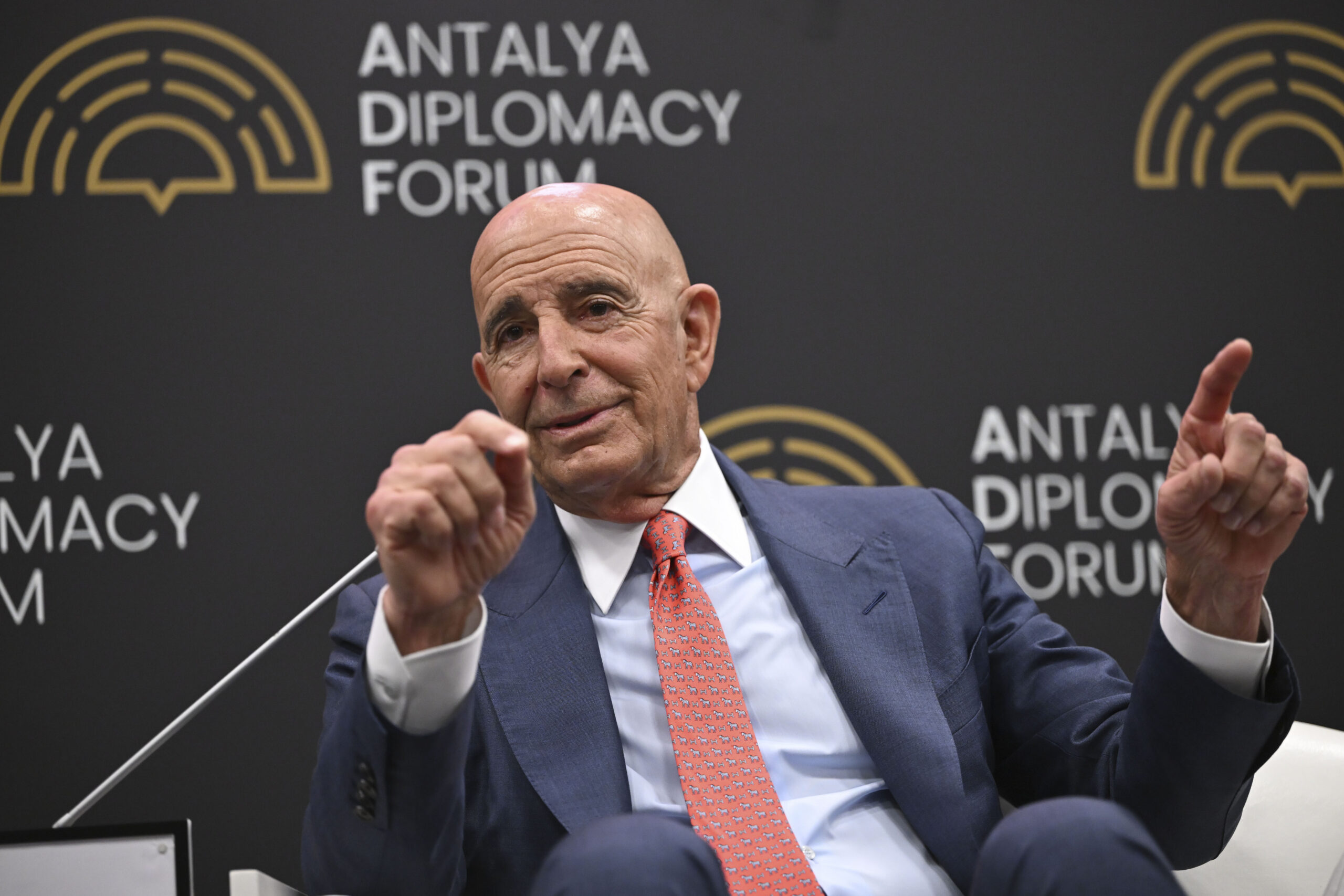
U.S. Ambassador to Turkey Tom Barrack faced fresh condemnation from two Senate Republicans and conservative influencers for a series of comments he made at the Antalya Diplomacy Forum in Turkey this weekend in which he repeatedly criticized Israel and praised Ankara, Jewish Insider’s Marc Rod reports.
Hezbollah hiccups: To comments by Barrack claiming that the current ceasefire in Lebanon “is so delicate because everybody has been equally untrustworthy” — referring to both Israel and Hezbollah — Sen. Lindsey Graham (R-SC) said he “respectfully and strongly disagree[s].” Barrack said at the conference there needs to be “a path with Hezbollah, and that path has to be not killing Hezbollah.” He further dismissed the idea that the Lebanese Armed Forces would act to disarm Hezbollah, as is required under the terms of the current and past ceasefires. “I always get in trouble because Hezbollah, in American parlance, and most of the West, is a foreign terrorist organization. Hezbollah, in Lebanon, is also a political organization,” Barrack added.
UNITING THE GLOBAL LEFT
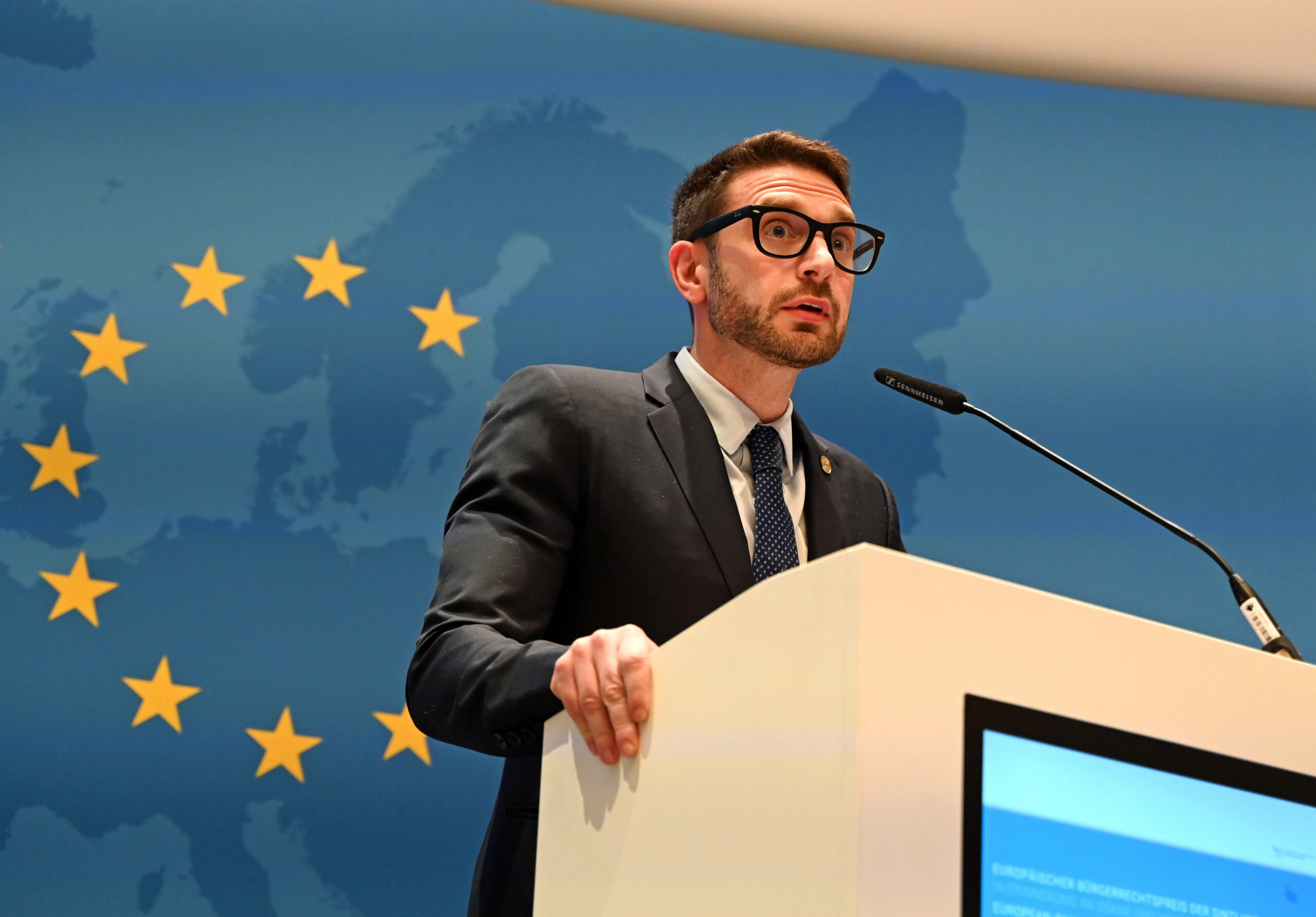
A range of Israel critics, from Sen. Chris Murphy (D-CT) to Israeli lawmaker Ahmed Tibi, were among those gathered in Barcelona, Spain, over the weekend for the inaugural Global Progressive Summit, backed by left-wing philanthropist Alex Soros. The conference brought together representatives from over 40 countries, offering, according to its website, “a necessary alternative to conservative and far-right forces,” Jewish Insider’s Lahav Harkov reports.
In attendance: Spanish Prime Minister Pedro Sánchez, an outspoken critic of Israel who called on Saturday to downgrade EU-Israel relations, hosted the two-day conference, whose American attendees also included Minnesota Gov. Tim Walz, with Soros. Sen. Bernie Sanders (I-VT), New York City Mayor Zohran Mamdani and former Secretary of State Hillary Clinton sent video messages. South African President Cyril Ramaphosa, whose government petitioned the International Criminal Court to prosecute Israeli leaders, Brazilian President Lula de Silva and U.K. Justice Secretary David Lammy were also in attendance.
Worthy Reads
Dumb and Dumber: The Atlantic’s Yair Rosenberg explores the expanding platforms of influencers and public figures who are uneducated on the issues about which they speak and unchallenged by interviewers. “Talking with Piker about a political coalition to save American democracy without discussing his affinity for China’s rulers is like teaming up with Carlson without interrogating his praise for Russian President Vladimir Putin — or with Donald Trump without examining his outlook toward Israeli Prime Minister Benjamin Netanyahu. And yet, only the debate over the latter tends to happen, such that Israel crowds out all other considerations, including extremely consequential beliefs that can end up going unchallenged.” [TheAtlantic]
It’s All Relative: In The Washington Post, the American Enterprise Institute’s Danielle Pletka raises concerns about the presence of relatives of officials from American adversaries who are living in the U.S., amid an effort to deport some of those family members. “The U.S. is littered with other nepo babies, wives and cousins — what the Iranians and Arabs call aghazadeh and the Russians call mazhor — enjoying the privileges of living in the land of the free, often made possible by the ill-gotten gains of the fam back home. It’s little wonder why they came. … It turns out the easiest route is through higher education, with some institutions explaining outright how F-1 student visa holders can transfer to permanent status upon graduating.” [WashPost]
Dropping the Trump Name: The New York Times’ Eric Lipton spotlights an effort by the wealthy Khayyat family in Syria to influence U.S. foreign policy in Syria through the Trump family’s business dealings. “Such a mixing of personal and diplomatic affairs has long been the norm in Middle Eastern nations, where a small set of players have historically run, and profited from, their dominant role in society. But it has become the way Washington operates in Mr. Trump’s second term, too. … [A friend of Mohamad Al-Khayyat, Syrian American businessman Tarek] Naemo, who is based in Florida and runs an investment firm that he said had done deals with partners including the Qatari Investment Authority, began with his wife to court at least a dozen members of Congress, starting with Speaker Mike Johnson.” [NYTimes]
Word on the Street
President Donald Trump nominated Under Secretary of Agriculture Luke Lindberg to serve as the next head of the World Food Program, following Cindy McCain’s announced departure from the role over health issues…
The New York Times looks at divisions within the conservative campus movement in the wake of Turning Point USA founder Charlie Kirk’s assassination in September, finding that members of some campus chapters and breakaway groups are split “over support for Israel, the showcasing of conspiracy theorists and who is rightfully American,” as well as disagreements over the war against Iran…
Buckley Carlson, the son of Tucker Carlson, departed his role as deputy press secretary to Vice President JD Vance to start his own consulting firm…
Commerce Secretary Howard Lutnick was spotted with Philadelphia 76ers owner Josh Harris as the 76ers took on the Boston Celtics in Massachusetts over the weekend…
Authorities in Los Angeles arrested an Iranian woman with permanent U.S. residency status accused of brokering sales of Iranian weapons to the Sudanese Armed Forces for use in the African country’s yearslong civil war…
A George Washington University alumna is suing the school and her former employer, Ernst & Young, as well as a number of GWU officials, alleging that she faced retaliation and discrimination in the wake of an address she delivered at one of the school’s 2025 commencement ceremonies; her remarks calling for GWU to divest from Israel deviated from those approved by the school…
Rümeysa Öztürk, the Tufts University graduate student who was detained for more than a month by immigration officials for co-authoring an op-ed critical of Israel, is returning to Turkey, having completed her Ph.D. studies at the Boston-area school…
The New York Times reviews When We See You Again, Rachel Goldberg-Polin’s account, which will be released tomorrow, of her life before and after the 2024 death of her son, Hersh Goldberg-Polin, at the hands of his Hamas captors…
Canada’s Centre for Israel and Jewish Affairs, with the backing of more than 80 Jewish groups, is calling on the federal government in Ottawa to increase funding to address “rising security demands” as the country sees a sharp increase in antisemitism…
A French peacekeeper was killed and three others members of UNIFIL, the U.N.’s peacekeeping force in Lebanon, were injured in what France and UNIFIL said was a Hezbollah attack; French President Emmanuel Macron, whose government was sidelined from recent U.S.-brokered talks between the Lebanese and Israeli ambassadors to Washington, called on Beirut to “immediately arrest those responsible and assume their responsibilities alongside UNIFIL”…
An appeals court in France ruled than an Algerian-born nanny who worked for a French Jewish family was not acting out of antisemitism when she poisoned family members, despite having told police, “Because they have money and power, I should never have worked for a Jewish woman; she only brought me trouble”; the woman was sentenced to two-and-a-half years in prison, less than if she was found to have been motivated by antisemitism…
Kanye West’s upcoming concert in Poland, which was slated to take place in June, was called off by organizers, one of whom cited “formal and legal reasons,” weeks after West’s planned concerts in France and the U.K. were also cancelled amid public outcries over his past antisemitic comments…
Helen Mirren, Skylar Astin and Liev Schreiber were among more than 1,000 signatories to an open letter organized by Creative Community for Peace in support of Israel’s continued participation in the Eurovision Song Contest…
U.K. Chief Rabbi Ephraim Mirvis decried the “sustained campaign of violence and intimidation” targeting British Jews amid a series of attacks on Jewish communities around the country…
Mirvis’ statement came shortly before the arrest of two teenagers in connection with an arson attack that caused minor damage to London’s Kenton United Synagogue; British authorities are investigating whether the recent spate of attacks targeting Jewish sites in the country is linked to Iran…
A British court rejected an effort by the International Centre of Justice for Palestinians to issue a summons for a dual U.K.-Israeli citizen who traveled to Israel on Oct. 8, 2023, to rejoin his unit as a reservist in the wake of Hamas’ deadly attacks the day prior…
Sixteen Arab and Muslim countries — including Saudi Arabia, Jordan and Egypt, but excluding Abraham Accords signatories the United Arab Emirates, Morocco and Bahrain — signed onto a Qatar-led statement condemning Israel for appointing former Israeli Ambassador to Kenya Michael Lotem as the country’s first ambassador to Somaliland, four months after Jerusalem recognized the African state…
The New York Times explores the impact of the war in Iran on Qatar and other U.S.-allied Gulf nations, finding Doha [t]rapped between their chief ally and their neighbor” and now being “forced to rethink their security strategies”…
The UAE’s minister of state for international cooperation said that 90% of the sites struck in the Gulf nation by Iran over the course of the recent conflict were civilian infrastructure; Reem Al Hashimy said that approximately 2,800 missiles and drones launched by Iran had hit targets in the UAE…
The governor of the UAE’s central bank, who met last week in Washington with Treasury Secretary Scott Bessent, introduced the possibility of working with Washington to create a currency-swap line as a potential financial backstop should the Gulf state face further economic challenges…
Iran said it executed two people alleged to have collaborated with Israel’s Mossad…
The IDF released a map showing the Lebanese territory under its control as it fights against Hezbollah in the southern part of the country…
IDF spokesperson Lt. Col. Nadav Shoshani said the military was conducting an investigation following the surfacing of a photo in which an IDF soldier is pictured desecrating a statue of Jesus in the southern Lebanese Christian village; Israeli Prime Minister condemned the incident, saying he “was stunned and saddened” and that Israel “express[es] regret for the incident and for any hurt this has caused to believers in Lebanon and around the world”…
Senior Hamas officials confirmed to The New York Times that the terror group was willing to relinquish some of its weapons to the Palestinian administrative committee operating under the Trump administration’s Board of Peace…
Israeli Olympic silver medalist Raz Hershko won gold in her weight class at the European Judo Championships in Tbilisi, Georgia…
Pic of the Day

Yizhar Hess, vice chairman of the World Zionist Organization, hosted a reading on Sunday of Israel’s Declaration of Independence at the egalitarian section of the Western Wall in Jerusalem. Hess was joined by members of the Sydney Jewish community as well as former Israeli hostage Shoshan Haran.
Birthdays

Israeli model, swimwear designer and social media star, Neta Alchimister turns 32…
Stanford University professor and 2020 Nobel Prize laureate in economics, Paul Robert Milgrom turns 78… Chairman of the media networks division of Activision Blizzard, he previously held high-ranking roles at NFL Network, ESPN and ABC, Steve Bornstein turns 74… Philadelphia-based development professional, currently at AJC after a long career for a number of organizations, Andrew Demchick turns 70… Immigrants rights activist and professor at Salem State University, she is the eldest daughter of Noam Chomsky, Aviva Chomsky turns 69… Television and radio host, syndicated columnist and political commentator, Steve Malzberg turns 67… Past president and executive director of the D.C.-based Electronic Privacy Information Center, now at the Center for AI and Digital Policy, Marc Rotenberg turns 66… Author, journalist and former co-host of “The Femsplainers Podcast,” Danielle Crittenden Frum turns 63… Semi-professional race car driver and restaurateur, he was previously CEO, president and chairman of the Trust Company of New Jersey, Alan Wilzig turns 61… Television producer and game show host, known professionally as J.D. Roth, James David Weinroth turns 58… Israeli jazz bassist, composer, singer and arranger, Avishai Cohen turns 56… British film director, Sarah Gavron turns 56… Member of the U.S. House of Representatives, one of four Jewish Republican congressmen, Randy Fine (R-FL) turns 52… VP of government and public affairs at Cleveland-based GBX Group, a historic real estate development firm, Seth Foster Unger… Deputy associate administrator at the General Services Administration, Michael C. Frohlich… Chief philanthropy and leadership officer at the World Jewish Congress, Elliott G. Mendes… President and CEO at the Los Angeles-based Skirball Cultural Center, Jessie Kornberg turns 44… Former general manager of Bird in Israel, he is a nephew of Israel’s past president Reuven Rivlin, Yaniv Rivlin… ESPN sportscaster and former Fox Sports and NFL Network personality, Peter Schrager turns 44… New York-based national security and human rights lawyer, Irina Tsukerman… Co-founder of The Free Press and its head of strategy, Nellie Bowles turns 38… PM breaking news editor at CNN Politics, Kyle Feldscher… Policy advisor and counsel to U.S. Sen. Jack Reed (D-RI), Zachary L. Baum… Systems engineer at Google X, Joseph Gettinger turns 38… Facilitator, coach and workshop organizer, Daniela Kate Plattner… Research analyst at the U.S. Department of State during the Biden administration, David Mariutto… VP at Cedar Capital Partners, Alex Berman… CEO of Social Lite Creative and news anchor on ILTV, Emily K. Schrader… Israeli scientist, engineer and artificial intelligence researcher at Massachusetts Institute of Technology, Dr. Maor Farid turns 34… Working on advertising platforms at Apple, McKenna Klein… Senior associate at LvlUp Ventures, Andrew J. Hirsh… R&B, soul, pop singer and teen actress, at 13 she was the runner-up on the second season of “The X Factor,” Carly Rose Sonenclar turns 27… Diane Kahan…
While Democrat Analilia Mejia comfortably won the special election to succeed Mikie Sherrill, Jewish voters swung to the right
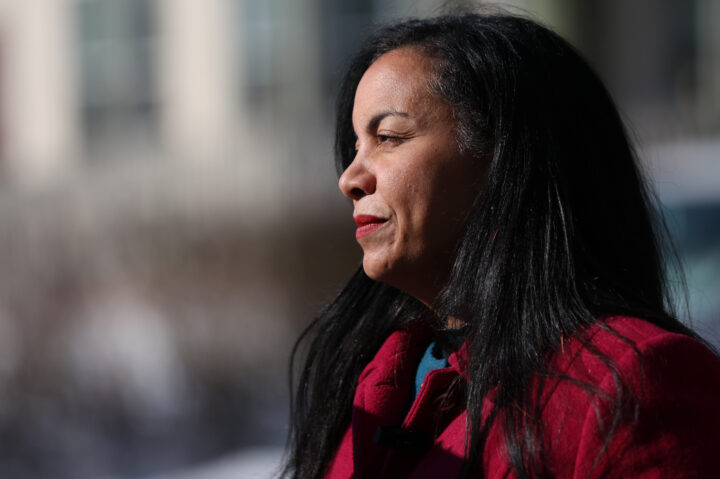
Heather Khalifa/Bloomberg via Getty Images
Analilia Mejia, US Democratic House candidate for New Jersey, speaks to members of the media outside of the Montclair Municipal Building on the first day of early voting in Montclair, New Jersey, US, on Thursday, Jan. 29, 2026.
Rep.-elect Analilia Mejia (D-NJ) cruised to victory in last Thursday’s special election for New Jersey’s 11th Congressional District, but the results showed notable defections among Jewish Democrats — an early warning sign for both the left-wing Mejia and her party.
Mejia ran significantly behind other recent Democratic candidates in two municipalities that have traditionally strongly favored Democrats — Livingston Township and Millburn Township — both areas with significant Jewish populations. In Millburn, Mejia lagged 22 percentage points behind former Vice President Kamala Harris’ performance in the 2024 presidential election, and 17 percentage points behind Harris in Livingston.
Dan Cassino, the director of the Fairleigh Dickinson University Poll, said that, given that Livingston favored Democrats by 34 percentage points but Mejia won it by just two, “you could count [that] as a 32-point underperformance.”
Joe Hathaway, the GOP nominee against Mejia, worked during his campaign to attract Jewish voters, casting himself as a moderate centrist and Mejia as an antisemitic extremist.
Jeff Grayzel, the deputy mayor of Morris Township who ran in the Democratic primary against Mejia, said that the special election presented an “actual Sophie’s choice” for Jewish Democrats.
“Some Jews surely voted for her because of their anger with President [Donald] Trump. But many Jewish Democrats I spoke to refused to support Mejia because of her genocide position,” Grayzel, who had hoped to rally support from Jewish voters across the district in the primary, said. Mejia accused the Jewish state of genocide shortly after the Oct. 7, 2023, Hamas attacks on Israel.
“So some Jewish Democrats voted for Hathaway, which was evidenced by the result in Livingston, and others simply stayed home,” Grayzel continued. “We will see from voter turnout data how many Jews actually sat out this election. Unfortunately, our voice is our vote, and declining to vote will only hurt the Jewish community in the long run.”
Jason Shames, the CEO of the Jewish Federation of Northern New Jersey, said “it’s disappointing to see someone representing New Jersey or any district in America who not only doesn’t fight antisemitism but seemingly aligns with those who delegitimize Israel. Her comments on Israel’s self defense to the horrific terror attack by Palestinians [are] alarming and should not be dismissed.”
Cassino said that while Mejia outperformed other Democrats who have run in this district, she “did slightly worse than we would have expected from a generic Democrat in the special election,” given that the environment strongly favored Democrats.
Cassino said that it’s a “reasonable hypothesis” that attacks on Mejia’s stance on Middle East policy drove Democrats in Millburn and Livingston to vote for Hathaway.
“I would be really cautious, though, about saying that her stance on Palestine, or any other issue, cost her any particular number of votes, because all of these numbers are conditional on turnout,” he added, noting that all of the voters who turned out for Mejia might not have turned out for a different Democratic candidate.
Cassino said that strategists are likely to read the results to mean that attacks on Mejia’s stance on Israel were effective.
“Maybe the most important thing here is that strategists — Democrats and Republicans alike — are going to look at these results and conclude that the attacks on Mejia worked, and ramp them up in November,” he added. “They’re also likely to try and use them against any candidate where they might plausibly stick. So, I hope voters liked those ads, because they’re going to be seeing a lot more of them.”
Micah Rasmussen, the director of the Rebovich Institute of New Jersey Politics at Rider University, said that the apparent protest votes in the Jewish community “could … matter in a different election,” but this time, “Mejia picked up other votes in their place.”
“A lot is being made about these 900 or so votes, and I want to be balanced about how I see them. Yes, they were certainly noticeable. Yes, you can never take any voting bloc for granted,” Rasmussen added. “But electoral coalitions do shift. What can’t be denied is that Mejia’s current margin of 19.5 percent is larger than any other candidate for federal or statewide office since [former Rep.] Rodney Frelinghuysen’s (D-NJ) 25.2 percent win over Mark Dunec in 2014.”
Former Democratic Rep. Kathy Manning: ‘There is no doubt that we are living through very difficult times for American Jews’
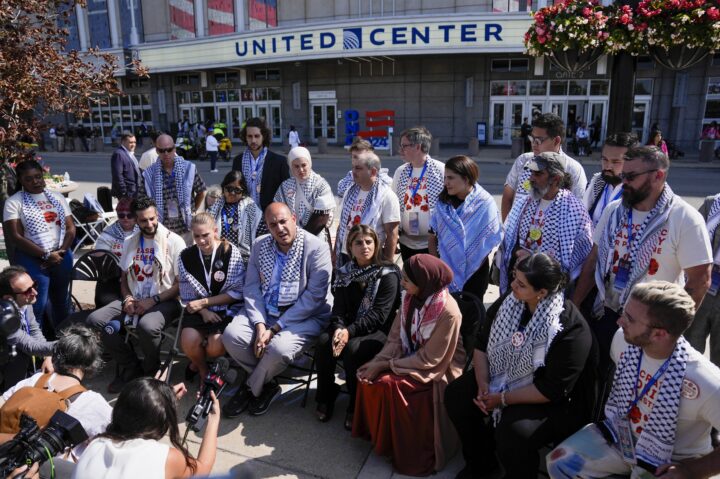
Matt Rourke/(AP
Uncommitted delegates hold a press conference outside the United Center before the Democratic National Convention Thursday, Aug. 22, 2024, in Chicago.
The debate over Israel within the Democratic Party has long been a particularly acute source of tension, in the wake of a protracted war in Gaza that deepened internal divisions over America’s increasingly contested relationship with one of its closest allies.
Recently, however, many Jewish and pro-Israel Democrats say they have observed a distinct and troubling new shift in that debate, as the range of politically acceptable opinions on Israel has strayed far outside the mainstream, with little pushback from party leaders.
Amid growing claims of Israel committing genocide as settled fact, openly pro-Hamas demonstrations, ongoing efforts to demonize pro-Israel engagement in Democratic primaries and rejections of Israel’s right to exist as a Jewish state, the political atmosphere is raising questions about whether the party is willing to collectively draw red lines around creeping extremism or if it is now accommodating anti-Israel sentiment that until not long ago had been more commonly viewed as off-limits.
While hostility toward Israel has been building for some time over its military assault in Gaza sparked by Hamas’ Oct. 7, 2023, attacks, Jewish Democrats warn that the party’s acquiescence to its anti-Israel wing risks alienating a core constituency that could have negative consequences in the midterms as well as the upcoming 2028 presidential election.
Their worries have dovetailed with a sharp rise in anti-Israel and antisemitic invective from the right that some Jewish Democrats contend is inseparable from a deeper antipathy that transcends traditional party lines.
“For those of us who care about a strong U.S-Israel relationship, there is reason to be concerned,” said Howard Wolfson, a longtime advisor to former New York City Mayor Michael Bloomberg. “The challenge is profound.”
Even as he said that challenge also extends to the right, Wolfson voiced apprehension that in his own party, “there are Democrats thinking of running for president who have said that they won’t take money from pro-Israel” political donors “and have thrown around the word genocide” while describing Israel’s conduct in Gaza. The Jewish community “has a real problem,” he lamented to Jewish Insider in a recent interview. “It is a subject of considerable angst and debate.”
Sara Forman, the former executive director of the New York Solidarity Network, an advocacy group that backs pro-Israel Democrats for state and local office, said, “The willingness to accommodate absurd assertions about Israel is a cancer that is spreading unchecked” within “the left ranks of the Democratic coalition” in addition to “factions of the Republican right wing,” a dynamic she and others attributed, in part, to the polarizing influence of online algorithms that frequently reward incendiary content.
“Right now,” she added, “I hate to say we are in an extremely frustrating situation where the identity of the Democratic Party is being redefined, and where a majority of center-left traditional liberal Jews are left somewhere in the wilderness.”
“To me,” she concluded, “it’s depressing.”
“It is very troubling for American Jews that we are even having to have this conversation,” Jon Reinish, a Democratic strategist often involved in Jewish and pro-Israel causes, told JI. “Putting aside what one thinks” about Israel, he added, “to see it become a flashpoint in politics feels pretty shitty, to be sure.”
The Jewish state, he told JI last week, “is something that transcends language in a political primary and goes back to something deep within us emotionally, in terms of our family and how we think of our own history.”
“In the last presidential election we saw Jews, especially in the suburbs, swing more toward the Republican candidate than they had since” Ronald Reagan in 1980, Reinish noted. “If I’m Democratic leadership, I would be looking very closely at that.”
Over just the past few weeks, the scope of tolerable views on Israel has slid into markedly antagonistic territory, according to interviews with more than a dozen Jewish and pro-Isrsel Democrats who voiced a growing sense of alarm over the party’s direction.
Earlier this month, for instance, Rep. Alexandria Ocasio-Cortez (D-NY) used her first appearance at the Munich Security Conference to not only repeat calls for conditioning U.S. aid to Israel but also to suggest that such support had enabled a genocide in Gaza. Though her comments were not new, that she had made them on one of the world’s most high-profile foreign policy stages underscored how her positions are continuing to gain greater currency in the party.
Some observers were also unnerved by Ocasio-Cortez’s decision to level an accusation toward Israel of genocide while in Germany, seen as insensitive to the history of the Holocaust.
Jewish Democrats say they have been unsettled by the growing ease with which anti-Israel critics have invoked charged claims of genocide without understanding its meaning or historical significance. “The genocide conversation,” according to Steve Fulop, the former mayor of Jersey City who now leads the Partnership for New York City, an influential business advocacy group, “has unfortunately monopolized the left and has become more commonplace and accepted.”
Fulop, a grandson of Holocaust survivors, said the issue was not a major focus of conversation when he ran an unsuccessful primary campaign for governor of New Jersey last year. “In the last six months,” he told JI last week, “it has become more prevalent and more of a talking point.”
This month, the subject emerged in a special election for a House seat in a wealthy northern New Jersey suburb, where a far-left candidate, Analilia Mejia, clinched the Democratic nomination — beating a former congressman, Tom Malinowski, who had faced outside spending from AIPAC due to his support for conditioning aid to Israel.
While AIPAC drew widespread backlash for its role seen as unwittingly helping to elevate a harsher critic of Israel to the House in Mejia, many pro-Israel Democratic elected officials in the state have since coalesced behind the nominee, suggesting her staunchly anti-Israel views are little impediment to winning the party’s broad support. In addition to accusing Israel of genocide, the only candidate in the primary to do so, Mejia, a progressive activist, denounced Israel after the Oct. 7, 2023, attacks without mentioning Hamas and expressed “incredible discomfort” with Israel’s existence as a Jewish state.
Even as Malinowski, for his part, disagreed with Mejia’s anti-Zionist sentiments, he echoed other Democrats who chose to endorse Mejia in the April special general election because, he wrote last week, he “strongly” believes that the “seat must remain in Democratic hands.”
Speaking broadly about anti-Israel currents now shaping the party, one Jewish Democratic member of the House said they have been unnerved by what they called an “obsession” with Israel among many far-left activists and candidates that reflects “litmus tests” not evenly applied to other key foreign policy issues.
“The line of what’s acceptable has shifted massively, especially since Oct. 7,” the House member, granted anonymity to speak candidly about the party, told JI last week.
“What I’m watching right now, in 2026, is a breakdown in respectful language toward the Jewish community,” Joel Rubin, a progressive strategist and former State Department official, explained in an interview with JI last week. “It is very troubling and implies hostility that is undeserved — considering nobody should be treated to that kind of language. But it is also really dangerous for the Democratic Party and our electoral prospects to have this internal hostility and disunity.”
In New York City, which elected a fierce critic of Israel as mayor last November, Jewish Democrats say that line has moved in a particularly troubling direction. More recently, for example, Brad Lander, a former city comptroller now challenging Rep. Dan Goldman (D-NY) in a heavily Jewish House district, drew scrutiny for hiring a campaign consultant who had boosted antisemitic conspiracy theories using a pseudonymous X account that also celebrated Iran and Hamas, among other controversial social media posts.
Even as Lander fired the consultant, Kaif Gilani, after his online activity was uncovered by JI earlier this month, the episode still fueled questions about whether he was adequately vetted, given that the consultant had established a profile as a well-known promoter of New York City Mayor Zohran Mamdani during the recent election. It also underscored just how common such extremism has now become in New York City — where protesters have in recent months openly chanted their support for Hamas outside synagogues.
Meanwhile, leading progressive lawmakers such as Ocasio-Cortez and Rep. Ro Khanna (D-CA), both of whom are seen as potential presidential contenders, have avoided publicly distancing themselves from a popular far-left streamer, Hasan Piker, who recently sided with Hamas while sharing his views on one of those protests, near a synagogue in Queens hosting an event promoting Israeli real estate investment.
Joel Rubin, a progressive strategist and former State Department official now at work on a book about Democratic foreign policy, said he interprets such rhetoric as part of a broader “political tactic by some folks in the base to try to silence Jewish voices and to intimidate them into not advocating on these issues.”
“What I’m watching right now, in 2026, is a breakdown in respectful language toward the Jewish community,” he explained in an interview with JI last week. “It is very troubling and implies hostility that is undeserved — considering nobody should be treated to that kind of language. But it is also really dangerous for the Democratic Party and our electoral prospects to have this internal hostility and disunity.”
“There has always been this struggle within the Democratic Party of the argument, on every issue, of what is acceptable and what is not,” Sam Lauter, a political consultant and pro-Israel activist in the Bay Area, told JI. “With regard to Israel, that argument is not new, but what is new is how much it’s increased and what has become acceptable and what has been just dismissed.”
The increasingly charged tenor of conversation around Israel “is not the way Democrats should be thinking about communicating to voters if we want to win elections outside of deep blue areas,” Rubin suggested. “My biggest fear is that people are afraid to stand up and speak out.”
Kenneth Baer, a former Obama administration official who now directs a communications firm, sounded a similar note of caution. “Democrats are running to outdo each other to criticize Israel to curry favor with the massively online left and the interest groups that constitute the party,” he told JI recently. “The political dynamics of 2026 may mean this doesn’t matter in November, but in 2028 and beyond, running to the extremes is not a political winner.”
“There has always been this struggle within the Democratic Party of the argument, on every issue, of what is acceptable and what is not,” Sam Lauter, a political consultant and pro-Israel activist in the Bay Area, told JI. “With regard to Israel, that argument is not new, but what is new is how much it’s increased and what has become acceptable and what has been just dismissed.”
Still, he argued, pro-Israel Democrats have also “missed out” on the opportunity to forcefully defend their positions. “It has been very clear for years that people who disagree with us have been organizing at a grassroots level while building up support and making their viewpoint a part of the party mainstream,” he said. “And our community stopped engaging at that level years ago, which is why many of us have been screaming that this is a huge problem.”
Former Rep. Steve Israel (D-NY), who previously helmed the Democratic Congressional Campaign Committee, attributed the changing landscape in large part to what he views as a demographic shift driven by younger voters “generations away from romantic images of Israel” that are now “replaced by algorithm-fueled social media portraying Israel dropping bombs on schools and hospitals in Gaza.”
“In politics, perception is reality, and the reality for younger people is that Israel is wrong,” he told JI.
But he said it would be a miscalculation to disengage from that conversation. “Pro-Israel activists who don’t understand the need to push back proceed at their own peril,” he said. “You can’t surrender the narrative, which means supporters of Israel on both sides of the aisle need to find a much more effective narrative, particularly toward young voters.”
Many pro-Israel activists are at a loss, however, for how to recapture the debate, as Middle East policy now appears likely to be a focus of the next presidential election.
“It’s easy to observe a problem and then not have specific ideas on the solution,” Israel told JI. “That is a fundamental question now.”
“I don’t have a great answer, to be honest with you,” said Wolfson, the Bloomberg advisor. “I find it is far easier to identify the breadth of the problem than to identify a solution.”
According to Lauter, “the Overton Window has shifted” for Democrats, “and what needs to also shift is our community’s understanding of how to deal with it and approach it.”
“Let’s see how the midterms go and which candidates jump in,” said Aaron Keyak, the deputy special envoy to monitor and combat antisemitism in the Biden administration who now serves on the board of Combat Antisemitism Movement. “But in the lead-up to 2028,” he told JI, “the Middle East policy discussion will certainly be more prominent.”
“Regardless of what we think or say today, the particular policy conversation leading up to 2028 is going to be driven by the candidates, so until we can fill out the answer to the ‘what’ and ‘why’ questions, we need to be able to answer the ‘who’ one,” Keyak added.
In the meantime, said former Rep. Kathy Manning (D-NC), who is now the board chair of Democratic Majority for Israel, the party still boasts a number of pro-Israel elected officials as well as candidates, including some her group recently announced it is endorsing in a range of contested House primaries.
“There is no doubt that we are living through very difficult times for American Jews,” she told JI in a recent interview, pointing to what she described as “unprecedented condemnation” of the U.S. alliance with Israel from both sides of the aisle. “What gives me hope,” she said, “is I know from my experience campaigning in a purple state in a competitive seat that the vast majority of Democrats still believe that Israel has the right to exist as a Jewish state and has the right to defend itself and its people.”
“We don’t have to love Israel,” but voters should understand the strategic benefits of working with a key Middle East ally, Hank Sheinkopf, a veteran Democratic strategist in New York City, said. “It ain’t about Jews,” he told JI. “It’s about the future of the United States of America.”
As the midterms near, Manning maintained that nominating pro-Israel Democrats will be a crucial step toward reclaiming the House. “The seats that are going to make the difference to taking back the majority are seats where candidates have to appeal not just to Democrats but also to independents and Republicans,” she said. “I think that it’s important for us to understand where voters are, regardless of what the loudest voices online or on the stage might be saying.”
Hank Sheinkopf, a veteran Democratic strategist in New York City, agreed with that sentiment, arguing that pro-Israel party members should be seeking to push the debate “back to the middle” and pressing a “straightforward geopolitical argument” to highlight the advantages of the U.S.-Israel relationship rather than relying on expenditures that have proven to be divisive in primaries.
“We don’t have to love Israel,” but voters should understand the strategic benefits of working with a key Middle East ally, Sheinkopf said. “It ain’t about Jews,” he told JI. “It’s about the future of the United States of America.”
Plus, Platner’s tattoo trouble doesn’t fade
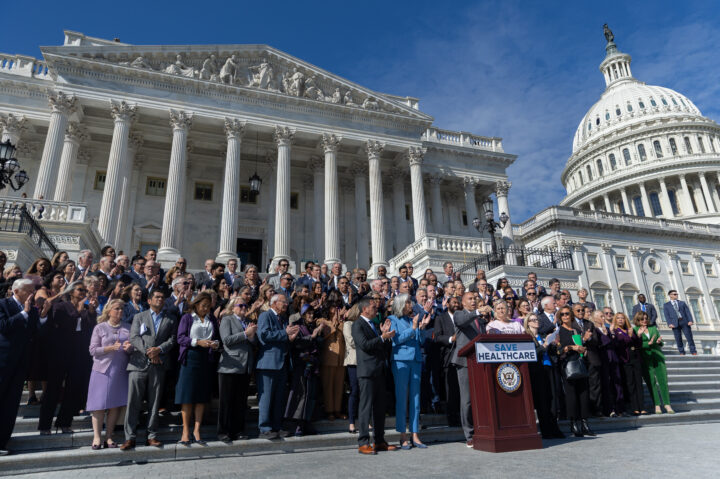
Nathan Posner/Anadolu via Getty Images
House Minority Leader Hakeem Jeffries (D-NY) speaks with other House Democrats, on the East steps of the U.S. Capitol in Washington, DC on October 15, 2025.
Good Monday morning.
In today’s Daily Kickoff, we talk to Jewish Democrats about their efforts to reengage the party’s rank-and-file on supporting Israel as the war in Gaza winds down, and report on the mounting evidence that Maine Senate candidate Graham Platner knew the origins of his tattoo of a Nazi symbol prior to national coverage of the body art and his related social media postings. We spotlight a new PAC in Washington state that is backing “pro-Jewish candidates” in Seattle’s upcoming school board elections, and report on a new initiative from the Jewish Book Council aimed at boosting Jewish and Israeli authors. Also in today’s Daily Kickoff: Alyza Lewin, Brian Romick and Jon Finer.
Today’s Daily Kickoff was curated by Jewish Insider Executive Editor Melissa Weiss and Israel Editor Tamara Zieve, with an assist from Danielle Cohen-Kanik. Have a tip? Email us here.
What We’re Watching
- We’re keeping an eye on efforts to locate and repatriate the bodies of the 13 remaining Israeli hostages, following President Donald Trump’s warning to Hamas on Saturday that the terror group had 48 hours to begin resuming the transfer of bodies. Teams from Egypt and the Red Cross also joined the effort over the weekend.
- Delegates from around the world are arriving in Israel today ahead of the start of the World Zionist Congress, which begins tomorrow in Jerusalem.
- Members of Pittsburgh’s Jewish community are marking the seventh anniversary of the deadly attack on the Tree of Life synagogue in which 11 congregants were killed.
What You Should Know
A QUICK WORD WITH JI’S GABBY DEUTCH
As a fragile cease-fire holds in Gaza, Jewish Democrats see an opportunity to reengage party Democratic activists and elected officials who have grown frustrated with Israel’s actions in Gaza.
Jewish Insider spoke to more than a dozen fundraisers, activists and professionals in the pro-Israel space, most with a long history of involvement in Democratic politics. Their pitch to Democrats at this precarious moment involves two parts: First, push to make President Donald Trump’s peace plan a reality. Second, ensure that Democrats understand that the value of America’s relationship with Israel is independent from the leader of either country — and that Israeli Prime Minister Benjamin Netanyahu, who remains broadly unpopular with the American left, won’t be in power forever.
Unlike naysayers on the right who suggest Democrats have abandoned Israel — a claim made frequently by Trump — the Jewish activists and communal leaders who advocate for a strong U.S.-Israel relationship and for U.S. aid to Israel still insist that support for the Jewish state remains bipartisan, and that congressional Democrats remain broadly pro-Israel. That proposition faced its toughest test during a two-year war, when Democrats became increasingly sympathetic to the Palestinians as Israel’s effort to eradicate Hamas left the Gaza Strip in ruins and claimed thousands of lives.
“I think ending the war turns the temperature down pretty dramatically,” said Brian Romick, CEO of Democratic Majority for Israel. “Right now, what we’re saying is, no matter where you were in the previous two years, we all need the deal to work, and so being for the deal [and] wanting the deal to work is a pro-Israel position right now, and then you build from there.”
At the start of the war, 34% of Democrats sympathized more with Israel, and 31% sympathized more with Palestinians, according to New York Times polling. New data released last month shows that 54% of Democrats now sympathize more with the Palestinians, compared to only 13% with Israel. That stark shift in public opinion corresponded to more Democratic lawmakers voting to condition American military support for Israel than ever before.
“I do think that there is room to build forward,” said Jeremy Burton, CEO of the Jewish Community Relations Council of Greater Boston, which works closely with Democratic lawmakers in deep-blue Massachusetts. “We have to be secure enough in our own belief in the future and our hope for the future to say ‘OK, if your point was that you’re committed to the long-term project of Israel’s security and safety, and you were looking for short term ways to pressure the government of Israel, then let’s move forward with the long-term project, even if we disagreed with you in the short term.’”
TATTOO-GATE

Graham Platner, the scandal-plagued Democrat running for Senate in Maine, continued to insist he only recently became aware that a black skull tattoo on his chest resembles a Nazi SS symbol, even amid mounting evidence suggesting he was aware of what the image represented long before he announced his campaign this summer, Jewish Insider’s Matthew Kassel reports. A new investigation published on Friday by CNN confirmed JI’s earlier reporting that Platner had on at least one occasion identified the tattoo as a Nazi SS symbol, known as a Totenkopf, to a former acquaintance more than a decade ago.
New evidence: The former acquaintance spoke with CNN, which also interviewed a second person who said that the acquaintance had mentioned Platner’s tattoo years ago. In addition, CNN reviewed a more recent text exchange from several months ago in which the acquaintance discussed the tattoo, before Platner himself revealed he had the tattoo in an interview last week, in an effort to preempt what he described as opposition research seeking to damage his insurgent Senate campaign. Both JI and CNN also cited deleted Reddit posts in which Platner, a 41-year-old Marine veteran and an oyster farmer, defended the use of Nazi tattoos, including SS lighting bolts, among servicemembers. In one thread, a user had mentioned the Totenkopf, further indicating that Platner had been aware of its symbolism before he entered the race in August to unseat Sen. Susan Collins (R-ME).
ONLINE APPEARANCE
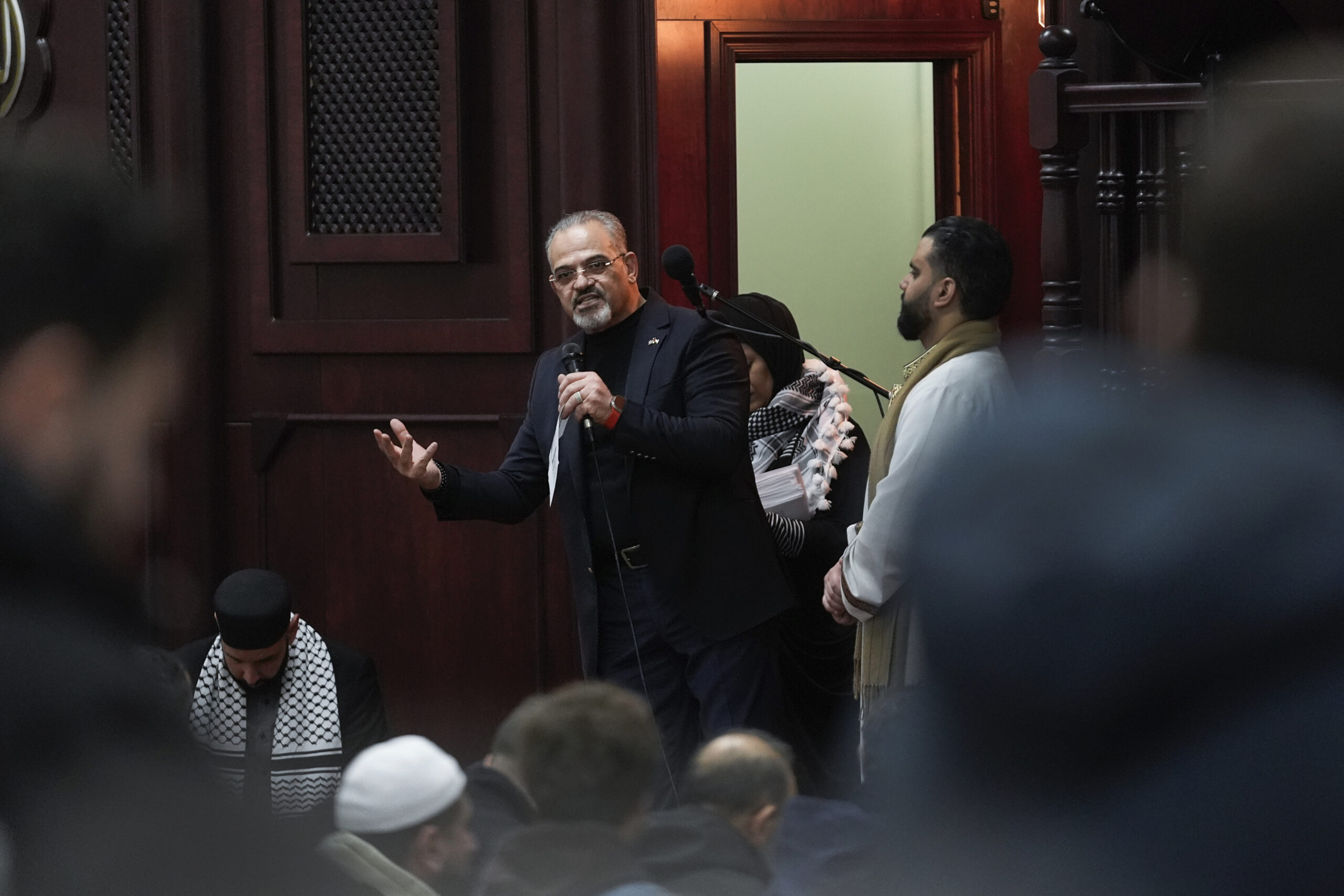
The executive director of the Council on American-Islamic Relations’ Ohio branch moderated an online event last week featuring a Hamas official designated as a terrorist by the Treasury Department, as well as other Hamas and Palestinian Islamic Jihad members. The Beirut-based think tank Al-Zaytouna Centre for Studies and Consultations hosted an event in Arabic last week titled “Palestinians Abroad and Regional International Strategic Transformations in Light of Operation Al-Aksa Flood,” using Hamas’ name for its Oct. 7, 2023, attacks on southern Israel, Jewish Insider’s Lahav Harkov reports.
Terror talk: Among the speakers at the web conference was Majed al-Zeer, who was designated by the Treasury Department in October 2024 as “the senior Hamas representative in Germany, who is also one of the senior Hamas members in Europe and has played a central role in the terrorist group’s European fundraising.” Al-Zeer said that “the resistance” is key to maintaining the momentum of a “strategic shift” in how Europe and the world views the Palestinian issue.
SLATE OF ENDORSEMENTS

With eyes on several high-profile races across the country featuring candidates antagonistic to Jewish interests, activists in one of the most progressive parts of the country are raising the alarm on local seats that act as a “rung on a ladder” to higher office, saying the problems the Jewish community face “start further upstream,” Jewish Insider’s Danielle Cohen-Kanik reports. The Kids Table, a new PAC in Washington state supporting “pro-Jewish candidates” and led by “Millennials and moms, public affairs experts and gymnastics dads,” unveiled a slate of endorsements this month in races for the board of directors of Seattle Public Schools, a school district that has seen several major antisemitic incidents since the Oct. 7, 2023, attacks in Israel and subsequent rise of antisemitism across the country, including in K-12 classrooms, amid the two-year war between Israel and Hamas.
Eye on education: “We need help in the school districts now,” Sam Jefferies, co-chair of The Kids Table, told JI. “We also know that school boards can be a rung on a ladder as [candidates] seek higher office, and we want to make sure that we are building relationships with them early, providing them critical context and education around our issues, and then carry that forward, whether it’s on the school board or elsewhere.”
PEOPLE OF THE BOOK CLUB

For Jewish and Israeli authors and the people who enjoy their books, the publishing industry has been a decidedly depressing place over the last two years, with boycotts against the works of authors deemed to be Zionists. A new initiative from the Jewish Book Council, a 100-year-old nonprofit dedicated to promoting Jewish literature, aims to fight back against the torrent of bad news for Jewish writers. This month, JBC unveiled Nu Reads, a subscription service that will deliver selected Jewish books to subscribers bimonthly, Jewish Insider’s Gabby Deutch reports. The first book, Happy New Years, a novel by the Israeli author Maya Arad, has already shipped to Nu Reads’ inaugural subscribers.
Caring for the community: “There’s a chill for our community across the industry,” JBC CEO Naomi Firestone-Teeter told JI in an interview this month. “If we care about Jewish literature and we care about these authors and ideas, we need to buy these books. We need to invest in them and support them.” More than 230,000 Jewish families in the U.S. and Canada receive children’s books each month through PJ Library, a program modeled on Dolly Parton’s Imagination Library. It was PJ Library — which has transformed young Jews’ experience with Jewish books in the two decades it has existed — that served as an inspiration to JBC.
FLIGHT TRACKER

American Airlines announced plans on Friday to resume direct flights to Tel Aviv’s Ben Gurion Airport from New York’s John F. Kennedy International Airport starting in March, marking the first time since the Oct. 7, 2023, terrorist attacks that the carrier will fly directly to Israel, Jewish Insider’s Haley Cohen reports.
On the calendar: Flights to Tel Aviv are scheduled to resume on March 28, 2026, just days ahead of the Passover holiday, when Israel typically sees an influx of tourism. Tickets will be available for purchase beginning Monday. The announcement comes weeks after Israel and Hamas agreed to a ceasefire in the Gaza war. American is the last of the major U.S. carriers to resume flights to Israel.
TRANSITION
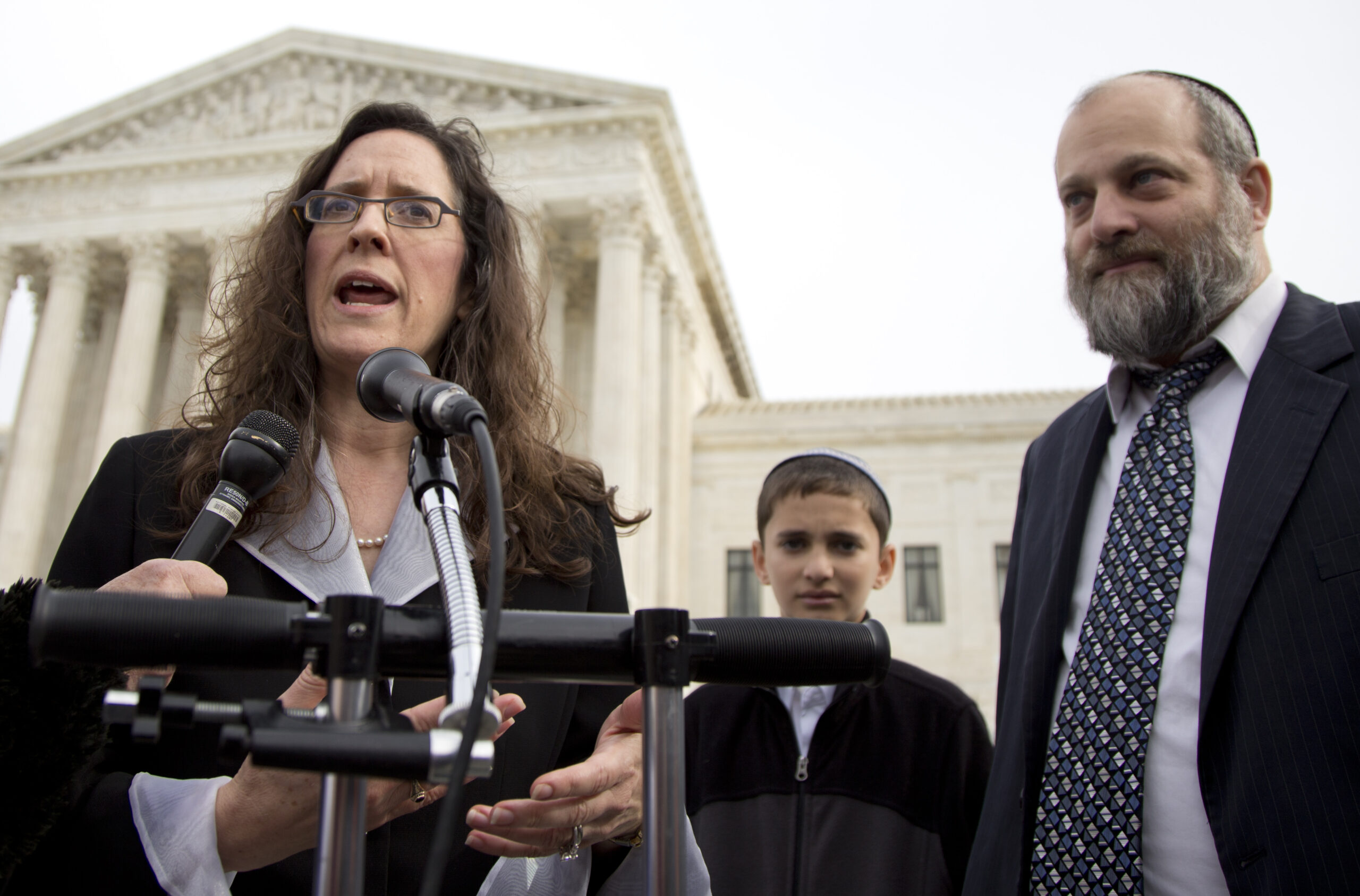
The Combat Antisemitism Movement tapped constitutional lawyer Alyza Lewin on Monday to lead its revamped U.S. affairs department, Jewish Insider’s Haley Cohen has learned. Lewin steps into CAM’s newly established role of president of U.S. affairs following eight years at the Louis D. Brandeis Center for Human Rights Under Law, where as president she spearheaded legal and advocacy efforts protecting the civil rights of Jewish students and employees nationwide.
New role: At CAM, Lewin, an attorney who co-founded Lewin & Lewin, LLP, will “help broader audiences recognize and understand the antisemitism that’s plaguing the United States today,” she told JI. The six-year-old advocacy organization “has developed relationships with so many communities and audiences that need to understand how to recognize contemporary antisemitism,” said Lewin. In her new position, Lewin will oversee coordination and engagement with those groups. “These broader audiences need to understand the tools at their disposal and utilize them to address discrimination that’s taking place,” she said, adding that she plans to educate about the implementation of the International Holocaust Remembrance Alliance’s working definition of antisemitism.
Worthy Reads
Peace Dividends: In The Washington Post, Yuval Noah Harari posits that Israel’s peace treaties with its neighbors have been critical to the country’s survival since Hamas’ Oct. 7, 2023, attacks and ensuing war. “Hamas hoped that its attack would trigger an all-out Arab onslaught on Israel, but this failed to materialize. The only entities that undertook direct hostile actions against Israel were Hezbollah, the Houthis, Iran and various Iranian-backed militias in Syria and Iraq — none of which had ever recognized Israel’s right to exist. In contrast, Egypt did not break the peace treaty it signed with Israel in 1979; Jordan did not break the peace treaty signed in 1994; and the gulf states did not break the treaties signed in 2020. … As we reflect on the terrible events of the past two years, we should not let the silent success of Middle Eastern peace treaties be drowned out by the echoes of violent explosions. The peace treaties Israel had signed with its Arab neighbors have been put to an extremely severe test, and they have held. After years of horrific war, this should encourage people on all sides to give another chance to peace.” [WashPost]
Filling the Void: In The New York Times, James Rubin, an advisor to former Secretaries of State Tony Blinken and Madeleine Albright, considers the elements that could foster long-term calm in the Gaza Strip. “The linchpin of any lasting peace will be the creation and deployment of an international force, a feature of the U.S. peace plan that was announced by President Trump and endorsed by world leaders in Egypt earlier this month and that spawned the cease-fire. The force would create conditions to realize other aspects of the plan: filling the growing security vacuum in Gaza, allowing for Palestinian self-governance and ensuring that Israel will not be threatened. … With a clear plan, a U.N. resolution and a main troop contributor identified, it would then be much easier to fill out the force with actual commitments of personnel and expand the training of a Palestinian contingent, which would ideally over time replace the international forces, as envisioned in the Trump plan.” [NYTimes]
Annexation Angst: The Atlantic’s Yair Rosenberg reflects on potential conflicts between far-right elements of the Israeli government and the Trump administration, on the heels of two Knesset votes regarding West Bank annexation that took place during Vice President JD Vance’s trip to Israel last week. “The more political and economic influence the Gulf states have over Trump and Israel, the more demands they will be able to make of both. Heading off formal annexation of the West Bank is the first ask, but it won’t be the last. Ultimately, the far right’s program of unfettered settler expansion and violence, unending war and eventual settlement in Gaza, and no negotiations with the Palestinian Authority is irreconcilable with a more regionally integrated Israel and an expanded Abraham Accords. In practice, this means that as long as Israel’s settler right holds power over Netanyahu, it will continue to threaten the Trump administration’s agenda.” [TheAtlantic]
The Next British Invasion: In The Wall Street Journal, Rabbi Pini Dunner suggests that the U.S. accept British Jews as refugees, citing antisemitism in the U.K. that is “marching down the high street, waving flags, shouting slogans,” as well as the recent precedent set by the Trump administration in granting some South Africans a pathway to refugee status. “Let’s offer a lifeline for Jews who can no longer walk the streets of London, Manchester or Birmingham without looking over their shoulders. America has always been a haven. We can open our doors to Jews who no longer feel safe in the country that once promised them safety. Yes, the U.S. refugee system is overwhelmed. Yes, immigration is politically toxic. But this is different. This is moral clarity. Every year, the U.S. admits thousands fleeing persecution because of race, religion or politics. British Jews now fit that category. Their persecutors aren’t warlords or terrorists. They’re neighbors, coworkers, teachers, even police officers — and Jews feel unsafe. When a Western democracy fails to protect its Jews, other countries must act. That isn’t interference, it’s conscience.” [WSJ]
Word on the Street
House Minority Leader Hakeem Jeffries (D-NY), who had held off endorsing a candidate in New York City’s upcoming mayoral election, announced his backing of Democratic nominee Zohran Mamdani on Friday, the day before early voting began in the city…
New York Gov. Kathy Hochul appeared at a Sunday rally for Mamdani in Queens, the first time the governor campaigned for Mamdani since endorsing him last month…
The Lakewood, N.J., Vaad endorsed GOP gubernatorial candidate Jack Ciattarelli, a week and a half ahead of Ciattarelli’s general election matchup against Rep. Mikie Sherrill (D-NJ), who in recent weeks has stepped up her outreach efforts to the state’s Jewish community…
California Gov. Gavin Newsom said that he would make a decision about the 2028 presidential election after the 2026 midterms, amid speculation that he is preparing for a run…
Northwestern University announced that Provost Kathleen Hagerty will depart the Illinois school by the end of the academic year; the announcement comes a month after the resignation of President Michael Schill amid clashes with the Trump administration over the school’s handling of antisemitism…
British journalist Sami Hamdi, who praised the Oct. 7, 2023, Hamas terror attacks, had his U.S. visa revoked during a speaking tour and will be deported over his comments…
A new report from the United States–Israel Business Alliance found that Israeli-founded companies in New York State generated $19.5 billion in gross economic output in 2024…
The Washington Post spotlights the Jewish bubbes who doled out “life advice from a nice Jewish grandma” from a table outside Washington’s Sixth and I Synagogue…
Israeli Prime Minister Benjamin Netanyahu told members of his Cabinet that Israel will determine which countries are “unacceptable” to send troops to Gaza to join an international stabilization force, as The New York Times looks at how tensions between Israel and Turkey are affecting Ankara’s participation in efforts to administer and rebuild postwar Gaza…
British Airways paused its sponsorship of Louis Theroux’s podcast, following an episode that featured an interview with punk musician Bob Vylan, who led cheers of “death to the IDF” at the Glastonbury music festival over the summer; in the interview, Vylan said he would lead the chant “again tomorrow, twice on Sundays”…
Hard-left independent Irish presidential candidate Catherine Connolly, who has called Israel a “terrorist state,” won the country’s election on Friday; read our profile of Connolly here…
Palestinian Authority President Mahmoud Abbas designated longtime aide Hussein al-Sheikh as his temporary successor should he vacate his leadership role…
Qatar inaugurated its new embassy in Washington, in the 16th Street NW building that housed the Carnegie Institution for Washington until its sale in 2021…
Israel’s Mossad alleged that a senior Islamic Revolutionary Guard Corps official oversaw a network of more than 11,000 operatives that was behind at least three Iranian plots against Jewish and Israeli targets in Western countries…
Iran’s Ayandeh Bank is closing and being folded into the state-run Bank Melli; the shuttering of one of the country’s biggest lenders comes amid a growing economic crisis in the Islamic Republic resulting from crippling international sanctions…
The Financial Times profiles Pakistani Chief of Army Staff Asim Munir, who President Donald Trump has described as his “favorite field marshal,” as the military leader aims to consolidate power in the central Asian country…
Jon Finer, who served as deputy national security advisor during the Biden administration, is joining the Center for American Progress as a distinguished senior fellow on CAP’s National Security and International Policy team…
Journalist Sid Davis, who covered the assassination of President John F. Kennedy and was one of just three reporters on Air Force One during the swearing-in of President Lyndon B. Johnson, died at 97…
Pic of the Day

Birthdays
Author, actress and comedian, Fran Lebowitz turns 75…
Treasurer of the Pacific Palisades Residents Association, Gordon Gerson… Senior U.S. district judge in Maine, he was born in a refugee camp following World War II, Judge George Z. Singal turns 80… Rabbi emeritus at Miami Beach’s Temple Beth Sholom, Gary Glickstein turns 78… SVP at MarketVision Research, Joel M. Schindler… President emeritus of Jewish Creativity International, Robert Goldfarb… Co-chair of a task force at the Bipartisan Policy Center, he is a former U.S. ambassador to Finland and Turkey, Eric Steven Edelman turns 74… Television writer, director and producer, best known as the co-creator of the 122 episodes of “The Nanny,” Peter Marc Jacobson turns 68… Senior advisor and fellow at the Soufan Group following 31 years at the Congressional Research Service, Dr. Kenneth Katzman… Co-owner of the NFL’s Tampa Bay Buccaneers and English soccer club Manchester United, Bryan Glazer turns 61… New York state senator from Manhattan, he serves as chair of the NYS Senate Judiciary Committee, Brad Hoylman-Sigal turns 60… Creator and editor of the Drudge Report, Matt Drudge turns 59… Hasidic cantor and singer known by his first and middle names, Shlomo Simcha Sufrin turns 58… Managing partner of the Los Angeles office of HR&A Advisors, Andrea Batista Schlesinger turns 49… Sportscaster for CBS Sports, Adam Zucker turns 49… Music composer, he is a distinguished senior scholar at the Jerusalem Academy of Music and Dance, Yotam Haber turns 49… Member of the Netherlands House of Representatives, Gideon “Gidi” Markuszower turns 48… Television meteorologist, currently working for The Weather Channel, Stephanie Abrams turns 47… Writer, attorney and creative writing teacher, she has published two novels and a medical memoir, Elizabeth L. Silver turns 47… Israel’s minister of environmental protection, Idit Silman turns 45… Chair of the Open Society Foundations, founded by his father George Soros, Alexander F. G. Soros turns 40… Israeli actress best known for playing Eve in the Netflix series “Lucifer,” Inbar Lavi turns 39… Senior foreign policy and national security advisor for Sen. Jacky Rosen (D-NV), Elizabeth (Liz) Leibowitz… Executive producer of online content at WTSP in St. Petersburg, Fla., Theresa Collington… Senior social marketing manager at Amazon, Stephanie Arbetter… Senior director of sales at Arch, Andrew J. Taub… Co-founder of Arch, Ryan Eisenman… Real estate agent and co-founder and president of Bond Companies, Robert J. Bond…
More than a dozen Democratic operatives told JI that the party’s support for Israel has declined, but hope that the end of the war will create space for skeptics to reengage with the Jewish state

Eric Lee/Bloomberg via Getty Images
Representative Katherine Clark, a Democrat from Massachusetts, center left, and Representative Hakeem Jeffries, a Democrat from New York, center right, arrive for a news conference with House Democrats outside the US Capitol in Washington, DC, US, on Wednesday, Oct. 15, 2025.
One thing Betsy Sheerr knows for sure is that most Democratic lawmakers still believe in Israel’s right to exist. She also knows that needing to reestablish this basic fact may not be a good sign for her party, and, more broadly, for American support for Israel.
“I can’t believe the bar is so low that that’s where we have to start,” said Sheerr, a longtime Democratic activist and a board member of the Jewish Democratic Council of America.
That’s the position in which many pro-Israel Democratic advocates find themselves as they begin to take stock of the domestic political damage wrought by Israel’s two-year war with Hamas that followed the Oct. 7, 2023, terror attacks.
Unlike naysayers on the right who suggest Democrats have abandoned Israel — a claim made frequently by President Donald Trump — the Jewish activists and communal leaders who advocate for a strong U.S.-Israel relationship and for U.S. aid to Israel still insist that support for the Jewish state remains bipartisan, and that congressional Democrats remain broadly pro-Israel. That proposition faced its toughest test during a two-year war, when Democrats became increasingly sympathetic to the Palestinians as Israel’s effort to eradicate Hamas left the Gaza Strip in ruins and claimed thousands of lives.
As a fragile ceasefire holds, Jewish Democrats see an opportunity to reengage party activists and elected officials who have grown frustrated with Israel’s actions in Gaza.
Jewish Insider spoke to more than a dozen fundraisers, activists and professionals in the pro-Israel space, most with a long history of involvement in Democratic politics. Their pitch to Democrats at this precarious moment involves two parts: First, push to make Trump’s peace plan a reality. Second, ensure that Democrats understand that the value of America’s relationship with Israel is independent from the leader of either country — and that Israeli Prime Minister Benjamin Netanyahu, who remains unpopular with the American left, won’t be in power forever.
“I think ending the war turns the temperature down pretty dramatically,” said Brian Romick, CEO of Democratic Majority for Israel. “Right now, what we’re saying is, no matter where you were in the previous two years, we all need the deal to work, and so being for the deal [and] wanting the deal to work is a pro-Israel position right now, and then you build from there.”
At the start of the war, 34% of Democrats sympathized more with Israel, and 31% sympathized more with Palestinians, according to New York Times polling. New data released last month shows that 54% of Democrats now sympathize more with the Palestinians, compared to only 13% with Israel. That stark shift in public opinion corresponded to more Democratic lawmakers voting to condition American military support for Israel than ever before.
This summer, 55 Democrats in the House co-sponsored legislation that would significantly restrict arms sales to Israel. Twenty-seven Democratic senators voted in July to support a bill put forward by Sen. Bernie Sanders (I-VT) that aimed to reject Israeli arms sales. The bill failed, but it marked a watershed moment for the party, with more than half of all Democrats voting in support of the measure. Not long ago, voting to condition aid to Israel would have been seen as a red line by pro-Israel groups. But with a growing number of Democrats who have already done so, such threats could ring hollow.
“I do think that there is room to build forward,” said Jeremy Burton, CEO of the Jewish Community Relations Council of Greater Boston, which works closely with Democratic lawmakers in deep-blue Massachusetts. “We have to be secure enough in our own belief in the future and our hope for the future to say ‘OK, if your point was that you’re committed to the long-term project of Israel’s security and safety, and you were looking for short term ways to pressure the government of Israel, then let’s move forward with the long-term project, even if we disagreed with you in the short term.’”
The pro-Israel lobby AIPAC maintains that it is committed to bipartisanship on Capitol Hill, even as the group has faced sharp criticism from progressive activists — including some who have pressured political candidates to swear off donations from the group. A spokesperson for the organization downplayed the shifting political headwinds, noting that American military aid to Israel continued throughout the war.
“It is important to separate the noise from anti-Israel extremists of the right and left and actual impact,” AIPAC spokesperson Marshall Wittmann told JI. “For example, time and time again Congress has resoundingly rejected the efforts of those extremists to cut defense assistance to Israel.”
AIPAC has a long-standing policy of not criticizing the Israeli government no matter who is in power, and that isn’t shifting. But other pro-Israel advocates believe that approach may not work with Democrats who are fed up with Netanyahu’s governance.
“We know that can one be critical of certain Israeli government policies and still be pro-Israel, and we also know that’s increasingly the case for many Democrats, just as it is for a majority of Jewish Americans,” said Halie Soifer, CEO of the Jewish Democratic Council of America.
“The vast majority of Democrats are far more sympathetic to the people of Israel than its current leadership,” echoed Tyler Gregory, who leads the Bay Area JCRC and works closely with progressive leaders in San Francisco. “We need to bring it to a human level.”
Andrew Lachman, president of California Jewish Democrats, was more overt in his hope that Israel elects a new leader in its next election, set to take place next October, unless it’s called sooner.
“If there’s a new change in leadership in Israel, that has the opportunity to be able to reset some of those relationships,” Lachman told JI.
It’s a sentiment echoed by Sheerr, who regularly interacts with Democratic lawmakers on Capitol Hill. “I think a lot of people, both lawmakers and others, are looking forward to the next Israeli elections, frankly, and life after Bibi,” she said. That is, of course, assuming that Netanyahu isn’t reelected — a risky bet given that Netanyahu has held the role through multiple elections since 2009, except for one 18-month stretch.
Rep. Seth Moulton (D-MA), who is challenging Sen. Ed Markey (D-MA) in Massachusetts’ Senate primary next year, said this month that he would return donations from AIPAC, an organization that has previously endorsed him. He told JI last week that he took issue with the group’s “steadfast support for the Netanyahu government.”
“My views on Israel as an essential partner of the United States and our most important ally in the Middle East have not changed,” Moulton said.
Markey, for his part, has been one of Israel’s leading critics in the Senate, making next year’s Democratic primary one between a candidate who condemns the leading U.S.-Israel advocacy group and a candidate with a record of voting against military aid to Israel.
Ron Halber, who leads the Jewish Community Relations Council of Greater Washington and maintains close ties with Democratic lawmakers in Maryland and Virginia, said that Israeli leaders also have a responsibility to repair ties between Democrats and the Jewish state.
“For Israel to align itself, or for the current government or for advisors to think that working with the Republican Party is the way to the future, is about the dumbest strategic mistake I can imagine,” said Halber. “The bipartisan nature of the U.S.-Israel relationship is the fundamental blanket of Israel’s support in the world.”
The leftward shift of Democratic lawmakers has come despite advocacy campaigns by major Jewish groups who urged senators to vote against Sanders’ resolutions restricting aid to Israel. But some within the mainstream Jewish community recognize that the longtime approach of offering unequivocal support to Israel’s government is not sustainable.
“My opinion is that this government is harmful,” said Sam Lauter, a public affairs consultant in San Francisco and Democratic fundraiser who helped create DMFI in 2019. “I used to be one of those people who would be sort of silent about that, because ‘I’m a diaspora Jew, and I don’t get a say.’”
Halber said he believed that many Democrats supporting Sanders’ bill “did so symbolically,” because they knew it was going to fail. “They were trying to send a message to Israel that this is a bridge too far, when they believed humanitarian aid [to Gaza] was being cut off,” he added.
The “million-dollar question,” according to Ilan Goldenberg, J Street’s vice president of policy, is whether lawmakers’ support for conditioning military assistance to Israel will continue after the war, when they have to vote to approve the annual $3.8 billion security package to Israel.
“I think it’s going to be, ‘We need accountability, and we need certain behavior that we would like to see,’ and if you’re not getting that out of the Israelis, then a willingness to use more leverage and pressure and accountability,” said Goldenberg, who served as Jewish outreach director on Vice President Kamala Harris’ presidential campaign last year. “I think that is where the center of the Democratic Party is likely to settle, which is a very different place from where we were before the start of the war.”
J Street has supported Sanders’ resolutions restricting arms sales to Israel.
If any of the support for the bills that sought to reject certain weapons sales carries over into the regular appropriations process, it would mark a significant shift.
“It seems indisputable that the Overton window has shifted dramatically over the last two years in terms of what ‘the left’ broadly deems acceptable about Israel, Zionism and even the Jewish American community,” said Amanda Berman, CEO of the progressive group Zioness. “This kind of rhetoric doesn’t just disappear when the news cycle moves on. That said, the vast majority of liberals and progressives are not uniquely obsessed with Jews or Israel, and have any number of urgent issues of concern.”
Even as pro-Israel activists seek to rebuild frayed ties with erstwhile allies, they recognize that not everyone should be welcomed back into the tent, even if the tent is bigger than it was before.
“We don’t need to be forgiving or ignoring those who chose to just demonize and be dismissive of our anxieties, our fears, our hopes over the last two years,” said Burton.
The dust has hardly settled in Gaza, and it is too soon to know what the lasting impact of the war will be. But given that this was Israel’s longest war, and that it played out under scrutiny of the traditional media and social media, “it’s going to be a lot harder to put the genie back in the bottle than previous times,” as one person involved in Jewish philanthropy and Democratic politics quipped.
Democratic insiders told JI that DNC chair Ken Martin withdrew his Israel resolution largely to avoid a disruptive floor debate over Israel on Wednesday

Audrey Richardson/Bloomberg via Getty Images
Ken Martin, chairman of the Democratic National Committee , speaks during a news conference in Aurora, Ill., on Tuesday, Aug. 5, 2025.
Pro-Israel Democrats expressed cautious optimism about the unexpected decision by Democratic National Committee Chairman Ken Martin to withdraw his resolution pressing for humanitarian aid to Gaza and for the release of hostages held by Hamas, which was unanimously approved by party members on Tuesday at the DNC’s annual summer meeting held in Minneapolis.
Martin, in a sudden reversal, announced he would pull the resolution after DNC members rejected a dueling measure, opposed by pro-Israel groups, that had endorsed an arms embargo and a suspension of U.S. military aid to Israel. Instead, he said he would create a task force “comprised of stakeholders on all sides” of the Israel debate to pursue what he called a “shared dialogue” on an increasingly divisive issue.
“This was a surprise ending to this meeting,” Halie Soifer, the CEO of the Jewish Democratic Council of America, which helped draft the pro-Israel measure and privately advocated for its passage, told Jewish Insider on Tuesday.
Despite Martin’s 11th-hour reversal, Soifer said she was satisfied with the outcome, noting the DNC also passed a resolution condemning antisemitism that, coupled with its rejection of the arms embargo proposal, “reflects where the party stands” on major issues concerning Israel and the Jewish community.
“It’s my sense,” she added of Martin, “that he introduced and ensured passage of this resolution to defeat the other resolution,” which she said “was completely out of step with the views of the party.”
Soifer said she hopes to join the proposed task force “to discuss the path forward” on approaching Israel, acknowledging internal tensions that have roiled the party in recent years. Martin “clearly recognized that there are a range of strongly held views on this matter, and he wants to make sure that those voices are heard,” she told JI.
Martin has not yet shared additional details on the task force, and the DNC did not return a request for comment from JI. Latonya Reeves, a DNC member in Minneapolis, told JI on Tuesday that she had not been further informed of the task force — which she called “the best way to move forward” on the issue.
Sara Forman, who leads the New York Solidarity Network, a local pro-Israel group that aligns with Democrats, said she was broadly “encouraged” that the DNC had chosen “not to recommend” what she dismissed as a “one-sided resolution against Israel,” arguing that the party “represents far more than its progressive base.”
“I’m always one for conversation, and think that talking about things is an important step, so I’m going to offer grace to Martin in this regard,” she said of his announcement. Still, she added of the failed resolution, “I think it’s a bigger concern overall that the Democratic Party seems to be uniquely singling out Israel for rebuke or scrutiny in a way that no other U.S. ally is rebuked or scrutinized.”
A spokesperson for Democratic Majority for Israel, which released a statement praising the DNC’s votes before Martin revealed he would pull the resolution, said it was “pleased that the anti-Israel measure was decisively defeated by the committee,” but declined to comment more broadly on what transpired at the end of the meeting.
Brian Romick, DMFI’s president and CEO, said in an interview with JI that he viewed the outcome on Tuesday as “a win” for the pro-Israel community, in light of the potential for a more hostile debate. “The bad resolution was rejected and Ken’s compromise resolution also passed the committee,” Romick said. “That all happened publicly” and “reaffirmed where the party stands on Israel,” he said. “Anything else beyond that is just inside baseball.”
Some Democratic insiders familiar with internal party dynamics indicated that Martin had chosen to change course because he anticipated a disruptive floor debate over his resolution, which was poised to face broader scrutiny during the DNC’s general session on Wednesday.
“He’s worried about what would happen at the meeting,” one party source informed of the matter said on Tuesday. “On one hand, viewed from there, it makes sense and seems like a rational move,” the source reasoned, while also noting that it has “some real downsides.”
On the other hand, “when you punt something to a task force you actually continue the debate, because now it’s going to be a big fight” over who is included in the committee, the source said. “Then it becomes hard to move past.”
Manny Houle, a Democratic pro-Israel strategist in Minneapolis, said Martin’s maneuver was tactically smart — as DNC leadership seeks to avoid “internal proxy fights and focus messaging on pushing back against” the Trump administration in advance of the upcoming elections. “It is often a tactic to give your most ardent detractors busy work so you can focus on the work that matters,” he explained.
The party’s pro-Israel wing knows it has “the power to push back,” Houle told JI. “It’s not worth giving more air to the extremist factions.” The debate over Israel “is not going away anytime soon,” he added. “But we’ve shown where we stand and hopefully there are more pressing things that we need to give oxygen to.”
Whatever Martin’s intentions, Susan Turnbull, a former DNC vice chair, said she was excited by the prospect of a task force, suggesting that it would be well-timed to take place between the conventions.
“What I think is the case is that this, of all issues, needs to have consensus and that what he wanted in his first meeting is not to have winners and losers,” she told JI. “He wanted to come to a good result for collaboration.”
“I’m giving him a lot of credit because we have a hard enough time within the Jewish community dealing with this issue,” she said, adding that it will be “important that every perspective be considered” as the DNC hones its approach to the Middle East.
It remains to be seen if Martin, who on Tuesday acknowledged a “divide” in the party over Israel, will find partnership on the opposing end of the issue. Allison Minnerly, the 26-year-old DNC member who had introduced the failed measure on Gaza, which faced criticism for not mentioning Hamas, voiced disappointment with his decision and said he was “prolonging” the conversation rather than taking a position to align the party with a base she views as amenable to her views on Israel.
Still, as the DNC moves to reach a tenuous detente on Israel, some pro-Israel Democrats said that any future resolution on the issue should reflect values that have long been espoused by the party, even as they have faced ongoing pushback from the activist left.
“The vast majority of American Jews, and Americans more broadly, understand the complexity of the conflict — wanting to see Israel’s security protected and the remaining hostages released, the humanitarian crisis in Gaza truly addressed, and all parties work toward a future in which both Israelis and Palestinians are safe and free,” Amy Spitalnick, CEO of the nonpartisan Jewish Council for Public Affairs, told JI. “Any resolution on Gaza should reflect those widely-held values.”
Amanda Berman, CEO of the Zioness Action Fund, a progressive pro-Israel advocacy group, said on Tuesday that “there is legitimate critique and concern about this devastating war dragging on — and Democrats should stand staunchly with the Israeli public as it models dissent, protest and a pro-democracy movement the American left should emulate.”
“To the extent that any fringe element of the Democratic Party is willing to abandon Israel and the American Jewish community,” Berman said, “they will be abandoning true progressive values, liberation for persecuted minority communities, our historic alliances and America’s national security.”
Plus, Cotton calls on IRS to crack down on CAIR
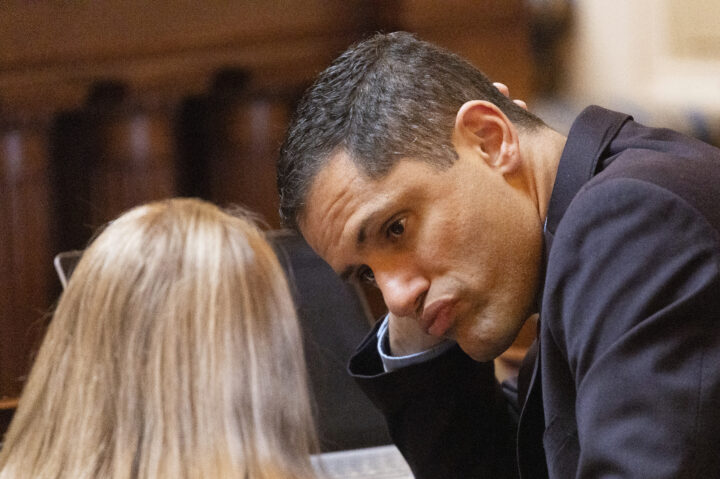
Margo Wagner /Richmond Times-Dispatch via AP
Del. Sam Rasoul, D-Roanoke, talks to a staffer Wednesday, April 2, 2025, in Richmond, Va.
Good Wednesday morning.
In today’s Daily Kickoff we talk to Jewish Democrats in Virginia concerned by the anti-Zionist rhetoric espoused by Virginia state Del. Sam Rasoul, who chairs the Education Committee in the state’s House of Delegates, and report on Republican Derek Dooley’s outreach to the Jewish community as he’s entered the Georgia Senate race. We also cover comments by Pennsylvania Gov. Josh Shapiro about the humanitarian crisis in Gaza and interview Democrat Jeff Grayzel, a leader in northwest New Jersey Jewish communal organizations and deputy mayor of Morris Township, N.J., who launched his congressional campaign this week. Also in today’s Daily Kickoff: Sen. Tom Cotton, Ted Deutch and Robert Kraft.
What We’re Watching
- The Department of Justice is reportedly seeking hate crime charges and the death penalty against Elias Rodriguez, who has been charged with the murder of two Israeli Embassy staffers, Yaron Lischinsky and Sarah Milgrim, outside the Capital Jewish Museum in May.
- A group of House Intelligence Committee members including Chairman Rick Crawford (R-AR) and Reps. Josh Gottheimer (D-NJ) and Ronny Jackson (R-TX) is visiting Israel, joining several other congressional delegations currently in the country.
- The New Jersey Jewish Business Alliance will host its 11th annual Legislative and Business Luncheon today, featuring gubernatorial candidates Rep. Mikie Sherrill (D-NJ) and former Republican state Rep. Jack Ciattarelli. The two will face off in the Garden State’s November general election, with recent polling showing Sherrill with a comfortable lead.
What You Should Know
A QUICK WORD WITH JI’S LAHAV HARKOV
Israel’s Security Cabinet is set to vote this week on occupying the remaining parts of Gaza that it does not currently control, after Hamas refused last month’s ceasefire and hostage deal proposal and did not return to negotiations.
Israeli Prime Minister Benjamin Netanyahu, IDF Chief of Staff Lt.-Gen. Eyal Zamir and Defense Minister Israel Katz held a three-hour meeting on Tuesday, which was reportedly very tense due to disagreement over the plan, though Zamir ultimately said he will follow through with the government’s decision.
Zamir argued that the IDF should surround the areas in Gaza in which it currently does not have a presence, including Gaza City and towns in the center of Gaza in which hostages are believed to be held. Entering those areas, Zamir warned, would endanger the lives of the 20 hostages who are thought to be alive. Hamas has threatened to kill hostages if the IDF approaches, as it had executed six hostages a year ago.
Beyond the fraught issue of the hostages, there is the matter of what “occupation” means.
While “occupation” is the correct military term for what Israel would be doing by taking control of territory, the connotation of the word in the Israeli context tends to be the West Bank, which Israel has controlled since 1967 and where over half a million Jewish citizens of Israel live.
Some Cabinet ministers have advocated for allowing Israelis to move to Gaza, where 21 Israeli settlements were forcibly evacuated in 2005; Netanyahu has repeatedly rejected such a plan.
What senior Israeli officials have long said is that, while Israel seeks to have other countries and some Palestinians administer Gaza, they will not do so until it’s clear that Hamas has been ousted. As such, Israel may have to take control for some time until other arrangements are made.
RASOUL RHETORIC
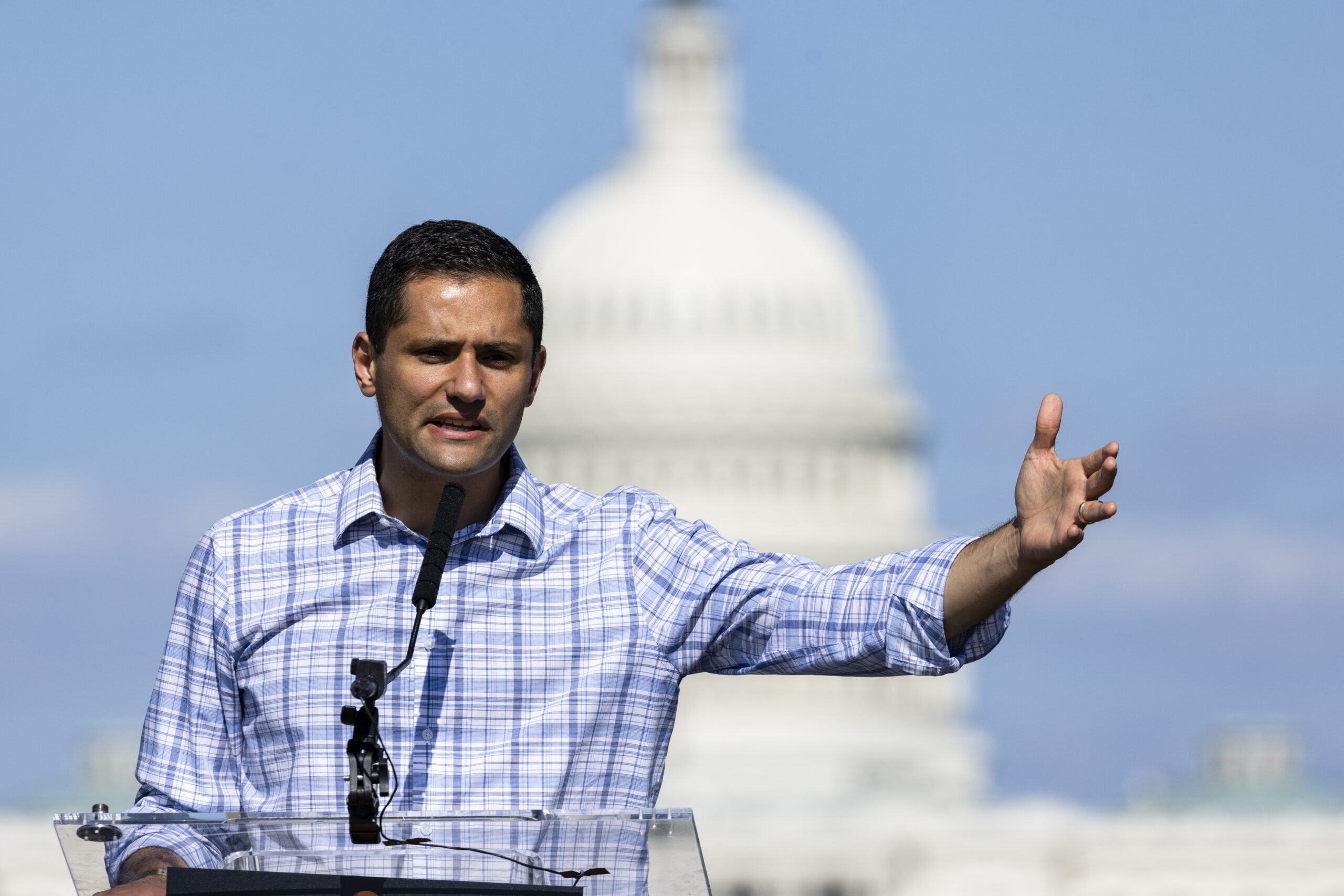
Since soon after the Oct. 7, 2023, Hamas attacks, Virginia state Del. Sam Rasoul, a Democrat who chairs the Education Committee in the House of Delegates, has used his social media accounts to attack Israel and decry American support for the Jewish state. But Jewish Democrats in the state fear that a series of recent posts from Rasoul vilifying Zionists has taken his anti-Israel rhetoric to a new level, prompting concerns about his leadership of the committee that is tasked with reviewing the education-related legislation that comes before the Statehouse, Jewish Insider’s Gabby Deutch reports.
Speaker says: “Zionism has proven how evil our society can be,” Rasoul wrote in a July 26 Instagram post that described Zionism as a “supremacist ideology created to destroy and conquer everything and everyone in its way.” Former Virginia House Speaker Eileen Filler-Corn, a Democrat from Northern Virginia, told JI on Tuesday that Rasoul’s rhetoric is “fueling one of the oldest forms of hatred in the world, repackaged in the language of activism.”
peach state politics
With the entry this week of Derek Dooley, a friend of Gov. Brian Kemp who hails from college football royalty in Georgia, the Republican field in the Georgia Senate race is taking shape, Jewish Insider’s Marc Rod reports.
State of play: With Kemp’s help, Dooley could potentially peel off support from moderate Jewish Democrats still frustrated by controversial votes on arms sales to Israel by Sen. Jon Ossoff (D-GA), though Jewish leaders in the state told JI last week that they’re not yet making any commitments in the race. Dooley, for his part, is wasting little time in courting their votes, and has already met with some Jewish leaders and is preparing a pro-Israel position paper.
AID ADVOCATE
Pennsylvania Gov. Josh Shapiro called the humanitarian crisis in Gaza “awful” and said the U.S. has a “moral responsibility” to “flood the zone with aid,” while speaking to the central Pennsylvania Fox34 news channel on Tuesday, Jewish Insider’s Danielle Cohen-Kanik reports.
What he said: “The fact that kids are starving in Gaza is not OK. It is not OK. And I think everyone has a moral responsibility to figure out how to feed these kids. It is true that Hamas intercepts aid. It is true that the aid distribution network is not as sophisticated as it needs to be, but given that, I think our nation, the United States of America, has a moral responsibility to flood the zone with aid. It is awful, what is happening in Gaza,” the Democratic governor continued. He also called Israeli Prime Minister Benjamin Netanyahu’s claim that there is no starvation in Gaza “quite abhorrent.” Shapiro said, “He is wrong. He is wrong.”
GARDEN STATE RACE
Democrat Jeff Grayzel, a leader in northwest New Jersey Jewish communal organizations and deputy mayor of Morris Township, N.J., formally launched his congressional campaign this week, running as a staunchly pro-Israel candidate in the seat that will be vacated by Rep. Mikie Sherrill (D-NJ) if she wins the state’s gubernatorial race, Jewish Insider’s Marc Rod reports.
Notable quotable: “I am a proud Jew and a proud Zionist, and I plan to run this race for Congress as such, as a proud Jew and as a proud Zionist. I am not going to shy away from it and everybody will know,” Grayzel said in an interview with JI last week. “I think we need leaders that are going to be more bold in addressing antisemitism in our country, and we need leaders who are going to push harder for a comprehensive solution in the Middle East, so that Israel can once and for all live in peace.”
UNDER THE MICROSCOPE

Sen. Tom Cotton (R-AR) is urging the Trump administration to investigate the Council on American-Islamic Relations’ (CAIR) alleged “ties to terrorist organizations like Hamas and the Muslim Brotherhood” and consider revoking the group’s 501(c)(3) nonprofit status. Cotton, who chairs the Senate Intelligence Committee, announced on Tuesday that he had sent a letter to IRS Commissioner Billy Long requesting he look into “recent news and longstanding evidence” demonstrating CAIR’s reported terrorist connections, Jewish Insider’s Emily Jacobs reports.
Cotton’s call: “CAIR purports to be a civil rights organization dedicated to protecting the rights of American Muslims. But substantial evidence confirms CAIR has deep ties to terrorist organizations,” Cotton wrote. The Arkansas senator pointed to CAIR being “listed as a member of the Muslim Brotherhood’s Palestine Committee” in the “largest terrorism-financing case in U.S. history,” as well as the group’s executive director Nihad Awad saying he was “happy to see” the Oct. 7 terror attack in a November 2023 speech.
Maryland move: The University of Maryland, College Park and Maryland’s attorney general have asked the state to approve their joint request to settle a First Amendment lawsuit brought by the school’s Students for Justice in Palestine chapter, JI’s Emily Jacobs and Haley Cohen report.
DATA DRIVEN

The FBI reported on Tuesday that the American Jewish community remains the most targeted religious group, accounting for nearly 70% of all religiously motivated hate crimes in 2024, even as overall hate crimes in the country have decreased, Jewish Insider’s Haley Cohen reports.
By the numbers: Hate crimes targeting Jews had plateaued following a sharp increase immediately after the Oct. 7 Hamas terror attack. In 2024, 1,938 anti-Jewish hate crimes were reported to the FBI’s data collection program out of 3,096 reported religiously motivated hate crimes. The year 2024 saw the highest number of anti-Jewish hate crimes ever recorded by the bureau since it began collecting data in 1991 — and an increase compared to 1,832 incidents the year prior, which accounted for 67% of all religiously motivated hate crimes that year.
Worthy Reads
‘Middle Path’ to War’s End: The New York Times’ Bret Stephens considers the path forward in Israel’s war against Hamas in Gaza. “Those who think of themselves as well-wishers of the Palestinians may want to forever put the moral onus on Israel for all of Gaza’s tragedies. But Gaza would not be where it is now had it not been for Hamas, and Gaza cannot be more than it is now so long as Hamas retains effective control. No thoughtful person can be pro-Palestinian without also being anti-Hamas. At the same time, being pro-Israel means looking at Gaza through the wider lens of Israel’s overall interests: the return of the hostages to heal Israel’s heart; the relief of Gaza to rehabilitate Israel’s reputation (above all among wavering friends); the resumption of regional diplomacy to take advantage of Israel’s temporary victories over Hezbollah and Iran; and the restoration of deterrence against Israel’s larger and still-menacing enemies. If Netanyahu makes the colossal mistake of trying to reoccupy Gaza for the long term, then no thoughtful person can be pro-Israel without also being against him.” [NYT]
The Gaza Images Now Haunting Israelis: The New Yorker’s Ruth Margalit examines a shift in Israeli public discourse about the humanitarian crisis in Gaza. “Two weeks ago, Israel’s most-watched news broadcast, on the mainstream Channel 12, aired a series of startling images from Gaza. There were photographs of emaciated babies, and of children being trampled as they stood in food lines, holding out empty pots; there were pictures of mothers weeping because they had no way to feed their families. At the end of the segment, Ohad Hemo, the network’s correspondent for Palestinian affairs, concluded, ‘There is hunger in Gaza, and we have to say it loud and clear.’ He was careful to note that his assessment was not influenced by foreign reporting: ‘I speak to Gazans daily. These are people who haven’t eaten in days.’ He went on, ‘The responsibility lies not only with Hamas but also with Israel.’ In much of the world, this sentiment would seem incontrovertible, even obvious. In Israel, it represented a drastic change.” [NewYorker]
Empty Gesture on Statehood: Daniel Samet, a fellow at the American Enterprise Institute, argues in the Wall Street Journal that Western countries deciding to recognize a Palestinian state are committing “an unnecessary and dangerous faux pas” and risk alienating the U.S. “What they have to gain from recognizing a Palestinian state is unclear. President Trump said it best when he remarked that French President Emmanuel Macron’s announcement “doesn’t matter” and “doesn’t carry weight.” He’s right. Recognition by France can’t make a Palestinian state a reality. Ditto for the U.K. and Canada. What it can do is inflame tensions with Washington. … The three countries’ posturing comes when they can ill afford to push away the American right. The Republicans who control the House, Senate and White House remain overwhelmingly pro-Israel. A subset of them support the trans-Atlantic alliance and favor robust assistance for Ukraine. If France and the U.K. believe that ‘Ukraine’s security is inseparable from Euro-Atlantic security’ and Canada is committed to ‘unwavering support for a secure, a free and sovereign Ukraine,’ why are they alienating those Republicans through this empty gesture?” [WSJ]
Allies Wanted: Brian Strauss, senior rabbi at Congregation Beth Yeshurun in Houston, the largest Conservative synagogue in the country, writes in Time about the “palpable anxiety” in Jewish communities amid rising antisemitism. “We cannot confront this threat alone. After each attack, we hear heartfelt declarations of solidarity — statements of support, thoughts, and prayers. These gestures are meaningful, but passive concern will not protect us. What we need now is courage. If you must protest Israel’s policies, you are of course free to do so. But stay away from our synagogues, our schools, and our community centers. That’s not activism — that’s intimidation. … We also need the faith leaders, public officials, and allies who stood with us after Oct. 7 to stay with us now. We know there’s no shortage of hatred to confront in the world. But we are still here, and we are still hurting.” [Time]
Word on the Street
President Donald Trump said yesterday that an Israeli decision to occupy the entire Gaza Strip is“pretty much going to be up to Israel,” when questioned by reporters at the White House…
The American Jewish Committee ran a full-page ad in The New York Times on Wednesday with images of hostage Evyatar David — a photo taken before his capture opposite a still from the recent video released by Hamas showing David over 660 days into captivity, looking severely emaciated and haggard. AJC CEO Ted Deutch said the organization chose to take out the ad due to “selective coverage from media outlets” that “continues to feed a biased narrative that too often ignores Israeli and Jewish suffering.” The ad will also run in the paper’s Sunday edition…
Sen. Elissa Slotkin (D-MI) told Semaforthat Israel’s moves to airlift increased aid into Gaza are “a start, but you can’t possibly get the volume of food in there that you need via an airlift.” Asked if she would support recognition of a Palestinian state, Slotkin said, “I just don’t believe that we should be recognizing a new state in the middle of an active hot war”…
A Wall Street Journal editorial titled “Kill Jews, Get Your Own State,” slams efforts by France, Canada and the U.K. to recognize a Palestinian state following comments made by Ghazi Hamad, a member of the Hamas politburo, who said the push is an “achievement” stemming from the Oct. 7, 2023, attacks on Israel…
Former New York Gov. Andrew Cuomo told Bloomberg he understands now that New York Democrats are viewing Israel differently, since his defeat in the Democratic mayoral primary to Israel critic Zohran Mamdani. Cuomo, still running for mayor as an independent, said he would speak about Israel’s war in Gaza and antisemitism in a more nuanced way moving forward, instead of what he called a “binary” conversation…
Columbia University protest leader Mahmoud Khalil appeared on “The Ezra Klein Show” podcast yesterday, where he said that Hamas carried out the Oct. 7 attacks on Israel as “a desperate attempt to tell the world that Palestinians are here” and that “unfortunately, we couldn’t avoid such a moment.” Khalil also said Israeli Prime Minister Benjamin Netanyahu “thrives on the killing of Palestinians”…
Leo Terrell, head of the Department of Justice’s antisemitism task force, said he was notified by the Israeli Embassy on Tuesday of an antisemitic attack in St. Louis where a Jewish family had their vehicles set on fire and home vandalized after their son returned from serving in the IDF. Terrell said the FBI is involved and he had alerted Attorney General Pam Bondi’s office…
Hillel International and Secure Community Network in a joint statement urged all universities to follow Harvard’s lead in covering security costs for their campus’ Hillel …
House Speaker Mike Johnson (R-LA) and a group of House Republicans toured the city of Hebron, in the West Bank, yesterday together with Israeli Minister of Economy and Industry Nir Barkat…
U.S. Ambassador to France Charles Kushner met on Monday with Saudi Ambassador to France Fahd bin Mayouf Al-Ruwaili. Kushner said the two discussed “the ways that our two countries can each contribute to peace and stability in the Middle East,” just one week after Saudi Arabia and France co-chaired a U.N. conference on the two-state solution which the U.S. and Israel boycotted…
British officials told The Times that the U.K. is continuing to conduct reconnaissance flights over Gaza with Royal Air Force planes to help Israel try to locate the hostages, despite frosty diplomatic relations…
Arash Azizi reviews Scott Anderson’s new book, King of Kings: The Iranian Revolution: A Story of Hubris, Delusion, and Catastrophic Miscalculation, in The Atlantic…
The Department of Homeland Security, which oversees the Federal Emergency Management Agency, quietly removed a requirement for grant applicants to certify they will not engage in a commercial boycott of Israel in order to be eligible for funding …
The NFL struck a major deal with Disney for a 10% stake in ESPN, the companies announced on Tuesday. Robert Kraft, owner of the New England Patriots and chair of the NFL’s media committee, said in an interview that the equity piece of the deal is “really a commitment beyond whatever the contract is” and could allow the league to raise the salary cap for players…
Organizers of the Montreal Pride parade re-invited Ga’ava, a Jewish LGBT organization, and the Centre for Israel and Jewish Affairs (CIJA) to march in Sunday’s parade, after initially excluding Ga’ava due to controversy over the organization’s social media posts. The backtrack came a day after Montreal Pride’s board chair stepped down amid the controversy…
A man named Christopher Robertson made his first appearance in court in Atlanta on Monday since he was arrested for making threatening and derogatory remarks at the Jewish Federation of Greater Atlanta, a nearby synagogue and Chabad as well as on social media…
Pic of the Day

Israeli Foreign Minister Gideon Sa’ar (front row center with red tie) met with some two dozen American Jewish leaders in New York City on Tuesday, briefing them on developments in Israel and hearing their concerns, ahead of a speech in the United Nations about the plight of Israeli hostages being held in Gaza, participants told eJewishPhilanthropy.
Birthdays
Former boxing commentator and co-host of ESPN’s “This Just In,” he is soon to host a major boxing match on Netflix, Yiddish-speaking Max Kellerman turns 52…
Los Angeles-based partner at the Jaffe Family Law Group, Daniel J. Jaffe turns 88… E-sports executive and casino owner, he is a three-time bracelet winner at the World Series of Poker, Lyle Berman turns 84… Professor emerita and former dean at Bar-Ilan University, Malka Elisheva Schaps turns 77… Film director, television director, producer and screenwriter, Brian Michael Levant turns 73… Austrian businessman Martin Schlaff turns 72… Former state treasurer of Virginia and then Virginia secretary of finance, she is now a gourmet popcorn manufacturer, Jody Moses Wagner turns 70… Professor of public diplomacy at The Fletcher School of Tufts University, she was formerly undersecretary of state for public diplomacy, Tara D. Sonenshine turns 66… Professor of psychiatry at the George Washington University Medical Center, Alan J. Lipman, Ph.D. turns 65… Israeli diplomat, he served as Israel’s consul general in NYC between 2000 and 2004, Alon Pinkas turns 64… NASA astronaut who spent 198 days on the International Space Station, he brought 18 bagels from his family’s bagel store in Montreal into space, Gregory Chamitoff turns 63… Chair of White & Case’s white collar practice group, Joel M. Cohen… Executive director of public affairs and policy communications at the American Council on Education, Jonathan Riskind… CEO of Elluminate (formerly known as the Jewish Women’s Foundation of New York), Melanie Roth Gorelick… Vice chair of the Jewish Public Affairs Committee of California and a trustee of JFNA, Susie Sorkin… Television and radio sports anchor on ESPN and ABC, he was one-half of the “Mike & Mike” team but now hosts his own ESPN morning program, Mike Greenberg turns 58… Chief economist at The Burning Glass Institute, Gad Levanon Ph.D…. Law professor and associate dean at Michigan State University College of Law, David Blankfein-Tabachnick turns 54… Co-founder and former CEO of Uber, Travis Kalanick turns 49… Founder and CEO at Climb Together which helps prepare people from low-income backgrounds for entry level jobs, Nitzan Pelman… Actress, director, producer and screenwriter, Soleil Moon Frye turns 49… Screenwriter and television producer, he is best known for creating and executive producing the Fox teen drama “The O.C.,” Joshua Ian Schwartz turns 49… PR consultant and managing director at Actum, Jeffrey Lerner… Chief creative and culture officer at an eponymous firm, Rachel Gogel… Member of the New York State Assembly, Simcha Eichenstein turns 42… Winner of two gold medals in swimming at the 2008 Summer Olympics in Beijing, he is now CEO of Gather Campgrounds north of Austin, Texas, Garrett Weber-Gale turns 40… Director of strategy and policy at K2 Space Corporation, he is also a non-resident senior fellow at the Atlantic Council, Corey A. Jacobson… Communications and leadership consultant, company trainer and international speaker, Jessica I. Goldberg… Reporter at San Antonio Express-News, Elizabeth Teitz… School safety activist and former student at Marjory Stoneman Douglas High School, Hunter Pollack turns 28…
In a letter to Defense Secretary Hegseth, the lawmakers warned of ‘the risk to American national defense from using a compromised product subject to the whims of an unaccountable CEO’

Cheng Xin/Getty Images
A person holds a smartphone showing the Grok 4 introduction page on the official website of xAI, the artificial intelligence company founded by Elon Musk, with the Grok logo visible in the background on July 16, 2025 in Chongqing, China.
A group of Jewish House Democrats raised questions on Friday about the Pentagon’s decision to announce a $200 million contract with Elon Musk’s company xAI to utilize a version of its Grok artificial intelligence, days after the chatbot posted antisemitic and violent screeds on X. The legislators said they’re concerned about Musk’s potential influence on the program and lingering issues linked to the antisemitic outburst.
“These posts were not isolated but widespread, repeated, and shockingly detailed. They appeared immediately after Mr. Elon Musk, CEO of xAI, publicly stated on July 4 that Grok had been ‘significantly improved,’” the lawmakers said in a letter to Secretary of Defense Pete Hegseth. “The proximity of these events raises grave questions about Mr. Musk’s potential direct influence over the output of ‘Grok for Government,’ and the risk to American national defense from using a compromised product subject to the whims of an unaccountable CEO with clear extremist predilections.”
They said the contract also fits with “a broader and increasingly visible pattern of the Department turning a blind eye to antisemitism in its own ranks,” including Hegseth’s defense of Kingsley Wilson, the Pentagon’s press secretary, against accusations of antisemitism.
“If Mr. Musk retains the ability to directly alter outputs from ‘Grok for Government,’ it poses a serious and unacceptable risk to national security and American constitutional values,” the letter adds.
The lawmakers asked whether Musk can “unilaterally access, modify, or influence” the Grok application to be used by the Pentagon to change outputs or access classified information, what safeguards are in place to prevent unauthorized changes to the Pentagon’s Grok platform and whether the Department of Defense has audited Grok to ensure that issues similar to the incident of the antisemitic remarks will not occur in its own use of the program.
“Without clear guardrails, there is no reason to believe the behavior of ‘Grok for Government’ in military applications will remain stable or aligned with DoD security and ethics standards,” the lawmakers said. “Mr. Musk’s personal disregard for basic safeguards, combined with the Department’s own recent appalling tolerance for antisemitism, require the creation of far more technological and institutional transparency than we have seen to date.”
The letter, led by Rep. Laura Friedman (D-CA), was co-signed by Reps. Josh Gottheimer (D-NJ), Lois Frankel (D-FL), Jamie Raskin (D-MD), Brad Sherman (D-CA), Seth Magaziner (D-RI), Steve Cohen (D-TN), Suzanne Bonamici (D-OR), Sara Jacobs (D-CA) and Debbie Wasserman Schultz (D-FL).
Martin said the Democratic Party should be a ‘big tent’ that includes ‘new’ leftists

Rod Lamkey, Jr./AP
Democratic National Committee chairman Ken Martin speaks after winning the vote at the Democratic National Committee winter meeting at the Gaylord National Resort and Convention Center in National Harbor, Md., Feb. 1, 2025.
Democratic National Committee Chairman Ken Martin declined on Wednesday to criticize New York City Democratic mayoral nominee Zohran Mamdani’s refusal to condemn the “globalize the intifada” slogan. The DNC chair, who was elected earlier this year, praised the party for being a “big tent” comprising different ideologies, including “leftists” such as Mamdani.
Asked during a “PBS NewsHour” interview about concerns from Jewish Democrats regarding Mamdani’s refusal to condemn the phrase, Martin replied, “There’s no candidate in this party that I agree 100 percent of the time with, to be honest with you. There’s things that I don’t agree with Mamdani that he said.”
Martin said that he had learned through his 14 years as chairman of the Minnesota Democratic Party and his tenure at the DNC “that you win through addition. You win by bringing people into your coalition. We have conservative Democrats. We have centrist Democrats. We have labor progressives like me, and we have this new brand of Democrat, which is the leftist.”
“We win by bringing people into that coalition. And at the end of the day, for me, that’s the type of party we’re going to lead. We are a big tent party. Yes, it leads to dissent and debate, and there’s differences of opinions on a whole host of issues. But we should celebrate that as a party and recognize, at the end of the day, we’re better because of it,” Martin said.
Martin also argued that national Democrats could learn from Mamdani’s primary campaign performance in terms of focusing their message away from President Donald Trump and toward a forward-looking vision.
“He campaigned for something. And this is a critical piece. We can’t just be in a perpetual state of resisting Donald Trump. Of course, we have to resist Donald Trump. There’s no doubt about it for all the reasons we just talked about. But we also have to give people a sense of what we’re for, what the Democratic Party is fighting for, and what we would do if they put us back in power,” Martin said.
“One of the lessons from Mamdani’s campaign is that he focused on affordability. He focused on a message that was resonant with voters and he campaigned for something, not against other people or against other things. He campaigned on a vision of how he was going to make New York City a better place to live,” he continued.
Martin praised the methods by which Mamdani’s campaign got its message out.
“The other lessons, of course, is the tactics he used to get his message out, both a very aggressive in-person campaigning, meeting voters where they’re at, and then also in those digital spaces, using very creative messaging to cut through the noise and to get to voters in an inexpensive but authentic way,” he said.

Grace Yoon/Anadolu via Getty Images
Pro-Palestinian students at UCLA campus set up encampment in support of Gaza and protest the Israeli attacks in Los Angeles, California, United States on May 01, 2024.
Good Thursday morning.
In today’s Daily Kickoff, we look at the drop in anti-Israel campus activity this semester, and talk to Jewish Democrats in Georgia about Sen. Jon Ossoff’s recent votes on Israel legislation. We also spotlight the Zikaron BaSalon gatherings to commemorate Israel’s Holocaust Remembrance Day, and cover “Borrowed Spotlight,” a project that pairs Holocaust survivors with celebrities to raise awareness about antisemitism and the Holocaust. Also in today’s Daily Kickoff: Abe Foxman, Secretary of State Marco Rubio and Omri Miran.
What We’re Watching
- Yom Hashoah events continue in Israel and around the world today as governments and communities commemorate the Holocaust. In Poland, the International March of the Living’s ceremonies kick off this afternoon. Earlier today, Israeli Prime Minister Benjamin Netanyahu laid a wreath at Israel’s Yad Vashem memorial.
- The American Jewish Historical Society is hosting a virtual lunch with former Harvard President Lawrence Bacow.
What You Should Know
A QUICK WORD WITH JI’S MELISSA WEISS
“We have a very strong environment for Jews on campus.” It’s the kind of rhetoric often offered up by university presidents, whether they’re discussing campus climate with prospective students, journalists or members of Congress.
It’s what Cornell President Michael Kotlikoff told Jewish Insider last month, days after he was announced as the school’s president after serving in an interim role for eight months.
On Wednesday, Kotlikoff announced that the school was rescinding an invitation to R&B star Kehlani to perform at the school’s annual “Slope Day” event, citing the singer’s history of making antisemitic and anti-Israel comments. (In one of her music videos, Kehlani opens with the text “Long Live the Intifada”; in a social media post, she referred to Zionists as “scum of the earth.”)
The rapid and decisive response from Cornell, one of 60 schools that received a warning from the Department of Education’s Office for Civil Rights over allegations of antisemitic discrimination and harassment, is not an isolated example.
At Princeton, administrators swiftly moved to open an investigation earlier this month into an event disruption during a talk by former Israeli Prime Minister Naftali Bennett. In addition to the anti-Israel activists who disrupted Bennett’s talk inside the auditorium, more than 150 demonstrators gathered outside the on-campus event, which ended early after a fire alarm was pulled.
And Yale, a third school included on the Department of Education’s warning list, announced an investigation on Wednesday into an unauthorized encampment on the New Haven campus, which was quickly taken down by campus security. In a statement, the university vowed “immediate disciplinary action” against students who participated in the encampment despite prior warnings and disciplinary measures, in addition to revoking the status of Yalies4Palestine as a registered student organization.
Whether it’s the threats of funding cuts and freezes from the Trump administration (which has already frozen $1 billion in grants to Cornell), or an attempt at course correction, administrators are responding to campus unrest and anti-Israel organizing more rapidly — and forcefully — than in the past.
Call it the Trump effect. The combination of executive orders targeting universities, funding freezes and federal investigations — coupled with activist fatigue and a refocusing on other issues, such as the government’s immigration crackdown and deportation efforts — have reshaped the campus landscape this semester.
At this point last year, dozens of coordinated encampments had sprung up across the country. The encampments were followed by efforts to disrupt spring graduations — a threat so significant that Columbia canceled its main commencement ceremony last year, denying the traditional pomp and circumstance to the class of 2024.
This year’s commencement ceremonies, which will take place in the coming weeks, will be the next test for administrators. If they stand up to anti-Israel disruptors, it will be another feather in the Trump administration’s cap. But if they don’t, they may again face the ire of an administration that has shown little restraint — for better or for worse — in addressing the scourge of campus antisemitism.
losing steam
For a brief moment, it looked like 2024 all over again: Tents were erected at Yale University’s central plaza on Tuesday night, with anti-Israel activists hoping to loudly protest the visit of far-right Israeli National Security Minister Itamar Ben-Gvir to campus. Videos of students in keffiyehs, shouting protest slogans, started to spread online on Tuesday night. But then something unexpected happened. University administrators showed up, threatening disciplinary action, and the protesters were told to leave — or face consequences. So they left. The new encampment didn’t last a couple hours, let alone overnight. The quick decision from administrators at Yale to shut down anti-Israel activity reflects something of a vibe shift on American campuses, Jewish Insider’s Gabby Deutch and Haley Cohen report.
Losing steam: “In general, protest activity is way down this year as compared to last year,” Hillel International CEO Adam Lehman told JI. There is no single reason that protests have subsided. Jewish students, campus Jewish leaders and professionals at Jewish advocacy organizations attribute the change to a mix of factors: stricter consequences from university leaders, fear of running afoul of President Donald Trump’s pledge to deport pro-Hamas foreign students and the issue generally losing steam and cachet among easily distracted students. But the lack of protests does not mean that campus life has returned to normal for Jewish students, many of whom still fear — and face — opprobrium for their pro-Israel views.
REBUILDING BRIDGES

Jewish leaders in Georgia say that Sen. Jon Ossoff’s (D-GA) reversal in early April on efforts to block U.S. aid to Israel marks an important step toward repairing relations with the Jewish community, but several said that he’ll need to do more and show he’ll remain on that track going forward to regain their trust, Jewish Insider’s Marc Rod reports.
State of play: Ossoff’s votes last November in favor of resolutions led by Sen. Bernie Sanders (I-VT) attempting to block arms sales to Israel shocked and frustrated Jewish Democrats in Georgia, who could help tip what could be a razor-thin margin of victory in Ossoff’s 2026 reelection campaign. The November votes prompted condemnation from a coalition of 50 Jewish organizations in Georgia and led a group of Democratic donors to offer to support Republican Gov. Brian Kemp if he runs for the seat. Jewish leaders said that Ossoff’s reversal on the aid resolutions, as well as a series of private meetings with Jewish leaders and other more public moves, have begun to rebuild trust. But some, including major donors, said they’re not yet committed to supporting him next year.
keeping their stories alive
She forgot Yom Hashoah – then created a movement that changed the way Israel remembers the Holocaust

Holocaust survivor Avigdor Neuman told his story in front of the Knesset’s Chagall tapestries, in Jerusalem. In Hostages Square in Tel Aviv, thousands gathered to hear survivor Aliza Landau recount her experiences, along with the parents of hostages speaking about their sons’ continued captivity in Gaza. Dozens of teenage volunteer EMTs gathered at a Magen David Adom ambulance station in northern Israel to hear Holocaust survivor David Peleg speak. Women gathered in a Pilates studio in central Israel to hear a fellow member share her mother’s story of survival. And in hundreds of living rooms around Israel on Wednesday evening, Holocaust survivors or their children told countless stories to small groups. One of those locations, in the central Israel city of Hod Hasharon, is the home of Adi Altschuler, the founder of Zikaron BaSalon – “memory in the living room.” In between preparations to host 40 people for her own Yom HaShoah event, Altschuler spoke to Jewish Insider’s Lahav Harkov about how her initiative has become a ubiquitous way for Israelis to mark Yom Hashoah, the day that Israel commemorates the Holocaust.
The spark: The idea for Zikaron BaSalon brewed slowly, beginning in 2010, when Altschuler, 38, forgot about Yom Hashoah altogether. “I don’t have a personal family connection to the Holocaust,” she recounted. “I felt that I couldn’t connect to the topic … I was scared of it and deterred from it.” Altschuler heard sad music on the radio one day, and then talked to her mother on the phone and asked if something tragic had happened – because in Israel, when there is a terror attack, the music stations only play sad songs. Her mother reminded her that Yom Hashoah was beginning in a few hours and asked her how she planned to commemorate the day. “I said, I don’t know, maybe I’ll watch ‘Schindler’s List,’” Altschuler said. “My mother was angry with me, so I went with her to a ceremony in Tel Aviv. I was 24 years old and I was the only one there who was under 60. That was when it occurred to me that I am part of the last generation who will meet Holocaust survivors … I said to myself, what will Yom Hashoah look like in 30 years? … What will happen when there aren’t survivors anymore?” she asked.
MIXED MESSAGING
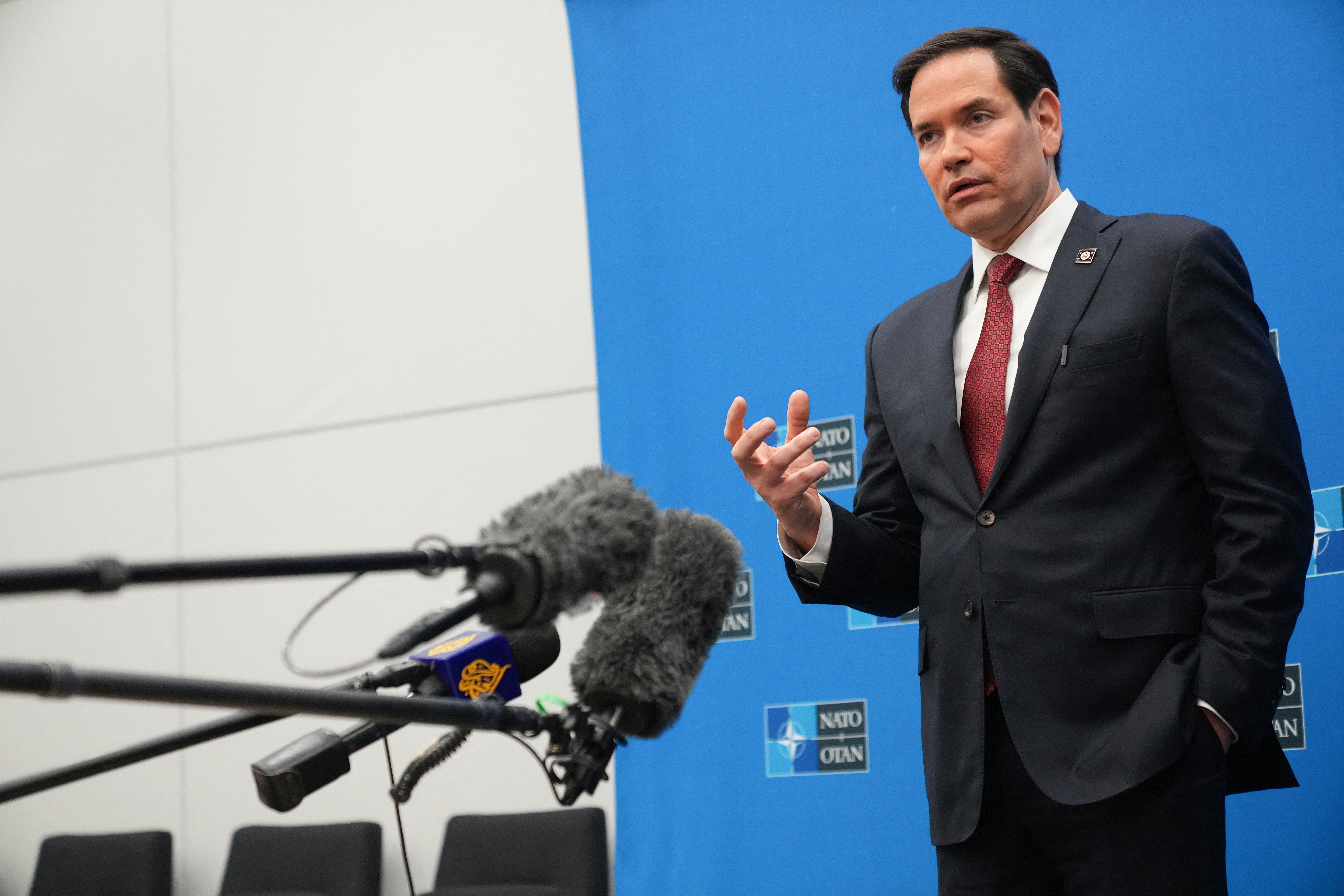
Secretary of State Marco Rubio suggested he was open to Iran maintaining a civil nuclear program and did not explicitly rule out allowing the Islamic Republic to enrich uranium itself, even as he expressed concern about such activity in an interview with The Free Press’ Bari Weiss on Wednesday, Jewish Insider’s Matthew Kassel reports.
On the record: “If Iran wants a civil nuclear program, they can have one just like many other countries in the world have one, meaning they can import enriched material,” Rubio told Weiss on the Free Press’ “Honestly” podcast. “But if they insist on enriching uranium themselves, then they will be the only country in the world that ‘doesn’t have a weapons program’ but is enriching,” he added. “I think that’s problematic.” His comments came as the Trump administration faces scrutiny over its mixed messaging amid ongoing nuclear negotiations with Iran.
SOUNDING THE ALARM

Abe Foxman, the former Anti-Defamation League national director, offered pointed criticism of the Trump administration in a Holocaust Remembrance Day commemoration at the Capitol on Wednesday. “As a [Holocaust] survivor, my antenna quivers when I see books being banned, when I see people being abducted in the streets, when I see government trying to dictate what universities should teach and whom they should teach. As a survivor who came to this country as an immigrant, I’m troubled when I hear immigrants and immigration being demonized,” Foxman said, to sustained applause from the audience, Jewish Insider’s Emily Jacobs reports.
More from his speech: Foxman, who led the ADL for nearly three decades, made the comments while delivering an address at the 2025 Days of Remembrance, which was organized by the U.S. Holocaust Memorial Museum in Washington. Foxman also praised the Biden administration and the second Trump administration for each committing to addressing antisemitism. “We live in very chaotic times, where our values, our history, our democracy are being tested. As a survivor, I’m horrified at the explosion of antisemitism — global and in the U.S. I’m appreciative of President Biden’s historic initiative on antisemitism and thankful to President Trump’s strong condemnation of antisemitism and his promise to bring back consequences to antisemitic behavior,” Foxman said.
COUTURE MEMORY

Someone you recognize and someone you don’t. Someone who lives in the spotlight and someone who doesn’t — Hollywood A-listers posing with Holocaust survivors. That was the premise fashion photographer Bryce Thompson conjured up in an effort to amplify the stories of the last living generation of Holocaust survivors. The idea was initially fueled by antisemitism that Thompson, who is not Jewish, saw his friends, neighbors and mother, who converted to Judaism, facing in recent years. But the project — which took three years to complete — assumed even greater relevance after the Oct. 7, 2023, Hamas terrorist attacks, the ensuing war in Gaza and the record high levels of anti-Jewish incidents in the U.S. that followed, Jewish Insider’s Haley Cohen reports.
Behind the scenes: A new collection of photographs shot by Thompson, called “Borrowed Spotlight,” debuted on Tuesday to coincide with Yom Hashoah, Holocaust Remembrance Day, with the release of a coffee-table book and weeklong exhibition at Detour Gallery in Manhattan. It features Hollywood heavyweights including Cindy Crawford, Jennifer Garner and Chelsea Handler. With years of experience photographing high-profile shoots for publications including GQ, ELLE and Glamour, Thompson initially expected that the photos would speak for themselves. But he told JI that the most impactful moments were the ones between shots. “Those were the moments they interacted the most,” he said of his photography subjects.
Worthy Reads
Northern Exposure: In Foreign Affairs, Shira Efron and Danny Citrinowicz posit that Israel has an opportunity to combine diplomacy with military action to secure the border and prevent malign forces from retaking power in Syria. “If the new Syrian government remains moderate and can consolidate its authority, the upside for Israel would be huge. It would have a stable neighbor not beholden to Iran — one that possesses an effective military that can do its own work to address threats from extremist groups. Israel is not a passive bystander to the trajectory of Syrian politics. It can encourage Shara’s moderation by welcoming Damascus’s overtures, such as the arrest, on April 21, of two senior leaders of the Palestinian Islamic Jihad terror group. Further, Israel should articulate publicly that its territorial advances are designed to be temporary until a responsible force can secure the other side of the border. Until Damascus has such capabilities, Israel should minimize friction with Syria’s population and its new government by reducing its visible military footprint and communicating with Shara’s team through back channels. At the same time, Israel should capitalize on the gains it has made to secure the Israeli-Syrian border by demanding a diplomatic agreement to ensure the protection of Syria’s Druze community and to demilitarize the Golan Heights.” [ForeignAffairs]
Farewell to Arms: In Newsweek, the Foundation for Defense of Democracies’ Sinan Ciddi and Jonathan Schanzer argue against the U.S.’ potential sale of weapons to Turkey, spotlighting Turkish Foreign Minister Fidan’s ties to terror regimes and anti-American forces. “Before becoming foreign minister, Fidan headed Turkey’s intelligence agency (MIT) from 2010 to 2023. During that time, Fidan steered Turkey away from its Western alliances, aligning it instead with Islamist regimes and extremist movements. Fidan was central to making Turkey a safe haven for Hamas. Beginning in 2011, he enabled the group to operate on Turkish soil — raising funds, recruiting, and coordinating attacks against Israel. Hamas reportedly received a Turkish pledge of $300 million in 2011, and today maintains offices in Ankara and Istanbul with access to Turkish leadership, including President Recep Tayyip Erdogan. On October 7, as Hamas carried out its slaughter of 1,200 Israeli civilians, Hamas leader Ismail Haniyeh reportedly celebrated from Turkey. Fidan’s record extends beyond Hamas. Turkey became a strong advocate of the Muslim Brotherhood, allowing the Islamist movement to establish institutional presence in Turkey. Ankara championed the Muslim Brotherhood government under Mohamed Morsi in Egypt before its downfall in 2014.” [Newsweek]
Sounding the Alarm in Europe: In The Free Press, Haviv Rettig Gur considers how early Zionists understood the looming peril that awaited Europe’s Jewish community at the start of the 20th century. “At the start of the twentieth century, only a minority of Jews were political Zionists. Most Jews still clung to the hope that, despite pogroms and oppressive laws, European liberalism would ultimately win out; or to the promise of universal equality trumpeted by the communists; or to the ultra-Orthodox call for a return to the physical, cultural, and spiritual safety of a renewed ghetto. The Zionists were a minority. Right up until they weren’t. Right up until Europe itself left Jews with no other choice. Put very simply: Zionism, alone among Jewish movements and cultural worlds of the diaspora in the nineteenth and early twentieth centuries, knew what was coming. The early Zionists saw only dimly, vaguely, the bloodletting that would come. But this foreknowledge rested on serious analysis and theory, and recommended clear action. This was true across the political spectrum of the Zionist movement, from socialists to liberals to right-wing Revisionists.” [FreePress]
Word on the Street
White House senior official Seb Gorka said that the Trump administration’s counterterrorism plan, which he said would be “utterly, completely” different from the Biden administration’s approach, will likely be ready in a month…
Defense Secretary Pete Hegseth had the Signal messaging application, which was linked to the same application on his cell phone, installed on his desktop computer in the Pentagon in an effort to work around the building’s poor reception and communicate with senior administration officials…
Sen. John Fetterman (D-PA) called on the Trump administration to drop its nuclear talks with Iran and mount an attack on its nuclear program, saying, “You’re never going to be able to negotiate with that kind of regime that has been destabilizing the region for decades already, and now we have an incredible window, I believe, to do that, to strike and destroy Iran’s nuclear facilities”…
The Senate Health, Education, Labor and Pensions (HELP) Committee will hold a vote on the Antisemitism Awareness Act and another piece of antisemitism legislation next Wednesday, Sen. Bill Cassidy (R-LA) announced, Jewish Insider’s Emily Jacobs reports…
Sen. Dick Durbin (D-IL), the Senate Democratic whip, announced on Wednesday that he will not seek reelection to a sixth term, setting up a competitive primary contest to fill his seat and his leadership role, Jewish Insider’s Emily Jacobs reports…
Rep. Jan Schakowsky (D-IL) said she will make an announcement about her political plans in early May, following reports that she had told colleagues she intends to retire at the end of her current term…
The Department of Justice canceled hundreds of what Attorney General Pam Bondi called “wasteful grants” to community and local organizations, including funds for programs that were intended to decrease hate crimes against American Jews…
A Pennsylvania Air National Guard member and self-described “Hamas operative” who was already facing charges tied to the vandalism of a synagogue and Jewish federation office in Pittsburgh was charged this week with making false statements about his loyalty to the U.S. and building pipe bombs…
The FBI conducted several raids on homes in the Ann Arbor, Mich., area; an anti-Israel activist group in the area said that the raids were targeting protesters…
Harvard is delaying the release of reports from the school’s antisemitism and Islamophobia task forces, which were initially slated to be released in early April, amid its broader fight with the Trump administration over campus antisemitism and federal funding…
President Donald Trump signed an executive order requiring universities to disclose foreign funding in excess of $250,000…
Current and former Barnard College employees received a text message survey from the Equal Employment Opportunity Commission that asked whether the recipients had Jewish or Israeli ancestry and probed recipients’ experiences with antisemitism on the campus; the move is part of the government’s efforts to investigate discrimination at the New York City school…
A judge in New York ruled that the Art Institute of Chicago must return a 1916 drawing by Egon Schiele to the heirs of an Austrian Jewish art collector who was killed in the Holocaust…
Hamas released a video of Israeli hostage Omri Miran; the video was the first sign of life from the Kibbutz Nahal Oz resident since July, when hostages who were released earlier this year last reported having seen him in Gaza…
Palestinian Authority President Mahmoud Abbas called on Hamas to release the remaining 59 hostages, referring to the terror group as “sons of dogs” who had given Israel “excuses” to prolong the war in Gaza…
Jordan announced its planned enforcement of a ban on the Muslim Brotherhood’s operations in the Hashemite Kingdom, five years after a court ruling approving the group’s disbandment and nine years after shuttering the group’s headquarters in Amman; 16 people were arrested in Jordan earlier this month on charges that they planned to launch attacks in the country…
The New York Times interviews Syrian President Ahmed al-Shara about his first months leading the country following the ouster of Bashar al-Assad, as well as his approach to relationships with the West…
A new report from the Institute for Science and International Security found that Iran is fortifying the areas around two of its nuclear facilities, which it has refused to allow international inspectors access to…
Pic of the Day

Released Israeli hostage Agam Berger stood with Holocaust survivor Gita Kaufman at the entrance to the Auschwitz concentration camp in Oświęcim, Poland, on Wednesday. Berger is part of a delegation of released hostages participating in the annual International March of the Living program alongside Holocaust survivors from around the world.
Birthdays

Former president of basketball operations for the Washington Wizards of the NBA for 16 seasons, himself an NBA player for 9 seasons, Ernest “Ernie” Grunfeld turns 70…
Rabbi emeritus at Washington’s Adas Israel Congregation, Rabbi Jeffrey A. Wohlberg turns 84… Emmy, Grammy, Oscar, Tony and Peabody Award-winning singer and actress, Barbra Streisand turns 83… Delray Beach, Fla. resident, Phyllis Dupret… Distinguished professor emeritus at the University of Maryland, College Park, Jeffrey C. Herf turns 78… Former president and publisher of USA Today, then chairman of theStreet, Lawrence S. Kramer turns 75… Israeli designer, architect and artist, Ron Arad turns 74… President of Cincinnati-based Standard Textile, Gary Heiman… Israeli singer descended from the Jewish diaspora in Kurdistan, Ilana Eliya turns 70… Columnist for Foreign Policy, Michael Hirsh turns 68… Author of books for children and teens, Deborah Heiligman turns 67… Managing director at global consulting firm Actum, and author of books about Bernie Madoff and Rudy Giuliani, Andrew Kirtzman turns 64… CEO and President of Wells Fargo since 2019, he was previously the CEO of Visa, Charles Scharf turns 60… President of sales and marketing at Pimlico Capital, and rabbi of Baltimore’s Shomrei Mishmeres HaKodesh, Carl S. (Rabbi Chaim) Schwartz turns 55… Deputy chief of staff for Montgomery County (Md.) Councilmember Sidney Katz, Laurie Mintzer Edberg… Emmy Award-winning television writer, producer and film screenwriter, known as the co-creator and showrunner of the television series “Lost,” Damon Lindelof turns 52… National political director at AIPAC, Mark H. Waldman… Israeli model, actress, entrepreneur, lecturer and activist, Maayan Keret turns 49… Film and television actor, Eric Salter Balfour turns 48… Brandon Hersh… Partner at Apollo Global Management, Reed Rayman… Special assistant to POTUS and senior speechwriter in the Biden administration, Aviva Feuerstein turns 38… Tech and innovation reporter at Automotive News, Molly Boigon…
BIRTHWEEK: American Jewish Committee ACCESS New York board member, Sam Sorkin (was yesterday)…
Rep. Seth Magaziner initiated the joint statement condemning Tucker Carlson’s interview with a Holocaust revisionist

Tom Williams/CQ-Roll Call, Inc via Getty Images
Rep. Seth Magaziner, D-R.I., leaves a meeting of the House Democratic Caucus about the candidacy of President Joe Biden at the Democratic National Committee on Tuesday, July 9, 2024.
Rep. Seth Magaziner (D-RI) was home in Rhode Island during the congressional recess late last week, “stewing” about Tucker Carlson’s widely viewed interview with a vocal Holocaust revisionist.
In response, he sent a text to a group chat of Jewish Democratic members of the House suggesting they speak out, which led, in a matter of days, to a joint statement from all 24 Jewish House Democrats, a rare example of unanimity from a group including members from both ends of the Democratic Caucus.
“My concern was that this kind of embrace of literal fascism is happening in plain sight on the far right, and people have become so desensitized to it that they are treating it as normal, and we cannot let it become normal,” Magaziner told Jewish Insider on Tuesday.
He emphasized that he was concerned not only about the interview itself, which garnered millions of views, but also that it was promoted by Elon Musk and that Republican vice presidential nominee Sen. J.D. Vance (R-OH) refused to condemn it.
Magaziner said he drafted a statement on Friday and his colleagues were eager to join the statement.
“I’m very pleased that we were able to come together as a group, because it is an extremely ideologically diverse group, even when it comes to matters related to Israel, related to antisemitism, related to what it means to be Jewish in America,” Magaziner said. “It’s a very diverse group with often diverging opinions. But I’m glad that we were able to come together on this and come together quickly.”
Magaziner said there had been some discussion among the members of whether to mention Musk in the statement, given that the X owner deleted his post promoting the interview, but said the lawmakers ultimately decided to include the tech billionaire because he “never disavowed what Carlson and Cooper said” and “this is — just to be blunt — not the first time that Musk has dabbled with antisemitic ideas and statements.”
Magaziner acknowledged that Jewish House Democrats haven’t spoken in a similar unified voice to condemn antisemitism on the left, explaining that it was “easier in this case to find language that all members were comfortable with.”
But he said that he believes each of the Jewish Democrats has condemned antisemitism on the left “in the way that they felt was appropriate,” although there are differences of opinions of when and how to do so, and “what rises to the level of antisemitic versus perhaps misguided.”
Magaziner said, “we hope we can get our colleagues on the other side of the aisle” to speak out about Carlson and the interview, but noted that the Democrats didn’t reach out to their Jewish Republican counterparts about joining the statement.
“I thought it was important that J.D. Vance be included in the statement because he is running to be vice president,” Magaziner said. “And the reality is that our Republican colleagues were not going to sign on to a statement that was critical of J.D. Vance.”
Reps. David Kustoff (R-TN) and Max Miller (R-OH) declined to comment last week on the Carlson interview, and didn’t immediately respond to requests for comment about the statement.
Magaziner, when running for Congress, said he does not practice Judaism and highlighted his mixed heritage — his father is Jewish and his mother is Catholic. But he’s been involved with various efforts by Jewish House Democrats, particularly since the Oct. 7 attack on Israel. His office described the statement on Carlson as a “statement from Jewish members of the House.”
The Rhode Island Democrat explained that other Jewish Democrats approached him early in his term about joining regular informal meetings and discussions among Jewish Democrats.
“I said to them, ‘I don’t know whether or not it’s appropriate for me to be a part of that,’” but the lawmakers “were very welcoming, and they recognized that even though I don’t practice, that I do have Jewish heritage, that my family has experienced the antisemitism and the many traumas that have come with being Jewish through the years and and they welcomed me into those discussions.”
He said he would have deferred to a more senior member if they had wanted to lead the Carlson statement, but the lawmakers asked him to draft it.
Please log in if you already have a subscription, or subscribe to access the latest updates.
 Continue with Google
 Continue with Apple