





























In a 2010 social media post, the Columbia University anti-Israel protest leader pledged, ‘soon, very soon, we will annihilate the Jews’

Kayla Bartkowski/Getty Images
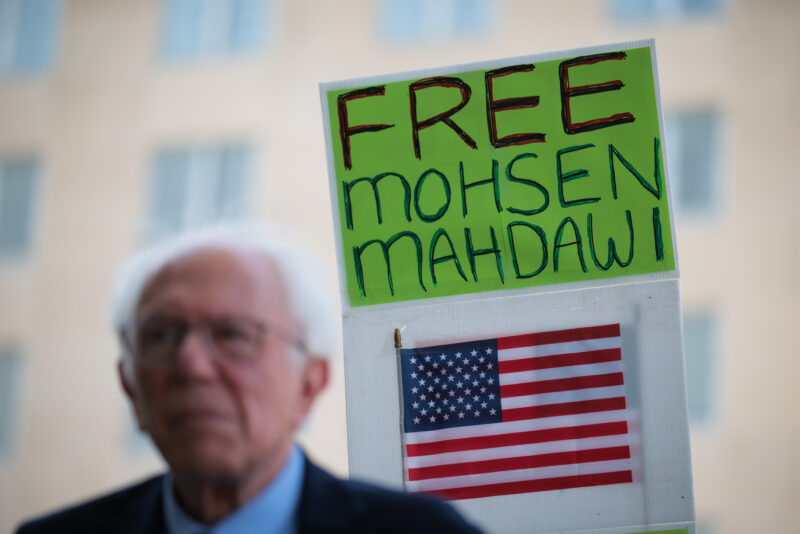
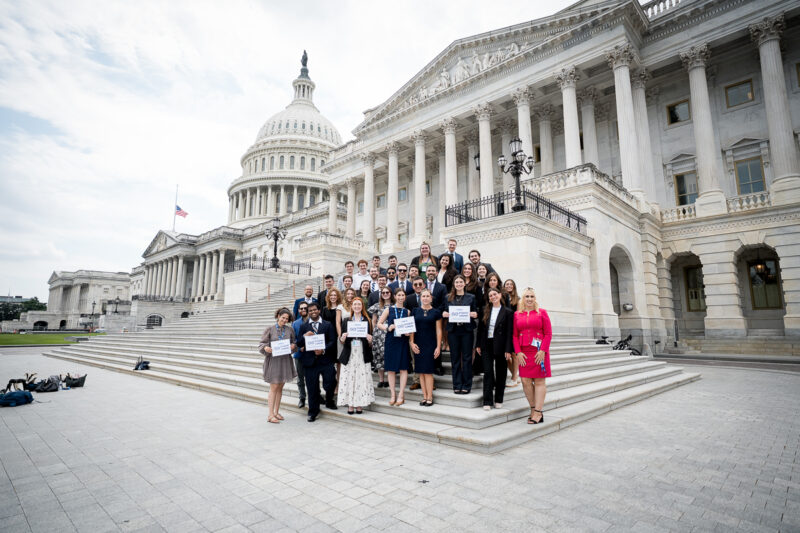
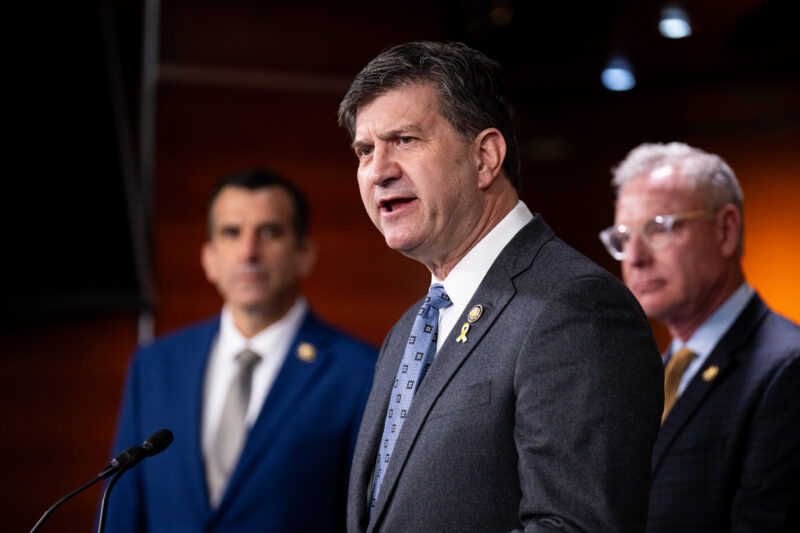
Supporters hold up signs behind U.S. Sen. Bernie Sanders (I-VT) during a rally held by Congress members in support of detained Columbia student Mohsen Mahdawi


 Add JewishInsider on Google
Many of the liberal Jewish and civil rights organizations and lawmakers who protested federal efforts to deport Columbia University anti-Israel protest leader Mohsen Mahdawi are so far silent on new revelations about Mahdawi’s lengthy history of antisemitic and pro-terrorist social media posts.
Mahdawi, a graduate student at Columbia facing deportation for his role in campus protests, wrote posts over the span of 15 years that supported armed violence and called to “annihilate the Jews,” according to a 100-page investigation published Wednesday by journalists David Collier and Rachel Feldman — with Arabic-to-English translations confirmed by Jewish Insider.
Mahdawi, a 35-year-old green card holder and West Bank native, pledged in a 2010 Facebook post, “soon, very soon, we will annihilate the Jews.” He also praised Hamas and honored deceased terrorists in several posts on Instagram and Facebook, declaring that Palestinians have the capacity and conviction “to kill and to wound.”
Some of the posts were published as recently as 2024, while Mahdawi was an undergraduate student at Columbia, where he is now enrolled in the Ivy League’s School of International and Public Affairs.
The report states that in 2015, the FBI investigated Mahdawi after a Vermont gun-store owner alleged that he had sought to purchase a sniper rifle and machine gun while claiming to have considerable firearm experience, and allegedly said he had used modified submachine guns “to kill Jews while he was in Palestine.” Another man separately alleged Mahdawi told him, “I like to kill Jews.” Mahdawi denied the allegations. The investigation ended that year, and no charges were filed.
Mahdawi was arrested and detained by federal immigration officers in April 2025 while appearing at a U.S. citizenship interview in Vermont, where he resides. This summer, a federal appeals court reversed a decision that had released Mahdawi from Immigration and Customs Enforcement detention on bail last year. The ruling does not require Mahdawi to return to a detention center, but he is potentially at risk for rearrest. The court of appeals announced Thursday that it will rehear his case.
Both J Street and the ACLU — two groups that have previously defended Mahdawi — did not respond to requests for comment from JI on Thursday, asking if the organizations would update their statements of support in light of the newly unveiled posts. Both groups have previously stated Mahdawi is being unfairly targeted by the Trump administration over his advocacy for Gaza and Palestinian rights.
In 2025, when Mahdawi was arrested, J Street President Jeremy Ben-Ami said the group was “outraged by the Trump Administration’s continued anti-democratic crackdown on Palestinian and pro-Palestinian students in the United States, and its cynical exploitation of genuine fears of antisemitism as its pretext for doing so.”
The group encouraged people to sign a petition supporting him in late July.
Beth Jacob Synagogue, a non-denominational congregation in Vermont that co-sponsored a fundraiser last month for Mahdawi’s legal aid, also did not respond to a request for comment from JI on Thursday.
Democratic members of Congress have also rallied in support of Mahdawi, particularly Rep. Becca Balint (D-VT). Balint, who is Jewish, led close to 70 House Democrats on a letter condemning Mahdawi’s arrest, calling it “dystopian” and motivated by “statements that the Trump Administration does not agree with.”
“It is Mr. Mahdawi’s right as a legal resident of the United States to argue for what he believes in,” the letter reads. “This most fundamental of American rights is crucial to the fabric of our country, and one that America was built upon. … We profoundly oppose unlawful abductions and expect a prompt response to our questions.”
Balint, Sanders and other Democrats also held a rally in April 2025 outside the State Department, defending Mahdawi and dismissing past allegations that he had told a gun shop owner that he had made comments about killing Jews and having built weapons for terrorist groups.
Balint, Sanders, Sen. Peter Welch (D-VT), who met with Mahdawi in detention, and other Democrats who have been vocally supportive of Mahdawi did not respond to requests for comment.
The Congressional Progressive Staff Association also hosted a happy hour with Mahdawi earlier this year.
“Mahdawi frequently speaks of justice. It is one of the central themes of the identity he presents to American audiences,” Collier and Feldman wrote in their report. “But justice requires something more fundamental: truth. After almost one hundred pages examining his words, his history and the stories upon which his public identity was built, that is where the problem with Mohsen Mahdawi ultimately lies.”
Although the report exposes dozens of Mahdawi’s most egregious comments, his extreme anti-Israel stance and support for terrorist groups has been public knowledge for years.
Mahdawi has been characterized by the Department of Homeland Security as a “ringleader” in anti-Israel protests at Columbia. It accused him of using “threatening rhetoric and intimidation” against Jewish students before graduating last year. He has not been charged with a crime.
In a “60 Minutes” interview in December 2023, Mahdawi said he could “empathize” with Hamas and its Oct. 7, 2023, attacks. “To empathize is to understand the root cause and to not look at any event or situation in a vacuum. This is for me that path moving forward,” he said.
Meanwhile, Mahdawi is scheduled to speak at a Columbia symposium next week titled The Forever War and the First Amendment. The university did not respond to a request for comment from JI.
The assistant attorney general for civil rights urged students at the ICC summit to separate offensive expression from conduct that actually blocks access to education
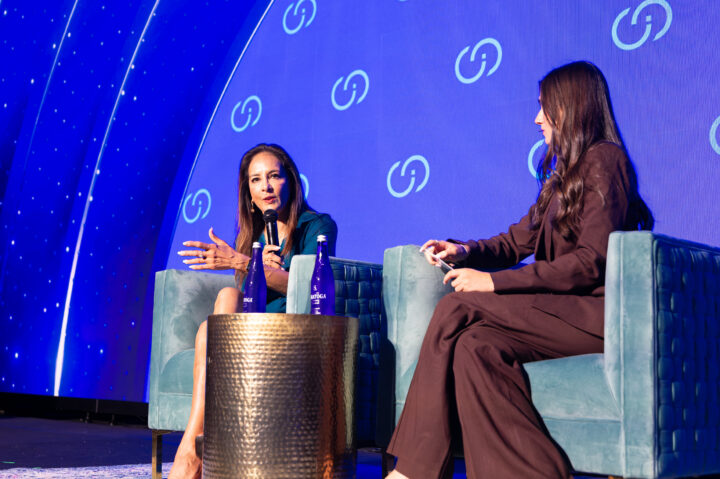
Israel on Campus Coalition
Harmeet Dhillon, the assistant attorney general for civil rights, speaks at the Israel on Campus Coalition’s National Leadership Summit on Aug. 4, 2026.
Harmeet Dhillon, the assistant attorney general for civil rights, urged pro-Israel college students to distinguish between protected speech and actionable discriminatory conduct — “people literally interfering with your ability to get an education” — when facing antisemitism on campus.
“[With] a lot of young people these days, there’s kind of a snowflake culture with ‘I feel unsafe.’ I feel unsafe everyday when I go to work and get a mean email from a colleague. Life is full of challenges,” Dhillon said on Tuesday at the conclusion of the Israel on Campus Coalition’s National Leadership Summit in Washington.
“Someone wearing a keffiyeh or shouting ‘from the river to the sea,’ it’s protected by the First Amendment,” Dhillon said. “Holding a red triangle over a student’s head in a mob setting and saying ‘Jews not welcome’ is much closer to not protected speech.”
“You have to sort out people being mean or rude to you versus people literally interfering with your ability to get an education,” she said.
Dhillon, who has led the Trump administration’s ongoing legal battles with a number of universities over their alleged failures to address antisemitism, added that the next hurdle will be fighting anti-Israel rhetoric from left-wing politicians.
“One of the new challenges, which I never would have predicted, is political leaders like [New York City Mayor] Zohran Mamdani or candidates on the ballot today in Michigan whose rhetoric isn’t something you would have seen five or 10 years ago,” said Dhillon. “The normalization of violent rhetoric about an entire population of people of a national origin and religion is something I didn’t see growing up in this country, and I grew up in the Deep South.”
“I have neighbors in my community in Sea Ranch, Calif., who are professors at UC Davis and I see them on television lock hands and block the Jewish students from going to campus,” she said. “And I see them at the grocery store. Am I supposed to treat them normally? They don’t think I should be treated normally. So these are some of the challenges we face in today’s society.”
It is unclear what incident Dhillon was referring to, though a similar incident did occur in April 2024 on UCLA’s campus, at which time students participating in an anti-Israel encampment moved in groups and shouted “human chain” in order to block students from moving through campus, according to DOJ findings.
The move marks a major step in the White House’s efforts to dismantle the Education Department and significantly reduce or distribute its work
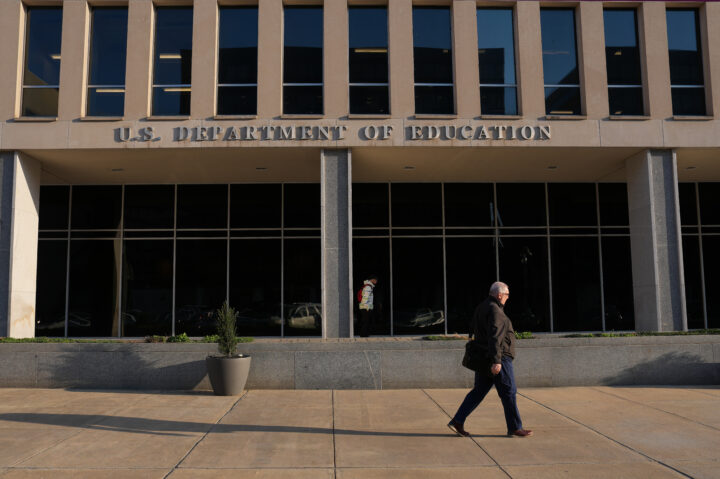
Win McNamee/Getty Images
A person walks past the U.S. Department of Education on March 20, 2025 in Washington, DC.
The Trump administration announced on Tuesday that it will transfer many of the responsibilities of the Education Department’s Office for Civil Rights, the division that investigates civil rights violations at American schools and universities, to the Justice Department.
The move marks a major step in the White House’s efforts to dismantle the Education Department and significantly reduce or distribute its work. The policy was first discussed in the Heritage Foundation’s controversial Project 2025 blueprint for the Trump administration, which was released in April 2023 during the run-up to the 2024 presidential election.
“The Department of Education will also team up with the DOJ to ensure stronger, more coordinated civil rights enforcement and robust protections for student privacy,” Education Secretary Linda McMahon said in a statement on Tuesday. An Education Department press release said the new agreement is “designed to reduce federal bureaucracy and improve the efficient delivery of federally funded programs and activities.”
The formal agreement hands to the Justice Department’s Civil Rights Division the core of OCR’s work: investigating and attempting to resolve discrimination complaints against schools and universities. It leaves OCR with the authority to refer cases out and sign off on the results, but has DOJ handling nearly every aspect of the investigation.
OCR has been a crucial tool for Jewish students who experienced antisemitism on their campuses, particularly after the Oct. 7, 2023, attacks in Israel and over the course of the ensuing war. Through Title VI of the Civil Rights Act of 1964, the office’s remit includes complaints of discrimination on the basis of one’s national origin, a broad category that encompasses antisemitism. Jewish organizations have for years encouraged Jewish students and parents to file complaints with the agency.
Now the civil rights office’s mandate and scope — already diminished because of widespread layoffs at the department last year — will for the most part move to the Justice Department. It is not clear whether the OCR staffers will move to DOJ.
The move sparked criticism from the left and praise from more conservative voices.
Kenneth Marcus, the founder of the Louis D. Brandeis Center for Human Rights Under Law who ran OCR during President Donald Trump’s first term, called the move a “promising” step from the White House.
“Much will depend on implementation,” Marcus said in a statement. “But if done right, this could mark a critical step forward for students whose rights have gone unprotected on campuses across the country.”
An Education Department press release said the new agreement between the DOJ and OCR, which accompanied related agreements from DOJ and the Department of Health and Human Services, is “designed to reduce federal bureaucracy and improve the efficient delivery of federally funded programs and activities.”
Jewish Council for Public Affairs CEO Amy Spitalnick said that the push to move OCR to DOJ “is weakening one of the most effective mechanisms for protecting Jewish students and for enforcing civil rights protections on campus.”
Most Jewish organizations have so far not commented on the announcement.
Speaking at AJC’s Global Forum, the assistant attorney general highlighted antisemitic incidents at UCLA and Harvard: ‘This is outrageous behavior in America that this administration will not tolerate’
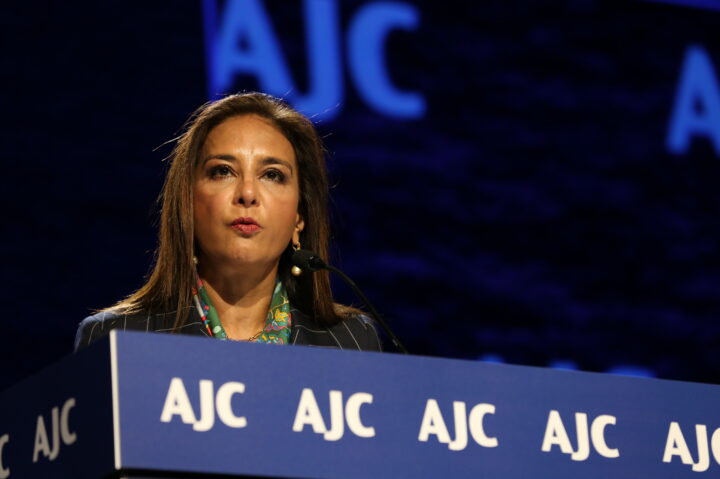
AJC
Assistant Attorney General for Civil Rights Harmeet Dhillon speaks at the American Jewish Committee's Global Forum in Washington on June 2, 2026.
Assistant Attorney General for Civil Rights Harmeet Dhillon said on Tuesday that the Trump administration will continue its legal battles against Harvard University and UCLA, accusing both institutions of continuing to neglect the civil rights of Jewish students and faculty.
Dhillon made the comments while appearing at the American Jewish Committee’s Global Forum in Washington, where she condemned what she described as “egregious examples of antisemitism that have transpired here at home on American soil” since Hamas’ Oct. 7, 2023, attacks on Israel as “devastating and antithetical to our values as a nation.”
The assistant attorney general highlighted the department’s most recent lawsuit against Harvard in March, saying that the Ivy League university had been “tolerating race and national origin discrimination against both Jewish and Israeli students.”
“After Oct. 7, antisemitic mobs at Harvard and other campuses harassed and intimidated these students all across the campus. Harvard failed to take meaningful action and it failed to enforce its own rules in an equal manner,” Dhillon said. “Its own presidential task force documented the exclusion of Israeli and Zionist students from social spaces and extracurricular activities, but these findings were ignored. Harvard’s actions are inexcusable, and it cannot continue to take taxpayer dollars while turning a blind eye to abuse against Jewish and Israeli students.”
Turning to UCLA, Dhillon noted that the Justice Department had filed suit against the school last week “for its deliberate indifference to race and national origin discrimination in violation of Title VI of the Civil Rights Act of 1964.”
She recounted visiting the Los Angeles campus in recent weeks, noting that “it almost brought tears to my eyes” to hear a recent UCLA School of Law graduate share how a student held up a large sign behind his head with an inverted red triangle, a symbol used by Hamas terrorists to mark Israeli targets.
“This is outrageous behavior in America that this administration will not tolerate,” she said of the incident, and vowed that the Justice Department would continue pursuing its litigation.
UCLA’s Initiative to Combat Antisemitism action group released a 42-page set of recommendations last month urging the university to intensify its crackdown on anti-Jewish harassment, which Chancellor Julio Frank said “makes clear that antisemitism and all other forms discrimination and bigotry have no place at UCLA.
“The Civil Rights Division will fight antisemitism in our American universities and elsewhere, wherever we will find it,” Dhillon told the crowd. “The fight for the Jewish community’s right to learn, worship or live freely is not a fight that I or the Civil Rights Division take lightly. It’s a fight that I’ve personally committed to, because no person in this country should ever have to live in fear because of his beliefs or where he came from. With every institution and individual we hold accountable, our Civil Rights Division fights tirelessly to protect America’s Jewish community.”
Leo Terrell will chair the new advisory panel while embarking on a 15-city swing to engage Jewish communities and local officials on combating antisemitism

Win McNamee/Getty Images
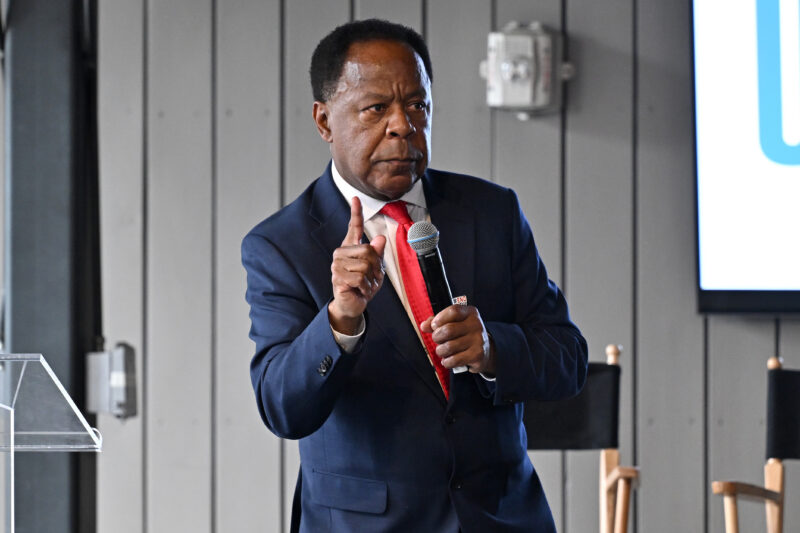
Leo Terrell at an event in the East Room of the White House on February 20, 2025.
The Justice Department announced on Tuesday that Leo Terrell, senior counsel to the assistant attorney general for civil rights and chair of the Department of Justice’s antisemitism task force, will oversee the creation of the DOJ’s Antisemitism Advisory Committee. As part of the role, Terrell will embark on a 15-city nationwide tour to connect with local faith leaders and law enforcement officials about combating antisemitism.
The department described the panel in a press release on Tuesday as “a new advisory body” that will recommend strategies to the attorney general and other department leadership “on coordinated, timely, and effective responses to antisemitism.”
The committee “will consist of citizen leaders dedicated to combatting antisemitism” and individuals nominated to serve will be “subject to approval by the president,” the release said. (The task force, by contrast, is solely composed of DOJ officials.)
“Members will come from a wide range of backgrounds but share a common goal of developing innovative solutions to address antisemitism across the country,” the department said of the “forthcoming launch” of the panel.
Terrell told Jewish Insider in an interview late Tuesday that he had submitted a list of nominees to President Donald Trump after receiving the green light from acting Attorney General Todd Blanche to launch both initiatives and was awaiting approval from the White House.
The tour, described by the department in a second press release as a “National Awareness & Action Tour to combat antisemitism,” will involve Terrell meeting with “individuals and local communities impacted by antisemitism” and “working to identify practical solutions to combat antisemitism at the local level.”
“This national tour is an important step in ensuring communities across the country know the federal government stands ready to work with them to confront antisemitic threats, protect public safety, and uphold civil rights,” Blanche said in a statement.
Terrell has not determined yet if the tour will include public appearances to engage with Jewish leaders. His schedule is in the process of being finalized, and the senior DOJ official told JI he is open to extending the number of cities beyond the initial 15 stops on the agenda.
As for who he will meet during his travels, Terrell acknowledged that he did not expect to receive much engagement from many leading Democratic officials in major cities, such as New York City Mayor Zohran Mamdani, Chicago Mayor Brandon Johnson or Los Angeles Mayor Karen Bass. Instead, he said he hopes to engage directly with Jewish community stakeholders in these places and urge Jewish Americans to get involved in local elections.
“We’re talking about going to Jewish communities, first of all, to light a fire under them, but also to ask how we resolve these issues when sometimes you’ve got an absentee district attorney, with an absentee mayor, with an absentee school board, with an absentee school superintendent?” Terrell said. “Most importantly, there’s going to be a great emphasis on taking back these school districts and local prosecutor jobs in elections. There’s going to be a focus on putting pressure on some of these politicians in local cities in towns.”
He told JI that his primary objective with both initiatives is to determine what solutions the Trump administration can implement to combat domestic antisemitism on a federal level, as well as ascertain what the federal government should encourage state and local officials to do to address the problem closer to home.
“My position is that antisemitism is a local issue. What I mean by that is, we see the results of failures to address it at the local level — in the cities, in the school districts and areas like that,” Terrell said. “Not all of the solutions are in Washington. The solutions are in Los Angeles, Detroit, Chicago, San Francisco, in big cities, small cities, mid-sized cities in the South.”
“How do we get prosecutors in local cities to address antisemitic content that is being ignored and protected under the umbrella of free speech? How do we stop the curriculum problems that are developing in K-12 schools by teachers’ unions that support antisemitic misconduct?” he added. “How do we stop the issues caused by what I call the ‘Jewish tax,’ where Jewish citizens have to pay exorbitant security fees in order to worship or to have events? These are things that are happening at the local level.”
Terrell said he is “wide open” to considering ideas from Jewish leaders across the country about solutions to the domestic antisemitism scourge, arguing that he believed “out-of-the-box thinking” was required at this moment.
Terrell said that he viewed the success of the federal programs he hopes to enact over the remainder of the second Trump administration as a necessity, arguing that those initiatives yielding tangible results would make it difficult for a future president to shut down.
“With this advisory committee, we’re going to work on the problem of antisemitism. We’re not going to be just talking, having hearings and things of that sort. This is not an advisory council that’s going to write a report that collects dust. I’m not in for that, I’m in for finding working solutions,” Terrell told JI. “Recognizing the problem is one thing. What to do is another.”
“I think that’s going to be the task of the commission, because I believe guardrails need to be put up before this president’s term in office is over,” he continued. “The president, in my opinion, has been the best friend that the Jewish American community has had in the White House. He’s committed. My biggest concern from here at DOJ is getting some guardrails up so the next president or the next White House will continue these programs.”
The assistant attorney general for civil rights emphasized that Nazis often had advanced degrees and impressive credentials
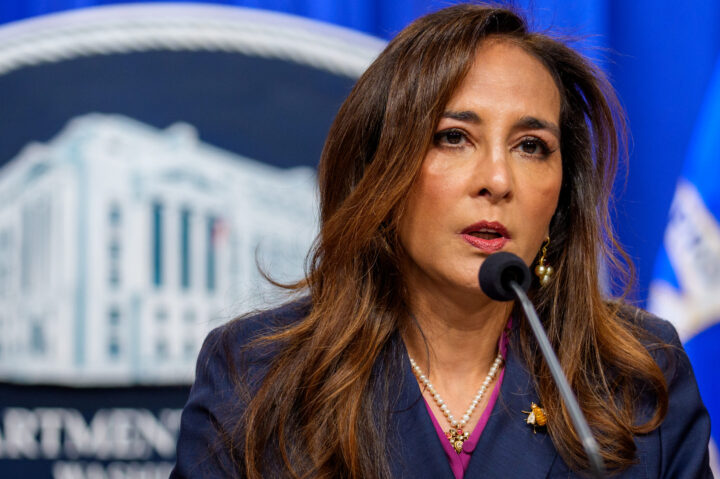
Andrew Harnik/Getty Images
Assistant Attorney General for Civil Rights Harmeet Dhillon speaks during a news conference at the Justice Department on September 29, 2025 in Washington, DC.
In a speech at a federal government commemoration of the Holocaust on Thursday, Assistant Attorney General for Civil Rights Harmeet Dhillon argued that the post-Oct. 7 wave of antisemitism in the U.S. resembles 1930s Germany and warned that modern bigotry is often perpetrated by “educated elites” under the cover of intellectual language.
Dhillon, drawing on a speech that the late Supreme Court Justice Antonin Scalia gave at a Holocaust remembrance event nearly three decades ago, said that Germany’s reputation as an intellectual and scientific hub in the 1920s and 1930s is closely connected to the development of the Holocaust.
“The road to Auschwitz was incremental and methodical. It began with excluding Jews through the legal, political, economic and social life of everyday society,” Dhillon said. “Many perpetrators of the Holocaust were often the most educated intelligentsia in Germany.”
She was speaking at the 33rd annual Federal Interagency Holocaust Remembrance Program, an event organized by and for federal government employees. It took place in the Justice Department’s Great Hall, and as attendees arrived, they walked up a staircase lined with portraits of historic legal experts, like the Babylonian king Hammurabi. One showed Moses, pictured with the twin tablets of the Ten Commandments.
The fact that the perpetrators of the Holocaust often had advanced degrees and impressive credentials is relevant for our understanding of contemporary antisemitism, Dhillon said.
“Today we are experiencing a rise in antisemitism in the world, including right here at home. As in the past, it often begins with social exclusion. On some university campuses, Jews have been blocked by mobs from entering certain spaces,” said Dhillon. “As in 1930s Germany, these actions are often perpetrated by the educated elites of our nation, framed in intellectual language, giving them a veneer of legitimacy.”
She called on federal workers to pledge to stand up against antisemitism and to defend Western values.
“The task in front of all of us here today as federal employees and people of conscience is a difficult but straightforward one. We must defend our values: our values as Americans, as Westerners, as heirs to this great civilization, our values that hold that all men are created equal,” she said.
The Trump administration, Dhillon stated, is committed to protecting Jews and fighting discrimination.
“The Department of Justice will confront anti-Jewish bigotry and ensure peace and security for all people of faith. We are and will continue to aggressively prosecute individuals and organizations who attack Jews, and we will ensure that our institutions of higher learning treat students and faculty with the dignity through which they are all entitled, and all of us are entitled,” she stated.
Other speakers at the event included Ellen Germain, the State Department’s special envoy for Holocaust issues, and Under Secretary of State for Economic Affairs Jacob Helberg, who spoke via video about his grandparents, who came to the U.S. after surviving the Holocaust.
“Their experiences impressed upon me that the opportunities we have today are not guaranteed. That sense of duty informs our work in government as public servants,” said Helberg. “Remembrance isn’t passive. It requires action. It requires us to ensure that the facts of the Holocaust remain accessible and that distortion and denial are confronted.”
Frank Cohn, a 100-year-old Holocaust survivor and U.S. Army veteran, shared his story.
At the end of the event, Germain warned that Holocaust distortion is “alarmingly on the rise these days.” She called on everyone in the room who survived the Holocaust, or who is a descendant of Holocaust survivors, to stand. They received a standing ovation from a crowd that included White House Jewish liaison Martin Marks, State Department antisemitism special envoy Yehuda Kaploun and representatives from more than two dozen foreign embassies.
Amid other ongoing legal battles, the federal government is seeking to reclaim millions in taxpayer dollars over Harvard’s alleged civil rights violations

JOSEPH PREZIOSO/AFP via Getty Images
Tents and signs fill Harvard Yard in the anti-Israel encampment at Harvard University in Cambridge, Massachusetts, on May 5, 2024.
The Trump administration filed a new lawsuit against Harvard University on Friday, claiming that its leadership violated the civil rights of Jewish students by failing to address ongoing antisemitism that has roiled the Ivy League campus since the Oct. 7, 2023, terrorist attacks in Israel.
In the 44-page lawsuit, filed in federal court in Boston, the Department of Justice said that Harvard unlawfully discriminated against Jewish students by its “intentional conduct and its deliberate indifference to discriminatory harassment of Jewish and Israeli students and creation of a hostile educational environment” since Oct. 7 and “up to the present day.”
Jewish and Israeli students “were repeatedly denied access to educational facilities by antisemitic demonstrators. Fearful for their safety, Jewish students wore baseball caps to conceal their yarmulkes or kept out of sight, effectively denying them access to federally funded educational opportunities,” the lawsuit argues.
It further claims that Harvard faculty and leadership’s response was to “turn a blind eye to antisemitism and discrimination against Jews and Israelis.”
The suit is seeking to recover millions of dollars in taxpayer funds that the school received as these alleged civil rights violations were ongoing.
The litigation marks the administration’s latest crackdown in its ongoing battle with several elite universities including Harvard, which have faced multibillion-dollar funding cuts since last year. The school sued the federal government over the funding freezes, and a federal judge ruled last September that the government violated Harvard’s First Amendment rights and federal law when it froze nearly $2 billion in federal grants. The Trump administration filed an appeal in December 2025, which is ongoing.
“Harvard University has failed to protect its Jewish students from harassment and has allowed discrimination to wreak havoc on its campus. President Trump is committed to ensuring every student can pursue their academic goals in a safe environment,” White House Regional Press Secretary Liz Huston said in a statement.
In a statement to Jewish Insider, a Harvard spokesperson said, “Harvard cares deeply about members of our Jewish and Israeli community and remains committed to ensuring they are embraced, respected, and can thrive on our campus. Our actions illustrate this. Harvard has taken substantive, proactive steps to address the root causes of antisemitism and actively enforces anti-harassment and anti-discrimination rules and policies on campus … Harvard’s efforts demonstrate the very opposite of deliberate indifference.”
Since Oct. 7, Harvard has also faced legal action from Jewish groups. In May 2024, the Louis D. Brandeis Center for Human Rights Under Law filed a federal lawsuit claiming that students and faculty on campus have called for violence against Jews and celebrated Hamas’ terrorism daily as the university ignored harassment— including a physical assault — of Jewish students.
The DOJ suit comes days after a new report was released by the university’s official Jewish alumni group that found Jewish enrollment at Harvard has fallen to roughly 7% — its lowest level since the pre-World War II era.
If convicted on all federal counts, Pittman could face up to 50 years in prison and up to $750,000 in fines
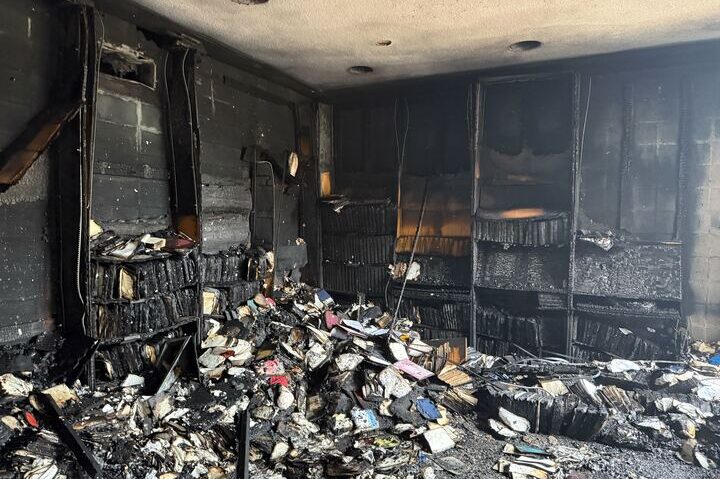
Beth Israel Congregation
Beth Israel Congregation in Jackson, Miss., targeted in an arson attack on Jan. 10, 2026.
The Mississippi man indicted last month in connection with setting the state’s largest synagogue on fire is facing two additional federal charges.
Stephen Spencer Pittman, a 19-year-old who admitted to committing arson on Jackson’s Beth Israel Congregation in the early hours of Jan. 10 due to “the building’s Jewish ties,” was indicted by a federal grand jury this week on civil rights and arson offenses. The indictment adds additional counts to an earlier arson charge, making it a three-count indictment.
“The Department of Justice will not tolerate attacks on houses of worship,” said Harmeet Dhillon, assistant attorney general of civil rights at the Justice Department. “This superseding indictment shows that we will investigate and we will prosecute such vicious attacks that strike at the core of our country’s long tradition of religious liberty.”
According to court documents from his arrest, Pittman is alleged to have used gasoline to set fire to the house of worship. He referred to the institution as the “synagogue of Satan,” a historically antisemitic phrase that has been re-popularized by far-right commentator Candace Owens.
Two Torah scrolls were destroyed in the fire, and five more were damaged. A Torah that survived the Holocaust, which was kept in a glass case, was unharmed. The congregation’s library and administrative office were also destroyed. The building also houses the offices of the Institute of Southern Jewish Life, which supports Jewish life in the region.
Synagogue leaders estimate it will take two or three years to rebuild. The 140 families that belong to Beth Israel — the only synagogue in Jackson, the state’s capital city — are indefinitely holding services in a nearby church.
If convicted on all federal counts, Pittman could face up to 50 years in prison and up to $750,000 in fines.
The assistant attorney general for civil rights said the DOJ will pursue those funding, training and supporting groups such as American Muslims for Palestine
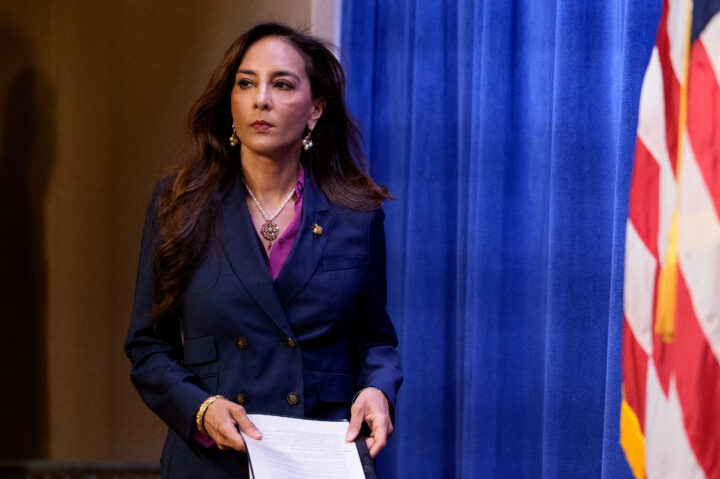
Andrew Harnik/Getty Images
Assistant Attorney General for Civil Rights Harmeet Dhillon arrives for a news conference at the Justice Department on September 29, 2025 in Washington, DC.
Harmeet Dhillon, the assistant attorney general for civil rights, said the Justice Department intends to pursue and ultimately shut down groups that have engaged in disruptive protests at synagogues and other antisemitic activities, as well as those supporting those groups.
“We are investigating, prosecuting, and we will bring these groups and these individuals to justice,” Dhillon said. “We intend to bring strong cases that dismantle these groups at their very root so that these unlawful attacks can be stopped once and for all.”
She said her division’s work includes pursuing those funding, training and supporting groups such as American Muslims for Palestine and the Party for Socialism and Liberation, which she said are engaging in “acts of domestic terrorism.”
Dhillon said that many of the groups behind antisemitic attacks are also involved in other activities, including “unlawful obstruction” of Immigration and Customs Enforcement officers.
The assistant attorney general said that Jewish communities around the country that she’s engaged with “feel like they’re under a coordinated attack and that authorities aren’t doing enough to help them,” adding that she is “ashamed as an American, to hear that groups have acted with impunity.”
She alluded to numerous pending investigations of disruptions at synagogues, of civil rights violations on campuses and of discrimination in zoning and land use approvals, vowing that the DOJ “will not let this stand.” She emphasized that the DOJ has been acting “swiftly and decisively” in response to acts of antisemitism and attempted attacks.
Dhillon said that the DOJ’s invocation of the Freedom of Access to Clinic Entrances (FACE) Act in prosecuting individuals for their involvement in a demonstration outside New Jersey’s Congregation Ohr Torah has become a model that has “paved the way” for its use in other cases to defend other synagogues and houses of worship for other groups. She said that there are more FACE Act investigations underway, related to both Jewish and Christian organizations.
The FACE Act bars the use of force, threats or obstruction to block access to reproductive health services or to obstruct the right to worship. It has previously been applied in cases of demonstrators blocking abortion clinics, but the DOJ under the Trump administration has applied it in cases of protesters blocking of houses of worship.
“For too long, groups and individuals acted as if they were above the law when attacking people of faith,” Dhillon said. “They engaged in a coordinated campaign designed to intimidate Jewish communities from even holding events at synagogues. Their methods are unlawful.”
Speaking at a conference on antisemitism organized by The George Washington University Program on Extremism, Dhillon also praised GW President Ellen Granberg “for standing up to these attacks and being a leader in this area,” pushing back on antisemitism on campus.
Brandeis Center founder Kenneth Marcus indicated the administration is receptive to taking action on an ‘extraordinary surge’ in health care-related antisemitism

Getty Images
Nurses station in busy hospital
Representatives from several Jewish groups met with Paula Stannard, the director of the Department of Health and Human Services’ Office for Civil Rights, last week to discuss potential action to counter antisemitism in health-care and medical education.
The meeting, organized by the Brandeis Center for Human Rights Under Law, also included representatives from the American Jewish Medical Association, Hadassah (The Women’s Zionist Organization of America), the Anti-Defamation League, Jewish Federations of North America and StandWithUs.
Kenneth Marcus, the founder of the Brandeis Center, told JI that the meeting was the second sit-down between the Brandeis Center and HHS leadership, given an “an extraordinary surge in health sector related antisemitism reports” to Brandeis and a “greater involvement by HHS in antisemitism and other civil rights issues than we’ve seen before, so meeting with HHS has become much more important.”
He said that, in the first meeting, which was just between Brandeis and HHS, his organization “made clear the nature and scope of the problem of antisemitism in health care,” particularly the “decolonizing therapy” movement in mental health spaces that has characterized Zionism as a mental illness to be treated.
The second meeting, last week, which lasted around an hour, brought in other Jewish communal groups to share additional information.
Eveline Shekhman, the CEO of AJMA, called the meeting “very productive.”
“We went in with the goal of coming collectively, and also to take a look at how we can use the government relations arm to work and partner with the government, so in that way, we could take a look at what’s going on in the workplace environment, as well as medical schools and all the other various stakeholders that would have a part in it, which includes the [medical] associations, the unions,” Shekhman said.
She said that the AJMA representatives sought to communicate the various forms and examples of antisemitism that providers and medical students have faced.
“This has a different level of gravitas because of the life and death nature of it. … When people are distracted in the ER and the OR by politics, and particularly by antisemitism, it really puts vulnerable people, patients at risk,” Andrea Wolf, AJMA’s director of advocacy added. “And then on top of that, if a patient comes in as an identifiable Jew, wearing a magen david or a yarmulke, or something like that, we’re not sure anymore that they can get the same level of care as someone who’s not identifiably Jewish.”
Dan Granot, senior director of government relations for ADL, said in a statement, “ADL’s data shows a troubling rise in antisemitism within health care settings. We must use all levers of government to respond to this crisis. Hospitals must remain places of healing, not hate.”
“As a member of the federal Task Force to Combat Antisemitism, the Department of Health and Human Services has a key role in confronting this scourge,” Granot continued. “We welcome HHS taking this challenge seriously and appreciate the opportunity to engage in a constructive discussion on what should be done to protect patients, providers, and future providers alike.”
Rachel Dembo, the director of policy and government relations for JFNA, said, “Nobody seeking medical care should be exposed to hate. Unfortunately, we have seen many disturbing instances of antisemitism creeping into medical settings, and too many instances where institutions failed to act or, worse, were permissive of antisemitism. We appreciate HHS OCR for taking this issue seriously and look forward to continuing to work with them and Congress to ensure Jewish Americans have access to hate-free health care.”
HHS is looking both at potential civil rights violations by individual institutions as well as at the possibility of broader policymaking to combat antisemitism in the field generally, Marcus said. He said that the problems in health care are wide-ranging, and come from patients, providers and healthcare students, in educational, hospital and medical association and conference settings.
“HHS has an extraordinarily wide jurisdiction. Since they fund such a high percentage of colleges and universities, they could certainly address many of the same sorts of situations that the Education Department’s Office for Civil Rights is handling,” Marcus explained. “But they also fund medical practices, health care of various sorts, and some associations, such as the American Psychological Association, where there have been concerning reports of antisemitic activity.”
He said HHS could issue informal guidance in the form of a dear colleague letter on antisemitism, but added that he’s “concerned at the appearance that HHS continues to fund some decolonizing therapy activity,” which he said he would like to see addressed in guidance and in enforcement activities.
Wolf said that AJMA is also pushing for a “more robust and accurate reporting mechanism” for incidents of antisemitism, noting that “our biggest challenge right now is not having a clear sense of the pervasiveness and the facts on the ground.”
Wolf and Shekhman said AJMA would also support an HHS dear colleague letter — reminding entities of their legal responsibilities and duty to combat antisemitism — and further work across administrative agencies and with Congress to address antisemitism and expand scientific partnerships between the U.S. and Israel.
Wolf said AJMA is also working to track donations to medical schools by bad actors.
HHS was involved in, and announced the revocation of, funds from various university-affiliated medical programs as part of the administration’s crackdown on campus antisemitism in early 2025. But that activity tapered off and faded from the public eye in the latter part of the Trump administration’s first year.
“What we’re looking for is a second wave of Health civil rights enforcement,” Marcus said. He noted that much of that early action was undertaken by personnel in acting capacities who in some cases are no longer at the agencies, and was driven largely by initiative from the White House.
“Now we’re looking for something different,” Marcus continued, calling for “more activity of a more institutionalized sort, such as investigations by HHS career officials throughout their regional apparatus” by the Office for Civil Rights and a “more normalized effort through the HHS bureaucracy taking on the issue of antisemitism.”
He said his conversations with Stannard and HHS have made him “optimistic” that such efforts would be forthcoming from the administration.
Wolf emphasized that AJMA aims to take a more collaborative approach with both the government and with medical schools themselves, and to serve as a resource to both. She said that HHS does not “condone or encourage investigations” of medical schools by HHS, “but once they are open by HHS, there’s really no better source of facts than AJMA membership, and so we will work with the government to help them.”
She said AJMA is happy that the administration is now taking a “more thoughtful and more targeted” approach to addressing antisemitism “without threatening a lot of scientific funding.”
Dhillon, the assistant attorney general for civil rights, spoke at the Israel Hayom conference in New York City on Tuesday
Andrew Harnik/Getty Images
Assistant Attorney General for Civil Rights Harmeet Dhillon arrives for a news conference at the Justice Department on September 29, 2025 in Washington, DC.
Harmeet Dhillon, the assistant attorney general for civil rights at the Justice Department, defended Tucker Carlson’s hosting of neo-Nazi Nick Fuentes at the Israel Hayom summit on Tuesday.
Dhillon took part in a conversation at the gathering, which took place in Manhattan, with the outlet’s senior diplomatic correspondent, Ariel Kahana, about the Trump administration’s efforts to combat domestic antisemitism.
Asked about Carlson’s interview with Fuentes and what tools the U.S. had to prevent the spread of the antisemitic ideas from the far right, Dhillon distanced herself from Fuentes while calling Carlson a “friend.” She noted the importance of protecting free speech, though she did not condemn Carlson for his recent history of inviting antisemites and Holocaust deniers on his podcast.
“What we say in First Amendment world is: The antidote to speech that you don’t like is more speech. It isn’t shutting down speech,” Dhillon said. “So, I don’t agree with a single word that Nick Fuentes says or has to say, and the decision of whether or not to platform that person is one for my friend and former client, Tucker Carlson.”
“But we have a free country, still,” she continued. “Nothing is guaranteed, it is always one generation away from being lost. Thanks to Elon Musk acquiring Twitter, we have a free platform in America on X.” A study by the Jewish Council for Public Affairs earlier this year found that antisemitic content is rampant on X, more so than other social media sites.
Despite not pushing back on Carlson’s antisemitic embrace, Dhillon said Americans have an obligation to counter antisemitic and other hateful ideas through dialogue.
“The beauty of our country is that you can drown out negative views and viewpoints by simply speaking more,” she said, later adding: “It devolves on each of us as citizens to drown out those voices of hatred with our own voices, and have courage and stand up. The government can only do so much, and we are doing that.”
Earlier in the conversation, Dhillon lambasted New York City Mayor-elect Zohran Mamdani as an “antisemitic demagogue” who is incapable of changing his views.
“Look, the future mayor of New York is an antisemitic demagogue. That’s a fact,” Dhillon said. “There’s no persuading that kind of person, in a way. We will be responding with law enforcement to the extent that the city of New York fails to protect Jews in this city, and we see hate crimes, we see attacks or blockages surrounding houses of worship in this city.”
“The federal authorities, including the Department of Justice, FBI and others, are already actively investigating attacks in New York, New Jersey and elsewhere,” she continued. “Everywhere we find it in this country, we will step up and protect Jews.”
In an interview with JI, the senior DOJ official said that while combating antisemitism is a priority, the Justice Department is focused on the Trump administration’s battle with DEI

Chip Somodevilla/Getty Images
Assistant Attorney General for Civil Rights Harmeet Dhillon prepares for her confirmation hearing before the Senate Judiciary Committee in the Dirksen Senate Office Building on Capitol Hill on February 26, 2025 in Washington, DC.
When Harmeet Dhillon started her role as assistant attorney general for civil rights at the Justice Department in April, she refocused the division’s priorities to explicitly follow the aims of President Donald Trump: rooting out antisemitism, eradicating diversity, equity and inclusion programs and ending the participation of transgender athletes in women’s sports.
The move was met with controversy among the civil rights division’s staff, many of whom are civil servants, not political appointees. About half of the division’s lawyers have quit since she was sworn in.
But while Dhillon, a Republican operative and civil rights attorney from San Francisco, is committed to rigorously carrying out Trump’s agenda, she is attempting to do so while also remaining committed to protecting free speech. In an interview at the Justice Department on Thursday, Dhillon told Jewish Insider that she does not intend to crack down on free speech despite the prevalence of antisemitism at American universities — a position that she said diverged from what some members of Congress and Jewish activists have asked of her.
“People in the Jewish community have pressured me to issue guidance to outlaw certain kinds of speech on the campus, and I haven’t gone that far. I don’t think that’s appropriate,” Dhillon said on Thursday in her office. “I think that you can criticize Israel. Many Jews criticize Israel. You can criticize the United States’ role. You can support the aspirations of the Palestinian people. You can even support Hamas, to a degree.”
Unless, she noted, the person who is espousing support for Hamas is an international student. “If you’re here as a foreign student and you’re supporting terrorism or what happened on Oct. 7, you may not be entitled to stay in this country. So those are all personal choices people are making, and those personal choices have consequences,” said Dhillon.
As a partner at her own law firm, Dhillon took on several notable cases representing conservative clients who felt their rights had been trampled in liberal jurisdictions. In 2017, she sued the University of California, Berkeley, on First Amendment grounds, on behalf of the Berkeley College Republicans after a speaker the group brought to campus was canceled by the university. She filed numerous lawsuits in 2020 challenging California’s COVID-19 policies. In 2023, her firm filed a case on behalf of a person who sought to reverse their gender transition.
A former board member of the northern California chapter of the American Civil Liberties Union, Dhillon outlined her approach to determining when free speech crosses the line into unlawful behavior.
“I am a firm believer in free speech, and I think the way I see it on a campus setting is that a campus is not just an ‘open free speech’ zone,” Dhillon explained. “Where someone’s so-called free speech is obstructing the main purpose of the facility or the area, and obstructing the right of students and employees of the university to be able to get to their classes, teach their classes, enjoy their classes, or there’s a level of othering and obstruction and picketing and misery that makes it impossible for people to enjoy a peaceful educational setting — that’s where it becomes problematic.”
It’s the onus of the universities to “police this,” she said, because they receive federal funding.
“It’s complicated, and so each case is different,” said Dhillon. “You have to do the analysis of where this is and where it’s happening. Blocking access to a dormitory — that’s not a limited purpose public forum. It’s a private space, actually, so you don’t have the same free speech rights there as you do on the college green.”
While antisemitism has factored heavily in the Justice Department’s work in recent months, Dhillon said it is secondary to DEI in terms of the extent of each problem.
“Antisemitism is just one of the many issues. DEI is a bigger issue. There’s sports issues, Title IX issues, women’s privacy issues,” said Dhillon. “You don’t see antisemitism at every school. You see DEI at every school.”
Trump administration officials and other opponents of DEI argue that diversity, equity and inclusion programs promote discrimination by prioritizing identity over merit, while critics of that view say eliminating them will roll back decades of progress on equal opportunity. DEI initiatives, which expanded rapidly in universities and corporations after the George Floyd protests and the rise of the Black Lives Matter movement, have recently faced pushback and retrenchment — as institutions from the federal government to major companies and universities scale back their programs.
Much of the department’s work under Dhillon has centered on conservative priorities and targeted left-wing causes. That doesn’t mean the DOJ is ignoring antisemitism from the right, said Dhillon, noting she does “not apply a political lens to our work.” But she is not worried about harmful speech alone.
“Where protesters have blocked access to Hillel or Chabad on campuses, those are FACE Act cases. People need to bring me the facts, and we will work them up and see if we can bring a prosecution on those cases, civil or criminal,” Dhillon said.
“I see a lot of noise online. I see some conservative commentators, including some people who’ve been friends of mine or I agreed with in the past, taking some radical views on some of these issues. And I mean, okay, the marketplace of free ideas in America means I don’t have to follow them or listen to them,” she said. “It’s disturbing, but that’s free speech. So the antidote to speech we don’t like in America is more speech. [But] where you’re talking about somebody attacking a house of worship, attacking people of the Jewish faith because of their faith or because of their support of the victims of Oct. 7, those are hate crimes, and that’s what we deal with.”
The Justice Department filed a lawsuit in September against anti-Israel protesters who demonstrated outside a New Jersey synagogue, alleging their actions were meant to keep congregants from exercising their religion. The suit relied on the FACE Act, a Clinton-era statute that has typically been applied to violent protesters outside abortion clinics, but which also has a provision about houses of worship. Dhillon intends to file more cases in that vein.
“Where protesters have blocked access to Hillel or Chabad on campuses, those are FACE Act cases. People need to bring me the facts, and we will work them up and see if we can bring a prosecution on those cases, civil or criminal,” she said.
While the department does research into which cases to bring, Dhillon said her team acts “as almost a customer-service bureau, if you will, to complaints from the public.” Some of it comes across her desk online. She is active on X, where she regularly responds to news stories and commentary. “Not good,” she wrote on Tuesday in response to a post from a Seattle talk radio host who was calling attention to DEI programs at the University of Washington.
At the heart of the Trump administration’s aggressive approach is a willingness to demand that all entities that receive federal funding — nearly every university in America, as well as many municipalities, school districts and more — are committed to upholding civil rights in the way the administration has interpreted that pillar of American democracy.
“We’re not in the business of micromanaging universities. We’re in the business of ensuring that our federal civil rights laws are being followed,” Dhillon said. “We have the right, as the DOJ, under this agreement [with UVA], to go back in immediately and open up new investigations if the facts merit that.”
The result has been the withholding of billions of dollars of funds from several prominent universities and, more recently, settlements with a number of those schools, including Columbia, Brown and, this week, the University of Virginia.
That’s a function that in the past may have been reserved for the Education Department. But with Trump’s desire to eliminate the Education Department entirely, more of those responsibilities now fall under Dhillon’s purview. Despite the heavy-handed approach, Dhillon said the government mostly intends to leave implementation of the agreements up to the schools, so long as they know they are not off the hook for future violations.
“We’re not in the business of micromanaging universities. We’re in the business of ensuring that our federal civil rights laws are being followed,” Dhillon said. “We have the right, as the DOJ, under this agreement [with UVA], to go back in immediately and open up new investigations if the facts merit that.”
That threat of legal action has led to change on college campuses, Dhillon said.
“That’s the effect of a watchdog, aggressive DOJ, and it has been very effective so far,” said Dhillon. “I don’t think any school in America thinks they can get away with discriminating against Jews and not letting them get to class without seeing a tweet from me followed by a lawsuit from me.”
Kimberly Richey previously held the role on an interim basis

David Ake/Getty Images
U.S. Department of Education headquarters building in Washington, DC.
The Senate voted this week to confirm Kimberly Richey as the assistant secretary for civil rights at the Education Department, eight months after President Donald Trump named her to the role.
The Education Department’s Office for Civil Rights, which Richey will lead, is responsible for overseeing investigations into antisemitism at American schools and universities. The Trump administration laid off more than half of the division’s investigators earlier this year, sparking sharp criticism from congressional Democrats.
Richey previously served in the same role on an interim basis for the final months of Trump’s first term. For much of that administration, she was deputy assistant secretary of the office that oversees special education issues.
She first worked at the Education Department in the George W. Bush administration after being hired by Ken Marcus, now the chairman of the Louis D. Brandeis Center for Human Rights Under Law.
Richey comes to Washington from Florida, where she had been serving as senior chancellor for Florida’s Department of Education. Before that, she was deputy superintendent of the Virginia Department of Education.
Richey was one of more than 100 Trump nominees confirmed on Tuesday night, after Senate Republicans changed chamber rules last month to allow senators to vote on their nominations as a group.
One of the additional nominees confirmed was Stephanie Hallett to be U.S. ambassador to Bahrain. Hallett was previously the chargé d’affaires ad interim at the U.S. embassy in Jerusalem, serving as acting ambassador during the Oct. 7 attacks in 2023.
Jacob Helberg, a former top Palantir official, was confirmed as under secretary of state for economic growth, energy and the environment. In 2020, Helberg was a major donor to President Joe Biden’s campaign, but he cited anti-Israel trends in the Democratic Party as a reason for supporting Trump in 2024.
The Senate also confirmed Sergio Gor as U.S. ambassador to India. Gor, a former senior aide to Sen. Rand Paul (R-KY), served until August as head of the Presidential Personnel Office at the White House, where he was known for his isolationist leanings.
A letter to industry execs from the Brandeis Center for Human Rights Under Law cites the Civil Rights Act of 1964, which prohibits discrimination based on national origin

Amy Sussman/Getty Images for DGA
Emma Stone and Mark Ruffalo speak onstage during the 76th Directors Guild of America Awards at The Beverly Hilton on February 10, 2024 in Beverly Hills, California.
The current boycott by Hollywood actors, directors and other industry workers against Israeli counterparts “violates federal and state civil rights laws,” according to a letter distributed on Wednesday by a Jewish civil rights group to major U.S. film industry leaders, Jewish Insider has learned.
The letter was sent by the Louis D. Brandeis Center for Human Rights Under Law to top studios, distributors, platforms, talent agencies and film festivals — including Walt Disney Studios, Warner Bros. Motion Picture Group, Universal Pictures, Sony Pictures, Lionsgate, Netflix, Amazon, MGM Studios and Apple Studios. It warns that participation in the “Hollywood Blacklist,” a boycott circulated last month by Film Workers for Palestine that calls for industry professionals to blacklist Israeli artists, companies and institutions, could result in legal consequences.
The letter was signed by more than 5,000 Hollywood actors, directors, and other industry employees, including industry heavyweights such as Emma Stone and Mark Ruffalo.
Boycotting Israeli institutions would also jeopardize studios’ eligibility for film tax credit status, the letter said, noting that “a production that participates in the Hollywood Boycott may also violate its contractual obligations in connection with receiving state tax breaks.”
The letter cites the Civil Rights Act of 1866, which “prohibits both organizations and individuals from refusing to contract for goods and services with Jews and Jewish businesses operating in the United States,” which it says is “an evident component of the Hollywood Blacklist targeting the Israeli film industry while carving out Palestinian Israelis for different treatment from Jews.” The letter also refers to the Civil Rights Act of 1964, which prohibits discrimination based on national origin.
While the blacklist claims to only target Israeli institutions deemed “complicit” in denying Palestinian rights, and not individuals, it refers to all but “a few” Israeli film institutions as complicit. Additionally, the letter states that the effort would affect Jewish individuals who work for boycotted films. Discrimination on the basis of national origin is “self-evident,” the Brandeis Center wrote, “since the Hollywood Blacklist exclusively targets ‘Israeli film institutions,’ while non-Israeli film institutions who may be similarly ‘complicit’ in the alleged whitewashing or support for Israel are not subjected to the same scrutiny and shunning.”
“Boycotting Jews isn’t an original idea, or, thankfully, a legal one in the United States of America,” Rory Lancman, director of corporate initiatives and senior counsel at the Brandeis Center, said in a statement. “We caution Hollywood decision makers against submitting to pressure to effectuate this blatantly illegal blacklist of Jewish Israeli artists and institutions. As we say in our letter, we much prefer to see their work on the screen, and not them in court.”
Since the blacklist petition’s release, approximately 1,200 prominent members of the film industry signed a counterletter, spearheaded by Creative Community For Peace, calling for signers of the original boycott to rethink their stance. Signatories of the counter petition include Mayim Bialik and Debra Messing.
At the ICC summit, the DOJ’s Terrell said extra security costs borne by Jewish communities are ‘offensive’
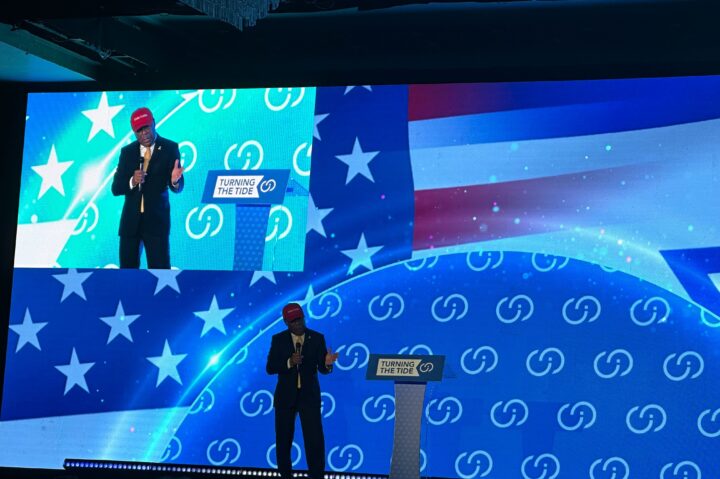
Haley Cohen
Leo Terrell, senior counsel to the assistant attorney general for civil rights, addresses the Israel on Campus Coalition three-day annual leadership summit held in Washington on Sunday, July 27th, 2025.
Leo Terrell, senior counsel to the assistant attorney general for civil rights, said he is intent on eliminating what he called “the Jewish tax” in an address on Sunday to hundreds of Jewish college students gathered for the Israel on Campus Coalition’s three-day annual leadership summit held in Washington.
“For those who don’t know what the Jewish tax is — for you to have this convention, for you to walk your child to a synagogue down the street — you have to pay for extra security,” said Terrell, who heads the Department of Justice’s antisemitism task force. “It makes no sense. It’s unfair. It’s wrong. I find it offensive that it’s being allowed throughout this country. I’m doing everything I can to eliminate it.”
Terrell’s comments came as the Federal Emergency Management Agency announced last month that it had awarded $94.4 million in security grant funding to a total of 512 Jewish organizations nationwide.
Terrell, who wore a baseball cap embroidered with the name “Hadar Goldin,” an IDF soldier abducted and killed by Hamas in 2014 whose body remains held by the terrorist group, shared that he has faced “fights and arguments” with some colleagues over how to strategically address antisemitism. He said that some colleagues have called to “cut a deal, to move on,” an apparent reference to the Trump administration’s recent settlement with Columbia University following a monthslong battle over the Ivy League university’s record dealing with antisemitism.
“I will not compromise,” Terrell said. “No, how can you ask a group [to] compromise freedom? There is no compromise on your equality, your freedom, you have the right to go to schools, to walk down the streets and not be worried and not be afraid.”
Terrell, a former civil rights attorney and a conservative media personality, told the crowd that eradicating antisemitism is a “full-time commitment,” one that he’s decided to take on in part due to Jewish involvement in the Civil Rights Movement.
“I’m not a Jewish American. I’m a Black American. I also understand the history of this great country. Before becoming a lawyer, I was a school teacher. I grew up in the ‘60s,” Terrell said. “I remember Jewish Americans walking hand in hand with Black Americans making sure they got their civil rights.”
The union’s board of directors said the proposal ‘would not further NEA’s commitment to academic freedom’
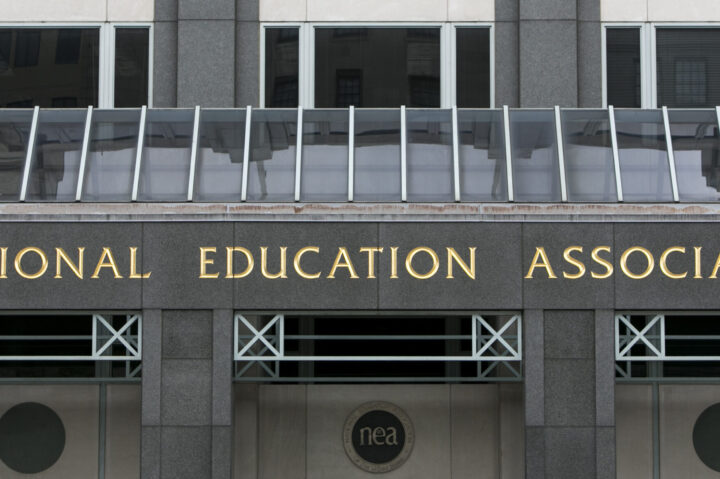
Kristoffer Tripplaar/Sipa via AP Images
A logo sign outside of the headquarters of the National Education Association (NEA) labor union in Washington, D.C. on July 11, 2015.
The National Education Association, the largest teachers’ union in the country, announced on Friday that it would not cut ties with the Anti-Defamation League, declining to implement a contentious resolution approved by its governing body earlier this month that sought to target the Jewish civil rights organization.
“After consideration, it was determined that this proposal would not further NEA’s commitment to academic freedom, our membership or our goals,” the union’s board of directors said in a statement.
The decision came nearly two weeks after the measure was adopted by the NEA’s representative assembly, its annual leadership gathering that drew more than 6,000 union delegates.
“There is no doubt that antisemitism is on the rise. Without equivocation, NEA stands strongly against antisemitism. We always have and we always will,” the NEA’s board wrote. “In this time of division, fighting antisemitism, anti-Arab racism, and other forms of discrimination will take more resources, not fewer. We are ready.”
ADL CEO Jonathan Greenblatt cheered the union’s decision to distance itself from the “misguided” measure.
“We are committed to working with the NEA and all teachers’ unions to join the Jewish community in making clear these hateful campaigns cannot succeed. They must redouble efforts to ensure that Jewish educators are not isolated and subjected to antisemitism in their unions and that students are not subjected to it in the classroom,” Greenblatt said in a statement.
The measure faced fierce backlash from the Jewish world. A letter authored by the ADL expressing opposition to the proposal — which would have discouraged educators from using teaching materials from the ADL — garnered the support of roughly 400 Jewish organizations across the country, including the leadership of the Reform, Conservative and Orthodox movements.
Other outside Jewish groups, including the Conference of Presidents of Major American Jewish Organizations, the American Jewish Committee and Jewish Federations of North America, released a statement welcoming the NEA’s rejection of the anti-ADL resolution.
Kim Richey said that Title VI regulations could be amended ‘to specially address antisemitism … in a post Oct. 7 world’

Screenshot: C-SPAN
Kimberly Richey
Kimberly Richey, the nominee to be the assistant secretary of education for civil rights, said that the Department of Education should look at amending Title VI regulations and issuing new guidance to address the surge of antisemitism on campuses nationwide since the Oct. 7, 2023, Hamas attacks on Israel.
Richey, speaking at a confirmation hearing on Thursday before the Senate Health, Education, Labor and Pensions Committee, said that regulations could be amended “to specifically address antisemitism,” and the Department of Education could issue new guidance “in a post-Oct. 7 world. The climate is very different than what it was five years ago, four years ago, three years ago.”
Currently, antisemitic discrimination is considered a violation of Title VI of the Civil Rights Act as a form of discrimination based on shared ancestry, under an executive order from the first Trump administration. Enacting a formal regulation would give further force of law to the issue.
The Biden administration had been expected to issue a regulation providing further guidance around that executive order by December 2024.
Richey said she would also partner with other offices within the Department of Education to enforce civil rights laws to further protect Jewish students.
The nominee described the recent antisemitic terror attacks in Boulder, Colo., and Washington as “emblematic of the horrific acts that the Jewish students are facing across the country,” and praised the actions the Trump administration has taken thus far.
She said that she believes the antisemitic environment on campus has gotten worse than it was when she first served in the Office for Civil Rights in the early 2000s, during the George W. Bush administration, having evolved into threats, violence and exclusion targeting Jewish students.
Richey, pressed by Democrats about the administration’s decision to cut half of OCR’s staff and more than half of its regional offices, said she couldn’t speak to the decisions previously and currently being made but said she is “always going to advocate for OCR to have the resources that it needs to do its job.”
“I’m going to have to be really strategic … helping to come up with a plan where we can address these challenges,” Richey said.
Sen. Tammy Baldwin (D-WI) said the Department of Education recently informed the committee that, as of earlier this year, OCR had a backlog of 25,000 cases.
Asked about efforts to reorganize and shut down the Department of Education, including transferring OCR to the Department of Justice, Richey said that “the current structure is not meeting the needs of students … so what I appreciate and what I agree with is the conversation for us to stop and look at, how can we better meet the needs of students? How can we better serve families?”
She emphasized that she has a long history in OCR, having served in the office for almost seven years under previous administrations, and said that she understands “the vital role it plays for so many students and families across our great nation. Students cannot gain the knowledge and skills they need to be successful in life if they can’t access educational programs and activities.”
In addition to her service in the Bush administration, Richey served as acting assistant secretary of education for civil rights in 2020 and 2021.
“If I’m confirmed, the department will not stand idly by while Jewish students are attacked and discriminated against,” Richey said.
Kenneth Marcus, the founder of the Brandeis Center for Human Rights Under Law who served as assistant secretary of education for civil rights under the first Trump administration, said he was pleased that Richey had raised the prospect of formal and informal guidance, as well as a Title VI regulation, which he noted would be “the first ever formal Title VI regulation on antisemitism.”
He explained that a Title VI regulation would “be important for giving durability, not only to the government’s use of [the International Holocaust Remembrance Alliance’s working definition of antisemitism], but also to the fundamental notion that Jewish civil rights are protected under Title VI. That’s something that doesn’t yet have the status of a formal regulation, which is why federal agencies have been promising for the last several years to issue a regulation.”
He said that a regulation might go further than the original executive order issued in the first Trump administration declaring that antisemitism is a prohibited form of discrimination, and could cover issues like masking, encampments and the ways that Zionism has been used as a euphemism for Jews.
“Kim Richey was passionate and eloquent in describing how the world has changed since Oct. 7, 2023 in ways that need to be addressed by the federal government,” Marcus said. “She appropriately noted the forcefulness of the Trump administration’s response to date, but it also candidly indicated that more needs to be done, and I think that she was 100% right about that.”
Please log in if you already have a subscription, or subscribe to access the latest updates.
 Continue with Google
 Continue with Apple