



































































Jacob Helberg is betting AI will be a bridge across a fractured Middle East
For the Trump administration’s under secretary of state for economic affairs, the Pax Silica initiative takes on additional meaning as ‘the first time that Israel and Qatar have been brought under the same framework’
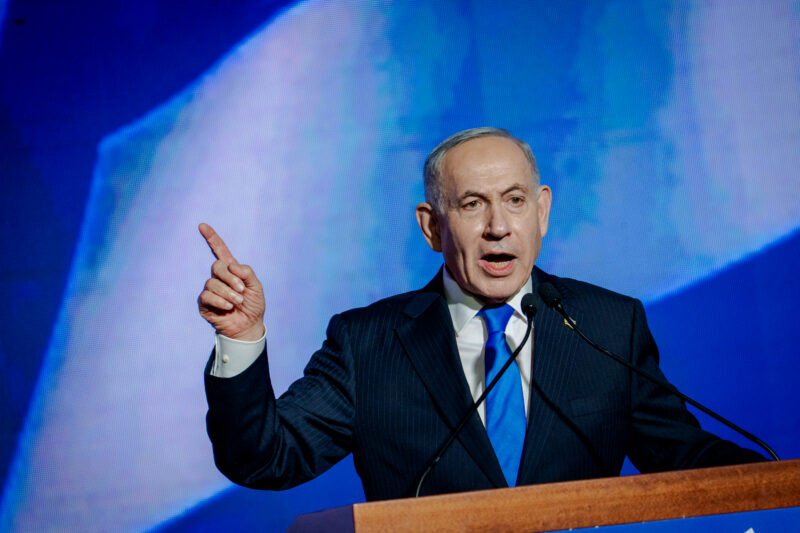
Pier Marco Tacca/Getty Images
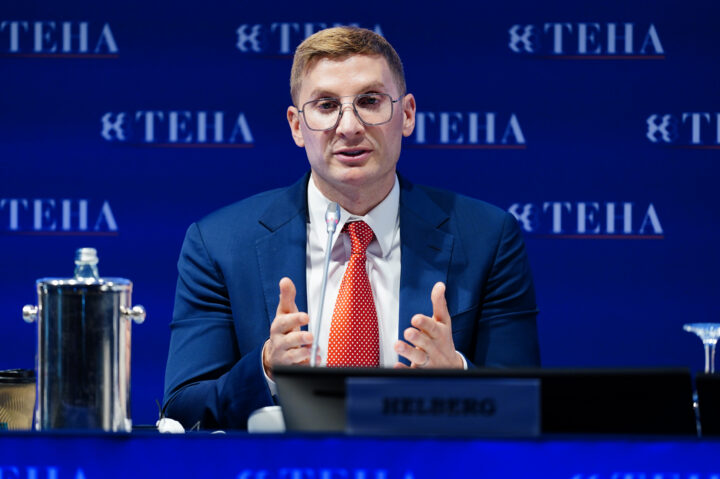
Jacob Helberg, advisor to the White House Council of Economic Advisers and U.S. Under Secretary of State designate for Economic Growth, Energy, and the Environment, attends the 51st Edition of TEHA 'Cernobbio Forum Takes Place In Italy on September 05, 2025 in Como, Italy.


 Add JewishInsider on Google
That Qatar and Israel both signed onto a U.S.-led initiative to improve and strengthen AI supply chains does not mean the two nations — both of whom foster a deep reserve of hostility for each other, particularly in a Middle East transformed by the Oct. 7 attacks and two years of war in Gaza — are on the pathway toward closer ties, let alone diplomatic normalization.
But for Jacob Helberg, the under secretary of state for economic affairs who has taken a wonky but driven approach to economic diplomacy, it still counts for something. Helberg recently returned from a trip to Israel, Saudi Arabia, the United Arab Emirates and Qatar. He presided over a series of signing ceremonies for Pax Silica, an effort by the Trump State Department to bring American partners together to develop AI supply chains that rely less intensively on China.
“My trip to the Middle East was actually incredibly significant, because this is the first time that Israel and Qatar have been brought under the same framework and signed the same document to actually agree that shared supply chains are more important than shared ideologies,” Helberg told Jewish Insider in an interview last week.
Helberg is enmeshed in the specifics of AI architecture, mineral refining, semiconductor production and technology manufacturing. There is also a bigger pitch, particularly when it comes to the Middle East: that economic cooperation — driven by companies working across national borders to grow their bottom line — can also be a boon for diplomacy.
“Our goal has been the expansion of the Abraham Accords, and the president’s been very, very clear and vocal about that,” said Helberg, a China hawk who is leading the Pax Silica initiative. “When people do business together, when people focus on shared goals, you inherently create, identify and focus on things that people agree on. It’s certainly my hope that this will pave the way for peace and economic integration of the region.”
Helberg’s nomination to a senior role at the State Department marks the culmination of a political evolution that took him from being a major donor to former President Joe Biden in 2020 to giving more than $1 million to President Donald Trump’s 2024 campaign. He told JI in 2024 that his shifting political identity was owed in part to what he viewed as the Democratic Party’s shift to the left, including on Israel. Helberg grew up in Paris, the grandson of Holocaust survivors on his father’s side and Tunisian Jews who left the country for France on his mother’s side.
Helberg’s husband, Keith Rabois, is a venture capitalist who hosted a fundraiser featuring Vice President JD Vance in Florida last week.
On Helberg’s recent trip to the Middle East, he said he witnessed collaboration between Israel and the UAE that endured over the course of the war.
“There is nascent collaboration between the UAE and Israel on the tech side,” he said. “That has actually been a really interesting observation that I’ve seen in the Middle East … how pragmatic and apolitical people can be on the business side of the ledger, and very comfortable compartmentalizing politics.”
While Israel has in some ways become more isolated on the diplomatic stage since its response to the Oct. 7 attacks, Helberg said the war in Gaza revealed the strength of Israel’s tech ecosystem. The country’s defense capabilities have only contributed to that image, he noted.
“Israel, obviously, is a country that has always punched way above its weight technologically. They are respected in all corners of the world for having an incredibly innovative technology ecosystem,” said Helberg, who previously worked at Palantir and Google. “Since Oct. 7 and the unfolding of the war, the world has really witnessed just how incredible Israel’s capabilities are, both for military technologies as well as for cybersecurity.”
More Stories

Daily Overtime
Syria’s new textbooks demonize Jews, report finds

UNHOLY ALLIANCE
New El-Sayed ad features Tucker Carlson, far-right podcaster’s attack on Mike Rogers
Regional Responsibility
Amb. Tom Barrack: It’s ‘not America’s job’ to combat Iran-backed threats in the Middle East

SACRAMENTO SHOWDOWN
Rep. Doris Matsui continues to highlight Hasan Piker links to far-left opponent Mai Vang
NEW CHAPTER
High Line Publishing launches with fanfare to counter barriers for Jewish authors
THREAT THWARTED
Man arrested in Boca Raton for making death threat against Rep. Jared Moskowitz
Please log in if you already have a subscription, or subscribe to access the latest updates.
 Continue with Google
 Continue with Apple