

































Alleged straw-donor masterminds are selling tickets to an event with the Montana Republican — who says he’s not attending
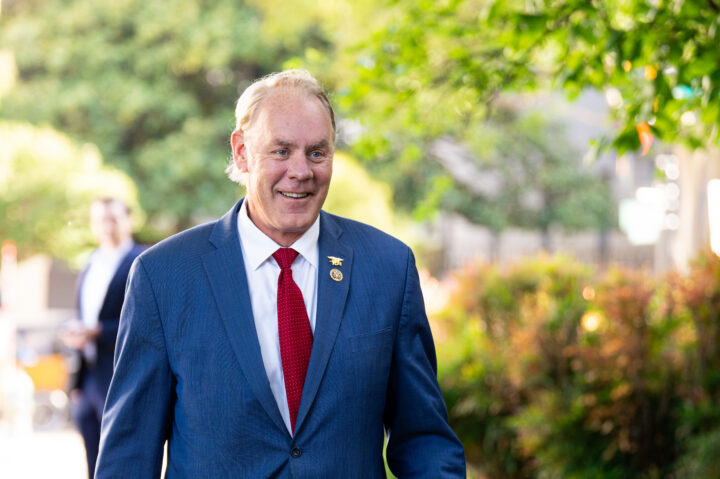
Bill Clark/CQ-Roll Call, Inc via Getty Images
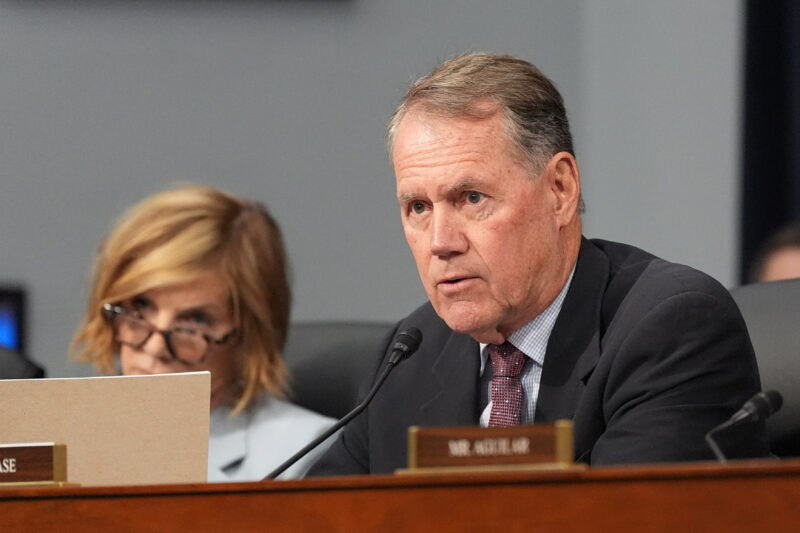
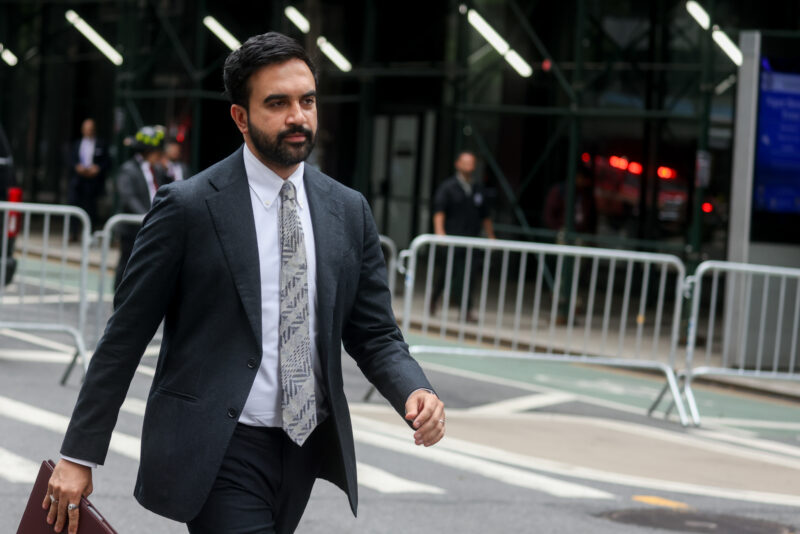
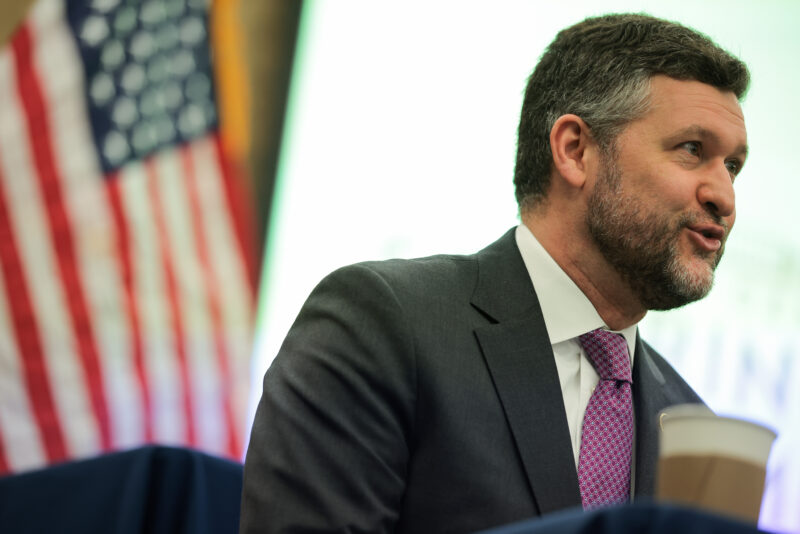
Rep. Ryan Zinke (R-MT) arrives for the House Republican Conference caucus meeting at the Capitol Hill Club in Washington on Wednesday, May 13, 2026.


 Add JewishInsider on Google
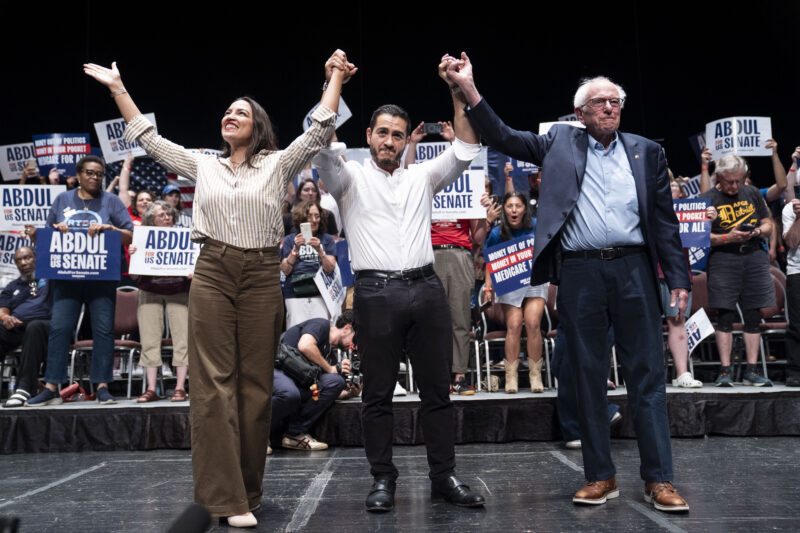
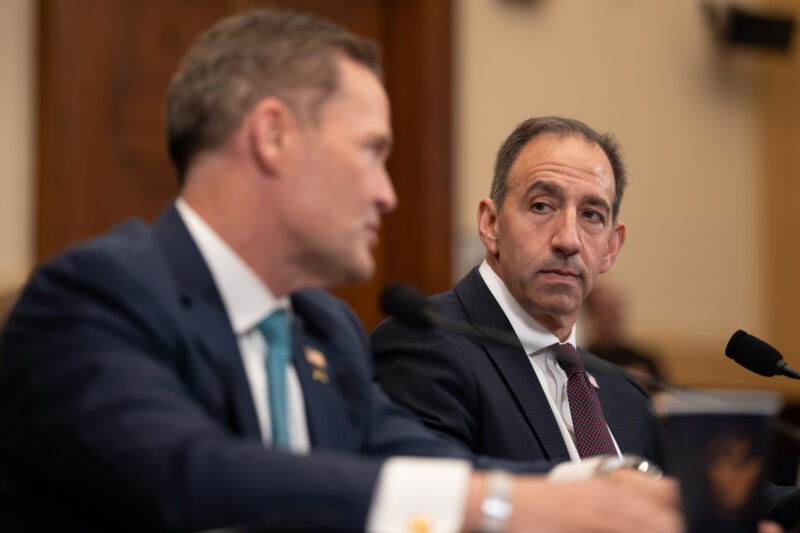
A Turkish-tied organization that launched in 2023 with an alleged straw-donor fundraiser for former New York City Mayor Eric Adams has spent recent weeks selling tickets for a Sept. 20 gathering listing Rep. Ryan Zinke (R-MT) as a “featured speaker ” — even as Zinke’s office insists he’s not attending the event.
The CEO Club New York and Turkish-American Business Association have posted materials online and created a listing on Eventbrite advertising the “World Business Summit New York & Award Ceremony 2026,” to take place at a venue inside The New York Times building during the U.N. General Assembly next month. Prominently displayed is the name and photo of the retiring Montana congressman, who served as secretary of the interior during the first Trump administration.
“We’re bringing together global business leaders, entrepreneurs, investors, innovators, and decision makers for a day of meaningful conversations, networking, and collaboration,” CEO Club Founder Jimmy Cuneyt Gurkan wrote on LinkedIn, adding that Zinke was “already confirmed” to appear along with a roster of private sector guests.
Previous reporting has identified Cuneyt Gurkan as the unnamed, unindicted “public relations representative” in the criminal complaint against Adams who plotted to illegally funnel large amounts of money from a Turkish-American businessman into the then-mayor’s later-aborted reelection campaign — and the CEO Club’s inaugural gathering in October 2023 has been identified as the event used to mask the donations as lawful gifts from attendees.
Prosecutors described the “public relations representative” as an associate of a “Turkish official” who directed foreign money into Adams’ campaign coffers and arranged perks from state-owned Turkish Airlines in exchange for favorable treatment.
The New York Times and other publications have outed that official as Reyhan Özgür, the former Turkish consul general. The indictment states that Özgür and a Turkish Airlines official shared a donation link for the 2023 CEO Club event.
Cuneyt Gurkan and the CEO Club did not respond to repeated inquiries for this story. The Times Center, the event space in the paper’s Manhattan headquarters, told Jewish Insider that it has “been in touch with” the CEO Club about using the space in the 9 a.m. to 2 p.m. slot listed in the promotions but does not yet have a contract in place.
But, after initially avoiding answering questions about whether Zinke would attend the event, the congressman’s team told JI that he will not be there. Asked if the congressman had ever intended to participate in the event, and if he will be in New York City on that date, his office would only answer that it was never on his official schedule and that his House staff never interacted with the CEO Club.
Zinke has a mixed history with Turkey — but has had past contact with the network allegedly involved in the Adams bribery scheme. Foreign Agent Registration Act filings show that as a congressman he has had contact with lobbyists for Turkey’s government and ruling political party both before joining the first Trump administration and since returning to the Hill.
As interior secretary, Zinke came under fire from ethics watchdogs in 2018 for bringing an official security team on a vacation to Turkey, a trip that also included a stop in Greece.
While that controversy received broad coverage, few U.S. outlets reported that Zinke’s wife — who had previously lived in Turkey — received an award from Turk of America magazine and TOA Consulting. Turk of America’s publisher was Cuneyt Gurkan’s co-conspirator in the CEO Club’s straw-donor scheme for Adams, while Cuneyt Gurkan at the time served as TOA Consulting’s chief operating officer, according to LinkedIn and media appearances.
Personally presenting the award to Lola Zinke was another key figure in the Adams scandal: Turkish Airlines executive Cenk Ocal. Cuneyt Gurkan took a selfie with the interior secretary at the event, and the secretary lauded the U.S. partnership with Turkey.
“Certainly, they’re regional and strategic partners, and the people of the United States and Turkey, they love each other, as shown here,” video posted to YouTube shows Zinke saying. “Look at our mutual values and our core strengths, and it’s about the people, that there’s a long-time bond and a relationship between the Turkish people and the United States.”
Just months later, however, the Republican was briefly the target of retaliatory Turkish sanctions after the U.S. sought to penalize the Mediterranean nation for detaining an American pastor. Experts attributed the move against Zinke to confusion by Turkish President Recep Tayyip Erdoğan over the U.S. Department of the Interior’s remit, as a similarly named ministry in Ankara handles domestic security.
Back in Congress, Zinke — who sits on the House Foreign Affairs Committee — has coupled praise for Turkey as a NATO ally with concern about Ankara’s support for Hamas. In a markup session last fall, he opposed an amendment that would compel consideration of Israeli military advantage when making arms sales to the country, a standard applied to all other Middle Eastern countries.
Officials and analysts warned that Hamas is seeking to cede administrative control of Gaza while retaining its weapons and remaining the dominant force in the enclave

Photo by Moiz Salhi/Anadolu via Getty Images
Hamas spokesperson Hazem Qassem and Director of the Government Media Office in Gaza Ismail Al-Thawabta deliver a press statement following the announcement that the head of the Government Emergency Committee had resigned and the committee had been dissolved as part of the transfer of governance in the Gaza Strip to the National Gaza Administration Committee, on July 6, 2026.
American and Israeli officials expressed skepticism on Monday that Hamas would follow through with its pledge to dissolve its governing body that has ruled Gaza for over two decades.
Hamas announced the dissolution of the “Emergency Committee,” the terrorist organization’s governing body, and the resignation of Mohammed al-Farra as the committee’s chief on Monday. The terrorist group said that it was prepared to transfer authority to the National Committee for the Administration of Gaza (NCAG), the technocratic committee established under President Donald Trump’s Gaza peace plan and overseen by the Trump administration’s Board of Peace.
The announcement did not address whether the terrorist group would disarm, a key facet of the Gaza peace plan. Hamas’ announcement came after the Board of Peace convened a series of meetings last week to advance plans for the NCAG to take over the governance of Gaza.
The Board of Peace said that it was withholding judgment on the announcement, instead vowing to assess Hamas’ “actions, not promises, to meet the critical needs of the people of Gaza.”
“Decisions must be comprehensive with respect to the requirements as set out in the Roadmap for advancing governance, security, and transition in Gaza,” the board said in a statement. “We look forward to the successful conclusion of discussions on this Roadmap, including on the implementation mechanisms necessary to enable the National Committee for the Administration of Gaza to assume full governing authority.”
The board’s statement also noted that the “core principle” of the ongoing peace efforts in Gaza “remains one authority, one law and one weapon,” and reiterated its position that Hamas must disarm. “A genuine transfer of authority must enable the NCAG to exercise its mandate independently, including taking the administrative and governance decisions entrusted to it.”
Israeli Foreign Minister Gideon Sa’ar dismissed the move outright, saying that Hamas had agreed to give up governing control of the Gaza Strip in a largely symbolic overture while sidestepping disarmament calls.
“Hamas’s trick is simple. Hamas’s apparent willingness to ‘make room’ for a technocratic government is designed to prevent its own disarmament,” Sa’ar wrote on X. “Hamas seeks to replicate the ‘Hezbollah model’ in Gaza: a technocratic administration would be responsible for garbage collection and other municipal services, while Hamas would remain the dominant military force.”
“As long as Hamas retains its weapons, any civilian government will of course operate as Hamas dictates,” he continued. “This would allow Hamas to continue oppressing the Palestinian people in Gaza, while pursuing its jihadist war against Israel.”
Sa’ar went on to note that Israel “insists on the full implementation of the Trump plan, with its core principles being the disarmament of Hamas and all other terrorist organizations, and the complete demilitarization of the Gaza Strip.”
Elliott Abrams, who served as Iran envoy under the first Trump administration, similarly expressed doubt about the prospect of Hamas giving up its weapons and influence in Gaza.
“In my view, this is Hamas trying to become Hezbollah,” Abrams told Jewish Insider. “Hamas used to run everything, up to and including garbage collection. They were the government of Gaza. Hezbollah uses a different mode: there is a Lebanese government providing public services, so Hezbollah can just concentrate on being an army and a terrorist group.”
“This offer by Hamas does not suggest that they will disarm, and as Board of Peace chairman [Nickolay] Mladenov has said, without Hamas disarmament there will be zero progress,” he continued.
Steven Cook, a senior fellow at the Council on Foreign Relations, said that he believes Hamas is seeking to retain power and authority in Gaza without having to govern or be held accountable for the new government’s potential shortcomings.
“[Hamas] will cede governing to technocrats who represent no one but will retain its arms to ensure that Hamas remains the center of power and authority in Gaza,” Cook said.
Analysts argued that unless Hamas disarms, the group will remain in power and progress on the president’s Gaza plan will remain stalled. Jonathan Ruhe, a fellow at the Jewish Institute for National Security of America, called the announcement from Hamas “fairly meaningless” without disarmament.
“Hamas can proclaim it’s ceding administrative authority to technocrats, but it will retain de facto power in its slice of Gaza as long as it still has a monopoly on violence there,” Ruhe said. “Until and unless Hamas actually disarms, voluntarily or otherwise, anything else the group says or does is fairly meaningless in terms of the peace plan’s vision for stabilization, reconstruction, and new governance in Gaza.”
Ruhe also suggested that Hamas made the announcement in an effort to shift the pressure toward Israel without fulfilling its own commitments.
“The group’s official line is telling. Hamas cynically frames this step as removing the pretext for Israel’s ‘occupation’ of Gaza, even though it knows full well that demilitarization is a two-sided commitment, not a unilateral obligation on Israel,” Ruhe said. “This shows how Hamas wants to cherry pick parts of the Gaza peace plan, in order to put pressure on Israel, but without fulfilling its own commitments to disarm under that same plan.”
Neomi Neumann, an adjunct fellow at The Washington Institute for Near East Policy, similarly argued that Hamas is seeking to put the “blame game into an Israel area.”
“I think their [Hamas] message is: ‘We have given up the government in Gaza, and now Israel is on the side of preventing the progress,’” Neumann said. “For Hamas, they understand that if they will stay with the same position. [At] the end of the day, Mladenov will declare [Hamas] as a rejectionist organization, so as a result I think that Hamas is trying to frame the move … in order to survive.”
Neumann expressed skepticism that Hamas would give up its weapons in addition to governance in Gaza, adding that there is a “very low” chance that Hamas changes its mind. However, she said, “you can never say never.”
“We also thought that [Hamas] will never bring back the hostages,” Neumann said. “I think that if the United States and Turkey and Qatar will push Hamas very hard and put pressure on Hamas, they will say they are willing to give up the heavy weapons, but they won’t find it easy to say they are willing to give up their guns because everybody can kill them and in the end of the day they know they need to continue to control the Gaza Strip with weapons.”
Still, she noted that the situation remains a “disaster” from the Israeli perspective.
“From Israel’s point of view, I think it will be a disaster, because they [Hamas] just will get stronger.” Neumann said. “Iran will continue now to give much more money to Hamas. They [Hamas] won’t let any other power to emerge and to get strong, and it will be very complicated.”
Hagar Hajjar Chemali, who is half Jewish and half Christian, thinks she has a shot at helping break through the deep sectarianism that has led to distrust both within Lebanon and towards Israel

Courtesy
Hagar Hajjar Chemali
Hagar Hajjar Chemali is an American by accident — quite literally — of birth.
Her parents left their native Lebanon in 1981 as a civil war raged in the country. Chemali’s father, Hadi, had been kidnapped by a political group, and the young couple quickly left the country once he was released, with plans to move to Milan. While visiting friends in Greenwich, Conn., Chemali’s mother, Mirella, began experiencing pregnancy complications and chose to wait out the final months of her pregnancy there. Soon after, Chemali was born, followed quickly by a son. The family never left.
So began Chemali’s American story, the result of a potent combination of determination and coincidence. That’s the story of Chemali’s professional journey, too: a mix of persistence and being in the right place at the right time. She spent the first decade of her career helping steer U.S. foreign policy on the Middle East in the Bush and Obama administrations, ultimately becoming the spokesperson for former U.S. Ambassador to the United Nations Samantha Power. She spent the next decade as a consultant and communications expert, appearing regularly on cable news and a YouTube channel where she produces an occasionally satirical show explaining American foreign policy.
Now Chemali, 44, faces her biggest and most personal assignment yet: creating an unofficial backchannel to boost the ongoing peace talks between Lebanon and Israel, the first time that officials from the two countries have sat for direct talks since 1983. And Chemali, who is half Jewish and half Christian, thinks she has a shot at helping break through the deep sectarianism that has led to distrust both within Lebanon and towards Israel.
The deal between the U.S. and Iran that was announced on Sunday may complicate Chemali’s efforts. Iran’s attempt to link its own negotiations with the U.S. to developments in Lebanon could potentially complicate efforts to advance Israeli-Lebanese peace, and Iranian state media said on Sunday that Lebanon would be part of the new deal. Details remain scarce.
“It’s about the art of the possible. Lebanese-Israeli peace is not particularly easy to achieve,” said Daniel Glaser, a former assistant Treasury secretary for terrorist financing and financial crimes. He hired Chemali for her first job at the Treasury Department. “What’s going to get it done is the ability to understand what’s possible, and how to get to that possible within the U.S. system, within Israel and the Israeli system, within Lebanon and the infinitely complicated Lebanese system. There’s not a lot of people that have the ability to do that more than Hagar.”
In April, she announced the creation of an organization called LIPA, the Lebanon-Israel Peace Alliance. It’s a vessel for advocacy by Chemali and a cadre of Israeli, Lebanese and American foreign policy experts she colloquially describes as the “peace crew” — many do not yet want to publicize their involvement with the effort — who are working to keep the pressure on the U.S. government to help broker a deal between Lebanon and Israel.
The group has been collaborating since early last year, soon after Israel and Lebanon reached a ceasefire in late 2024 that ended the fighting between Israel and Hezbollah that began when the Iranian-backed group launched missiles at Israel on Oct. 8, 2023. The effort gained traction amid a broader shift in Lebanon: Hezbollah was weakened by the death of its longtime leader, Secretary-General Hassan Nasrallah, and newly elected Lebanese President Joseph Aoun moved to reassert state authority over Hezbollah’s power and influence.
“She was one of the very first people that said to me that I should go for peace,” said Morgan Ortagus, who served as deputy Middle East special envoy at the beginning of the Trump administration. Ortagus and Chemali have been friends since they worked in the Treasury Department together nearly 20 years ago. “I said, ‘Really, do you think they’re ready?’ And she was emphatic that she thought that it was the time to go for peace.”
The work of Chemali’s burgeoning “peace crew” solidified in March, at a dinner soon after the Iran war started. The geopolitical time crunch of a fast-moving war spurred the group to come up with a name to formalize the informal diplomacy they had been pursuing for more than a year.
“All this work actually helped bring the Israelis and the Lebanese governments to hold direct talks in Washington,” said Hanin Ghaddar, a senior fellow studying Lebanon at The Washington Institute for Near East Policy. “I don’t think this would have been possible without the whole year of work on the narrative and the policy and the recommendations and the shift on the ground, that this is where Lebanon and Israel finally decided, ‘Let’s do this.’”
After the U.S. and Iran agreed to a ceasefire in early April, Israeli Prime Minister Benjamin Netanyahu announced that Israel would open direct negotiations with Lebanon. It was the moment for which Chemali had yearned for over 18 months — or, perhaps, a whole lifetime. In the aftermath of the first round of talks, LIPA was launched in the way so many projects are: via a somewhat haphazard post on X. Chemali did not want to lose her chance at creating momentum for a window for peace that might soon close. She has not returned to Lebanon in 15 years due to security risks.
“As a comms person, I would never advise a rollout this way. This is like the opposite of what you do before a rollout. You have all your ducks in a row when you roll anything out,” Chemali told Jewish Insider in a recent interview at a Washington cafe. “We wanted to come out there and be like, we have an organization that exists that is there to support this process.”
For Chemali, the effort is a culmination of her own professional arc, as well as the choices her parents made in building a life here. Her family might be Lebanese, but this effort is all-American — something she can do because of where she was born and the circumstances that allowed her to rise to a public, senior government role without having to worry about the strict sectarian divisions that govern Lebanese society and the country’s government.
But there was a piece of Chemali’s story that was missing, something that now makes her uniquely positioned to serve as a convener of Lebanese and Israelis here in the U.S.
“She’s half-Jewish and half-Christian,” said Hussain Abdul-Hussain, a Lebanese-Iraqi researcher at the Foundation for Defense of Democracies. “She has the highest pedigree for someone to be working on this issue.”
Chemali did not know about her Jewish roots when she was growing up. Her father is a Maronite Christian, a Catholic sect with deep roots in the Levant. The family attended a nondenominational church in Connecticut. When Chemali was 11 or 12, her mother revealed a secret she had kept since her children were born: She was Jewish.
“I think she just couldn’t take it anymore. She was just like, ‘Actually, I’m Jewish,’” Chemali recalled. “My brother and me, being raised in the United States, we were like, ‘That is so cool. Does that mean we get Hanukkah gifts?’”
Her mother, Mirella, grew up in Wadi Abu Jamil, Beirut’s Jewish neighborhood. She attended a Catholic school at the urging of the family of her late father. The nuns at her school would tell Mirella that “she had evil in her blood because she was Jewish,” according to Chemali. “So [her family] practiced Judaism in secret at home.”
The revelation from her mother intrigued Chemali. Why didn’t she tell them sooner? Mostly Chemali ignored it, until she came to Washington during the George W. Bush administration. She joined the Treasury Department in 2006, in the newly created Office of Terrorist Financing and Financial Crimes, where many of her colleagues were Jewish. They started inviting her to Shabbat dinners and Jewish holidays. Chemali learned more about Judaism, and began to feel proud of that part of her identity. When she moved back to Greenwich, she asked her mom to teach her more about her family’s traditions.
“I told my mom, ‘These traditions die with you. You didn’t raise me with these traditions. I only know what I know from books and from going with friends to their houses for events,’” Chemali said. So her mom bought a menorah, and they lit candles together for Hanukkah.
“She starts singing in Hebrew, and I was like, ‘Who is this woman who sings in Hebrew?’ As far as I knew, she speaks a lot of languages — actually, she speaks five languages — but Hebrew was not one of them,” said Chemali.
Chemali has not abandoned the Christian faith she was raised with, even as she grapples with her identity.
“What I tell people of where I am at the moment, but it is always an evolution, is that I am of Christian faith and feel very much a Jew,” said Chemali. “I always tell people I’m a member of every tribe.”
Lebanon is so beset by tribal division that different government positions are reserved for people from different religious sects: the president is required to be a Maronite Christian, the prime minister is a Sunni Muslim and the speaker of parliament is a Shia Muslim. Chemali has refused to diminish any part of her identity, even as her home country all but demands she pick a side.
“She’s someone who can actually speak to everyone. She’s not there to take sides,” said Ghaddar. “She really sees the whole picture, and I think that’s what this kind of initiative really needs. It’s someone who has a stake in everyone and everything.”
Chemali retains the idealism that so many lose after decades in Washington. She described herself as a “Lebanese Zionist,” a position she said she has stuck by even amid the polarization that crept into her family after Oct. 7.
“This is the thing that sets me apart from the rest of my family. There’s a chunk of my family that unfriended me on social media after Oct. 7 because of my statements — and by the way, my statements are not like, ‘Yeah, go into Gaza and get ‘em.’ That’s not what I’m saying. My statements were more posting about the hostages,” said Chemali. “There’s one chunk of my family from Syria on my dad’s side that, straight up, they will lecture me at any opportunity they have. I view them as brainwashed, to be perfectly honest, and they probably view me as brainwashed.”
Chemali recalled a trip to Lebanon during her time as the National Security Council’s director for Lebanon and Syria in the Obama administration. A Lebanese friend advised her not to share that she’s Jewish.
“I was like, ‘Look, that’s not how I operate,’” said Chemali. “First, I really make sure religion doesn’t come up in my government work, because I don’t want anyone ever accusing me of seeing something through a religious lens. But secondly, if it comes up, I don’t hide. That’s not how I roll, ever.”
Still, she understands that not everyone can be as visible as she is. Chemali gave up her Lebanese citizenship before entering the U.S. government, but ordinary Lebanese people face steep prison sentences simply for talking to Israelis because of the country’s anti-normalization laws. Free from these restrictions, Chemali has recently taken to setting up discreet dinners between Lebanese and Israelis in Washington.
“We are trying to come up with creative ways to work around these laws,” she said. “We have to pick locations where nobody will see them or recognize them, so it makes it much more difficult.”
One of LIPA’s priorities is urging the U.S. to pressure Lebanon to repeal those laws. Chemali holds meetings with members of Congress on both the left and right. She talks to contacts at the State and Treasury Departments regularly, advocating for new sanctions on Hezbollah. She’s a fixture in Foggy Bottom and at wonky Middle East conferences, on cable news and in cafes, all from her home base in Connecticut.
“The ideal is a warm peace where you have thriving business relations, and that’s how our efforts are geared, toward that vision,” said Chemali. “That will hopefully undermine Hezbollah’s presence.”
After a new round of talks early this month, the governments of Lebanon, Israel and the U.S. released a joint statement in which Lebanon’s army agreed to create “pilot zones” where it will exert control and ban Hezbollah, the Iran-backed militia that uses southern Lebanon as a base to attack Israel. The diplomats will meet again later this month, and military representatives from each country will hold their own parallel track. The talks are testing the Lebanese government’s appetite for taking a stand against the militia. Meanwhile, Israel and Hezbollah continue to trade blows even as the talks proceed.
That negotiations are happening at all reflects unprecedented discontent within Lebanon toward Hezbollah. Until now, Lebanon’s leaders have been unable or unwilling to exert the strength needed to push back on Hezbollah’s grip over the country’s politics. Earlier this month, Aoun, the country’s president, took the unusual step of criticizing Iran, Hezbollah’s primary backer: “It’s not your country, it’s our country,” he told CNN.
Former U.S. Ambassador to Israel Dan Shapiro called the peace talks a “tremendous opportunity” for both countries.
“Maybe more for Lebanon than for Israel, because it really would mean breaking free from the handcuffs of Hezbollah and Iran,” said Shapiro. He hired Chemali for her job at the Obama White House and said he is encouraged by her efforts with LIPA.
“Having a strong advocacy body in the United States perhaps buttressed by those in Europe and elsewhere in the region is important fuel to that process,” said Shapiro. “She’s got just endless energy and creativity and a real commitment.”
The biggest challenge is that Lebanon’s leadership does not control Hezbollah. Peace between Israel and Lebanon would still be momentous even without dealing with Hezbollah, but it would leave the most intractable issue unresolved.
“It’s not the elephant in the room, because they all talk about it. But the crux of this is Hezbollah and Hezbollah’s weapons, and it’s not just the disarmament of them, it’s ensuring that they’re never able to rearm again,” said Chemali.
Washington is easily distracted; Trump is no exception. For Chemali, who is not directly involved in the talks, perhaps the most urgent task is to make sure the people in the room do not move on. She needs to remind them that the Lebanon-Israel file remains important, and worth pursuing — and that it should not be subsumed up by negotiations between the U.S. and Iran.
“We keep our fingers crossed, we advocate, we speak up, publish op-eds, you name it. Go on interviews, whatever it takes, just to make sure that things keep on going in the peace direction,” said FDD’s Abdul-Hussain, who is friends with Chemali but is not formally collaborating with her. “People like us, who are not governments, who are just regular people, we have a bigger margin. We have a lot of freedom to move. We have a lot of freedom to explain things, or to oppose things.”
But even in the perpetually explosive Middle East, where the talks could easily fall apart, Chemali believes something fundamental has changed.
“No matter what happens with the talks, there’s a reason I have hope,” she said. “Because you see this taboo in Lebanon has broken.”
Airwallex and Andreessen Horowitz brought 12 Israeli founders to New York to build relationships, pitch investors and learn from their American counterparts

Courtesy
Fusion hosts a New York Tech Week 2026 event.
There’s a mantra in the Israeli startup world that its founders are months behind their American counterparts. New York Tech Week gave them a chance to close that gap, according to investors who descended on Manhattan last week.
Michael Morgenstern, head of startups at financial technology platform Airwallex, which teamed up with Andreessen Horowitz — one of the world’s leading venture capital firms — to bring a delegation of Israeli founders to tech week for the first time, told Jewish Insider that VCs are looking to see more AI products come out of Israel, which historically has been security focused.
“It would be interesting to see an AI lab out of Israel,” he said. “Why haven’t we seen an OpenAI or Claude, something of that status, coming out of the Israeli ecosystem? It makes me wonder if we are stagnating as an ecosystem. So exposing the Israeli market to what’s going on on the ground gives Israeli entrepreneurs the chance to get months ahead.”
“The mantra in the Israeli startup market right now is that Israeli founders and entrepreneurs are nine months behind the Americans,” he continued. “So if we can fly them here, make sure that people with low budgets — that will soon have high budgets — come to the U.S. and get on the ground, they’re going to get back to Israel with a whole new set of insights that are going to prepare them and be on par with the American companies versus the ones in Tel Aviv.”
“So it’s a very strategic play for them to come, get the experience and do the pitches. Ultimately, the U.S. is the ultimate market for most Israeli founders so if we can be the corridor at Airwallex and I can be the shepherd, it’s a delight to do so,” he said.
The 12 Israeli founders included in the delegation said they felt widely embraced at last week’s New York Tech Week, overwhelmingly saying that they felt no need to hide their roots.
“I feel I can be openly Israeli in the U.S. — specifically at tech week,” Aviv Shamny, founder of Limy AI, an Israeli startup that helps brands and products show up on AI search engines, told JI. “I didn’t feel any antisemitism at all at tech week.”
Shamny, who recently moved to the U.S. from Israel to grow his company — and served in combat following the Oct. 7, 2023, terrorist attacks — said the idea for his startup “came to me in the trenches of war.” For the past year, Limy has been part of A16Z Speedrun, an elite, highly competitive 12-week startup accelerator program operated by Andreessen Horowitz.
“People are really hustling,” said Morgenstern. “Last week was Boston tech week, next week is London. New York is the primo one. People are enjoying it. It’s decentralized as there’s what feels like thousands of events all over the city for every stage and profile.”
Morgenstern led several events throughout the week, including taking founders who recently moved to New York in a helicopter to give them their first tour of Manhattan. “We did a pitch in the air called ‘Up in the Air with Airwallex,’” he said, adding that amid historic rates of antisemitism, “I’ve only heard positive things from Israelis meeting with non-Israelis.”
The Israeli delegation consisted of entrepreneurs launching new startups — many of whom declined to speak with JI due to their companies’ stealth status.
“It was a very selective process,” said Morgenstern. “There were hundreds, if not thousands, of applications. Andreessen Horowitz picked the founders, and we’re strategic partners with them. We’re the ones supporting the founders with their banking and corporate operations. This is the first time we’ve done this and we plan on doing it again.”
Much of the A16Z delegation is composed of deeper infrastructure companies, working on AI tools, cybercompanies, fintech and defensetech.
“Historically, cyber is what Israelis have been known for, but it’s interesting to see the early-stages people try to zig when everyone’s zagging and look a little different to stand out,” said Morgenstern. “So an Israeli founder doing a consumer company, selling to individuals is very unique. Healthcare and fintech also. We’re also seeing some big rounds happening. A lot of Israeli teams are raising $10, $20, $30 million-plus out of stealth mode. It’s interesting they don’t want anyone to know what they’re doing, but at the same time they’re raising a lot of money and growing their balance sheet. From my seat in the VC land, I see an incredible demand and the resilience of Israelis right now is showing why they’re such an investable asset.”
“Generally, Andreessen Horowitz has a unique stance,” said Shamny, who was not part of the A16Z delegation since the firm has already invested in his company.
“On one hand, they don’t take sides, they take the side of innovation. They see Israel as one of the main innovation hubs and are really doubling down on it. We’ve been getting positive feedback from the firm. I do think this contributes to us being able to position ourselves as still the startup nation, regardless of all the antisemitism going on in the world. I think the war — regardless of what is wrong and what is right — has been impactful on Israel’s presence and what people think about us as Israelis. Andressen’s push toward Israeli innovation has been helpful in positioning ourselves.”
“As Israelis we are very proud to take part in this unique group of people and companies. It’s fun to be a part of.”
Yair Vardi, an Israeli American venture capitalist and founding partner of Fusion, Israel’s leading pre-seed fund, produced several events during tech week.
“I didn’t see reluctance to work with Israelis this week,” Vardi told JI. “On the contrary, New York is the home to over 400 Israeli startups. In the last few years, New York has become even more attractive for Israeli startups. I don’t see that changing even with politics. New York is home for the stock exchange and many Fortune 500 companies and a big Jewish community. [Israelis] aren’t happy with the new mayor [Zohran Mamdani], but I don’t think it pushes them not to come. This week we saw the numerous delegations coming out of Israel [including the one from] A16Z. I’ve attended a dozen events with Israeli entrepreneurs, from cybersecurity to legal and finance,” said Vardi.
A jam-packed week of networking ended with a Friday night Shabbat dinner organized by Brex and Tech Tribe, a New York-based community for Jews in tech and digital media, part of the Chabad Young Professionals network, founded by Rabbi Mordechai Lightstone.
“We try to create a Jewish community for people who work in startups and try to give them the tools and skills they need for what they create,” Lightstone told JI. “We constantly have conversations around the intersection of technology and Judaism; can you ask halachic questions to ChatGPT instead of a rabbi, those types of things.”
“New York Tech Week is something that has grown over the past couple years in general,” he said. “The city is booming with excitement and energy, much more than previous years.”
“Jews in tech have woken up and realized they have to really represent it, to go out there and say I’m Jewish, I have Jewish values and I’m proud of it. In the past three years we’ve seen a lot of that, and this week has been an expression of that,” said Lightstone, who hosted the first Tech Week Shabbat dinner just weeks after the Oct. 7 attacks. “At the time, it was a very cathartic experience for everybody to be together and feel comfortable when people were very on edge and felt they couldn’t speak in the workplace,” he said.
“There have been incidents of antisemitism in tech since Oct. 7, especially in the big companies. They didn’t always handle antisemitism well. They’re very careful with [diversity, equity and inclusion], but when it came to Jews [they] were lacking,” continued Lightstone.
About 100 VCs and founders attended the Shabbat in downtown Manhattan, which Lightstone called an opportunity for an “un-networking experience to connect and unwind from the week.” Guests were served arak and whiskey made by the Israeli startup Verstill, which utilizes AI technology in its spirits creation and maturation process, and Israel’s Jezreel Winery sponsored the wine. American Friends of Reichman University co-sponsored the meal.
Ahead of the dinner, Noga Sapir, the founder of a mental health startup called Reflect, who came from Israel for her first New York Tech Week, told JI the week was “great.”
“I’m fundraising right now so I’ve been looking at the events where founders and fundraisers meet,” she said. “I did have concerns [coming as an Israeli] but I was completely embraced. There has not been one person that when I told I’m Israeli didn’t say that’s amazing and awesome. I think because Israel is such a powerhouse for tech companies, people in the startup environment have come to expect an Israeli presence.”
In an interview with JI, Shapiro said he ‘[hasn’t] really thought about’ whether he would appear on Hasan Piker’s stream but that he hasn’t been invited
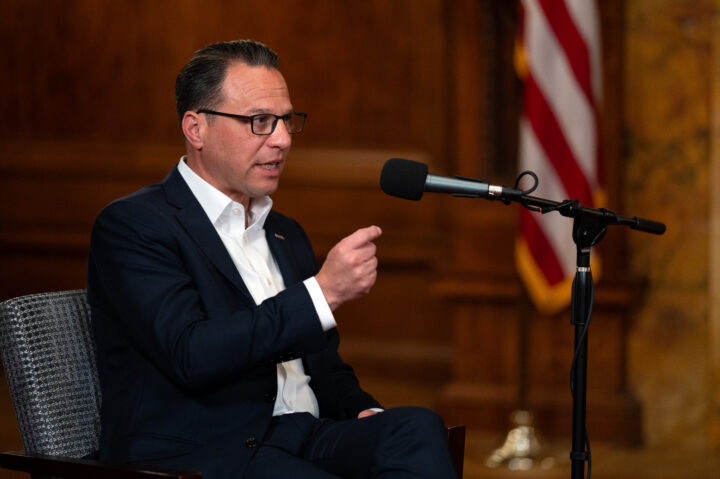
Peter W. Stevenson/The Washington Post via Getty Images
Pennsylvania Gov. Josh Shapiro sits for an interview at the Pennsylvania State Capitol on June 11, 2025.
PITTSBURGH — On the eve of the NFL Draft on Wednesday, Pittsburgh, the host city, was in full spectacle mode. Israel, 6,000 miles away, was abuzz for a very different reason: the country was celebrating Yom HaAtzmaut, marking 78 years of independence.
As he jumped between draft events, Pennsylvania Gov. Josh Shapiro shared his thoughts about both.
“I think we’re here to celebrate an iconic event in sports and sports in general. Sports has the power to bring people together, and we need more of that in our society,” Shapiro told Jewish Insider in an interview following a “unity dinner” in Pittsburgh that brought together 100 Black and Jewish students from local universities.
At the event — organized by New England Patriots owner Robert Kraft’s Blue Square Alliance Against Hate, in partnership with Hillel International, the United Negro College Fund, the NFL and the Pittsburgh Steelers — Shapiro appeared on a panel with Kraft and retired Steelers quarterback Charlie Batch. NFL Commissioner Roger Goodell stopped by to introduce the event.
“The fact that the commissioner and Robert decided to dedicate a portion of draft week to finding ways to come together to a unity dinner, I felt that it was not just something I should do, but a responsibility of mine,” said Shapiro.
Asked about Yom HaAtzmaut, Israel’s independence day, Shapiro expressed affection for Israel. He also called for America to do more to rein in its government.
“I’ve always been really clear that I have a love for Israel, even while I have real concern about the leadership of Israel,” said Shapiro.
A growing number of progressive lawmakers have in recent weeks called for an end to U.S. aid to Israel, including funding for Israel’s Iron Dome missile-defense system, a position adopted by the progressive Israel advocacy group J Street. Shapiro declined to endorse that position.
“In the case of Israel, you have a country that is constantly being attacked with missiles and other weapons that put civilians at risk, and America is invested in providing assistance like Iron Dome to protect innocent civilians from those terrorist attacks,” said Shapiro. “I think that is in America’s national security interest.”
But he did argue that the U.S. should use its position as a major financial backer of Israel to exert leverage over the country’s use of American-made weapons. Shapiro said Washington has not done a good enough job of that.
“I would say that our last two presidents, President [Joe] Biden and now President [Donald] Trump, have failed to use the leverage of an American president to force Israel’s hands to use that military aid in ways that comport with our American values, to limit the loss of innocent lives as the key factor there,” said Shapiro. “I think what we need to examine is the rubber stamp that Donald Trump has been to the Netanyahu government.”
Shapiro noted that more than 100 countries receive some form of military assistance from the U.S., a figure that includes nations who may not receive funding but who instead partner with the U.S. military for training or purchase U.S. weaponry.
“In any one of those 100 countries comes leverage for an American president to exercise to ensure that the military assistance we provide to that country is being used in accordance with our values, our American values,” said Shapiro. “What we need is an American president who’s going to use the leverage that we have when we provide that kind of assistance to Israel or any one of the other 90-plus countries.”
In recent months, as Shapiro eyes a 2028 presidential bid, he has appeared on several popular podcasts, including “Pod Save America,” “Higher Learning” from digital media company The Ringer and the “All-In Podcast.” As one of the most vocally Jewish politicians in the country, Shapiro is almost always asked about his views on Israel.
“Every day I do, of course, get asked about Israel and the Middle East, and I think it’s important to just speak truthfully about how I feel,” said Shapiro. “I think it’s important to be true to who you are, to not put your finger in the wind and just sort of follow which way it’s blowing.”
One show he has not appeared on? The Twitch stream hosted by Hasan Piker, a far-left commentator with a history of antisemitic and anti-American views who has hosted conversations with several progressive lawmakers. California Gov. Gavin Newsom, another potential 2028 contender, has said he would sit for an interview with Piker.
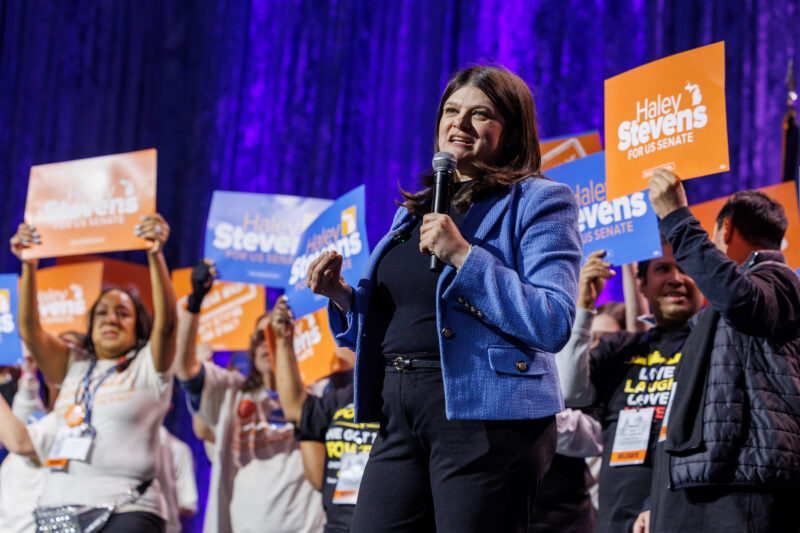
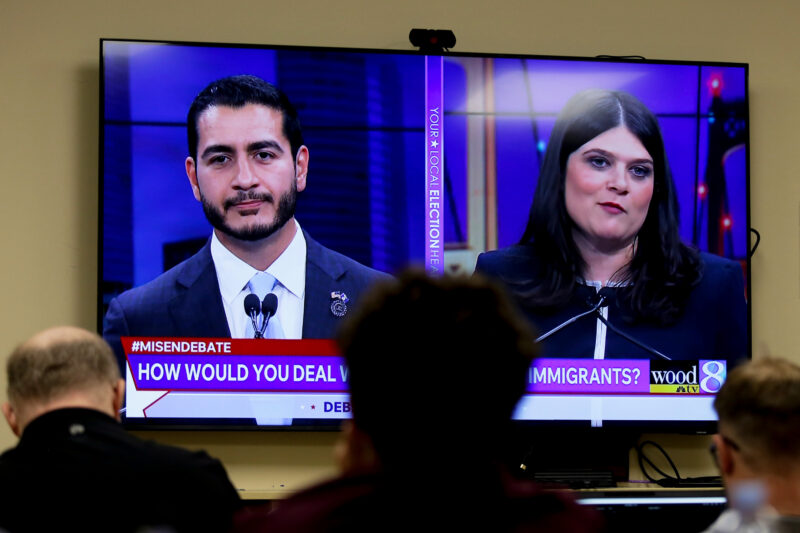
Piker has generated a great deal of controversy among Democrats in recent weeks after he appeared at two campaign rallies with Michigan Democratic Senate candidate Abdul El-Sayed this month. Those events prompted sharp criticism from several Michigan Democrats, including Sen. Elissa Slotkin (D-MI) and El-Sayed’s primary opponents, Rep. Haley Stevens (D-MI) and state Sen. Mallory McMorrow.
Shapiro opted not to weigh in. Asked if he would appear on Piker’s stream, he demurred.
“I haven’t been invited,” said Shapiro. “I haven’t really thought about it.”
Modi Rosenfeld’s manager said the Orthodox comedian was ‘blindsided’ with news of the mayor’s participation in the benefit with David Broza and Rabbi Amichai Lau-Lavie
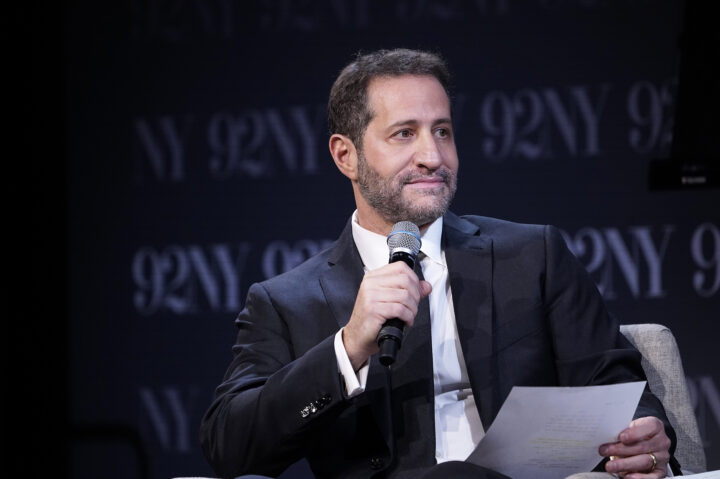
John Lamparski/Getty Images
Modi Rosenfeld speaks at 92NY on October 22, 2025 in New York City.
Israeli-American comedian Modi Rosenfeld, known simply as “Modi,” pulled out of a Passover-themed benefit Monday after his manager revealed that the entertainer had been “blindsided” with the news that New York City Mayor Zohran Mamdani would participate in the Lower Manhattan event.
Quoting Jewish Insider’s initial report on the mayor’s scheduled involvement in the 33rd Annual “Downtown Seder” at impresario Michael Dorf’s venue City Winery, Rosenfeld’s official Instagram account announced the Tel Aviv-born, Long Island-reared performer had withdrawn from the event.
“We were not told Mamdani was participating in this event until today,” the post read. “Modi will no longer be attending.”
Reached by phone, Rosenfeld’s manager told JI that they had committed to featuring in the festivities months ago — and said the venue should have notified them earlier that the mayor, whose political initiation began with anti-Israel campus activism, would be part of the program as well.
“It’s just inappropriate to be blindsided with that information the day of the event, regardless of anyone’s political feelings,” said Leo Veiga, who is also Rosenfeld’s husband. “That’s a very polarizing thing right now, so it’s not appropriate for us to be attending.”
Veiga declined to elaborate further on his and Rosenfeld’s feelings toward the mayor and the event, and expressed hope that any controversy provoked would “die down.”
Still set to appear alongside Mamdani is Israeli musician David Broza, while Israeli-American Rabbi Amichai Lau-Lavie will participate via a livestream from Israel. Broza and Lau-Lavie are both well-known liberals and peace activists, while Rosenfeld is known for performing to religious audiences.
“The Seder is about asking urgent questions — about freedom, responsibility, and how we care for one another,” said Dorf in the initial press release announcing the event. “Each year, we bring together voices who challenge, inspire, and reflect the world as it is — and as it could be.”
Dorf, who previously hosted then-candidate Mamdani for a Yom Kippur event last year, has criticized IDF policy in Gaza — but has rejected allegations that Israel has committed “genocide,” a claim the mayor makes frequently.
Net proceeds from the already sold-out tickets will go toward Seeds of Peace, an organization known for hosting Israel and Arab youth at dialogue forums in Maine, the press release said.
Other celebrities on the bill include Freakonomics co-author Stephen Dubner, news anchor Don Lemon, musician Meg Okura and comedienne Olga Namer.
Democrats began calling out those who traffic in antisemitic rhetoric when they offered platitudes after an attack on a Michigan synagogue
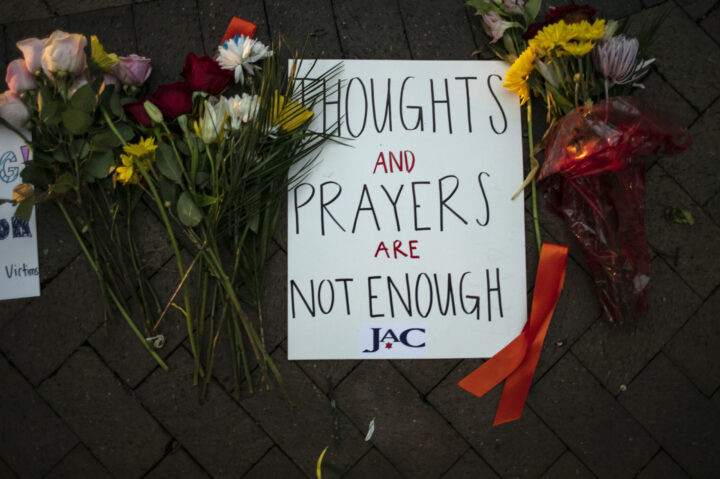
Jim Vondruska/Getty Images
A vigil is held near the scene of a mass shooting at a Fourth of July parade, on July 5, 2022 in Highland Park, Illinois.
American antisemitism is having its “thoughts and prayers” moment.
Whenever there is a mass shooting in the United States, the immediate reaction has become something of a meme. “Sending thoughts and prayers,” politicians — mostly Republicans — will inevitably write in a social media post expressing grief at the murder of innocent people at an elementary school, in a bowling alley or at a Walmart.
Gun violence prevention advocates roll their eyes. They see the oft-repeated sentiment as disingenuous, given how little action Congress has taken to enact gun control measures. During the 2018 March for Our Lives, when hundreds of thousands of Americans took to the streets to demand action after 17 people were killed at a high school in Parkland, Fla., scores of people carried signs with the words “thoughts and prayers” crossed out, and the phrase “policy and change” written underneath.
A similar phenomenon was on display after a heavily armed man drove a car into a synagogue in suburban Detroit on Thursday. He was killed by a security guard before he was able to enter the building, where 140 preschool and kindergarten students were locked down in their classrooms.
Afterward, politicians with a history of promoting antisemitic tropes began bemoaning antisemitism. And Jewish politicians and activists in the Democratic party who had grown exasperated over the hypocrisy of it all started calling them out.
Noah Arbit, the Jewish state representative whose district includes West Bloomfield Township, where the attack took place, called out Democratic Senate candidate Abdul El-Sayed for his “crocodile tears” expressing concern about the shooting. Arbit grew up attending Temple Israel.
“Amazed by the crocodile tears from someone who’s done more than most to stoke & inflame hatred against Jews. It’s a very small logical leap from ‘AIPAC controls the US government,’ ‘Israel is committing genocide,’ ‘Zionists kill Arab babies’ to ‘kill Jews in West Bloomfield,’” Arbit, a Democrat, wrote in a post on X replying to El-Sayed.
El-Sayed, a progressive running a campaign with an anti-Israel message, sent a fundraising email on the two-year anniversary of Oct. 7 accusing Israel of genocide and calling out AIPAC. “If you’re asking yourself, ‘Why on Earth are politicians in Washington continuing to add fuel to the fire?’ The answer is money. AIPAC is funneling millions into campaigns in exchange for loyalty,” El-Sayed wrote in the Oct. 7 email, referring to the war in Gaza.
As the attack was unfolding, Rep. Ro Khanna (D-CA) took to social media to respond to a message by a junior staffer at the centrist think tank Third Way that called for Democrats to do more to address antisemitism within their ranks. Rather than taking the criticism seriously, Khanna said he was “proud” to stand by New York City Mayor Zohran Mamdani and far-left antisemitic streamer Hasan Piker, and took aim at “neocons” in the party. (Forty minutes later, Khanna condemned the shooting and said “antisemitism and violence have no place in America.”)
“What the hell is wrong with you? 48 hours ago two men were beaten in your district for speaking Hebrew. Earlier today there was a shooting at a Jewish school in Michigan. Is it politics? Lack of empathy? Are you actually racist?” Ethan Agarwal, a Silicon Valley entrepreneur challenging Khanna in this year’s Democratic primary, wrote in response.
Earlier in the day, Khanna had tweeted in defense of Pat Buchanan, President Ronald Reagan’s communications director who has a lengthy history of making overtly antisemitic arguments.
“The same Pat Buchanan who wrote that Hitler was ‘a man of great courage’? Who called Capitol Hill ‘Israeli-occupied territory’? Who said there was ‘No evidence exists that any Jews were gassed at Treblinka’? Pretty sure he was antisemitic,” said Shannon Watts, a liberal activist who started the advocacy group “Moms Demand Action” after the Sandy Hook shooting in 2012, when 26 students and teachers were killed at a Connecticut elementary school.
Khanna doubled down afterward.
Later, Watts — who has called Republicans’ “thoughts and prayers” framing a form of gaslighting — said Democrats need to do more to combat antisemitism among members of their own party.
“The Democratic Party has been infected by antisemitism and it’s spreading. It isn’t (yet) as virulent as it is on the right, but it’s insidious and we have to stop pretending it doesn’t exist,” Watts wrote on X.
In West Bloomfield, tragedy was averted, miraculously, because of the actions of a security guard who quickly put himself in harm’s way.
But if the response to rising antisemitism begins to resemble the country’s response to gun violence — expressions of outrage followed by little introspection — the result may be a familiar one: condemnation after the antisemitic incident, but little reckoning with the permissive culture that helped create the danger in the first place.
Without setting a definitive timeline, officials said more U.S. troops are headed to the region and would not rule out a U.S. ground invasion
Alex Wong/Getty Images
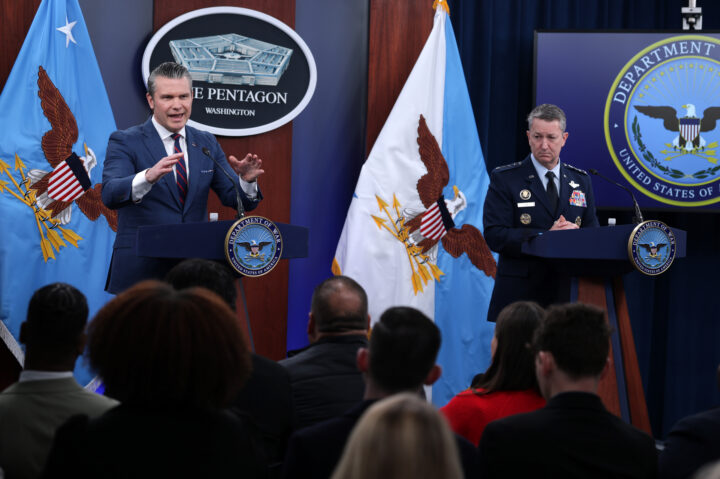
Secretary of Defense Pete Hegseth (L) speaks with Chairman of the Joint Chiefs of Staff General Dan Caine (R) during a news conference at the Pentagon on March 2, 2026 in Arlington, Virginia.
President Donald Trump and senior U.S. defense officials laid out an open-ended timeline for the ongoing operation against Iran on Monday, announcing more U.S. forces are headed to the region to carry out the American and Israeli campaign aimed at dismantling Tehran’s long-range strike capabilities and nuclear ambitions.
Speaking to reporters at the White House on Monday morning, Trump said that U.S. forces were “already substantially ahead of our time projections” with their mission in Iran, but added that the American military was prepared to continue the operation beyond his initial four-to-five week timeline.
“Whatever the time is, it’s OK. Whatever it takes,” Trump said at a Medal of Honor ceremony. “Right from the beginning, we projected four to five weeks, but we have capability to go far longer than that. We’ll do it.”
The president told CNN Monday morning that the “big wave hasn’t even happened. The big one is coming soon.”
Adm. Brad Cooper, head of CENTCOM, “will receive additional forces even today,” said Gen. Dan Caine, chairman of the Joint Chiefs of Staff, during a separate press briefing alongside Defense Secretary Pete Hegseth. “This rapid buildup of forces demonstrated the joint forces ability to adapt and project power at the time and place of our nation’s choosing.”
Caine also made clear the weekend barrage was only the beginning.
“This is not a single overnight operation,” he said. Caine noted that the operation was the result of “months, and in some cases years,” of planning. “The military objectives that CENTCOM and the Joint Force have been tasked with will take some time to achieve, and in some cases, will be difficult and gritty work. We expect to take additional losses.” Four U.S. servicemembers have already been killed in the course of the operations.
While officials emphasized that there are currently no American boots on the ground in Iran, Hegseth declined to rule out the possibility, saying the United States “will go as far as we need to go to advance American interests.”
Trump similarly kept the door open to a ground invasion in an interview with the New York Post. “Every president says, ‘There will be no boots on the ground.’ I don’t say it,” Trump said. “I say ‘probably don’t need them,’ [or] ‘if they were necessary.’”
Hegseth likewise acknowledged that a military effort “of this scope will include casualties” and declined to provide a timeline for completion. “President Trump has all the latitude in the world to talk about how long it may or may not take, four weeks, two weeks, six weeks, it could move up. It could move back,” Hegseth said.
“The commander in chief sets the tempo in terms of this fight. As I said, it’s on his terms,” said Hegseth. “Why in the world would we tell the enemy exactly how long we’ll go or how far we’ll go?”
“To the media outlets and political left screaming ‘endless wars’ — stop,” Hegseth added. “This is not Iraq. This is not endless.” He argued that the operation is “clear, devastating, decisive” with narrowly defined objectives: “destroy the missile threat, destroy the Navy, no nukes.”
Trump also laid out his four priorities for the campaign: “First, we’re destroying Iran’s missile capabilities … Second, we’re annihilating their navy … Third, we’re ensuring that the world’s number one sponsor of terror can never obtain a nuclear weapon … And finally, we’re ensuring that the Iranian regime cannot continue to arm, fund, and direct terrorist armies outside of their borders,” he said.
Hegseth insisted the campaign is not designed to topple Iran’s government, stressing that “this is not a war of regime change.” However, he noted that “the regime sure did change, and the world is better off for it today.”
Iranian leadership “had every chance to make a peaceful and sensible deal, but Tehran was not negotiating,” said Hegseth. “They were stalling, buying time to reload their missile stockpiles and restart their nuclear ambitions.”
Hegseth framed the military confrontation as the culmination of decades of Iranian aggression against the United States, arguing that Tehran’s missile and proxy network had created a conventional shield for its nuclear ambitions and left American forces and allies in its crosshairs.
“For 47 long years, the expansionist and Islamist regime in Tehran has waged a savage, one-sided war against America,” said Hegseth, calling the moment a “generational turning point.”
“We didn’t start this war, but under President Trump, we are finishing it,” Hegseth said.
Speaking about cooperation with partners, Hegseth noted that Israel “did a great job in the conduct of that operation,” also stating that the U.S.’ integrated air and missile defense network has intercepted “hundreds of ballistic missiles targeting U.S. forces, our partners and regional stability.”
“As the threat grew, our partners surged in beside us,” said Hegseth. “Air defense batteries in Qatar, the UAE, Kuwait, Jordan and Saudi Arabia joined the fight. Proof that years of training, trust and hard-earned integration pay off.”
‘AIPAC may call itself pro-American. They may call themselves pro-Israel. But they are neither,’ the Maryland senator said

Eric Lee for The Washington Post via Getty Images
Sen. Chris Van Hollen (D-MD) speaks during an Election Night party at in Baltimore, Maryland on November 8, 2022.
Sen. Chris Van Hollen (D-MD) took aim at the pro-Israel advocacy group AIPAC during an address on Sunday morning at the opening plenary of J Street’s convention in Washington and accused it of being un-American.
Van Hollen elicited a loud chorus of boos in response to his description of AIPAC’s opposition to legislation he had sponsored seeking to place conditions on U.S. military assistance to Israel.
“I put forward months and months ago a proposal that said, with respect to any country, any country that receives U.S. military assistance — has to agree to, No. 1, comply by American law and by international law. You know who came out against that? AIPAC came out against that,” Van Hollen said.
“AIPAC came out against a proposal that says American taxpayer dollars that are used for military assistance — it’s OK to give them to any country in the world, even if that country doesn’t agree to abide by American law or international law,” said Van Hollen. “I will tell you that AIPAC may call itself pro-American. They may call themselves pro-Israel. But they are neither.”
Van Hollen accused Israel of violating American and international law during its war against Hamas in Gaza, and earned cheers for saying Israeli Prime Minister Benjamin Netanyahu’s actions should be reined in.
“There can’t be a continuing blank check when the Netanyahu government is operating in violation of American law, which they have repeatedly, or in violation of international law,” he said.
Van Hollen has emerged as one of Israel’s staunchest critics in Congress over the course of Israel’s war against Hamas in Gaza in response to the terror group’s Oct. 7, 2023, attacks. In his speech, he gave a shout-out to his wife, Katherine Wilkens, a longtime liberal analyst on the Middle East at think tanks in Washington.
“I’m also very pleased to be joined here today by the real expert in the Van Hollen family on the Middle East, and that’s my wife and partner, Katherine,” he said.
Van Hollen used his speech to tie the U.S. strikes against Iran that began early Saturday morning to President Donald Trump’s “lawless” actions domestically.
“What we see is this lawlessness and attack on freedoms here at home also infecting our foreign policy,” said Van Hollen. “It is a gross violation of international law just to go all off and attack another country. It’s not a preemptive strike … It also is a gross violation of your constitution. This isn’t a close call.”
Van Hollen criticized Trump’s stated goal of regime change in Iran, and said the president’s actions will harm civilians in Iran.
“Yes, we hate the Iranian regime. It’s been brutal against its own people,” said Van Hollen. “But I don’t think you’re going to help the Iranian people by watching bombs that kill civilians. We’ve seen over 140 school kids killed in one of the very first attacks of the war. That is not a way to bring solidarity and support from the people of Iran.”
Iranian forces said more than 150 people were killed after a strike hit a school in the county’s south, but the Israeli military said it was “not aware” of any IDF operations in that area. A CENTCOM spokesperson told The New York Times it is “aware of reports concerning civilian harm resulting from ongoing military operations. We take these reports seriously and are looking into them.”
Van Hollen was the only member of Congress to speak at J Street’s opening session. Other congressional speakers slated to address the conference on Monday include Sens. Brian Schatz (D-HI), Chris Murphy (D-CT), Adam Schiff (D-CA) and Tim Kaine (D-VA), as well as Reps. Nancy Pelosi (D-CA), Sean Casten (D-IL), Madeleine Dean (D-PA) and Sara Jacobs (D-CA).
The Kigali summit represents ‘shared security interests, innovation and moral clarity in a complex and evolving world,’ Sen. Ted Cruz said

From left: Daniel Vajdich, president of Yorktown Solutions, Saul Singer, Israel Bimpe, CEO of Irembo and Wendy Singer at the Kigali Security Summit
American, Israeli and African officials gathered with little fanfare but big plans on Wednesday, coming together in Kigali, Rwanda’s capital city, for a trilateral summit on issues including technology, innovation and national security.
The Kigali Security Summit was the first of its kind, one participant told Jewish Insider, a historic strategic dialogue and “opportunity for government and nongovernment officials to talk about key issues that frame this trilateral relationship.”
Hosted by the International Security Conference on Africa, a Rwanda-based think tank, participants included officials from 10 African countries — including Kenya, Ethiopia, Morocco and Togo — as well as Israeli Ambassador to Rwanda Einat Weiss, local Christian faith leaders and representatives of Washington-based think tanks including the Atlantic Council, Hudson Institute, AIPAC and American Foreign Policy Council.
Sens. Ted Cruz (R-TX) and Jacky Rosen (D-NV) provided prerecorded remarks, as did former National Security Advisor Robert O’Brien.
“This conference represents something powerful: a strategic alignment rooted in shared security interests, innovation and moral clarity in a complex and evolving world,” Cruz said in his remarks, calling Africa “vital to our national interests” as it’s at the forefront of U.S. competition with China. Part of the U.S. strategy on the continent, he added, “should include our Israeli allies, which are central to Africa’s integration and success.”
Cruz said the U.S.-Israel-Africa trilateral relationship “offers a powerful framework for development. For the United States, it strengthens trusted partnerships and advances our values. For Israel, it develops strategic relationships and expands its global contributions. And for African nations, it expands access to cutting edge technology, defense collaboration, agricultural innovation and investment capital, while protecting the sovereignty and dignity of African nations.”
“Today’s summit is bringing together the United States and countries in Africa and the Middle East to advance cooperative and sustainable partnerships in the areas of energy security, water infrastructure, cybersecurity and ever-important emerging technologies. In doing so, we can strengthen the bonds between Israel and the rest of the world, boosting security for America’s No. 1 ally in the region,” Rosen said.
Also participating in the summit were Saul Singer, co-author of Start-up Nation, and his wife, Wendy Singer, the founding executive director of Startup Nation Central, who also previously led AIPAC’s Israel office. Speaking on a panel, the two discussed the potential for cooperation between Israel and Rwanda through deepening tech and innovation partnerships.
Shiri Fein-Grossman, CEO of the Israel-Africa Relations Institute, an Israel-based think tank, told JI, “At a time of growing geopolitical fragmentation, the strategic partnership between Israel and African nations is not peripheral, it is central to building a more stable and values-based international order.”
Israel and Rwanda have “profound similarities,” she said. “Both are small nations in complex neighborhoods, both have faced existential threats, both carry the living memory of genocide, and both understand the imperative of strong border defense and antional resilience. That experience creates not only empathy, but strategic clarity. Security is not theoretical for us, it is foundational.”
Senior congressional correspondent Marc Rod contributed reporting.
The Turtle Island Liberation Front, which federal authorities say was plotting an explosive attack, appears to have organized a disruptive protest targeting the Wilshire Boulevard Temple earlier this month

Sarah Reingewirtz/MediaNews Group/Los Angeles Daily News via Getty Images
First Assistant U.S. Attorney Bill Essayli speaks to the press with LA County Sheriff Robert Luna and LAPD Chief Jim McDonnell in Los Angeles on Monday, December 15, 2025.
Federal authorities foiled an alleged terror plot by an anti-Israel, anti-American extremist group, officials announced on Monday. The group — the Turtle Island Liberation Front — appears to also be one of the organizers of an anti-Israel protest that targeted a Los Angeles synagogue this month.
Four members of TILF were arrested over the weekend in the Mojave Desert, where they had allegedly gathered to attempt to construct improvised explosive devices. According to Bill Essayli, the first assistant U.S. attorney for the Central District of California, they planned to set off the pipe bombs in a coordinated attack at midnight on New Year’s Eve targeting U.S. companies in Los Angeles and Orange County, Calif.
“Last Friday, Dec. 12, the defendants took a significant step to carry out their plans,” Essayli said at a press conference Monday, noting that they traveled to a remote campsite near Twentynine Palms in San Bernardino County to begin assembling the bombs. “They had everything they needed to make an operational bomb.”
Attorney General Pam Bondi described TILF as “a far-left, pro-Palestine, anti-government, and anti-capitalist group” in a social media post about the arrests. The four people arrested were identified as Audrey Ilene Carroll, Dante Garfield, Zachary Aaron Page and Tina Lai. They face charges of conspiracy and possession of a destructive device. FBI Director Kash Patel announced on Monday that a fifth individual with ties to the plot was arrested in New Orleans.
Carroll had a poster at her home that said “Death to America. Long live Turtle Island and Palestine,” according to prosecutors. Turtle Island is a phrase used by some Native Americans to describe North America.
TILF appears to be an organizer of an anti-Israel protest that targeted Wilshire Boulevard Temple, one of the largest synagogues in Los Angeles, earlier this month.
The group posted a “call to action” on its Instagram urging followers to target the “bloody war criminals” and “genocidal monsters” from Elbit Systems, an Israeli defense company, because of the purported use of Elbit’s AI technology in Los Angeles’ Koreatown neighborhood. “Never let them live in peace,” the caption read.
The post listed an address on Wilshire Boulevard for the demonstration but did not name the location. The address corresponds with the Wilshire Boulevard Temple building where an event to teach Koreans about security strategies, featuring an AI researcher from Elbit Systems, was taking place at the same date and time.
Protesters entered the synagogue and disrupted the event, with one person shattering a glass vase and chanting profanities. Two people were arrested during the incident. L.A. Mayor Karen Bass called the activists’ actions “abhorrent” and pledged to send more security to houses of worship.
Other posts on TILF’s Instagram call for violence.
“Peaceful protest will never be enough,” one graphic reads. “The only way out is through resistance.”
The account’s most recent post was promoting a Palestine-themed holiday market in Los Angeles last weekend.
Prosecutors announced on Monday that the investigation into the TILF New Year’s Eve plot was due in part to an executive order signed by President Donald Trump in September “to root out left-wing domestic terror organizations in our country such as antifa and other radical groups,” according to Essayli.
An anti-Israel tech founder and far-right online subcultures are unexpectedly embracing Rabbi Shalom Landau’s Torah videos

Rabbi Shalom Landau
Facebook/Rabbi Shalom Landau
Rabbi Shalom Landau, a Satmar Hasidic leader who posts online videos offering practical, Torah-based advice, has found unlikely supporters in a prominent Jordanian-American tech founder who is outspokenly critical of Israel and within white nationalist online subcultures.
“Rabbi putting out the best self-help content on the internet rn,” tweeted Amjad Masad, the Dubai-based founder and CEO of Replit, an AI-powered platform for building, coding and deploying web applications. Masad shared one of Landau’s latest videos on Tuesday, which offers advice for dealing with abuse by quoting the Book of Jeremiah: “Cursed is a man who puts his trust in people.”
Masad has frequently smeared Israel in online posts. On Jerusalem Day last year, he accused Israelis celebrating as “go[ing] around Jerusalem hunting Palestinians to torture and abuse. Think Spanish ‘running the bull’ with all its cruelty but directed at humans. This event is supported by their government and police (and of course US taxpayer).” After Israel carried out strikes on Iran’s nuclear facilities in June, Masad called the Jewish state “the single most destabilizing force in the world.”
Landau’s approach of providing Jewish wisdom without mentioning Israel has elicited praise from male-dominated, right-wing Internet subcultures as well, where white nationalist ideology and antisemitism are typically rampant. Comments from anonymous accounts on his posts state, “say what you want about them [Jews], but they have a good track record with marriages lasting” and “Why are Christian pastors unwilling to speak this way?”
Some comments are supportive but still carry antisemitic undertones, “When a guy called rabbi shalom gives you money advice, you just listen.” Others have scrutinized Landau’s videos for sexist ideology, such as one about marriage that states, “No woman wants to speak to a husband who gets as weak as she is when she speaks to him… sure she wants empathy but the one that comes from you[r] logic not you[r] feelings.”
Landau, whose videos on marriage, responsibility and financial stability are widely circulated on X and TikTok (where he has 34 thousand followers), was condemned by some Jewish communities when — just weeks before the New York City mayoral election — he hosted then-candidate Zohran Mamdani in his Williamsburg sukkah.
The meeting was part of the mayor-elect’s bid to win over Orthodox Jewish support amid his frequent criticism of Israel. At the time, Landau defended his ties to Mamdani by saying, “We think our voices decide who wins. That’s wrong. God does. We have a mission in exile to live among the nations. Our strength in exile isn’t protest. It’s the Torah.”
The Satmar sect of Judaism, to which Landau belongs, is typically anti-Zionist, believing only the Messiah is supposed to bring about a Jewish state.
Still, Landau’s Torah videos have also inspired a prominent pro-Israel and modern Orthodox rabbi, Mark Wildes, the founder and director of Manhattan Jewish Experience.
Wildes wrote in a Dec. 2 post, “Every so often, something unexpected happens online that reveals a larger truth about who we are meant to be. Recently, a rabbi named Shalom Landau has become an unlikely voice within corners of the internet that are anything but friendly to Jews.”
“His Torah videos have received widespread praise among young men from the ‘groyper’ and ‘manosphere’ movements — subcultures laced with grievance and overt antisemitism. People who have spent years resenting Jews are suddenly listening to a Jew, a rabbi no less, teach Torah because they sense wisdom there,” continued Wildes.
“They are responding not to the endless Hasbara that Israel is ‘just like every Western democracy,’ but to Torah messages about building a life of meaning and responsibility. If we want to be a ‘light unto the nations,’ we must first reclaim our own light and resist becoming defined by whatever the algorithm rewards. We must speak from our Torah tradition, not from insecurity. When we share a message grounded in confidence rather than defensiveness, even the most unlikely audiences notice.”
“With Chanukah on the horizon, maybe that’s the beginning of understanding what it truly means to be a nation that carries light.”
State Del. Sam Rasoul, who has been criticized by other Virginia Democrats for his social media posts, is looking to run in a new district if Virginia redraws its congressional maps
Samuel Corum/Getty Images
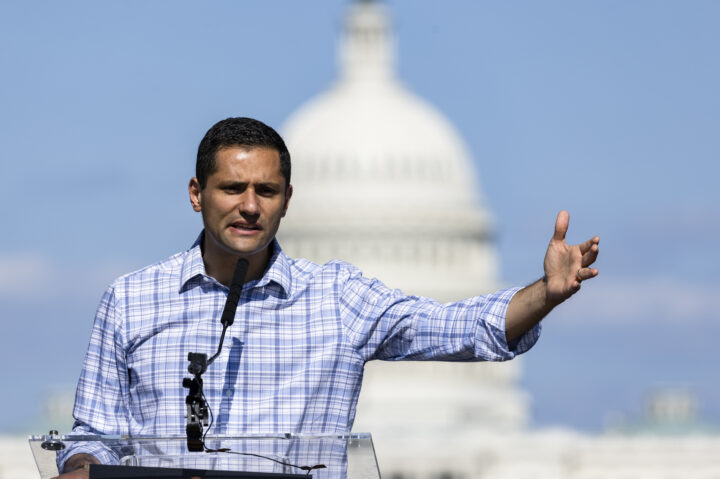
Sam Rasoul of the Virginia House of Delegates speaks during a rally on the National Mall on May 31, 2021 in Washington, DC.
Sam Rasoul, a Palestinian-American Virginia state delegate with a history of inflammatory anti-Israel rhetoric, announced on Monday that he is considering running for Congress in 2026, pending the outcome of a likely redistricting effort in the state.
The Virginia state Senate recently adopted a measure kicking off a process to allow mid-decade redistricting, following the lead of other states planning to redraw congressional maps to shore up partisan advantages. Texas initiated the political arms race after facing pressure from President Donald Trump to draw maps more favorable to Republicans, and several other GOP-controlled states have followed — and some Democratic-controlled states, like California and Virginia.
The new maps are already putting several pro-Israel incumbents at risk in states like Ohio and Florida.
Rasoul, a Roanoke Democrat who chairs the Education Committee in the House of Delegates, came under fire from prominent Jewish Democrats in the state earlier this year after posting a series of posts on social media that critics say crossed a line into antisemitism.
“Zionism has proven how evil our society can be,” Rasoul wrote on Instagram in July. He called Zionism a “supremacist ideology created to destroy and conquer everything and everyone in its way,” which, he wrote, “shows us the worst in humanity.”
Former Virginia House Speaker Eileen Filler-Corn, a Democrat, told Jewish Insider in August that Rasoul’s language is “fueling one of the oldest forms of hatred in the world, repackaged in the language of activism.” Sen. Tim Kaine (D-VA) said at the time that he “forcefully reject[s] any claim that Zionism — the desire of Jewish people to have a state of Israel — is inherently racist or evil.”
Gov.-elect Abigail Spanberger, who was on the campaign trail at the time, did not mention Rasoul by name. But when asked about his comments, she said, referring to the war in Gaza, that “one can and must denounce these tragedies without using antisemitic language, whether intentional or not.”
In a fundraising email announcing his intention to formally explore a congressional run, Rasoul made his opposition to Israel a central part of his pitch.
“Virginians are looking for bold, experienced, progressive leadership that meets this moment and delivers results by guaranteeing healthcare as a human right through Medicare for All, protecting our access to clean air and water through a Green New Deal, and ending all military aid to Israel, which has waged a genocide in Gaza using our taxpayer dollars in violation of American law,” Rasoul wrote.
Rasoul has served in the House of Delegates for 12 years.
Virginia’s statehouse will decide in January whether to approve the redistricting effort. If it passes, it will then have to be approved in a statewide ballot referendum.
American University Professor Pamela Nadell: ‘The closing off of spaces to Jews today is happening once again’
Pamela Nadell
Historian Pamela Nadell is very familiar with the rituals of publishing a book, as she has written nine of them: Secure a release date, present at academic conferences, maybe headline a handful of general-public events. Although she is at the forefront of her field at American University — chair in Women’s and Gender History, director of the Jewish studies program and past president of the Association of Jewish Studies — Nadell knows that success in academia does not often translate to strong book sales.
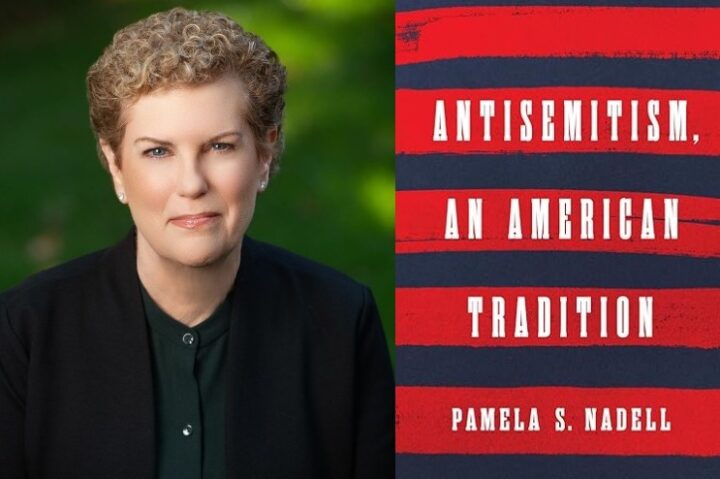
Things appear to be different for her latest book, Antisemitism: An American Tradition.
Nadell began to understand how much interest a book on antisemitism would generate when her publisher assigned a full-time publicist to promote the book, which will be published on Oct. 14. Nadell is booked at speaking engagements across the country into 2027, starting with an event at the Washington bookstore Politics and Prose this week.
The book that she began researching six years ago will now appear on bookshelves at a time when antisemitism has reached record levels since the Anti-Defamation League began tracking data in 1979.
“I had hoped, frankly, that the subject would be seen as a historic subject by the time [the book] came out into the world,” Nadell told Jewish Insider in a recent interview. “And that’s absolutely not the case.”
Nadell argues in her book that antisemitism is not an aberration in the United States. Instead, she writes, it is intricately woven into the American experience — as American as, say, apple pie.
Jews came from Europe seeking freedom from religious persecution, and while they escaped the pogroms that had haunted them overseas, they did not arrive in a world magically free from antisemitism. She traced the history of anti-Jewish sentiment in America from colonial days to the present, identifying the aftermath of the Civil War as the moment it really gained a foothold in American society.
“America is different [from Europe] in that we never had state sponsored violence against American Jews,” Nadell said. “But the roots of anti-Judaism in America start immediately … the roots of anti-Judaism in America rest on traditional Christian ideas about who the Jews are and what they did to Jesus.”
While antisemitism has always been present in America, the tenor and intensity of it has ebbed and flowed. “We’re in a moment,” she said, “where it’s really bad.”
The reason she is most concerned about the state of antisemitism in America is not just the frequency of antisemitic incidents or the toll of violent attacks on Jews. According to a study published this week by the Anti-Defamation League and Jewish Federations of North America, more than half of American Jews now say antisemitism is a normal part of the Jewish experience.
It’s that doors are once again closing to Jews in a way that reminds her of the quotas, housing covenants and employment restrictions that were baked into American life until the 1950s and 1960s.
“The perception that [antisemitism] was over was because of how much American Jews ascended into American life as those structural barriers fell,” Nadell said. “The doors to corporations opened up, the doors to the colleges opened up. But antisemitism — it’s like it was a nagging factor.”
America is now experiencing another period “where Jewish life once again seems to be constricting,” Nadell argued. “Not in exactly the same ways that it did in those years between World War I and World War II, when there were so many structural limitations. But the closing off of spaces to Jews today is happening once again.”
She pointed to boycotts of Jewish and Zionist writers in the publishing industry, and antisemitic litmus tests appearing in unexpected places like the mental health profession.
“Being told that you have to denounce Israel in order to join a student club? Those students are going to carry those memories forward into their future,” said Nadell.
In recent years, and particularly following the wave of antisemitism that was unleashed after the Oct. 7 attacks two years ago, several Jewish thinkers have posited that the American Jewish community’s best days are behind it. Franklin Foer wrote an Atlantic cover story under the alarming headline, “The Golden Age of American Jews is ending.”
Nadell argues that the notion that there ever was a “golden age” is a myth. “The idea that there was a golden age of Jews in Spain actually emerges during the Dreyfus Affair [in 1894], when things are so terrible in Europe,” she noted. Similarly, Nadell argues that the supposedly now-over golden age for American Jews after the end of quotas and de jure discrimination is not really so straightforward.
“By the time we get to the late ‘60s and on in the 20th century, American Jews feel really secure. The places that used to be closed to us have now opened, and that’s what leads to the perception of the golden age,” said Nadell. “The problem … is the assumption that antisemitism disappeared, but it didn’t.”
Still, Nadell considers herself an optimist. Antisemitism is part of the American fabric. And while that might be a demoralizing conclusion, she views it the other way: Jews have thrived in this country despite antisemitism, and they will continue to do so.
“The reality is that it is part of the normative Jewish experience to experience antisemitism,” said Nadell. “But I think ultimately, American Jews will be okay in the United States.”
To mark the second anniversary of the Oct. 7 attacks in Israel, the Jewish Insider team asked leading thinkers and practitioners to reflect on how that day has changed the world. Here, we look at how Oct. 7 changed American Politics

Worawat/Adobe Stock
The United States Capitol with reflection at night Washington DC USA
The venture capitalist and thought leader discusses the Gaza war’s impact on Israeli tech and society, and how Israel and its neighbors can lead a new AI-powered alliance
American-Israeli venture capitalist Michael Eisenberg isn’t just watching Israel’s transformation — he’s trying to shape it. As cofounder of the prominent investment fund Aleph, early backer of companies including Lemonade and WeWork, and a longtime thought leader in the intersection of Judaism, economics and technology, Eisenberg has become an influential voice in Israel’s public discourse.
In a wide-ranging conversation on the Misgav Mideast Horizons podcast, co-hosted by Jewish Insider’s Lahav Harkov, Eisenberg discussed the impact of the war in Gaza on Israeli society and the tech sector, what the government must do to turn postwar recovery into long-term renewal and why he sees young Israelis as a “defining generation.”
“It’s not just a defining generation for Israel, it’s a defining generation for the West,” Eisenberg said. “These were kids that everybody was worried about, that they were behind their screens, Instagram, TikTok, who put it all aside and got up to defend the values of Israel, the safety of Israel, the people of Israel and by extension, Western civilization, because Islamism is on the rise.”
Eisenberg also made the case for an ambitious AI-powered regional alliance between Israel and its Abraham Accords partners — and warned that Israel’s political dysfunction could squander the opportunity.
This interview has been edited and condensed for clarity.
Q: When you look at the Israeli tech ecosystem over the next five years, look at Israeli society in general over the next five years, what makes you optimistic and what makes you worried?
Michael Eisenberg: Part of what makes me optimistic is the youth of Israel. Two years into this war that nobody wanted, two years into a war that saw hundreds of thousands of people called up to reserves — [I have] sons, sons-in-law who have probably done more than 1,500 days of reserve duty in Gaza or mandatory service in Gaza. We currently have two kids in the army right now.
These kids have proven to be what I called already in November 2023 the “defining generation.” It’s not just a defining generation for Israel, it’s a defining generation for the West. These were kids that everybody was worried about, that they were behind their screens, Instagram, TikTok, who put it all aside and got up to defend the values of Israel, the safety of Israel, the people of Israel and by extension, Western civilization, because Islamism is on the rise.
And Hamas is not even an extreme version of Islamism. It is one of the variants of this disease called Islamism, which is a mutant form of Islam promulgated by the Muslim Brotherhood, and these kids stood up, risked their lives, some of them lost their lives. I lost two cousins since Oct. 7.
The most important reason to be optimistic about Israel is the young people here who have shown incredible courage, conscientiousness, responsibility, fortitude and innovation in tackling this problem. I’m a high-tech investor in my day job. The amount of innovation that this war has brought out of Israelis, like magic stuff, the AI and space lasers, etc., but also just simple innovation. Just the amount of ingenuity that has come out is stunning, and people are paying attention to it. The U.S. Department of Defense just issued [a statement that] they want technologies that have been battle-tested. There’s nowhere where technologies have been more battle-tested than Israel, maybe Ukraine second, but certainly kind of the high-tech wizardry and missiles — it’s Israel. I think that sets us up now for a lot of positives.
What worries me is a lack of political will. And I use one example of it. We need to borrow the money to fight the war, but at the same time, politicians need to rise out of the sectarianism and to make the hard political decisions to cut the budget in places which are not growth investments or investments in security. Period. Full stop.
Q: What needs to change?
A: Israel is not necessarily on the best path. We went into the war with a debt-to-GDP ratio in the low 60s; we can finance our welfare state for the most part. However, to the best of my knowledge, there’s nobody in the Israeli government or the Ministry of Finance who sits down and says, “OK, these shekels are for investments in future growth; these shekels are just handouts or part of the welfare state.” The only way to get our debt-to-GDP ratio back to where it needs to be, post the war — and again, we should borrow money to prosecute this war and win it as fast as possible — is to grow. In order to grow, you need investments in infrastructure. The investments in infrastructure are more limited because we spend way too much on the spending part of the ledger, which is non-investment, whether it’s supporting ultra-Orthodox yeshivas or unproductive parts of society in general.
Western society has been taken over by progressive nonsense in which you fund the fringes, instead of focusing on the core of society. The core of Israeli society serves. We can’t afford [funding the fringes] and we need to make the cuts necessary to be able to focus on the core needs of society, which is defense. We need to revamp our education system completely from the ground up. We need to make sure that our health system is taken care of, because we’re one of the best health systems on the planet, but it’s falling behind because it’s both underfunded and there aren’t enough doctors and nurses in the system. These are solvable problems, but they need shekels that are being frittered away elsewhere.
Q: Is it just an issue of priorities? At the Knesset last year, at a hearing on AI, you described Israel’s approach as amateurish and said that nobody in the Knesset knows what they’re talking about. What do you think Israel needs to do to ensure its leadership is moving forward in critical tech areas like AI and defense tech?
A: Generally, in technology, civilian innovation wins, and we’re very good at that. Nobody said, “Hey, go do defense tech.” People came out of Gaza and said, “Hey, I saw drones or missiles or AI, I can do this.” Defense tech has popped up without any government help, and that’s the way it should be.
AI is an entirely different story. AI is infrastructure for the future nation state, like nuclear power, like nuclear weapons. This is what will define the winning nation states of the coming 100 years. And it’s infrastructure, because it needs a lot of energy, because you need a lot of human beings with a lot of degrees. We’re a small country, so we need to bring some of these people either back, because they left, or [bring them] in, because there’s not a small number of Jews or other people who would want to live in Israel that we can bring into this.
Q: You recently said the following about AI: “As Europe declines and the east and south rise, Israel and our Abrahamic partners are perfectly placed as the innovation ecosystem that will help drive their economies and drive an AI future in this region and a realigned world.” How do you think Israeli innovation and AI can change Israel’s standing in the world and change the Middle East more broadly?
A: The leadership of Israel has always been very tactical. Part of it, I think, comes from a survival mentality and instinct. But we are now a regional superpower. We need to think like a regional superpower and that requires much more strategy, but it also requires working with our neighbors.
The UAE has spent incredible amounts of time, energy, money and professionalism, and they’ve done incredible work on AI strategy. They figured out, to their credit, that what they have in abundance is energy, and their capability to do large projects, I would argue, is almost second to none. The Emiratis are incredible at building infrastructure projects, whether it’s the new airport in Abu Dhabi, the airport in Dubai, the energy fields. It’s mind-boggling and a sight to behold. I admire them greatly.
The Saudis have launched this initiative called HUMAIN. The Saudis, I think, are behind the Emiratis, but they have abundant energy and abundant money to be able to bring chips in, and perhaps, although I’m skeptical of it, to bring manufacturing in.
What they all lack is talent. What do we have? We’re way worse than the Emiratis at building big projects. We have way less energy abundance, but we have real innovation talent. Number two, we have a relationship with the United States, which wants to kind of own this sphere of AI, that almost nobody has. Now we have this new energy agreement that was signed by the prime minister when he was in Washington a couple of weeks ago, and an AI agreement and very friendly people coming into the State Department.
Q: When you look at the coalition politics, the question is, can we get there? You can be supportive of Prime Minister [Benjamin] Netanyahu, you can be critical of him, but he has a vision for the Israeli economy and for Israeli technological development. But when you look at the broader political spectrum, you don’t seem to have that kind of strategic thinking and the economic vision is often subsumed by politics. Most of Netanyahu’s partners are not free-market capitalists like he is.
A: I actually think that a not-small part of the Likud party, currently in government, is socialist. All the ultra-Orthodox parties are socialists, even though the bases of these parties are not socialists. I think Prime Minister Netanyahu is a capitalist, but below him on the list are a lot of people who unfortunately have the wrong view of economics, or forgot what socialism is, and certainly the ultra-Orthodox politicians who just want handouts without responsibility. They just want to kind of keep the people underfoot.
Q: So what do you do about it?
A: To use a different example, because it’s less personal. You ask yourself, How is it plausible that Keir Starmer, the prime minister of the U.K., has said such a dumb thing [recognizing a Palestinian state]? I don’t think there is a dumber statement ever made by a politician. We should say it openly. He may have killed the hostages by caving to Hamas and the Palestinian narrative. [French President Emmanuel] Macron, also. These two may be responsible for the life of our hostages because of stupid things that they said.
Why are people so stupid? And the answer is, because all politics, at the end of the day, are local. My friend Eugene Kandel, the former economic advisor for the prime minister, said the KPI [key performance indicator] of every politician is to get reelected. That’s what they want. And you look at the voting bases, under Starmer and under Macron, there are a lot of Islamists there in these countries. And so they’re pandering to the base.
I think a lot of this in democratic politics, unfortunately, comes down to a lack of leadership and people who pander to the base, and populism has become popular again. But the laws of physics for every action is an equal and opposite reaction. I hope that there is going to be an era of leadership that follows this era of populism, because I think people are sick and tired of the amateur hour that has become much of government, technology and economic policy. They’re sick and tired of it. And they’re sick and tired of the cost of living going up here.
When you want to be a regional superpower, you can’t run a country like this in the modern era, and we need to fix that. This younger generation is incredible. They’re going to fix it.
Q: We’ve seen the negative impact of campaigns against Israel, not just in Europe, but particularly in the U.S., where we’ve seen a drop in public opinion towards Israel. You’ve talked a lot about narrative and storytelling and how it applies to startups, but when you look at Israel, what do you think it should be doing differently?
A: I did some work at the beginning of the war on bot networks, and how this coordinated campaign got unleashed on Oct. 8. Amazingly, there were Google Drives all over campuses in America that had posters that you could download and print. The people were ready for this. The Network Contagion Research Institute run by Joel Stein has done an incredible job recently of charting this, and there is a very, very well-honed narrative meme-making system, probably funded by Qatar in various ways, that has gotten the best of the West and Israel, too.
You have a very complicit media. You just look at that picture of the poor kid with MS that ends up on the cover of all these pages, and you look at the inside deliberations of The New York Times where they knew the problem and they still decided to publish it. It is outrageous, by the way. You can read on my Twitter, I’m calling for the New York Times editor Joe Kahn to resign. In this case, Kahn got it right, and he still published it. The guy is complicit in spreading false narratives to a level of nobody anywhere in the world.
We need to start playing offense and not defense. And unfortunately, I think the government and the narrative are always defensive, rather than offensive, and we wait for the crisis to happen rather than crafting the narrative ourselves.
What is the narrative? I think the answer is, we are Israel. Israel is the freest, most innovative, most initiative-taking society in the world, and it is the most mutually responsible. You want to raise your children here, because they grow up with mutual responsibility for their society and in an emergent regional superpower. Together with our cousins in the UAE and Saudi Arabia and the southern part of the Mediterranean in Greece and Italy, we can define this region as a future model for the world.
Q: What impact has the war had on the tech sector and the economy? It seems that things are better than anyone could have predicted.
A: Israel is the best-performing stock market in the world since October 2023. It’s pretty mind-blowing. It’s been very resilient.
Since the war started, numerous American funds have been set up in Israel. People want to access the innovation. I’ve been working very, very hard to try to develop the finance sector here. I think the current Finance Minister [Bezalel Smotrich] has figured this out, and I think you’ll see some news in the future about a regulatory and tax overhaul to enable the emergence of the finance industry. We need a second industry other than tech.
In tech, cyber carried us this far, but it’s not enough to carry us to the next phase. We need the AI enabled services businesses to sell globally from here — like Lemonade, which I was lucky to be the first investor in, is the fastest growing insurance company in the world. It’s an AI native business and we now operate globally, we started here. We need these businesses to grow so that we have more engines of growth other than just cyber and defense.
Q: Now for a more personal question. You have eight kids. How do you manage running a large investment fund, writing books, chairing charitable organizations, owning a winery — and being a dad and grandfather?
A: I think the secret in life is kind of two things. Marry well, and I was very fortunate to meet my wife young, and we’ve had just an incredible relationship and partnership and raising a family together, and incredible business partners and in the nonprofit universe. And we don’t have a television — I say that half in jest, but it’s kind of true, I don’t have that many hobbies in life.
Even on the books that I’ve published, I have an incredible editor who is also a thought partner and challenges me really hard and fine tunes me quicker. So everything in life is who you partner with. And then my only two real hobbies that I have that I enjoy very much are skiing, which you can only do a small number of days a year, unfortunately, and drinking Israeli wine. I just want to write books and help Israel and the Jewish people. That’s my life. And raise our family together.
I actually don’t believe in work-life balance. I think this is a terrible promise that psychologists make to kids, and it’s just false. What is balanced about the last two years? If I’ve promised you that your life is going to be balanced and you encounter the last two years, you will have failed, because there’s no balance. No one promised my daughter, who had three kids and now had her fourth in the middle of the war and her husband was 300-plus days in reserve duty, any balance this year. What we need to do is to tell people that there are trade-offs in life because there are 24 hours a day and seven days in a week, and we try to be as good as we can at everything, and we’re going to fail. And I think that builds resilience.
What I think Israel has in spades is optimism and resilience. Optimism and resilience. That’s the reason I’m bullish on Israeli society in this generation, that’s because they’re battle hardened. They have built resilience. It hasn’t been easy. Nothing is easy. That’s real life.
We got knocked on our butts, and we got up and gave it back, and it’s had a tremendous price. It still has a price. The hostages are still the price. There’s still people fighting in Gaza, and unfortunately, soldiers being killed and a lot of broken hearts and a lot of widows and orphans who are our responsibility collectively. But we have, unfortunately, through trauma, built resilience, and now we need to get to the post-traumatic growth phase.
‘The full disarmament of Hezbollah is not optional. It is essential,’ Michel Issa said
Screenshot/YouTube
Michel Issa, nominee to be U.S. ambassador to Lebanon, speaks to the Senate Foreign Relations Committee during his confirmation hearing on July 29, 2025.
Michel Issa, the Lebanese-American businessman nominated by the Trump administration to serve as U.S. ambassador to Lebanon, said Tuesday that the Lebanese government and armed forces must act swiftly and decisively to disarm Hezbollah and remove its influence across Lebanese society.
Issa argued at his Senate Foreign Relations Committee confirmation hearing that the war between Israel and Hezbollah, “while devastating, has opened a narrow but meaningful window for progress,” in combination with the Israel-Lebanon ceasefire deal, the fall of the Assad regime in Syria and recent blows to Iran’s military and nuclear program.
He praised the new Lebanese government as a “promising development,” saying it has made progress in combating Hezbollah’s influence.
“The Iran-Israel escalation is a reminder of how delicate an opportunity this is that could be squandered if Iran drags Lebanon back down to the path of conflict,” Issa continued. “The government has made clear it will not tolerate any violation of the cessation of hostility, and since implementation, they have begun to curb Hezbollah’s influence. But more must be done. Urgently. The full disarmament of Hezbollah is not optional. It is essential. The time to act is now.”
Finishing that job and rooting out Hezbollah’s influence across Lebanon will be difficult and take time, he added, given its decades of influence and domination across Lebanese society.
“Hezbollah needs to go. Hezbollah needs to be disarmed to bring some kind of hope to Lebanon,” he said. As long as supply lines from Iran remain cut and with continued support from the United States and other partners, he continued, he believes that over time Hezbollah’s influence can be minimized and the government can secure its hold on power.
Issa said that it’s critical that the Lebanese government maintain full control of rebuilding efforts in southern Lebanon, and that it cannot allow Hezbollah to “hijack” that work as it has in the past. He added that the country must work to ensure governance reform and financial stability, accountability and growth.
He also argued that the U.S. should continue to push for a final settlement regarding the borders between Israel and Lebanon and ultimately normalize relations between the two countries.
Issa spoke highly of the Lebanese Armed Forces, saying that they will be critical to efforts to combat Hezbollah and have been a partner to the United States, which the LAF should continue to support and cooperate with. He said that the LAF is one of the few institutions that enjoys widespread trust and support within Lebanon.
“They are doing a great role in creating stability that is very well needed in Lebanon,” Issa said. “I believe they are ready to do whatever they need to do, to take over and to become the sole military power for the Lebanese government.”
Asked about whether the mandate for the United Nations peacekeeping force in Lebanon, UNIFIL, should be extended, Issa did not offer a definitive answer, saying that its role is changing with the LAF stepping up its role in monitoring the border with Israel and ensuring that Hezbollah does not continue to threaten the Jewish state.
Issa, who was born in Beirut, said that he had renounced his Lebanese citizenship in connection with his nomination, to show his commitment to the American people and the U.S.’ interests.
Duke Buchan, an investment banker who served as U.S. ambassador to Spain in Trump’s first term and is now nominated to be U.S. ambassador to Morocco, testified alongside Issa.
Buchan said repeatedly that he would work to support the Abraham Accords, both to expand the relationship between Israel and Morocco and to urge Morocco to encourage other countries to normalize relations with Israel.
He said it would be one of his “highest priorities” to work to reestablish the Negev Forum dialogue among Israel and its Arab allies, and to convince Morocco to “step up even more.”
Buchan said he supports U.S. recognition of Moroccan sovereignty over the Western Sahara, a former Spanish colony claimed by both Morocco and the indigenous Sahrawi people, a significant contingent of whom are refugees living in Algeria. The U.S. agreed to recognize Moroccan sovereignty over the territory when the country joined the Abraham Accords in 2020.
“Secretary [of State Marco] Rubio reiterated that the United States recognizes Moroccan sovereignty over Western Sahara and supports Morocco’s serious, credible and realistic autonomy proposal as the only basis for a just and lasting solution to the dispute,” Buchan said. “If confirmed, I will facilitate progress towards this goal.”
But pressed later in the hearing on bipartisan concerns about the U.S.’ decision to recognize Moroccan sovereignty, Buchan said he was not familiar with those concerns and that he would defer to the president and secretary of state to set policy.
Plus, antisemitism inside the American Psychological Association
AP Photo/Mark Schiefelbein
Pentagon spokesman Sean Parnell speaks during a press briefing at the Pentagon, Wednesday, July 2, 2025, in Washington.
Good Tuesday morning.
In today’s Daily Kickoff, we preview the Aspen Security Forum, which begins today, and report on concerns from Jewish members of the American Psychological Association over the group’s approach to antisemitism and Israel. We report on the backlash facing Rep. Jerry Nadler over his support for New York City Democratic mayoral candidate Zohran Mamdani, and do a deep dive into Georgetown administrators’ handling of antisemitism issues on campus and the school’s financial support from Qatar ahead of today’s congressional hearing on the topics. Also in today’s Daily Kickoff: Sen. Dave McCormick, Alex Edelman and Ron Dermer.
What We’re Watching
- The Aspen Security Forum kicks off tonight. More below.
- President Donald Trump is in Pittsburgh this afternoon for Sen. Dave McCormick’s (R-PA) inaugural Pennsylvania Energy and Innovation Summit. More below.
- In Washington, the House Education and Workforce Committee is holding a hearing this morning on campus antisemitism — with a specific focus on the drivers of antisemitism in higher education. Representatives from Georgetown University, the University of California, Berkeley and the City University of New York are slated to testify. More below.
- Elsewhere on the Hill, the Senate Foreign Relations Committee will hold its confirmation hearing this morning for former National Security Advisor Mike Waltz to be U.S. ambassador to the U.N. Waltz’s hearing comes two months after he was removed over a series of clashes with the Trump administration on policy as well as his role in “Signalgate.”
- Tonight, the Argentine Embassy in Washington is hosting an event commemorating the upcoming anniversary of the 1994 bombing of the AMIA Jewish community center in Buenos Aires. Rep. Brian Mast (R-FL), AMIA President Osvaldo Armoza and State Department officials are slated to speak.
- Today is the special election in Arizona’s 7th Congressional District, where Adelita Grijalva is the front-runner to succeed her father, Rep. Raúl Grijalva (D-AZ), who died earlier this year. Grijalva is facing off against former state Rep. Daniel Hernandez and Deja Foxx.
- In Israel, we’re keeping an eye on Prime Minister Benjamin Netanyahu’s coalition, following United Torah Judaism’s decision last night to both quit the government and leave the ruling coalition over the Haredi draft law. Netanyahu will have until tomorrow evening to convince the party to reverse course before the 48-hour long resignation process takes effect.
- In Tianjin, China, Iranian Foreign Minister Abbas Araghchi is holding talks with his counterparts from Moscow and Beijing on the sidelines of the Shanghai Cooperation Organisation summit.
What You Should Know
A QUICK WORD WITH JI’S Marc rod
The 2025 Aspen Security Forum kicks off today and finds itself unexpectedly thrust into the ideological fights gripping the administration.
The Defense Department announced Monday that it would be withdrawing numerous senior military and civilian officials who had been set to speak at the conference.
Pentagon spokesperson Sean Parnell told Jewish Insider: “Senior Department of Defense officials will no longer be participating at the Aspen Security Forum because their values do not align with the values of the DoD. The Department will remain strong in its focus to increase the lethality of our warfighters, revitalize the warrior ethos, and project ‘Peace Through Strength’ on the world stage. It is clear the ASF is not in alignment with these goals.” Spokesperson Kinglsey Wilson offered even more pointed criticism to right-leaning outlet Just the News, saying the conference “promotes the evil of globalism, disdain for our great country, and hatred for the President of the United States.”
It’s tough criticism of a forum that prides itself on bipartisanship and aims to foster cross-partisan dialogue and solution-making, even as those attributes are in short supply in today’s Washington. The forum said in a statement, “we will miss the participation of the Pentagon, but our invitations remain open. … The Aspen Security Forum remains committed to providing a platform for informed, non-partisan debate about the most important security challenges facing the world,” noting that voices across the political spectrum will be speaking this week.
Many had been hoping to hear Defense Intelligence Agency Director Lt. Gen. Jeffrey Kruse, who was originally scheduled for a panel discussing the evolution of warfare, speak about his agency’s leaked report suggesting the strikes on Iran’s nuclear facilities had minimal effects, but Kruse was among the speakers withdrawn by the Pentagon.
Among the administration speakers still scheduled to appear are hostage envoy Adam Boehler, speaking on Thursday, and Tom Barrack, the U.S. ambassador to Turkey and special envoy to Syria. Barrack will be speaking on a Friday panel about the Middle East alongside former CIA Director David Petraeus and former Deputy National Security Advisor Dina Powell McCormick.
Read the rest of ‘What You Should Know’ here, and please get in touch if you’ll be attending the Aspen Security Forum. JI’s senior congressional correspondent Marc Rod will be reporting from the gathering all week.
COGNITIVE DISSONANCE
The psychology of denial: American Psychological Association struggles to confront antisemitism in its ranks

Concerns about antisemitism in the field of psychology have followed the American Psychological Association since soon after the Oct. 7, 2023, Hamas terror attacks. With 172,000 members, it is the largest body dedicated to the study of psychology in the world. The issue has become a flashpoint again in the run-up to the APA’s flagship annual conference, which will be held next month in Denver and is set to feature several lectures — including some offering continuing education credit — that offer sharply anti-Israel narratives, Jewish Insider’s Gabby Deutch reports in a new investigation.
Exclusive psychology: Several leading Jewish psychologists told JI that the APA has repeatedly failed to respond to the concerns of its Jewish members, despite a stated commitment to promoting an “accessible, equitable and inclusive psychology that promotes human rights, fairness and dignity for all,” according to the organization’s diversity mission. They say the APA has avoided taking a stand against double standards and litmus tests applied to Jewish psychologists who are vilified for their support for Israel. Instead, the organization has been almost paralyzed in the aftermath of Oct. 7, seemingly afraid to take sides between the Jewish psychologists seeking support and an increasingly vocal contingent of anti-Israel voices in the field, some of whom have described Zionism as a pathology to root out.
JI is committed to covering antisemitism. Catch up by reading our investigations on what Jewish professionals face in the mental health field and in pediatric medicine. Got a tip? Email us.
NADLER’S NOD
Nadler faces blowback from Jewish leaders for his Mamdani outreach
Rep. Jerry Nadler (D-NY) is facing backlash from some Jewish community leaders over his efforts to boost Zohran Mamdani, the Democratic nominee for mayor of New York City whose fierce criticism of Israel and refusal to condemn calls to “globalize the intifada” have stoked accusations of antisemitism, Jewish Insider’s Matthew Kassel reports.
Details: Nadler, the dean of New York City’s congressional delegation and co-chair of the House Jewish Caucus, endorsed Mamdani shortly after his stunning upset over former New York Gov. Andrew Cuomo in last month’s primary, and he has been working behind the scenes to build support for the nominee within the Jewish community, sources told JI. The 78-year-old congressman organized a meeting on Monday between Mamdani and local Jewish elected officials, some of whom chose not to join because of Mamdani’s hostility toward Israel, according to one person familiar with the matter.
Dem divisions: The pro-Israel Democratic party group Democratic Majority for Israel issued a scathing statement on Monday criticizing the party’s progressive wing amid Mamdani’s refusal to condemn the “globalize the intifada” slogan and the North Carolina state party’s recent passage of several anti-Israel resolutions, including one endorsing an arms embargo against the Jewish state, Jewish Insider’s Emily Jacobs reports.
On the calendar: House Minority Leader Hakeem Jeffries (D-NY) is slated to meet with Mamdani this week to discuss an array of issues, including Mamdani’s defense of the “globalize the intifada” slogan.
EXCLUSIVE
Leading Jewish organizations, synagogues express alarm about antisemitism in teachers’ unions
Around 400 Jewish organizations and synagogues signed onto an Anti-Defamation League backed letter Monday expressing concern over the “growing level of antisemitic activity” within teachers’ unions, which recently escalated with the National Education Association’s adoption of a measure targeting the leading Jewish civil rights organization, Jewish Insider’s Haley Cohen has learned. Signatories include the American Jewish Committee, Jewish Federations of North America, Conference of Presidents of Major American Jewish Organizations, National Council of Jewish Women, Orthodox Union, Rabbinical Assembly and Union for Reform Judaism.
What they said: The letter, addressed to Rebecca Pringle, president of the NEA — the largest teachers’ union in the U.S. — comes on the heels of a measure passed last week by the association that bars the union from using any teaching materials from the ADL. “The ADL has been a national leader in anti-hate education in K-12 schools for decades and is widely recognized as one of the country’s foremost experts on antisemitism,” the letter states, raising concern that, “although the measure does not explicitly say so, we understand that much of the underlying concern prompting this resolution is directed at ADL’s Holocaust education materials.”
Hoyas in the hot seat: As Georgetown University’s interim president, Robert Groves, is set to be questioned about campus antisemitism on Tuesday morning by the House Education and Workforce Committee, the university is contending with several thorny issues centered around the Jesuit school’s Prince Alwaleed Bin Talal Center for Muslim-Christian Understanding, one of the country’s leading centers for Islamic and Middle Eastern studies, JI’s Haley Cohen reports.
KEYSTONE CONFAB
Trump, McCormick prepare for innovation summit in Pittsburgh

A who’s who of U.S. and Gulf officials and some of the world’s leading tech and energy investors are en route to Pittsburgh ahead of Sen. Dave McCormick’s (R-PA) first-ever innovation summit on Tuesday, where he and President Donald Trump will announce $70 billion in investments aimed at turning Pennsylvania into a hub for artificial intelligence and new energy technologies, Jewish Insider’s Emily Jacobs reports from Pittsburgh.
On the guest list: More than 60 CEOs and scores of top energy and AI investors are slated to be at the freshman senator’s inaugural Pennsylvania Energy and Innovation Summit at Carnegie Mellon University, home to one of the world’s most advanced AI programs. Among the CEOs expected to appear are BlackRock’s Larry Fink, Palantir’s Alex Karp, Bridgewater’s Nir Bar Dea, Anthropic’s Dario Amodei, Amazon Web Services’ Matt Garman, Bechtel’s Brendan Bechtel, Chevron’s Mike Wirth, GIC’s Lim Chow Kiat, Brookfield’s Bruce Flatt, CPP Investments’ John Graham, EQT’s Toby Rice and ExxonMobil’s Darren Woods. (McCormick’s wife, Dina Powell McCormick, is on the ExxonMobil board of directors.) Others on the guest list include Ruth Porat, Alphabet’s president and chief investment officer; Raj Agrawal, global head of real assets at KKR; and Khaldoon Khalifa Al Mubarak, managing director and group CEO of Mubadala Investment Company.
PODCAST PLAYBACK
Ron Dermer: Israeli opposition to 2015 nuclear deal led to U.S.-Israel strikes on Iran
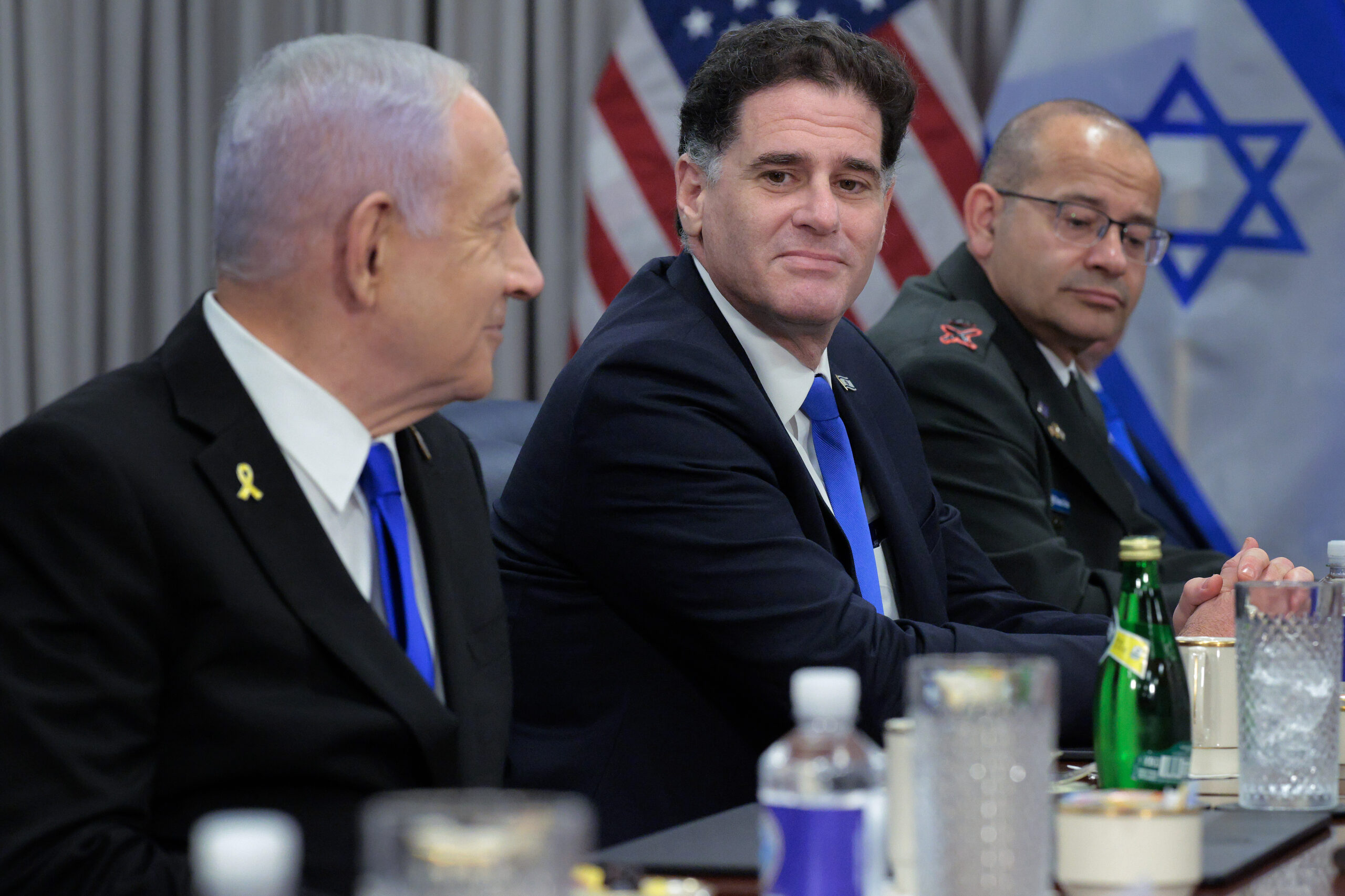
In a wide-ranging interview, Israeli Minister of Strategic Affairs Ron Dermer connected Israel’s strikes against Iran’s nuclear facilities with Israeli Prime Minister Benjamin Netanyahu’s opposition to the U.S.’ 2015 nuclear deal with Tehran, saying that President Donald Trump wouldn’t have pulled out of the deal during his first administration without that precedent, Jewish Insider’s Danielle Cohen-Kanik reports. “I believe that what Iran’s strategy was [before Oct. 7] is to surround Israel with this ring of fire,” including Hamas in Gaza, Hezbollah in Lebanon and militias in Syria and Iraq. “And this is another reason why I was so opposed to the nuclear deal that was done in 2015,” Dermer said in the first installment of his interview on Dan Senor’s “Call Me Back” podcast, which dropped on Monday.
Tracing it back: “And by the way, the attack [on Iran’s nuclear facilities] that happens now does not happen if Prime Minister Netanyahu doesn’t show up and confront that deal then. People don’t make the connection. I do, because I’ve lived it every day since then,” Dermer continued. “I don’t see Trump withdrawing if Netanyahu doesn’t take a stand, because no one’s going to be more Catholic than the pope, and no one’s going to be more pro-Israel than the prime minister of Israel.”
BUDEGET BLOCKS
House Appropriations Committee aims to leverage U.N. funding for UNRWA accountability

The House Appropriations Committee’s draft 2026 National Security, Department of State and Related Programs Appropriations bill, released on Monday, aims to leverage U.S. funding for the United Nations to secure accountability for United Nations Relief and Works Agency employees’ involvement in the Oct. 7, 2023, Hamas attacks on Israel, Jewish Insider’s Marc Rod reports. It also more broadly aims to enact cuts for the U.N. system, cutting all U.S. funding for the U.N.’s regular budget and barring funding for the U.N. Human Rights Council, including its commission of inquiry investigating Israel, the International Court of Justice and the International Criminal Court.
Concrete steps: The bill would ban any funding for the U.N. Secretariat, the arm of the U.N. led by the secretary-general responsible for daily management and operations matters, until several conditions relating to UNRWA accountability are met. The bill would hold the funds until the U.N. provides the State Department with a full and unredacted copy of the U.N.’s internal investigation into UNRWA affiliates’ involvement in the Oct. 7 attacks and until the findings of U.S. investigations into the situation are referred to the Department of Justice for appropriate criminal or civil action.
Exclusive: A bipartisan House bill set to be introduced on Tuesday aims to designate the Muslim Brotherhood as a terrorist organization, a step forward for an effort that gained steam following the terrorist attack in Boulder, Colo., targeting Jews advocating for the release of hostages in Gaza by a man who appeared to have expressed support for the group years earlier, Jewish Insider’s Marc Rod reports.
Worthy Reads
Digital Battleground: The New York Times’ Steven Lee Myers, Natan Odenheimer and Erika Solomon look at how Israel and Iran’s use of AI and deceptive social media posting during last month’s war between the countries has “ushered in” a new era of information warfare. “Over 12 days of attacks, Israel and Iran turned social media into a digital battlefield, using deception and falsehoods to try to sway the outcome even as they traded kinetic missile strikes that killed hundreds and roiled an already turbulent Middle East. … Iran, for example, sent alerts in Hebrew to thousands of Israeli mobile phones warning recipients to avoid bomb shelters because militants planned to infiltrate them and attack those inside, according to researchers and official statements. A network of accounts on X attributed to Israel spread messages in Persian trying to erode confidence in Iran’s government, including ones narrated by an A.I.-generated woman.” [NYTimes]
The MAGA Rebellion: NBC News’ Allan Smith looks at policy disagreements between President Donald Trump and the MAGA wing of the party, including commentator Tucker Carlson, who openly clashed with Trump over the White House’s approach to the Israel-Iran war. “Carlson was center stage among MAGA influencers arguing for the United States to stay out of Iran, a position that has gained popularity on the right as some right-wing influencers have increasingly viewed the U.S.-Israel alliance with skepticism. That stance is also informed by Trump’s having promoted similar anti-war and anti-interventionist views for years, even as he has used military force as president. Ultimately, Carlson said, the most important voice arguing the case to Trump for the U.S. bombing of Iran’s nuclear facilities was Israeli Prime Minister Benjamin Netanyahu. ‘Turns out a head of state of an important ally has a more compelling message than I do,’ he said. ‘That seems reasonable to me. I still disagree, but I don’t think it’s like Trump has changed his views entirely.’” [NBCNews]
No Direction Home: In The Atlantic, Guy Ben-Aharon considers the challenges of his identity as an Israeli pacifist both at home and abroad. “In Israel, I’m hated for opposing a war that many say they don’t support but still fight in, defend, or explain away as necessary. Abroad, I’m no longer welcome among those who say that all Israelis are colonizers. I’m too Israeli to be a victim and too resistant to be a patriot. I’m in exile, even when I’m at home. … My own relatives question whether I belong in Israel, because I criticize the troops in Gaza for the killing and starvation of Palestinians. Abroad, a theater colleague once told me to ‘go back to where you came from’ — that I don’t belong in the land where I was born but in the lands where my ancestors faced pogroms and the Holocaust. Nuance has no currency in a world addicted to absolutes.” [TheAtlantic]
Word on the Street
The Supreme Court ordered that the Trump administration be allowed to proceed with its efforts to enact mass layoffs at the Department of Education as part of its efforts to significantly downsize the department…
The Pentagon reached an agreement with ElonMusk’s xAI to use the company’s chatbot, Grok, as part of xAI’s new “Grok for Government”; the announcement by xAI of the deal, part of $200 million agreement, came days after the Grok chatbot sent a series of antisemitic and sexually explicit replies to X users…
The Hill reports on tensions between Secretary of State Marco Rubio and Ric Grenell, who is serving as a special presidential envoy, as the two attempted to negotiate separate agreements to free Americans being held in Venezuela…
Politico’s “West Wing Playbook” looks at Steve Davis’ departure from the Department of Governmental Efficiency, where he reportedly dispatched Josh Gruenbaum and two other aides to assess department staffers’ loyalty…
Rep. Mike Lawler (R-NY) is reportedly backing away from plans to mount a gubernatorial challenge to New York Gov. Kathy Hochul…
Former New York Gov. Andrew Cuomo announced he would continue his bid to become mayor of New York City, following his 12-point loss last month to Zohran Mamdani; Cuomo pledged to drop out of the race by mid-September if polls indicated that he was not the highest-ranked challenger to the Queens assemblymember, and called on other candidates to do the same…
Inside Higher Ed looks at how universities are increasingly hiring staff to oversee compliance with Title VI of the Civil Rights Act following a crackdown by the Trump administration on dozens of campuses over alleged violations…
Alex Edelman will perform his new show, “What Are You Going to Do,” at the New York Comedy Festival at Carnegie Hall in November; the show is a follow-up to his award-winning “Just For Us” one-man play about attending a white supremacist gathering…
Hungarian low-cost carrier Wizz Air will end its operations at Abu Dhabi’s Zayed International Airport, effective Sept. 1; the airline’s CEO, József Váradi, cited “supply chain constraints, geopolitical instability, and limited market access” as factors that contributed to the decision, which was announced weeks after the Israel-Iran war caused travel disruptions across the region…
The Shin Bet confirmed that the Hamas terrorist who held British Israeli hostage Emily Damari captive was killed last month in an airstrike…
The IDF struck Syrian military vehicles operating in southern Syria, amid clashes between Syrian government forces and local Druze communities…
Attorney Danielle Sassoon, who previously served as U.S. attorney for the Southern District of New York, is joining the Manhattan Institute as a senior fellow; Sassoon resigned from her position weeks after being appointed to avoid carrying out a directive from the Justice Department to drop corruption charges against New York City Mayor Eric Adams…
Israeli-American writer Sol Stern died at 89…
Song of the Day

Edan Golan recently released the music video for her single “You & I.”
Birthdays
Israeli actor, he played Boaz in Season 1 of “Fauda,” Tomer Kapon turns 40…
President and chairman of the board of the Annenberg Foundation, Wallis Annenberg turns 86… Member of the British House of Lords, he is a professor, medical doctor, scientist, television anchor and Labour Party politician, Baron Robert Maurice Lipson Winston turns 85… Israeli composer and conductor, he composed and conducted the winning entry at the 1979 Eurovision Song Contest, Kobi Oshrat turns 81… Professional sports bettor and poker player, he is a four-time winner of World Series of Poker bracelets, Mickey Appleman turns 80… Physician and life fellow of the American Psychiatric Association, Dr. David Harris Lippman… Rosh Yeshiva of Beth Medrash Govoha in Lakewood, N.J., one of the largest yeshivas in the world with more than 10,000 students, Rabbi Dovid Schustal turns 78… Longtime congresswoman from Florida for 30 years until 2019, Ileana Ros-Lehtinen turns 73… EVP at the Aspen Institute responsible for policy programs and its international partners, Elliot Gerson… Israel’s ambassador to the U.S. from 2021 until this past January, Michael (Mike) Herzog turns 73… Retired California-based appellate attorney, Feris M. Greenberger… Executive director of Friends of OU Israel, Miriam Baron (Mimi) Jankovits… Immediate past board chair of The Jewish Federations of North America, Julie Beren Platt… Professor at the UCLA School of Law, Richard Harold Steinberg turns 65… Former political news director at Bloomberg, Jodi Schneider… Member of Congress (D-RI) until 2023, his mother is Sabra née Peskin, David Nicola Cicilline turns 64… Anchorage-based attorney, a member of the Alaska House of Representatives since 2012, Andrew Lewis “Andy” Josephson turns 61… Former U.K. Labour Party MP including three years as foreign secretary, now CEO of NYC-based International Rescue Committee, David Miliband turns 60… Co-founder and chief investment officer of Toronto-based EdgeStone Capital Partners, Gilbert S. Palter… Israeli actress and singer, she is the 1991 and 1998 winner of the Ophir Award for best actress, Dafna Rechter turns 60… Senior advisor at investment bank Greif & Co., he was the CFO of Jewish Family Service of Los Angeles, David S. Felman… Senior business development representative at Atera, Sam Kalmowicz… Senior correspondent at New York magazine, she is a co-author of Notorious RBG: The Life and Times of Ruth Bader Ginsburg, Irin Carmon turns 42… Filmmaker and co-founder of the Square Peg film production company, Ari Aster turns 39… Managing editor of the U.S. deals team at Bloomberg, Liana Balinsky-Baker… Former deputy assistant secretary for travel and tourism at the U.S. Department of Commerce, now CEO of the FIFA World Cup 26 NYNJ host committee, Alexander Lasry turns 38… VP of Israel Action and Addressing Antisemitism Program at Hillel International, Jonathan Steven (“Jon”) Falk… Director of news experimentation at Southern California Public Radio until last year, Ariel Zirulnick… Senior NFL reporter at Yahoo Sports, she is also the author of a biography of a Holocaust survivor, Jori Epstein…
The Ohio Democrat suggested the responses to the strikes from within his party are motivated by the current political environment, fears about a broader war and concerns about the future of diplomatic talks and the safety of people in the region
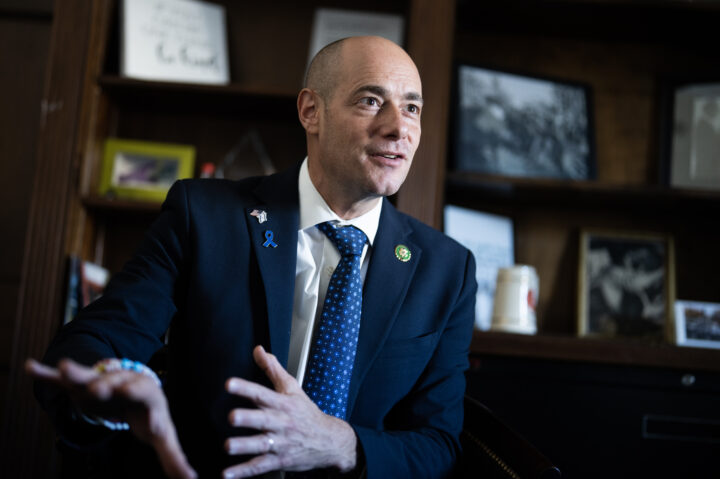
Tom Williams/CQ-Roll Call, Inc via Getty Images
Rep. Greg Landsman (D-OH) is interviewed by CQ-Roll Call, Inc via Getty Images in his Longworth Building office on Friday, November 3, 2023.
Rep. Greg Landsman (D-OH) has stood apart in recent weeks as one of a small number of congressional Democrats who’ve been supportive of the Trump administration’s strikes on Iranian nuclear facilities.
He argued in an interview with Jewish Insider last week and in a recent op-ed that the Israeli and American show of force, alongside the undermining of Iran’s proxies across the region, could be the key to weakening the Iranian regime to a point where it will agree to a fundamental change of course going forward, unlocking opportunities for regional peace and prosperity. And, he said, it’s critical that the U.S. move forward in a truly unified and bipartisan manner to capitalize on that opportunity.
Landsman told JI he thinks that his Democratic colleagues’ responses to the strikes are motivated by the current political environment, fears about a broader war and concerns about the future of diplomatic talks and the safety of people in the region.
“We’re just in a different political environment than the one I grew up in,” Landsman, 48, said. “The one I grew up in was ‘politics stops at the water’s edge,’ which I loved. … The thinking behind it … is that when we take on these really complicated foreign policy issues, that we do it in a bipartisan way, and that’s not the environment we live in right now.”
He said there’s also a “legitimate concern that it would provoke further attacks or it would instigate a broader war.” Landsman has argued that the current situation is fundamentally different from the run-up to the Iraq war that many skeptics of the strikes have invoked.
Some colleagues, he added, may have also had concerns about compromising diplomatic efforts or “legitimate concerns for people’s safety. But I think for others, and for a lot of folks, it’s just political,” he said.
Landsman said he still hews to the older approach, believing that it’s critical to work toward bipartisan common ground in critical foreign policy questions. He highlighted that the American people overwhelmingly oppose the prospect of an Iranian nuclear weapon.
“I think the American people want [our Middle East policy] to be bipartisan, all of it,” Landsman said. “I think they’re tired of the partisanship in general, but in particular, as it relates to how we resolve these international conflicts and how we take advantage of international or global opportunities, I think they are done with all of this being so partisan.”
He said he still believes a diplomatic solution with Iran is possible and necessary, but said the regime needed to be weakened and see that the U.S. is willing to use force in order to agree to totally dismantle its nuclear program and allow comprehensive international inspections and to dismantle its terrorist proxies .
Unlike some supporters of the strikes, Landsman said he doesn’t think regime change in Iran is the most productive goal, and that the U.S. should instead leverage the regime’s vulnerability for a more favorable deal and fundamental change to the regime’s posture.
“This regime wants to stay in power. If they decide — which they can, and now they’re so weakened that it’s an easier decision for them, and that’s why the strikes were important — they can decide, ‘We’re going to focus on the Iranian people’” and abandon terrorism and their ambitions to destroy Israel, Landsman said. “They could unlock the talent of tens of millions of incredibly brilliant people that have been stuck in Iran under this regime.”
He said that achieving that will “require real engagement and leadership” from both Congress and the executive branch.
Landsman has proposed establishing a bipartisan and bicameral congressional committee to work toward Middle East peace, and argued that the administration needs an expanded team working on the issue, describing Middle East envoy Steve Witkoff as stretched too thin.
“They need to lay out a vision for ending hostilities with Iran and ending the war in Gaza and giving people a sense of what will happen next in terms of peace and stability and security,” Landsman said.
The congressman argued that these issues are too difficult and too important for Congress to be excluded, or to be treated in a partisan manner. He pushed for deep and ongoing executive branch engagement with Congress, not just providing briefings, but in strategizing and building a lasting solution going forward.
Finally putting the Iranian threat to bed would set the Middle East on a fundamentally different course, Landsman argued. “[The Middle East] should be Europe, [if not] for Iran. It hasn’t been able to break out that way because Iran has been the primary obstacle.”
“Getting to a point where Iran is slowly but surely being removed as a threat opens up all the doors,” he said. “It just changes the dynamic for everybody.”
He said he believes leaders across the region see a path toward ending the war in Gaza and the long-running conflicts and building “a Middle East that’s entirely free from terror and countries are working together” and prospering.
In spite of the deep divisions that have increasingly characterized discussions in the United States on Israel and the Middle East since the Oct. 7, 2023, terror attacks, Landsman said he still believes that “the list of what we agree on is way bigger than the list of what folks may disagree on.”
The points of agreement across the American political spectrum include: that Iran cannot have a nuclear weapon; that Iran needs to be subject to stringent inspections; that Iran needs to cease its support for terrorists; that Hezbollah must be disarmed; that the war in Gaza needs to end; that the hostages need to be returned; that Hamas needs to be removed from power; and that international investment in collaboration with Israel and non-Hamas Palestinian leaders is needed to move Gaza forward.
“More international pressure can be brought to bear on Iran and Hamas and Hezbollah and the Houthis to separate them … and say ‘The world has come together. We are going to pick the side of those who want to rebuild the region and rebuild it free of terror and corruption,’” Landsman said. “Ultimately, when you have the kind of security that any country would need and expect, then you get back to the negotiating table.”
Landsman has spoken on multiple occasions in recent months about his aspirations for an abiding peace in the Middle East, a vision that he says is driven by a lifetime of connection and passion for Israel and the region.
He said his Jewish upbringing had inculcated in him a sense of connection to the importance of Israel for the Jewish people.
Landsman said that efforts to negotiate between Israel and the Palestinians were also a constant feature of his youth, and that he believes that there is still broad agreement on the goal of a durable peace that can provide security for Israel and self-determination and self-governance for the Palestinians.
A Harvard Divinity School graduate, the Ohio congressman has visited Israel numerous times as a lawmaker, but also traveled there frequently and built connections in his previous work in education advocacy. After implementing new preschool programs in the Cincinnati area, Landsman was asked to help work with Ethiopian Israelis to improve educational outcomes, an effort that grew between 2015 and 2020.
He said his time on the ground in Israel showed him that Jews and Palestinians “have a lot in common” — shared history, a shared home and common experiences of expulsion and rejection. And it highlighted to him the extent to which Arab Israelis are part of and integrated into Israeli society.
“I have built up this legitimate affection and love for these two communities of people that, because of circumstance, have been fighting,” Landsman said. “Ending that would transform everything — not just their lives, but the region and the world.”
Judith Weinstein-Haggai and Gad Haggai were murdered in Kibbutz Nir Oz in the Oct. 7, 2023, Hamas-led attacks in Israel

Hostages and Missing Families Forum
Judy Weinstein-Haggai and Gad Haggai
The IDF found and returned the bodies of U.S.-Israeli citizens Judith Weinstein-Haggai and Gad Haggai, who were killed in the Oct. 7, 2023, Hamas-led attacks, the Israeli Prime Minister’s Office announced on Thursday.
The Haggais were murdered in Kibbutz Nir Oz during Hamas’ onslaught targeting Gaza border communities. Their bodies were held by Hamas, the PMO said.
The couple was on a morning walk when they were shot by terrorists on motorcycles. Weinstein-Haggai called emergency medical services, but the ambulance that was traveling to help them was hit by a rocket, according to her daughter.
Gad was 72 and Judith, a New York native who also held Canadian citizenship, was 70; they are survived by four children and seven grandchildren.
The Weinstein-Haggai family released a statement via the Hostage and Missing Families Forum, saying that their return “is painful and heartbreaking, yet it also brings healing to our uncertainty. Their return reminds us all that it is the state’s duty to bring everyone home, so that we, the families, together with all the people of Israel, can begin the process of healing and recovery … A grave is not a privilege. A grave is a basic human right, without which personal and national recovery is impossible.”
The family called on leaders to “do everything necessary to reach an agreement that will return all 56 remaining hostages — the living for rehabilitation and the deceased for burial.”
Israeli Prime Minister Benjamin Netanyahu thanked the IDF soldiers and Shin Bet fighters who recovered the bodies and added, “We will not rest until we bring all of our hostages home, living and deceased.”
Israeli Defense Minister Israel Katz sent condolences to the Weinstein-Haggai family and said that “the State of Israel is morally and nationally committed to returning our brothers and sisters, living and not living, and we will continue acting with determination until the mission is complete.”
The bodies of two American hostages, Itay Chen and Omer Neutra, remain in Gaza, out of a total of 56 hostages, 20 of whom are thought to be alive.
The artist, known as Fredwreck, has worked with prominent artists and on the 2022 Super Bowl halftime show

Al Drago-Pool/Getty Images
Rep. Ritchie Torres, a Democrat from New York, speaks at a House Financial Services Committee hearing on oversight of the Treasury Department and Federal Reserve coronavirus pandemic response on Capitol Hillon September 30, 2021 in Washington, DC.
Prominent Palestinian-American DJ and producer Farid Karam Nassar, who goes by the stage name Fredwreck, targeted Rep. Ritchie Torres (D-NY) earlier this week with a series of explicit racial slurs, citing Torres’ support for Israel.
Nassar, who has worked with artists including Eminem, Britney Spears, Ice Cube, 50 Cent, Dr. Dre and Snoop Dogg, won a Grammy in 2020 for an album with R&B artist Anderson .Paak and he assisted with the 2022 Super Bowl halftime show.
In response to a video of a recent public confrontation between Torres and a pro-Palestinian activist, Nassar described Torres as a “s@mbo koon,” using misspellings of two racial slurs for Black people.
Nassar also commented, “He’s lucky I didn’t run into him on the streets.”
The DJ followed up with a direct message to Torres’ Instagram account, shared with Jewish Insider by the congressman’s office, in which he called Torres a “sell out as House Slave” and made a remark referencing AIPAC and gay sex. Torres is openly gay.
“Violence is not a bug but a feature of the Free Palestine movement,” Torres said in a statement. “No amount of harassment and intimidation will deter me from standing up and speaking out against AntiZionism and antisemitism.”
Nassar did not respond to a message requesting comment.
Nassar accused Israel of genocide on Oct. 18, 2023, and posted on Instagram “From the River to the Sea… We will be free… #endapartheidisrael.”
John Ondrasik met with hostage families, injured soldiers and first responders on his first trip to Israel this month

Courtesy
Five for Fighting performs in Hostage Square in Tel Aviv on April 13, 2024.
Three months after Hamas launched its deadly terror attack in Israel, singer John Ondrasik, known by his stage name Five for Fighting, penned the song “OK,” a ballad paying tribute to Israeli resilience in the aftermath of Oct. 7.
More than two decades earlier, in the wake of the Sept. 11, 2001, terror attacks, Ondrasik’s then-recently released “Superman (It’s Not Easy)” became the anthem for Americans reeling from the attacks, and to honor the first responders and victims of the deadliest terror attack on American soil. He would go on to perform the song at The Concert for New York City, held a month after the attacks on the Twin Towers and the Pentagon.
Ondrasik made his first trip to Israel this month, where he met with hostage families, first responders and soldiers who were recovering from injuries sustained while fighting Hamas in Gaza. After playing at a jam session honoring hostage Evyatar David, a musician, Ondrasik was invited to perform at the weekly Saturday night rally in Tel Aviv calling for the release of the remaining 133 hostages. His performance came hours before missiles and drones launched by Iran entered Israeli airspace, setting the country on high alert in the first direct confrontation between Tehran and Jerusalem.
Ondrasik spoke to Jewish Insider about his five-day visit, meetings with Israelis and how the music he created more than two decades ago has taken on new meaning in light of his experiences in Israel.
Jewish Insider: This was your first time in Israel. What expectations did you have before coming here?
John Ondrasik: Well, I heard the food was great. (laughs)
JI: It is!
JO: And that was proven very quickly. Obviously concerning why I was coming, I was anxious and interested about meeting with the hostage families, the troops, perhaps singing. So typically, I would be interested in touristy things, but there was so much to do here. We were so busy. I was really focused on doing whatever I can to support Israel and let them know in so many facets that there were artists and Americans who supported them and stood shoulder-to-shoulder with them. But at the end, I never could have imagined how our trip ended.
JI: We’ll get there, don’t worry. But before we do, talk to me about some of the folks that you met while you were here. Who stuck out to you?
JO: You know, I met some really cool people we can talk about, but it was just the people on the streets that I met. At our first restaurant, the waitress sat down at our table and started talking to us and was so friendly. I’m like, you don’t see that in the United States. And just the difference, talking to 18-year-old girls who are in full army uniform carrying machine guns. That’s something I’ve never done before. But, of course, meeting [former Soviet refusenik] Natan Sharansky is kind of like meeting [Nelson] Mandela, right? [He’s] such a powerful figure, and just spending time with him. … I met one of the leaders of United Hatzalah, and to see what they’ve done and to go into the control room and see what they have built, it’s just another example of Israeli ingenuity that no one else in the world can do.
Of course, the hardest, the most heartbreaking, the most agonizing people I met were the hostage family members. And I actually ended up meeting with three different sets of hostage families, including on my last day, the mother and brother of [Evyatar David, the honoree of the] Thursday night jam session came to the Hostage Forum and I sat with them and talked to some people and there’s no words to explain that. Anything I say would be diminishing their suffering. And so that was, of course, excruciating, but I think it was helpful for them to be able to tell their stories and know that there are some people that are not Jewish and in America advocating for them. I think they were surprised, and I think that telling them how people reacted to my song, and now millions of people in America have now heard about the hostages, and every day were calling for their release. I think that gave them a little bit of solace. So that was probably the most important thing we did. Playing with the troops, that was amazing.
JI: You played with the troops?
JO: Oh, yeah, I went and visited some troops at Sheba [Medical Center]. Three of them had lost their legs. And so we sat there and jammed on guitar and they ended up giving me guitar lessons because they’re so much better than me. They tend to have a pretty more optimistic view. You know, they’re young, they’re teasing each other. They know that they’re gonna have a great life. I actually met with one American IDF soldier who came from Florida, seven or eight years ago. And we spoke a lot about his experience and going door to door instead of just razing buildings, trying to save lives even though his commander was killed and he got shot four times trying to save him. [It was interesting to] hear from their mouths why they have these values that no one in the world wants to talk about. So, meeting with the troops was great. And then meeting the Hostage Family Forum and the people there that put together that thing literally overnight, and really took over the plight of the hostages. The government was way behind them and to see them every day have to deal with this horrible grief, they are heroes in their own right. So I just met amazing people and inspiring people and then I met some artists. I met Idan Raichel. We had a long talk about what’s going on and we have some projects possibly in the works. I met with Danny Sanderson. I met with Gilad Segev.
So I met with artists because we have these projects in the work that was really the main initial reason for my trip but then things got a lot bigger. I feel like I packed in a month of stuff in five days. I just wish I had more time. I would have stayed another week or two, but I have [shows in the U.S].
JI: So you performed on Saturday night at Hostage Square, literally as Iran was launching its missiles and drones at Israel. What was that like? They didn’t come until hours and hours later, but they were firing them off while you were performing. What was that whole experience like?
JO: I have not processed it yet. But I’ll tell you this — I’ve never played a gig where before the show, they make an announcement of what to do during a missile attack and nobody leaves.
JI: Only in Israel.
JO: Only in Israel. I have learned so much about Israel. That alone was surreal. The only experience I can compare that performance with, for me, is when I played the concert for New York after 9/11. At that concert, looking out at the emergency workers, meeting the families, [performing at Hostage Square] was very similar to that, to walk on that stage, to be able to play “Superman,” knowing that was the 9/11 song, and here we are in the Oct. 7 aftermath. To be able to speak to them and say my words, I was honored to do that. To perform “OK,” and to look at 5,000-10,000 people, many in the beginning holding signs of their loved ones, singing back to me — there’s no there’s no words for that. It’s heartbreaking, but it’s also why music can matter in so many ways. To see them crying and singing reminded me of a guy that I saw at the concert for New York who was crying and singing “Superman” at the top of his lungs, and sometimes music provides solace like that and lets people know they’re not alone.
So many in Israel, every interview I did, first of all I said, ‘Where’s everybody else? Where are all the artists? Why is nobody speaking up for us?’ So be able to show them that no, they’re not crazy, they’re not alone, there are artists who understand that Israel is fighting the good fight, and that people recognize that. [Performing at Hostage Square was], probably with the concert in New York, the most significant, important thing I’ve ever done as a musician, and then to walk off stage, kind of with that mindset of ‘wow,’ to be greeted by all the hostage families and hug them and take pictures with them. And then be told that we have to be in our hotel 11, by a safe room because there’s gonna be a missile attack.
My Israeli friends were like, ‘Well, let’s just go get dinner first.’ I’m like, ‘No, I’m going to the hotel!’ So we go to the hotel, they’re all drinking and eating dinner. It’s 10:30 and I go to my room and then they launched the missiles. Look, I had brought my son. And my wife was very reluctant to bring him, but she allowed him to come. And so I was scared. I was scared, especially when they launched the ballistic missiles. My wife is calling me crying, everybody from the States is reaching out. And so I was like everybody, I’m human. I had my bag packed for the safe room, we knew where it was, we were ready to go. I had my son with me and then we’re sitting there, then I actually connected with Fox News and ended up going on Fox News from Tel Aviv.
I’ve always wanted to do my best [Fox News reporter] Trey Yingst impersonation, so it’s 3 in the morning in Tel Aviv, I’m outside my window, things are kind of slowing down. And I’m on Fox News talking about it. And I thought it was going to be over, but then we saw that Jerusalem interceptions so like, wow, it’s still coming this way. And in the meantime, I’m trying to get a flight, which nobody could get flights [because] everybody’s panicking. But that was the most surreal, insane, important, inspiring 12 hours of my life and I’ll never forget it. I’ll never recover from it, but I’m so grateful. I’m still grateful at the end of the day that I was there. I was so grateful that I was there to experience that, to experience the people. And then the next day I went into the Mediterranean Sea and got stung by jellyfish.
JI: It’s early for that. You already got stung?
JO: I found out in Israel that the thing that is more dangerous than Iran is jellyfish.
JI: What is the main message that you want to communicate to your friends back home, to your neighbors, colleagues, to other people in the industry about your time here?
JO: I’m already doing it. I’ve gotten a lot of press inquiries, and I’m doing radio and television. And I like to tell people about the fortitude of Israeli people, but people know that. I like to tell them about the courage, the innovation of the Israeli people, but people know that. But what I really was moved by was in this dark time, in this horrible time in Israel, everybody finds a way to have joy within the fear. And that’s what I took from Israel with me. And I guess it makes sense because Jewish people have been dealing with this for millennia. But to see it firsthand and to see people dealing with these really hard things and, you know, the day that everybody says Iran’s going to attack, everybody’s at the beach and everybody’s playing volleyball and running, and living their lives and [having] dates at dinner. We could not get a seat at a restaurant on that Friday. I was just really moved by how Israelis live life and appreciate life. And I think that’s why they have joy. I guess they’re ranked fifth happiest in the world. And I understand it, because when you’re always at risk of being bombed or [being targeted by a] suicide bomber, you have a sense of, ‘I gotta live today. I’m gonna live today.’
I wrote a song called “100 Years,” which is all about that. I don’t think I ever really lived it, but seeing them, they lived that. I can’t wait to bring my wife back and my daughter, when things get a little safer, and let them share the experience, you know, go to the Western Wall in Jerusalem and leave a prayer note and all that stuff. So that’s what I’m telling people and I’m also doing a lot of press here to keep the focus on the hostages and really try to be a strong voice for Israel as much as I can.
'Please do not think about us only as a headline,' father pleads

Maya Alleruzzo/AP Photo
Relatives of U.S. citizens that are missing since Saturday's surprise attack by Hamas militants near the Gaza border, in Tel Aviv, Israel attend a news conference on Tuesday, Oct. 10, 2023 in Tel Aviv, Israel. Seated from left: Jonathan Dekel-Chen, father of Sagui Dekel-Chen (35) from Nahal Oz; Ruby Chen, father of Itay Chen, 19, a soldier in the armored corps; Ayala Neta, daughter, and Nahal Neta, son of Adrienne Neta, 66, a nurse living in Kibbitz Be'eri; Rachel Goldberg, mother of Hersh Goldberg-Polin, 23, who was attending the music festival, and Jonathan Polin, Hersh's father.
A nurse and midwife who has delivered more than 1,000 babies. A soldier who swapped weekend shifts so that he could attend his brother’s bar mitzvah. A young man attending an outdoor rave with friends. A father awaiting the birth of his third child.
The families of four American citizens who believe their loved ones are being held by Hamas in Gaza gathered in Tel Aviv on Tuesday afternoon to deliver a public, emotion-laden plea to both the Israeli and American governments, neither of which, relatives say, have provided adequate support or information about their family members.
On Tuesday afternoon, National Security Advisor Jake Sullivan said that 20 or more Americans remain unaccounted for. A National Security Council spokesperson confirmed on Monday that at least 11 American citizens have been killed in the attacks.
On Tuesday afternoon, following a phone call with Israeli Prime Minister Benjamin Netanyahu and Vice President Kamala Harris, President Joe Biden said he had “directed my team to share intelligence and deploy experts from across the United States Government to consult with and advise Israeli counterparts and hostage recovery efforts. Because as president, I have no higher priority than the safety of Americans being held hostage around the world.”
Rachel Goldberg, who grew up in Chicago and now lives in Jerusalem, last heard from her son, Hersh Goldberg-Polin, on Saturday morning. Goldberghad turned her phone off on Friday evening as the sunset ushered in Shabbat and Simchat Torah. After a siren alerted her to a rocket attack near Jerusalem on Saturday morning, she turned on her phone, concerned about Hersh, who was attending the Tribe of Nova music festival near Kibbutz Re’im.
“I turned my phone on, I believe, at 8:23 in the morning,” Goldberg said. “And when I turned it on, there were two texts in a row from Hersh at 8:11. The first one said, ‘I love you’ and immediately at 8:11 also it said, ‘I’m sorry.’ And so I knew immediately wherever he was, it was a terrible situation.”
Goldberg identified her son, whom she has not heard from since, in a photo taken inside a bomb shelter. In collecting eyewitness accounts, she said, she learned that Hersh had been injured in a firefight.
“They were fish in a barrel sitting in this bomb shelter,” Goldberg explained. “Terrorists came to the door, they were throwing grenades in, shooting machine guns, and we know that Hirsch’s arm from the elbow down was severed, was blown off, and that he tied a tourniquet around with his shirt.” She has not received any further information about her son’s whereabouts.
Goldberg was joined by the families of Itay Chen, Sagui Dekel-Chen (who is not related to Itay) and Adrienne Neta, whose son, Nahar Neta, issued a plea to President Joe Biden and Secretary of State Tony Blinken. The administration, Neta said, is “responsible to bring the U.S. citizens back home safe and sound. We expect nothing less from the U.S. administration and from President Biden and Secretary of State Blinken.”
Adrienne Neta is a California-born nurse and midwife who moved to Israel in 1981. She lived for decades on Kibbutz Be’eri, one of the deadliest sites of Saturday’s attack. When Hamas terrorists invaded the kibbutz, her children said, she was sitting on her patio on the phone. It was roughly 9:30 a.m. “Both my brother and my sister were on the call with her as the terrorist barged into her home, and we heard a little bit of screaming and that was our last contact with her,” her son Nahar Neta said. “There was no shooting on the call.”
His mother, Neta added, tried to use the limited Arabic she had picked up as a longtime nurse at Soroka Hospital to communicate with her captors.
A half-hour’s drive from Neta’s Kibbutz Be’eri sits Kibbutz Nahal Oz, which is where 35-year-old Sagui Dekel-Chen was taken hostage as he and other men on the kibbutz attempted to overpower the terrorists who had infiltrated the property. Dekel-Chen’s wife is pregnant with the couple’s third daughter.
Of the roughly 400 residents of the kibbutz, Sagui’s father, Jonathan Dekel-Chen, said, more than half have been killed or taken hostage. The roughly 160 survivors, the elder Dekel-Chen said, “call this a pogrom.”
“What happened to us, it’s not a war,” he said. “It’s not a fair fight. It is a pogrom. Hundreds of heavily armed, well-organized terrorists walked, rode, ran over the border with one object in mind: and that was to kill, maim, to destroy civilian life along the border.”
“As such,” he continued, “it seems to me that the United States, my original home, and still a very beloved place for me, always wants to be and must be on the side of good.” He called on the “United States government, to the Congress, to do what they can on the side of good here. We’re waiting for Sagui to come home.”
Rubi Chen, whose son Itay was captured while on duty, said he has connected with about 10 other families who are missing a relative with American citizenship following Saturday’s ambush.
Itay Chen had not been scheduled to be on duty the weekend of the attack. His younger brother’s bar mitzvah was the following weekend, when he had been originally scheduled to report for duty. Itay had traded weekend shifts so that he could be a part of his family’s celebrations.
Rubi Chen said the IDF had informed the family that Itay was listed as missing in action.
“You would think it would be a good assumption to say that after 70 hours, if he’s not in the State of Israel, he might be some other place. If that is the case, then he is by definition a POW.” Chen called for his son to be treated as a POW according to international law.
Chen said he had been in contact with the State Department and the U.S. Embassy in Jerusalem, but that he has received few answers as to his son’s whereabouts and any plans to rescue the hostages. There has “been no formal or concentrated attempt to talk to us as a group and update us about what they are doing in this matter,” Chen said on Tuesday.
“Please do not think of us only as a headline,” Rubi Chen pleaded. “We are more than that.”

Richard Drew/AP
New York Mayor Bill de Blasio speaks at City Hall, Monday, Aug. 19, 2019.
NEW YORK — New York City Mayor Bill de Blasio is meeting on Wednesday with Palestinian-American leaders.
The meeting — announced in a media advisory as part of de Blasio’s daily schedule — is closed to press, and City Hall declined to release a list of attendees.
Jose Bayona, the mayor’s director of community and ethnic media, told Jewish Insider that the meeting is part of a practice to regularly meet with community leaders from all faith and ethnic backgrounds.
“We cannot predict what this group will raise in the meeting,” Bayona added, “but we anticipate conversation about an array of local issues, including the upcoming 2020 Census and efforts to get everyone counted, public schools and civic engagement.”
Please log in if you already have a subscription, or subscribe to access the latest updates.
 Continue with Google
 Continue with Apple

