



































































ADL/JFNA study: Over half of American Jews experienced antisemitism in the past year
Nearly half of respondents said they had experienced exclusion or minimization based on their Jewish identity

Helen H. Richardson/MediaNews Group/The Denver Post via Getty Images
Law enforcement officials are on scene to investigate an attack on the Pearl Street Mall in Boulder, Colorado on June 1, 2025.


 Add JewishInsider on Google
A majority of Jewish Americans see antisemitism as a common Jewish experience, according to a new joint study, released on Monday, commissioned by the Jewish Federations of North America and Anti-Defamation League.
According to the “Portrait of Antisemitic Experiences in the U.S.,” which relied on two nationally representative surveys of Jewish Americans and was conducted in partnership with Columbia University researchers, 55% of those surveyed experienced at least one form of antisemitism over the past year. Over half (57%) also said antisemitism is now a normal Jewish experience.
The immediate aftermath of the Oct. 7, 2023, Hamas terrorist attacks in Israel and the start of the war in Gaza fueled a record-breaking wave of antisemitic incidents. Such incidents increased by 5% in 2024, according to the ADL’s tally. The results mark an 893% increase over the past decade.
Over one-third (36%) of those surveyed witnessed actual or threatened antisemitic violence, and 44% had experienced exclusion or minimization based on their Jewish identity. One in five respondents (21%) who have witnessed an antisemitic attack reported signs of depression.
Forty-one percent of Jews reported having experienced online antisemitism. Other contexts where antisemitism was found included: public spaces (reported by 21% of Jews), educational institutions (13%), near Jewish institutions (9%) and the workplace (9%).
Nearly four-fifths of Jews (79%) expressed concern about antisemitism, and 48% have taken actions to increase their personal security. (As part of that group, 14% of Jewish respondents said they had made plans to leave the country, while nine percent said they had purchased a gun.)
The JFNA study surveyed 1,877 Jewish Americans by text message in six geographic areas between March 5-March 25, 2025, with a +/- 2.26% margin of error.
The ADL study surveyed 2,982 Jewish Americans by text message in 12 geographic and age categories between May 27-July 6, 2025, with a +/-3.2% margin of error.
The ADL’s audits have been criticized for changing its methodology of what constitutes an antisemitic incident while still comparing data year-to-year in the aftermath of the Oct. 7 Hamas terror attack. After Oct. 7, the organization began including “expressions of opposition to Zionism, as well as support for resistance against Israel or Zionists” — for instance, spray-painting “Free Gaza” graffiti — which resulted in a significant increase in the number of incidents in the 2023 audit. But even without the inclusion of anti-Zionist messaging as antisemitism, antisemitic incidents still would have doubled from 2022 to 2023.
“It is so profoundly sad that Jewish Americans are now discussing worst-case scenarios,” Jonathan Greenblatt, ADL CEO, said in a statement. “When American Jews – who have built lives, careers and families here for generations – are making contingency plans to flee, we must recognize this as a five-alarm fire for our entire country. This is not just a Jewish problem; it’s an American problem that demands immediate action from leaders at every level.”
A trend that Jewish Federations dubbed “the Surge” — a significant increase in Jewish engagement that was brought on by the Oct. 7 attacks — continues, according to the study, but at slightly lower levels than in 2024. Nearly one-third (31%) of American Jews reported increased participation in Jewish life, down from 43% last year. A survey from JFNA last month showed that the impact of “the surge” is waning more quickly among Jews from minority populations, including LGBTQ Jews, Jews of color, Jews with disabilities and financially vulnerable Jews, than it is among the broader Jewish community.
Eric Fingerhut, CEO of JFNA, lauded the nearly two-thirds of those surveyed who directly experienced antisemitism but “are responding by deepening their Jewish involvement.”
That “demonstrates the extraordinary resilience of our people,” said Fingerhut. “Rather than retreating in fear, American Jews are choosing to stand together, strengthen their bonds and affirm their identity.”
More Stories
OCEAN STATE OF PLAY
Antisemitism roils Providence mayoral race

Doha Dealings
CNN’s ties with Qatar deepen with October summit in Doha

analysis
Pappas wins New Hampshire Senate nomination over anti-Israel Dem activist

Hard cover, soft launch
Assouline puts Tel Aviv on the coffee table at last

SELF-SCRUTINY
Most Middle East scholars say U.S. academia has lost its way since 9/11, survey finds
on the trail
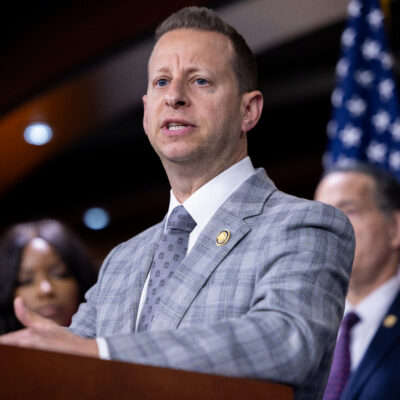
Moskowitz leans into work combating antisemitism as he launches general election campaign
Please log in if you already have a subscription, or subscribe to access the latest updates.
 Continue with Google
 Continue with Apple