


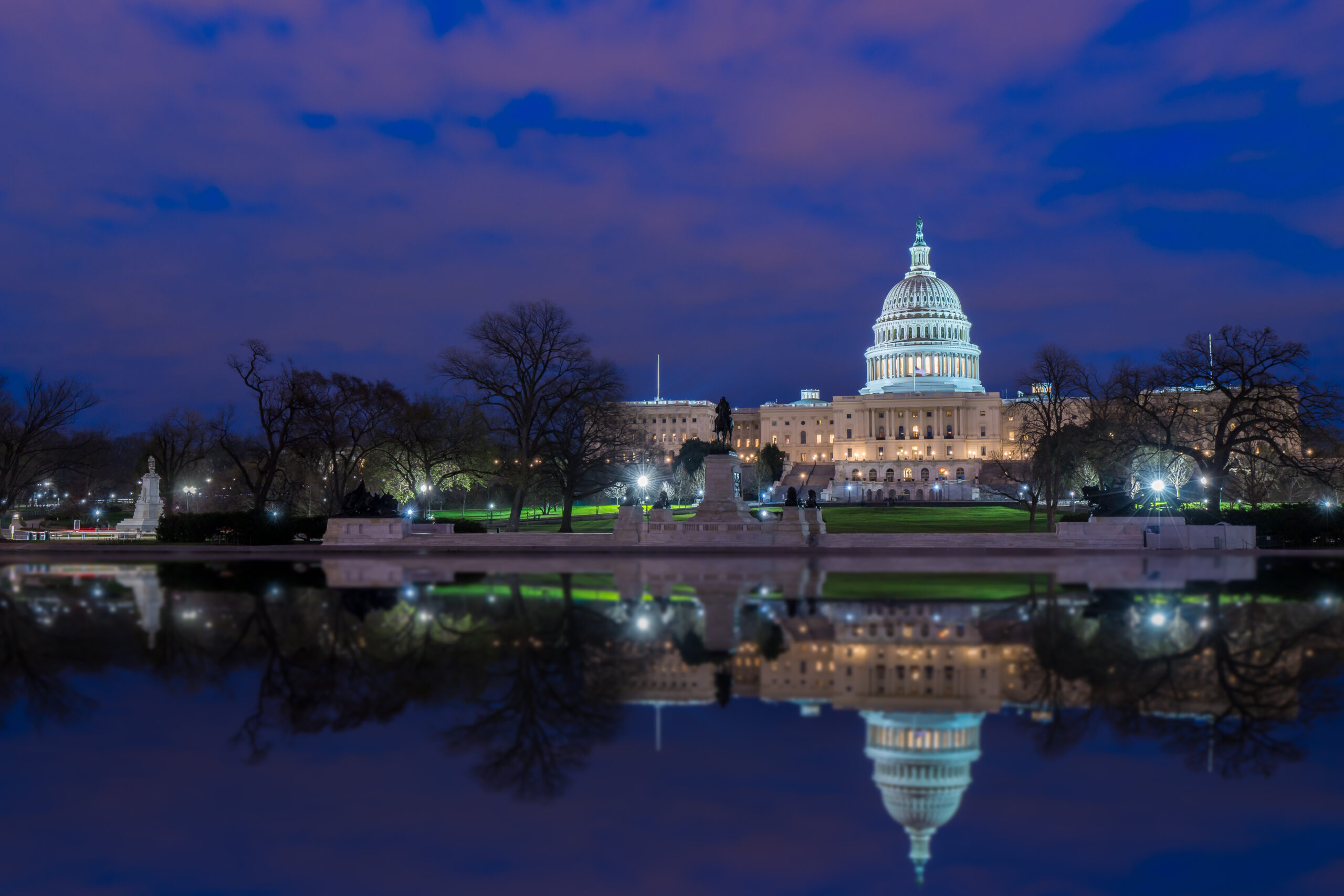
How Oct. 7 reshaped American politics


If Israel had been deployed as a political football long before Hamas’ Oct. 7, 2023, attacks, the aftermath of the violence and the ensuing war in Gaza only ensured that it would become one of the most contentious subjects of debate in American governance and elections.
In a moment of ever increasing extremes, the fallout from Oct. 7 exposed festering divisions over Israel on both sides of the aisle. As a result, many Jewish Democrats now report feeling politically homeless as the anti-Zionist far left has gained traction and as room for nuanced discussion of the conflict has dwindled. Republicans, meanwhile, are confronting a younger base in thrall to conspiracy theorists who use their opposition to Israel as a cover for espousing antisemitic beliefs — fueling accusations that the GOP has failed to police its ranks.
As polling has recently demonstrated a sharp decline in sympathy for Israel in the wake of the attacks, underscoring a new level of skepticism or outright hostility toward the Jewish state, it remains to be seen how such views will ultimately shape the direction of both parties in the upcoming election cycle and beyond.

Abe Foxman
Former longtime national director of the Anti-Defamation League
“Oct. 7 — followed by the Gaza war, Netanyahu as prime minister and the reelection of [President Donald] Trump — came together to change the political landscape for Israel and the American Jewish community. Democrats who traditionally stood firm with Israel began to distance themselves from Israel as the Gaza war escalated. Republicans, traditionally less supportive of Israel pre-Oct. 7 and by nature isolationist, are today the major supporters of Israel and Jewish issues — but most of this is totally dependent on President Trump’s support of Israel. All political conventions of advocacy and predictability have been shattered. And political bipartisanship, which served Israel and the American Jewish community, looks dead for the foreseeable future.”

Eileen Filler-Corn
Democratic former speaker of the Virginia House of Delegates
“Since Oct. 7, antisemitism has not just risen, it is out of control, with far too many feeling emboldened to publish and promote it under the cover of anti-Zionism. This is a dangerous moment in time, and it makes it all the more urgent to shine a light on the hate and call it out, wherever it surfaces and whomever spreads it.”

James Kirchick
Global reporter for Axel Springer and writer at large, Air Mail
“In the post-Oct. 7 political world, progressive supporters of Israel find themselves increasingly unwelcome on the left. In progressive spaces, Zionism is a dirty word akin to ‘Nazism’ and those who consider themselves Zionists are being shown the door. Though this anti-Zionist litmus test has yet to be imposed by the Democratic Party on a national scale, the success of Zohran Mamdani [in New York] augurs a future in which support for Israel’s existence as a Jewish state will be incompatible with progressive politics.”
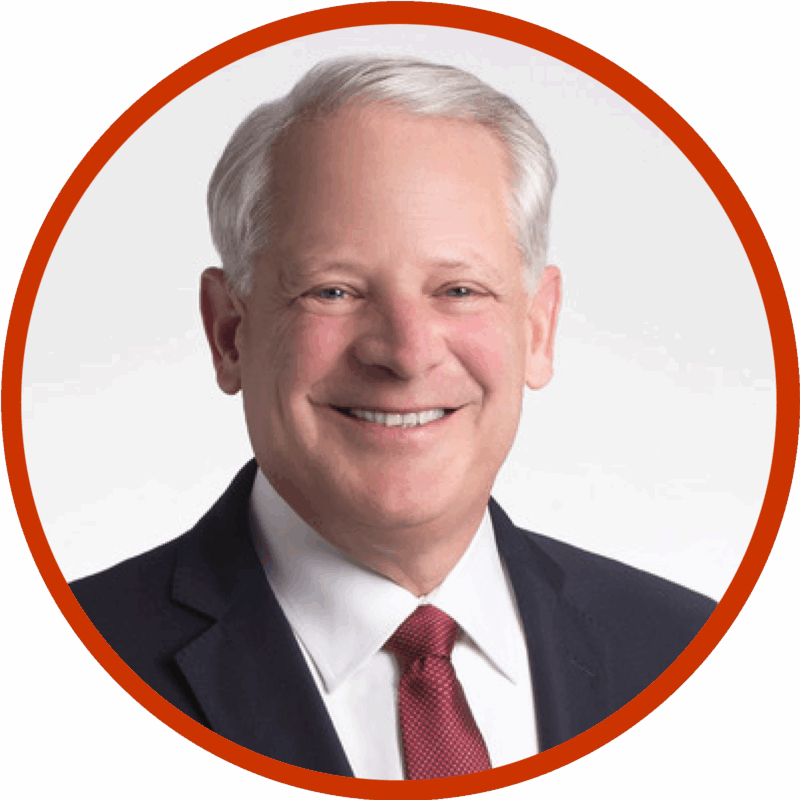
Former Rep. Steve Israel (D-NY)
Former chairman of the Democratic Congressional Campaign Committee
“Oct. 7 ignited a monumental shift in American politics, and also revealed deeply troubling levels of hypocrisy. Whether one agrees or disagrees with the strategic and tactical military decisions Israel has made in Gaza, it galvanized, organized and energized opposition on college campuses, streets and even in Congress. At the same time, it exposed in too many activists a double standard that tolerated silence when Jews were massacred on Oct. 7, but fury when they defended the right to safety in the aftermath. The question is whether the shift is permanent or transitory.”

Brian Romick
President and CEO of Democratic Majority for Israel
“The horrors of Oct. 7 and the subsequent surge in antisemitism have been a wake-up call for so many American Jews and allied pro-Israel Americans. We immediately recognized the critical need to deepen pro-Israel political engagement and advocacy work to ensure Israel’s security, strengthen the U.S.-Israel relationship and combat antisemitism. There is no question that this is a serious moment in the U.S.-Israel relationship. Yet the fundamentals of our party’s support for Israel are strong because they are grounded in shared democratic values, mutual security interests and they have endured for more than 75 years.”
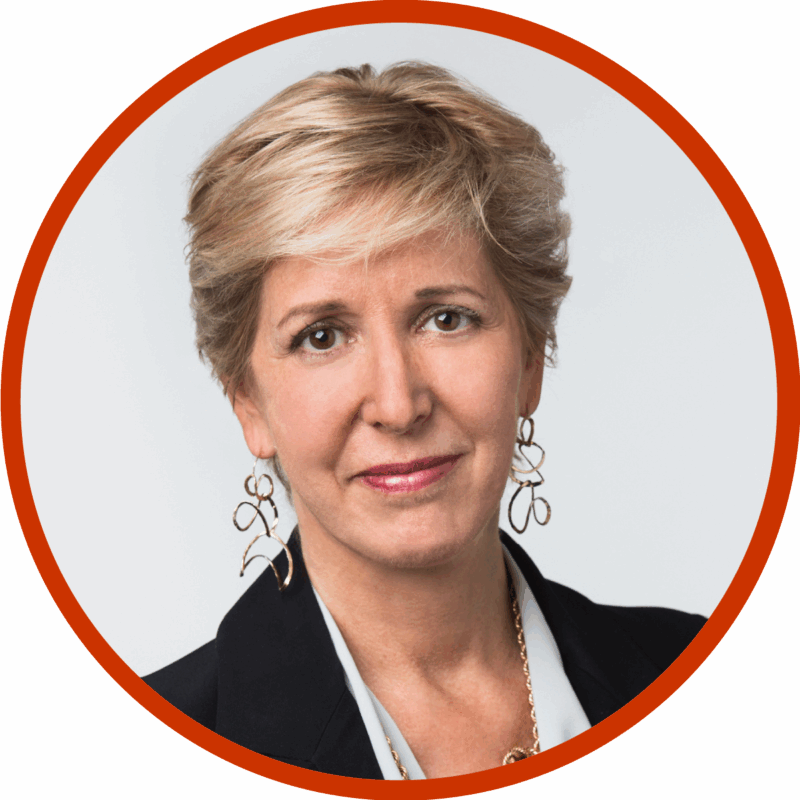
Danielle Pletka
Distinguished senior fellow in foreign and defense policy studies at the American Enterprise Institute
“The challenge we face in 2025 is the explosion of intersectionality in politics and antisemitism. As extremists have risen, mostly on the left, but with growing pockets on the right as well, antisemitism is no longer the purview of university Middle East departments, but a core element of critical race theory, Marxism, anti-capitalism, pro-trans extremism and pro-choice illiberalism on the left, as well as for the rabid populist, anti-immigrant, anti-elite, anti-government pitchfork wielders of the right. Worse still, the traditional tools historically instrumental in moderating and educating, Congress and the press are experiencing a self-inflicted bankruptcy that makes solutions ever more elusive.”

Shelley Greenspan
Former White House liaison to the Jewish community, 2022–2025
“Oct. 7 marked a profound rupture, not only in Israel’s security, but in the American Jewish consciousness. The boundary between global and domestic antisemitism dissolved almost overnight, leaving our community shaken and exposed. In that moment, many instinctively turned to political leaders and public institutions for moral clarity and protection. But what followed was in many cases a sobering disappointment — too many voices, on both sides of the aisle, equivocated or fell silent when we needed them most. We were reminded that we cannot afford to place our faith solely in others to stand up for us. If each of us finds the courage to speak out and show up, the burden of moral leadership becomes collective – and far more powerful. That, perhaps, is one of the clearest lessons in the wake of Oct. 7.”

John Podhoretz
Editor of Commentary magazine
“The aftermath of Oct. 7 in the United States has proven to be the most depressingly instructive political period of my six-decade lifetime. Here’s what we learned, or what was revealed to us, that we had failed to see coming: Two decades of grassroots organizing among America’s educated youth, paid for with seed money from progressive foundations, NGOs and the Islamist nation of Qatar, had created an entire subculture of activist antisemitic protest that was immediately pulled off the shelf and instantly deployed against Israel and the Jews. And the increasingly secular, increasingly intersectional and increasingly violence-excusing Democratic Party had no antibodies whatsoever to fight off this monstrous disease.”

Susie Stern
Board chair of Jewish Democratic Council of America
“The aftermath of Oct. 7 on our community has been all-consuming and incredibly agonizing. We are torn apart by what Yossi Klein Halevi calls two conflicting certainties. What happened on Oct. 7 was horrific, and Israel has the right to defend itself from Hamas and any other threat. At the same time, as Jews, we cannot look away from the pain and suffering of those in Gaza. Immediately following Oct. 7, we were comforted by President Biden, who offered unprecedented support of Israel and the Jewish people. Two years later, our hearts are shattered knowing hostages are still being held in horrific conditions, and there is a humanitarian crisis in Gaza. We need inspired leadership to bring the hostages home and bring this war to end, and hope the plan presented will succeed.”
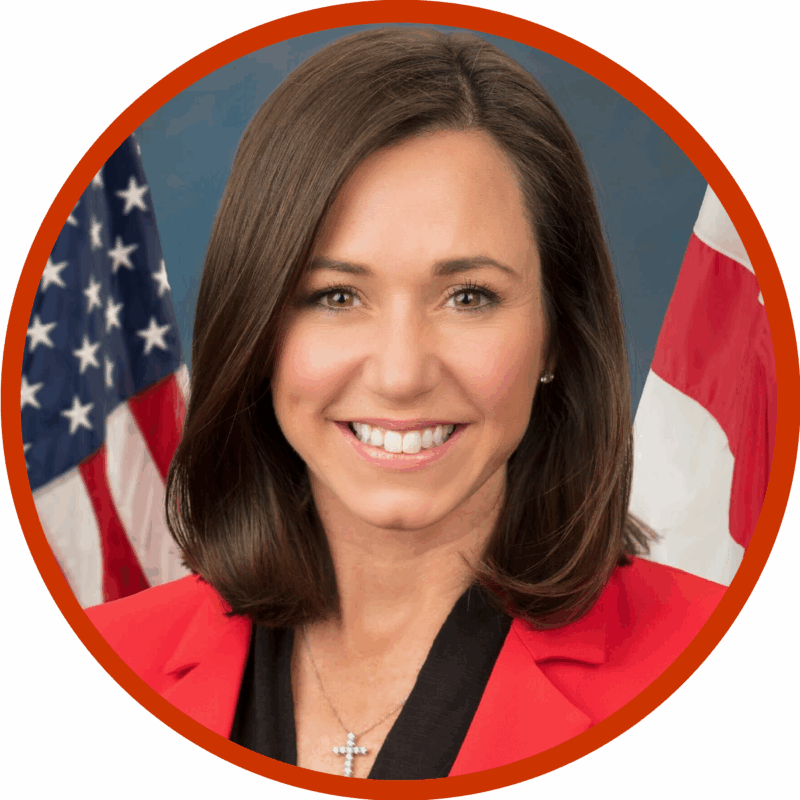
Sen. Katie Britt (R-AL)
Alabama Senator
“Oct. 7 is a day that will live in infamy as one of the greatest attacks on the Jewish people in modern history. The world has changed since that tragic day, particularly the course of American politics. It has never been clearer who stands on the side of Israel’s freedom and safety, and I believe that sentiment rests solidly with conservatives across America.”

Ilan Goldenberg
Jewish outreach director, 2024 Kamala Harris presidential campaign
“Oct. 7 and the war in Gaza have turned the Israeli-Palestinian conflict into a foreign policy issue with much more resonance in the United States. As usual in these moments, the loudest voices have been those on the extremes calling for either a blank check for the Netanyahu government or immediately accusing Israel of wrongdoing as early as Oct. 8. But what I found on the presidential campaign was that most American Jews and most voters don’t subscribe to either of the extremes, and the silent majority is able to hold two truths at the same time: that Israel has a right to exist as a secure, democratic, Jewish state, and that Palestinians also deserve their rights to freedom, security and self-determination.”

Nachama Soloveichik
Former communications director for Nikki Haley’s 2024 presidential campaign
“Oct. 7 exposed the antisemitic rot in the Democratic Party’s mainstream. This new antisemitism will set the stage for the 2028 Democratic presidential primary, and American Jews, largely liberals, will be forced to reckon with their political homelessness.”

Former Sen. Norm Coleman (R-MN)
National chairman of the Republican Jewish Coalition
“Among the most significant changes in American politics directly flowing from the carnage of Oct. 7 and Israel’s efforts to destroy Hamas has been [that] support for Israel is now part of the partisan divide. Simply put, Democrats support the Palestinians over Israel (59-21). Republicans support Israel over Palestinians (75-10). Gallup calls the 50-point partisan divide the largest it’s ever polled. And much of this is attributable to social media — young people get their news from TikTok — and they are flooded with anti-Israel, antisemitic positions. ‘The medium is the message’ — and Startup Nation needs to figure out how to change the social media narrative if they hope to maintain U.S. support for Israel.”

Eric Levine
Republican fundraiser and attorney
“The modern Democratic Party no longer exists. It is officially the antisemitic Democratic Socialists of America Party with a cowed minority traditional Democratic wing. Bernie Sanders, AOC, Zohran Mamdani and their fellow comrades-in-arms now represent the ideological core of the party.”

Kenneth Baer
Democratic strategist, CEO of Crosscut Strategies and former associate director at the White House Office of Management and Budget, 2009–2012
“Betrayal — the sense that the progressive coalition in and around the Democratic Party has abandoned Jewish Americans — is one of the most significant political developments since Oct. 7. This is especially the case among those middle-aged and older who are most likely to be involved in Jewish institutions and most inclined to give to causes and candidates. And as we see antisemitism surge among the far right, this too could become a trend on the other side of the aisle.”
Norm Eisen
Brookings Institution senior fellow and former U.S. ambassador to the Czech Republic
“The horrific Hamas attack of Oct. 7 and its aftermath weigh on the minds of Americans two years later. Many Americans want to see the terrorists held accountable and a return of Israeli hostages — and also support a ceasefire and an end to the humanitarian crisis in Gaza. Without a resolution, Israel faces growing American concerns (mirroring those held by Israelis themselves) about the policies of the current government.”

Andrew Weinstein
Democratic fundraiser and former U.S. public delegate to the United Nations
“The most profound shift since Oct. 7 has been the great unmooring of American Jewish political life, where foundational assumptions about allies and ideological homes have been shattered. Previously reliable political sanctuaries have become contested spaces, and hallowed institutions of memory and learning are being weaponized for partisan gain. The landscape is now defined by a transactional approach to combating hate, where condemnations are often conditioned on partisan advantage. This has created a toxic environment where antisemitism from one’s own political allies is excused or ignored, making a unified and effective response nearly impossible. As a result, we are forced into a painful, but necessary, re-evaluation of how we build coalitions and secure our community in an increasingly fractured world.”
Sen. Kevin Cramer (R-ND)
North Dakota Senator
“I am hard to surprise, but I have been shocked at how deep antisemitism runs in the United States. It is in institutions, as well as the hearts of too many Americans. Some of it is generational, but much of it has been taught in recent decades. We have to commit to reversing this bigotry wherever it exists.”

Rachel Fish
Educator and special advisor, Brandeis University Presidential Initiative to Counter Antisemitism in Higher Education
“First and foremost, we are seeing a serious shift in the American political landscape across the political spectrum and observing in real time how Israel and Jews have become wedge issues within political conservative and liberal camps, and Israel and Jews are used as political footballs. American Jews can no longer take for granted or assume that political leaders desire to see a strong U.S.-Israel relationship. Secondly, we are living in a society in which younger Americans, between the ages of 18-24 years of age (Harvard/Harris Aug. 2025 poll), are more supportive of Hamas than Israel. … This should concern not only Jews but all Americans who care about democracy and liberal values. Thirdly, Israelis, despite the real and present dangers they are experiencing since Oct. 7, are deeply concerned about American Jews due to our increasing exposure to antisemitic sentiment, behaviors, and targeted acts.”

Brian Katulis
Senior fellow at the Middle East Institute
“The biggest impact that Oct. 7 and its aftermath had on U.S. politics is that it accelerated the divisions and fragmentation between and within the two main political parties on national security overall, especially on U.S.-Israel relations. Democrats suffered from major divisions within their ranks, and activists on the far left demonstrated that they would rather risk a second Trump presidency in an effort to spotlight their positions, no matter the actual consequences of a second Trump presidency on America as a country or Palestinians as a people. The GOP allowed a more right-wing extremist wing that opposes traditional views like a two-state solution to the conflict to gain even greater dominance under Trump 2.0. These domestic divisions on U.S. foreign policy are exploited every day by America’s main adversaries and competitors like China, Russia and Iran.”

Steve Sheffey
Pro-Israel Democratic activist and commentator
“Oct. 7 was followed by an outpouring of bipartisan support for Israel, including President Biden’s visit to Israel 11 days later and his unprecedented $14 billion aid package to Israel. Support for Israel has not eroded, but Netanyahu’s conduct of the war, including the starvation and killing of civilians in Gaza, along with his threats to annex the West Bank and his toleration of settler violence, have led many, especially in the Democratic Party, to distinguish between support for Israel and support for Netanyahu’s policies. In addition to advocating for Israel’s safety and security, ‘pro-Israel’ now means opposing Netanyahu and siding with Israelis who prioritize ending the war, releasing all the hostages and, ultimately, a two-state solution to ensure Israel’s future as a Jewish, democratic state.”
Read the Reflections
Two years after the Oct. 7 attacks in Israel, Jewish Insider asked leading voices to reflect on how that day transformed politics, diplomacy, education, advocacy, and Jewish life. Their reflections reveal the deep ripple effects of a single day — changes that continue to shape our world.


 Continue with Google
 Continue with Apple