


































A Brookings Institution study found that of the 104 Democratic Socialists of America-backed candidates running for state legislature, nearly 75% have won their primaries

Spencer Platt/Getty Images
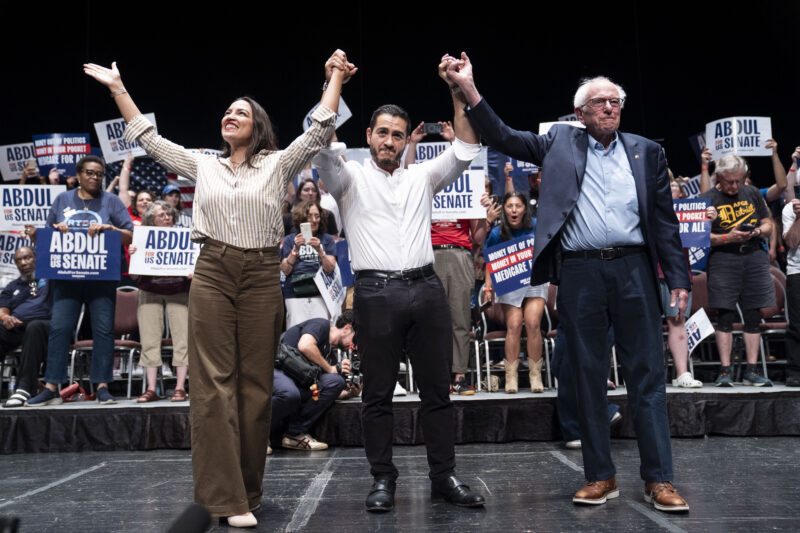
Members of the Democratic Socialists of America May 01, 2019 in New York City.


 Add JewishInsider on Google
The Democratic Socialists of America notched another win this week in Florida’s Democratic Senate primary, with the shock victory of state Rep. Angie Nixon, a DSA member, over a much better-funded, establishment-backed challenger.
The far-left group has also notched at least six new victories in deep-blue House districts where its members are all but guaranteed to be elected, and could lead four major U.S. cities — New York, Los Angeles, Seattle and Washington, D.C. — after the midterm elections.
But some of the group’s more overlooked victories have happened at the state level, where the DSA members could wield significant power if they win. A new study by the Brookings Institution, released Wednesday, found that of the 104 state legislative candidates endorsed by national or local DSA chapters in 2026, 76 have won their primaries or advanced to the general election without a primary.
At the local level, another 64 of the 99 DSA-endorsed candidates are moving on to the general election. By comparison, at the congressional level, only 20 of the 64 total DSA-endorsed candidates have made it to general election races.
In New York City, already a comparative bastion of DSA representation in the state Assembly and Senate, eight DSA endorsees have advanced to the general election, including state Senate candidate Aber Kawas, who downplayed the 9/11 attacks, as well as seven state Assembly candidates. In total, the group is expected to have at least 15 members in Albany next year.
Sara Forman, the former executive director of the New York Solidarity Network, a state-level Jewish advocacy organization, said that after New York City Zohran Mamdani’s victory, the DSA seems to be emboldened to “flex their muscles” nationwide, after previously taking a more “surgical” approach at the state and local level.
Forman, who is now a senior advisor at Optimistic Labs, said she thinks the group learned lessons from the Mamdani race, including targeting highly engaged communities and neighborhoods. She also emphasized that the group has spent two decades building out the infrastructure that fueled the recent victories highlighted in the Brookings data.
“The Jewish community needs to take a hard look at this and really decide whether or not we’re willing to break bread” with a group that only looks at the Jewish community for “how they can use us,” she continued, while adding that Jewish community members will likely need to engage with some DSA elected officials in some capacity..
The national DSA organization endorses only a small subset of the DSA-affiliated candidates running nationwide. But outside of New York, five of its endorsees have advanced to general election races in state assembly seats around the country, with some set to coast to election and others facing competitive general election races: Robert LeVertis Bell in Kentucky, Tammy Carpenter in Oregon, Chris Gilmer-Hill in Michigan, Luke Alfaro-Jungmann in New Mexico and Mathewos Samson in Georgia.
Local DSA groups have racked up many more wins, such as state Rep. Maryam Khan’s ouster of an incumbent in a recent Hartford, Conn.-area state Senate seat.
“It’s interesting to me that the places where you’ve seen a lot of the newer elected officials pop up were a little unexpected, Connecticut being one example,” Forman said.
The state-level wins carry the potential to advance the DSA’s agenda, particularly in places such as New York, where the DSA expects its endorsees to work as a bloc in coordination with DSA leaders.
The Brookings study found that most DSA candidates hailed from already liberal areas — 111 were from California and New York alone — and most from districts that heavily favor Democrats. And DSA candidates contested and were nominated in a small fraction of the 7,386 total legislative seats around the country.
“From one perspective, the story of DSA candidates’ influence is overblown. The scarcity of candidates and their lack of strong success rates overall make this look more like a skirmish than a war,” the study’s authors conclude. “Nonetheless, the high-profile wins, fueled by young, white, educated voters, represent a warning to the rest of the party. They signal that unhappiness with the Democratic establishment and, in the post-Biden world, opposition to elderly officeholders can be leveraged by young, charismatic DSA candidates — and reflect an impatience with party leadership that transcends ideology.”
The rapid rise of the far left has alarmed Jewish leaders, who have seen candidates aligned with the DSA or affiliated with other virulently anti-Israel groups and in some cases, embracing antisemitic views. Those ties haven’t stopped them from winning deep-blue primaries across the country.
“Just judging on Missouri, it’s worse than people are realizing,” said Stacey Newman, a former Democratic state lawmaker who now leads the Missouri Alliance Network.
She emphasized that St. Louis-area Democrats elected a growing number of far-left candidates — albeit most not formally DSA-endorsed — and others hostile to Jewish community interests to the Legislature even while reelecting a close Jewish community ally in Rep. Wesley Bell (D-MO). “They all have the same anti-Israel, anti-Jew platforms,” she said.
Forman said that Jewish advocates and their allies at the state level “need to be prepared for what I’m assuming is going to be the incoming push to try to make Israel a state and local issue,” as Mamdani and other DSA members did in New York State with legislation such as the Not On Our Dime Act.
“We really need to be making sure that our advocates and our allies are prepared to push back on that narrative,” Forman said, “but second of all, to remind people that state and local office has nothing to do with foreign policy.”
She said that the existing Jewish educational infrastructure needs to have the “toolkit to be able to say and push back hard and aggressively that this has no place in the state legislature,” and have its messaging clear and prepared.
Newman, whose group led advocacy for an antisemitism bill in the Missouri Legislature, said she feels that the Jewish community increasingly can’t rely on Democrats in Missouri’s legislature to support their priorities. And, she emphasized, much more policy work happens at the state level than the federal level.
“As a former Jewish state legislator, I’m petrified, because we’re all watching what’s happening around the country,” Newman said. “We’re watching Michigan, Wisconsin, we’re watching the Democratic Party throw caution to the wind.”
In an early sign of Rogers’ bipartisan backing, three prominent Jewish Democratic bundlers are holding fundraiser for Rogers next week
Paul Sancya/AP
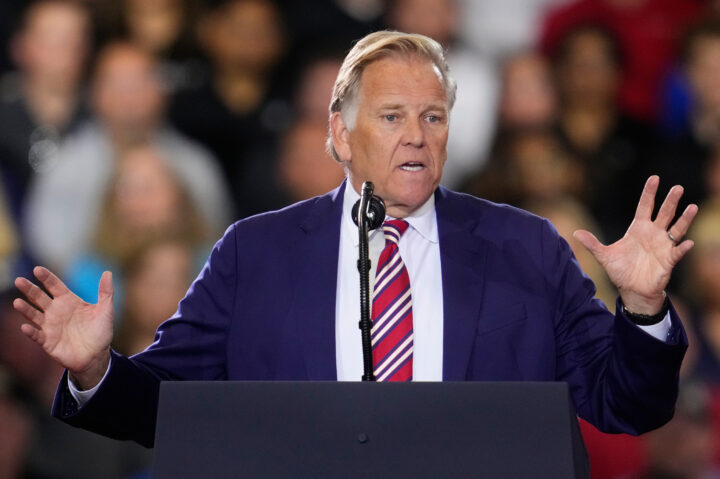
Republican Senate candidate Mike Rogers speaks before President Donald Trump at an event at the General Motors Proving Ground Monday, July 27, 2026, in Milford, Mich.
More than a week after Abdul El-Sayed narrowly clinched the Democratic nomination in Michigan’s bruising Democratic Senate primary, his Republican opponent, former Rep. Mike Rogers (R-MI), is working to fine-tune his campaign’s outreach and messaging to disaffected Jewish voters who could play a decisive role in the closely contested race.
While Republicans in the key battleground state see an opportunity in November to capitalize on Jewish Democrats’ alarm over El-Sayed’s hostile rhetoric toward Israel and lackluster record in confronting the rise of antisemitism, Rogers has in the days following the primary still appeared relatively cautious in directly courting Jewish voters, as he has widened his pitch to Democrats in Michigan whom he reassured in a video message last week have “a home with” his campaign.
He has otherwise called El-Sayed, a far-left former public health official, “beyond antisemitic” and said he “hates Jewish people,” echoing the most extreme concerns among Jewish Democrats turned off by the Democratic nominee’s ties to antisemitic Twitch streamer Hasan Piker and comments equivocating over the foiled terrorist attack against a synagogue outside Detroit in March, among other issues.
Despite such criticism, Jason Cabel Roe, a GOP strategist in Michigan not involved in the race, said that he had not seen Rogers “specifically identifying the Jewish community as a target,” underscoring how the campaign is balancing private engagement with a key constituency alongside a more broadly calibrated public invitation for Democrats to join his coalition.
“A lot of this is going to come organically,” Roe told Jewish Insider, referring to Jewish Democrats in the state who are contemplating voting for Rogers. “This is not new territory for him.”
Bobby Schostak, a former chairman of the Michigan Republican Party and a prominent Jewish campaign surrogate, said he had hosted a donor call on Monday with Rogers and his pollster, Tony Fabrizio, joined by some 150 people. “There were people there who were traditionally not Republican voters,” he told JI, citing some Jewish Democrats and other former backers of Rep. Haley Stevens (D-MI), the moderate, pro-Israel lawmaker who lost to El-Sayed.
“Mike spoke to the importance of having a wide-open campaign with multiple coalitions,” Schostak said of the donor call, while stressing that Jewish Democrats in the Detroit area are particularly energized to help Rogers. “It is consequential both in numbers and in names,” he told JI on Thursday. “They are not being passive,” he explained. “They want to beat El-Sayed.”
In one of the first major signs of those efforts now materializing, three prominent Jewish Democratic bundlers in Michigan are hosting a fundraiser for Rogers next Tuesday, according to an email invite sent to Jewish community members on Thursday.
“This is something that none of us has ever done,” said Hannan Lis, who is leading the fundraiser with Brian Hermelin and Rob Orley. “But we feel this is a departure in the direction of the Democratic Party,” he told JI of El-Sayed’s staunch opposition to Israel and refusal to recognize its right to exist as a Jewish state. “We’re taking a stand here,” he added. “This is beyond politics.”
Even though “there are many issues where we don’t necessarily agree with Mike Rogers,” Lis noted, “we trust him” on key issues. The fundraiser is meant to “show we are willing to back up a person” who holds a mutual commitment to a “strong relationship with Israel” and “is not playing politics” on other matters concerning the Jewish community, he explained.
Hermelin, the president of the Jewish Federation of Detroit, confirmed his involvement in the fundraiser but declined to comment further on the event, which he is co-hosting in his personal capacity.
Rogers, recognized as a national security-focused conservative, has also attended pro-Israel fundraisers outside of the state this week, according to a person familiar with the matter. “There is now a lot of enthusiasm in the pro-Israel community for Mike Rogers,” the person said. “A not-insignificant piece is from Democrats.”
A spokesperson for Rogers’ campaign did not return a request for comment on Thursday.
The Republican Jewish Coalition has indicated it intends to aggressively target the nearly 100,000 Jewish voters in Michigan who make up a potential swing bloc, with a special focus on Jewish Democrats who “now find themselves politically homeless,” Sam Markstein, a spokesperson for the group, told JI in a statement.
Markstein said that he could not yet share specifics about the RJC’s plans to invest in the race but noted an independent expenditure is in the works and “will be significant.”
Eric Levine, a top Republican bundler in New York and an RJC board member who hosted a fundraiser for Rogers in late July, said the former congressman is “making a direct appeal to the Jewish community,” including Democrats, and “has been very successful.”
AIPAC, the pro-Israel advocacy group whose super PAC spent over $30 million to help Stevens, has not officially endorsed Rogers, but sources say it is likely to spend on his behalf before the November election. Representatives for AIPAC and its super PAC did not respond to requests for comment.
In a tacit recognition of the Jewish vote’s potential significance in the general election, El-Sayed has, for his part, recently sought to ease tensions with Jewish Democrats who remain skeptical about his campaign, emphasizing his “commitment to Jewish safety” even he has continued to use incendiary rhetoric on Israel in the wake of the primary.
Michael Horowitz, a Jewish Democratic leader and Detroit businessman, said he was “leaning heavily” toward voting for Rogers but that he had not made up his mind, underscoring the inherent challenges in enticing Jewish Democrats to defect from a party that they have long called home.
Though Horowitz said he will not vote for El-Sayed, he attributed his reservations to delivering a win for the Trump administration as well as a “volatile world” that could shape his assessment in the lead-up to the election. “I would say that the vast majority of people I’ve talked to are voting against El-Sayed — as opposed to voting for Rogers,” he told JI.
He said he is now working to arrange a “more intimate conversation” with Rogers to get a better sense of the candidate, after a surrogate reached out to make a connection. “I don’t think that not voting is an option,” he said, adding, “until I cast my vote it’s not a done deal.”
Shimon Levy, an Israeli American entrepreneur in Detroit who identifies as an independent and backed Stevens in the primary, said he is supporting Rogers’ campaign and had wrapped up lunch with members of his team when he spoke with JI on Thursday.
“I think, at this stage, the Rogers team is just here to listen,” he said. “They’re asking, ‘How do we win your vote?’”
In an interview with CNN, she underscored her pro-Israel bona fides, saying she is a ‘Zionist Democrat in Michigan’
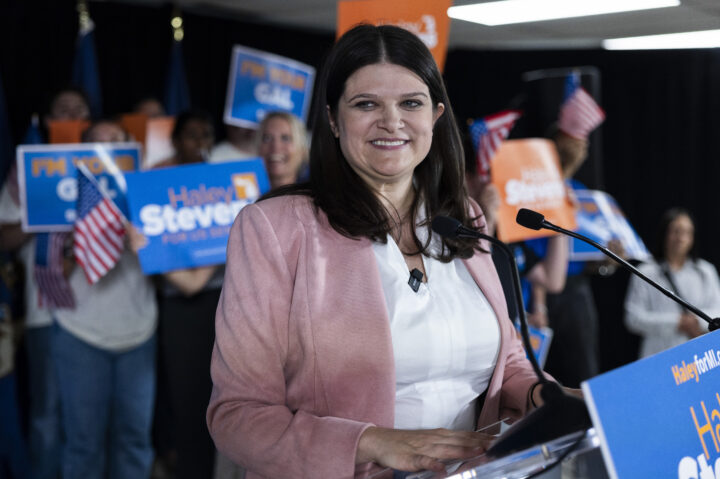
Rep. Haley Stevens (D-MI), candidate for Michigan's open U.S. Senate seat, holds a rally with Sen. Gary Peters (D-MI) on August 2, 2026 in Madison Heights, Michigan (Photo by Finn Gomez/Getty Images)
In her first cable news interview since her Senate primary loss on Wednesday morning, Rep. Haley Stevens (D-MI) told CNN that Jewish voters who are concerned about Democratic Senate nominee Abdul El-Sayed’s hostility towards Israel are “going to have to make a personal and private decision” as to who to support in November.
Stevens also told CNN on Friday that she is a “Zionist Democrat in Michigan.”
Just before he was declared the winner in the Democratic primary for the pivotal Michigan Senate race, El-Sayed doubled down on his criticism of Israel on MS NOW’s “Morning Joe,” calling the Jewish state “bloodthirsty” and saying his critiques go beyond the government of Israeli Prime Minister Benjamin Netanyahu.
El-Sayed, who made his opposition to AIPAC a central part of his campaign message, sought to ease tensions with skeptical Jewish voters after winning the nomination, addressing what he called “an issue that has been focused on in this race.”
“To all of my sisters and brothers of the Jewish faith,” he said in his televised remarks, “I want you to know that my commitment to your safety, my commitment to Jewish safety, is the same commitment that I have to the safety of my own daughters.” He also spoke about his experience going to a seder during the campaign, where in an awkward turn of phrase, said he was able to “break bread” with his Jewish friends.
On Friday, Republican Senate nominee Mike Rogers argued that the “vast majority of people” rejecting El-Sayed — whose bid he framed as a “campaign filled with anger, divisiveness, calls for violence and the views that are out of touch with your values”— have “a home with us.”
Plus, Cruz champions bipartisan buffer zone bill
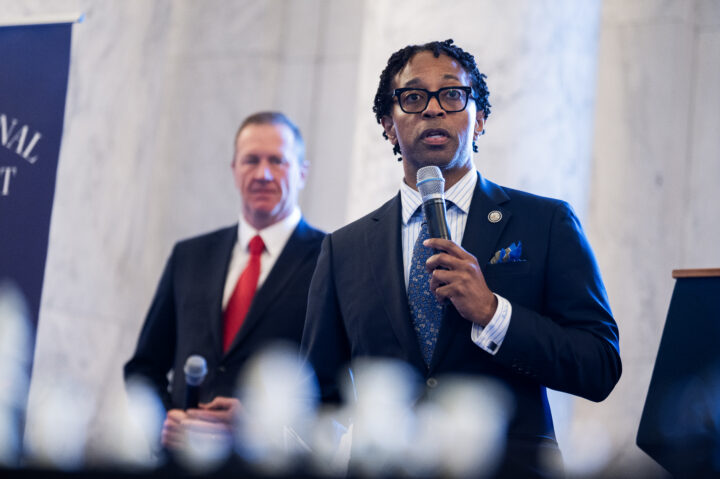
UNITED STATES - JUNE 3: Rep. Wesley Bell, D-Mo., right, and Sen. Eric Schmitt, R-Mo., attend the Congressional Chess Tournament hosted with the St. Louis Chess Club in Russell building on Wednesday, June 3, 2026. (Tom Williams/CQ-Roll Call, Inc via Getty Images)
In today’s Daily Kickoff, we look at the state of play in Michigan’s Democratic Senate primary in the final days of the race, and have the scoop on plans by Sen. Ted Cruz and Reps. Brad Knott and Tom Suozzi to introduce federal buffer zone legislation. We talk to Israeli officials and regional experts about the Trump administration’s newly released Gaza disarmament roadmap, and report from the Israel on Campus Coalition’s National Leadership Summit in Washington. Also in today’s Daily Kickoff: Dean Kremer, Alex Ryvchin and Balaji Srinivasan.
We also have a new on-demand Live Briefing that you can access throughout the day via our new app (on Apple and Android) and on our website.
Today’s Daily Kickoff was curated by JI Executive Editor Melissa Weiss and Israel Editor Tamara Zieve, with an assist from Marc Rod. Have a tip? Email us here.
What We’re Watching
- The Middle East remains on edge after President Donald Trump called off plans to launch “the biggest attack since World War II” targeting Iran, saying on Sunday that he was persuaded by Qatar, the United Arab Emirates and Saudi Arabia to again attempt to reach a diplomatic solution with Tehran. Trump said that talks with Iran are slated to restart today, while the Islamic Republic denied that talks were set to take place.
- Jay Clayton assumes his role today as director of national intelligence, following his confirmation vote last week to replace ODNI interim head Bill Pulte, who briefly served as acting director following Tulsi Gabbard‘s resignation.
- The Israel on Campus Coalition is holding its annual National Leadership Summit in Washington. More below.
What You Should Know
A QUICK WORD WITH JI’S JOSH KRAUSHAAR
Michigan will take center stage this week as it holds its marquee Senate primary and consequential down-ballot races that showcase the divide between the Democratic mainstream and its left-wing, anti-Israel activists.
But Missouri is playing the role of the must-watch undercard, with the rematch between Rep. Wesley Bell (D-MO) and Democratic Socialists of America-aligned former Rep. Cori Bush (D-MO) marking another significant bellwether contest between the center and the left.
Bell, a stalwart supporter of Israel who was championed by AIPAC in both of his congressional campaigns, is facing a changed political environment within the Democratic Party with public opinion turning against the Jewish state.
Bell defeated Bush by five points in 2024, but the race could end up being closer this time around given the ascendance of socialist candidates in urban, deep-blue districts like Missouri’s First District.
Bush, however, has myriad other vulnerabilities beyond her far-left policy views, from missed votes during her time in Congress to ethical questions surrounding her handling of campaign funds.
Bell is also being boosted by outside groups, led by the AIPAC-affiliated United Democracy Project super PAC, which has spent over $2.6 million in the race hitting Bush, along with the New Democrat Coalition-affiliated super PAC, which has poured in just over $1 million on Bell’s behalf. Bell has also outspent Bush on the airwaves by about a ten-to-one margin, according to the Cook Political Report.
MICHIGAN MOVES
Republicans betting Jewish voters swing Rogers’ way if El-Sayed wins primary
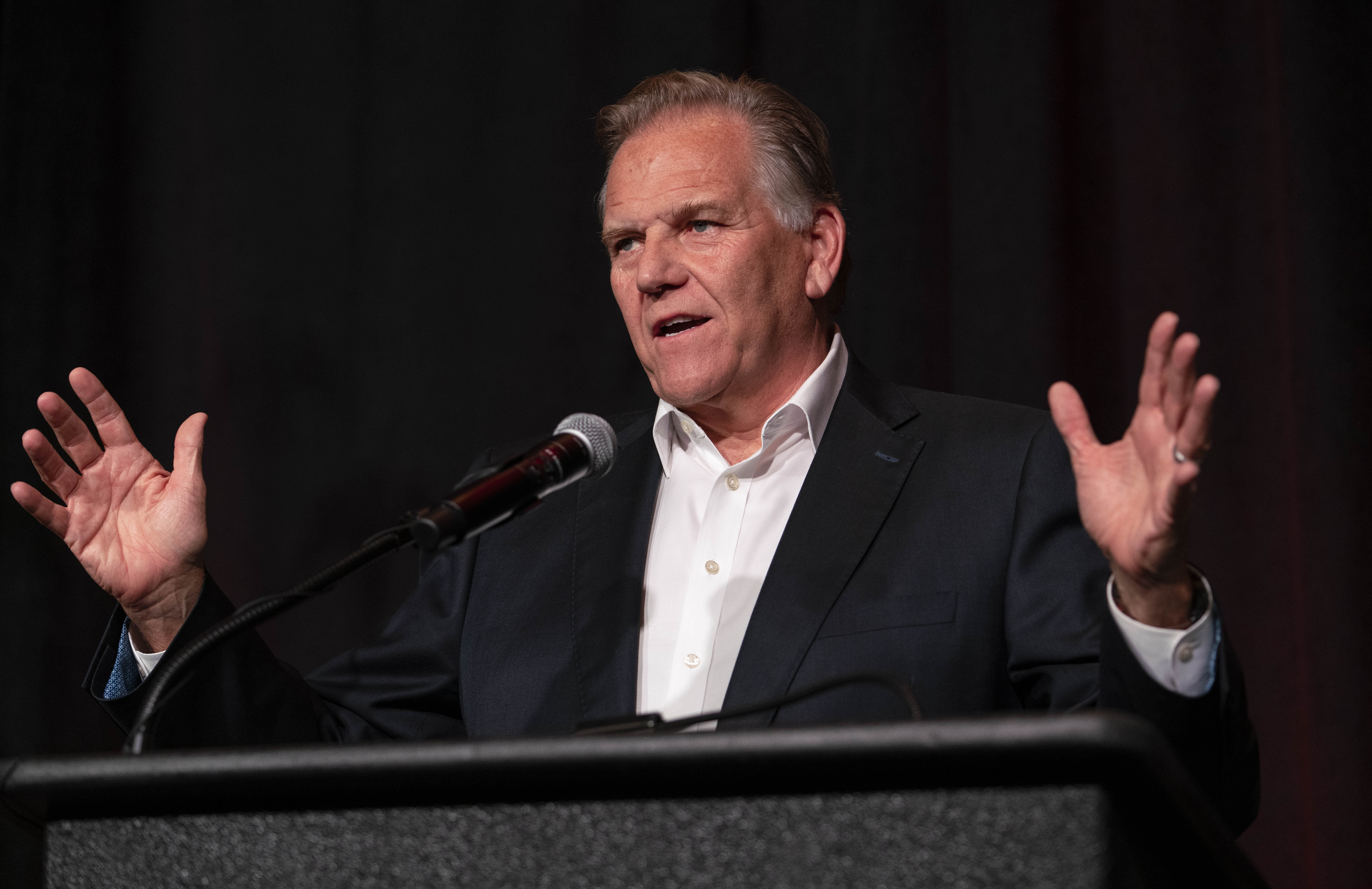
As Abdul El-Sayed pulls ahead in the final days of Michigan’s bitter Democratic Senate primary race, Republicans are eyeing a chance, in the general election, to peel support from disaffected Jewish Democrats anxious about their party’s sharp turn to the left on Israel and its tolerance for actions they view as antisemitic. If Rep. Haley Stevens (D-MI) loses, Republicans are eager to present former Rep. Mike Rogers (R-MI), the GOP’s presumptive nominee, as a safe alternative to El-Sayed for Jewish Democrats in the general election who may not be able to stomach voting along party lines,Jewish Insider’s Matthew Kassel reports.
Shifting tide: “I think that Jewish voters and many Democrats in general feel” the party “has moved away from them,” Bobby Schostak, a former chairman of the Michigan Republican Party who sits on the Republican Jewish Coalition’s board, told JI, calling Rogers “unconditionally and unapologetically pro-Israel and part of the fight against antisemitism in America.”
Called out: In a late-night tweet five days before Michigan’s high-stakes Democratic Senate primary, Stevens explicitly accused her opponent, El-Sayed, of trafficking in antisemitism, JI’s Gabby Deutch reports. Despite that, Stevens said, when asked in an MS NOW interview if she could commit to backing El-Sayed if he wins Tuesday’s primary: “You bet … I am on the team, alright. And I am gonna link arms and do whatever’s needed.”
SCOOP
Lawmakers preparing to introduce federal buffer zone legislation
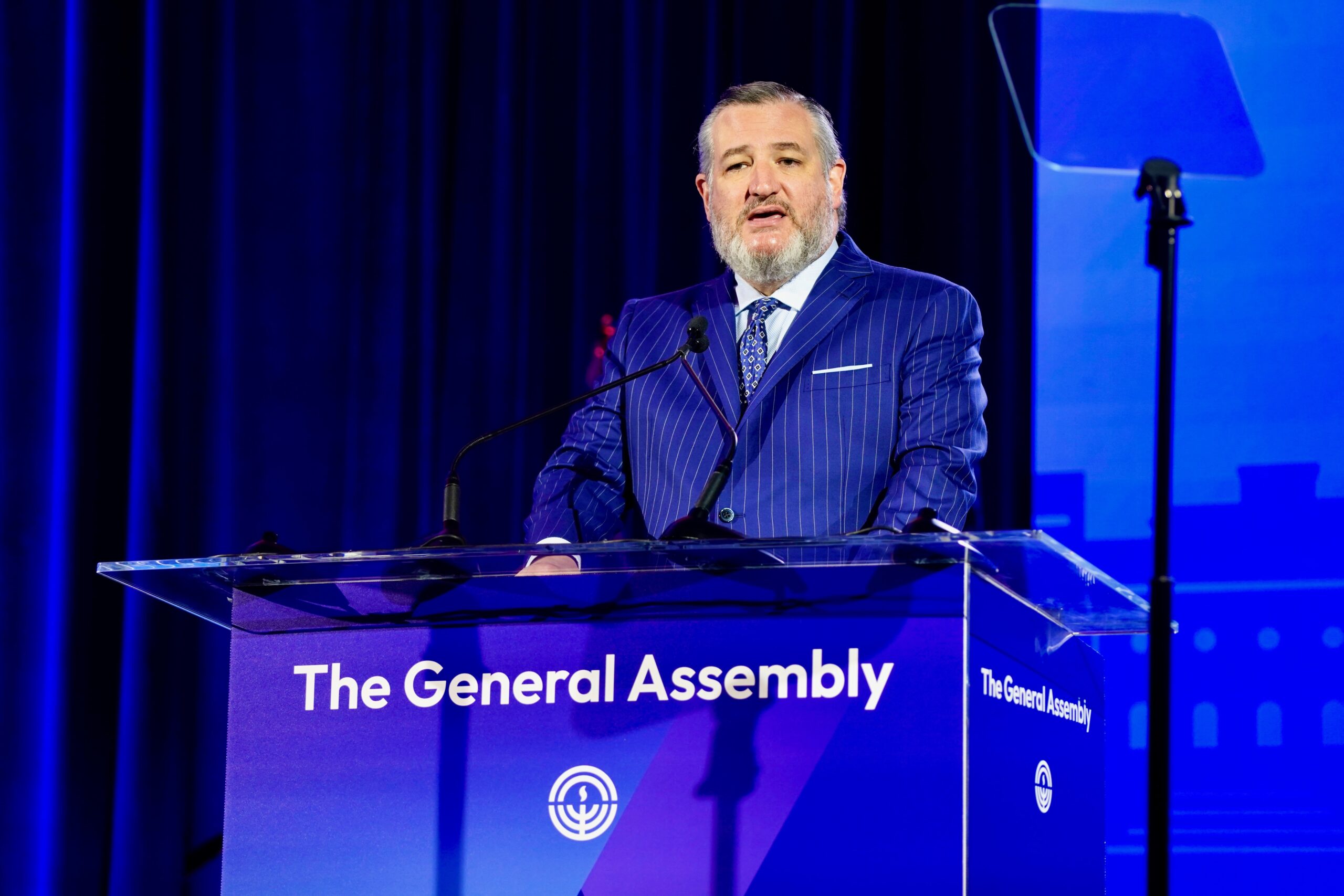
Sen. Ted Cruz (R-TX), Rep. Brad Knott (R-NC) and Rep. Tom Suozzi (D-NY) are preparing to introduce federal legislation that would establish a 100-foot buffer zone around religious institutions, within which conduct that disrupts religious services or interrupts access to the place of worship would be banned during religious services, Jewish Insider’s Emily Jacobs and Marc Rod report.
Negotiations: The Right to Worship Act aims to address demonstrations around synagogues and other houses of worship that have become a growing concern for the Jewish community following anti-Israel and antisemitic protests outside synagogues that have turned violent. Several states have pursued similar legislation. Cruz and Knott have been working on the bill for some time, and two sources familiar with the situation said that “intense negotiations” had been ongoing between Cruz and Suozzi’s teams to reach a bipartisan compromise balancing the desire to protect religious worship and free speech rights. A source said a deal was reached on Sunday evening.
PEACE PROSPECTS
Deep skepticism surrounds viability of Trump’s proposed Gaza peace plan

Israeli officials and regional experts are expressing deep skepticism over the Trump administration’s newly unveiled Gaza disarmament roadmap, warning that public disagreements between Israel and Hamas over the timing of weapon surrenders and troop withdrawals threaten to unravel the agreement before it even begins, Jewish Insider’s Matthew Shea reports.
Israeli concern: Doron Spielman, a spokesman for the Israeli Prime Minister’s Office, told JI that Jerusalem conveyed to Washington that the plan “does not reflect Israel’s concerns.” Spielman said that Israeli intelligence has shown that Hamas “has been regrouping, digging additional tunnels, rearming and resupplying and have plans to attack Israel again.” For that reason, he said it is difficult for Israeli leaders to justify any decision to withdraw prior to Hamas’ complete disarmament.
BOILING POINT
Suspected arson at Montreal kosher restaurant is latest alarm amid rising antisemitism in Canada

A popular Montreal kosher restaurant was destroyed in what police are investigating as a possible arson attack early Saturday morning, the latest in a worsening pattern of antisemitic attacks across the city and throughout Jewish communities in Canada, Jewish Insider’s Haley Cohen reports.
Caught on camera: First responders were called to Nöam Restaurant in the Côte-des-Neiges neighborhood around 3:15 a.m. Saturday to find the building engulfed in flames. Despite the efforts of roughly 80 firefighters, the two-story building suffered extensive damage. No injuries were reported, and no arrests had been made as of Sunday afternoon. The Montreal Gazette reported that the blaze was set by a single individual who appeared to be a young man, perhaps in his early 20s, according to video footage of the incident.
On the soccer pitch: Amid chants of “Death to Israel,” Israeli striker Dor Turgeman scored a goal for his New England Revolution team during a Saturday night Major League Soccer match against CF Montréal.
CAMPUS CLIMATE
Not better, just different: Students seek tools to address changed campus environment at ICC summit
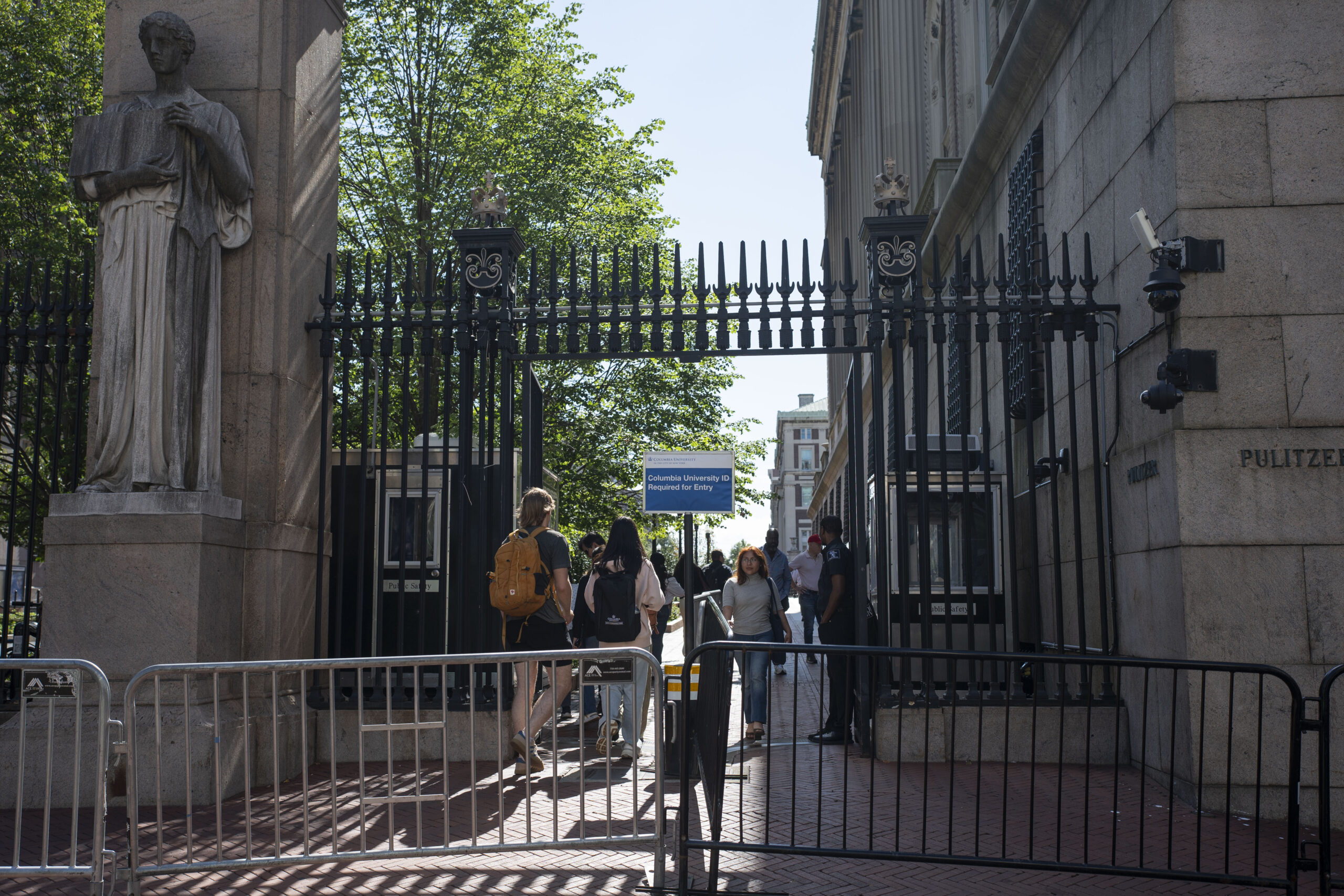
As close to 1,000 pro-Israel students from around the country gather in the nation’s capital for the Israel on Campus Coalition’s annual National Leadership Summit, they’ll do so against a backdrop of seemingly quieter campus antisemitism than in the years immediately following the Oct. 7, 2023, terrorist attacks in Israel. But students are still seeking tools to navigate a campus climate they’ve come to see as permanently changed, Jewish Insider’s Haley Cohen reports.
Campus concerns: “My main concern [on campus today] is every time I sit down with a classmate I have to wonder whether the person next to me was at the [anti-Israel] encampment,” Noah Lederman, an incoming senior at Columbia University majoring in philosophy and Jewish ethics, told JI. In February 2024, Lederman said he was shoved and pinned against a wall by an anti-Israel protester as he donned a shirt with an Israeli flag on it during a pro-Israel demonstration right outside of the Morningside Heights campus. More than two years later, Lederman still feels wary on campus.
ON SECOND THOUGHT
Melat Kiros backtracks from conciliatory tone on Israel, antisemitism after far-left backlash
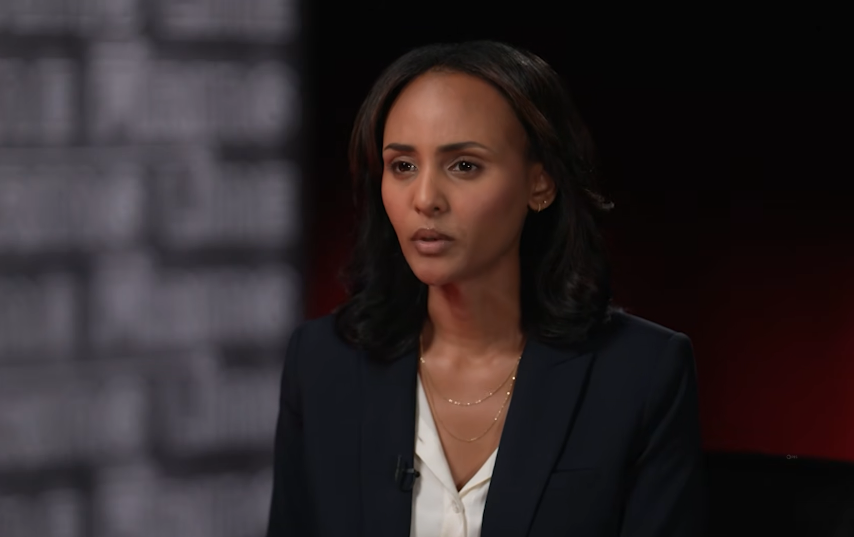
Far-left Colorado congressional candidate Melat Kiros backtracked on Sunday from her conciliatory tone in a PBS interview on the need for progressives to formulate a policy on Israel that does not engage in antisemitism, Jewish Insider’s Danielle Cohen-Kanik reports.
U-turn: Appearing on “Firing Line with Margaret Hoover” on Saturday morning, Kiros said her “greatest concern right now is that the State of Israel is losing support all across the political spectrum” and that progressives are “leaving a vacuum” for far-right commentators like Tucker Carlson and Candace Owens to fill by “pretending to care about Palestinian safety when really it’s just masking their overt hatred for Jewish people.” The 29-year-old doctoral student, who was backed by the Democratic Socialists of America in her campaign, quickly reversed course after the interview aired. Responding on Sunday to criticism on X from Al Jazeera producer Sana Saeed, Kiros said she “fumbled this line, plain and simple.”
Mounting pressure: Sen. Bernie Moreno (R-OH) publicly accused Rep. Max Miller (R-OH), his former son-in-law, of domestic abuse on Sunday and said Miller is unfit for office. Moreno’s comments came in response to a video address by Miller denying wrongdoing amid growing scrutiny of the allegations of domestic violence and abuse by his ex-wife Emily Moreno, the senator’s daughter, JI’s Emily Jacobs and Marc Rod report.
Worthy Reads
History Lesson: In The New York Times, Mehrzad Boroujerdi reflects on his father’s 1978 killing by Iranian revolutionaries, some of whom are now among the Islamic Republic’s top officials. “The United States and Israel have yet to learn that the Iranian regime is not made of papier-mâché, and the Islamic republic’s confrontational ideology is unlikely to dissipate anytime soon. The men in uniform showed no hesitation in killing thousands of their compatriots in January — a national trauma that Iranian society has yet to fully process. They will continue to practice a politics of performance for domestic audiences even as they recognize that the regime’s social contract is both morally bankrupt and fiscally unsustainable.” [NYTimes]
Threat to the West: In The Wall Street Journal, Lorenzo Vidino, the head of The George Washington University’s Program on Extremism, warns of the dangers of political Islam’s impact that have largely been misunderstood by successive U.S. presidential administrations. “Save for the years immediately after Sept. 11, 2001, there has been no concerted effort within U.S. law-enforcement and policy communities to acquire a deep institutional understanding of Islamist networks worldwide. A particular lack of understanding exists on how Islamists are using the American political and educational systems to advance their aims — dynamics that have become apparent in the past few years.” [WSJ]
Rise of the Far Right: Politico’s Kathy Gilsinan does a deep dive into concerns among Republicans over the rise of “groypers” in the party, who are beginning to gain professional footholds in Washington and in the conservative space. “If, as the adage goes, personnel is policy, the stakes are significantly higher than intergenerational trash talk, given the degree to which government staffers, across branches, effectively run the country. Student government types become interns become policy aides become senior advisers, chiefs of staff and even heads of agencies. If the conservative personnel pipeline is changing, Republican government will change with it.” [Politico]
Find more Worthy Reads in our Live Briefing via our new app (on Apple and Android) and website.
Word on the Street
A new survey of K Street leaders from Punchbowl News focused on the war with Iran and memorandum of understanding between Washington and Tehran found that 65% of respondents believed that Israel’s involvement in the war with Iran had a negative impact on its outcome…
The New York Times looks at the cyberattacks targeting water facilities in at least seven states, finding that evidence indicates potential Iranian involvement…
Sens. Marsha Blackburn (R-TN), Tim Sheehy (R-MT) and Dave McCormick (R-PA) introduced a resolution condemning the Iranian government’s human rights abuses…
Senate Appropriations Committee leaders finalized a stopgap funding bill that would, at least temporarily, prevent the Trump administration from putting political appointees in charge of approving federal grants, a plan that had raised concerns on both sides of the aisle…
A district court judge dismissed a complaint filed against The George Washington University by alumni of the school alleging that the school allowed “pervasive and severe” antisemitism on campus, citing the length of the complaint; the judge gave the plaintiffs until the end of August to refile an amended complaint…
The New York Times reports from a national meeting of the Democratic Socialists of America, finding an invigorated activist base that struggled at times to find consensus on issues regarding policy and organizing…
Boy George split from his manager, Paul Kemsley, after the latter pulled the performer from a two-week West End run of “Jesus Christ Superstar” after Boy George posted a reggae song with pro-Israel lyrics…
The Minnesota Twins acquired starting pitcher Dean Kremer, the first Israeli player drafted by a Major League Baseball team and a great-nephew of Haim Saban, from the Baltimore Orioles…
FIFA President Gianni Infantino is facing mounting criticism from the governing bodies of European, North American and Central American football leagues following his proposal to privatize FIFA — which originated last year with secret talks between Infantino and Josh Kushner; Bloomberg reports that Nasser Al-Khelaifi, the chairman of Qatar Sports Investments and president of the Paris Saint-Germain team, has the backing of some European sports officials…
The New York Times reports on the Metropolitan Museum of Art’s decision to feature an exhibition on designer John Galliano and honor him at its annual Met Gala despite a 2011 outburst in which he proclaimed, “I love Hitler”; the Times notes that Galliano participated in a May meeting with former Vogue Editor-in-Chief Anna Wintour and New York City Jewish leaders over the decisions…
The Washington Post follows up on a May story about a trove of WWII-era love letters written by a Jewish soldier Louis “Speedy” Weber to his eventual wife, Frances, after finding the couple’s nephew…
The people’s choice award of the Archibald Prize, Australia’s top portraiture honor, was given to artist Michael Zavros for his portrait of Australian Jewish leader Alex Ryvchin following the December 2025 terror attack at a Hanukkah celebration at Sydney’s Bondi Beach…
The Wall Street Journal spotlights tech entrepreneur Balaji Srinivasan’s effort to create an incubator for new countries in a sparsely inhabited Malaysian city that fell apart after the project faced government scrutiny following a social media post alleging that the incubator included participants with Israeli citizenship in violation of Malaysian laws…
CNN does a deep dive into increasing incitement in Israel against journalists, who accuse Israeli Prime Minister Benjamin Netanyahu and his political allies of stoking animus toward reporters in the country…
Ugandan officials unveiled a statue of Yonatan Netanyahu, the older brother of the Israeli prime minister, at the airport in Entebbe where the elder Netanyahu was killed during the 1976 hostage-rescue operation following the hijacking of a passenger plane by members of the Popular Front for the Liberation of Palestine…
Former Rep. Kay Granger (R-TX), the first Republican woman from Texas elected to serve in the House, died on Sunday at 83…
Find on-demand Live Briefing updates throughout the day via our new app (on Apple and Android) and website.
Pic of the Day

Members of Israel’s lacrosse team celebrated on Sunday after scoring a goal during the bronze medal match between Israel and Haudenosaunee, made up of Native American nations, during the 2026 World Lacrosse Women’s Championship in Tokyo. Israel came in third in the tournament overall after its win over Haudenosaunee.
Birthdays
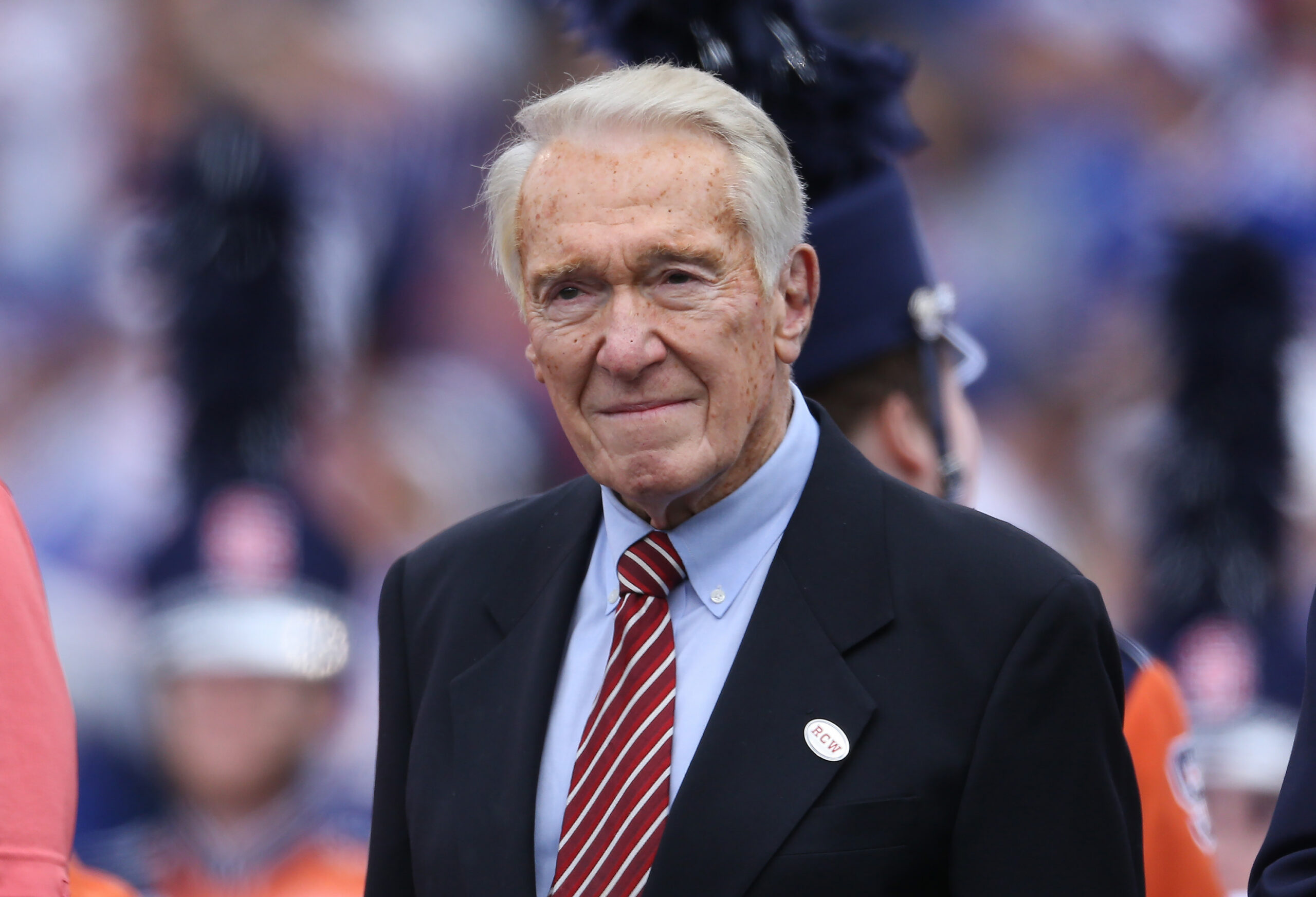
Retired head coach of both the NFL’s KC Chiefs and the Buffalo Bills, the oldest-ever living member of the Pro Football Hall of Fame, Marv Levy turns 101…
English actor, author, playwright and theatre director, known for his roles as the villain in both “James Bond” and “Rambo” films, Steven Berkoff turns 89… EVP emeritus of the UJA-Federation of New York, John S. Ruskay turns 80… Retired regional director in the Cleveland office of the ADL, she serves on the board of trustees of the Cleveland Federation, Anita Gray… Former chairman and CEO of the North America office of commercial real estate brokerage firm Savills, he is a past member of AIPAC’s Real Estate Division Executive Council, Mitchell S. Steir turns 71… Voice actor in dozens of Disney films, video games and television programs, known professionally as Corey Burton, Corey Gregg Weinberg turns 71… Former chair of the board of the Jewish Federation of Los Angeles and board member of JFNA, Orna Amir Wolens… CEO and co-founder of D.C.-based Freedman Consulting, LLC, Thomas Z. Freedman turns 63… Co-founder of Pushkin Industries, a podcast company, Jacob Weisberg… Israeli filmmaker, producer and director, Ilan Moskovitch turns 60… Canadian entrepreneur and former commodities trader, Alexander Shnaider turns 58… Executive director of public affairs at the Jewish Federation of Broward County (Florida), Evan Goldman… Emmy Award-winning sportscaster, she sometimes serves as a fill-in for her husband, Rich Eisen, Suzy Shuster turns 54… Managing editor of Vital City, Josh Greenman… U.S. senator (D-CT), Chris Murphy turns 53… Chief advancement and communications officer at the National September 11 Memorial & Museum, Joshua Cherwin… Senior vice president of public policy at Riot Platforms, Brian Morgenstern… Senior editor of Commentary magazine, Seth A. Mandel turns 44… Managing partner and head of global government affairs at SoftBank Group International, Jeffrey A. Dressler turns 42… Director of strategic partnerships and senior development officer at JDC (the “Joint”), Erica Greenblatt… Caroline “Carrie” Keller-Lynn… Director of member engagement at Christians United For Israel, she was born in Lutsk, Ukraine and raised in Sacramento, California, Liliya Maskovcevs… Executive director of The Natan Fund, Adina Poupko … Executive director of the Reducetarian Foundation (a non-profit organization dedicated to reducing meat consumption), Brian Kateman… Fashion model and entrepreneur, founder of the “Kode with Klossy” nonprofit and founder and CEO of Bedford Media, Karlie Kloss turns 34… U.S. news editor at the Financial Times, Emily Goldberg… First-round pick of MLB’s Atlanta Braves in the 2020 draft, he made his MLB debut in 2023, now in the St. Louis Cardinals organization, Jared Shuster turns 28… Ariana Kaufman… Founder-director of Meeting Your Mission, Leslie Rosen Stern… Leigh Bonner Levine… Co-founder and editor-in-chief of the Washington Reporter, Matthew Foldi…
Missouri is playing the role of the must-watch undercard, marking another significant bellwether contest between the center and the left

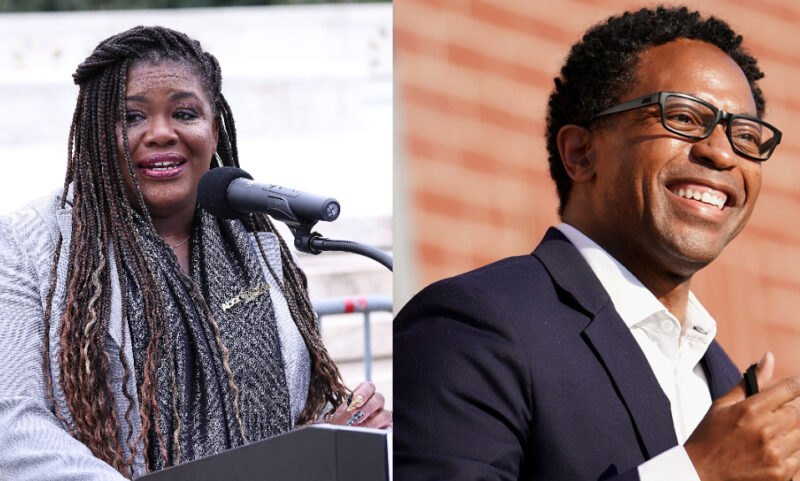
Then-Rep. Cori Bush (D-MO) speaks at the "Just Majority" Supreme Court press conference on June 22, 2023 in Washington, DC. / Then-Louis County Prosecutor, Wesley Bell gives remarks at the Urban League Empowerment Center on June 17, 2020.
Michigan will take center stage this week as it holds its marquee Senate primary and consequential downballot races that showcase the divide between the Democratic mainstream and its left-wing, anti-Israel activists.
But Missouri is playing the role of the must-watch undercard, with the rematch between Rep. Wesley Bell (D-MO) and Democratic Socialists of America-aligned former Rep. Cori Bush (D-MO) marking another significant bellwether contest between the center and the left.
Bell, a stalwart supporter of Israel who was championed by AIPAC in both of his congressional campaigns, is facing a changed political environment within the Democratic Party with public opinion turning against the Jewish state.
Bell defeated Bush by five points in 2024, but the race could end up being closer this time around given the ascendance of socialist candidates in urban, deep-blue districts like Missouri’s First District.
Bush, however, has myriad other vulnerabilities beyond her far-left policy views, from missed votes during her time in Congress to ethical questions surrounding her handling of campaign funds.
Bell is also being boosted by outside groups, led by the AIPAC-affiliated United Democracy Project super PAC, which has spent over $2.6 million in the race hitting Bush, along with the New Democrat Coalition-affiliated super PAC, which has poured in just over $1 million on Bell’s behalf. Bell has also outspent Bush on the airwaves by about a ten-to-one margin, according to the Cook Political Report.
Jewish groups, both locally and nationally, are also organizing get-out-the-vote efforts on Bell’s behalf. The Jewish Democratic Council of America has been rallying its national membership for an in-person canvassing campaign, and Agudath Israel’s Missouri office mobilized its volunteers to help boost nonpartisan Jewish turnout.
The Cook Political Report gives Bell the advantage in the race, noting that Sen. Bernie Sanders (I-VT) (despite endorsing Bush) hasn’t campaigned on her behalf and underscoring the spending disparity which appears to be stunting Bush’s ability to grow support in the St. Louis-area district.
But given the overall momentum in Democratic primaries for anti-Israel candidates, the race is still expected to be worth tracking closely.
The AIPAC-affiliated super PAC accused El-Sayed of ‘helping Trump win,’ in a continuation of its messaging strategy hitting far-left candidates over their opposition to the Biden administration
Evan Cobb for The Washington Post via Getty Images
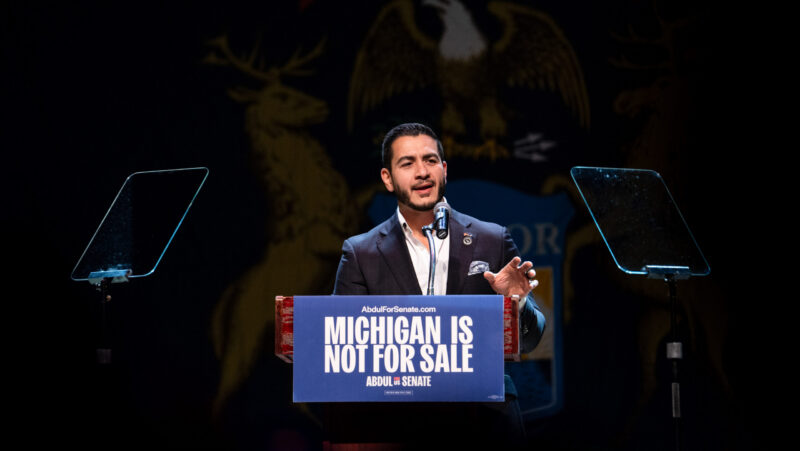
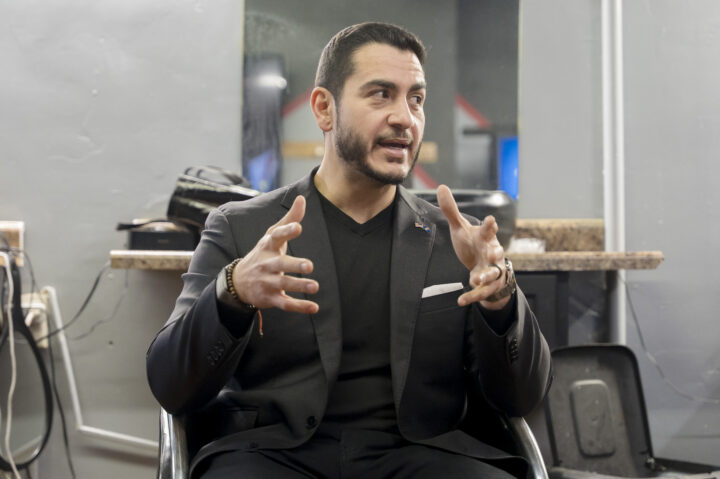
Michigan Senate candidate Abdul El-Sayed speaks with customers and barbers at Blazin Wade Cuts in Grand Rapids, Michigan, on Saturday, Feb. 21, 2026.
United Democracy Project, the AIPAC-affiliated super PAC, is running a new ad targeting Abdul El-Sayed, a far-left Democrat in Michigan’s closely contested Senate primary, over his past support of the “uncommitted” movement and his criticisms of popular Democratic leaders — a messaging strategy the group has used as an effective attack line against anti-Israel opponents in previous election cycles.
The 30-second TV spot, released on Tuesday in advance of the Aug. 4 contest, cites comments in which El-Sayed had criticized Barack and Michelle Obama while accusing El-Sayed of “helping Trump win” the election in 2024 because of his promotion of the “uncommitted” effort that urged Democratic primary voters to leave their ballots blank as a protest against former President Joe Biden’s support for Israel amid the war in Gaza.
“With our democracy on the line against Donald Trump in 2024, El-Sayed told Democrats to vote ‘uncommitted,’ even after Gov. Whitmer warned those efforts would help elect Donald Trump,” the narrator says, referring to Michigan Gov. Gretchen Whitmer, who last week endorsed El-Sayed’s rival, Rep. Haley Stevens (D-MI), a pro-Israel Democrat backed by AIPAC.
“Disrespecting women. Attacking the Obamas. Helping Trump win. That’s the real Abdul El-Sayed,” the ad concludes.
While UDP has invoked similar rhetoric in other ads hitting El-Sayed, the new spot is the first to mention his ties to “uncommitted,” a campaign first launched in Michigan that is emerging as a key point of tension for the insurgent candidate — particularly with Black leaders who believe the movement helped contribute to former Vice President Kamala Harris’ defeat in the battleground state.
An image of Harris is shown in UDP’s new TV ad, but the former vice president is not named directly by the narrator.
UDP is also running two new digital ads — aimed at younger voters ages 18-25 who have been drawn to El-Sayed’s anti-establishment bid — that accuse him of making sexist remarks toward women and saying he was “one of the reasons Trump won,” again referring to his “uncommitted” activism.
Earlier this month, Stevens likewise highlighted El-Sayed’s alignment with “uncommitted,” while alleging he called Harris’ campaign “nauseating.”
El-Sayed, for his part, has sought to downplay his association with the movement, claiming in a recent campaign ad that he was “the first Muslim American leader to endorse Kamala Harris for president,” even as fact-checkers have deemed that statement inaccurate.
In a statement to Jewish Insider on Tuesday, Patrick Dorton, a UDP spokesperson, called El-Sayed “a bad Democrat” who “has repeatedly advocated positions that lose elections for Democrats.”
“That’s why Republicans are desperate to have him be the nominee,” Dorton said. “They know they can beat him.”
A new poll commissioned by the Michigan Education Association, which has not made an endorsement in the primary, found Stevens leading former Rep. Mike Rogers (R-MI), the Republican nominee, by two points in a hypothetical general election matchup, making the race a toss-up. El-Sayed, by contrast, was trailing Rogers by seven points in the open-seat race to succeed retiring Sen. Gary Peters (D-MI), which Democrats see as key to control of the Senate, according to the poll.
El-Sayed, an outspoken critic of Israel, has made AIPAC’s investment in the race a centerpiece of his messaging, as the group has grown increasingly toxic among Democrats. UDP’s spending to help Stevens has so far exceeded $30 million.
The pro-Israel group is also targeting former Rep. Cori Bush (D-MO), who is seeking a rematch in next Tuesday’s House primary in St. Louis against Rep. Wesley Bell (D-MO) — after he unseated her last cycle with a significant financial boost from UDP.
In recent weeks, UDP has run ads attacking Bush for past comments criticizing Biden and Harris, echoing the messaging it deployed two years ago to help oust the former Squad member who was among the most strident critics of Israel in the House.
A new TV ad released by UDP on Tuesday further dinged Bush as an absentee lawmaker who passed “zero bills” in Congress and called her opposition to the bipartisan infrastructure package in 2021 a vote “against Democrats.”
“Cori Bush has her own agenda, and it hurts St. Louis,” the ad claims.
The Michigan Senate candidate also intimated it’s not possible to be a Zionist and a progressive
Monica Morgan/Getty Images
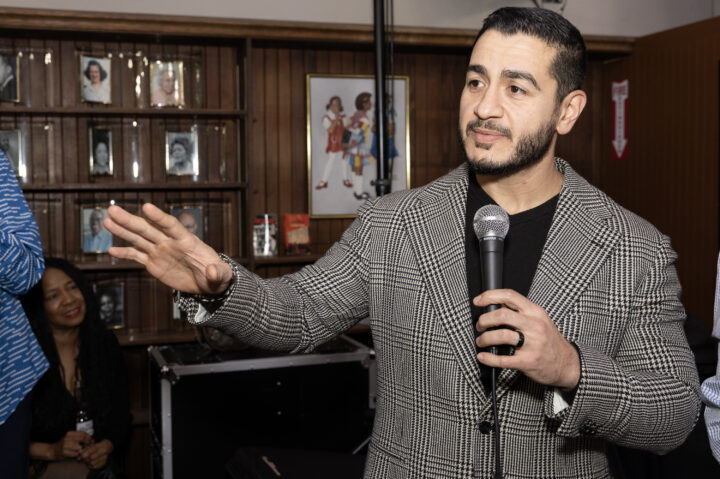
Abdul El-Sayed at the Bridge Center on Dec. 16, 2025, in Detroit, Michigan.
As the heated Democratic Senate primary in Michigan enters its final stretch, far-left candidate Abdul El-Sayed told CNN this week that he does not believe that a politician’s support for Israel could be about anything other than money.
“Not if you’re a Democrat and you believe in human rights,” El-Sayed told CNN when asked about such a distinction.
Asked whether it was possible to be a Zionist and be a progressive, El-Sayed said, “Every definition of a Jewish state ends up in some articulation of illiberal values, every single one.”
El-Sayed is facing off against Rep. Haley Stevens (D-MI) in the Aug. 4 primary, following state Sen. Mallory McMorrow’s departure from the race on Sunday.
Stevens, a moderate lawmaker who has been supported by AIPAC and pro-Israel donors throughout her career, has drawn a contrast between herself and El-Sayed on the issue.
“There is a difference between me and Abdul,” she said in an MS NOW interview on Monday. “I believe in a two-state solution. I want to see the people of Palestine and in Gaza live peacefully, side by side, with the people of Israel. He cannot qualify Israel’s right to exist.”
Collins led Dooley 41-30 in the May 19 Republican primary, with Rep. Buddy Carter (R-GA) coming in at 25%

Miguel Martinez/Atlanta Journal-Constitution via AP
U.S. Rep. Mike Collins, R-Jackson, second left, speaks at the Atlanta Press Club Loudermilk-Young primary election debate for the U.S. Senate at Georgia Public Broadcasting, Sunday, April 26, 2026, in Midtown Atlanta.
Rep. Mike Collins (R-GA), who has repeatedly faced controversy during his time in the House, appears favored to win the Republican Senate primary runoff in Georgia against Derek Dooley, a former college football coach backed by popular moderate GOP Gov. Brian Kemp.
Collins led Dooley 41-30 in the May 19 Republican primary, with Rep. Buddy Carter (R-GA) coming in at 25%. The runoff will take place on Tuesday, with the winner to face Sen. Jon Ossoff (D-GA) in November.
Polling shows Collins maintaining a sizable lead. Two late May post-primary polls, by JMC Enterprises and CivicLens Research, showed Collins ahead. Collins led by 16 percentage points in a JMC poll, 55-39, with 7% undecided, and by 10 points in a CivicLens poll, 50-40, with 10% undecided.
President Donald Trump endorsed Collins — generally seen as the more MAGA-aligned candidate — late on Saturday, while Kemp — who national Republicans initially sought to recruit for the race — has been aggressively campaigning around the Peach State in support of Dooley.
Trump described Collins as a “a true Friend, Fighter, and WARRIOR, who has been with us from the very beginning,” while dismissing Dooley as an unknown figure who lived outside of the state “for most of his life,” didn’t vote in 2020 or 2016 and said that Trump lost Georgia in the 2020 election, which Trump continues to deny.
Charles Bullock, a professor of political science at the University of Georgia, said that the state’s election history has shown that candidates who finish with such a commanding lead in the primary generally win the runoff, and that the little publicly available polling has largely reflected that Collins is maintaining his 10-point lead.
Dooley’s major asset, Bullock continued, remains the support he has received from Kemp. But Collins entered the race with name recognition in the Atlanta area, particularly from his work leading the Laken Riley Act, multiple previous runs for Congress and his father’s own service as a member of Congress.
Dooley, by contrast, entered the race as a largely unknown candidate. Collins’ advantages carried him despite the fact that he spent the least money of any of the GOP candidates in the race.
Bullock said that Dooely’s best chance of victory on Tuesday will be if there is strong turnout in the Atlanta area, rather than the more rural areas that have been Collins’ bases of support.
Collins and his campaign have repeatedly faced controversies relating to antisemitism and affiliations with extremist figures.
A recent report by Slate showed that Collins’ current congressional chief of staff, Kip Talley, was involved in a group chat that also included prominent white nationalists and Holocaust deniers, in which Talley pledged that he would “try and use the levers of the legislative branch” to defend and attempt to free from prison the far-right activist and Holocaust denier Charles Johnson.
Talley also said in the group chat that he contacted federal officials in an effort to “to get [Johnson] out” of prison.
In a statement to Slate, Talley denied acting at Collins’ direction or using official resources on behalf of Johnson, whom Talley described as “an acquaintance I have known for years.”
Collins himself faced criticism for endorsing an X post by an antisemitic, racist account attacking a reporter for being Jewish in 2024. Collins continued to deny that the original post for which he offered support was antisemitic and refused to apologize.
He also voted against the Antisemitism Awareness Act, though he has otherwise maintained a generally strong record on measures related to antisemitism and Israel policy in the House.
“Mike Collins has condemned the hate speech seen on college campuses and around the globe, and has been an ardent supporter of Israel in Congress. While [Georgia Sen.] Jon Ossoff capitulated to woke activists and voted to cut aid to Israel, Mike Collins has stood strong and protected its right to exist,” a Collins campaign spokesperson told JI last year, when asked about his online history and vote on the antisemitism bill.
Talley isn’t the only Collins aide who has caused controversy.
William Paul, a former Collins staffer and son of Sen. Rand Paul (R-KY), recently accosted Rep. Mike Lawler (R-NY) at a bar in Washington with an antisemitic rant, though Paul was no longer working in Collins’ office at the time of the incident.
In the final weeks of the runoff, a Collins campaign account on X made a crude post mocking a pro-Dooley GOP strategist over accusations of sexual assault made by the strategist’s wife against former news anchor Matt Lauer. Collins apologized and fired his former chief of staff, Brandon Phillips, who has long been dogged by scandal and is under House Ethics Committee investigation.
Dooley and his allies argued that the incident highlighted concerns about Collins’ electability against Ossoff.
Dooley has enjoyed support from conservative members of Georgia’s Jewish community since he entered the race. Emanuel Fialkow, a prominent member of the community, hosted a meet-and-greet with prominent Jewish leaders ahead of his campaign launch. He described Dooley as “very receptive” to their feedback and as a “staunch supporter of the Jewish people, and all religions, and of Israel” in an interview with Jewish Insider last week.
“Derek Dooley is our best chance to get rid of Ossoff, and I think that Derek Dooley will be true and unwavering in his support for Georgia, Israel and religious freedom, period, including Jewish people,” Fialkow said.
Fialkow did not comment on Collins beyond saying that Phillips’ activity was “awful and [Collins] should have fired him sooner.”
Though he predicted that Collins would win the primary, the University of Georgia’s Bullock said that Dooley would likely be the more electable candidate in November, which he said has been the factor driving Kemp’s support for the former football coach. “If he were to be chosen, Derek would probably be a stronger candidate in November,” Bullock said — though Ossoff would likely be the favorite against either man.
The swing voter population in the state, according to Bullock, consists of white, college-educated voters identifying as Republicans. If a Democrat can increase his share among those voters, he will likely win, and Ossoff is well-positioned to do so in November.
Campaign consultants, Bullock said, are “increasingly acknowledging” that it will be difficult to beat Ossoff, and are looking to direct money toward other Senate battlegrounds.
The Michigan senator endorsed the pro-Israel congresswoman as Craig trails Lt. Gov. Peggy Flanagan
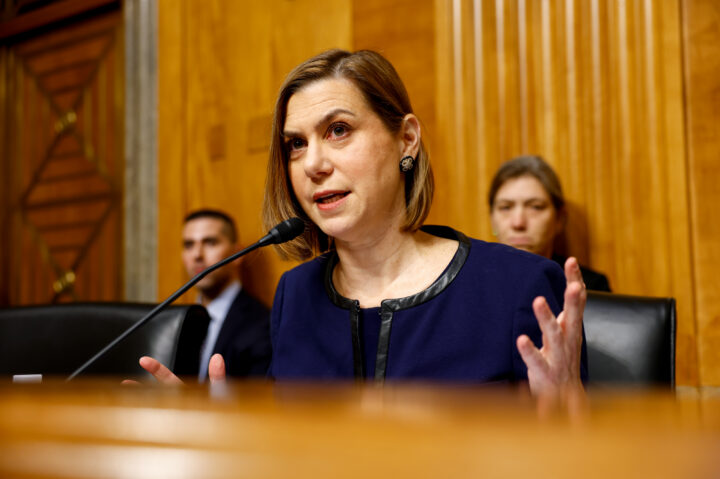
Kent Nishimura/Bloomberg via Getty Images
Senator Elissa Slotkin (D-MI) during a Senate Homeland Security and Governmental Affairs Committee confirmation hearing in Washington, DC, on March 18, 2026.
Sen. Elissa Slotkin (D-MI) announced her endorsement on Thursday of Rep. Angie Craig (D-MN) in Minnesota’s Senate primary, calling the moderate congresswoman “a leader and a fighter” who has “stepped up” while serving in the House.
“The Democratic Party needs a new generation of leadership, and we need more of those leaders to be from the Midwest — Angie Craig is both,” Slotkin, a Jewish Democrat viewed as a potential 2028 presidential contender, said in a statement. “I hope to serve with her in the U.S. Senate.”
Craig, a pro-Israel Democrat, has also earned endorsements from Sens. Tammy Baldwin (D-WI), Andy Kim (D-NJ), Ruben Gallego (D-AZ), Jacky Rosen (D-NV) and Catherine Cortez Masto (D-NV), among other lawmakers.
Slotkin’s support comes as polls have shown Craig trailing her Democratic rival in the Aug. 11 primary, Lt. Gov. Peggy Flanagan, a progressive who has won endorsements from several leading Israel critics such as Sens. Bernie Sanders (I-VT), Elizabeth Warren (D-MA), Chris Murphy (D-CT) and Chris Van Hollen (D-MD). Flanagan is also backed by Sen. Tina Smith (D-MN), who is retiring at the end of the year.
In the most recent poll, conducted for Flanagan’s campaign between May 31 and June 3, the lieutenant governor held a 17-point lead over Craig, with 55% of the vote share. Other surveys have similarly shown Flanagan with a commanding advantage in the race.
Last month, Craig announced that she would not seek support from the state Democratic Party at its convention, effectively ceding that endorsement to Flanagan, who was widely expected to win.
Earlier, Craig’s campaign had called on the state party to formally investigate a series of alleged instances of antisemitic activity among delegates ahead of the convention, which in recent years has been marked by mounting intraparty divisions over Israel.
Plus, Lasher lashes out on Israel ‘obsession’

(CJ Gunther/Getty Images)
Democratic U.S. Senate candidate Graham Platner and his wife Amy Gertner wave to supporters as they arrive to Platner's Primary Election event on June 9, 2026 in Blue Hill, Maine.
Good Wednesday morning.
In today’s Daily Kickoff, we break down the results of yesterday’s Democratic Senate primary in Maine, and look at how senior House Democrats are suggesting they’re unaware of New Jersey congressional candidate Adam Hamawy’s controversial past. We have the exclusive on the introduction of the Jewish American Security Act by Reps. Dan Goldman and Mike Lawler, and report on a new survey from the Israel Democracy Institute that found that Israeli confidence in President Donald Trump’s commitment to Israel’s security hit a new low. Also in today’s Daily Kickoff: Rabbi A.D. Motzen, Gwyneth Paltrow and Somaliland President Abdirahman Irro.
Today’s Daily Kickoff was curated by JI Executive Editor Melissa Weiss and Israel Editor Tamara Zieve, with assists from Danielle Cohen-Kanik and Marc Rod. Have a tip? Email us here.
What We’re Watching
- We’re continuing to watch the situation in the Middle East after Iran fired at U.S. installations in Jordan, Kuwait and Bahrain overnight, following what the U.S. described as “self-defense strikes” targeting Iranian radar and air-defense sites in response to Iran’s downing of a U.S. Apache helicopter with two crew members on board (both were rescued).
- Shortly after the U.S. strikes, President Donald Trump shared a clip from an episode of “The West Wing” in which the fictional President Jed Bartlet debates “the virtue of a proportional response.”
- Somaliland President Abdirahman Mohamed Abdullahi is in the United Arab Emirates today, where he’s slated to meet with senior officials in the Gulf state. He will travel to Israel over the weekend to formally inaugurate Hargeisa’s embassy in Jerusalem.
- Back in Washington, the Senate Energy and Natural Resources Committee is scheduled to mark up the HEAL Act this morning.
- The annual Congressional Baseball Game is taking place this evening at Nationals Park, rain or shine.
- The Israel Allies Foundation is holding a belated Jerusalem Day reception this evening on Capitol Hill.
- In New York, the Conference of Presidents of Major American Jewish Organizations is holding its annual convening on antisemitism today.
- Elsewhere in New York, the Auschwitz Jewish Center Foundation is holding its annual gala tonight, where the group will honor New York City Council Speaker Julie Menin and former Israeli hostage Elkana Bohbot.
- The Democrats running in the NY-07 congressional race — Brooklyn Borough President Antonio Reynoso, City Councilmember Julie Won and New York state Assemblymember Claire Valdez — will square off tonight in a debate hosted by PIX 11.
What You Should Know
A QUICK WORD WITH JI’S JOSH KRAUSHAAR
Maine Democrats rallied behind scandal-plagued oyster farmer and military veteran Graham Platner as their Senate nominee against Sen. Susan Collins (R-ME) in Tuesday’s primary, turning to a left-wing outsider running against the political and institutional establishment as its standard-bearer for the general election.
Platner — whose controversies, including his now-covered Nazi tattoo and abuse allegations, have unnerved many Democrats — will be a political test over whether his brand of progressive populism can win over swing voters in a state critical to the Democrats’ hopes of winning back the Senate.
“In trying so hard to understand me, [the media] failed to understand that this is not about me at all. This is a movement about us, about the far too many, working far too hard and struggling far too much,” Platner said in his victory speech.
Attacking “forever wars,” Platner railed against the Trump administration’s war in Iran, and slammed Collins for “closing hospitals while using our tax dollars to destroy them halfway around the world.” (The line was an apparent attack against Israel’s targeting of Hamas terror infrastructure that was often lodged in medical facilities during the war in Gaza.)
Platner won about 72% of the primary vote despite Gov. Janet Mills remaining on the ballot, a solid enough showing amid all the controversies that should mute any calls for him to drop out of the race. In a statement on Platner’s victory, Senate Minority Leader Chuck Schumer (D-NY) and Democratic Senatorial Campaign Committee Chair Kirsten Gillibrand (D-NY) reiterated their support for the nominee: “In November, Maine voters will elect Graham Platner, and we will win a Senate majority.”
Mills, for her part, did not mention Platner at all in her statement about the election results.
SIDESTEPPING QUESTIONS
Senior House Democrats profess ignorance of Hamawy’s controversial past
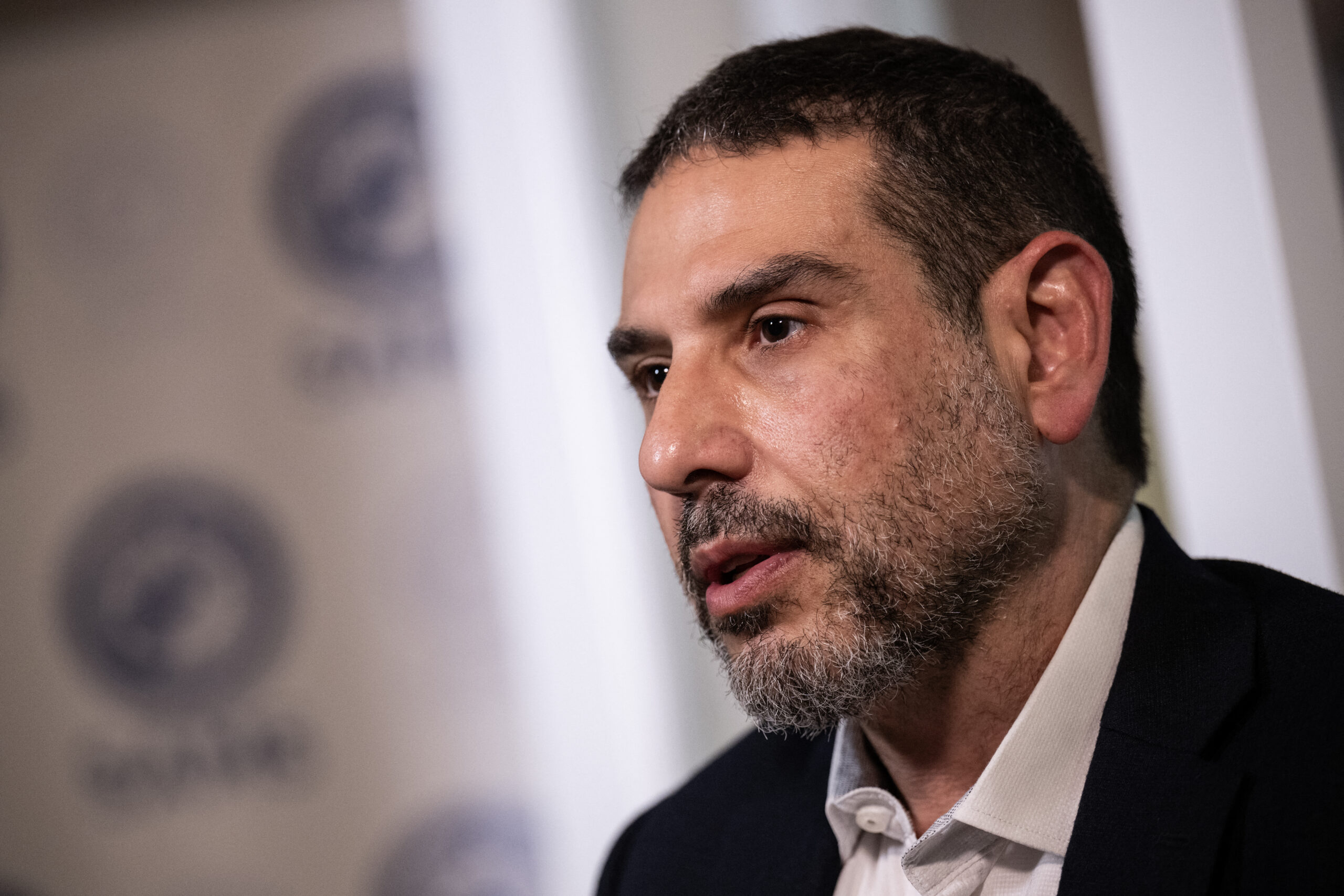
Top House Democrats are mostly avoiding questions about Adam Hamawy, the controversial Democratic nominee in New Jersey’s 12th Congressional District claiming they are unfamiliar with his background, including his association with Omar Abdel-Rahman, the terrorist mastermind known as the Blind Sheikh and his service with a nonprofit in Bosnia shuttered as an al-Qaida front group, Jewish Insider’s Marc Rod reports.
Responses: House Minority Leader Hakeem Jeffries (D-NY) sidestepped multiple questions about Hamawy in an interview on Fox News’ “The Sunday Briefing” this weekend. Reps. Greg Meeks (D-NY) and Jim Himes (D-CT), who are both in line to lead key national security committees if Democrats retake the House, told JI they did not have enough familiarity with Hamawy and his history to comment. But Rep. Greg Landsman (D-OH) joined other moderate Jewish Democrats in raising concerns, lamenting that he wants leaders, “who don’t have Nazi tattoos or close ties with convicted terrorists. It’s really not too much to ask.”
EXCLUSIVE
Goldman, Lawler lead bipartisan group of lawmakers on House version of comprehensive antisemitism bill
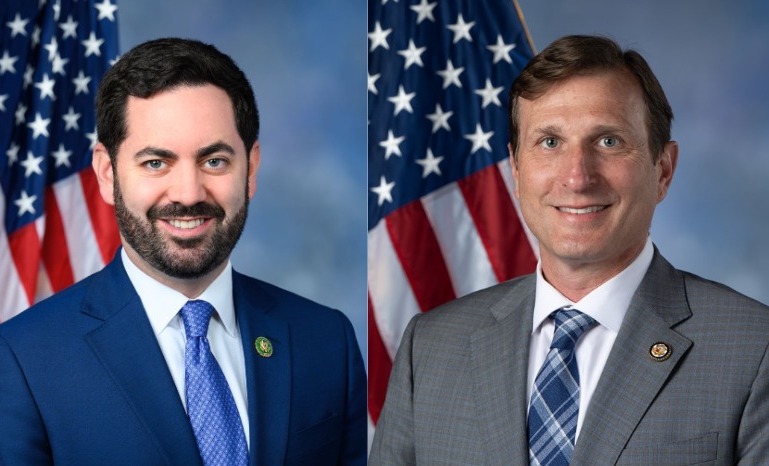
Reps. Dan Goldman (D-NY) and Mike Lawler (R-NY) are leading 28 colleagues in introducing a House version of the Jewish American Security Act, the package of antisemitism-related legislation introduced by Sens. Jacky Rosen (D-NV) and James Lankford (R-OK) last month in the Senate, Jewish Insider’s Marc Rod reports.
Notable quotable: “Words of condemnation are no longer enough,” Goldman said in a statement. “Since the October 7th attacks, there has been a systematic failure in Congress and in our communities to counter the threat posed by surging antisemitism across this country.” Goldman, a co-chair of the House antisemitism task force, said the bill would change that pattern: “Whether on campus, at synagogues, or online — the Jewish American Security Act will provide the tools necessary to help secure our at-risk communities to practice their faith without fear. American Jews cannot be asked to bear this burden alone. As Americans, we must stand shoulder to shoulder with those under siege by hate.”
Funding increase: The House Appropriations Committee approved a $40 million increase in its funding proposal for the Nonprofit Security Grant Program for 2027, boosting its recommendation to $355 million, in a Tuesday night session that stretched into Wednesday morning, JI’s Marc Rod reports.
SCOOP
Stefanik, Gillen introduce bill to reform campus antisemitism adjudication procedures
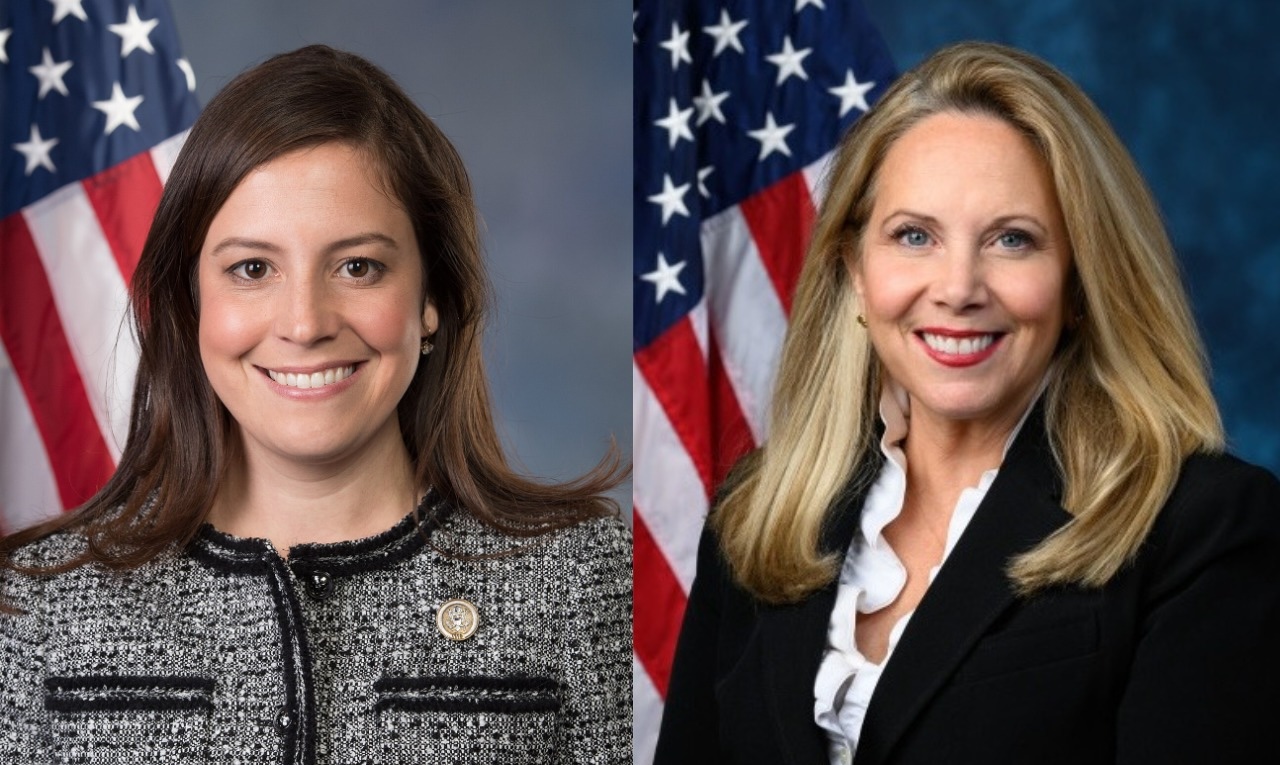
Reps. Elise Stefanik (R-NY) and Laura Gillen (D-NY) this week introduced the Student Protection and University Accountability Act, which aims to compel schools to institute clear policies for addressing antisemitism and other forms of discrimination under Title VI of the Civil Rights Act, or lose their federal funding if they fail to do so, Jewish Insider’s Marc Rod reports.
What it does: The bill requires schools to designate a specified Title VI coordinator and to develop clear procedures, including providing timely notifications to complainants, for investigating student complaints and publicize those procedures, as well as to publicly display guidance from the Department of Justice on Title VI complaints. Schools would be required to certify annually to the Department of Education that they are complying with these provisions, and would be ineligible for federal funding if they fail to comply for two years in a row.
CRISIS OF CONFIDENCE
Israeli confidence in Trump’s commitment to Israel’s security falls to new low

The share of Israelis who believe the country’s security is a primary consideration for President Donald Trump has plummeted to a new low, according to a new poll, revealing a sharp shift in public attitudes as the U.S. and Israel diverge on their strategies and ultimate goals of the war with Iran, Jewish Insider’s Matthew Shea reports.
Survey says: The survey, conducted by the Viterbi Family Center for Public Opinion and Policy Research at the Israel Democracy Institute from May 31 to June 5, found that 44% of Israelis believe Israel’s security is a central consideration for the Trump administration, a decline from the 60% recorded in March at the beginning of the Iran war. The drop was even more pronounced among Jewish Israelis, where confidence fell 23 points over the same period, from 64% to 41%.
MONEY IN MICHIGAN
UDP jumps into Mich. Senate race with $2 million ad buy supporting Stevens
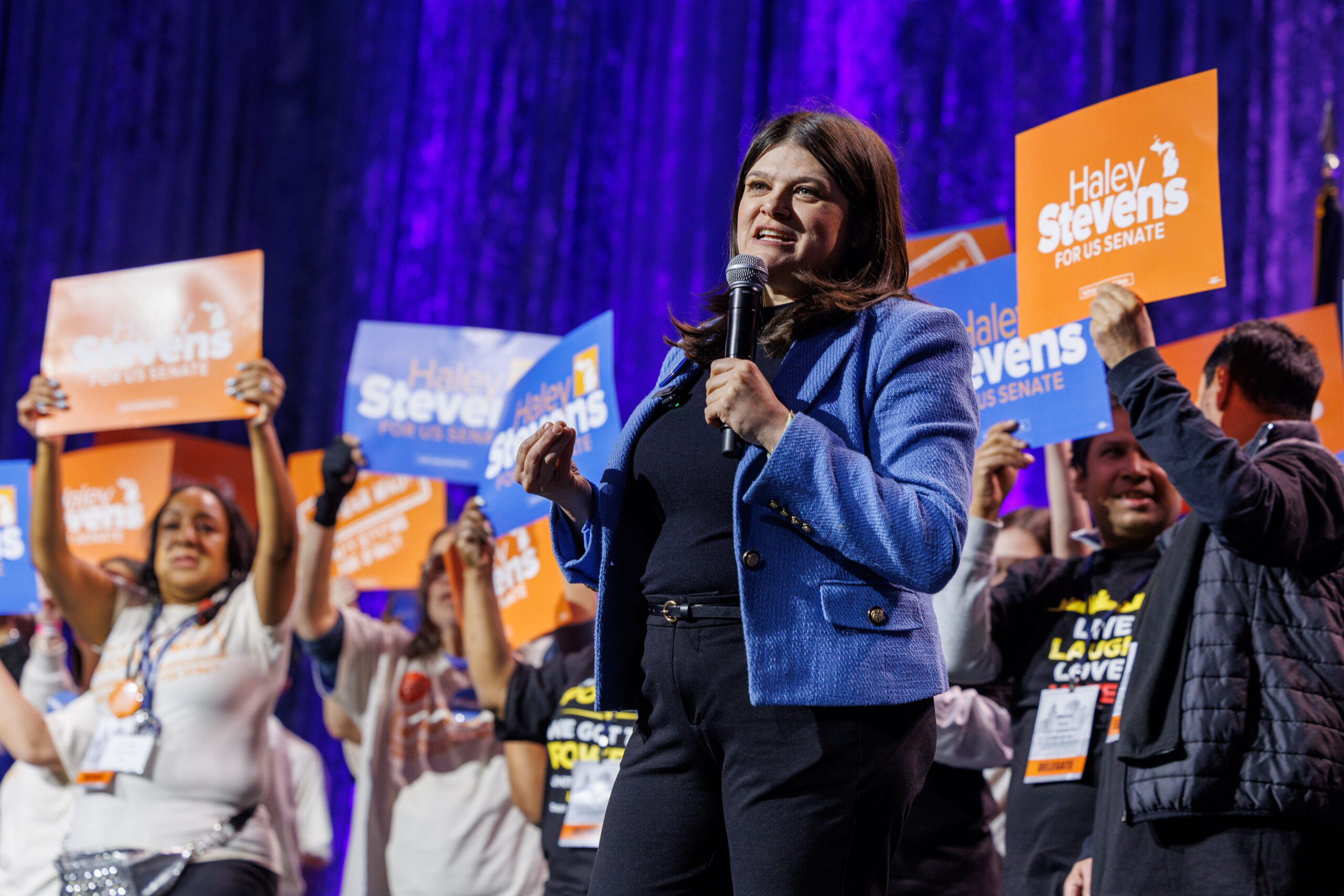
Nearl
LASHING OUT
Micah Lasher says he’s ‘exhausted’ by political ‘obsession’ with Israel
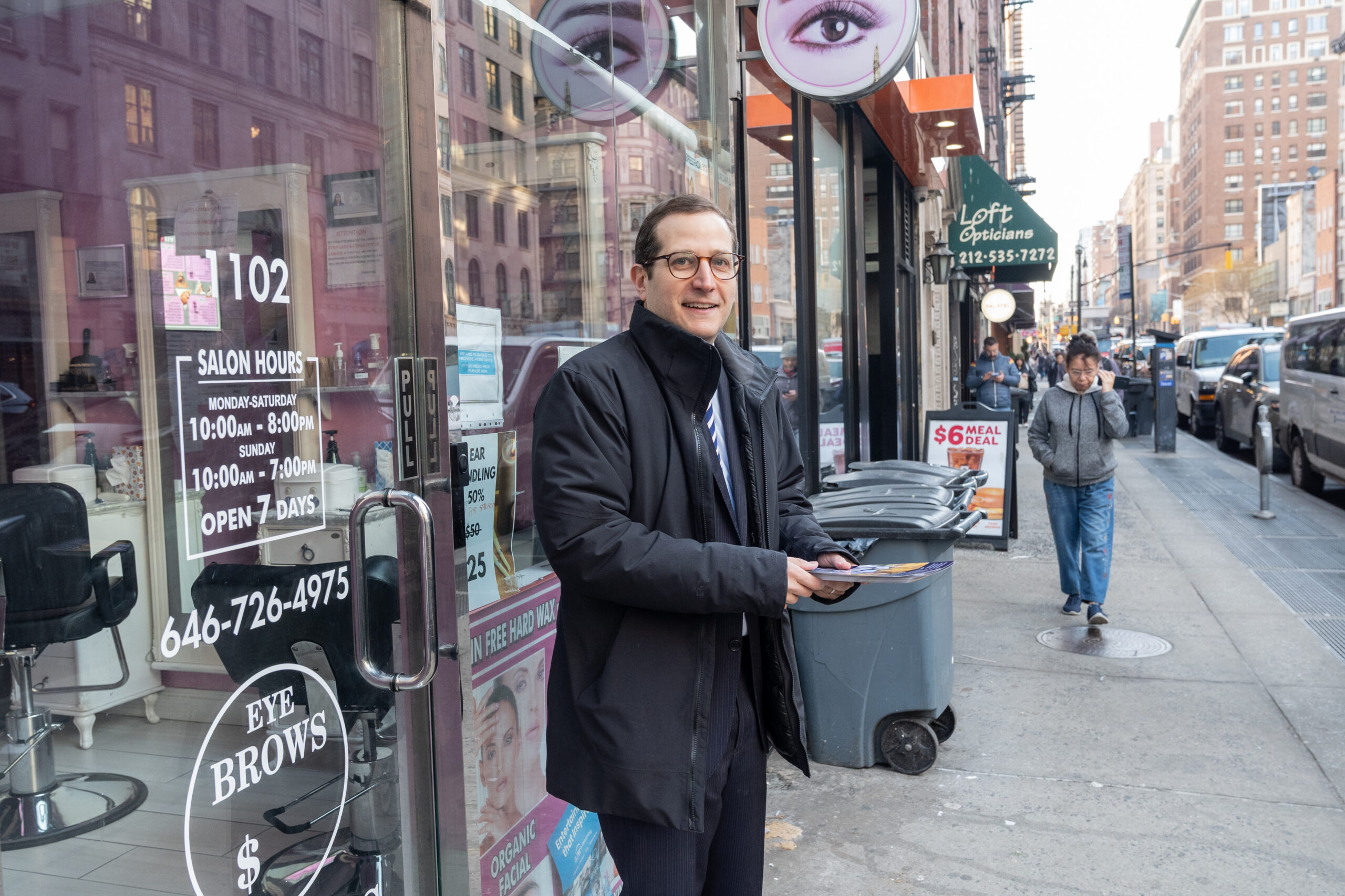
Micah Lasher, a Democratic New York state assemblymember running to fill the seat of retiring Rep. Jerry Nadler (D-NY) in Manhattan, raised concerns on Monday that “the political dialogue” in his primary “is obsessed with Israel,” a key topic of discussion in the heavily Jewish 12th Congressional District, Jewish Insider’s Matthew Kassel reports. Lasher made the remarks while participating in a candidate forum at B’nai Jeshurun, a synagogue on the Upper West Side.
Fed up: During the forum on Monday night, the moderator, New York Times opinion columnist Michelle Goldberg, asked Lasher where he stood regarding continued U.S. aid to Israel — a question that has been repeatedly posed to him and his opponents throughout the race. Lasher has said he backs funding to boost Israel’s Iron Dome missile-defense system and opposes efforts to condition U.S. aid to Israel that single out the Jewish state. Rather than answering Goldberg’s question directly, Lasher sounded increasingly frustrated as he described feeling “exhausted by the obsession on a plot of land the size of New Jersey.”
Worthy Reads
Mae Alsalama: The Associated Press’ Melanie Lidman spotlights Avichay Adraee, who is retiring next week as the IDF’s first Arabic-language spokesperson, having pioneered the position more than two decades ago. “The military’s claim to have found Hamas infrastructure under a luxury hotel in Gaza made little impact, but Adraee said his satirical video of a Hamas leader leaving a Trip Advisor review for the tunnels was widely shared. He has sent birthday messages to singers and holiday greetings to Arab influencers, even exchanging public messages with Lebanese journalists who work for Hezbollah-linked outlets. ‘We want people to be exposed to the really important and serious messages, the information we’re trying to convince them of, but if you want them to remember you, you have to be more creative,’ he said.” [AP]
The Platner Paradigm: The New York Times’ Bret Stephens suggests that Maine Senate candidate Graham Platner’s candidacy could end the “inconsistent standards selectively applied” to fit certain political biases. “If Platner can pass muster among Democratic primary voters, then the differences between him and Donald Trump are mainly of degree, not of kind. You may still agree with Platner’s politics, and if you’re in Maine, you may still think he’s a better choice than Collins. What you can no longer do, at least not with any intellectual integrity, is to use moral litmus tests to try to disqualify political figures from the opposing party. To be fine with Platner, knowing what you know now, should also require burying #MeToo in the graveyard of discarded progressive shibboleths.” [NYTimes]
Bibi’s Blind Spot: The Wall Street Journal’s William Galston observes the steep drop in support for Israel among broad swaths of Americans. “More than a decade ago, Mr. Netanyahu abandoned his country’s longstanding policy of cultivating bipartisan American support and made a hard right turn toward the Republicans. Today, Republicans over 50 are the only demographic group to give him and his country majority support, even as controversy about American policy in the Middle East rises among younger Republicans, along with anti-Jewish attitudes on the MAGA right and the radical left. Here as elsewhere, Israel’s veteran prime minister has been tactically clever but strategically foolish, leading his country into a political cul de sac.” [WSJ]
Police the Platforms: In the Washington Times, Sander Gerber and Shawn Chenoweth call for the implementation of federal reforms to address malign behavior on social media platforms. “Algorithms do not distinguish between civic contributions and coordinated manipulation by U.S. adversaries. They optimize for attention. The result is a feedback loop that brings fringe narratives into the mainstream and, ultimately, sows national division. The risks are not just to our national security. They are also commercial. The issue is not what people are allowed to say; it is whether users and advertisers know who is speaking and how much of the apparent public reaction is real.” [WashingtonTimes]
Word on the Street
President Donald Trump met with former Israeli hostage Rom Braslavski in the Oval Office on Tuesday; Braslavski, who was released from Hamas captivity in Gaza last October, had been unable to join a group of hostages who met with the president late last year, soon after the release of the remaining living hostages…
Senior officials in the Office of the Director of National Intelligence reportedly told employees to expect widespread staff cuts in the coming months as part of Trump’s directive to interim DNI Bill Pulte to further shrink the office, which initially saw layoffs following outgoing DNI Tulsi Gabbard’s confirmation last year…
Sen. Bernie Sanders (I-VT) poured cold water on suggestions that he mount another presidential bid; Sanders, who will be 87 on Election Day 2028, said at a National Press Club event that he “suspect[s] that’s not going to happen”…
The Trump administration‘s plans for a $1.5 trillion defense budget seem increasingly shaky as top Senate Republicans on the Appropriations Committee said Tuesday that they do not believe a third reconciliation bill — expected to fund a portion of the defense budget, among other matters — can pass this year, even as House Republicans say they plan to charge ahead…
Speaking at an Agudath Israel of America event on Tuesday, Assistant Attorney General Harmeet Dhillon said that the Department of Justice will soon file charges in another hate crime case targeting the Jewish community, adding that the DOJ is also looking into cases relating to antisemitic discrimination by local planning departments and commissions in the Northeast…
Progressive activist Randy Villegas, who is running to unseat Rep. David Valadao (R-CA) in California, claimed victory on Tuesday in the jungle primary over Jasmeet Bains, a moderate Democrat who had been favored by pro-Israel leaders as well as the party’s national leadership, JI’s Matthew Kassel reports…
Some Democratic lawmakers are threatening to withhold their dues to the DCCC over its boosting of Bains, which included a $135,000 ad buy…
Politico reports that Sherif Soliman, who was tapped by New York City Mayor Zohran Mamdani earlier this year to head the city’s Office of Management and Budget, may have violated ethics laws when he briefed a group of Democratic Socialists of America members on the city’s finances…
Harvard University will expand its kosher food offerings following a $100 million gift from the Zimmer Family Foundation that will go in part to bringing kosher dining options to the school’s Eliot House; Stuart Zimmer, who made the donation with his wife, Jennifer, said they hoped “to ensure that every Jewish student feels genuinely welcomed and at home on campus”…
Jewish groups in the Tampa, Fla., area are joining calls for local officials to cancel two upcoming Kanye West shows in the city, amid a wave of cancellations of the rapper’s concerts in Europe tied to his past antisemitic rhetoric…
A Pennsylvania man was sentenced to 2 1/2 years in federal prison for sending an antisemitic message to a Jewish public official in the state telling the official to “[g]o back to Israel or better yet, exterminate yourself and save us the trouble. … We will not stop until your kind is nonexistent”…
In response to the viral image of former New York City Mayor Michael Bloomberg coming face-to-face with Jose Alvarado when the Knicks guard crashed into spectators during Monday night’s NBA Finals game, Bloomberg posted on X, “Great to meet NYC’s homegrown star, @AlvaradoJose15. But next time, Jose, just call me. Let’s go Knicks!”…
Actor Gwyneth Paltrow is the celebrity face of a new advertising campaign promoting Aviv Melisron’s 51 PARK development in Herzliya, Israel…
Berlin’s Babka & Krantz Jewish bakery shuttered its flagship shop, six months after the eatery, which was opened by Polish and Israeli immigrants, closed its second location; the owners cited, in part, “constant verbal abuse” faced by employees in the aftermath of the Oct. 7, 2023, Hamas terror attacks…
New York-based real estate owners Michael and David Shabsels declared Chapter 11 bankruptcy in New Jersey last Thursday, both personally and under their umbrella group, Simad Holdings, a move that could affect thousands of Jewish campers just as the summer season is getting underway, eJewishPhilanthropy’s Jay Deitcher reports…
U.K. officials charged a fifth individual — a teenager — in connection with a March arson attack targeting Hatzola ambulances in the heavily Jewish London suburb of Golders Green…
French Foreign Minister Jean-Noël Barrot confirmed that France had banned Israeli Finance Minister Bezalel Smotrich from entering the country, saying that the far-right Israeli official “actively promotes the annexation of the West Bank … [as well as] the creation of new settlements in the West Bank, [and] the recolonization of Gaza”…
The Associated Press does a deep dive into the tensions surrounding the unknown whereabouts of a Palestinian man with Ukrainian citizenship who had escaped Hezbollah custody in Beirut after having been accused by Lebanese officials of plotting attacks in the country; the disappearance of Khaled al-Aydi comes as Hezbollah cracks down on Israeli efforts to infiltrate the terror group…
Iran’s national football federation said that U.S. officials had revoked the ticket allocation for the team’s soccer fans planning to attend the Islamic Republic’s three U.S. matches…Oscar-winning costume designer Albert Wolsky, who as a teenager fled Nazi Europe and went on to accumulate scores of film credits, including “Sophie’s Choice” and “Grease,” died at 95…
Pic of the Day

Agudath Israel of America celebrated the retirement of Rabbi Abba Cohen (fourth from left), the longtime director of the group’s Washington office, and the opening of the group’s new D.C. headquarters near the Capitol. In addition, the organization announced at Tuesday’s event that Rabbi A.D. Motzen will be taking Cohen’s place as the new head of the Washington office.
Birthdays
Actor and the older sister of comedian Sarah Silverman, Laura Silverman turns 60…Author of award-winning books about her experiences before, during and after the Holocaust, Aranka Davidowitz Siegal turns 96… Emmy Award-winning TV journalist who has worked for CBS, ABC, NBC, CNN and PBS, he is the author of 14 books, Jeff Greenfield turns 83… Musician, producer, composer and conductor for film and television, Randy Edelman turns 79… Physical therapist at the University of Pennsylvania Health System, Andrea Sachs… Cathy Farbstein Miller… Senior director of communications for CoGenerate, Stefanie Weiss… Former attorney general and then governor of New York, Eliot Spitzer turns 67… Director of strategic accounts at Pharmacy Management Solutions, Avi H. Goldfeder… Blogger and columnist for the Chicago Sun-Times, Neil Steinberg turns 66… Film, television and stage actor, Gina Gershon turns 64… President and CEO of the Jewish Institute for National Security of America (JINSA), Michael Makovsky… Israeli film and TV Actor, Avital Abergel turns 49… Veteran of nine NFL seasons as an offensive tackle, he is now the athletic director of Mira Costa High School in Manhattan Beach, Calif., Mike Rosenthal turns 49… VP of strategic partnerships at the Birthright Israel Foundation and director of community education at NYC’s Congregation Kehilath Jeshurun, Rabbi Daniel Kraus… Professor at the Johns Hopkins University’s School of Advanced International Studies in Washington, Yascha Mounk turns 44… Economic commentator on Israel’s Channel 13, Matan Hodorov turns 41… Publisher of The New York Sun, he is also honorary chairman of The Algemeiner, Dovid Efune… Actor, producer, writer and director, Joseph Paul “Joey” Zimmerman turns 40… CEO of the Jewish Community Relations Council Bay Area, Tyler Gregory… Singer, composer and entertainer in the contemporary Jewish religious music industry, Simcha Leiner turns 37… CEO of NYC-based Encounter Programs, designed to transform communal engagement with the Israeli-Palestinian conflict, Yona Shem-Tov… Belgian singer and songwriter, known as “Blanche,” Ellie Noa Blanche Delvaux turns 27…
In an interview with JI, the state senator described herself as someone who supports the U.S.-Israel relationship, but not unconditionally
MANDEL NGAN/AFP via Getty Images
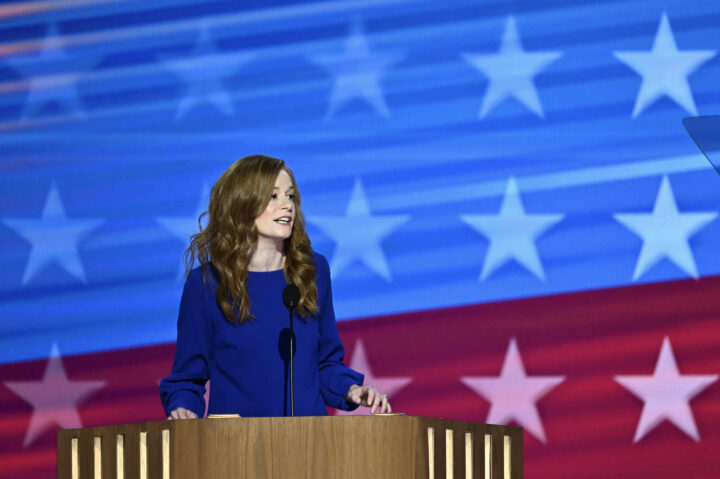
Michigan state Sen. Mallory McMorrow speaks on the first day of the Democratic National Convention (DNC) at the United Center in Chicago, Illinois, on August 19, 2024.
ROYAL OAK, Mich. — When Michigan state Sen. Mallory McMorrow saw the news on March 12 about an attack at Temple Israel, a Reform synagogue in West Bloomfield Township, her first thought was about her 5-year-old daughter, Noa.
McMorrow is not Jewish, but her husband is, and Noa attends preschool at another Reform congregation in the area.
“This could have been us. This could have been our daughter,” McMorrow thought.
Then, as an elected official and one of the three leading candidates in the Democratic primary for U.S. Senate, she released a statement condemning the attack, in which a heavily armed man drove a car that was filled with explosives into the synagogue and opened fire before dying of a self-inflicted gunshot wound. No one else was killed in the attack, which occurred steps away from preschool classrooms where more than 100 children and their teachers sheltered in place.
“I was horrified when I put out my statement that day. All of the first comments on it were whataboutism,” McMorrow told Jewish Insider in an interview in a coffee shop near Detroit last week. “Antisemitism is real.”
Recent polling released by McMorrow’s campaign shows her with a narrow lead over her primary opponents, Rep. Haley Stevens (D-MI) and public health official Abdul El-Sayed. But many voters remain undecided, and the state’s primary is not until August.
The FBI said on Monday that the Temple Israel attacker, a Lebanese immigrant whose brother had been a Hezbollah commander until he was killed by the IDF the week before the attack, carried out a “Hezbollah-inspired act of terrorism purposely targeting the Jewish community and the largest Jewish temple in Michigan.”
The attack was emotionally jarring for McMorrow, who got choked up speaking about her daughter.
“It was really eye-opening when I started going to services and events with Ray and Noa — the level of security did stand out to me as somebody who grew up in a Catholic church, to walk in and the first thing you see are the security guards, and they’re lovely and they’re friendly, but it just — that really stuck with me, that we need that just to be Jewish,” McMorrow said. “We shouldn’t have to think twice that somebody is going to attack her or my husband or our family or anybody, for no other reason than she’s Jewish.”
After the attack, McMorrow watched people respond to her social media posts and argue that somehow the attack was warranted or justified.
“We didn’t see that with things like the Sandy Hook shooting. When we see attacks on kids, you don’t immediately jump to, ‘Well, what about this? And did they deserve it?’ Of course not,” McMorrow said.
In the Senate primary, McMorrow appears to be trying to carve out a lane between Stevens, a moderate pro-Israel stalwart, and El-Sayed, a far-left candidate whose recent decision to campaign with antisemitic political streamer Hasan Piker earned condemnation from both Stevens and McMorrow.
In her interview with JI, McMorrow described herself as someone tuned in to the fears of Jewish Michiganders who is also trying to be a bridge-builder to the state’s large Arab community.
“Over the last week, I made it a point to reach out and talk to not only members in Temple Israel and leaders in the Jewish community, but also leaders out of the Muslim community, particularly over in Dearborn,” McMorrow said. “What I heard independently from both groups is we need to figure out a way out of this, that there is so much hurt and there is so much pain, and this is not sustainable. There is a desire to bring the heat down, but we have to recognize as leaders, we need to create open doors for people to work through their trauma.”
But sadness or frustration at events in the Middle East cannot be grounds for attacking a Jewish institution, McMorrow said.
“There are going to be differing views on what the right course of action is in the Middle East, and that should be expected in a state like ours,” said McMorrow. “However you feel about what is happening in the Middle East, the response is never to take it out on people at home. The 140 kids who were at preschool that day bear no responsibility at all for anything that’s happening in the Middle East.”
McMorrow has said she will not accept donations from AIPAC, which has been a big booster of Stevens in the past, although AIPAC has not formally endorsed Stevens for Senate. McMorrow is endorsed by the progressive Israel advocacy group J Street, which currently describes McMorrow as a priority candidate for the organization.
“I believe deeply that long-term peace and security for Israel is necessary, and I worry that the Netanyahu government is making that reality harder,” McMorrow said. She has said that she supports legislation to block offensive weapons sales to Israel, and told JI that she thinks the U.S. should play a role as a moderating force for Israel — and described herself as someone who supports the U.S.-Israel relationship but not unconditionally.
“There was a headline in the Wall Street Journal a few months ago that I think about often, which is, ‘Israel won the war, but lost the world.’ And Israel needs allies to survive. It is attacked from all sides at all times,” she said. “That’s how I think about it with the U.S.-Israel relationship: How do we as an ally help our ally in the Middle East not make the same mistakes that the United States did, even in Iraq and Afghanistan, where retribution went too far?”
In October, when asked by a voter whether she believes Israel’s actions in Gaza amounted to genocide, McMorrow said yes, “based on the definition” of the word. Since then, she has avoided using the word directly, instead saying that its usage has become a “political purity test,” an argument she also employed in her interview with JI.
“People seem to be more focused on a word than a goal, which is why I have since said this does feel like we’re splitting hairs over the definition of a word and not talking about for most people, we want the same thing. How do we get there in a way that brings people together instead of pushing them apart?” McMorrow said.
That same attitude drives McMorrow’s approach to the state’s diverse constituencies — particularly, she said, as she thinks about how to address antisemitism and hate after the Temple Israel attack. She touted a bill she supported last year that expands the definition of hate crimes and called for more interfaith work in the state.
“That is part of the responsibility and role of a senator that may not be legislative, that’s just, how do we keep doors open?” she asked. “How do we talk about the things that unite us, and how do we work together so that Michigan, given the uniqueness of our population, can be a model for the rest of the country? That even in the wake of a lot of uncertainty and turmoil in the Middle East, we can coexist?”
But McMorrow also keeps returning to something that a Temple Israel parent told her, about the “root cause” of this month’s attack.
“As I was talking to a mom from Temple Israel, she credited all of the security that they’ve invested in,” McMorrow recalled. “She said, ‘We have to address the underlying root cause, which is antisemitism and hate that led this person — whatever trauma he was going through, his first course of action was to think to attack the synagogue full of preschoolers.’”
Gov. Janet Mills is facing anti-Israel oyster farmer Graham Platner, who called himself a ‘communist’ in 2021
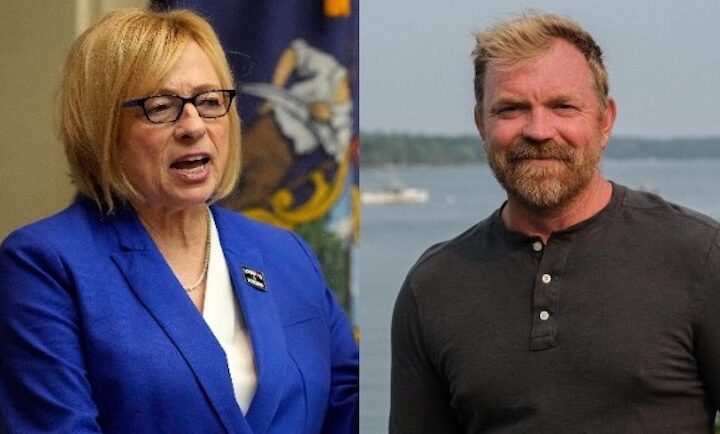
Robert F. Bukaty/AP/Graham Platner campaign
Gov. Janet Mills and Graham Platner
The Democratic Senate primary in Maine is shaping up to be among the most significant proxy battles over Israel in the upcoming midterm elections, pitting the state’s moderate two-term governor against a left-wing populist upstart who has vocally embraced an anti-Israel platform.
Gov. Janet Mills, who announced her campaign to unseat Sen. Susan Collins (R-ME) on Tuesday and is backed by Senate Democratic leadership, is set to face a well-funded challenge from Graham Platner, a veteran and oyster farmer who boasts high-profile support from Sen. Bernie Sanders (I-VT).
In contrast with Mills, who has criticized anti-Israel divestment efforts in her state and warned against a “deeply troubling” rise in antisemitic incidents after Hamas’ Oct. 7, 2023, attacks, Platner has promoted more hostile views on Israel and its alliance with the United States.
Since entering the race in August, Platner has accused Israel of genocide in Gaza and endorsed measures to block U.S. arms sales to Israel. His campaign did not respond to a request for comment regarding the recently brokered ceasefire and hostage-release deal between Israel and Hamas.
Platner has also been an outspoken critic of the pro-Israel advocacy group AIPAC, whose affiliated political arm is supporting Collins, one of the most vulnerable Republicans now seeking reelection — in a state President Donald Trump lost by seven points in 2024.
“We are focused on helping to re-elect Senator Collins, who has long been a leader and champion of strengthening the partnership between the U.S. and Israel,” Marshall Wittmann, a spokesperson for AIPAC, told Jewish Insider on Thursday.
Wittmann did not address whether AIPAC has plans to get involved in the primary. Collins, a five-term senator, has defended her relationship with AIPAC, which has faced growing criticism from Democratic candidates in recent months as intraparty tensions over Israel have intensified.
It remains to be seen if the Maine Senate race will draw outside spending from other pro-Israel groups including Democratic Majority for Israel, which has engaged in a number of recent primaries. The group did not respond to requests for comment from JI.
The primary also includes Jordan Wood, a former congressional aide whose campaign says that he has raised $3 million since April. Dan Kleban, a brewery owner in Maine, dropped out of the race on Tuesday and endorsed Mills, who was aggressively recruited by Senate Minority Leader Chuck Schumer (D-NY).
Mills’ campaign said this week that she had raised $1 million in the 24 hours after she announced her bid. Platner’s team reported a $4 million haul since entering the race over the summer, with prominent contributors ranging from Ron Klain, a former chief of staff to President Joe Biden, to the billionaire donors Donald Sussman and Chris Hughes, according to campaign filings.
While Platner, 41, has drawn scrutiny over his views on Israel — which he has made a central component of his campaign messaging and national fundraising appeals — the political newcomer has more recently weathered controversy surrounding past comments in which he identified as a “communist,” called “all” police “bastards” and said rural Americans are racist and stupid, among other incendiary statements.
Platner has said that such views, unearthed in a CNN investigation published on Thursday, do not reflect his current thinking. Still, the deleted posts underscore how a previously untested candidate is likely to navigate additional vulnerabilities in a race that Democrats view as one of their top priorities as they seek to win back the Senate majority next year.
Following Mills’ launch this week, Larry Sabato’s Crystal Ball, a top elections forecaster, said that it had changed its ranking of the Maine Senate race from “leans Republican” to “toss-up” — a rating also echoed by The Cook Political Report.
Mills — who, at 77, would be the oldest freshman senator in history if elected — has won praise from Sen. Kirsten Gillibrand (D-NY), the chair of the Democratic Senatorial Campaign Committee. The two-term governor also formed a joint fundraising committee with the Senate Democrats’ campaign arm earlier this week, according to a new campaign disclosure.
Mills’ campaign team features veterans of her 2022 bid for governor, a person familiar with the matter told JI on Thursday, including Eric Adelstein of the communications consultancy AL Media and Jefrey Pollock of the polling firm Global Strategy Group — which has conducted a number of surveys on Israel and the Jewish vote.
Chelsea Brossard, a Democratic strategist who recently advised Rep. Josh Gottheimer (D-NJ) in his bid for governor of New Jersey, is also joining Mills’ team as campaign manager, according to the source, who asked to remain anonymous to discuss undisclosed details.
Mills’ campaign did not respond to requests for comment from JI on Thursday. Pollock declined to comment.
Rep. Raja Krishnamoorthi and Lt. Gov. Juliana Stratton opposed the Sanders-led resolutions, but Rep. Robin Kelly (D-IL) said she would have voted for them
Tom Williams/CQ Roll Call/Bloomberg via Getty Images
Representative Raja Krishnamoorthi, a Democrat from Illinois
A divide is emerging in the Democratic Senate primary in Illinois over resolutions the Senate voted on earlier this week to block certain arms sales to Israel.
Lt. Gov. Juliana Stratton’s campaign and Rep. Raja Krishnamoorthi told Jewish Insider on Friday that they wouldn’t have supported the resolutions led by Sen. Bernie Sanders (I-VT), even as they condemned the humanitarian crisis in Gaza.
But Rep. Robin Kelly (D-IL) announced earlier in the day that she would have voted for the resolutions if she’d been in the Senate.
The split could help shape the potentially crucial Jewish community vote in the upcoming Senate primary.
“As a mother, it’s heartwrenching to see images of children forced to go without food. Israel and the United States need to take every possible step to end the humanitarian crisis and ensure aid is immediately and widely made available,” Stratton said in a statement to JI. “I continue to pray for a ceasefire that ends the suffering in Gaza, for the return of the hostages still held by Hamas to their families in Israel, and for lasting peace in the region.”
Stratton’s campaign elaborated that the lieutenant governor believes, “[w]e should all be speaking with a clear voice that the Netanyahu administration must be doing more to get food and aid to the citizens of Gaza right away, but Juliana believes that cutting off U.S. military aid to Israel could risk standing in the way of the ultimate goals of a true ceasefire and sustained peace.”
The campaign also said that Stratton believes in Israel’s “right to defend itself as one of the United States’ closest allies and the only democracy in the Middle East.”
The campaign said Stratton “strongly disagrees” with how the Israeli government led by Prime Minister Benjamin Netanyahu has executed the war in Gaza, but she “has been vocal in her support of Israel in the wake of the horrific terrorist attacks by Hamas on October 7th.”
Krishnamoorthi — who, in an interview with JI earlier this year, said he did not support efforts to cut off or condition U.S. aid to Israel — said Friday that the Sanders resolutions would not have solved the humanitarian crisis.
“We need an immediate ceasefire brokered by the U.S. and regional partners and that is swiftly accepted by Hamas, along with the release of the remaining hostages and the emergency provision of humanitarian aid,” Krishnamoorthi said in a statement to JI. “The U.S. must use all of its diplomatic influence to make that happen as quickly as possible. Ultimately, the only path to a lasting peace is a two-state solution. The first step and my focus today is ending the current humanitarian disaster and getting food in as quickly as possible. Wednesday’s resolutions did not right that wrong.”
He said that he has “long been a steadfast supporter of our nation’s alliance with Israel” and that it “had every right to defend itself,” but said that “[w]hat we see going on today in Gaza is a moral catastrophe.”
“As Americans, we can never sit by and allow widespread starvation and disease among a civilian population that includes the elderly, the disabled, women, and children,” Krishnamoorthi continued.
He highlighted that he wrote to Secretary of State Marco Rubio and Special Envoy Steve Witkoff on Friday, urging them to surge aid into the strip and to ensure accountability that it reaches its intended recipients.
He said in the letter that, despite acknowledging the starvation in Gaza, the administration has not done enough to remedy the situation. Krishnamoorthi also urged others in the region, including Hamas, to cooperate in the proper delivery of aid.
Kelly, meanwhile, said in a statement Friday that she would have voted for the resolutions.
“Israelis and Palestinians must work to secure a path forward where both peoples can live in peace, safety and security,” Kelly said in a statement. “I have supported Israel, but in this moment, I cannot in good conscience defend starving young children and prolonging the suffering of innocent families. Now is the time for moral leadership in the U.S. Senate.”
Both Sens. Dick Durbin (D-IL) — who is retiring — and Tammy Duckworth (D-IL) supported the resolutions.
Durbin has supported every similar effort Sanders has made since November to block various arms sales to Israel, but Duckworth had voted against them in the past and, in fact, argued forcefully against them in a letter to constituents.
The votes on Sanders’ proposal to cut Israel aid are also proving to be a dividing line in Michigan’s Senate primary: Rep. Haley Stevens (D-MI) announced Friday that she would have opposed them, while state Sen. Mallory McMorrow said she supported them.
Please log in if you already have a subscription, or subscribe to access the latest updates.
 Continue with Google
 Continue with Apple