




















Mike Rogers calibrates Jewish outreach as he builds broad coalition against Abdul El-Sayed
In an early sign of Rogers’ bipartisan backing, three prominent Jewish Democratic bundlers are holding fundraiser for Rogers next week
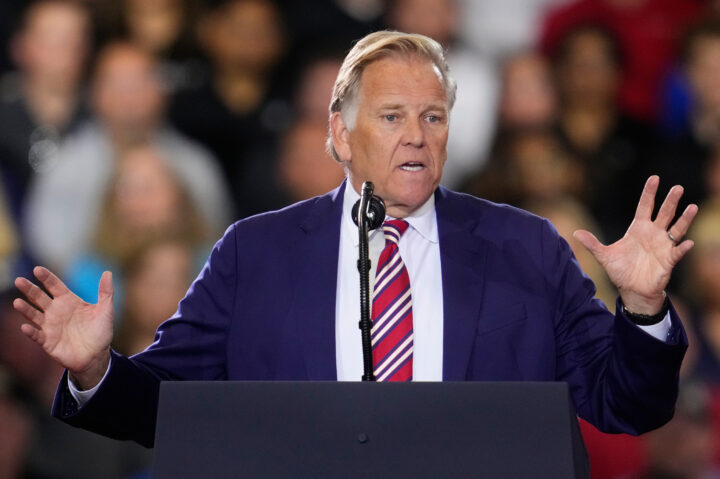
Paul Sancya/AP
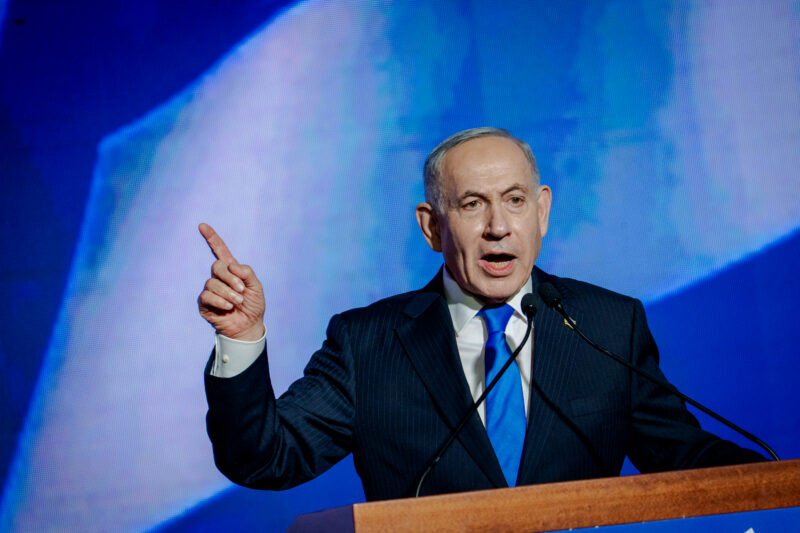
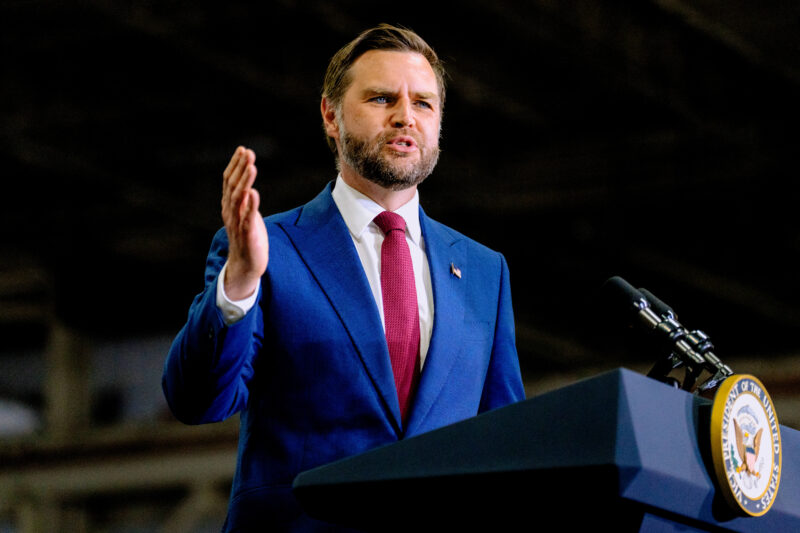
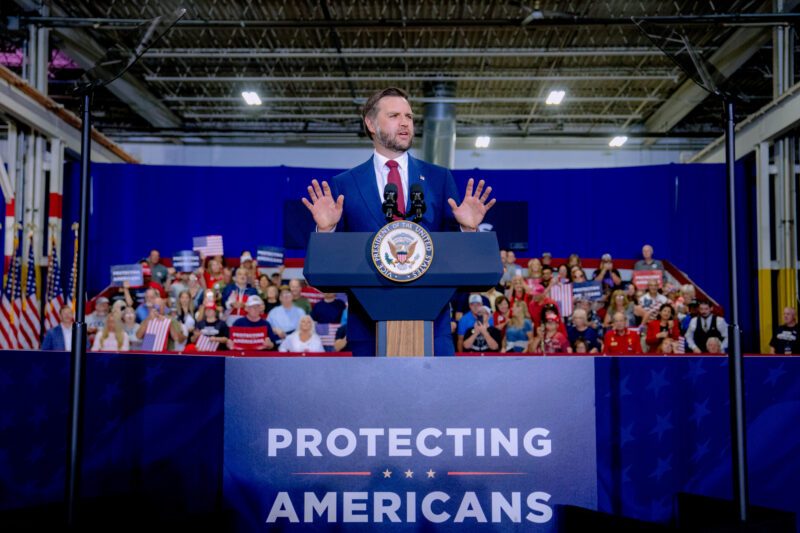
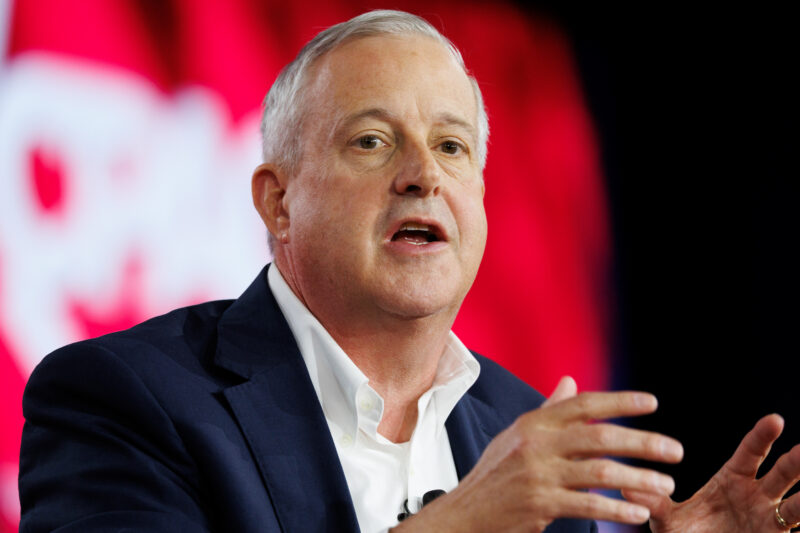
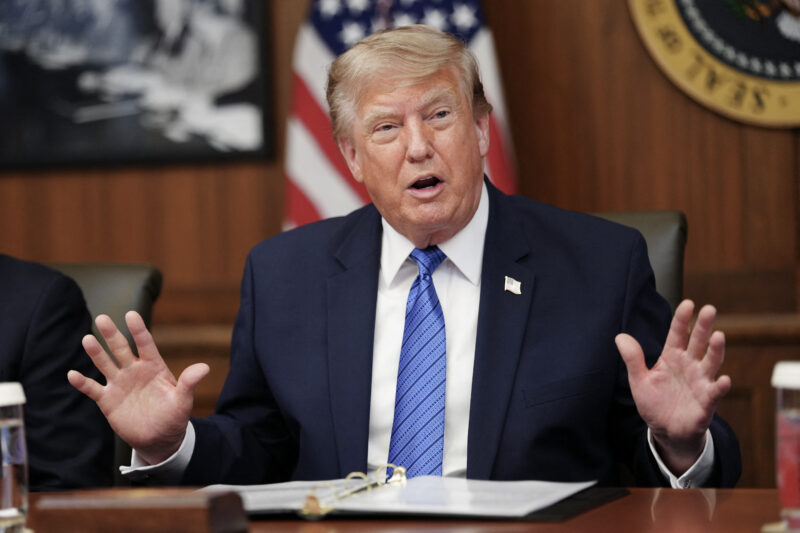
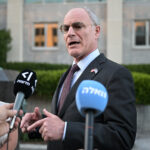
Republican Senate candidate Mike Rogers speaks before President Donald Trump at an event at the General Motors Proving Ground Monday, July 27, 2026, in Milford, Mich.


 Add JewishInsider on Google
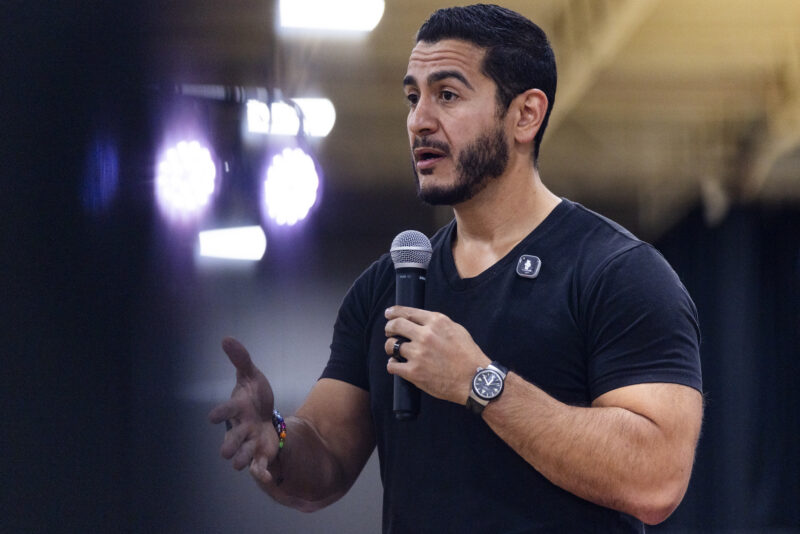
More than a week after Abdul El-Sayed narrowly clinched the Democratic nomination in Michigan’s bruising Democratic Senate primary, his Republican opponent, former Rep. Mike Rogers (R-MI), is working to fine-tune his campaign’s outreach and messaging to disaffected Jewish voters who could play a decisive role in the closely contested race.
While Republicans in the key battleground state see an opportunity in November to capitalize on Jewish Democrats’ alarm over El-Sayed’s hostile rhetoric toward Israel and lackluster record in confronting the rise of antisemitism, Rogers has in the days following the primary still appeared relatively cautious in directly courting Jewish voters, as he has widened his pitch to Democrats in Michigan whom he reassured in a video message last week have “a home with” his campaign.
He has otherwise called El-Sayed, a far-left former public health official, “beyond antisemitic” and said he “hates Jewish people,” echoing the most extreme concerns among Jewish Democrats turned off by the Democratic nominee’s ties to antisemitic Twitch streamer Hasan Piker and comments equivocating over the foiled terrorist attack against a synagogue outside Detroit in March, among other issues.
Despite such criticism, Jason Cabel Roe, a GOP strategist in Michigan not involved in the race, said that he had not seen Rogers “specifically identifying the Jewish community as a target,” underscoring how the campaign is balancing private engagement with a key constituency alongside a more broadly calibrated public invitation for Democrats to join his coalition.
“A lot of this is going to come organically,” Roe told Jewish Insider, referring to Jewish Democrats in the state who are contemplating voting for Rogers. “This is not new territory for him.”
Bobby Schostak, a former chairman of the Michigan Republican Party and a prominent Jewish campaign surrogate, said he had hosted a donor call on Monday with Rogers and his pollster, Tony Fabrizio, joined by some 150 people. “There were people there who were traditionally not Republican voters,” he told JI, citing some Jewish Democrats and other former backers of Rep. Haley Stevens (D-MI), the moderate, pro-Israel lawmaker who lost to El-Sayed.
“Mike spoke to the importance of having a wide-open campaign with multiple coalitions,” Schostak said of the donor call, while stressing that Jewish Democrats in the Detroit area are particularly energized to help Rogers. “It is consequential both in numbers and in names,” he told JI on Thursday. “They are not being passive,” he explained. “They want to beat El-Sayed.”
In one of the first major signs of those efforts now materializing, three prominent Jewish Democratic bundlers in Michigan are hosting a fundraiser for Rogers next Tuesday, according to an email invite sent to Jewish community members on Thursday.
“This is something that none of us has ever done,” said Hannan Lis, who is leading the fundraiser with Brian Hermelin and Rob Orley. “But we feel this is a departure in the direction of the Democratic Party,” he told JI of El-Sayed’s staunch opposition to Israel and refusal to recognize its right to exist as a Jewish state. “We’re taking a stand here,” he added. “This is beyond politics.”
Even though “there are many issues where we don’t necessarily agree with Mike Rogers,” Lis noted, “we trust him” on key issues. The fundraiser is meant to “show we are willing to back up a person” who holds a mutual commitment to a “strong relationship with Israel” and “is not playing politics” on other matters concerning the Jewish community, he explained.
Hermelin, the president of the Jewish Federation of Detroit, confirmed his involvement in the fundraiser but declined to comment further on the event, which he is co-hosting in his personal capacity.
Rogers, recognized as a national security-focused conservative, has also attended pro-Israel fundraisers outside of the state this week, according to a person familiar with the matter. “There is now a lot of enthusiasm in the pro-Israel community for Mike Rogers,” the person said. “A not-insignificant piece is from Democrats.”
A spokesperson for Rogers’ campaign did not return a request for comment on Thursday.
The Republican Jewish Coalition has indicated it intends to aggressively target the nearly 100,000 Jewish voters in Michigan who make up a potential swing bloc, with a special focus on Jewish Democrats who “now find themselves politically homeless,” Sam Markstein, a spokesperson for the group, told JI in a statement.
Markstein said that he could not yet share specifics about the RJC’s plans to invest in the race but noted an independent expenditure is in the works and “will be significant.”
Eric Levine, a top Republican bundler in New York and an RJC board member who hosted a fundraiser for Rogers in late July, said the former congressman is “making a direct appeal to the Jewish community,” including Democrats, and “has been very successful.”
AIPAC, the pro-Israel advocacy group whose super PAC spent over $30 million to help Stevens, has not officially endorsed Rogers, but sources say it is likely to spend on his behalf before the November election. Representatives for AIPAC and its super PAC did not respond to requests for comment.
In a tacit recognition of the Jewish vote’s potential significance in the general election, El-Sayed has, for his part, recently sought to ease tensions with Jewish Democrats who remain skeptical about his campaign, emphasizing his “commitment to Jewish safety” even he has continued to use incendiary rhetoric on Israel in the wake of the primary.
Michael Horowitz, a Jewish Democratic leader and Detroit businessman, said he was “leaning heavily” toward voting for Rogers but that he had not made up his mind, underscoring the inherent challenges in enticing Jewish Democrats to defect from a party that they have long called home.
Though Horowitz said he will not vote for El-Sayed, he attributed his reservations to delivering a win for the Trump administration as well as a “volatile world” that could shape his assessment in the lead-up to the election. “I would say that the vast majority of people I’ve talked to are voting against El-Sayed — as opposed to voting for Rogers,” he told JI.
He said he is now working to arrange a “more intimate conversation” with Rogers to get a better sense of the candidate, after a surrogate reached out to make a connection. “I don’t think that not voting is an option,” he said, adding, “until I cast my vote it’s not a done deal.”
Shimon Levy, an Israeli American entrepreneur in Detroit who identifies as an independent and backed Stevens in the primary, said he is supporting Rogers’ campaign and had wrapped up lunch with members of his team when he spoke with JI on Thursday.
“I think, at this stage, the Rogers team is just here to listen,” he said. “They’re asking, ‘How do we win your vote?’”
More Stories

WAKE-UP CALL
Cruz warns Christian leaders are ‘asleep’ on antisemitism among youth
RIPPING ON RIYADH
Trump’s pick for Saudi ambassador once suggested kingdom is not a ‘true ally’
ON ALERT
NYPD braced for ‘multiple protests every day’ around U.N. summit
ENVOY DEBATE
Congressional Jewish Caucus opposes proposal to combine State Dept. Holocaust, antisemitism offices

POLAND IN FOCUS
Jacky Rosen visits Poland to discuss antisemitism, Holocaust issues

CANARY CALL
Two Seattle Jewish leaders warn of Jewish complacency in face of rising antisemitism
Please log in if you already have a subscription, or subscribe to access the latest updates.
 Continue with Google
 Continue with Apple